58.6 F
Davis

Davis, California

Monday, December 22, 2025
Home Blog Page 828

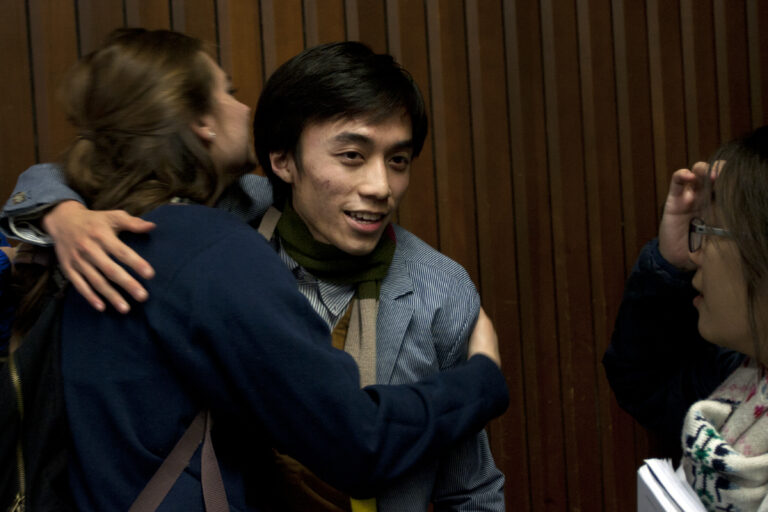
Crafting Gemeinschaft: Do the Sambola

0

The issue of suicide is a sensitive topic in any situation, but it is even more so in a college environment, when the question of how much accountability administration should take is an issue at hand. However, getting administration to be more transparent about the prevalence of suicide on campus may be one of those “when pigs fly” kind of things. That’s why this isn’t a story about how administration needs to take more accountability; it’s a story about you and how you can increase the transparency around mental health issues. In college it’s easy to convince yourself that you need to focus on yourself: focus on building a resume, building a network, or even bodybuilding. You transform into a real Bob the Builder don’t you? But if you never take the time to lean into your emotions, not to mention the emotions of your peers, it’s like you’re building a temple for nobody to enjoy.

One of the reasons why college is such a vulnerable time for students in terms of mental health is because our brain does not fully develop until we are 25 years old. According to Philly Mag’s article on Madison Holleran’s suicide from the University of Pennsylvania. Mental illnesses first show their signs between the ages of 16 and 25. It seems as if on top of dealing with the transition from home to college, students are also faced with the challenge of dealing with their restless synapses.

The University of Pennsylvania faced four suicides in a month and a half this past year: a frequency so high that people felt as if one suicide served as a trigger for the next. Some people were uncomfortable with how UPenn dealt with the suicides because the administration did not notify the entire student body about the deaths, and students felt as if they were left to grieve alone.

Most people wondered why students who are so high-achieving, so close to graduating from an Ivy League school, would want to end their lives. Some say it is the competitive atmosphere of the college campus. Therefore, it’s safe to say with UC Davis being one of the top ten public universities in the nation, some level of competition is present. Our school is taking numerous actions to remedy the effect that this level of competition is having on the mental well-being of some students. One is a subproject called Each Aggie Matters, which is part of California’s Mental Health Movement outlined in California Proposition 63. The goal of this program is to have an “open and affirming dialogue about mental health.”

I remember my freshman year at Davis when looking for counseling outlets there was the peer-run House and Counseling and Psychological Services (CAPS), which is the official campus counseling organization. Now in my third year, I feel as if there are a lot more venues through which you can participate in the mental health discussion. Recently a club was formed called the National Alliance on Mental Illness at UC Davis that aims to raise awareness and reduce stigmas associated with mental illnesses. There is also a group called Out of the Darkness Now which is part of the American Foundation for Suicide Prevention and is known for the annual walks they put together to raise awareness. Another effort to increase mental health awareness has come from the UC Davis Health System, which is using a $7.5 million-dollar donation from CA Prop 63 to construct a behavioral health center on the Sacramento campus. The goals of this center include finding alternatives to hospitalization and reducing the stigma associated with mental illness. That these services exist is great, but they mean nothing if we don’t participate in them. It might be uncomfortable to publically acknowledge your feelings but they always say that the most important step is just showing up.

In Walt Whitman’s movie Damsels in Distress he portrayed a group of girls as mental health vigilantes who would go around campus distributing free soap and giving out free dance lessons, because both were perceived to lift spirits. I’m not so sure that being happy is as easy as doing a made-up dance called the Sambola or smelling nice, but I do know that opening up can be very cathartic and that you don’t have to go through college alone.


If you want to pass out soap with the intention of making people’s’ day you can contact NICOLE NELSON at nsnelson@ucdavis.edu.

Guest opinion: Why Boycott, Divestment, and Sanctions (BDS) is an Environmental Issue

0

On Dec. 4, UC Davis graduate student instructors and undergraduate tutors will vote to join the Boycott, Divestment, and Sanctions (BDS) movement and call on the UC and UAW International to divest from companies complicit in the Israeli occupation of Palestine. They will join approximately 13,000 other student workers represented by UAW 2865 across the University of California system.

On Saturday, Nov. 15, UC Davis’ Students for Justice in Palestine (SJP) president Marcelle Obeid and Jewish Voice for Peace (JVP)[i] activist and worker Gabi Kirk hosted a workshop for undergraduate and graduate environmental activists as a part of the California Student Sustainability Coalition’s 2014 Convergence.[ii] Entitled “Occupation as Degradation: Environmental Issues in Palestine and BDS,” their workshop made explicit the links between environmental issues and the occupation of Palestine and gave reasons for why environmental activists ought to vote “yes” on BDS on Dec. 4.

The workshop started with an historical synopsis of the relationship between environmental degradation and the occupation of Palestine, detailing the ways in which many of the early justifications for Israel’s settler-colonial policies – claims that Israeli settlers would “make the desert bloom” – were in fact claims used to justify the expulsion of Palestinians from their land. Obeid and Kirk then explained that Israel’s victory in 1967 had the immediate effect of allowing Israel to occupy and begin to colonize the West Bank and Gaza, thereby allowing Israel to take overall possession of Palestine’s fresh water and agricultural land.

Facilitating this possession are a number of Israel’s policies that actively prevent Palestinians from building sustainable infrastructure,[iii] farming their land,[iv] accessing water[v] and protecting themselves and their land against attacks by Israeli settlers seeking to seize fertile land and fresh water.[vi] Nowhere are these policies more clear than along the route of Israel’s Apartheid Wall[vii] (or Separation Barrier).[viii] Though purportedly designed to follow the border between Israel and Palestine and to guarantee Israeli security, 86 percent of the wall is constructed inside the West Bank and, when complete, will isolate Palestinians from approximately 65 percent of their water resources[ix] and more than 9.4 percent of their total agricultural land.[x]

These policies of environmental degradation are particularly acute[xi] in Gaza,[xii] where Israel’s siege and repetitive bombardments of Gaza (the most recent of which killed more than 2,000 Palestinians)[xiii] have destroyed most of Gaza’s water and wastewater treatment facilities, made 95 percent of the water in Gaza’s severely stretched aquifer unsuitable for drinking, and produced huge amounts of waste and sewage, the majority of which still pollutes Gaza’s streets, farmlands and coastal areas.[xiv]

Kirk and Obeid concluded their workshop by drawing our attention to a number of companies (Caterpillar, Veolia, Raytheon, Boeing and Lockheed Martin) that the UC invests in and that profit from Israel’s occupation of Palestine. These companies do more than just facilitate violence and human rights abuses. They also destroy the environment. By building the bulldozers that destroy rain water-harvesting systems[xv] and uproot olive trees,[xvi] manufacturing the bombs[xvii] that damage waste and water facilities and destroy homes in Gaza,[xviii] transporting waste from illegal Israeli settlements[xix] and dumping it on Palestinian land[xx] and relentlessly burning fossil fuels,[xxi] these companies help to build the infrastructure[xxii] for a settler-colonial state that actively seeks to exploit and devastate the Palestinian environment in the hopes that the Palestinians that remain in the land will leave.[xxiii]

The UC is currently invested in these companies,[xxiv] making us – as tuition and fee-paying students – complicit in their actions. As environmental activists, and as students at the country’s most “sustainable” school,[xxv] it is our duty to end this complicity. We cannot say that we are an environmentally friendly campus while continuing to profit from the companies that build the checkpoints that make it impossible for Palestinians to bike[xxvi] and that illegally dump toxic waste on Palestinian farmland.[xxvii] The UC’s decisions to invest in these companies were made without our consent, and it is time for us to take these decisions back.

One initial step towards doing so will occur on Dec. 4 when UAW 2865 workers choose to vote “yes” for BDS. By voting “yes,” workers from across the UC will signal to the world that they demand an end to their complicity in violence and environmental degradation, and that they are committed to building a more sustainable and just peace in Israel/Palestine.

— Tory Brykalski (aka Tory Webster) is a graduate student in anthropology and a member of UAW 2865’s BDS caucus.

Letter of solidarity to the University of California community

0

To the University of California community,


Today, we write to you in solidarity. As we left the Syracuse University administrative offices and our 18-day sit-in ended, yours began. We echo your cries for justice — they ring in our ears.

Your struggle did not begin today; it is laden with histories of silence and violence. Ours did not end today; as we move into our next phase of activism, we are cognizant of the mountain before us. There will always be more work to do.

Your bodies are your weapons and your shields. As you use them to fight for your education, please remember to love them. They will not be loved, respected, or regarded by those who try to speak over your voices. You must be louder than them. You may walk away with new scars, but do not forget that your bodies are already the sites of violence and oppression. Audre Lorde once said, “Caring for myself is not self-indulgence, it is self-preservation, and that is an act of political warfare.

Be strong, and know that we sit with you.


In solidarity,

THE General Body

Syracuse University
To view this letter on THE General Body’s website, click here.

Science is Serendipitous: The “good” part of cannabis

0

You might tell me that all parts of cannabis are good (while lighting up in your bathtub), but I’m going to mention a specific feature that has benefits to the scientific community. It’s not THC (tetrahydrocannabinol), but a compound called CBD (cannabidiol). Where THC has been associated with the mind-altering, “feel-good” high that users get, CBD does not produce this feeling, but rather has more useful medical benefits. Why do scientists care about cannabis? It’s not because of its use as a recreational drug, but its potential use for curing diseases. The cannabis people use for recreation is manufactured to be completely devoid of CBD, so don’t expect to cure cancer by smoking a joint. The secret lies in CBD, which can be extracted and used to treat neurological problems. Cannabis is sometimes vilified as a good-for-nothing, get-high drug, but it actually has amazing properties to benefit from. The scientific community should invest in further study of cannabis to discover all of the parts that can actually help our society.

The reason why I’m looking at CBD is because it has a wider range of medical applications than any other currently known product from cannabis. It’s what the scientific community should be investing in for further study. If you didn’t know, cannabis has several (85 or more) active cannabinoids that scientists can extract and study. When looking into why cannabis gave us a “high” feeling when smoked, researchers found the substance known as THC. They figured out that THC interacts with our brain and causes signals and pathways to change, thus altering the feeling in our mind. It was also found to be useful in managing neurological disorders. The flip side to that is that THC also has adverse effects such as potential toxicity, development of psychosis and even cerebral activity. The studies have been inconclusive as to if the benefit of THC actually outweighs the adverse effects. Fortunately, there is something else we can use, which I think scientists should be focused on — CBD.

CBD also comes from cannabis, and can be extracted just like THC for use in drugs. What’s interesting about CBD is that it does not give patients a “high” feeling and can actually reverse some of the adverse effects that are caused by THC. It’s a much better alternative for medicinal use than THC. The United States government even approved the status of CBD in its drug form (Epidiolex) as qualifying to treat a disease, which is a hard thing to do considering marijuana is classified as one of the “most dangerous” drugs with no medical purpose. Medical cannabis facilities outside of the U.S are also developing cannabis plants that have only CBD as the main ingredient and no THC. What I am seeing within the scientific community, and even in governments that shun cannabis, is an acceptance of the use of CBD to benefit society.

Does this mean scientists should stop considering THC cannabis-based treatments? If you really want to get technical, I would say maybe. Currently I do not see a cause for real benefit from THC, so why use it? It does feel good, but is it really good for you? As always, science is ever evolving and we may find that THC does have real benefits. For now I would advocate the further study of CBD cannabis strains, and development of drugs that can be used by the public to manage painful disorders and diseases.


Wondering how to roll one? (Just kidding). Contact me (uwsufi@ucdavis.edu) or tweet me (@umayrsufi)!


Graphic by Jennifer Wu

UC Davis student leads therapeutic riding program “Answered Prayers”

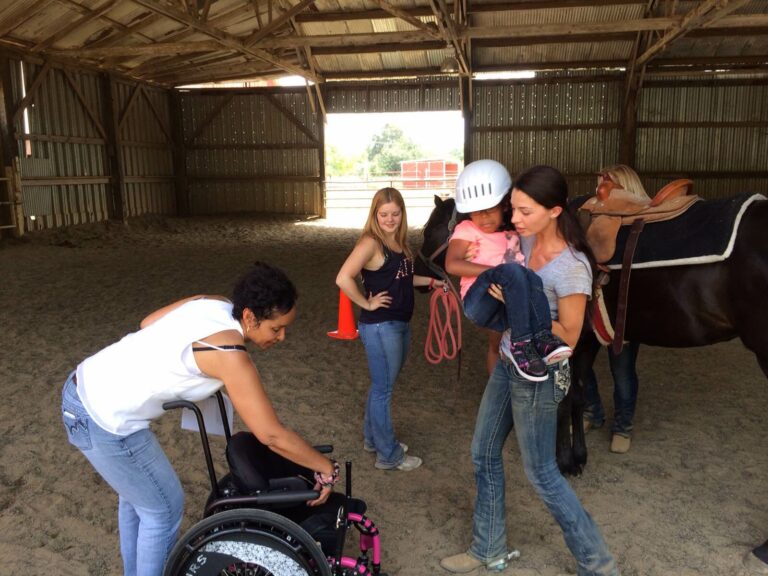
Hoping to inspire and help people from all walks of life, third-year animal science major Katherine Griffin has started her own nonprofit therapeutic horse riding program in Sacramento called Answered Prayers.

“I started volunteering my freshman year at a barn in Vacaville, so I got to see a lot of different disabilities and how therapeutic horsemanship works with people with disabilities,” Griffin said. “When I was in high school I was going through a really rough time and horses were really therapeutic for me — that’s when I first realized the therapeutic power that they have.”

After getting instructor-certified, Griffin created Answered Prayers and opened her student-run program to people of all ages and ability levels in April 2014. Having worked with therapeutic riding in the past, Griffin designed her program especially to give each rider individual, rather than group-based, lessons in order to help her students progress at their own level.

“I think about it as a dream come true — this is something that changed my life,” Griffin said. “I have a student who made me a little bracelet of all rubber bands and I asked how long it took her to make, and she said, ‘Two days.’ I go there and get so much joy from it that I almost forget I’m important to [my students too].”

Although most of Griffin’s students are physically and emotionally disabled, her program is open to all types of riders. Griffin, who is currently a part-time student, said she would rather lighten her academic load and focus on her career than have to turn away a student.

“It’s to the point where I’m getting a lot of students and depending on what disability, I need a certain amount of volunteers,” Griffin said. “Sometimes I need two side-walkers, and always a leader to walk the horse, because as the instructor I’m supposed to be giving the lesson and focusing on the student rather than focusing on the horse.”

Third-year English and genetics double major Hailey Barab has been volunteering regularly for Griffin since the beginning of this quarter.

“I always knew [Griffin] was passionate about it, but actually being a volunteer I got to see her in action and she is so good with children,” Barab said. “She’s really good at being an instructor too – because you can be kids’ friends, but actually making them do things that will help them and getting them to respect you and listen to you is hard – and she does a really good job at it. It’s not everyday that you find someone who’s so patient and committed.”

Griffin holds lessons on Saturdays, Sundays and Mondays while balancing four jobs, schoolwork, and competitive horse riding.

“If there’s something I love and I’m passionate about, I have to do it,” Griffin said. “I don’t want to put [school] on the backburner — I definitely know I’m on the road to graduating, but I found stuff I’m absolutely crazy about, so I can’t not do it, and there’s no way I’d ever give up the program or riding.”

Griffin knows all her volunteers personally, and some, including Barab, have volunteered to come out every weekend.

“I love being around horses and seeing the kids so happy, seeing them progress and learn commands,” Barab said. “I also love getting to see a different part of [Griffin], because she’s my best friend at school. But it’s really inspiring to see her do what she does. It’s weird to see a friend do something that you could see her do for the rest of her life.”

Twelve-year-old Breanna Leonce has been a student of Griffin’s for a long time and hopes to continue riding with the program in the future.

“It’s really fun,” Leonce said. “I like learning tricks.”

Leonce said she encourages other kids to come to Answered Prayers to have a fun time horseback riding with Griffin.

“I get really wrapped up in school and it’s hard to think of the broader picture,” Barab said. “There are always people you can help, and if you can change one person’s day, then that’s awesome. My goal is just to be able to help others, and you don’t have to start that after you graduate, you can do that now.”

Griffin will be continuing Answered Prayers post-graduation, and plans to also expand her program in the hopes of aiding many more students in their horseback riding endeavors.

“Each student comes and looks forward to riding. It’s not just a hobby to them, it’s something life-changing and it’s something that helps them progress,” Griffin said. “The fact that I actually make a difference and that I can make a career out of this — it’s cool I get to do that so young.”

For more information on Griffin’s program, visit answeredprayerstherapeuticriding.com.

Photo courtesy of Answered Prayers

Davis Community Meals hosts 12th annual Thanksgiving meal

0

With Thanksgiving just around the corner, the city of Davis is trying its best to ensure that all people in the community receive the bountiful Thanksgiving feast that Americans dream of all year long.

Davis Community Meals (DCM), an organization designed to ensure that low-income and homeless members living in the city of Davis are fed on a regular basis, is currently preparing for its 12th annual Thanksgiving meal for the local underserved community.

DCM provides multiple services to the homeless and low-income persons living in Davis and the surrounding communities since its start in 1991. In addition to providing food assistance, DCM offers clothing, housing, school-supplies, counseling and medical care to those unable to obtain these resources on their own.

“It’s very rewarding,” said DCM executive director Bill Pride. “I think knowing that you’ve got folks with not a lot of family or friends, [celebrating] a holiday with them and having them come on Thanksgiving and get a nice meal and mingle and socialize with the folks — knowing they had a good time is certainly a very fulfilling thing.”

Pride, who has worked with the organization since 1993 and transitioned into his current leadership role in 2001, works with the organization to serve meals three times a week at The Episcopal Church of St. Martin.

“Right now we’re doing between 600 and 700 meals a month,” Pride said. “Last year we served around 500 different individuals who came to the meals — mainly women and children. It’s been pretty steady in the last couple of years.”

DCM receives a lot of help from volunteers, mainly from but not limited to church groups, service organizations, fraternities and sororities. Many UC Davis clubs are also involved in preparing the meals, including Health and Education Leading to Prevention (HELP) and Circle K, both of which have been volunteering at DCM regularly for several years.

Fourth-year sociology major and HELP president Shadd Cabalatungan has been involved in DCM for over three years and plans on continuing her participation in issues related to homelessness after her graduation as well. The HELP club hosts two weekly soup kitchens that run every Monday and Thursday.

“Volunteering in the soup kitchens offers me a new perspective into my own life,” Cabalatungan said in an email interview. “As a student, it’s hard not to get overwhelmed with midterms and other school-related issues. Volunteering at the meals serves as an outlet where I can de-stress while serving others in my community at the same time. Volunteering at the shelter gives me a sense of humility and appreciation for what I have in my life.”

HELP’s eight-year involvement with DCM serves as just one example of UC Davis students giving back to the local community. Another Davis-based club, Circle K, is active in volunteering with the organization as well.

“We work with Davis Community Meals once a month,” said third-year animal science major and Circle K vice president Nina Chu. “Soup kitchen events in general give you the ability to make a difference in a person’s life in that moment. Being able to do that is amazing.”

Preparations for DCM’s annual Thanksgiving meal on Nov. 27 from 2 to 3 p.m. at St. Martin’s have begun, and Pride is expecting to see between 110 and 125 people this year.

“We usually get our largest attendance of the year,” Pride said. “It’s a pretty good-sized event. I get lots of volunteers and a professional chef that comes in and helps put together a pretty fabulous meal for the folks.”

Both clubs, HELP and Circle K, agree that working with DCM is a very fulfilling and rewarding experience.

“When I go to these soup kitchen events, there’s this one guy who always comes every week. He always comes a little later, so I save food for him. I learned his name, and he’s always so happy to see me and asks me all these questions about how I’m doing and how my week was,” Chu said. “These people aren’t any different, they’re still people. They just have a harder time getting the things they need. Being able to help people in that way and getting to know them on a semi-personal level, that’s really cool.”

Homelessness is more a result of lack of family ties than the stereotypical idea of drug and alcohol abuse, Cabalatungan said.

“The Davis community and student volunteers make a tremendous impact in these individuals’ lives simply by listening to their stories and offering support,” Cabalatungan said. “One comment from a guest that I will never forget was, ‘I may not have shelter, but I’m not homeless.’”

Local community and artists explore synesthesia with art

For Lauren Traetto, numbers are much more than just figures. Nine is an older and reasonable number. Seven is red and a youthful boy. Six is his bossy little sister who has an illusion that she will be hurt and one is a small boy who always does the right thing.

Traetto has synesthesia, a rare neurological condition in which two or more senses are intermingled such that the simulation of one sensory pathway leads to involuntary experiences through another sensory pathway. Synesthesia can manifest itself in a variety of ways, from words being associated with colors, to being able to smell music.

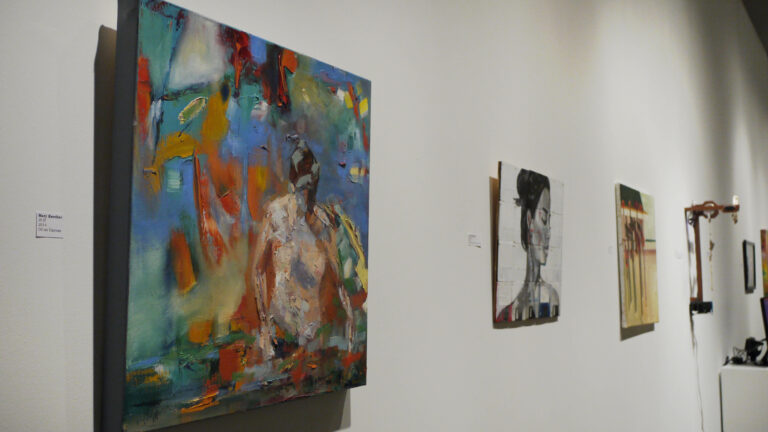
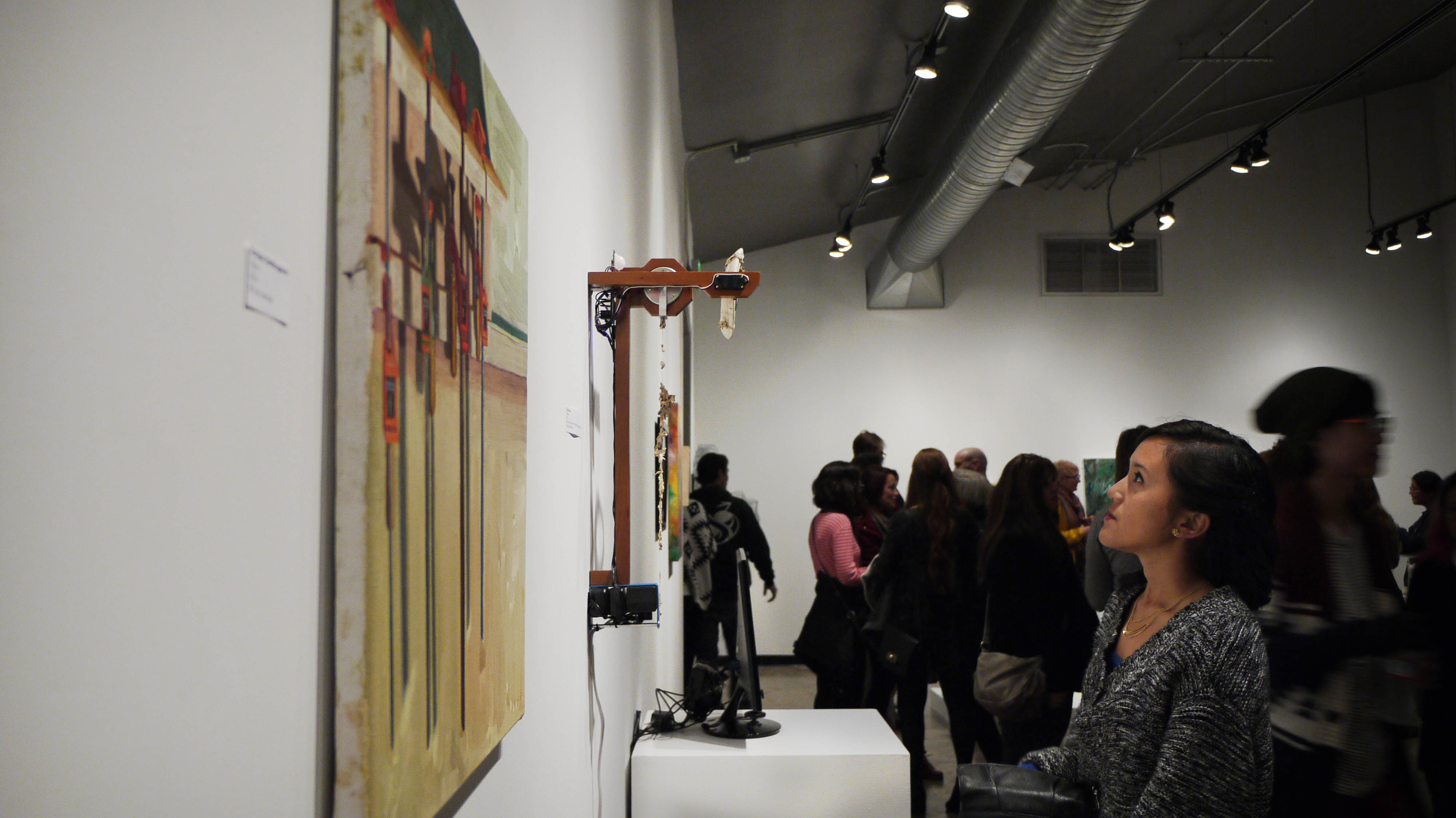
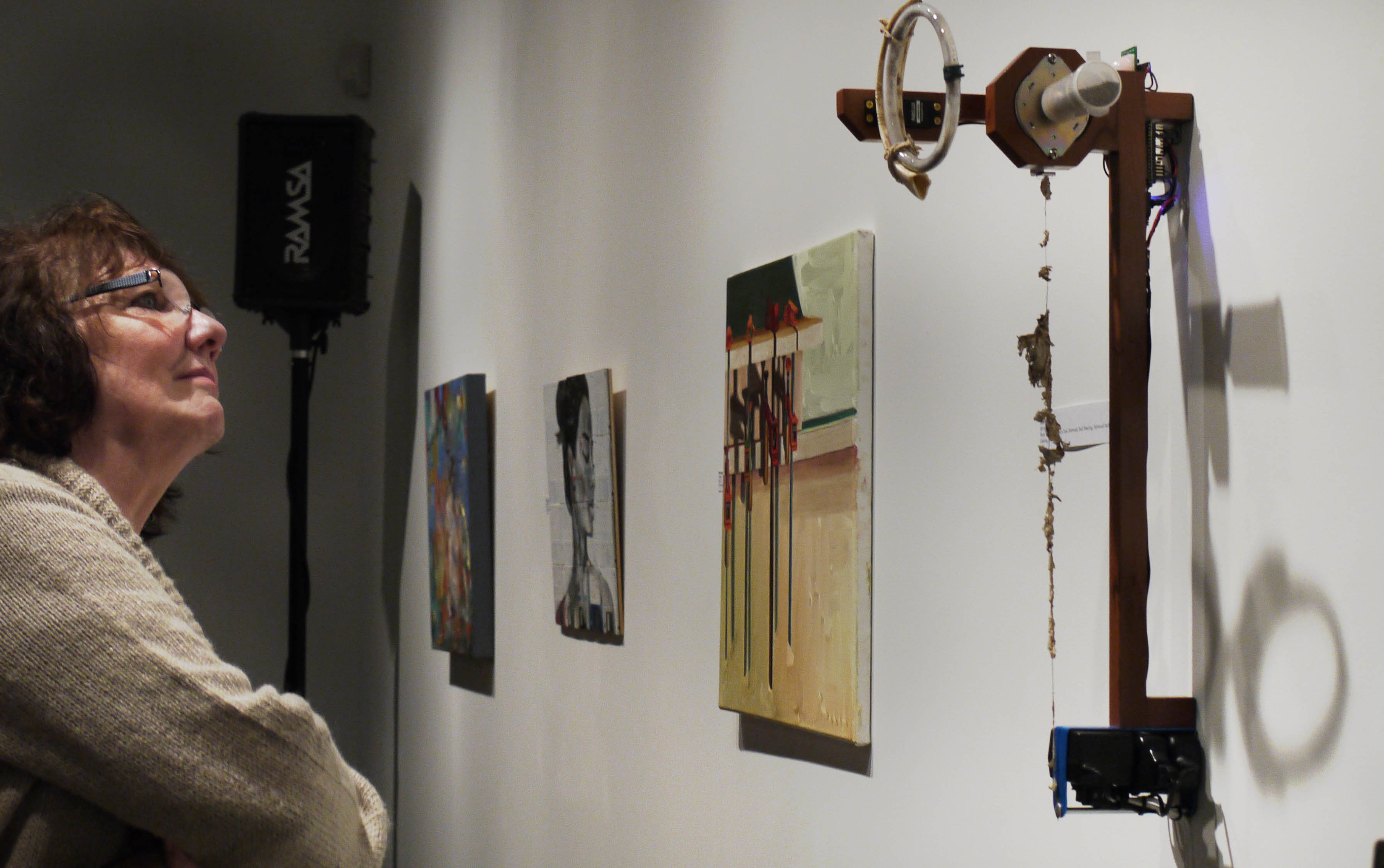
On Saturday, the Davis Art Salon featured two dozen professional and student artists who tried to capture the sensation of this sensory phenomenon in their artworks, showcasing a variety of pieces from electronics to oil paintings at the UC Davis Nelson Gallery.

In addition to the art, Traetto presented her experiences with synesthesia at the event alongside UC Berkeley psychology graduate student Bryan Alvarez, who discussed his research on the rare cognitive condition. Around 200 art enthusiasts, including UC Davis students and residents from the greater Davis community attended the art show.

synesthesia_fe_sit

Artists were allowed two minutes to present and explain their pieces during the event – an unusual practice in art shows.

“I really enjoy listening to various artists talk about their work,” said Davis resident Susan Gishi, who went to the event to support her friend who was exhibiting. “It adds so much more to the show.”

Attendants of this free event were encouraged to vote for their favourite piece. The winner of the show, UC Davis student Rachael Richards, won a two-week solo show at the Nelson Gallery showcasing other similar works alongside the winning piece.

Richards’s winning piece, an untitled sculpture featuring an intricate, fluid web of aluminium wires, will be exhibited in the first week of December.

The Davis Art Salon, presented by the Nelson Gallery in conjunction with the UC Davis Art History Club, premiered last Winter Quarter, in hopes of countering the traditional art exhibition format. It’s main goal is to involve the collaborative effort of the community, reflected by the theme of their first art show: “Vive Le Public,” meaning “long live the public” in French.

The art show, which runs twice a year, is now organized by fourth-year art studio and art history double major Carmel Dor. Dor won the last Davis Art Salon show themed “Degenerate Art” with her painting “Blood Veins.” Inspired by pornography, the piece shows a naked woman in ecstasy covered with blood veins.

Preparation for the event started prior to the beginning of this school year. The nine regular members in the Art History Club voted for a proposed theme. Submission of up to three artworks each was opened up to any member of the Davis, Sacramento, or surrounding local communities for one month. All members of the club voted again to select the top pieces to put in the show.

“The special thing about this show is that there is no application fee to join,” Dor said. “It’s a good way to involve the Davis art community.”

Receiving around 40 entries for the show, this year’s event exhibited 23 pieces, compared to just 15 pieces in the previous shows.

“I was a little surprised in the diversity in age with the various artists,” Gishi said. “I guess I came in under the assumption that it would be mostly the artists associated with the university. I like that there is new blood coming in.”

synesthesia_fe_sit3

For attendants, the art show not only binds the local artist community together, but also stirs up discussion about art.

“I think [the show] brings together people who have a common interest,” said first-year Environmental Policy, Analysis and Planning major and art show attendee Maia Moran. “It’s a good way to get the art scene exposed and get people exposed to the art scene.”

Sacramento resident Patricia Brosnan, who attended the show to support her daughter, a participating artist, thinks the artworks show a glimpse into the creators’ thoughts and emotions, which adds to a meaningful discussion of art.

“When people get together to talk about [art], it really brings a whole new meaning to it, to the artists and to the people looking,” she said.

The next Davis Art Salon will be hosted at the Nelson Gallery in February. Art submissions for the show will be accepted in January.


Photos by Frances Sit

Memories lost to Alzheimer’s disease are recovered through music

0
Photo courtesy Debbie Aldridge

In recognition of Alzheimer’s Disease Awareness month Dr. Petr Janata, UC Davis professor and researcher in the department of psychology and the Center for the Mind and Brain, visited Carlton Plaza, a senior home in Davis, to present his ongoing research of the relationship between music and memories.

The association of music and memories is not exactly a new concept. Imagine driving to work and you just happen to be listening passively to the radio when all of a sudden the song sucks you into the memory of a nasty breakup or maybe your first kiss.

Dr. Joel Krueger, UC Davis alumnus and philosophy lecturer at the University of Exeter in the United Kingdom, explained in an email interview that he has been working on a number of issues in philosophy of the mind and cognitive science, philosophy of music and Asian and comparative philosophy.

“When we remember a past event , we’re not simply summoning an inventory of ‘cold’ facts,” Dr. Krueger said, “we are also summoning an ‘affective frame’.” This affective frame, according to Dr. Krueger, can be defined as an “emotional coloring” that shapes how people remember.

He also explains that emotions are often associated with music because it plays a significant role in establishing the affective frame of an experience.

“Hearing a certain tune later in life can immediately bring back various feelings that are part of the content of a given memory,” he said.

For example, when Dr. Krueger hears “Red, Red Wine” by UB40, he says he is reminded of his high school dance during his freshman year when he danced with his crush. He explains that not only does he remember the time and place, but also a varied mix of feelings. He lists “nervousness, giddiness, elation, self-consciousness, fear, etc.”

This relationship of music and memories even spreads into the theater world. In the late 1800s, Constantin Stanislavski, Russian stage actor and director, harnessed the effects of the association of music and memories into a method to achieve a natural and believable performance. It was a facet of what is known as “sense memory” — one of the five components of his method.

Sense memory, for actors, is one of the “tools in their toolkit,” as Dr. Bella Merlin described, that allows them to get into character by way of calling upon emotions affiliated with memories from their past.

Dr. Merlin, a former UC Davis professor in the Theatre & Dance department, now teaches in the Department of Theatre, Film, and Digital Production at UC Riverside. She is also a practicing actor, director and author with a number of books including one on the “psychophysical” approach to acting.

According to Merlin, humans use sense memory all the time by basing every decision on the five senses.

It is not the fact that memories can resurface in result of a certain song, but rather the “how” and the “why” that interests Dr. Janata and his team of researchers.

They began studying  music’s ability to evoke autobiographical memories back in 2009. Their initial sample was comprised of college students. The researchers mapped the area of activity in the brain while having the subjects listen to 30-second excerpts of music that would hopefully trigger a memory. This all occurred while the subjects’ brain activity was recorded by using fMRI (functional magnetic resonance imaging). Music was chosen randomly from the top 100 charts from when the subjects were 7-19 years old. After each excerpt, the subjects would then answer a series of questions such as: Was the song familiar? Did you enjoy it? Did the song remind you of a particular event/person/place/object?

Through the interview process, it became clear to Dr. Janata that the memories began to take on the form of a story or autobiography. Below are some of the responses from certain songs that were played during the tests. We can easily see that music can provoke positive or sentimental memories as well as negative memories.

‘‘One Call Away’’ by Chingy & Jason Weaver

‘‘I was in junior high.’’

“Heaven’’ by Nu Flavor

“I was not quite 18 yet and my boyfriend seemed like everything for me in this world, I hadn’t gone to college yet, so he was all I knew.’’

‘‘You Don’t Know My Name’’ by Alicia Keys

‘‘I was young and crazy and I was so in love, so

in love.’’

‘‘Pieces of Me’’ by Ashlee Simpson

‘‘I was finishing high school starting college away from

my boyfriend we talked on the phone a lot.’’

‘‘Hit ’Em Up Style (Oops!)’’ by Blu Cantrell

‘‘I was beginning to mature, no longer innocent

I realized guys are all the same cheating, dogs,

and bastards.’’

During the presentation last Wednesday, Dr. Janata played an excerpt of “The Girl from Ipanema” by A.C. Jobin for the audience. When he asked if any memories were evoked by the song, almost all of the spectators nodded their heads yes.

In any case, memories can be evoked by a specific song, a familiar chord in an unfamiliar song, and/or the moral of the lyrics. It only matters that the memory comes forward.

During the Q&A portion of last Wednesday’s event, an audience member asked, “Can a song only trigger a memory once?” To which Dr. Janata replied that in his research he has been careful to stay clear of playing the same song to the same subject twice due to his fear of only causing the subject to remember having to listen to the song for research purposes and regurgitate the same response from before.

Photo courtesy of Petr Janata

Dr. Janata’s next discovery was that you could see in the brain which memories that surfaced were more vivid than others.

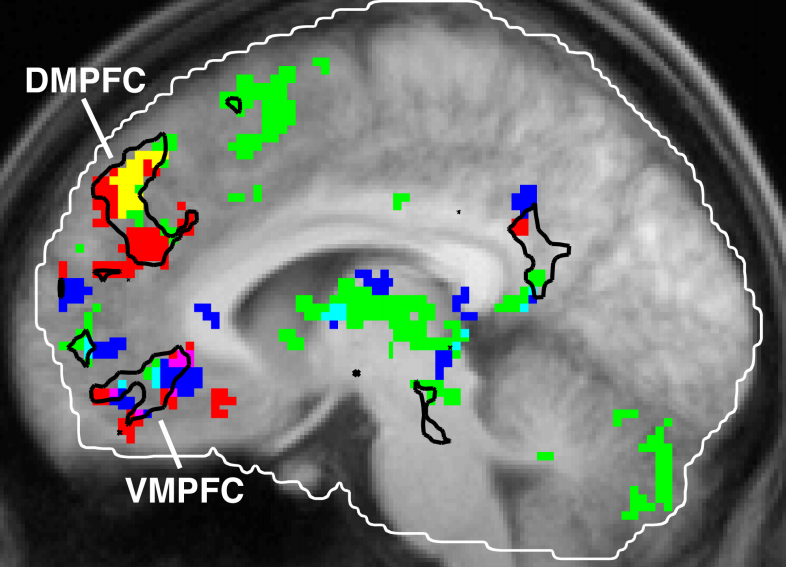
Approaching this area of study, Dr. Janata’s hypothesis stated, “Music, memories, and emotions are linked in the medial prefrontal cortex.” He was correct.

The medial prefrontal cortex (MPFC) is the area of the brain located behind the forehead. Coincidentally, it is one of the last parts of the brain to atrophy due to Alzheimer’s.

After the interviews with the college students, Dr. Janata was able to infer that the more aggressive or vivid memories were reflected in the amount of activity in the dorsal (upper) region of the MPFC.

It was this discovery that lead Dr. Janata to further his research in trying to construct a playlist specifically produced for people suffering from Alzheimer’s disease.

“Based upon the behavioral evidence that when you play music to an Alzheimer’s patient, they light up and they might start talking,” Dr. Janata said.

The playlist would not be a cure by any means — the memories fade away when the music does — but it would improve their quality of life by inducing certain emotions when a song is playing. Music could help calm them in moments of distress and make them happy as well.

Similar to creating this form of treatment for Alzheimer’s, Dr. Janata explained that this can also be used for depression and post-traumatic stress disorder (PTSD).

This solution can already be seen in daily life and also in Dr. Merlin’s classroom at UC Riverside.

“There is no denying — I was talking to my students only the other day— I was asking them, ‘How many of you listen to music?’ Most people are walking around the campus with their iPhones or iPods creating their own musical score to affect their emotions. Everyone is using the sense memory of sound to constantly alter their emotions,” she said.

Dr. Merlin uses music in all of her acting classes. From the moment they begin, music is played in order to set the mood or tone of the class and to get each student in a “collective emotional state.” The music she most often makes use of are film scores. She explained that film scores are specifically made to make the audience feel a certain way in order for the scene to increase in intensity and for them to empathize with the characters.

The MPFC, while known to be the hub for music and memories, was also explained during Dr. Janata’s presentation to be where social skills or decisions provoked by morals are located.

Dr. Krueger, based upon his studies of psychology, said that music is also linked to primary intersubjectivity — a person’s ability to empathically interact with and understand other people without having to rely on higher-level ‘theory of mind’ abilities.

Music is linked to primary intersubjectivity, according to Dr. Krueger,  because of its ubiquity.

“As far as we know, all cultures have music, and they seem to use it much the same way – namely, to regulate emotions and coordinate social actions,” he said.

Babies are similar to extreme Alzheimer’s Disease patients, in that they cannot communicate verbally and often cannot control their emotions or behavior but can still process and react to music.

“Many studies indicate that babies listen to music carefully and respond to it in highly sensitive ways,” Dr. Krueger said. He lists premature infants’ ability to  change the tempo of their breathing, vocalizing and movements to match the lullaby being sang. Babies as young as two months old, Dr. Krueger reported, are capable of discerning musical properties such as tempo and melody.

Dr. Krueger interprets this evidence by saying the early practices of listening to music are, “instances of social training.” From which he is able to conclude that music enables us to practice the skills necessary in order to engage or participate in social interactions.

“Music is a tool for exploring our emotions, developing empathy, and learning how to connect and share with others,” he said.

For the next phase of his research, Dr. Janata received the 2014 GRAMMY Foundation Grant. He is still looking for other sources of funding, however, in order to increase his sample size. The only requirements of eligibility to participate in the study include, being “able to hear the music and questions, and be able to respond verbally.”


27th Annual Davis Turkey Trot brings community together

0

A Change of Pace Foundation hosted the 27th annual Davis Turkey Trot running event last Saturday at the Civic Center Park downtown. The event had categories for every participant with a 5K, 10K and half-marathon for adults, and 1 mile, 1/2 mile, 1/4 mile and 200-yard dash for children.

Despite the light rain on the morning of, approximately 3,000 attendees participated in the Turkey Trot. Participants came from various cities throughout Yolo County. Some participants even came all the way from Reno City and Nevada City.

“We do try our best to get out [in marketing] of Davis and really explore all the communities to come to Davis,” said Jared Ney, event coordinator and a member of the A Change of Pace Foundation.

One participant in the 5K race, April Lynn Gemein, came from West Sacramento.

“I think it is very well-run and a good local event. It brings a lot of people together and gets people active, [try] to get out and have fun,” Gemein said.

Over 500 volunteers were involved in this event. The volunteers were given different shifts — positions included volunteer check-in coordinator, race timer, food and snacks coordinator, course monitor and t-shirt vendor. Several volunteer were UC Davis students. Edgar Zaragoza, a 4th-year communication and linguistics double major, was one of the volunteers.

“I usually like to volunteer [in these kinds of events], and help put the event together and make it possible for everybody else,” Zaragoza said.

There were several concession stands and vendors at the event. Many of the vendors were related to health and fitness organizations such as the Carmichael Running Club, U.S. Cryotherapy Treatments, Leukemia & Lymphoma Society and Fit House.

“There are a lot of things going on to keep people occupied. [A lot of] free things [that are] good for [participants’] health,” Zaragoza said.

A Change of Pace Foundation, a non-profit organization, has organized Davis Turkey Trot since 1987. The proceeds of the event go to charities throughout CA.

“We used proceeds from our events throughout the year to support running and fitness in various Northern California communities through scholarships, clubs, programs, youth programs, after school running activities, etc,” said Jeannine Henderson, assistant race director in A Change of Pace Foundation in an email interview.

According to Henderson, The Davis Turkey Trot also benefits a few local groups who helped in the fundraising of the event, such as UCD women’s lacrosse, Imani Clinic, Will C. Wood High School ASB, Kappa Gamma Delta (UCD) and DHS Advanced Treble Choir.

A Change of Pace Foundation has also organized other running events, some of them held in Davis.

“Our events take place throughout Northern California and include other Davis favorites like the Stampede (2/8/15), Moonlight Race (July), California Kids Triathlon (Aug) and Positive Energy Kids Triathlon (June), plus events in Sacramento, Elk Grove and Clarksburg,” Henderson said.

According to their website, the organization strives to “encourage, educate and motivate kids to inspire life-long habits towards a healthy lifestyle.”

“[We are] getting families to come out and race together, [and] bringing fitness awareness to families,” Ney said.

The first-place winner of the 5K marathon in the 30-34 year old age group was Davis local Nathan Kwan. With a time of 14:57.617, Kwan beat last year’s winner, Kai Benedict, whose time was 15:38.3. Kwan however, did not break the record for the best time in the 5K and 10K races, preventing him from receiving the cash prize of $250. The current record in the men’s 5K division is held by Jonathan Peterson in 2008 with a time of 14:37. In the 2008 women’s 5K, Lorin Scott holds the record with a time of 16:45. The 10K men’s division record is held by Patrick Parsel with a time of 30:27 and the 10K women’s division record is held by Catherine DuBay in 2000 with a time of 36:04.

Department of Theatre and Dance presents ‘The Fantasticks’

On Dec. 4, the UC Davis Department of Theatre and Dance will debut its fall musical, The Fantasticks, at Wyatt Theatre. The musical is directed by staff member Kathy Morison and will mark the department’s first holiday-themed production.

The Fantasticks is a 1960s musical loosely adapted from Edmond Rostand’s play The Romancers, and features music by Harvey Schmidt and words by Tom Jones. The show’s original off-Broadway production, which ran a total of 42 years, holds the record for the world’s longest-running musical. The story tells the tale of Luisa and Matt, two young lovers whose parents trick them into falling in love by trying to keep them apart.

Although the story’s premise is simple, Giana Gambardella, a second-year psychology and dramatic arts double major who will be playing Luisa said that there are unique moments in the show that distinguish it from any other production she’s seen or been in.

“The Fantasticks is so unlike any other musical that’s ever been produced. It’s timeless, but at the same time it can be so off-the-wall and bizarre,” Gambardella said. “The storyline is simple, however there are moments that are so off-the-wall that give it interest and depth.”

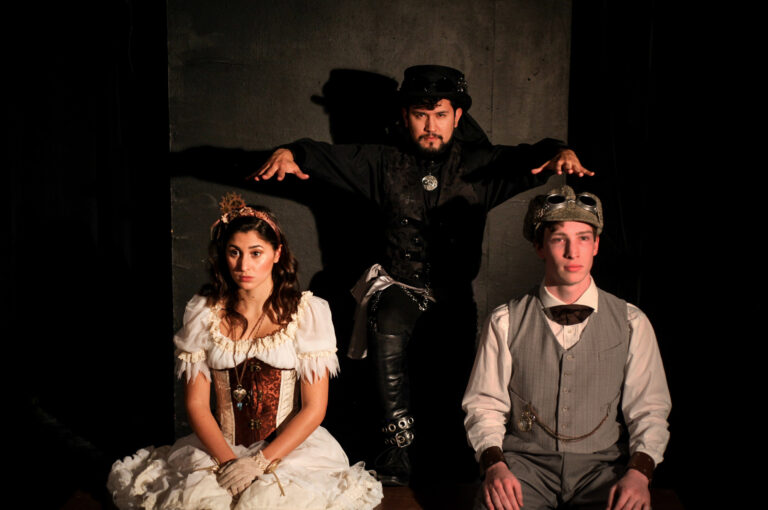
Morison said the timelessness of the show allowed her to put her own unique spin on the classic musical. She hinted that the university’s production will include a modernized twist with a steampunk vibe.

“It’s one of those pieces that’s done a lot, but we’re always able to do a different twist on it because it’s not really set in a specific time period,” Morison said. “We are turning this production a little on edge with a little steampunk theme that kind of goes along with that.”

Although the show itself is not set around Christmas, Morison said the musical’s overall heartwarming theme goes along with the holiday spirit. Morison also notes that the show’s venue will be adorned with lights and holiday decorations.

“It is a show that would really set your heart in a lovely holiday feel to be able to move on with the chaos that generally ensues with finals,” Morison said.

Following the department’s spring production of Spring Awakening, The Fantasticks is only one of the few musicals the university has done in recent years. According to Morison, the department chose The Fantasticks as its next production due to the large demand from the student body to do another musical. Morison said that it’s not a typical musical; however, she claims that this is not to diminish the show’s music, which she said plays hand-in-hand with the script.

“This musical is not a ‘musical theater’ kind of musical,” Morison said. “It’s not like these characters are going to break into a tap dance in the middle of the show. It’s very genuine and comes from an honest place. This is almost a play with music.”

David d’Olimpio, a first-year dramatic arts major, plays Henry, an old and washed-up actor. d’Olimpio said the show, which marks his first musical and university production, presents important life messages in a lighthearted way.

“It creates a world that is very relatable and very fun,” d’Olimpio  said. “The story is very simple, but it carries a lot of deep lessons that are very important to look at, like things about love and identity and experience.”

For Matt Skinner, a second-year dramatic arts major who will be playing Matt, the musical’s self-awareness and irony sets it apart from any other production he’s ever acted in.

“The show has this interesting balance between being very self-aware and kind of ironic at times, but also being very sincere and sweet, which I think is a fine line that’s hard to achieve in a good way,” Skinner said. “I think it really nails that. I’ve never done a show like that.”

The department will present its debut performance of The Fantasticks on Dec. 4 at 8 p.m. at Wyatt Theatre. The show will run through Dec. 14 on select dates. Tickets can be purchased for a flat rate of $15 by calling (530) 752-1133 between the hours of noon to 2 p.m., Monday through Friday. For more ticket information, email tdtickets@ucdavis.edu.


Photo courtesy of Kathryn D Morison

Davis continues to foster relations with sister cities

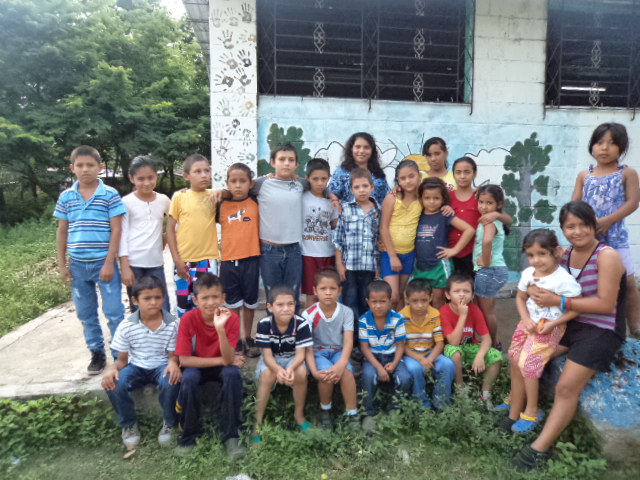
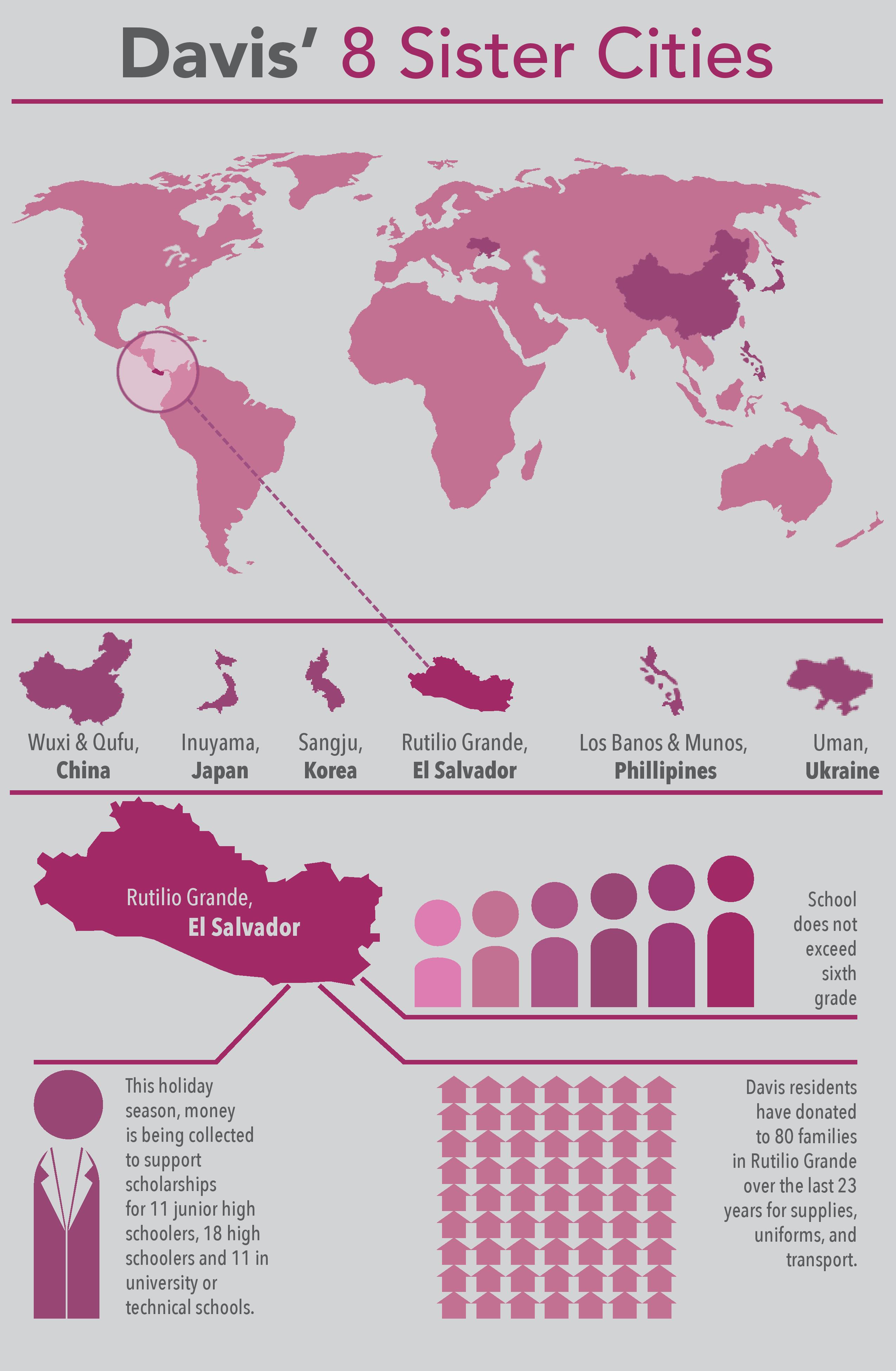
On Nov. 17, a group of volunteers gathered at Cynthia Kellogg’s house, a member of the non-profit Davis Friends of Rutilio Grande, to prepare a mailing of holiday fundraising requests. For the last 23 years, Davis residents have donated money to a community of 80 families in Rutilio Grande, El Salvador.

“They have a two-room school that goes only to sixth grade, so if the children are going to be educated, they have to travel outside the city, and that means they have to pay for transportation, uniforms and books,” Kellogg said.

Davis’ role as a sister city to Rutilio Grande has allowed many students to be educated beyond the sixth grade. Most of the students’ parents are subsistence farmers growing corn and beans either on small plots of land or larger, communally farmed plots.

“These mailings are really helpful, because there are so many good people in Davis that respond to this and the money goes to good people,” said Walter Sherwood, who became involved with Friends of Rutilio Grande after he retired from working as a teacher.

The sister city relationship began as a result of the Salvadoran Civil War that took place from 1979 to 1992, due to a conflict between the Farabundo Marti National Liberation Front and the military-led El Salvadoran government. The families of the community had been targeted by the Salvadoran government, causing them to flee the country into Honduras and then Nicaragua. It was in Nicaragua that they met a nurse from Davis, who enlisted the help of Kellogg and her husband. To be able to return to their home, the Salvadorans needed help negotiating with the Nicaraguan, Honduran and Salvadoran governments. The families were required to have land purchased in El Salvador to be able to return, as well as people to accompany them on the journey home.

“So we did a huge campaign and raised quite a bit of money for land. And they needed accompaniment … so my partner and I went to help accompany them and we met them on a farming cooperative in Nicaragua,” Kellogg said.

Kellogg and her partner had to return to jobs in the United States and were unable to join the families on their return journey. The families succeeded in making it home, though, and a few months later Kellogg and a delegation from Davis traveled to El Salvador to visit the community. Jean Beckett was a member of that first delegation, and was helping to prepare the envelopes Nov. 17.

“I got involved really by knowing some of the people who were interested … I thought it sounded interesting and I went to the meetings and I got hooked. I loved the people [of Rutilio Grande] when I met them,” Beckett said.

The community was named after a priest who had been assassinated during the war while on the road to Aguilares, where the families had lived before fleeing El Salvador. They chose to honor the priest, who had been assassinated partly for his leftist beliefs, by naming their new community after him.

sistercity_ci

Sister Cities

Rutilio Grande is one of Davis’ eight sister cities. Each relationship was founded on different ideals and are connected to Davis for unique reasons. The community of Rutilio Grande was itself founded as a sanctuary city based on peace and social justice.

“Essentially, these sister cities are a way that the city of Davis can form new friendships and new relationships based on areas of mutual interests all across the world,” said Kelly Stachowicz, deputy city manager of Davis.

Stachowicz said that three other sister cities besides Rutilio Grande have quite active relationships with Davis. These are the cities of Wuxi, China; Sang-Ju, Korea and Inuyama, Japan. The relationship with Wuxi, also a university city, was founded in 2003 based on mutual interests in agriculture and food science.

According to former mayor and current sister city ambassador Ruth Asmundson, in 2003, Sang-Ju, Korea requested Davis as a sister city based on three factors: It needed to be a bicycle city, with a university strong in winemaking and surrounded by wineries. After a delegation from Korea visited Davis and decided they wanted to formalize the relationship, Asmundson put a proposal to the city council to approve, which they did in 2004. Sang-Ju’s relationship with Davis includes an employee exchange from Sang-Ju. Currently there is a mid-level administrator from Sang-Ju in Davis for a year to learn about city governance and to send ideas back to Korea. This is the seventh employee Sang-Ju has sent to Davis. In addition to learning about Davis’ city government, the mayor of Sang-Ju has wanted to do exchanges for educational purposes, and high school children from both Davis and Sang-Ju have made trips of about two weeks to both sister cities.

The relationship with Inuyama, Japan began in 2000 and recently celebrated its 14th anniversary. Two friends who met in college, one from Davis and one from Inuyama, decided to establish a sister city relationship between their two cities. The friends had always been interested in running and health, so now every February a delegation from Davis goes to Inuyama to run in a road race, and every September a delegation from Inuyama comes to Davis to run in a race here.

The idea behind sister cities began with President Eisenhower in 1956, to promote peace through citizen diplomacy and individual international relationships.

Asmundson first became involved with Davis’ sister cities in 2002.

“I grew up in the Philippines, and I’ve always felt that everybody should be global citizens … Individual-to-individual interaction is so much better, it is so rewarding,” Asmundson said.

A delegation from Inuyama came to visit Davis, and former Mayor Boyd asked Asmundson to host them. With her international background, Asmundson found it quite easy to become friends with the delegation, and gained an interest in promoting Davis’ sister cities. In addition to Sang-Ju, Asmundson wrote the proposals to formalize the sister city relationships with Wuxi, China and both Philippine cities, Los Baños and Muñoz. Asmundson grew up in the Philippines, and during her time as mayor of Davis, she visited and met with then-president Gloria Macapagal-Arroyo. President Macapagal-Arroyo requested that Asmundson establish sister city relationships with two university cities in the Philippines, in order for them to improve their research capabilities. Relationships with  Los Baños and Muñoz were formalized in 2005.

Davis has no funding for sister cities. Each sister city has a committee of volunteers in charge of maintaining the relationship and raising funds if necessary, as Friends of Rutilio Grande is doing this holiday season for Rutilio Grande.

“[The sister] cities have budgets for sister city relations. In Davis, we don’t have any, so it’s all community volunteering…Usually, we have community members who are interested, so they form a committee,” Asmundson said.

Asmundson was appointed as ambassador to the sister cities because Davis had no coordinator for them. She works with all of the committees to help maintain the relationships. Asmundson recently spent five weeks and travelled to the Philippines, Korea and China, and visited some of Davis’ sister cities.

“True to President Eisenhower’s vision, we are promoting world peace. We are global citizens. We are all in this one boat, the earth,” Asmundson said.

Photo Courtesy Cynthia Kellogg

Graphic by Courtesy

Susan Mann wins 2014 Lifetime Achievement Award

Susan Mann, a UC Davis history professor emerita, has been announced as one of the winners of the 2014 lifetime achievement awards from the American Historical Association.

Mann, who is the former chair of the UC Davis history department, is the first UC Davis history professor to receive this award.

Though Mann has received a number of honors in the past, including the Outstanding Mentor Award from the UC Davis Consortium for Women and Research as well as the UC Davis Faculty Research Lecturer award, she said that receiving this honor was a complete surprise. She first found out that she had received this honor through a letter from Jan Goldstein, the chair of the selection committee.

Mann, who specializes in the history of women and gender in China, said that she first became interested in studying gender when she was teaching at the University of Chicago in the 1970s. Although she was then working on a book about Chinese commercial taxes, her female undergraduates encouraged her to study the history of women instead.

“They started holding meetings for the Women’s Union in my house and reeducated me,” Mann said. “Then I met a group of scholars at Stanford in the early 1980s, all working on women’s history, and they showed me it could be done.”

During this time period, a 1957 index with thousands of Chinese women’s poems from the late imperial period reemerged, and Mann began studying the history of Chinese women.

Today, Mann has written many articles as well as several books about women in late imperial and early modern China.

“One of her books, entitled ‘Precious Records,’ changed the way that I study Chinese history,” said former student Guotong Li. “Her work made me [see] that women’s own literary writings in the 18th century could be used to reconstruct the silenced history of women at the time.”

From her time at UC Davis, Mann said that she loved spending time with her fellow professors. She and her colleagues even formed a program called the Cross-Cultural Women’s History in order to facilitate conversations about gender among faculty and graduate students. Today the program is known as Cross-Cultural Women’s and Gender History.

However, Mann might be most well-known for her relationship with her students.

“Susan is the best mentor and teacher,” said Yulian Wu, a former Ph.D. student of Mann. “From [an] academic perspective, she taught me how to think and write as a historian. Her work inspired my interests in Gender history and I finally decided to become a gender historian.”

Other students echo this sentiment.

“Not only did she act as my career mentor in a professional way, Susan also served and still serves as the role model in my life,” Li said. “She spends lots of her time correcting and editing my works, [and has] never turned down my request for her academic help, even after my graduation. Her strong support means a lot to a junior faculty member in the academic field.”

Kathryn Olmsted, the chair of the UC Davis history department, agreed that Mann strongly deserved this honor.

“She’s an extraordinary scholar: she’s a pioneer in her field and in the academy,” Olmsted said. “In addition to her lifetime of impressive scholarship, she also provided a lot of service to the university, including serving as chair of our department. We’re so happy that the historical profession has given her this tremendous honor.”

Pokémon culture at UC Davis thrives

0

The release of Pokémon Omega Ruby and Pokémon Alpha Sapphire has, once again, brought the popular franchise to the forefront of people’s attention. However, for some fans, interest in the game is not limited to new releases. On July 6, Alex Ogloza, a recent UC Davis graduate with a major in communication, won the 2014 Masters Video Game National Championship.

The competition lasted for three days and was held in Indianapolis. The games were played on each individual player’s Nintendo 3DS gaming console, and to battle, the two players sat across from each other at a table and linked their game devices. According to official tournament rules, each competitor brings his or her own team of six, and all battles are double battles, with two Pokémon out for each player at the same time.

“Getting through to the final round was so scary, especially since the last match was played on the final day, and I was just super nervous the whole weekend,” Ogloza said. “A game like this is a risk management game; you can be consistent but you’re going to eventually lose to stuff out of your control sometimes. So in a big tournament like that, where you can’t lose in the final stages without being kicked out, it’s really nerve-wracking.”

The first day of the tournament consisted of nine rounds. Only people who lost two times or fewer moved on. The playing field was cut down to 9 percent on the first day, and from there, the nine percent was whittled down to a final eight. The remaining eight players played single-elimination, best two-out-of-three matches to see who progressed.

“I squeaked through to the final round as eighth seed, and from there I had to play the three-time world champion in the first round because he was first seed, and somehow I beat him. I then won my top-four match on stream, and eventually came back the next day to win the final round as well,” Ogloza said. “At the end, a commentator came up to me because they give you an interview and I just put my head in my hands and said, ‘Oh my God’ in front of an audience of 60,000 people. This was something I wanted so badly for so long, especially because I really wanted to prove not only to myself, but also to my parents, that flying around for so many years, going to all of these tournaments, was really worthwhile. I know my parents watched the final rounds as they were happening, and it was just really nice to reconfirm that everything I’ve been doing has been worthwhile.”

Ogloza had been playing competitively since he was 16 years old. His first tournament was in San Francisco, and, since then, he has been to tournaments all across the country. The Pokémon Company hosts all the tournaments, and players are allowed to participate in as many as they would like; however, only the three best finishes are counted when determining points. Championship points are given based on how good the participant’s record or standing is at the end of each tournament, and the top 16 people in the United States with the most championship points get an invitation to the World Championships. The network of Pokémon players that Ogloza had met throughout these competitions is extensive. Even at UC Davis, Ogloza had the opportunity to meet a wide variety of well-established Pokémon players.

“Davis actually probably has one of the strongest histories of Pokémon players out of any university ever,” Ogloza said.“I mean, we have the Ha brothers (Duy and Huy), with multiple Worlds invitations and top eight finishes between them, including back-to-back California first-place regional finishes back-to-back. Paul Hornak, who won that same regional the following year, is one of the most recognized players in the game’s history, finishing in the top four of every regionals he attended from 2009-11, including a [first-place finish] at Phoenix and Seattle. [There’s] Alex Stempe, who took first and second at Oregon’s regionals in two consecutive tries, and now we also have a national championship. So we actually have a large collection of ridiculously good people mostly just by coincidence.”

Ogloza had also made an effort to introduce competitive Pokémon to the people around him, including Stempe, his current housemate and a fifth-year economics major.

“[Stempe] taught me about competitive Pokémon on a more advanced level [during] freshman year at Davis because we were in the same dorm. He had just finished placing 13th in the world [championships] the summer before freshman year, and it was one of the first times I had been around someone other than myself that enjoyed playing the game so much,” Stempe said. “I am very happy for his championship. I also participated in nationals but did not do nearly as well. I watched him work his way through the tournament, and while there was some luck involved, he did what he needed to do every game in order to win and I feel he is very deserving of the title of National Champion.”

Pokémon has not only been a large part of Ogloza’s experiences up to this point. He said that it will be a large component of his future career as well.

“I’m doing YouTube full-time and that only came about because I play Pokémon. Pokémon was my starting point, it was my introduction to an audience — you need a following, and since there were not a lot of people covering VGC, the official name for the official tournament, I started covering it. That’s actually why I went into communication, because I knew I wanted to do something with YouTube,” Ogloza said.

Ogloza’s championships have been a source of inspiration to some UC Davis students as well, one of which is Ivan Ornelas, a second-year computer science major and the president and founder of the Nintendo Club.

“One of the few constant things in my life is video games; I grew up with [them] and made many of my friends through it,” Ornelas said. “That’s why it makes me very happy that people are so invested in a game like Pokémon. I think that his championship serves as a reminder that, no matter what your hobby is, pursue it. Do what you love to do and you’ll be surprised at what comes out of it.”

UC Davis Students Call for Statewide Action

On Nov. 24 at noon, hundreds of UC Davis students and community members gathered on the Quad and staged a march through Downtown Davis as a part of the “UC/CSU/CC Statewide Call for Action” protest regarding the UC Regents’ decision to increase UC tuition by five percent annually over the next five years. Last week, before the Regents voted, demonstrators marched through campus in protest of the tuition plan and occupied Mrak Hall—the main administration office building.

“Last week it was really powerful getting everyone together and having our voices heard. Today’s another day to have our voices heard,” said third-year anthropology major Sky Johnson. “This one, more than last week, is our protest. We don’t want to hear from the chancellor and the UC Regents. This is us saying ‘we matter and our voices matter.'”

In light of UC Regent and Bank of America Board Member Monica Lozano voting in favor of the tuition hikes at the UC Regents meeting last week, protesters occupied the Bank of America office located on E Street during today’s march. At press time, students were currently occupying Olson Hall on the UC Davis campus and planned to continue the occupation for the rest of the day.

“I just think that our students are really frustrated with this whole notion of a tuition increase. Them having an opportunity to exercise their free speech right is something that the administration here truly believes in,” said Associate Vice Chancellor of Student Affairs Milton Lang. “We are at a time where the state should invest, reinvest in higher education so that we are not put in a position where we can’t sustain the level of service for students. Now that the state is in a better shape financially, its time for the governor to step up and support higher education so that we don’t have to raise tuition.”

After reaching Olson Hall, students chanted “leave our space, leave our space” repeatedly towards Lang and other university administrators.

“I think that this is their space, but its our space as well,” Lang said. “That’s why we decided not to leave, because we are here supporting our students and we understand their frustration. Sometimes it gets pointed in different directions, so we understand that.”


Ritika Iyer and Sydney Cohen can be reached at campus@theaggie.org.

Photos by Amelia Evard and Ciera Pasturel.

ASUCD Fall 2014 Senate Election Results

On Nov. 21 at 4 p.m, ASUCD Elections Committee Chair, John Wu, announced the results of the ASUCD Fall 2014 Senate Elections. The winners are as follows, in order of highest voter turnout: Alex Lee, Casey Nguyen, Reem Fatayerji, Roman Rivilis, Anabiah Syed and Andrea Velazquez.

“I don’t know how I feel yet, it’s going to be a really long year,” said fourth-year political science and economics double major and senate-elect Roman Rivilis. “ We have a lot on our table and a lot of obstacles we need to overcome, especially with the coming tuition hikes and the climate of student activism that we need to foster in ASUCD.”

2,896 voters turned out for this quarter’s elections. This was significantly lower than the Winter 2014 Senate Elections, whose voter turnout was 27.11 percent — the second highest in recorded ASUCD history.

“I do have to say that I am disappointed in the voter turnout,” said current ASUCD Senator Gareth Smythe. “ASUCD controls a lot of resources. This is one of the only units that represents the undergraduate student body and students get to decide how we control our resources, so it’s very important for students to vote.”

Three of the newly elected senators, Lee, Fatayerji and Rivilis, ran as independent candidates. The remaining three seats went to candidates from the Students Matter: Activism, Retention, Teamwork (SMART) slate.

“It’s very exciting, it means we clearly have support from the community and our own communities,” said third-year political science major and SMART senate-elect Anabiah Syed. “I’m glad we all had the opportunity to run together.”

Only one SMART candidate, third-year mathematics and statistics double major Brendan Chang, did not win a seat at the senate table.

The six newly elected senators will begin their term at the beginning of Winter Quarter 2015.

“I am really happy, but I couldn’t have done it without everyone’s love and support,” said third-year Asian-American studies and community and regional development double major and SMART senate-elect Casey Nguyen. “This win isn’t for me, but it’s for everyone that has been behind me this entire time. I’m excited to start getting things done on the senate table.”

Written by Gabriella Hamlett and Ritika Iyer