57 F
Davis

Davis, California

Monday, December 22, 2025
Home Blog Page 829

Film Review: The Hunger Games: Mockingjay Part 1

Perhaps Mockingjay Part 1’s greatest flaw lies right in the name itself. The film is part tragedy, part romance and part incomplete.

The film adapts the first half of the final installment in Suzanne Collins’ young adult series, The Hunger Games, which depicts the fictional country of Panem, a dystopian world where resources are scarce and children are forced to kill each other in annual televised death matches.

The film follows a similar trend adopted by other franchises, including Harry Potter and Twilight, in splitting the last book into two consecutive films. However, like Mockingjay, these books are already entire tales within themselves. Mockingjay Part 1 comes across overall as uneventful and lacking in excitement, and serves as a prime example on how final books are not meant to be two tales in one, but one complete story.

Mockingjay Part 1 begins shortly after Katniss Everdeen (Jennifer Lawrence), former Hunger Games winner and face of a burgeoning rebellion against the Capitol, escapes from her second time in the games. After her rescue, Katniss finds herself in District 13, a hidden underground base where living members of destroyed districts are seeking refuge until a plan is formed to overthrow the Capitol. Initially distressed and reluctant to take her title as the Mockingjay, the symbol of hope for the revolution, Katniss agrees after seeing the destruction of her home in District 12 and learning that her tribute partner and on-screen lover, Peeta Mellark (Josh Hutcherson) has been captured by the Capitol.

While the film includes a few thrilling instances, such as Katniss’ moving speech at a makeshift hospital and her riveting quest to rescue Peeta, Mockingjay Part 1 often finds itself scraping at the bottom of the barrel to stretch the film for over two hours with material that can be told in 30 minutes.

However, the film the does the best that it can do under the circumstances. Director Francis Lawrence does a commendable job in setting the tone for the series’ final installment. Though the film is dull at times and tends to drag on, Lawrence’s directing paired with dynamic performances by the cast make the film enthralling nonetheless.

Having also directed the film’s predecessor, The Hunger Games: Catching Fire, Lawrence once again succeeds in creating an aesthetically beautiful, yet tragic world. Though the film is primarily set in the bunkers of District 13, Lawrence uses color beautifully to distinguish between the muted tones of heartbreaking Panem and the brightness of the thriving Capitol.

Jennifer Lawrence once again is captivating in her portrayal of a young girl thrust into the front lines of a rapidly advancing rebellion. As Katniss, she delivers a performance where she cries, gives speeches and rescues cats, all of which solidify her as a true force in acting.

Hutcherson is haunting in his portrayal of a brainwashed Peeta. The character, who is typically wide-eyed and cheerful, is shed completely of hope in Hutcherson’s chilling performance, which exhibit the actor’s incredibly versatile talent.

One of the few highlights of the film was Elizabeth Banks’ reprisal of her role as Effie Trinket, an ex-member of the Capitol who is stripped of her dramatic makeup and costumes, but not of her flamboyant personality. Banks’ hilarious portrayal brings light to the dullness of the screen.

Julianne Moore, acting veteran and a newcomer to the franchise, is engrossing as District 13’s President Coin, the stoic and duplicitous general of the rebellion. It is also important to note that Philip Seymour Hoffman receives a posthumous tribute at the end of the film for his charming and deserved portrayal of Plutarch Heavensbee.

However, not all the members of the cast delivered their strongest performances as seen in Liam Hemsworth, who portrays Katniss’ childhood friend Gale Hawthorne. Hemsworth finally receives the screentime his character deserves, but unfortunately those scenes are filled with a dull and monotonous performance.

All in all, Mockingjay Part 1 is good, but not great. Missing the complex arenas and horrifying murders that made The Hunger Games a household name, the film pales in comparison to its predecessors. However, if there’s one thing Mockingjay Part 1 did right, it’s that it makes the audience hungry for the final installment in The Hunger Games series.

Photo Credit: Murray Close/Lionsgate

Causeway Classic comes to UC Davis

0

The UC Davis Aggies (2-8 overall, 1-6 Big West) and Sacramento State Hornets (6-5,  3-4) renew their rivalry on Nov. 22 at Aggie Stadium as they face each other for the annual Causeway Classic. The Aggies have won the last four meetings, including last year’s 34-7 win at Hornet Stadium. This will also be the last game of the UC Davis season.

The rivals have faced each other every season since 1954. UC Davis currently holds a winning record against Sacramento State with 43 wins and only 18 losses.

Sacramento State is on a two-game win streak and is looking to close out the season with another win. But the Aggies are coming off a big week in which they snapped a seven-game losing streak with a victory against the Cal Poly Mustangs. Senior running back Gabe Manzanares won the ROOT Sports Big Sky Offensive Player of the Week award rushing for 230 yards against the Mustangs.

Sophomore quarterback Ben Scott has continued to thrive. In his five starts he has thrown for 1,434 yards and 16 touchdowns while completing 62.6 percent of his throws. Scott has continued to show progress in his five starts and has also made junior wide receiver Ramon Vargas his favorable receiver. Vargas has completed 38 receptions from Scott for 626 yards and eight touchdowns in four games. Expect the Scott-Vargas connection to be a major factor against the Hornets.

The Hornets are led by quarterback Garrett Safron who has thrown for 3,202 yards. Along with Safron, running back Jordan Robinson leads the running attack, averaging 72.4 yards per game.

The game will also feature the honoring of 15 UC Davis seniors as they finish their collegiate careers as Aggies.

As always, this should be an exciting matchup. When it comes to rivalry games, anything can happen. Even with the Aggies having suffered through a down season, the Causeway Classic always brings excitement to UC Davis football.

UC Regents approve tuition hike

The University of California (UC) Board of Regents approved a tuition plan Thursday morning that will increase UC tuition by up to five percent annually over the next five years. The decision came at the Board of Regents meeting held at the UCSF Mission Bay Campus, where hundreds of students protested.

UC tuition is currently $12,192 and will rise to approximately $12,800 next fall. If the UC increases tuition by the maximum five percent each year, students in 2019 will pay about $15,560 — $3,369 more than they pay today — which would be a 28 percent increase from the current tuition.


This week in women’s sports

0

Basketball (0-1):

UC Davis vs. UCONN (L, 102-43)

The UC Davis women’s basketball team lost 102-43 against No. 1 ranked UCONN at home on Friday.

In a televised ESPN event, the Aggies shot 30 percent, with senior guard Kelsey Harris and senior forward Sydnee Fipps contributing team-highs of four three-pointers and six rebound shots, respectively. Despite these team-high efforts, UCONN seized the game with quick feet and a high scoring percentage, making a dominant 64 percent of three pointer shots.

Cross Country:

NCAA West Regional at Stanford (11th place)

UC Davis junior Christine Hoffmann led the women’s cross country team to an 11th place finish at the NCAA Cross Country West Regional on Friday. Placing 23rd, with a time of 20:54.4, Hoffman earned all-region honors, becoming the third Aggie in history to receive the award.

Three Aggies joined Hoffman for spots in the top 100. Sophomore Clara MacLeod placed 47th, with a time of 21:20.6. Senior Raquel Lambin and junior Erika Barr took the 67th and 77th spots, with times of 21:38.9 and 21:47.9, respectively.

Swimming:

UC Davis vs. BYU (W, 149-140)

Aggies swam the fastest times in all 14 events against BYU on Saturday at the Schaal Aquatics Center.

Senior Hilary Hunt and freshman Courtney Schultz propelled UC Davis to victory, contributing 18 points each for their wins in the backstroke, 50 free and 100 free events.

Senior Samantha Shellem won the 400 IM with a time of 4:28.58. Sophomore Elise Roberts swam the second-fastest time in the same event, at 4:30.56.

The team travels to Tucson, Ariz. on Friday to race in the Wildcat Diving Invitational.

Volleyball (15-11):

UC Davis vs. CSUF (W; 25-21, 25-16, 25-9)

UC Davis vs. UCI (W; 21-25, 25-21, 25-23, 25-22)

The UC Davis women’s volleyball team won its first game of the week on Nov. 13 against CSUF. Gaining momentum from a first-set win, the Aggies improved on their passing game in the second and third sets to beat CSUF with leads of nine points and 16, points respectively.

Junior Kaylin Squyres led the offensive with 16 major kills. Senior Megan Lancaster and sophomore Allie Wegener kept the defensive strong with 13 and 11 digs, respectively.

Aggie volleyball continued the week with an intense match up against UCI on Saturday.

After losing the first set, the Aggies made a comeback with an early advantage in the second, and pivotal wins during ties in the the third and fourth sets. Junior outside hitter Kaylin Squyres led the Aggies with team-highs of 14 kills, 18 digs and four blocks.

The UC Davis women’s team won both games of the week and now have only three games remaining in the regular season.

AggieAngelous

0

ThePoetry-ThePoets&ThePoetesses

ThePoetry

“Evenly-winged Eyeliner is a State of Mind and I am in it”

By Iris Bloomfield

I am summer déjà vu.

Honeysuckle dewdrop.

I love like a wizened child.

;I; weaver of weather,
deceiver of never,
hold my arms out to you who would
dance with cyclones and kiss
lightning
unto
the earth.
It is okay if you are afraid.
I too, have fear.
I am drunk with it.
Fear softens me.
I drink its potency and dance—
because to dance with fear is to have courage.
So let us drink in
our worst days,
or greet them like solemn bastard handshakes
And celebrate their passing like floats on parade.

Remember the orange slice smile!
Remember the love that loves you despite you!

Because you are my breath,
and I breathe despite death.

I want you
to remember who you are
beyond your to-do lists,
work hours and
relationship problems.

I want you
to sit me down,
shove a mug of tea in my face and
tell me why you’re beautiful
and why no-one can take that
away from you.

I want you
to love me into the ground so
I can appreciate the sound of
my heartbeat against the planet’s
shifting plates.

I want
to gather
the whole world
like a lake into an auditorium
so I can shake
each person’s hand,
like

God?
Damn.

I want not the flesh,
nor its end—but
the persistent, easy
hope of morning fog,
mother’s grace:

Touch me everywhere, because
there is time enough for time
and space enough for space.

Yes: I will be
the sober drunk:
dumb and lost,
tender and keen—
I will write a never-ending love letter
to this most grand dream. ||
  
  (I am not trying to get this right, just better)

ThePoets&ThePoetesses

“Evenly wingled eyliner is a state of mind and I am in it”

By Iris Bloomfield

Iris Bloomfield is a second year at UC Davis. She is majoring in English and trying to decide on a second major — possibly technocultural studies. She also is a core member of Sick Spits, the UC Davis Spoken Word Poetry club. In her free time, Iris likes to rap (freestyle & pre-written), play hacky sack and pet dogs.

Iris’s poetry had modest beginnings on scrap paper and napkins in eighth-grade classrooms. Her voice was further nourished within the Youth Speaks spoken-word community, which saw her through most of high school. Some of the places her work has appeared in includes the California Oddity, the 826 Quarterly and The Press (a UC Davis student-run zine). If you see her, please use the correct pronouns — she and/or they, and all the respective conjugations.


Be featured in AggieAngelous

Send your poetry to aggieangelous@gmail.com with your name, major, year and a short, one-to-two paragraph description about yourself. Feel free to include your interests and/or hobbies, or maybe even your favorite quote!

Graphic by Courtesy

Guest opinion: UC Davis GSA Tuition Increase Opinion

0

In early November, UC President Janet Napolitano announced a 5 percent per year tuition increase plan to be voted on Wednesday’s UC Regents meeting. As the Chair of the Graduate Student Association, I am writing to express our opposition to the tuition increases and highlight how tuition increases will affect UC Davis’s graduate and professional students.

Graduate and professional students are a lynchpin of education and research at UC Davis, and our output is one of the foundations of excellence at our campus. We are teaching assistants, associate instructors, graduate student researchers and contributors of our education. We substantially advance the humanities, arts, sciences and engineering during our educational tenure at UC Davis and often translate those advancements into social and economic gain for the state of California.

Graduate and professional students are financially supported with both tuition remissions and stipends through a wide variety of funding sources: university employment as teaching assistants, associate instructors, graduate student researchers, research grants, endowments and private sources which include student loans. These sources will be hard-pressed to maintain the current number of supported students if they must also absorb tuition increases. While graduate students see more support from the previously mentioned funding sources, the majority of professional students fund their own education and already go tens to hundreds of thousands of dollars in debt. Further increasing professional student fees is not fair and equitable to our future doctors, veterinarians, nurses, teachers, lawyers and professionals. It is not within our best interests as an institution to price graduate and professional education out of the reach of qualified applicants, especially when demand for these graduates outstrips supply in our society.

Increasing tuition will affect recruitment and retention of our outstanding graduate and professional students by reducing the amount of competitive offers our departments and programs make to new students or through not having enough funding to support our current students. It will also impact quality of teaching and research at our institution. By reducing the number of students we can support, we reduce the number of teaching assistants, associate instructors and graduate student researchers who are integral to advancing excellence at UC Davis. The outcomes when current funding sources reduce support are graduate and professional students who are pushed into more private funding sources — or pushed out of a graduate degree when it becomes too costly. When we exclude students based on ability to pay for an education, we diminish UC Davis’s ability to achieve excellence.

By increasing tuition, the University of California creates an access barrier to higher education. We cannot build a diverse and inclusive institution by excluding certain groups based on their ability to pay or their perception that a UC education is out of their reach. We need diverse viewpoints to drive education within the classroom and advancement of the arts, humanities, science and engineering.

I enjoin all stakeholders in this issue to find an alternative that does not inequitably place the burden on students — who, without this education, will not be able to be part of the equation that drives social and economic change within our state.

Sincerely,

Erica Vonasek

Chair, UC Davis Graduate Student Association

Ph.D Candidate

Biological Systems Engineering


(Re)Fashioning Gender: The Hairy Truth

0

As proven by the sudden abundance of scraggly beards and hair just long enough to pull into man buns, No-Shave November is officially in full swing. In addition to raising cancer awareness, this month-long event has another side effect. Hair – whether it’s on your head, your face, or your body – can be as much of a fashion statement as the clothes you choose to wear. On the other hand, if individuals choose to defy the gender binary and either keep or remove hair from places that it’s generally expected to be, there may be other implications that are largely related to socially constructed gender stereotypes.

If women participate in No-Shave November, for example, it can become less of a fashion statement and more of a social commentary about how rigid and confining gender roles can be. The same goes for men who choose to remove hair from places like their legs, armpits, etc. The choice to go against the norm when it comes to one’s own body hair – whether or not it’s out of a conscious effort to make any kind of statement at all – is an inherent refusal to participate in a heteronormative stereotype that largely influences our society.

It has somehow become commonplace, at least in North America, to relate the absence of hair to femininity and the appearance of hair to masculinity. But it’s important to address the idea that this is just a socially constructed concept. Women are not born wishing for smooth, hairless bodies, nor are men born dreaming of the ability to grow full beards or hairy chests. Rather, these notions only come about after years of exposure to all kinds of normative influences, which make up a kind of collective dialogue about gender roles. The problem with this is that many people might participate in this dialogue without necessarily being critical of why that is.

For example, most girls I know, myself included, began shaving their legs and armpits around the age of 12, which is way before I even knew what the hell a gender role was. So was I removing my body hair because I had some kind of ingrained hatred for it? Not at all — it was more about doing what was expected of me. All of my friends were doing it, the women in magazines were doing it, even my mom was doing it — so why wouldn’t I? That’s a question that may not be asked very frequently. As a result of that, expectations about gender are misconstrued as natural, validating the stereotypes that make up gender roles.

In the case of body hair, these stereotypes revolve around the idea of perfectly hairless (and perfectly altered) bodies for women and affluently hairy bodies for men. I’ve talked to girls who say they shave because it feels “cleaner” and boys who say they would never shave because hair feels “manlier,” which seems to indicate a pretty big divergence between the ways women and men perceive their own bodies. While women typically view their hair as a negative, dirty aspect of themselves, men view theirs as a positive, desirable one — and if either gender chooses to transgress that perspective, it becomes scandalous.

That stigma around hairy women and hairless men implies obligations for both genders to maintain. Furthermore, it creates a dichotomous perception of gender, which is extremely constricting. So this No-Shave November, I urge you to participate with a mindset that accepts all types of gender expression — hairy or not.

To reach CHELSEA SPILLER, email her at ctspiller@ucdavis.edu.


Edumacation with Calvin and Hobbes: Teacher Appreciation Day

0

flesch_op

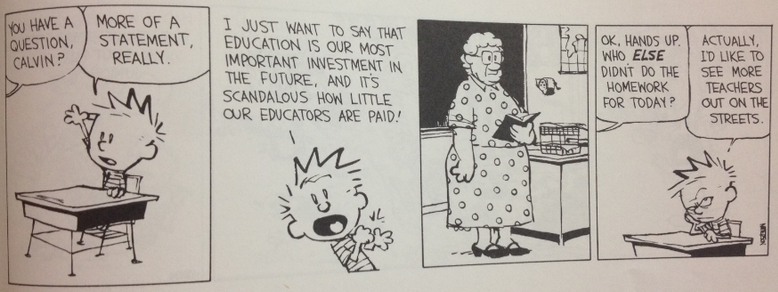
There is something healthy about having a crush on a teacher. For me, it was first grade, forlornly asking Ms. L why we hadn’t recited the Pledge of Allegiance. As a 6-year-old patriot, I could give less of a damn about the pledge, and more about being a good-boy for her. I love teachers. Unlike Calvin, I would hate to see them on the streets. Professional teaching comes with a plethora of responsibility, and current trends in education make it harder for teachers to do their job. This column will deal mainly with teaching at the primary and secondary education levels. It is easiest to identify the root causes of common issues teachers face at this level.

Teachers complain a lot, which may help explain why I feel so akin to them. But unlike me, they have good reason. With growing class sizes, tech-driven curriculum and increasing pressure to abide by state standards, teachers find constraints in a field that can be much more creative. And beyond these societal phenomena, teachers’ lives are made tougher through underappreciation, frequent criticism, and, perhaps to the greatest extent, kids. Teaching is not easy, and students like Calvin don’t make it better.

But let’s start with society, because I’m a big thinker. Class sizes become a problem when schools are understaffed and over-enrolled. Given a reduced capacity for teacher-student engagement and an increased workload, educators will naturally defer efficiency in teaching and getting out the material. From the student side, this is incredibly boring. And while learning shouldn’t always be fun, we have created a situation in which fun is becoming impossible.

The solution may be in having students work in groups that the teacher could manage more easily. These groups might not even be assigned with any specific task other than helping each other beyond the classroom and having a system to report difficulties to an educator. When crowds get large, communication is stifled. Smaller groups would help prevent this.

The ubiquity of technology has also created a new dilemma for teachers. In a profession where style can widely vary, using new technology can be seen more as a risk. For our purposes, we will not talk about websites that deal with administrative concerns (think SmartSite), but online assignments, quizzes and tests. The immediate concern is of distraction: The internet certainly takes away from the continuity required to absorb information. But the real effect of technology will be seen in form — specifically, the book versus internet argument. Teachers often use a given textbook because it generally reflects a form and pace that they would like to follow throughout the year. For the most part, developing a curriculum around internet sources would likely be more disorganized and less focused on traditional material. This may be why, in my experience, teachers only recommend the internet for articles, scholarly and not.

The internet is a great tool for learning, but we need to develop a structure around it. As it continues to increase in popularity, this structure must not take the form of a simple e-book, which can be tedious to use. Rather, there should be a system of interaction. Perhaps a rough guideline of topics that link to specific resources the teacher would like to cover. This allows educators freedom to teach what they want, without having to depend on a school-issued text. This may be the best solution as society increases its dependence on web-based technology.

The most poignant effect of this type of interaction would be its ability to go against the largely negative culture of standardized testing: curricula would be unique to each teacher, and assessing students would shift drastically. This might result in teachers receiving even more complaints of their unfairness in grading. But the student ultimately benefits when a teacher is more engaged with the material. As much as I can appreciate a teacher, the worst ones in my experience have been those who seem largely indifferent to their subjects.

It almost goes without saying that teachers are not paid nearly enough for the job they do. It’s startling at times to think that investment in an educated population (a signal of a strong economy) is given so little credence among policymakers. Part of the issue, at least on a popular scale, is that it can be hard to see how education helps in the long term.

This is why I’m often surprised by Calvin. He simultaneously criticizes others, but in his own vanity, is too blind to see that potential solutions lay in the streets, where he has put the teacher. Oh, I love him.

To share your childhood teacher fantasies, you can reach ELI FLESCH at ekflesch@ucdavis.edu or tweet him @eliflesch.

UC Davis offered the chance to discover “Roots of Inspiration”


Photo by Katie Lin
Photo by Katie Lin

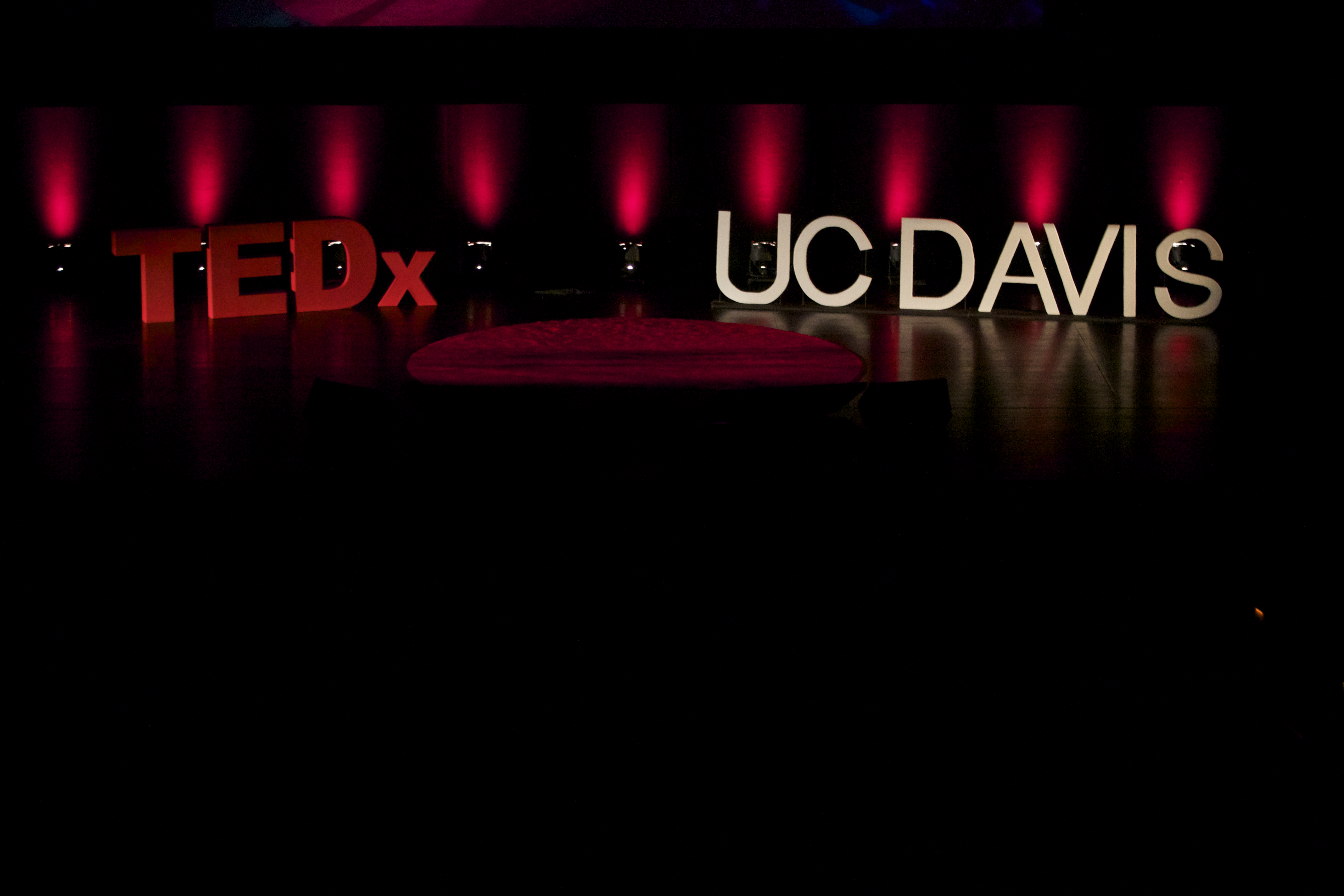
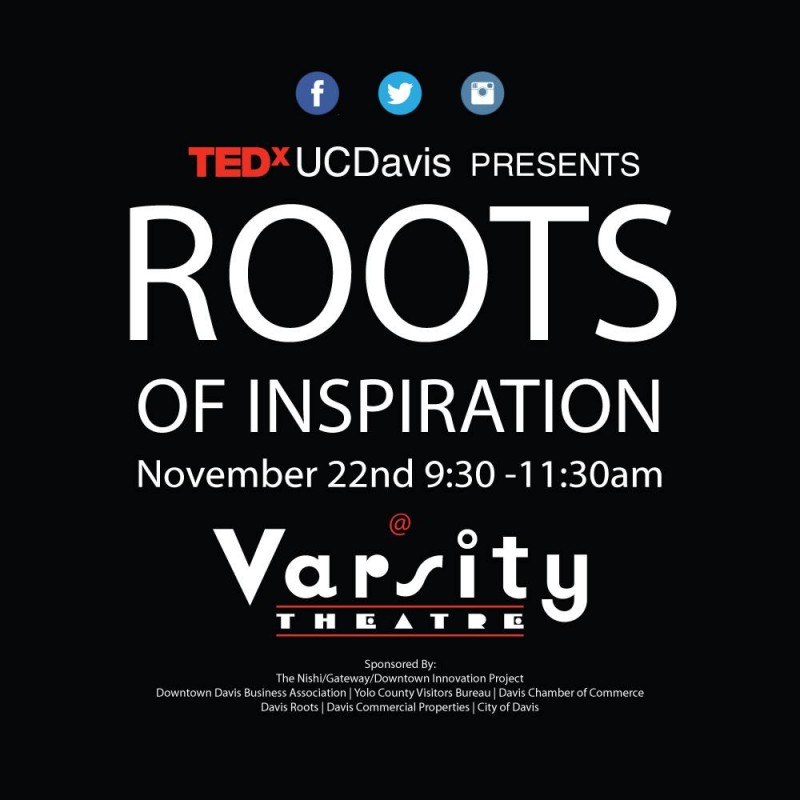
On Saturday, TEDxUCDavis will be hosting its first salon of the year from 9:30 to 11:30 a.m. Tickets will be $5 for Davis students and $7 for non-students. TEDxUCDavis is an independently organized version of the globally-renowned TED (Technology, Entertainment, Design) Conferences. TED Conferences, popularized by the release of “TED Talks” online (many of which are available via Netflix and Youtube), are based around the simple premise of sharing ideas. Speakers are allotted a maximum of 18 minutes to share their ideas and perspectives on a nearly unlimited range of topics. Sam Hodges, a fourth-year film studies major, attested to the effectiveness of the viral speeches.

“[The speakers and format] make TED Talks very engaging,” Hodges said. “Our generation can have a very short attention span and [some of the topics covered in TED Conferences] can get dry very quickly, but the speakers [at TED events] are both knowledgeable and charismatic.”

TEDxUCDavis features a similar format, but with a focus on themes that are more specifically suited for the Davis community. The event is held at The Varsity Theatre to serve the community as a whole.

Sinisa Novakovic, owner of the theatre and former UC Davis graduate student, attributed the theatre’s proximity to both academic and residential constituents as an asset for the event.

“The theatre is located in the heart of downtown Davis,” Novakovic said. “[It’s in a perfect position to] successfully attract both the UC Davis student population [as well as the residential population].”

TEDx_arThe TEDx event will feature four speakers and two performers from the Davis community, as well as an intermission for conferencing and networking. The theme of this conference, “Roots of Inspiration,” provides an avenue for the speakers to share their thoughts on personal inspiration in both conceptual and concrete terms.

Ruhi Thakker, a fourth-year communication major, serves as public relations director for TEDxUCDavis and elaborated on this sentiment.

“[The speakers will share how they] get inspired and also [how they] motivate others to get inspired,” Thakker said.

“Roots of Inspiration” tailcoats off of and expands on last year’s kickoff TEDxUCDavis theme, “Pause and Play.” “Pause and Play” referred to the concept of stopping to reflect on occurrences in everyday life and then utilizing information gleaned from reflecting to accomplish goals. Where “Pause and Play” set out to motivate students through introspection and reflection, “Roots of Inspiration” looks to get students to use that introspection to move forward and inspire one another.

“College students can lose motivation,” Thakker said. “It’s really important to keep them motivated and inspired. [Motivating and inspiring students] will be a really big theme for [TEDxUCDavis] throughout the year.”

Thakker also stated that while the goal of the salon is to motivate and inspire students throughout their time in university, TEDxUCDavis aims to provide students with advice that can be utilized long after their academic careers have ended.

“Students [will be able to] actually take something away from [the conference] that will help them even after they graduate.” Thakker said.

For more information on “Roots of Inspiration” and other TEDxUCDavis events, visit tedxucdavis.com.

Photo by Katie Lin

Graphic Courtesy TEDxUCDavis


Tuition Blame Game

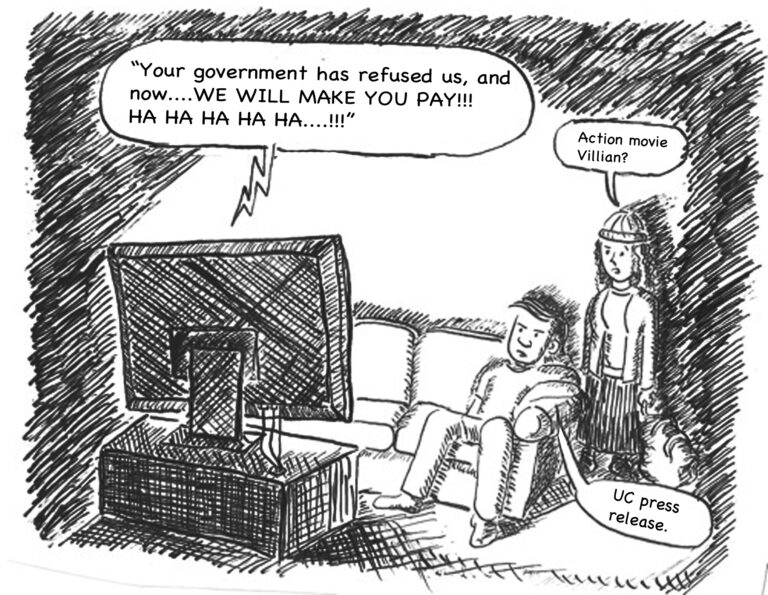
In light of protests that took place on the UC Davis campus on Tuesday and a recent vote by a committee of the UC Regents to raise tuition for the 2015-16 school year, we feel that relations between UC administration, the California government and students need to be significantly improved.

Many people blame UC administration and regents for supporting a tuition hike, and the administration then blames the California state government for not providing enough funding to the system. While the cyclical dialogue continues, the burden ultimately falls on the students, who have to pay excessive amounts of money for their education.

Students should continue to peacefully protest and voice their opinions so that the effects of fee increases like these are clear. They should also try to foster open forums and communication with the UC administration. It is important that students demand proper advocacy on the regent and state government levels, and this will only be done through continued conversation and action about this issue.

We await the final decision regarding the tuition increase and hope that students continue to advocate for their voices to be heard. Continue checking The Aggie’s website and Twitter for more information.

editorial_op

Inside the game with Samantha Shellem

On Saturday, senior Samantha Shellem finished up the meet against BYU with three season-best times, helping to ensure a win with a final score of 149-140.  Carrying an impressive resume in and around the swimming pool, Shellem is an invaluable asset to the Aggies’ women’s swim team.

Samantha was interviewed by The California Aggie soon after the win against the Cougars, where she talked about her various accomplishments.

How did you get started swimming?

My mom swam, and then I just loved the water so they put me in lessons, and then [the swim] team and, 15 years later… [laughs].

Why did you choose to swim for UC Davis?

I actually transferred here, and Pete [Motekaitis, the associate head coach] called me and he was just like, “Well, we would really love you to swim here,” so I came on a trip and I liked the girls and I liked the coaching staff, so it was just a good fit for me.

You and your teammates have done really well these past few years, a lot of All-Mountain Pacific Sports Federation First and Second teams, especially in the 200, 500 and 800 freestyle.  What are your hopes for this year?

Just that we can repeat it again. I mean, doing it once is hard, but repeating it’s harder so…

Good luck!

Thanks.

Congratulations on being the second UC Davis swimmer to be honored this year — you were named the MPSF/Turbo Female of the Week, right?

Yes.

What was your reaction when you found out?

Oh, I was excited — everyone was swimming really well, so it made racing fun. And you know, they push you — your teammates push you every day.

Do you have any pre- or post-swim rituals?

I drink a lot of coffee before every swim meet. I’m all about the coffee.

What motivates you?

It kind of changes throughout the year. But right now this is going to be my last year swimming ever, so I just want to finish strong and do well for my team.

What is the best memory you have had at UC Davis?

Winning both conference championships with my team.  It was, you know — it was fun.

Do you plan on swimming after?

Probably not, but we’ll see what happens.

Graphic by Courtesy

UC Davis Symphony Orchestra presents “Love, Death, and Pranks”

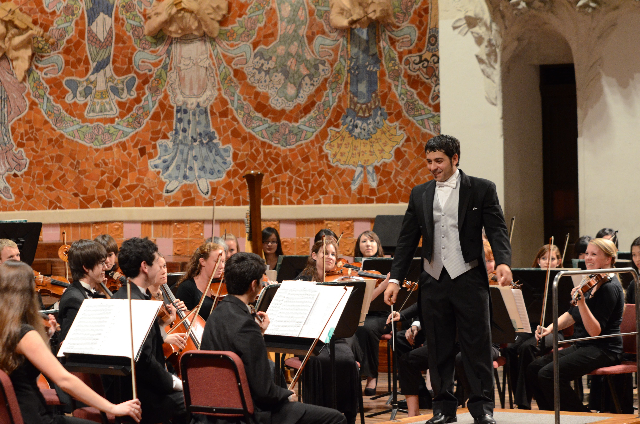
The UC Davis Symphony Orchestra (UCDSO) will be presenting its fall concert, “Love, Death, and Pranks” at the Mondavi Center’s Jackson Hall on Saturday at 7 p.m. The concert will be conducted by Christian Baldini, music director of UCDSO, and will feature a variety of works from Europe’s romantic era.

The concert is set to showcase four composers from the Austro-Germanic tradition. The program will begin with an overture to Mozart’s Idomeneo, followed by Gustav Mahler’s Rückert Lieder, Richard Wagner’s Vorspiel und Liebestod from Tristan und Isolde and end with Richard Strauss’ Till Eulenspiegels lustige Streiche.

Alexander Stepans, a fourth-year music and political science double major, has been playing the horn for the orchestra since his first year at UC Davis. Stepans will be performing a big horn solo in Till Eulenspiegels, a tone poem, which describes the story of Till Eulenspiegel, a figure in German folklore. Although he has performed the solo several times for auditions, this will be Stepans’ first time performing it in concert.

Till Eulenspiegels has an enormously difficult, but rewarding horn part,” Stepans said. “It has a very exposed solo at the beginning that sets the tone for the entire piece. Having played this excerpt for auditions many times, it is exciting to finally play it in a concert.”

Renowned soloist Blythe Gaissert will accompany the orchestra during Rückert Lieder, a musical piece based on poems written by Friedrich Rückert. Gaissert, a mezzo-soprano, met Baldini while he was conducting an opera in England. Baldini was impressed with Gaissert’s talent and subsequently invited her to perform with his symphony.

“I have worked with [Baldini] before and I am very excited because I think he is such an incredible musician,” Gaissert said. “Rückert Lieder is one of the most moving works to perform because everyone can identify with the sentiments expressed.”

Carrie Hennessey, a local soprano soloist from Sacramento, will also accompany the orchestra during Liebestod, a piece from Wagner’s opera Tristan und Isolde, which is literally translated to mean “love death.”

According to Baldini, the four distinct pieces he selected for the concert provide a wide breadth of expression, which showcases the orchestra’s versatile talent.

“[The pieces] show how differently the orchestra can sound depending on what they are playing,” Baldini said. “We don’t tackle every piece of music in the same way.”

Philip Daley, concert manager for the UC Davis Music Department and an alumnus of the department and the symphony himself, encourages students to attend the concert because of the increasingly rare opportunity to listen to live music.

“Truly enjoying music happens by listening to it in person, not through a pair of headphones, and the UC Davis Symphony provides a perfect opportunity to do so,” Daley said.

Similarly, Baldini encourages students to attend the concert because of his love for music and his belief that it can change lives.

“Music can add much to our lives. We are always exposed to music in the movies, with video games, and we tend to also need music when we are sad, or happy, or need to celebrate something,” Baldini said. “Witnessing a live performance by a symphony orchestra can be one of the most invigorating and inspiring experiences in life.”

Tickets for “Love, Death, and Pranks” can be purchased at the Mondavi Ticket Office or online at tickets.mondaviarts.org for $8 students and children, and $12-17 adults depending on seating.

Photo Courtesy Bill Hollingshead

Tunespoon: Haters gonna pay pay pay pay pay

If the word “twerk” resonates with you in any way, whether you view it, do it, or revile it, then I congratulate you on being a citizen of this generation. That word is charged with all sorts of connotations, often of sex, shock and racism. As a pop culture phenomenon, twerking is hard to ignore, thanks in part to the self-proclaimed morally righteous who caused an uproar, effecting waves of controversy. Exploitation of controversy has been a long-used tactic, dating back to the hypnotic pelvis of Elvis, and it’s an undeniably profitable scheme.

What society labels as “pop music” isn’t about the songs (remember: music is sound, not how hot a singer is). The lifeblood of pop music is relevance. I don’t mean true relevance, like anonymous bomb threats or UC tuition increases. I mean #RELEVANCE. Bold WordArt headlines on magazines. The avoid-at-all-costs cancer called YouTube comments. To the monster called Relevance, all talk is success.

To stay relevant, a pop musician has to record something new; something that is lyrically unexpected or sonically surprising; basically, anything at all just to get us talking will suffice. We all recall the shocking stylistic about-face by the Disney Channel teen idol who now waits for her turn to snort cocaine in a bathroom. Summer 2014 saw Taylor Swift spinning the turnstiles into Haterland with “Shake it Off,” involving a highly divisive aesthetic trade from a farmhand’s careful daughter to a confusing amalgam of California pop stereotypes (some country-loving fans felt betrayed). Soon after came Nicki Minaj’s wholesome, family-friendly self-love anthem “Anaconda.” The song will never do by itself. All it requires is a boost of raunch.

Music videos are an essential element of the pop music package. They’re the most effective sites of exploiting controversy. The use of twerking in “Shake it Off’s” music video may have felt appropriate and innocent or cheap and offensive. Nicki Minaj’s NSFW provocations may have disgusted or delighted you. In the moneymaking grand scheme of things, all that matters is that you clicked the link.

Controversy yields haters. Haters love to spread their hate. It’s easy to see the impact of controversy; Minaj’s “Anaconda” has almost three times as many views as her prior single “Pills N Potions,” and Swift’s “Shake It Off” has more views than both “We Are Never Ever Getting Back Together” and “I Knew You Were Trouble.” Whether you click the link out of anger or curiosity or adoration for the art, views equal money in the artist’s pocket thanks to the financially beneficial ménage à trois between artist, YouTube and VEVO. Through the controversy tempest, the artistic merit of these works is nullified.

These pieces exemplify modern times – the state of our social norms, the condition of the music industry, the outlook on music’s future – and deserve serious critical analyses. Swift’s self-aware, self-deprecating lyrics to “Shake it Off” intend to inspire independence from the often suffocating negative opinions of others, and the cringingly awkward spoken-word bridge evokes the eternal teenage struggle of achieving cool. Minaj’s “Anaconda” is a biting, silly look at the sexist objectification of women in hip-hop and an unrelenting, satirical barrage of improbable vulgarity; her charisma is undeniable, and the creativity behind her bonkers persona comes across like a wild yet well-rehearsed circus act. Treat art with care and respect: there’s always something worthwhile to hear and read into.

Alas, care and respect in regards to popular music is hardly a reality. It’s our impulsive feelings that the music industry seeks after. Our quick judgments take the spotlight and make the money, over appreciation for music. And that kind of sucks.

To the fella over there with the hella good hair, won’t you come on over baby? We can email STEVEN ILAGAN at smilagan@ucdavis.edu.

Interclinic consortium works to increase collaboration between clinics

Courtesy of the Interclinic Consortium

When fifth-year environmental toxicology major Marianne So was volunteering at the UC Davis student-run Bayanihan Clinic, it was located on V Street in Sacramento, less than a mile from a similar organization, Shifa Clinic, located on the same street.

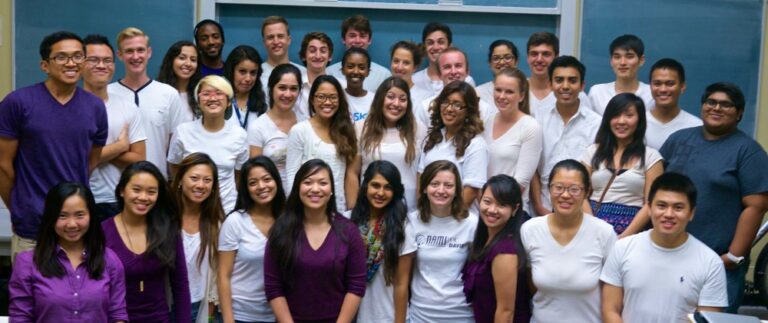
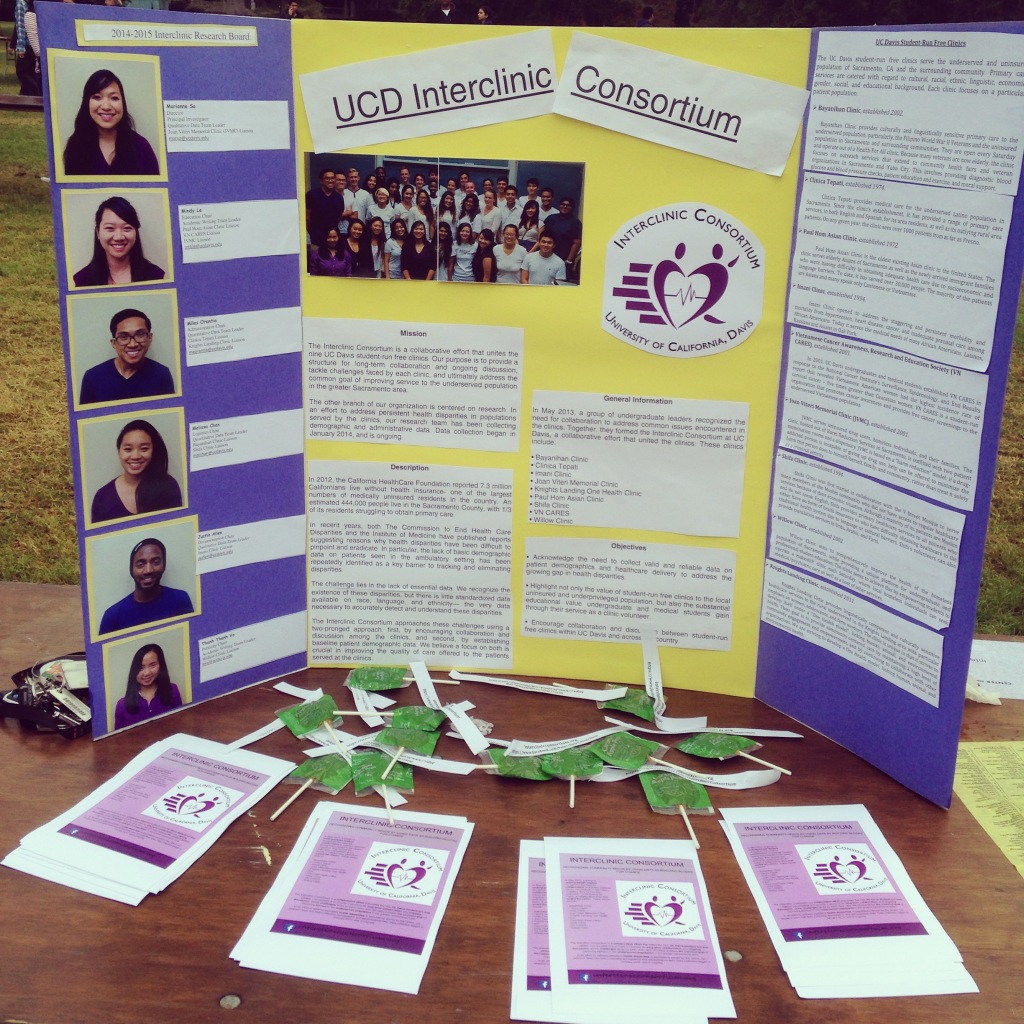
Although So knew friends at Shifa Clinic, she thought it was interesting that they had never carpooled from Davis together. In the beginning of 2014, So started the Interclinic Consortium in an attempt to organize collaboration between the nine undergraduate, student-run clinics operating in Sacramento with the help of UC Davis medical students and undergraduates.

“When I was with Bayanihan Clinic as both a board member and an undergraduate volunteer, I saw that there was little collaboration between all the different student-run free clinics,” said So, who currently serves as director of the consortium.

It took a total of three years from the idea’s inception to its fruition. So specifically spent her time garnering support from faculty members, board members and medical students at the clinics.

“At first it was difficult, but now everyone is on board and we’re working toward sharing resources and building that strong connection between all the student-run free clinics,” So said.

The consortium functions through a series of meetings and discussions on the topic of what the clinics have in common and how they can work together. Every month the consortium hosts an “interclinic affairs” meeting — a gathering with a select group of board members from every clinic.

“We talk about common obstacles and common goals, for example how the Affordable Care Act is affecting our patient populations. Another example is that vision and dental services are the top two services most requested by patients, so [we’ve discussed] how can we combine our resources to serve those patients in need of those services.”

The differences between the clinics are also a factor in their collaboration. According to student-run clinic manager Ed Dagang, some clinics may have resources that others do not, and the interclinic consortium is working to take advantage of that.

“The ultimate goal is to open the lines of communications between each of the clinics so each clinic has a sense of what is taking place in their particular communities and their facilities — upcoming events, sharing of information, resources, opportunities such as grants, fundraising and information about upcoming recruitment application cycles for new volunteers,” Dagang said.

Dr. Darin Latimore, a liaison for the UC Davis Medical School, emphasized the need for these student-run clinics in Sacramento.

“These students are very altruistic; they really are providing a service in the greater Sacramento area,” Latimore said. “The county of Sacramento has few services for the uninsured, and almost zero services for the undocumented. So if it wasn’t for these clinics, especially the undocumented, but many other people really would not have access.”

The clinics rely on volunteers with various levels of experience. Undergraduate students might be tasked with checking vitals like temperature and blood pressure, which are then presented to medical students.

“The medical students see the patients, they’ll do an exam and order labs depending on the chief complaint and they present the patient to the preceptor who reviews all that and makes final determination on patient care,” Latimore said.

The preceptors are licensed physicians who volunteer at each of the clinics. Some are UC Davis physicians, but most are simply from the community.

“They’re from all over, from all different health systems, private practice [and] local — I knew one who even came periodically from the Bay Area. Many of them actually were UC Davis students once upon a time,” Latimore said.

Courtesy of the Interclinic Consortium

By linking all the clinics together, the Interclinic Consortium also serves as a way to collect data as a means of better serving the patient population. The consortium’s website reads the importance of “recognizing community needs by using data as building blocks for change.” So said data collection and use is a major component of the consortium.

“There’s a lot of potential in data, [especially]what it could reveal about our patient population [and] how effective our clinic services are,” So said. “Those are really important questions, instead of just assuming that our services are good.”

This sentiment is reflected in what So sees as the second half of the consortium, a research component which includes a team of over 40 people, most of which are undergraduate researchers. They conduct weekly surveys at five of the nine clinics, with plans to eventually reach all clinics, to collect demographic data, including racial identity, income and most common illnesses, as well as patient feedback.

“The goal is to not just have people surveying for the project, it’s also to inspire our research members, most of whom are pre-health oriented, to think holistically about medicine,” So said. “It’s not just about serving the patients in need, it’s about asking the questions behind why a patient might not be getting access to care that they need.”

So said the project is still in the early stages, emphasizing data collection, but analyzing preliminary data has already led to a greater knowledge of the clinics’ shared obstacles. Specifically, So believes clinics can use the information gathered to make decisions about what services are needed or desired among their patients.

On top of patient-oriented research, So is planning to speak with undergraduate students working at the clinics about how their experience has affected their education and career ambitions. Tanvi Desai is a third-year neurobiology, physiology and behavior major at UC Davis who has volunteered at the Willow Clinic for over a year.

“Working at the Willow Clinic [and] interacting with doctors and other college students … gave me a broader knowledge about how the health system works, the policies [involved] and how they affect people,” Desai said.

Desai said she was inspired to work at the Willow Clinic in particular based on her experience seeing poverty and homelessness while growing up in India.

“After coming [to America], I found that this is the one clinic that caters to the homeless population,” Desai said. “It was similar to what I see myself doing in the future.”

“Each clinic has a target population, but by no means is that the only population that they serve,” Latimore said. “Every clinic is different, some of them are much smaller than others, and how many [patients] each one sees varies drastically from clinic to clinic. Some clinics may only see six or seven on a given day, others may see 25.”

Each of the nine clinics was founded to serve a target community: the Willow Clinic was founded to provide services to the homeless of Sacramento, the Bayanihan clinic began with a focus on serving WWII veterans but has shifted their attention to the Filipino community, the Paul Hom Asian Clinic has a focus on the Asian community, the Imani Clinic was intended to serve the African American community, Clinica Tepati is primarily concerned with the Latino community while its sister clinic, Knights Landing, emphasizes services for rural farm-workers and promotes the linkage of human, environmental and animal health, the Shifa Clinic services the Muslim community and the Joan Viteri Memorial Clinic helps high risk populations such as drug users and sex workers.

Dagang said that the student-run clinics are in need of more physicians to act as preceptors. Those interested can email him at ed.dagang@ucdmc.ucdavis.edu.

Photos Courtesy of the Interclinic Consortium

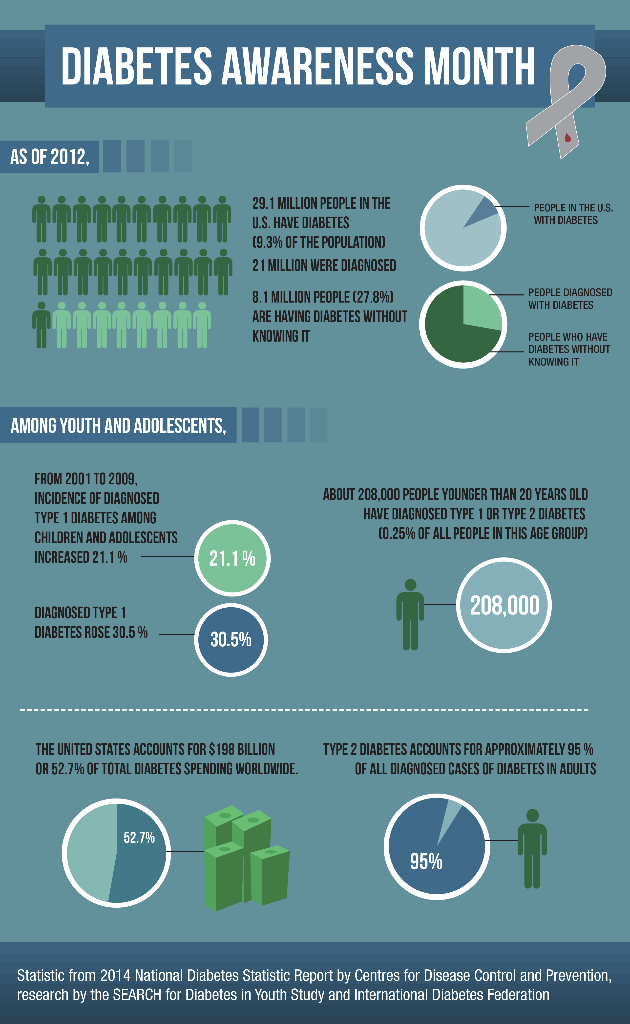
UC Davis students discuss National Diabetes Awareness Month

0
Designed by Tiffany Choi

It started with extreme exhaustion, then intense dehydration kicked in. Seven-year-old Camille Andre would drink tons of water, but it would just flow through her without an effect. When her mother took her to the hospital, she was already having difficulty swallowing food without drinking liquid.

The doctors told her parents that diabetes was the problem.

Diabetes, medically referred to as diabetes mellitus, is a metabolic disorder in which a person has constantly high levels of blood glucose (blood sugar). Due to the body’s inability to properly use or adequately produce insulin, a hormone made in the pancreas that enables our cells to absorb glucose from our blood, sugar accumulates in the blood, resulting in hyperglycemia, or high blood sugar.

Now a second-year biochemistry and molecular biology major at UC Davis, Andre still remembers the moments leading up to her diabetes diagnosis.

“That day for snack, we had peanut butter and jelly sandwiches, and I couldn’t swallow without drinking milk or water because my mouth was so dry,” Andre recalled. “We went in [the hospital] late [in the] evening, and on my way home, we stopped at the store and all I was craving was a grapefruit and watermelon Gatorade.”

November is National Diabetes Awareness Month, and students across UC Davis have strived hard to raise awareness amidst their continuous combat against diabetes.

Andre joined the Diabetes Advocacy & Awareness Group (DAAG) after her start at UC Davis. The club was formed in 2009 by a group of seven friends who were concerned about the growing diabetes epidemic.

Now consisting of four key members, DAAG strives to raise diabetes awareness around campus and the Davis community through education. They have previously given educational presentations at various student-run clinics in Davis and also for first-year students in the residence halls.

DAAG vice-president Kenny Nguyen, a third-year psychology major, said there are many misconceptions about diabetes that serve as the group’s major hurdle when promoting diabetes awareness.

“People [say], ‘I am skinny, I am not fat, I can’t get diabetes, why should I know about diabetes?’” Nguyen said. “The common misconception about [Type 2 diabetes] is ‘I am exercising, I am eating well, I am not at risk.’ Everyone is at risk. Just because you are exercising all the time doesn’t mean you don’t have diabetes.”

One of the DAAG’s major projects is to give presentations about healthy living several times a quarter to local elementary schools in Davis, Sacramento and Dixon, such as Holmes Jr. High and Birch Lane Elementary Schools.

“One of our models is living healthy, living active and [taking steps toward] prevention. I feel educating kids at a young age is a big, big step towards prevention,” Nguyen said. “Giving the presentation [and] knowing that you have an impact on 60 little kids’ lives — that by itself is a very special moment.”

Diabetes was the seventh leading cause of death in the United States in 2010. There are now 387 million people living with diabetes worldwide, which is one out of 12 people. As of 2012, 29.1 million Americans, or one out of 11 Americans, have diabetes — 12.8 percent up from 25.8 million in 2010.

If current trends continue, the Center for Disease Control predicts one-third of the U.S. will be diabetic by the year 2050.

In addition to disproportionate thirst and increased fatigue, many diabetes patients face intense hunger, unexplained weight loss, blurred vision and slow-healing cuts and bruises.

“I remember when in the morning I woke up [after my first treatment], I felt so much better. I didn’t even realize how terrible I felt before because it was progressive,” Andre said. “My blood sugar [had been] slowly increasing.”

Andre’s life has changed dramatically since her diagnosis.

“I have to know the amount of carbohydrates in everything I am eating, also how much fat and protein. All these things come into effect,” Andre said. “People don’t realize how many factors go into your blood sugar and how hard it is to keep it stable.”

Andre suffers from type one diabetes, wherein the body cannot produce insulin because its immune system mistakenly destroys areas of the pancreas that produce insulin. It is considered to be genetic and is mostly diagnosed in children and young adults.

Over 95 percent of diagnosed diabetes cases are of Type 2 diabetes, wherein the body develops insulin resistance. This type of diabetes can be prevented, regulated and eventually cured if patients live a healthy lifestyle.

“I know my life would be drastically different if I didn’t have diabetes,” Andre said. “Since life with diabetes is the only life I know, it’s kind of something I [have] accepted the way it is.”

As the DAAG’s support group and outreach coordinator, Andre founded the Diabetes Type 1 Support Group during Winter Quarter 2014 to exchange ideas, share experiences and offer support to other students with diabetes. The support group now consists of 15 members and meetings are regularly held.

DAAG’s upcoming fundraising project will be a 5K fun run, held in January, to raise money for the American Diabetes Association. The group will be also be tabling at the Wellness Carnival in the ARC Ballroom today, which is hosted by Student Health and Counseling Services.

DAAG’s president and fourth-year evolutionary anthropology major Ashley Wu, has dealt with diabetes personally, as her father suffers from the disorder. For Wu, educating the Davis community is really important for diabetes prevention.

I was really surprised when I gave one of my first presentations in one of the elementary schools in Dixon. As a kid I didn’t know about diabetes, so I was expecting the kids not to know anything,” Wu said. “But as we [did] the presentation, one of the first questions we asked was who knows someone who has diabetes. Almost everyone in the classroom raised their hands.”

Ultimately the group’s goal is to spread the idea that healthy eating and living actively can go a long way.

“It’s like the ripple effect and the domino effect,” Wu said. “As long as someone knows, they will hopefully teach someone else.”

Graphic by Tiffany Choi