57.6 F
Davis

Davis, California

Tuesday, December 23, 2025
Home Blog Page 850

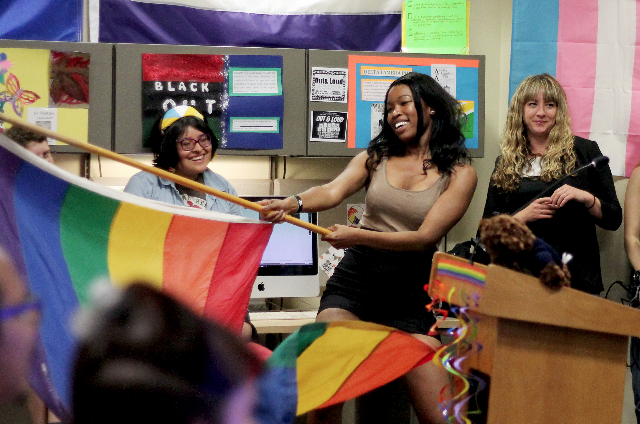
UC Davis hosts Pride Week

From May 5 to May 9, UC Davis celebrated Pride Week on campus. Put on by the LGBTQIA Resource Center, the theme of this year’s Pride Week was “R.O.A.H.R,” an acronym that stands for Redefining, Open-Hearts, Active, History and Revolution.

“I think Pride Week is important to campus because it sheds light on the LGBTQIA community and gives the greater UC Davis community a chance to learn about LGBTQIA issues,” said Brianna Hoy, a third-year genetics major involved in planning Pride Week. “It also allows those within the LGBTQIA community to come together in a safe space for workshops and get-togethers to show that they are proud of who they are and no matter what they are very much a part of this campus.”

Joel Reynoso, a first-year art history major, also involved in planning Pride Week, believes that the week gives the UC Davis community an opportunity to celebrate one another’s identities.

“Pride week is important because this allows for us to celebrate the different identities that come to UC Davis,” Reynoso said. “We let others know that we are here no matter how we identify ourselves, and there will always be support here no matter what.”

Events during the week included an open mic, creative writing workshop on self-affirmation and healing internalized shame, a presentation on queer media and interactive workshops and discussions.

“We had a large variety of events that we offered throughout the week and each one resonated with different people in different ways,” Hoy said. “I can speak for myself and say that the event that resonated the most with me was the Open Mic Night. The works that were read brought goosebumps to my skin and tears to my eyes. They were tales of anger, love, reconnection, identity and pride in being the person they truly are.”

The week also celebrated the LGTBQIA Resource Center’s 20th anniversary on May 7, commemorating the center’s history and achievements.

The week concluded with a closing ceremony on May 9 that featured keynote speaker and UC Davis alumna Migz Espinoza.

Espinoza, who graduated from UC Davis in 2013, was highly involved in LGTBQIA Resource Center events during her time at UC Davis, even coordinating several events and workshops herself.

“I spoke briefly on the history of student activism that occurred while I was a student, as well as that which enabled the creation of the center,” Espinoza said. “Student activism, and particularly queer student of color organizing, has been a major part of my academic career.”

Espinoza hopes that, as a recent graduate, she was able to speak directly to the students who attended the ceremony.

“I’d like to think the intentionality of having a recent grad spoke to the younger, fresher generation of student leaders and activists; those who don’t recall the LGTBQIA Center being in an annex or the vandalism and activism that produced the SCC,” Espinoza said. “Also, having had multiple experiences forging new paths as a transwoman of color in ASUCD and senate, in student affairs as student assistant to the Chancellor, and all around organizing, I hope I was able to ignite some dialogue about inclusion and transphobia.”

Espinoza’s speech was well-received by the students who attended.

“It was amazing to see an alumni from UC Davis come back to share her words of wisdom and advice,” Hoy said. “Her speech and poetry were beautiful and the perfect way to end Pride Week.”

Espinoza hopes that Pride Week will continue to evolve in coming years.

“The need for representation and resources will always persist, but the evolution of the LGTBQIA and the queer community’s visibility on campus has a lot of productive potential,” Espinoza said. “It’s always refreshing to see the changing programs and get a sense of the campus climate in that students organize around the most pressing and needed issues.”

ALYSSA VANDENBERG can be reached at campus@theaggie.org.

Photos by Katie Lin.

The Black Keys’ “Turn Blue” review

Just three years after the Black Keys released their heavily worn platinum album El Camino, the band is back with their newest record Turn Blue.

In true Black Keys fashion, the album offers plenty of gritty blues and self-indulgent guitar solos, but with a refreshingly genuine approach. Released on May 12, 2014 under Nonesuch Records, the unique collection is already winning critics over.

In their eighth album, the band delves into their rock and blues roots, but takes their sound a step further. Guitar solos are present, but more patient and thorough. New sounds include synths and phaser pedals, which create a psychedelic haze, while steady bass lines and heavy distortion help maintain the band’s original sound.

What Turn Blue manages to do well is show off the band’s evolution achieved by not totally filling the stereo with prepackaged rock-and-roll riffs. The two-minute jam session at the beginning of “Weight of Love” and drunken 70s disco-esque melody in “10 Lovers” make it seem as if the band is creating music beyond just what their audience expects.

The producer/keyboardist Danger Mouse, who has worked with bands from U2 to Portugal. the Man, has had an increasing influence on the band’s sound. Tracks like “In Time” and “Waiting on Words” are proof of his presence; his arsenal of synthesizers give the songs an electric feel,  which contrasts perfectly with lead singer Dan Auerbach’s raspy falsetto voice.

While the album is sonically strong, it fails to carry much lyrical weight. Its lack of complexity manifests itself with nearly every song with lyrics pertaining to Auerbach’s recent divorce. As the album played, there were really only so many times I could hear colorless lines like, “I will remember the times when love would really glow.” Turn Blue attempts to dump the melodrama with their last song and upbeat classic rock piece “Gotta Get Away,” but it just felt disjointed.

The album is an acquired taste; I certainly didn’t get into it the first time through. And although the lyrics left me wanting more, The Black Keys bring a much needed freshness to their sound, which is why I give Turn Blue an 8.5/10.


If you like this album, you might enjoy music from Unknown Mortal Orchestra, Arctic Monkeys or Radio Moscow.

Celebrity chef speaks at ASUCD Entrepreneurship Fund’s annual event

World famous chef and UC Davis alumnus Martin Yan was this year’s speaker at the ASUCD Entrepreneurship Fund’s (E-Fund) annual event, held at the Student Community Center on May 13.

The E-Fund was founded Fall Quarter 2012, and its main goal is to promote entrepreneurship among undergraduate students. This year, Yan was chosen to speak, not only for his fame and skill, but also for his love of cooking and his success in turning it into a long-thriving career.

“I’m not much of a business person, but I believe you’ve got to believe in yourself,” Yan said. “And passion — you’ve got to love what you do and never give up.”

Yan was born in Guangzhou, China and formally started his culinary training at the age of 13. When he moved to America, Yan got a master’s degree in food science at UC Davis and later became a teacher at an on-campus cooking extension program focusing on Asian cuisine.

“My time in Davis was a very memorable time because I made a lot of friends and got to know a lot of people,” Yan said. “Of course my food and cooking was influenced by my upbringing in China as well.”

Yan is most famously known for his television show “Yan Can Cook,” which first premiered on PBS in 1982. The show focused on cooking Chinese food and since then he has also appeared on “Iron Chef America” and “Hell’s Kitchen.”

During the event, Yan began by sharing his journey of coming to America, arriving with only $5 in his pocket. Though his passion for the culinary arts certainly helped him in his success, he said that he began to teach cooking as a way to earn money, and that money is a part of the reality of becoming an entrepreneur.

“Money gives you the opportunity to do other things,” Yan said. “If you can’t take care of other yourself, how can you help other people?”

For this reason, he said that to be an entrepreneur, you need to learn how to make sales of not only a product but also of yourself.

“Get your name and image out,” Yan said. “Take advantage of an opportunity to create more opportunities for yourself.”

The time Yan spent in Davis, the Bay Area and China influenced his style of cooking. Especially influential was the time he spent teaching in Davis — an opportunity that he said provided him with unique challenges.

“In the old days, only some of the ingredients [for making Asian cuisine] were available in Davis,” Yan said. “So I tried to use local ingredients that you can buy in supermarkets.”

Even after living in the Bay Area and Davis, Yan has still kept close ties to China by frequently visiting the country and even Chinatown in San Francisco. In addition, Yan recently won the Top 10 Outstanding Chinese Award, an award given to public figures who encourage a cultural dialogue between the West and China.

Yan said that being a cultural mediator between the States and China is an important part of what he does.

“I’m a culinary and cultural ambassador,” Yan said.

Since graduating and teaching in Davis, Yan has appeared on television over 3,000 times and written 30 cookbooks. Despite his busy schedule and success, Yan still makes time to return to his alma mater.

A way that he still remains connected to campus is through his involvement with the UC Davis Confucius Institute (CI). The CI was in the works for about three years before opening up to the public in 2013. Yan was involved with the Institute since its inception, and was a main proponent in coming up with its theme of food and beverages. He still occasionally aids the CI by bringing in chefs and giving seminars and presentations.

Apart from the CI, Yan is actively involved on campus in other ways as well. Last summer, Yan hosted a 10-day tour of Southern China — exclusively offered to UC Davis alumni. This E-Fund talk is the most recent campus event that he partook in.

Robert Hsu, chairman of the E-Fund and a third-year computer science major, said that Yan was chosen from a large pool of speakers.

“I think a lot of people are very proud of the fact Chef Yan attended UC Davis and that in some ways he is an emblem of the school,” Hsu said.

Ultimately they chose Yan because of the many qualities that the E-Fund values. Some of his qualities include his passion for his work and creativity while doing it. They also thought that his unique story to success would interest students. They also valued his tight affiliations with the UC Davis campus.

“We believe Martin Yan, with his entrepreneurial success, could give great insight into finding your passion and creating a business from it,” said vice chairperson of the E-Fund and a third-year managerial economics major Phi Nguyen.

A point that Yan stressed during the event was for students to do things differently. He said that there were many talented chefs in Davis and maybe millions in the world. But very few of them went on to become famous.

“To be good at what you are doing is not enough,” Yan said. “When you do something, try and be different.”

Toward the end of the event, Yan demonstrated his culinary abilities and cut up several vegetables, including peppers and onions. He also performed his famous 18-second chicken-deboning act.

Even after thousands of television appearances and endless hours working as a chef, cutting a particularly thin slice of onion still thrilled him.

“When you are a student and you love to play tennis or play music or you love to cook or whatever,” Yan said. “Even though it’s a job, it’s also your passion and something you enjoy. If you are able to carry your personal interest and passion into your job, then you don’t have to work a day of your life.”

LEYLA KAPLAN can be reached at features@theaggie.org.

Photos by Jennifer Wu.

Aggies rally past Hornets for 6-3 win

0

The UC Davis baseball team played against the Sacramento State Hornets on May 13 at Raley Field in Sacramento, Calif. The Aggies were down by three runs after the first inning, but they soon bounced back and took charge of the game, which ended in a 6-3 victory for UC Davis.

Sacramento State had won the last eight consecutive meetings with UC Davis before the May 13 matchup, including a 15-7 victory in Davis, Calif. on April 15. The Hornets looked for another win that would have made their winning streak against UC Davis the longest winning streak in school history, so they started off the game strong and put three runs on the board in the first inning.

Sacramento State’s Nathan Lukes scored on a sacrifice fly by his teammate David Del Grande to give the Hornets a 1-0 lead. Kyle Moses scored on a throwing error by the Aggies’ left fielder and was followed by a run from Rhys Hoskins, who scored after Will Soto roped a double. The Hornets scored three runs with only one out and looked in prime position to score more runs.

However, that’s all the Hornets managed to score, due to the strong pitching performances by the Aggies to close out the game. UC Davis’ bats began to heat up and the team started a rally. Senior Adam Young started the second inning with a leadoff single and later scored on junior Nick Lynch’s groundout. This was followed by senior Spencer Brann, who hit his first home run of the season to right field, bringing the Aggies back to within a run at the end of the second inning.

Both teams did not score in the third inning and UC Davis jumped ahead in the fourth inning, loading the bases with nobody out. Senior Steven Patterson scored on a sacrifice fly by Lynch and tied the game at 3-3. Brann then doubled which brought junior Kevin Barker to third and scored Young. The third run of the inning came on a passed ball by Sac State as UC Davis went ahead, 5-3.

After quiet fifth and sixth innings, the Aggies added their final run of the game in the seventh inning to secure the victory. Senior Seth Batty scored on sophomore Tanner Bily’s fly ball to center, bringing the score to 6-3.

With this victory, the Aggies improve to a 21-27 record on the season.

“We’ve been banged up, we got three guys back in the lineup tonight and we showed what we’re capable of, we’re capable of playing this kind of baseball,” said head coach Matt Vaughn.

UC Davis closed out its eight-game road trip and will return home to play the final six games of the regular season. The Aggies will first host Hawai’i in a three-game series from May 16 to May 18.

JANET ZENG can be reached at sports@theaggie.org.


UC Davis softball falls short of Big West playoffs

0

The 2014 season was a challenge for the UC Davis softball team. The year was marked by many ups and downs for the Aggies, with the athletes snagging several wins here and there but unable to string together a long run of victories which would have aided UC Davis in accomplishing their ultimate goal of making it to the Big West playoffs.

In their final series of the 2014 season, the Aggies took on Hawai’i at home on La Rue Field on May 9 and May 10. UC Davis came out hot, winning both games on May 9, 5-1 and 4-3. With their sights set on finally taking home a sweep and finishing the year on a high note, the Aggies took on the Rainbow Warriors in the final game of the year on May 10.

Senior Day unfortunately did not go in the home team’s favor. The players were unable to push any runs across the board and fell to Hawai’i, 2-0, in the team’s final game of the year on La Rue Field. The match-up also marked the final game of the Aggies’ four graduating seniors’ careers: Jessica Barrett, Kimberly Pena, Caitlin Voss and Chandler Wagner.

Although the team was unable to come away with the sweep, the two victories in the doubleheader on May 9 marked the first time since 2009 that the Aggies defeated the Rainbow Wahine.

UC Davis finished the year with a conference record of 9-12 and an overall record of 21-33. Other positives that came away from the 2014 season included three Aggies receiving All-Big West accolades this past week.

Sophomore Christa Castello earned a spot on the second team, junior Amy Nunez was recognized with an honorable mention and freshman Dana Cruse received all-freshman recognition.

With 21 returners coming back next year, the team still has plenty of opportunity to reclaim that Big West league title and find themselves at Regionals come spring 2015.

SLOAN BOETTCHER can be reached at sports@theaggie.org.

Police Briefs

0

5/12

#personal
On Valdora Street, somebody was staying at her boyfriend’s house when one of his housemates recorded her conversation with her boyfriend and posted it on Tumblr.

Third time’s a charm
A drunk guy on San Marino Drive was riding his bike and fell off of it three times.

5/14

Spa treatment
A person dressed in a hospital gown entered the reporter’s home and got into the bathtub on Creekhollow Lane.

5/17

Off the hook
An unknown subject tapped on someone’s front door with a metal object and left on Vistosa Street.

5/18

Two bikes are better than none
Someone was riding a bike with another bike slung over his shoulder on Oak Avenue.

Bring home to mom
On Lehigh Drive, somebody’s ex-girlfriend has been sending his mother nude male photos.

Police briefs are compiled from the City of Davis daily crime bulletins. Contact EINAT GILBOA at city@theaggie.org.

Guest Opinion: Justice Delayed

4

By failing to pass SR #20 in a 5-5-3 vote, the ASUCD Senate has given the University of California’s decision to invest in the illegal Israeli occupation of Palestine a stamp of approval. With the final senate vote tied at 5-5-2, the tie-breaking vote was given to ASUCD Vice President Maxwell Kappes, who abstained, which was effectively the vote that killed the resolution. Therefore, the University will continue to invest in companies that profit from the demolition of Palestinian-civilian structures, the ongoing Israeli settlement and colonization of Palestinian land, the detention and torture of Palestinian political prisoners and the construction of the apartheid wall that runs through occupied Palestinian territory without condemnation or pressure from ASUCD.

The crimes mentioned in the failed resolution are indisputable. Proponents cited United Nations Security Council Resolution 242, the Fourth Geneva Convention, the International Court of Justice, Human Rights Watch and Amnesty International; all of which conclude that these companies are currently violating the human rights enshrined in international law. Because those who opposed the resolution could not dispute these violations, they instead attempted to justify them by claiming that Israel’s security needs warranted the brutalization and disenfranchisement of the Palestinian people. This argument is incorrect, dehumanizing and offensive. The occupation does not increase the security of Israelis, and Israel has no right to suppress the Palestinians’ right to self-determination.

When a similar resolution was proposed last year, the opposition claimed such a resolution did not have popular support. This year, when the support of on-campus clubs and organizations was overwhelming, the opposition emotionally argued that the resolution would marginalize a group of UC Davis students. What the opposition failed to realize is that because the University already invests in companies participating in this illegal and vicious occupation, Palestinian students, who are forced to be party to these violations, are already marginalized on this campus. While the feelings of some Israeli and Jewish students on this campus might have been wounded by the passage of SR20, they have never felt — and will likely never feel — the marginalization that comes with being a part of an institution whose funds are directly dedicated to the destruction of their people.

The outcome of this vote implicitly suggests that ASUCD cares more about the feelings of pro-Israeli students than it cares about the feelings of Palestinian students, the feelings of those students that stand in solidarity with the oppressed, the application of human rights or corporate accountability. Furthermore, the message understood by this vote is that the tears of the anti-divestment community are worth more than Palestinian blood.

SR20 was written with the knowledge that, as UC Davis students and community members, we are complicit in Palestinian suffering. We cannot, in good faith, continue to let our funds be used in such a way. We are determined to seek justice. Throughout the weeks leading up to this campaign we have received an immense amount of support. We are encouraged by the solidarity from on campus, around the country and around the globe. We thank those, including the five ASUCD senators that voted “yes,” who have continued to support us in this endeavor, and have continued to support the ambitions of the Palestinian people. We will not rest until this University divests from the crimes committed against the Palestinians. We will not cease our efforts until the Palestinians are given the same dignity and respect that all human beings deserve.

Sincerely,

Diyala Shihadih, President of Students for Justice in Palestine at UC Davis

Saleem Shehadeh

Neda Awwad

Kabir Kapur

Hiba Saeed

Evan W. Sandlin

Edina Metovic

Susan Alkadri

Tory Webster

Salman Aloraifi

Usamah Simjee

Samim Saadat

Ahmad Saleh

Hala Baig

Nivan Khair

Gizem Başar

Omar Awad


On-campus shop provides auto-mechanic service for 32 years

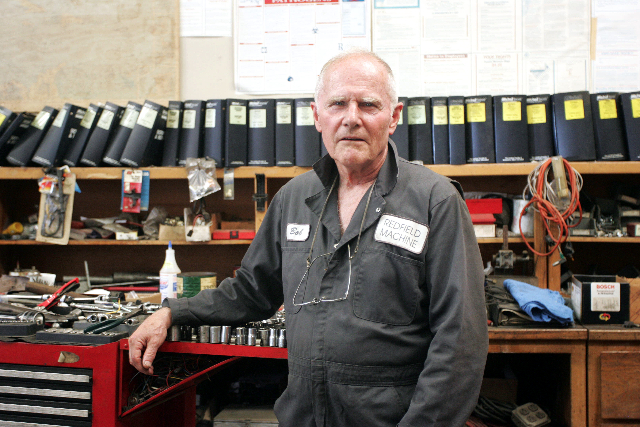
Tucked away at the edge of the UC Davis Arboretum, Redfield Machine, an auto-mechanic shop open since 1982, advertises its services with only one small sign.

For owner Bob Redfield and his regular customers, however, the name of the 17 Arboretum Terrace auto shop is recommendation enough.

“If anyone can, he can,” said Redfield Machine regular customer and UC Davis Associate Professor of Wildlife, Fish and Conservation Biology Dirk Van Vuren. “He’s got a lot of tricks up his sleeve.”

Redfield himself was associated with the University as well — before opening his auto shop, he earned his Ph.D. in Spanish from UC Davis in 1980, giving a nuanced meaning to the phrase “car doctor.”

“You never know how it’s all going to end. I expected to be a professor, and it fell through,” Redfield said. “And what do you do? Fall apart? You can’t. You’ve got to keep moving, and the keep moving was open a shop, and that worked out fine.”

As it turns out, “fine” equates to a successful small business with a myriad of customers. Van Vuren said Redfield’s high-quality customer service has been coupled with both professionalism and integrity. Apart from treating customers well, Van Vuren added that Redfield’s unique ability to respond to his visitors’ car concerns sets him apart from other mechanics in town.

“He is a diagnostician. If you want to know why your car is malfunctioning and have it explained to you with the right course of action, he’s the person to go to,” Van Vuren said. “He does what’s in the customer’s best interest. He’ll present you with options.”

Sometimes providing options means telling customers that they can fix things themselves at a lower cost, that a problem is not worth the money to fix, that there are other problems with the car that need attention or that there is a variety of ways he can fix the car problem himself — like welding an old part rather than buying an expensive replacement.

For those interested in learning to fix car problems themselves, Redfield is willing to teach his ways as well.

“In many cases, people come in with problems that are more minor than they think,” Redfield said. “If we’re willing to show them a trick or two, we can perhaps prevent them from having to spend money. If a person really needs mechanical service, here we are.”

As demonstrated by a library of books on makes and models of cars in the back corner of his shop, Redfield never allowed his career to prevent him from continuing to study and learn. In fact, Redfield claims reading the car-related books is analogous to being a scholar, serving as a continuation of what started for him as a hobby.

“I’ve been a mechanic for years, and I still get a kick out of coming into the shop,” Redfield said. “[Cars are] a mystery, and you apply your knowledge to that mystery, and try to decipher it, and try to fix the car, and do it for a reasonable sum of money, in a reasonable amount of time and keep the person reasonably happy.”

Apart from learning and teaching about car mechanics, Redfield also has a passion for other disciplines. Until a couple of years ago, Redfield spent his evenings lecturing in Spanish at Sacramento City Outreach in Davis, and also has taught the language at other institutions, including UC Davis, in the past.

“Bob Redfield is a real language scholar, so it’s really neat to have that kind of multilingual, multicultural perspective,” Van Vuren said. “He lives his passion. He’s a great auto-mechanic, and a great linguist, and he does both of them during the day.”

Whether in Spanish or English, Redfield Machine’s policies transcend language.

“The only thing here is that we are honest. That’s why a lot of people like to come here,” said assistant manager of Redfield Machine Felipe Ortiz. “Sometimes we say, it’s going to be like two hours to do that kind of job, but when we find out it’s going to be something like a half hour, that’s what we charge.”

Since the shop is not located on a through street, the majority of Redfield’s customers are referred by word of mouth. But Redfield said he wouldn’t trade his location in the Arboretum. Being so close to the UC Davis campus, he said he enjoys seeing the students grow up.

“For a 71-year-old, that’s kind of pleasant to see the youth, what one had years ago,” Redfield said. “There is a future, something good is coming, even though some of us get old.”

Redfield considers what he does to be a broad kind of service, one that can help people with many different situations and backgrounds. Pulling from personal experience, Redfield said he relates to worried parents with children not living at home.

“There’s a feeling of helping out, that I understand the situation the person’s in,” Redfield said. “The parents are worried and they don’t know Davis shops, and the car has stalled out somewhere and they give us a phone call.

Van Vuren said that Davis is lucky to have Redfield, and according to Redfield, the feeling is mutual.

“I’m grateful that the city and the University have treated Redfield Machine so well,” Redfield said. “That’s really very nice.”

EMILY MASUDA can be reached at features@theaggie.org.

Photo by Ciera Pasturel. 

LGBTQIA Resource Center celebrates 20th anniversary

On May 7, marking the 20th anniversary celebration, hundreds of alumni, students, faculty, administration and members of the Davis community gathered together in the LGBTQIA Resource Center to reflect upon its growth and development. Over the past two decades, the Lesbian, Gay, Bisexual, Transgender, Queer, Intersex, Asexual (LGBTQIA) Resource Center has flourished significantly in its mission to be a vital resource on campus. “When I learned that this year marked the 20th anniversary, I was excited to celebrate it because I thought it could generate a beautiful opportunity to reflect on our story, have inter-generational dialogue about the struggles and joys of the LGBTQIA community, and also to explore a vision of what we want the center to develop into in the coming years,” Elizabeth Cote, interim director of LGBTQIA, said. Leading into the opening of the celebration, Vice Chancellor of Student Affairs Adela de la Torre presented a speech highlighting the several successes and achievements of the LGBTQIA Resource Center. The celebration also featured stories, music, dance, poetry performances and a special video project composed of several interviews from the campus community, illustrating the overall significance of the LGBTQIA Resource Center. “It is wild to think that for some first year students, the center has been in existence for their entire lives,” Cote said. “For me, hearing from previous generations about their experiences keeps me connected to a sense of belonging and a sense of gratitude.” The history of the center was on display in multiple photographs lining the walls, and the staff members who founded the center in 1994 had the opportunity to reflect upon their experiences as they shared their own personal stories with the audience. “Before, the center was really small,” said Hazel Quintanilla, a Student Community intern and a fourth-year human development major, pointing to the picture of the past LGBTQIA Resource Center on the wall. “And now, it is twice the size and more people are coming in here.” Quintanilla believes that the center serves as a resource for everyone, regardless of whether they identify as LGBTQIA or not. “Our allies have grown. It just shows that we are here and that our support is growing, and so is our center and the members of it,” Quintanilla said. “As an intern, I do feel like I have a home on campus. This is nice, especially because I commute.” Like Quintanilla, Giovani Lopez, a Student Community intern and a fourth-year psychology major who served on the 20th anniversary Celebration Committee, decided to become an intern after volunteering at the center. “In reality, one of the biggest reasons why I came to Davis was because of the center. Although I entered UC Davis as a biological sciences major, I went to the Pride Welcome Week my freshman year and just wanted to become a part of the center,” Lopez said. Upon taking several women and gender studies courses, Lopez’s interest in becoming involved in the LGBTQIA community sparked as well. For second-year neurobiology, physiology and behavior major and volunteer, Jonathon Truong, the LGBTQIA Resource Center has also evolved into an integral component of his experience at UC Davis. “I started [volunteering] this year in Fall Quarter and I honestly feel like I have a home on campus,” Truong said. Along with the comfort and sense of family at the center, several volunteers explained that they have made lifelong friendships through continuous volunteering. Although Olivia Rivett, a third-year biological sciences major, initially felt intimidated entering the center during her first academic year, she decided to come in during the summer after. “People were so friendly and told me I could volunteer and I thought it was a good idea,” Rivett said. “I started volunteering my sophomore year and every quarter I have met new people and my group of friends has really grown. To be honest, I am friends with half the people here right now.” Rivett stated that she is really looking forward to seeing everyone’s faces at the event because conflicting and busy quarter schedules often hinder her from spending time with those involved in the center. Due to her positive experience, Rivett eventually recommended volunteering to her friend, Cynthia Terry, a fourth-year biological sciences major. Terry, who currently works as a volunteer, explained that she has formed and developed several friendships during the course of her experience as well. “It is a celebration of having the space here on campus and that is one of the main reasons why I came to this campus,” Lopez said. “It is a home.” LUJAIN AL-SALEH can be reached at features@theaggie.org.

Photo by Katie Lin

Fix 50 reparations to cause additional traffic on commencement weekend

0

The Caltrans rehabilitation of U.S. Highway 50 that began April 22 has brought up some concerns regarding traffic during commencement weekend from June 13 to June 15. The setbacks have been less severe than originally anticipated by faculty.

The rehabilitation taking place between 18th and 24th streets in Sacramento has gone into its Eastbound Phase 2. The Eastbound Phase 1 ended five days ahead of schedule May 1. Each phase is worked on 24 hours a day, seven days a week.

The six-lane freeway at this section runs over downtown Sacramento streets, freight and light rail lines. Built in 1968, the road had never gotten maintenance which has since produced severe cracking, meriting rehabilitation. The intention is to increase safety while also preventing recurring maintenance cost.

Phase 2 of the project will proceed until May 21 with two to three lanes available for use. The 16th and 11th streets on-ramps will be closed, along with the connector ramp from eastbound Highway 50 to southbound Highway 99 as well as the connector ramp from eastbound Highway 50  to eastbound Business 80.

Westbound traffic will be fully open until Westbound Phase 1, which is set to begin May 27. Its second phase is scheduled to end June 25.

The maintenance had been a concern in terms of traffic for commuters and students — particularly with commencement approaching. Nick Crossley, the manager for UC Davis Emergency Management and Mission Continuity, explains the impact this may have on commencement which takes place for undergraduates June 14 and June 15.

“The contractor and Caltrans always state that the delay may be as much as an hour. Anyone traveling to graduation should plan for this… In addition, the commencement organizers have ensured that all communications mention the project … and encourage people traveling to campus through the construction allow enough time for travel,” Crossley said.

Crossley said that the construction thus far has had little to no impact on commuters, with the longest he’s heard of being a 30-minute delay in the eastbound phase.

“General consensus has been that the impact to both the Davis and Sacramento campuses has been far less than expected. We are unsure at this time, beyond educated guesses as to the impact when they begin westbound construction after Memorial Day,” Crossley said.

Other campus representatives from various departments have taken the construction as an opportunity to encourage the use of alternative transportation. Leslie Mancebo, the Transportation Demand and Marketing coordinator from UC Davis Transportation and Parking Services (TAPS), said that they also began meeting in February to discuss the Fix 50 project in terms of it’s potential impact and possible solutions.

“A number of efforts were made to communicate with the campus community about the project and mitigation measures were put into place,” Mancebo said.

Mancebo adds that every year, TAPS coordinates parking with the UC Davis Police Department. Other safety precautions include providing staff to manage parking lots and managing the flow of traffic. This year, they are working with University Communications to publicize the potential delays as well as alternatives, such as Amtrak.

“Additional spaces are designated for disabled guests and parking lot utilization is closely monitored to ensure timely closure of the lots as they reach capacity and efficient redirection to the next available lot. In addition, TAPS usual services of motorist assistance and visitor services such as distribution of maps and directions are available during commencement,” Mancebo said.

Commencement is always a major concern, said UC Davis Police Sergeant William A. Beerman. It is always a top priority to ensure the safety of students and their families and he encourages families to plan the day in advance.

“There will be additional signage as well as traffic informational boards directing drivers to the different parking locations near the graduation sites. Attendees should be encouraged to give themselves ample time to arrive to graduation… Anticipate that traffic will be heavy, plan for these issues and they will be easier to deal with on the day of the big event,” Beerman said.

Aside from commencement, the traffic delays due to freeway reparation haven’t affected the City of Davis much, says senior civil engineer for the Davis Public Works Department Roxanne Namazi.

“I know people that commute in and that might be a problem … I don’t know if right now it has created too many delays though it’s working out better than they expected especially because of the offers for commuting,” Namazi said. “This is definitely important, you don’t want roads to fall apart.”

GABRIELLA HAMLETT can be reached at city@theaggie.org.

UC Davis forager explores wild side of California

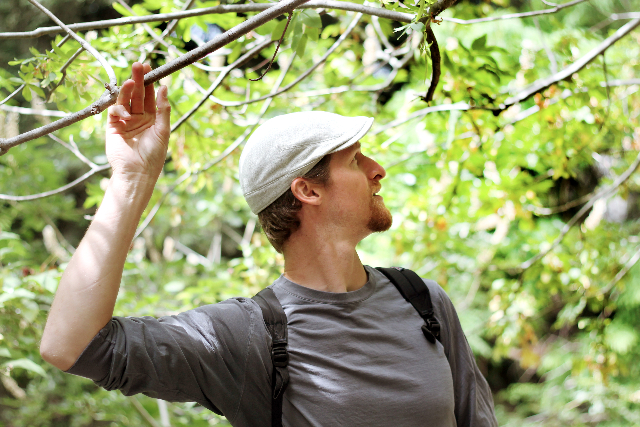
When I first saw Kevin Smith, he was twining cord using strips of a leaf from a New Zealand flax, one of several useful plants one might find on a walk through Davis.

Smith is a Ph.D. student in archaeology at UC Davis, pursuing his interest in studying and practicing how our ancestors lived. He’s written a blog called “Countryman: Foraging California’s Wild Side,” where he details many of his adventures around California and in local areas, hunting wild animals, collecting edible plants and then cooking gourmet meals. He took a couple hours from his studies to show me a few samples of California’s wild side that are right here in Davis.

In our short trip through the Arboretum, Smith pointed out and told me the names of several different plants and what they could be used for.

“People don’t really understand how much of this is edible, and how much of it is useful,” Smith said.

He identified and attempted to harvest a sample of chia seeds from a chia sage, which he said was once a staple food for the California native peoples. He said the leaves make a good herb for cooking, as do the leaves of the California bay tree, which we also found on the path. Elderberry plants have edible berries and flowers, while the rest of the plant is poisonous. He pointed out other plants that were useful for crafts, like basket weaving, or medicinal purposes, such as the disinfecting properties of yarrow.

“I was working as a shepherd up in Northern California for a summer, and I had this baby goat stab his sharp horn right into my hand, and it went so deep that I couldn’t see the back of the hole,” Smith said. “I cleaned it all up, put alcohol and stuff on there, but it wouldn’t close. After like three days, I took all the bindings off, crushed up some yarrow, stuck it on there, 20 minutes later it closed up, no joke, I still can’t see where the scar is.”

Our small adventure was only a taste of his knowledge and his more regular experiences. Although he did not collect food or otherwise useful materials this time, he often does. He was not short on foraging stories during our tour, however, and some of them can be found in his blog, which he said he started as a result of living in a more urban environment during college.

“It makes me think about the details more,” Smith said. “Growing up we just did it, and so it was just the way of life, and then once I got stuck in the city I realized all the things that we were missing. Now when I go out with my buddies, we’ll make sure that we take photos, we’ll make sure that we reminisce about all the good times and make sure that if there is something really amazing, it doesn’t get overlooked.”

His latest entries include him and his friends harvesting unpicked oranges from a couple of trees around Davis and making orange marmalade, as well as catching crawfish in the Sacramento River Valley District while on a spearfishing trip.

Smith’s longtime friend and fellow spearfisherman, Kirby Morejohn, who just weeks ago fought a shark over a 60-pound sea bass, joined him on the latter trip. Morejohn is a marine biologist and he commented on the several benefits of this kind of hunting, including being able to see and appreciate life as well as feed yourself.

“You can spearfish or grab a lobster or abalone or scallop, clams or whatever and make your hobby fill your stomach,” Morejohn said.

While we browsed the Arboretum, Smith commented on the economic side of foraging.

“It was nice as an undergrad when all your buddies would be telling you, ‘oh, financial aid hasn’t come in, I’m eating top ramen,’ and our reply would be, ‘yeah, financial aid hasn’t come in, we’re having grilled abalone and fresh lingcod,’” Smith said.

He did admit that foraging does not make up his entire diet, and he does go grocery shopping. However, fish is a staple in his diet, and he said he can’t remember ever buying fish from a store. Foraging is a regular activity for him, and even the day we spoke he had eaten some dried wild mushrooms for lunch and tried his first mulberry. He said he has his childhood to thank for his interest in hunting and foraging.

“My oldest memory is digging shellfish with my dad and my brother, out in Tomales Bay,” Smith said.

As a kid he began learning to identify what foods were safe to eat, a practice which aids him even today as he forages for wild mushrooms and continues to learn about plants that could be helpful or harmful.

“The golden rule is, identify everything twice in the field and once again in the kitchen,” Smith said.

He stressed the importance of staying safe and not eating anything without knowing what it is or what process might be required to make it edible. Smith pointed out the irony in the fact that this type of knowledge is very old.

“It seems strange looking at an archeological perspective, because this is all knowledge that all of our ancestors had and applied every single day, which is why we’re alive and able to talk right now,” Smith said. “It seems strange to me that we’ve lost so much of it. And I love agriculture, go Aggies, but at the same time there’s great power in knowing your local edible and utilitarian plants.”

He has continued to exercise this power by collecting food and generally making use of what is freely available to him. He believes many useful resources are underutilized, and recalled an incident with an orange tree from which he picked an orange that was hanging over a wall.

“This branch was clearly in public domain,” Smith said. “There was a pile of rotten fruit on the ground, and that’s my first indicator. If there’s rotten fruit then I’m taking an orange if I’m hungry, so I picked this orange, and this guy yells, ‘hey, that’s not your fruit.’ And all I could think was, ‘you’d actually rather see this rot on the ground than have a stranger eat an orange off this tree.’ That’s a strange mentality to me.”

Smith and his foraging companions expressed interest in not letting resources go to waste. His friend Alex Izzarelli said one of his hobbies is collecting wood to make parts for guitars.

“A lot of materials I use are scrap woods that people don’t use, or even parts of trees that I collect,” Izzarelli said.

The second half of my adventure with Smith consisted of an unfruitful search for a stray almond tree off of a bike path beyond the east end of the Arboretum. Although we never found it, Smith mentioned that Davis is full of nuts, with various trees in the public domain. These, among the many other useful plants, offer their crop to anyone that will take it.

“All of this is free,” Smith said. “One of my favorite things about it is nobody’s watering it, nobody’s putting fertilizer on it, nobody’s doing anything, this stuff just volunteers. It grows in the fog, it grows in the rain, it just grows, and you can eat it and it’s really good for you, so why not?”

At the end of the day, whether a foraging trip offers up a bounty or not is of little importance. Smith and his friends emphasized the fun of being able to interact with each other, as well as with nature.

“I use the term adventure somewhat loosely,” Smith said. “But I think a lot of people have got this concept that in order to go on an adventure, you have to buy a bunch of gear, fly across the world and do something crazy. That’s great, that is an adventure, but at the same time, if you’re only waiting for that one experience, you’re missing out on all of these cool adventures that are all local. Don’t wait for the big picture, crazy adventure on down the line, instead just get out, have an adventure around the corner.”

NICK FREDERICI can be reached at features@theaggie.org.

Photo by Katie Lin.


UC Davis’ Bottles for Poverty builds school in Ethiopia

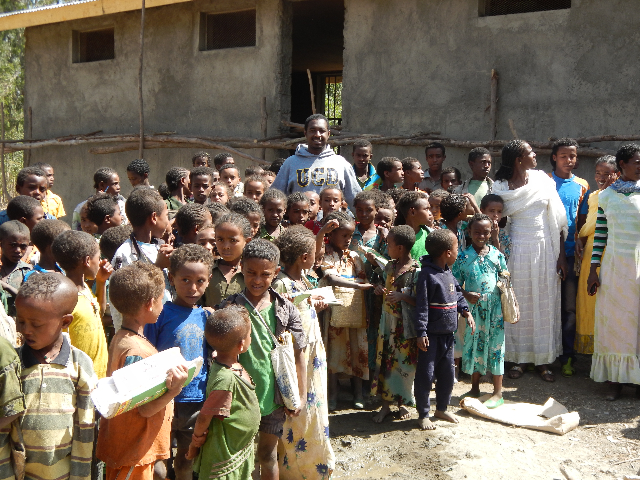
After almost three long years of collecting thousands of recyclable bottles and redeeming them for cash, UC Davis’ Bottles for Poverty successfully raised enough funds in order to build a school in Gonder, Ethiopia this past April.

Started in 2011, Bottles for Poverty (BFP) is a club dedicated to raising funds in order to alleviate poverty, particularly in Ethiopia.

“Growing up in Ethiopia I’ve seen a lot of poverty, and I always felt responsible to do my part to help people there,” said Robel Haile, a managerial economics and international relations graduate student, and BFP founder. “I was thinking about an idea that would help me raise funds but at the same time galvanize students as well — so this idea just came to me one day. A lot of students drink and party, so they can at least donate their garbage and try to make a difference.”

From a small start of only six members, Haile said the organization has grown tremendously over the past few years, and now there are a good number of people who continuously drop off bottles at their 688 Bianco Court in Davis location.

After transferring to UC Davis in the fall, fourth-year international relations major and BFP Vice President Tyler Story became a part of BFP in January 2013.

“I was hooked on the ideals and mission of BFP,” Story said. “The simplistic idea of using recyclables to further education for children who did not grow up being as fortunate as those of us who have always had access to education really stuck with me.”

Fourth-year international relations major and BFP President Mana Azarmi became interested in the organization after meeting Haile in mutual classes her junior year.

“I think BFP offers a creative solution to the problem of fundraising on a college campus, with a fantastic end goal,” Azarmi said. “The process of building this school, meeting all of these great people and working with our incredibly talented BFP team has been very humbling and inspiring.”

The building of the school began in December and just recently finished in the beginning of April. Haile was able to fly to Ethiopia in order to oversee construction for a few months.

“It’s exciting to be there but at the same it was very depressing,” Haile said. “There’s just so much poverty and I felt like I wasn’t able to do much. I met a lot of kids who’ve never ever owned a pair of shoes in their life. Most of the kids are malnourished, and the place where we built the school — there are no roads, no electricity, no water. It was just overwhelming.”

Haile said the most important way of helping people in impoverished areas is through providing education.

“Giving these people education can open up doors,” Haile said. “They’ll be able to read more into whatever problems they have, be able to attend university, be able to come back and help their community solve their problems. For example, when most of these people are given a prescription for a medicine — they can’t even read it. Or if they knew to boil the water they get from the rivers, they wouldn’t get as many diseases — just simple things like that that can help transform their lives.”

Although females are typically put at a disadvantage and have to sacrifice their education in order to raise a family, Haile ensured that both girls and boys would attend school in Gonder. On top of that, the school is the only building in the area that is made of cement and cinder blocks; the rest are composed of mainly mud.

“It was great to see the kids so excited about the building,” Haile said. “They couldn’t wait for it to be done. The problem [before was] most of the classes were outside under a tree, so they had a little chalkboard, they sat on a stone, and that’s class. So you know, [now] it’s a classroom that has cinder blocks so that means even if it’s raining outside they can still go to school.”

Since the school opened enrollment for all ages has increased tremendously, providing a safe and stable environment for education that the children in the area would not otherwise have.

“I hope that the construction of the school will provide the community and it’s children with a lasting institution of education that will give them tools for improving not only their lives, but the lives of the people around them,” Story said. “I am not naive enough to think that this one school will solve all problems in the community but I’m hopeful that it can provide substantive positive change.”

Azarmi described the experience as both a “learning process” and “very surreal.”

“I still remember hearing about what Robel wanted to do with BFP and I am ecstatic that our initial goal has been met,” Azarmi said. “This school physically exists and is no longer a vision of what could be. It’s proof that young people, with our passion, energy and can-do spirit can come together and accomplish great things.”

Now that BFP has achieved their long-term goal of building a school in Ethiopia, their next project entails the construction of a well for the school and area.

“The fact that we’re building a well at this school benefits girls because they don’t have to walk too far to get water,” Haile said. “So the parents will think ‘if we send her to school at least she’ll bring water back,’ so it’s basically tricking people into sending their girls to school.”

ELLIE DIERKING can be reached at features@theaggie.org.

Courtesy photo.

Biodigester opens on UC Davis campus

On April 22, the UC Davis Renewable Energy Anaerobic Digester (READ) opened on campus and is currently working to produce more energy for campus facilities.

The University of California (UC) system has a sustainability policy that has guidelines for all UC schools regulating green building design, clean energy, climate protection, sustainable transportation, recycling and waste management, environmentally preferable purchasing and sustainable food services.

The biodigester takes waste from the campus and community and converts it into clean energy using bacterial microbes. These microbes feed on food and yard waste from both the campus and community, creating clean energy to be used as electricity for campus. The biodigester can convert 50 tons of waste into 12,000 kWh of renewable energy each day. The technology diverts 20,000 tons of waste from landfills in the Davis area each year. Project developers expect greenhouse gas emissions to be reduced by 13,500 tons per year.

READ allows UC Davis to accomplish many of its goals in terms of achieving sustainability. The biodigester will enable UC Davis to reduce campus waste, create renewable energy and apply technology created at UC Davis to the commercial world.

A majority of the waste that goes into the biodigester is from UC Davis dining halls, animal facilities and livestock and campus grounds. Any waste not converted to biogas to generate electricity is utilized as fertilizer and soil amendments.

The technology for the biodigester was developed by Ruihong Zhang, a professor of biological and agricultural engineering at UC Davis.

According to Sid England, assistant vice chancellor of Environmental Stewardship and Sustainability, UC Davis was awarded a grant from the U.S. Department of Energy to study the possibility of constructing a biodigester for the university campus.

“The initial feasibility analysis was completed in fall 2011 and UC Davis began working with CleanWorld on possible collaboration in 2012,” England said.

The biodigester was opened by CleanWorld, a company that specializes in high-solids anaerobic digestion (HSAD). UC Davis licensed Zhang’s technology to CleanWorld to implement the new technology on campus. CleanWorld has also opened two other biodigesters in the Sacramento area. According to Michele Wong, CEO of CleanWorld, all three biodigesters are different sizes and specialize in different types of waste.

The first biodigester, the American River Packaging BioDigester, is located in a manufacturing facility in Natomas, Calif. and can digest 10 tons of waste per day. It generates approximately 1,300 kWh of energy per day. The second, the Sacramento BioDigester, is located in South Sacramento and can digest 25 tons of waste per day. It has the ability to expand and process 100 tons of waste per day, producing 700,000 gallons per year of renewable compressed natural gas. The energy created from this particular biodigester serves as fuel for the waste-hauling vehicles at the location. The third biodigester is located at the former campus landfill in West Davis.

“Now that it is here, I think people will be looking for ways to participate,” England said.

The biodigester on campus is unique in the sense that it collects gases from the collected waste and gases from the former landfill that are still evident on the site. This biodigester is also the largest out of the three biodigesters that CleanWorld has opened.

According to Wong, CleanWorld recognized that this technology had the capacity to change the world and therefore wanted to contribute to its implementation on campus.

“I am very proud to be able to work on this project,” Wong said.

Wong also said that Zhang’s technology has the ability to be applied to the commercial side of energy and sustainability and that the technology can be replicated around the world.

Zhang, Wong and England are all UC Davis graduates, meaning that this biodigester was made a reality on campus by professionals who were educated at UC Davis. They stressed that the project is the product of UC Davis alumni working together to benefit their college campus.

UC Davis was named the #4 Coolest School by Sierra Magazine for the 2013-14 school year. It announced the title in August of 2013.

According to England, the entire campus has contributed to UC Davis obtaining the recognition.

“There is a deep commitment to sustainability that flows from students to professors and the administration,” England said.

LAURA FITZGERALD can be reached at campus@theaggie.org.

Courtesy photo featured.

Chamber ensemble yMusic performs at Mondavi Center

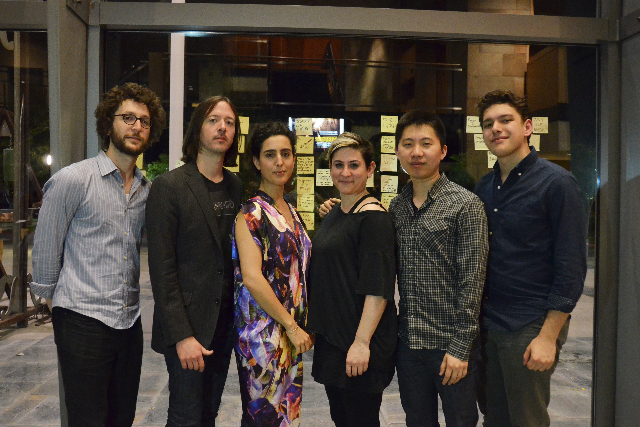
The sextet chamber ensemble, yMusic, performed at The Mondavi Center’s Jackson Hall on May 17 at 8 p.m. The contemporary group melds classical training with compositions from some of the biggest names in popular music. Some of their more notable collaborators include indie giants Sufjan Stevens, St. Vincent and Dirty Projectors. MUSE had a chance to speak with trumpet player and co-founder of yMusic, C.J. Camerieri, about the group.

Tell us a little bit about how yMusic started.

Well, five or six of us were students at Juilliard together getting classical degrees. Rob, the non-Juilliard member, and I were playing with a lot of bands. So we graduated school and sort of lost track with each other. At a certain point — about four years after we had graduated — we all started running into each other at the indie rock gigs and it was a cool moment of reconnection through this alternative music (which was not a part of our schooling). It was kind of a surprising development; we were some of the first people getting involved with this kind of music from a conservatory background in a specific chamber music sort of way.

Where did the name yMusic come from?

It was very hard to come up with a name but one thing we all had in common was a shared birth year which was 1982. That sort of symbolized the “Y” generation. We wanted to try to encapsulate what our generation is doing musically, especially with people coming out of conservatories and not doing orchestras. Instead we looked to alternative markets to put our musicianship in different contexts and venues and, ultimately, different types of music.

Several indie artists are composing songs for yMusic. Are there original compositions as well?

Thus far we have only been commissioning pieces. We have done some arranging; Rob Moose, our violinist and guitarist, does a lot of that. We have done arranging from our community of composers and songwriters that we normally work with. We’ll be playing a couple of arrangements of Sufjan Stevens’ “Enjoy Your Rabbits” which is sort of electronic music that Rob had adapted, but it is mostly all submissions by our peer composers. We wanted to use the group as a platform to highlight people who were doing interesting things in songwriting and living in this sort of shared aesthetic.

Do you think this affects your sound?

Absolutely. I think our records are more compilations of shared influences. We are sort of the common thread between a Nico Muhly and Sufjan Stevens or an Andrew Norman and a Marcos Balter. We, in some ways, are what they have in common since they work with us as composers and songwriters and we work with them in their bands, and that’s fun.

You just came out with an EP. Is there a new album in the works?

So our last album was in 2012. Our record is being mastered as we speak. We’re hoping to have it out in the fall and we’ll be playing a number of pieces from that new record at the concert.  We think the title is going to be “Balance Problems.” “Balance Problems” is also the name of a piece that Nico Muhly wrote for us that we’ll also be playing. The name is sort of a snide joke at the fact that there is a trumpet in the group and that poses a compositional challenge for most of these composers and songwriters.

What do you think separates yMusic from other chamber ensembles?

Well first and foremost, our instrumentation. What I think is also significant about us is that as a group we make our living playing popular music. Rob and I played with Bon Iver and we’ve all played with Sufjan Stevens, The National and St. Vincent. We all work in the popular music field and we bring that aesthetic to classical music and we also bring a classical chamber aesthetic to our work in popular music which, I think, has been advantageous.

Where do you see yMusic in the future?

yMusic is a part of what all of us do. It’s never going to be the only thing we do and I think that’s what makes it compelling.  What is unique about yMusic is the collection of shared experiences so it’ll never be the only thing all of us do but it will always be one of the things we look forward to every year. It’s our passion project and we’re lucky to get to do that.

COLEMAN PERKINS can be reached at arts@theaggie.org.

Photo by Anna de Benedictis.


Aggie Arcade

Local Multi-player Renaissance

Growing up with video games was not a solo affair for me. My brother and I constantly played multi-player games with each other and forged a competitive rivalry. Friends came over to experience the two-controller mayhem. Those were good times.

Along the way video games lost the joy of two or more players in a single room trading laughs and/or insults. Now the industry continues to push online multi-player and it’s an understandable shift. Not everyone has the time to get together in the same room to play games and some people just don’t have enough video game-loving friends in the same area code.

But online multi-player doesn’t replicate the feeling of local multi-player. The distance between players creates a divide that limits the maximum potential for fun. Sure, I’ve had great times playing online with friends — Borderlands and Mass Effect 3 in particular stand out as recent examples. But nothing matches my enthusiasm for a memorable local multi-player session.

Luckily, independent game developers have the freedom to embrace local multi-player without the intense pressure of the online gaming community. Thus, we see games like Nidhogg, Sportsfriends and TowerFall Ascension being released this year. They are three of my favorite games of 2014 and all of them emphasize local multi-player as a key feature. In fact, the latter two have no online modes at all.

The designers understand there’s something special about playing in the same room with friends or family. Competition becomes more intense, players share more laughs and stronger bonds are formed. It really is unlike anything else.

Anyone who reads this column regularly knows my obsessive interest in the Souls series, but Dark Souls II is not my game of the year so far. That honor goes to TowerFall Ascension, because it recaptures the nostalgic joy of local multi-player as a kid.

My brother and I have put many hours into TowerFall, and we’ll continue to do so throughout the year. It’s our go-to game when we want to fight for bragging rights, and the fact that it even exists in 2014 is a wonder.

There are still plenty of people out there who lament the fact that games like TowerFall and Sportsfriends feature no online multi-player, but the beautiful thing about video games is that they cater to different audiences. TowerFall may not be a game for everyone and that’s okay. Luckily, fans of local multi-player like myself can sit back and enjoy the renaissance.

ANTHONY LABELLA can be reached at arts@theaggie.org.