56.6 F
Davis

Davis, California

Thursday, December 25, 2025
Home Blog Page 915

Summer construction on campus still in progress

0

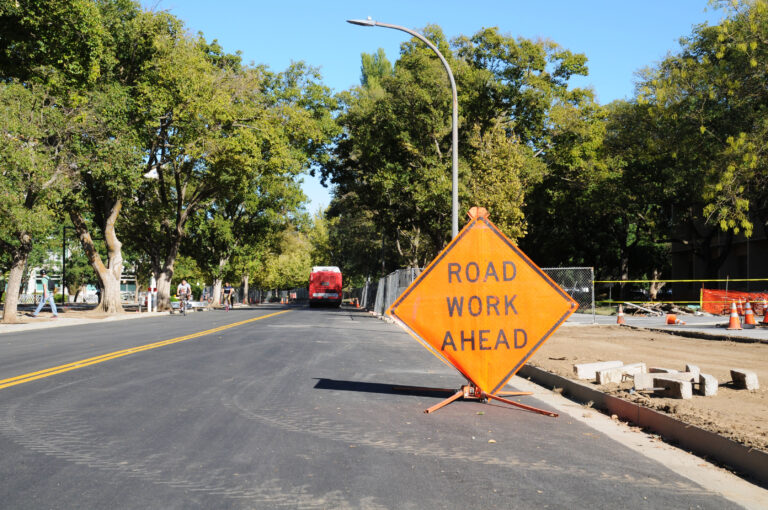
After a summer of road detours and students biking beside bulldozers, the question of construction progress has been up in the air with the rubble and dirt.

Several core projects are still underway but many of the renovations have just been completed in time for Fall Quarter.

Building Maintenance Services were occupied these past few months as they were highly involved in building modifications of ten chemistry labs in the Sciences Laboratory Building, updating them to meet campus standards. Some of the renovations included fume hood and countertop rod replacement, drawers and hardware repair, and deep utility cleaning.

The major changes among lecture halls include necessary restroom renovations. Eight bathrooms in Young Hall, Everson Hall, Hutchison Hall and the Music Building had to be updated to meet the Americans with Disabilities Act Compliance regulations for accessibility.

Psychology and anthropology students will enjoy a greener change during the school year.

“We’re trying an experiment in Young Hall in the restrooms. We’re putting in hand dryers to see how that goes to save on paper towels,” said Cynthia Kranc, director of Building Maintenance Services.

These projects, along with summer-long preparation for animal law inspections, cost nearly $700,000.

The Arboretum will also to see improvements, including a new garden on the east end, south of Aggie Village and the Davis Commons shopping center.

According to Dateline UC Davis, “The garden is part of the ‘urban greening’ of a key connection between the campus and the city — where the Arboretum connects with downtown Davis, and where the Arboretum and downtown connect with the Putah Creek Parkway.”

Until this $1.3 million project is completed, students cannot bike to Davis Commons by means of the waterway lower paths. However, the tunnels underneath Interstate 80 and the railroad tracks are accessible.

The California Native Plant GATEway Garden is set to be completed by November.

UC Davis Design and Construction Management are also making ways with their three-year student housing project, Tercero Phase 3. Site preparation began in July 2011 and is scheduled to open in 2014 by Fall Quarter.

With exactly a year left until opening, Tercero Phase 3 is estimated to cost $71 million.

Seven new four-story buildings are being added to the Tercero residence hall area, housing 1,200 more students. A lecture hall and staff offices will be joining the dorms as well.

A village-style design will form two neighborhoods to encourage community.

The housing project’s objective is to reduce greenhouse gas emissions and to be LEED Platinum certified, the highest rating from the U.S. Green Building Council.

“The goal of the university when we first started was to have a LEED goal and Sundt and EHDD Architecture came up with a plan to really maximize the mechanical systems and get it to LEED Platinum,” said Angela Tombolini, employee owner of Sundt Construction, Inc.

The school’s heritage trees remain uncut and new bicycle pathways weave throughout the landscape.

Students anticipate to see the environmentally pleasing project and upperclassmen are envious that they won’t be able to experience the new dorms themselves.

“I’ve always biked by the construction and just thought they were updating the dorms, but I never knew the project would be this amazing. I think UC Davis will definitely uphold its ‘Cool School’ title and I’d like to come back after graduation to see the new changes,” said fourth-year mechanical engineering major Kevin Fitzpatrick.

NICOLE YI can be reached at campus@theaggie.org.
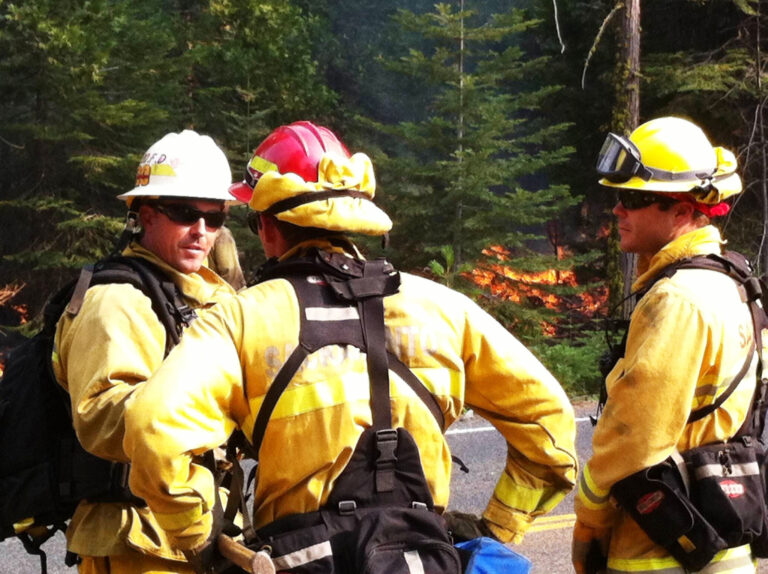
UC Davis, City of Davis firefighters return from Yosemite Rim Fire

The Rim Fire, the third largest in California’s history, began on Aug. 17 in Stanislaus National Forest. Just days later some of Davis’ own firefighters were called to the scene.

Firefighters from both the City of Davis Fire Department (CDFD) and the UC Davis Fire Department (UCDFD) arrived on scene on Aug. 21, when close to 1,000 personnel were on scene. At that time, the fire was five percent contained. For 10 days they woke up at 5 a.m., often working through the night to fight the fire.

Shawn Kinney, division chief for the CDFD, led the Yolo County strike team. His team arrived Aug. 26, making up part of the 3,678 personnel on scene. At that time, the fire was just 15 percent contained, burning 149,780 acres. He was on scene for eight days.

“Our team had to make sure we [were] working where [we were] supposed to and that we [were] taking care of our firefighters. To summarize, logistics were a challenge — you have to eat, take care of yourself, sleep — communications were very challenging especially due to such rugged terrain,” Kinney said.

Kinney added that his team would often have to hike six miles to burn out part of the fire in order to get ahead, which was a great challenge.

“People should know about these big forest fires, it is a big deal … there are huge implications. [Yosemite] will never be like what it was,” said Cess Mercado, a fire engineer for the UCDFD.

Each day was demanding and was dependent on the massive, quickly growing fire. Crews spent long days digging trenches, working on structure protection and burning out brush to its “moon soil,” also known as mineral soil.

“There’s a lot you can do to prep a structure — taking brush away and moving things to make it less susceptible to catching fire,” said Derek Carthy, probationary fire engineer for UCDFD. “We dug [a] hand line near the fire edge and some backburning to bare minimum soil so it’s less likely to jump the line.”

Malcolm North, a research scientist for the Forest Service as well as a UC Davis associate professor of forest ecology, stated that the severity behind the Rim Fire was due to the fact that much of it was a “crown fire” where fire would burn at the top of the tree line jumping from tree to tree, rather than burning on the forest floor.

“Where it becomes destructive is in the overstory … where it can create places that not only kill all the trees but the live trees that seed forest brush,” North said. “It really eliminates some of the habitat.”

North said some species, such as woodpeckers, can make use of the changes, while others, including the Northern Grey Goshawk and the Spotted Grey, are now more at risk.

Wildlife is just one aspect of the natural environment that was impacted by the fire. Donald Turcotte, a geology professor at UC Davis who has done extensive geophysics research, said there are many implications from a fire of this scale.

“The Forest Service had wanted to use controlled burns where the Rim Fire occurred,” Turcotte said. “If they had done this they could have controlled it much more easily. It’s a highly debated issue.”

Turcotte elaborates on a fairly simple model that predicts what small scale changes can do to produce a massive fire.

“A big question has been ‘Does aggressive fire suppression create a greater hazard?’ Studies indicate that if you don’t put out small fires you’re at lesser risk for huge fires,” Turcotte said.

This issue raises many questions about the importance of controlled burns — albeit their controversial nature. Steve Dunne, captain of the UCDFD, who went on scene with Carthy, Mercado and Erik Schultz, spoke about this concern.

“I hope that at some point the Forest Service will reevaluate the idea of controlled burns. There are parts that have never been touched by a fire,” Dunne said. “Nobody had ever cleared it out, which makes it very nice to look at — however, all the dead vegetation makes for a greater fire hazard. They have the mentality of ‘let it burn,’ but now we’re having to play catch up.”

Dunne also said that the work they did was not easy and came with many obstacles.

“There were times the fire was coming right towards us, [and] you know when to say you have to get out of the way. Those were the decisions I had to make as a captain,” Dunne said. “I have three guys looking to me and it’s knowing someone could get hurt or killed — that’s my biggest fear.”

Both Dunne and Kinney share their hopes that the Davis community be proud of their firefighters.

“The community and the students at UC Davis need to understand how proud they need to be about all our firefighters here,” Dunne said. “We’ve got to appreciate the firefighters all over Yolo County. They’re doing their job every day.”

Kinney shared similar sentiments and said their teams worked very hard.

“When we go out and work 30 hours, it’s 30 hours, and it’s with hand tools,” Kinney said. “It’s nothing but hard work and our people represented very well.”

A recent article by The Sacramento Bee stated that about 40 percent of the land inside the fire’s boundaries has been left charred and barren.

According to officials, 256,528 miles have burned up to date. There are still 1,540 personnel on scene.


GABRIELLA HAMLETT can be reached at city@theaggie.org.


UC Davis welcomes most competitive class to date

Approximately 5,150 freshmen are expected to attend UC Davis this Fall Quarter, hitting just above the enrollment target of 5,100 set by UC Davis Undergraduate Admissions.

Of this pool, the incoming class boasts an average SAT score of 1796 and an average weighted grade-point average (GPA) of 3.99, according to Walter Robinson, executive director of Undergraduate Admissions at UC Davis.

“I took seven AP courses and had a solid ACT score and everything was above the average and I was actually waitlisted. And I knew a bunch of really qualified people that did not get in,” said Katie Murry, a first-year biology major.

The incoming class holds an estimated admittance rate of 39 percent. This is a six percent drop from the 45 percent admit rate of last year’s incoming class and nine percent lower than the 48 percent admit rate from two years ago. According to Robinson, dropping admit rates aren’t expected to stop over upcoming years.

“I believe we are continually going to be more selective as we will generate more applications. We probably won’t be altering many more freshman spaces. There is some growth that’s protected that might keep a little stability in the admit rate. But I think still by some fraction, it will continue to drop,” Robinson said.

According to Robinson, the lower admit rate means UC Davis is becoming more competitive. However, he claims the withstanding reason is the number of applications the admission office received the previous year.

“I feel as though getting accepted into UC Davis seemed harder this year because of the number of people I know with high GPAs who did not gain admittance,” said Sonya Vyas, a first-year chemistry major.

California residents make up 85 percent of the incoming class, while out-of-state students make up four percent and international students make up 11 percent.

A common rumor is UC Davis favors out-of-state and international students over California residents.

“If someone were to ask me about the whole idea of bringing in more non-resident students, I would respond first by saying global diversity is a value added to the educational experience of all undergraduate students,” Robinson said.

Along with being a source of global diversity, according to Robinson, non-resident students also provide an additional revenue stream to support all students at UC Davis.

“There was a time when we received a tremendously larger allocation of funds from the state to support California students,” Robinson said. “The only way we can stabilize, and perhaps even grow the number of undergraduate enrollment at UC Davis is by having new sources of revenue.”

Of the incoming first-years, three percent identify as African American, one percent identify as American Indian, 21 percent identify as Chicano/Latino, 42 percent identify as Asian and 31 percent identify as white, leaving two percent of students who did not provide a racial report.

“I feel that it’s highly devastating that there’s only three percent African American students. I feel like there should be more effort from both students and administration to outreach,” said Ndidi Okwelogu, Black Student Union President.

“I feel we’re underrepresented and I wish it could be a bigger community. We all have something to offer to make it a bigger community,” said Da’shon Carr, President of Leaders of Tomorrow, on the percentage of African American students enrolled in the class of 2017.

“Latinos/Hispanics are the largest minority group in the US and in California, for that reason the percentage of Latinos enrolled in the class of 2017 at Davis can be seen as either an accomplishment or disappointment. Ultimately, the 21% of Latino freshman students enrolled this year at Davis shows an increase within the past years and even though it should be higher, any increase should always be seen as an accomplishment.  If 1/5 of our incoming freshmen are Latinos, it is now our duty as their fellow Aggies to show them support and help them as they begin their college career,” said Angela Munoz, co-chair of Hermanas Unidas de UC Davis.

While the enrollment target for this year’s incoming class exceeded the 2020 Initiative, UC Davis expects to increase the undergraduate population over the next seven years.

The 2020 Initiative is a new campus plan to admit 5,000 students, primarily international, in the next 17 years. The plan also includes hiring 300 additional faculty members and further expansion to campus infrastructure.

JASON PHAM  can be reached at campus@theaggie.org.
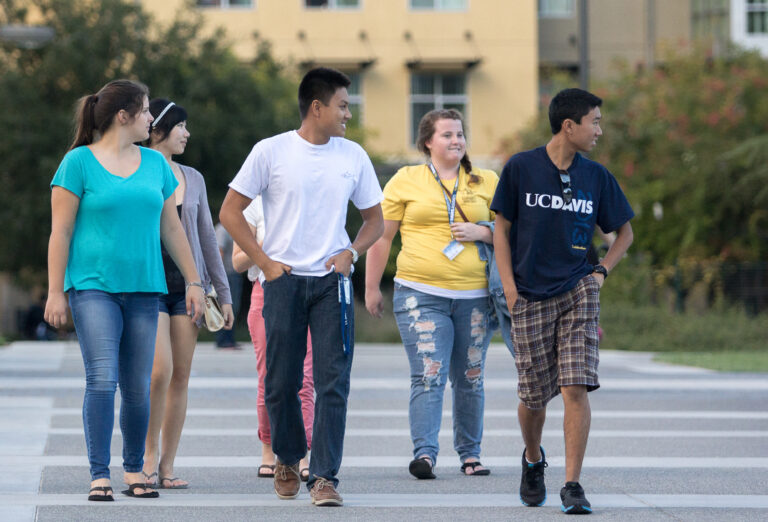
Editorial: UCOP

1

On Jan. 18, President of the University of California Mark Yudof announced that he was stepping down, and six months later it was announced that former governor of Arizona and Secretary of the Department of Homeland Security Janet Napolitano would be taking the reins.

On Sept. 30, Napolitano will move into her Oakland office and begin her term in the University of California Office of the President (UCOP), and we are both excited and apprehensive for her new presence.

The change highlights ways in which the UC system is becoming more progressive, such as how Napolitano is the first female president since the UC’s inception 145 years ago. She is also getting paid a $570,000 base salary, which is $21,000 less than Yudof’s and 75% less than the salaries of comparable university presidents, indicating slightly more sensible spending on the UC’s part.

However, Napolitano’s professional background gives us reason to question whether she’s the right choice for the UC system. She has no experience with university education; rather, her current job experience includes political administration and national protection. While this may have nothing to with higher education, Napolitano’s experience may help her with the political aspects of this job.

Regardless of whether Napolitano’s reign will bring good or bad change, we want to make sure that, above all, she keeps the students’ interests in mind. Yudof more than doubled UC tuition during his term — we demand this doesn’t happen with Napolitano.

Furthermore, as long as Californians are paying the taxes, Californians ought to be the ones enrolled in the classes. Although we appreciate everything out-of-state and international students have done for our community, California students should be the focus of admissions. We understand that the UC is in need of money, but we believe there are better ways of financing the campuses.

We’re not the only ones unsure of Napolitano’s new seat at the top of the UC hierarchy — both UC Berkeley and UC Irvine’s student governments have recently passed “no confidence” bills against Napolitano, accompanied by a list of demands and deadlines.

We hope Janet Napolitano has a successful term prioritizing student needs. But we’ll be keeping an eye on her.

Janet Napolitano elected as new UC president

1

Janet_Napolitano_official_portrait

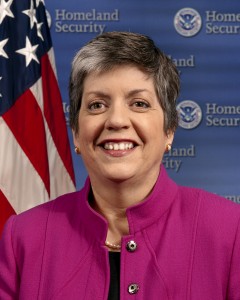
On July 18, Janet Napolitano was elected by UC Regents as the first woman president of the University of California (UC) system. Napolitano follows previous UC president Mark Yudof, who worked at the position for five years. Napolitano formerly worked as President Barack Obama’s U.S. Secretary of Homeland Security.

In her statement addressing Napolitano’s nomination for UC president, UC Davis Chancellor Linda P.B. Katehi showed support for the nomination.

“I am very pleased and excited with the nomination of Janet Napolitano as the next president of the University of California. Secretary Napolitano has a distinguished record of public service and leadership,” Katehi said in a statement.

Provost and Executive Vice Chancellor Ralph Hexter shared similar thoughts to Katehi’s on Napolitano becoming the UC president. Hexter said that he has not worked with Napolitano previously but is looking forward to meeting her.

“I am positive and optimistic about what she will bring to the University,” Hexter said.

Napolitano will receive an annual salary of $570,000, a $21,000 decrease from her predecessor. This salary will fall in the bottom 25th percentile of presidents of similar academic institutions.

Napolitano will also receive a one-time relocation fee of $142,000 and $8,916 per year for car expenses.

In parts of California, there have been protests and anger focused toward Napolitano’s experience in working as the Homeland Security secretary. Her work with the Secure Communities program, which enforces U.S. immigration laws, has been a concern for many UC students.

ASUCD Vice President Bradley Bottoms addressed Napolitano’s previous experience.

“Although I am sure that President Napolitano’s experiences will allow her to effectively manage the UC, I am concerned that her duties at the Department of Homeland Security will make students, especially AB 540 students, uncomfortable at the [U]niversity,” Bottoms said in an email interview. “The UC is a place that is intended to educate all, and having a president that is responsible for massive deportations is certainly disheartening.”

According to AB 540, undocumented students must have attended a California high school for at least three full academic years; graduated from a California high school or attained a G.E.D.; registered to attend a California accredited institution of public higher education; and file or plan to file for legal residency as soon as possible.

Chancellor Katehi said Napolitano’s former position would bring positive light to immigration reform.

“These issues are important to us as a university and as a nation, as they enable us to attract the best and the brightest from around the world, and have them contribute to our society and economy,” Katehi said. “She has been an advocate for the federal Dream Act and implemented policies to prevent deportations of young people who are pursuing a college education.”

The Dream Act, which did not pass, would have allowed undocumented migrants who wished to pursue higher education able to do so and become legal residents of the country.

Academic Senate Chair Robert Powell doesn’t believe her federal background will influence her treatment of Hispanic students in the UC.

“We have to remember that this is a policy of the President, not her policy,” Powell said.

Napolitano focused on education from pre-kindergarten through higher public education during her time as governor of Arizona. She did not work with higher education during her time in President Obama’s Cabinet.

“The selection of Napolitano as president came to me as a surprise, as most people would presume she would come from the education field,” Hexter said.

It is currently unclear what to expect from the UC’s new president at this point in time .

“I think she’s going to be very interested in transfers and making sure we have a good pathway for transfer students … I think she’ll be a big supporter of diversity in terms of faculty and in terms of the students,” Powell said.

Many believe her political background will aid in her success as a highly public and influential leader.

“I think she’s going to be much more in tune with the politics in Sacramento than past presidents have been,” Powell said.

Napolitano’s election may not deeply affect the UC Davis campus’s current functions and protocol. Her decisions will affect the UC system as a whole, and her role will be to back every university together.

“Chancellors know how to run the university system itself,” Hexter said. “We look to the Office of the President to advocate for the whole university as a state. We don’t want campuses fighting over who gets what.”

MELISSA DITTRICH can be reached at campus@theaggie.org.
Downtown Davis boasts first interactive transmedia art walk in world

Wandering into downtown Davis, many notice the many murals on the sides of buildings or sculptures on corners. Downtown Davis possesses the first interactive transmedia art walk in the world.

The downtown Davis area has at least 40 works of art. Many of these works have a radio-frequency identification (RFID) chip, which allows the viewer to watch a video of the work’s creation on their smartphone and leave a message for the artist.

“We have the first interactive transmedia art walk in the world,” said John Natsoulas, owner of the Natsoulas Gallery and a member of the Davis Mural Team. “The technology was patented by my old friend and partner Monto Kumagai and his company

XtremeSignPost. He’s working on another transmedia art walk in San Francisco right now.”
Despite the large amount of art, many of the works were created in 2012. In fact, Natsoulas claimed that there were only “three or four” pieces downtown in 2011.

Natsoulas formed the Davis Mural Team, which received a grant from the city and the cooperation of building owners.

“In 2012, I accomplished the unaccomplishable and got art throughout the town, which really transformed it,” Natsoulas said.
The first mural placed by the Mural Team is “It Can Happen NOW…TO YOU” by member William Haul. Haul said that the Mural Team completed 11 or 12 murals during the summer of 2012.

“Each artist was given a site and chose their own image to do. We cooperated with each other and got to the point where all we needed was a weekend to finish a mural,” Haul said.

This summer, Haul and two other members of the mural team, Kerry Rowland-Averch and Myron Stevens, were commissioned by the Davis Odd Fellows Lodge to do a giant mural on the side of that building, located on Second Street between C and D streets.

Dody Black, the marketing director for the Odd Fellows Lodge, and Dave Rosenberg, the Grand Warden, commissioned the mural.

“Dave and I noticed the murals going up around town but the Mural Team’s grant from the city ran out before we could commission the mural,” Black said. “In the end, Dave donated the money for the mural.”

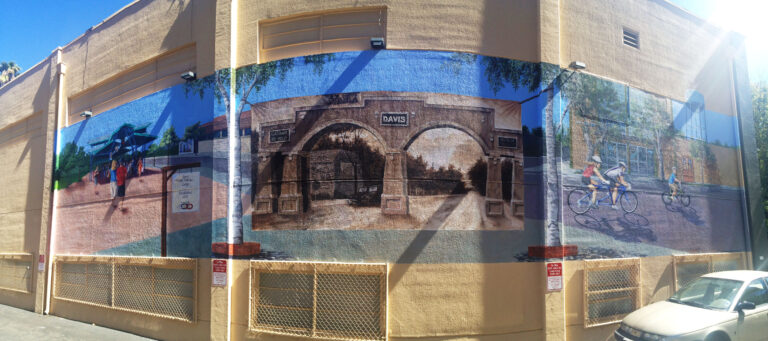
The final mural consists of three panels: the left panel depicts the farmers market, the middle panel depicts the now-demolished Davis Archway and the right panel shows a family cycling in front of the Odd Fellows Lodge.
Haul found this mural to be more challenging than usual.

“There were [fewer] of us working on this mural and it was four or five times larger than anything we’ve ever done,” Haul said. “It took us three weeks of painting every day during long, hot days.”

Haul and Natsoulas both noticed that artists unaffiliated with the Mural Team would create murals and sculptures, such as the Compassion Bench on the corner of Third St. and C St. and the mural behind the Pence Gallery.

“I’ve been surrounded by the best people in the world,” Natsoulas said. “I’m so happy to have had the opportunity to work with these people and I feel fortunate. It’s been a great journey.”

The Davis Art Walk map is available at the Natsoulas Gallery at 521 First St., the Yolo County Visitor’s Center at 123 E St. and online at davisartwalk.com.

JOHN KESLER can be reached at art@theaggie.org.

No hands

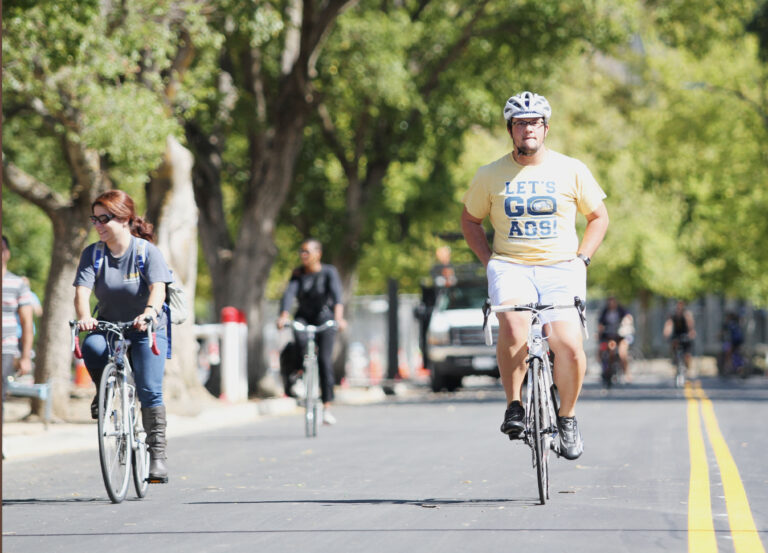
Biking is an inextricable part of daily life at UC Davis. Unfortunately, as incoming freshmen, many of us haven’t been on a bike for years before dusting off the cobwebs and loading it up for move-in day. This leads to some shaky first rides around campus and more than our fair share of bike accidents.

As the year progresses, however, we gain confidence. We take turns faster than we probably should. We shoot through the bike circles without braking. Finally, we start taking hands off the handle bars.

Riding one hand down is pretty simple to master. Especially with the added motivation of that urgent text vibrating in your pocket. The real challenge comes from trying to remove the second hand.

“Confidence is key,” said Colin Braun, a third-year civil engineering major at UC Davis. “You’ve got to have your head up, your back straight, and — most importantly — you’ve got to keep your speed up.”

Although it may seem intimidating at first, Braun brings up a lot of good points. Riding with no hands boils down to two main physical principles: center of mass (COM) and gyroscopic motion.

“The COM is the average location of weight in a given object. That is to say, it’s the average point where all forces act,” said Garrett Levy, a recent UC Davis graduate with a degree in civil engineering.

In an object with uniform density and a fixed shape, the COM is at the very center. However, one tricky thing about COM is that it is not necessarily at a fixed point for manipulable objects.

Objects that are highly variable in shape, such as the human body, can move their center of gravity to many different positions based on posture. By changing an object’s shape, you can even move the center of gravity outside of its physical boundaries.

When the COM moves below the point on which an object is sitting, it makes the object’s balance very stable. This is is how those balancing birds we all used to play with as kids work. Unfortunately, the average person on a bike won’t be able to achieve that level of stability.

Having your back straight and your head up allows you to move your COM to inside your torso. Doing so prevents small changes in body position from having as great an effect on your overall balance. Also, since most bikes have the back wheel at least partially under the seat, it moves your center of gravity to be more directly over the wheel, which helps a lot.

COM works in concert with the second principle, gyroscopic motion, to help keep you riding smoothly.

“Gyroscopic motion occurs as a result of the law of conservation of angular momentum: Once an object has been made to rotate, it will continue to rotate around the same axis with the same speed indefinitely, unless it is acted on by an external torque,” said Dustin Burns, a physics graduate student and teaching assistant for the Physics 7 series at UC Davis.

Put simply, this means that once your wheel starts spinning, not only does it want to keep spinning, but it wants to keep spinning with the same orientation, that is, perpendicular to the ground. You actually need to exert force in order to fall over.

This is why Braun considers it so important to keep your speed up. Since momentum is a function of velocity, the more velocity you have, the more momentum you have, and the more momentum you have, the more torque you will need to topple.

Unfortunately, since your COM will be above the point on which you are balancing, torque will be in no short supply, so don’t be too adventurous. Put in the time and get comfortable on your bike before you try to get creative.


KYLE SCROGGINS can be reached at science@theaggie.org


City of Davis undertakes road improvements

0

All over the City of Davis, renovations aiming to improve roadways are taking place. First Street, Fifth Street, B Street, Third Street, Drexel Bike Boulevard and the east end of the Arboretum are among the important downtown pathways impacted by this construction.

“In 2011, we applied for a grant from the state,” said Jennifer Border, associate civil engineer of the City of Davis. “After surveying the streets, we saw that there was a need for repair.”

The city administration took on these projects so they could increase the visual appeal of the roads and ensure the roads remained both practical and functional.

“Some of the projects are done with an eye to facilitate cycling and other types of alternative transportation. Others are done because maintenance on the roads dictates that the roads need to be repaved, crowned or smoothed out,” said Kelly Stachowicz, deputy city manager. “All of the projects are done with an eye towards improving traffic flow of several different types.”

The road construction in the downtown grid is specifically taking place on B Street between Fifth and 14th streets, Fifth Street between A and L streets, First Street between A and L streets and Third Street between A and B streets.

“There may be inconveniences, but through communication and [the] traffic plans that each of the projects has, we hope to minimize any disruption,” Stachowicz said.

The Fifth Street/Russell Boulevard Corridor construction will start in early to mid October, according to a press release from the City of Davis city manager’s office.

The City Council awarded the contract to Vanguard Construction Services of Livermore and funding is mostly from

grants from the Sacramento Area Council of Governments, Highway Safety Improvement Program and Community Development block grants, with some local funds. Construction work will begin at A Street, working toward L Street.

The city has taken an initiative to give vehicles and pedestrians simple and manageable alternatives to these routes so that any inconvenience is hardly noticeable.

“The traffic flow in Davis is getting worse, so the construction is being done to fix current problems and to improve traffic flow,” said Michael Mitchell, principal engineer for the City of Davis.

A major issue for the people in Davis is bicycle transportation and the on-road interaction between bicyclists and motorized vehicles. As a result, the roads are being constructed to maximize spacing for both types of travel.

According to Dave Kemp, active transportation coordinator for the City of Davis, the city is currently building a dual-buffered bike lane to protect cyclists from the door zone in the westbound direction of First Street, as well as shared lane markings called “sharrows” on the eastbound direction lane, marked with two arrows above a bicycle.

“This will help encourage community biking around Davis,” said Jenny Wong, a UC Davis Extension employee.

Drexel Bike Boulevard, from J Street to Snyder Drive, is being renovated to include striping changes and lane improvements which will make it safer for cyclists.

“This will allow easier transportation for our junior high students, among others,” Mitchell said.

Construction taking place in the area near the Arboretum and the bike path between South Davis and the UC Davis campus is part of a slightly different reconstruction project. The entire area, from Putah Creek Parkway to the Davis Commons Parking lot, will become part of the Downtown Davis Greening Project: California Native Plant Gateway Garden.

This reconstruction project includes goals for new native plantings, habitat enhancement for wildlife, educational placards, new pathways and benches as well as circulation improvements.

In an effort to bring Davis closer to its original state of an agricultural oasis, this densely traveled area will become a beautiful peace garden that is more easily navigable.

The current road construction projects’ dates of completion are as follows: B Street in fall 2013, First Street in September, Fifth Street by the end of January 2014, Third Street in spring 2014, Drexel Bike Boulevard in October and the Davis Greening Project in November.

Additional construction projects will take place on D Street between Fifth and 14th streets and on Eighth Street between F and J streets, Mitchell said.

“The main goal of the reconstruction is to increase the comfort levels of the cyclists and motorists,” Kemp said.

SHANNON SMITH can be reached at city@theaggie.org. ]

Column: Watt’s Legal

0

Cut out this column and post it on your refrigerator. Every week, I’ll answer legal questions involving students and student-related issues. If you’ve got a legal question, I’ve got a legal answer; I’m a lawyer, after all. I’m also a graduate of UC Davis School of Law, so I’m especially committed to helping out Davis students.

Let’s get things started with a few questions that come up a lot. If you’ve got your own questions, email me at governorwatts@gmail.com or tweet @governorwatts and I’ll answer them in a future column.

Question: There’s a bar in Sacramento that turns into a nightclub on weekends. On “ladies night,” women get in free but guys still have to pay $15. Is this legal?

Answer: Ladies’ nights are absolutely illegal in California. And yes, you can sue them — for $4,000 in automatic damages.

California’s Unruh Civil Rights Act prohibits California’s businesses from discriminating against people on the basis of sex, among other things. A person who suffers discrimination in violation of the Unruh Act is entitled to $4,000 in statutory minimum damages. These damages are the minimum that a court can award.

While $4,000 might seem excessive for something like a ladies’ night, there’s a good reason for statutory damages. Acts of discrimination often fail to cause any harm that’s easy to calculate in terms of money.

Why does this apply to ladies’ nights?

Ladies’ nights are discriminatory if they give discounts to women but not men (or men but not women).

Question: Does our landlord need to give us a few days notice if he brings people over to look at our apartment, or can he just call last minute and say, “By the way, I’m showing the place in less than an hour?”

Answer:

The landlord has to give you “reasonable” notice — in writing — before entering your apartment to show it to a new tenant. The written notice must include the date, approximate time and purpose of the entry. Twenty-four hours is usually “reasonable,” unless there’s evidence to the contrary. He should enter only during normal business hours — no 4:00 a.m. surprise visits.

A landlord can’t abuse his right of access or use it to harass or repeatedly disturb the tenants, according to California Civil Code Section 1954(c). He can’t keep intentionally violating these access rules to influence you to move out, either. If you can show a court that he’s repeatedly entering your apartment to harass you or influence you to move out, you can sue the landlord in small claims court for $2,000 for each violation.

Question: My lease ended on Jan. 1. My landlord is refusing to return my security deposit. He says I need to collect it from the new tenant who’s replacing me. I don’t want to have to deal with whoever the new person is. Can the landlord make me do this?

Answer: No, your landlord can’t make you chase after the new tenants for the security deposit. That’s illegal.

Within 21 days of you vacating the apartment, the landlord must refund your security deposit — to you. If he doesn’t, or he refunds only part of it, he has to tell you why he did that. He needs to mail or personally hand to you an itemized list of the amounts of any deductions and the reasons for the deductions. He should also include copies of documents showing the charges incurred to restore the apartment to the condition it was in when you first moved in.

The portion of the security deposit that wasn’t necessary to return the apartment to its original condition must be returned to you by the landlord. 

Why can’t the landlord tell you to get this from the new tenant?

 Because you don’t have a contract with the new tenant. You’ve probably never met the new tenant. The new tenant has no idea how clean the apartment was when you first moved in, so he has no way of refunding you the correct amount.

Question: It costs 50 cents to use a credit card at the coffee shop near my house. Arco charges 50 cents to use a debit card, but refuses to take credit cards. Mishka’s says they’re offering a “cash discount” that disappears when I use a credit card. Are these things legal?

Answer: Mishka’s, yes. Unnamed coffee shop, no. Arco, yes.

Debit fees are okay, but credit card fees are not.

Merchants can’t charge a fee when you use a credit card — it violates California Civil Code section 1748.1. If they charge you a fee to use a credit card, keep your receipt. Then write them a letter — using certified mail — and demand a refund of the fee. Include a copy of the receipt in your letter. If they don’t give you a refund within a few weeks, you can sue them for a triple refund plus attorney fees.

Merchants can offer a discount to customers paying with cash. Not many merchants set this up correctly, though. But there are very few published court opinions on this topic because the potential payout is only a couple bucks. The dearth of controlling cases makes it difficult to say with certainty whether a “cash discount” sign is legal.  Signs that say “50 cent fee for credit card” are definitely illegal.

Daniel is a Sacramento attorney, former Davis City Council candidate and graduate of UC Davis School of Law. He’ll answer questions sent to him at governorwatts@gmail.com or tweeted to @governorwatts.

Mondavi Center provides more than entertainment

0

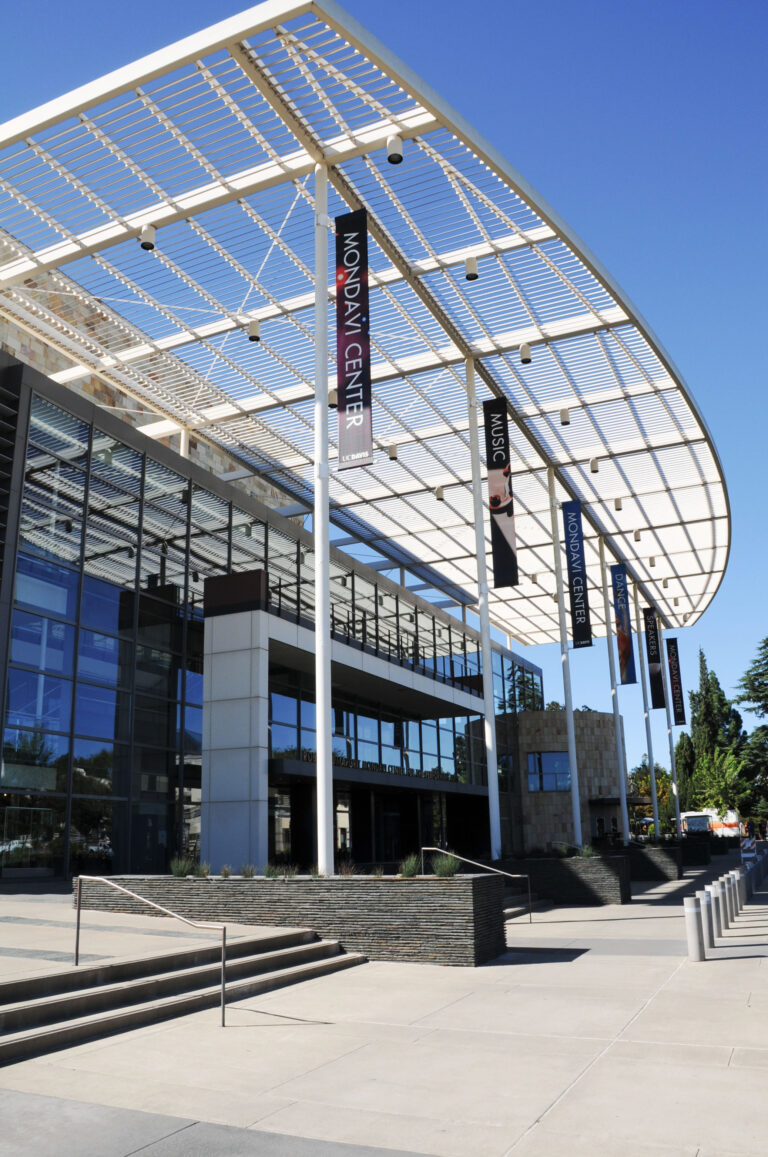
The Robert and Margrit Mondavi Center for the Performing Arts is a state-of-the-art performance facility located at One Shields Avenue in Davis. Well known for its highly acclaimed music, dance, theater and spoken word performances, the Mondavi Center is one of Davis’ best venues for arts events while also offering special resources to UC Davis students.

This summer, the Mondavi Center hosted psychedelic rock band MGMT and pop sensation Carly Rae Jepsen. Concert-goers can look forward to indie rock artist Andrew Bird’s forthcoming show in November, in addition to any other shows announced throughout the year.

From classical to modern, their music performers are thoughtfully chosen, aiming to appeal to an assortment of different tastes. With its eclectic selection of performers in all fields, Don Roth, executive director of the Mondavi Center, described the variety of performances as “undefinable” in an email interview.

“In the Vanderhoef Studio Theater (VST), our small theater, we are both intimate and edgy — a jazz singer from Norway singing christmas carols? Actors from Scotland serving whiskey and dancing on the tables? … All in a venue where no matter where you sit, the performers are there in your space!” Roth said. “We keep re-defining ourselves with the guarantee that whatever you see will leave you changed when you exit!”

The center hosts events ranging from scholarly presentations to artistic performances that all coincide with UC Davis’ mission.

“First of all, we align with the university’s vision of excellence — it is our goal that everything we bring be among the very best, whether it is the New York Philharmonic or Emmylou Harris!” Roth said. “We also promote the university’s goal to be recognized worldwide for its excellence … [and] … to be international in scope with a program that brings great artists from Europe, Asia, Latin America and Africa.”

In addition to the shows, the Mondavi Center also provides various educational programs and resources for students. All throughout the year, they have artists in residence who provide master classes and clinics for students, including those in the UC Davis Symphony Orchestra, such as fourth-year religious studies major Frankie Ortega.

“I have been in the UC Davis Symphony all four years of my enrollment here at Davis and I must say it is both an honor and an amazing experience being able to perform at the Mondavi Center,” Ortega said in an email interview. “It is a really nice payoff after the hard work that goes into learning the pieces performed.”

The Mondavi Center also offers its Aggie Arts internship program. The internship provides a unique way to explore the world of arts administration and management. The four students accepted into the program are granted the opportunity of learning every aspect of running a performance venue, followed by a free show that they get to put on all on their own for other students.

“We also have a number of students who work in our ticket office as ushers or with our production team. It is a great way to get first-hand experience in how a performing arts center works, as well as a chance to get exposed to a wide variety of artists,” Roth said.

Third-year textiles and clothing major and Mondavi Center ticket office employee Karen Saelee also appreciates the professional and artistic opportunities the Mondavi Center offers.

“I’ve worked here for about a year, and I have got to say that this job has really introduced me to a lot of connections within the business. I definitely have a great appreciation for the communication I have every day with people in the performing arts world,” Saelee said.

The Mondavi Center offers several other academic resources to UC Davis students, including a free ticket for every first-year student for their first show. Additionally, if any performance relates to a student’s academic course, the class can sign up for Curriculum Connections, which allows students to attend the show for $5. In order to provide students with a study environment during finals, the Mondavi Center also has classical music study sessions.

Visit mondaviarts.org to view the 2013-2014 schedule. Tickets are available online or at the ticket office.


LARISSA MURRAY can be reached at arts@theaggie.org.

Guest Opinion: Cutting out meat

0

President Clinton, once known for his love of fast-food, has been making headlines for his recent dietary change. He’s swapped the Big Macs, chicken nuggets and fried shrimp for veggie burgers, beans and fresh fruits and vegetables.

After years of battling heart problems and even undergoing quadruple bypass surgery, Clinton took his doctor’s advice to reduce his meat consumption and increase his intake of plant-based foods. He reports that the results have been tremendous: losing 24 pounds, feeling more energetic, and seeing a welcome drop in  cholesterol levels.

President Clinton isn’t the only one turning over a new leaf; from Usher, to Oprah Winfrey, to Ellen DeGeneres, to Kristen Bell, people everywhere are eating less meat. Even Mike Tyson, once known for biting off a human ear, is now limiting his ear consumption to those of the corn variety.

The movement toward more plant-based meals is also taking root on college campuses, with more than 200 universities, including the University of California, Davis, leading the charge with “Meatless Monday” campaigns in their dining halls.

Nationally acclaimed food writers, such as The New York Times’ Mark Bittman and The Washington Post’s Joe Yonan, are helping the nation discover meat-free dishes that will leave you impatient for the next meal. Eating your vegetables? If you don’t know the possibilities that phrase encompasses in 2013, you are missing out.

There has never been a more exciting time to expand our dining horizons. Skipping meat one day a week is not a sacrifice but an adventure. And this is reflected in the choices students are making. According to a study conducted by Technomic, over 20 percent of college students are reducing their meat consumption, and for good reasons.

One of those reasons is concern for the nine billion chickens, pigs and other animals raised for food each year, most of whom suffer in factory farms.

For example, mother pigs in the pork industry are typically confined in tiny crates barely larger than their own bodies for virtually their entire lives. Unable to even turn around, these sensitive, intelligent animals — all of whom have their own personalities and preferences — experience tremendous physical and psychological pain.

Most egg-laying hens suffer a similar fate, as they’re crammed into tiny cages, each bird granted less space than the screen of an iPad in which to live for her entire life.

By choosing meat-free options just one day a week, we can all help prevent an enormous amount of cruelty to animals.

Human health and the health of the planet also benefit. A report issued by Environmental Working Group put it simply: “Producing all this meat and dairy requires large amounts of pesticides, chemical fertilizer, fuel, feed and water. It also generates greenhouse gases and large amounts of toxic manure and wastewater that pollute groundwater, rivers, streams and, ultimately, the ocean.”

Increasing numbers of family farmers are also voicing their support for Meatless Monday as a means to achieve a more sustainable, community-based agricultural system before it’s too late.

Our current rate of meat consumption is simply unsustainable. By reducing the total number of animals raised for food, we place greater value on humane sustainable agriculture in which animal welfare is a priority.

Thankfully, eating meatless doesn’t mean “less” at all. It means “more,” as in more choices. It means “better” as in better living — both for us and for animals. From chain restaurants like Chipotle and Denny’s serving up hearty vegetarian fare, to Indian, Thai, Chinese and Mexican cuisine which regularly incorporate delicious meat-free items, the options are endless.

Bon appetit!

KENNY TORELLA is the food policy coordinator for the Humane Society of the United States and can be reached at KTorrella@HumaneSociety.org.

Aggie Arcade

0

 The PlayStation 4 and Xbox One come out in November, and to say I’m excited about the impending console generation would be an understatement. But optimistic visions of the future don’t account for the brilliant library of games that audiences have been treated to in 2013. We can’t forget about the PlayStation 3 and Xbox 360 quite yet.

Obviously, new releases will still be multi-platform for the foreseeable future while developers work out technical kinks and establish familiarity with the new consoles, but we’re getting into swan song territory. This year marks the time when game designers make their last, sweeping artistic statements with current technology, while the video game community sits back and enjoys.

The prime examples come in the form of BioShock Infinite and The Last of Us, two big-name releases that received plenty of acclaim. I discussed the merits of BioShock Infinite in an earlier edition of the Aggie Arcade, including the product’s value as an educational experience with its emphasis on American history and complex ethical dilemmas. Such themes are not often explored in video games, but the team at Irrational Games took that kind of risk with the original BioShock in 2007 and pushed the envelope even further with Infinite.

The Last of Us addresses a far more traditional set-up with its post-apocalyptic/infected storyline, but the characters and relationships forged in the game highlight its status as a landmark release for the current generation of video games. Just in those first 20 minutes or so, the player is hit with an emotionally exhausting moment that cements the game’s bleak and dour tone.

Perhaps it’s a knee-jerk reaction considering both games came out just months ago, and I am sometimes prone to hyperbole, but BioShock Infinite and The Last of Us stand out as some of my all-time favorite games and also represent the best the current generation of consoles has to offer. It shows us that the end of a generation can be a great thing — sure, innovation has fallen by the wayside in recent years with new technology looming on the horizon, but there are still fantastic ideas out there that emerge near the end of a console’s lifespan.

Oh, and I haven’t even mentioned Grand Theft Auto V, a game I have not yet played as of this writing (though it did come out in September). As a fan of the series, I’d be shocked if I don’t absolutely love that game, and I imagine plenty of gamers are in the same boat as me. Once again, we have a final current-gen product from a landmark developer — Rockstar Games — and it also satisfies a far different niche than BioShock Infinite and The Last of Us. Rockstar’s goal is to create a living, breathing world with plenty of memorable characters and witty writing. If the early previews are any indication, the company has done just that.

The unifying theme of all these great games is that they represent a final statement on what has been a fantastic generation of video games. As developers become more familiar with the hardware, the games get better, so this year we see what the medium can truly offer players. So before you boot up those new consoles in November, take some time to appreciate how great the past eight years have been and how that’s led us to games like BioShock Infinite, Grand Theft Auto V and The Last of Us.


ANTHONY LABELLA can be reached at arts@theaggie.org.


To UC Davis and beyond

0

Daily classes and too much reading may set a college student’s short-term assignments above long-term goals. For many, however, graduation looms in a few short years and academic cohesion should not be a matter of hindsight.

Reflecting on their college years, former UC Davis students discuss how both classroom and work experience shaped their career paths, and urge current students to remember that classroom experience alone may not be enough to find the right field.

Shanon Astley, a UC Davis transfer student who graduated in summer 2013, stressed that opportunities outside of campus hold as much importance as academics within.

“You owe it to yourself as a student to challenge your fears, your compassion, your drive — because when you do, what you discover is worth so much more than what you find in a textbook,” Astley said.

Astley started college with the aspiration to become a teacher. Her interests immediately shifted toward science, eventually directing her path away from general teaching to research.

By the time she transferred to UC Davis she was majoring in biochemistry and molecular biology. Only a lack of room in her schedule stopped her from also pursuing a minor in sociology.

Having started school with the intention to help others as a teacher, she continues to pursue public service. She narrowed her focus toward helping communities suffering from HIV and poverty.

“I realized I wanted to personally be involved in the lives of HIV patients,” Astley said.

She has connected herself with Oak Park Outreach in Sacramento, a service that educates the local community on safe sex, HIV, hepatitis C and B and offers a free needle exchange and free clinic on Saturdays. She has also involved herself with various projects while volunteering in South Africa and Kenya.

“When you volunteer abroad, you don’t have to start your own project and you don’t have to go there with a big plan. You just need to go there, invest your whole heart, and I guarantee you will help someone,” Astley said.

She is currently applying to medical school and in the meantime works as a medical technician in an assisted living and memory care facility in Auburn, Calif.

Alice Phun, a UC Davis June 2012 graduate who completed degrees in history and Asian American studies, agreed with Astley, stressing that extracurriculars are important.

“I didn’t think networking was that important in college, but after college I realized the importance of a good network,” Phun said.

Phun has spent the past year after her graduation searching for jobs in state government work and nonprofit organizations. She attributes part of the need for such a long search to a lack of networking while in college. She’s done everything else seemingly right.

“One of the things I did my freshman year was [try] to plan out my entire four years as much as possible,” Phun said.

This planning ensured she could finish her double major after switching from environmental horticulture and urban forestry.

Kao-May Saeteurn, also a 2012 UC Davis graduate, had almost the opposite experience.

“I joined the Marines straight from high school in 2003. After four years of service I was selected for an officer commissioning program where the military sent me to college to get a degree,” Saeteurn said.

Saeteurn majored in exercise biology and minored in education, completing his degree before returning to duty. Rather than picking a career to match his education, his prior experiences directly impacted his choices as a student.

“With a military background, fitness has always been one of the most important aspects of my career and life. I started and ended with this major,” Saeteurn said.

Aided by his education, Saeteurn plans to stay fit and continue his service in the Marines for another 10 years.

Unlike Saeteurn, Jonathan Tung, who graduated from UC Davis in June 2013 with a degree in chemical engineering, directed his career path based on his classes.

“I wasn’t sure what industry I wanted to go into, so I chose chemical engineering because it was so broad and versatile. As I took more classes, I started to get an idea of where my interests lie,” Tung said.

Tung currently works in the pharmaceutical processing and technology development department at Genentech, a biotechnology organization headquartered in California. His path was shaped by his college experience, and his interests were discovered during his education; however, his education is not quite complete.

“I would suggest freshmen to keep an open mind to everything and anything that’s out there. Even though I’m out of school, I need to learn now and continue to do so for the rest of my career,” Tung said.

Tung plans to continue his career at Genentech, possibly changing departments as he learns more and his interests change.

To current students, Astley also stressed that experience teaches you and can change your career.

“Invest your time wisely, chase what drives you, and do it. You won’t regret it,” Astley said.

NICK FREDERICI can be reached at features@theaggie.org.


Police Briefs

0

WEDNESDAY 9/18
Cinderfella
On Apple Lane, someone found a guy lying on the front lawn wearing only one shoe.

THURSDAY 9/19
What a pain
A woman on East Eighth Street called the police, swore, stated “ow,” then laughed and hung up.

SATURDAY 9/21
Loveline
On Moore Boulevard, someone called the police saying he needed someone to love him.

Lend me your ears
Somebody pocket-dialed the police department from Hacienda Avenue; all that could be heard was a group of subjects singing harmoniously.

SUNDAY 9/22
Flashdance
A naked middle-aged man was pacing back and forth on Cowell Boulevard while masturbating.

Buzzted
A man was passed out in the bushes on Second Street with a female customer’s purse.

Not so complimentary
A woman asked a restaurant manager on G Street for free food, and when he told her to leave, she told customers they shouldn’t eat there as the management refused to feed her.

Police briefs are compiled from the City of Davis daily crime bulletins. Contact EINAT GILBOA at city@theaggie.org.

iOS 7, a fresh slice of Apple Inc.

If there’s one thing we know Apple for, it’s creating nearly unbearable suspense between the preview and release of a product, but you can rest easy now, iPhone and iPad users — the touted iOS 7 operating system you’ve all been waiting for is now available.

In June of this year, Apple CEO Tim Cook made an announcement regarding the update, and what he said was nothing short of the truth. iOS 7, or operating system 7, is “The biggest change to iOS since the introduction of the iPhone.” Considering that the bulk of changes we’ve seen to the iPhone to date have been made primarily to its hardware and shape, iOS 7 is a pretty significant departure from the chrome lines, high-definition app icons and super-intuitive operations of iOS 6 and before. Saying that, this update has drawn about as many critics as it has enthusiasts.

Look/Feel:

The new iOS 7 features icons unlike any other seen on Apple devices — instead of representative, bijou images for each app, iOS 7 features simpler, vibrantly colored, block-like app icons that function at breakneck speed and precision.

iOS 7 gives prominence to clean white text that is pervasive throughout the device and makes the iPhone feel even more pristine and elegant than the previous operating systems ever did.

Operations:

iOS 7, however, is also a bit less intuitive than previous operating systems, and for a good reason. Since its inception in 2007, over six years have passed since iPhones, or really any smartphone, have become essential to the lifestyle of people worldwide. The idea behind the augmented sophistication of iOS 7 stems from the reality that most of us already know how to use a smartphone. With iOS 7, Apple capitalized on the reality that we no longer need them to hold our hands as we navigate their devices.

Updates:

Along with significant modifications to the notification shade (the drop-down screen of the iPhone that displays general updates), an entirely new iTunes layout (including the new iTunes Radio, which operates similarly to Pandora and conveniently connects directly to the iTunes Music Store), some of the most awesome and significant updates can be found in the new Camera app.

The iPhone Camera now offers different virtual lenses through which a picture can be taken. Similar to, yet slightly less comprehensive than the Instagram app, which allows a user to place a filter over an image, the new camera updates allow you to take and edit photos with one of nine different filters.

New Features:

If there’s a good note to end on regarding iOS 7, it’s the introduction of the Control Center and the new, more human Siri.

Apple isolated some of the most managed iPhone settings and consolidated them into the Control Center for the convenience of the user. Control Center consists of a smart dock that can be swiped up from the bottom of any screen. It allows the user to access Flashlight, Clock, Calculator and Camera; change iPhone settings and manage iTunes and Wi-Fi/connectivity settings all in one place.

Additionally, Siri has become a new woman (or man, totally up to you). Smarter, quicker and much better at communicating like a human being than in pre-iOS 7 operating systems, Siri is quickly becoming something out of science fiction — and hopefully he/she doesn’t try to take over the planet someday.

When all is said and done, Apple has “done it again.” They’ve remade and remodeled their own system in such a way that resets the expectation for the smartphone and tablet industry. While some of us may loathe the changes and others may prance with joy over them, Apple has done what it does best with iOS 7: set the industry standard for the next generation of handheld devices.

Apple iOS 7 is an easy download — open the Settings app, tap General, then tap Software Update and the iPhone offers education about all of the iOS 7 perks in addition to a download option. Enjoy!

EMILY SEFEROVICH can be reached at science@theaggie.org.