44.5 F
Davis

Davis, California

Monday, January 12, 2026
Home Blog Page 932

Les is More

0

An NBA journeyman with a deadly accurate jumper and a throwback hairstyle, Jim Les had one shot at record-book immortality. The shot didn’t come in the NBA Finals, though, or even in an NBA game. Instead, it came in the 1992 Three-Point Shootout at the NBA’s All-Star weekend.

Les, a backup point guard for the Sacramento Kings at the time, was up against two-time defending champion Craig Hodges in the final round of the contest. With the last seconds ticking away, Les was left with a corner-three for the win. Back iron and out. Les toppled over, the grin on his face clear for all to see.

Now, 21 years later, Les is drawing on his years of experience as he resurrects a university basketball program that is just a few exits down the interstate from the Sacramento arena where he played most of his NBA career. In his second season as head coach at UC Davis, Les led the Aggies to their most wins as a Division I program, finishing the season with a 14-17 record.

“[The most important thing] is building a foundation of the program [and] we’re in the midst of that right now,” Les said. “We’re building a foundation with really good young men who are working hard, getting better and buying into the goal of making UC Davis basketball relevant not only on this campus, but nationwide.”

Nationwide relevancy is a lofty goal for a program that has never had a .500 record at the Division I level, but Les is used to doing more with less.

As a 5’11” point guard, Les dished out 884 assists in a prolific college career that started at Cleveland State and finished with a perfect conference record in his final season at Bradley University. NBA scouts took notice, and Les was drafted by the Atlanta Hawks in the third round of the 1986 NBA draft.

Despite never becoming a starter in the league, Les absorbed all he could during his seven-year career in the NBA.

“I played in a [special] era,” Les said. “It was Jordan, Bird, Magic. I played with John Stockton [and] Karl Malone. I was exposed to a lot of greatness within the sport and tried to take as much as I could.”

What Les lacked in raw athleticism he made up for in shooting ability.

“I was in a situation where I couldn’t take any shortcuts because of the limited size and talents I had. I [needed] … to be a step ahead of people mentally in order to play at the same stage as they were,” he said.

The backup point guard led the league in three-point percentage during the 1990-91 season, connecting on a deadly 46 percent of his attempts from behind the arc.

“I spent a majority of my time there just trying to talk to guys about how they hone their craft and what do they do to work on their shooting and get better,” Les said. “It was amazing … success leaves clues. Those guys left me a lot of clues in my conversations with them about how they developed into shooters. Those are all things that I carry with me as a coach now to provide to my student athletes.”

The following year, he was invited to participate in All-Star Weekend.

In addition to the tips he picked up from his peers, Les draws on the knowledge he gained while playing for multiple hall-of-fame coaches. Les played for the legendary Jerry Sloan in Utah and later for Lenny Wilkens with the Atlanta Hawks.

Those two coaches are ranked No. 4 and No. 2 in all-time wins as an NBA coach, respectively. His coach for four years with the Sacramento Kings was Dick Motta, who is the 10th winningest coach in NBA history.

Playing point guard for those men had a deep impact on Les’ coaching philosophy.

“As the point guard trying to be the coach on the floor, I had to be a student of the game and I thought those [coaches] were really instrumental in helping me understand the mental aspect and improving my IQ for the game,” Les said.

Not all of Les’ professional experience comes from his playing career, though. His first coaching job came just four years after his NBA retirement, when he signed on as an assistant with the WNBA’s Sacramento Monarchs. A few years later, in 2002, Les was hired as the head coach at his alma mater, Bradley University. The coach made quick work of turning around the program, going from 12 wins in 2003 to 22 wins in 2006. That 2006 season was capped with a Cinderella run in the NCAA tournament, when the 13th-seeded Braves knocked off No. 1 Memphis to reach the Sweet 16.

“You develop [your coaching philosophy] based on the people you’ve been touched by,” Les said. “I feel my greatest strength now coaching young people is that I picked up this wisdom and knowledge from some really good people.”

Les coached the Braves to four consecutive 20-win seasons before the teams started to slip, ultimately leading to his arrival at UC Davis just five seasons later.

Now, Les is leading the revival — or maybe the birth — of the Aggies’ basketball program. After a very difficult first season under the new regime, the Aggies were on the right track in 2013.

And Les is ready to continue the growth. Next season’s Aggie roster will return 85 percent of its scoring from this year and will add depth with a formidable combination of up-and-coming talent and impressive freshman recruits.

“I feel fortunate to be here and recruit young men to this unbelievable university and this environment which I think is bar none one of the best in the country,” Les said. “Now it’s a matter of getting kids in here and working them and developing them and using my past knowledge and experiences to develop basketball program that sheds a really positive light on the university.”

Under coach Les, the Aggies have already seen a rise in national prominence. The defining moment of the 2013 season came in March, when more than 5,000 students and fans packed the UC Davis Pavilion to capacity for a nationally televised game against Long Beach State.

The gym was as loud as it has ever been, and the Aggies battled end-to-end against the reigning Big West Conference champions. The Aggies were down by one with just seconds remaining when the ball found senior Paolo Mancasola in the corner.

The potential game-winning shot bounced off the back rim and out, a heartbreaking loss in the best game of basketball the Pavilion had seen in decades.

Jim Les knows that feeling. It’s happened to him before. And he knows how to learn from it, to keep working and building, never taking shortcuts. It’s all part of building a basketball program, something he does every day.

CAELUM SHOVE can be reached sports@theaggie.org.

UC Davis softball sees its final pitch of 2013

The faint echoes of cheering and discarded sunflower seeds are all that remain on the now empty La Rue Field, which hosted its last series of the 2013 season this past weekend against Cal Poly. In the world of UC Davis spring sports, softball has now come to a close. Although the team went through some ups and downs this year, they can be proud of finishing off strong, sweeping the Mustangs in three big wins. Coach Karen Yoder was confident prior to their last games of the year.

“We’re excited to have the opportunity to have three more games this season,” coach Yoder said. “Any time you’re in competition, you want to strive to excel.”

Exceeding her expectations, the team came out firing against Cal Poly in the double-header on Friday and the one game on Saturday. Clutch hitting, strong defense and solid pitching played heavily into the Aggies besting rival Cal Poly. Winning 5-2 in game one and 6-4 in game two on Friday, coupled with a final 4-0 victory Saturday, the entire team can stand a little taller finishing on a high note in conference play.

Especially satisfied were the team’s four graduating seniors, who were honored on May 11 during an emotional Senior Day ceremony.

“The entire team played great today, I am excited to end my time at UC Davis with a win and a sweep,” said senior Megan Guzman.

Guzman can be very proud of her final game on La Rue Field, going 3-3 with three stolen bases. The center-fielder finished off her season with 13 stolen bases, adding up to a career-high 51, the second-highest number ever recorded by an Aggie.

Other graduating seniors included Jessica Thweatt, JJ Wagoner and Kelly Schulze, each of whom also contributed to that final win at home. Thweatt threw a full game, allowing only four hits and no runs; giving her her third complete-game shutout in four years. Wagoner finished off her career starting at catcher. Schulze started at first base and then finished the game behind the plate, the position that she started her career at UC Davis in.

“It was nice to end my career the way it started when coach let me finish the game as a catcher,” Schulze said.

With the team’s big wins this past weekend, they finished conference play at 11-13, adding to an overall record of 25-27, just below 500.

“This was a great team victory and the best possible way to end Senior Day,” Wagoner said.

The season as a whole was admittedly challenging for UC Davis this year.

“Every series had a given dynamic,” Yoder said. “We were challenged on every opportunity.”

Opening up conference play at the end of March with an away series against Hawai’i, who was 18th-ranked in the nation at that time, especially tested the players’ skill levels.

“It was a good series even though we didn’t win a game. I’m proud of how we played,” Yoder said.

Although the team went down in conference 0-3, they were able to bounce back, taking two of three against Northridge, boosting their record to 2-4. However, as the season progressed, the team needed to capitalize at the plate and the girls struggled to succeed offensively, losing seven games in league play by only one run, giving them 14 one-run losses overall.

“Offense was our downfall,” Yoder said. “Coming into next season the focus for the players and coaching staff is scoring more runs.”

However, many positives came out of the year. The pitching staff finished first overall, with the lowest ERA in the Big West. To add to that, the Aggies’ solid gloves all year ranked them third in defense in the conference.

Standout sophomore pitcher Justine Vela and freshman shortstop Christa Castello each received All-Big West Conference first and second-team honors recently; further emphasizing that this young team has great potential coming into the next few years.

Although the team did not meet their ultimate goal of winning the Big West in 2013, with only four graduating seniors and a large freshman and sophomore class, Yoder expects big things out of this young squad.

“There are so many freshmen and sophomores; we have tremendous potential for the future,” Yoder said.

La Rue Field may be a bit quieter coming into these last few weeks of Spring Quarter, but the excitement of another spring season will be here soon enough, bringing with it chants, cheers and a whole new bag of fresh seeds.

SLOAN BOETTCHER can be reached at sports@theaggie.org.

UC Davis continues their hot run

Teams: UC Davis at Hawai’i
Records: UC Davis Aggies, 19-31 (5-16); Hawai’i Rainbows, 12-33 (7-14)
Where: Les Murakami Baseball Stadium — Honolulu, Hawaii
When: May 17 at 6:35 p.m.; May 18 at 6:35 p.m.; May 19 at 1:05 p.m.
Who to Watch: As the baseball season comes to a close, the Aggies will hope to pull out conference road victories against Hawai’i. The Aggies started their seven-game road trip with a series victory over Pacific.

The Aggies’ success against Pacific was due much in part to the consistent hitting and base performance by junior Steven Patterson. Named 2012 All-Big Eight first team in his final season with San Joaquin Delta College after posting a .380 batting average to go with six home runs, eleven doubles and 33 runs batted in, Patterson has proven that his game is no fluke.

Patterson has prospered here at UC Davis. This shows in the results he is producing this year. Currently second on the team with a .351 batting average and a .405 on-base percentage, Patterson has been a consistent offensive threat for the Aggies. He currently has an eight-game hitting streak going, as well as a season-high 21-game on-base streak. Hopefully, Patterson can continue his hot performance into Hawaii.

Did you know? The Aggies have 460 hits through 46 games, an average of 10 per game, ranking them first in the Big West, 24 more than second-place Cal Poly, who has 436 hits. The Aggies also rank first in doubles with 81, third in runs scored with 252, third in RBI with 228 and third in on-base percentage with .364.

Preview: The Aggies may look upon this as a down season, but that certainly does not mean UC Davis cannot build momentum heading into next season. As the Aggies conclude their seven-game road trip in Hawaii, head coach Matt Vaughn continues to focus on that task at end.

“We have been competitive all year, but have not had the results,” Vaughn said. “We just try to play one game at a time. It sounds simple, but just keep getting better.”

During the current string of road games, the Aggies have outscored their opponents by a total of nine runs in four of the seven games, and have outhit the opposition in these games. The recent run of good baseball has been sparked by the solid pitching as of late.

“It started with a very good outing with Harry Stanwyck against Pacific pitching a shutout,” Vaughn said. “It got us rolling. Even though we lost a close game on Saturday, one big hit and we would have been in position to win the ball game. That momentum has carried us through the week.”

Although the Aggies’ pitching woes continue, posting a season team earned-run average of 5.26, the Aggies’ bats continue to remain on-point, averaging .285 and totaling 52 hits in their last four games. They will definitely need to pitch better against the Rainbows.

This holds true especially against junior Marc Flores. In the recent seven-game road trip, Flores has been hitting .542, which includes four doubles and a home run. The UC Davis pitching will have to be careful when pitching to him. If not, Flores might have a big series.

The Davis-Hawai’i conference matchup will mark only the fourth time these teams have ever met. This series is going to be interesting as the teams will be able to make a mark on the history of the matchup.

The Aggies have steadily improved over the year. They have been getting positive results in the string of recent games. With hot bats in the lineup, UC Davis has an offense to be feared. When the pitching becomes more solid, the Aggies will be a force to be reckoned with.

“We are just going to continue to get better,” Vaughn said.

— Shaun Moncada

UC Davis to withdraw from UC Student Health Insurance Plan

After the recent discovery of a $57 million deficit in the UC Student Health Insurance Plan (UC SHIP), UC Davis has made the decision to withdraw from UC SHIP and move forward with alternate options.

The deficit has been accumulating since 2010; monthly monitoring of the plan was not performed at the same level that it had been previously.

UC Davis’ share of the deficit is $10 million. The UC Office of the President (UCOP) is currently reviewing options for dealing with the deficit.

“UCOP has not made a decision for how the deficit will be paid off. There are a variety of options under consideration that have been presented to President [Mark] Yudof, but no decision has been made,” said Brooke Converse, media specialist at the UCOP. The office is currently working to find funds so students will not have to pay for the deficit.

UC Berkeley, UC Santa Barbara, UC Riverside and UC Irvine have also decided to withdraw from the UC SHIP medical plan.

“We are withdrawing students from the medical portion of the UC SHIP plan but remaining in the UC SHIP dental and vision plans (which are both fully insured),” said Angela Monterrubio, student representative for UC Davis at UC SHIP advisory board meetings, in an email interview. “There will be a rate increase for the new year plan that is similar to the increase that would have been incurred had we stayed with UC SHIP.”

The UC Davis Student Health Insurance Plan committee has reviewed proposals from different health insurance providers and is moving forward with Aetna Student Health, a fully insured plan, according to UC Davis Dateline.

According to Monterrubio, in an effort to mitigate the rate increase for the new year plan, there have been recommendations for benefit modification to the student plan. These include raising co-insurance from 10 percent to 20 percent, raising the deductible from $200 to $300 and raising office visit co-pays from $20 to $25.

“The biggest thing is for us to look at the implications of the decision. We have to think about affordability for students and lifetime caps,” said Bradley Bottoms, ASUCD Vice President.

In an effort to comply with the federal Affordable Care Act, UC Davis will eliminate all caps on claims. Students will still be seeing an increase in insurance rates next year.

“Regardless of whether or not we stayed with UC SHIP, the student insurance rates were going to increase,” Monterrubio said. “But by converting over to a fully insured plan, and making some modifications to the plan, we are ensuring that the overall impact of this increase is minimized not only in the current year, but the next year as well.”

LAUREN MASCARENHAS can be reached at campus@theaggie.org.

Hauschka to perform prepared piano at Mondavi

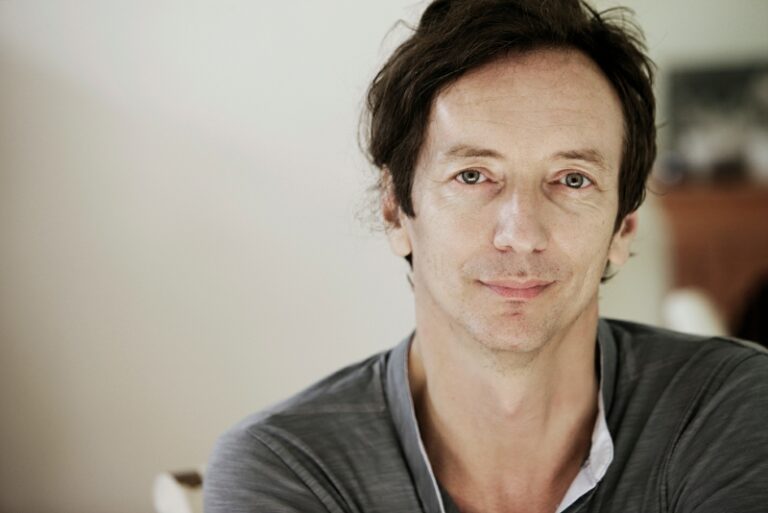
Aggie Arts interns at the Robert and Margrit Mondavi Center for the Performing Arts invited Hauschka, a Dusseldorf-based pianist and composer, to play the experimental work he is best known for on the prepared piano on May 21 at 8 p.m. Adding a modern twist to classical music, Hauschka’s avant-garde arrangements embrace the multitudes of sound strains a piano can produce.

Volker Bertelmann, best known as Hauschka, switched to a more experimental music form after being trained as a classical pianist since the age of 9. By placing miscellaneous objects onto the strings, hammers and dampers, the piano’s sound is altered and creates unique sounds that often resemble those made by other instruments or electronic programs.

“His work can be avant-garde, but it never shuts the audience out,” said Bijan Ghiasi, Aggie Arts intern and a fourth-year English and dramatic arts double major. “You never know what he’s going to play — it could be something pre-existing that he took and transformed, something he composed or it could be completely improvised.”

Some of the objects he uses include tape, erasers, bottle caps, ping pong balls, Tic Tacs and bolts. It can take up to several hours or just a few minutes for Hauschka to prepare a piano, said Erin Vong, Aggie Arts intern and a fourth-year art history and communication double major.

Hauschka composes his own pieces and often improvises while performing. At the Mondavi Center, Hauschka will perform pieces from his recent album, Salon Des Amateurs.

As a part of the Aggie Arts internship at the Mondavi Center, a group of four interns coordinate an event with a classical music component for the Spring Quarter of their three-quarter internship. By inviting Hauschka to perform, they hope to integrate classical music with the UC Davis campus and connect students with classical music in a unique way.

“Our generation might not have as close of a relationship with classical music as we’d like it to, and in bringing Hauschka we’re hoping we can bolster that relationship between classical music and the students on campus,” Vong said.

The prepared piano has pre-existing roots at UC Davis, as John Cage, a pioneer of the prepared piano and avant-garde music, was an artist in residency here in 1969. By bringing Hauschka to the Mondavi Center, the interns hope to connect the campus community with the unique approach to classical music that continues to thrive.

“A lot of people don’t know what the prepared piano means or who John Cage is, and this performance would hopefully provide a whole wealth of knowledge that people might not have,” said Maizy Enck, Aggie Arts intern and a fourth-year art history major.

The Aggie Arts Internship at the Mondavi Center, funded by the Andrew W. Mellon Foundation, provides students who are interested in learning how to run a performing arts center the opportunity to participate in its various departments.

With the mission of connecting students and the campus community with the Mondavi Center and the performing arts, the interns also host quarterly study sessions at the Mondavi Center, opening up all floors of the center lobby for students to use during the first Monday of finals week.

“With the Spring Quarter performance and the quarterly study sessions, we hope to build a bridge between the campus community and the Mondavi. It provides the opportunity for students who don’t know much about the classical music or the Mondavi itself to experience it in a unique way,” said Sylvie Truong, Aggie Arts intern and a fourth-year English major.

Hauschka’s performance will begin with an eight-minute video detailing how he prepares the piano, followed by his 90-minute performance, a Q&A session and a complimentary reception in the lobby.

Tickets for Hauschka’s performance are $15 for students, $30 regular, and can be purchased online at tickets.mondaviarts.org or at the Mondavi Center ticket office.

CRISTINA FRIES can be reached at arts@theaggie.org.

http://www.youtube.com/watch?v=43Z4yljYY_c

ASUCD bill to grant money to community-specific graduations fails

A bill to increase funding for community-specific graduation ceremonies did not pass at the ASUCD Senate meeting on May 9. The bill would have increased funding to ethnic graduation ceremonies by $1,300.

Senate Bill 94 was first presented to ASUCD on May 2, asking for $5,100 in grants to fund the graduation ceremonies. It was sent back to the Business and Finance commission for revision and debated again on May 9, after the amount was reduced to $1,300.

The $1,300 would have been added to the $4,000 of support ASUCD already gives to ethnic and Lavender graduation ceremonies. The bill needed a 2/3 majority to pass.

The senators who voted no on the bill were Tal Topf, Felicia Ong, Liam Burke, Ryan Wonders and Amrit Sahota.

Background of the bill
According to Alyson Sagala, ASUCD senator and author of Senate Bill 94, bills have been introduced every year for the past three years regarding funding for ethnic and Lavender graduation ceremonies.

Last year’s situation was unique, Sagala said, because an ASUCD unit had been dissolved and so there were unknown reserves available for the ethnic graduations. As a result, funding increased from $3,000 to $10,000.

This year’s bill had a similar request in nature and terms of funding. However, the situation was different.

“It’s a sad situation, in that they were only willing to fund these events because that money became available — which is completely unacceptable and they should be funded either way,” Sagala said.

There are eight community-specific graduation celebrations that were involved with drafting the bill: Black Graduation, Chican@/Latin@ Graduation, Filipin@ Graduation, Lavender Graduation, Middle East/South Asian Graduation, Muslim Student Association Graduation, Native American Graduation and Southeast Asian Graduation.

Sagala said the bill was created because funding was cut off from other avenues, which left a gap in funding that couldn’t be bridged with fundraising and other campus grants.

“… when [the bill] failed, the only argument was that there wouldn’t be enough money left in senate reserves for the rest of the year,” Sagala said. “The people who voted no essentially did so because they believe that ASUCD has no responsibility in supporting these events, which is absolutely not true.”

The opposition’s argument
The main arguments senators gave for denying the bill were the low reserves available to ASUCD and the timing of the bill.

Senator Felicia Ong said she voted against because she didn’t feel there would be enough money left in the senate reserves.

ASUCD controller Eric Evans said that there is currently $3,339 in the ASUCD budget for the remainder of the school year.

“I personally felt that a huge con to this bill was its timing in relation to how much money we have left in our senate reserve,” Ong said in an email interview. “Passing the bill would have about halved the amount left in our senate reserves, bringing the total to under $2,000. I personally believe that we should always save a little money in our reserves for unforeseen expenses, which is exactly what senate reserves are for.”

Senator Liam Burke echoed Ong’s reasons for denying the bill and said that he feels senate reserves were too low to make make large appropriations that are not vital to the operation of student services. He also said the bill was poorly timed.

“Graduations are fast approaching, and the time crunch is one of the arguments the proponents of the bill made to get the senate to pass it, but it’s a bad argument,” Burke said in an email interview. “If they knew they were going to need money — which they did — they should not have waited so long to come to us, since our reserves have now reached the point where any expenditure has to be heavily scrutinized.”

Community reaction
Representatives from the ethnic and Lavender graduation ceremonies said there has been a consistent struggle with ASUCD about funding for these ceremonies in the past.

“There have been problems with funding from ASUCD in the past. We’ve never really had a consistent amount,” said Linda Phan, representative of the Southeast Asian graduation ceremony and a third-year nutrition science and Asian-American studies double major. “The money we receive from ASUCD is never enough, and when we ask for more or ask for adjustments there’s always a lot of conflicts.”

Many of the representatives feel the main issue is that ASUCD does not see the importance of these ceremonies for the student body and therefore do not feel it is their duty to provide more funding. The representatives from the eight graduation ceremonies will attend the ASUCD budget hearings on May 18 and 19 to address this issue.

“It’s really been a debate about what senators from years past and present, what they feel according to their legislation, is appropriate for them to give funding to,” said Geetanjali Vij, representative for the Middle East/South Asian (MESA) graduation and a fourth-year religious studies and Middle East South Asia studies double major. “Essentially, the hurdle is not necessarily the availability of money or funds, it’s the justification of giving those funds.”

Many of the graduation ceremonies have been a tradition for many years. The Chican@/Latin@ graduation has been in place since 1984, and according to Dylan Stevenson, representative for the Native American graduation and a fourth-year linguistics major, the Native American graduation has been a tradition since the early 1990s.

Phan said they will be presenting a plan to show ASUCD they are fiscally responsible and hope to establish a solid, consistent amount that’s appropriate for the graduation ceremonies so future conflict can be avoided.

“Budget hearings are crucial and any support for ethnic and Lavender graduations will help us out,” Stevenson said. “We need to advocate higher allocations for our graduations so future graduates can focus on their academics instead of becoming involved in campus politics.”

Sadalia King, a representative from the Black graduation ceremony and fourth-year sociology major, said the budget hearing is an opportunity to improve things for future generations.

Ethnic and Lavender graduation representatives said these ceremonies are vital to the ethnic and LGBT communities at UC Davis. They receive a lot of support from those communities in the student body.

“For the senators who denied the bill, I would like to invite them to any one of the ethnic and Lavender grad[uations] we have,” Phan said. “I feel like we can talk and try to convince them of the merit of the graduating ceremonies all we want, but until the senators who said no on the bill actually see the significance of the graduating ceremonies, they are not going to fully understand.”

Sagala said that a “no” vote on this bill would not have a good bearing on UC Davis’ campus climate.

“A lot of the senators who voted no were voted into office by students in that room and we are going to prove that they need to give the appropriate amount of funding to these students so this no longer is a conflict,” Sagala said. “ASUCD’s decision not to fund these events has negatively influenced the campus climate here at UC Davis.”

PAAYAL ZAVERI can be reached at campus@theaggie.org.

UC Davis makes a splash on the basketball recruiting trail

There is a saying in basketball: you cannot teach size. Some people are just born tall. While size is not everything in basketball, it is important.

A tall player with long arms has the ability to contest jump shots, rebound the ball and shoot over defenders easily.

This is the type of player that UC Davis is getting as they add Georgi Funtarov to the roster. Funtarov, who played high school basketball at Vermont Academy, is a 6-foot-8 guard/forward combo.

He has the ability to help the Aggies in so many ways, including stabilizing some of UC Davis’ deficiencies. At 6-foot-8, he has the height and the wingspan to clear the boards, a need for the Aggies due to the loss of graduating senior Ryan Howley. Howley was UC Davis’ leading rebounder, averaging 7.5 rebounds a game this year.

Funtarov has shown the ability to rebound during his high school career, highlighted by his seven rebounds per game average in his senior year. Hopefully, he will be able to pick up some of the slack in covering the rebounding gap that Howley leaves behind.

While Funtarov is capable of rebounding the basketball, the biggest weapon in his arsenal is his ability to score consistently. Shooting an outstanding 47 percent from the field on his way to averaging 13 points a game in his senior season, Funtarov has shown the ability to post up with extreme efficiency.

Funtarov’s incredible touch allows him to be able to shoot from beyond the three-point line with precision and his size allows him to post up down low and score some gritty baskets.

“UC Davis is getting a talented and versatile forward who can score the ball from the perimeter, to the block, depending on his matchup,” said Funtarov’s former coach, Ashley Battles.

His inside-outside capability on offense fits well with the Aggies’ offense. UC Davis’ proficient three-point shooting, shooting 40.5 percent as a team this year, highlights one of Funtarov’s greatest strengths: his three-point shooting. He shot 40 percent from beyond the arc this season as a senior.

“We love Georgi’s size, ability to shoot the ball and his competitive nature,” said UC Davis head coach Jim Les. “His versatility to play inside and outside is a perfect fit for our system.”

The combination of All-American sophomore Corey Hawkins, junior Ryan Sypkens, junior Tyler Les and Funtarov should be an exciting and very deadly perimeter-shooting quartet. With Hawkins, Sypkens and Les already combining to shoot an excellent 44 percent beyond the arc this season, the numbers should only get better with the addition of Funtarov.

Generally, freshmen take a stretch of games to get accustomed to the athleticism and speed of the college game. Funtarov may enter ready to play.

Funtarov has a lot of experience playing in intense international basketball. He was one of the members of the Bulgarian under-16 national team, which won the 2009 European Championship.

He continues this international experience as he once again represents Bulgaria. This time he will be part of the Bulgarian under-20 team in the European Championships.

“The ability to compete with the Bulgarian national team this summer will be a tremendous benefit to Georgi’s development as a player,” coach Les said. “The coaching and competition are outstanding and will help prepare him for Division I basketball.”

Funtarov will not be the only new player who hopes to help the Aggies improve on last season’s efforts. UC Davis has been able to secure Brynton Lemar’s letter of intent. Lemar has also received quite a bit of recognition as he was bestowed the San Diego Player of the Year award as well as an All-California selection this year. The duo are joined by junior transfers Avery Johnson and Iggy Nujic, both of whom sat out last season due to NCAA transfer regulations.

The UC Davis coaching staff has done a solid job in recruiting various talents to replenish the holes left by the graduating seniors. Hopefully, we can look forward to Funtarov and the rest of the new players impacting the game in a positive way for UC Davis next season.

KENNETH LING can be reached at sports@theaggie.org.

MUSE interviews Wolfgang Gartner

Imagine a Coachella crowd stretching hundreds of people deep, and high-waisted, shorts-clad bodies bobbing and undulating rapidly to electronic thuds and wubs bursting forth from the speakers. Chances are, Wolfgang Gartner’s on the stage.

Gartner, who really got his foot in the door in 2011, is an electronic artist most well-known for his tracks “Illmerica” and “Forever (feat. will. i. am).” Hailing from San Luis Obispo, the 31-year-old has traveled all across the world to perform in solo concerts and music festivals alike.

MUSE got the chance to talk with Gartner via an email interview in the days before his upcoming show about his musical mind state, contributions to the electronic genre, taste for the uniquely extravagant and more.

MUSE: When you first started making music, what drew you to electronic as opposed to any other genre?
Gartner: The feel of it. It’s not really explainable the way music makes you feel, house music just made me feel a certain way. There’s euphoria and elation and identifiable emotions that go along with that, but the real feeling is something that can’t be described and this music made me feel that way.

What’s your inspiration?
Other music, expensive shit, cars, my cat, iced out watches and rings and other planets I’ve visited in different mind states.

What’s the best crowd you’ve ever played for? (Or the best type of crowd, like college students, rave kids, giant music festivals, etc.)
Eclectic music festivals … Like Coachella, Sasquatch, rock festivals that happen to have a dance stage. People there get down harder than anywhere else.

Your Twitter says you’re an indoor waterfall collector … So I really want this to be true. If it is, can you tell us a bit about your indoor waterfalls?
Yup. I have two big ones right now and I’m holding off expanding in case I move, they’re made of stone and they literally weigh like a ton each. But I love waterfalls. And I don’t want to have to go outside to enjoy them. So I put a couple of them in my house. Eventually I’m going to do a river that goes through my house into a koi pond, but I have to be sure I’m gonna live here for a long time and I’m not sure at the moment.

Also from your Twitter: How’s the cat tattoo? Healing nicely? How’s your cat’s reaction been?
It’s peeling really bad right now, as usual on the fifth or sixth day. I’ll probably go back in and have some touch-ups done, it needs more white and I think the blue iris in his eyes needs to be marbled like his eyes really are. My cat didn’t really have a reaction; he’s a cat. He’s not really on a mental level where he would recognize that I have a portrait tattoo of him on my arm. If he was on that level I wouldn’t be doing this interview. I would be with National Geographic filming a documentary about my cat.

What sets you apart from other electronic artists?
I’ve been making dance music for 20 years, and I’m not ridiculously old. I’m 31; I just started when I was young. So, there’s a certain knowledge of trends and sounds and everything that’s happened over the last 20 years in dance music that a majority of kids out right now don’t have, and they won’t ever have. It gives you perspective on everything. People think Daft Punk created disco house, people think a few of these guys started “dutch house,” people give way too much credit to certain artists for being responsible for starting a unique sound; they haven’t been listening to dance music for 20 years and realized everybody is just copying something that’s already been done, including me. And I take advantage of it— I’ll totally mimic some weird genre that had an 18-month life span in the mid-90s and nobody knows because they were like 5 years old. I literally do it in every song. Nobody ever figures it out.

Do you have any projects you’re working on right now? What are your plans for the future?
Yes. Many. My future plans are always FBGM. That’s what I’m doing and that’s what Imma keep doing.

For more information on Wolfgang Gartner, go to wolfganggartner.com. Tickets for the show at Freeborn Hall cost $30 for students, and can be purchased at the Aggie Stadium box office or online at the UC Davis Ticket Office. The show starts at 7:30 p.m.

TANYA AZARI can be reached at arts@theaggie.org.

Maybe she’s born with it, maybe it’s metal poisoning

From what is virtually birth to death, American women have been, and continue to be, bombarded with imagery introduced by multi-billion dollar cosmetic companies. Case in point, flip through any feminine reading material at the grocery check out , and it’s no difficult task to discern that about 75 percent of magazine content is advertising for beauty products. Just as men are made to believe that they need to be the walking embodiment of testosterone, many women are made to feel as if they are somehow lacking without a face improved by the likes of mascara, concealer, blush, and bronzers.

But in the keen words of attractive people everywhere, beauty ain’t cheap.

There’s so much emphasis placed on this social expectation, in fact, that in some cases women, and inevitably some men, may actually be subjecting themselves to unprecedented and dangerous levels of various makeup products. Unknown to many, overexposure to store-bought lip products may present toxic levels of metallic compounds that reside within the cosmetics. In response to this growing trend that emphatically poses various health risks, the UC Berkeley School of Public Health conducted a study that measured potentially ingestible levels of metallic compounds present in various lip makeup samples.

According to the original research paper, “[researchers] analyzed lip products by inductively coupled plasma optical emission spectrometry and used previous estimates of lip product usage rates to determine daily oral intakes. [They] derived acceptable daily intakes (ADIs) based on information used to determine public health goals for exposure, and compared ADIs with estimated intakes to assess potential risks.”

Before proceeding, it’s key to note the creative techniques used to determine risk and toxicity data in this particular study. Most research that has been conducted on the topic of cosmetic hazard has, in the past, only taken note of the presence of various toxic compounds, not the quantity, which is ultimately the most relevant value. Not only did this UC Berkeley study take into consideration the major heavy metals playing a part in cosmetic toxicity, but researchers also measured the prevalence of these compounds in correlation to consumer use. The researchers found metals including lead, cadmium, aluminum and manganese — all of which are toxic upon ingestion.

“Just finding these metals isn’t the issue; it’s the levels that matter,” said principal investigator S. Katharine Hammond, a professor in the Department of Environmental Health Sciences at UC Berkeley, in a press release. “Some of the toxic metals are occurring at levels that could possibly have an effect in the long term.”

Exposure to the metallic residues over an extended period of time can cause what are known as chronic health effects. This means that a slow and gradual deposition of hazardous materials within the body can lead to the development of illness, or in some extreme cases, death.

Overexposure to lead is known as plumbism, a condition involving abdominal pain, confusion, headache and (once again, in extreme cases) death. Cadmium, which made one of its first public debuts in the Erin Brockovich fiasco, is known to cause chills, fever and muscle aching (in milder cases). Aluminum poisoning can be responsible for neurodegeneration, and manganese toxicity can result in motor-function disturbances. Any combination thereof and you’re looking at a cocktail of symptoms even Dr. House would struggle to diagnose.

“I believe that the FDA (Food and Drug Administration) should pay attention to this,” said the study’s lead author, Sa Liu, in a press release. Liu is a UC Berkeley researcher in the department of environmental health sciences. “The lipsticks and lip glosses in our study are common brands available in stores everywhere. Based upon our findings, a larger, more thorough survey of lip products — and cosmetics in general — is warranted.”

Scientific verdicts such as these undeniably evoke suspicion and vigilance within consumers — an absolutely appropriate, and as history tells us, necessary response. Furthermore, these findings may beg the following questions: how are these residues ending up in the lip products, why are these residues allowed to end up in the lip products, and, perhaps most crucial, what is being done to put an end to these contaminations?

Research teams such as those residing within UC Berkeley’s Public Health and Environmental Health Science programs are persistently hunting for answers and change. With the various health maladies plaguing the American populace, those introduced by purposefully imbibed foreign contaminants are only hindrances to the consumer and the medical community as a whole. Through conducting studies such as these, perhaps regulatory agencies and consumers may help put a stop to such unnecessary health liabilities present in everyday commodities.

EMILY SEFEROVICH can be reached at science@theaggie.org.

UC Davis student to screen feature film at Varsity Theater

On May 18, UC Davis students will have the opportunity to see a feature-length film written, directed and produced by one of their peers. At 10:45 p.m on May 18 at the Varsity Theater, there will be a screening of Part Time Thief, the new film by fourth-year biochemistry major Stephen Leung.

The plot revolves around Arthur, a prospective medical student in Davis who becomes a thief to support his parents and pay his tuition costs. When he crosses paths with a rival thief driven by more sinister motives, events quickly spiral out of control.

This is the most ambitious project to date for Leung, whose credits so far have included a short sitcom entitled Freshman 15, before dabbling in action with last year’s UC Davis Lightsaber Battle, which was filmed on the Quad amidst a lunch-hour crowd.

Production on Thief first began nearly a year ago in June, and the final DVD copy was completed only earlier this month. In the meantime, Leung has labored long and hard over the project.

“I pretty much lived at the SCC this past Winter and Spring quarter,” Leung said. “It’s been a huge learning experience. We spent a total of $0 on this film, using only what we had to make it.”

Leung also received a good deal of help from his actors, the majority of whom were discovered in Filmmakers’ Ambitions, an on-campus club that serves as a networking resource for aspiring filmmakers, connecting them with actors. Others involved in the project came from AggieTV, Dead Poets’ Society and even from the UC Davis faculty.

Jazmin Sheppard, a fourth-year English major and psychology minor, found out about Leung’s film through the Filmmakers’ Ambitions Facebook page.

“I had an amazing experience working on this film. So much so that I was able to convince some of my friends from Elk Grove to come to Davis to be extras in the film too,” Sheppard said.

Clinton Ngan, a music and psychology double major, was approached by Leung to compose the film’s score.

“This is my first time composing music as a background and collaborative element. It has been very rewarding, and I definitely learned a lot about composing for film instead of composing just for listening,” Ngan said. Ngan’s work in instrumental pieces helped contribute to the authentic cinematic flair of the film.

Leung organized about 50 other individuals to pitch in personal time, making the 78-minute film possible. He has plans to submit the film to an international festival and is holding its debut in Davis as a way to give back to the community. Saturday’s showing will be the first chance to see Part Time Thief in public, let alone on the silver screen.

Although Leung plans to head to pharmacy school in August, he still considers film a hobby and has no doubt that he will engage in future projects. After Saturday, his work is sure to reach a wider audience.

The official theatrical trailer for Part Time Thief can now be seen on YouTube, on the UCDFreshmenFifteen channel. The film will be shown at the Varsity Theatre on May 18 at 10:45 p.m.

ANDREW RUSSELL can be reached at arts@theaggie.org.

How low, right-wing?

3

If we ask people what they think about political rhetoric, they will likely respond that it is baloney and that we shouldn’t buy it. But I think those same people do buy it very frequently. I want to dissect a few recent and pertinent examples. In dissecting them, I think patterns emerge that can inform us about what drives the dominant political discourse — contempt toward the politically disempowered.

To start right in on a relevant case: Fox News Business columnist Steve Tobak recently published a piece which brilliantly displays the moronic and childish misunderstanding of terms that conservative rhetoric thrives upon. His piece “The Real Impact of Political Correctness” attempts to explain why political correctness is a form of collectivism and then provides a straw man version of political correctness, claiming that political correctness necessarily entails praising peoples’ failures.

Why the crusade against political correctness? Well, there’s a great little trick that they can pull. By claiming that political correctness is really just a method of trying to make the society too nice, they can preemptively stop criticisms that would devastate their views. That is, when they demonize women and minorities, our criticisms don’t mean anything because we’re just a bunch of whiney, overprotective wimps who can’t allow anyone to be criticized.

I mean, what else could they do anyway? They can’t admit that women or ethnic minorities are politically disempowered. And they certainly couldn’t admit that their views are filled to the brim with implicit misogyny and racism. Because, as we all know, we simply must accept that everyone has a fair chance in America. If we started to think something so extremely radical, that people do not have equal access to success, well, then we might want to take the most dangerous step of all — moving from talk to action.

The trick with that piece of rhetoric is that it is stopping the issue as early as possible. That is a successful rhetorical move that the billion-dollar per year public relations industry has beautifully refined. The politically powerful want to stop any action that would decrease their power, and their best weapon is the public relations machine, which they can use to nip dissent in the bud. If the most obvious criticisms of their institutions can’t be made because the surrounding speech is muddled and confused, then voila, problem solved.

Another right wing favorite is “personal responsibility.” Man, that sure sounds good. So nice. No one in the world is going to say that personal responsibility is bad. So they’re saying nothing. But, just like in the “political correctness” case, there is a dubious implication.

To put it very briefly, when our favorite conservative pundits so frequently tout personal responsibility, they are really saying “poor people are poor because they aren’t taking responsibility for their lives, and we should not implement social programs to help them, because they are responsible for their circumstances.”

Searching conservative websites for “personal responsibility” can lead to a fun and face-palm filled afternoon. The move that they make is actually rather brilliant. By accepting “personal responsibility” as used in their context, one unwittingly adopts a view of the society in which everyone’s circumstance is their fault. And since you believe in personal responsibility, you believe in what it entails. The trick is that they have a very particular concept of personal responsibility with extra stuff added on, and people just buy the whole package.

“Family values” is a double whammy. It implies that puritanical, Christian morality is the right value set, and if you’re against it, you’re against families. Demonizing everyone else’s values is a clear form of disempowerment. The second part is that it helps to push the right-wing conception of charity, that people’s families are responsible for them, not the government. But, you know, you’re supposed to forget about cases where the entire family needs help or someone has no family.

We could go on case by case, but it’s clear that the right-wing discourse operates on sneaky tricks in order to blame and vilify the already disempowered. They just don’t have real arguments.

BRIAN MOEN finds Steve Tobak’s argumentation to be so sophomoric that it’s embarrassing. He can be reached at bkmoen@ucdavis.edu.

Campus Judicial Report

Four Two Oh No
Two Resident Advisors (RA) were doing their rounds in a residence hall when they smelled marijuana wafting through the halls of the floor they were on. They followed their noses to one particular room, and after pinpointing the source of the smell they proceeded to call the police. When the police arrived, the RAs and the police officer went up to the room where the smell was coming from and confronted the resident. The student claimed that she had smoked off campus and that the halls frequently smelled of pot and asserted that her room was not the primary source of the smell. However, the police officer and RAs had little doubt that the smell was coming from her room. Although the student was not charged with being in possession of marijuana, she received a formal warning concerning her marijuana use and accepted a referral to Alcohol, Tobacco, and Other Drugs Intervention Services.

Copy Cat
A student was referred to Student Judicial Affairs (SJA) for suspected plagiarism in a writing course. In her paper it was found that she had copied directly from an online encyclopedia a number of times. In her meeting with a judicial officer, the student explained that her plagiarism had been unintentional as she had meant to rework the passages in her final edit but had forgotten to do so before handing in her assignment. The plagiarized passages really stood out, indicating that the majority of the assignment had indeed been her work, but the evidence of plagiarism was overwhelming. As a result, she accepted a censure and a referral to the Student Academic Success Center.

Partners in Crime
Two students were suspected of collaborating during a lower division exam and were reported to the SJA office. The two students were first noticed when the TA saw them sitting together after most of the classroom had emptied out, as there were very few cases of students sitting next to each other. The TA then stood behind the students and noticed that they were working on the same page of the exam as well. Then, while grading their exams, the TA realized that not only did they have almost identical right and wrong answers to all the sections of the exam, but they had also managed to get the same version of the test even though multiple versions had been made and they were sitting right next to each other. Thus, although the students were not observed cheating during the exam itself, the students’ exams provided strong evidence that cheating had occurred because of the fact that they had extremely similar answers throughout and, most suspiciously, answers that were wrong in exactly the same way. The two students both admitted that they had been cheating, and each accepted disciplinary probation through graduation and five hours of community service.

Letter to the Editor: Response to “Students seek Adderall…”

0

My name is Stephanie Lake and I’m the Alcohol, Tobacco and Other Drug (ATOD) Intervention Services Coordinator at Student Health and Counseling Services (SHCS) here on campus. I am responding to the article in the April 11, Aggie titled “Students seek Adderall for academic boost.”

There were some good points made in this article and some points that I wish to expand upon. First and foremost, Adderall is a drug, and even with intermittent use it can become addictive. In fact, it is a Schedule II drug, and that means it has a strong addiction liability. Only individuals who are prescribed this drug by a healthcare provider should use Adderall, because people using the drug when use is not clinically indicated — and usually that means a diagnosis of Attention Deficit Disorder (ADD) or Attention Deficit Hyperactivity Disorder (ADHD) — can and often do experience some serious negative effects that include tolerance, mania and psychosis.

We also want to mention that if a student is not sure if he or she has a diagnosis of ADD or ADHD, SHCS provides assessment and they should make an appointment with their primary care provider at SHCS.

Even with occasional use, when a person stops using Adderall, the person can experience the withdrawal effects specific to using and then stopping stimulants. Katie made mention of this in the article when she noticed that her stomach hurt and how she had headaches. Some of the other withdrawal effects are becoming sluggish, fatigue, apathy, disorientation, depression, and aches and pains. The other phenomenon that happens is that once a person quits using they can start to crave the drug three, six, nine and even 12 months after complete abstinence for no apparent reason. This is because the Adderall has changed the user’s brain chemistry. This is another reason it is important for someone to seek help if they are using non-prescribed (or are abusing) Adderall or other stimulants.

My job is to help students who may be struggling with alcohol, tobacco and other drug issues to get the help they need and overcome these problems. I offer free, confidential individual counseling and my office is located at the Student Health and Wellness Center. If you or a friend would like to set up an appointment, call (530) 752-6334 or use Health-e-Messaging (go to make an appointment and select ATOD Counseling).

We are here to help.

Sincerely,
Stephanie Lake
Master of Education, Certificated Addiction Treatment Counselor (CATC IV)
Alcohol, Tobacco & Other Drug (ATOD) Intervention Services Coordinator

Beer culture expands in Davis

Twenty students are completely silent, brows beneath sunglasses furrowed in deep concentration as they scribble notes on a scorecard. They sniff, swirl, sniff, gulp and ponder. They’re tasting beer.

Earlier in the evening, Brad Titus, an officer of the Food Science Brewing Club (FSBC), proposed a question: Without sight, can we discern different beer styles, and do we actually like what we claim we do? He explained anticipatory bias, citing a 2006 MIT study.

Club members then engaged in an hour-long blind tasting session, cleansing their palates with water and saltines between brews. They attempted to guess eight beers, ranging from Sierra Nevada’s Ruthless Rye to Mammoth Brewing’s Double Nut Brown.

“The first time is really hard,” Titus said, referencing his first blind tasting where he only guessed one beer correctly. “I remember thinking a double IPA [India Pale Ale] was a pilsner.”

Still in its first year, the FSBC is made up of about 30 students dedicated to promoting beer in all its scientific glory. They meet for analytical tastings, go on brewery tours and build connections in the industry. Although an official club under the UC Davis Food Science Department, students of legal age — IDs are checked at the door — are welcome to join regardless of academic field.

The club is just one aspect of the growing beer culture in Davis. Some still view beer chiefly as a vehicle for partying, but with a recent surge in craft beer both locally and nationally, it’s evident that the public perception of beer is changing.

“It’s speaking to beer for what it is — a pleasurable, interesting beverage, rich in flavor and history,” said Charles Bamforth, Anheuser-Busch-endowed professor of brewing science and faculty advisor for the FSBC.

Science and artistry
At the FSBC meeting, students were tasting for texture, carbonation, mouthfeel and flavor profile. The aroma could give off notes of banana, spice, butter or apples. The malt might taste like biscuits, burnt toast or hay. The hops can be described as grassy, floral, citrusy or botanical.

“Lots of components go into making beer — more than people think,” said Katy Benson, president of the FBSC and a food science graduate student.

At its simplest, beer is made of water, yeast, malt and hops. But anything can be added, and changing one microbiological aspect during the brewing process can alter the entire taste.

Despite the intellectual imagery associated with wine, beer is the more sophisticated and scientifically demanding beverage, according to Bamforth.

Many would argue that beer has more creative leeway, too. Brewers are doing ballsy things that would be frowned upon in the wine world — Wynkoop Brewing Company recently released Rocky Mountain Oyster Stout, brewed with roasted bull testicles, for example. Experimental brews — beers with basil, honey, grapes, habanero peppers, saffron, etc. — are part of what is propelling some younger drinkers toward beer instead of wine.

“Our generation is drawn to trying new things,” Benson said. “We’ll seek out the crazy, awesome beers.”

This can be seen at the Davis Food Co-op’s wine and beer tastings, organized the first three Fridays of every month ($1 per taste, $5 for all eight samples). Jules Loke, of marketing and education for the Davis Food Co-op, said that while the wine tasters are usually older Davis residents, beer tasters are an eclectic mix. And when the beer theme is more unique or trendy — sours, barrel-aged or ciders — about 80 percent of the tasters are college students.

More and more craft beer
Taylor Ramos opened the Beer Shoppe two years ago, upping the ante for other downtown bars with more than 600 bottled beers for sale, rotating taps and daily tasting specials. Many beer nerds partially attribute the rise of beer culture in Davis to the Beer Shoppe’s presence.

“It was an unusual concept when we opened — to have a place that just sells beer and nothing else. It was a learning curve for the community,” Ramos said. “The craft beer world is going through an explosive level of growth right now. Younger people are starting to care about what they’re drinking.”

Ramos says it’s all part of a general cultural revolution. In just the past five years, consumers started getting educated about beer, which meant moving away from corporate beers and toward microbreweries. About 90 percent of American beer is made from two companies — Anheuser-Busch InBev and MillerCoors, who make everything from Keystone to Blue Moon to Corona — with 6.5 percent of domestic sales from small breweries. That number has been rising, though. According to the Brewers Association, the craft beer industry experienced a 15 percent growth in 2012, with its retail dollar up to $10.2 billion from $8.7 billion in 2011.

With all that said, Bamforth emphasizes that corporate beer isn’t bad beer — any beer you like constitutes a good beer. David Phinney, who founded the FSBC back in fall and now studies in Ohio, hates when people call Bud and Coors bad beers.

“They’re some of the highest quality beers in the world,” he said, referring to the consistency in the brewing process. “Drink a Bud here and drink one in Europe and they taste exactly the same.”

Ramos says that most of his customers are older drinkers and graduate students — folks who don’t mind paying a little more to try unique beers — but there are curious undergrads who frequent the place, too.

“Once you turn 21, a whole world opens up, and it’s exciting,” said David Zuskov, a fourth-year food science major.

Homebrewing takes off
Zuskov and Jon Graham, a fourth-year computer science major, started homebrewing together this year after Graham received a homebrewing kit from his dad for Christmas.

“I was really intimidated at first … but basic brewing is really easy. It’s basically steeping grains in a pot and letting them ferment,” Graham said.

A basic homebrewing setup will cost roughly $80, but after that, homebrewing can be highly economical. Ingredients may cost $30 for a batch that’ll yield two cases (48 bottles). And with tons of tutorials and videos online, anyone can learn.

Serious homebrewers like John Sanatar, president of the Greenbelt Brewers Association and a technical specialist for the university, may spend a lot more on equipment to increase production and quality. Sanatar tries to brew twice a month, and he’s able to make 20-gallon batches in his garage equipped with multiple freezers, kegs, a grain mill and more.

The Greenbelt Brewers Association, a club recognized by the American Homebrewers Association, serves Yolo, Solano and Sacramento counties, and its members meet monthly at Sudwerk to discuss brewing techniques. The club has grown exponentially in just the past five years, from three to 105 paid members.

Why? Sanatar says homebrewing is just cool, with the internet allowing such hobbies to be fully fleshed out on a wide scale. Loke says it matches the local community ethos.

“It stems from the DIY culture of Davis — everyone’s growing gardens, everyone’s brewing beer. It’s what people do for fun,” Loke said.

Sanatar notes that Davis water should not be used for brewing, as the metals will make for a variable end product. Apart from water chemistry, a common pitfall for new homebrewers is sanitation — unwanted bacteria can result in a funky, infected beer. Fermentation temperature is also an important factor to focus on.

“You can make beer just as good as the pros,” Sanatar said. “Why not do it at home?”

JANELLE BITKER can be reached at editor@theaggie.org.

Art for food’s sake

Art manifests itself in many forms, as it marvels our every sense through its effect on touch, hearing, smell, sight and taste. Art especially attests to the beauty of its execution when it can move us by combining its effect on a multiplicity of these senses simultaneously — especially the last two.

As the art of dining has become a more popular form of artistic entertainment than attending museums, it has resulted in a fusion of the two forms of aesthetic and sensory expression. We see this practice trending everywhere, from the ritziest up-scale restaurants to quotidian cafés, as many have started to showcase local artists’ works as rotating exhibits or as works for sale. This form of artistic expression has even been executed in Davis, in local restaurants and cafés such as Vini Wine Bar and Mishka’s Café.

At Mishka’s Café on Second and E streets in downtown, owner Sinisa Novakovic has made it a routine to have different artists exhibited on his café’s walls monthly.

“Local artists come in and offer their works to be either advertised for sale or simply just to add to the atmosphere,” said Lola Quasebarth, a Mishka’s employee and second-year sustainable agriculture major.

This May’s artist, Jed Downhill, a Mishka’s regular, has offered his photographs of dancers in dance companies, such as the Martha Graham Dance Company, Paul Taylor Dance Company and the Merce Cunningham Dance Company, all located in New York City. All the photographs depict dramatic scenes from ballet performances, such as Evental. Black and white stills, his photographs capture the subtle beauty of the human form and the elegance of dance. These photographs mix with the atmosphere inside of Mishka’s, echoing its subtle charm through these timeless classic images.

Directly across the street stands the new local wine bar, Vini. The only one of its kind in Davis, it offers an array of wines from around the world, ranging from South Africa to California.

Owner and Davis local Jeff Day opened the wine bar in July of last year, and since then has been meticulously looking for artwork to complement the jazzy atmosphere. So far he’s decorated walls with jazz album covers, featuring classics like Thelonius Monk and others.

Day was also fortunate enough to have been able to ask one of his long-time friends Michael Stevenson to create some of the artwork for the restaurant.

“I asked him if he thought he could create some pieces to go with the jazzy theme of the restaurant, and I’ve been really happy with what he’s come up with. I thought both works turned out to be a perfect fit for what feel I was trying to go for. The pieces complement the room, atmosphere, crowd, everything perfectly,” Day said.

Stevenson graduated from UC Davis with a degree in design and has since pursued his career in the arts, involving himself in the construction of the new Jan Shrem and Maria Manetti Shrem Museum of Art.

In particular, he produced two of the works inside of Vini that line the left wall. His first work is a mixed media, cross-hatched print done with acrylic, watercolor and pencil, titled “Thelonious Monk.”

“I chose to draw Thelonious Monk for Jeff, because growing up music always held a certain fascination for me. Thelonious Monk had rare talent,” Stevenson said.

Stevenson also created a cross-hatched pencil print, titled “Old Vine,” which perfectly blends the jazz-themed decorations with the subdued ambiance, rooting us back to the reason we’re here: wine.

“Growing up in Tennessee, we didn’t have anything like we have in California. When I moved out here, I was completely taken with California,” Stevenson said, when asked about the inspiration behind the piece. “You can’t imagine California without the wine. Old music. Old wine. That’s what put California on the map.”

Many other locations in Davis showcase artistic talent besides Mishka’s and Vini. Among the various statues and sculptures scattered around outside are unique pieces hidden in local cafés.

LARISSA MURRAY can be reached at arts@theaggie.org.