54.7 F
Davis

Davis, California

Monday, January 12, 2026
Home Blog Page 937

Police briefs

0

2 / THURSDAY

Green living
A large tent and items indicating habitation were found in the bushes at the greenbelt at Albany Avenue and Benbow Court.

Hitchhoming
A man carrying luggage and a blanket went to a person’s backyard door and said he was looking for a place to sleep at Southfield Court.

3 / FRIDAY
Mother of the Year
A woman parked at Emerson Junior High School smelling of alcohol and slurring her words said she was there to pick up her son.

Whose house? Our house!
Two people pushed a bouncer at Our House Restaurant at Second Street and refused to leave.

4 / SATURDAY
Extreme Makeover: Condo Edition
A week ago, someone witnessed a man vandalizing a condo at Bermuda Avenue by ripping the landscape out, removing the dishwasher and taking several items, but was too scared to call at the time.

6 / MONDAY
Sourpuss
Someone saw a man walking through her neighbor’s backyard at Anderson Road and asked what he was doing, and he said he was picking lemons.

8 / WEDNESDAY
Driven crazy
A passenger on a Unitrans bus was yelling insulting slurs at the driver on Fifth Street and told him that he was going to wait until he got off work; it was unknown what he was going to do then.

Police briefs are compiled from the City of Davis daily crime bulletins. Contact EINAT GILBOA at city@theaggie.org.

Recycling exes

0

As a single girl in college, living in a small college town, recycling is important to me. I put my bottles and papers in the designated bins and also scroll through my contact list late at night when I need to scratch my proverbial itch. I recycle exes, hookups, friends with benefits and really any sex partner that I’ve deemed worthy enough to have an afterlife.

To recycle your favorite sex partner is doing your part to save energy so that you can focus on the more important factors in your life. It is difficult enough without the constant worry of how you are going to handle your human desire. And to have a contact list full of potential bed buddies is a luxury that must be explored. It is a massive waste of a perfect, untapped resource.

I like to reuse the hookups I enjoyed the most — the carefree and spontaneous hookups that ended without any malice or spite, the ones that rank on my top 10 adult sleepovers. Those are the most reuse worthy. That’s the name you want to press on at 3 a.m. when all else has failed.

My other favorite recyclable is the overtly attractive hook up, the one that you are the most proud of snagging and banging — we all have those. The chemistry is obviously eminent and is ready to recycle, no need to butter up with tedious foreplay. The best thing about this recyclable is that there are no ties and no emotions to get in the way of the matter at hand. The connection probably never was established and never will be and that’s fine, since they’re just your recyclable, your good time.

My favorite reusable pleasure is a friend from high school, with green eyes, dark hair and the ability to carry me around — he is perfect. When in town, he is my go to recyclable. With him, there is always a good conversation pertaining to nothing serious and then the actual act. After, it’s a good “see you later,” and that’s it. It is, in essence, the perfect demonstration of recycle, reduce, reuse. The better the terms, the shorter the conversations, the better the sex.

Through my couple of years of being single and implicating the recycle, reduce, reuse routine, I have also accidentally recycled exes that should have been either composted or thrown promptly into the trash.

These non–recyclables can be designated into the discard bin as soon as you realize that you are emotionally scarred or exhausted by them. I find that my exes from two or more years induce this in me, since I once tried to recycle a very prominent ex and it got messy fast. The sex was great and everything was going accordingly. But emotions were very much present — that is not the ideal circumstance for a reusable ex.

To deem an ex worthy of the recycle bin and the late-night booty call attempt is risky. I have never executed this perfectly, but have faith that most people can. All in all, the ex just cannot be recent. You do not want residual feelings to spill into your reusing ventures.

Consider using exes from a separate sphere of your life, someone who has his or her own life and won’t intrude on yours. With no bitter feelings and a mutual desire for one another, recycling should be made obscenely simple.

To recycle and reuse does not mean to permanently keep in your life. Recycling relationships is something that can be saved for an entirely different column. In this world of ex and ex sex, to recycle means to keep around for intercourse. They know what you want and how you want it. It is how most college kids can contribute to the recycle, reduce, reuse movement.

MARISSA HERRERA can be reached for sexual inquiries at mdherrera@ucdavis.edu.

This week in new releases

MUSIC

1. Phoenix Bankrupt! (April 30)

French indie-rock juggernaut Phoenix returns to album-crafting after their mainstream breakthrough Wolfgang Amadeus Phoenix in 2009. Though there are no insanely catchy singles such as the earworms “1901” and “Lisztomania” of 4 years prior, Bankrupt! stands strong as an expertly produced and consistently satisfying pop record, dazzling the listener with the sounds of high-living in the entertainment world.

2. !!! Thr!!!er (April 30)

Sacramento’s own dance-punk/disco heroes, !!! (commonly pronounced chk-chk-chk), deliver their most crisp and danceable record to date. Stylistic echoes of LCD Soundsystem, the Happy Mondays and late 70s/early 80s Ze Records can be heard, but some of the material is good enough to beat out all three in terms of groove and showmanship.

3. Snoop Lion Reincarnated (April 23)

Whether one is a devoted Snoop fan or not, his new album will satisfy the curiosity of hearing an iconic figure completely switch up his aesthetic along with his persona as he continues a long and illustrious career journey from South Central to Hollywood and finally Jamaica. Featuring production from electro-dancehall group Major Lazer.

4. Primal Scream More Light (May 6)

The UK’s most eclectic stadium fillers take yet another turn after nearly three decades of genre-shifting; after traversing everything from 80’s jangle-pop to 90s acid house and 00’s electroclash, their 10th album adheres to a brighter, more orchestral template as they make an anthemic statement about culture today.

5. Young Galaxy Ultramarine (April 23)

Clear, straightforward indie pop paired with heavy synth tracks seemingly retrofitted from some of the best ‘80s singles. Catherine McCandless’ echoing, earnest voice sound somewhat removed from the new-wave dance numbers, as if transmitted from a mountaintop or cathedral; nevertheless, this mixture of icy beats and romantic vocals are worth repeated listens.

FILM

1. Iron Man 3 (May 3)

The amount of non-stop Marvel Comics films may have reached a critical danger level, but one of it’s more rewarding franchises may have a thrill or two left in it. Ben Kingsley enters the series as a new villain to contend with, the Mandarin, and directorial duties are handed from Jon Favreau to Shane Black, who also directed Robert Downey, Jr. in the well received thriller Kiss Kiss Bang Bang (2005).

2. Kiss of the Damned (May 3)

The first dramatic feature by Xan Cassavetes, the daughter of acclaimed director John Cassavetes. Initial trailers suggest a tale of vampire/human romance with sharp indie flair. Vampire Djuna becomes involved with the human Paolo; after initiating him into her community, her younger sister arrives to cause trouble and draw blood.

3. Greetings From Tim Buckley (May 3)

An independent music biopic of the late Jeff Buckley, who struggles to find his own musical voice in the early 90s while outgrowing the shadows cast on him by the legacy of his father, singer/songwriter Tim Buckley, who died when Jeff was still very young. A touching story of two singular talents, including musical performances of their material.

4. From Up on Poppy Hill (May 3 at The Varsity)

The Varsity will screen Studio Ghibli’s latest animated feature, directed by Goro Miyazaki, the son of the acclaimed and well known Hayao Miyazaki ( Spirited Away, My Neighbor Totoro). The plot follows two young students in 1963 Yokohama, Umi and Shun, who intend to renovate their high school’s clubhouse. Their efforts are challenged by the school chairman, who plans to have the building demolished.

5. The Iceman (May 3)

Big names such as Michal Shannon, Winona Ryder, James Franco and Ray Liotta abound in this independent thriller concerning the true story of Richard Kuklinski, a prolific American serial killer turned mafia hitman who may have murdered upwards of 200 people over a span of nearly 40 years.

ANDREW RUSSELL can be reached at arts@theaggie.org.

City introduces Water Assistance Program

With new water rates implemented on May 1, the City of Davis introduced a Water Assistance Program that will help low-income homeowners offset water costs.

The first 250 eligible homeowners will receive a $5 discount to their water bill every month. Eligible homeowners must meet the income qualification requirements and present proof that they are enrolled in the PG&E CARE (California Alternate Rates for Energy) Program, which provides discounts to energy bills for income-qualified households. According to a city press release, currently, the income levels are $30,000 for a household of two and $46,000 for a household of four.

To apply for the Water Assistance Program, households must submit an application to the city. Eligibility will be re-certified every year.

According to the press release, the city estimates that the monthly bill for a typical single family home will be about $30.86. Beginning May 1, 40 percent of a water bill will be determined by a monthly base rate determined by water meter size and the rest will vary based on consumption rates.

However, by 2015, water bills will be changed to a consumption-based fixed rate, with a typical single family home to be charged about $52.31 a month.

More information and applications for the program can be found at water.cityofdavis.org.

— Claire Tan


Outside Lands food and beverage lineup announced

While the musical lineup for the sixth installment of Outside Lands — the August, three-day music festival in San Francisco’s Golden Gate Park — was released weeks ago, some of us have been waiting impatiently for the festival’s menu before even considering buying tickets.

Outside Lands is unique in that it’s arguably just as much about the grub as it is about the tunes. And this year’s 200+ item menu might be more exciting than Paul McCartney or any of the other 70+ performers.

Amongst the 61 vendors are especially enticing newcomers Rich Table, Nopalito and Wise Sons Deli. Rich Table opened last year in San Francisco’s Hayes Valley to rave reviews, garnering nation-wide recognition and a James Beard award nomination for Best New Restaurant. Reservations have been nearly impossible to get ever since, and at Outside Lands, they’ll be serving up sardine chips and porcini doughnuts. Nopalito is mainstay on The San Francisco Chronicle’s Top 100 Restaurants list for its local, organic Mexican cuisine, and will be offering Totopos Con Chile. Wise Sons, the pop-up-turned-brick-and-mortar success story, will dish out pastrami sandwiches and pastrami cheese fries.

Per usual, food trucks will have a mighty presence. Favorites like Bacon Bacon and Seoul on Wheels will return, and the ever-popular The Chairman Truck, with those insanely delicious pork belly baos, is rolling up for the first time.

We could easily gush over most the food vendors (read: Blue Bottle Coffee, Tacolicious, Straw, Nombe, Homeroom, 4505 Meats) but we also can’t forget the return of Beer Lands and Wine Lands. Beer Lands will feature 16 breweries — seven of which are local to San Francisco — offering 32 brews, while Wine Lands will see 36 winemakers and 120 wines. Most exciting will be Master Brewer Terence Sullivan of Sierra Nevada pouring a special festival brew, the Outside Lands Saison.

More vendors are expected to be added to the food and beverage lineup. For what’s been announced so far, click here.


Student Health & Counseling Services hosts Work It Week

In honor of Physical Activity Month, The Student Health & Counseling Services’ Health Education and Promotion (HEP) is hosting Work It Week on campus, until Wednesday, May 8.

The event aims to encourage UC Davis students to engage in at least 30 minutes of physical activity a day, according to a HEP news release.

The events throughout the week are free and include prizes and fitness classes, taught by Campus Recreation and Unions instructors. Classes include introductory Yoga and Zumba classes at the ARC, Gardening Day and Bike to Campus Day.

A physical activity tracker is also available at the HEP office at the Student Health and Wellness Center.

More information can be found at shcs.ucdavis.edu/hep/workit.

— Muna Sadek

Food Co-op launches Thursday BBQs tonight

Screen shot 2013-05-02 at 3.22.09 PMThe Davis Food Co-op wants you to start your weekend early — every Thursday evening at the Co-op.
Tonight marks the first Thursday barbecue in what Jules Loke, of the Co-op’s marketing and education team, hopes will be a fruitful and growing series. There will be sliders at two for $5, board games to rent, additional activities for the kids and, for the big kids, beer and wine on the patio.

Big news: the Co-op now has taps behind that deli. Currently you can buy pints of Crispin Cider, Racer 5 IPA and Berryessa Common Sense, but they plan on rotating often.

The Co-op installed the taps last week, and folks can enjoy beer on the patio any time from 11 a.m. to 8 p.m. — not just during these weekly Thursday night events.

Tonight is the soft opening, and Loke said that while there’s no budget for these events yet, she sees lots of room to grow if they prove popular. Look out for food samples and maybe even live music next time you making a Thursday, 6 p.m. grocery shopping trip.

$57 million deficit detected in UC student health insurance

Many University of California campuses plan to withdraw from the UC Student Health Insurance Plan, after a $57 million deficit was detected in the UC Health Insurance Plan (UC SHIP) .

This decision was made after the Council of Chancellors, including UC Davis chancellor Linda P.B. Katehi, met yesterday and endorsed the move. Other UC representatives were present, as well.

The deficit has been accumulating since 2010. According to Todd Atwood, Insurance Services supervisor at UC Davis, the deficit occurred because of several factors, including not implementing proposed increases to premiums, utilization of the plan increasing and monthly monitoring of the plan was not done to the level that it had previously.

The UC SHIP director at UC Office of the President (UCOP), Heather Pineda, was responsible for day-to-day managing of the plan in association with the consultant firm, AonHewitt, according to Atwood. In January 2013, it was decided that AonHewitt was no longer providing services to UC SHIP and a new firm was hired.

“It was a decision not to increase the UC SHIP premium by more than 10 percent due to other cost increases to students. UC Davis experience showed that our increase should have been at least 18-20 percent for the 2012-13 year, but was capped at less than 10 percent by UCOP,” said Atwood.

ASUCD is currently defining a repayment plan for the current deficit and is attempting to establish a defined plan for management of future deficits and surpluses, as well, according to Bradley Bottoms, ASUCD Vice President.

“It is frustrating that UCOP is making such huge mistakes that are directly affecting students at each campus. Because this is obviously a mistake made by UC leadership, the losses should not be passed down to students. We now have to look at two issues, how we are going to pay off the deficit with low student impact and figure out how we can provide a better, more stable insurance policy to the students at our campus,” said Bottoms.


— Natasha Qabazard

Whole Earth Festival seeks volunteers

The 44th annual Whole Earth Festival, which takes place May 10-12, is made possible by the Karma Patrol, or the hundreds of volunteers dedicated to putting on the free eco-friendly music, dance, arts, crafts and education festival.

The Karma Patrol needs about 400 skilled, imaginative and excited volunteers to help out with a variety of roles and tasks including: set up, Zero Waste Crew, Space Keeping (maintain the harmony of the festival) and Night Ninjas (guarding quad at night), among many other opportunities to get involved.

In return, free meals during the festival, free festival shirts and the entire experience of Whole Earth are offered.

If interested in getting involved, sign up at http://wef.ucdavis.edu/volunteers or attend the final volunteer meeting May 8 at 7 p.m. on the Quad.

— Elizabeth Orpina

Man wanted for residential burglaries

Screen Shot 2013-05-02 at 9.15.46 AM

The Davis Police are searching for Luis Miramontes, a 24-year-old, 5’11” tall and 170-pound Hispanic male with black hair and brown eyes. Miramontes is wanted for several residential burglaries that occurred earlier this year.

According to the Davis Police, he may be associated with an unknown vehicle with a Washington state license plate.

Individuals are encouraged to call the Davis Police at 747-5400 if they observe Miramontes or know information about his whereabouts. If seen, the police urge to not detain him because he is potentially dangerous.

— Claire Tan

ASUCD Senate passes resolution condemning Islamophobia

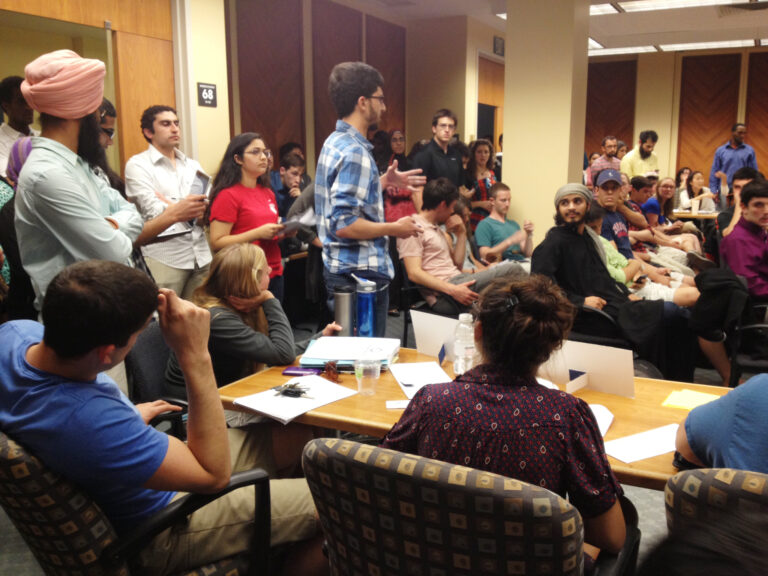
After approximately five hours of discussion, the ASUCD Senate passed Senate Resolution 21 on April 25 with a 7-4-1 vote. The resolution condemns Islamophobic speech at the University of California. The resolution defined Islamaphobia as “the irrational fear of Islam, Muslims or anything related to the Islamic or Arab cultures and traditions.” Authors stated that it was written due to the concerns for students’ well-being, safety on campus and the administration’s failure to address issues.

During public discussion, some members of the Muslim Student Association (MSA) and other students spoke in support of the resolution. Members of the Ayn Rand Society (ARS), the group that held the April 11 “Islamists Rising” event on campus, spoke in opposition of the resolution. The event held by the ARS, which featured panelists such as author Daniel Pipes, sparked a conversation about freedom of speech on campus and with the administration.

Kriti Garg, an author of the bill and a second-year international relations and community and regional development double major, said the April 11 event was an example of why the resolution was necessary.

“It just so happened that at this time we had very prominent issues focusing on Islamophobia on our campus and … [it] really goes to illustrate that [Islamophobia] happens all the time,” Garg said.

‘Let it be resolved that…’
Senate Resolution 21 was authored by the Ethnic and Cultural Affairs Commission (ECAC) along with several co-authors, including ASUCD Senator Alyson Sagala and ECAC Chair Emmanuel Diaz-Ordaz. According to Garg, it was inspired by a piece of legislation addressing Islamophobia in the UC system that was passed at UC Berkeley on March 20.

The resolution states that the UC system identifies itself as prioritizing campus climate, however, the issue of Islamophobia on campus has created an unwelcoming environment for certain communities. The resolution also addresses the “Islamophobic rhetoric” of UC Santa Cruz lecturer Tammi Rossman-Benjamin and condemns her rhetoric while also urging UC President Mark Yudof to condemn Rossman-Benjamin’s language.

Additionally, the resolution encourages UC Davis administrators to track reports of discrimination and hate crimes against “Muslim, Sikh, Hindu, Middle Eastern, Southwest Asian, North African, Arab and South Asian Americans.”

Under the resolution, ASUCD President Carly Sandstrom is to write a letter condemning Rossman-Benjamin’s rhetoric and Yudof’s failure to address the issue. The resolution also urges other campuses to pass similar bills.

“I am a Pakistani American Muslim. I have personally experienced hate speech because of the fact that I am or ‘look’ Muslim. My friends have experienced this,” said Sonum Saeed, a fourth-year psychology major and publicity coordinator for MSA, in an email interview.

Saeed said that last week, one female Muslim student who was wearing a headscarf was spit on.

“Hate speech affects people on a psychological level, and if you’ve ever been told that your existence, your faith or that your ‘brownness’ is the reason for all evil in the world, then you know exactly what I’m talking about,” Saeed said.

Senators, public debate
Senator Miles Thomas, who voted “yes” on the bill, admitted that he originally planned to vote “no.”

Thomas said the fundamental issue with the bill was that much of the language was from the UC Berkeley bill and it would have been more powerful if it was more “Davis specific.”

“Even though all of my concerns with the bill were not addressed, I couldn’t help but vote ‘yes’ just because I do appreciate the severity of the issue,” he said.

Many amendments were made to the resolution and some senators felt that the language of the bill could have been improved.

“I voted against Senate Resolution 21 because I believe it was a poorly-written bill. It was not the proper way to address the conflict that occurred on campus,” said ASUCD Senator Tal Topf in an email interview. “Additionally, the claims that the Ayn Rand society made at the senate meeting were very valid and I did not feel comfortable voting on a bill that would pin students against students.”

Topf was one of four senators who voted against the bill, along with Maxwell Kappes, Felicia Ong and Ryan Wonders. Liam Burke abstained.

“I did not personally support the bill [but that] does not [mean] that I don’t recognize its merits. I had my reasons for voting ‘no’, but if this benefits the Muslim community on campus then I am content that it passed and their voices were heard,” she said.

Third-year political science major Christopher Telfer, who attended the ARS event and was present during discussion of the resolution, also opposed the bill.

“I felt like the Ayn Rand Society, their members and the participants of the forum were being misrepresented. They were not spreading Islamophobia or spewing hateful rhetoric as claimed, and I felt the need to aid in their defense,” Telfer said. “Free speech and open dialogue should be promoted and protected in our society, even if a certain viewpoint is disagreeable or unpopular to a certain group of people.”

Jonathan Bomberg, a fourth-year viticulture and enology double major and president of the ARS, gave the only official ARS statement during the meeting.

“Instead of promoting slander and attacking free speech, you should be promoting discussion of ideas, not its condemnation,” Bomberg said.

Bomberg also stated that the event was not an Islamophobic event against Muslims in general, but against individuals and groups such as Al-Qaeda, who commit terrorist acts in the name of Islam. Moreover, his statement questioned what evidence gave individuals the right to condemn the ARS event if they were not present.

Looking ahead
Garg said she also wants to see concrete action taken by administration to increase awareness and address the issues of Islamophobia.

Usamah Simjee, MSA president and third-year genetics major, is hopeful that this discussion will lead to changes on campus.

“Climate is defined by the community, not by legislation. However, it is very encouraging to see that this problem is at least being acknowledged by our student body,” Simjee said in an email interview. “Seeing this bill bring together so many students of diverse identities is a sign that we are moving in the right direction.”

LILIANA NAVA OCHOA can be reached at campus@theaggie.org.

EDITOR’S NOTE: 05/03/13 This article was updated for accuracy.

Medical marijuana dispensaries not found in Davis

Medical marijuana has been legal in California since 1996, however, the industry continues to remain underground due to marijuana being illegal under federal law. There are no medical marijuana dispensaries in the City of Davis, forcing those who wish to purchase medical marijuana to look to delivery services, Sacramento dispensaries and dealers.

In 2005, there was a proposal for a dispensary in Davis but no official application was filed. At the time, there were no regulations regarding medical marijuana dispensaries, taking the issue to the Davis City Council. Councilmembers passed an ordinance stating dispensaries are not allowed.

“This is so our community stays safe and family-friendly. This was also decided because marijuana use is illegal under federal law,” said Katherine Hess, Davis community development administrator.

In 2011, however, Steve Maki established a medical marijuana clinic in Davis called 420 Relief. Because the clinic only provided recommendations, with no marijuana on the premises, it was legal in Davis. Hess said she assumes it closed down for business reasons.

Alex, an anonymous third-year biological sciences major, and a former 420 Relief customer, believes public outcry may have caused Maki and 420 Relief to leave the city.

“Besides the college, Davis is a very wealthy suburban family atmosphere that would not stand for such an establishment,” Alex said.

Dispensaries in hiding
Five out of the six listed dispensaries in Sacramento — Doctors Orders Rx, Valley Health Options, River City Phoenix, Canna Care and Abatin Wellness Center — refused to comment on how their systems operate and regulate, while the sixth dispensary, R&R Wellness Collective, is no longer in business. The Sacramento 4/20 Evaluations Center, where one files for a medical marijuana card, also refused to comment.

Dr. Amanda Reiman, California Policy Manager for Drug Policy Alliance and lecturer at UC Berkeley for social welfare, has done research on how dispensaries operate as health service providers as well as how marijuana is used as a treatment for addictions.

“I’ve studied marijuana on the preclinical level on animals. I’ve seen that marijuana blocks brain signals for craving, which is the reason why people relapse. Cannabis has a particular impact on reducing cravings for methamphetamine users,” Reiman said. “Many believe marijuana to be a gateway drug, but I’ve found that people are using it as an exit drug to ease withdrawal successfully. I would like to see substance abuse treatment programs consider using marijuana in the future.”

Reiman provided a possible explanation as to why several Sacramento dispensaries have refused to comment.

“Around California, there is a different level of comfort that dispensaries feel towards local jurisdictions. There is a lot of hostility with local governments and residents, so dispensaries feel they need to remain hidden, because if [the] city council knows what they are or where they are, they might be shut down,” Reiman said. “The federal government has shut down high-profile dispensaries before and this makes others nervous.”

State regulation
Much of why the dispensaries remain hidden and underground is due to the federal government’s view of medical marijuana as an illegal drug and the lack of state regulation of medical marijuana dispensaries in California.

“The federal government does not recognize marijuana’s medical benefits or state legality. The government does not go after states with programs and regulations — like Washington and Colorado — because it provides legitimacy. California doesn’t have any regulation,” Reiman said. “The federal government needs to admit marijuana has medical value and establish a system. Personally, I think the best idea is to move marijuana out of Schedule I, showing it has medical value, and have the states set up their own programs of regulation.”

Schedule I drugs under the Controlled Substance Act are considered to have a high potential for abuse, have no current accepted medical use and have a lack of accepted safety under medical supervision.

‘Ridiculously easy’
Another problem people have with dispensaries is that those without use for medical marijuana can still easily obtain a medical marijuana card by faking medical conditions.

“It is ridiculously easy to get a card even if you do not have any medical documentation,” Alex said. “When I went to the 420 Relief clinic, they did not even require documentation at my evaluation. Instead they issued me a temporary 60-day license on the good faith that I would bring in the paperwork. The same day I went to get my card, one of my friends went with me with a made-up excuse and got his with no questions asked.”

However, Reiman believes that there is legitimacy to the loose requirements behind obtaining a card.

“The problem is we don’t know all conditions that marijuana can relieve or help. California Proposition 215 doesn’t list specific conditions for this reason, so there is no finite list. I don’t think there should be a finite list of conditions,” Reiman said. “Marijuana for medical purposes varies and it is a personal relationship between a doctor and patient. Marijuana can also be less toxic and harmful to the body than over-the-counter medications. Herbal remedies can replace pharmaceutical drugs.”

Students weigh in
Alex has a medical marijuana card for obsessive compulsive disorder (OCD) but doesn’t always use dispensaries.

“I struggled with OCD in high school and tried six months of switching between Prozac, Zoloft and other SSRIs (selective serotonin reuptake inhibitors), which all left me with some sort of annoying side effect. I finally decided to try medical marijuana,” Alex said. “I now have a card and I either obtain marijuana illegally through dealers — the most common method for the students of Davis — or I travel to the Sacramento dispensaries.”

David, an anonymous first-year psychology major, does not have a card but is able to regularly get marijuana through a friend who utilizes a delivery service called the Sacramento Pier Collective. David has legitimate reasons for smoking weed — depression and possible Crohn’s disease — but he admitted that he doesn’t smoke for those conditions.

“It’s fun to smoke weed,” he said. “I think it should be legalized for recreational purposes. It’s less destructive than alcohol and alcohol is more readily available and causes much more long-term problems.”

Not all students feel the same way. Adrienne Jones, a first-year linguistics major, disagreed with marijuana use for both medical and recreational purposes.

“I don’t think marijuana should be prescribed for medical purposes because a lot of people that have cards use them to distribute marijuana to others. We have such advanced medicine that you do not need weed for painkillers,” Jones said.

Jones said she does not approve of substances being used recreationally. She said she considers it addictive, used too often as a gateway drug.

“People are less wary of marijuana’s effects compared to alcohol’s effects. Many are more cautious about alcohol because alcohol safety is so promoted,” she said.

DISCLAIMER: Names were changed to protect the identities of interviewed students who asked to remain anonymous.

MELISSA GAHERTY can be reached at city@theaggie.org.

Editorial: P(ARC)ing

0

With a facility intended to accommodate the thousands of students that pay for its services in fees, and only about 500 bike parking spots, it’s safe to say that the ARC needs more bike parking.

If you’ve been to the ARC in the last few weeks, odds are you’ve seen the signs that warn you against locking your bike to anything other than the designated parking spots.

Under this new policy, bikes are locked with boots if they are locked to themselves or a surrounding object, and students are required to pay for removal. Students pay for the ARC. How are they supposed to take advantage of it if Davis’ preferred mode of transportation is being discouraged?

It’s nearly impossible to find an empty spot to lock a bike during any hour of the day. Campus construction officials should account for the number of ARC guests that use the building and add parking spots accordingly.

Suspiciously enough, ARC officials refused to disclose the facility’s capacity. We can only assume they acknowledge that it’s more than 500 people.

As of now, there are no plans to add more bike racks to the ARC, according to UC Davis Design and Construction Management, but with the student population increasing significantly every year and the 2020 Initiative’s plan to condense 5,000 more students on to the campus by the year 2020, there should be. Maybe they should consider a bike parking garage.

Financial aid option for middle-income students announced

UC Davis announced the Aggie Grant financial aid plan April 18, effective this upcoming 2013-14 school year. The plan aims to aid the university’s California-resident, middle-class students with baseline tuition.

Qualifying students with family incomes ranging from $80,000 to $120,000 could offset at least 25 percent of their base tuition and fees through this grant that, for the 2013-14 school year, will be at least $3,048.

“Many students with family incomes over $80,000 have been eligible for financial aid. However, students and prospective students do not necessarily realize that. The Aggie Grant Program provides students just out of reach of the Blue and Gold Program with the assurance that they will receive grant assistance to help cover their cost of attending UC Davis,” said Kelly Ratliff, associate vice chancellor of Budget and Institutional Analysis.

Though students will still be eligible for other financial aid plans, no student will receive more grant or scholarship support than their calculated financial need.

Director of the UC Davis Financial Aid Office Katy Maloney said the options available to middle-class students are more limited.

“At that income level, there’s a lot less opportunity with federal and state grant programs … As a campus, we have listened to the growing concerns from students and their families about the financial struggles of paying for an education,” she said. “However, we recognized that middle-income families need financial support that wasn’t available elsewhere.”

Students who qualify after filing the Free Application for Federal Student Aid (FAFSA) will receive grants on a need basis within the middle-class income range.

“Students are awarded financial aid based on the principles of the UC Education Financing Model,” Maloney said. “University Grant funds are awarded to eligible students based on their need. Because funding is limited, award availability is also based on their FAFSA or Dream Act application filing date, whose priority deadline is March 2.”

She adds that as of now, Aggie Grants have only been packaged and offered to approximately 600 incoming class of 2017 admits. The grants to other enrolled students are still being processed.

The university has been looking into other options to provide monetary support in response to the conversation surrounding the increasing urgency to lessen the financial strain of college tuition on middle-class families.

Campaign for UC Davis, a university-wide initiative, has been in place since 2006 with the goal of raising $1 billion philanthropically from 100,000 donors by December 2014. Much of this money has been supported through campus-based scholarship funding.

As of March 3, the campaign has accumulated $931 million — roughly two-thirds of its goal.

“The dollars are put to use as soon as they’re received,” said Jason Wohlman, associate vice chancellor for University Development. “They’ve provided scholarship awards since 2006, unless it’s for a facilities campaign where we have to hold dollars until we’ve reached the needed amount.”

Major contributors such as the The Boyd Family Foundation, UC Davis alumna Ann Pitzer, The Davis School of Education, and most recently, The UC Davis Foundation Board of Trustees, among many others, have fundraised and donated millions to funding various scholarships.

“In December, [the] UC Davis Foundation Board of Trustees announced the creation of a new $1 million-plus matching fund initiative, The UC Davis Foundation Matching Fund for Student Support. This fundraising initiative was created by personal donations from current and emeriti members of the UC Davis Foundation Board of Trustees and university leadership to help UC Davis students,” said Sarah Colwell, senior manager of development and marketing communications, in an email interview. “The matching fund has already inspired more than $3.5 million in gifts to date.”

One qualifying student felt they would benefit from the Aggie Grant plan.

“Even though lower-income students need more [financial aid], I still can’t afford college without it,” said first-year linguistics major Adrienne Jones. “Coming from a primarily economically single-headed household, we can definitely feel the financial strain. The Aggie Grant seems like a positive way for my family to accumulate less debt for that year.”

For more information, visit financialaid.ucdavis.edu.

GABRIELLA HAMLETT can be reached at campus@theaggie.org.

Davis holds inaugural travel training workshop

On April 27 from 9 a.m. to noon, the City of Davis hosted an inaugural Travel Training event at the Davis Senior Center, the first in an ongoing series of biannual workshops intended to improve access to local transportation services for the elderly or those with other mobility challenges.

In addition to the biannual workshops, the just-launched Travel Training program will also feature monthly group excursions to various locations to help reinforce the modes of transportation learned at the event and build confidence in a social setting, according to City of Davis transportation planner Brian Abbanat.

Abbanat said that the planning process for the program began in June 2012 while updating the city’s General Plan.

“We had done an online survey inquiring what types of improvements we needed to make to our transportation systems, and one of our senior citizen commissioners said we really needed to have a travel training program for seniors and the disabled,” Abbanat said.

According to Abbanat, the Senior Citizen Commission had previously obtained a $30,000 grant for the entirety of Yolo County to fund individual transit training for seniors, with the greatest demand for such training coming from Davis.

“They put together a small event to raise awareness that people could get one-on-one transit training with the grant, but when the grant funding expired, so did any transportation information specifically for seniors and the disabled,” Abbanat said. “People were really interested but the grant money had run out.”

Abbanat, who was interested in the program from a transportation planning perspective, began looking into conducting a similar program within the staffing of the City of Davis.

“We had to figure out what we could take on without a budget and without exclusive staff, without one person having to take on too much responsibility,” Abbanat said. “I went around and asked Davis Community Transit, Yolobus and Unitrans if they were interested [in being involved], and everybody said yes.”

In transit
The program featured in-class training sessions with a choice of three modules, each providing the 55 participants with the opportunity to gain experience and knowledge regarding different transportation options such as Unitrans, paratransit and biking.

“The bike group had a presentation explaining the difference between different types of bikes and which would be appropriate depending on varying levels of mobility,” Abbanat said. “There were 10 different bikes and [participants] got to test ride them in the parking lot.”

Electric bikes were available to be test ridden — often a promising option for those with mobility issues. Diane Swann, co-owner of Swann Electric Bicycles, presented three electric bikes at the workshop.

“They’re good for general transport because they help in the wind, the hills or the heat. You can get as much of a workout as you want to, but if you don’t want to, you don’t have to,” Swann said. “They’re great for all ages, and if people have a physical infirmity, they’re good for that as well.”

Swann, who commutes to Sacramento from Davis by bike three or more days per week, owns Swann Electric Bikes with her husband John Swann. The business works in a partnership with Ken’s Bike and Ski in Davis, and owns the electric bike inventory sold at Ken’s.

The Davis Community Transit paratransit bus — the paratransit service complementary to Unitrans and Yolobus since 1971 — was also available.

“We’re an Origin-to-Destination paratransit service operated by the City of Davis,” said Linda Alemania, paratransit supervisor for the city. “If a customer is not able to walk to a bus stop, we go to their home, pick them up and take them to the stop.”

Paratransit fare is $2 each way. Passengers must be ADA-certified (Americans with Disabilities Act) and must go through an eligibility process.

“We want to let people know that Davis Community Transit exists, because there are some people that have no idea we even exist,” Alemania said. “A lot of people move here because their families live here, and just to help the families help them — that’s where we come in with transporting them.”

Alemania emphasized that accessible public transportation is key not only for the elderly, but for their families as well. Faced with the reality of parents who are aging or might suffer an unexpected accident, services such as paratransit and transportation workshops can help all generations adapt to a “new normal.”

“Our goal is to maintain independence and our customer’s quality of life,” Alemania said. “We want people to get out, do what they need to do, visit their family, go to church and be as active as possible.”

Fear factor
Unitrans was also present at the workshop to help facilitate practice with such activities.

“Unitrans brought one of their buses to the senior center and they practiced getting on and off, then they all went down to the Farmers Market, stopped at a real bus stop, waited for the bus at a bus stop and got back on the bus,” Abbanat said. “The purpose of this activity is to help them get beyond the fear barrier of taking the bus.”

According to Abbanat, many individuals in this demographic may feel a certain amount of fear about taking public transit due to a variety of reasons.

“The fear element — it’s the fear of the unknown. Maybe they haven’t used a bike in 30 or 40 years. Maybe they don’t know what paratransit is, who runs it or how much it costs. The program is just helping to orient them to these forms of transport in a no-pressure environment,” Abbanat said.

Abbanat emphasized the importance of accessible public transport for seniors and those with mobility challenges, particularly for those who no longer drive. Many individuals, unable to drive yet unsure about what transportation options are available to them, may face challenges running errands or attending medical appointments. Others may feel isolated from friends, family and the wider community if they’re lacking the confidence and knowledge needed to navigate public transport.

“A lot of seniors and those with disabilities don’t know if they can physically even get on a bus — they don’t know the bus can lower down or that paratransit buses have a lift. Many bikes, including electric assist bikes, make it easier to get around town without a car. Even if they can step into a bus, this [program] gives them a chance to make sure they can do it and feel comfortable,” Abbanat said. “The step they have to take is very small.”

Potential for expansion
While the next event is planned for October, the program also featured the opportunity to sign up for monthly excursions, along with a survey.

“We surveyed the participants to get some baseline information, and in four to six months we’ll follow up to see if they’re using any transport options more often. Then we can quantify the program and see if it meets the needs of that demographic,” Abbanat said. “At the end of March we applied for a $20,000 grant from the U.S. Administration for Community Living that will allow us to judge the effectiveness of the program and expand it as well.”

Abbanat mentioned that a frequent request is a bus or shuttle route going directly to the Mondavi Center, perhaps circulating by the senior housing complexes. Other ideas on the horizon include a possible “medi-ride” program, in which volunteers would take seniors to and from medical appointments.

“We know there are still some gaps to fill to help seniors, and to the extent applicable, those with disabilities, to transition to public transit. We’re hoping to expand into individual, one-on-one programs. A volunteer will basically do the trip with them for the first time or two so they feel comfortable and confident doing it on their own. That really opens up a lot of destinations for them and allows them to stay connected,” Abbanat said. “There’s a lot of work to be done, but we’re off to a great start.”

MEREDITH STURMER can be reached at city@theaggie.org.