55.5 F
Davis

Davis, California

Tuesday, December 23, 2025
Home Blog Page 133

Davis Joint Unified School District files a temporary restraining order against Yolo County Moms for Liberty Chair, Beth Bourne

Specific details about the order have not been revealed as the case is ongoing


By CHRIS PONCE — city@theaggie.org


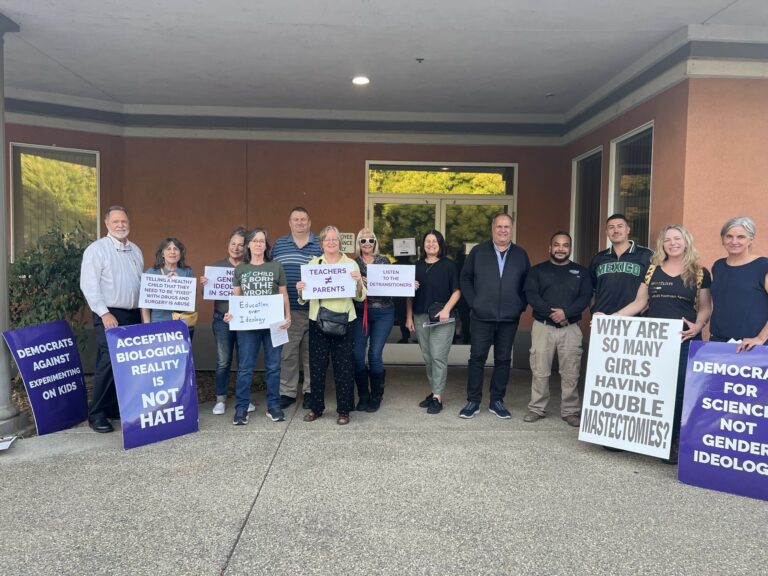
On Oct. 11, the Davis Joint Unified School District (DJUSD) filed a temporary restraining order (TRO) against Beth Bourne, the chair of the controversial group Yolo County Moms for Liberty. 

When asked for comment, the DJUSD denied to make a statement as it is a pending legal issue. According to public Yolo County Court records, the case was first filed on Oct. 4.

“Served Beth Bourne in person with exhibit notice of hearing order granting petitioners motion to file documents petition for workplace violence restraining orders,” reads the proof of service in the case. 

Bourne was delivered the TRO in person, and she shared that she felt disappointed when she found out. 

“Of course I expected it could be possible, and I continue to feel incredible sadness and disappointment that we’re being silenced,” Bourne said. “We being the parents in Davis and women and fathers and mothers who are concerned that this gender industry, in particular the gender identity ideology, is harming children. So, I’m just disappointed. We made a lot of requests to the school district to be open and to be transparent and around every corner it’s more ‘you should be silent.’” 

Bourne has often publicly posted pictures of classrooms at Davis high schools that have Pride flags in them and has been accused of having harassed teachers.

Anoosh Jorjorian, director of Yolo Rainbow Families, talked about Yolo County Moms for Liberty at the recent Woodland Joint Unified School District (WJUSD) board meeting and said that Bourne had been served a TRO because she was harassing Davis teachers who support LGBTQIA+ students.

“In this vein, I want to raise awareness in Woodland that the chair of [Yolo County] Moms for Liberty, who has given public comment today, was served with a temporary restraining order yesterday for repeated targeting of Davis teachers who support LGBTQ+ students by displaying Pride flags in their classrooms. Teachers, names, schools and room numbers have been posted publicly on social media by the chair,” Jorjorian said. “In the wake of this exposure, bomb threats were made against some of those teachers who were awakened at 3 a.m. by police to search their houses out of concern for their lives. Additionally, some educators have been harassed and intimidated in-person by the chair.”

More details about the TRO are developing as the case is ongoing. The Order to Show Cause Predisposition, which is a court order that requires involved parties to explain why the court should grant a request, is scheduled for Oct. 25.


Written By: Chris Ponce city@theaggie.org

Culture Corner

The Art Desk’s weekly picks for movies, music and more


By ANA BACH arts@theaggie.org


Book: “Women” by Charles Bukowski (1978)

This might be somewhat of a hot take, given the reputation of Charles Bukowski, but that’s what makes the book all the more fascinating. Bukowski writes a trilogy through the lens of his alter ego Henry Chinaski as a mode for communicating a lot of his own experiences in a semi-autobiographical format. “Women” is centered around the late moments of his life as a failed writer. His literary voice is one that is distinctive, with many of his written experiences surrounding his infatuation and ultimate objectification of women. Though unsettling, his pessimistic worldview stems from a harsh upbringing and a cruel father. Even though many of his stories communicate a rather vulgar inner monologue, it is hard not to feel pity for Bukowski’s character. He turns to writing as his last resort when the only other people who will listen to him are his peers sitting next to him at the bar. The trilogy overall is a really good glimpse into his mind and his outlook on love and loss.


Movie: “School of Rock” dir. by Richard Linklater (2003)

My dad showed me this film for the first time at a family friend’s house and ever since then, it’s been an annual watch in our household. Jack Black puts on an epic performance as Dewey Finn, a burnt-out guitarist, who ventures over to an elite private school in desperate need of work. In doing so, he teaches the kids the ways of rock music in the hopes that he can create a band out of the adolescents. The musical references, dialogue, setting and characters all contribute to the overall feeling of the 2000s. Music lovers from all generations can find a common ground in this film. The storyline also explores the lack of emphasis people place on the arts and outlets for expression that don’t fit an intellectual framework. Many of the children’s parents were against their kid’s talents and desires to pursue music until they saw them perform at the end of the Battle of the Bands competition. Black’s character manages to spot the talent in the classroom and the potential his students have in the music industry. There is no harm in being reminded of this every so often, as I’m sure many kids have dealt with a lack of support in pursuing their passions. The film reminds us that even through an unconventional route, there are still lessons to be learned and opportunities that await us outside of what is expected of us. 


T.V. Show: “Adventure Time” (2010)

Talk about nostalgia! Adventure Time was one of my favorite shows growing up and I make an effort to keep it on my watchlist today. The show follows best friends, Finn the Human and Jake the Dog, on their adventures in the Land of Ooo. They face evil, mainly from the wrath of the Ice King, and also interact with many of the show’s other characters like Princess Bubblegum and Marceline to name a few. The light but engaging plotline is a nice break from the harsh realities that a lot of live shows bring to life. The world that Pendelton Ward has created is an environment where fantasy elements are brought to life in a normalized way, due in part to the humor and dialogue. Even though Finn and Jake end up in extremely bizarre situations with strange creatures, they always learn lessons that are relevant in both worlds (the imaginary and the real). It’s extremely therapeutic to watch these shows that as a kid, were just visually stimulating. Having the ability to rewatch and take in the messages from the show is healing for the inner child. I have been protecting my piece by bringing this show. 


Song: “I am Free” by Tash Sultana (2021)

Tash Sultana approaches music with an experimental approach, layering sounds and instruments to create beautiful melodies. This song in particular is one of my favorites because the tune creates a state of relaxation for the listener. Strings layer onto sounds of ocean waves and in the main part of the chorus, all of the vocals sink with different pitches creating a song that sounds spiritual. The message also works in tandem with the instruments to evoke that feeling of how we oftentimes get wrapped up in the chaos that a lot of the world creates, but also how that wasn’t the original intention. Sultana writes, “..And you don’t need money to be happy, No, you can just be free. I am free.” It’s a simple, short, but sweet message to have buzzing in your ears. There is an acknowledgment of fame and wealth not so much being a source of happiness, but rather a pressure to achieve it. Once you realize that these pressures only bear more stress than fulfillment, you realize that true happiness lies in having the power to be an individual. In its entirety, the song is quite personal to me and I encourage you to give it a listen. 


Written By: Ana Bach arts@theaggie.org

UC Davis moves from No. 10 to No. 6 on U.S. News and World Report ranking of public universities

0

Students share their thoughts on the change in ranking


By FAITH DEMEULENAERE — features@theaggie.org


The annual release of the U.S. News and World Report’s rankings of public universities serves as a benchmark — a litmus test of sorts — for these institutions to measure their progress and overall quality of education.

In a recent update, the University of California, Davis emerged as a star on this academic stage, moving up from the 10th to the sixth spot in the list of top public universities. This meteoric rise has placed UC Davis on par with renowned institutions like UC San Diego and the University of Florida. 

In their article, “How U.S. News Calculated the 2024 Best College Rankings,” the World Report shares their Ranking Factors list, including but not limited to: graduation rates, first-year retention rates, full-time faculty count, student-to-faculty ratio and graduate debt borrowing rates. 

In UC Davis Chancellor Gary May’s most recent school-wide address, “Welcome to a New Academic Year,” he comments on the fact that Davis has elevated itself in these areas and acknowledges the recognition of its status improvement in the list.

 “As we welcome a whole new class of Aggies this week, we want them to know they’re joining an institution that demonstrates excellence in research, teaching and public service every day,” May said in the address. 

May also acknowledges a possible reason for this positive shift stating, “[being] recognized as a leader in finding solutions for our most pressing global challenges such as climate change, food systems, global health and social justice.”

In response to May’s announcement on the subject, there has been a lot of discourse surrounding how the university’s students feel about being in a school with such an impressive rank. 

“I think that I do feel proud,” Sam Baron, a third-year political science major, said. “However, nothing really feels that different. I have always had pride in going to Davis. The numbers changing could never really affect my opinion of my school.”

Paul Linderman, a fourth-year environmental science major, shared his opinion on the change, stating, “…it’s nice to get recognition for the hard work of the students and professors to move up in the rankings. UC Davis is under-appreciated and it’s finally getting noticed.”

To explain this sudden shift that has staff and students buzzing, we must acknowledge that 2024 will be the first year of a methodology change to take into account topics relating to economic and social inclusion, such as first-generation graduation rates and social equity throughout school programs, according to the U.S. News and World Report’s website. 

To some, it seems surprising that UC Davis has moved up against schools such as UC Irvine and UC Santa Barbara in the national university ranking to No. 28 — tying with USC (No. 28) and out-scoring NYU (No. 35).

Last year, Davis stood well below these universities that it has now outscored, as last year’s placement for Davis was No. 38 in national universities. So how did this methodology elevate Davis to such a high spot? The algorithm changes responsible for Davis’ climb in the rankings are in part due to the additional consideration of graduation rates for students who received Pell Grants, as well as metrics that consider first-generation college students.

In short, the methodology change of the U.S. News and World Report of 2024 that sent Davis flying up the charts is the reflection of a new concept that could be considered when a student picks a college: purposeful dedication to equitable access to education, lower-income student success and academic achievement of first-generation students. 

Students and statistics have noticed UC Davis’ consideration of the right to higher education for all students, no matter their background, and the U.S. News and World Report’s adjustments in scale now reflect that.


Written By: Faith DeMeulenaere — features@theaggie.org

La Federación Internacional de Ajedrez anuncia una prohibición de mujeres transgénero en eventos de ajedrez para mujeres.

La regulación es la última parte de una serie de políticas de restricción de la participación de atletas transgénero en los deportes. 


Por CLARA FISCHER — sports@theaggie.org 


El 14 de agosto, la Federación Internacional de Ajedrez (International Chess Federation, FIDE) publicó una nueva política que regula la participación de jugadores transgénero en el deporte. Se destaca que la política declara que no se permite participar a mujeres transgénero en las competencias femeninas hasta contar con un análisis más profundo por parte del consejo de la FIDE —un proceso que “se realizará cuanto antes”, pero que podría demorar hasta dos años. 

La política también establece que para los casos de jugadoras que sean portadoras de títulos femeniles y que posteriormente hagan la transición al género masculino, se les revocarán los títulos. Sin embargo, si la transición se hace del género masculino al femenino, los títulos “seguirán vigentes”.

En una respuesta escrita a Associated Press, la oficina de prensa de la FIDE estableció que las regulaciones están “dirigidas a definir claramente el proceso sobre cómo una persona que ha cambiado de género de manera oficial puede registrarlo en el directorio de la FIDE”, y los jugadores transgénero pueden seguir participando en la sección abierta de los torneos. 

Tras la publicación de la política, varias organizaciones de ajedrez de renombre han publicado declaraciones que documentan su posición en el asunto acerca de jugadores transgénero y su participación en el juego. 

La Federación de Ajedrez de los EE.UU (United States Chess Federation) compartió un documento que expresa su política promulgada en 2018, la cual “refleja una posición que permite a los jugadores afiliarse con esta federación independientemente de su afiliación de género”. La Federación Alemana de Ajedrez (DSB) compartió una postura similar.   

“La Federación Alemana de Ajedrez tiene una posición clara: no excluimos a las mujeres transgénero”. Esto escribió DSB en una declaración de X, la aplicación de redes sociales anteriormente conocida como Twitter. 

Junto a declaraciones como estas por parte de organizaciones nacionales, la FIDE ha recibido críticas de jugadores de ajedrez y activistas de la comunidad LGBT+ de todo el mundo.

“Las nuevas regulaciones harán que los jugadores de ajedrez alrededor del mundo se enfrenten a un dilema horrible: transicionar o dejar el juego” —dijo Yoshua Iglesias, jugador profesional de ajedrez, en una declaración de X.

“La prohibición no solamente es transfóbica; es antifeminista también” —dijo Richard Pringle, profesor asociado de estudios socioculturales del deporte de la Universidad de Monash, en un artículo para The Washington Post.

Aparte de la crítica de que la política de FIDE es descaradamente antitransgénero, los críticos también denunciaron la regulación nueva por ser inherentemente misógina.

“Esto es un grave insulto para las mujeres cisgénero, las mujeres transgénero y el juego mismo” —declaró el Centro Nacional para Equidad Transgénero en una publicación de X. “Esto implica que las mujeres cisgénero no pueden ser competencia para los hombres cisgénero, y está basado en ideas ignorantes y transfóbicas¨ 

Además, otros han expresado sus preocupaciones acerca del momento en que se emite la política: justo después de la publicación de una carta abierta firmada por 14 jugadoras de ajedrez, donde exponen la violencia sexual o sexista perpetrada por jugadores de ajedrez, entrenadores, árbitros y managers”. La carta ahora tiene más de 100 firmas y es la última de la serie de revelaciones alrededor de la conducta sexual indebida y el abuso en el deporte.   

“La acción del órgano rector es como una pantalla de humo, una manera de desviar la atención del movimiento MeToodijo Jennifer Shahade, dos veces campeona de ajedrez femenino estadounidense y escritora, en una columna de opinión para MSNBC. 

En una columna de opinión para The Guardian, la columnista y autora Arwa Mahdawi se refirió a las defensas de la regulación de la FIDE como “asunciones sexistas y ciencia tambaleante”.

“Últimamente, al ajedrez femenino no lo ayudan las definiciones de mujeres sesgadas por gatekeepingdijo Mahdawi. “No le ayuda la exclusión de mujeres transgénero; lo que le ayuda es motivar a más mujeres a que se animen a jugar ajedrez y logren desmantelar los estereotipos de género”.

La política establecida por la FIDE llega al final de una cadena de regulaciones acerca de la participación de atletas transgénero en deportes tales como el atletismo, el ciclismo, la natación y más. Con políticas más controversiales que se realizan a partir de la presencia de atletas transgénero en el mundo del deporte, seguramente habrá un aumento de reacciones a favor y en contra por parte de atletas y defensores por igual.


Escrito por: Clara Fischer — sports@theaggie.org

Traducido por:

Harumi Arvizu Nansen

Nandini Jagarlamudi

Lauren Kim 

Liz Lopez

Christopher McKerracher

Chelsea Rodriguez


Pollinator Squad busca promover la biodiversidad y los paisajes preparados para el cambio climático en UC Davis

El grupo de voluntarios trabaja para que el arboreto sea más atractivo para la polinización mediante el mantenimiento de plantas, el desarrollo del jardín y la divulgación. 


Por LYNN CHEN — features@theaggie.org


Con la llegada del Antropoceno, el período geológico en donde los humanos han impactado sustancialmente sobre el clima y los ecosistemas de la Tierra, es nuestra responsabilidad cuidar y preservar el medio ambiente más que nunca.

El escuadrón de polinización Pollinator Squad, un grupo de 15 miembros voluntarios, está haciendo su parte ante dicha responsabilidad, y ha comenzado a trabajar en UC Davis Arboretum como parte del proyecto UC Davis GATEways (Jardines, Arte y Medio ambiente). Este proyecto se enfoca en mejorar el arboreto y los jardines públicos del campus.  

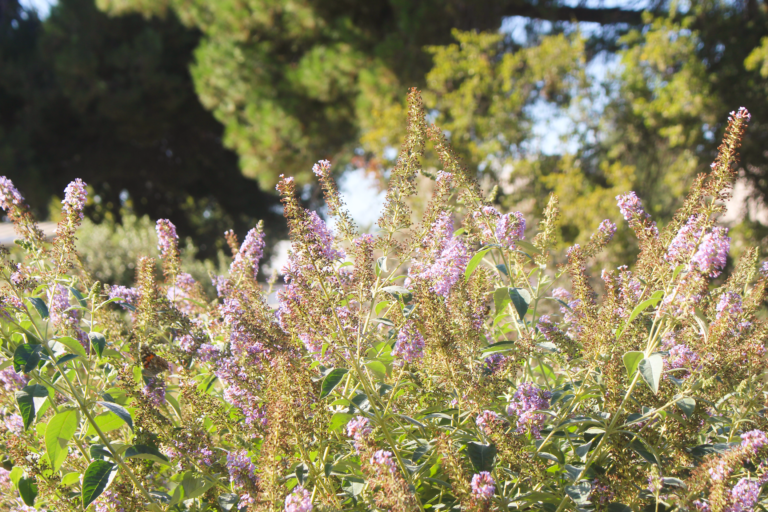
Cada jueves, los voluntarios se reúnen para desarrollar y gestionar Habitat Garden. Esto incluye la cuenca del prado, el biorreactor de la cuenca del prado, el jardín de colibríes y el jardín de insectos polinizadores. Con actividades como plantar, desmalezar, podar y acolchar las áreas de demostración de Habitat Garden, el equipo aborda su misión principal de apoyar la biodiversidad local y promover paisajes listos para el clima del futuro. 

Por ejemplo, Pollinator Squad ha estado sembrando y manteniendo plantas de flores que son atractivas para las abejas, los colibríes, las avispas y otras especies polinizadoras importantes de los jardines. Pedazos y troncos de madera natural se dejan tirados intencionalmente en los jardines para servir de hábitat a polinizadores como las abejas carpinteras.

Según Rachel Davis, horticultora de GATEway de UC Davis Arboretum y los Jardines públicos y líder de Pollinator Squad, los voluntarios son entrenados con atención para aprender cómo cuidar de estos tipos de plantas.

Davis también dijo que el equipo se asegura de que haya plantas con flores en los jardines para los polinizadores durante todo el año. “También estamos tratando de involucrarnos en la iniciativa de ‘Jardinería preparada para el cambio climático’” −dice Davis. “Nos estamos expandiendo, pasando de la mera polinización a realmente pensar en el hábitat para la biodiversidad local de la región del valle de Sacramento mediante la experimentación de nuevas plantas”.

El arboreto siempre ha sido un terreno con tolerancia natural a la sequía ya que presenta plantas de todo el mundo que se adaptan al clima mediterráneo específicamente. Sin embargo, como parte de la iniciativa de ‘Jardinería preparada para el cambio climático’, Davis ha estado trabajando con investigadores de UC Davies para imaginar cómo será el clima hacia el año 2100. Luego, esa información se usa para probar nuevas plantas en el arboreto que sean aptas para el clima del futuro.

“El área de Davis podría ser como Barstow, California o Tucson, Arizona para el año 2100 en cuanto al calor intenso y las olas de calor más prolongadas que hemos predicho” −dice Davis. A partir de esta investigación, Pollinator Squad ha estado probado plantas del suroeste de EE. UU en Habitat Gardens. 

Los voluntarios ayudan a probar los ensayos principalmente mediante el mantenimiento y la recopilación de datos sobre las nuevas plantas. 

Además de crear un paisaje biodiverso y preparado para el clima en el arboreto, Pollinator Squad también está contribuyendo a generar conciencia y educar al público sobre la importancia de sus objetivos. Por ejemplo, como parte de la iniciativa de Jardinería preparada para el cambio climático, el equipo está participando en un proyecto piloto mayor que será develado en el arboreto entre 2023 y 2024. 

La iniciativa se asociará con el Jardín Botánico de Estados Unidos en Washington D.C. para promover la Jardinería preparada para el cambio climático para cohorte educativa Plants and Climate Change (Plantas y cambio climático).

“En otoño, tendremos una capacitación sobre el alcance de la jardinería preparada para el cambio climático con estudiantes de pregrado y maestros jardineros” −dice Davis. “Antes de las ventas de plantas de primavera, también habrá un programa público de tres o cuatro series de conferencias”. Para la primavera de 2024, también estará disponible un kit de jardinería preparada para el cambio climático en línea. 

Pollinator Squad estará ayudándonos a tener el jardín listo para las demostraciones y experimentará un poco más acerca de las plantas en Habitat Gardens” −dice Davis. 

Además, mediante el enriquecimiento y el trabajo activo en Habitat Gardens, Pollinator Squad está generando conciencia. Al nutrir este hermoso lugar hace que las personas puedan interactuar y apreciar los esfuerzos para la conservación del medio ambiente y los ecosistemas.

“Trabajé mucho en UC Santa Barbara y para el Servicio de Parques Nacionales. Muchos de los lugares en los que trabajé no eran accesibles al público” −dice Davis. “Entonces las personas no tenían el conocimiento ni se emocionaban por el trabajo de los proyectos restauración”. “Entendí que lo que necesitábamos era que a las personas les importara para que nosotros pudiéramos conservar y nutrir bien esta tierra” −Davis continúa.  

Joan Quinn, un miembro de Pollinator Squad desde hace siete años, describe cómo el grupo también ha trabajado en establecer más letreros para las flores del jardín a modo de ayudar a la gente a identificar las plantas atractivas para los polinizadores.

“Hay personas que nos interrumpen mientras trabajamos para preguntar: ‘¿qué planta es esta?’” −dice Quinn. “Creo que es muy importante que las personas entiendan que necesitamos polinizadores y que debemos proveerles un ambiente en el que puedan vivir”.

Quinn, exempleada jubilada de AT&T, ha integrado en su propio jardín algunas cosas que ha aprendido como voluntaria.

“Aprendí mucho sobre algunos polinizadores y la importancia de poner plantas para los colibríes, las abejas y las mariposas” −dice Quinn. “Entonces incorporé lo aprendido a mi jardín, y trato de comprar e incorporar plantas que son buenos polinizadores”.

Sin embargo, no es una tarea fácil mejorar y cuidar Habitat Garden. Los voluntarios eliminan a mano las plantas invasoras ya que los herbicidas dañan la biodiversidad. Para ciertas flores, se retiran las cabezas de flores muertas una por una.  Las ramas de los árboles y los arbustos muy crecidos deben quitarse de los caminos pedestres y ciclovías, mientras que las camas de jardines se acolchonan para mejorar la eficiencia del agua y evitar la maleza. 

Si bien el trabajo de Pollinator Squad puede parecer tedioso y monótono para un extraño, sus miembros lo mencionan como una experiencia gratificante. 

William Mitchell es un biólogo pesquero que se jubiló el año pasado de su trabajo en proyectos de conservación de salmón y trucha arcoíris. Para continuar involucrado en el cuidado ambiental y apoyar la biodiversidad, se unió al grupo de voluntarios hace seis o siete meses.

 “Me encanta aprender” −dice Mitchell. “Todavía amo la biología pesquera y la ecología acuática, pero ahora estoy aprendiendo muchas cosas que no había tenido la oportunidad de aprender sobre los ecosistemas terrestres en California”.  

Mitchell describe cómo se siente recompensado por todo el conocimiento que ha adquirido y la naturaleza salvaje que ha experimentado a partir de su voluntariado en Pollinator Squad.

“Me he estado beneficiando en gran medida de las relaciones personales en Pollinator Squad porque ellos saben mucho más que yo” −dice Mitchell. “Aprendí sobre las relaciones entre los polinizadores y las plantas, y eso me fascina porque es similar a lo que estudié con los peces: las relaciones entre los peces y el hábitat”.

Como a Mitchell, a Quinn le gusta trabajar en Pollinator Squad.

“Es divertido” −dice ella. “Nos vemos sólo una vez por semana, pero nos mantenemos informados sobre las vidas de todos”. 

Quinn habló sobre el aspecto más gratificante de Pollinator Squad. “Empezamos por un área que es un verdadero desastre y luego volvemos hacia atrás luego de la sesión y nos maravillamos por lo que hemos hecho. Es la sensación de haber logrado algo y de contribuir al arboreto”. 


Escrito por: Lynn Chen — features@theaggie.org


Traducido por:

Sarah Bautista

Giselle Castañeda 

Nohemí Dueñas Cervantes

Laura Jojoa Valencia

Frida Lopez

Graciela Quiñones

Tiffany Ramirez

Lesley Reyes

Catherine Sanchez

El equipo de fútbol de mujeres de UC Davis ha tenido un comienzo complicado esta temporada con dos victorias y una derrota, pero las jugadoras mantienen la esperanza para juegos futuros.

La jugadora de cuarto año Leslie Fregoso rompió un nuevo récord para los Aggies.


Por MEGAN JOSEPH — sports@theaggie.org


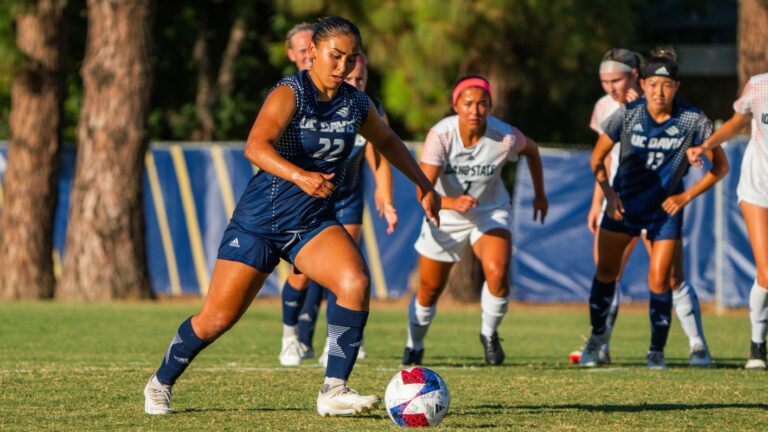
El equipo de fútbol femenil de UC Davis ha experimentado altos y bajos al principio de la temporada de 2023, obteniendo dos victorias y una derrota en las últimas semanas. Empezando la temporada fuerte, los Aggies superaron a Idaho State Bengals con una victoria de cinco a cero que demostró su estatus División 1 (D1). 

Las jugadoras demostraron su increíble talento, con cinco de ellas anotando un gol cada una. El primer gol fue de la estudiante de cuarto año, Leslie Fregoso, que anotó un penalti en el minuto 20, dejando a los aficionados celebrando entusiasmados el primer gol de la temporada. 

El segundo y el tercer gol los hizo nada más y nada menos que Sam Tristan de tercer año. Su primer gol en el minuto 26 fue un increíble rebote a la izquierda y debajo de la cancha que demostró el dominio de Tristan en el juego. Después, en el minuto 49, Tristan metió otro gol de penalti, haciendo pasar a los Aggies cómodamente a la segunda parte del juego con ventaja sobre los Bengals.

El tercer y cuarto gol fueron anotados por estudiantes de tercer año, Risa Yamada y Devyn Simmons en los minutos 57 y 82 del juego. Fueron asistidas respectivamente por la estudiante de tercer año Emma Vame y la estudiante de primer año Savannah Cordero. Así terminó el primer partido de la temporada, con los Aggies asegurando un significativo triunfo por encima de Idaho State. 

Después de su victoria, los Aggies le ganaron a otro equipo cuando jugaron contra los Sacramento State Hornets el 20 de Agosto. Este juego fuera de casa demostró ser una victoria espectacular. 

El primer gol del juego fue un hermoso zurdazo de Vane que cruzó la caja y fue directo al ángulo derecho superior de la red en el minuto 32 del partido. El siguiente gol, asistido por Fregoso y Kylie Garcia de tercer año, fue volteado por Simmons hacia la red después de una colisión y desvío del equipo contrario en la caja en el minuto 43. El tercer y último gol del partido fue un pase perfecto de Sarah Canavan de segundo año que Tristan disparó al fondo de la red. 

Los Aggies salieron victoriosos después de un partido espectacular, y una jugadora en particular batió un nuevo récord. El segundo gol del juego consagró a Fregoso como la nueva líder en puntos de carrera de UC Davis durante la era D1.

Fregoso, una jugadora premiada que ya ha ganado dos veces el All-Big West First Team y tiene el título actual de NSCAA All-Region Second Team Honor, ahora puede agregar este triunfo a su semblanza. El récord anterior de 47 asistencias, alcanzado por Rochelle VanBuskirk en 2009, ya fue reemplazado por las 48 asistencias de Fregoso. Con muchos juegos todavía pendientes en la temporada, esperamos muchas más asistencias de Fregoso y posiblemente un nuevo récord.

Si bien tuvieron un muy buen comienzo de temporada, los Aggies experimentaron su primera derrota el 24 de agosto contra los Gaels de Saint Mary College. El partido comenzó sin que ningún equipo anotara un gol durante la primera mitad, pero la suerte de los Gaels cambió en el 56 minuto cuando anotaron un gol en una configuración de pase en profundidad.

A pesar de que los Aggies tuvieron 11 tiros a puerta, no pudieron conectarse y los Gaels se retiraron victoriosos. No hay duda de que los Aggies tendrán otra oportunidad de redimirse con un próximo juego contra la Universidad de San Francisco. 

En general, los Aggies han demostrado su entusiasmo de ganar y dominar el campo, dejando a los aficionados emocionados por ver lo que tienen reservado para el resto de la temporada.


Escrito por: Megan Joseph — sports@theaggie.org


Traducido por:

Kevin Fabian

Alejandra Ponce

Ashley Preciado

Diego Ramírez

Anahí Reyes Atristain

Álvaro Vaca Mendoza

Alfredo Vázquez Aguilar

El Centro Comunitario Estudiantil (SCC) de UC Davis ayuda a promover conexiones mientras cultiva la diversidad

El SCC trabaja para celebrar la diversidad de identidades de los estudiantes y promover la excelencia académica.


Por ELIZABETH WOODHALL — features@theaggie.org


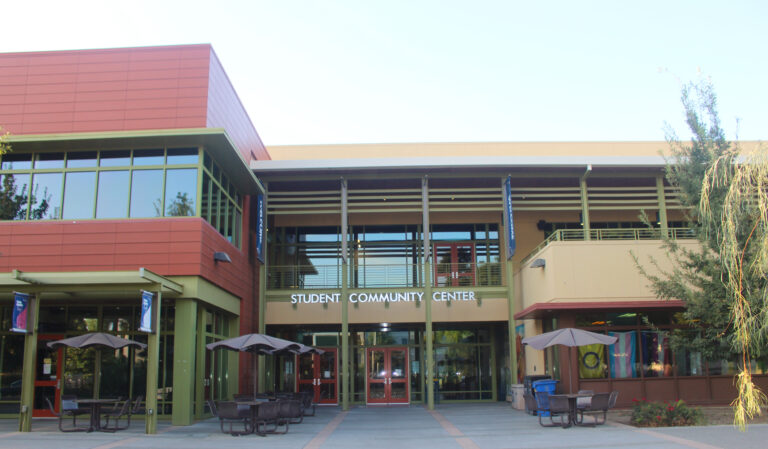
Para estudiantes de nuevo ingreso, puede ser complicado formar amistades y sentirse parte de una comunidad, especialmente para aquellos que sufren ansiedad al mudarse y adaptarse a la vida universitaria. Aunque hay varias maneras de involucrarse en el campus, el Centro Comunitario Estudiantil (SCC) –situado al oeste de la Librería Shields y al norte del Silo, como menciona el sitio web– ofrece varios centros que promueven el éxito y el sentido de pertenencia de los estudiantes. 

El SCC alberga varios centros, incluidos centros basados ​​en la identidad y centros educativos para el éxito. Mayra Llamas, Ed. D., directora ejecutiva del Centro de Permanencia y Recursos Estudiantiles, explica que este sitio representa una “vida estudiantil dinámica”. 

“El edificio abrió sus puertas en invierno del 2012, hace 10 años”, dice Llamas. “El edificio es bastante nuevo y añadió vitalidad a la diversidad de nuestro campus y, debido a que algunos de los recursos estaban algo dispersos, el edificio ahora se siente como una ubicación central que ayuda a promover la interseccionalidad a través de algunos centros basados en la identidad”.

Aunque el edificio incluye una mayoría de centros basados en la identidad, como el Centro Intercultural y el Centro de Recursos LGBTQIA, Llamas dice que el SCC espera ofrecer diferentes recursos para el sentimiento de pertenencia de los estudiantes, que también incluye un ambiente capaz de promover el éxito académico. 

Además de los centros, Llamas dijo que las otras áreas dentro del SCC lo hacen ver amigable para todos estudiantes que están de paso.

“También tenemos una colaboración con Coffee House y South CoHo, entonces nos gusta tener esos espacios”, comenta Llamas. “También tenemos salas de conferencia, espacios para eventos y un laboratorio de computación. Es un espacio muy inclusivo donde los estudiantes pueden venir a estudiar, pasar el rato, ser parte de un grupo o simplemente ir a los centros de vida universitaria para sentirse más en casa, construir un sentido de pertenencia, empezar a desarrollar su identidad y sentir esa conexión con otras personas de mentalidades afines”.

Además de los espacios más pequeños del SCC, siete unidades son parte de Centros de Permanencia y Recursos Comunitarios, que están muy enfocados en la equidad educativa. “Nosotros educamos, hacemos participar y empoderamos estudiantes para que actúen como líderes dinámicos para sus comunidades y que entre todos podamos transformar el conocimiento en acción”, declara la misión del Centro de Permanencia y Reclutamiento de Estudiantes en su sitio web.

En cuanto a construir un ambiente seguro para los estudiantes, Llamas comenta que la interseccionalidad es algo muy importante para los estudiantes que visitan el SCC. 

“Entendemos que los estudiantes tienen interseccionalidad, entonces sabemos que tal vez se sienten más cómodos en el Cross Cultural Center, el centro LGBTQIA+ y estar involucrados en las experiencias curriculares”, dice Llamas. “Queremos mejorar la experiencia general de todos los estudiantes, que los estudiantes se sientan bienvenidos y que puedan sentir que son capaces de florecer, que tengan un espacio para construir su identidad, para afirmar su conciencia cultural, y que sean celebrados y contenidos. A menudo, vemos estudiantes que, al ser parte de la comunidad, se sienten en casa, o que a raíz de este programa han podido continuar la carrera y graduarse”. 

Joyce Zamorano Sanches, la coordinadora de Recursos para el Centro para Estudiantes Indocumentados y AB540, comenta que el centro se enfoca en lograr una comunidad segura que dé apoyo a los estudiantes indocumentados en UC Davis.

“Creemos en el enfoque holístico de apoyar a los estudiantes a través del bienestar financiero, mental y emocional sobre todo porque creemos que su estatus como estudiantes indocumentados no es el único aspecto de su identidad”, dice Sanches. “Son mucho más que eso, y estamos aquí para apoyarlos y asegurar que tengan una experiencia equitativa como cualquier otro estudiante de UC Davis”. 

El Centro para Estudiantes Indocumentados y AB540 tendrá un evento de bienvenida, UndocuWelcome, el 14 de Octubre de 2023. Más información está disponible en su página de Instagram, @ucd540undoc.

“Estamos motivando a los estudiantes para que aprendan sobre nuestro centro”, dice Sanches. “Es un sábado. Lo tratamos de hacer un poquito después del inicio para asegurarnos de que los estudiantes puedan asistir porque hay mucho movimiento las primeras semanas. Por eso esperamos que los estudiantes, especialmente los de primer año, puedan venir y hablar con nosotros. Pero en resumen, a cualquier estudiante indocumentado de primer año que asista a UC Davis o se esté transfiriendo, lo animamos a que venga a saludar y nos conozcamos”.

Mahum Manan, coordinador del programa de la unidad de Recursos Estudiantiles de Medio Oriente, Norteafricano y del Sur de Asia (Middle Eastern, North African, and South Asian Student Resources, MENASA), explica que habrá múltiples eventos y que se está alentando a los estudiantes a venir al centro para participar. 

“Nuestro centro espera que los estudiantes se involucren entre sí, construir comunidades, percibir identidades culturales y proveer soporte académico”, dice Manan. “Este es un lugar informal. Tenemos formularios de confirmación de asistencia y todo eso, solo para evaluar cuántas personas podrían asistir, pero no es necesario confirmar asistencia ni nada por el estilo; simplemente puedes pasar por aquí. Muchos de los eventos son eventos sociales, y si pasas de camino, también estará bien. Solo queremos crear un sentido de pertenencia y hogar en el campus donde los estudiantes puedan conocerse, conocer nuestros recursos y también conectarse con nosotros”.

Manan dijo que sus eventos, como Chai Chats, están abiertos a todos los estudiantes que busquen un espacio acogedor y seguro.

“Tendremos tres de nuestros Chai Chats anuales”, dice Manan. “Chai Chats es un espacio casual donde habrá té chai y otras bebidas; es algo así como una actividad o un espacio para el debate.”

MENASA tendrá un anfitrión durante la bienvenida de otoño el 11 de octubre para que los estudiantes se familiaricen con el centro y puedan conocer a otros estudiantes y compañeros del campus. Más información está disponible en su sitio web y su página de Instagram, @ucdavismensasa.


Reynell Hamilton-Starks, el director del Centro de Investigación de Pregrado (URC), espera que el centro motive a los estudiantes para comprender y aprovechar los varios recursos disponibles. 

“El Centro de Investigación de Pregrado los ayuda a entender los beneficios de la participación y les enseña algunas estrategias para que se animen a empezar a investigar”, dice Starks. “En realidad, es un espacio para que ellos puedan explorar con seguridad. Tenemos un personal maravilloso aquí, que es muy amistoso y amable, y pueden venir a hacer cualquier pregunta. A veces, la investigación de pregrado es como ‘sabemos lo que es, pero no sabemos lo que es; no sabemos cómo debemos involucrarnos, o incluso por qué’. Entonces este espacio es para que los estudiantes vengan y hagan todas esas preguntas en un lugar seguro”.

La primera feria de investigación de pregrado del URC será el 12 de octubre de 2023, y el centro espera atraer a los estudiantes para hablar con los profesores sobre pasantías y trabajos disponibles. 

Sin importar si vienen por un café de South CoHo, para obtener algún test gratis o para estudiar en un lugar que les recuerde a casa, el SCC anima a los estudiantes de nuevo ingreso a venir y explorar lo que los centros tienen para ofrecerles. Es un hogar lejos del hogar −si los estudiantes buscan formar parte de una comunidad positiva y acogedora en el campus, las puertas están abiertas para todos.


Escrito por: Elizabeth Woodhall — features@theaggie.org

Traducido por:

Lauren Conway

Diana Nery Dominguez

Ximena Francisco Atecas

Mayerly Mazariegos Mendez

Teresa Monroy

Carol Perez

Ariadna Teodocio

Noemí Villalobos

Yolo County Farm Workers Festival held in Woodland celebrated the work of Chicano and Latino farm workers

The festival featured several vendors, performers and resources to show appreciation for farm workers


By CHRIS PONCE — city@theaggie.org


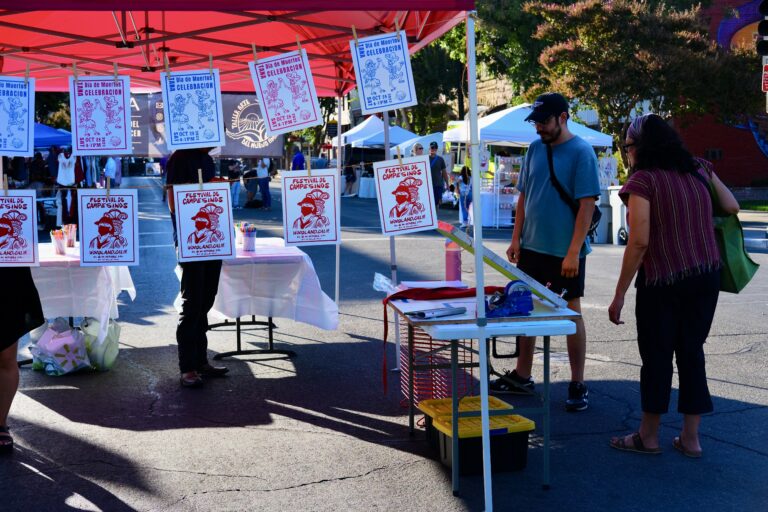
On Friday, Oct. 6, Brown Issues, a Chicano and Latino activist organization hosted its first “Yolo Farmworkers Festival” event in partnership with the city of Wodland. The event took place down Main St. to celebrate and demonstrate support for farm workers. 

“Where’s La Raza at?” a dancer dressed in traditional feathered indigenous headdress and attire said as they welcomed people into the festival. 

The event featured several Chicano/Latino vendors, crafts, food and artists who were all there to support farm workers.  

Brown Issues provided meal tickets for the farm workers and their families and will be giving away scholarship funds to the children of farm workers, according to Elyse Doyle-Martinez, an educator from Cache Creek High School and an advisor with Brown Issues in Yolo County. 

“A lot of the stories in Woodland and throughout California started in the fields, started in agriculture work — mine included,” Doyle-Martinez said. “So we’re celebrating those stories that put us in positions to be able to call ourselves college graduates, educators and artists and all these cool things. But we owe it to someone, so we’re celebrating those stories and also the stories of the people who are out there right now and still planting those same seeds of hope for the next generation.”

One of the booths present was the Center for Workers’ Rights. The group specializes in assisting workers with unemployment insurance, disability issues and wage theft, as well as connecting workers with legal counsel and other workers’ rights, according to Cesar Aguirre, a member of the group. 

“We are really happy to be here and expand our resources to the farm workers. We know that is a demographic that often stays neglected [and] exploited and we support all workers,” Fatima Garcia, lead community organizer for the Center for Workers’ Rights, said. “We can’t say we support all workers before supporting the most vulnerable.” 

The event comes during National Hispanic Heritage Month, a time when Brown Issues has held Chicano/Latino celebration events in the past. 92 percent of farmworkers in California are Latino, according to a 2013 report by the California Latino Legislative Caucus

Doyle-Martinez spoke about the decision to change the theme of this year’s celebration to be focused on farmworkers rather than only Chicanos/Latinos. 

“The last two years we’ve done a Chicano/Latino heritage celebration. This year we combined it with the Farm Workers Festival — we just decided to do it all,” Doyle-Martinez said. “Right now we’re highlighting the farmworkers, but a lot of the farm workers are Chicano/Latino, right?”

Dolores Huerta, co-founder of the United Farm Workers (UFW) and civil rights activist, posted an Instagram video on Oct. 3 inviting people to attend the event. Huerta was originally considered to be a speaker at the event according to Doyle-Martinez. 

“It was huge, we were trying to get her [Huerta] as a speaker to be our keynote for the night, but she ended up having her own event she was throwing down for the foundation,” Doyle-Martinez said. “So she ended up doing that shoutout for us, which was legit. Hopefully we can get her next year and make this event bigger.”

While the UFW didn’t formally help organize the event, Antonio De Loera, communications director for the UFW and candidate for Yolo County Supervisor in District 4, attended the event. De Loera talked about a 2016 report by the California Institute for Rural Studies that discussed findings that 47 percent of farm worker households were food insecure.

“Almost 50 percent of farm workers in Yolo County are food insecure,” De Loera said. “That means that the workers, the very workers who pick all the food that makes this county such an agricultural productive place, often struggle to feed their own families. And that’s just a really tragic irony that has to be resolved. […] That’s really where the UFW comes in, where unionization can help address that poverty at its root cause [is] the low wages that so many farm workers make.”

De Loera believes that celebrations like this are important, but that energy needs to be used for changing policy as well. 

“It’s good to celebrate, but we also need to put our money where our mouth is and make sure farm workers in Yolo County and across California have all the rights that they’re entitled to,” De Loera said. “So for example, heat; they’re under extreme temperatures. Farm workers need access to shade, to water, to rest breaks. In theory, that is the law in California, [but] unfortunately, we know that including here in Yolo County — I’ve personally seen it — it doesn’t always go enforced. Workers are often afraid of speaking up. So I think events like this are good, but […] that also needs to turn, not just into celebration, but also into policy.”


Written By: Chris Ponce city@theaggie.org

Indigenous Peoples’ Day has passed, but Davis tribes still deserve your support

Here’s a start to respecting the land you occupy

By THE EDITORIAL BOARD

As UC Davis students and current inhabitants of Patwin land (pronounced puht-win), it’s our responsibility to educate ourselves about its history. How little we know about the land we live on makes it that much easier for us to disconnect ourselves from its original inhabitants, and the meaning of the land is lost if we don’t know its history. This not only disrespects but also ignores the long connection and ancestry of Patwin people to this land.

“Patwin” means “person” or “the people” in the Patwin language. The name was given to this subgroup of the northern-dwelling Wintun people in 1877 by American reporter and ethnographer Stephen Powers — a salient example of white Americans shaping Indigenous history.

Native peoples today are a dynamic manifestation of a long historical process which involves both peace and harmony, as well as colonization and genocide. They are living in a period of constant readjustment, having to work hard to retain their distinct culture while being surrounded by a non-Native community. This is especially difficult when tribes do not have legal rights to their own land, or a federally recognized reservation, such as the Patwin people. 

We seem to easily forget that the Indigenous peoples of this land are not confined to history textbooks. Today, the Patwin people are made up of three federally recognized tribes: the Yocha Dehe Wintun Nation, the Cachil DeHe Band of Wintun Indians of the Colusa Indian Community and the Kletsel Dehe Wintun Nation.

It is a constant battle for these Patwin tribes to gain respect and recognition of the land that belongs to them. As you walk around Davis, do you ponder the destruction of sacred land that was replaced with these streets, businesses and classrooms? It’s not entirely your fault if you don’t. It’s easy for Davis residents not to think about these things, in part because of the overwhelming development of the region, but also because of the lack of education surrounding this topic.

Not to mention, it’s difficult for the Patwin people to preserve their culture — never mind educate others on it — when they don’t have a recognized reservation from which to do so. Still, they’ve kept their culture alive. For example, thanks to the knowledge, hard work and care of the Indigenous people of this region, the Patwin language has been preserved. 

The Colusa Indian Community Council published the first edition of the Cachil DeHe Band of Wintun Indians language book in 2004, a monumental step towards reclaiming their language. The Yocha Dehe Wintun Nation prioritizes the protection of cultural sites and honors traditions that teach respect for the environment. Knowledge of the location and appropriate management of cultural sites has been handed down through generations and guides the work of the Yocha Dehe Cultural Resources Department. 

Our federal and state governments have a long and tragic history of disrespecting and disregarding Native communities. Rights are only honored when it’s convenient for them. Time and time again, we are taught that private property and developing infrastructure are more important than preserving the home and culture of Indigenous people. 

It’s impossible to undo the long history of violence against Native peoples in the United States, and it can be easy to feel like there’s nothing we can do as individual citizens to support those who first lived where we do now. However, there are things you can do to support the Patwin people. Visit online resources and read about their heritage. Educate yourself. Donate your time or money to cultural preservation efforts. Consider supporting local tribal-owned businesses such as the Yocha Dehe Golf Club, Séka Hills Olive Oil and the NikNek Lemonade stand at the farmer’s market. Pause for a moment of reflection and connection at the Native American Contemplative Garden located in the UC Davis Arboretum. 

We attend a university with one of the first Native American Studies (NAS) programs in the country. Created in 1969 by Jack D. Forbes (Powhatan-Renape-Lenap), David Risling (Yurok-Karuk-Hoopa), Carl N. Gorman (Navajo) and Sarah Hutchison (Cherokee), the NAS program offers a modern and global approach to the study of Indigenous peoples of the Americas. 

If you’re interested in learning more, you can also attend one of the many educational and artistic events open to the public at the Native Nest — or Native American Academic Student Success Center — located on the UC Davis campus at the University House. The Native Nest is focused on creating a sense of belonging for Native American students in a culturally appropriate way. This includes providing a space for empowering the academic and personal journeys of Indigenous students, no matter the connection they feel to their tribal identities. Their community includes staff, faculty and alumni from a variety of tribal backgrounds, experiences and academic interests. 

Visiting the Gorman Museum of Native American Art, located at 181 Old Davis Road, is another way to reflect on, honor and support Native peoples. It recently reopened on Sept. 22, marking the museum’s 50th anniversary. Their opening exhibition features works by 20 California Native artists, although the collection consists of about 2,250 works, most of them created since 1980. The Gorman Museum is one of the few museums in the country focused on contemporary Native American art and was established in 1973 in honor of Carl Nelson Gorman — an artist, WWII code talker, cultural historian and advocate for Native peoples.

UC Davis released a land acknowledgment statement several years ago written by the Tribal Council of the Yocha Dehe Wintun Nation that is often read aloud before university events. While this statement is a positive step towards educating the local public, it has unfortunately become white noise to many students. Other than the names of the Patwin tribes, we are not taught much more about the original inhabitants and stewards of this land. This past Monday, Oct. 9, was Indigenous Peoples’ Day, and it serves as a reminder to honor the Native peoples of our country. It’s up to us to educate ourselves. It’s the least we can do.

Written by: The Editorial Board

Community meeting held to gather community input on future G Street refurbishments

Businesses, residents and city of Davis workers presented their proposals for G Street renovations 


By HANNAH SCHRADER city@theaggie.org


On Oct. 4, the city of Davis held a public workshop to gather community input on G Street. The street has prohibited the use of motor vehicles since June of 2020, originally in an effort to fulfill the increased demand for outdoor seating as a result of the pandemic. 

The business community has shown concern about the temporary structures that were created to allow for more outdoor seating. As a result, in Jan. of 2023, the Davis City Council approved the G Street redesign project.

The community gathering was held from 9 a.m. to 1 p.m. on G Street in order to get feedback from residents as to ways in which G Street could be improved.

Davis Vice Mayor Josh Chapman was also in attendance at the gathering and gave some insight about what the city aims to gain from putting on this gathering.

“We’re really looking to get some input on a couple different things, and the first one is really how we’re going to use the space now that it’s been closed to automobile traffic,” Chapman said. “[We’re] trying to figure out what the mix of available space for the businesses to possibly leave for dining or other uses versus just public spaces for use by the community is.”

Chapman discussed the possible timeline of this project, hoping for construction to begin sometime next year.

“The schedule moving forward would be we collect community input at this meeting and then our design [team] is going to go back and come up with some final concepts and layouts,” Chapman said. “We’ll be taking that to the city council early next year. Once the council [has] provided their input and [approval], we’ll go to final design and hopefully construction next year.”

The arts and culture manager for the city of Davis, Rachel Hartsough, spoke briefly on the proposed ways in which art could be used to enhance G Street which the public was able to vote on during the community meeting.

“We did a lot of research on similar spaces that were carfree that were focused more on the bicycle, pedestrian, kind of promenade type spaces,” Hartsough said. “These were some of the features that we saw in other cities that we thought were great examples of things that made the space useable, fun, flexible [and] friendly to different ages and demographics within the community.”

The proposed art installations, including different kinds of murals, information kiosks and other whimsical structures, were printed on a poster board and citizens attending the meeting were able to put a sticker on the art style and amenities they most preferred.

“It’s more of capturing what the community is most interested in and then trying to find the best match for that with our artists [in Davis],” Hartsough stated.

Marcus Marino, president and CEO of Design M Group, a full-service real estate firm, also attended the community meeting with a plan for changes he would like to see on G Street.

“I saw what the city was originally talking about doing and I felt that they were on the wrong path and that I had a better solution to it, so I’ve drawn this up,” Marino said. “The major differences that I’m proposing are a sign on each end of the block, which would be an homage to the original Davis Arch. […] I have a simpler solution to the parking area that’s standing in the block of these parking spaces and [is] now striped this way because it’s a two-way street. I propose just repainting the stripes this way and making it a one-way street. […] This could be done in a weekend for minimal cost and eliminates the issue that we have now.”

Written by: Hannah Schrader  city@theaggie.org

How hybrid learning could reflect a culture of community

What we owe to each other when sick


By THE EDITORIAL BOARD


My last happy sick day was in third grade, spent enveloped in a mess of blankets, watching “The Princess Bride” for the second time that day. Back then, missing a day of school was a fair trade: one day of sympathy ice cream in exchange for missing a game of four-square at recess. Now, getting sick throws a wrench the size of Montana into your week. Before you know it, you’ve missed four lectures, you desperately need to go grocery shopping and you’re haunted by the raging guilt of unproductivity, as if being sick was just a nauseous bout of laziness. 

And it’s not just about you. Maintaining productivity while sick often means balancing your own interests with the health of those around you. PTA moms will wage a NextDoor war if someone brings their lice-ridden child to after school care, but the guy next you in English class who is apparently hacking up a hairball — who’s going to send him home? Honestly, how could you tell him to leave? Attendance is mandatory, the lectures aren’t recorded, the slides aren’t uploaded and the quizzes are pop. If he’s unlucky, missing a day might mean a 5% dock in his grade. 

How we navigate illness is a social contract; one that we’re renegotiating in the fallout of a pandemic. This is especially true in academic spaces. We can’t expect staying home sick to be considered common courtesy and, in the next breath, punish students who choose to vomit in the comfort of their own home. Right now, the U.S. feels itself being pulled back to a culture of brutal individualism at the expense of collective good, but it’s not an inevitable end. Five years ago, asking someone on the train to wear a mask would be unthinkable. Now, we have a window of opportunity to reshape the way we deal with illness, and with it, each other. 

But while COVID-19 has understandably changed our perspective on health, it is worth keeping in mind that there are plenty of ways to get sick, including the cold, flu and strep that have haunted college students for centuries. Campaigning to let people stay home hasn’t translated equally to other ailments, physical or mental, that might be just as debilitating. It’s interesting to see how “COVID” is sometimes all it takes to cancel a meeting that “overwhelming stress,” “period pain” or “personal issues” don’t seem to budge. The grace we’ve learned to extend toward students affected by COVID, as well as the remote learning tools we’ve gained, should be extended to other personal situations.

It’s a wonderful thing when self-interest coincides with the greater good, but it isn’t built into an individualist, workaholic system. We need to actively encourage people to take the breaks they need, and disincentivize students working themselves into a coughing fit in the back of the class. Setting up systems that support this is worth our time, but students and teachers who ask for accommodations are repeatedly met with outcry. 

The pushback against accommodations for and hybridization of learning on college campuses comes from the combination of two flawed ideas. One, that learning is synonymous with showing up, and two, that no one would show up if given the option not to. 

The first premise is easy enough to disprove —- just look over the shoulder of that girl watching “Gossip Girl” in Ochem. Or, conversely, look at the students who manage to snag a perfect score without ever showing up to class. Clearly, there’s a disconnect. 

The impact of showing up to class varies by the class itself. For STEM students, large in-person classes often have everything in common with recorded lectures besides the ability to rewind. Broadly, humanities classes tend to make better use of their students’ presence with activities like group discussion. This is not necessarily a universal application — but it raises the point that the in-person experience benefits different classes to different extents. 

The second belief, that everyone would avoid the classroom if given the chance, is pretty easy to debunk as well. Every hybrid class has at least a few people showing up synchronously or in person. Many students prefer to show up to lecture, and do so regardless of a stress-inducing, inflexible attendance policy. 

Running a university is an expensive undertaking, but UC Davis has the resources required to make learning accessible to a wider student population. If students are paying for their education, it should be available to them even when they get a cold. It should be available to students with chronic health issues, disabilities or mental health struggles. Extending lecture capture to more classrooms is one example of how the school could prioritize well-being over traditional expectations of learning. In-person examinations, creative tests and make-up assignments for those who have to miss class — there are many ways in which professors can monitor and encourage the learning of their students without sacrificing respect for our health and autonomy.

Ultimately, the power should be in the hands of the student. The threat that students may avoid lecture and speed-run recordings without learning anything is an empty one. So what if they do? If anyone spending thousands of dollars to get an education doesn’t invest the time to learn the material, they’re supposed to see the consequences of their actions in their grades. Certainly, this is a better proposition than punishing the students who want to learn but are sick, having caught a cold from a student just like them. By giving students and teachers the tools they need to take care of themselves, we protect and strengthen UC Davis. Let the way we treat sickness in others expose our priorities to be our friends, families and community.


Written by: The Editorial Board


New UC Davis research center focuses on saving lives from tobacco use

With $3.7 million in funding, the UC Davis Comprehensive Cancer Center is set to launch the Tobacco Cessation Policy Research Center 


By KAYA DO-KHANH — campus@theaggie.org


The UC Davis Comprehensive Cancer Center, which is based in Sacramento, recently announced that it is set to launch the Tobacco Cessation Policy Research Center (TCPRC) within the next few months, which is the first program of its kind. The research center brings together academic researchers and community and advocacy groups to work toward saving lives from tobacco use. 

“The long-term goal for the center’s projects and research are to support efforts to expand into subsequent studies or generate new policy efforts,” Dr. Elisa Tong, director of TCPRC and internist at UC Davis Health, said in an email. “Ultimately, we want to improve population-based cessation outcomes that will help fulfill California’s aspirations of an ‘endgame’ to end the commercial tobacco epidemic and help save lives.”

The center is receiving $3.7 million in funding from the Tobacco-Related Disease Research Program, a research agency directed by the UC Office of the President, according to a press release from UC Davis Health. The funding will go towards carrying out research and projects over the course of four years. 

“This new center has the potential to significantly reduce tobacco-related harm in our state,” Director of UC Center Sacramento Richard L. Kravitz said in the press release. “As the University of California’s main hub for policy-related knowledge sharing in the state capital, we are proud to participate in advancing the training and dissemination aims of this grant.” 

The center will carry out four rapid response policy projects over the first two years at the center, Dr. Tong said. The key areas that the policy projects will cover include health care access, health care delivery, health care management and health care plan reform. 

Dr. Tong said that she is especially eager to start on the project related to healthcare and community engagement on the new state law that bans the retail sale of flavored tobacco. 

“Flavors in vapes/e-cigarettes have contributed to what the Surgeon General has called an epidemic; we now have new diseases like E-cigarette Vaping Associated Lung Injury which was the 2019 epidemic making young people really sick and even die and it’s complicated with rising cannabis use too,” Dr. Tong said via email. “We need to educate and activate our healthcare providers and systems on these new challenges to support people to quit these highly addictive products.”

In 2014, there was a UC system-wide Smoke and Tobacco Free Policy established which includes all types of tobacco use such as cigarettes, e-cigarettes, vapes and more. Keavagh Clift, who oversees the Smoke and Tobacco Free initiative on campus, discussed a number of tobacco cessation resources for students on campus. One of the resources that she said students may find interesting is the Breathe Free Tracker Tool, which is an online tool that students can fill out to help track tobacco and vape usage and related litter on campus to support a cleaner UC Davis. Other resources include the Intervention Services Coordinator at Student Health for one-on-one counseling and access to free nicotine replacement therapy for one month. There is also an online class called Strategies to Quit Tobacco, which is an interactive workshop which addresses strategies to quit tobacco that is offered by UC Davis Health Management and Education.

Dr. Tong said that the TCPRC is launching in the next few months as some of the project teams are currently conducting planning meetings, and they want to develop the pipeline of learners and researchers. Other future plans for TCPRC include hopes of launching a learning series, a call for pilot grants and a Graduate Opportunities for Leadership Development (GOLD) fellowship with UC Center Sacramento sometime early next year. In fall 2024, she said that they hope to hold an Annual Summit with UC Center Sacramento to share their research findings with community and policy stakeholders.

Written by: Kaya Do-Khanh — campus@theaggie.org

Use these campus resources to get the most out of your student fees

From academic tutoring to free food, here are some of the best campus resources available to you as a UC Davis student


You’ve all heard the college question trifecta: Name? Major? Hometown? It’s all a cliche, but introductions are important, and sometimes you have to start with the basics. 


Last week, we introduced ourselves, the nine members of The California Aggie’s Editorial Board. Today, we continue our introductions with an overview of the campus resources available to students at UC Davis. In our biweekly editorials throughout the year, we’ll often be writing about hard topics, including incidents or trends that may be causing us and other students to feel anxiety, fear, sadness and so on. 


With the tools at our disposal, we’re able to offer nuanced perspectives on current issues, creative ideas and symbolic support. But we aren’t the ones offering services and organizing the programs that are actively working to support community members and create change in the areas that need it. What we can do is direct you toward those resources, and in our editorials, we often will do just that. Beyond that, these resources are often funded in part by your student fees — so why not make the most of the tuition you pay and take advantage of the programs and services they pay for?


So without further ado, here are some of our favorite campus resources and why you should use them. 


Student Health and Counseling Services


The constant stream of world news right now, and always, can be hard to process. Beyond that, starting a new school year comes with new stressors and complications, not to mention the time-bending whirlwind of the quarter system that somehow means… midterms start next week? For these reasons and so many more, mental health in college can be a rollercoaster — as can physical health, when the frat flu starts spreading. 


We always encourage students to ask for help when they need it, and the counseling and health services provided by the university are one way to do so. Health and counseling services are available to students regardless of their insurance coverage, with students paying a small fee for most services. Individual counseling sessions are available to all UC Davis students at no charge on a short-term basis. They also offer a variety of support groups and academic counseling options.


The system isn’t perfect; the small staff of counselors means that there are often delays with scheduling appointments, and while it is a good short-term or one-time solution, it’s not as helpful for those who need more long-term therapy. But it is one option that is low-cost, and if nothing else, the people there may be able to direct you to other local resources that are right for you.


Please take care of yourself this quarter and don’t be afraid to reach out to the qualified professionals who want to help you. 


Safe Rides


Safe Rides is a free service that offers rides in clearly marked security vehicles to any students who feel unsafe walking alone or in a small group at night. Certain parts of Davis are lacking in street lighting, and it can be scary to walk alone. The drivers will take you from any on-campus location to another on-campus location seven days a week from 5 p.m. on throughout the night, and from any on-campus location to any location in the city of Davis every day from 8 p.m. to 3 a.m.


AggieEats and The Pantry


If you’re ever out of grocery money, forgot to pack a lunch, can’t afford to eat out and decide you’ll just skip a meal or two — think again. 


The ASUCD Pantry is a student-run organization based in the Memorial Union that provides food, including fresh produce and pantry staples, as well as toiletries and other basic necessities, to students and faculty at no cost. All you need is your student ID, and you can stop by to pick up a certain allotted amount of items daily.


Another newer addition to the list of food resources for students is the AggieEats food truck, a pay-as-you-can food truck that is on-campus five days a week serving a rotating menu of meals. 


UC Davis has some amazing resources to combat food insecurity among our campus community. Don’t be put off by worrying if you’re “the right audience” for it; the more frequently these services are used, the more easily they can prove the need for their services to funders or partners. So by taking advantage of The Pantry or AggieEats, you are helping those services continue to be available for other food-insecure students on campus. 


Student Community Center 


Feeling out-of-place? Need a scantron? Want to take a nap? The Student Community Center (SCC) is meant to address all of these needs, and more. 


There are too many groups within the SCC to go into detail about what all of them do here, but from the LGBTQIA+ Resource Center to the Cross Cultural Center, all of them are intended to create a welcome space for a diverse community. They also all offer free scantrons to students.


The SCC is also home to the South CoHo, and nearby, a large central area with comfortable seating, tables and outlets for anyone looking to take a snack break, do some studying or both. 


Academic tutoring


It may only be Week 2 of the quarter, but if you’re already struggling with your classes, you’re not alone. And if struggling in your classes is something that’s new to you, that’s common too — many of us may have had the experience of being the gifted child; the one who the teacher asked to help grade the spelling tests, and who would never dream of being the one who needed tutoring. 


And then we got to college, and realized we actually know very little and would very much like someone to explain math to us — and that’s okay! College is hard, and you shouldn’t hesitate to take advantage of on-campus resources like tutoring to help you reach your academic goals. Tutoring happens in the basement of Shields Library and in the Teaching and Learning Complex, and all Academic Assistance and Tutoring Center (AATC) services are available to registered students free of charge. Many subjects have different style options including one-on-one tutoring by appointment, drop-in tutoring and asynchronous resources.


Internship and Career Center


It’s fall, which means it’s almost time to begin the annual cycle of applying to dozens of internships, and hearing back from approximately one. If you want to break that cycle, the Internship and Career Center (ICC) is here to help. 


The ICC offers appointments with career advisors to explore career options, practice interviews, help with job and internship searches and review cover letters and resumes. They also host free workshops on topics like interview basics and networking, and offer a virtual service called Resume Review+ where students can digitally submit their resume and receive detailed written feedback.


When challenging discussions about both local and broader issues happen on our campus, we as a newspaper have a certain role to play in showcasing diverse perspectives and offering, to the best of our ability, unbiased and informative coverage of events. That said, we recognize that we will often highlight issues on campus or problems facing students at college campuses without having a concrete solution to offer of our own. 


But there are people working toward concrete solutions, and that’s what these campus resources are for. Beyond the ones we listed, there’s the free on-campus thrift store Aggie Reuse, the International Student Center, the Activities and Recreation Center and so much more. 


You’re paying for these services, and they’re intended to help you. So use them! 


Written by: The Editorial Board

Davis City Council September meetings recapped

The city council discussed openings, gave an update on Hate-Free together and recognized Hispanic Heritage and National Breast Cancer Awareness month at recent meetings


By ALMA CULVERWELL city@theaggie.org 

On Sept. 4, at the first city council meeting of the month, the Davis City Council announced the grand opening of Rose Creek Park, located between Concord Avenue and Evans Court, as well as Playfields Park, located on Research Park Drive. Additionally, they announced that National Night Out will take place on Sunday, Oct. 15. The event it intended to welcome incoming students at UC Davis.

Davis City Manager Mike Webb discussed National Night Out’s mid-October date and the purpose of the event at the meeting.

“The timing of the event is sort of modeled after a national neighbors night out event, but we’ve put our own Davis spin on it, especially with respect to the timing of mid-October [which] is very intentional in order to be welcoming to incoming UC Davis students who are coming in and starting classes in late September so they can be part of that welcome and part of that incorporation to their neighborhood as they move in,” Webb said.

The council also provided an update on the “Hate-Free Together” campaign, a joint effort to provide support and opportunities for community members and to promote inclusion. Jenny Tan, director of community engagement for the city of Davis, discussed the mission of the project during the meeting. 

“We know that our communities want more, they need more, they want action, education and inclusion and so Hate-Free Together was born to help condemn hate, create safety and cultivate change. Being hate-free is our goal, it’s what we are striving for,” Tan said. “We all have a role and responsibility to get there together.” 

 Hate-Free Together has made headway on initial investments, research and logo design. They are working on developing a website, increasing staff support and planning community workshops. They have received a $300,000 grant from the California Arts Council’s California Creative Corps program to fund these developments. 

The council also provided an update on the G Street reactivation program. On Jan. 17, the council approved activating a portion of G Street between 2nd and 3rd Street by keeping it closed to automobiles. The city hosted a pop-up design workshop on Oct. 4 where they plan to collaborate with an on-call firm, Psomas, to get community feedback and work on possible design ideas. Their long-term goal is to enhance a vibrant downtown and thriving neighborhoods.

During the meeting on Sept. 16, the city of Davis recognized Sept.15 through Oct.15 as National Hispanic Heritage Month. Councilmember Gloria Partida presented the proclamation at the meeting. 

“Now, therefore, we, the Davis City Council, on behalf of the citizens of Davis, recognizes and observes National Hispanic Heritage Month this year and every year hereafter and strongly encourages Davis public schools, businesses, organizations, and other public institutions to recognize National Hispanic Heritage Month through education, ceremonies, activities and programs,” Partida said at the meeting.

The city also recognized October as National Breast Cancer Awareness, National Bullying Prevention and Fire Prevention Month. The council urged Davis Residents to be extra cautious with the added fire risk and to be sure to check kitchen areas for possible fire hazards.

 “Now, therefore be it proclaimed that the Davis City Council, on behalf of the citizens of Davis, hereby proclaim October 2023, as Fire Prevention Month throughout this city, and urge all the people of Davis to check their kitchens for fire hazards and use safe cooking practices during Fire Prevention Month 2023, and to support the many public safety activities and efforts of the Davis Fire Department,” the proclamation reads.

Written by: Alma Culverwell — city@theaggie.org

Campus feels loss of iconic Arboretum tree

The Arboretum’s Japanese Zelkova tree was recently removed due to safety concerns, but paved the way towards potential future projects to combat climate change


By SYDNEY AMESTOY — campus@theaggie.org 


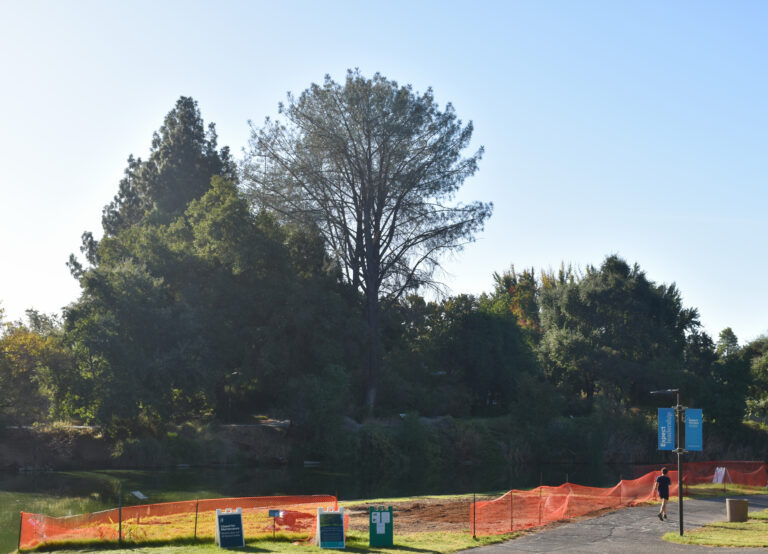
The UC Davis Arboretum recently saw the removal of one of its most iconic trees due to a safety issue caused by a structural flaw in its trunk.

The historic Japanese Zelkova tree has sat on the shore of Lake Spafford since it was planted there in the 1960’s. It was removed on Sep. 14 after the UC Davis Arboretum and Public Gardens (APG) crew discovered a large crack in the tree’s trunk. 

Crews attempted to preserve the tree through a series of corrective measures, according to the APG’s press release. This included eliminating 50 percent of the tree’s canopy to correct the crack. 

Andrew Fulks, assistant director of the APG, spoke with KCRA news about the emotional decision to take down the tree.

“It’s hard to see it go,” Fulks said. “This is one of the most beloved trees on campus.”

However, there are plans in the works for a planting event in honor of the tree, according to the APG website.

Tyler Kern, a campus urban forester with APG said that the crack shows us that there have been advancements in forestry since the tree was planted.

“Over the years, we’ve gained valuable insights into the significance of proper pruning and maintenance for young trees,” Kern said in the press release. “[This is] knowledge that this tree would have benefitted from.” 

The removal comes as the area once home to the Zelkova tree is planned to be revitalized in the coming years. This is part of the Arboretum Waterway Flood Protection and Habitat Enhancement Project, according to a press release about the effort. 

The multi-million dollar project seeks to protect the Arboretum Waterway from the effects of climate change by controlling the flow of stormwater with new pumps, and eliminating the concrete edge running along the creek, according to the press release from APG. 

“This was a very sad and difficult decision,” Chancellor Gary May said in a tweet on Sept. 12, just before the tree’s removal. “I want to thank our amazing [APG] staff for keeping our natural spaces iconic, safe and healthy. We’ll miss [the Zelkova tree].” 


Written by: Sydney Amestoy — campus@theaggie.org