58.4 F
Davis

Davis, California

Tuesday, December 23, 2025
Home Blog Page 192

ASUCD senators discuss Turning Point USA protest at Oct. 27 meeting

The Senate also heard quarterly reports, in which Unitrans announced significant progress on driver staffing 

By KAYA DO-KHANH — campus@theaggie.org


On Thursday, Oct. 27, at 6:15 p.m., Vice President JT Eden called the Senate meeting to order and recited the UC Davis Land Acknowledgement. 

The Senate then moved through Gender and Sexuality Commission confirmations without any objections.

The senators moved to public comments and then to quarterly reports. Eden gave a report from the Personnel Committee, which reviews the personnel policies of ASUCD and proposes changes to those policies, including those regarding employee compensation. 

The report included a list of recent accomplishments, one being that the senators are starting to gather volunteer tracking data after passing a bill to incentivize participation in hour tracking. The senators are hoping to receive a high number of responses. The Personnel Committee’s goals for the rest of the year are to propose new career-staff positions and create clear internal hiring guidelines to prevent unpaid labor.  

The Volunteer Award Committee, which gives out an award to ASUCD volunteers twice a year, and the Scholarship Award Committee, which gives out a scholarship to undergraduate students twice a year, gave their quarterly reports. 

Next, the Senate transitioned to elected officer reports, during which they gave updates on their weekly schedules and progress on various projects. 

General Manager Jeff Flynn then gave a quarterly report for Unitrans. In terms of cleaning and safe riding updates, the plastic barriers between riders and drivers installed during the pandemic remain in place, and they have a once-daily sanitizing procedure on all vehicles. 

Additionally, Flynn said that for the first time in two years, Unitrans took down their driver vacancy from the ASUCD vacancy listing. For full service, 175 drivers are needed, and as of Oct. 2022, there are 120 active drivers, 50 active trainees and 25 hires-in-process. There are plans to slowly restore services as the year progresses. As for ridership, fall 2022 has shown the highest ridership since March 2020, with 18,000 weekday customers on average. 

They then moved on to the status of previous legislation, which includes two Senate bills, SB #12 and SB #14, which were vetoed at the Oct. 20 Senate meeting by President Radhika Gawde.

Next, they introduced new legislation CA #79, which is a constitutional amendment which, in the case of a recall vote, would allow for the student body to vote on a replacement candidate at the same time as the recall vote. 

With the consideration of the consent calendar, SB #19, which allows the ASUCD Controller to call a meeting of the Board of Unit Directing Students to elect a chair, and SB #32, which amends the hiring and interviewing process for the Judicial Council Chairperson and members, passed unanimously.

Moving to the consideration of old legislation, there was a motion to endorse the Approval of the 2022 Guide to Placing a Student Fee Initiative on the Ballot that passed unanimously. 

SB #20, which ​​allocates hourly pay for the Student Advocate Office’s (SAO) Chief of Staff, was tabled. 

CA #80, which places a vote on the fall election ballot to ensure continuity in elections administration, and CA #81, which places a vote on the fall election ballot to allow for immediate enactment of student fee initiatives, passed unanimously.

            The senators approved past meeting minutes and moved on to open forum. 

The senators brought up the cancellation of the Turning Point USA (TPUSA) event at UC Davis in discussion. One of the senators said that some students have expressed wishes for TPUSA at UC Davis to be removed as a Registered Student Organization on campus. Another senator stated that because ASUCD Senate is federally funded, they must carefully adhere to the First Amendment right to free speech. According to the senators, if there was proof that TPUSA had violated California or federal law, there is a possibility that the campus organization would be disbanded. 

Eden adjourned the meeting at 8:42 p.m.

Written by: Kaya Do-Khanh — campus@theaggie.org

 

UC Davis Health study explores how our brains perceive faces depending on context

Specific regions in our brains use synchronized brain waves to create neural connections between two seemingly-unrelated entities

By BRANDON NGUYEN — science@theaggie.org 


Context matters when perceiving faces; our perception of a person with a knife at a birthday party drastically differs from one in a dark alley at night. Recently, a UC Davis Health study shed light on the underlying neural computations our brain makes when processing situations like these.

Dr. Jack Lin, a professor of neurology and director of the UC Davis Comprehensive Epilepsy Program, explained the purpose of the study and how contextual processing influences human decision-making and inferences. 

“The question we were trying to answer is: how does the brain combine two seemingly-unrelated things together and influence our decision-making?” Lin said. “Imagine a person next to a burning building; even though the person and the building have no relationship, you would probably assume that the person may be an arsonist. But if you were to put the same face next to a pleasant picture, such as a sunny beach, you would most likely perceive the face as friendly and happy.”

Jie Zheng, a postdoctoral fellow researcher at Harvard Medical School and the first author on the study, explained the brain regions that the team analyzed. 

“We are actually recording direct neurosignals inside of the brain, targeting regions of the hippocampus, amygdala and orbitofrontal cortex,” Zheng said. “Prior studies in the literature have shown that those three regions are involved in memory, emotional or decision-making processes. But nothing was known about how they communicated with each other, so we wanted to uncover the underlying brain mechanisms that enabled that communication.”

The hippocampus is known to be involved in memory, and the amygdala is an almond-shaped organ in the brain that affects emotion, according to Lin. The orbitofrontal cortex, a region of the brain just above the eyes, influences decision-making processes. 

The study’s sample consisted of epilepsy patients who volunteered for the study.  Lin explained that since these patients already had electrodes implanted inside their brains to monitor for seizures, he and Zheng could gather specific neural activity in different regions of the brain while the subjects viewed a series of images with varying emotional contexts. 

“The electrodes in the brain are like radios with different wave frequencies,” Lin said. “The brain regions need to have these different waves line up at the same frequency in order to communicate effectively.” 

Within seconds, During the study, patients were shown photos of faces in different contexts meant to evoke a more positive or negative perception. They were then asked to rank the valence of the face in each photo immediately after. These photos ranged from a dog running through a field to a set of hands opening a door through broken glass.

The researchers focused on two types of brain waves present in patients when looking at the photos: theta and gamma waves, which must align in a synchronized manner to facilitate long-distance communication.

“The slow rhythm, also known as the theta waves, opens up the communication channel between the three brain regions,” Lin said. “After the brain dials the right frequency for the slow wave, there is then a very fast rhythm, known as the gamma wave, which indicates neurons firing on a local level. So when the slow waves and the fast local waves line up, the brain regions are able to communicate with each other. This is what we call theta-gamma coherence or synchrony.”

Recording the theta-gamma wave interactions both to and from different brain regions revealed interactions between the brain’s emotion, memory and decision-making networks. In observing the coordination of the theta and gamma waves traveling between these brain regions, researchers were able to successfully predict how the participants would perceive the face they were observing before even seeing their responses.

Understanding the fundamental interactions between these brain regions is a first step in supporting patients affected by neurological diseases that have altered their neural communication network. Lin said that this research opens up the possibility of disconnecting and reforming neural paths within the brain to help modulate a patient’s interpersonal behavior in the future.

“One of the things that is really important is that this may help us potentially map and treat psychiatric diseases,” Lin said. “The associations we make sometimes can be correct and good, but sometimes they are bad and can lead to mental health issues. When we make overly-generalized associations, for example, we hope that in the future we can break these bonds if we better understand the mechanism of how we associate two seemingly-unrelated items together. Then we can figure out a way using brain stimulation to disconnect some of these channels that are unhealthy but enhance some of the channels that are healthy.” 


Written by: Brandon Nguyen — science@theaggie.org


UC Davis women’s basketball 2022-23 season preview

With three key players gone, the Aggies start a new era 

By MARLON ROLON — sports@theaggie.org


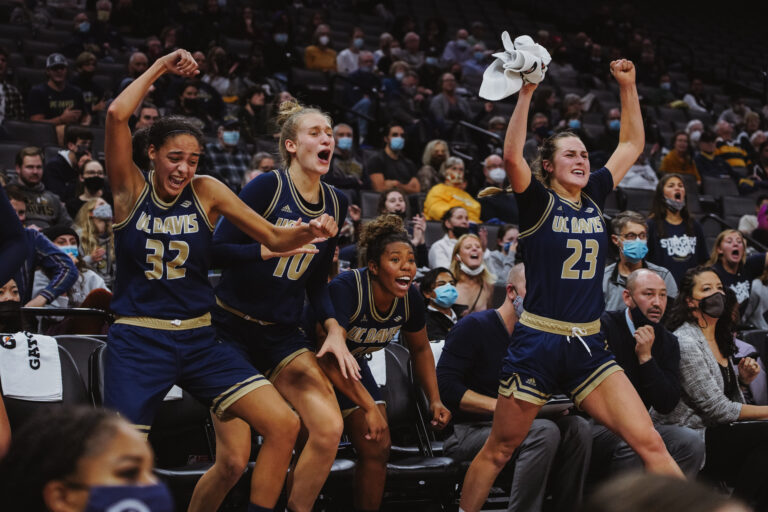
The UC Davis women’s basketball team is coming off an up-and-down 2021-22 season — beating the University of Oregon, who was ranked No. 16 at that time, and Gonzaga for the first time in program history. The Aggies entered the Big West tournament as the sixth seed, which broke their streak of four-straight regular season titles and they were seconds away from making their third straight finals appearance in the tournament. However, UC Davis let the game slip away in the final 30 seconds of regulation, and the Aggies lost to UC Irvine in overtime. They finished the season with an overall record of 15-13 and 8-8 in conference play. 

UC Davis’ elimination from the Big West tournament left players on the court in tears — especially for graduating seniors Sage Stobbart, Cierra Hall and Kayla Konrad, who were integral to the four regular season titles, two Big West Tournament championships and two NCAA tournament appearances. The trio achieved accolades that set a high standard within the program. 

“To see them come in here and help raise the bar for our program is unbelievable,” Head Coach Jennifer Gross said following their semi-final loss to UC Irvine. “Those are three special individuals, and I’m so proud of them and their careers.”

Following their exit from the tournament, so many questions swirled around about the program. Who would replace the trio in the starting lineup? How would the Aggies fare in the regular season, and would they even get into the Big West tournament? 

“In the past we’d really gotten used to having that target on our back and all of a sudden now we’re an underdog,” Gross said.

Fast forward to this year, as Gross enters her 12th season as the head coach for the UC Davis women’s basketball team, the Aggies are prepared to answer those questions on the court. 

Gross has assembled the roster with three new transfer recruits: graduate student forward Tess Sussman, third-year guard Tova Sabel and redshirt first-year guard Victoria Baker. 

“We are really excited to add [Baker], [Sabel], and [Sussman] to our team this season,” Gross said in a recent interview with UC Davis. “They are all highly skilled players, great students, and most importantly, incredible people who will fit in well with the team culture we have built here at UC Davis. We can’t wait for our Aggie fans to watch them compete!”

Baker is a Texas native transferring from UC Irvine. In her lone season as an Anteater, Baker averaged 5.0 points, 2.1 rebounds and 3.1 assists per game. Most notably, Baker is known to be a gritty defender, an attribute that Gross loves from her players.

 “[Baker] is a gritty defender who makes lots of hustle plays and will help us with our goal of being an elite defensive team,” Gross said.

Sabel is from Stockholm, Sweden. She is a transfer from Penn State, and in her two seasons there, she averaged 5.2 points and 2.4 rebounds per game. With Sabel on the roster, the Aggies added much-needed experience, as she was a part of the Swedish National U19 Team. In 2019, Sabel was voted the Most Valuable Player on the U19 National Team.

Sussman, a Harvard transfer from Needham, Massachusetts, averaged 5.9 points, 3.6 rebounds and 1.7 assists per game in her three seasons with the Crimson. In her senior season, Sussman reached a career high in points, field goals made and steals. Sussman is also a gold medalist for Team USA at the 2022 Maccabiah Games.

Out of the three transfers, Sussman is the one who will make an impact inside the paint in terms of attaining rebounds. Offensively, she averaged 8.3 points per game in her last year at Harvard. And with high minutes on the court, Sussman can bring that average even higher in the Big West under Gross’s guidance. 

Aside from the new transfers joining the blue and gold, the Aggies have star players who are expected to lead the team in this new era of Aggie basketball. Last season, third-year guard Evanne Turner averaged 12.6 points, 3.3 rebounds and 1.9 assists per game. Turner is coming off of her best season yet, during which she was an offensive game changer for UC Davis behind the three-point line. Turner will take over Cierra Hall’s role as a leader and face of the team, being selected as the coach’s preseason All-Big West team. 

“[Turner’s] been tremendous, as a coach you hope that the best players are setting the tone with their work ethic and with their energy and she’s done such an amazing job with that,” Gross said. “[Turner] brings joy to the game and to the court and our fans get a chance to see that; She’s been a fun player to watch.”

Another notable player is second-year starting point-guard Sydney Burns, who averaged 5.5 points, 3.0 rebounds and 3.0 assists per game during her first year. Burns’ performance on the court led her to be selected for the 2022 Big West All-Freshman Team. Burns is excellent at stretching the floor in addition to her vision with passing abilities that make her essential to the offense. 

One more player who will have a big role this season is fourth-year forward Lena Svanholm. Last season, Stobbart played the center position, but taking over that role this season is Svanholm. With her 6’6” stature, she will not have a problem guarding the paint. Svanholm had limited minutes (13 minutes per game on average) on the court last season, but even with limited action, Svanholm averaged 5.4 points and 3.0 rebounds per game. With Svanholm predicated to get more playing time this year, she should be a big help to the Aggies on the defensive side. 

These veteran players on the roster have the experience and potential to bring the Big West Championship back to Davis. The offense will run through Turner who is one of the best three point shooters in the Big West conference. Gross and her coaching staff will rely on their veterans starters and new transfers who have valuable experience under their belts.

The annual preseason poll conducted by the league’s 11 head coaches picked UC Davis to finish in sixth-place, with Hawai’i selected to repeat as the conference champions.

 The team’s journey begins on Nov. 1 in an exhibition game at home against San Francisco State. On Nov. 7, the Aggies officially open the season at home against Bethel College. UC Davis will then go on the road on Nov. 11 to face the University of Washington. They then return home on Nov. 17 to host Boise State and travel to face off against cross-town rivals Sacramento State on Nov. 22.

The schedule will then transition to the Tiger Turkey Tip-Off tournament in Stockton on Nov. 26 and 27. In their first game, the Aggies will play against Wyoming, and in their second game, they will play against the University of Pacific. 

As the schedule gets tougher, UC Davis will go on the road to face Saint Mary’s and Gonzaga on Dec. 3 and Dec. 11. Then, the Aggies will return to Davis for a homestand against William Jessup University and Northern Arizona University on Dec. 15 and Dec. 19. The team will open their Big West conference schedule against the defending champions, the University of Hawai’i, on Dec. 29. 

There are plenty of question marks that surround Gross’ team due the departure of the big three — Stobbart, Hall and Konrad — but the Aggies still have arguably the best shooter in the Big West conference in Evanne Turner. Gross, who is a five-time “Coach of the Year,” has plenty of knowledge and experience to bring the best out of her players. With her at the helm, expect UC Davis to make a run in the postseason and contend for the Big West championship — something they do year in and year out.  


Written by: Marlon Rolon — sports@theaggie.org


The Aggies stampede past Cal Poly to claim the Golden Horseshoe 

UC Davis football’s winning streak continues as they climb in the Big Sky standings

By GABRIEL CARABALLO — sports@theaggie.org

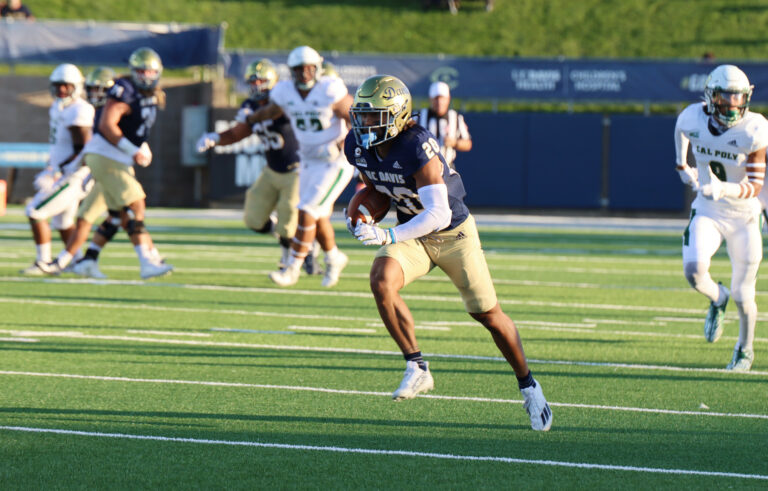
Following wins against Northern Arizona University and Northern Colorado, the UC Davis Aggies claimed the Golden Horseshoe at UC Davis Health Stadium on Saturday, October 29, beating Cal Poly 59-17.

UC Davis won the opening coin toss and elected to defer to the second half, so Cal Poly would start the first quarter from their own 25-yard line. However, the Mustangs’ first drive didn’t last long, as the Aggies’ defense forced a four-and-out situation for the Mustangs, making them punt the football.

The Aggies received the punt and started their first drive of the game. On UC Davis’ first offensive play of the game, fourth-year running back Ulonzo Gilliam Jr. broke through Cal Poly’s defense and ran for an incredible 59-yard touchdown. Gilliam’s run gave the Aggies an early 7-0 lead. 

The Mustangs were down a score and wanted to even the odds, but UC Davis’s defense kept Cal Poly grounded. On second down, Cal Poly’s third-year quarterback Spencer Brasch was sacked by the Aggie second-year safety Kavir Bains for a 10-yard loss, leading the Mustangs to punt the ball back to the home team. 

UC Davis immediately took advantage of the opportunity, with second-year quarterback Miles Hastings throwing a 30-yard dime to sophomore receiver CJ Hutton — resulting in good field position at the 50-yard line. However, the Aggies did not take advantage of the play as Cal Poly’s defense forced the home team to punt.

Cal Poly regained possession but was only able to muster one first down before being halted by the defense.

UC Davis would gain two first-downs on their next possession before being held at fourth-and-short — the Aggies went for it but were unable to convert the first down, resulting in a turnover on downs. 

As the Mustangs regained possession, signal-caller Brasch threw his first interception of the game to the Aggies’ second-year defensive back Jehiel Budgett. 

The home team took advantage of the turnover with a seven-play, 40-yard scoring drive, capped off with a touchdown run from Hutton. This brought the first quarter to a close with the Aggies up 14-0.

The second quarter began with the Mustangs on offense — Brasch threw an incredible 57-yard pass to third-year wide receiver Bryson Allen, who entered the red zone. In the following sequence, Brasch threw a pass into the endzone, but it was intercepted by second-year linebacker Teddye Buchanan.

“I ended up tipping it to myself and came down with it. I was in the right place at the right time and made the play,” Buchanan said in regard to the interception. 

Thanks to the defensive play, the Aggies were able to put points on the board with a quick four-play, 80-yard scoring drive. Hastings connected with Hutton for 54 yards and the drive ended with Gilliam’s second rushing touchdown of the game. 

Down 21-0 with under 12 minutes left in the half, the Mustangs cruised down the field with two quick first downs, one of which was a 34-yard pass to graduate student wide receiver Chris Coleman. After a quick gain of two yards, Brasch threw a 28-yard pass to second-year wide receiver Giancarlo Woods for the Mustangs’ first touchdown of the game, cutting UC Davis’s lead to 21-7.

On the Aggies’ next drive, things seemed to be clicking as they moved the chains with two quick first downs, but then Cal Poly’s second-year linebacker David Meyer forced a fumble on the Aggies’ quarterback Hastings and Mustangs’ first-year defensive lineman Soni Finau recovered the football and secured possession. 

Cal Poly took advantage of the turnover and put together a seven-play, 35-yard scoring drive. Brasch connected with Coleman for a six-yard passing touchdown, further shrinking UC Davis’s lead to 21-14 with just over five minutes left in the second quarter. 

The Aggies immediately responded with a score of their own though. UC Davis’s drive lasted roughly 50 seconds; the three-play drive ended with a 65-yard passing touchdown from Hastings to second-year wide receiver Justin Poerio to make the score 28-14. 

With about four minutes left in the quarter, Cal Poly showed their grit and went for a nine-play drive, obtaining three first downs in the process. Ultimately, they were held to a 36-yard field goal, whittling away the deficit with a 28-17 score. 

The Aggies had the ball with under two minutes left in the second quarter and three timeouts left. UC Davis gained two first downs before calling a timeout with only one minute left. After an incomplete pass from Hastings, the Mustangs’ defense made a big play — second-year defensive end Elijah Ponder brought down Hastings for an eight-yard loss and caused a third down. 

Even so, Cal Poly wasn’t able to stop the Aggies, who gained 15 yards and converted the fourth-and-short. Shortly after the conversion, UC Davis’ luck continued as the Mustangs’ defense was called for a “roughing the passer” penalty. That penalty got the Aggies into prime field goal range, and before the half ended, fourth-year kicker Isiah Gomez added to their lead with a 30-yard field goal. 

At the half, the Aggies led 31-17. UC Davis started the third quarter with the ball but was met with a four-and-out and forced to punt. However, the Mustangs didn’t do any better during their first offensive series of the half and were forced to kick the ball back to the home team. 

UC Davis started a drive with seven-and-a-half minutes left in the third quarter, putting together a quick two-play, 56-yard drive that was completed by a 52-yard touchdown catch from first-year wide receiver Casey Granfors. 

Cal Poly would only gain one more first down in the game, with a 41-yard completion from Brasch to first-year wide receiver Logan Booher during the third quarter. However, the Mustangs didn’t score on the opportunity and were forced to punt the ball back. 

The Aggies’ offense continued to dominate, putting together a lengthy eight-play, 64-yard scoring drive. The score was now 45-17, courtesy of a second touchdown connection between Hastings and Granfors.  

“[Granfors is] a good player, I’m into contributors, not starters,” Head Coach Dan Hawkins said. 

 Many contributors made impacts on the game, including Granfors and Buchanan. The third quarter ended with punts from Cal Poly and UC Davis, giving the visiting team the ball to start the fourth quarter.

Unfortunately, the Mustangs did not take advantage and were forced to punt. UC Davis’s offense returned to the field and scored another touchdown, this one two plays for 81 yards with a 67-yard touchdown connection from Hastings to second-year running back Matteo Perez to make the score 52-17. 

With just under 13 minutes left in the game, Cal Poly’s next drive started with a quick first down and a nice 21-yard pass from Brasch to Coleman. However, right after, Brasch would throw his third interception of the game and his second to Buchanan. Buchanan would go on to return this interception for a 65-yard touchdown which would be the last scored touchdown of the game. The Aggies went on to win 59-17.

The UC Davis defense played exceptionally well this week with a total of two sacks, three interceptions and eight forced punts. 

“Our team is so deep,” Buchanan said. “The scout team gives us great looks and the coaches make sure we’re schemed up. It really comes down to execution and we’ve been able to do that.”

Hastings led the game with 22 out of 27 completions, four touchdowns and 435 passing yards. 

“The offensive line has been a huge part, those guys make it really easy on me and the run game is all them,” Hastings said. 

Ulonzo Gilliam Jr. also played very well, ending the night with 139 rushing yards and two touchdowns. The Mustangs Chris Coleman finished with 125 receiving yards in the game. 

The win makes UC Davis’s overall record 4-4 for the season so far. The Aggies will play their final home game of the season against Idaho State on Nov. 5.

Written by: Gabriel Caraballo — sports@theaggie.org

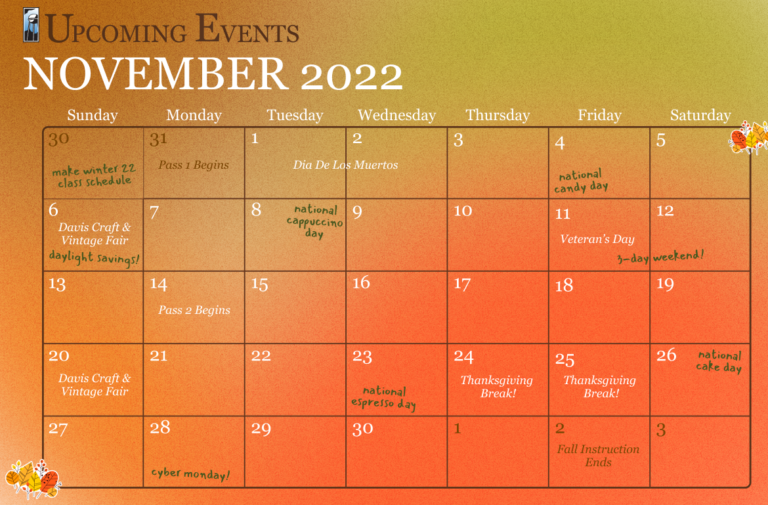
Upcoming Events in November

Poetry readings, concerts and more to usher in the colder months 

By CLARA FISCHER — arts@theaggie.org


Poetry Night (The Avid Reader, 6 – 7:30 p.m. on November 4) 

Support local artists and businesses by coming out to a poetry night at the Avid Reader on Nov. 4. The event will feature readings by four poets from the area as they share their most recent works. Getting to hear poetry straight from the source is an enriching experience, as you get to hear it performed with the emotional gravity that was intended. Learn more on the Avid Reader’s website.


Los Sindes Moon Wave Hook-Ups (The Motel, 7 p.m. on November 5)

KDVS, UC Davis’ student-run radio station, is hosting a concert on Nov. 5 that promises to be a fun night, featuring performances from local indie bands. Concert-goers are encouraged to wear their Halloween costumes, so show up and show your spirit! Doors will open at 6 p.m. and the music will start at 7 p.m. Find more details on KDVS’s Instagram.  


The Red Door Project: Evolve (Mondavi Center for the Performing Arts, 7:30 p.m. on November 11, 12 and 13)

Seeking to explore the relationship dynamics between law officers and BIPOC Americans, “The Red Door Project” is a powerful new performance experience that combines pre-recorded videos, live monologues and a Q&A session. At a time during which tensions surrounding social justice issues seem extremely high and political events are resulting in violence on our very campus, it is crucial to listen to the voices of underrepresented communities on these issues and be open to an informed conversation. As stated on the Red Door Project’s website, “[they] envision a society where our differences catalyze listening, learning, and thoughtful action.” Tickets for the event can be purchased here


Percussion Ensemble UC Davis (Ann E. Pitzer Center, 4 – 5 p.m. on November 18)

Join the UC Davis Percussion Ensemble for a free performance featuring assorted pieces. Hosted at the Ann E. Pitzer Center, the program will be led by Chris Froh, a UC Davis lecturer in music. Made up of students, the ensemble regularly “presents public performance of significant works for percussion ensemble,” according to their website


Written by: Clara Fischer — arts@theaggie.org


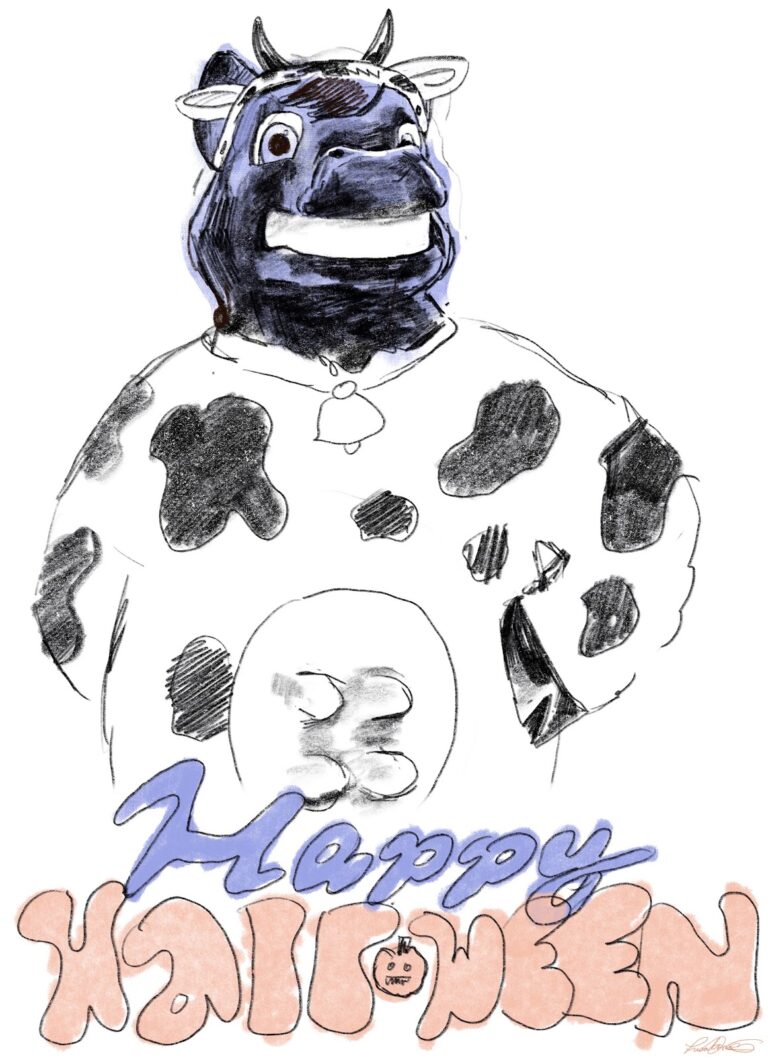
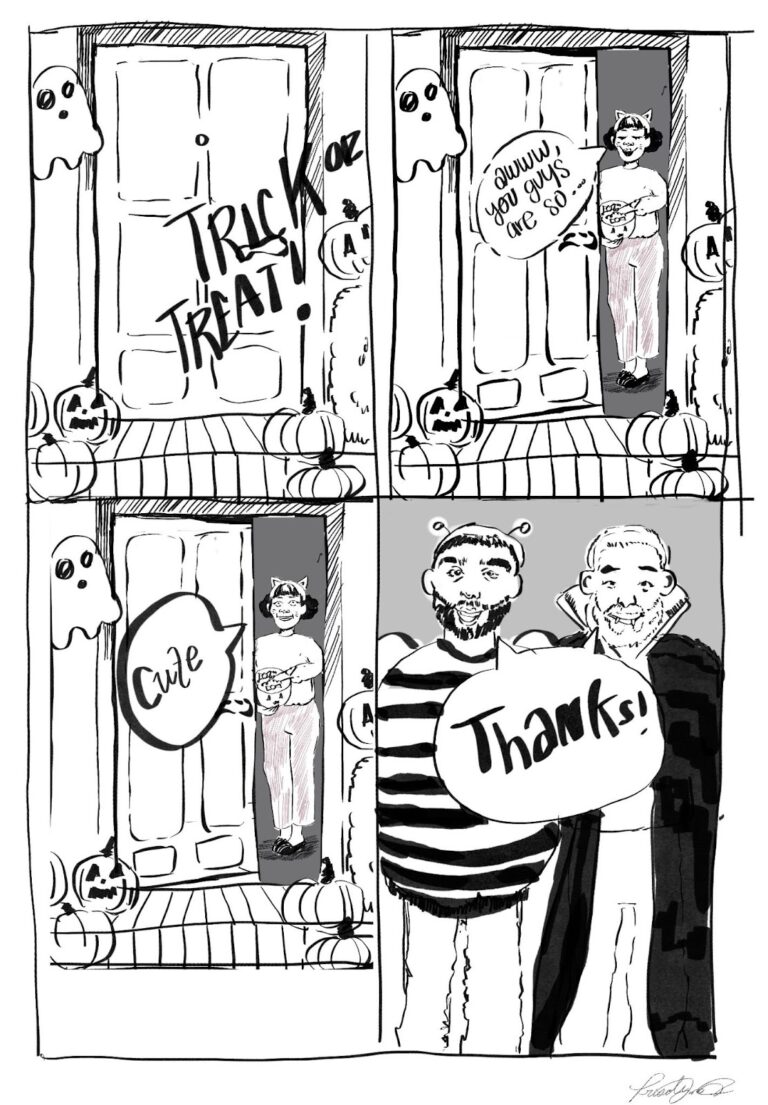
Happy Halloween

Drawn by: Priscila Jiménez Corrales –– pjimenez@ucdavis.edu 


Disclaimer: (This cartoon is humor and/or satire, and its content is purely fictional. The story and names of “sources” are fictionalized.)


UC Davis launches podcast

Transcribed from an audio file uploaded to the OChem subreddit

By ANNABEL MARSHALL — almarshall@ucdavis.edu 


Host: Hi, welcome back to the podcast. I’m your host, in my final year here at Davis as a third-year theater major! I’m here with my co-host, Stu. Stu, why don’t you introduce yourself?

Stu: Hi, I’m Stu.

Host: Anything else? No? Okay. Anyway, “To be, or not to be?” That is the question in my favorite play, “Hamlet.” But our question today is much more fun. We want to know what students are excited about this quarter. Of course, “there is nothing either good or bad, but thinking makes it so.”

Stu: Why are you talking like that?

Host: It’s “Hamlet,” Stu. I just said that.

Stu: We have a caller.

Host: A caller? Okay. Hi, caller. What are you excited about this quarter?

Caller: Hi, I’m Hope.

Host: Hi, Hope! I hope you’re having a fantastic day. Get it, Stu?

Stu: I don’t get it.

Caller: I found your number on 4chan. I’d like to order a hit.

Host: Oh, no, you have the wrong number. That’s not me. 

Caller: Are you not a theater major? Third-year? Always inserting Shakespeare into the conversation? Loves poison? 

Host: You have the wrong person. I definitely do not order hits, nor do I know what you’re talking about. 

Stu: “The lady doth protest too much, methinks.”

Host: Okay, now you know “Hamlet”? Really, Stu? 

Stu: I read it for you. I know it’s your favorite.

Host: Oh my God. Hope, what are you excited about this quarter?

Caller: Well, I was excited about this hit. Now, I guess there’s nothing to look forward to. 

Host: Okay, goodbye, Hope! That was fun. Also, do they usually have callers on podcasts? I thought that was a radio thing. Let’s not let those through anymore, Stu. Alright. Alright. We’re trying to keep it light, keep it fun. Stu, do you have an amusing anecdote for us?

Stu: Uh, I saw my TA at Chipotle.

Host: Okay. Go on, tell the story.

Stu: That’s the story.

Host: That’s not a story, Stu. That’s one sentence. A story has details.

Stu: He was wearing a blue shirt.

Host: Okay, moving on. It’s time for another sponsored message. Stu, where is the sponsored message? I wrote it down. 

Stu: I found a receipt for rat poison.

Host: Put that down. Ah, here it is. The ARC is offering—

Stu: The ARC?

Host: Yeah, Stu. The ARC. The ARC is offering new—

Stu: What’s the ARC?

Host: The ARC, Stu. You know what the ARC is. It’s the gym. 

Stu: There’s a gym? 

Host: Yes, we have a— Stu. Do you even go here?

Stu: No.

Host: What? Why are you on the podcast? 

Stu: I wanted us to be friends. I go to a school called Stanford. 

Host: You know what? We don’t have time for this. 

Stu: You should visit. It’s pretty famous. We can get frozen yo—

Host: The ARC Is offering new classes. Come try bungee jumping with your friends for only a $5 fee. You could be the first to survive!

Stu: Are you mad at me?

Host: No, Stu. We should stop doing this together, though. I think I’m going to move across state lines.


Written by: Annabel Marshall — almarshall@ucdavis.edu


Disclaimer: (This article is humor and/or satire, and its content is purely fictional. The story and the names of “sources” are fictionalized.)


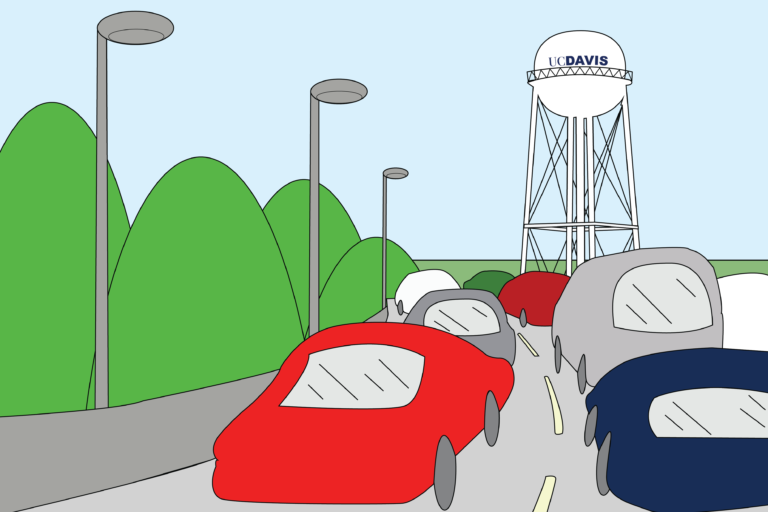
On my plate: College is the best time of your life because of its walkability   

0

Why we all benefit from communities that prioritize pedestrians over cars

By NADIA ANEES — nsanees@ucdavis.edu


When I reflect on what I’ll miss the most after graduating from college, what comes to mind is the word “closeness.” I’m living closer to my friends and peers than ever before. I can go just downstairs to ask my friend for some sugar to bake cookies. I bump into friends on the way to my design studio class. I am within walking distance of basically anything I need: the gym, campus, library, grocery stores, coffee shops, friends’ homes, scenic walking paths and more. 

Coming to UC Davis for college has been the first time in my entire life that I’ve felt a strong sense of place. As a senior, I definitely feel anxious considering post-grad life. I will, all of a sudden, be far away from the friends and spaces that have felt like home. This anxiety stems from the fact that, for me, college has been my very first exposure to living in a tight-knit, walkable community. 

A walkable city is a city designed to prioritize pedestrians over cars. This environment facilitates face-to-face interactions and forces us to really learn our surroundings. 

Having grown up in Sunnyvale, a large city in the San Francisco Bay Area that is heavily car-dependent, living near campus in Davis for the last few years has shown me the numerous benefits of walkable communities. I feel content having myriad options to choose from near UC Davis’ campus or in the city of Davis. I don’t feel so alone when I’m surrounded by my fellow students who are also going about their unique days. Not to mention my mental health is at its best while I’m in college because of my increased activity levels — there’s always somewhere to walk to and something to occupy my time.

In college, I feel less alone because I can always interact with people, either through club sports, ceramics classes, music, food, gardening or painting. But why does society in the U.S. seem to limit the natural desire for humans to connect with other humans to only four years of our lives?

It’s not our fault that so many U.S. cities are un-walkable. Since the 1900s, urban sprawl has led us to live car-dependent lives where it takes 15 minutes or more to get to the places we need to go. Grab-and-go items and mobile orders are preferred so that we don’t have to step foot inside a store or spend too long waiting. But really, our minds, bodies and souls benefit from the simple act of taking the time to walk around.

I have realized two things thanks to the pandemic: first, I hate spending most of my waking hours producing work so that the people at the top continue making billions, and second, I want to live a slower life. The pandemic has also shown some of us a glimpse of what it could look like when we stop prioritizing cars and open up streets and downtown areas for pedestrians to roam. Even in my suburban hometown of Sunnyvale, our small and faded downtown on Murphy Avenue gained back a lot of life as a result of the pandemic and has now become a busy hangout spot most weeknights. 

The popularity of living in places like New York City and San Francisco is a direct example of people’s desire for walkable communities. But these cities have become incredibly expensive and unaffordable. We should not have to move to big cities and pay $3,000 in rent each month to enjoy sidewalks and condensed urban planning.

In my mind, the solution is more public spaces for community gathering. We need free centers for art, dancing, reading and chatting with strangers. We need libraries to be bustling centers of town where people can relax and chat among one another. Essentially, we need more options for a “third place,” a term coined by sociologist Ray Oldenburg. The “third place” refers to places where people spend time between home (“first” place) and work (“second” place). They are locations where people can exchange ideas, have a good time and build relationships.

The desire for a walkable city really is a desire for something bigger — it’s a plea for collectivism, mutual aid and community cohesion. In a society that prioritizes working most hours of the day, walkable cities have the power to unite communities and create a sense of togetherness post-college.


Written by: Nadia Anees — nsanees@ucdavis.edu


Disclaimer: The views and opinions expressed by individual columnists belong to the columnists alone and do not necessarily indicate the views and opinions held by The California Aggie.


How to make friends during college

Making connections with your peers can be hard — here are my tips

By JENA TUFAIL — jjtufail@ucdavis.edu


College can be isolating when you haven’t made friends with your peers. Not only does everyone have different schedules, but at this stage in our lives, we as students have so many other priorities we need to take care of besides attending class, doing homework and hanging out with friends. 

As I have been at UC Davis for a little over a year now, I can tell you personally that it can be difficult to find a niche and people to hang out with on campus. Here are some of my tips for making friends during undergrad and staying connected.

My first recommendation is to meet other people in your major. At the beginning of the term, it can be quite easy to find one or two people in your classes with whom you can form a study group. It can be even easier when you have mandatory group projects in class. Then, by the time you have to register for classes for the following quarter, you can plan to take classes together again.

Meeting people on campus is also a great way to make friends. Spots such as Peet’s, the Silo and study areas on campus are popular meeting places. By studying in these places, you can find people who have breaks between classes at the same time as you and talk to them whenever you are free.

Going to shops downtown can also be a hub to meet people who share similar interests and hobbies. Not only is this a great way to unwind, but you can also potentially meet people you like. 

If you have any social media accounts, you can also follow mutuals at UC Davis. I personally know many people who have found friends by connecting with people online who have similar interests. Of course, it is always important to hang out in a public setting when meeting someone for the first time in person, but it can end up being a great way to make friends you are compatible with. Additionally, these friends are easy to stay connected with, both online and on campus.

When keeping your friendships alive, it is important to make time in your schedule for social activities. A lot of my friends and I plan to meet up and go out every week or two in order to catch up. This is a great time for me personally to destress, and it’s always nice to have something I can look forward to. 

Overall, it’s alright if you’re having trouble making friends during undergrad. Most people are in the same boat as you. Even if you’re entering your last years in Davis, it is still not too late to meet people, connect and make your time a little sweeter.


Written by: Jena Tufail — jjtufail@ucdavis.edu 


Disclaimer: The views and opinions expressed by individual columnists belong to the columnists alone and do not necessarily indicate the views and opinions held by The California Aggie.


Students need to feel safe to protest on campus

The university must do better to protect student protestors and condemn the presence of violent extremists

By THE EDITORIAL BOARD

On Oct. 25, UC Davis’s chapter of Turning Point USA, a right-wing nonprofit organization active on college campuses across the country, planned to host an event at the UC Davis Conference Center featuring speaker Stephen Davis. The event was canceled before Davis began his remarks, however, when a protest and counter-protest taking place outside became violent. 

Davis has written articles and given speeches for Turning Point USA perpetuating dangerous false narratives about multiple historically-marginalized groups. In his recent posts on Turning Point USA’s site, he has described systemic racism as “left in the past,” written a blog post titled “LGBT nation is coming for our children” that refers to sites like the It Gets Better Project as “corrupting” and denied trans people’s identities.

Students and members of UC Davis Cops Off Campus, an unregistered advocacy group, gathered outside of the event to express their outrage in response to Davis’s words and presence on campus. Counter-protestors, some of whom were identifiable as members of the Proud Boys, were also present, and some are reported to have pepper sprayed and physically assaulted students.

In a statement released on Oct. 25, UC Davis affirmed the right of students to invite speakers to campus, as well as the right of others to protest. The Editorial Board understands why the university chose to allow the event to take place and that it must uphold First Amendment rights as a public institution. That said, we stand against the misinformation that Stephen Davis spreads, and we encourage students to protest those who choose to share this kind of messaging.

Further, we believe that it is necessary for the university to make protesting on campus safe for students, and at this event, they did not do that. While the protest organized by Cops Off Campus was not entirely peaceful as some destruction of property took place, the violence escalated greatly when the counter-protestors arrived.

In addition to better protecting those protesting, we believe that UC Davis’s statement should have more clearly differentiated between the protestors and counter-protestors, and should have condemned the Proud Boys’ presence at the event. 

The Proud Boys are described as a “right-wing extremist group with a violent agenda” by the Anti-Defamation League, and its members are known to support white supremacist and antisemitic ideologies. These were not students exercising their freedom of speech; they were a group there to incite violence and disrupt the demonstration. The university should not have equated the Proud Boys with the students protesting.

We know Tuesday’s events were distressing for many, the members of the Editorial Board included, and we would like to express our support for students who may be feeling targeted or unsafe on campus as a result. We support ASUCD President Radhika Gawde and Internal Vice President JT Eden’s efforts to encourage a more effective university response. We affirm the right of students to be politically active on campus, and call upon the university to cultivate a safe environment for future protests.

Written by: The Editorial Board

Students and visitors with visual impairments are able to navigate the UC Davis’s campus with new Tactile Audio Campus Map 

The three-dimensional, interactive map allows users to explore the layout of various campus destinations with auditory guidance 

By KAYA DO-KHANH — campus@theaggie.org


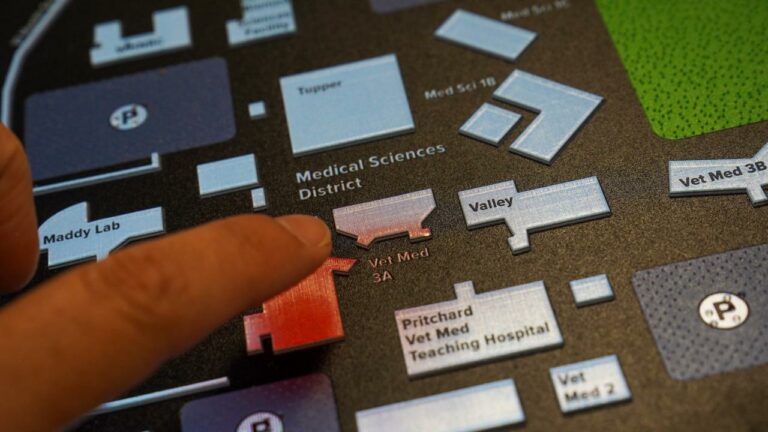
An interactive, audio-tactile map of the UC Davis campus is now available for use at the Memorial Union student drop-in center. The three-dimensional printed map was created for students and visitors with visual impairments to be able to explore buildings, roads and other campus destinations, according to a recent press release

On the left side of the map, there is an index of campus locations in both print and braille. When an item on the index is pressed, the route to the destination can be traced on the map by following lights and a tone that rises in pitch as the user’s touch gets closer to the destination.

The map is designed for multiple touch points as users can touch anywhere on the map with both hands to feel around the map. If a user lifts all of their fingers except for one off of a building, the map announces information about that building, including the name, a description of the destination and how to get there.

“The map adds an accessible feel [to] the campus and gives an innovative opportunity to interact with the information, creating a more inclusive experience,” creator and Accessible Technology Coordinator Joshua Hori said via email. “While it’s meant for blind and low vision students, it has audio captions which are helpful for neurodiverse students. Everyone who has had a chance to try it out has gravitated towards the technology.”

In 2018, Student Affairs offered grants to employees for innovative projects that could benefit the workplace. Hori, who was working at the Student Disability Center (SDC) at the time, applied, and received a grant for this project. He then teamed up with Professor Susan Verba in the Design department, who created a course in which design students and visually impaired students created the prototype of the map and tested out tactile patterns for it. Some of the research from the course is available at the SDC.

“The map was created under Joshua’s vision while he was working at the SDC and we’re very fortunate to have it,” Jennifer Billeci, the director of the SDC, said via email. “It adds important accessibility for many individuals with disabilities. Further, it expands the understanding of multiple modes of communication for those without a disability.”

On Oct. 12, the Tactile Audio Campus (TAC) Map was presented at the annual Disability Awareness Symposium, which was put on by the Disability Issues Administrative Advisory Committee and the Office of Diversity Equity and Inclusion. At the event, Touch Graphics, the company that created the prototype based on students’ design proposal, discussed its collaboration with UC Davis.

Billeci expressed hope that similar inter-department collaborations can take place at UC Davis in the future. 

“The SDC hopes to collaborate with other departments to design and implement new ways for students to interact with technology which is inclusive to the campus community,” Billeci said.


Written by: Kaya Do-Khanh — campus@theaggie.org
 

Open letter to Gary May about campus violence

By JOSHUA CLOVER — jclover@ucdavis.edu

Dear Gary,

I was not at the event at UC Davis on Tuesday night, but neither were you; nor were the police (or so you claimed in your first statement’s position, later revised to the exact opposite). I am sure we both have access to the same accounts. One difference, however, is that I have scholarly knowledge of such events and groups across multiple publications, the most recent being an introduction to Antifa: the Antifascist Handbook. I know that, as the president of our great university, you support the scholarship of its employees, so I hope — given the appalling outcome of the decisions you made and the troubling content of your statement, and given your interest in transparency — that you will prove able to offer illuminating answers to these questions.

Your statement insistently equates, on the one side, Turning Point USA and the Proud Boys, and on the other side, protestors, as involved in a sort of joint altercation in which both sides are at fault. Specifically, it raises the specter of “antifa” as some sort of complement to the ethnonationalists who scheduled the event. In main, my questions are related to this framing and this way of grasping the import of what happened.

  1. You no doubt recognize that history did not begin afresh on the morning of Oct. 25. Thus, all evaluations of the event ask us to understand the context and history. Let me direct your attention to the Southern Poverty Law Center (SPLC) article, titled “Turning Point USA’s blooming romance with the alt-right,” as well as the SPLC’s identification of Proud Boys as a hate group. I might also suggest you review the trial statements of Jason Kessler, organizer of the “Unite the Right” rally in Charlottesville, North Carolina and a member of the Proud Boys. You will note as well that SPLC does not recognize “antifa” or any related group, much less protestors of neofascism, as hate groups or as threats. Do you feel you had an adequate knowledge of the various parties involved in the event, so as to properly understand the dynamic and the risks?
  2. Do you understand that these two groupings did not arrive at campus through some mutual agreement, but that protestors felt ethically called to attend only after and because neofascists planned a rally that you approved in advance, under pretense of a “talk?” I might note, as you consider your answer, that, other than to oppose the threat of violent white nationalists, “antifa” have shown up in the United States a total of zero times.
  3. The events at UC Davis share a similar structure with the aforementioned “Unite the Right” rally, where neofascists, granted a permit by civic authorities to hold an event denying historic racism, threatened (and eventually both beat and killed) protestors as well as bystanders, some of whom defended themselves. In the aftermath and against evidence, Donald Trump offered a now-classic example of “both-sides-ism” and similar reference to “antifa” — despite the easily available facts that only one side arranged the event, espoused white supremacy and broader hatred, initiated the violence and did actual harm to humans. This is the same imbalance obtained at UC Davis on Tuesday, and yet your statement is redolent with both-sides-ism. Were you consciously appropriating Trump’s view, or is this simply the spontaneous ideology of apex administrators?
  4. According to the Washington Post, “Domestic terrorism incidents have soared to new highs in the United States, driven chiefly by white-supremacist, anti-Muslim and anti-government extremists on the far right.” All evidence from all quarters indicates that there is no comparison regarding the threat of violence from “both sides,” and indeed that there are not two sides when it comes to violence and killing; there is one, and it is the ethnonationalists. Do you feel that it is appropriate to provide support and comfort for that side by equating them with antiracist protestors and “antifa,” who, as of a 2020 study, have killed a grand total of zero people?
  5. Turning Point USA openly compiles a “Professor Watchlist” and uses it to orchestrate harassment and death threats against professors, per the Guardian. This includes faculty at UC Davis for whom you are responsible. As someone whose job is to protect and support professors, do you feel it is appropriate to defend such an organization’s right to be on a university campus? Could you please provide clear legal citation — beyond shouting “free speech!” — for why the University of California is obliged to host an organization that actively works to harass and threaten its employees?

I hope that you will be able to clarify these matters to the satisfaction of the people who were beaten and maced, and to the students, faculty, staff and community members you continue to put at risk via your historical ignorance and false equivalences.


Written by: Joshua Clover — jclover@ucdavis.edu


Joshua Clover is a Professor of English and Comparative Literature at UC Davis.


Disclaimer: The views and opinions expressed by individual columnists belong to the columnists alone and do not necessarily indicate the views and opinions held by The California Aggie.


Ask Annie: Thanksgiving edition

An inspiring advice column for students at UC Davis!

By ANNABEL MARSHALL — almarshall@ucdavis.edu 

Disclaimer: This article has been edited for content and clarity by our editor Owen Ruderman in order to ensure it follows the University of California, Davis’s Principles of Community.


Q: I’m really worried about my first quarter of organic chemistry. Any tips?

A: Owen, I know you’re there, you cheeky piece of [redacted]. Don’t even think about [judiciously and fairly editing] my [admirably passionate, albeit slightly indecorous] paper. This is my article, and I won’t have it censored by some absolute [person] who can’t tell the difference between his face and [As this part goes on for several pages, the editor has decided to cut this section from the article]. This is about freedom. This is about America. And I’ll let a bald eagle [redacted] my [redacted] before I have some [redacted] English major. 

The people are coming to me. Me. No one wants your stupid advice on prepositions, predicates and Oxford commas. And you better leave that [redacted] Oxford comma in, b[uttersco]tch. I am a warrior of the people. I am a god. I will come to your tiny, little office and decapitate your bobbleheads. I know where you live because I asked Sarah, and she thought I was dropping something off, but secretly I was planning because I’m going to [As this part goes on for several pages, the editor has again decided to cut this section from the article].


Q: Thanksgiving as an international student can be tough. How do I keep myself busy?

A: Have you considered starting an [online business of lucrative but appropriate nature]?


Q: I’m having trouble finding my TA’s office hours. Can you give me any tips?

A: I don’t know, [friend]. Why don’t you go to your [fascinating] classes and [finally] find out, you piece of [sunshine]. The only tip I’ll give you is the tip of my [hat] as I [regard] your mom in the [morning]. Get out of here with your [interesting] questions. This isn’t Gogglo [The editor assumes the author intended to write “Google,” a very common and relatively easy word to spell but out of respect for their writing, chose not to make an edit].


Q: This Thanksgiving is the first time I’m meeting my boyfriend’s parents, but they’re from a different political background. How do I make a good impression without sacrificing my values?

A: That’s a great question. Personally, I think it’s best to be yourself. You shouldn’t have to compromise your identity in any way. Also, try to keep an open mind! Unlike Owen, whose sole purpose in life is to crush the spirit of every person he meets until they want to take a rusty garden spade and [redacted]. Every human being deserves respect and a feeling of acceptance; Thanksgiving is the perfect time to give it a shot! Who knows? You might be surprised by how welcoming and sensitive people can be!


Q: What is the best frozen meal from Trader Joe’s?

A: Mac and cheese. [I agree.]


Written by: Annabel Marshall — almarshall@ucdavis.edu 

Disclaimer: (This article is humor and/or satire, and its content is purely fictional. The story and the names of “sources” are fictionalized.)

Cartoon: Trick-or-treating

Drawn by PRISCILA JIMÉNEZ CORRALES –– pjimenez@ucdavis.edu

Amanda Clark confirmed as new Judicial Council chairperson

Senate sees ASUCD confirmations, quarterly reports and new legislation at Oct. 20 meeting 

By SYDNEY AMESTOY — campus@theaggie.org


Vice President JT Eden called the meeting to order at 6:12 p.m., then read the land acknowledgment statement and called roll for the senators.

The first things on the meeting’s agenda were various nominations for members and chairs of a few ASUCD committees. 

The first was the confirmation of Amanda Clark, who was unanimously confirmed as the new Judicial Council chairperson. Clark, a second-year political science public service major, already had experience being a part of the Judicial Council, ASUCD’s judicial branch that provides checks on the Senate. Her confirmation process consisted of a lengthy panel of questions from a few senators about her experience on the council and her goals for the council as chairperson. 

“I interviewed Amanda when she applied for Judicial Council the first time, and I think she was the most qualified candidate we had in that interview cycle,” ASUCD President Radhika Gawde said of Clark. “We were really impressed by her.” 

The Disability Rights Advocacy Committee (DRAC) then confirmed its four nominees, all recommended by former ASUCD President and current DRAC Chairperson Ryan Manriquez, who was present virtually. All four were confirmed simultaneously through a unanimous motion. 

The Internal Affairs Commission (IAC) then unanimously confirmed four new members, out of order in the schedule due to one of the nominees not being able to attend until thirty minutes into the meeting. 

Mariah Padilla, a fourth-year community and regional development major and a previous member of the Student Sustainability Career Fair Commission (SSCF), was then unanimously confirmed as the new SSCF chair, which is now a paid position. 

Yoanna Soliman, a graduate student in the Chemistry department, was then unanimously elected chair of the STEM committee, which oversees student outreach and equity in STEM programs. Soliman was previously a member of the committee. 

The unanimous confirmation of a new Academic Affairs Commission chairperson finished out the confirmations for the night and was followed by a round of public comments. 

Senator Aarushi Raghunathan began a discussion about the controversy surrounding Turning Point USA’s coming to campus on October 25.

“[President Gawde and I] are meeting with AVC Atkinson on this issue, as well as campus council, to inquire about how they came to this decision, and why they didn’t come up with a different decision,” Eden said about the executive branch’s plans to discuss the on-campus event.

It was also brought to the attention of the Senate that the position of Vice Controller was still vacant.

Next on the agenda was quarterly reports from some ASUCD units, committees and commissions.

Mariah Padilla gave the SSCF quarterly report first. SSCF is in charge of running the sustainability fair on campus and seeks to provide equitable access for students interested in sustainability as part of its mission statement. According to Padilla, the SSCF’s past quarter has been marked by numerous social media and in-person events for students. They are planning to hold a fall sustainability networking event in November at the Student Community Center. 

ASUCD Dining Services, in charge of the market and restaurants in the CoHo, presented a 32% growth this past quarter in their quarterly report. The report also stated that Dining Service was experiencing the effects of shipping delays and a staffing shortage. 

The Bike Barn’s quarterly report was then given by fourth-year Yael Berrol, the unit’s business manager. Berrol reported that the Bike Barn is currently looking to hire three or four new mechanics and that they have had a reported $16,000 in rentals so far this year as of the meeting. 

The Office of External Affairs then gave its report to the Senate, emphasizing its work with the UC Student Association to enact local and state policy for all UC campuses.

The Senate then saw a presentation by members of The Green Initiative (TGIF) who proposed to reinstate a student fee that would allow the program to continue operations. TGIF, which helps students access grants for sustainability research, was previously funded by an $8 student fee that was recently overturned. The new proposed fee, which would start out at $3.50 a student and increase by $0.50 each year, ultimately capping at $8 in 2034, would need to be passed for the program to continue. This proposition is the basis of SB #18. 

The Senate then moved to new legislation and unanimously passed SB #19 and SB #20 along to the IAC for further review. 

Previously mentioned SB #18 was then brought up for discussion with much deliberation. It passed unanimously and will be present on the fall ballot.

SB #12 sought to instate a formal end time of 10:30 p.m. for Senate meetings in the bylaws. 

Senator Martinez Hernandez voted no on the bill, saying that it was possibly misleading to the public, as Senate meetings often go over the predicted end time on the agenda, and could be possibly detrimental to the Senate in getting things done on the agenda on time. Senator Raghunathan also spoke on the bill.

“Just because we are ahead of time tonight does not mean that will continue,” said Senator Raghunathan. “I am a teen girl who has to walk home at night, so I think there should be some protection to keep meetings from running into 2 a.m. like last year.” 

The bill went to vote after a move to unanimously pass it was objected to. The bill passed 9-2 but was vetoed by President Gawde.

SB #14 aims to clarify the role of injunctions from the Judicial Council after the Council recently injuncted a student-voted measure. The bill led to a serious discussion about the role that the judicial branch serves within ASUCD, and whether this bill would infringe upon that.  

“It is [the judicial branch’s] job to keep us in check, the executive branch’s job to keep them in check and our job to keep the executive office in check, so I think that while we can agree to disagree with [the judicial branch’s] actions, I don’t see it as our job to tell them what they can or can’t do,” Senator Schnelbach said on the topic.

Ultimately, the bill passed at 5-4-2, but was vetoed by President Gawde.

SB #17 seeks to help facilitate debate in Senate meetings by placing more explicit facilitation rules directly in the bylaws. After President Gawde explained the rules of debate to the Senate, the bill passed unanimously. 

A guide on the process of placing a student fee on the ballot was put on hold until the next meeting due to a number of senators being unfamiliar with the material in question.

During open forum, it was decided that the quarterly Town Hall meeting would be moved to week 6, with a location to be announced at a later date. 

With that, Vice President Eden adjourned the meeting at 10:48 p.m., slightly ahead of schedule. 


Written by: Sydney Amestoy — campus@theaggie.org