57.9 F
Davis

Davis, California

Monday, December 22, 2025
Home Blog Page 248

Looking back at Norm

Macdonald’s not going anywhere

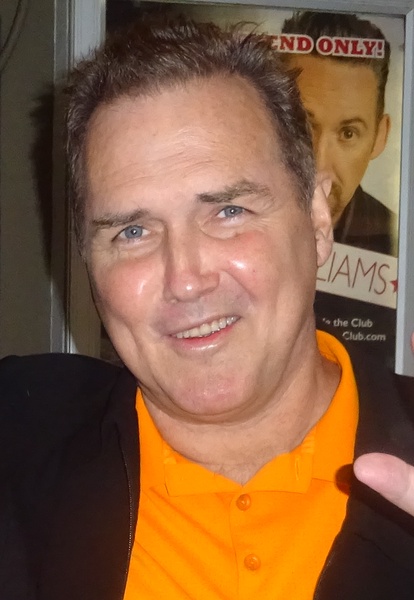
On September 14, Norm Macdonald died of leukemia, and the world of comedy was deprived of one of its most polarizing and stealthily intelligent members. Macdonald’s humor was as reserved and patient as it was quick, seeking to bewilder listeners with precise bluntness. He was singular: few other comedians are brave enough to intentionally bomb on television.

While he’s had a Netflix show and a robust, successful stand-up career, most still recognize him from his iconic tenure as the host of the Weekend Update segment on Saturday Night Live from 1993 to 1998. His unusually straightforward style charmed audiences, but he was sometimes embroiled in conflicts with the managerial elements of the show on account of his nonchalant attitude toward controversial topics. When he wasn’t calling Michael Jackson a “homosexual pedophile” or ribbing the Clintons, his trusty muse was O. J. Simpson, whose eleven-month double murder trial served as Macdonald’s succor and punching bag so reliably that by the end of his time on the show his mere mention could induce waves of nervous laughter from the audience.

Don Ohlmeyer, president of NBC’s West Coast division, removed Macdonald from the segment in 1998, his casus belli being a drop in ratings. Macdonald, however, has publicly attributed his termination to Ohlmeyer’s long-standing friendship with Simpson.

Macdonald had a string of other shows afterward, most notably an unexceptional three-season sitcom in the Seinfeldian vein titled “The Norm Show,” but it (along with the rest) saw abrupt cancellation. His 2018 Netflix show “Norm Macdonald Has a Show,” too, saw no renewal following his comments in support of Louis C.K. and Roseanne Barr.

It’s difficult to pick out a single moment that captures all the monotonic dexterity of Macdonald’s humor, but a serious contender would be this joke, delivered on “Late Night with Conan O’Brien,” told with such lengthy discipline it’s not hard to imagine him placing 20th in the 2007 World Series of Poker or writing a winding, skillful comedic quasi-novel like “Based on a True Story: A Memoir.”

Macdonald’s influence on modern comedy has been pronounced since his days with Saturday Night Live, but even with mobs of ameteur stand-ups aping his every move, nobody has been able to replicate the furtive allure that makes Norm Macdonald himself.

Written by: Jacob Anderson — arts@theaggie.org

2018 Camp Fire prompts ‘true experiment of nature’

Fertility, timing of birth and pregnancy loss observed in Rhesus macaques following exposure to wildfire smoke

The California National Primate Research Center (CNPRC) at UC Davis conducted a “unique case-control” study investigating birth outcomes in Rhesus macaques. This species’ breeding period was affected by the Camp Fire, according to a research paper published  in the journal of Reproductive Toxicology. 

    The U.S. Census Bureau has deemed the Camp Fire, originating in Butte County in Northern California, “the deadliest and most destructive wildfire in California History,” according to their website.  

    “My colleagues and I took advantage of two events that coincided,” Dr. Bill Lasley, professor emeritus of the Department of Population Health and Reproduction at UC Davis School of Veterinary Medicine said via email. “One event was the natural breeding season of the outdoor [Rhesus] macaque colony and the other event was the [Camp Fire wildfire].” 

    Smoke from the Camp Fire yielded poor air quality, affecting 500 mature female Rhesus macaques, or non-human primates, enclosed in an outdoor field at the CNPRC. This facility is located approximately 100 miles away from the origin of the fire, according to the paper. 

    “These two temporal events coupled with the unique properties of the nonhuman primate for modeling human reproduction was a coincidence that needed to be documented,” Lasley said. 

    Lasley said that this research was “a true ‘experiment of nature.’” 

    Wildfires produce organic and inorganic carbonaceous particulate matter, which are air pollutants, according to the paper. 

    “Many previous studies have shown that air pollution, including wildfires, threaten human pregnancies,” Lasley said. “However, we do not always know the mechanism of toxic effect or when, in gestation, this adverse effect takes place.”

    The objective of the study was to observe how fertility, timing of birth and pregnancy loss was affected in Rhesus macaques following the dissemination of wildfire smoke.  

    According to the paper, pregnancy loss is defined to be “no live birth after confirmation of pregnancy or delivery of products of conception.”

    Of the 500 mature females that were observed, 66 females were randomly selected to be a part of the 2018-2019 Camp Fire-Exposed Cohort, according to the paper. 

    “Given the acceleration of the climate crisis and the increasing threat of wildfires, this study underscores the need to address climate change and the potential need for pregnant women to take precautions in areas exposed to [wildfire smoke],” staff research associate at the Lasley Lab at the Center for Health and the Environment Nancy Gee said via email.  

    Gee said the results of the study showed a reduction in live births in the non-human primate model, and that these results can be applicable to humans. 

    “The [non-human primate] is the most applicable model for reproductive studies due to the similarities in reproductive pathways including pregnancy,” Gee said. “The results serve to inform and drive further research into the effect of [wildfire smoke] in pregnancy. This is especially important in the very early critical windows of development in early pregnancy when many women are not yet aware that they may be pregnant.”

    Lasley said that he hopes this research will inform the public. 

    “Hopefully it will serve to warn the public, especially pregnant women, about the potential danger of unneeded exposures to severe wildfire smoke,” Lasley said. 

    Many departments came together to collaborate on this project.

    “The study is an excellent example of harnessing the power of multiple resources available across the UC Davis campus including the CNPRC, School of Medicine and the Center for Health and the Environment at the John Muir Institute of the Environment,” Gee said. 

Written by: Aarya Gupta — science@theaggie.org  

UC Davis alumna opens micro-bakery inspired by her college experience

Deirdre Feeley reflects on how her time in Davis ultimately led to Driftwood Baking

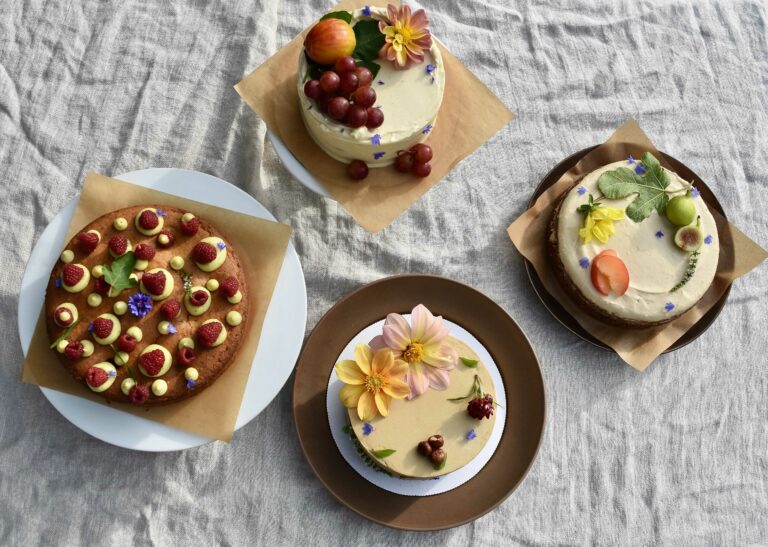
UC Davis alumna Deirdre Feeley wanted to be a pastry chef growing up, but like many people, pastry became more of a hobby as she grew older and her interest in plant science took precedence as a possible career path. However, during her time at UC Davis, her passion for pastry resurfaced, and she now operates her own micro-bakery in North Oakland, Driftwood Baking. Feeley attributes much of the success of Driftwood to her undergraduate experiences at UC Davis. 

During her time at Davis, Feeley lived in the co-operative Turtle House, where two of her roommates began an “underground supper club” in 2016. Feeley joined the club — called “Tortuga” — as the pastry chef when they were getting started and mostly cooking for friends, but she said that the club began to take off not long after.

“I joined on as a pastry chef and we developed menus together and hosted [meals],” Feeley said. “At first it was friends, but then it quickly turned into strangers and adults from the community who were coming and eating.”

Eventually, Tortuga became a monthly pop-up. Feeley and the founders, Larry and Kaia, began taking reservations and serving two seated dinners each month. Feeley said that this experience was pivotal in her decision to pursue a culinary career.

“It brought back my passion for pastry,” Feeley said. “I feel like that moment and that project re-unlocked pastry for me, and I just decided to try it.” 

During the summer of 2016, while Feeley was still living at Turtle House, she began baking croissants out of her home kitchen. Croissants are Feeley’s favorite food, but she said she could not find  quality croissants when she moved to Davis, so she decided to make and sell her own. 

“That’s when Driftwood first came into fruition,” Feeley said. “That was super tiny. I was putting out as many croissants as I could make on the weekends and taking pre-orders. I was selling like 40 croissants a weekend. It was at a very tiny scale.”

When fall quarter began, Driftwood was put on the back burner. Feeley refocused on her plant science studies, internship at UC Davis’s student farm and work at a viticulture lab on campus. It was at that lab that she met a mentor — Professor Alan Tenscher — who inspired her to follow her dream to become a chef. 

“He called it ‘killing the dream,’” Feeley said. “He said if you have a dream, you either […] chase it down and it becomes a reality, or you put it to bed and decide that it’s not your dream anymore and it’s not what you want to be doing.”

Feeley was approaching the end of her time at Davis and was not sure whether she wanted to begin looking for jobs in plant science. She still felt drawn to pastry, but was not sure if it was a feasible career path.

“I was currently studying plant biology, working in a viticulture lab — I was on [that] track,” Feeley said. “This pastry thing was a passion that had come up, not related to anything I was doing and [Tenscher] said, ‘you either chase your dream [in pastry] and then you come back to plant science, or that dream becomes what you’re doing.”

Feeley decided to take Tenscher’s advice, and upon finishing her undergraduate degree in 2018, she began working in pastry at Tartine Bakery in San Francisco before getting another position at Acme Bakery. When the COVID-19 pandemic began in March of 2020, she felt lucky to keep her job at Acme Bakery, where she was working in recipe development, but she wanted to make a change in her career trajectory.

Many of Feeley’s industry friends had lost their jobs when COVID-19 closures shut down their bakeries and restaurants, prompting them to open independent “pop-ups” serving their own food. Seeing this, Feeley was inspired to leave the corporate kitchen and pursue a pop-up herself.

An independent micro-bakery “aligned well with where I was feeling professionally because I was feeling without opportunities to express myself creatively,” Feeley said. “I wasn’t in a position where I was chef, so I didn’t have a lot of creative say. I was doing recipe development, so I was having more creative expression than others, but not enough for me.”

Feeley re-opened Driftwood Baking in December 2020, offering a menu of holiday-themed cookies and candy boxes. Since then, she has been hosting monthly pop-ups featuring new pastry menus each month, as well as taking custom cake orders. She operates this micro-bakery out of her home oven, and creates four to seven new recipes monthly. 

“I view this as a creative outlet and a creative project more than just a bakery or a means to an income,” Feeley said. “I really enjoy getting to continuously create new recipes.”

Despite the success of Driftwood over the past nine months, Feeley is not looking to expand. She recently moved to Los Angeles and is pursuing a career outside of the kitchen, as she does not want to rely on it for income. 

Feeley said that restaraunt kitchen culture can be full of anger and violence, including sexual harassment, and that in corporate kitchens, she has found that such toxicity commonly goes unchecked. But Feeley says that’s not the case at Driftwood. 

“It’s a little precious thing that I don’t want to be compromised,” Feeley said. “I don’t want to have to try to rely on it for my income because then I don’t want to be pushing production first. I want it to just be a creative project where I have another income and then I’m able to let the products shine.”

Despite Driftwood being a “hobby” for Feeley, it is a time-consuming production. She said that the two weeks before pop-up menus go live, she spends the majority of her time preparing recipes. Sometimes, recipes can be perfected in just three iterations, but others she ends up testing more than six times before she is content. Generally, she spends one week brainstorming recipe ideas and researching ingredients, and another week perfecting cook time, measurements and ingredients. 

As for recipe creation, Feeley is inspired by the seasons and what she learned about seasonal produce working at the student farm at UC Davis.

“I let my creativity lead,” Feeley said. “I draw a ton of inspiration from my time at Davis. [My] experience really honed my love of nature and my appreciation of how the seasons ebb and flow and how nature really provides for us. Every different season a new fruit is coming in. In the winter it gets cold, but then there are oranges that are full of bright juice. I really tried to emulate sentiments in my desserts [and] highlight the season at that moment and its beauty.”

She also prioritizes sourcing local ingredients for her recipes, both to lessen her environmental footprint and maintain the quality of her food.

“Even if you don’t focus on ‘sustainability,’ I think it’s important to emphasize the fact that these methods just lead to better food,” Feeley said. “Sustainability is appealing beyond environmental impact and social impact because when you eat local and when you eat well-grown food, you can taste it.”

Feeley sources hyper-local produce from California and neighboring states and does not use products grown with heavy pesticides. She also prioritizes working with farms that pay living wages to their staff and foster healthy working environments.

Currently, Feeley is preparing for her October pop-up, for which she is brainstorming a pastry menu that captures the current season — the transition from summer to fall. One ingredient she feels captures this essence is fresh pears. 

“I love pears and chocolate, but for me personally, it feels too warm for chocolate,” Feeley said. “I view chocolate as very heavy in that it warms me up in the winter, so I would turn to something lighter like almonds. Almond frangipane goes really nicely with pear so maybe I would do those together and kind of play on this early autumn, late summer flux point where warm spices are welcome, but we still want a little bit of juicy brightness from the summer.” 

For information on the date and location of Feeley’s October pop-up, which will be in North Oakland, as well as for custom cake orders, visit Driftwood’s website or follow the bakery on Instagram

Written by: Katie DeBenedetti — features@theaggie.org

Editor’s Note: Future Driftwood Baking pop-ups will take place in Los Angeles. Refer to their website for the latest information.

Correction: An earlier version of this article incorrectly identified Feeley’s statement about kitchen toxicity. The article has been updated to correct the error.

Too rich to handle?

0

NBA Superagent Rich Paul’s rise through the ranks has many people wondering if it is good for the league — but it is nothing new

National Basketball Association (NBA) agent and founder of Klutch Sports Group agency Rich Paul’s rise through the ranks is a story that is unlike many others. He went from selling vintage jerseys from the trunk of his car to having one of the biggest agencies not only in basketball, but across many different sports. After befriending Los Angeles Lakers superstar LeBron James in a chance meeting at the airport almost 20 years ago, his relationship only grew from there, and he has managed to build an empire. 

His story is more of what you’d see in a movie, but despite his story-like rise, his influence, voice and power in the NBA now has some wondering whether it is affecting the game negatively. 

Since the start of Klutch Sports nine years ago, Paul has represented some of the greatest players in the NBA like James, Anthony Davis, Trae Young and many others. He is now one of the major competitors of Creative Artists Agency (CAA), and his name has stayed in the headlines over recent seasons. The main thing that started to put Paul’s name in the headlines was when then-New Orleans Pelicans all-star Anthony Davis requested a trade in 2019. After Davis signed with the agency in 2018, his unrest with the Pelicans eventually led to his request. This differed from prior requests, as Paul told ESPN’s Adrian Wojnarowski.

“Anthony wants to be traded to a team that allows him a chance to win consistently and compete for a championship,” Paul said. “Anthony wanted to be honest and clear with his intentions and that’s the reason for informing them of this decision now. That’s in the best interests of both Anthony’s and the organization’s future.”

While this may seem like a normal request, Davis was fined $50,000 by the league and his list of teams also raised some eyebrows. Placing the Lakers at the top of his destination list, the Klutch connection and close friendship of LeBron and Paul had some thinking there was some sort of collusion between both sides and the best interests were not at the front of the agency’s mind. 

“We cannot have players and agents colluding to stack super teams,” NBA Hall of Famer Charles Barkley said. “We can’t have players dictating who is going to play together. Guys are sharing agents and stacking teams. That ain’t right.”

Davis eventually got his wish and landed in LA, winning his first championship in his first season. But many were left with a sour taste in their mouth, wondering if Paul’s connection with James was much more than just agent-to-player relationship. 

Fast forward to the present day, people’s questions have been raised even more. In early September, NBA player and former Klutch member Nerlens Noel filed a lawsuit against the agency, claiming losses of over $58 million were due to Paul and his agency’s failure to let Noel know of team’s interests. Among many other things, the lawsuit claims that Noel was convinced by Paul to turn down a $72 million contract from the Dallas Mavericks in 2017, leave his agent and join Paul at Klutch. He did that and took a $4.2 million offer instead to try and bet on himself for a bigger payday. 

The payday never came. While if true Paul could have violated some NBA rules, this is not the first time something like this has happened. Players Victor Oladipo and Robert Covington have undergone similar situations in the past and it worked out the same. The truth is, these situations are a risk and when some player’s decide to roll the dice, it could come out empty. 

“The truth is Nerlens is not innocent in this,” an agent told Bleacher Report. “If you’re silly enough to turn down that kind of money, that’s not on Rich.”

The accusations of collusion are not new, and other agents have anonymously felt the same. Whether validated or not, many do not like the connection between Paul and his superstar companion — even going as far as saying Paul is not the one in charge of his agency.

“The worst thing that LeBron is doing is forcing this power with Rich Paul and what that is, in terms of, he’s a player, but he has prowess in the media space,” an anonymous NBA agent told Ben Standig and Mike Vorkunov of The Athletic. “But now that they’ve jumped into the agent game, which the reality is, it’s illegal for a player, particularly if you’re in the state of California, to be licensed to represent talent.”

Accusations may be coming from an emotional standpoint, not a logical one. The fact of the matter is that NBA superagents have long been a staple of the league. Back when Michael Jordan was winning championships, his agent David Falk held similar power to the one Paul has now. Even then, Falk may have had even more of a stranglehold on the league — with some even saying he was the second most powerful man in basketball behind the commissioner. He facilitated moves of many superstar players at the time and also got similar hate and dislike from others around the league — just like Paul. 

Superagents are not anything new and not just in the NBA. Looking around at every major league, there are people that are the same. The difference between them and Rich Paul, however, is Paul’s connection. Because of his link to LeBron James, there comes this extra attention. While agents are usually in the dark and not known, the casual NBA fan has heard about Rich Paul — and that is due to his link to the superstar. 

To put it simply, whenever there is something that has a connection to LeBron James, it is going to be blown up.

“I heard what Charles [Barkley] said about Klutch and you want to root for him and make Klutch into the ‘bad guy’ but, come on, you know this has been happening in the NBA for decades now,” one general manager told Heavy. “This isn’t new. They were very, very clumsy about the Davis trade, it all looked bad. But that was just bad optics. It was nothing new. It is a story that has happened 1,000 times and will happen 1,000 more. But it was LeBron, it was the Lakers, so it got blown up.”

The player empowerment movement has been felt the most in basketball and over the years, the NBA teams and executives have tried to do things to limit that. However, it might be something that is here to stay. 

Whether it’s the current Ben Simmons saga ongoing this offseason or the countless other examples that arise every year, it’s just the current reality of sports. There is no evidence of “collusion” and it seems as though these claims are baseless and not facts. NBA agents having power is not anything new — nor will it ever be. 

The current reality of the game is one of newfound power and taking control of their own careers. Besides, at the end of the day agents work for their clients — not the other way around.
Written by: Omar Navarro — sports@theaggie.org

Guide to submitting guest opinion columns, cartoons

Students, professors and community members can send their pieces to opinion@theaggie.org

My name is Eden Winniford, and I’m the editor for The California Aggie’s opinion and humor desks this year. The opinion desk not only gives student columnists, humorists and cartoonists the opportunity to share their thoughts with the campus community weekly, but it also gives members of the wider Davis community the opportunity to publish guest opinion columns and cartoons. Guest columns can be responses to previous pieces the opinion desk has published, including other guest columns, or they can be about entirely new subjects. 

To submit a guest column, anyone can email opinion@theaggie.org a copy of their full piece, which can be as short as a paragraph but no longer than a page in length. I would lightly edit the piece for grammar and clarity, and then I would email it back to the sender for their approval before publishing it. As long as a piece is factual, respectful and relevant to the Davis community, it will likely be published, although it is up to editorial discretion. 

The Opinion Desk also accepts guest cartoon submissions, which can be humorous or political in nature. If you have an artistic flair and think it would be neat to see your work published, then I highly encourage you to consider sending in a cartoon. It can be one to four panels and can contain as much or as little text as you’d like. Above all, it is vital that any cartoons submitted are respectful of any people or things that they depict. 

Guest submissions are incredibly important to the opinion desk and The Aggie as a whole since they offer different perspectives that might not be represented in our newsroom. Our yearly Diversity Report makes it clear that some groups are overrepresented in our newsroom while others are underrepresented, and The Aggie is committed to increasing staff diversity. 

We have taken and will continue to take steps to address this imbalance — we hired an outreach director, have committed to publishing annual diversity reports and are transitioning from stipended positions to positions with hourly wages, which is important since hourly pay will allow staffers to be compensated more appropriately. And in the short term, publishing guest columns from a wide range of voices is another way The Aggie can best serve UC Davis’ diverse community.

Written by: Eden Winniford — opinion@theaggie.org

The Editorial Board shares why we’re glad to be back

It’s the little things

Anjini Venugopal, Editor-in-Chief

In what may come as a shock to the biking community here in Davis, I’ve always been more of a walking gal. Even in the heyday of my biking, there would regularly be days on which I’d choose to make the trek from Giedt Hall to Young Hall on foot instead. I’m no Olympic speed walker, but Google Maps claims it takes 14 minutes and I can get there in under 10. On some days, my walks are more of a trudge than a stroll, but I’ve missed the feeling of hauling myself and my trusty tote bags from point A to point B, waving to friends hurtling by on their bikes and sipping some CoHo cold brew on my way.

Margo Rosenbaum, Managing Editor

After a year and a half of online instruction, I’m so excited to be back on campus. As UC Davis students, we’re lucky that our school has some truly incredible natural spaces. Some of my favorite moments so far in college have been spent outdoors, whether it’s having a picnic with a friend in the Arboretum, visiting the baby animals at the various animal science barns, walking through the Redwood Grove or just taking a quick nap in the grass outside the MU. I’ve missed these outdoor spaces, and I’m so glad I can spend my last year at Davis soaking up the sun on this beautiful, nature-filled campus. 

Sophie Dewees, Campus News Editor

While I was able to continue many of my activities online last year, choir wasn’t something that could be sufficiently replaced by any digital platform. Singing on Zoom with your microphone muted, unable to hear anyone but yourself seems antithetical to the true purpose of choir — creating music with others. I have spent more than half of my life sight-reading and harmonizing with other singers, and last year was the first in the past 10 that I was unable to attend an in-person rehearsal. This fall, I’m so excited to once again sing with other students who don’t mind standing for hours repeating intricate lines of music because they are just as passionate as I am about joining together in song.

Maddie Payne, City News Editor

Davis in October is how I imagined college in fall to feel like. The warm afternoons start to develop a slight chill as Halloween creeps closer, campus is bustling with students settling back into their class schedules and the gorgeous trees that line the Quad and bike paths slowly mature into their autumn colors. For me, the onset of fall is most noticeable as I’m biking to lecture in the early evening, when the late light trickles through the oak leaves and casts a beautiful glow on the whole campus, and it reminds me just how grateful I am to be spending this year in person.  

Eden Winniford, Opinion Editor

I love spending my breaks between classes exploring campus and finding new favorite spots to study, hang out and take naps. I’m always on the hunt for the calmest study rooms and most interesting gardens. Even when I’m not looking for anything in particular, it’s fun just wandering through random buildings and scouting out what students in different departments are working on, from sculptures and paintings in the Art Building to playable video game demos in the C.N. Gorman Museum. And best of all is showing these secret spots to my friends, who always get a kick out of seeing whatever new place I’ve discovered that week. 

Katie DeBenedetti, Features Editor

During the pandemic, it became a part of my daily routine to walk through the Arboretum and sit down on the empty Quad, one of the things I missed most not being on campus for classes. I remember thinking that things would feel “back to normal” when the Quad was full of the groups of people lounging between classes, tossing a frisbee back and forth or napping in the hammocks like I was accustomed to seeing pre-pandemic. Coming onto campus on the first day of classes last week, things might not have felt normal, but the Quad was full of students catching up and killing time between classes, which made sitting down on the grass after a long day feel pretty close.

Allie Bailey, Arts and Culture Editor

There are a lot of reasons to love Davis and being back in person again, but I think what I’ve missed most is the simple joy of running into people. Whether it’s a quick wave as you cross paths in a bike circle or an impromptu study date turned hour-long catch-up, interacting with people face to face can be the difference between a hard day and a great one. I so look forward to seeing familiar faces, and to seeing new faces that aren’t yet familiar, but soon will be.

Omar Navarro, Sports Editor

In what might be shocking to hear (it’s not), my absolute favorite thing about being back in Davis is something as simple as being able to get back to sporting events. While in remote instruction, we were barred from attending these games so having the opportunity to be back is something I don’t take for granted. Whether it is a football, soccer or volleyball game, they are some of the best environments to go to even if you aren’t a big fan. The feeling of walking into a stadium or arena and getting the sense of excitement for the game to be played is what I missed the most about being back in Davis. 

Michelle Wong, Science Editor

Whether I’ve had a hard day or just need a fresh start, the view of the sunrise from Hutchinson Parking Lot never disappoints. The worries of tomorrow seem to disappear into a gradient of grey, pink and orange as I soak in the morning air. This phenomenon happens gradually and then all at once — just when you think the sun has fully risen and morning has come, you are engulfed by a warm glow that illuminates the entire sky. But above all, nothing beats enjoying a beautiful view with people you care about. 

Written by: The Editorial Board

Men’s soccer kicks off conference play

0

The UC Davis Men’s Soccer team looks to repeat as conference champions after long layoff

After a layoff of almost two years, the UC Davis Men’s soccer team will look to defend their Big West Conference crown. Winning both the regular season and tournament title, the Aggies’ taste of NCAA Tournament play in 2019 has left them on a mission to repeat. With both veteran and young presence at each position, UC Davis is ready for whatever the tough Big West Conference may throw at them.

Since the cancellation of fall sports by the Big West Conference in 2020 included soccer, the Aggies were unable to suit up last year due to COVID-19. Itching to get back on the field, the team got their chance to return against the #9 ranked Washington Huskies after two exhibition games. The hard-fought battle against the highly ranked Huskies went back and forth but unfortunately for UC Davis, they fell in double overtime. 

After another loss to Seattle University a couple days later, the Aggies traveled back home for their home opener against Gonzaga. In this game, UC Davis was unable to find the back of the net and fell victim to a late goal once again that sunk them, starting off their season with three straight losses. The rough start to the season only continued, as the team traveled south to San Jose State and gave up five goals in a 2-5 loss. Just a couple of days after the team traveled to San Diego, they suffered their fifth straight loss against the red-hot San Diego State team.

Despite the five straight losses to start the season, the team wasn’t too worried. The class of opponents they played in their non-conference schedule were high, and following a long layoff like the one they endured, they knew that they could improve from it. 

“We played at the University of Washington to open the season and they’re 7-0,” head coach Dwayne Schaffer said. “We gave them everything they could handle, but unfortunately it didn’t go our way. We played at San Diego State — which is another Pac-12 associate member — and they’re ranked in the top 20 in the country. I feel really good about our team.”

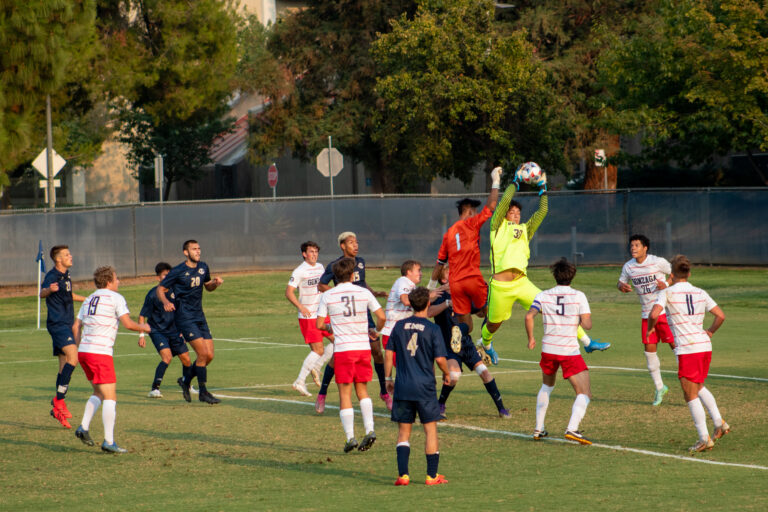
The tough start didn’t deter the mindset of the team as shown in their last four games since then. A win at the University of San Diego by a score of 3-0 gave the Aggies their first win of the year. Having had all of those games on the road, the return to Davis was a welcome one for the team, as they went on a tear throughout their three game non-conference home stretch. Hosting Saint Mary’s they shut them out as well by the same score of 3-0 following a brace by sophomore midfielder Max Arfsten — who has six goals in nine games played thus far. Almost a week later, the Aggies had a scoring flurry again as they beat the University of San Francisco 4-1 and later on that week closed off their non-conference schedule with a 1-0 thriller against University of Pacific. 

“Unfortunately the results didn’t go our way in the first five games but now they are,” Schaffer said after the win against Pacific. “It’s all because their effort and attitude is incredible in getting better. We also have a ton of talent and we got a great group of senior veteran players in the group that are improving daily.”

Closing out non conference play with four straight wins was exactly what the team needed as they entered Big West Conference play. In the preseason poll, the Aggies were tied as favorites with the always great UC Santa Barbara Gauchos. In their opening game, the team will travel to La Jolla and take on new Big West member UC San Diego on Sept. 29. In their conference home opener, the Aggies will take on none other than the Gauchos in an early season clash on Oct. 2 at Aggie Soccer Field. UC Davis beat out Santa Barbara in Davis in the 2019 Big West Tournament Championship game and in their first matchup since, the two are bound to deliver again.

On Oct. 6, the team’s homestand continues as they host UC Riverside before they go on a quick two game road trip to Southern California to play a 2019 Big West Tournament rematch against Cal State Fullerton and against UC Irvine — two teams also ranked highly in the conference. After a home game on Oct.17 against Cal State Northridge, the Aggies will travel to Bakersfield and San Luis Obispo before they close out Big West Conference play at Aggie Soccer Field in the Causeway Classic on Oct. 30 versus Sacramento State. 

“I don’t think there’s one key ingredient [to win the conference again],” Schaffer said. “I think we have some great players that are getting better and better. These guys didn’t play a real meaningful game for almost two years, so we’re just starting to come around where we should’ve been at the beginning of the year.”

After such a long layoff due to the pandemic, the Aggies seem to have found their groove that won them the Big West once again. With players on all lines having experience and a lot of talent in all facets of the game, UC Davis is prepared to compete once again and with the start of classes, the fans at Aggie Soccer Field may be the extra juice that the team needs in order to repeat again. 

“It’s awesome that our crowds are starting to get bigger,” Schaffer added. “As I just told our student-athletes, if you perform well, people will want to come and watch you. Our supporters are starting to come back into the mix which I think is cool. I thank all the Aggie soccer supporters for coming and supporting us.”

Written by: Omar Navarro — sports@theaggie.org

Discord creates new hub feature inspired by student-made UC Davis Discord Directory

A new feature called “Discord Student Hubs” serves as a place to find and add servers to connect with classmates at your school

Discord, an instant messaging system characterized by small chat rooms or servers, is rolling out a new feature known as Discord Student Hubs. This update was inspired in part by the Discord UCD Club/Server Directory, a creation by a UC Davis student.

Samuel Petruescu, a fifth-year applied physics major, created the directory on Discord in 2019 as a way to have a common location for links to join UC Davis-related servers for clubs and courses. Today, thousands of students have joined the directory.

“I wasn’t expecting it to grow this much, but I just started by adding servers I already had and starting telling students about this server I made,” Petruescu said via Discord. “Before I knew it, people from Reddit and other servers started joining, and it just kind of grew. Another big factor was orientation last year being online and students getting the link from each other.”

The server includes separate sections for announcements, university programs and resources, official UC Davis-affiliated clubs, dorm hall-specific servers and more. 

Petruescu went on to explain that a UC Davis ambassador from Discord reached out to him saying they were impressed with the directory and wanted to model a new feature after it. Petruescu answered their questions, and they began developing the Hubs feature.

According to the Discord Student Hubs FAQ page, the feature is meant to serve as “a place for students to meet classmates from their school.” Similarly to the UC Davis directory, Discord Student Hubs lists servers added by students for different communities and courses and is not officially affiliated with or managed by schools. However, in order to enforce the university community aspect, each hub can only be accessed by users with an email address associated with their school.

The Student Hubs do not include university programs, and any student can list a server, so there’s no separation between official clubs and communities.

“Students will be able to find other classmates that have joined the hub, add their servers to the hub, and find their classmates’ servers, all in one place,” the Student Hubs FAQ page says.

Petruescu talked about how access to a resource like the UC Davis Directory has helped students to connect, especially during the year of online schooling. 

“I’ve gotten a lot of DMs from students explaining how much the directory has helped them meet new people and not have to stress so much about joining clubs or communities or handling courses throughout the pandemic, which has been a big motivator for keeping the directory as well,” Petruescu said. “I think it serves both as a tool and as a symbol that the UC Davis community is resilient throughout, and that we as a community are built and dedicated to helping each other grow, which I hope the directory helps to enable.”

Isabelle Carrel, a third-year cognitive science major, detailed how Discord has enabled her to make connections in the UC Davis community. 

“[A] few of the clubs I’m in have online Discords, and that’s been incredibly useful for helping people connect during the pandemic,” she said via Discord.

According to Carrel, she had gone to a few meetings of a club called Side C before the pandemic but wasn’t very active in the organization. During the pandemic, she was able to find the club again through the directory and become more involved. 

As UC Davis transitions back to in-person classes, students will be able to interact with their classmates in real life, rather than solely through digital platforms, but Petruescu believes that the server will continue to be useful as a resource and tool.

“Even if it isn’t used as much, that’s okay,” Petruescu said. “I’ll still keep it maintained in case it can help just one more student… I’m definitely not complaining but it was quite difficult to maintain at times with my class schedules, but I’d still do it all over again even if it meant just helping a handful of students.”

Written by: Sonora Slater — science@theaggie.org

Editor’s note: The headline previously stated that Discord Hub was created by a UC Davis student, when the new feature was instead inspired by UC Davis Discord Directory. The headline has been updated to correct the error.

Culture Corner

The Arts Desk’s weekly picks for television, movies, books and music

Music: “MTV Unplugged in New York” by Nirvana (1994)

After I stumbled upon a showing of this performance at the Museum of Pop Culture in Seattle this summer, followed by the stellar Nirvana exhibit around the corner, I immediately had this live album on repeat. The set includes both hits and lesser-known tracks, with a particularly sandpapery sound from Cobain on the live recording. The intimate performance comes through on the album, with snippets of the band’s comments lingering at the end of songs and blending into the following track — it’s worth listening to in order. Some standouts are “Dumb,” which I prefer to the original recording, and “Polly,” but their iconic cover of David Bowie’s “The Man Who Sold The World” takes the cake — I wouldn’t be surprised if it ends up at the top of my Spotify Wrapped this year. 

Book: “Daisy Jones & The Six” by Taylor Jenkins Reid

Told in the format of interviews with members and friends of a fictional ‘70s rock band, “Daisy Jones & The Six” is one of the most captivating stories I’ve read, thanks to the intimate nature of the first-person tellings of the group’s history. The famous rock stars’ accounts, often contradicting each other due to ego, drugs or both, tell the story of the world-renowned band, Daisy Jones & The Six, with a focus on the complicated relationship of Daisy Jones and Billy Dunne, the band’s main songwriters and vocalists. The trials and tribulations of sex, drugs, love and rock and roll take you on an exciting yet heartbreaking ride where, in typical rockstar fashion, the highs are high and the lows are low. A twist at the end leaves you wanting to reread the story with a new perspective — but it shouldn’t take too long, since this one’s tough to put down. 

Movie: “Roadrunner: A Film About Anthony Bourdain” dir. by Morgan Neville (2021)

I think what made this film so good — other than Bourdain’s charm and the honest, enamored accounts of his life by friends and colleagues — was the pure quantity of footage we got to see of the beloved chef-turned-author-turned-TV-show-host. The movie starts with clips of Bourdain in his apartment, talking with his wife or at his restaurant, complaining about his fish delivery being late. He was filmed before his rise to stardom, and these moments humanized him, giving us a starting point from which to analyze the rest of his brilliant life. Much more of the footage, of course, came from outtakes or other filming related to the two TV shows he went on to host, which, while retaining his authentic character, developed into an on-screen persona we got to know, mainly on “No Reservations” and “Parts Unknown.” “Roadrunner” stripped some of that back, revealing who he was and why, or at least as much as his friends and the camera could capture about his curious, complex love of life.  

TV Show: “The Chair” 

This Netflix limited series follows the newly appointed chair (played by Sandra Oh) of a dwindling English department at an esteemed liberal arts college. Oh’s character comes on with goals of modernizing and reinventing the department, only to be faced with firing tenured professors, an unhinged colleague and old white men dictating her new role, not to mention the implicit racism and sexism running rampant in the bureaucracy of collegiate institutions. A campus scandal with the aforementioned unstable colleague (who also happens to be a love interest) highlights the fine line between accountability and cancel culture, only adding to the relevancy of the show. It’s funny, heartwarming and probably one of the most well-done shows I’ve seen in a while.

Written by: Allie Bailey — arts@theaggie.org

Public figures should not use their influence to spread COVID-19 misinformation

Trust doctors, not celebrities

With the rapid rise of social media over the years, the connection between fans and people with a platform has only strengthened. Having a way to interact with their favorite artist, athlete or actor has linked these fans with celebrities in ways that are new to our generation. There are occasions where that has turned out to be a positive thing, but amid COVID-19, some people have done more harm than good.

Whether it is Joe Rogan claiming he used the horse dewormer Ivermectin to treat COVID-19, rapper Nicki Minaj claiming her cousin’s friend had a terrible side effect to the vaccine (which was later debunked by the Trinidad and Tobago Health Minister) or NBA star Kyrie Irving refusing to get the vaccination and liking social media conspiracy posts about a secret society putting microchips in the vaccine, many influential individuals have made and backed dangerous claims. These celebrities have a large following, and their comments and false claims put a lot of people at risk. 

The truth is, being a celebrity and someone of this stature comes with a responsibility. Whether celebrities ask for this or not, they have platforms that can reach thousands and sometimes millions of people. When it comes to celebrities and athletes, some can have more influence on people than certain politicians, and using it irresponsibly could affect the lives of many people. 

While we understand hesitancy about a new vaccine, sharing misinformation and disinformation is not an appropriate use of a platform when over 686,000 people in the U.S. have lost their lives in the pandemic. The research is there, and it points to the vaccine protecting people from COVID-19 as well as reducing the risk of spreading it. 

With only 56% of the U.S. population being fully vaccinated, the outspokenness of anti-vaccine celebrities and athletes is not what we need at this moment. The misconceptions about COVID-19 can be answered, and if celebrities claim they need to do more research, they shouldn’t be publicly discussing the COVID-19 vaccine at all. Publicizing personal vaccine concerns based on misinformation puts celebrities in a position to affect other people’s decisions, which jeopardizes public safety. 

As expressed by Vincent Goodwill of Yahoo Sports, “The [basketball players] who claim ‘the bloggers who’ve never picked up a basketball’ are out of line for criticizing them are now doing the same tactic with science, except it truly is life or death.”

And it’s true. While taking skincare advice from celebrities is probably okay, when it comes to COVID-19, it’s a matter of life or death. Look to medical professionals when making health decisions. 

Written by: The Editorial Board

Healthy Davis Together experiences staffing shortage

UC Davis hiring student COVID-19 testers

As UC Davis students and the COVID-19 delta variant converge in Davis, the amount of staffing necessary at testing sites has rapidly increased, according to UC Davis Health Director of Business Development Tod Stoltz.

“The Delta surge hasn’t caught us by surprise but it certainly has been significant in creating a demand for testing,” Stoltz said. “We’re trying as hard as we can to meet that demand in light of this situation with our staff. We’re definitely in a hiring mode right now.”  

Stoltz explained that thousands of people are being tested every day.  

“We’re setting records for how many people have been tested every day: north of 7,000 a day when you combine Healthy Davis Together and the student operations,” Stoltz said. “At 7,000 a day, that’s half the population of Davis every week. Every other week, we are testing the whole population of Davis. Our goal is to test the whole population of Davis every week.”

UC Davis is joining in the hiring push. College of Biological Sciences Dean Mark Winey sent out an email to College of Biological Sciences students to promote the new position.  

“As I told the incoming students at the College of Biological Sciences Welcome this morning, there is a critical need for workers at the COVID testing kiosks. Part-time positions paying $17.82/hour are available now. This work will involve you [and] the health and well being of our campus community,” the email read.  

The student COVID-19 testers could work at the UC Davis Activities and Recreation Center or at any Healthy Davis Together site, according to Stoltz.  

“At the end of the day, Healthy Davis Together and the ARC are one and the same.  The hiring that will happen could happen at either location, it just depends on the demand,” Stoltz said.

Stoltz explained that it took some work for Healthy Davis Together to be able to support student employees, who are mostly part-time workers.  

“The job is open to Davis residents, and recently, only very recently, it’s been opened to students,” Stoltz said. “The reason is, we try to keep the jobs open for people that could work full time, and only recently have we been able to position ourselves to work with people like students, who can only work part time.”

To accommodate the influx of testing, some Healthy Davis Together staffers have pivoted from their normal positions, Healthy Davis Together medical director Dr. Sheri Belafsky told the Davis Enterprise

“[When] Delta hit like a hammer, we had to pivot,” Belafsky said to the Davis Enterprise.  

Getting tested for COVID-19 is important, even when vaccinated. Stoltz said that about 30% of those who test positive for COVID-19 are vaccinated. 

“Roughly 30% of our positives are people who are fully vaccinated,” Stoltz said. “Now, we have to be careful, because that doesn’t mean 30% are break through cases, it means that 30% of the people who are testing positive are vaccinated. Around 80% of the total population in Davis is vaccinated. I can’t tell you the break through rate of vaccinated people, but what I can tell you is that about 30% of our positive cases are break through cases.”

Written by: Rachel Shey — city@theaggie.org

UC campuses develop different COVID-19 policies

Classes at UC campuses are navigating COVID-19 policies for the new year

In July, the UC system released a final plan for a vaccine mandate across all campuses but they did not include system-wide policies on testing or symptom monitoring.

Across nine UC campuses, there is a variety of testing, symptom monitoring and quarantine policies in place to protect students and faculty. Occupational Safety and Health Administration (OSHA) issued an emergency temporary standard that requires daily symptom screenings of employees “before each work day and each shift for COVID-19 symptoms.”

 UC campuses are utilizing daily symptom surveys in different ways. Students at UC Santa Cruz can receive daily text and email reminders to complete their symptom monitoring.

“Your daily reminders will prompt you to complete the symptom screening survey every day,” the UC Santa Cruz Student Health Center website states. 

Across UC campuses, students are experiencing some differences in how symptom surveys are being monitored.

 “They don’t check our clearance badges at all,” Emily Eaton, a second-year political science major at UC Berkeley, said. “I feel like it’s more of an honor system.” 

To access buildings on many campuses, there are specific requirements for unvaccinated and vaccinated students to participate in asymptomatic testing. 

Unvaccinated students on the Davis, Los Angeles, San Diego and Merced campuses are required to get tested every four days or twice a week. On the Berkeley, Irvine, Santa Barbara and Riverside campuses, unvaccinated students are required to be tested weekly. 

Asymptomatic testing for vaccinated students have different requirements that vary widely by campus. UC Irvine and Riverside are choosing students at random to test.

UC Irvine’s Covid Resource Hub stated that “5% of all other fully vaccinated students will be randomly selected for testing each month. Students will be notified directly and advised to schedule their testing appointment.”

UCLA, UC Santa Barbara, UC Santa Cruz and UC Merced are making asymptomatic testing optional for vaccinated students.

“Asymptomatic screening in addition to LQA [Lot Quality Asymptomatic] screening is optional for vaccinated individuals,” UC Merced’s Campus Ready web page states. “Vaccinated academic appointees, staff and students may utilize UC Merced-sponsored testing at no cost.”

Testing for vaccinated students at UC Davis, UC San Diego and UC Berkeley is more frequent. UC Davis requires vaccinated students to get tested every 14 days and UC San Diego students must test weekly for the first four weeks of fall quarter.

“For vaccinated students, faculty and staff surveillance testing is not required for 180 days from the date you are fully vaccinated,” the UC Berkeley University Health Services website states. “Then you schedule a campus surveillance test two weeks before the testing badge is set to expire (not before that two-week period), and then [the] testing badge will be green/cleared for another 90 days.”

Outside of testing and symptom surveys, UC campuses are providing resources for students to receive information about COVID-19 policies.

UC Santa Cruz and UC San Diego provide a detailed “Daily Dashboard” that updates the daily COVID-19 statistics for each campus. It includes features such as daily testing counts and positive results counts. On both websites, statistics are updated daily.

“The UCSC testing data in the dashboard will be updated daily,” the UC Santa Cruz Tracking COVID-19 webpage states. “This data will help inform decisions about on-campus operations and activities.” 

Written by: Emily Redman — campus@theaggie.org

New dean of the College of Letters and Sciences tells the importance of access, diversity, a liberal arts education

Dr. Estella Atekwana shares how her education experience informs her leadership today

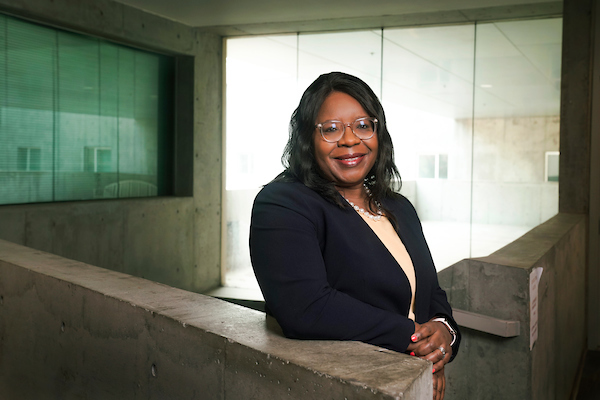
As many students have just arrived on campus for the first time, so has Dr. Estella Atekwana, the newly named dean of the College of Letters and Sciences. Though she never expected herself to work in the field of university administration — or live in California — Dr. Atekwana was drawn to UC Davis because of the way that the values of the university aligned with her own values and her student experience. 

Atekwana was born in Cameroon in West Central Africa, where she lived until she was 19. After graduating from high school, she wanted to enroll in university, but said that there was only one university in Cameroon at the time, and courses there were taught entirely in French. 

Atekwana grew up in the English speaking region of Cameroon, and even though that region accounts for 25% of the country’s population, the university taught no courses in English. Ultimately, Atekwana decided to search for higher education elsewhere and ended up attending Howard University in Washington, D.C. for both her undergraduate and masters programs.

Atekwana says that the reason she moved to the U.S. for school was because she had to follow the access — to courses taught in her language and scholarships that she needed to continue school — that were presented to her.

“This is what a lot of students face today,” Atekwana said. “How do you pay for school? I was a foreign student, and how do you pay for school as a foreign student when it will be more expensive? If your parents can’t afford it, then you’ve got to figure out ways of paying for it.”

After completing both her bachelors and masters degrees at Howard, studying geology, Atekwana made another international move. She attended Dalhousie University in Nova Scotia, Canada, where she got her Ph.D. in geophysics. After her time at Howard, Atekwana wanted to advance her education further, but she struggled to find universities in the U.S. that would give her scholarships as an international Ph.D. student. During her time in the masters program at Howard, one of her advisors suggested that she apply to schools in Canada, which ultimately led to her moving to Dalhouse. 

“That is why I think that faculty members have such a big role to play in influencing students and their career pathways, as well as opening up opportunities for them,” Atekwana said. “That’s what happened in this case. He told me, ‘You should apply to schools in Canada,’ and I did apply to schools in Canada, and I got in and they gave me a scholarship.”

Atekwana said that she never expected to work in university administration when she was in school; her goal was to get her doctorate degree and teach geology at a university. After graduating from Dalhousie, she returned to the states, and began to fulfill that dream, teaching at Western Michigan University (WMU). While she was in her first year working at WMU, her department chair at the time, Dr. Thomas Strew, noticed her leadership skills and suggested that she would serve well in an administrative role. 

“The department chair who hired me recognized some leadership qualities in me and started saying, ‘You would make a good department chair,’” Atekwana said. “It didn’t register to me, because I never really saw administration have a career path for me, but as I continued in my career, teaching students, mentoring students, I started appreciating the challenges that students were going through and also opportunities of how we could really enhance the success of our students. I also saw potential in the departments that I was working in, […] and I was also really interested in department governance.” 

Atekwana said that for many years, she didn’t consider taking on an administrative role; however, over a decade later, while she was teaching at Oklahoma State University, she was given the opportunity to become a department chair and she took it. 

“I could have a lot more influence if I became a department chair, to help shape the direction of the department, and also to help shape the lives of the students,” Atekwana said. “I decided that even though I was heavily, heavily ingrained in my research, that if I wanted to have more influence and truly impact most students I could do that in a service position as a department chair.”

Since then, Atekwana has served in many administrative roles. Most recently, Atekwana worked at the University of Delaware as the dean of the College of Earth, Ocean and Environment. She said that she often wishes Strew could see where she is now, so many years after he first mentioned her knack for leadership.

“I always wanted to serve, and I’ve always been somebody who’s very interested in making other people’s lives better, making things work for people,” Atekwana said. “He just recognized that in me, and he mentioned it to me. I was thinking about him the other day and wondering where he is to see where I am today. I’m sure he would be very pleased.”

When she got the opportunity to come to UC Davis, Atekwana said that she went through the process she always does when career opportunities arise. She asks herself, “What is the direction of this institution? Does it align with my own priorities?” Atekwana said that she found that UC Davis was a perfect match. Not only did she see her philosophy reflected in the values of the university, but also her own experience.

“I’ve really been interested in the social mobility of students, because I saw myself coming from Africa,” Atekwana said. “UC Davis is in the top ranked in social mobility. I also like the fact that it’s a number one destination for international students; I was an international student myself at one point in time. Forty percent of students at UC Davis are first gen students; I was a first generation student. [Davis has] a high percentage of underrepresented minorities, […] and I’m a minority myself.” 

Atekwana also said that she was drawn to UC Davis because of its faculty.

“Even though it’s a number one institution with faculty that are award winning faculty, […] [they’re] still passionate about teaching students,” Atekwana said. “That’s what I’ve always wanted. The best researchers should also make the best teachers. They should bring their research, the excitement of that research, to the classroom to inspire students.”

Since she arrived on campus on Aug. 1, Atekwana has been busy acquainting herself with the departments in the College of Letters and Sciences, as well as preparing for students to return to campus after 18 months online. She said that one of her biggest projects for the fall and potentially winter is her “listening tours,” which have already begun, and have allowed her to hear directly from faculty in Letters and Sciences departments. 

Atekwana said that at this moment, handling the return to campus amidst the COVID-19 pandemic is her top concern. She is prioritizing making sure campus is not only a safe environment for students and staff, but also that it is the best learning environment during this time. She said that increased awareness of mental health and student success are crucial at this time. Atekwana is especially interested in making sure that the school addresses students affected by the pandemic in an equitable manner.

“The pandemic was really challenging on all of us, but disproportionately affected more women and underrepresented minorities than other populations,” Atekwana said. “So the question that I’m asking myself right now […] is how do we send our students and our faculty and our staff up for success?”

Atekwana’s first plan to address these student needs is ensuring that the college has enough counselors and advisors to guide students through academic and mental health challenges. She is also working with student affairs to connect students with resources that UC Davis has available for their specific situations.

Aside from the pandemic, Atekwana has lofty goals for her first year on campus. She said that her three goals for the year are getting to know the college as a whole, highlighting the importance of a liberal arts education and creating a new strategic plan for the new direction of the college.

She also wants to prioritize diversity, equity and inclusion in all of her decision making.

“I’ve also been a big champion of diversity, equity and inclusion,” Atekwana said. “That’s going to be fundamental in everything that I do, to integrate more equity and inclusion. We already have the diversity in terms of students, but unfortunately, our faculty demographics do not match our student demographics. That is something that we need to work on. There’s an opportunity for growth in that particular area.”

Ultimately, Atekwana hopes to raise the status of the College of Letters and Sciences. As the largest college on UC Davis’s campus, Atekwana believes it is important to remind the community of the importance of the college and of a liberal arts education. 

“I think the skills that we provide our students — critical thinking, writing skills, communication skills, problem solving skills — are skills that employers want and they need,” Atekwana said. “Our students probably would better weather the flex of the changing job landscape because they have the skills that will allow them to be very flexible.”

Written by: Katie DeBenedetti— features@theaggie.org

Joint city, university led efforts provide COVID-19 resources for students

0

COVID-19 resources are offered as the city prepares to welcome new and returning students to Davis

COVID-19 testing positivity in Yolo County has peaked but is no longer rising; however, as students return to campus for fall quarter, it is important to be aware of the COVID-19 resources available to both students and community members. 

In recent weeks, the Delta variant has made up the vast majority of positive cases in Yolo County, making up 95% of positive samples at the UC Davis Genome Center from Aug. 15 to Aug. 21.

Yolo County Communications Coordinator Frank Scheneegas explained that the most important thing for Yolo County residents to do is to get vaccinated. 

“We are offering to take vaccine[s] directly to anyone in Yolo County as part of a call to order delivery program,” Scheneegas said via email. “Vaccines have been shown time and time again to be overwhelmingly safe and effective. On 8/30, 94% of COVID-19 positive patients in Yolo hospitals were unvaccinated.” 

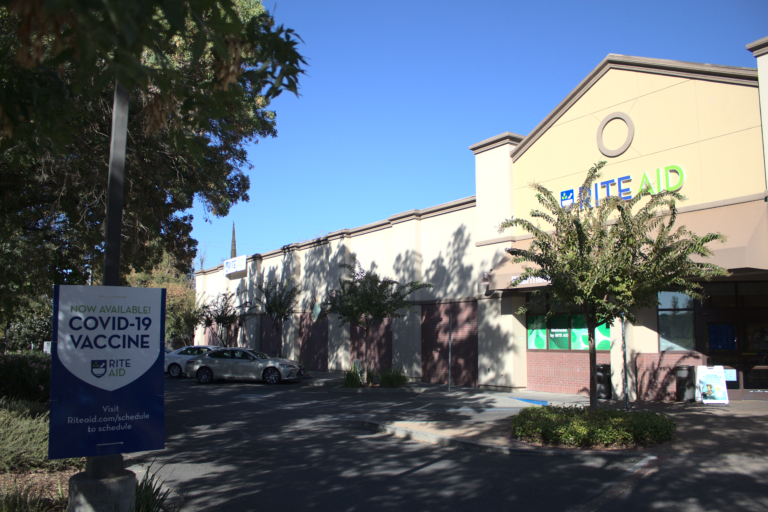
In addition to the testing opportunities provided by Healthy Yolo Together, Schneegas recommended that residents contact their local pharmacies, which also provide testing options. 

Healthy Davis Together Medical Director Dr. Sheri Belafsky explained that the strategies employed by Health Davis Together have helped Davis maintain a low coronavirus transmission rate.

“As medical director, I plan and direct medical and health services for Healthy Davis Together, including COVID-19 testing, vaccine outreach and distribution and case investigation,” Belafsky said. “Healthy Yolo Together is a companion effort to Healthy Davis Together [that] expands COVID-19 testing and vaccine support services to more communities in Yolo County.” 

In addition to Healthy Davis Together’s testing and educational messaging programs, the campus Aggie Public Health Ambassador program is another critical resource, according to Belafsky. 

“Aggie Public Health Ambassadors or APHAs are trained UC Davis undergraduate and graduate students who model healthy behavior and encourage campus and community members to make healthy choices that reduce the transmission of SARS-CoV-2,” Belafsky said. “APHAs build community and ensure everyone who walks on campus feels a sense of belonging and that they are valued members of our broader community.” 

Belafsky explained that part of achieving Healthy Davis Together’s goal of welcoming back students is making sure that students reintegrate safely. 

“Students are an important part of what gives our community its identity so we are pleased to see them returning,” Belafsky said. “That said, I encourage all students to get vaccinated and remain vigilant. [Wear] masks, particularly indoors, [follow] guidance on gatherings and [continue] to test regularly. Even when vaccinated, these measures are critically important.”  

Like Schneegas, Belafsky stressed the importance of getting the vaccine and regular COVID-19 testing.

“One of the ways that Healthy Davis Together helps facilitate the safe integration of students into the community is widely available, free, saliva COVID-19 testing,” Belafsky said. “Because people continue to test positive for COVID-19 in Yolo County we encourage the community to get tested regularly.” 

Those who have not yet been vaccinated can schedule a vaccination appointment or access more public health information at the Healthy Davis Together website. Campus-specific information can be found at the UC Davis campus ready website

Fourth-year managerial economics major Fatima Alvarez explained that while she is nervous about COVID-19, she is also excited to return to in-person learning. 

“I am a little hesitant about the influx of students but I like that we are going [back] to campus,” Alvarez said. “I’m vaccinated — I saw that most students are going to be vaccinated, which is a good sign.”

Alvarez, who also works as an orientation leader, is excited for the in-person orientation but wary of possible COVID-19 outbreaks. She advised incoming students to be mindful of those around them and keep their masks on. 

“I’ve worked as an orientation leader for two years and this in-person orientation is a good thing, but we also went from having no one on campus to having 10,000 incoming students coming to campus [for orientation],” Alvarez said. “Be safe and be courteous — there’s other ways to have fun that don’t involve taking off your mask.” 

Written by: Yan Yan Hustis Hayes — city@theaggie.org

Mask up, Ags

As we return to campus, it’s imperative to follow COVID-19 protocols and keep others in mind

It’s certainly exciting to be back on campus now that the academic year has started. But with that excitement comes a fair amount of pandemic-related nervousness — something that can’t be quantified because of how vastly it differs from person to person. 

One person in a lecture hall could be anxious about the lack of distance from other students; another could be worried about a student’s propensity to wear their mask just below their nose. Someone else could be annoyed at having to wear a mask for a two-hour lecture, and anyone could simultaneously have all of these feelings and more. 

It would be nice to say that there is decreased uncertainty surrounding COVID-19 now, but that wouldn’t be true. While it is a fact that the best way to stay safe and protect those around you is being fully vaccinated, that doesn’t preclude you from a breakthrough case. It is important to be mindful that even if you are feeling safe, others around you may feel less comfortable. 

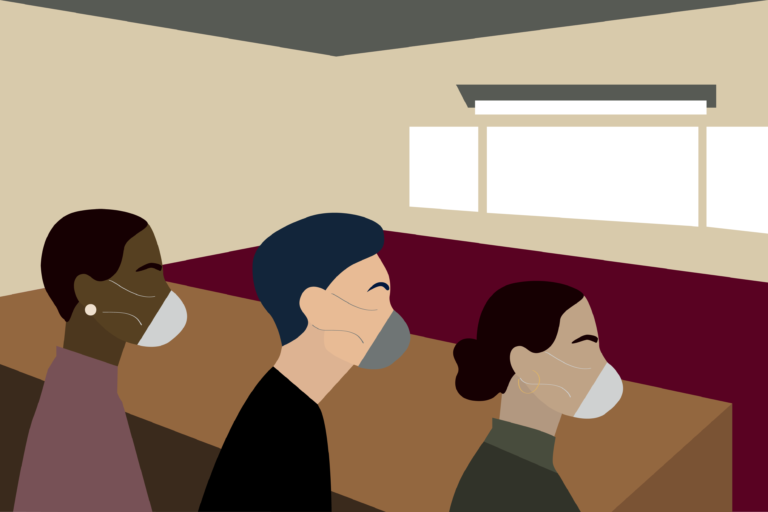
Respect is the bare minimum, and working to make sure we all feel as safe as possible in a familiar, but overwhelmingly different, environment is helpful for everyone. For example, if the person sitting next to you looks visibly uncomfortable with you lowering your mask to unlock your phone, maybe just type in your password. A similar courtesy goes for all mask-removing instances. 

If your instructors set rules stricter than university policy for their classes, it’s still important to adhere to them. If you have questions about certain policies, ask them respectfully. Nobody wants to contract COVID-19, and what you may think is unnecessary could make your instructor feel safer. Perhaps they are worried about going home to unvaccinated children or immunocompromised family members. 

We don’t know what everyone’s situation is, so it’s important to handle confrontation with grace. Even if people around you don’t feel comfortable sharing why they’d prefer a certain safety measure, their concerns are valid and you should respect them.  

Both instructors and students have a ways to go in terms of getting reacquainted with an in-person setup, and with the rigor of attending school in the middle of a pandemic, it is not going to be an easy adjustment. To help mitigate the stress of not being able to go to class for any reason, we encourage professors located in halls with lecture recording facilities to record all lectures. Over a year of virtual school has allowed for increased accessibility to education, and a return to campus should not undo that. 

We need to be conscious of how our individual actions impact everyone around us and act accordingly. Be kind to the people around you, follow the policies designed to keep our community healthy and make decisions to keep yourself and others safe. 

Written by: The Editorial Board