58.6 F
Davis

Davis, California

Monday, December 22, 2025
Home Blog Page 247

Upcoming events in Davis

Live music, art exhibits and more to check out in Davis this October

“Manetti Shrem Museum of Art” (254 Old Davis Road, 11:00 a.m. to 6:00 p.m. Thursday and Friday and 10:00 a.m. to 5:00 p.m. Saturday and Sunday):

The Manetti Shrem has extended hours this fall, just in time for students back in person to get an eyeful of its new exhibits, such as “Wayne Thiebaud Influencer: A New Generation,” which brings together 19 contemporary artists who have been inspired by UC Davis’ own centennial professor emeritus and “New Flavors: Collected at the Candy Store,” an exhibit inspired by a Folsom gallery that started the careers of dozens of Sacramento artists.

“Davis Jazz Night” (521 1st. St., 7:00 p.m. to 9:00 p.m, last Friday of each month):

If you’ve got a rip-roaring itch for some live Jazz, be sure to check out the Davis Jazz Night, a regular event at the John Natsoulas Art Gallery in which the New Harmony Jazz Band will be performing for free. 

“Traditional and New Music for Koto” (Anne E. Pitzer Center, 12:05 p.m. to 1:00 p.m. on October 14): 

This is a rare chance to see a performance on the koto, Japan’s national instrument — a huge half-tube covered by 13 heightened strings of varied length. In this short performance, Shoko Hikage, a Sacramento koto player, will demonstrate the instrument’s unique sound with four pieces from the past and present.

“The Basement Gallery Presents: Darkness Within” (Art Building Room 60, 7:00 a.m. to 10:00 p.m. Monday through Friday, Exhibit opens October 8):

If your art tastes run a touch more on the spooky side, check out this pop-up show from the Basement Gallery and get your shiver on in time for Halloween. And if you’re an artist, be on the lookout for future Basement Gallery shows to which you may want to submit your work.

“Liszt Transcriptions of the Nine Beethoven Symphonies” (Jackson Hall, 7:30 p.m. to 10:30 p.m. on November 6):

Performed by the supremely talented Christopher Taylor, the Liszt Transcriptions of Beethoven’s symphonies have enjoyed a reputation as some of the greatest piano pieces ever written. This is just the first performance of a series, so if you miss it, there are plenty more opportunities to get a listen of Taylor’s playing.

Written by: Jacob Anderson — arts@theaggie.org

Zombie skydivers, zombie drag queens, food and more planned for Halloween Zombie Bike Ride

Staff members will take safety measures in the event

Davis Odd Fellows and the Bike Campaign will put on the Zombie Bike Ride event on October 31st from 12 p.m. to 3 p.m., taking place along the 12 mile Davis Bike Loop at nine different locations. This is a free event, and bikers can see zombie actors from Bike City Theatre Company. From 3:30 p.m. to 5:30 p.m. attendees can join the after party, hosted by the Davis Business Association, at 500 1st Street to enjoy a variety of food, drinks and desserts and hear live music by DJ Duc. 

Aaron Wedra, the chairperson of the event, detailed that Bike City works with Black, Indigenous, and/or People of Color (BIPOC) and LGBTQIA+ individuals in their performances. Among the zombies, he mentioned there are three stations with drag queens.

“Everyone is invited; it’s family friendly,” Wedra said. “We don’t have scary zombies. They are comedy, comical theater sketches.”

Staff will follow COVID-19 safety precautions throughout the event. 

“All of our volunteers and actors are going to be wearing masks, and the people facilitating the flow of traffic will have megaphones,” Wedra said. 

Wedra emphasized the “grand finale” of the event where people will see zombie skydivers from Skydrive Skydiving.

During the after party, bikers can get free hot cider from the Davis Food Co-Op, while supplies last. Vendors will include Niknek Lemonade and Purple Tree Cafe. Another business, Handheld Sweet and Savory Pies, will be selling handmade pies with unique fillings.

Stephanie Maroney and Michael Sutton, the founders of Handheld, are serving pies out of their truck at Community Park during the bike ride from about 12 p.m. to 3 p.m.. Their menu includes a variety of items, including The Handburger, the most popular item on their menu, according to Sutton. It is a ground beef and chorizo patty with melty cheddar cheese and onions, wrapped in flaky dough, served with Carolina barbeque dijon mustard. The menu contains meat, vegetarian and sweet options; they noted that they are working on expanding options for those with unique food needs.

Sutton and Maroney have been at Davis for over 10 years. Sutton previously worked as a chef in Phoenix, and Maroney started her PhD in cultural studies in 2010. Maroney explained it felt like the right time to start their family business when food culture was changing during the pandemic at Davis.

“All of our food is cooked in the commercial kitchen in the Odd Fellows Hall, and then we serve out of the truck,” Maroney said.

Pete King attended the 2020 Zombie Bike Ride with a painted skeleton face, and his two friends dressed in Halloween costumes.

“It was my favorite experience for Halloween that I’ve ever taken, and I love bike riding. It was really great to get outdoors with friends,” King said.

King enjoyed the concept of the event, but he admitted that he felt a little disappointed that there were not enough volunteers and staff participating in the stations. 

“It wasn’t quite as developed as I was expecting it to be, but I think that’s in part because of the pandemic,” King said.

Nonetheless, King mentioned a few memorable moments from the ride. He described the experience as a little spooky and not too scary; he said the staff was mindful of the kids riding the trail.

“There was a part where some people had set up a chained-down zombie and run at you but stop right at the last minute. There was a setup where you could stop down for a second and watch some people perform the thriller dance by Michael Jackson,” King said.

Overall, King would love to come to the event this year, despite any flaws he observed last year.

“I am imagining this year’s going to be way better than last year, and I still had a great time last year,” King said.

This Zombie Bike Ride takes place in an open area, and the chairperson and Handheld founders encourage students to join.

“We’ve been so fooled as to say we’re gonna save Halloween,” Wedra said. “People might not feel like going to parties where there’ll be crowds, but most should feel comfortable riding their bikes where there’s plenty of space outdoors.”

Written by: Ellie Lee — city@theaggie.org

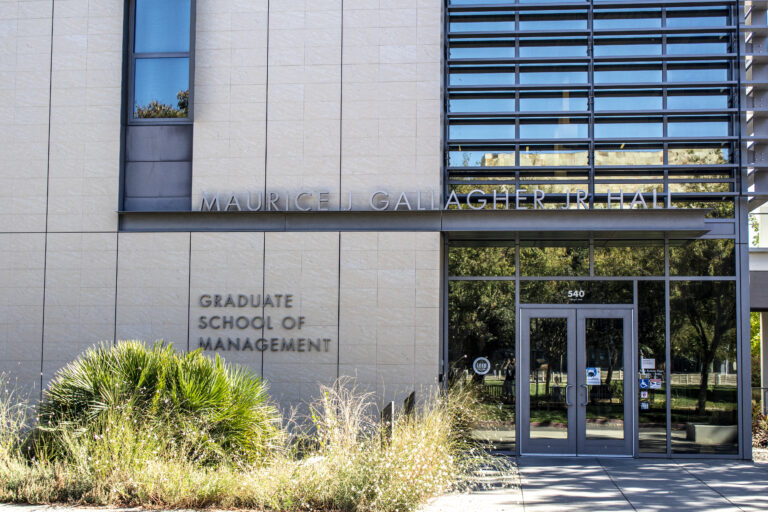
UC Davis Graduate School of Management to offer new tuition plan

The interest-free deferred tuition pilot program will start in January 2022

The UC Davis Graduate School of Management is set to adopt an interest-free deferred tuition pilot program that will be available for eligible online Masters of Business Administration (MBA) students admitted into the January and April 2022 cohorts. 

This initiative was created to reduce financial barriers and decrease student debt, according to Stephanie Young-Birkle, the chief of staff of the UC Davis Graduate School of Management.

“We wanted to align student outcomes with their investments in the MBA, and the cost of higher education continues to rise,” Young-Birkle said. “We were looking for innovative ways to provide more students, who otherwise might not get an MBA because they couldn’t afford it, to have access to that education.”

The program allows admitted students to defer tuition payments for the second half of the credits required to complete the degree. Up to $52,740 can be repaid with 0% interest. 

Once the student leaves or graduates from the program, the repayment is calculated based on 10% of their income. However, payments stop with no extra cost when a student’s gross monthly income is below $3,334. 

Offering this financial support, according to Young-Birkle, is important because it encourages students to continue their education for a brighter and more successful future in the field.

“A lot of people pursue an MBA because they’re looking to advance in their careers or they’re looking to shift industries or be an entrepreneur,” Young-Birkle said. “Once they graduate and have their MBA, they should expect to see increased earnings. They might not have the money when they’re in the program, but we hope that our graduates are well prepared and when they go out into the marketplace again, that they’ll have more earning potential. The concept is ‘buy now, pay later.’”

UC Davis is leading the way for interest-free tuition programs and is among the first to have this option open to students.

“It’s one more way to say that UC Davis is innovative in how we do things because there is quite a bit of work that has to be done by the campus to make these kinds of things happen,” said H. Rao Unnava, the dean of the UC Davis Graduate School of Management. “Unless you have a whole lot of partners who are willing to do all the work necessary to make it happen, this kind of innovation doesn’t happen, so UC Davis is great that way. They are making these kinds of moves in the marketplace that is very competitive.”

Students enrolling in the Graduate School of Management can look forward to this new way to pursue higher education and get to be one of the first in the country to participate in the program.

“We are really, really happy to be able to do something like this for our potential MBA students,” Unnava said. “This is a turning point because our guess is that most education in the future will be financed this way.” 

Written by: Christine Lee — campus@theaggie.org

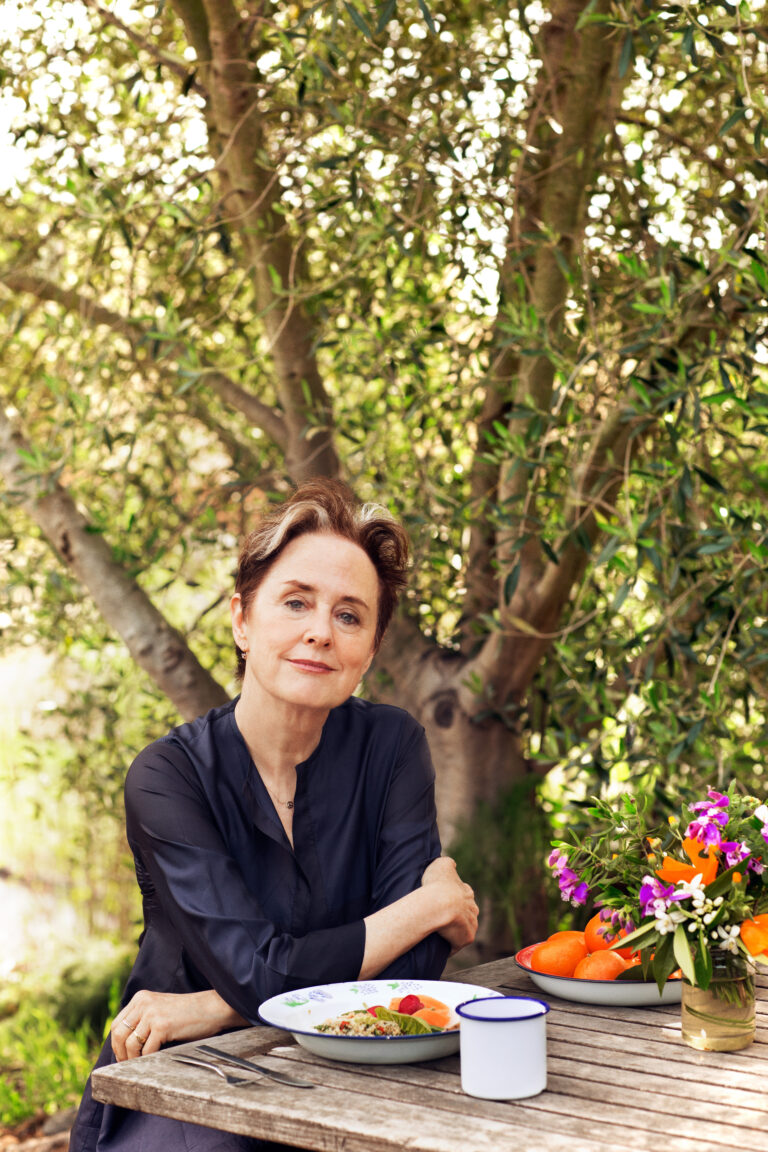
Alice Waters Institute for Edible Education hopes to change the way public schools teach and students eat

Waters discusses 25 years of the Edible Schoolyard Project and partnership with UC Davis

As Alice Waters celebrates 25 years of her Edible Schoolyard Project in Berkeley, the chef and activist is looking forward to extending the success of the program at Martin Luther King Junior Middle School (King Middle School) by partnering with UC Davis on the Alice Waters Institute for Edible Education. One goal of the institute, which will be located at Davis’s Aggie Square campus, is to bring programs similar to that at King Middle School to public schools across California and the U.S. 

The Edible Schoolyard Project, which Waters founded in 1995, was meant to revolutionize the K-12 public education system. Waters said that she was inspired to do the project when it came time for her own child to go to school.

“I was remembering that when I went to UC Berkeley, it was number one,” Waters said. “And so was the UC system — it was number one in the world. I thought to myself, what’s happened to the public schools?”

Waters said that she was shocked that California was ranked so low for K-12 public education compared to other states, so she began talking to Berkeley community members about the issue. As she was discussing the issue with more community members, the principal of King Middle School reached out to Waters, asking her to come help the school change their curriculum and teaching style.

 “There was something about that space,” Waters said. “I immediately said, “Oh, we’ll put a garden over there, and it won’t be for teaching gardening, per se. It will be for teaching academics.’ So kids can be outside, smelling and tasting and experiencing nature.” 

Waters’ vision was a “Montessori pedagogical” program, wherein children would learn a vast array of subjects through nature and culinary activities. Waters was trained in the style of Montessori teaching, which focuses on a holistic, sensory approach to education, so she believes that the issue with the education system is in the way that schools are set up.

“We learn best when all of our senses are engaged,” Waters said. “We have been  teaching children in an industrial way where one size fits all and we’ve taken our school system and we’ve made it like our corporations. [Instruction] comes from the top down; we have to sit in these chairs, we have to learn to the standards, whatever they are, and I wanted to make an intervention.”

Waters said that through the Edible Schoolyard Project, students are not only learning to cook, but they are learning through cooking. She explained that, for example, when students are learning about the Middle East in history class, they are making pita bread, hummus and spesifik greens in the Edible Schoolyard and learning about the geography of the region and where ingredients to make these traditional dishes are grown. 

In addition to improving the students’ learning experience in traditional school subjects, Waters said that she is confident that upon graduating, all students will have the skills to nourish themselves throughout their lives.

“I was pretty certain that this would work,” Waters said. “I have to say that after 25 years, I know it does, because we had a very good test case of 1,000 kids.” 

In the 25 years since the Edible Schoolyard Project began, Waters and her team have set up similar Edible Schoolyard programs in five more schools. She said that they wanted to ensure that the project was adaptable to different regions of the country and demonstrate how schools can set up their own adaptations of the program. Today, they have programs in New Orleans, Upstate New York, Brooklyn, North Carolina and Los Angeles, in addition to the over 6,000 schools that have independently introduced some variation of the program. 

Waters and her team do not have the bandwidth to be directly involved in all of them, but through the new Alice Waters Institute for Edible Education at UC Davis, she hopes to reach many more schools and programs and eventually change the education system across the U.S.

“It broke my heart that we haven’t understood that public education is our last truly democratic institution,” Waters said. “Every child goes to school — or should — and this is a place to make fundamental change.”

Craig McNamara, a member of the Alice Waters Institute board of trustees and California farmer, also expressed that he believes that the most effective way to make change in the U.S. is through the education system.

“Students have fertile minds and are capable of doing the research and the fact-finding and the diagnostic work to be scientists and policymakers,” McNamara said. “[Students] have the ability to find the solutions that are so critical to today’s challenges. At an institution like UC Davis, at the Alice Waters Institute, [students] will have the tools to do that and the physical space to bring people together.” 

Waters has lofty goals for the Institute for Edible Education, which was announced in January 2020 and will be located on UC Davis’ Aggie Square campus in Sacramento. She explained that she wants the Institute to be sustainably built and to provide a space for researching regenerative farming and sustainability, gathering for summits and speakers and fostering community and teaching teachers how to use edible education in their own schools.

“The ways that we could do this in that building are endless,” Waters said. “I think we can have dinners that would be down in the wine cellar. We could show how to build a pantry. We’re going to need greenhouses. We’re going to need cool places to store food as the world heats up. It’s very scary, and we need to be prepared for this. I want to teach everybody and learn myself, how do we plant an edible cover crop […] that we can use instead of grass? How can we pull down carbon into the ground while we’re growing something to eat?” 

As for her decision to partner with UC Davis, Waters said it was a no-brainer. She stressed that it is important for her to set up this institute in close proximity to the governing power of California in Sacramento and that the UC system’s mission aligned with her goals in a way no other institution’s did. 

“The school system is so broken,” Waters said. “It needs the leadership that can come from the University of California. There’s no other public institution that I’ve never heard of that the world has had the mission of building the economy of the state of California, that has always wanted students to be educated, that it was affordable for them to come. These were in the document in the establishment of the UC system — it was their mission — and I think this is realizing their mission again.”

While the Institute is still in the early development process, both Waters and the UC Davis team are taking steps to prioritize equity and benefit the surrounding community as they develop it. Dean of the UC Davis School of Education Lauren Lindstrom said that they are working with the Oak Park community, where UC Davis’ Aggie Square campus is located, to ensure that they respect and enhance the community.

“Some of our early work has been talking with people in the community about what already exists,” Lindstrom said. “There are programs that address food and health, and we’re really trying to build on the strengths of the neighborhood, so that we don’t leave people out.” 

Lindstrom also said that the UC Davis and Alice Waters teams have made it a priority to develop guiding principles for the Institute. These principles are still in the drafting process, but they lay out the main focuses for the Institute: their joint commitment to public education; teaching, research and public service; and making changes to the California public education system that can act as a model for other public education institutions.

Since the project was announced just over 18 months ago, the COVID-19 pandemic prompted school shutdowns and further exposed the inequity in the school systems in the U.S. Additionally, during the summer of 2021 alone, almost 1 in 3 Americans experienced a natural disaster, serving as physical evidence of the escalating climate crisis. Waters believes that despite the hardship of the last year and a half, these events have emphasized the importance of the Alice Waters Institute’s future work.

“I think what has shifted is an understanding of how important this could be for the whole University of California and the state of California,” Waters said. “I think we might be able to fund it more easily than I ever imagined. I thought that this would be a lot of work to fund, and I don’t feel like that anymore. I feel like we are looking for projects that are really meaningful, that are being the change we need to make.”

Written by: Katie DeBenedetti — features@theaggie.org

Correction: An earlier version of this story incorrectly identified Lauren Lindstrom as the director of the Alice Waters Institute. The story has been updated to correct the error.

Facebook outage reaffirms its platforms’ addictive nature and our reliance on it

For all their value, platforms like Instagram are toxic, leaving users to self-regulate social media usage

Waking up on Monday morning, many students might have panicked when they tried to open Instagram and found themselves unable to refresh their feeds. Maybe they restarted their phones, tried logging out of their apps, disconnected from campus’ dismal “eduroam” Wi-Fi, but these desperate attempts to view Instagram were without avail. Others might have tried to log on to WhatsApp to connect with family or tried to open Facebook to check for a post about the day’s club meeting or read up on their carefully curated news feed, with similarly disappointing outcomes. 

This outage sent some people into a spiral — refreshing their apps every 10 minutes in case maybe this time their feed would load or worrying about who liked their posts from the night before. The outage was loud and clear proof of what Facebook’s leaked internal reports showed last week: Instagram is “toxic,” and it dominates many of our lives. 

When news initially emerged about Facebook’s internal investigation into its platforms’ effects on mental health, especially that of teens, the Editorial Board was not surprised. We know that Instagram is damaging, but seeing the figures — one in three teen girls say Instagram has worsened their body image and 6% of American and 13% of British users credit suicidal thoughts to the application — and learning that Facebook tried to bury this information was distressing. Since 2019, the massive company has known that their apps were hurting users, and instead of taking steps to reverse course and correct these wrongs, they doubled down in March 2021, introducing the concept of an Instagram platform exclusively for children

While in theory it’s easy to say that the Instagram app and Facebook as a company are “toxic” and we should all just delete our accounts, lower our screen time, spend time in nature or read a book to improve mental health, it’s not that simple. As became obvious during the company-wide outage on Monday, people rely on Facebook’s apps for many reasons. Some use WhatsApp to communicate, many student-run organizations make announcements and plan events via Facebook groups and frankly, Instagram is hard to quit cold turkey.

It is not our fault as consumers that we have become reliant on and obsessed with these apps — they were designed to be addictive. But because the company has designed its algorithm to be so irresistible and platforms to be so universal, it should be held responsible for these consequences and called on to be transparent about and address data that show that its apps are harmful. 

Instead of ignoring the damage done by its apps and looking to increase its profits by designing a social media platform for children — the very group that is hurt the most by its products — Facebook must look for ways that it can relieve some of the pressure of comparison, focus on aesthetics and obsession over follower counts, likes and comments that Instagram promotes. It has a responsibility to prioritize the health of its users and use the research that it has voluntarily conducted to address the damage that its platforms have done and continue to do. 

If Facebook won’t hold itself accountable to protect users, it’s important to keep in mind the impacts these apps have on us. While we don’t expect users to delete Instagram and Facebook, we encourage everyone to be conscious of their usage of these platforms and prioritize mental health above likes and followers. 

Written by: The Editorial Board

City of Davis asks residents to cut water usage

Governor Newsom called on all Californians to cut water usage by 15%

On Jul. 8, Governor Gavin Newsom urged Californians to voluntarily cut water usage by 15%, amid a severe drought which has lowered lake and reservoir levels, reducing the amount of water available to residents. On Aug. 26, the City of Davis posted a press release requesting that residents voluntarily cut water usage.  

“If the voluntary, statewide reduction in water use is not met, the state may look to require mandatory water-use reductions in future months,” the press release reads.

For the month of September, for example, this reduction is likely to be taken from a comparison of the water production in September 2021 with the water production in September 2020, according to city conservation coordinator Dawn Calciano via email.  

“Water agencies do report water production and other water information on a monthly basis to the State Water Board, so the reduction percentages are likely to be a comparison of aggregate water usage for the City overall by month compared to the same month(s) in 2020,” Calciano said.

Calciano explained that there was more water production in Davis in 2021. 

“Likely due in part to the unprecedented heat waves in the early summer and it being the second dry year without much precipitation, the City saw increases in overall water production for April, May and June 2021 as compared to the same months in 2020,” Calciano said via email. “There was a small decrease in water production for July 2021 compared to July 2020. August water production information is due to the state in mid-September and when available will be updated on the City’s website.”  

Much of the water supply in Davis comes from the surface water of the Sacramento River. Under Term 91, a water usage curtailment which usually takes effect in the summer, the surface water is now limited, forcing Davis to use more groundwater instead. An information page from the city regarding water supplies states that if Term 91 continues into November, there may be less surface water available.  

“Historically, Term 91… is set in place during the summer months,” the website reads. “If Term 91 is in effect between November to March of any year, which has been the case in five of the past seven years, the ability to divert water from the Sacramento River may be limited.”

Davis has always used a mixture of groundwater and surface water. According to city councilman Dan Carson, while usable, the groundwater may have distinct differences from the surface water.

“All of the water we provide is safe and useful, but there’s a quality to the surface water that it’s got fewer minerals and other things to remove from it in its treatment, and that, for example, we noticed that when the city switched more heavily toward surface water, our outdoor landscaping liked that a lot more,” Carson said. “People will notice differences in taste and things like that, without question. My understanding is that the mix can be different in different parts of the city.”

    Carson also noted that Davis may be forced to switch completely to groundwater in November, but assured that it’s unlikely for Davis to run out of water entirely.  

    “Our water supplies in the aggregate will exceed our demands,” Carson said. “We’re really fortunate that by obtaining the surface water rights and having a good system of deep water wells, we are not at risk of running out of water. That said, we are encouraging folks to conserve, because we have an obligation, like every community, to use water as efficiently as possible.”  

    If the drought continues and Californians are not able to voluntarily dial back their use of water, mandatory restrictions may come into place, Carson said.  

    “When the governor made his request for the voluntary statewide water restriction in July, the state signaled that depending on how things play out, additional state requirements are possible,” Carson said. “We’ve done a good job. For example, there have been underlying mandates from the state in the past that we reduce our per capita water use to certain goals. The city of Davis has met and exceeded those goals.”  

    Some of the best ways to reduce water usage are listed on the city’s website. These can include simple and easy things like fixing leaks, irrigating efficiently and taking shorter showers, or more involved tasks like replacing thirsty lawns with drought-tolerant plant species.  
Written by: Rachel Shey — city@theaggie.org

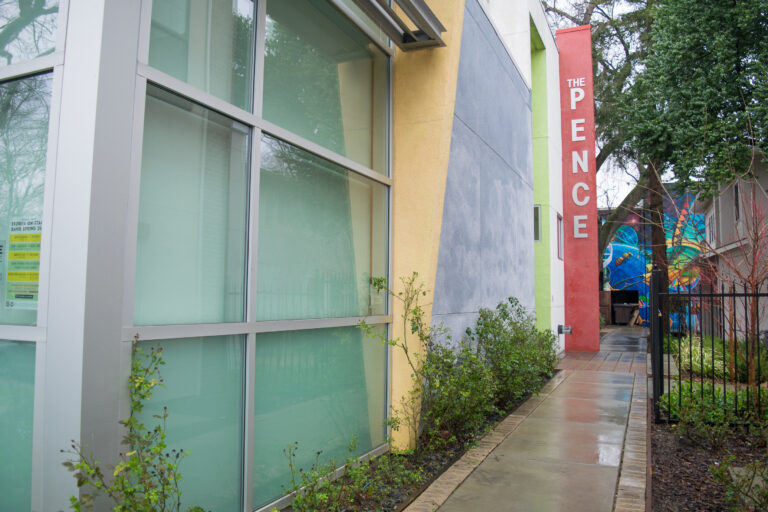
Pence Gallery’s annual Art Auction

From September 1st through 25th, the Davis-based art gallery held an auction of over 100 artists’ work to raise money for the rest of the year

When most think of an art auction, ideas of exclusivity and elitism might come up; however, this is not the case at Pence Gallery’s annual Art Auction. The non-profit gallery makes it clear that the primary vision and values of the auction are the community behind it and the ability to create an incredibly welcoming space. With enough variety in style and medium of pieces for anyone to find a favorite artwork at the show, Pence’s auction reinforces how art really is for everyone.

According to Natalie Nelson, the curator and director of the Pence Gallery as well as the primary organizer of this event, the Pence has “fulfilled the need in town for showing a wide range of visual art” since its opening in 1975 and the creation of the Art Auction over 25 years ago. The auction is not only Pence’s major event to raise funds for the year, but also a great chance for artists to get their names out to the entire community, the perfect place for community members to buy a piece of local art and just a fun show to walk through and appreciate art. 

Given the nature of the auction—a show with the goal to sell the work off the walls—artists tend to stick to their signature styles so as to guarantee the work they chose to bring will end up helping the Pence in the long run. Artist and Davis local Karen Fess-Uecker stuck to what she knew, providing the auction with two beautiful landscapes. 

“[Since the pandemic] I probably have over 50 paintings up in my studio, but chose landscapes [because] you want to pick what’ll sell,” said Fess-Uecker. 

With 130 artists and 143 works being shown at the auction, landscapes—both naturalistic and stylized paintings—definitely have a large presence throughout the gallery, and yet there is still more than enough room for the myriad other kinds of art, from ceramic sculptures to fully abstracted works. 

Whereas the previous Art Auction was held completely online due to the stay-at-home orders during September 2020, this year, the Pence was able to welcome the community back in and held a public reception on Sept. 10 as well as an artist party on Sept. 18 to express their appreciation for all the artists who contributed to the show. One aspect kept from last year’s auction was the online bidding, which allowed for bids to easily be placed remotely. 

“[Both this year and last year] we’ve had buyers from all over, since it’s all online… it used to just be Davis,” said Nelson. 

This community-centered art auction is the perfect culmination of Davis’ friendly reputation and presentation of the often overlooked yet thriving local art scene. According to Davis local and featured artist at the auction Carrie Cenisroz, Davis and Northern California were considered “a mecca for painters and all kinds of artists [in the mid 20th century]” and the community created around the Pence Gallery and Davis have a very similar love for the arts. 

Written by: Angie Cummings — arts@theaggie.org

Cartoon: The Aggie’s 106th Anniversary

Drawn by: Rushi Tawade –– rntawade@ucdavis.edu 

(This cartoon is humor and/or satire, and its content is purely fictional. The story and names of “sources” are fictionalized.)

Organizations support students with food insecurity by providing necessities

Yolo County recognizes college students’ needs

At UC Davis, 44% of students face food insecurity, according to survey data collected by the Chancellor’s Student Food Security Task Force in May 2018. Organizations such as Yolo Food Bank and the ASUCD Pantry offer to distribute necessities while students study for their college degree. 

Yolo Food Bank has been serving nutritional needs of Yolo County residents, including UC Davis students. Located in Woodland, they organize and coordinate on a massive scale.

Joy Cohan, the director of philanthropic engagement at Yolo Food Bank, said that the food bank has been collaborating with UC Davis students in many ways, especially to create an equitable food system to feed all county residents and students.

“There were existing needs before the pandemic,” Cohan said. “The challenges of the pandemic showed a spotlight of what people’s needs were. That opened the door to provide robust services.”

Yolo Food Bank has already been making efforts with UC Davis organizations like Aggie Compass and Solano Park Apartments. They are starting food distribution at the Quad in the next few months. 

“The genuine interest in being a good neighbor in supporting food insecurity has been heartening,” Cohan said.

The ASUCD Pantry, a student-run organization, supports all UC Davis students with food, toiletries and menstrual products. Unit Director Jason Kwan discussed the importance of the food pantry and the urge to help students thrive at Davis. However, he considers the service to be a short-term solution.

“People can grab food everyday, and I’m glad it helps them,” Kwan said. “But food insecurity is more than just having the food; it’s about having access to resources.”

Kwan detailed that The Pantry works with iCompass, saying that this center could be a long-term solution to solving issues like food insecurity. iCompass assists students with enrolling in CalFresh and informs them about picking up groceries and basic needs. Kwan discussed his hope to incorporate a range of cultural foods during his time as a director.

“We are a wide and diverse community, and I feel that we need to start moving toward being able to have more culturally relevant foods so everyone is comfortable with the foods they get at the pantry,” Kwan said.

The Pantry director emphasized that they no longer use a point system; a student can take 40 items per order. Students can order in advance on the website. They could also scan a QR code in person to schedule a time to walk in or pre-order a food bag. 

“People think they are taking away from others if they use The Pantry but that’s not the case,” Kwan said. “The more students use The Pantry, the more money we get and the more students we can help out.”

He encouraged UC Davis students to visit The Pantry, located in MU 167 between the market and the Aggie Compass.

Madison Rasmussen, a fourth-year student majoring in sustainable agriculture and food systems, went to The Pantry daily during the 2019 school year when school was in person. She visited The Pantry for the first time during the 2021 fall quarter on the first day of classes. Rasmussen grabbed almonds and said that The Pantry has snacks available as well.

She also utilizes the Freedge, a public refrigerator funded by the Green Initiative Fund that allows community members to share food with each other.

Rasmussen recognizes that food insecurity affects many students.

“A lot of people on campus don’t know how to cook,” Rasmussen said. “Some students will skip meals and not eat three meals every day. I think that a lot of people choose junk food because it’s quicker to eat, and you get a lot more calories. It’s not as good for you and has more preservatives.”

Written by: Ellie Lee — city@theaggie.org

World Health Organization announces new diagnosis: Anxiety caused by fun fact icebreakers

Meditation and tea aren’t even enough to ease this one

Local Rite Aids are running out of medication. Therapists are booked for weeks in advance and semi-questionable CBD gummies are sitting on everyone’s bedside tables — all because of the World Health Organization’s (WHO) recent announcement of a new medical diagnosis: A.C.B.F.F.I., or Anxiety Caused by Fun Fact Ice Breakers. 

In a press release on Sept. 22, WHO representatives said sweaty palms, heart palpitations and loss of sleep are all directly correlated with the incorporation of fun fact icebreakers into one’s daily life. Both the pressure of public speaking and the desire to appear “cool” is all too much for today’s youth. 

The founding fathers never had to share what they would want to eat on a desert island with one another. Nor did Mark Zuckerberg ask his interns to share their summer plans. So why am I required to tell a group of strangers a fun fact about me in my GEL 10 discussion? 

In an effort to gain a better understanding of the psychological hardships caused by icebreakers, the WHO representatives met with students at a local university. While they were met with a lot of tears, they were also met with one particularly frustrated student: “playing fun fact ice breakers is like if you asked a bunch of saltine crackers to do improv. Nothing interesting comes out of it. You get a lot of ‘I have two dogs’ and ‘I’m double jointed.’”

Seeing the anxiety and frustration these icebreakers cause students, the WHO suggested some alternative ways to bond with random students in your classes.

  1. The Lame Fun Fact Game: Everyone in the room says a lame fun fact about themselves…oh wait.
  2. Twister with ketchup and mustard: There’s nothing like learning each other’s names while cleaning dried ketchup out of your ears.
  3. Deep analysis of your professor: There’s no better way to bond than to form a common enemy (Victim 1: The Professor).

Jokes aside, take care of yourself during these difficult times. Fun fact ice breakers can really do a number on you. 

Written by: Kate Harges — kateharges@ucdavis.edu

Disclaimer: (This article is humor and/or satire, and it’s content is purely fictional. The story and/or names of “sources” are fictionalized.)

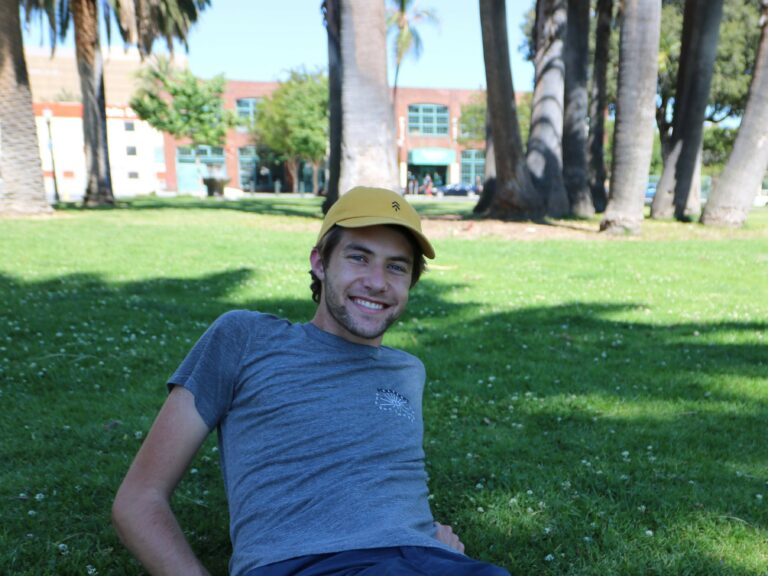
UC Davis first-year student’s viral Twitter account lets followers know it’s finally the weekend

@CraigWeekend account owner Miles Riehle’s followers look forward to the same post every Friday

Miles Riehle, a first-year student majoring in environmental policy analysis and planning, runs a Twitter account (@CraigWeekend) with nearly 500k followers, where he posts the same four-second video clip every Friday. As Twitter users scroll down the feed of @CraigWeekend, all that can be seen is an out-of-context clip of Daniel Craig introducing Canadian singer The Weeknd, while hosting Saturday Night Live (SNL). The same exact clip is posted on every Friday — the only factors that change are the time of day Riehle posts it and the captions accompanying it. 

Before Riehle started his account, he had admired other accounts on social media that offered followers the same picture or clip on a reliable calendar basis. However, Riehle said, he wasn’t sure right away which piece of media to choose that would be worthy of his own audience. 

One afternoon, as he was watching SNL, Riehle said he saw potential in a particular moment of the show: 007 star Daniel Craig looks to the camera, and with a slight shrug of his shoulders, makes his now-famous announcement: “Ladies and gentlemen, The Weeknd.”

Riehle said that this clip opened his eyes to the possibility of giving Twitter users a light-hearted reminder that it’s the end of the workweek every Friday. 

“It’s kind of a double-entendre,” Riehle said, “He’s welcoming The Weeknd, and it’s even funnier if people don’t know who The Weeknd is, because it just sounds like he’s welcoming in the weekend.”

Some of the account’s followers have mentioned in the comments that there’s a specific manner to Craig’s movements and the tone in his voice that make the clip especially funny and keep them coming back to the account every Friday. Others follow the account purely for the ‘vibes.’

“Not to get too mushy about it, but it’s kind of wholesome that people are just sharing good vibes around,” Riehle said. “I think that the community of good vibes that was created is really cool and unexpected.”

Riehle has now received numerous media requests from major publications, including the Los Angeles Times, the Telegraph, and the New York Times, all seeking to cover Riehle’s famous Twitter account. A professional photographer for The New York Times was even sent out to have a shoot with Riehle at his home in Laguna Beach. 

“When I got this email from the New York Times, I was like, ‘OK, this is probably where I’m going to peak,’” Riehle said.

According to Riehle, he intends to continue posting on @CraigWeekend every Friday for as long as he can — until either his following decreases or until posting starts to affect his mental health.

“I don’t know if it will ever die out,” Riehle said. “At some point, I feel like everyone will get tired of seeing it on their timeline and be like, ‘Dude, you’ve got to stop tweeting the same video out, it’s getting old,’ but at the same time, this has been going on for almost a year at this popularity.”

As a newly-arrived freshman at UC Davis, Riehle hasn’t yet gotten the opportunity to let many other UC Davis students know about @CraigWeekend. 

 “I haven’t done any icebreakers yet where I have to share a fun fact about myself — if I ever did, I think my fun fact would be this account,” Riehle said. “But it’s not something I like to bring up when I’m just chatting with people.”

Riehle said he didn’t initially start the account to give Twitter users a wholesome environment free from the toxicity of the internet, but regardless, this is how it was received by many over time. 

“I’m more happy that it turned out that way than anything else, and I think that that sort of community of good vibes and joy is certainly rare on the internet today,” Riehle said.

Written by: Lyra Farrell — features@theaggie.org 

‘Shang-Chi and the Legend of the Ten Rings’ is a smash hit

 How Marvel is diversifying a very uniform industry

Marvel Studio’s latest project is taking theaters by storm. Grossing $90 million over the Labor Day weekend, despite concerns surrounding the Delta variant, “Shang-Chi and the Legend of the Ten Rings” has dominated the box-office for four consecutive weekends.

The project features Destin Daniel Cretton as the studio’s first Asian American director, along with a star-studded predominantly Asian cast. Among these actors are Simu Liu, Awkwafina, Tony Leung and Fala Chen. 

Continuing Phase 4 of the Marvel Cinematic Universe, “Shang-Chi” showcases a fresh take on action movies. The intricately choreographed fight scenes between Leung’s and Chen’s characters feel more like murderous dance numbers than the violent brawls typical of Marvel. Stunt coordinators made a point to accurately portray martial arts moves in the fight scenes to pay homage to the film’s cultural background, resulting in a film that, at its core, is an action movie, but also packs a punch with culturally relevant imagery and artistic cinematography.

Moreover, fans were pleased that the film’s team stayed true to the Asian American experience in their portrayal of traditions, rather than depicting a watered-down American impression of them.

“A lot of POC are underrepresented in the media… and if they are represented, it’s in a stereotypical way,” said Jocelyn Morales, a third-year animal biology major. Since “Shang-Chi” is spearheaded by an Asian cast and crew, its storyline is actually in keeping with real traditions. 

Marvel’s 2018 smash-hit “Black Panther” was the studio’s first project to star a BIPOC actor, and the numbers attest to the importance of representation in the media — the film is one of the highest-earning U.S. superhero movies of all time. 

“Shang-Chi” appears to be following in “Black Panther’s” footsteps in breaking down barriers for another marginalized community.

“I grew up seeing a lot of white people,” Morales said. “More representation of a little bit of everybody would help little kids see ‘Yeah, there’s people like me that are successful.’” 

“Shang-Chi” has all the trademarks of the Marvel movies fans know and love. There is no shortage of action, heart-wrenching backstory or super wordly elements to keep audiences entertained. More importantly, it opens the door for future generations to see themselves in a beloved hero on the big screen.

“It’s so important to have all communities represented in film,” said Kayla Isaacs, a second-year human development major. 

Given Hollywood’s ugly history of white-washing and general lack of diversity, fans are excited to see the cinema giant finally step up and promote representation for a community other than heteronormative white men. The revenue speaks for itself — modern audiences want to see media that actually represents a beautifully diverse world. 

Written by: Clara Fischer — arts@theaggie.org

UC Davis achieves high rankings among top universities

U.S. News and World Report’s 2022 university ranking places UC Davis in the top 10

UC institutions ranked high on national and public rankings published by the U.S. News and World Report, with UC Davis at No. 10 on national public university rankings and No. 34 among national universities. 

    “These rankings underscore the world-class education UC provides,” UC President Micheal Drake stated in a press release. “Access, affordability and excellence remain hallmarks of the University. We are pleased that U.S. News and World Report continues to recognize UC for its achievements.”

    The U.S. News and World Report collected data on over 1,850 schools and ranked 1,466 bachelor’s degree-granting universities. Categories such as graduation and retention rates, undergraduate academic reputation and faculty resources for the 2020-2021 academic year were weighted the highest in ranking calculations. 

Other factors included financial resources per student, social mobility, graduation rate performance, student selectivity for entering class, graduate indebtedness and average alumni giving rate. Within some categories, there are further percentage breakdowns to give a deeper analysis of the impact the schools have on their students during the academic year and into the future.

    UC Davis also tied with UC Santa Barbara as No. 16 in the U.S. News and World Report’s Social Mobility list. Forbes’ U.S. public university list placed UC Davis at fourth and No. 20 on the national list. 

Ilias Tagkopoulos, a professor of computer science and the director of the USDA-NIFA/NSF AI Institute for Next-Generation Food Systems, has been teaching students for 12 years and contributing to programs that allow UC Davis to rank high on college lists.

    “UC Davis has a wide variety of programs and is active in an impressive span of research areas,” Tagkopoulos said via email. “It is rare to find schools that combine both depth and breadth of academic programs. Having excellent researchers and leaders in agriculture, food, computer and plant science allows us to create collaborative teams that can create and deliver more than the sum of the parts.” 

In addition to benefiting from UC Davis’ financial and academic achievements, new students find the campus environment an important experience as well.

    “Everyone is pretty nice and friendly here,” Jennifer Kao, a first-year chemical engineering student, said. “We are a very diverse campus. Everyone is unique and will find their path in their own way.” 

 Written by: Christine Lee— campus@theaggie.org

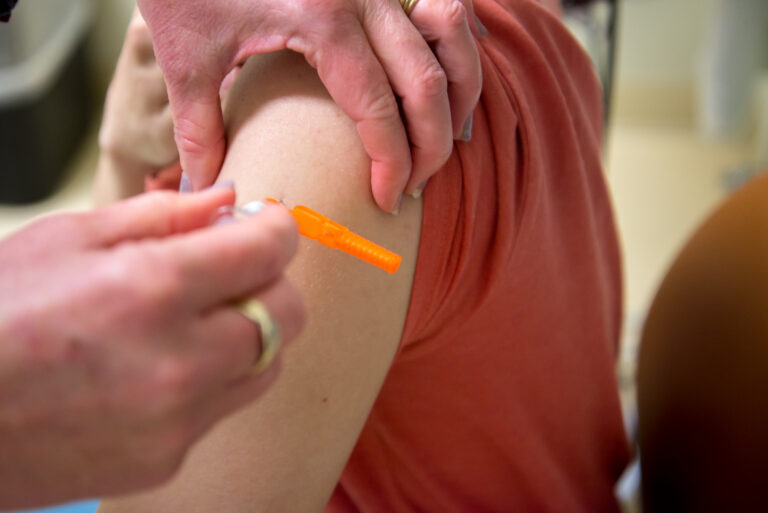
Third dose of the COVID-19 vaccine approved for those with a weakened immune system, according to Yolo County press release

FDA authorizes booster shot of Pfizer COVID-19 vaccine for various groups

Yolo County announced in a press release published on Aug. 20 that “emergency use authorization for Pfizer and Moderna vaccines has been expanded to approve a third dose of COVID-19 vaccine for people ages 12 and up with moderate to severe immune compromise.”

Those who “believe that they are eligible should contact their health care provider for consideration of an additional dose,” the press release said.

Frank Schneegas, Communications Coordinator for Yolo County, explained that the doses are not being distributed through the county, and people should contact their health care providers.

“Yolo County isn’t administering third doses as we don’t have access to people’s health care records and third doses are for those who are immunocompromised,” Schneegas said via email. “Primary care providers are better suited to providing third doses as they can determine if an individual is eligible.”

The press release provides a list of “treatments associated with moderate to severe immune compromise” that individuals may be receiving.

These treatments include those who have “received an organ transplant and are taking medicine to suppress the immune system,” “received a stem cell transplant within the last two years or are taking medicine to suppress the immune system” and have “moderate or severe primary immunodeficiency, such as DiGeorge syndrome [and] Wiskott-Aldrich syndrome.”.

Schneegas noted that “the list above has likely been updated by CDPH, but this is what was initially announced by CDPH.”

The press release also explains that the third dose should be “from the [same] vaccine manufacturer as the original series” if possible.

Additionally, the press release states how long after the second dose the third dose should be administered to individuals.

“A third additional dose of vaccine should be administered no sooner than 28 days after their second dose,” the press release reads.

At this time, the third dose is not available to those who received the Johnson & Johnson vaccine or “to fully vaccinated individuals who are not moderately or severely immunocompromised” as per the U.S. Food and Drug Administration (FDA) authorization.

“Studies of additional doses of Johnson & Johnson for immunocompromised persons are ongoing,” the press release reads.

These studies will help inform whether those who received the Johnson & Johnson vaccine can obtain additional doses.

“The results of these studies will determine if and when additional doses of vaccines are needed for immunocompromised persons who received a single dose of the Johnson & Johnson vaccine,” the press release reads. 

On Sept. 22, the FDA announced in a news release that the booster dose of the Pfizer vaccine has been authorized for some groups.

These include those aged 65 or older, those between the ages of 18 and 64 who “are at high risk of severe COVID-19” and those between the ages of 18 and 64 “whose frequent institutional or occupational exposure to SARS-CoV-2 puts them at high risk of serious complications of COVID-19 including severe COVID-19.”

The Pfizer vaccine is authorized for the “use of a single booster dose, to be administered at least six months after completion of the primary series” for the groups mentioned above.

More information regarding the authorization and data can be found in the news release.

For help with the “Yolo County COVID-19 program,” people can visit the website, call 2-1-1 Yolo for relevant resources and information or follow Yolo County on their social media, linked in the press release, for updates.

Written by: Shraddha Jhingan — city@theaggie.org

Increase in wildfires poses health risk to Davis community

The new school year brings new challenges for health-related concerns

With the start of the new school year and the return to in-person instruction, new challenges arise in maintaining the health and wellness of the Davis community. In addition to COVID-19 concerns, Davis residents face fire-related health risks. 

While this may be all too familiar for returning students and California natives, the increase in severity and frequency of extreme weather events has necessitated clarifications regarding what measures to take in such situations. 

UC Davis Environmental Health Sciences Center Director Irva Hertz-Picciotto explained that these health concerns have not gone unnoticed. 

“UC Davis Health faculty are conducting research on the health effects from wildfires,” Hertz-Picciotto said via email. “Major health effects are respiratory symptoms including asthma and wheeze, cough, [and] irritated eyes. Fine particles, which are smaller than 2.5 microns in diameter (1/7th the diameter of a human hair shaft), are harmful and do enter the respiratory tract [and] are associated with higher cardiopulmonary impairments.” 

 According to Hertz-Picciotto, fires also pose a risk to mental health. 

“Major health effects [include] mental health from various fire-related stressors,” Hertz-Piccitto saidl. [This includes] anxiety about the air quality, the growing threats from climate change and, for some people, evacuations.”  

Hertz-Picciotto explained that limiting exposure to fine particles is key in preventing fire-related health problems. 

“[There are] several ways that students can reduce their exposures,” Hertz-Picciotto said. “Stay indoors as much as possible and if you must go outside or have a ‘leaky’ residence, then wear an N95 mask.” 

Hertz-Picciotto said that it is safest to use N95 masks instead of other masks that only block out larger particles. 

    “The N95 refers to the percent of fine particles that are blocked if the mask has a tight (closed) fit—these are available at hardware stores and other outlets,” Hertz-Picciotto said. “The ‘surgical’ masks that are typically sold at pharmacies are not adequate to block those particles.” 

    Hertz-Picciotto recommended that students and Davis residents check the particle concentration even when the air doesn’t smell. 

“Because the particle concentration in ambient air can be high even when you don’t smell anything, students can go to AirNow.gov to get the current concentrations,” Hertz-Picciotto said. “It’s also on the weather reports on [your] phone.” 

UC Davis News and Media Relations Specialist Julia Ann Easley said that in situations of poor air quality, UC Davis makes decisions informed by the best public health practices and scientific research. 

“Based on recommendations from a UC systemwide review of air quality protocols, UC Davis has adopted the attached decision matrix and uses the U.S. EPA’s AirNow Current Conditions AQI as its official source of air quality data,” Easley said via email. “The matrix outlines required and recommended actions regarding campus closure, cancellation of classes, athletic events, and other operational considerations.”

Campus services will close based on how critical they are in the event of an emergency or any hazardous conditions, according to Easley. 

“UC Davis policy provides for any temporary change to the status of campus operations due to an emergency event or hazardous condition,” Easley said. “The campus may reduce or suspend non-critical functions and services or close facilities at one or more locations.”

Easley recommended that students who have any health-related concerns should contact the Student Health and Counseling Services. 

“They can send a message to a nurse or medical provider through the Health-e-Messaging system or make an appointment as well,” Easley said. “SHCS also provides counseling support if students are [experiencing] anxiety or worry about potential fires.” 

More information about wildfires as well as guidelines for class cancellations can be found on the UC Davis website. 

Fourth-year Neurobiology, Physiology and Behavior major Crystal Tran recalled the class cancellations caused by the 2018 Camp Fire.  

“When I was a freshman during smoke week, there was a lot of uncertainty because we didn’t know if we were going back to class or not,” Tran said. “It turned out that we would not go to class for a week.” 

Tran explained that while she is worried about more smoke, she is more optimistic about instruction during smokey weeks. 

“I’m worried about the smoke and the air quality but I think because of Covid and remote learning for the past year we can switch back online pretty easily,” Tran said. “We won’t have as much uncertainty as back then.” 

Written by: Yan Yan Hustis Hayes — city@theaggie.org