54.1 F
Davis

Davis, California

Tuesday, December 23, 2025
Home Blog Page 256

Ted Cruz’s summer/winter/fall/spring vacation plans

Vacation whenever the moment strikes (Texas hard)

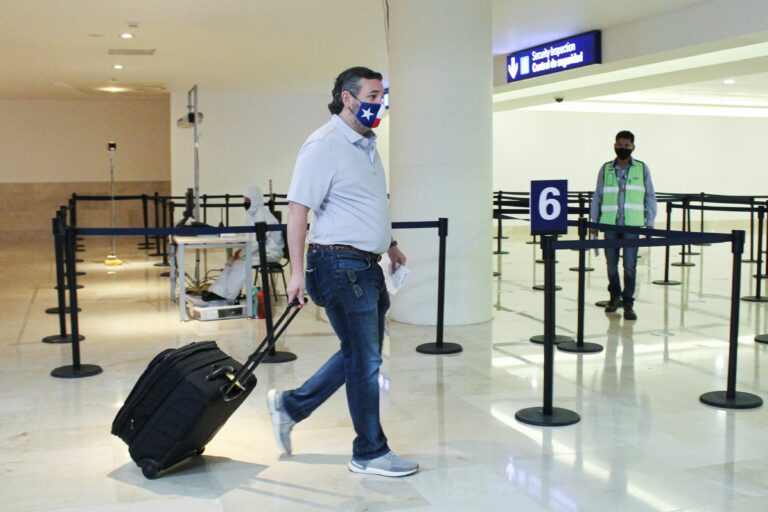
Senator Ted Cruz (R-Texas) is going to Israel! On May 15, Cruz made comments criticizing President Joe Biden’s decisions about the violence in Israel and promised to visit in the coming days. The senator’s office has not given a concrete schedule to the press due to security reasons. 

    Recently, the humor section has obtained leaked information about the specific timeframe for the senator’s trip to Israel. The visit is set for any date in the future, under the stipulation that Texas is being hit hard by a natural disaster.

    When asked for further comment on this, Cruz responded by saying, “While any time is a good time to visit another country in order to show unwavering loyalty and support to a foreign government, the best time to do so is when your home state is being bludgeoned by an act of God.”

The senator also wanted to make sure that this was all his daughter’s idea. “She really cares about Zionism, Hamas and Israel’s ‘right to defend itself’ but only during a time when Texas is under horrible duress,” Cruz said. “I’ll be thinking about the people of Texas throughout my entire first-class trip, but I have to be a good dad.”

    So rain (and flooding causing death and destruction throughout Texas) or shine (and a massive heatwave) or demon spawn razing the Lone Star State, Ted Cruz will be on the first plane to Israel ready to show his support for Bibi. 

Written By: Ean Kimura — etkimura@ucdavis.edu

Disclaimer: (This article is humor and/or satire, and its content is purely fictional. The story and/or names of “sources” are fictionalized.)


2021 spells more trouble for Bears Ears National Monument

Controversies around Bears Ears National Monument highlight the necessity of listening to Indigenous voices

Near the very end of his last term in office, President Obama set aside roughly 1.3 million acres of land to be protected for generations to come. This area, larger than the state of Rhode Island, houses many culturally significant sites and artifacts. President Obama’s declaration felt like vindication for many after years of lobbying by a coalition of the Hopi, Navajo, Ute Mountain Ute, Pueblo of Zuni, and Ute Indian Tribes to the federal government. Unfortunately, the fight for Bears Ears was far from over.

    “Our histories run deep. We relate to these lands who are alive. We know the names of the mountains, plants and animals who teach us everything we need to know to survive,” wrote a few of the founding members of Women of Bears Ears, an Indigenous advocacy organization, in a group Op-ed in the New York Times. “We have within our cultures a familial bond. We know these lands as a mother knows her child, as a child knows her mother.”

    Less than a year after taking his oath of office, President Trump decreased Bears Ears National Monument by 85% or down to roughly 200,000 acres. In this sweeping reduction, he took away protections from several areas considered sacred by the coalition of Tribes. This move drew several lawsuits, as the legality of his actions under the Antiquities Act have been called into question

The motivation behind the Trump Administration’s actions are not mysterious by any means. The Department Interior, under then-Secretary Zinke, estimated that there was roughly 11.36 billion dollars worth of coal deposits in the Kaiparowits plateau. During the year leading up to the Trump administration’s decision, there also was significant lobbying on behalf of other Fossil Fuel and Uranium companies into both the federal and state governments. 

Today, the Monument has no visitor center, no entrance signs and has seen an increase in visitors since the controversy. This has led to the destruction of many ecological, cultural and archaeological resources because of the increase in recreational use by visitors. Additionally, since the reduction, the area has been the repeated target of grave looting and vandalism. Because of the lack of infrastructure and funding by the federal government, even the areas that are part of the Monument have been difficult to protect.

 “My real concern is the continual destruction of the sites, vandalism at the sites,” remarked Clark Tenakhongva, co-chair of the Bears Ears Inter-Tribal Coalition, in April to The Salt Lake Tribune. “Over the past five years, I would say, it seems like there’s more people coming once it was exposed as a national monument, particularly people from Utah.”

The original boundaries of the Monument teemed with history. Scientists studied dinosaur fossils millions of years old in its jagged canyons, and tourists flocked from across the country to visit its archaeological sites that tell the story of its inhabitants thousands of years ago. This rich cultural history and sacred significance to many Tribes prompted the Biden Administration to review the previous Administration’s reduction of the Monument. Now, the simple solution to this issue would be for President Biden to simply return the Monument to its original boundaries, and call it a day, right?

    Well, it’s slightly more complicated than that. If Biden was to unilaterally return the Monument’s borders to its original state, legal questions around the Antiquities Act would never be resolved and the area’s protected status could continue to bounce like a game of ping pong between Presidents with different priorities. So what is the solution?

    The protection of Bears Ears goes beyond protecting the land from ecological damage, the initial designation of the area as a National Monument came at the explicit request of a coalition of multiple Indigenous Nations. This is the first time in U.S. history that this has ever happened. The priorities of the Navajo, Hopi, Ute Mountain Ute, Pueblo of Zuni, and Ute Indian Peoples should be what are considered foremost in Biden’s decision of what to do with their ancestral lands. 

    This means carefully listening individually to what Tribal leaders want first, before even considering what a potential compromise could be in the area. The Biden Administration must both try to protect the long term cultural resources of the region, while also finding an immediate way to provide relief within the Monument’s boundaries. If you would like to support the fight to protect ancestral lands within Bears Ears, consider donating and signing up for the newsletter for the Friends of Cedar Mesa and the Women of Bears Ears.

Written by: Joe Sweeney — jmsweeney@ucdavis.edu 

Disclaimer: The views and opinions expressed by individual columnists belong to the columnists alone and do not necessarily indicate the views and opinions held by The California Aggie.

We need to ditch ‘hustle culture’ once and for all

You can’t out-hustle The Man

As a minimum wage-earning, slightly overworked college student, I wouldn’t say that the term “hustler” applies to me. I’d say that the term “hustler” implies a certain level of grace to one’s hustling. As a “hustler,” you’re the person who’s taking three million phone calls on a little Bluetooth earpiece, breastfeeding a baby and signing checks all at once. 

    Humanity’s love for “hustle culture” is not a new phenomenon. The first use of the word “hustler” to characterize an individual as someone who “sells and promotes energetically or aggressively” was in 1825. Modern iterations of hustling are found in movies and print, such as the 2019 film “Hustlers” and Hustler magazine, respectively. The celebration of feminine sexuality in these examples provide positive connotations for hustling. 

On the other hand, humanity’s aversion to hustling has been around just as long. In pioneer sociologist Max Weber’s “The Protestant Ethic and the Spirit of Capitalism,” Weber argues that society has developed into a highly work-centric environment that insists humans make profit for profit’s sake. In short, people make money just so they can put more money into another business to make more money. 

    Enter social media. In the longstanding battle between pro-hustle and anti-hustle, social media platforms provide the basis for a seemingly paradoxical relationship to exist in tandem. The pro-hustling side of the argument, however, seems to find more solace in its internet home, thanks to the world of influencers. 

    Give influencers all the crap you want, but there’s one thing that we can know for sure: They know how to make you feel jealous. Whether it’s lounging in the Bahamas during the pandemic to living in a lavishly furnished brownstone in NYC, influencers have it good. Really good. There’s a solid amount of these internet celebrities who get their clout from viral videos or associations with other influencers. But there is one particular subset of influencers that attributes their success to mere hard work––and pushes you to live up to their unrealistic expectations. 

    The “hustle culture” pushers of the influencer world are the worst of all vermin that scour the internet. It’s one thing to say that you’ve worked hard for your success, but to flex the fact that you wake up at two in the morning in order to “increase productivity” is a bit of a stretch, especially if your audience consists mainly of everyday folks.

 I found a post recently on @iamnatalie’s Instagram account (founder of @bossbabe.inc) that reminded users that “your time and the time of your loved ones here is finite” and that we shouldn’t put off grinding as a result. Another post by @thehustlerhive told me: “Our reality is a reflection of our inner world. So if life isn’t looking the way you want it to, you have to conquer your limiting beliefs…” Et cetera, et cetera. 

    Reminding people about the mortality of themselves and their loved ones in an effort to get them to work more is probably one of the weirdest ways of motivating people I’ve seen. And I wouldn’t say that everyone’s realities are a reflection of their inner worlds––I highly doubt that impoverished Americans in a systemically unjust economic system are simply suffering from unconquered “limiting beliefs.” By this logic, the devastating pandemic unemployment in the past year could’ve been fixed with a quick mindset shift.  

    A post by @bossbabecorner tells me that “it’s time to ditch the 9-5 and become the CEO of your own life. It all starts with a $7 investment.” This entirely ignores the fact that returns from a $7 investment wouldn’t be immediate. People have children to feed—today. Not in two years. Investing is a realistic way of making money if you’ve already got a little cash in your pocket, not if you’re trying to work everyday to make ends meet.

    The language in these influencer’s posts are all underscored by a certain sense of condescension. Those who aren’t a part of the clique of hustlers are feeble-minded sheep, in their eyes. They haven’t been “awakened” to the world of wealth. Also in the language is an overemphasis of “financial literacy,” defined as “the ability to understand and effectively use various financial skills.” These people stress the need for financial literacy in order to effectively pull yourself up by the bootstraps. But, let’s be honest: When it comes to who’s rich or not, there are many more factors at play than just “financial literacy.”

    The phrase of hustle culture ignores the lived experiences of many low-income folks, especially in an economic democracy like the U.S. The ability to dedicate oneself solely to the art of “putting in work” and “chasing a bag” is a privilege that only few can sustain in this country.

Written By: Isabella Chuecos––ifchuecos@ucdavis.edu 

Disclaimer: The views and opinions expressed by individual columnists belong to the columnists alone and do not necessarily indicate the views and opinions held by The California Aggie.

Yolo County follows the state’s decision to keep mask mandates in place until June 15

After June 15, fully-vaccinated individuals won’t have to wear masks except at lage events

The Centers for Disease Control and Prevention (CDC) announced on May 16 that fully vaccinated people can resume activities without social distancing or wearing a face covering. Despite these updated guidelines, California isn’t set to remove its mask mandate for fully-vaccinated individuals until June 15.

The California Department of Public Health (CDPH) detailed that after June 15, being vaccinated or testing negative for COVID-19 and wearing a mask will be required for everyone attending indoor Mega Events (over 5,000 attendees). Masks will also be mandatory for Outdoor Mega Events (over 10,000 attendees), but being vaccinated or testing negative will only be recommended. 

On-call public information officer Frank Schneegas explained that Yolo County’s orders align with the state’s restrictions, although Yolo County has the ability to implement firmer guidelines than the state.

“We can’t be less restrictive than the state, although we can be more restrictive,” Schneegas said. “We don’t have anything in place that is more restrictive, so we’re following whatever the state does.”

Schneegas said Yolo County may see caveats to when masks are mandatory after June 15 but that the CDPH announcement is still currently applicable to Yolo County. He added that Yolo County is waiting to hear about how people would be identified as vaccinated from the state. He emphasized the importance of getting vaccinated, adding that data have shown vaccines to be effective and safe.

“We hope everyone gets vaccinated to ensure the health and safety of our residents and our broader community,” Schneegas said. 

Kaiser Permanente still requires everyone entering its facilities to wear masks, including in locations outside of California where there are no current mask mandates. It also recently started administering the Pfizer vaccine to people ages 12 to 15 and offers free vaccines to members and nonmembers alike. 

Kaiser Permanente Senior Public Relations Consultant Chyresse Hill emphasized the importance of wearing a mask and getting tested for fully-vaccinated individuals with COVID-19 symptoms. 

“Kaiser Permanente advises everyone age 12 and older to get vaccinated as soon as possible,” Hill said via email. “Even after fully vaccinating, anyone with symptoms of illness should resume wearing a mask and get tested.”

Schneegas detailed that cloth and medical masks have shown to be effective in preventing the spread of COVID-19. The CDC recommends people to find cloth masks that have a nose wire, block light when holding it up to a bright light and contain layers of breathable, woven fabric. They do not recommend masks containing exhalation vents or valves, or those made of only one layer of fabric that does not block light.

Schneegas encouraged all eligible Yolo County residents to get vaccinated, noting that getting vaccinated is free and sites are easy to find locally. 

“The [vaccines] are incredibly easy to get now, and they’re very accessible,” Schneegas said. “They are absolutely free regardless of whether or not you do or don’t have health insurance.”
Written by: Ellie Lee — city@theaggie.org

Students express anxieties about return to in-person instruction

Many students have become accustomed to the remote learning norm of open-book, open-note test taking and are worried about rigor of the traditional classroom

In late December, the university announced its plan to return to in-person instruction in fall 2021. Chancellor Gary May and Provost and Executive Vice Chancellor Mary Croughan wrote that as local and regional conditions related to the COVID-19 pandemic have improved significantly, it is expected that students will be back to the classroom at full-occupancy come fall.

While most students are eager to return to in-person instruction, the online classroom has introduced many accommodations and perks that students are anxious to give up. For many, it will be bittersweet saying goodbye to open-note and open-book exams.

First-year students and the transfer class of 2022 have never walked into a lecture hall, pulled out a scantron and taken an exam at UC Davis. 

Tayra Eidenbenz, a first-year neurobiology, physiology and behavior major, said that she is moderately concerned that in-person exams will be more rigorous since all of her tests during her first year have been open-note.

“I am concerned that I won’t be in a comfortable environment,” Eidenbenz said. “I don’t need all of my resources to take the tests I am taking, but it’s definitely been reassuring. I am just afraid that if I don’t have that reassurance, I will second-guess myself rather than just confirming an answer with my notes on the exams next year.”

Alexandra Schmidt, a first-year biological sciences major, said that while most of her exams this year have also been open-note, she speculates that her instructors considered this policy when developing exams.

“It’s definitely been nice to be able to refer back to my notes during exams,” Schmidt said. “When I was taking a lot of chemistry classes, I think my professors would make the exams harder because they’re open-note.”

    In an interview with the Editorial Board this past spring, May said that the administration and Academic Senate are discussing what accomodations and flexibilities that have arisen in the pandemic should continue when in-person instruction resumes. 

May also noted that the administration is devising a plan to phase out pandemic practices and return to normalcy over time, noting the mental health implications of an abrupt return to the rigorous standard of the in-person classroom.

Jeff Chen, a third-year electrical engineering major, is hopeful that the practice of recording lectures will stick around.

“I think that having recorded lectures has been really nice and helps a lot with learning,” Chen said.

Eidenbenz agreed and said that while she is nervous to return to traditional exams, she has a slew of more pressing concerns such as navigating the campus. 

“For my year, class of 2024, we’ve never been to a lecture hall before,” Eidenbenz said.
“We don’t know how to get around campus. We don’t know how to bike with thousands of people to get to class on time. How does that work? Those are more concerning to me than the fact that I can’t use my notes on a test anymore.”

Eidenbenz said an in-person orientation program would be “phenomenal” to prepare students to attend UC Davis and allow students to cultivate connections with their class.

“Class of 2024 is defined by the fact that we spent our entire first year in our dorms,” Eidenbenz said. “That wasn’t just my dorm to me. That was my lecture hall. That was the place where I ate, slept—everything. That was my whole life for a whole year.”Written by: Rebecca Gardner — campus@theaggie.org

Participants in UC Davis undergraduate survey targeted by Accellion cyberattack

Data from survey responses could be published or sold for financial gain by hackers

Participants in one of UC Davis’ undergraduate experience surveys were targeted by the recent Accellion cyberattack, according to a May 26 campus-wide email from Pablo Reguerín, the vice chancellor of student affairs. Accellion is an IT cybersecurity company.

The undergraduate experience survey, conducted between April 20 and July 16, 2020, asked students personal questions regarding academic performance, mental health, diversity and campus life. The data from these survey responses, which also included names, email addresses and student IDs, could potentially be published or sold by the hackers. 

Targeted individuals also received an email from UC President Michael Drake regarding resources to ensure cyberdata protection.

“I strongly encourage students who receive [this email] to take it seriously and follow [Drake’s] recommendations,” said Chancellor Gary May via email. “And don’t be afraid to reach out for mental health support should you need it. Everything will be okay.” 

Dana Topousis, the chief marketing and communications officer at UC Davis, urged students to check the UC site regularly for updated information about the Accellion attack. 

“The UC has created a microsite with frequently asked questions and information about how to protect yourself moving forward,” Topousis said. 

According to a recent article in The California Aggie, the Accellion attack previously enabled hackers to access information including credit card and bank details, birthdays, Social Security numbers and addresses. 

The recently updated UC statement had noted that some of this personal data was published on the Internet on March 21. The Accellion system was then taken offline and the vulnerability was repaired, but the UC—which is cooperating with FBI officials to investigate the matter—has said it is currently seeking a more long-term solution to the issue. 

The UC has also established “free credit monitoring and identity theft protection services for former and current employees […] and current students” through Experian IdentityWorks, a resource linked in emails to relevant individuals between May 12 and May 14.
    The cyberattack affected many other institutions worldwide, from companies to government agencies to hospitals, according to Inside Higher Ed

The attack, first conducted in December 2020 and again in January 2021, also targeted institutes of higher education like the University of Colorado, Yeshiva University, the University of Miami, the University of Maryland, Baltimore County and the Stanford University School of Medicine.
    Cybercriminals subsequently published the data collected from these institutions on a website called C10p. Inside Higher Ed said the aforementioned information included “academic transcripts, medical records, research grants and employment contracts.” 

The individuals running the C10p website have been known to threaten people with publishing such data if they do not receive ransom money. 

This tactic of using harmful software to block access to computer systems until ransom money is received has been used by other cybercriminal groups like Ryuk, Netwalker and DoppelPaymer using an “.onion domain.” 

Melissa Lutz Blouin, the director of news and media relations at UC Davis, spoke about practical ways that students can protect their personal data. She recommended they be vigilant about phishing scams, which often contain inquiries about sensitive information or link to websites demanding such personal details. 

Blouin also urged students to use Duo, a multi-factor authentication system that is designed to protect against hackers. 

“For many of us, our homes are now our offices,” Blouin said via email. “Keep your devices as secure at home or on the road as you would in the office. Lock your computer screen before leaving it unattended, and take your phone and other portable items with you or lock them up. Password protect all of your devices, using the strongest authentication available.”

Written by: Rebecca Bihn-Wallace – campus@theaggie.org 

Local theater and dance productions remain virtual, hope to reopen in fall

Technical issues and the need for new equipment are some difficulties of virtual performances

Although the COVID-19 pandemic forced theater and dance productions to become virtual, various representatives from local theater companies and organizations hope to resume in-person performances in the fall. 

The UC Davis Department of Theatre and Dance has been producing remote theater all year, which UC Davis professor of theatre and dance Mindy Cooper says has been technical and frustrating. Despite these challenges, she said that live theater and its messages are too important not to create during COVID-19. 

    “Theater online has been a lifeline,” Cooper said. “The ability to continue to make and watch theater during the pandemic has kept the community alive.”

    She said that the department has taken budgets from stage design to give actors a camera, microphone, lighting equipment, green screen and a grid that they put on the floor. Cooper described rehearsing over Zoom and recording using VMix, a live video streaming software.

“It’s a very lengthy process,” Cooper said. “It takes about twice as long as being in the room. You can’t have a couple different people talking at once, because it’s Zoom.”

Cooper collaborated with American actress Sharon Lawrence to film “The Shot,” a play written by Robin Gerber about the story of Katherine Graham, who ran The Washington Post for almost 30 years. Cooper highlighted that the play was meant to have a reading in Los Angeles, but Lawrence ended up shooting the play alone in her home.

    “Imagine just one person in a room, one cameraman, with lots of COVID testing going on,” Cooper said.

    An upcoming musical, “Juliet and Romeo,” is a co-production with the Department of Theatre and Dance It runs from June 3 to 5 and is free to attend. Cooper described the filming process as a labor of love, noting that they would have to re-record whenever they found a technical glitch.

    Cooper said that reopening theaters and musicals, where people sing in one another’s faces, is a difficult process. 

    Co-producer and co-founder of Davis Musical Theatre Company (DMTC) Steve Isaacson explained that DMTC is planning to reopen on Aug. 20, 2021, if possible. He described the blend of live theater over Zoom and pre-recorded sequences that have made up DMTC’s virtual productions. 

    “We’ve done nine productions now over the Internet—all the live scenes were done on Zoom, and all the musical numbers were recorded individually on green screen,” Isaacson said.

    Isaacson added that they had to use blue screens while performing “Shrek, The Musical,” since the character is green. They filmed nine hours total for their last virtual production of “Shrek” on May 15. 

Shrek, The Musical” will be shown from July 9 to July 18, 2021; people can purchase tickets, and it will be broadcasted on ShowTix4U, according to Isaacson.

    “Please come and see it,” Isaacson said. “It’s very inventive, fun entertainment to watch for the whole family, especially if your family is made up of 12 year old boys.”

    Isaacson described some pandemic challenges for performers, explaining that some of the group energy is lost when people are acting alone.

    “People that normally like to perform in the ensemble are forced to become solo performers, “ Isaacson said.

    The Woodland Opera House held auditions over Zoom, but its costume designer Denise Miles said they hope to go back to productions with live audiences in the fall. Miles described that two of Agatha Christie’s plays, “The Count” and “The Curse,” were recently filmed in person and are being distributed over streaming services.

    “It was filmed in the theater,” Miles said. “Everyone is six feet apart on stage.”

    Cooper noted that although performing has been difficult during the pandemic, it was still important to create art. 

    “Imagine this pandemic without your favorite music, your favorite movies, your favorite turn to the arts,” Cooper said. “We have been able to continue to make people feel emotions that they need to feel during this really difficult time.”

Written by: Ellie Lee — city@theaggie.org

Films and plays to watch during Asian American and Pacific Islander (AAPI) Heritage Month

Members of the AAPI community share their recommendations of media celebrating AAPI stories

As Asian American and Pacific Islander (AAPI) Heritage Month comes to a close, reflection on the history and contributions of the AAPI community do not have to be confined to a month. One way to continue education about this community and the issues they face is by watching movies, short films and plays produced by and about AAPI individuals.

Raya and the Last Dragon (2021), screenplay by Adele Lim and Qui Nguyen

This animated Disney film follows Raya, a warrior in the fantasy realm of Kumandra and Disney’s first Southeast Asian protagonist. According to Katherine Parpana, the interim director of the API Retention Initiative, the cast and most of the production team were Asian and Southeast Asian. 

“Disney animators and writers did a great job honoring Southeast Asian culture in the storytelling and design of this film,” Parpana said. “Everything from the five realms of Kumandra to the costume design was an homage to Southeast Asian culture.”

Minari (2020), dir. by Lee Isaac Chung

Both Parpana and Trisha Talla, a second-year biochemistry and molecular biology major and the community service coordinator for the Filipinx Association for Health Careers (FAHC), recommended “Minari.” The storyline is about a South Korean immigrant family and their experience in rural Arkansas in the 1980s. 

“It really highlights the importance of family and defines what makes a place home,” Talla said.

According to Parpana, “Minari” is one of the first Hollywood films centering an Asian cast since “Joy Luck Club” in 1993. It garnered many awards, including the Oscar for Best Supporting Actress, with Yuh-Jung Youn becoming the first Korean actress to win an Academy Award.

The Farewell (2019), dir. by Lulu Wang

Both Parpana and Talla also recommended “The Farewell,” a comedy-drama film that follows a Chinese-American family. After learning their grandmother only has a few months left to live, the family decides not to tell her and schedules a wedding in order for everyone to gather before she dies.

“This story reminds me of my grandmothers, Lola and Inang, and all the things we did to protect them, respectively, and all these traditions that are archaic but we still practice them out of filial piety or familial pressure,” Parpana said. “It’s a great reminder of the things we do for family and how our ancestors seem to always just know.”

As the story follows an immigrant family, it explores both Chinese and American cultures, Talla said.

“The director really portrays the cultural differences between those who were born here in the U.S. and those who were born in China, without any bias as to whose approach might be best when it comes to dealing with death of a loved one,” Talla said.

Always Be My Maybe (2019), dir. by Nahnatchka Khan

This romantic comedy film follows Asian American leads Marcus and Sasha, two childhood friends who grow up next door to each other in San Francisco, fall out of touch and reconnect years later. Parpana noted that themes in this film include the expectations of AAPI women around marriage and motherhood, expectations of AAPI men and masculinity and relationships with both immigrant and multigenerational American parents. 

“I personally loved this film because it reminded me of my own time growing up in the Bay Area,” Parpana said. “Also, the music, which is so important for many AAPI folks, because so many of us relate to and enjoy the music featured in this film.”

Lilo & Stitch (2002)

A well-watched Disney animated feature, “Lilo & Stitch” is one of few major film releases centering on Native Hawaiian stories. Parpana pointed out the importance of the AAPI adoptee experience and how this film highlights this theme. She explained that many AAPI families do not fit the Western definition of a nuclear family, but instead are extended and globally located.

“Many of us are adopted into other families and grow up learning about our respective AAPI cultures and heritages in our own ways,” Parpana said. “This film is a great reminder that family is what we make of it.”

Short Films

Julia Lu, a third-year civil engineering major and the co-president of the Asian American Association (AAA), recommended watching short films, including HBO’s Asian Pacific American Visionaries 2020 Winners: “Si” produced by Thomas Percy Kim, “Fine China” by Tiffany So and “Lonely Blue Night” by Johnson Cheng. Lu also recommended “In the Visible,” a short film directed by Natasha Lee and produced by Lucia Tran, and “Cambodian Son,” a documentary that can be streamed for free on PBS.

Plays by A. Rey Pamatmat

Elijah Punzal, an intern for the Bulosan Center for Filipino Studies, recommended the works of A. Rey Pamatmat, a Filipino-American playwright. Pamatmat’s play, “Edith Can Shoot Things and Hit Them,” follows Filipino-American immigrant children Kenny, his sister Edith and their friend Benji, as they are abandoned in the Midwest. This family drama explores Kenny’s relationship with his sister and with Benji, as the two fall in love.

Another play by Pamatmat, “House Rules,” centers around two families: a pair of brothers with their father and a pair of sisters with their mother. The play portrays how people’s expectations of one another can cause tension, especially when they are trying to make peace with the potential death of their parents.

“Theater is so magical because of the way that you can see yourself on stage very viscerally,” Punzal said. “That’s why I would suggest these two plays during AAPI Heritage Month because they explore what it means to be Filipino, and there’s also the expression and nuance of Filipino narratives that we don’t always get to see in media.”

Written by: Liana Mae Atizado— features@theaggie.org

An ode to the drive-in movie

Why this activity is ideal for the summer 

Summer is fast approaching, and (thanks to increased vaccination rates and a year of masking up) this year promises to redeem itself of the months spent in lockdown last year.

That being said, it is still vital to stay COVID-conscious for a little while in order to not ruin all of the hard work put in by healthcare professionals and keep that curve sailing down. Going to a drive-in movie is already a beloved activity, but as we slowly transition into a sense of post-pandemic normality, it’s pretty much the ideal way to spend a warm summer night. 

To preface this love letter to the drive-in movie: I am someone who, for some reason, feels the need to voice every thought that comes to mind when I’m watching a movie. I also laugh obnoxiously loud, get teary way too easily and can’t stifle my screams when there’s a jump scare. Needless to say, I’m usually not the most popular person in the movie theater. 

Drive-in movies alleviate all of these issues. From the privacy of my own car, the only people subject to my annoying movie-watching habits are the other people in the car (and they usually join in). There’s no one sitting behind you, shushing you and kicking your seat every time you let out a giggle (true story). Being able to enjoy yourself free from judgment is a huge perk of choosing the drive-in over your local Cinemax.

It’s a well-known and universally loathed fact that movie theater food is overpriced. A large popcorn and Icee can easily set you back $15, which only adds injury to the already pricey ticket. Though there is something to be said for the thrill of successfully sneaking an absurd amount of snacks past the teenager working security at the theater, at a drive-in movie, there are no restrictions on the quantity of cheap food you can bring with you. So before you catch a flick, make a pit stop at your local convenience store and stock up on all the popcorn and candy your heart desires for a much cheaper price than you would be paying at the theater.

There’s also nothing that beats the retro ambiance of a drive-in. It feels straight out of “Grease”—you almost expect Danny and Sandy to pull up in the car next to you.

Recently, younger generations seem to be experiencing an extreme sense of nostalgia. From Y2K fashion to Gen Z’s ‘80s obsession fueled by “Stranger Things,” going to a drive-in movie is sure to deliver on the desire for the simple times of days past. 

Drive-in movies are an American staple and the perfect activity for warm summer nights. There’s just nothing like enjoying a movie from the privacy of your own car, with the ability to enjoy reasonably priced snacks from home and make as many stupid comments as you want without bothering the person sitting behind you. Whether it’s with your friends, partner, mom, dad, grandma, whoever it may be, a drive-in movie is sure to be a crowd-pleaser. 

Written by: Clara Fischer — arts@theaggie.org

Culture Corner

The Arts Desk’s weekly picks for television, movies, books and music

Movie: “Chungking Express” dir. by Wong Kar-wai (1994)

Director Wong Kar-wai’s “Chungking Express” is a tale of two love stories told amid the eclectic urban backdrop of Tsim Sha Tsui, Hong Kong. Cinematographer Christopher Doyle’s unique manipulation of film creates a surreal world, made real by a standout performance from actress Faye Wong. Wong—who steals the show as a quirky hostess turned love interest in the film’s second half—also provides the soundtrack with a killer Cantonese remake of the melancholic hit “Dreams” by The Cranberries that will have even the most ardent Dolores O’Riordan fan listening on repeat.

Show: “The Sopranos” (1999-2007)

A 20-something year old male tells you his favorite show is “The Sopranos.” Cliché, I know. But in my four years of reading Culture Corner, I’m not sure I’ve seen it listed yet, and that’s a tragedy. Writer and producer David Chase’s contemporary portrayal of the American mafia—depicted via an ensemble cast led by the late James Gandolfini—is undeniably one of the greatest television shows of all time. As nihilistic as it is humorous, “The Sopranos” touches on everything from the Italian-American experience to mental health stigma. Watch it if you somehow haven’t yet.

Album: “Section.80” by Kendrick Lamar (2011)

Unpopular opinion, but I think Kendrick’s debut studio album is his greatest. Going on a decade old, most of the songs on “Section.80” somehow remain feeling authentically deep and real while still sounding as though they wouldn’t be out of place at a house party. A hard-to-classify style with obvious influences from conscious rap, alternative hip hop and early 90’s artists, this album has aged gracefully. A retrospective listening of the masterings of lyrical flow and narrative story-telling on “Section.80” show us that Kendrick was always bound for greatness. 

Book: “Dreamland: The True Tale of America’s Opiate Epidemic” by Sam Quinones (2015)

Remember in 2016, when the ascent of former President Donald Trump left countless coastal Americans wondering why so many working-class voters had suddenly flipped to the right after serving years as a Democratic bulwark? The explanation for this perplexion seemed to lie in an endless prescription of novels and narratives surrounding the American heartland, from J.D. Vance’s Appalachian memoir “Hillbilly Elegy” to Arlie Russell’s sociological study “Strangers in Their Own Land.” But if there were one book I would say summed up life and death in Middle America, it would be Sam Quinones’ “Dreamland.” The bilingual former Los Angeles Times correspondent Quinones paints a damning image of our country’s opioid problem, and in doing so, escapes the usual cliches and patronizing tones of most of the genre. “Dreamland” is a powerful anthology that takes readers from the poppy fields of Xalisco to the “pill mill” medical clinics of rural Ohio, revealing the true horror and extent of America’s latest drug epidemic—and the thousands of lives it’s taken along with it.

Written by: Brandon Jetter — arts@theaggie.org

UC Davis professors share experiences teaching abroad

Professors reflect on their favorite moments from teaching overseas

When describing their study abroad experience, a student may mention the country they studied in, the food they ate and the culture they encountered. Amid the travel adventures and awe-inspiring moments, however, lies the academics that students participate in throughout their program. At UC Davis, many professors participate in study abroad programs and instruct students overseas. 

    Tim McNeil, a UC Davis professor in the Department of Design and director of the UC Davis Design Museum, is the instructor for the Design in Europe program. Born and raised in the U.K., McNeil was excited at the prospect of sharing the places he knew so well in an academic setting. Moreover, he passionately believes in the importance of international and global experiences.

    McNeil shared that his favorite experience from teaching abroad was watching the students collaborate on projects with community partners and present their work, whether they designed a project or wrote up a proposal. 

“The people we work with are gaining from the experience of working with a group of students from UC Davis and any other campuses, and getting a different perspective on what they’re doing from a more international audience and from an audience that is not typically one they’re able to […] communicate with,” McNeil said.

Additionally, McNeil said that his program offers students the opportunity to learn outside of the classroom, including in parks, cafés and even on the beach. 

“There’s something about this outdoor classroom, or shall we say traveling nomadic classroom, that moves from where we go from city to city that I like,” McNeil said. “It’s very rewarding in that sense and offers just a different way of teaching that allows for more experimentation and a little bit more freedom.”

    Mitchell Singer, a UC Davis professor and the vice-chair of the Department of Microbiology and Molecular Genetics and a Biochemistry, Molecular, Cellular and Developmental Biology advisor, served as the faculty of record for the Bio Sci 2A on the Emerald Isle study abroad program. Singer said that he jumped at the chance to participate in a study abroad program because he studied abroad in Brussels during high school. 

    “I think that it’s really important that all students should really have an experience where they’re out of their comfort zone, in a different environment, living with people who don’t speak the same language, who don’t look like them,” Singer said. “I think it’s really important that people have that opportunity, and [studying] abroad is a phenomenal way of doing it.”

    Singer’s favorite part about participating in a study abroad program is getting to know his students in a way that isn’t possible during his usual 500-600 person courses. 

    “I got to interact with 17 students in BIS2A relatively intimately,” Singer said. “We would take a bus ride up to the Cliffs of Moher, and on the bus students were asking me questions about biology. So you really get to interact with them. This is gonna sound really weird, but it was the first time I ever got to take my BIS2A class out for a beer.”

    Looking forward, Singer put in a proposal for a program to teach Microbiology 102 in Brussels which was approved and will take place in Summer 2022. 

    Jeannette Money, a UC Davis professor in the Department of Political Science, taught in Geneva, Switzerland on the politics of global inequality from 2009 to 2018. Money shared that she loves the small learning environment that instructing study abroad courses provides. 

    “My favorite part about teaching abroad is my ability to interact with a small group of students in the classroom and in professional settings,” Money said. 

    Moreover, Money reflected on study abroad’s ability to transcend student’s societal understandings. 

 “The most important part about studying abroad is to gain an understanding of how people live in another society, what their preferences are and how they organize their society, in part because that helps you understand yourself and your own society better,” Money said.

Written by: Nora Farahdel — features@theaggie.org

The City of Davis announces Pfizer-BioNTech vaccine is clear to be administered to children ages 12 and up

The California Department of Public Health and the federal government have approved the administration of the Pfizer vaccine to kids ages 12-15

UC Davis has expanded its efforts in combating the novel COVID-19 virus by administering the first two doses of the Pfizer vaccine to a new age group. As of May 2021, the Food and Drug Administration (FDA) approved the emergency use of the Pfizer vaccine for ages 12-15. Clinical trials have proven 100% efficacy against SARS-CoV-2 and a “robust” antibody response. Phase 3 of testing adolescents from ages 12-15 included 2,260 participants who demonstrated strong immunity after receiving both doses. 

    UC Davis Health has taken its own steps in protecting the Davis community and this developing at-risk age group. Children account for roughly 20% of COVID-19 cases in the U.S.; this is roughly three million adolescents, and the number continues to increase. Officials recommend that children get vaccinated as soon as they are able to protect themselves and others from severe reactions.

    Dr. Dean Blumberg, a professor and the chief of pediatric infectious diseases at UC Davis Children’s Hospital, provided his insight on the recent announcement of vaccinations being administered to children ages 12-15. Blumberg assists in setting policies related to COVID-19 treatment, prevention of infection and clinical vaccine trials of this age group for UC Davis.

    “As long as children are not vaccinated, they are still vulnerable to infection,” Blumberg said. “We are seeing an increasing number of young people get infected because they are susceptible. Thousands of children have been hospitalized in the U.S. due to [COVID-19] and have died. I think every time the age decreases for receiving the vaccine, it is a positive thing, as long as the vaccine is proven to be safe and effective among this age group.” 

    UC Davis Health has partnered with and is currently working on Novax’s adult trials in hopes of extending this new vaccine to adolescents in the local community. Blumberg and his colleagues have been monitoring clinical trials of this vaccine in the new age group in an effort to have more vaccinations readily available and promote COVID-19 prevention among adolescents.

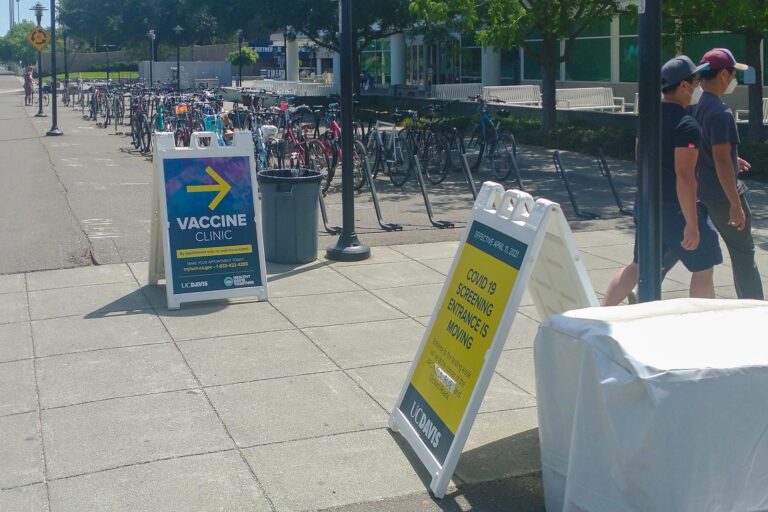
UC Davis campus officials have implemented a variety of strategies to minimize the spread of COVID-19, including establishing testing and vaccination protocols. Campus partners have launched multiple projects since the start of the pandemic to reduce the risk of infection and keep the community safe. Some of these efforts include COVID-19 testing kiosks on campus which are readily available for students and community members, vaccine clinics, a contact tracing investigative team and quarantine housing. Many workers in the frontline of these on-campus services stress the importance of getting vaccinated and the need for more vaccines to be made available, especially for those of younger age groups. 

    Cindy Schorzman, the medical director for Student Health and Counseling Services, leads the coordination and implementation of infrastructure to support COVID-19 prevention efforts. Schorzman hopes to address health equity considerations in the City of Davis and believes vaccination against COVID-19 is one way to do just that.

“COVID-19 vaccination is the primary mechanism through which we are starting to be able to return to more normal activities,” Schorzman said. “It is very important for those who are able to get vaccinated to do so. COVID-19 vaccines significantly reduce the probability of contracting the virus. They are also likely to help keep you from getting seriously ill, even if you do get the virus. Getting vaccinated also may protect people around you, particularly those at greater risk for severe illness from COVID-19.​” 

Vaccination efforts have been implemented in many of Davis’ neighboring communities as well, contributing to the decline of COVID-19 cases over the past few weeks in Yolo County. Vaccination clinics in Sacramento have also seen the effects vaccination has on contracting COVID-19.

Rhina Kaur, a COVID-19 vaccine and testing assistant at Sacramento Native American Health Center, works to promote preventative measures and frequent testing for the safety of her community. 

“I believe it is important to get COVID-19 vaccines, as their efficacy for reducing symptoms and even reducing transmission has been scientifically proven,” Kaur said. “The vaccine has significantly reduced and even eliminated deaths caused by COVID-19. Vaccinations are important because it has lessened the strain of healthcare workers, and hospitals are no longer overwhelmed and overrun by [COVID-19] cases. I am happy individuals 12 and up are getting the vaccine and pleased with the rate of acceleration for this reason.”

Written by: Emmanuel Fonseca — features@theaggie.org

Big Day of Giving raised 13.3 million dollars

Donations from the Big Day of Giving help to support many local nonprofits

The Sacramento Region Community Foundation’s Big Day of Giving occurs annually during the first Thursday in May. Its official website explains that it is “an annual 24-hour community-wide movement that unites the region’s nonprofit sector to help raise unrestricted funds for the organizations that strengthen the capital area.” 

Sacramento Region Community Foundation Program Manager Monica Haulman explained that the Big Day of Giving is a capacity-building program for local nonprofits. She further noted how a total of 688 different organizations participated this year. 

“Our mission for the Sacramento Region Community Foundation is to build a stronger community,” Haulman said. 

Yolo Community Foundation Executive Director Jessica Hubbard described the Big Day of Giving as “a capacity-building program for local nonprofits in addition to being a major fundraising opportunity.”

Hubbard explained that the Big Day of Giving offers a unique opportunity for nonprofits since donations they receive are not for any specific program or initiative and can be used to support the organization’s mission in any way. 

“Organizations that participate in [the Big Day of Giving] have access to a year-long capacity-building program where the Sacramento Community Foundation offers a number of trainings, mentorship opportunities and other resources to help nonprofits build their capacity to fundraise and also beyond,” Hubbard said. 

When the pandemic began last year, Haulman explained that they worried that the Big Day of Giving would not be as successful as it had been in previous years. It raised a total of 12 million dollars in 2020, however, as compared to a total of 8.4 million dollars in 2019. 

“It was a huge jump that we had never seen and did not expect,” Haulman said. “We’re all in uncharted territory, so we weren’t really sure what to expect.”

Hubbard noted that 98 nonprofits participated in the Big Day of Giving this year in Yolo County specifically. These nonprofits supported various causes, including but not limited to food insecurity, education, the environment and arts and culture. Hubbard explained that although raising money is the focus, the Big Day of Giving also connects nonprofits with more donors. 

“Hundreds of local nonprofits from throughout the Sacramento region all raise money on that day to support their mission,” Hubbard said. “It’s also an opportunity for nonprofits to reach out to new donors because there’s so much activity going around on the day itself.”

In 2021, the Big Day of Giving was able to continue its upward trend in donations, raising more than it had in 2020, Haulman said.

“Our nonprofits ended up raising 13.3 million dollars, so 1.4 million over last year,” Haulman said. “It was really incredible to see that people are still giving generously and giving locally.”

Yolo Community Foundation Donor Meaghan Likes explained how the Big Day of Giving appeals to donors who may not regularly donate to nonprofits because it does a great job of marketing donations in an appealing way. 

“It raises awareness about charitable giving,” Likes said. “It really encourages people to get into their pocketbooks and give away.”

Hubbard noted how the Big Day of Giving brings the community together. 

“One thing that I think is really tremendous about the [Big Day of Giving] is that it’s a community-wide event,” Hubbard said. “When you make a donation to the [Big Day of Giving], you’re part of something bigger than yourself that involves over 36,000 individuals joining together to support nonprofits all in one day.”

Likes explained that as a tax accountant, she was shocked by how few people regularly donate to nonprofits. 

“My fear early in the pandemic was that nonprofits would not survive, that the need would still be there but nonprofits would not be able to financially survive and continue serving,” Likes said. 

Hubbard noted the importance of nonprofit organizations during the COVID-19 pandemic. 

“Nonprofits are kind of like the unsung hero of the pandemic,” Hubbard said. “Those nonprofits have been working more than I thought was humanly possible to serve the needs of our community since the beginning of the pandemic.”

Haulman described the importance of nonprofits during the pandemic since many provide important and trusted services.

“There’s still an immense amount of trust in nonprofits, even when trust in other entities was struggling during the pandemic,” Haulman said. “The services that they provide are services that we can’t afford to lose.”

Hubbard left a final note encouraging residents to support their local nonprofits. 

“Our Yolo County community is incredibly lucky to serve and to be surrounded by a robust and passionate nonprofit sector,” Hubbard said. “I would strongly suggest for Yolo County residents to look for ways to connect to their local nonprofits.”

Haulman added that community involvement is not limited to making donations, emphasizing that volunteering is important as well. 

“We always want to encourage anyone in the community to get involved with the local nonprofits,” Haulman said. “It’s a really great way not only to donate, but to become involved with the work that the local nonprofits are doing either as a volunteer or a participant.”

Written by: Jelena Lapuz — city@theaggie.org

UC eliminates SAT, ACT requirement from admissions process

The UC reached a settlement in landmark standardized-testing case—enforcing the continuance of a “test-blind” approach to admissions

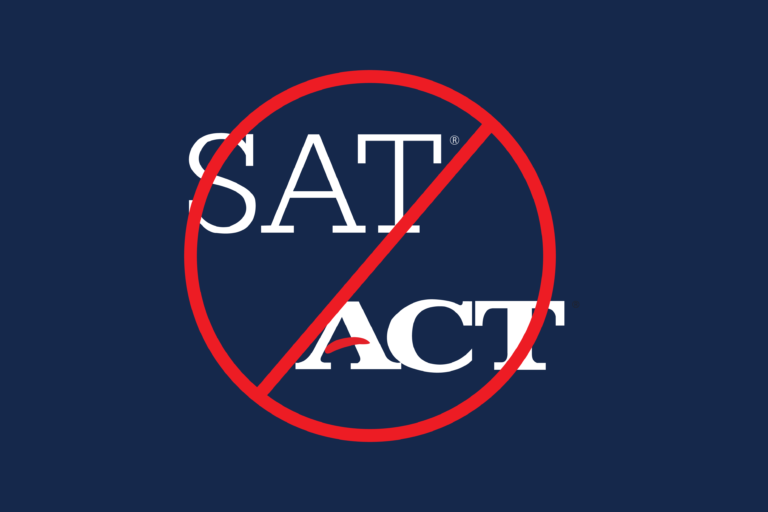
The University of California will no longer consider SAT and ACT scores in admission or scholarship decisions, as a result of a settlement reached in a lawsuit filed by students against the university.

According to a May 14 press release, the settlement will extend the UC’s “test-blind” policy through 2025 and prohibits the UC from implementing its previously proposed “test-optional” admissions policy. 

The settled 2019 lawsuit, filed by a coalition of students, advocacy groups and the Compton Unified School District, argued that the SAT and ACT are biased against students who are low-income, disabled, Black and Hispanic.

The UC Board of Regents unanimously voted in May 2020 to suspend use of the SAT and ACT until 2024. Under then-President Janet Napolitano’s proposed recommendations, submission of SAT and ACT scores would have been optional until 2022. The university would then adopt the “test-blind” model until 2024 while the university developed a new UC-wide standardized test to be implemented in 2025.

Napolitano’s previous recommendations to phase out standardized testing opposed the sentiment of the UC Academic Senate’s leadership assembly who voted unanimously to continue the use of SAT and ACT scores. The assembly’s decision was informed by a report conducted by UC Standardized Testing Task Force (STTF) which found that ACT and SAT scores are predictive of academic success at the UC, more so than other measures.

Some opponents criticized the data and conclusions of the STTF report questioning their validity, according to The LA Times.

UC Davis philosophy professor Dr. Robert May served as the chair of the UC Academic Senate in 2018-2019, charging the STTF in 2019. May said while he supports abolishing discriminatory practices in the admissions process, the elimination of the SAT and ACT isn’t an end-all solution to the lack of equity in college admissions.

“The real issue here is how we go about choosing from more applicants than we can take. We have to look at all of the criteria that we use for selection,” May said. “In and of itself, the SAT is neither a good thing or a bad thing; it has been singled out, largely for political reasons, as one which is a bellwether for things that are wrong with the process.”

Other faculty members agreed political grandstanding has diverted attention away from empirical evidence on the validity of standardized tests.

“Using or not using standardized tests sends a certain signal and confers a certain message to the world about UC Davis, and I suppose the people at UC Davis have to keep that in mind,” said Dr. Christopher Hopwood, a UC Davis psychology professor. “Whatever the truth is about the validity of standardized testing, the university sends a message by either using the SAT/ACT or not using them.”

Hopwood researches psychological assessment, examining construct validity—how well a given assessment measures its intended construct.

 “There’s not really a legitimate debate about whether validated standardized tests of academic ability are related to the things that predict overall academic achievement,” Hopwood said. “Every other method is likely to have more error and more bias than standardized testing. If you eliminate the best tool you have you’re only left with worse tools, so you’re likely to introduce more bias and do a worse job selecting students if you don’t have standardized testing.”

May said the “testing industrial complex”  is clearly biased against low-income and disadvantaged students.

“To the degree that access becomes a barrier to certain groups, that is that it costs money or that prep is not available for certain groups, then that can introduce a bias that occurs before the testing begins,” Hopwood said.

UC Davis faculty advocated for a re-examination of the admissions process—looking beyond standardized testing to gain a more holistic view of how students are evaluated for admissions.

The UC system received a record number of applicants for fall 2021. Among this surge, there was a 21% increase in Chicano/Latino applicants and a 12% increase in African American students, according to the UC Office of the President

May said that inequities apparent in the admissions process transcend the SAT and ACT—and rather than scapegoating validated standardized tests, advocates should be more concerned with funding for education in the lower grades.

 “Until we address the real inequities, we are not going to really deal with this problem,” May said. “Yes or no on the SAT isn’t going to change, that because that’s not the problem.”

Written by: Rebecca Gardner — campus@theaggie.org 

We all deserve participation trophies after this year

“You Tried.” Yes, quicktrophy.com, yes I did

I’d like to begin by outlining the participation trophies of my past:

2007: Little League Softball. “Everybody is a winner” (Oh please, Coach Rick. I sat in the dugout eating charred hotdogs that might lead to heart issues down the line. Winner is a bold statement).

2010: Swim team. “Most Improved” (If going from getting lapped twice to once in the span of three years counts as most improved, I’ll take it).

2014: Cross Country. “Participant” (Couldn’t have said it better myself).

2021: Survived a global pandemic. “Your name here.”

The trophies I received in 2007, 2010 and 2014 meant nothing to me. I was focused on the bag of sweaty orange slices and Capri Suns that accompanied the award ceremony. Receiving a participation trophy after this year of lockdown, however, would mean the world to me.

It’s been a tough year for everyone: dealing with isolation, working remotely, remaining healthy, unemployment, the removal of the feature on Instagram that allowed you to stalk what other people were doing on the app, etc. A tough year to say the least. Which leaves me wondering: Where are our awards? The most I’m getting from surviving a year of college during the pandemic are some crappy grades and a stiff side hug from my dad. With this in mind, you could see why I’m suggesting that everyone deserves a plastic participation trophy for simply enduring this terrible year.

Let’s consider potential figures and toppers for our trophies:

  1. A distressed woman laying on the floor after receiving her statistics grade, but like all trophy figures she’s super toned. I’d like to preorder this one.
  2. A man with a blanket over his shoulders and a bag of chips in hands to represent the quarantine lifestyle. Unfortunately, quicktrophy.com said he’d also have to be ripped.
  3. The Zoom logo with a slash across it because I think we’d all like to leave this application in our past.

As for plate engravings, here are some potential options:

  1. “Your therapist is proud of you”
  2. “Goodbye social distancing, hello new onset social anxiety”
  3. “You did your best”

I’m hoping to be in contact with Chancellor May to make this happen. I expect to see first-years posing like graduates in front of the Memorial Union with their trophy in hand rather than a champagne bottle.

Written by: Kate Harges — klharges@ucdavis.edu 

Disclaimer: (This article is humor and/or satire, and its content is purely fictional. The story and the names of “sources” are fictionalized.)