



Why “the more is merrier” doesn’t work out in this situation
The paradox of cancel culture

We must reassess structures of power and punishment and consider how a culture of silencing arose
Disclaimer: The views and opinions expressed by guest contributors belong to them alone and do not necessarily indicate the views and opinions held by The California Aggie.
By MORGAN FRIES
In a time where tumultuous political and humanitarian events have created a call-to-action, cancel and call-out culture have made debuts as favored tools of trade––particularly in circles of social justice. If an impartial world is to be achieved, it is germane to analyze and critique the methods taken to achieve a better tomorrow.
It is imperative to understand the difference between cancel culture and call-out culture, while also understanding the mutual inclusivity of their relation. Cancel culture refers to removing the stage or platform that an offender previously spoke or did business from. This could be accomplished by boycotting their product or simply removing the soap box underneath. Call-outs operate as a way to publicly call attention, with a primary goal of shame or humiliation, to offenders and their crimes.
While cancel culture could consider itself radical in its own right, a less damning and democratic way to approach punishment, it ironically plays into the very facets of the systems it seeks to call-out. It is hard to imagine the parallel between Twitter cancellations and the capitalistic carceral system, until you understand the modalities they both impart: discipline and punishment.
Foucault’s “Metamorphosis of Punishment” has changed greatly from the 18th century to present day. Public spectacles of the guillotine and acts of torture are no longer applicable. Punishment has transformed from a bodily experience into the discipline of a man through the prison system. The only remaining spectacle is the legality of the trial. Monumental pain was traded for the disenfranchisement of personal liberties.
Even through this transmutation, not much has changed in the structure of societies’ need for a carceral system—a capitalistic systems’ need for castigation. The need for another by which to measure the rest of society’s morality. While rehabilitation is not a foreign concept entirely, it is not the primary sentiment of a prison sentence. Under capitalism, punishment and discipline are the primary tools in determining the bourgeoise of society––the winners.
While not operated by the state, but not carrying the gravity of the penalties proctored by it, cancel culture still implements the use of its discipline against those who do not fall in line. It reverts back to antiquated times by making wrongdoings a public spectacle on social media. This isn’t to say cancel culture’s function is empirically egotistical or even irrelevant, but it is important to understand the class warfare that also exists within it. Those with access to education are the primary jurors. Engaging in cancel culture asks the instigator to shed any notion they don’t know the cultural and social information and nuances they have the privilege of knowing today.
Under capitalism, voice and property are tools of power. De-platforming acts as a mode to punish others by seizing these means. It negates a deeper understanding. Education and conversation are not necessary if one instead yields the gavel. This is not to say that calling out those who have done wrong is obsolete, but it is important to take note of how prideful it can be when we lift the metaphorical guillotine over a peer who has stood out of line. Is it our pride or their education being fed here?
In a capitalistic, racist and prejudiced society, it makes structural sense to have prisoners. Those who disobey give us a reason to mistreat them and if we have a reason to mistreat, then we have a reason to exploit. In the perfect society many dream of, this model is outdated and useless. Our call should then be to educate.
Different than canceling, calling-out highlights specific examples of behavior and transgressions that are hurtful and intolerable. Calling-out becomes most advantageous with dialogue and can lead toward individual betterment and re-entrance into a better humanity.
To change the world we must re-evaluate the deeply-ingrained systems it was created upon. The othering and exiling of transgressors is an old world system. While transgressors who stand in the way of betterment must be confronted, we cannot continue to use systems of capitalistic discipline and punishment to seek realistic results. The question for this wave of humanitarians must be how we impart wisdom without the whip.
Written by: Morgan Fries
Morgan Fries is a third-year clinical nutrition major at UC Davis.
To submit a guest opinion, please email opinion@theaggie.org
Professors should be understanding and change exam formatting in order to help students be successful

Creative solutions are needed to discourage cheating and reduce student stress
Before the pandemic, it was a familiar sight: Hundreds of students shuffling into a large room, silent except for the proctors’ footsteps and the scratching of #2 pencils. The university made a real effort to give every student an equitable chance at doing well on tests, from providing a quiet workplace to granting academic accommodations.
Today, the scene is very different. Some students have access to a chaos-free place to study and take tests, but many do not. A student sits down to take a midterm in their family’s kitchen, trying to focus despite their barking dog and crying baby sibling. Another student is working through a math exam, but their housemates start screaming with laughter at a TikTok.
Equitable testing opportunities no longer exist, so why are some professors still assigning conventional exams? This testing model doesn’t translate to online learning and adds to the stress students are already experiencing.
Since the beginning of the pandemic, reports for cheating to the Office of Student Support and Judicial Affairs (OSSJA) are more than double what has occured in previous years.
This increase is not limited to UC Davis. Universities nationwide have seen a rise in cheating since the transition to online learning. Not only is it easier to cheat at home, but students are stressed and not necessarily in an environment to learn responsibly.
Many students are stressed about entering the job market during economic downturn and uncertainty. Others are worried about paying the bills they have now; the California Student Aid Commission conducted a survey reporting that in the spring, 71% of California college students experienced a pandemic-related drop in income.
The pandemic has negatively impacted students in other ways as well. In a Texas A&M University study of college students, 89% of respondents reported having a hard time concentrating, 71% were more stressed because of the pandemic and 86% weren’t sleeping well. Taking these statistics into account, it’s no wonder that 82% were more worried about their grades.
In light of the struggles everyone is facing, the Editorial Board urges professors and administration to be courteous and creative in their responses to pandemic challenges.
Many students have received mass emails from professors declaring that any students who have cheated in the class have already been reported to OSSJA. These emails are ominous and create unnecessary anxiety for many students, who suddenly find themselves worrying about what counts as cheating. Using websites like Chegg is always cheating, but will a student fail the whole class for Googling one homework problem? And when, exactly, does collaboration become cheating?
It’s unhealthy for the students who have cheated, too. Even though what they did was wrong, the backlog of reports at OSSJA means that students wait weeks on end to be notified that they were reported for cheating. They are stressed-out students who made a mistake and this process prolongs the sense of dread and anxiety.
This uncertainty creates an unhealthy environment for students. Some may avoid collaboration because they’re not sure if it counts as cheating, which is especially detrimental when many students are already feeling isolated and lonely.
There are alternatives to traditional exams that could not only reduce cheating but increase student learning and satisfaction. Many professors have already changed to offer open-note exams, which is a great step in the right direction.
For some classes, long term projects and essays could replace timed midterms and finals. When that’s not possible, professors could write exams with longer time limits that focus more on free response than multiple choice. The extra time could act as a buffer for any technical problems.
As finals approach, some students are also realizing that they registered for 8 p.m. exams before moving multiple time zones away. No one should have to take a final at midnight, so professors should offer 24-hour windows to start the exam, with the timer triggering when it’s opened.
Many professors already had some of these changes in place, while others have refused to voluntarily adopt them. As we approach Winter Quarter, the Editorial Board urges UC Davis to set definitive guidelines for professors to follow rather than merely offering suggestions.
Nobody wants to cheat. We’re all UC Davis students, paying tuition and fees because we want to better ourselves and our future. The pandemic is overwhelming, and it’s going to get worse before it gets better, so we ask professors to be communicative, understanding and flexible about class expectations moving forward.
Written by: The Editorial Board
Is America the next Manchester United?

A great football club’s fall from grace offers a cautionary tale for the U.S.
Predicting what post-Trump America might look like is a difficult task. We don’t even know if we can call it the “post-Trump era” because we still don’t know whether President Donald Trump will stick around. Will he simply retreat back up his golden elevator and live out his days in Trump Tower, like Saruman? Or disappear into his showy, sultry, sticky, soon-to-be swamp at Mar-a-Lago, like Shrek?
Alternatively, becoming embroiled in legal trouble after leaving office, could fuel the sense of martyrdom that might motivate him to buy a television station like
One America News Network (OAN) or Newsmax. By retaining a platform he could pretend to be “president in exile” while preparing for another run in 2024 and continuing to evangelize as high-priest of the “Stop the Steal” movement which is quickly becoming his own personally-concocted, uniquely-Trumpian Dolchstoßlegende, his own “stab-in-the-back myth.”
Irrespective of whether this is the end of Trumpism or merely the end of its first chapter, there’s no obvious precedent that can help us better understand how a modern country as wealthy, powerful, respected and culturally influential as the U.S. might fare after suffering four years of neglect, ineptitude and vandalism under the leadership of someone like Trump. While countless nations have gone through their own politically tumultuous times, it’s difficult to find a historical example of a nation that’s similar enough to the U.S. to make any comparison that illuminates what the future holds for America. The Nazi Germany comparison is valuable in some ways, but limiting in others. This is why America’s best modern analog isn’t a nation at all—it’s a sports club. A football club, to be exact (real football).
While I was coming of age as a political junkie during the optimism of President Barack Obama’s years, I was also coming of age as a devout football fan. In my home city, newly christened Major League Soccer (MLS) expansion team Seattle Sounders FC hit the ground running, with a quality squad and fervent fanbase fueling success both on and off the field. But MLS has a much lower quality of play compared to Europe’s best league’s—often making matchday a frustrating affair. So I looked across the pond to the Premier League, where Manchester United was at the peak of its powers, hailed by all as the most wealthy, powerful, respected and culturally influential club on the planet. Little did I know that by becoming a loyal Manchester United supporter, I was investing unhealthy levels of emotional energy into a club only years away from a spectacular fall from grace, caused by—and resulting in—extreme neglect, ineptitude and vandalism at the highest levels.
At United, mismanagement has resulted in the entrenchment, normalization and, at times, celebration of mediocrity. To be considered successful, this is what the Biden-Harris Administration must prevent. And this is why the tragedy of Manchester United offers an invaluable cautionary tale for an America suffering an identity crisis—an identity crisis in which the country is as chronically uncertain over how to conduct itself at home as it is over how it should project its values to the world.
****
In the middle of the 2008-09 season, Manchester United was most certainly not suffering an identity crisis. It was the most valuable and popular team in the world. The club’s airtight defence, including the formidable center-back partnership of Rio Ferdinand and Nemanja Vidic with Edwin van der Sar in goal, had just set a Premier League record of 14 consecutive shutouts. Ageless stalwarts Paul Scholes and Ryan Giggs continued to pull the strings in the engine room. Up front, the attacking firepower of Wayne Rooney, Carlos Tevez and Cristiano Ronaldo produced the fast-faced, counter-attacking football that had long defined the club. United sat atop the Premier League, on its way to a third consecutive title and possibly a second consecutive UEFA Champions League title.
This was arguably the third truly great squad that legendary manager Sir Alex Ferguson had built since arriving at United’s iconic stadium, Old Trafford, in 1986. Never afraid to put his trust in younger players, Ferguson took great care to integrate top talent from United’s academy into the first team. This was best exemplified by the Class of ‘92, the core group of youth players (Paul Scholes, Ryan Giggs, Gary Neville, Phil Neville, Nicky Butt and David Beckham) who became the spine of the team for the better part of the next two decades, forging a feared dynasty.
United’s tradition of promoting young players goes back to the 1940s, 50s and 60s. Sir Matt Busby developed a strong young team, affectionately known as the “Busby Babes,” and then rebuilt the team after the 1958 Munich Air Disaster, which killed 23 people, including eight “Babes.” Just 10 years later, United won the European Cup with a revitalized squad, including “The United Trinity” of Sir Bobby Charlton, George Best and Dennis Law, now immortalized in a statue at Old Trafford, waving across a brick square to a statue of Sir Matt.
United spent time in the wilderness during the ‘70s and ‘80s, with several managers tried and failing to rediscover the winning recipe. Ferguson initially struggled after arriving from Aberdeen, but things started to click for the Class of ‘92 began meshing with mercurial talents like Eric Cantana.
Ferguson’s second great team emerged in the late ‘90s, when players like Jaap Stam, Peter Schmeichel, Roy Keane, Andy Cole, Dwight Yorke were hitting their best, with the Class of ‘92 still at the core. This team’s crowning achievement came in 1999, when substitutes Teddy Sherringham and Ole Gunnar Solskjær scored in stoppage time, dramatically winning the European Cup Final 2-1 against Bayern Munich, securing the elusive “Treble” in the process. United’s 1999 team remains the only English side to have won the Premier League, FA Cup and European Cup in the same season. This last-gasp victory against Bayern helped solidify United’s reputation for scraping out victories during stoppage time, a never-say-die tendency that caused some to speculate that referees added extra “Fergie time” whenever the fearsome Scot’s team was losing.
In the early aughts, Ferguson’s aging squad of the late ‘90s was eclipsed by Arsène Wenger’s “Invincible” Arsenal side, which included the likes of Thierry Henry, Patrick Viera and Dennis Bergkamp. But this United team still featured brilliant striker Ruud van Nistelrooy and reliable midfield rock Roy Keane. During this period of transition, the Class of ‘92 was cut in half by the departures of Nicky Butt and Phil Neville and by Beckham’s infamous falling-out with Ferguson, who was becoming increasingly irked by a distracted Beckham’s focus on building his celebrity brand. When displeased, Ferguson was known for giving people the “hairdryer treatment.” And During one of these verbal tirades after a defeat, Beckham replied to Ferguson with some sass, Ferguson angrily kicked a pile of football boots, one of which hit Beckham above the eye. This was the straw that broke the camel’s back—or, perhaps I should say, the metal stud that cut the pretty boy’s face. Beckham signed for Real Madrid that summer.
Ferguson could be verbally abusive at times, but players revered him. New signings knew what it meant to play for Alex Ferguson at Manchester United. During these transition years, players like Rooney and Ronaldo were lured to United because they knew that turning down the opportunity to play for Sir Alex would be insanity, like turning down God himself. Ferguson was a supreme motivator, but he couldn’t tolerate anyone who put themselves above the club. That his relationship with Beckham is now restored is a testament to his leadership. Ferguson knew how to cultivate talent and let them know they were part of something special.
And that 2008 Champions League-winning team certainly was special. But a year later, United couldn’t repeat the trick. Ferguson had presided over United’s march to a second consecutive Champions League Final, but once there, he was helpless as United were outclassed by Barcelona. Former Barcelona player Pep Guardiola, in his first year as Barcelona manager, was developing a new style of possession-based “tiki-taka” football. Led by Andres Iniesta, Xavi Hernandez and Lionel Messi, his team would slowly grind down opponents by passing in circles around them. United were one of the first high profile victims.
That summer Cristiano Ronaldo left for Real Madrid in a then world record £80 million deal. By the time United found itself against Barcelona again in the 2011 Champions League Final, it had still failed to adequately replace Ronaldo and other areas of the squad, especially center midfield, were beginning to deteriorate. Barcelona surpassed themselves from two years before, putting in what many consider to be one of the best team performances of all-time, overpowering United 3-1 in an absolute masterclass. It was becoming increasingly clear not only that the trends of modern football were leaving United behind, but that United was failing to adapt. United had won the league again that season, but people started questioning whether this United team was actually that good. Meanwhile, crosstown rivals Manchester City, the “noisy neighbors,” had just won the FA Cup, their first silverware in 34 years, forcing United supporters to take down a much-loved banner at Old Trafford that celebrated that trophy drought.
The next season was a rollercoaster that included an 8-2 victory against Arsenal, a humiliating 6-1 loss to Manchester City and a devastating final day in which City—just five years into their Emirati cash infusion—clinched its first Premier League title on goal difference, scoring two goals in stoppage time to come-from-behind and win its last game of the season. For United players and supporters alike this was a bitter pill to swallow. It was obvious that many areas of United’s squad were in need of reinforcement to keep pace with City, but of Fergie’s six new signings that summer, only one could be considered an improvement on what the United’s decaying squad already had to offer. And that signing was Arsenal’s prolific striker Robin van Persie.
Filthy-rich Manchester City were also interested in signing the Dutchman, but when Van Persie signed for United he proved the power of Ferguson’s influence when he said, “If you look at all the players from Manchester United, the stadium, the manager—my choice was made very soon in my mind.” He then famously added, “I always listen to the little boy inside of me in these situations—when you have to make the harder decisions in life. What does he want? That boy was screaming for Man. United.”
In the 2012-13 season, Van Persie’s 26 league goals helped United reclaim the Premier League title from City. Ferguson had bet that Van Persie’s goals would paper over the cracks, and he was right. But the cracks were not getting any smaller. Now having won 38 trophies at Manchester United, adding his 13th Premier League title to his two Champions League triumphs, five FA Cups and four League Cups, Ferguson announced in May 2013 that he was retiring. Perhaps he could already smell the rot.
****
Ferguson’s departure coincided with that of David Gill, the club’s chief executive. Gill and Ferguson formed a strong partnership in the player recruitment business, getting transfers done quickly and maintaining good relationships with agents and other clubs. As the most successful manager ever, Ferguson had earned the right to name his own successor, coronating David Moyes, a fellow Scot, who had proved his worth at Everton. But the decision of who would take over for Gill was made by the Glazer family, United’s American owners who controversially bought the club in 2005. The Glazers selected Ed Woodward, a physics graduate who previously worked as an accountant for PricewaterhouseCoopers and J.P. Morgan & Co. In other words, he had no experience in football.
So if Woodward was just a numbers guy, why on Earth was he given the power to conduct player transfers and make footballing decisions? The short answer: money.
When the Glazers pounced on failed negotiations between supporter groups and United’s board to create a trust that could prevent such a takeover, J.P. Morgan assigned Woodward the task of providing the “accounting agility” and “dextrous financial wit” needed to rescue the Glazers’ deal, which was “last-minute and desperate in terms of interest levels and the loans necessary.” In fact, the Glazers used only “£170m of their own money into the takeover, financing the rest with subsidised loans and roughly £265m secured against the club.” This “dexterous financial wit” earned Woodward a special place in the hearts of Malcom Glazer and his children, Bryan, Ed, Kevin, Darcie, Joel and Avram, (whose resemblance to Roland Schitt on Schitt’s Creek is uncanny).
Since the takeover, fans have been hostile toward the Glazers for effectively “seeking to bleed the club dry after leveraging it up with debt.” By 2018, it was estimated that the Glazers had drained over £1 billion out of the club, approximately the same amount that Manchester City’s owner Sheikh Mansour invested into City during roughly the same period.
After earning the Glazers’ trust, Woodward was offered a job as a financial planner at United, and in 2007 the Glazers gave him control of the club’s entire commercial and media operations. In this position, Woodward was a trailblazer in making lucrative new sponsorship deals for United across the world, exploding the club’s commercial revenue from £57.8 million in 2007 to £349.6 million in 2019.
For the Glazers, Woodward’s ability to convert United’s massive global supporter base from a “wasted resource” into a global brand and revenue stream was a dream come true. Woodward was always their star player—much more so than any of the actual players. David Gill, on the other hand, had deep expertise in player transfers and knew how to maintain and utilize United’s clout, but he had opposed the Glazers’ proposed takeover until it became inevitable, meaning that Gill’s own ouster was probably inevitable as well, had he not stepped down.
In fact, in Gill’s final years at Old Trafford, his communications with the Glazers were reduced to “barely once a week,” while Woodward remained in constant coordination with the owners. This continued until Woodward simply absorbed Gill’s responsibilities as chief executive in the player recruitment and schmoozing departments after Gill stepped down—not at all dissimilar to the way in which Chancellor Hitler created the new position of Führer for himself to absorb Hindenburg’s presidential powers after the senile field marshal died in office.
Woodward’s utter lack of footballing nous has meant that since becoming executive vice-chairman, the club’s footballing operation has suffered. But because business has boomed, the Glazers have been willing to sacrifice success on the field, just as business and industrial interests in 1930s Germany and present-day America have been willing to turn a blind eye to the Hitler’s and Trump’s less desirable traits. As an anonymous club insider told Bleacher Report, “Ed [Woodward] rose to the top job because he was adding to the bottom line. That’s where the power base lies now because he was the one who has changed things to bring the money in. That’s been his reward.”
This makes it stunningly clear that the Glazers judge the performance of their team based on revenues alone in the same way that Trump talks about the stock market as if it alone is the economy. And much like Trump, when it comes to looking for qualities and talents in employees, the Glazers don’t see the need to consider much other than personal loyalty. Just as Trump has forgotten that a soaring stock market doesn’t always mean poorer people are doing well, the Glazers have forgotten that a football club is not a successful one if all it does is make money for the owners—the team needs to win too.
What is the purpose of a football club if not to inspire devoted fans with trophies and attractive, entertaining football? What is the purpose of a government if not to expand opportunity and ensure that the poor don’t get left behind? Unfortunately, it seems that the Trump and Glazer families see governing and football as no different from any other business designed to further enrich the rich. But that should be no surprise when looking at the Trump and the Glazer real estate empires and their shared fondness for taking on massive debts. It’s no wonder that Ed Glazer is a Trump supporter. And as if it’s not a small enough world, the Glazers also own the Tampa Bay Buccaneers, which recently acquired passive Trump ally Tom Brady.
****
In the post-Ferguson era, United have been shambolic and rudderless on the pitch. However, since the cash is coming in, just as it has on Wall Street, Woodward and the Glazers have shown the same attitude toward demoralized, protesting fans that Trump and the Republicans have shown toward those who don’t like them—a cruel indifference which implies that anybody but themselves and their rich friends might as well not exist.
Whoever tried to fill Ferguson’s shoes had a difficult job ahead of them. But Woodward’s indifference and ineptitude have made that task a Sisyphean struggle. When David Moyes took the reins as manager in 2013, he inherited an aging squad which no longer had to fear the hairdryer. Because of Woodward’s incompetence in the transfer market, the new executive vice-chairman was unable to set Moyes up for success.
In August 2013, Woodward made a joint bid of £28 million for Everton duo Leighton Baines and Marouane Fellain. Why Woodward’s low-ball bid, which Everton called “derisory and insulting,” came in August, when Fellaini’s contract had a release clause of just £23.5 million that expired on July 31, is a mystery. Woodward also wasted most of the summer chasing Barcelona’s Cesc Fàbregas, who didn’t fit the club’s profile, but would’ve been marketable. With no major signings by transfer deadline day, Woodward panicked and signed just Fellaini for £27.5 million, nearly the sum he expected could get him both Fellaini and Baines. Fellaini was United’s first reinforcement in central midfield since 2007, but he only sometimes delivered.
Woodward’s hapless summer set the tone for a disastrous year in which the team floundered without Ferguson’s magic touch. Moyes was fired mid-season and United slogged to a seventh place finish, missing out on Champions League qualification for the first time in 25 years. Under Ferguson, United hadn’t finished lower than third since 1991. Since his retirement, United has finished seventh, fourth, fifth, sixth, second, sixth and third, only surpassing 70 points once. After the league was reduced to 20 teams and the schedule was reduced from 42 to 38 games for the 1995-96 season, Ferguson’s United never earned fewer than 75 points. None of Ferguson’s successors have been able to rediscover the attractive, swashbuckling brand of counter-attacking football that used to define the club.
Instead, Moyes, Ryan Giggs, Louis van Gaal, José Mourinho and now former player Ole Gunnar Solskjær have produced unentertaining, dour, painful-to-watch displays. Ironically, United nowadays seems to only play well against big teams when it’s considered the underdog. This wildly inconsistent form makes it much harder for United to attract the best players.
Every transfer window, United are linked with dozens of top players who have “the right stuff,” like Toni Kroos, Mats Hummels, Antoine Griezmann, Paulo Dybala, Matthijs de Ligt, Erling Haaland and Jadon Sancho. But most stay put or go elsewhere because going to United no longer guarantees success. Just as Trump surely can’t get away with saying “Make America Great Again” forever, Woodward can’t seriously think he can continue offering transfer targets the chance to be “part of the rebuild” when “the rebuild” hasn’t gone anywhere.
United often gets stuck paying inflated prices for their second or third choices, players who don’t fit the United mold, or for established superstars who are too expensive and don’t make sense tactically. As Mourinho was trying to put his stamp on the squad with players who fit his style, Woodward blocked Mourinho’s two primary transfer targets, Ivan Perišić and Toby Alderwiereld, incensing Mourinho.
Yet Woodward has arrogantly refused to appoint a director of football (also called a sporting director or technical director), as every other major club in the modern game has done. This would free him up to focus on the commercial operation, while the sporting director would collaborate with the manager in recruiting players who could fit into a coherent style of play. Since Ferguson left, Woodward has spent over £1 billion on 36 transfers, yet the team has made little progress and most of these signings have been total flops, largely because Woodward made them with marketability in mind, not football.
Quality players like Radamel Falcao, Ángel Di María, Bastian Schweinsteiger and most infamously, Alexis Sanchez have all come to United as highly marketable assets and made no impact on the field at all. After his disastrous spell at United, Alexis Sanchez said he could tell after his first training session that something at the club “didn’t sit right,” so he called his agent asking if he could “rip up” his contract. The £90 million re-signing of Academy product Paul Pogba from Juventus was supposed to solve United’s midfield problem, but he hasn’t performed consistently or shown any sort of leadership skills, proving Ferguson right for allowing the talented but hotheaded Frenchman to join Juventus for free in 2012.
Bruno Fernandes, who arrived last January from Sporting Lisbon in a deal worth £67.7 million, has been the only major success so far. But even this transfer saga was botched because Woodward had already refused to pay a lower price for the Portuguese midfielder the previous summer, meaning that he could’ve been helping improve United on the field a half-season earlier for less money. United were negotiating from a position of weakness, and Sporting exploited that desperation. This new reality for United, and Biden can’t let this become normalized for America.
Meanwhile, despite seven years of mediocrity on the pitch, the Glazers and Woodward seem content to normalize lower standards. United have a massive social media presence, with more Facebook followers than the NFL, NBA, MLB and NHL combined. While United is laughed at in the real world, its social media pages have taken on a weird, propagandistic vibe, stopping just short of saying “aw shucks!” after every humiliating defeat. United’s social media accounts turn United from something to passionately support into something to “follow” for the sake of drama. Eyes alone are good enough for a Netflix series, but not for a football team expected to win every week. It smacks of the same cynicism behind Trump’s ability to control news cycles for his own purposes. Who cares if we never do anything to improve infrastructure after “Infrastructure Week”? Who cares if we’re so cheap that Old Trafford’s roof is literally leaking when you can buy a Lego set of Old Trafford for $300?
****
After Mourinho’s falling out with Woodward over transfer policy, Mourinho mentally checked out and United nearly imploded. Because of United’s stagnation and stunted growth, Woodward promised to finally appoint a director of football, initially appointing much-loved former United player Ole Gunnar Solskjær as interim boss during the search for a permanent manager and sporting director. But after a string of positive results, Woodward gave Solskjær the permanent job, despite his only managerial experience being at Molde in his native Norway and an unsuccessful stint at Cardiff City in the Premier League. Once the elation of emerging from the Mourinho cloud had dissipated, Solskjær’s results didn’t remain at the historic standard of excellence; they dropped to the new baseline of mediocrity. Two years later, Woodward still hasn’t appointed a sporting director, perhaps feeling he can retain his dealmaking powers as long as a likable, but weak Solskjær remains thrilled just to have the job, doing barely enough to avoid the sack.
If United wants to get back to where it belongs, then it needs to change with the times and appoint a sporting director and a qualified manager who can adapt United’s counterattacking game of the past for the demands of the modern, high-speed, “heavy metal” counterpressing game that emerged in response to the “tiki-taka” passing style. United must get back to basics, focus on developing youth players and act decisively rather than lethargically in the transfer market to buy players who fit the club’s vision—not random superstars with immense commercial potential who happen to be available.
Similarly, if the Biden-Harris administration wants to avoid becoming trapped in a new paradigm where America has lost all credibility in the international community and all sense of unity at home, then it needs to fight back against the damaging trends set in motion by Trump’s erraticism and polarizing lies. The new administration needs to go back to basics, by rebuilding our neglected diplomatic apparatus at the State Department. It needs to resume the tradition of rewarding competence. It needs to reach out to the Trump voters who should naturally be part of a new left-leaning working class coalition that can push for results on healthcare, social justice and environmental degradation instead of just talking about it on social media. It needs to remember that government, like a football club, exists at and for the pleasure of the many, not the few.
The way that Trump imagined the world was “laughing at us” under Obama is the exact same way that the world has been laughing at Manchester United for the last seven years. President Joe Biden will go down as a successful president if he can learn from Manchester United’s mistakes in order to stop the laughter that has been heard ‘round the world since Trump first descended his escalator. Don’t get me wrong, America needs a lot more laughter. Just not this kind.
Written by: Benjamin Porter— bbporter@ucdavis.edu
Disclaimer: The views and opinions expressed by individual columnists belong to the columnists alone and do not necessarily indicate the views and opinions held by The California Aggie.
These musicians are defying and recreating our ideas of genre

Four artists from the past and present have made their mark going against the grain
Countless musicians have immortalized themselves and their work by breaking genre norms or combining elements across genres. While Complex has put together a list of sorts and the Wall Street Journal claims 2019 to be the year of Genre-bending (Insert bad Avatar joke here), there really isn’t a comprehensive list of who has done it best or when the practice itself actually began. Naturally, I decided to pick four standout artists that have mastered the art of genre bending.
Lil Peep
Gustav Åhr left the world in November of 2017, but his presence in music is relevant today as ever. Known by his stage-name “Lil Peep,” Åhr pioneered what is known as “emo rap” which combines elements from emo, punk, indie, rock, rap, trap, hip-hop and more.
In June of 2016, Peep released his “Crybaby” mixtape which includes samples from Radiohead, Oasis, Death Cab for Cutie, Modest Mouse, The Postal Service, Brand New and a few others. Fusing whiny unhinged vocals with quiet yet heavy rapped verses often over samples from artists like the aforementioned makes for a sound that gives the listeners a simultaneous sense of profoundness and familiarity.
Peep was part of a group of people who are now known as “SoundCloud Rappers,” coined after the streaming service SoundCloud that he and many others used when they first began to release music. This group is often characterized with face tattoos, chic yet at times questionable fashion choices, romanticization of heavy drug use and vulnerability. Emo Rap has created a new genre and a new type of artist which takes the relatable sound of Emo quite literally at times, along with unguarded lyrics, while maintaining the trope of a lavish and intoxicated larger-than-life attitude.
Bon Iver
Justin Vernon had his breakout moment under the name of Bon Iver (Good Winter in French). In 2007 his folk-like album “For Emma, Forever Ago,” he chose to write and record in his father’s Wisconsin cabin after a breakup. Vernon’s voice offers a range that maintains a certain softness to it that can either tower over his acoustic guitar or simply coexist with it in songs such as “Skinny Love” or “Re: Stacks,” begging the question: Does the voice compliment the guitar, or the guitar the voice? Both, likely. Regardless, the brittle voice carries a weight that feels as though it is ready to break at any moment but doesn’t.
His self-titled sophomore album is more or less a continuation of the previous album that further develops the sound of Bon Iver into a blending of folk, acoustic, electronic (sparingly used) and autotune in which the natural harmonious aspect of Vernon’s voice evolves. There are, however, slight hints of a shift to come in the future, but so seamlessly that they are only just that—hints. In “Minnesota, WI,” trumpets give the track a fanfare-like aspect, only to be paired with bass that gives listeners an ominous feeling that juxtaposes the sound, but effectively somehow.
In 2016, Bon Iver released something almost unrecognizable: “22, A Million” is a far cry from “For Emma, Forever Ago,” purposely disrupting a tradition of a linear narrative within the album (each song name is accompanied by a seemingly random number), with heavily manipulated vocals and an obvious use of more electronic sounding instruments. Samples from gospel artists like The Supreme Jubilees in “666 ʇ” and Mahalia Jackson in “22 (OVER S∞∞N)” intermingle old and new school sounds with ease. Each song (with the exception of “8 (Circle)”) distorts Vernon’s voice, purposefully and beautifully—using autotune and other synthesizer techniques (including the Messina, engineered just for him) to create a sound that not only is unlike Bon Iver, but of anything prior to it.
Jamie XX
Jamie Thomas Smith found his way to the limelight in 2009 with his bandmates in The XX with their self-titled debut. Behind the boards, Jamie keeps the beat (the band has no drummer) and mixes in real time while Romy Croft leads guitar and shares vocals with bassist Oliver Sim. Later in 2009 he began using the name Jamie XX for accreditations in remixes he did for a FACT magazine mix in order to promote the band’s debut. In 2010, Jamie XX released a remix of Gil Scott Heron’s “NY is killing me” marrying the soul, jazz and spoken word with an electronic, pop and club-like sound. His first solo full-length, “In Colour” was released by Young Turks as he toured in promotion for the record on May 29, 2015. The DJ’s sound here is more distinct, but nods back to the sound in the XX with songs like “Loud Places” and “Stranger in A Room,” in which his bandmates Romy and Oliver feature in. It’s an electronic record in essence that incorporates other artists that influence Jamie’s work such as The Persuasions who are sampled in a collaborative track with Young Thug “I Know There’s Gonna Be (Good Times),” and Lyn Collins whose “Think (About it)” was sampled in the single “Gosh.”
Linkin Park
On Oct. 23, 2000, “Hybrid Theory” was released through Warner Bros, the debut album from rock-rap group Linkin Park. That’s right, rock-rap. The dynamic between MC Mike Shinoda and the late Chester Bennington is something that by any means shouldn’t work, but does so seamlessly. Tracks like “In the End” and “A Place for My Head” display the perfectly executed back and forth of Shinoda’s rapped verses and Bennington’s clean, sometimes screamed vocals. Joe Hahn, or “Mr. Hahn” under his DJ persona, manns the turntables, scratching, sampling and programming every song—adding another unique feature to the band’s sound that is spotlighted on “Cure for the Itch.” The entire album (with the latter being the exception) is a perfect example of how vastly different styles of voice like Shinoda and Bennington can come together on a single track and make something extraordinary. The group went on to release six more studio albums until the death of front man Chester Bennington in July of 2017. The other band members alongside other prominent musicians such as Mark Hoppus and Travis Barker of Blink-182, Machine Gun Kelly, Oliver Sykes of Bring Me the Horizon, Jeremy McKinnon of A Day to Remember, Jonathan Davis of Korn and others put on a memorial show on Oct. 27, 2017 at the Hollywood Bowl. According to Shinoda the group is likely to continue without Bennington, explaining in an interview with Rock Antenne that “We all thrive making and performing music.”Written by: Cameron Perry — arts@theaggie.org
Yolo County Library rolls out three new services at physical locations

The library maintains its position as vital community hub amid pandemic with both physical and virtual programs
Yolo County Library is now offering three new services, according to a Nov. 17 press release. The new services include one-hour computer appointments, email reference and contactless printing, copying and faxing.
These services are available during normal business hours: Monday from 4 to 8 p.m.; Wednesday from 2 to 6 p.m.; and Friday 10 a.m. to 2 p.m.
The library space has been adjusted to comply with social distancing requirements, and restrooms will not be available to the public. Those who wish to use these services are required to wear face coverings and follow Yolo County’s COVID-19 guidelines.
Janney Duong, a third-year managerial economics major, explained that these resources could be very helpful, especially for those without regular access to them.
“I might take advantage of these services because I personally don’t have these resources at home,” Duong said. “When I was younger, I went to local community libraries in order to borrow books when I couldn’t afford titles to read. Libraries were a resource for me to use and a starting point for my passion for reading.”
West Sacramento Regional Manager for Yolo County Library Dana Christy explained that the decision to make more services available was in part due to community demand.
“The library is a very popular community hub throughout Yolo County,” Christy said. “Right now, we have seven different locations open for curbside pickup of library materials. While providing curbside pickup materials, we were getting some requests for other services that we offer—like faxing, photocopying and computer access.”
Christy explained that the library holds special importance for Yolo County community members, particularly in this time of isolation.
“It keeps people connected even though they’re by themselves through the sharing of information and entertainment,” Christy said. “It’s a place to get all your reading materials and DVDs. Especially now for those who do have connectivity, we offer a huge collection of ebooks and magazines. If not, you can still take advantage of the curbside pickup. People love to read in Yolo County. The library in Davis is really popular.”
Beyond giving Yolo residents the ability to check out books, Christy explained that the library is important to the community on many different levels, as the library provides digital services such as providing hotspots and Chromebooks to Yolo County residents who do not have the ability to go online at home.
“There is still a digital divide in Yolo County,” Christy said. “The library is often where people can go for these services, so we figured out how we could provide those safely and we just launched those a couple weeks ago. This is in addition to our e-book services, which are available to individuals with library cards online or through the Libby app.”
In addition to these digital services, the library offers a variety of virtual services for parents and children.This includes storytimes—available in both English and Spanish—as well as early literacy programs.
“We’re offering virtual programs for parents with young kids,” Christy said. “It’s a great option for parents who are looking for materials for their children, or new activities for their kids.”
Christy explained that while there are currently no major plans to expand services due to Yolo County’s recent move into the purple tier, many community members are taking advantage of the available services, and the library intends to keep providing them for as long as official health guidelines allow.
“We have new people coming and our regulars who came before the lockdown—it’s a broad mix and a lot of people are taking advantage of [our services],” Christy said. “Right now, we are holding steady with what we have, given the move to the purple tier in Yolo County, but we’re closely watching the Public Health Officers’ guidance and we’ll follow accordingly.”
Currently, the Yolo County library employs 17 full time staff; however, most of the volunteer positions are currently unavailable. Christy recommended that individuals who are interested in getting involved contact the Friends of the Library program or call (530) 666-8005.
“For the most part, unfortunately, volunteers have had to wait in the wings until we can open our branches up again,” Christy said. “Most of our volunteer positions were in-person. Davis is still doing outdoor book sales and processing of book-donations, so there are still opportunities for those who want to be involved and help the library.”
Whether it be a book, digital access or a new activity for your kids, the library has a variety of solutions, Christy explained.
“Ultimately I just want people to know that the library is there for you—whether you can make it to the branch or not,” Christy said.
Written by: Yan Yan Hustis Hayes — city@theaggie.org
The fictional characters we all need

We could use a lot more people like this in society
As an avid reader and Netflix binge-watcher, I have come to the conclusion that series are made by their characters. I will always stick around and finish something if I love at least one character. Don’t get me wrong, the plot is important as well, but the characters are truly the heart of a story. And a good character can have a lasting impact on a person. So here is a list of characters that I feel make the show/movie/book worth spending time on.
Tiana from “Princess and the Frog”
As a first-generation student, I had to go through college alone. I had to figure out the system by myself, I had to learn how to talk to professors by myself and I had to figure out how to get an internship, raise my grades and better my writing, all while dealing with the possibility that maybe UC Davis made a mistake in accepting me because everyone else seemed so much more put-together. As silly as this may be, watching Tiana go through her struggles during “Princess and the Frog” helped me through my self-doubt.
While I love Mulan, Moana and Merida, Tiana deserves special appreciation. She’s a Black woman working to own her own restaurant in a time where everyone looked down on her and racism was rampant. Throughout her life she dreamt of having her own place and when she finally was able to get it, it was ripped right out of her hands. But she kept pushing, and I find that so admirable. Characters that overcome countless obstacles to achieve their dreams is inspiring.
Peeta Mellark from “The Hunger Games”
The amount of times I have heard someone say that they favored Gale in “The Hunger Games” because Peeta is weak is heartbreaking. Peeta did not deal with physical and emotional abuse from his mother, go to The Hunger Games, confess his love for Katniss and give up his life for hers in “Mockingjay” to deserve all the hate he gets.
There’s a part in “Mockingjay” (the book, not the movie) where Katniss is thinking about Peeta and thinking about her anger. She comes to terms with the fact that both her and Gale are fueled by rage, but Peeta is the complete opposite. Katniss realizes that what she needs is a dandelion in the spring, the sign of rebirth after destruction, and that is Peeta. What I appreciated about Peeta is that he showed an immense amount of kindness. People hate Peeta so much for how “little” he did in The Hunger Games. But the amount of strength it takes for someone to push through trauma and still be kind and empathetic is immeasurable.
What we need to take away from his character is that there are different types of strength. Where Katniss is so important to young women, Peeta is important to young men. Everyone preaches about how society should be kinder, and yet Peeta is bashed into the darkness for being just that. That’s something we need more often in characters, and in real life; we need people who choose to be kind.
Sokka from “Avatar: The Last Airbender”
What I most appreciate about Sokka is his beautiful character growth. Sokka starts off the series being a sexist jerk who lacks any character depth other than being the comedic relief. It’s very clear that he finds men to be more capable in every aspect of physical strength, but as the series progresses and he faces the Kyoshi warriors and meets more fierce women he finds the errors in his beliefs. He removes himself from his views and apologizes for being sexist, something we don’t see often. He also moves on and learns from women.
What I value the most about this character is his ability to apologize and learn from his mistakes. What’s disappointing about our culture is that everyone has a need to be right all of the time and of course, I am no exception. But with characters like Sokka, we can hopefully take a closer look at ourselves and understand that it’s okay to be wrong sometimes.
Miles from “Spiderman: Into the Spider-Verse”
I used to be the person that never had a favorite movie. But then “Into The Spider-Verse” came along and I met Miles. This was such a perfectly executed character and movie that I got a physical copy just to always have it.
Miles gave superhero characters the representation they needed. He is a biracial character that is awkward and lanky, but thoughtful and social—I loved every second of it. There are so many kids who grew up not being able to see a superhero like them, which is why when we have superheroes like Black Panther and Miles, it’s a monumental step. What was unfortunate about “Into the Spider-Verse” is that it is not as valued as the average superhero movie. People turned their nose up at the movie solely because it was animated. But this movie was better than any live-action Marvel film. It maintains the comic book aesthetic with wavy lines to signify Miles’ Spider Sense, thought balloons and the clever animation of having Miles move at 12 frames per second (fps) where his other superhero friends are at 24 fps. As Miles matures and grows into the Spider-Man figure, he moves on to be animated at 24 fps, too.
Captain Marvel from “Captain Marvel”
Walking out of the theatre after watching “Captain Marvel,” I had never felt more powerful in my life. It’s no wonder men are often on a power trip—I felt like I could take on the world with just one movie about a female superhero and men have 20 to be represented, and empowered by. Captain Marvel was so important for women, not only because she was the first superhero we saw in the Marvel Universe that got her own movie, but because she was portrayed beautifully. She was snarky, confident and stubborn. We don’t usually get to see those traits in likable women characters. We see them in male superheroes and they are praised for it, but women are shamed for it. Captain Marvel takes these traits and makes it so that young girls can look up to a powerful character.
What was so important about Captain Marvel was that she made it clear that you don’t have to prove yourself to others to make yourself competent or worthy. You carry your own value, and I love that about our superhero.
Written By: Itzelth Gamboa — arts@theaggie.org
Tree Davis recruits volunteers to build Davis’ ‘urban forest’ during the pandemic
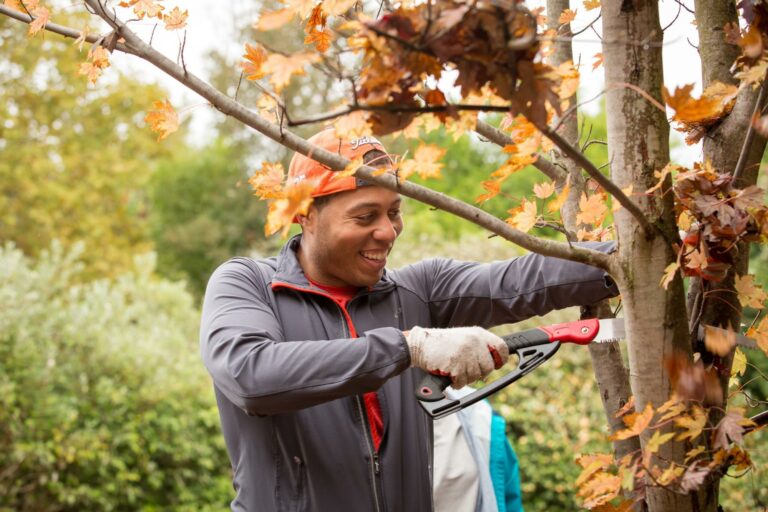
The executive director, board members of Tree Davis detail the environmental and mental health benefits of planting trees
Tree Davis’s mission, stated on their website, is “to enhance and expand our urban forest by teaching the people of our community to plant and care for trees.” Every weekend from October to April before the pandemic, Tree Davis hosted events where volunteers either planted or tended to trees. Groups would convene at the Veterans Memorial Center to receive orientation about the work for the day and join small groups with a Tree Davis team leader. Each group would then be assigned to one area of the city where they would complete tasks.
Now, no more than three households can gather at one time to volunteer for events, creating challenges for the organization’s goals according to Board Member Emily Griswold.
“In the past you could have 20 or 30 people come on a Saturday morning and work for three hours and plant a bunch of trees,” Griswold said. “With COVID, you can’t really do that. So the board has actually been pitching in more just in terms of volunteer time.”
According to Executive Director Erin Donley Marineau, the organization has continued to contribute to the community by allowing for continued interaction with nature.
“Having the opportunity to connect with the natural world was important before the pandemic,” Marineau said. “Research shows that trees reduce stress. Trees make us less anxious. Trees bring out good, positive feelings in us that put our mental state in a different place where we can be more reflective.”
Marineau sees volunteering for Tree Davis as a way for the public to benefit from nature and receive something in return for the tax dollars they spend.
“This is really a refuge for the soul,” Marineau said. “This is time for people to be able to enjoy some simple beauty in life that is not directly costing them money. It’s something that is a part of our community public good that we’ve all invested in with our tax dollars and for the good people of Davis who donate to Tree Davis. They’ve invested in us.”
Dr. Greg McPherson, the vice president of Tree Davis and a U.S. Forest Service emeritus researcher, stated that planting trees in urban areas attracts biodiversity by developing an ecosystem’s understory, or the vegetation under a canopy of trees.
“It is not just trees, but there’s a whole variety of understory plants,” McPherson said. “Native plants attract pollinators—birds, butterflies, bees, […] and so it’s adding biodiversity, it’s taking areas that are monocultures of turf grass or use a lot of water or [are] overgrown shrubs and turning them into incredibly rich, diverse habitats.”
According to Marineau, another benefit of adding to what the Tree Davis site calls the “urban forest” of Davis is that it helps mitigate effects of global warming.
“Climate change is no longer something that we can talk about hypothetically in the future,” Marineau said. “Climate change is visible and happening now. This year was one of the longest summers we’ve ever had because we ended up with high temperatures early in the season.”
Tree Davis is currently implementing a grant program with the City of Davis to plant 1,000 trees by March 2022. In order to complete this goal, the organization needs to find property owners who are willing to have trees planted on their property.
One challenge Tree Davis faces is that community members may not be aware of the lasting benefits of trees, Marineau said.
“Part of the challenge in communicating the benefits of what we do is that trees are such long-lived organisms and in many cases they can outlive us,” Marineau said. “We live in such a fast-paced culture where we expect to see results immediately. When we’re planting, we are really keeping the long term perspective in mind.”
A barrier to finding property for the planting of trees, according to Marineau, is that a large portion of Davis’s population is students who live in apartments and would need permission from property owners to have trees planted on the property.
“Renters can definitely be advocates for what they would like to see in their spaces,” Marineau said. “I think a lot of times renters see themselves as kind of powerless. They just kind of have to deal with whatever’s there or perhaps they don’t feel invested in beautifying the property because they’re just going to leave in a year or six months.”
Another advantage of planting trees, McPherson said, is that they help decrease costs by performing various environmental functions.
“Trees are priceless, but there is a dollar value to all the things that trees are doing in terms of cleaning the air and saving energy and storing carbon and just improving our health and well-being, and […] that may be $1,500 a year,” McPherson said.
Marineau stated that trees can also lessen energy costs by providing shade to buildings while reducing atmospheric carbon dioxide.
“Trees mitigate the urban heat island effect,” Marineau said. “They make it cooler and more livable for us, and if we have trees shading our homes or businesses or our schools, we spend a lot less money trying to cool those spaces. So, we save money on energy bills and we have fewer greenhouse gas emissions because we’re drawing less electricity from the grid to run our air conditioners.”
Marineau believes that trees in an urban environment should be viewed as more than garden decor.
“A lot of people think of trees as sort of like fringe benefits,” Marineau said. “They’re sort of like nice icing on the cake once you’ve taken care of everything else. I’m trying to really convey the message that trees are really essential, particularly where we live here in the Central Valley.”
McPherson said he sees trees as medicine for the soul amidst a tumultuous time.
“Recently, there has been a lot of research on the human health benefits of having trees in our environment, where we live, work and play,” McPherson said. “How it reduces stress, [connects you] to nature, it’s calming. […] Trees put a smile on my face. I think in the time of the pandemic, we can all use a smile.”
Written by: Lyra Farrell — features@theaggie.org
Alternatives to an Irish Exit during the pandemic
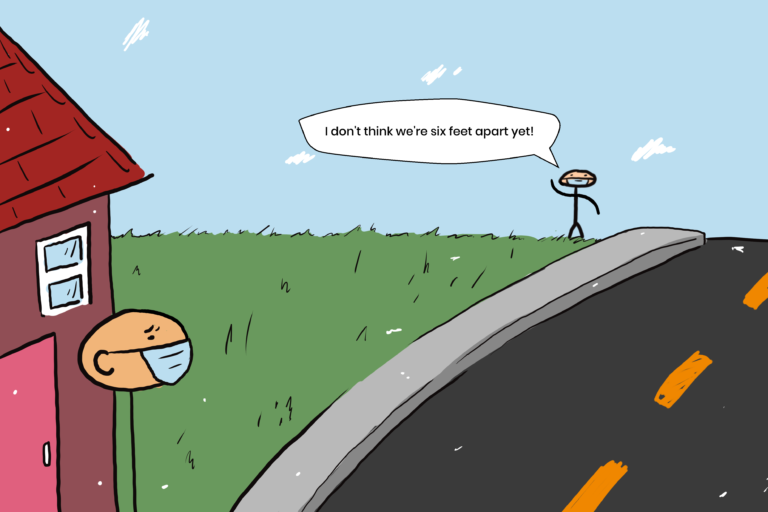
But you really wanted to be there though!
In 2019 the Irish Exit was simple: float out of a gathering you no longer want to be a part of like a ghost. Some argue it’s bad etiquette––I argue that it’s a humble move. There are no awkward goodbyes or falsities like: “Man, I really wish I could stay!” I mean, are you royalty? Do you really need a formal exit and the exchange of fake pleasantries?
In 2020, however, the Irish Exit becomes more complicated. There are only so many times you can lie about having bad WiFi. Never fear, because The Aggie is coming in clutch with some foolproof Irish Exit strategies during the pandemic:
- At a socially distanced gathering, repeatedly say “Hey, I don’t think we are six feet apart yet” and keep on moving back until you disappear into the horizon––just out of sight enough to call yourself an Uber. This strategy is perfect because no one can question your commitment to public health, no matter how overzealous.
- At a Zoom gathering, have your housemate stage a fake kidnapping attempt. Give your housemate a ski mask and have them put duct tape over your mouth and drag you out of the room. This strategy is really effective because you get a cool ice breaker to tell at the next gathering you go to. You can really only use this strategy once, however, because how believable is it that a random college kid is worth kidnapping twice?
- Take a hammer and break your webcam. At your next Zoom party, make sure that everyone knows your webcam is broken. You can blame it on the aggressive Davis squirrels and say they attacked you and knocked your laptop down as you enjoyed an Insomnia cookie and some time in the sun. This excuse is so pathetic that people will pity you instead of question you.
- Take a page out of President Donald Trump’s book and spread some healthy misinformation. For a successful Irish Exit out of a Zoom party, spend a good few hours creating fake news articles that COVID-19 can spread through a screen. Post these articles on Facebook and your friends’ parents will inevitably share them with your friends.
- For a successful Irish Exit out of a socially distanced gathering, strongly allude to the fact that you are an anti-masker by using dialogue from anti-mask protest signs! A few days before the event, make sure to say things like: “Fear is the real virus,” “Sorry, did my civil rights get in the way of your virus?” and “Oxygen is essential!” Be sure to fervently express how much you want to be there. What you get instead is a gentle disinvitation. But hey, at least they know how much you wanted to be there!
Written By: Renee Wang –– reswang@ucdavis.edu
(This article is humor and/or satire, and its content is purely fictional. The story and the names of “sources” are fictionalized.)
West Sacramento long-term care facility experiences second outbreak

Yolo County officials are working with affected facilities to control the spread of COVID-19
Due to a rapid rise in COVID-19 cases, Yolo County re-entered the purple tier on Nov. 16. The long-term care facilities in the county are of special concern, as they house some of its most vulnerable citizens, according to Yolo County Public Information Officer Jenny Tan.
“These facilities house a lot of really vulnerable and high-risk residents, and so we’ve been working with them since the beginning of COVID about treating, mitigation and really thinking about limiting who comes in on the facilities,” Tan said.
Riverbend Nursing Facility in West Sacramento is the second long-term care facility in Yolo County to experience a second outbreak. The facility experienced a small outbreak of five cases in July. As of Nov. 25, it has reported 56 cases and one COVID-19 related death, with their latest case reported on Nov. 24.
The first long-term care facility in Yolo County to experience a second outbreak was Alderson Convalescent Hospital in Woodland, which has seen 104 cases and 18 deaths as of Nov. 25.
Riverbend is not the only facility currently experiencing an outbreak; Cottonwood Post-Acute Rehab in Woodland has reported 65 cases and two COVID-19 related deaths. As of Nov. 25, their latest case was reported on Nov. 24.
Tan explained how Yolo County is working with the facilities to prevent further spread of disease.
“We essentially become a part of their procedures and their staff to help prepare them and help them with the outbreak as much as we can,” Tan said. “We go through all their procedures and practices; we go over their testing plan and a schedule for staff. We also make sure they have all of the supplies that they need and that they are trained in how to use those supplies, such as gloves, masks and scrubs.”
These outbreaks usually originate from sources outside of the facility, added Tan.
“COVID-19 comes because someone brings it into the site,” Tan said. “Sometimes, it can be from a staff member, sometimes it can be from a vendor, sometimes you have people who temporarily live there and leave.”
City of Woodland Mayor Pro Tempore Tom Stallard added that keeping long-term care facility residents safe requires a herculean effort.
“It’s very very challenging to [the care facility] when the workforce comes in,” Stallard said. “Only one person has to have contracted the problem, and then they can transmit to everybody. The seniors can’t go anywhere, and they’re all in close proximity. So I don’t see any fault or blame; I just think that they do the best they can and inevitably at some point in time, they have a problem.”
Tan emphasized that not all COVID-19-related deaths are occurring in nursing homes.
“I think the public has the perception that all of the people who die are older, or all the people who die are at nursing facilities, and that’s not the case,” Tan said. “Yes, it’s a little more than half [of COVID-19-related deaths in Yolo County in long-term care facilities], but it’s not everyone. People who are not elderly are still dying of COVID-19.”
The nursing homes—while a matter of great concern—are not the primary drivers of the case count in Yolo County, according to Tan. She listed three main causes of the rising case count: social gatherings, work exposures and household exposures.
Tan added that working together to decrease the case count will be essential.
“We’ll probably be in [the purple tier] for the next three or four weeks,” Tan said. “We’re definitely seeing a surge of cases from Halloween, and then depending on what happens through Thanksgiving break, we may stay in purple longer. I think it’s best for people to buckle in and expect to be in purple for a while.”
City of Davis Councilmember Dan Carson also discussed the importance of collaborating to move forward.
“It’s a countywide rule for what tier we’re in,” Carson said. “They don’t look at one sub-area of the county versus another. So we all have to do well if we’re ever going to move into a lower tier and be able to open up.”
Written by: Rachel Shey — city@theaggie.org
Students learn remotely from different locations

The flexibility of online classes allows for education from any location
Education has taken a new course with remote learning this year, allowing the traditional on-campus experience to become more open-ended and flexible. There is no longer a set location for students, as they can access classes from anywhere with a reliable source of WiFi. Some UC Davis students view these circumstances as an opportunity to live somewhere new, beyond Davis or their respective hometowns.
Kate Collini, a third-year human development major, is living in Modesto, Calif. this quarter. Originally from Los Angeles, Collini decided to live in Modesto for the quarter to be with her significant other.
She is not only adjusting to remote learning, but to being a college student, as this is her first quarter back after taking a leave of absence seven years ago. Despite the time spent away, this quarter has run smoothly, and she has made new connections despite online barriers.
“I am actually incredibly shocked at how well this quarter has gone,” Collini said via email. “I’ve always been an outgoing Leo who makes friends amid any and every atmosphere, and this time, apparently, was no different. In those little [breakout] rooms during class I’d vibe with a person or two and we’d quickly exchange personal contact info, and some of those people I text more than my relatives.”
Chantal Deslauriers, a third-year communication and art history double major, lives in Hamburg, Germany. While she grew up in the U.S., her family moved to Hamburg when she began college at UC Davis. Deslauriers first moved to Hamburg last Spring Quarter when the COVID-19 pandemic struck, joining her family in Germany during the uncertain time. She has continued to live in Hamburg ever since, choosing to be close to her family during the pandemic rather than returning to Davis.
“I feel like a lot of people that go to Davis, they have their family nearby, and they’re able to sort of visit because it makes sense,” Deslauriers said. “It’s a UC, and most of the people that go there are from California so their families live nearby. But for me, it’s sort of a question of like, ‘Do I want to be with my family or do I want to be in Davis?’ It’s not like I can have both and so in this case, I just decided to be with my family.”
There is a nine hour time difference between Hamburg and Davis, making live lectures and deadlines a different experience for Deslauriers. While her Spring Quarter schedule resulted in listening to a live lecture at 10:40 p.m., Deslauriers has planned to make this quarter run smoothly despite the different time zones.
“I basically, because it’s nine hours ahead, just picked classes that are mostly asynchronous,” Deslauriers said. “And then if they have discussion times, I just picked the earliest morning one that [started] at 8 a.m. typically, which is 5 p.m. in the afternoon here. So it’s worked out pretty well for this quarter.”
While she was able to plan her classes to accommodate her schedule this quarter, Deslauriers shared she doesn’t think it’s something she could realistically keep up for the rest of her time at Davis. She described her experience as a “double-edged sword,” as it involves both highlights and lowlights.
“One thing that I did notice that I’ve honestly found really enjoyable is having the entire day to just do my work, and then to have all my classes and stuff at night when I’m sort of burnt out from the day,” Deslauriers said. “I can just passively take in information and stuff and participate without needing to write an essay or anything because I have the day to do that.”
Her biggest advice to students planning on learning remotely from a new location is to focus on scheduling. In particular, Deslauriers emphasized the importance of developing a consistent schedule that adds structure and rhythm to the school week. While staying organized is important, Deslauriers shared the importance of being patient with yourself through these unpredictable times.
“I think a really important part of scheduling your time is also knowing when to be flexible with it, because sometimes things just don’t always work the way you plan or you just don’t feel like doing that thing, and I think that’s really okay,” Deslauriers said. “I think it’s just about being aware of both the importance of having a plan and the importance of adjusting that as need be. This is a really difficult time for everyone, and you have to take care of yourself first and your mental health and health in order to be able to do your work well.”
Nina Steinkemper, a third-year design and communication double major, is planning on living in Lake Tahoe with two of her friends this Winter Quarter. During her time there, Steinkemper hopes to also work at a ski resort, one of the main reasons she decided to move for the quarter.
Although she revealed a slight sense of motivation to avoid a winter season in Davis, Steinkemper’s decision was mainly influenced by her desire to gain new experiences.
“I think winters in Davis are not the best season here,” Steinkemper said. “I think it’s not even that much that I don’t want to be a Davis. I think it’s just that I’d really like to […] get better at skiing, meet new people and kind of have an experience that I don’t think I would ever have otherwise.”
In terms of juggling school, work and adjusting to a new location, Steinkemper plans on being mindful of the number of units she takes and adjusting her schedule later if need be. She encourages other students to try out a new location too, while maintaining a backup plan if things don’t work out completely.
“If you think that you might have a better time somewhere else than wherever you are right now, and it seems like a COVID-safe option, and still manageable with school, I think it’s definitely great to try it out,” Steinkemper said. “I think having some sort of a backup to fall back onto, like to being able to move back home, or being able to move back somewhere just in case the new location isn’t ideal to be balancing school with—I think kind of having that to bounce back on or fall back on is a great option.”
Written by: Nora Farahdel — features@theaggie.org
Immigrants can be a force for economic growth, study shows

Research on the labor market impact of Puerto Rican migrants in Orlando finds a positive aggregate impact on local economy
Two Category 5 storms, Hurricanes Irma and Maria, made landfall on Puerto Rico in Sept. 2017—only two weeks apart. These storms caused massive property damage and killed nearly 3,000 on the island, which prompted over 120,000 Puerto Ricans to migrate to the mainland U.S., with most settling in Orlando, Fla. A study from UC Davis economists Giovanni Peri, Justin Wiltshire and Derek Rury examines the effects of a sudden inflow of Puerto Rican migrants on the labor market in Orlando.
Puerto Rican migration to the mainland U.S. had been low during the first half of the 20th century, but began to rise during the later half, forming communities in New York City, Philadelphia, Chicago and parts of Florida. The migrants who arrive in the U.S. are American citizens, so they have immediate access to the labor market and also arrive with fairly similar levels of education as the mainland U.S. workers.
Following Hurricanes Irma and Maria, the relocation of Puerto Rican migrants to the mainland presented a unique case study, mainly because their departure was due to an unexpected event and had little to do with the conditions in the local economy. Wiltshire, a Ph.D. candidate in economics and co-author of the study, explains how this sudden addition to the labor force, or “supply shock,” could be used to research the impacts of immigration in a new light, such as focusing on the demand-side of immigration.
“It’s important to remember that, even in the period just after they arrive, migrants buy things like clothes and gas and meals at restaurants—especially if they’re working and have income,” Wiltshire said. “That’s how we understand how economies work: people go to work to earn money so they can buy things, and this creates job opportunities at the businesses where they buy those things, which in turn might affect similar workers at other local businesses.”
The researchers used data from the U.S. Census Bureau, specifically the Quarterly Census of Employment and Wages (QCEW) and Quarterly Workforce Indicators (QWI), which provide coverage and breakdown of employment and earnings. They found that with the arrival of immigrants in Orlando, employment increased, especially in the construction and retail sector, and that there were positive labor market effects in the aggregate for non-Hispanic and less-educated workers.
When the researchers analyzed the impact on wages a year after the migration, they found a negative impact within the construction sector, but an increase in retail earnings for native workers and less-educated workers. In this case, the researchers found a small negative wage impact in sectors most exposed to the supply shock, such as construction, which is then offset by the positive wage effects in sectors that experience a positive consumer shock.
Peri, a professor in economics at UC Davis, the director of the Global Migration Center at UC Davis and a co-author of the study, describes how the conclusions drawn about immigrants and their economic impacts are more nuanced than some assume.
“Immigration effects in the local economy are not as simple as some people say, […] they are much more complex, and much broader,” Peri said. “We find that they increase the local demand for goods and services and this actually increases jobs.”
The researchers found that, in Orlando, employment and the local economy grew after the migrants arrived, supplying new information to the constant American debate over immigration. Santiago Perez, an assistant professor of economics at UC Davis, explains how on various occasions, researchers have found that people might not have the correct idea about the facts and impact of immigration.
“People are not very well-informed about immigration. Even [with] very basic facts such as, ‘What is the fraction of immigrants in the U.S. population?’” Perez said.
This paper helps to bring forth evidence-based claims on the positive and negative effects of immigration, which, according to Peri, are more relevant than ever. Because climate change and other global issues are rearranging our human landscape, immigration patterns are likely going to remain a important policy discussion in the coming years. If weather events like Hurricanes Irma and Maria are projected to occur with a greater frequency, which likely means an increase in migrations, Peri noted that there is a need to gain a clearer, facts-based understanding of how immigration affects the country.
“We wanted to see how the US can respond to the type of migration flows that could become more common in the future because of climate change and climate migration,” Peri said. “And again, I think the message there is that one should be ready, but not be scared by the inflow of immigrants. They can actually bring positive impacts as long as people are organized and expect them.”
Although this paper in and of itself isn’t a conclusive analysis of the impacts of immigration, it certainly offers more credence to a body of research finding that immigration doesn’t harm native workers, at least not in the aggregate. With immigration numbers falling this year due to COVID-19 and from an otherwise stricter immigration policy due to the current administration, Wilshire noted that there is a need to study and understand how immigration impacts nations as well as local communities.
“Immigration [not only] creates great opportunities for the migrants themselves, but for the local community in particular, and we need to understand how they work economically in order to make the best out of that, and this study was a little piece in understanding this,” Peri said. “I hope we continue to provide this type of research, and going forward this will become very relevant as the world opens up back again after the COVID closure.”
Written by: Simran Kalkat — science@theaggie.org
This article was updated on Dec. 9, 2020.
The only way to stop a pandemic is a pandemic with a gun

The case for giving malaria a gun
We’re all tired of this pandemic. The doctors have tried to solve this problem with their curve-flattening, freedom-violating restrictions. The experts have tried to solve the problem from their ivory towers with their Harvard degrees. We don’t want to wait around for a vaccine. It’s time to solve this problem the American way. Let’s arm another pandemic to fight back against COVID-19.
Now, I know a lot of you eggheads are concerned, “What if this other pandemic turns around and uses American weapons we give to them on us?” That’s nonsense. Never before have American-supplied weapons been used against Americans.
It is crucial to choose the correct pandemic. A pandemic that a rich, developed nation doesn’t have to worry about. My personal choice is malaria. Some might say polio, but I think we are all in agreement about one thing: We should give the pandemic a gun.
Some people who have a fancy doctor degree might say: “Pandemics don’t kill with guns though. This whole plan doesn’t make any sense.” I don’t need a scientist to tell me that. That’s why we should give another pandemic a gun. If COVID-19 is too stupid to not use a gun to kill us, then we should take advantage of that.
You might be wondering, “Then why don’t we shoot the virus with our own guns?” Don’t be stupid. You can’t kill a virus with a gun, yet. If we make really tiny guns, for another pandemic to use though… Now we’re cooking.
The more I write this article, the more I realize that I didn’t really think through the concept very well. I really just wanted you all to picture a little pathogen armed to the teeth shooting a coronavirus, though. Why? Because I hate this virus and picturing it being pumped full of lead brings me joy at this point. So let’s arm another pandemic, because we’re all getting a little irrational at this point.
Written By: Ean Kimura — etkimura@ucdavis.edu
(This article is humor and/or satire, and it’s content is purely fictional. The story and or names of “sources” are fictionalized.)
An environmentalist’s guide to Biden’s cabinet

President-elect Joe Biden has yet to announce several key environmental positions which will show how seriously he intends to take the climate crisis
With a new year just around the corner, all eyes are on President-elect Joe Biden for any signs of what his presidency will look like. With a few of his cabinet picks already announced, there has been considerable criticism by progressives that his administration will essentially be a “third term for Obama.” His picks, thus far, have generally been establishment Democrats with extensive experience, especially in foreign policy, which suggests the importance of restoring relationships with the rest of the world on many fronts––including climate change.
Biden recently picked former Secretary of State John Kerry for a new Cabinet position as climate change envoy, which the media has dubbed “Climate Czar,” a first of its kind. Establishing the serious importance of the Biden administration’s climate policy for the entire world to see is a step in the right direction according to many environmental organizations.
Kerry was part of the team under the Obama Administration that helped adopt the Paris Agreement and encourage many other foreign powers to do the same. He’s also the highest-ranking U.S. official to have visited Antarctica, where he stayed at McMurdo Station, a U.S. scientific research station.
Despite this history, Kerry has also been criticized for his involvement with his wife’s charter jet company. Private jets emit up to 20 times more carbon dioxide per passenger mile than commercial airlines. Planes make up around 2% of greenhouse gas emissions. Ultimately, although it is a bit pretentious and hypocritical for Kerry to fly around in a private jet, I don’t believe the responsibility should be on the consumer to reduce carbon emissions.
Biden has yet to announce his appointment for the head of the Environmental Protection Agency (EPA), but he has announced his transition team, which includes a former DuPont consultant. DuPont has been riddled with lawsuits and controversy over the past decade due to their involvement in producing a group of carcinogenic chemicals called per- and polyfluoroalkyl substances (PFAs). Not only did they know, likely for almost half a century, that these chemicals had harmful effects on people, but they also attempted to hide this information from government officials and the public to continue making a profit. In 2003, Michael McCabe, the previous deputy administrator of the EPA under Clinton, joined DuPont’s team coincidentally at the same time the PFAs were about to undergo a “priority review” by the EPA. McCabe helped DuPont navigate the EPA review to ultimately avoid regulation of PFAs. To this day, PFAs remain unregulated.
In her recent op-ed on McCabe’s inclusion in Biden’s transition team, Erin Brokovich, an environmental activist, said, “It should go without saying that someone who advised DuPont on how to avoid regulations is not someone we want advising this new administration.” If McCabe’s inclusion on this team is indicative of how this administration plans to treat the EPA, I am genuinely outraged. I don’t generally use such strong language in my column, but this is something I would expect of the Trump Administration––who have one of the worst environmental records of any modern presidency.
Biden also has not announced his pick for Secretary of the Interior. Three potential candidates have been put forward by the Sunrise Movement: Rep. Deb Haaland, Rep. Raúl Grijalva and Rep. Jared Huffman. Other potential candidates include former Senator Carol Moseley Braun and Sen. Tom Udall.
With Debra Haaland, a member of the Laguna Pueblo Nation, as their top choice, many progressives have emphasized the potential historical importance of her appointment. As one of the first Indigenous women appointed to Congress, Haaland has prioritized environmental protections and public lands. In fact, she has a lifetime score of 97% with the League of Conservation Voters, with only one anti-environmental vote.
If Biden’s picks have shown us anything so far, I think it is the necessity of a diverse and multifaceted cabinet. Haaland’s record speaks for itself, and I believe that she is the strongest choice. Her self-proclaimed “proud progressive” views and strong environmental record make her an obvious pick for this position. In fact, a letter signed by 50 senators from the House of Representatives, led by Grijalva, explicitly endorsed her for this position, describing her as “a respected leader.”
This year has been a year of intense hardship and unlike any other. The best way to address the many systemic issues that have been so glaringly present in our daily lives the past year is to create a cabinet that reflects the diversity of America’s people and political spectrum. Biden was right in saying that the challenges his administration faces are unlike any other––he must take radical action unlike any other president before him.
Written by: Joe Sweeney –– jmsweeney@ucdavis.edu
Disclaimer: The views and opinions expressed by individual columnists belong to the columnists alone and do not necessarily indicate the views and opinions held by The California Aggie.
Culture Corner

The Arts Desk’s weekly pick of movies, tv shows, books and music
Movie: “Basket Case” dir. by Frank Henenlotter (1982)
Nervously patched together on a budget of only $35,000, this C movie is filled with gross, unconvincing gore and a surprising amount of charm. Henenlotter takes a naked approach to the art of cheap horror, with practical effects limited to heavily off-putting stop motion movement and awkward puppetry for the titular basket-bound villain. Despite no grand ambitions or tact of any kind, “Basket Case” succeeds on a more base pathos level—this film was made by an artist, albeit one of ambiguous skill. The plot is kind of a mess, like everything else, but basically consists of the protagonist and his malformed twin brother attempting to murder the doctors involved in their surgical separation as children. The film is dark, amateurish, filthy and incredibly memorable.
Book: “U and I: A True Story” by Nicholson Baker (1991)
Even in an artist now popularly derided, like John Updike, one can find a lot of meaning. Baker, a nearly schoolgirlish Updike fan, took it upon himself to perform a complete analysis of Updike’s work from memory. What this really consists of is Baker neurotically recounting his few brief encounters with his idol and spending 5,000-word passages meditating on single phrases like “vast, dying sea.” Despite being framed as an (unorthodox) literary analysis, the real interest present is how Baker lays out his insecurities, explicit thought processes and imagination, projecting them onto poorly remembered Updike passages and unintentionally providing a complete portrait of himself, rather than his subject. He spends whole chapters wondering how Updike and himself vary in their handling of their shared psoriatic condition, how Updike feels about Baker’s fiction and whether Updike would go golfing with him—he comes across as slightly histrionic, but also human and self-aware. Baker’s prose is predictably lurid and expansive, though devoid of his signature beastly four-page footnotes (and probably better off for it).
Album: “Home, Like Noplace is There” by The Hotelier (2014)
Massachusetts emo group The Hotelier displays the unmistakable ability to weaponize catharsis on their second album. Every adolescent, angst-riddled moment of its runtime expertly captures the pain and heartache of true 2010’s suburbia. While not bringing fresh ingredients to the table per se, it’s selective and honed in the way genre representatives can only really be after decades of exploration; it weaves through passages of distant optimism and heartbreaking climax without a wasted moment, all the while demonstrating both intricate control and honesty. It’s teary-eyed, loud, self-absorbed and unashamed to be childish. “Home, Like Noplace is There” is embarrassing in the loving way of a parent or sibling—it reminds you of yourself. This is an album for people hurt, unsure or hopeful, now or any time in history.
TV Show: “Mystery Science Theater 3000” (1988)
“Mystery Science Theater 3000” requires no introduction. My role here is to humbly remind you that it exists, and that a period of extreme inactivity, such as being forced to remain inside for months due to a pandemic, is a fantastic time to watch a show with 90-minute episodes. It’s witty, charming and a cultural landmark for good reason. If laughing at old trashy sci-fi sounds like something up your alley, give it a watch. Some of the earlier episodes are rough, so if you’re diving in for the first time season eight is a good place to start.
Written by: Jacob Anderson — arts@theaggie.org