55.5 F
Davis

Davis, California

Tuesday, December 23, 2025
Home Blog Page 356

UC Cost of Living Adjustment (COLA) movements adjusting to COVID-19 concerns

UCSC COLA organizers push for a digital picket, movements discuss public safety, concerns about student basic needs

In light of the decision by several UC campuses to cancel in-person finals and instruction to prevent community transmission of COVID-19, organizers of the Cost of Living Adjustment (COLA) movements are transforming their picket lines and discussing next steps. 

Updates from campuses where COLA supporters are in a full work stoppage — UC Santa Cruz and UC Santa Barbara

UC Santa Cruz and UC Santa Barbara are the only UCs on a full wildcat strike. 

UCSC Chancellor Cynthia Larive announced on Tuesday that all courses, with the exception of laboratory and studio courses, would be taught virtually, and that finals had to be conducted “via alternate means.”

Graduate students at UCSC recently called for UAW (United Auto Workers) 2865 — which represents 19,000 workers across the UC system — to hold a Labor Authorization Strike Vote on March 16, with a UC-wide and union-backed strike beginning March 30. On March 3, UAW 2865 announced it would hold the vote in April. 

The graduate students said they called for an earlier vote because the last day of instruction at UC Berkeley was May 8. 

“For a ULP strike to be effective, it must start long before that date,” they wrote. 

An email from the Graduate Student Association at UCSC sent to UCSC’s public affairs team on Tuesday afternoon said the organizers would begin to concentrate their efforts on a digital picket. They credited this change to both the growing strike and the threat of coronavirus — which they said is making large gatherings more difficult. 

On Monday, supporters of the COLA movement at UCSC switched from a picket that blockaded campus to a rolling picket that occupied campus centers.

“The digital picket means: don’t submit, keep grades off Canvas, don’t hold classes online and undergraduates should submit their assignments directly to their TAs,” the email said. 

The email called the move to online education an “alarming precedent for how the university could function without its workers,” citing years of resistance to online education and its likelihood of diminishing quality of instruction.

“COVID-19 is being used by university administration to assume emergency powers that can profoundly impact the way that academic work is done,” the email said. 

The students behind the UCSC COLA Twitter account said they understood the health concerns but didn’t appreciate the UC using a public safety issue to “normalize online instruction” and “find workarounds after firing 80+ TAs.”

The California Aggie reached out to the UC Office of the President for comment but did not receive a response at the time of publication.

In a statement released early Tuesday afternoon, the UCSB administration said classes will be transferring to remote instruction beginning March 11. The changes will last until the end of April. Adam Kletzer, a doctoral student at UCSB striking for COLA, said the COLA organizers had not yet reached a general consensus on how to respond.

“Safety has to come first,” Kletzer said. “So obviously that’s the priority.”

Updates from campuses where COLA supporters are grade-striking — UC Davis and UC San Diego 

On March 9, UC Davis COLA organizers said on Twitter and Instagram that they were canceling the week’s events due to “public health concerns.”

Among the impacted events was a “day of action” on the Quad planned for March 10. 

A representative from the UC Davis COLA movement said the decision, which came before UC Davis officials announced on March 10 that in-person finals were being canceled, was made due to the general consensus that one of the best ways to eliminate the virus was avoiding large gatherings. 

“Many of us have professors who have cancelled classes […] and some of us have also cancelled our own classes,” the representative said. “Mostly, we are worried about the health of our students and community, and are being extra cautious about this.” 

Graduate students at UC Davis in support of a COLA are currently participating in a grading strike that began Feb. 27.

At UC San Diego, officials said on Monday that all Spring Quarter classes will be held virtually to mitigate the spread of COVID-19. 

UCSD graduate students supporting a COLA, however, have been participating in a grade strike that began Monday, and the movement has events planned for the rest of the week.

Updates from campuses where COLA movements are gearing up to strike — UC Berkeley and UCLA

UC Berkeley and UCLA graduate supporters of COLA both voted to strike once they received support from 10 departments. On Monday, UC Berkeley announced a strike for March 16, with the support of 15 departments, including Chemical and Biochemical Engineering. 

In-person classes at UC Berkeley are canceled until March 29, according to an announcement made Monday. UCLA will be suspending most in-person classes until April 10, according to a statement released on Tuesday afternoon. 

In response to an inquiry from The Aggie, a representative from the UC Berkeley COLA movement said the movement is currently calling to outright cancel classes, instead of holding them virtually. 

“We are still working on further ways to help our fellow workers strike in these circumstances,” the representative wrote in an email. 

The Urban Planning Department at UCLA, however, still plans to hold a town hall on Wednesday to vote on whether the department should support COLA.

A representative from the UCLA COLA movement echoed the UC Berkeley COLA movement’s sentiment and said a statement would be available once a decision was reached. 

Updates from campuses with burgeoning COLA movements — UC Merced, UC Irvine and UC Riverside 

As of Tuesday afternoon, UC Merced officials said they would not be suspending activity but that they will “continue to monitor and assess the risk of COVID-19 transmission.” 

“Day-to-day organizing is continuing as normal,” said Anh Diep, chair of UAW 2865 at UC Merced, who supports the COLA movement. “However, if the quarantine situation gets worse, we will be adjusting to doing things more remotely.”

The Aggie has reached out to COLA organizers at UC Irvine and UC Riverside for comment. UC Irvine said it would be holding online finals and would be transitioning to holding some online classes in Spring Quarter in the wake of a possible COVID-19 case on campus, according to an article published Tuesday by the Los Angeles Times. The Press-Enterprise reported on Tuesday that UC Riverside will move classes and finals online until April 3.

Some involved in the COLA movement have expressed concerns about the sudden shift to online education and directives for students to return to off-campus residences. 

Cierra Raine Sorin, the president of the Graduate Student Association at UCSB, said in a Twitter thread Tuesday that teaching instructors how to give online classes would double as unpaid labor, and sending students home could potentially spread COVID-19 to elderly and immunocompromised folks.

“Many of our students struggle with food insecurity that they get help with from the UC,” Sorin wrote. “Many queer kids cannot safely go home. People may not have Internet at home and will not be able to participate in online work easily. What are the plans for these folks?”

Written by: Janelle Marie Salanga — campus@theaggie.org

Review: Andy Shauf

Sad boy anthems make for soulful night

Have you ever come across a song that just gets you? A song that stops you in your tracks and commands your full attention? As you listen, all you can do is close your eyes and submit to a wave of euphoria. If you’ve had this pleasure, you know it is a fix unmatched. This past summer, while traveling by train through the Central Valley, I plugged in my headphones and found that exact song: “Lick Your Wounds” by singer-songwriter Andy Shauf had me hooked. 

After listening to his album “Bearer of Bad News” on repeat, I discovered that he was set to play at Harlow’s Restaurant and Nightclub in Sacramento on Saturday, Feb. 22. I was ecstatic, and without hesitation I picked up my ticket and awaited the date. When the time finally arrived, I felt a deep sense of apprehension as my expectations had been building since that fateful train ride. Entering the venue, I was struck by how intimate it was. Harlow’s resembles more of a speakeasy whose bread and butter is hosting amateur stand-up rather than an artist with millions of listeners on Spotify. I picked out a small seat near the periphery as the opener, singer-songwriter Molly Sarle, tiptoed on stage.

Sarle’s minimalist sound can best be defined as Appalachian Folk. From dress to demeanor, she radiated unadulterated hippie energy. It was as though she had been plucked from a campfire on the outskirts of Woodstock in 1969 and placed on this dimly lit, shabby stage for our entertainment. Using a couple of simple chords and a folksy siren voice, she held the crowd in a hypnotic trance. I felt like I was being lured into an ancient pagan ritual, and for some reason I was completely okay with it. At times she performed with such dripping intimacy in her tone that you couldn’t help but feel slightly uncomfortable — as though you were spying on her from afar as she sang to no one, but herself. After four songs, she pulled us back into reality to welcome the “soul-warming sounds of Andy Shauf.”

In an era filled with diligently crafted band images, Andy’s crew was having none of it. For a clean-cut, baby-faced Canadian, Shauf’s bandmates were aesthetically indiscriminate. There was Sid-from-Toy-Story’s döppelganger on the drums, rock ‘n’ roll Jesus featuring on electric guitar, an art curator fresh from her day job at the Shrem playing the clarinet as well as two San Francisco hipsters on piano and bass. In opposition to the colorful appearance of the band, Shauf was soft-spoken and no-nonsense. Stone-faced, he conjured up a barely audible “Hello” before cueing the first song.

Like their appearance, the band’s dynamics visibly clashed. It was evident from the onset that Shauf was frustrated with the drummer, who appeared to be both brand new and borderline hammered — pausing in between songs to take a sip of what could’ve been beer or water. Oftentimes, Shauff peered at the drummer attempting to synchronize their rhythms. As the night unfolded, Shauf’s glances turned into glares, making for an almost SNL-worthy exchange. Tensions continued to rise until even the bass player and clarinetists shook their heads and burst into brief chuckles. In spite of the visible unease, this interplay added another source of entertainment and managed not to detract too much from the music.

It makes sense that Shauf kept his audience interplay to a bare minimum, choosing to let his music speak for itself. Paradoxically, his stage presence was so minimal that it made me even more drawn to his demeanor. Shauf’s meek vulnerability may be debilitating in social interactions, but it is his music’s bedrock. His vocals are crisp and cutting, but soothing. It’s a voice at peace with itself — reflecting on its anguish as a distant memory. 

Catchy slow beats took a back seat to accentuate his vocals. As the night wore on, the clarinet — a rare find in a folk-rock band — cemented itself in my heart. It’s not a sure fit for every rock band, but it seems like it was made for Shauf’s melancholic croon.

Noted in Shauf’s work was his aptitude as a storyteller and the ability to tap into a feeling of deep sorrow. I don’t know who hurt this man, but it must have cut deep. Finding power in brevity, he pieces together piercing imagery. In the opening lines of “Quite Like You” (my personal standout song of the night), he sings, “Jeremy’s so stoned I’d be surprised if he saw the tears in Sherry’s eyes. She’s standing in the corner staring at the floor. I wonder what the hell he did this time?” 

When the scheduled set came to a close, the crowd called for an encore. Shauf refused — either too emotionally drained or worked up to continue. Disoriented but satisfied, I trickled out back onto the street. I thoroughly enjoyed the performance; however, his decision to cut the encore was probably for the best. Shauf’s solemn sound — especially live — is best experienced in doses rather than binges, and the hour-long set was just enough to get my fill.

Written by: Andrew Williams — arts@theaggie.org

Aggies show glimpse of bright future in another series win

UC Davis baseball stays hot before season suspended

The UC Davis baseball team wrapped up its third series win in four tries with a resounding 15-3 demolition of visiting Mount St. Mary’s under drizzly skies at Dobbins Stadium last weekend. The Aggies are continuing to pile up victories and build momentum in the early non-conference stretch of a 56-game schedule. 

As things stand, the team holds an early 9-7 record, but it is unclear what will happen with the rest of the season after indefinite suspensions were issued to all UC Davis winter and spring sports following the outbreak of COVID-19. For now, the athletics department is simply following the guidance of the Big West conference and most other academic institutions around the country. 

If the baseball season were to resume at some point in the spring, it’s hard to see the Aggies being able to complete the remaining 40 games on their schedule. There will be many obstacles to overcome — most notably, travel arrangements and scheduling conflicts — so a shortened season seems like the most realistic outcome, if the season continues at all. 

Many college baseball players participate in independent summer leagues in June and July, so those commitments would have to be accounted for as well. Overall, it’s an unfortunate situation for the thousands of amateur athletes across the country who spend the entire year preparing to play a full season. But at the end of the day, necessary actions must be taken to protect the health and well-being of everyone involved. 

The Aggie baseball team had developed a consistent winning formula through four weeks of play, getting solid starting pitching performances from a young rotation and crucial late inning work from an even less-experienced group of relievers. All of this is complemented by a stalwart defense and a veteran, star-laden lineup. 

Junior opening day starter Brett Erwin has been rock solid at the top of the rotation and came through once again in last Friday’s 5-2 series opening win. Erwin tossed six quality innings, yielding a pair of unearned runs, and managed to work out of multiple jams in the middle innings. In multiple situations with runners in scoring positions, he was able to keep his composure and induce several ground balls, in addition to some key strikeouts. 

In the fourth inning on Friday, Mount St. Mary’s scored the first runs on a two-run double to left center field, but the Aggies pulled off a beautiful relay to get the final out at home plate with sophomore center fielder Jalen Smith and junior shortstop Tanner Murray providing the assists. UC Davis rarely finds itself making unforced mistakes in the field, but the team was quick to atone for an earlier outfielding error with a brilliant team effort to end the scoring threat. 

The redemption continued in the bottom half of the inning when the Aggies put up a four-spot to take the lead. Freshman first baseman Michael Campagna was the latest youngster to make his mark, lining a two-run single to right. 

Freshman right hander Kaden Riccomini wrapped things up with three no-hit innings to earn his first career save. Outside of a rough first inning against North Dakota State two weeks ago, Riccomini has allowed just three runs in nearly 16 innings on the mound. His role in the pitching staff will only expand further if he keeps putting up outings like this. 

In the first game of Saturday’s doubleheader, sophomore starter Jake Spillane kept his own hot streak going with a nearly spotless seven inning gem, giving up just five hits and a run with five strikeouts. Spillane was extremely unlucky to wind up with the loss, but the Aggie bullpen let things unravel in a five-run eighth inning. Facing a daunting 8-1 deficit in the bottom of the ninth, the home team mounted a furious two-out rally but came up short in the 8-5 final. 

In the nightcap, the Aggies let out all their frustrations while racking up 13 runs in the first three innings and ultimately notching 18 hits in the 15-3 rout.

Murray set the table in the leadoff spot, going 4-for-5 with a triple and three RBI’s, and freshman second baseman Nick Iverson drove in the first three runs of his young career. Redshirt-junior designated hitter Spencer Gedestad enjoyed a four-hit day of his own, adding to his blistering .421 batting average in the heart of the lineup. 

On the mound, the Aggies stuck to their normal routine, as sophomore Nolan Meredith went five and a third innings before handing it over to a bullpen that allowed only one hit the rest of the way. After a rough outing against Loyola Marymount last weekend, freshman southpaw Zach Carrell got back on track with a perfect five-out display and two punchouts. 

Overall, the Aggies have to be feeling pretty good about themselves through the first four weeks of action. This is a young squad still finding out a ton about itself, but one that is also learning how to react in every different type of ballgame it encounters. And this team has pretty much seen it all thus far, from blowouts and one-run nail biters to 24-inning marathons that span two days. 

The one commonality in nearly every loss has been long innings in the field when the Aggies implode and concede bunches of runs at a time. If UC Davis can learn to dust itself off in the face of adversity and stop the bleeding before it gets out of hand, this team has the potential to prove a lot of doubters wrong. 

Of course, there is still a long way to go and doubts over whether the team will even be able to complete its season, but UC Davis is adding to the win column every week and providing hope for a very bright future. Almost everywhere you look, there are reminders of the budding underclass talent developing before our eyes. For a program that hasn’t given fans a lot to get excited about in recent years, this year’s roster is finally proving that it is possible to have a successful baseball team in Davis, and there are adequate resources present to build a winner. 

There will be many ups and downs in the coming months, but that shouldn’t distract from the progress that is being made at Dobbins Stadium. If things continue along the same trajectory, there’s no reason why the Aggies can’t be a force to be reckoned with in the Big West Conference in the coming years. 

Written by: Brendan Ogburn — sports@theaggie.org

UC Davis Lacrosse beats Georgetown behind second half turnaround

Aggies maintain winning streak with 15-14 win over Hoyas

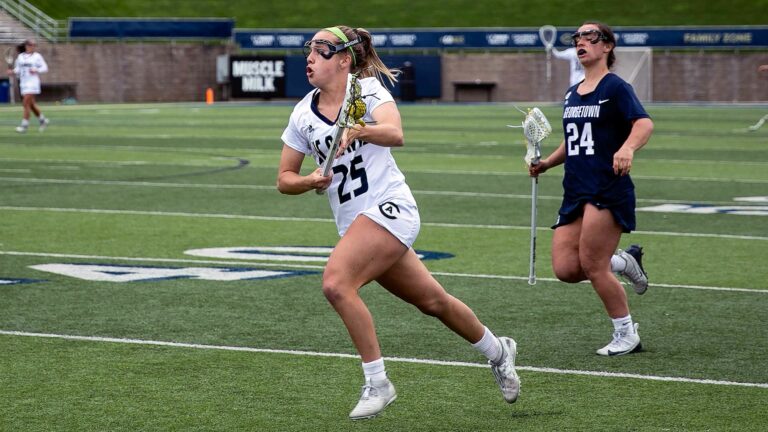
Despite a slow start at the UC Davis Health Stadium on Sunday afternoon, the UC Davis Lacrosse team quickly picked up the pace in the second half to claim a 15-14 win over the Georgetown Hoyas. The Aggies were coming off a 14-8 win against the University of Oregon, and managed to maintain their momentum through Sunday’s game. 

The Aggies lagged behind Georgetown for the first 20 minutes of action. After the Hoyas recorded two quick scores to open the contest, senior midfielder Kate Graham scored the Aggies’ first goal about eight minutes into the first half. The Hoyas then built a six-goal lead, thanks to their aggressive style of play off of the draw and strong defense in front of their own goal. Georgetown rattled off four straight goals over a two and a half-minute span to push the score to 8-2.

“We were turning the ball over — unforced turnovers, just bad passes,” said head coach Suzanne Isidor regarding the team’s sluggish start. “Defensively, we just felt like our footwork was a little bit off or our hips weren’t turned the way that we want. We weren’t forcing them [Georgetown] to do what we wanted to force them to do, we were letting them do what they wanted to do.” 

After adjusting their strategy, the Aggies hit a turning point with a second goal by Graham. After that, the Aggies went on to score four of the game’s next five goals thanks in large part to a pair from freshman midfielder Alex Agnew and another by junior attacker Kaley Stunz in the waning seconds of the half. UC Davis went into the halftime trailing just 10-8, down only two goals. 

The second half began with a quick Hoya score, but another tandem of goals from Agnew and two from senior attacker Sorana Larson eventually evened things up at 12 apiece with just over 11 minutes remaining. 

With eight minutes to go, sophomore midfielder Natalie Wilson put one in the back of the net to give the Aggies a one goal lead — their first of the game. But the Hoya’s responded just 40 seconds later to tie the game once again. 

After another three and a half minutes of back and forth play, a deciding shot by junior midfielder Mar Alvear put the Aggies up 15-14. From there the team played defensive with freshman goalkeeper Ashley Liang stopping a crucial shot by Georgetown just as the game ended, sealing the win for UC Davis.

One of the team’s key players during the game was Agnew, who led the Aggies with four goals on the afternoon. Isidor praised her for having “an awesome day” that was instrumental to the team’s success.

“She’s a freshman that just keeps getting better and better, every time she steps on the field,” Isidor said. “She’s getting better and better and she’s still untapped potential. She had a great game.”

Larson also had herself a four-point day, recording a trio of goals and an assist, while Graham added in a hat trick of her own. 

Despite the rough start to the game the Aggies were able to adjust their plays to be more aggressive and gain the momentum needed to end the game strong.

“We started a little bit slow,” Isidor said. “I think Georgetown is such a good team and they capitalized on some of our mistakes that we were making. They weren’t huge mistakes, but they were little things and Georgetown was capitalizing, and we dug ourselves in that 8-2 hole. It was quite a climb out. We just tried to focus on the moment — and just one moment, one play at a time. And next thing you know, we were up.”

After a wednesday tilt against George Mason, the Aggies were slated to take on Yale this Sunday at the UC Davis Health Stadium, but UC Davis athletics has since suspended all competition due to the COVID-19 novel coronavirus outbreak.

Written by: Priya Reddy — sports@theaggie.org

Solano County declares local emergency amid three separate cases of coronavirus to monitor, contain COVID-19

Travis AFB clears majority of Diamond Princess quarantine 

Solano County declared a local state of emergency on Feb. 27 in order to monitor and investigate cases of county residents who have contracted COVID-19, also known as coronavirus, as dozens of individuals were cleared and released from the county’s quarantine site at Travis Air Force Base (AFB) in Fairfield, California. 

At the time of writing, three individuals that have tested positive for COVID-19 have been identified as Solano County residents, according to the Solano Public Health Department. The first of these three cases garnered national attention as the first-known community transmission in the U.S. — in other words, the first COVID-19 case with no recent travel or apparent contact with known coronavirus patients, according to Jayleen Richards, the Solano Public Health Services Administrator. 

The patient in question was first treated in VacaValley Medical Center before being transferred to UC Davis Medical Center in Sacramento, where they remain at the time of writing, according to Richards. 

The second confirmed case among Solano residents was a passenger on the Diamond Princess, a cruise ship that was placed under quarantine in Japan after traveling to Wuhan in China, where the virus originated, according to the CDC and the Solano Health Department. Roughly 400 of the Americans onboard were repatriated back to the U.S. and transferred either to Travis AFB or Joint Base San Antonio-Lackland in Texas to remain under a 14-day quarantine, the CDC announced on Feb. 14.

The majority of quarantined Diamond Princess passengers at both California sites have been released after medical clearance by health officials, NPR reported. A handful of passengers remain quarantined at the Travis AFB site, Richards said. 

“Nearly all of them were released [March 3] from the 14-day quarantine,” Richards said. “The ones have tested positive and did get ill and those who were asymptomatic but have to get two negative lab results back [remain quarantined].”

Another Solano County resident from the cruise ship has tested positive for COVID-19 by Japanese officials. Confirmation by the CDC is pending, according to the Solano Public Health Department. Both of these Solano residents remain in mandatory home-isolation and are monitored by local officials, the health department said. 

Despite their physical proximity, the initial community-transmission case in Solano hasn’t been connected to the quarantine at Travis AFB, said State Public Health Officer Dr. Sonia Angell in a press conference on Feb. 27 alongside Gov. Gavin Newsom. 

“We have no evidence that there’s any connection with those patients in this individual at this time,” Angell said. 

The third confirmed case of COVID-19 in Solano was announced on March 1 through a press release from the county health department. Two healthcare workers at VacaValley Medical Center — one a resident of Solano and the other from Alameda County — were identified as “presumptive positive” for the disease by the health department. These two cases have been connected to the initial, community-acquired case in Solano, according to Richards. 

“That person was a NorthBay VacaValley employee exposed to the person who was the first community transfer,” Richards said.

According to the health department’s press release, both healthcare workers are currently in isolation in their respective homes. Meanwhile, local, state and federal officials are closely monitoring both of their contacts, as well as other healthcare workers who may have had contact with the community-transfer patient, the press release read. 

“Public health and hospital staff rapidly identified all health care workers in contact with the case during the case’s hospitalization,” the release read. “All of those health care workers remain in isolation or in quarantine and will not return to patient care until they are cleared. Additional COVID-19 cases among them may occur.” 

Solano County declared a local emergency on Feb. 27 as a “formalizing” move to bolster the response from local, state and federal agencies, as well as an attempt to obtain additional financial support for their efforts, Richards explained. 

“You can imagine […] the amount of investigation that we need to do right now,” Richards said. “The amount of testing, investigation, and then giving people isolation and quarantine instructions — right now, the California Department of Public Health and the Center for Disease Control are both here helping us with that level of work. So that’s why we had to declare an emergency for our county.”

The state of emergency doesn’t have any immediate effect on most Solano residents’ day-to-day lives, Richards said, but the county will likely issue advisories in the near future for senior populations — a demographic at higher risk of severe illness and death from COVID-19, according to the CDC

“We’re working on efforts to work with our older adult population,” Richards said. “We’ll probably send out messages later this week advising [older] people not to congregate in areas together.” 

Written by: Tim Lalonde — city@theaggie.org

UC Davis hosts symposium on robotics in math teaching at University of Redlands

C-STEM center works to close achievement gap in mathematics education

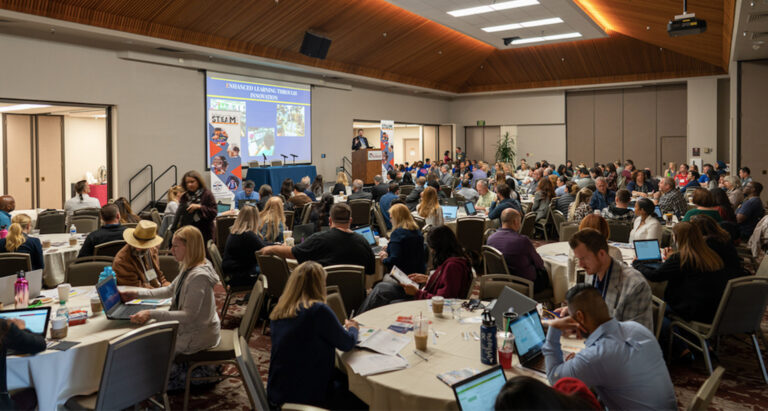
The UC Davis Center for Integrated Computing and STEM Education (C-STEM) organized the 2020 Symposium on Integrated Computing and STEM Education on Feb. 24 in collaboration with the Redlands Unified School District and the University of Redlands. One hundred and thirty students, teachers, administrators and professors shared their experiences and participated in hands-on training to learn ways to integrate coding and robotics into mathematics education. This one-day event was held at the University of Redlands.

Both entertaining and effective in capturing the interests of students, robots are useful tools for closing the achievement gap in mathematics education. C-STEM develops new and interactive curricula to teach algebra, mathematics and programming. These technologies are particularly effective in reaching students who lack interest in or struggle with mathematics and are already being used in elementary, middle and high schools throughout the country.

“[C-STEM] is a coding and robotics program focused on helping students better understand their core concepts in math, science, engineering, computer science and robotics,” said Daniel Ryan, the education service manager for C-STEM.

All software and curricula created by C-STEM are available on their website for educators to use. Additionally, the center organizes symposiums, professional development classes for educators and summer camps for students in various locations.
A full program of the events offered at the latest symposium is available on C-STEM’s website. Highlights from the event included speeches from Tim Taylor, the keynote speaker and an executive director for the Small School District Association, the C-STEM superintendents plenary panel session and the C-STEM teachers plenary panel session. There were also 16 breakout sessions and a “makerspace” for attendants to explore the robots. 

“We put on a number of different breakout sessions to introduce various K-12 teachers and educators to the C-STEM program and different strategies and options for integrating more computer programming and robotics into their classrooms,” Ryan said. 

Strategies suggested to educators included using computer programs to solve systems of linear equations and having students create their own dynamic robot systems.

One main goal of the symposium was to show educators how easy it is to integrate computer science into core K-12 classes. Many teachers originally are hesitant and cautious about the technologies, as many are not really familiar with computer science, Ryan said. 

“There’s this misconception [computer science] is a bunch of geniuses that sit and program all day, and you have to know your stuff in order to do it,” Ryan said. “We were trying to raise awareness that really anybody can get into coding. It’s a really simple easy thing to do, it’s just a matter of being able to transcribe instructions into very, very step-by-step algorithmic

logic.”

Every fall for the last nine years, C-STEM has hosted a similar symposium in Davis. After two years of integrating C-STEM’s educational tools into their curriculum, Redlands Unified School District wanted to host a symposium in Southern California for more educators to attend.  Redlands Unified School District served as a model of how the programs could be implemented, said Harry Cheng, a professor of mechanical and aerospace engineering and the director of the C-STEM program. 

“The timing was perfect to expand [C-STEM programs] to all our schools, and now that we have it at all our schools, we wanted to have a Southern California symposium so that all our teachers, administrators and other school districts could attend to see our model of implementation,” said Deepika Srivastava, the STEAM and innovation coordinator for Redlands Unified School District and one of the organizers of the symposium.

Beginning computer science education, through programs like C-STEM, as early as elementary school is important to ensure all students have equitable opportunities later on in their academic and professional careers. STEM education is the biggest equalizer in terms of knowledge and preparedness for college and future careers, Srivastava said. 

“It just opens a whole new world of opportunities for our students,” Srivastava said. “We just want to make sure that all our students have the opportunity to be successful in math and that we are not leaving any student behind.”

Redlands Unified School District is committed to providing these equitable learning opportunities for math and computer science education to all students, Srivastava said.

“The symposium validated our own fundamental belief that every kid can be successful in math, no matter where they come from and how they currently feel about their math preparedness,” Srivastava said. “C-STEM has brought joy back in the math classroom and has rejuvenated our students and teachers.”

Additionally, hands-on learning with robots and computer programing can help bridge the math achievement gap by bringing concepts to life. These technologies provide tangible mathematical models that help students understand and bring meaning to abstract concepts, Ryan said.  

“In a lot of math classes, students are constantly asking, ‘Why are we doing this? When are we ever going to use this? Why do I need to be able to solve for X in this abstract equation?’” Ryan said. “But with hands-on learning, you’re able to say ‘Alright, this is representative of something in front of you.’”

These technologies and new approaches to education have proven to help students succeed and help close the math achievement gap. For example, a school within the Orange County Unified School District saw a 37% increase in their mathematics scores in the “Smart Balance Test” after implementing these technologies for only four years, Cheng said. 

Additionally, 100% of students scoring very low on standardized mathematics tests who are English learners or have parents that recently moved to the U.S. pass their classes after working with these new technologies, according to Cheng.

“That’s how we’re using the math to close that gap,” Cheng said. “We have evidence that hands-on learning actually works great.”

Written by: Margo Rosenbaum — science@theaggie.org 

Aggies maintain high spirits entering second season

UC Davis beach volleyball takes 3-2 win in rematch with San Jose State

The UC Davis beach volleyball team took time in its first season to establish itself at the NCAA level, and now its players appear to be coming together and finding their own niche in the UC Davis athletics community.

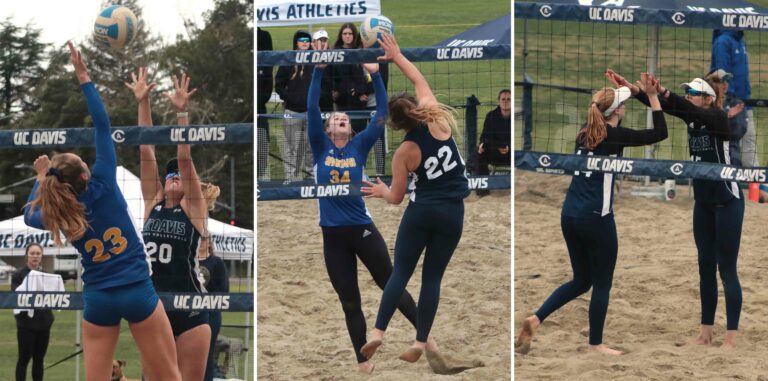
The Aggies defeated the San Jose State Spartans by a score of 3-2 on Saturday in their first home game of the season, evening out their record at 3-3. 

The match began with the Spartans taking a 1-0 lead after a hard-fought three set battle at the five spot, but was followed by aggressive performances from UC Davis in the next three subsequent matches.

The Aggies took the next two matches after falling behind and were able to clinch the victory behind the doubles performance of second-year Jane Seslar and third-year Paloma Bowman. This was the second-straight win for the pair as they remained in the top spot of the lineup and defeated the Spartans 21-17, 22-20.

Considering that this is only the program’s second season, the team is treating last year as a learning experience and maintaining high spirits moving forward. 

“I think we’re feeling pretty good and getting better as we’re playing,” said Head Coach Ali McColloch. “The second season is actually harder than the first season because now the girls have expectations for themselves.” 

McColloch believes the Aggies’ first season was different in that there was no advantage of having a full off-season together beforehand, whereas this second season has allowed for additional preparation and the ability to implement new tactics.

She describes the previous season as one that was rushed and full of “trial and error,” while the start of the 2020 campaign was preceded by ample time for preparation. 

This season also began with the addition of several new players, including four freshman and a graduate student. First-years Megan Luly and Bailey Herdman joined the team with impressive backgrounds in volleyball and both delivered high-energy performances in Saturday’s match. 

Following the win, McColloch explained that while the dynamic of the team remains similar to their first season, the freshmen “came in and they glued really well with the team.” She also highlighted the “great culture” that everyone maintains, adding that the team “embraces everyone that comes in.” 

The Aggies’ victory over the Spartans follows a double header on Feb. 29, in which UC Davis rebounded from a 5-0 loss to the UC Berkeley Golden Bears with a 3-2 win over Utah — both of which are Pac-12 conference opponents. 

Although the loss to UC Berkeley was a difficult one, McColloch claimed that the team “doesn’t dwell on the losses but instead on the process,” explaining that for this season, the Aggies have adjusted their training and “ironed that out much better.” 

Overall, this upcoming season is now the time for UC Davis to work on execution and performance as the team moves forward from a level of uncertainty to a more established environment. 

Following the match, Bowman elaborated more on this, describing the team’s first season as “100% learning” while referring to this season as “a balance between learning and being competitive, with more of an intent to execute.” 

Sophomore Rose Holscher followed up these comments by saying the team is, “working together to try new things, but also figuring out when to do that and when not to do that.”

Outside of dedicating time to improving their skills, the players this season have found an increased ability to play their own specific styles and express themselves throughout each match. Bowman described last season as “robotic,” compared to the freedom that this second season has brought on. 

Both Holscher and Bowman were adamant about their abilities to maintain their own styles of play moving forward. They explained that they are “not phased,” and will not allow other teams to influence the way they play.

The team’s confidence was prominent in Saturday’s match, as everyone appeared to remain positive even when falling behind in a set or throughout the bouts of rain. 

As far as whether they have set any expectations for this season, Holscher and Bowman both explained that they’ll rely on attending practice and improving their abilities while “soaking in” the knowledge that their coaches have to offer. 

The pair also explained how “ecstatic” they are to be part of a program that is new to both UC Davis and the NCAA in general, describing it as something that has “changed so many lives for the better,” while crediting the coaches as being beyond anything they could imagine. 

Going forward, Bowman and Holsher highlighted the importance of the team maintaining the “culture” that McColloch described, while also having a good amount of fun while doing so. The environment surrounding this team is focused and dedicated, but also remains light-hearted from one match to the next. 

After a double header at home on Wednesday, the Aggies will be playing their final home match of the season against the University of San Francisco on Saturday. The team will then head to San Jose for a triple header on March 21 against Boise State, their final match with San Jose and Sacramento State. 

Written by: Rain Yekikian — sports@theaggie.org


Culture Corner with Mike Holzer

The Arts Desk’s weekly picks for television, movies, novels and music

Movie: “A Beautiful Mind”

Ron Howard does a fantastic job of storytelling in this star-studded, Academy Award-winning 2001 movie, based on Sylvia Nasar’s biography of the same name. John Nash (Russell Crowe) is a brilliant but odd mathematician who comes up with an original theory at Princeton that ultimately earns him a Nobel Prize. His wife, Alicia, (Jennifer Connelly) stands by him as his behavior becomes increasingly erratic. The audience is pulled into the chaos — wondering what is real and what is not — until Nash is ultimately diagnosed with schizophrenia.

The enduring love between Nash and his wife is challenged numerous times as they try to rebuild their shattered lives following his diagnosis, but it’s this love that leads him back to academia. The ending is sure to pull on heartstrings, and his Nobel acceptance speech is one for the ages: Instead of delving into his mathematical theory, Nash speaks about love.

Album: “Let It Bleed” by The Rolling Stones

This is Stones at their peak. Ending the decade with one of their best albums of all time, The Stones’ tenth American studio album was released at the end of a turbulent decade, on Dec. 5, 1969.  The album includes the classics such as, “You Can’t Always Get What You Want” and “Midnight Rambler” which are the last two songs founding band member Brian Jones played before his death. The album also included “Country Honk,” which fans will recognize as the harbinger of the hit “Honky-Tonk Women.”

The two greatest songs on the album both open with some of the best guitar riffs from the band: The piano and guitar quietly kick off the drug anthem “Monkey Man,” which then explodes into electric guitar before Mick’s insane lyrics about fleabit peanut monkeys, junkies, cold pizza and lemon squeezers. The opening guitar on “Gimme Shelter,” with its eerie apocalyptic sound, has appeared in movie scores and even a recent congressional campaign kick-off ad. The haunting notes and lyrics about rape and murder were a homage to the times — the Vietnam war raged and both JFK and RFK had recently been assassinated. Mick is joined on the lyrics “rape murder, it’s just a shot away” by Mary Clayton, who was called in the middle of the night as she laid in bed pregnant and with curlers in her hair. It took Clayton just a couple of takes to blow away the British band.

Television: “Law & Order” (original)

First aired in September 1990 with the final episode airing two decades later in May 2010, this crime drama filmed in New York City focuses on — you guessed it — the police who investigate crimes and the district attorneys who prosecute the offenders. A slew of wonderful actors have appeared in the show’s regular cast, my personal favorites being DA Jack McCoy (Sam Waterston), Detectives Lennie Briscoe (Jerry Orbach) and Rey Curtis (Benjamin Bratt) and Lieutenant Anita Van Burren (S. Epatha Merkerson). Although every episode starts with a disclaimer that the crime stories are fictional, many episodes seem to mimic high-profile crimes that have captured national attention.

The show doesn’t always end with a conviction — even when it appears it should. “Law & Order” is more about the human drama in finding the supposedly guilty party and the courtroom prosecution of those individuals. 

Book: “The Blind Side: Evolution of a Game”

Before the movie, there was the book. Michael Lewis’ “The Blind Side” tells the story of Michael Oher, a physically gifted young man who overcomes a highly dysfunctional life to earn a college scholarship to Ole Miss. Lewis, who is well-known for his financial writing, delves into the economics of various football positions and why offensive tackles are so highly paid. He explains that offensive tackles are the team’s insurance policy and protect the “blind side” of the typically highest-paid player on a team: the quarterback. 

The main character, Oher, is an African American man born into poverty. He does not know his father, his birthdate or even his real last name. He meets a wealthy family who take him into their home and create a culture in which he can thrive while playing at an elite private high school. Oher eventually becomes a highly paid NFL player, thanks in large part to the Tuohy family, who ultimately adopt him. 

Written by: Mike Holzer — arts@theaggie.org 

Review: “Portrait of a Lady on Fire”

A heart-shattering, unforgettable romance

You will think about the last 15 minutes of Céline Sciamma’s 2019 romance, “Portrait of a Lady on Fire,” for the rest of your life.

The film follows the relationship of Marianne (Noémie Merlant) and Héloïse (Adѐle Haenel), two women on an isolated island in mid-1800s France. Héloïse, a young woman who recently left the convent, is to be married off by her mother to a Milanese man she has never met. Marianne, a single painter, is hired by Héloïse’s mother to paint a wedding portrait to be sent to the suitor. Héloïse is reluctant to marry and unwilling to sit for the painting. Marianne must paint her at night, with her only reference being the glances she steals during their daily walks. 

At its core, “Portrait of a Lady on Fire” embodies the female gaze, a rare perspective — the glances so calculated, the looks so meaningful. Héloïse and Marianne form an unrelenting bond that can only stem from the thrill of being truly seen by someone. From this gaze, we see the strength and tenderness of femininity. Merlant and Haenel’s masterful performances show something we don’t see in straight movies: a complete power balance. Neither woman is a passive muse; rather they come together to make true art.

It is stylistically genius. With no score, the majority of the movie is silence interrupted by dialogue, but Sciamma wields music like a weapon, unleashing it to create the most powerful moments in the film. Heightened by the very lesbian setting of an isolated French island, the cinematography accentuates their freedom and their isolation through a beautiful color palette. This is a movie about visual art, and Sciamma doesn’t let you forget that. Each painting shown is so beautiful and thought-provoking that I’m considering signing up for ART 007.

Although the film is known for its emotional depth, it still manages to be funny. Héloïse and Marianne are not alone on the island but are joined by their young maid, Sophie (Luàna Bajrami). The addition of Sophie shows a lovely friendship between the three women and, more subtly, the capacity that women have to care for each other under the radar of society. This dynamic spawns some of the funniest moments of the film. The smiles are so carefully placed that you feel them radiate onto you. “Portrait of a Lady on Fire,” a movie about the pain of memory, manages to overwhelm you with happiness and fun.

With the exception of a jarring cameo near the end, the “Portrait of a Lady on Fire” cinematic universe (POALOFCU) is absent of men. In this liberty, the women have the space to fall in love and simply exist, letting us see what freedom could look like for women in the 1800s. About halfway through the movie, there is a scene where Marianne, Héloïse and Sophie sit down for a meal and it is through their admiring glances and subtle smiles that Sciamma gives us a fleeting look at the domestic life of the three women together and what could be without the suffocating conventions of the patriarchy. 

Sciamma uses her own perspective as a lesbian to personify the yearning that is so specific to the lesbian experience. She does this subtly, through the glances and gentle touches that fuel the movie. With this lens, and the fact that the cast and crew is almost exclusively comprised of women, the female gaze is unbroken. Despite being a period piece, it resonates with the realities of women face today and reminds us of how little has changed.

The final scene is so shattering that it is physically damaging. I watched, surrounded by the gasps and tears of those around me. Every muscle in my body tensed, and I felt myself clench my chest. I was so overwhelmed that my mind went blank — I felt buzzed with excitement and awash with pain. I think I might have been in shock. I left the theatre dizzy and gasping for air, so completely overwhelmed I could do nothing but try to steady my breathing. It haunted me for days and kept me up at night. It embodies the searing pain of memory.

Since its premiere at Cannes, where it won Best Screenplay and became the first female-directed movie to win the Queer Palm D’or, it has garnered a fantastic reputation. It would be rare to read a Best Films of 2019 list without “Portrait of a Lady on Fire” near the top. It has even earned itself a spot on many Best Films of the Decade lists.

Additionally, it has amassed a powerful cult following online and received one of the highest reviews for a romance on the social movie reviewing site Letterboxd

Everyone should see this film and be prepared to leave the theater a changed person. The number 28 will leave you sick to your stomach, and the words “turn around” will bring tears to your eyes.

Written by: Livvy Mullen — arts@theaggie.org

Aggie Profile: ASUCD Vice President Akhila Kandaswamy

Newly elected VP talks about her parents, books, music

Akhila Kandaswamy, a second-year managerial economics and statistics double major, ran to be ASUCD vice president to focus on sexual assault awareness and advocacy. Through this platform, she aspires to change stigmas around ASUCD and focus on how vulnerability can be a strength. Throughout her interview with The California Aggie about her new vice presidential position, Kandaswamy discussed her personal values that led to her interest in public service, while also talking about her other passions, including music and books.

Kandaswamy’s experience with the Distributive Education Clubs of America (DECA) in high school led to her passion in business. DECA is known for being a student organization that is focused on marketing, finance and management competitions, yet Kandaswamy gained a lot more through her experience. 

“[It was] our last couple conferences, and at one of them we had a workshop,” she said. “The students would step forward every time they had something in common. It started with, ‘What is your favorite color,’ or, ‘What is your favorite animal.’ But by the end, it had a different focus, more based on divorce or death.”

This experience tied into her own personal philosophy, as she learned about how vulnerability forges connections.

“We had all gone through these traumatic experiences, and sharing those experiences create[d] strength through connection,” Kandaswamy said. “Being open about vulnerabilities is important in being a leader.” 

In addition to her involvement with DECA, her personal connection to entrepreneurship was closer to home — both of her parents are immigrants from India. Her admiration of her parents is clear and inspiring and she cites them as a motivation. 

After discussing her interest in business, she turned to music and books. Kandaswamy said she loves every genre of music, save for classical, and she delved into some of her favorite artists.

“I love Tyler the Creator,” she said. “I got to see him when he came in November. I also really like ASAP Rocky and The Weeknd, as well as Macklemore, Khalid and Frank Ocean.”

In addition to music, she discussed her fondness for books. Growing up, one of her favorite hobbies was reading, and this has impacted how she sees the world.

“[Reading] is a great way to constantly change your mindset on life,” she said. “A way to figure out who you truly are.”

One of her favorite books is “The Alchemist” by Paulo Coelho, a simple story about an Andalusian shepherd boy who travels from Spain to Egypt in search of treasure. 

“[It reminds me] that things are deeper than they actually are,” Kandaswamy said. “When you are older you see the world differently.”

Written by: Athena Aghighi — features@theaggie.org

UC Davis study on rectal microbes sparks hope for more effective HIV vaccine

Researchers looked at interaction of gut microbiome, HIV vaccine in rhesus macaques

UC Davis researchers are investigating the gut and vaginal microbes of the primate species rhesus macaques for clues to developing a more effective vaccine for human immunodeficiency virus, or HIV.

In a study published last December in the open-access journal mSphere, a team of scientists directed by Dr. Smita Iyer — an assistant professor of pathology, microbiology, and immunology — explored how an experimental vaccine resembling the HVTN 111 vaccine impacted the microbiome environments of rhesus macaques and vice versa. HVTN 111 is currently wrapped up in human clinical trials, so this DNA vaccine was of particular interest to the researchers.

“As an immunologist I am driven to understanding how host factors modulate vaccine immunogenicity so we can use this information to develop vaccines against challenging infectious diseases,” Iyer wrote via email.

The findings of Iyer’s team, which included scientists from Emory University and the University of Pittsburgh, are the first to directly suggest that the immune actions of an HIV vaccine are influenced by bacteria inside our bodies.

“One of the bigger questions that has eluded the field or that people haven’t addressed substantially yet is how immunizations can affect the microbiome,” said Sonny Elizaldi, a second-year graduate student studying immunology at UC Davis and the lead author on this research study. “We wanted to ask how the vaccine affects both the fecal and vaginal microbiomes.”

The team’s research cites the rectum and vagina as the two main sites where HIV is generally transmitted between humans. Before the experimental HIV vaccine was administered, DNA samples from these two compartments were first sequenced to establish an understanding of initial microbiome compositions in each macaque’s rectum and vagina. 

Data from the study showing differences in the microbiome composition of the rectum and the vagina established that the compartments were independent of one another. This is important because it allowed the research team to investigate the rectum and the vagina as separate compartments, Elizaldi said.

A series of three vaccines — the first two containing viral HIV DNA and the third containing viral HIV protein — was administered eight weeks apart to both sites in the rhesus macaques. The immune responses at each site were characterized at zero, one and four weeks after the third immunization by data quantifying CD4 T cells, immunoglobulin A and G (IgA and IgG) antibodies and glycoprotein gp120 and gp140 antibodies. High concentrations of each indicate greater immune responses.

Although the levels of Lactobacillus and Clostridium — two prevalent gut bacteria  — in the rectum were unaffected by the HIV vaccine, the relative levels of bacteria between macaques were found to positively correlate with the recorded immune response in that animal. Conversely, levels of Prevotella, another type of gut bacteria, decreased with greater immune responses. Overall, several types of bacteria in the rectum saw significant changes after immunization.

“[Lactobacillus and Clostridium] bacteria could possibly be targeted to induce stronger antibody responses, so maybe supplementation with certain types of bacteria before you get immunized could, in fact, maybe help produce stronger antibody responses,” Elizaldi said.

When similar data was obtained from macaques that had only received a measles booster prior to experimentation, these differences were not observed, indicating that the response to the HIV vaccine seen in the rectal microbiome of the experimental group was likely due to vaccination, according to Elizaldi.

The composition of the vaginal microbiome was relatively unaltered by vaccination, suggesting that “the vaginal microbiome is maybe just a lot more resilient to change in the context of an immunization platform,” Elizaldi said. 

It is also possible that microbes in the vagina respond quickly to an initial or second immunization, but not to a third immunization, according to Elizaldi. This could explain why, when microbial composition was examined 16 weeks after the first of three vaccines was initially administered, the vaginal microbiome seemed unchanged.

The microbiome composition was tracked up until four weeks after the third immunization, so a third possibility is that vaginal microbes are slower to respond to vaccination than rectal microbes.

One limitation to developing effective HIV vaccines is that the immune response to the vaccine is often short-lived.

“One of the problems within the HIV vaccine field is developing long-lived antibodies,” Elizaldi said. “That’s something that is really eluding the field, and, I mean, that’s really the golden ticket there. If you could induce long-lived antibodies with an HIV vaccine, you’d be a little bit closer to establishing a successful vaccine, so that’s what everybody in the field is really gunning for now.”

Although this study evaluated the vaccine’s microbiome interactions specifically in macaques, the conclusions of this study could eventually be generalized to human models.

“Rhesus macaques for a long time have been a really solid model for HIV,” Elizaldi said. “That’s primarily [because] the infection kinetics, the kinetics of viral entry into the host and replication within the rhesus macaques, mimic very closely the human infection.”

How bacteria enhance or hinder the immune system’s response to a vaccine is not fully understood. But scientists’ knowledge of microbe-vaccine interactions can be refined with future investigations targeting specific genera of bacteria. Such studies could herald the arrival of an improved HIV vaccine for humans, reshaping how we treat autoimmune immunodeficiency syndrome, a disease caused by HIV, and providing hope for the millions of people who have it.

“This [research] opens the door into understanding how we can possibly target immunizations to be more synergistic with the microbiome,” Elizaldi said. 

Iyer, Elizaldi and their colleagues drew on the help of multiple departments and microbiome experts to complete this study. A team of bioinformaticians from the Bioinformatics Core Facility at the UC Davis Genome Center contributed to data analysis. 

“The most challenging aspect of the study was synthesizing complex and large data sets to understand biology,” Iyer said. 

The team also included Dr. Reben Raeman, an assistant professor of pathology at the University of Pittsburgh, who “provided consultation to the Iyer lab on experimental design and data interpretation,” according to Raeman.

The macaques in this study were part of an adult female cohort at the California National Primate Research Center, a research unit of UC Davis. All animals tested negative for simian immunodeficiency virus, a common analog of HIV in primates.

Written by: Daniel Erenstein — science@theaggie.org

Computer Science Department struggles with faculty shortage

Department is working to hire more instructors to meet increased student demand for courses

The drastic increase in students taking computer science courses has led to a faculty shortage in the department. While the department has hired 16 new faculty members since 2011 to keep up with student demand, it also lost 11 faculty members during the same time period to retirement and other institutions.

Between 2011 and 2017, there was a 2.5 times increase in the number of students enrolled in courses offered by the Computer Science Department at UC Davis, and this number has continued to rise. In order to meet the demand for computer science courses, six temporary lecturers have been hired in addition to the five associate-instructors and 38 faculty who teach the majority of the courses. Some of these lecturers are graduate students who are pursuing degrees in computer science.

Jason Sison, the undergraduate advisor for the Department of Computer Science, sent an email statement on behalf of the department to The California Aggie. The department cites the increase in demand as the main reason behind the shortage.

“Not only are we teaching our own majors (approximately 1300 students right now), we are also teaching students who want to minor in our program, students who want to transfer into our program, and students who are required (or advised) to take CS classes as part of their own major,” the statement read. “There are also many students who see the benefit of obtaining some basic programming knowledge and want to increase their skill set for the job market.”

The growth of computer science in the digital era reflects its wide range of applications, including fields such as engineering, neuroscience and even graphic design. In fact, according to LinkedIn, many of the top hard skills employers look for stem from computer science, and its overall usefulness is likely one of the reasons why computer science has grown in popularity amongst universities in the U.S., including UC Davis.

The Department of Computer Science at UC Davis offers two majors: computer science in the College of Letters and Sciences and computer science and engineering in the College of Engineering. 

Koby Lieu, a first-year undeclared major, has taken two lower division computer science courses during his time at UC Davis so far. He said that he was not aware of the faculty shortage in the department and said that his courses were well taught by his instructors and that he had access to enough resources. Last quarter, Lieu took an introductory Python course (ECS 32A) taught by Aaron Kaloti, a graduate student in computer science who also received his bachelors degree from UC Davis in 2018. 

“I think all of [Kaloti’s] examples were very, very clear and very obvious and accessible,” Lieu said. “I could tell he put a lot of time into having his lecture slides available as a resource. Whenever I get confused I would be able to go look at them.”

Second-year computer science major Soumya Duriseti was not aware of the faculty shortage when she first started at UC Davis, but she quickly became attuned to the issue when she had trouble with course registration, especially with upper-division courses. 

“It was very hard to get into classes that were required for my major and required for me to take at that time to be on track,” Duriseti said. “It was weird to see all these long waitlists, which made me think maybe there were some issues. Now that I’m a second-year student trying to get into upper-division classes, it’s hard with my pass times to get classes that other people, like seniors and juniors, have to take.” 

According to the department, the courses most impacted by the shortage are those that “require more specific knowledge to teach,” such as upper-division courses in artificial intelligence (ECS 170), machine learning (ECS 171) and bioinformatics (ECS 124 and 129). 

For Duriseti, instructor accessibility has also been an issue.

“The lecture halls are always full, and getting help outside of class is sometimes a little tricky, especially when it’s closer to the due dates, because there’s a few TAs and there’s so many of us,” Duriseti said. “I’ve definitely felt that it was a little harder to connect with my lecturers and professors.”

The Computer Science Department is in the process of hiring five new faculty to address the shortage, with plans to hire additional faculty as the campus approves more slots. 

Noting that approximately 45% of students enrolled in computer science courses are non-majors, the department also hopes to focus their efforts in expanding course offerings for non-majors, such as ECS 18: Introduction to Data, Logic and Computing, a new class the department intends to introduce.

“As a department we believe very strongly in the idea of CS for everyone – we think it is critical that as many people get to take computer science classes as possible,” the statement read. 

Written by: Lei Otsuka — features@theaggie.org

Why COLA is so dire, according to a Ph.D. student

Kirsten Schulmacher discusses balancing intense workload of being a teaching assistant while also a Ph.D. student

Kirsten Schulmacher, a UC Davis Ph.D. student and teaching assistant with the English department, is constantly on the go. Between assisting undergraduates, preparing for discussion sections, attending lectures and taking Ph.D. classes, she rarely has time for herself. In addition to the grueling schedule and the slew of responsibilities that teaching assistants have, they also face a constant worry of financial stability. 

According to Schulmacher, the paychecks of the UC teaching assistants are not rising, despite a consistent increase in the cost of living in California. Finding affordable housing in Davis is a challenge for most students, but add to that the extremely inflexible budget that teaching assistants have and Schulmacher says it becomes almost impossible. She says that her paycheck does not even account for basic utilities that most affordable housing arrangements here in Davis do not include. 

“We are paid just enough to pay rent and buy food, which doesn’t account for any other things that we might need to buy, including internet, electricity, water, without having to room with like six other people,” Schulmacher said.

This lack of financial stability has become increasingly dangerous in recent years, leading to the current Cost of Living Adjustment (COLA) strike, which began at UC Santa Cruz, where 54 teaching assistants have now been dismissed or have not received Spring Quarter appointments due to striking activity. Currently, some Davis teaching assistants are in a state of partial strike, meaning they will be withholding grades for Winter Quarter but are still fulfilling their other duties. 

These duties are no small task. As a teaching assistant for ENL 10A this quarter, Schulmacher says that she spends anywhere from 10 to 20 hours a week preparing for and leading discussion, grading papers, attending lectures, keeping up with readings and meeting with students in and out of office hours. Apart from time spent working as a teaching assistant, she said she is pretty much always swamped with Ph.D. assignments.

“Regretfully, the rest of the hours of my week are spent [doing Ph.D. work] and I think something that Ph.D. students are always working on is finding more time for themselves, but it doesn’t always work out because we just have so much work to do,” Schulmacher said. “I generally think that you won’t find somebody doing this with more than one activity.”

Her Ph.D. work includes taking two — or in Schulmacher’s case, three — seminar classes, each requiring an average of 500 pages of reading a week. This is on top of attending class, completing small assignments and a cumulative seminar paper, which is roughly 20 pages. 

Additionally, Ph.D. students in the English Department are constantly working toward taking the preliminary examinations needed to graduate, which require being an expert in two historical fields of study. Schulmacher, aspiring to be an expert in premodern literature and plants and agriculture, is required to complete a laundry list of readings in each field before she is deemed prepared for these exams. She and other Ph.D. students are also in constant communication with their advisors, making sure that they are able to keep up with these outside readings while also taking seminar classes and working as teaching assistants. 

On top of her overloaded schedule, Schulmacher actually has to work another job to afford to live in Davis and be in her Ph.D. program. Even with this second income, Schulmacher says that she is 80% rent-burdened, meaning that she generally has just $300 at the end of each month to pay for food, utilities and any other unforeseen needs. 

 “Frankly, I can’t afford to live here on my current salary,” Schulmacher said. “Through the UC system, I TA, but I am also an adjunct instructor at a community college in Nevada. I can pull two incomes from two different states, and that’s how I can survive. If that wasn’t the case, there’s no way I could survive here.”

Schulmacher is able to work remotely at a Nevada community college teaching online courses, but this also comes with more grading, lesson planning and reading. The hours that Schulmacher and many teaching assistants have to work to afford their current living situations puts them under a huge strain, which the COLA strike is looking to lessen.

“What the COLA strike is asking is just to be paid slightly more to have a living wage in order to not be completely dependent on your paycheck every month to the point where you could be destitute and homeless if you didn’t get it,” Schulmacher said. 

Readers interested in more information about the strike can find links here and here, and follow along at theaggie.org/campus/. 

Written by: Katie DeBenedetti — features@theaggie.org

Humor: Hip Zoomer protesting big corporations while vaping: “Juul is a small corporation”

Irony deficiency threatens youth health

At the local headquarters of Big Corporation, hundreds of students gathered yesterday to protest against what we at the News Paper Times described as “corrupt, exploitative and harmful practices” in our series of award-winning exposés about Big Corporation over the last year. Our very own R.E. Porter was at the scene to interview some of the demonstrators.

R.E. Porter: Hi, I’m standing here on Phil T. Richman Avenue, where most of the protestors are gathered near the main entrance of the Big Building. To my right is Irene E. der Fischendt, a freshman over at the University of Studies, studying studies studies. So Irene, I’d like to start by asking you, what is studies studies? And secondly, what sort of message are you hoping to send to Big Corporation with your protests here today? 

Irene E. der Fischendt: Well, to answer your first question, studies studies is the combined humanistic and scientific study of studies. In fact, the University of Studies has one of the best programs in the country for studying studies such as studies studies. Studying studies studies has helped give me a more comprehensive comprehension of the problematic problems, topical topics, matterful matters, issuable issues and concerning concerns that are currently current regarding big corporations like Big Corporation. 

R.E. Porter: Ah, I see, thanks for the clarification. So, what are the goals of your protest today?

Irene E. der Fischendt: We’re hoping that the massive turnout will help send the message not just to Big Corporation, but to other big corporations as well, that we’re no longer going to put up with them knowingly putting harmful chemicals in our food, polluting our air, poisoning our water, ignoring unsafe working conditions, targeting children and vulnerable populations with their dangerous products and actively conspiring to cover all of it up!

R.E. Porter: That’s fantastic. It’s so encouraging to see so many people of the younger generations out here standing up against corporate corruption and obfuscation. 

Irene E. der Fischendt: What?

R.E. Porter: I said it’s so encouraging to see so many people of the younger generations out here standing up against corporate corruption and obfuscation.

Irene E. der Fischendt: Well, I’m certainly against corporate corruption, but I don’t know what obfuscation is, so I’m going to have to learn more about that. Sorry if it seems like I’m being evasive, unclear or confusing, but I just like to make sure I know as much as possible before I start waving opinions around!

R.E. Porter: Speaking of waving things around, what’s that in your hand there?

Irene E. der Fischendt: Ah yes, this is my homemade sign for the protest. It says, “Big Corporation Kills.” 

R.E. Porter: I meant in your other hand. What’s that?

Irene E. der Fischendt: Oh this! This is my Juul. It’s a vaping device for consuming nicotine products safely. Doesn’t it look cool? They really design them well, don’t they? Such a slick little gadget! It’s really convenient too. It easily fits into my pocket just like a pen or a USB drive! Plus, they know that kids like them, so they make all these nice fruity flavors that taste really good!

R.E. Porter: Don’t you think protesting big corporations while vaping contradicts the message you’re trying to send to harmful big corporations like Big Corporation?

Irene E. der Fischendt: Of course not! Juul is just a small corporation. And Juul says their products aren’t harmful! Cigarettes are way worse! Smoking kills! Big Tobacco hooked the world on cigarettes and lied about the health risks for years! Juul wouldn’t do that!

R.E. Porter: Are you not aware that Juul Labs is owned by the Altria Group, which is also the parent company of the tobacco giant Philip Morris USA?

Irene E. der Fischendt: And how do you know that? I’m not immediately going to say you’re wrong, but I like to be a healthy skeptic and fact check things myself rather than just believing what so-called “experts” tell me.

R.E. Porter: What do you mean? I’m a health and science reporter for the News Paper Times. I’ve written dozens of articles about this.

Irene E. der Fischendt: You’re with the News Paper Times? I thought this interview was just for an Insta Story! I can’t trust the News Paper Times! You’re part of the MSM, the mainstream media, and you’re totally in cahoots with big corporations like Big Corporation!

R.E. Porter: Excuse me? My colleagues and I are responsible for the reporting that exposed the abuses and corruption at Big Corporation. Isn’t that why you’re here protesting today?

Irene E. der Fischendt: Yeah, I don’t read the news! And I didn’t hear about any of this from you anyway — I heard about it from influencers on Instagram, Snapchat and Twitter! They know what they’re talking about!

Written by: Benjamin Porter— bbporter@ucdavis.edu 

(This article is humor and/or satire, and its content is purely fictional. The story and the names of “sources” are fictionalized.)