56 F
Davis

Davis, California

Friday, December 26, 2025
Home Blog Page 378

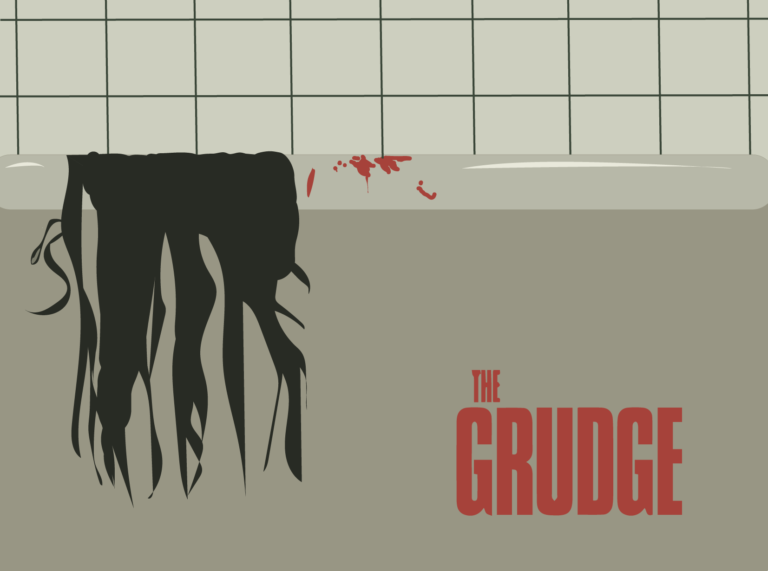
Review: “The Grudge” reboot

I dragged my housemate to the first horror movie of the decade, left disappointed 

The newest edition of “The Grudge” wasn’t a sequel, but rather it turned out to be a disappointing remake. This year’s “The Grudge” follows Detective Muldoon (Andrea Riseborough) as she and her partner Goodman (Demian Bichir) investigate a rotting body in the middle of a car wreck. In the midst of their investigation, they find that the body belonged to Lorna Moody (Jacki Weaver), who was visiting a nearby house that has a long history of murder. While Muldoon digs deeper into what happened with the previous owners and how Moody is involved, she receives warning from Goodman to drop the case without explanation. Despite her better interest, she ignores the warning and throws herself down a rabbit hole. 

I expected there to be a couple differences between this movie and the last three, or even “The Ring,” but the differences turned out to be where the movie fell flat. The most striking change in this new movie was that the Grudge herself wasn’t haunting Muldoon and other victims in her own form. Instead, she took on the form of people who had already passed away. The Grudge is a vengeful spirit, constantly trying to find her next victim, but when we don’t see her doing so, it doesn’t resonate in the same way. 

I wouldn’t say I disliked this aspect of the haunting, but I will say that it could have been executed better. When the deceased victims were haunting Muldoon, it felt like they were haunting her more than the Grudge was, which isn’t a scary premise to me. 

There were also a few parts that needed more explanation — for instance, the film failed to mention how the Grudge came to be and, because it is a reboot and not a sequel, an explanation was needed. A reboot should be able to stand on its own, but viewers without prior knowledge about who the Grudge is, how she died and why she makes that god-awful noise when she’s approaching her next victim might be left confused after watching this movie. 

The movie did explain how the Grudge arrived in the U.S. well: the vengeful spirit followed Fiona Landers (Tara Westwood) home from Tokyo to the U.S. and possessed her to kill her family. Although a ghost possessing a living person isn’t anything new in a horror movie, I just can’t picture a vengeful spirit boarding a plane and flying across the country only to possess a house. 

As the story progresses, we are given the different perspectives of those who have fallen victim to the vengeful spirit. The story plays out in flashbacks, giving the audience a full view on how each family is affected. While the story moves along, the excerpts with the previous deaths are a refreshing change, not only because Detective Muldoon is a stale character, but because we are able to see how the victims rack up and what the spirit’s capabilities are. Unlike other movies, the Grudge is haunting a house and whoever steps foot in the house is its next victim. But that provides a huge plot hole — there is absolutely no reason why a vengeful spirit would attach itself to a house, especially not one that it didn’t die in.

Detective Muldoon, however, never does any real research on how the spirit got to the U.S., how to kill it or even who it was. She might choose to see a priest or Google something — anything — to show that she is a capable human being with an ounce of rationality. She is a detective after all, albeit a detective with an underdeveloped back story. This is the biggest flaw in the storyline, as it leaves new viewers confused as to how the Grudge became an evil spirit. (Spoiler alert) Muldoon finally resorts to burning the house down, an act that doesn’t make much sense, even within the context of a horror movie plot.

Despite the main character’s lacking personality, my biggest pet peeve with the movie is how it chose to scare its audience. I don’t mind jump scares — there are multiple in every horror movie I’ve watched because, without them, the movie is a thriller. Although many people loathe jump scares, some of us are so desensitized that it’s really the only way to scare us. 

But the choice of scaring the audience with insects is one I hate most in horror movies. I don’t mind gore, blood and needles, but maggots crawling around a mouth that has dried blood on it gives me the chills. It’s unamusing, overused and in no way scary. The 2020 version of “The Grudge” has a lot of that; there were a handful of scenes that were just plain disgusting. A random, cheap jump scare is one thing, but to disgust me so much that I have to turn away from the screen is something else. 

The remake of “The Grudge” was disappointing to say the least. It could have been a better movie had it filled in plot holes and allowed its characters to develop naturally throughout the story. This isn’t a movie I’d watch again, which says a lot considering that all I do in my spare time is rewatch movies.

Written By: Itzelth Gamboa — arts@theaggie.org

Review: “You” Season Two

Why do I feel bad for a murderous stalker?

The second season of the hit Netflix show “You” came out on Dec. 26, 2019. After the problematic, yet binge-worthy, first season, it was no surprise that most people finished the new season in a few days (me), then took to Twitter to immediately criticize it. For those of you who haven’t yet finished the season, stop reading here — spoilers lie ahead. 

The show follows Joe Goldberg (Penn Badgely), a book-loving stalker on his quest to find his disturbing version of love. Once he’s reeled in his newest object of obsession, Goldberg will stop at nothing to ensure she falls in love with him while simultaneously protecting himself from being exposed as a stalker. 

If the writers had any intent to highlight the troubling practice of stalking and the detrimental repercussions it has on victims, they were somewhat successful. Joe murders innocent people, sabotages people’s lives and manipulates the women he stalks into needing him and making time for him. The actions he takes to get close to these women are undoubtedly creepy and, at first, it was easy to be disgusted by Joe.

A couple episodes into the show, though, it becomes hard not to see things from Joe’s perspective — literally. Throughout almost the entire show, Joe is narrating his every move, explaining why he should be killing someone’s best friend or putting someone in a big glass cage in his basement. Despite how immoral and gross Joe’s actions are, his rationale can be somewhat convincing, or at least shed light on how psychotic he must be to defend what he’s doing. In either case, viewers see things from Joe’s perspective, not the perspective of the girl he’s stalking. This lopsided viewpoint makes for an uncomfortable viewing experience, in which viewers sympathize with a narcissistic killer. Joe’s narration justifies every action he takes, writing off murder, kidnapping and general creepiness as caring, selfless acts of love. 

In season two, Joe has numerous flashbacks to his childhood. We see him neglected by his mother, who he watched get abused by various men, one of whom he killed at the age of nine. His undeniably traumatic childhood explains why Joe is the way he is, yet the picture it portrays is concerning. The message is pretty clear: Joe’s unforgivable behavior is justified by his troubled upbringing and we should feel bad for him. 

Joe also develops a relationship with his 15-year-old neighbor this season. His intentions truly don’t seem pedophillic, and despite it being creepy, he does end up saving her from an unsafe situation with an older man. As honorable as his motive is, the plotline really glorifies stalkers by arguing, “Hey, sometimes the selfish need to ‘protect’ women you barely know turns out to be moral after all.” 

Of course, most of the time, we don’t support Joe in his endeavors. What we watch him do is repulsive, but the sympathy cards and rationalization of his behavior paint Joe as a regular, even compassionate guy, with some bad habits about which he might want to see a therapist. This is a problem. 

Joe’s fervent explanations without any condemnation of his way of thinking is encouraging to others who might face similar thoughts. Even if most people don’t have as extreme of tendencies, the obsession, possession and sense of entitlement Joe has over women isn’t uncommon at all. The show’s way of excusing or glorifying this behavior normalizes it, especially for men. Moreover, because the show is so extreme, it baits social media into making light of the obscene actions Joe takes, again diminishing the gravity of his deeds and the impact it has on the people he preys upon. 

When producing shows that shed light on social issues, writers have an opportunity to give insight into why a phenomenon like stalking happens, and why it’s problematic. Stalking clearly isn’t a healthy pattern and it’s harmful to victims, so maybe it doesn’t seem necessary to condemn it outright. That being said, the structure of the show doesn’t give us the chance to come up with constructive ideas on our own. We’re constantly feeling sorry for Joe or understanding where he’s coming from, and we rarely see what it’s like for the women on the receiving end of his behavior. We don’t experience her fear or suffering through a consistent internal dialogue in the way we do with Joe. 

There is a touch of political commentary that comes through Candace’s character, the woman Joe first obsesses over, then abducts before “accidentally” almost killing her. A flashback in season two shows Candace trying to report Joe to the police, but is told nothing can be done without evidence, and the cop advises her to play dead to stay safe from him. This is one of the many ways people in situations of stalking or sexual assault can be failed by our law enforcement system.

Although there are fundamental downfalls of “You,” I still enjoyed watching it. The psychological look into a stalker’s mind, even if counterproductive in its execution, is haunting and incredibly entertaining. The masterful plans Joe creates to infiltrate others’ lives and the way he adjusts to obstacles is suspenseful and satisfying, even if I feel like I’m rooting for the wrong person. All in all, I’m excited for season three, but hoping for a little less consideration for the stalker and a little more for the victims of his behavior. 
Written By: Allie Bailey — arts@theaggie.org

UC Davis Honey and Pollination Center contributes to campus research, educates students

0

Center focuses on outreach with bee industry professionals through cross-disciplinary work

With the recent uptick in awareness of the “save the bees” message, the topic of bees and their rapidly declining population have been all the buzz. For years, the UC Davis Honey and Pollination Center has been working with several departments on campus to raise awareness about honeybees, pollination and bee-related products through education, research and outreach to those in the industry.

The center gains much of its publicity through several events it hosts throughout the year, including the honey tasting event held during Picnic Day. Other events hosted by the center are catered to a specific audience, whether that be industry professionals or families.

The Annual Bee Symposium brings in about 200 to 300 beekeepers for a one-day seminar that hosts an internationally-known speaker from the industry as well as several other presentations that cover topics from bee health and migration to the philosophy of beekeeping.

For more amateaur honey enthusiasts, the center hosts the California Honey Festival in Downtown Woodland, which approximately 35,000 attendees flock to for a lively day of learning about bees and honey tasting. 

The center’s work has a broad impact throughout the campus, including on such academic departments as entomology, viticulture and food science. It also spreads its roots in the Arboretum — the campus joined the Bee City USA program and became one of 90 bee campuses in the country.

The center’s accomplishments are thanks to the dedication of its director, Amina Harris. Having owned her own honey company since 1980, Harris has a significant amount of experience in the honey industry and is the driver behind much of the research and outreach the center does. Harris hopes to promote the cross disciplinary research that the center has done with the Department of Food Science and Veterinary Medicine — Harris developed a technique for treating burns on animals by sewing on tilapia skin and using a salve created with olive oil, beeswax, honey and a few other ingredients.

“We get it made, we put everybody’s logo on it, it would just be so much fun to be able to market this real UCD cross pollination product,” Harris said. 

The center also works closely with the Bee Lab, which does its own separate research. The Bee Lab’s location in the agricultural research fields on campus gives them the opportunity to house honeybees as well as offer unique academic experiences, such as the California Master Beekeeping Program, initially created in conjunction with the Honey and Pollination Center.  

The center itself offers its own full series of courses in making mead, allowing people with any level of experience to get involved. The Meadmaking Bootcamp is a one-day course geared toward beginners who want to explore hands-on mead making from beginning to end and introduces participants to different tastes and styles. There are two additional courses, 201 and 301, that are for more experienced mead makers. 

Since the center is not funded by the university, the course costs go directly toward financing the center — as such, the courses may be pricey, but Harris offers a volunteer route for students. 

“You need a ton of volunteers to make programs like this work,” Harris said. “They have to be pouring mead, they have to be cupping honey, they have to be getting a lot of stuff together, they have to help setup, breakdown, clean up. So the volunteers essentially come and sit in for free.”

The courses do not currently offer credit, but Harris hopes to provide this as an option in the near future.

As for the future of the center, Harris has ambitious plans in terms of research and industry engagement with the steady focus on raising awareness of the values and varieties of honey. 

“We want to make sure that everything on campus is kind of aligned, especially as I go forward with […] hopefully what will become national testing,” Harris said. “I have an international group that’s interested in funding our research, and that’s always the issue, if I can get the funding, then I can do the research and the research will help promote American honey. I want [beekeepers] to understand that they shouldn’t sell their honey for less, and they should be proud of it.”
Written by: Lei Otsuka — features@theaggie.org

Cats: why the film medium doesn’t work for every story

Some things should be left on stage

When a bad movie is released during the year, I always feel the urge to tell my friends about it so we can immediately buy our tickets. So naturally, when the trailer for “Cats” appeared on TV, I knew I would find the greatest joy in sitting at the back of the theater and laughing at a bunch of A-list celebrities in CGI fur suits. And although I was right in predicting that it would be one of the strangest visual experiences yet, I couldn’t help but wonder what truly made it so disturbing. 

Movies based on musicals and musicals based on movies aren’t new. From “Shrek” to “Shrek the Musical” to the most recent musical adaption of “Mean Girls,” it’s not all that surprising if, in a couple years, you see your favorite movie characters bursting into song on screen. But although the movie-to-musical adaptation might seem challenging enough, bringing the stage onto the big screen carries even more discrepancies. 

That said, some theater productions are not fit for the movie medium.

For starters, the difference in the environment is key in creating a transformative experience. In film, cinematography can take the audience anywhere — from dark urban alleys to the wide fields of Austria. Especially now with newer technology such as CGI world-building, there are no limits.

On the other hand, live theater productions seem to always remind you that you’re sitting in the audience in front of a wooden stage. You can see the backdrops being changed or furniture moving while the spotlight is on an actor. Although this may not seem as immersive as film, it creates a level of intimacy that cinema cannot replicate.

The extent of an actor’s freedom differs between stage and screen. Although a film actor does have certain creative liberties, how a character is portrayed generally depends on the director. 

Meanwhile, a live actor has full control of their character in that very moment and may change up their performance each night. The openness of theater gives the audience this freedom as well. We may choose to either focus on the lead performer or look at a back-up dancer. There isn’t a camera guiding our eyes to certain parts of the scene — we have access to all of it. It is this personal experience that can often get lost in cinematic translations.

To bring it back to “Cats,” this musical requires an unconfined stage because it’s utterly plot-less. It is a montage of different cats singing about their lives until one gets sacrificed to heaven. As a movie, it doesn’t work structurally. But as a live musical production, with intricate costumes and whimsical choreography, it accomplishes what any musical hopes to. It grabs the audience’s attention and emphasizes the closeness between them and the stage.

The live ending of “Cats” summarizes this best. The finale involves the actors going into the audience and through the aisles. This could symbolize the reincarnation cycle, of cats being one of us. Or maybe it’s just a playful form of audience participation. Either way, it reinforces the inclusivity of the musical, an aspect the film adaptation cannot do.

At risk of losing a humble spirit, certain musicals should simply not be touched by Hollywood. Jonathan Larson’s “Rent” is one example. Although the 2005 film adaption of “Rent” wasn’t terrible, it brought the narrative through a medium that didn’t quite reflect its grit. For a musical that dealt with the brushed aside AIDS epidemic in the U.S., the glitz and glamour of Hollywood productions didn’t seem appropriate. Only the theater could do it justice.

It’s important, however, to note the accessibility of cinema. Not everyone lives in or near a city that holds musical theater performances. And not everyone can afford to spend hundreds of dollars on a ticket. As much as the theater is “for the people,” there is a certain privilege that comes with being able to see a show. “Hamilton,” for instance, a show about and for the average person, is priced at such a high rate as to only be affordable for upper-middle class people. So although the theater experience may be more fulfilling and genuine, it comes at a cost.

Overall, the decision to create a musical-based film, or vice versa, is not simple. A timeless Broadway show can turn into one of the worst movies of the year. Art forms do not always translate well between different mediums, and it’s usually for a reason. It is then best to see why live performances work and what is lost when these are brought into the cinematic world.
Written by: Julietta Bisharyan — jsbisharyan@ucdavis.edu

City to allocate $1 million in grant money to fund services for low-income population

Davis starts process to determine division of HOME and Community Development Block Grants

Over the next few months, the City of Davis will give almost $1 million of federal grant allotments to various community organizations that provide services to the low-income population. City officials expect to receive roughly $300,000 of HOME grants and $680,000 of Community Development Block Grants (CDBGs). 

HOME grants, provided by the Housing and Urban Development (HUD) department of the federal government, are meant to fund the construction or rehabilitation of affordable housing units. The CDBG program is also run by HUD, and these grants are given to cities in order to provide affordable housing and other services to low-income populations. 

Davis Assistant City Manager Kelly Stachowicz said the entirety of each yearly HOME grant is usually spent on a single project. Past projects have included the Bartlett Commons and New Harmony Mutual Housing Community.

CDBG grants are spent on a variety of community projects. In Davis, 15% of the total grants are put toward nonprofits, while the rest are used to enhance Americans with Disabilities construction projects. Nonprofit recipients include Yolo County Meals on Wheels, the Interfaith Rotating Shelter program, Yolo County Children’s Alliance and more. 

Meals on Wheels is a program that provides daily meals to eligible seniors facing food insecurity. Christi Skibbins, the executive director of Yolo County Meals on Wheels, said the program helps seniors “worry less about food” and “feel less isolated and alone.” 

“We know their participation in the program improves the quality of their life,” Skibbins said. “The one meal we bring them each day may be the only meal they get.”

Grant money helps pay for the food and wages of cooks, along with other costs. Yolo County Meals on Wheels, however, is still struggling for funds — 80 senior citizens in the county are currently on their waiting list. 

The Interfaith Rotating Shelter is a program where roughly 15 churches, consisting of a variety of denominations, host people experiencing homelessness from Thanksgiving to early April. Each facility hosts from 25 to 40 people for one to two weeks.

Pastor Jonathan Zachariou of the Davis Christian Assembly said each church provides “meals and a warm place to sleep.”

“And there might be some form of entertainment,” Zachariou said. “By cooperating like this, we try to get as many folks as possible off the streets in the winter months.”

Funds from CDBG are used to pay for overnight support and staff members involved in outreach. Zachariou added that the program is seeking student volunteers for overnight stays to monitor for emergencies. If any students are interested, his email is jonathan@davisaog.org

Deputy Director Robin Frank further described the mission of Children’s Alliance, another recipient of the grant.

“We provide a range of community and family-focused services from assisting families to access food resources via CalFresh to accessing health insurance and medical services needed,” Frank said. “We provide parenting classes and tax return preparation.”

All Children’s Alliance staff are bilingual in languages such as Spanish, Farsi and Russian and can aid students in applying to the CalFresh program. For questions regarding CalFresh enrollment, contact Jose Ceja at (530) 902-6381.

The CDBG grant money specifically funds the organization’s programs such as helping families enroll in CalFresh and Medi-Cal and Covered California. After enrollment is completed, the Children’s Alliance follows up to ensure recipients understand how to navigate and utilize their insurance benefits. 

On a broader scale, Stachowicz summarized the city’s goal of using the grants to keep existing organizations operating and to help start new service programs.

“For the projects that we put funding in, sometimes it can be the difference between them being able to start their project and not actually having a project,” Stachowicz said.

Written by: Eden Winniford –– city@theaggie.org

Students paid the majority — or $23.5 million dollar — of UC Davis’ 2018-19 athletics budget

Breaking down students’ contribution to UC Davis athletics

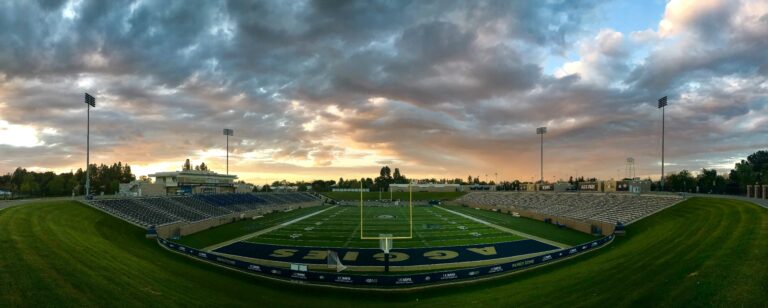
Students at UC Davis directly fund student athletics: For 2018-19, the NCAA reported that student fees made up $23.5 million, or about 57%, of UC Davis’ athletics budget.

Intercollegiate Athletics (ICA) at UC Davis receives student funding through student fees. Separate from tuition — which sits at $11,442 for full-time undergraduates who are California residents, with an additional $29,754 for nonresidents as supplemental tuition — the cost of campus-based fees is $1,925.27 for all UC Davis students. A high percentage of the revenue from student referendum fees, such as the Facilities and Campus Enhancements/Legal Education Enhancement and Access Program (FACE/LEEAP) fee, the Campus Expansion Initiative (CEI) fee and the Student Activities and Services Initiative (SASI) fee, are allocated to the athletics budget.

In the 2018-19 academic year, 23% of the FACE/LEEAP fee went toward athletics for maintenance and enhancements of the UC Davis Health Stadium and the Schaal Aquatic Center. According to 2017-18 financial reports, 38% of the CEI fee funded ICA for student-athletes’ grants-in-aid to support the campus’ move to NCAA Division I. 

Financial reports from the 2018-19 school year show that 88.7% of the SASI fee was allocated to ICA sports to support the campus’ 25 varsity sports teams. Totaling almost $10.5 million, this money from student fees was used to cover operating expenses such as team travel, equipment, home game expenses, medical-related expenses and coach salaries. 

UC Davis receives about 75% of its revenue from allocated resources, which includes institutional support and student fees. Other Football Championship Subdivision (FCS) and Big West schools operate with similar percentages. 

Anissa Nachman, chief financial officer of UC Davis Athletics, said that the program has reached record fundraising totals and continue to push to increase the amount of generated revenue if more funding is needed.

“We allocate any increases [in funds] to areas that directly benefit the student-athletes and we’ve done a good job,” Nachman said. “Between revenue generation and being mindful to be efficient with funds, we are able to stay within our budget.” 

And while millions of dollars annually go toward ICA, student fees also go toward Campus Recreation. That department, which oversees Recreational Sports – formerly Intramural Sports – has seen some scrutiny over how much the university charges to rent play fields, even with Campus Recreation being part of student fees.

Executive Director of Campus Recreation, Student Unions and Stores Jason Lorgan explained that the costs in the case of Recreational Sports directly benefit the program. Labor costs to pay officials, recorders and supervisors are a large expense, as is equipment.

“The participant fees are less than one-third of the costs incurred by the program,” Lorgan said. “Our largest expense is student labor, and that expense continues to go up as minimum wage goes up to $15 an hour by 2022.” 

Lorgan also said that the goal is to keep costs for students as low as possible and to find other funding sources to offset programming costs. With student debt at record levels, however, some find that universities should focus their budgets toward education rather than athletics. 

“[Academic institutions] should be about the academic, educational aspect rather than the entertainment piece,” said Fritz Polite, a consultant to the NCAA and the NFL on college athletics and recruiting, in a KCRA3 article

In the article, Polite said students already spend too much money on college, saying athletics departments need to do a better job budgeting. Polite also said that universities need to let students know exactly what they are paying.

“It’s not a transparent process,” Polite said in the article. “There are some schools that give students the option, but very few. They just wrap it in their fine print, and the next thing you know, they’re paying these additional fees to support some activities that they may not even use.” 

According to UC Davis’ ICA presentations, the department reiterates its financial operating principles of being transparent on the use of student fees in a frugal, clear and easy-to-understand manner. ICA also presents to the Council on Student Affairs and Fees (COSAF), one of the Chancellor’s Administrative Advisory Committees that aims to provide a comprehensive oversight of student referendum fees, as well as assure “the highest degree of transparency and accountability regarding the use of student fees.” COSAF votes on whether or not to approve of Consumer Price Index increases for many student fees. 

“ICA presents to COSAF numerous times during each academic year and students can ask clarifying questions and regular provide input to ICA,” Lorgan said. 

Written by: Graschelle Fariñas Hipolito — campus@theaggie.org

The Dallas Cowboys highlight valuable pro franchises that cannot escape mediocrity

0

Money over might

When Jerry Jones bought the Dallas Cowboys in 1989 for $141 million, the franchise was in disarray. After appearing in five Super Bowls throughout the 1970s, the Cowboys were in the midst of a 10-year title drought and had just suffered through their third-straight losing season. But Jones was set on revitalizing America’s team, and although it took a couple of years, the Cowboys reached the mountaintop by winning Super Bowl XXVII in 1993 — the first of three titles in a four-year span.

“How ‘bout them Cowboys!” exclaimed then-Head Coach Jimmy Johnson after a 1992 NFC Championship game win over the 49ers. That statement would become the staple of the Dallas Cowboys in a new golden era of football. 

But shortly following the Cowboys’ Super Bowl title repeat in 1994, Johnson “mutually parted ways” with Jones and the team, mainly because of an inability to work together. 

Jones believed that his team could still win with any coach, and after Johnson split, it seemed as if Jones was right. The Cowboys won one more Super Bowl two seasons later under Head Coach Barry Switzer. Jones looked like a genius and was the star of the show — which was exactly what he wanted. 

Since the 1995-96 season, the Cowboys have not played a single NFC Championship, let alone a Super Bowl. They have, however, been the NFL’s most valuable team for 13 years in a row and the most valuable team in all of professional sports since 2016, according to Forbes

Jerry Jones revolutionized the position of an NFL owner. It is estimated that the Cowboys made a record $365 million in profits before taxes in 2017. They generate $340 million in sponsorship and seating revenue at their home venue, AT&T Stadium, which is about twice as much as any other team. Jones has built the brand of the Cowboys up and it continues to grow year after year, but the product on the field continues to come up short.

So why then do the Cowboys constantly receive worldwide attention? Why are they constantly the topic of discussion on seemingly every sports show if they are not winning? The answer is simple: the Cowboys sell. They held the highest-rated game of the week eight slate this season and a top-two rating in 14 of their 16 games. The Cowboys are a team that attracts excitement and necessitates engagement, which can only make one wonder where the focus of the team really is. 

The New York Yankees are the second-most valuable professional franchise at $4.6 billion, which makes sense due to their rich history of 27 championships and sustained success. Although they have not won a title in 11 years, the Bronx Bombers are constantly in the hunt and do not shy away from spending to get the best players available. The focus on winning is always there and it is noticeable in their front office’s approach.

The third-most valuable team is Real Madrid, the world-renowned Spanish soccer club with a lengthy, competitive history in their league in Spain, as well as across all of Europe. Like the Yankees, the club knows how to win and doesn’t back down from spending as much as possible to get the world’s top players, which is why they are worth $4.24 billion. 

Alongside these sporting giants is a list of newly-emerging franchises that have enjoyed more recent success. These include the likes of FC Barcelona, the New England Patriots, the Golden State Warriors and the Los Angeles Dodgers, which have all been able to cash in on a new generation of stars to crack the top 10 most valuable. 

Then there are teams like the New York Knicks and the New York Giants. Although they have not won much over the past several years, they benefit from being positioned in one of the biggest sports markets in the world, allowing them to remain near the top financially.

How Jerry Jones has made the Cowboys the most valuable is still shocking to some people, especially due to the fact that they are located in a market in Dallas that pales in comparison to cities like New York or L.A. Yet, they sell out every game and are on every outlet in the country. It begs the question of whether Jones has prioritized the team’s image more than actual success on the field, and if his ego is now keeping the Cowboys from returning to their past glory. 

Jones has made a multitude of questionable decisions during his tenure as owner. His ego and stubbornness when it comes to coaching decisions in particular has held the team back. Jones was irritated that he was not getting enough credit for the Cowboys’ success under Johnson back in the early 1990s. Now on Jan. 5, 2020, Jones finally ended the mediocre, nine-year head coaching tenure of Jason Garrett, a move that many fans had been clamoring for for several years.

Choosing personal relationships over team priorities, valuing flashy roster moves over smart ones and an ability to put pride aside are all contributing factors as to why this team has failed to reach its maximum potential. For Jones and many other owners of losing-but-valuable franchises, the main thing is attention, and it can eventually turn sour.

For these franchises that struggle to become valuable in more ways than just money, a serious time of reflection must occur before the success comes. Egos in sports are common, where sometimes a team’s value overtakes the priority of winning. This is why it is important to separate the business from the game. It becomes very difficult, however, when both are intertwined. There must come a balance, but for now, those valuable teams seem to be pushing more one way than the other.
Written by: Omar Navarro — sports@theaggie.org

Equal Rights Amendment marks another, but not final, step toward gender equality

This MLK weekend, don’t just remember, but continue the fight

Virginia became the 38th state to ratify the Equal Rights Amendment on Wednesday, nearly 50 years after the provision was passed by the U.S. Congress in 1972. The Editorial Board commends and applauds this critical step toward ensuring that no one is discriminated against on the basis of sex — especially as we take the next few days to remember and celebrate the life of Dr. Martin Luther King, Jr.

Even after the deadline for the E.R.A.’s ratification was extended to June 30, 1982, only 35 of the 38 states needed for adoption had ratified the amendment. The passage of the amendment was, therefore, considered a failure. But Illinois and Nevada have both ratified the E.R.A. within the past several years, opening the door for Virginia’s decision to become the all-important 38th state to ratify the amendment in 2020. This does not guarantee that the provision will become an official part of the U.S. Constitution anytime soon, but it does set the stage for an important series of legal battles that could lead the way for the amendment’s revival. 

There are a number of foreseeable obstacles that E.R.A. supporters must overcome in order to successfully add the provision to the Constitution, including the fact that several states have since rescinded their ratification of the amendment — a maneuver that some Constitutional scholars regard as dubious. Others argue that ratification after the 1982 deadline is null and void, despite that this arbitrary date was only included in the resolution proposing the E.R.A. and not in its actual text. This also ignores Constitutional history; the 27th Amendment was ratified in 1992, some 203 years after it was first proposed by Congress in 1789. While this amendment was never given a ratification deadline like the E.R.A. was given, there is no provision in the Constitution that mentions Congressional deadlines for ratification, let alone one that prevents Congress from changing the deadlines that it had set for itself.

These questions, among others, must be resolved before the E.R.A. can officially become a part of the Constitution. But perhaps even more crucial to the amendment’s ratification is that Virginia’s actions may have renewed a national movement for equality by placing it back into public consciousness. It reminds us that, even after a century of tremendous progress in the fight for civil rights, equality under the law is still not guaranteed to everyone.

It’s extremely disappointing — but not entirely surprising — that gender equality is still somehow controversial, even in the year 2020. Even though E.R.A. opponents may now cower behind a precarious legal argument against its adoption, we must not allow them to fool the American public into thinking that they stand for anything other than misogyny.

The crusade for civil rights did not die with Dr. King. It is painfully evident that his unrelenting fight for justice is still needed today. Threats to reform Title IX, the deterioration of immigrant and refugee rights and many other lingering political and societal issues are all why a push for the E.R.A. is much needed in today’s tumultuous political climate.“Injustice anywhere is a threat to justice everywhere,” were the words penned by Dr. King in Letter from a Birmingham Jail. “Whatever affects one directly, affects all indirectly.” We implore the U.S. government to uphold its promise of equality and justice by adopting the E.R.A. and encourage our colleagues in the Davis community to continue living by the words of Dr. King. We must honor the legacies and sacrifices of those who paved the way for these rights by continuing the fight for equality.

Written by: The Editorial Board

UC Davis research studies how decision making is impacted by groups, social media

First look into neurology of decision making, how it differs in group interactions

Studies on how choices are made when interacting with another individual have been done to a great extent. However, many important choices today are made within groups: Should we vote? Who do we vote for? Do we contribute our income to public welfare? Research headed by Dr. Rajesh Rao, professor at the University of Washington, and Dr. Seongmin Park, project scientist at the UC Davis Center for Mind and Brain, centers around understanding human choices in group decision making. 

“When you’re making a decision alone, you can try to find a way to maximize your own utility,” Park said. “But when you have to make a decision in a group, there is sometimes a social dilemma, such as one decision can benefit you more but another decision can benefit your group. We wanted to know how these everyday decisions are made and what are the brain mechanisms to make them happen.”  

The study uses a variety of traditional methods of economic research, such as game theory, in a manner adjusted to accommodate large groups. Where the prisoners dilemma is a decision between two individuals, the Public Goods Game (PGG) utilized by this research involves more. 

The PGG replicates a system where members of a group must choose between decisions that bring short-term personal benefit and those that create long-term group benefits. Such systems can be found in modern societies, most noticeably in the form of tax payment to the government. When utilized appropriately, the act of paying tax leads to developments that benefit the group as a whole, such as paved roads and public parks. 

But this comes at a short-term personal cost that the individual has to be willing to pay. Furthermore, the individual has to be willing to accommodate the ‘free riders,’ an economic term which describes those who benefit from public goods despite making no contribution toward them. 

A dilemma arises when contributions to such systems become anonymous, which allows individuals to reap benefits without participating. But the free rider methodology only works to a limited extent. 

If all individuals stop contributing, or if the overall contribution does not meet a minimum requirement, there will be no creation of public goods and, therefore, a loss to those who contributed. Hence, the decisions this study focuses on are not just whether to contribute, but to decide if making a contribution will have any impact. This involves an individual modeling the mind of another, called the theory of mind, at a more complex scale. 

“The study has two major contributions,” said Erie Boorman, an assistant professor in the department of psychology and core faculty member at the UC Davis Center for Mind and Brain. “The first is to elucidate the behavioral mechanism by which we adjust our strategic decision of whether to contribute or to freeride. It composes a computational model of how people do that, how [people] weigh these two utilities and also how they face evidence of whether the public good was generated or not […] to adjust those beliefs. The second major contribution is to, for the first time, show what neural circuits are important for those different computations.”

The PGG conducted for this study involved groups of five participants. If the amount collected reached above a certain degree, all five individuals would profit regardless of who contributed and how much. If the amount collected was below the required limit, the individuals who contributed would face a loss while those who attempted to freeride will be unaffected. 

The findings indicate that collaboration in groups is initially greater. Although the study also shows that individuals will often contribute in an effort to encourage other group members to contribute — as interaction increases, collaboration typically falls. They must decide the amount to contribute or if they want to contribute at all, which involves two different prefrontal cortex areas of the brain.

The prefrontal cortex encodes which decision is beneficial in the short term and also considers an alternative that is beneficial to the group in the long term. A different area, the anterior cingulate cortex, differentiates the information and works to resolve conflict. 

“We found that even when people are working in whole groups, even when their actions are anonymous, even when we cannot track individual people, they know that they are working with some minds or other people,” said Koosha Khalvati, the lead author of the study. “They still have a theory of mind even when they are interacting with more than one person and cannot track individuals.” 

Written by: HUSN KHARABANDA hkhara@ucdavis.edu

Culture Corner with Josh Madrid

The Arts Desks’ weekly picks for movies, books, music and television shows.

Television: “Dracula” 

Among the multitude of vampire television shows and movies that have arrived and been easily forgotten, “Dracula” does not have the most creative title, but has an interesting synthesis of old Hollywood, Transylvania and the modern world. This Netflix mini-series is a suspenseful, witty depiction of a character easily written off as pure evil and lacking any redeeming qualities. In a more morally ambiguous account, Count Dracula, played by Claes Bang, spends his nearly five undead centuries searching for the perfect bride — finicky at its finest. My favorite line in the series is when Agatha Van Helsing (Dolly Wells) — a 19th century nun that doesn’t believe in God — asks Dracula why he kills things he finds beautiful. His response: “Why do you pick flowers?”

Movie: “The Two Popes” dir. by Fernando Meirelles

Based on true events, this Netflix biographical drama depicts the series of events that lead up to Jorge Mario Bergoglio’s Papacy. Bergoglio (Jonathan Pryce) travels to the Vatican summer home to meet with Pope Benedict XVI (Anthony Hopkins) in hopes that Pope Benedict XVI will grant him his retirement. At the same time, the Catholic Church is under heavy scrutiny for several allegations including sexual harassment and financial misconduct, so Pope Benedict sees Bergoglio’s retirement as a protest. Pope Benedict, a conservative preservationist that holds tradition closely, is resistant to change. On the other hand, Bergoglio sees the changing world around him and understands the Church’s obligation to connect with this world in new ways. The film is moving, as the audience watches Bergoglio melt Pope Benedict’s cold heart. 

Album: “Norman F***ing Rockwell!”

This was my absolute favorite album of the year and, hopefully, the winner of Song of the Year for “Norman F***ing Rockwell!” and Album of the Year of the same title at the 62nd Grammy Awards. Del Rey discusses American nostalgia through the lens of the famous American painter, Norman Rockwell. The name alone won’t bring a specific painting to mind for most, but notable paintings include “Freedom from Want” and “Before the Shot.” Del Rey explains in an interview that the album inspiration stemmed from frustration toward the trajectory of the country. She poses the question: Is Norman Rockwell all we have to look forward to? I’m also ecstatic about the album because it centers around Los Angeles and in particular my hometown of Long Beach. My favorite tracks include “Hope is a Dangerous Thing for a Woman Like Me to Have – but I Have It,” which is reminiscent of Jim Morrison’s ballad “Mariners Apartment Complex” for its ode to nautical melodies, and “Doin’ Time” because Del Rey is well-qualified to represent the LBC. 

Book: “Because Internet: Understanding the New Rules of Language” by Gretchen McCulloch

This is a great read for people that like to think about language and the reasons we speak the way we do (i.e. linguistics). Times change and language changes with it and, in this era, the internet is influencing our language at a rapid rate. The author, Gretchen McCulloch, is an internet linguist and founder of the podcast and blog “Lingthusiasm.” She debunks common linguistic issues such as the assumption that informal writing makes us less smart. 

Written by: Josh Madrid – arts@theaggie.org

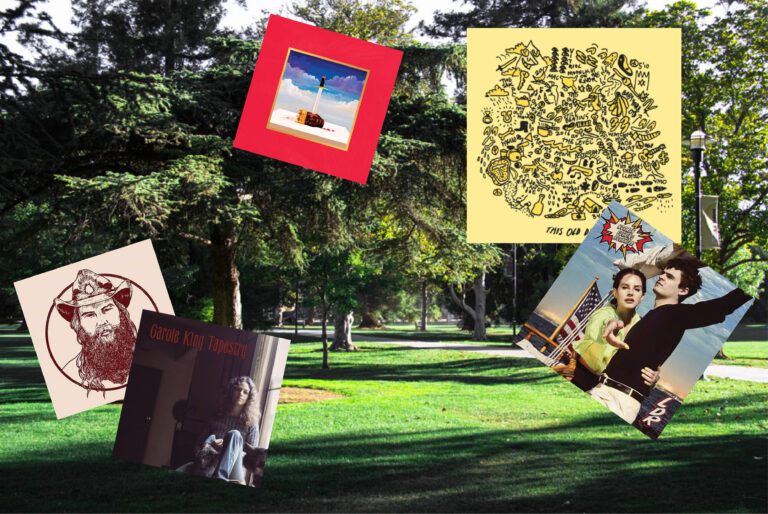
Five albums that describe UC Davis

An exploration of music as community

Campus is a strange place. Don’t get me wrong, since being admitted here I have sung the praises of UC Davis to an arguably annoying amount, both in print and to friends.

There’s beauty everywhere you look, even if you have to squint sometimes. There’s not a better way to remind ourselves of who we attend school with than by looking at the albums that describe us as a campus. This is an exploration at who you’ll find in our little university, in our little slice of Cowtown, in five albums. 

Kanye West – “My Beautiful Dark Twisted Fantasy”

You already know who this is. Late to class, has a Supreme sticker on their laptop or their HydroFlask (although it is in truth probably both). They’re most likely an economics or an engineering major who feels deeply connected with hip-hop even though they are probably from a suburb of Los Angeles. This won’t take away from the fact that they will inevitably explain the ins and outs of hip-hop’s most recent magnum opus that is Kanye West’s “My Beautiful Dark Twisted Fantasy.” “It has layers,” they will say. “Did you even hear the piano on ‘Runaway?’ What about the Bon Iver feature?” “This is the greatest album of all time,” they’ll yell at you, as you patiently sip on CoHo coffee. If they don’t own a pair of Timberland 6” Tan Work Boots, you can bet they’ll spend most of their time in their 400-person lecture browsing for them. You can find this person hanging by the Quad, lost at the Death Star or anywhere that isn’t Shields Library. 

 Chris Stapleton – “From A Room”

They think they’re as smooth as Tennessee Whiskey, but in truth, you’ve never understood that because every time you’ve had whiskey, it’s really burned your throat and made you look like an idiot in front of everyone. These are the people in Agricultural Sciences, looking to make their bread and butter. They effortlessly pull off a flannel better than you ever will. Chris Stapleton’s “From A Room” plays softly in the background whenever they walk into a room, whether it’s to outdo you in a farming demonstration or just knock back a cold one. (And they love to knock back a cold one.) City folk just don’t get them, and we probably never will. You can find these people around the Student Farm, passing by Mrak Hall or anywhere a field of wheat is present, trying to desperately learn its secrets. 

Mac DeMarco – “This Old Dog”  

Do you smell that? It’s a mix of American Spirit Blues, mason jar quinoa and not showering after a Yosemite trip. Print is a visual medium, yet one can catch a whiff just from that description alone. There is a 99% chance they are not in STEM, but if they are, you can bet they’re there to dismantle the worker-exploitative, oppressive regime from the inside. There is also a 99% chance they believe in Communism and a 100% chance they have never talked to anyone who lived in the former Soviet Union. 

With a love for old synthesizers and being emotionally unavailable, they throw on Mac DeMarco’s “This Old Dog”  to unwind from a long day of posting watercolors on their Instagram. This is all to say that “Old Dog” folks are always quite warm, albeit a little intimidating. (Their tattoos of vegetable gardens really put the pressure on you to seem interesting during casual conversation.) They throw the best parties, with people who actually dress up in theme, a rare find with the imminent collapse of Davis Greek life. Find them hanging around Cruess Hall or Turtle House and being rightfully exhausted after their CoHo shifts. 

Lana Del Rey – “Norman F*cking Rockwell”

Lana Del Rey is an artist who I’m not very familiar with, but can understand the general gist of what she’s going for, just like I can gauge the general vibe of this crowd. Super into Glossier. Also super into not calling you back.

Carole King – “Tapestry”

Ah, the ol’ reliable. There are days when everything can go wrong. These are the days when you need a friend, one who won’t let you down. Stern, smart and an all around warm person. Which is why “Tapestry” by Carole King is such a mainstay in their life; exuding a sort of energy you’ll never not appreciate. They’re the friend that has a really serious internship, a crazy thesis project, a super steady partner and somehow still manages to do meal prep. You are jealous, but not so much so for it to delve into envy. It’s a good vibe. They’re probably a political science major or something else important to the fabric of this country. Either way, they’re a keeper. 

Written by: Ilya Shrayber — arts@theaggie.org

New year, new yoga

0

A New Year’s resolution that can be achieved without leaving the house

As January reaches its halfway point, students may still be looking to start the decade with a new hobby or set of goals. One ambitious yet popular goal for the new year revolves around getting active, even from one’s own bedroom. That activity? Yoga.

Originating in ancient India, yoga is a popular form of exercise that involves the body, mind and spirit. Those who teach and practice yoga say the practice can be healing in both a physical and mental sense.

For third-year Chicano/a studies major Juli Perez, yoga did exactly that.

“Yoga has always really challenged me […] and my relationship to my body in a way I never thought would happen,” Perez said.

Perez said her interest in yoga began as a child, though her commitment to the practice was on and off. Now, Perez and a few of her friends have committed themselves to “30 Days of Yoga With Adriene,” a trend where viewers can watch Adriene Mishler, a.k.a. “Yoga With Adriene,” on YouTube, and practice yoga everyday throughout the month of January.

Perez isn’t the only one dedicating a portion of her day to Mishler’s home-yoga videos — the acclaimed yoga instructor has earned over 5.5 million YouTube subscribers by uploading weekly videos of her yoga exercises for others to follow along to. Each January since 2012, “Yoga With Adriene” has uploaded a month-long “yoga journey” where she invites viewers to participate in practicing yoga daily for the entire month. This year, Mishler introduces “Home,” where she encourages participants to “find what feels good” while Mishler follows along with them on their journey. 

“It is not a challenge,” Mishler said in her invitation to viewers for January 2020. “I like to think of it as a story, a ride, and we’re gonna write it and ride it together.”

What sets “Yoga With Adriene” apart? For one thing, Mishler’s yoga is free and is accessible outside of an expensive yoga studio. Additionally, beginners can follow along at their own pace and need not feel intimidated by more experienced peers in a yoga studio.

In a recent interview with the Today Show, Mishler addressed her connection to her followers through yoga.

“The spirit of ‘Yoga With Adriene’ is like, ‘I’m in my little corner of the world choosing to take care of myself, my real self, and whatever I’m showing up with today,’” Mishler said. “But also, I’m here with you.”

Perez said getting back into yoga with Mishler’s videos has opened up her year for more time to dedicate to self-growth and positivity.

“For me, it’s just taking 30 minutes of my day, for myself,” Perez said. “It’s been a really good transition into 2020 because it’s reminding me with the new year to make time for myself, make space for myself and really listen to what my body has to say.”

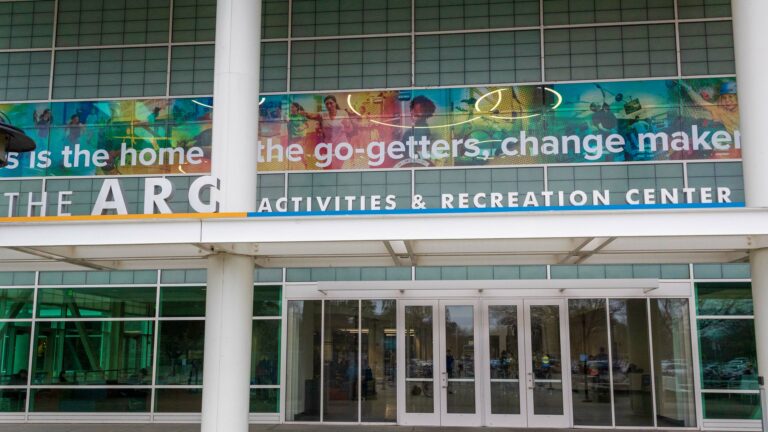
Olivia Krieger, a PhD candidate in the psychology department, said yoga improved her health, both physically and mentally. Krieger teaches yoga at the ARC and said she wants her students to achieve the same healing she did. And, thanks to her studies in cognitive neuroscience, Krieger understands the rewards yoga can offer the mind.

“Yoga helps us feel grounded, helps us take on challenges, releases anxiety, increases our focus and makes us feel happier,” Krieger said. “Anyone looking to improve their body and their mind should consider yoga as part of their New Year’s resolution.”

Krieger also said those hesitant to try shouldn’t be discouraged.

“There’s a common misconception that you need to be flexible to do yoga, but that’s not true,” she said. “You don’t need to be able to touch your toes. It will probably be challenging your first few times, but hang in there. It’s well worth the effort to keep coming back!”

In Krieger’s experience, yoga — whether at home or in a classroom setting — can build strength and create flexibility beyond what she experienced lifting weights at the gym.

“Not only did it challenge my strength, but it offered time to focus on balance and flexibility and it calmed my mind and helped me focus,” Krieger said.

At the end of the day, yoga has been deemed a challenging and inspiring exercise into recognizing one’s own physical, spiritual and mental strength. As Krieger, Perez and Mishler see it, yoga might be the way to start off 2020 on the right foot.  

“Yoga might be very different than what you imagine,” Krieger said. “And you’ll never know if you don’t try it out!” 

Written by: Alana Wikkeling — features@theaggie.org

Free Fitness Days offered at ARC for first two weeks of quarter

Program allows students to try classes before purchasing a group exercise pass  

The Activities and Recreation Center (ARC) has offered Free Fitness Days as a rebranding of Try Before You Buy for a few years now. Unlike its predecessor which was offered for the first week of the quarter, Free Fitness Days is offered for the first two weeks of each quarter. Free Fitness Days are offered by Living Well, a unit within UC Davis Campus Recreation. 

“Our focus is the whole being,” said Kayleigh Rohrbach, Living Well program lead and coordinator, in an email. “We offer a variety of wellness programs including fitness classes, personal training, nutrition services and more. Our hope is that students will try a bit of everything and find a form of fitness that both works with their schedule as well as enjoy before committing for the rest of the quarter.”

Other units within Campus Recreation are Aquatics, the UC Davis Marching Band, the Craft Center, the Equestrian Center, Sport Clubs and Rec Sports. The motto for all programs within Campus Recreation is “Come As You Are.”

“Students of all background levels and experience are welcome in any of our Campus Recreation programs,” Rohrbach said via email. “It is a place where you can find your sense of belonging on campus.”

Rohrbach works with the Living Well staff to provide wellness programs to students. Living Well also teaches an annual American Council on Exercise (ACE) class to prepare student employees to test for new certifications which will be offered in Spring 2020. She also works with other on-campus departments to “promote wellness among our student population.”

In her role as Living Well attendant, second-year clinical nutrition major Samantha Seefeldt works at the front desk of the Living Well center. She and other attendants have shifts to check in patrons to group exercise classes.

“Our goal is to [be] welcoming and informative,” Seefeldt said in an email. “Some roles of my position are being knowledgeable of the different programs we offer, helping patrons with any questions, scheduling of the different programs, [facilitating] contact between patrons and the personal trainers/ different instructors.”

Second-year cognitive science major Isabella Munar attended her first Free Fitness  cycling class with her roommates. 

“The class was really tiring, but I really liked it,” Munar said. “I think I’ll register for this quarter and maybe Spring Quarter too.”

According to Rohrbach, attendance during Free Fitness Days varies between 10 to 40 participants. Not every attendee registers, but “most students” continue throughout the quarter. Rohrbach added that most of the certified instructors are students who are trained and tested for nationally accredited certifications. 

“Our schedules are built around our student instructor’s availability and the demand for class formats such as Party Cycle, Zumba, Yoga, Bombay-Jam and more,” Rohrbach said. “Student instructors submit their availability every quarter and the schedule is built from there. As far as classes go, we try to offer as much variety as possible. In addition, we try to offer classes at all times of the day and on weekends so that every student can find a class that fits within their schedule.”

The Free Fitness Days program was set up to “encourage UC Davis students to find what type of fitness works best for them.” 

“Our overall goal is to promote wellness among our student population,” Rohrbach said. “College can be one of the most stressful times in life. Our hope at Living Well is to provide students with resources for stress and anxiety while encouraging them to take a break from their hard academic work.”

Written by: Anjini Venugopal — features@theaggie.org 

Profile: Bike Barn General Manager Jack Rogers

0

Rogers, a UC Davis undergraduate, explains how the shop is run by students, for students

Since 1966, Davis has been deemed the “Bike Capital of the U.S.,” a title students and locals say with pride. Throughout the city, there are 10 bikes shops, but only one of these is run completely by students. The Bike Barn, located in the middle of the UC Davis campus, is managed by ASUCD and has served as a convenient repair shop since 1971. 

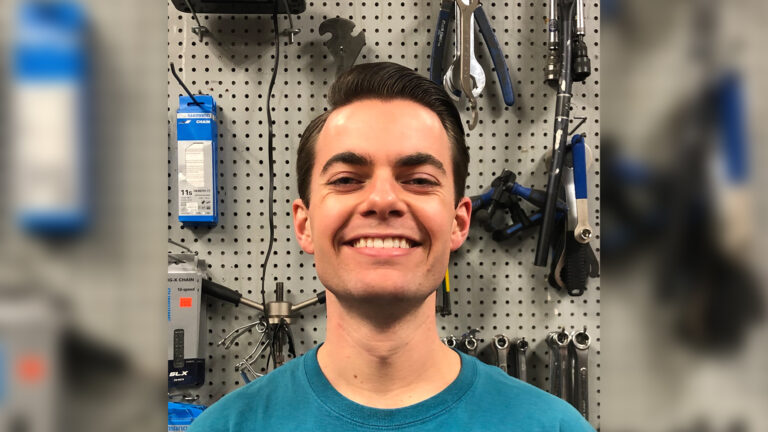
Fourth-year managerial economics major Jack Rogers is the current general manager of the Bike Barn and has been a mechanic since his second year. 

“I wear a lot of different hats here,” Rogers said about his position. “The main thing that I really want to do is to promote the same sort of work ethic and goal for all the employees here to the standard that I hold myself.”

The most rewarding part about being a mechanic at the Bike Barn, he explained, are the interactions and relationships he has built with a diverse population of students throughout the campus.

“I know it sounds kind of corny, but I love seeing the joy on people’s faces when I get to return their bikes,” Rogers said. “I love being able to help people, whether that means fixing the problem for them or explaining the problem to them and helping them have a safer ride.”

Because the shop is student-run, the mechanics are better able to understand the specific needs of the students who come into the Bike Barn, Rogers said. Given that the shop is intended to be a resource to help students out, it is less focused on profit — unlike other shops in town, Rogers noted — and is simply looking to do “the best possible service” for students and the occasional community member. 

Rogers feels as though many students are intimidated to come into the Bike Barn because the barn is employed by many avid cyclists — however, he discounts this fear and says the Bike Barn’s services are for everyone, at all different skill levels of biking. 

“Sometimes it’s something [students] heard from other people, or it’s them thinking, ‘Oh I don’t really know anything about my bike, and if I go in there I’m going to look stupid,’” Rogers said. “But realistically, we have people come here everyday and hand us their bike and say, ‘I don’t know what’s going on, please help me.’ And we are totally open to that and we want to do whatever we can to help you and make you more informed about [your] bike and biking in general in Davis.” 

Rogers encourages students to visit the barn for free diagnosis. 

“We aren’t going to tie you into paying anything, there’s no price to get a quote,” Rogers said. “Come on in. Even if we can’t fix your bike for free, we can at least give you more information as to what is going on with your bike.” 

The Bike Barn is a unit within ASUCD — an organization that is currently operating on a roughly $500,000 deficit. To solve this, ASUCD is proposing a fee referendum that would effectively raise the base fee students pay each quarter. The referendum will be on the ballot in the Winter Quarter 2020 elections. Rogers explained that while the Bike Barn is one of the few profitable ASUCD units and isn’t necessarily in financial trouble, he still supports the fee referendum and hopes that students will turn out to vote.

“As a student at UC Davis, I interact with units of ASUCD on a daily basis, whether it’s getting coffee from the CoHo, catching a bus on a rainy day, or reading through articles in The Aggie,” Rogers said. “Not only are these key parts of my experience here at Davis, but they also supply numerous jobs for students across campus. Cutting staff will not only be burdensome to students who rely on those services, but will also force students to look off campus for jobs, which may be harder to get and less flexible with the demanding class schedule most students take.”

Written by Sneha Ramachandran — features@theaggie.org

Humor: Entire congregation of local church hospitalized after string quartet plays jazz version of “Silent Night” at Christmas Eve service

“For Christ’s sake, stop the Goddamn music!”

***This page has been repeatedly updated to reflect new information about Sunday morning’s events as it has become available since our initial Breaking News Report***

During the Midnight Mass on Christmas Eve at St. Reagan Catholic Church 20 miles outside of Fresno, a major event of great public health concern occurred, requiring all 67 church congregants to be hospitalized. 

The event was initially investigated by local law enforcement and forensics experts as a potential gas or chemical leak — and even foul play — with major fears that the church’s cyber security network had been compromised. Cyber criminals may have been able to hack the church’s automated climate control system and bring the interior temperature down to a freezing 86 degrees — intolerable for the church’s Fox News-watching-aged worshipers.

Interviews conducted after the fact with some of the recovering victims of this mysterious “attack” revealed Sunday’s events to be of a far more disturbing and un-Christly nature than anyone could have imagined.

As it turns out, a string quartet that was hired for the service to play along with the church organist for the Christmas hymns is now at the center of the investigation. They stand accused of embellishing “Silent Night” with jazz chords and blue notes. As any self-respecting musician should know, jazz can be extremely dangerous around certain listenerships, especially old white people.

The chaos began during the hymn’s second verse when the quartet began adding a few dominant seventh chords into the mix, which caused a few worshipers to become light-headed. Unfortunately, the quartet took things much further, eventually incorporating augmented sevenths, dominant sharp 5/flat 9s, minor elevenths, minor thirteenths, Lydian chords and even some jazzy rhythms. The St. Reagan worshipers who had not already fainted or experienced panic attacks, nose bleeds, temporary hearing loss or jazz-induced joint pain were sent into a state of delirium when, during an unplanned instrumental interlude between verses, the first violinist broke into a Stephane Grappelli-style improvised gypsy jazz solo.

In the quartet’s defense, they may have been under the impression that this year’s Christmas service could have used some lightness and excitement since news events from the past few years threaten to diminish Christmas’s usual levels of joy and jubilation. Of course, there was last year’s fire at the Notre Dame Cathedral in Paris. Additionally, with Pope Francis struggling to deal with the child sex abuse scandals within the Church, the damning attorneys general reports in Pennsylvania and Illinois and the rise of #Nunstoo, St. Reagan’s Father Handsy, one of the hundreds of accused priests, pledged to make his Christmas sermon less erotic than usual. How dull!

The string quartet initially planned to play their jazzed-up arrangement of the hymn during the earlier 8:00 p.m. mass, but that was thrown into disorder when the incense set off the fire alarm. Consequently, the musicians exercised artistic and creative restraint and chose to wait until the later service.

While some outraged community members feel that the quartet inflicted this physical harm on the congregation accidentally, others are pointing to the violist, spinning his status as an atheist to suggest that he could have “had a motive” for wanting to play music that is neither wholesome nor Godly. An examination of his social media accounts shows that a few days before, the violist shared a meme of Jerry Seinfeld (also not Catholic) in “The Bee Movie” saying, “You like Jazz?” — coincidence???

***7:28pm update***

County prosecutors are proceeding against the four string players with charges of conspiracy to commit musical harassment, musical vandalism, musical fraud, assault on the ears, indecent musical exposure, disturbing the peace (literally) and of course, “A minor” in possession.

Written by: Benjamin Porter— bbporter@ucdavis.edu 

Disclaimer: The views and opinions expressed by individual columnists belong to the columnists alone and do not necessarily indicate the views and opinions held by The California Aggie