58.6 F
Davis

Davis, California

Monday, December 22, 2025
Home Blog Page 396

Culture Corner

The Arts Desks’ weekly picks for movies, books, music and television shows

Album: “Ritual in Repeat (Deluxe)” by Tennis

I have listened to Tennis’ phenomenal, albeit limited, discography so many times that I almost cried when they released a new album last year. Even though it was a stripped down version of seven already-released songs, it was beautifully done. Tennis’ 2014 album, “Ritual in Repeat (Deluxe)” is the closest I’ve come to discovering perfection in an album. The band, a husband-and-wife duo (a combination I would usually find eye-rollingly cloying), has produced music so distinct that to compare them to anyone else seems a disservice. I would inject the sentimentality and nostalgia in Tennis’ music and Alaina Moore’s sultry-sweet voice into my veins if I could. My most cherished song off the deluxe version of the album, “Mean Streets,” is hands-down my favorite song of the last five or more years — “Didn’t you know they would love you, baby/Even more now that you’re gone?” Others I’ve listened to countless times are “100 Lovers” (“And I will laugh until I’m tired/I will battle with a strange desire”), “Night Vision” (“Straining your night vision/For a chance to pierce the heavens/In the darkened light”) and “Needle and a Knife” (“She believes/That sacred things don’t need explainin’”).

TV: “Maniac” 

This ten-part Netflix show co-starring the fantastic leading team of Emma Stone and Jonah Hill was written off by TV critics, but I was absolutely enamored with it and still am almost a year after it debuted. It’s full of kitschy, quirky, candy-colored goodness and so, so visually appealing. Ever-changing mini-stories run amuk as the main story arc plays out: Hill, a loner cast off by his family, and Stone, a junkie trying to forget past mistakes, enter a doomed drug trial governed by a computer with feelings — and Sally Field — and become intertwined in each other’s dreamworlds.

Book: “Trick Mirror” by Jia Tolentino

I love Jia Tolentino so much that I weathered a literal flash flood in my attempt to get to her book talk. Granted, I didn’t actually make it to the book talk (I was soaked and afraid I was going to die in said flash flood) and, granted, I haven’t actually finished the book yet, but from the half of it I’ve read so far — and from the numerous articles I’ve read of Tolentino’s — I couldn’t recommend it more. Tolentino has her fingers on the pulse of current culture in a way few others do, but her true talent is describing modern phenomenons and obsessions like Shen Yun, IUDs, vaping, incels, high-profile sexual assault cases and the internet in almost frustratingly accurate and acute terms. She is the Joan Didion of the tech ara: formulating insight into topics the rest of us fail to effectively put into words. Tolentino’s book, like her articles, is a cultural conversation with a mass audience in a hyperspecific, individualized manner, helping her readers process and understand nuanced topics for themselves. 

Movie: “Forgetting Sarah Marshall”

Look, I’m as much of a Wes Anderson/Paul Thomas Anderson/Kubrick-Nolan-Hitchcock die-hard fan as the rest of you film nerds, but this piece of comedic genius, written by Jason Segel, is one of my long-standing favorite movies. As if my immense adoration of this movie weren’t enough, my favorite film critic, David Ehrlich (a person I have never met but for whom I would die), frequently tweets about his love of the film, reaffirming that I, too, have good taste in movies. Segel’s character, a loveable chump who gets dumped by his celebrity girlfriend (Kristen Bell), decides to vacation in Hawaii to forget about her, only to wind up at the same resort she’s at with her new popstar boyfriend (Russell Brand). Plus Mila Kunis, Jonah Hill and the ever-charming Bill Hader are thrown in the mix. This movie has a dracula musical performed only with puppets — what more could you possibly want?

Written by: Hannah Holzer — arts@theaggie.org
Only 4% of faculty identify as Hispanic or Latinx at UC Davis as of 2016 — though university is still working toward becoming Hispanic Serving Institute

0

Faculty, students comment on the consequences of underrepresentation

For the past decade, UC Davis has been working toward achieving a status as a Hispanic Serving Institution (HSI). The designation requires that the university maintain a student body comprised of at least 25% Hispanic students, among other criteria. Of the nine UC undergraduate schools, six are currently HSIs, and Davis is projected to achieve this status by the end of 2019. 

The HSI task force has submitted yearly applications since 2008 and has established resource centers for Latinx and Chicanx students under the following vision: “Through the HSI initiative, we envision UC Davis as a culturally responsive learning community that fulfills the mission of a Research 1 and land grant university, closing the equity gap in higher education.”

The number of Chicanx and Latinx undergraduates has more than doubled, seeing an increase from 3,063 to 6,715 as of Sept. 2019, according to the Office of Diversity, Equity & Inclusion. 

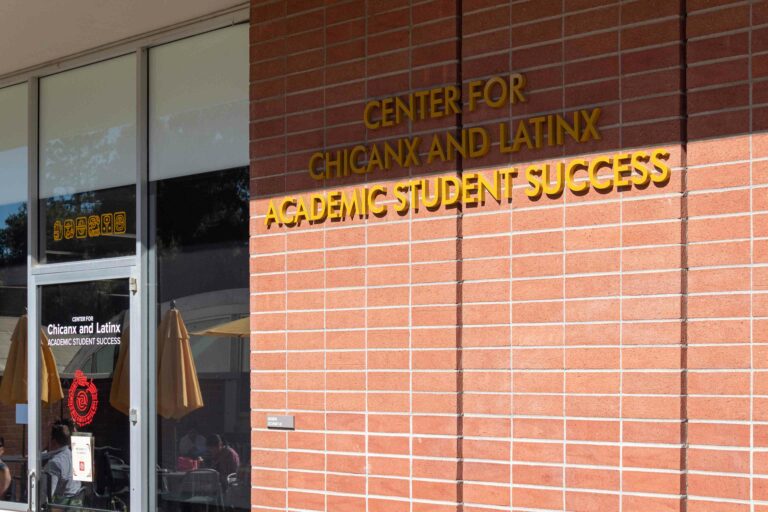
The Center for Chicanx and Latinx Academic Student Success, or “El Centro,”  located in the MU, was established in 2017 to provide a variety of resources and services to Latinx and Chicanx students. Cirilo Cortez, director of El Centro, said being designated as an HSI is an important step in increasing Latinx and Chicanx visibility and representation. 

“This designation is really a seal of prestige and a commitment to diversity,” Cortez said. “Essentially, it translates into federal grants which we can use to build infrastructure [and] put toward diversity training. We are excited about the future.”

Faculty demographics, however, do not reflect the same strides in diversity seen in student body demographics. Compared to a 23% Hispanic or Latinx American student population, only 4% of faculty identifies as Hispanic or Latinx as of 2016, according to the UC Davis HSI Task Force Report.

UC Davis does have efforts focused on diversifying faculty. For example, ADVANCE is a program aimed to “increase the participation of women and underrepresented minorities in academic science, technology, engineering and mathematics (STEM) careers.” 

Students and faculty, however, have noticed the underrepresentation of minority groups in UC Davis’ STEM departments — Santiago Ramirez, an associate professor in the department of evolution and ecology, said he has noticed a major lack of Latinx and Chicanx professors in his department.

“We have a total of 29 faculty in our department, and I am the only Hispanic professor,” Ramirez said via email, adding the lack of representation could have a major impact on a student’s ability to find academic role models within their fields.

“Over the years, I have had conversations with some students [who] identify as Latinx [and] they often seem surprised [and] amazed that there is a Latin professor teaching a class,” Ramirez said. “It makes me feel very happy, but also sad that many students have gone through their degree without ever taking a class from a Latinx professor.”

NPR published a study in 2017 correlating students’ success with whether or not their teacher was the same race as the student. The study found that when students had teachers who looked similar to them, they became more interested in their schoolwork and felt more appreciated. 

Fourth-year cinema and digital media major Raul Morales Jr. was not made aware of the Latinx and Chicanx resources available on campus until the end of his third year. Coming from a high school with a primarily Latinx population, he said it was a culture shock to arrive at a university with no awareness of these resources.

“Having a consistent group of Latinx people around me in college hasn’t occurred unless I searched for it,” Morales said. “I didn’t find El Centro until the end of my third year and a lot of people there were speaking Spanish or teaching English and looked like me and my family.” 

Morales said he felt isolated for the first two years of his college career and, after having a Latinx professor for the first time in his third year, he said he felt that it was in part because he felt underrepresented at UC Davis.

“I found out the Art Department was going to have a Latin American art history class for the first time and I knew I needed to be a part of it to help cement it into the curriculum,” Morales said. “Hearing my professor talk about how he returned to Latin America to find role models in his field made me realize that I wanted more professors [who] represent my culture.”

Despite the disparity between students and faculty representation, Cortez said UC Davis is moving in the right direction when it comes to enhancing staff diversity. 

“There are programs on campus like the Office of Diversity, Equity and Inclusion that are committed to bringing in more diverse faculty,” Cortez said. “The foundation is there, we just need to create these pathways, starting with undergraduates.”

Like Cortez, Ramirez is also hopeful that Latinx representation within his field of evolutionary biology will only continue to grow in the coming years.

“I think UC Davis is really moving in the right direction in terms of increasing representation across campus,” Ramirez said via email. “Unfortunately, the biological sciences appear to be lagging behind. We are trying to change this here at UCD, but it takes a long time. I am connected with the Latin American community in my field, and I see many talented young scientists.”

Morales feels strongly that the lack of Latinx and Chicanx professors at UC Davis has inspired him and his Latinx and Chicanx peers to become role models for future generations. 

“I eventually want to become a professor in my field because I know what it meant to have professors [who] look like me,” Morales said. “It has been nice to find other people in my community [with] that mindset who want to effect change in their fields. These big changes start in institutions like this. If there are Latinx people reading this, I’m here, you’re here, we’re all here and we are only growing. Whenever you are feeling alone, there is community if you seek it out, help represent it and inspire change.”

Written by: Miki Wayne — features@theaggie.org

We should be fine with eliminating library fines

 Library fines are every avid library patron’s nightmare, but they don’t have to be

This summer I went back to my library to work as a co-coordinator running a month-long summer reading camp for elementary school kids. I noticed flyers across the library saying that the Alameda County Library (ACL) system had gone fine-free starting July 1. Paying library fines was such a routine part of my childhood that I realized I had never considered the possibility of a fine-free library. 

As it turns out, the ACL system isn’t the first or the only library to have eliminated fines on overdue books. A map from the Urban Libraries Council marks the library systems across the country which have gone fine-free. Although the map is still sparsely populated in some areas, it illustrates a movement that has found considerable traction and success in the past few years. 

Libraries across the country have made this move in an effort to expand access to all members of their communities. On Oct. 1 the Chicago Public Library system went fine-free after noticing the adverse effects of fines on its community. About one in five suspended library cards belonging to children under 14, according to the Chicago Public Library’s data. One in three patrons in the Chicago Public Library’s South District were unable to check out books due to outstanding fines. This data was very troubling, especially for someone like Andrea Telli, the Chicago Public Library commissioner. Telli told the Chicago Sun Times that fines often deter patrons from returning to the library, and when this happens, “we lose the fine, the patron and the material, but the fine is really the most unimportant part.”

The San Francisco Public Library (SFPL) first went fine-free for teens and juveniles in 1974 and, on Sept. 16, 2019, that policy was extended to all library patrons. Some people are unsure about this movement, however, assuming that fines constitute a large portion of library revenues and therefore are necessary. Fines only made up 0.2% of the SFPL’s budget in the 2017-18 fiscal year, however, according to “Long Overdue,” a report from the Office of the Treasurer and Tax Collector in San Francisco. Considering the relatively small share fines contribute to library revenue, going fine-free isn’t far-fetched. 

 “It made sense for our particular community and our particular system,” said Jamie Wong, the Public Relations officer of the SFPL.

The Alameda County Library tested out the fine-free program for a couple months before finally committing to making a permanent move to eliminate fines this past July. Like the SFPL, this wasn’t a difficult financial decision for the ACL to make.

“The overdue fines the library used to collect made up 1.2% of the library’s budget, a percentage we were able to absorb without any negative impacts to our services and collections,” said Alicia Reyes, the Public Information Specialist for the ACL. “The act of collecting and processing fines cost the library much more in staff time than the revenue collected offset.”

The fine-free movement is important just as much as it is exciting. I didn’t like paying my library fines, but I was privileged in that my fines never prevented me from returning to the library. Unfortunately, for many other families — especially low-income and minority families —  those same fines can be a financial burden, which data suggests could stop them from coming back to libraries. 

Keeping track of fines and due dates can be stressful, but it doesn’t have to be. According to both Reyes and Wong, the fine-free program has been successful in their libraries. That being said, going fine-free might still be an issue for some libraries, particularly smaller branches where fines might constitute a substantial source of revenue. 

“Without knowing fully the picture of another library system’s budget, it’s hard to say — I can only say that when we reached out to libraries who already went fine-free, they only noticed positive impacts from making this decision,” Wong said.

Going fine-free isn’t a radical or outlandish idea. Libraries are an important public service that should remain open and accessible to all community members, and I am excited to see where the fine-free initiative goes.

Written by: Simran Kalkat –– skkalkat@ucdavis.edu 

Disclaimer: The views and opinions expressed by individual columnists belong to the columnists alone and do not necessarily indicate the views and opinions held by The California Aggie.

Police warn of armed robberies in Davis, one suspect arrested

Davis PD arrested a man in connection to at least one of five recent armed robberies in city

After warning the community of a string of similar armed robbery incidents over the past couple of months, Davis police announced the arrest of a man connected to at least one of the five crimes. 

Davis police sent released a message on Oct. 10 through the community alert network, Nixle, warning Davis residents about a series of five armed robberies that occurred between Sept. 19 and Oct. 9 in the city. In each instance, police said, the victim was approached on the street and threatened with a handgun. 

“In all 5 cases the suspect(s) have approached the victim on a street or sidewalk and threatened the victim with a handgun before taking property,” the release read. “Property taken has included personal electronics (phones and computers) along with wallets.”

One of the five muggings, which occurred on Sept. 20, received some media attention. Syed Fahad Shah, a scholar visiting UC Davis, was robbed at gunpoint while walking along Russell Boulevard. Shah said an armed man and an accomplice took his laptop, containing irreplaceable research, as well as his wallet and laptop.

 On Oct. 18, the Davis Police announced the arrest of one man, Eric Rodriguez, suspected of participating in at least one of the robberies. Rodriguez was taken into custody in Woodland after turning himself in for an Oct. 5 armed robbery near Sycamore Lane and Villanova Drive. 

“After the robbery, Rodriguez fled out of state where detectives were able to make contact with him by phone,” the Facebook post read. “Detectives negotiated with [Rodriguez] for the past two days, and he agreed to turn himself in.”

Lt. Paul Doroshov of the Davis PD said police are not certain whether Rodriguez is connected to any of the other five incidents, and they confirmed that their investigation into the series of crimes was ongoing. 

“We suspect, based on the information that we have now, that he is complicit in the armed robbery on [Oct. 5],” Doroshov said. “We haven’t connected him officially to any of the other cases at this point — although we’re investigating that option.”

 Doroshov said Rodriguez was reportedly accompanied by a female suspect during the Oct. 5 incident. He noted that some victims of the series of muggings had also reported multiple perpetrators. 

  “There were some that had a couple of suspects, and some [victims] described a solo suspect,” Doroshov said.

The Nixle alert noted that suspect descriptions associated with the robberies were “limited” and only “vaguely similar” in reported appearance.   

After the string of five robberies, the last of which occurred on Oct. 8, there have not been any similar incidents, according to Doroshov. 

Police recognized the possibility of a connection between the muggings, according to the Nixle alert. Doroshov said this particular string of armed robberies stood out because suspects targeted individual pedestrians rather than businesses. 

“These are a little different in the sense that the targets are actually just people walking down the street,” Doroshov said. “Typically we get armed robbery of a store, or a gas station, or something — a business. In this case, it’s just people.” 

 In its Nixle alert, the Davis PD warned community members to “stay vigilant,” cautioning against walking alone at night, particularly in poorly lit, unpopulated areas. Police also advised citizens to turn on tracking software on their electronic devices and to cooperate in the event of armed robbery.

Doroshov added that police were encouraging UC Davis students and community members to back up any important information, projects or documents stored on their electronic devices. 

“In addition to the electronics, what people end up losing in these [incidents] is a lot of data and work products,” Doroshov said. “We’re just really urging people — for whatever reason — make sure you’re backing up your data or your work products somewhere else, in addition to your personal device. Even if it gets stolen out of your car, for a lot of people, that’s a huge loss.” 

Written by: Tim Lalonde — city@theaggie.org

Transition to UCPath has proved disastrous for student workers

There can be zero room for errors in paying students for their work

UCPath, the UC system’s new payroll system, wreaked havoc when it was first rolled out at four campuses between early 2018 and January of this year. During that period of time, hundreds of employees said their pay was delayed and raised concerns about inefficiencies in the system. Despite the UC having 22 months between the time of the first campus launch until now to address these issues, the Editorial Board — speaking from personal experience — can confidently say that the implementation of UCPath at UC Davis has been nothing short of an utter nightmare.

UCPath has long been infamous across the UC system. A 2017 state audit found that the payroll system ultimately cost taxpayers $942 million, triple the initial estimated cost of $306 million. The project was also supposed to have been completed by 2014, but current projections estimate system-wide implementation will not be achieved until 2020.

When the system was first rolled out at UCLA, Santa Barbara, Riverside and Merced campuses, hundreds of employees were affected by delayed pay and improper payment amounts and tax deductions. In response, two California lawmakers drafted Senate Bill 698 which ensures that low-income UC workers in particular are paid on time and ends the UC’s “Wage Theft” exemption — which had exempted the UC from paying fines due to payroll violations. The bill was recently signed by Gov. Gavin Newsom and will take effect on Jan. 1, 2020. This bill, though admirable, is too little too late when people’s pay has already been affected.

In response to these very legitimate issues directly affecting people’s livelihoods, spokespeople from the UC Office of the President have repeatedly made excuses, saying issues with the system are to be expected and claiming that 99% of UC employees have been paid accurately and on time. When the Editorial Board asked Chancellor Gary May about issues with UCPath implementation at UC Davis earlier this week, he acknowledged “some issues,” but said the Oct. 1 switchover was “pretty smooth.”

The vast and varied issues with UCPath on campus, however, beg to differ. A number of student employees — ourselves included — have been working paid jobs for months without receiving a paycheck. Graduate student readers will apparently not be receiving their first paychecks until Dec.1, while graduate student readers who worked over Summer Session II received an extra paycheck that they were then told not to cash. 

One UC Davis assistant professor tweeted their frustrations with UCPath, saying the process for hiring undergraduates used to take a day, and now it’s taking upwards of a month — “This is not workable. There are only 11 weeks in a quarter.” 

As if the reality of having unpaid employees weren’t morally and legally reprehensible enough, the onboarding process itself was terribly inefficient. The California Aggie, which has a number of student workers, received less than 24-hours notice of a mandatory onboarding session via an email message containing incorrect information and defunct links. Figuring out exactly what we needed to do to onboard required an hour-plus phone call with the Shared Services Organization.

We have since run into a number of other issues signing up for UCPath: some of us were successfully cleared to begin work earlier than others for seemingly no reason, only a few of us have actually received paychecks even though we have been working since the start of school and some of us are still not successfully onboarded. On top of all that, it seems like no one in the university can actually provide any clear answers beyond telling us to wait it out.

It is beyond aggravating, beyond frustrating and beyond reason why UCPath continues to cause this much chaos. It is both horrifying and shameful that the UC is knowingly and actively allowing student workers to work without being paid. And it is unacceptable that students are not being compensated and are being given the run-around when they attempt to seek out answers — this suggests a total lack of empathy for our financial burdens, especially as many of us approach the seventh week of the quarter without pay.

Written by: The Editorial Board

Police Logs

Strange creatures, tree problems

October 10

“Large [tree] limb down, partially in the roadway, reporting party put a cone out.”

“Tree branch blocking left-hand lane.” 

“Aggressive dog off-leash chased reporting party and her dog.”

October 12

“Subject selling hairless creature in plastic tub.”

“Subject at door claimed to be from PG&E and asked to see reporting party’s bill.”

October 13

“Large spotted dog hopping around the street with [a] bag stuck on its head — reporting party tried to get close enough to take it off and [the] dog started barking at her — concerned for dog’s health or safety.”

October 14

“Black leather purse in the middle of the roadway.”

“Housemate attacked reporting party and took some of her cats.”

October 15

“Unknown person used reporting party’s bank account to book [an] ‘Airbnb.’” 

October 16

“Open line — nothing heard.”

Aggies falter in critical home loss to Weber State

0

UC Davis’ playoff hopes take crucial blow in ugly defeat 

The UC Davis football team suffered a crucial 36-20 loss to visiting Weber State on Saturday night at UC Davis Health Stadium. The defeat, which drops UC Davis’ record to 4-5 overall and 2-3 in the Big Sky, likely erases any sliver of hope the Aggies had left of landing a spot in the FCS playoffs.

Weber State, a top-five team in the country, suffocated the Aggies in every way imaginable for the full 60 minutes of play. The Wildcats had possession of the football for nearly 42 minutes and completely dictated the flow of the game on both sides of the ball. They ran twice as many offensive plays as the Aggies and were just as dominant on defense, holding UC Davis to season-lows in total yards (204), first downs (9), passing yards (160) and rushing yards (44).

“They’re big, strong, fast, physical and well-coached,” said UC Davis head coach Dan Hawkins. “They got the whole combination. You’ve got to give them a lot of credit. They played very good football.”

Instead of leaning on their productive run-heavy offensive attack, the visitors came out and set season highs in passing yards, completions and attempts. This was a stark contrast to what the Aggie defense might have been expecting leading up to the game.

“They do enough things to throw you off balance, so they don’t just stay static the whole time,” Hawkins said. “They’re going to mix it up.”

UC Davis did an impressive job shutting down the vaunted Wildcat running game, allowing only 3.2 yards per carry on an astonishing 52 attempts. Hawkins was proud of the performance of his defense, which recorded three sacks and a turnover and kept the team within striking distance by forcing Weber State to settle for five field goals in the red zone.

“There was a lot of leadership and guys stepped up and showed their heart,” Hawkins said. “They were great against a physically-imposing team.”

The Aggie offense was never able to find its footing on Saturday, turning over the ball twice and amassing just 35 total yards in the first half. UC Davis didn’t score its first offensive touchdown until midway through the third quarter and ended up punting on seven of its 12 drives. It was a truly forgettable night at the office and one that established season lows in almost every major statistical category.

It’s no secret the team has been hit hard by the injury bug, as key contributors like running back Tehran Thomas and wide receiver Carson Crawford have missed large chunks of time. But nobody inside the home locker room will use that as an excuse for any struggles on the field.

Despite a valiant defensive effort for the majority of the evening, it was apparent that the Aggies were significantly outmatched. The final score does not even tell the whole story of how lopsided the contest really was. Nonetheless, Hawkins could not have been more encouraged by his team’s attitude and approach in the face of adversity.

“I’m super proud of our guys,” Hawkins explained. “That’s probably as proud as I’ve been of them since I’ve been here. Just the resolve, fight, sticking together and not batting an eyelash. That’s Aggie Pride.”

Weber State received the opening kickoff and appeared to go three-and-out, but caught the Aggies off-guard with a fake punt that extended the drive and led to a touchdown.

On the ensuing kickoff, sophomore defensive back and return specialist Jaylin White caught the ball deep in his own endzone and promptly sped 100 yards for the special teams touchdown to tie the game. This would prove to be the lone first half bright spot in an evening full of horrors for UC Davis.

Later in the quarter, UC Davis surrendered its first turnover of the game when sophomore running back Ulonzo Gilliam lost a fumble, ultimately leading to a field goal by Weber State.

Later on, the Aggies got even with an interception in the back of the end zone by sophomore corner Devon King, but, unfortunately, gave the football right back on the next play when senior quarterback Jake Maier was picked off an errant throw behind his wide receiver. Weber State took advantage with another field goal and eventually carried a 16-7 lead into the halftime intermission.

At the start of the second half, White fumbled the opening kickoff and Weber State recovered the ball before firing another field goal to make it 19-7.

Several minutes later, the Aggie offensive finally started to show signs of life with a 75-yard scoring drive, capped off by junior wide receiver Jared Harrell’s third touchdown catch of the season. All of a sudden, UC Davis was only trailing 19-14 with an opportunity to erase all of its misfortunes of the previous two and a half quarters.

“I never thought we were out of it, from the start when they jumped ahead,” Gilliam said. “We play hard when we’re behind and never give up when we’re ahead.”

But the Wildcats made sure there would be no happy comeback story for the Aggies and swiftly rattled off the next 17 points to put the finishing touches on their fourth straight victory in this series.

UC Davis made the score look a little more respectable with a two-yard touchdown catch by junior fullback Christian Skeptaris on the team’s final possession.

After nine grueling weeks of physical and mental duress, the Aggies have finally reached their bye week. The team hopes to use the extra time to get healthy, reset and prepare itself for a trio of tough opponents to close out the season. Each team — Portland State, Montana State and Sacramento State — has a realistic shot to make the playoffs and will have everything to lose when they face UC Davis.

The Aggies return to action on Nov. 9 when they take on Portland State in the City of Roses.

Written by: Brendan Ogburn — sports@theaggie.org


Long-running intercampus shuttle to be replaced with public electric bus service, leaving many riders frustrated

Current riders feel ignored by administrators regarding objections to the changes

A shuttle service provided by UC Davis and relied upon by staff, faculty and students will come to an end, effective April 2020. The shuttle will be replaced by a public electric bus service that will run as part of a partnership between Yolobus and the Sacramento Regional Transit District (SacRT). The new buses will have smaller capacities, less bike storage and no seatbelts. 

The route for the new buses will add additional stops — likely two in Davis and two in Sacramento, increasing an already long commute. These changes have left many riders questioning the reasons for the change and left many feeling ignored due to the lack of timely communication from the team in charge. 

“Our input is not being valued,” said Rachel Ray, a managing attorney at the UC Immigrant Legal Services Center and a rider of the shuttle. Part of the input Ray mentioned consists of a survey of 59 riders along with a list of recommendations, put together by riders and sent to the UC Davis administration on July 19, 2019. 

“We believe that open dialogue and inclusion of our voices in the planning for the new buses will help ensure changes that truly have a positive impact on the environment and the daily lives of the students, faculty and staff who use the shuttle,” states a letter addressed to Provost Ralph Hexter and staff in charge of UC Davis transportation. The letter also informed its recipients of the existence of a listserv which, at the time, included 90 shuttle riders from several different campus departments. 

The survey was conducted after Rose Cabral, executive assistant to the Assistant Executive Vice Chancellor and a shuttle rider, saw that the new electric buses had already been purchased and were being tested over the summer.

After the letter was sent out, Kelly Ratliff, vice chancellor for Finance, Operations and Administration of UC Davis, and Brad Simmons, interim chief executive officer of the UC Davis Medical Center, responded, saying that “ongoing efforts to expand and improve the intercampus shuttle will definitely benefit from additional input from existing shuttle riders.” 

Their response also said that riders could expect to hear from a team leading the outreach effort in early August 2019, but this communication did not occur until early September. At that time, Matt Dulcich, director of environmental planning and local government relations manager for UC Davis, informed riders of upcoming round table meetings where riders would have the opportunity to provide feedback on “ideas for future service options.” 

These round table meetings were not publicized to the listserv until a rider that did receive information about the meetings forwarded it out and several riders then posted information about the meetings at shuttle stops. This led to confusion about the lack of widespread communication.

Four meetings were held between Oct. 1 and Oct. 4 on the Davis and Sacramento campuses. At the Oct. 4 meeting in the Davis Transportation and Parking Services (TAPS) office, multiple riders said that they had purchased their home specifically with the availability of the shuttle in mind. People also expressed their concerns about no longer being able to do work on the bus. Ray, in a later interview with The California Aggie, said that her ability to work on the bus allows her to “be a more productive employee.” 

The main problems that riders expressed during this meeting concerned decreased bike storage, rider capacity and reliability of the buses — all grievances previously addressed by the riders in documents sent to UC Davis officials back in July. According to the survey, bike storage and punctual service were the two most important aspects of the buses to riders. 

Riders also expressed discontent with the fact that, if new stops are added, the commute time would increase significantly. Those in charge of the round table meeting, which included Dulcich, TAPS Transportation Analyst Anthony Palmere and representatives from Yolobus and SacRT, proposed the idea of having an express service with fewer stops during peak hours. This option, however, is not present in a proposal to the board of SacRT dated Oct. 14. According to the SacRT website, the proposal “will be presented to the SacRT Board of Directors for approval on November 18, 2019.” New stops must be added because the bus service must be open to the public and no longer be a charter service in order to be eligible for the grants given by Electrify America.

Another issue brought up at the Oct. 4 meeting was the question of why UC Davis has decided to discontinue the shuttle service it provides for its employees. The shuttle has been operating since at least 2006, and, according to the survey conducted over the summer, most people ride it everyday as their “primary or only means of transportation.” 

Dulcich, who is in charge of the project from the UC Davis side, has said that the service changes are due to declining ridership rates in recent years — a statement which some riders question. 

Doubts among riders concerning claims of decreased ridership was amplified by data recently shared on the riders’ listserv. Jason Moore, a faculty member in the Department of Mechanical and Aerospace Engineering and frequent shuttle rider, requested and received access to view the proposal to receive a grant to purchase the electric buses. He also received the data used to justify the purchase of the new buses and shared this information with the riders listserv. Postdoctoral researcher Derek Young analyzed the data and found several inconsistencies. 

The data received came in the form of three different data sets, all with different methodologies and missing data points, making it difficult to draw conclusions using the information. 

Data from 2006-2017 came from an average of five or sometimes four days per month and data from 2017-18 provided only monthly estimates. But perhaps the biggest inconsistency came from data collected from February, June, July and August of 2019. During these months, ridership data was collected almost daily, except for days left blank and days that report zero riders. For much of the summer months, the total ridership was taken only from the monthly pass users, leaving out day pass users entirely. Both of these issues brought down the average for these months. 

Dulcich did not directly respond to questions about the data inconsistencies. 

For now, riders await answers to their questions and attention to the input that they have given. According to Dulcich, riders should receive information this week.

“Written details about the service expansion, routing options, the new buses and further opportunities for input will be ready next week,” Dulcich said via email. These details, however, were not available at the time of publication of this article.

For many riders, the longer commute on the new bus due to added stops means they will simply switch to driving, meaning that the electric buses meant to reduce pollution will put cars on the road that were not there before. For others, the shuttle is their only way to get to work or school on time.

Chue Xiong, a research administrator at the UC Davis School of Medicine and an hourly employee, said via email that the current traffic already causes her to occasionally be late for work and she now worries that the future number of stops would make her late for work everyday. 

“I believe that students and employee(s) would be discouraged to take public transit if it is not going to be reliable,” Xiong said.

Russ Zochowski, a disability specialist at the Student Disability Center, said via email that he relies heavily on the shuttle and its current stops as someone who is blind. 

“If/when this money-driven change occurs next April as anticipated, then getting from home to work […] will be much more difficult […] for many other faculty, staff, & students with disabilities who rely on the current shuttle service for independent travel,” Zochowski said.

Written by: Andrea Esquetini — campus@theaggie.org 

Update: Since the print publication of this article, four more feedback meetings have been scheduled for Nov. 6 and 7 on the Davis and Sacramento campuses, according to an email sent to the riders’ listserv. A website for the service was also recently launched, which states that the reason for discontinuing the shuttle service is that “the high cost of running a private charter is not sustainable.” The times and locations of the feedback meetings are also available on the website.


The Editorial Board meets with Chancellor Gary May

May discusses positions on commencement, student safety, employment, among other issues

The California Aggie Editorial Board sat down with Chancellor Gary May on Monday to talk about issues concerning UC Davis students and faculty. Below is a transcript of the meeting that has been edited for length and clarity.

Commencement

TCA: With respect to your recent Letter to the Editor in response to our editorial about commencement, why did you choose to release this information through The Aggie instead of through a university platform?

GM: We announced it quite a bit — we had an article on Dateline in the spring that explained all the changes and the reasons for the changes, [but] I guess students don’t read Dateline. As I said in the letter, we’ve had students involved in all phases of the process, from planning to selecting speakers, and those students are my student advisors to the chancellor, the Chancellor’s Undergraduate Advisory Board and ASUCD leadership. I guess we should maybe own that we didn’t have a broader announcement to students so they would know your name is going to be read. We kind of hoped that the associate deans that are in charge of the undergraduate programs would help us with that, but that didn’t go as well as it might have.

Student Marching Band

TCA: What is the university specifically doing in regards to overseeing the new UC Davis Marching Band?

GM: We decided to eliminate the alumni band and bring the student band under the auspices of the university. We hired an interim band director — he’s doing a great job and will hopefully want to be the permanent director, but I don’t know that yet — [to] try to eliminate issues with excessive drinking and sexual harassment and this whole culture of bad behavior that had evolved with the band. We think that having the band be under the direction of Student Affairs will help us with that, and we’ll see how it goes. I know that there’s still some people that are disappointed, particularly about the alumni band being eliminated — I’m still getting emails about this. But I think it’s the way to go. 

We’ve had several examples of other universities that have had trouble with their bands that have had to make drastic action. We really want members of the student band to have a better experience overall, I don’t think anyone joins a band thinking they’re going to have a creepy alumni asking for a date, right? That’s the part that we’re trying to improve to have a better experience for the student band members.

TCA: How is the university making sure that people who had been in positions of authority, or who had uplifted old traditions that survivors have called harmful, do not re-establish these traditions either officially or unofficially? How is the university making sure that the UCDMB has fresh leadership?

GM: We’re doing the best we can — I don’t know that we’ll be able to eliminate it immediately, but over time I think that we’re going to try to minimize or move away from the sort of traditions that have been problematic. There’s a book that they use, the hymnal, we’re trying to get rid of. But some of these things are hard to police because you can’t keep somebody from keeping a copy themselves and giving it to other people. But we think by having leadership and regular events and activities for the band members — and trying to inculcate a culture of respect — that we’ll be able to minimize or eliminate those bad behaviors over time. And I think if we can get to a better culture and baseline, we may get to the point where we can revisit or reconsider an alumni band. But I think for now, the best thing to do is to make a clean break and try to reset the organization.

TCA: Do you foresee any issues in resetting the organization, considering that people who were in the former band can continue to be in this new UC Davis Marching Band?

GM: That remains to be seen — I hope not. I think, based on the report, the majority of the bad behavior seems to have been focused inside the alumni members and not the current members. That’s not 100%, I’m sure there are some current members who were not doing everything correctly as well, but we think that by taking those two steps — eliminating the alumni band and having a professional band director who works for Student Affairs — we think that we can mitigate all that.

Employment

TCA: With the number of delays toward the implementation of UCPath at UC Davis, why are there seemingly so many issues with UCPath on campus already?

GM: UCPath, as you know, is a large, system-wide initiative, and the way they implemented it was sort of one or two campuses at a time. October was Davis’ turn and, in theory, each iteration more problems were being worked out. But in a big, complex human resources piece of software, there’s going to be unanticipated problems. I think that the October 1 switchover was pretty smooth. And this most recent bi-weekly period, there was some issue with timesheets being recorded properly and being recorded into the system, which I think is being addressed now. 

A lot of the problems — not all — but a lot of the problems have been us not knowing about the issue and all of our employees actually doing what they’re supposed to do in terms of setting up their electronic pay, having all their records correct in the system, having an address and all those sorts of things. I think a lot of people don’t realize that even in the old system, every month, roughly 3-4% of the checks were wrong. So we’ve never been at 100% — nobody has. It’s not unanticipated that there will be some glitches and some problems that make a major transition to a new system, but we have people that are working very hard to make sure that those issues are getting addressed and fixed as soon as possible, and hopefully we’ll have a smooth November 1.

TCA: How has the university worked on ways to help students find job opportunity and increase employment rates post-graduation?

GM: We’ve actually measured this, and I think the number of students who have a job offer in hand when they graduate right now is low — it’s on the order of 40%. That’s terrible, we need to do a lot better. We need to change the culture of our faculty, who sometimes look at this stuff as, “We’re not a vocational school, so why do we care about that?” We’re going to have to be doing some attitude adjustment among our faculty and staff and expanding the resources and opportunities through the Internship and Career Center. I have a personal goal that every student that walks across the stage should have either a job offer or an acceptance into a graduate program when they finish at UC Davis.

Housing

TCA: How is the university making sure that students can live and work in Davis so the university doesn’t become a commuter school?

GM: We’re in the midst of the largest housing initiative in the history of the university. We have about a half a billion dollars in housing projects — about $600 million in projects currently — the biggest of which is West Village, which will bring 1,000 more beds online next fall and a total of 3,300 more beds total by 2022. In addition to that, other dorms are opening up — Yosemite opened this year, another one over in the Cuarto area will be opening next year, both expanded capacity. Orchard Park for our graduate students is in the early planning stages for both renovation and expansion. There will be housing at Aggie Square — about 200 units at Aggie Square. We just did a town hall meeting with the city, mainly about housing but about a few other things, where we provided all this data and where we are in the planning. But by 2025, we’ll be able to house nearly 50% of all our enrollment here on campus.

TCA: How is the university leveraging its large position in the housing market to make sure housing in the City of Davis is affordable?

GM: Our housing director has a team that’s specifically looking at things we can do to enhance affordability. I think the thing that students may not realize as much is that we have to build for a 50-year time horizon because we don’t tear the dorms down in 20 years — like if you’re building a house, many houses are 20 to 25 years lifetime — but we build for much longer, which means it’s more expensive. We also live in a market where both the construction costs and the maintenance costs are higher. The purpose of our housing is not to make money, but to not lose money as well, so we have to live under those constraints to sort of make the housing that’s attractive and accessible and meets the functional needs but also has the range of affordability that’s reasonable for our students. So it’s a challenge.

TCA: Does UC Davis have any facilities for students when they face a situation that places them in homelessness? 

GM: Housing has a certain number of vacant units that exist because they’re just not full, and part of what will happen with rapid rehousing is some of those units will be available on a temporary basis. I don’t know if the plans are finalized, but that’s sort of the thinking there.

TCA: In what ways is the university proactive when it comes to conflicts between students and their landlords in terms of ensuring UC Davis students are not being taken advantage of?

GM: We have a group that cooperates with the city and county that meets regularly to discuss these issues. I can’t tell you what their latest information is, but we not only provide availability information to the students about this mechanism but also have some checklists — some Do’s and Don’ts and frequently asked questions that we provide. High priority for the city is to try to minimize some of these behaviors, and so they have some plans as well, and we support those and stay informed about them.

Student Health

TCA: How do you feel about the fact that the UC system has no official policy or standard on reporting suicide data and does not require campuses to report or keep track of this data?

GM: We keep track of the numbers, we don’t report it broadly. It’s a challenging issue — I think there’s a group of folks that would like for us to announce whenever a suicide happens, I think there’s some privacy issues with the family that you have to be concerned about there. We do actually have a protocol for, not just suicide, but any student deaths on how we record it and report it to the coroner and other official agencies and families. I would be nervous and not comfortable with having a broad reporting of specifics on suicides. We want to keep track of the numbers, which are hopefully low, only because we want to make sure we’re doing all we can to prevent them. I guess the question is whether more reporting leads to the reduced numbers. I’m not sure there’s a conclusion on that.

TCA: Given that many of the nation’s leading mental health experts say suicide data can be a critical tool for prevention efforts, what’s keeping UC Davis from implementing a standard and process for collection and publicly releasing the data?

GM: Some of that has just been leadership transitions in Student Affairs — as you know, they’ve gone through a couple of transitions. I think that once we [undergo those leadership transitions], we’ll have a set of policies and procedures in place to standardize that in the future and it won’t be a concern, at least in terms of keeping the records.

Student Safety

TCA: What are the latest updates in terms of the university’s response to conversations about changing Title IX policy occurring at the federal level?

GM: We’re kind of in the same boat as everyone else, we’re kind of in a wait-and-see mode on what ends up happening with Title IX. We’ve expressed some concerns about the change and the way the sexual violence cases are adjudicated, and we have some real concerns about the hearing model versus the investigation model, thinking that if we go to the hearing model it’s going to have a chilling effect on reporting. We’ve expressed those concerns to the people that need to hear them, but the Department of Education is in a pretty significant transition mode under this administration, and we will have to do whatever the law says we have to do.

TCA: Have there been any new focused efforts by the university to protect students from sexual assault, especially given that UC Davis has one of the higher rates of sexual assault in the UC system?

GM: Yes, we had all these task forces last year, so I suggested to our folks that we should have a task force on this issue. Then, I was told that we already have a group that meets quasi-regularly, so we’re trying to revive that, and I’m actually going to attend some of those meetings. Compliance and police and counseling and maybe a few other professional groups as well as participation from faculty and staff and students on this group — I’d like if there’s some more creative energy we might apply to how we can reduce those numbers. I know we’ve had a spike in the number of sexual assaults reported this year versus last year. Some of that can probably be explained by more confidence in being able to report, but not all of it. This is an issue of particular concern for me and, quite frankly, my wife is very concerned about this and expressed a desire to be a part of the solution to this problem.

TCA: What are the steps that the university is taking in terms of safety measures on campus in the wake of Bainer Hall and Art Building break-ins?

GM: [Police] Chief Farrow and Dean Curtis have charged a group with looking specifically at Bainer and improving the card key access and other things and more cameras around Bainer. We’re going to increase patrolling as well, more cameras and better coordination of those activities. Chief Farrow has been successful in the past couple of years in getting funding for blue lights — the goal is if you’re standing anywhere on campus, you should be able to look around you and see one. When all is said and done, that’s a long process, but we’re very aware and focused on that. We actually have a weekly meeting where we sit down [and] discuss security and safety, among other things.

TCA: Can you discuss criticism from students in regards to increased surveillance on campus and what the university is doing to assuage these concerns?

GM: I actually have not heard that from a student myself, but I think that surveillance is kind of a strong word — I don’t think anybody is spying on students. The first thing that happens when somebody puts a poster up or something that’s racist or sexist or anti-Semitic, the students will ask us, “Do we have cameras in that area?” Well, we’d like to have cameras in those areas so that we can catch those kind of perpetrators, but we can’t have it both ways — either we have ways of addressing those issues or we don’t. There’s no one here that has the objective of spying on students or anything nefarious.

TCA: How has the university responded to instances of white supremacy and anti-Semitism on campus? 

GM: We actually just had, last week, an email message that went to some of the ethnic studies departments — it’s okay to be white was the topic — and we responded to that in terms of a statement by me. The police have investigated it and actually, fortunately, found out that the person who did it is somebody in Arizona who’s not affiliated with the university. But we have ongoing discussions in diversity equity and inclusion about these issues and how to address them, how to do better education and training — implicit bias training, various other types of training, bullying training that we do — making sure that we have enough of those types of trainings available and making sure that people know about them. 

TCA: Last year, in a meeting with Jewish student leaders following the posting of anti-Semitic flyers on campus, it was agreed that the university would host workshops and a town hall in response. Are those planned?

GM: I think we did the training. The town hall was postponed by the students, so I don’t know if they want to do it or not. I’m certainly open to it. But I’d have to ask Karl Engelbach, Chief of Staff, who’s interfacing with Aggies for Israel, and I don’t know what the status of that is right now.

After the interview, The Aggie sent a follow-up to Chief Marketing and Communications Officer Dana Topousis addressing the fact that the university had expressly unaffiliated itself with the two workshops previously held on campus focused on combatting anti-Semitism — one held by individuals from the Anti-Defamation League and the other held by officials from Jewish Voice for Peace — and asked whether other workshops had been held on campus supported by the administration. Topousis said via email, “No, there have not been any other workshops.”

Electric Buses

TCA: In a recent investigation by The Aggie into the new electric buses coming next year, some riders of the current shuttle expressed concerns about the new service, calling this change an elimination of the current shuttle, as the new buses are not a shuttle but a public bus route. Could you comment on this new service? And how is the university ensuring that current riders’ needs, such as storage, are being taken into consideration?

GM: There’s only one non-UC Davis stop: the downtown stop. The three stops right now, and there may be more added, are here, UC Davis Health and downtown Sacramento. There’s one extra stop, more buses [and] more frequency. Right now, we’re thinking it should be running about every half an hour. Mayor Steinberg wants them to run faster than that, and so we’re trying to work that out. It’s going to cost money, so we’re trying to see if he will contribute to helping them run faster. They’ll be nicer vehicles, they’ll have WiFi, much nicer interiors and that sort of thing, they’ll be branded UC Davis, they’re blue and gold with all sorts of logos. We think it’s going to be a better rider experience as well and a more convenient rider experience since they’ll be more frequent. I think the one extra stop is not going to be too negative for the riders. We’ll still have the one [bus] that just goes back and forth in addition to the one that’s going to all three places. We’re planning to start late March [or] early April. The only major issue is that they’re smaller, so there’s less room for bikes. We hope some of that will be mitigated by the fact that the service will be more frequent, but the vehicle itself won’t have the capacity for as many bikes as the current vehicles now — we’re still trying to work through that.

Diversity

TCA: What progress has the university made in terms of its goal to become a Hispanic Serving Institute — especially in terms of hiring Latinx/Chicanx faculty members and providing resources to students?

GM: The HSI task force was created and issued a report at the end of spring. We actually still are not quite at HSI formal federal government status — we’re very close, but turns out we were counting our undocumented students differently. The federal government requires that you count them the federal designation, so we’re just a little bit short on the federal designation. 

In terms of faculty hiring, we had a minority faculty hiring initiative that was funded through faculty affairs, where we hired eight faculty of color this year, and we have more money to do at least that number next year. Not all of those numbers are Latinx faculty, some are African American faculty and other faculty of color, but we are going to continue to run this initiative. We have a proposal that we’re putting together for some private donors very soon, so there’s a whole plethora of activities.

TCA: What is the university doing to address tensions on campus between students protesting about the conflict in Hong Kong and China and what is the university doing to protect all students’ right to protest?

GM: We issued another statement from Global Affairs, Diversity [the Office of Diversity, Equity and Inclusion] and Student Affairs, and that’s on the website. Student Affairs has been sort of managing the particular tensions of those two groups on the ground. I think there were some better awareness of our policies regarding posting information, and that’s been addressed as well. Upholding the Principles of Community is really our stance and just making sure that students are aware of that and respect each other’s right to express opinions that are different from theirs and treat each other civilly.

TCA: What is the university doing to increase diversity among professors and graduate students on campus?

GM: We’ve got a set of programs — graduate studies has one that I will take some credit for called Envision. Basically, we bring several hundred undergraduate students who are prospective graduate students to campus and we split them up into various disciplines and they’d go around campus and learn about how to apply and what the benefits of coming to graduate school here at UC Davis are in their particular discipline and they meet some other graduate students. It’s kind of patterned after something I did at Georgia Tech, which was called the Focus Program, which was very similar.

Funding

TCA: How is UC Davis and the UC leading a charge for lobbying at the state level to ensure state funding is at adequate levels to receive in-state students and to ensure tuition rates don’t increase?

GM: Every legislative session, we have not just me, but a whole set of staff up at the Capitol discussing and lobbying with legislators around these issues. We bring students with me [to] visit various members all the time. We have legislative gatherings where we talk about these issues. We’re in an ongoing lobbying mode about all these various issues. Tuition is one, but another one that’s really important is capital. The GO bond that’s going to be on the ballot [is] a $2 billion bond that will allow us to do more construction around campus and modernize some of our deferred maintenance problems. All the issues related to the state are sort of in constant lobbying mode.

TCA: What are some of the deferred maintenance issues? 

GM: UC Davis has about $1.2 billion in deferred maintenance — the biggest number in the system. The total number for the whole system is $4 to $4.3 billion, so we have more than a quarter of the system’s whole deferred maintenance here in one campus. A significant fraction of whatever our share of this GO bond is, assuming it passes, will be going toward this deferred maintenance issue. We have seismic problems, we have 13 buildings rated at a six or above, and six [is] bad — higher number means worse in seismic. We have about 1,100 to 1,200 buildings on campus and many of them have deferred maintenance and/or seismic issues that have to be addressed. We’ve been spending, of our own resources, about $70 to $80 million a year, but if the number that you’re trying to get to is $1.2 billion, it takes a long time to get to that number spending $70 million a year. So hopefully the GO bond and some other fundraising things will help us with that.

Sustainability Goals

TCA: Is the UC and UC Davis on track to achieve its goal to be waste free by 2020 and carbon neutral by 2025? 

GM: We are on track to get to carbon neutral by 2025. We have some goals beyond that to get to more renewables, less waste — we don’t have specific targets or dates on those yet, but those are all part of what [the] sustainability team on campus works on.

Following the interview, The Aggie inquired as to whether the university was on track to meet the systemwide goal of being waste free by 2020, as the chancellor did not address this point in his response. Topousis said via email that the university “will not be meeting the zero waste goal for 2020. Our campus sustainability team is preparing a revised zero waste plan with strategies and steps that will be available for review in the coming months.”

TCA: What more could the university be doing to ensure it achieves this goal — for example, more compost bins on campus?

GM: That’s one idea for sure. More presence of our arrays of trash for glass and metal and other waste — there are quite a few of them, but there could be more maybe in and around the residence halls, for example. Those are some things that have been discussed. Better use of solar and other renewable sources of energy around campus, that’s been discussed as well. We’re kind of just in the discussion stage and not the implementation stage.

Demolition of Freeborn Hall

TCA: Why were redevelopment costs not factored into the announcement that Freeborn Hall was going to be demolished and what plans are there to redevelop that space?

GM: The costs of doing the renovation were a little bit beyond our capacity. There were a couple of studies that were done and we eventually made the determination that it was a better idea to do the demolition and build other structures for serving some of the same purposes that Freeborn used to rather than trying to renovate. I don’t know if there are any plans for that specific space.

ASUCD

TCA: What is the administration’s point of view on ASUCD’s deficit?

GM: I think we’re trying to help give advice, and ASUCD leadership and I have talked about the fee increase that they’re proposing and giving advice on how to make that happen and a little bit better stewardship of the funds and management of the funds, maybe with some professional help as they go forward. We generally stay out of ASUCD’s business, because it’s a student-managed, owned and run organization, unless asked for help.

Bonus Question:

TCA: How do you feel about the fact that students often make you the subject of memes in the official UC Davis memes page?

GM: I don’t look at the meme page. Dana [Topousis] and her staff sometimes will send me a good one because […] I don’t want to see the bad ones. But it’s fine, I think it’s part of the job, and it’s kind of fun actually. I saw [one] recently — you may have seen them — it had a picture of me and said, “Picture you see before you die.” It was kind of over the top. That was positive, but a little too positive. And then there was one, “What’s your favorite campus landmark?” and it was like, “Whenever I see Chancellor May walking across campus.” There have been some that have been not as flattering but, you know, it’s part of the job.

Looking Forward

TCA: What is the university’s stance on the ‘Fair Pay to Play’ Act that was just signed into law in California?

GM: There’s going to be a big court battle, so nothing’s going to happen for several years. But I’ll tell you my personal view and I’ll tell you the university’s: I do think there’s merit in people owning their likeness and name. How that gets actualized from a practical standpoint is really the crux of the issue. We don’t want some students [to] have disproportionate advantages over other students. You don’t want to have students making a franchise out of himself or herself. I do think that we are definitely moving in that direction — and this train has left the station. But somebody had a pretty good idea at the last [Association of American Universities] Presidents & Chancellors meeting that we have student athletes kind of act like how we treat our professors that are doing entrepreneurship or commercializing their research. There’s a set of policies that govern that, and there may be a portion that comes back to the university, but it’s a little bit more controlled than sort of a Wild Wild West. It’s probably not going to have much impact at UC Davis in the near term.

TCA: How do you see the student population changing 10 years from now?
GM: As I said earlier, I think the undergraduate population is pretty stable for  the next five years — in 10 years something might change. That’s going to depend on enrollment targets and discussion with the Office of the President and what the system is doing. The biggest growth area for us will be in graduate, professional and online degrees. We just launched the online MBA this fall, and that was the first in the UC system. That, for us, is going to be the first of many. I hope that we’ll have opportunities for online enrollment in a variety of fields. The next probable target is going to be in nursing. In terms of growth, I think physical growth on Davis campus is going to be probably limited — there will be some availability of growth in Aggie Square when that’s done, and then the online portion will be the biggest opportunity.

Written by: The Editorial Board

Letter to the Editor

Former director of the Office of Refugee Resettlement Scott Lloyd responds to The California Aggie’s editorial on DNA sampling of migrants

To the Editor: 

Re: “DNA sampling of migrants is inhumane, unjust” by the Editorial Board (editorial, Oct. 25): 

The Aggie Editorial Board, in its October 25 editorial, “DNA sampling of migrants is inhumane, unjust,” made the unfortunate decision to perpetuate a number of defamatory smears about me. Its editorial contains the following passage, which gets almost every factual assertion wrong:

“Yet another extreme violation of privacy includes the 28-page spreadsheet that the Trump Administration used to keep track of migrant girls’ menstrual cycles while they were in custody. The tracking was done specifically by Scott Lloyd, then-director of the Office of Refugee Resettlement and infamous anti-abortion activist. Unsurprisingly, Lloyd was removed from his position when it was reported that he obstructed pregnant migrant minors from obtaining abortions.” 

Not once did I, or any person on my team while I was director, create a spreadsheet to track the menstrual cycles of women in our care or use one for that purpose. I never inquired into that information and would have no use for it. I have made that clear publicly under oath, and I am stating it again here. This smear is something dreamt up by dishonest politicians and media personalities. The Aggie should not stoop to their level.

Nor is it true that I was removed from my position. The Department offered another job that I took. No one stated that I had to leave the position I occupied. Even if it was true that I was removed from my position, it could not have been because of reports that I obstructed abortions among the teens in our care. I moved months after our actions related to abortion requests, which the Department knew of at all times and defended in court, and not as an “obstruction.” Finally, I am not an activist; I am a policy attorney and a writer.

I applaud the student journalists at The Aggie for devoting their efforts to putting together a student newspaper for students by students. But do not do so just to join the echo chamber of half-assed leftist bias confirmation. Do better than that — become journalists to improve journalism. Then you will be setting yourselves on a true path to success. In all sincerity, I wish you the best in your endeavors.

SCOTT LLOYD, FORMER DIRECTOR OF THE OFFICE OF REFUGEE RESETTLEMENT

To submit a letter to the editor, please email opinion@theaggie.org.

UC Davis students share their best practices on appreciation

2

Halloween outfits rooted in cultural respect, not appropriation

Oct. 31 marks an annual celebration, one where countries around the world celebrate Halloween by dressing in elaborate costumes and expressing their creativity. The celebration originates from an ancient Celtic festival where participants wear costumes to ward off ghosts and evil spirits. 

Robert Dellinger, a third-year marine science and international relations major, explained why Halloween is one of his favorite celebrations of the year and discussed how he picks out his costumes.

“I love that there is so much open space to do whatever you want for Halloween,” Dellinger said. “I normally pick my costumes off of funny things, or memes, that have happened throughout the year.” 

In recent years, there have been several controversies over certain costumes considered to be culturally insensitive — especially costumes with blackface as well as costumes appropriating Native American dress and cultural customs. USA Today has published a comprehensive list detailing Halloween costumes perceived as inappropriate. 

According to Dellinger, people should be culturally aware when choosing their costumes.

“If you think it’s cultural appropriation it probably is, so don’t do it,” Dellinger said. “We all hear stories about the blackface on college campuses and it’s upsetting because people who live with those skin tones have to deal with that every day of the year, specifically regarding racism and police brutality. So when people dress up in blackface, they make a joke out of those issues.”

Chaz Cruz, the director of the Cross Cultural Center (CCC), said offensive Halloween costumes may start as a small incident, but once they gain recognition and attention, their negative message spreads. 

“Many costumes are connected to stereotypical views of a community, thus, become a part of a greater collective joke, whereas the community in which is being stereotyped/appropriated suffer grave consequences,” Cruz said. “For example, non-Black people who decide to dress up as a black person by painting their skin brown and wearing ‘afro’ wigs or other hair pieces that are connected to blackness. Blackface carries a long history of dehumanization of black people. When a non-black person dresses up in blackface, the person doesn’t honor the real discriminatory experiences of black people, for example, while someone may wear an Afro wig, it is still legal in most states to discriminate against black people for wearing their natural hair.”

Cruz said the CCC advises those celebrating Halloween to practice cultural awareness and avoid cultural appropriation. 

“Halloween can be a magical dress up celebration,” Cruz said. “It’s one of the few times people can play with fantasy and characters in a dominant setting. One way to stay away from appropriating is making sure not to dress up as something that is tied to someone’s culture, especially marginalized cultures. If you decide to dress up as a real person who is outside of your culture/community, research ways to do it without being offensive; one trick in advance do NOT paint your skin darker to be a Brown person.”

ASUCD Vice President Shreya Deshpande discussed different elements surrounding both cultural awareness and cultural appropriation. 

“Cultural awareness is first and foremost — recognizing that there are a plethora of communities, traditions, identities and forms of expression that people come from and engage in based on their diverse backgrounds,” Deshpande said. “It is being cognizant of the significance that a certain cultural tradition may carry, and respecting that even if you are unaware of exactly what it is. Cultural appropriation refers to co-opting one’s traditional or culturally significant practice for a purpose that is separate from the purpose it is utilized amongst a certain community.”

Deshpande listed examples and consequences of cultural appropriation. 

“The classic example is wearing a bindi or Indigenous headdresses as adornments to a ‘costume’ simply because it is aesthetically pleasing,” Deshpande said. “These articles of clothing carry certain cultural significance, either religious or spiritual beliefs, or are to be worn under certain circumstances. Taking it out of context and co-opting it for a costume is a form of ignorance for not only the cultures of these people, but of the histories within which these items and practices hold their significance.”

Deshpande has seen non-African American individuals with cornrows in their hair and non-Indian/Southest Asian individuals wear bindis — “it’s always a little shocking.”

“There is no one thing that can make a costume offensive,” Deshpande said. “It is important for folks to educate themselves, understand the diversity of cultures around them, and if they have doubts, better to stay on the safe side and not wear the costume at all.”

Deshpande cited the DSU ‘Is your Halloween costume racist?’ as a good foundation to determine whether or not a costume is inappropriate. They further detailed examples of popular inappropriate costumes they have noticed.

“If it looks wrong, don’t buy it,” Deshpande said. “Don’t wear a headdress and moccasins to dress up like an ‘Indian.’ Don’t be ‘Pocahontas,’ don’t be an ‘Arabian Princess,’ don’t be a ‘gaucho.’ If you are wondering if you are appropriating, err on the side of caution, and take the time to educate yourself. It is easy to be ignorant, but it is not an excuse.”

Advice was offered to those participating in Halloween festivities this week.

“Take the time this year to educate yourself,” Deshpande said. “In a politically [and] racially charged climate, it is important for us to respect one another. This means respecting cultural practices, taking the time to have a conversation with someone about their culture. There are tons of costume ideas out there that are not disrespectful, original and creative.”

Written by: Sneha Ramachandran  — features@theaggie.org

The difference between Halloween and Day of the Dead

The culture behind the three-day festival

As October comes to an end and the leaves start to crunch under every step, many people immediately think of Halloween. Halloween might mean stopping by Target for decorations, going back home to take your siblings trick-or-treating or attending a costume party. But for the Latinx and Chicanx culture, the end of October carries a different significance — Día de los Muertos (Day of the Dead). 

The holidays begin on Oct. 31 and end on Nov. 2. Each day is dedicated to different lives. Oct. 31 is Día de los Santos, or All Hallows Eve. On Nov. 1, El Día de los Inocentes (the Day of the Innocents) is when children who have passed are remembered. The last day of the Day of the Dead celebration is All Souls Day, when anyone and everyone is remembered.

Although they fall on similar days, Halloween and Día de los Muertos celebrate different things.

“Halloween is more about being scared,” said Joyce Tang, a third-year environmental and science management major. “People dress up, they go around as something else and come back home to eat candy. By the next day, it’s over. But with Day of the Dead, it doesn’t end. It’s about the people that you love and how they’re still here, even when they’ve passed.” 

Those celebrating Día de los Muertos prepare by gathering photos of loved ones who have passed and making an altar (or ofrenda) in their memory. 

“Dia de los Muertos, or Day of the Dead, is more family-oriented.” said Alondra Avitia, a second-year Spanish and human development double major and member of the Sigma Pi Alpha sorority, a Chicana/Latina based sorority. “It gathers everybody together to remember those who are no longer here. It’s not that Dia de los Muertos can’t be fun, but it’s more of a serious matter because you are honoring your loved ones.”

The ofrenda forms a connection to loved ones. By placing all of their favorite foods and items on the altar, it becomes an offering. Marigolds are placed around the pictures and the smell of pan de muerto — a traditional Mexican bread that is made for the holiday — fills the air. 

The ofrendas are meant to call the souls of the past loved ones. The marigolds and their petals are there to guide their souls home. During these days it is believed that past loved ones come back to visit as we celebrate the lives they once lived. 

“I feel like that day you really get to know your family, because everyone gets together and then they talk about people who you might have not even met and you’re like, ‘Oh, you know, I would have liked to meet them,’” Avitia said.

Families in Mexico and the United States celebrate the holiday differently, as the tradition shifts in the U.S.

“I feel like here in the U.S., it can be taken more for the aesthetics, because you have the face painting and all that,” said Diana Santoyo, a fourth-year human development and psychology double major and Sigma Pi Alpha. “And in Mexico [it] is more meaningful only because it’s more family-oriented.” 

While the Day of the Dead has long been a dormant holiday in the U.S., movies are shining a light on the three-day celebration. Popular children’s movies like Disney’s “Coco” and 20th Century Fox’s “The Book of Life” portray tradition with a magical twist. But what’s loved about these movies is how well they show the culture. 

“You feel that presence when you’re celebrating,” Avitia said in reference to the movies. “I feel like, maybe [my passed family members] are around here. Maybe they do come from someplace and it does affect whether you remember them or not.” 

As the movies gain popularity, they also piqued the audience’s interest in the holiday. The famous depiction of a skeleton wearing a flowered-filled hat is known as La Catrina, the Aztec goddess of death. But where she mostly shows up in the present-day is in makeup. Makeup tutorials for beautiful skulls (or calaveras), similar to how she is drawn can be found in many YouTube and Pinterest tutorials. While these new trends have surfaced, there still remains an entire culture behind them. 

“It depends on their intentions,” Santoyo said. “And [if] they’re just trying to do the same purpose of promoting the culture, then that’s fine. But if they’re just doing it for the aesthetics and because they think [the makeup] is nice I feel like that probably isn’t okay.” 

The Latina/Chicana culture sorority Sigma Pi Alpha will hold a community event in order to share this holiday with everyone in Davis. Their event is on Nov. 13 in the Activities and Recreation Center from 6 p.m. to 9 p.m. Different on-campus organizations will decorate their ofrendas according to different themes.   

The sorority is not the only group in Davis that will contribute to the event. The Center for Chicanx and Latinx Academic Student Success is building an ofrenda for every student at UC Davis to place pictures of their lost loved ones. 

“It’s really important to do a Dia de Los Muertos event in places like this because you’re educating people, you’re promoting cultural awareness,” Santoyo said. “So this event just has organizations participate in making altares and we have mariachi and just usual traditions. It’s just a way to gather everybody even though they’re not [direct] family; it’s the UC Davis family coming out to this event.” 

While Davis holds small festivals for the community, Sacramento will be lit up on the Day of the Dead. In Sacramento, there will be different festivals ranging from what can be considered one big party or more solemn spaces to remember those who are no longer with us.

“I think that if I ever wanted to celebrate the Day of the Dead and go to a festival, or anything along those lines, I would need to go and learn the background of it,” Tang said. “You can’t just go to a festival that is embedded in culture only to realize you don’t belong because you don’t know any of it.” 

The City of Davis cemetery also contributed to the three-day festival celebration. The historical cemetery held their annual event on Oct. 19 from 11 a.m. to 3 p.m. During different hours, there were different themes to their celebration including an altar viewing, danza, mariachi and traditional Mexican foods. 

“Everybody deserves to be celebrated,” Solanzo said. 

Written By: Itzelth Gamboa — arts@theaggie.org

Flock of arboretum couples make runner uncomfortable

UC Davis students feels alone, sad and gross 

Last Tuesday, first-year communications major Brian Greene decided to head for a run in the arboretum after consuming 1,188 calories worth of double-chunk chocolate DC cookies. Blasting “The Real Slim Shady” in his airpods, Greene optimistically began his journey.

As he rounded the lake, he noticed a cluster of bodies perched both on benches and on the grass. Upon closer examination, the bodies were revealed to be overlapping and contorting in alien embraces. Two grad students were making out in a post-modern fashion that included licking cheeks and chins. Nervous freshmen were attempting over-the-bra action next to a family of ducks. An artsy pair with matching nose rings were reading Nietzsche into each other’s mouths. 

Clammy with pheromones, reeking of Axe and seasonally appropriate Bath and Body Works sprays, partners clawed for inches of available skin. Older couples gazed lovingly at each other, only breaking away to give Greene a disapproving glance.

This scenario made Greene overly aware of himself — from the gray t-shirt he was wearing that revealed damp underarms, the loud breathing that broadcasted his lack of fitness and the fact that he was completely and utterly alone. 

Turning off Eminem, he was now forced to confront his depressing romantic life. He thought about Brianna on his dorm floor and whether or not she would break up with that douchebag Kevin. He thought about his hot TA who looked gorgeously studious in her reading glasses and the pornographic teacher-student fantasies that fueled him through 7 p.m. discussions. He then thought about how neither of them seemed to be interested in him at all. He questioned whether or not he was worthy of being loved.

Maybe this is why I’m single, he thought to himself as he attempted to blast past the couples. A few romantic picnics were cock-blocked by his escape. Baguettes and cartons of organic Trader Joe’s strawberries were tossed about by his aggressive footsteps, leaving blurry judgmental looks in his wake. His embarrassment propelled him forward into a 7-minute-mile pace as he headed back to Tercero with a mission to disappear into his room. He intended not to re-surface until he was cuffed, scolding himself for being ignorant of freshman year sexual politics.

He foolishly thought himself free from the onslaught of romantic images as he began running on the sidewalk until he noticed a couple heading out of Visitor Parking Lot 47 —  and they were right in front of him. The couple locked hands and overtook the entire sidewalk.

Now forced to run on the road in order to pass the couple, Greene thought he heard a slight scoff shared between the two lovers. He had a feeling they were judging him for being alone, sad and gross. Greene reportedly dropped out of UC Davis following this tragic event. 

Written by: Kelsey Stewart — kcstewart@ucdavis.edu 

In sports, performance doesn’t always have to trump character

Mike Vick: dog owner

Michael Vick is the most divisive NFL player of all time. Before going to prison, Vick ran a dog fighting ring and killed underperforming dogs by hanging them, electrocuting them or drowning them. He is also the fastest player to ever play quarterback in the NFL, holds multiple NFL records and will be a Hall of Famer. But the nature of forgiveness is divisive in itself. Deciding when or what to forgive is extremely hard in any situation, and it is getting harder every day.

In 2007, I remember my grandfather reading from the newspaper that the Atlanta Falcons quarterback had been sentenced to three years in prison for illegally fighting and killing dogs — the thought of it terrified me. Little did I know, it was that Falcons quarterback who would be the reason I’m now a fan of the sport. I was a casual NFL fan before, but I wasn’t really a fan of the sport until Vick re-revolutionized the league in 2009 and 2010. That’s why this issue is a difficult one for me. With all of the terrible things that he did in his past, Vick is still my favorite player of all time –– for reasons I can’t entirely explain. 

After spending 18 months in prison, Michael Vick emerged with a second chance. Vick has worked with the Humane Society to advocate across the country. Visiting schools across the country and in Newport News, Virginia (where his Bad Newz Kennels took place), Vick speaks about the dangers of being involved with dogfighting. After being signed by the Eagles in 2009, President Obama even called Eagles’ owner Jeffery Lurie to thank him for giving Vick a second chance. 

But many believe Vick should still be punished for his actions. Coming out of prison a changed man is not enough for them, as if the rehabilitation of his character and past actions wasn’t the intended goal of sending him to prison. Perhaps many believe that coming back from prison just to make millions of dollars on the football field is not any kind of punishment. But it is important to know that, because of his imprisonment, Vick was forced to file for bankruptcy. Instead of filing for Chapter 11 bankruptcy, which would have excused most of his debts, Vick filed for Chapter 7 bankruptcy, requiring him to pay all $18 million in debt back to his creditors.  

Philadelphia sportswriter Buzz Bissinger wrote about Vick’s return, saying, “The truth of sports is that performance always trumps character. The truth of sports is that performance always excuses character.” But I don’t think that’s true. That’s not why Michael Vick has been forgiven and given second chances by so many. To me, his character is completely in line with the greatest people to ever play the game, and that is what makes him easier to forgive. People forgive him because he is the ultimate example that despite our worst actions and mistakes, we are all capable of becoming better people. 

Following his probation — during which Vick was not allowed to own a dog — Vick and his family finally became dog owners again. “I understand the strong emotions by some people about our family’s decision to care for a pet,” Vick said. “As a father, it is important to make sure my children develop a healthy relationship with animals. I want to ensure that my children establish a loving bond and treat all of God’s creatures with kindness and respect. Our pet is well cared for and loved as a member of our family.” 

Many of the controversial figures caught up in cultural movements of our day have not paid the appropriate price. And some may never pay it, but Vick did, and it allowed him to come back better than ever, both on and off the football field. 

With all of this being said, it is still unfathomable to many people that Vick was given a second chance after running a dog fighting ring. Yet, Colin Kaepernick is still blacklisted by the league for kneeling during the national anthem to protest police brutality and the killing of innocent Americans. Somehow, the league is more comfortable forgiving the killing of dogs than they are an athlete kneeling during a song. 

As proud as I am that Jeffery Lurie and the NFL gave Vick another chance, I am equally ashamed that Kaepernick has not. 

Exposed and humiliated to the world, Michael Vick transformed into the best version of himself. His comeback story gives us hope that people can change — it gives us something to believe in. No matter what our mistakes are, we can climb back to the top.

Written by: Calvin Coffee — cscoffee@ucdavis.edu 

Yolo Board of Supervisors agree to end Woodland refugee youth detention program

County detention center will no longer be used to house teenage refugees as of January 2020

The Yolo Board of Supervisors decided against renewing the county’s contract with the Federal Office of Refugee Resettlement (ORR), agreeing to terminate a decade-long agreement to house unaccompanied refugee teenagers in the high-security Juvenile Detention Facility (JDF) in Woodland, at the board’s Oct. 8 meeting.

The agreement between Yolo County and the Federal Government began in 2008, stipulating that the facility will house “youths who have been identified as being a danger to themselves or to the community,” according to the 2019 review by the California DOJ

Dan Fruchtenicht, Chief Probation Officer of Yolo County, said in the October meeting that the ORR has directed a higher number of youths suffering from mental illness and trauma to the Yolo JDF in recent years.

“The last few years, we’ve seen a significant increase of youth suffering from severe mental health issues that [they] have been severely traumatized,” Fruchtenicht said. “They are assaultive, and I don’t know if we are the ideal place for them.”  

Fruchtenicht said that in the past few months there has been a “significant uptick”  of reported assaults on staff at the facility. He claimed that “not one” of his staff members — when asked — expressed a desire to renew the program, despite anxieties about losing their jobs. 

Renewed media and public attention during the Trump administration have also stretched his department’s resources thin, Fruchtenicht said, as has dealing with the department itself. 

“Put simply, ORR completely dominates [the] attention and energy of the Department,”  Fruchtenicht said. 

The youth detained in the Woodland facility would be better off placed in long-term mental health facilities, rather than a juvenile detention center, Fruchtenicht said. 

“I believe that they need to be in a long-term treatment facility that focuses on their mental health — they can get the therapy they need, [there’s] psychiatric services there 24-7, and [they can] really work on their needs,” Fruchtenicht said.  

Local activists and community members argued both in support and against the ORR contract during public comment. Alison Pease, a member of the Yolo Interfaith Immigration Network and 11-year volunteer at the JDF, opposed ending the contract. Pease cited concerns regarding where youth refugees might end up if the program closed.  

“I do want to say […] none of us like seeing the children incarcerated,” Pease said. “I do feel that ORR is a difficult partner, […] but I think that, by washing our hands of this, we’re leaving those children —- we’re not offering them anything better than this incarceration here.”

Other commenters spoke in support of ending the ORR contract, including Dr. Patricia Moore-Pickett, representing the immigration justice team of Unitarian Universalist Church of Davis.

“We of the immigration justice team of the UU church believe that incarcerating these youth causes further harm and is wrong,” Moore-Pickett said. “We urge the board to allow the ORR incarceration program in Yolo County to end, when the current agreement expires at the end of January.”  

Board members, on their part, seemed to be unanimously in favor of ending the program. 

“I wish we could make it work, but it just — to me — just doesn’t sound like it’s working like it should, and that’s what bothers me,” said Duane Chamberlain of District 5. 

Jim Provenza of District 4 had supported continuing the ORR contract in the past, but concerns about staff and detainees changed his opinion toward the program. 

“I don’t regret extending this contract at all last year when we were considering getting out of it,” Provenza said. “But I am concerned about whether that’s the appropriate type of placement if we’re having increased assaults — if we’re not actually able to provide the type of assistance that they truly need.” 

Though the members were in agreement about ending the ORR contract, there was disagreement about the outcomes with the juvenile detention facility afterward. The Board agreed to discuss the matter further when they reconvene.

Written by: Tim Lalonde — city@theaggie.org