55.7 F
Davis

Davis, California

Monday, December 22, 2025
Home Blog Page 471

Nov. 29 Senate: Resolution passed supporting ASL classes

Picnic Day, Internal Affairs, Ethnic and Cultural Affairs, Aggie Reuse give quarterly reports

The Nov. 29 the ASUCD Senate meeting was called to order at 6:48 p.m. in the Mee Room on the third floor of the Memorial Union. The meeting began later than usual due to the Anti-Defamation League’s Combating anti-Semitism training which was held in the same space and scheduled to run until 6:30 p.m. Roll call was taken and Controller Meital Machulsky was absent.

A vote was taken to adjourn the Senate meeting because of a rule in the Bylaw.

“There’s a Bylaw that says if we don’t hire someone for Judicial Council within four weeks of vacancy, we must vote by two-thirds majority on whether to continue holding a meeting,” Senator Alisha Hacker explained.

The vote was held and the meeting was not cancelled.

The Ethnic and Cultural Affairs Commission (ECAC) Quarterly Report was delivered.

ECAC Chair Rina Singh outlined the unit’s achievements which included recommending Senate Resolution #2 condemning the anti-Semitic fliers posted on campus, organizing a community action against anti-Semitic fliers and collaborating with the Mental Health Initiative to work toward mental health resources for students.

In her speech, Singh first delivered an apology if, at any time, her actions were perceived as offensive or hurtful. She then delivered criticisms of The California Aggie and ASUCD President Michael Gofman.

“The Aggie claimed in an opinion this quarter that ‘while university administrators and student government leaders might have good intentions with their responses, to not explicitly acknowledge or reach out to the group being chiefly targeted is incomprehensible,’” Singh said. “The claim that we didn’t contact Jewish student leaders is false. As a commission, we reached out to the only Jewish leader we knew — the President. The commission later found out that there are other members of Senate who are also members of the Jewish community, but this was only when the members disclosed this information after.”

Singh also noted that in a separate article published by The Aggie, it was noted that as a public institution, it is illegal for the university to maintain a record of its students’ religions.

“It was difficult for us to know who to contact as it is illegal for the university to collect any information on students’ religious affiliations,” Singh said.

In the questions following Singh’s speech, Senator Sydney Hack asked whether Singh reached out to organizations who knew how to get into contact with Jewish students.

“We learned our lesson in the sense that we should have done a better job at reaching out,” Singh said. “It doesn’t make sense how The Aggie and the President, after we’ve apologized, […] continue posting stuff about it when we don’t know about it.”

Senator Daniella Aloni, prefacing her question with the acknowledgement that anti-Semitism is not new to UC Davis, asked why connections with Jewish students and groups were not already established — “I don’t think you should expect communities to come to you,” she said. “You’re supposed to outreach to them.”
“We do apologize for not having those connections in the past,” Nora Abedelal, an ECAC member, said. “We have been outreaching to people and putting in the work. I don’t like going back and forth on accusatory statements, as I feel it’s counterproductive. We should talk about ways we can move forward. What are our next steps so we can show up for Jewish communities and other communities and organizations?”

The Picnic Day Quarterly Report was delivered next.

Elise Pohlhammer, the chair of Picnic Day, outlined the group’s achievements which included hiring 15 student directors over the summer. The group has coordinated with campus partners and administration, office hours began on Week One of Fall Quarter, and more than 80 assistant directors were hired.

The Aggie Reuse Quarterly Report was delivered by its director Angela Ruan.

In her report, Ruan first highlighted their yearly quota. She said that due to the campus closure, Aggie Reuse was behind by two weeks, but the unit is not concerned about making up the losses, as Spring Quarter usually earns “way over quota.”

Projects for the quarter included a silent auction, a plastic straw campaign and professional development. Future projects will include Venmo integration, a cart for delivery and community efforts.

Discussion moved forward into consideration of old legislation.

ASUCD Senate Bill #22, would “allocate $1,350.61 for KDVS to pay an outstanding balance to Yolo County for a license agreement from 2014-2018.” Jacob Engel, KDVS’ general manager, said, this is “a cost we can absorb if we have the foresight.” After further discussion, a vote was taken. The bill passed with amendments.

ASUCD Senate Resolution #4 would “support an accredited American Sign Language (ASL) class to be taught on the University of California, Davis’ (UCD) campus by the Spring of 2021.” The bill’s author Brooke Pritchard, a third-year political science major, said after petitions garnered thousands of signatures, this resolution would be show administration “we have complete student support.”

GASC Chair Joelle Barnard asked Pritchard whether she had reached out to the Sacramento community and whether a note could be added in the resolution calling for equity for deaf instructors.

Pritchard said she had not yet reached out to Sacramento but had contacted instructors elsewhere.

“We’re not able to take professors yet as we’re not paying them yet,” Pritchard said. “There will be advocacy and there will be a basis for the classes. We also have a TA who’s deaf.”

She also explained this course fulfills the language requirement. The resolution passed as amended.

The Internal Affairs Commission (IAC) Quarterly Report followed, given by the IAC chair Jacob Ganz.

Highlights from the report included mentioning the productive efforts to finish hiring a full commission and efforts during the quarter of “scrubbing remaining Bylaw chapters”.

This was followed by the introduction of new legislation.

ASUCD Senate Bill #25 would rewrite the Elections code; Senate Bill #24 would rewrite Chapter 1 of the ASUCD Bylaws; Senate Bill #23 would modify the requirement that Student Recruitment and Retention Center and Cross Cultural Center representatives shall be ex-officios of the DREAM Committee; Senate Bill #26 would alter the procedures regarding Robert’s Rules of Order as the governing procedure for ASUCD and Senate Resolution #5 would affirm support for transgender students

Next was confirmation that the status of previously passed legislation was signed.

Public discussion and public announcements were conducted. Ex-officio and elected officer reports followed. Approval of past meetings was recorded and the minutes from Nov. 8 was approved.

The Senate meeting adjourned at 10 p.m.

Written by: George Liao — campus@theaggie.org

Land of the free and incarcerated

America must decide if it wants to rehabilitate prisoners or continue punishing them

America prides itself on being number one in many categories, but there’s one “first place” title we hold that shouldn’t be a point of pride — leading the world in most incarcerated citizens. The United States makes up only 5 percent of the world’s population, but 25 percent of the world’s prison population. For a nation that gratifies itself on being a free society, this should be an issue of great shame for the U.S. Our prison population has reached historically unprecedented levels, with 2.3 million Americans incarcerated today and some 5 million on parole or probation — meaning that for every 31 adults, one will end up in jail.

One of the issues is that American prisons were not intended to hold the number of prisoners that they currently do. America doesn’t possess the proper funds to keep those facilities adequately or effectively running either. Prisons are vastly overcrowded and underfunded, creating limits on rehabilitative and educational programs. They also do not have the resources to properly train staff. Ultimately, these inhibit prisons from satisfying even basic human needs: maggots in food and inadequate servings are just a start as far as food problems.

The world is becoming a safer place, and overall, crime in the U.S. is dropping, which begs the question, “Why are our prisons still growing?”

Overcrowding is a consequence of a change in U.S. crime policies as opposed to an actual increase in crime. Voters in the ’80s and ’90s, regardless of political affiliation, supported tough-on-crime policies, which is why this period saw a rise in incarceration rates. The war on drugs caused the number of incarcerated drug offenders to soar 1,200 percent between 1980 and 2018 — a result of both Democrat and Republican policies. But now, voters have softened their position.

Three-quarters of American voters currently think the criminal justice system is in need of improvement. Voters now advocate for policies that afford judges more discretion to tailor punishments specifically to individual cases — in essence, a holistic overview of the offender should be taken into account. Eighty-five percent of voters believe the primary goal of our justice system should be rehabilitation in order for individuals to eventually rejoin society and become productive and law-abiding members. Currently, the prison system is more detrimental to society than it is beneficial, as exemplified by the revolving door of prisoners. The fact that those released from prison are more likely to end up back inside rather than successfully reintegrating into society underscores the ineffectiveness of our current justice system.

Studies show that children with an incarcerated parent are more likely to end up in prison themselves. Additionally, around 70 million Americans have criminal records, which could serve as a barrier to employment following release. Investing in rehabilitation rather than more punitive measures will ultimately make communities safer when former prisoners rejoin society and reduce crime for future generations.

There also emerges a racial component to the criminal justice issue — specifically, the racial disparity between the rates of incarcerated white people versus people of color. African Americans are incarcerated at five times the rate of white people, despite composing a significantly smaller portion of the total U.S. population. In five states with predominantly white communities — Iowa, Minnesota, New Jersey, Vermont and Wisconsin —  the ratio jumped to a rate of 10 to 1. According to the ACLU, a black person is 3.73 times more likely to be arrested for marijuana possession in comparison to a white person, despite approximately equal rates of use. Clearly, racism has lingered in the criminal justice system.

Now that Americans have realized the grim reality of our justice system’s ineffectiveness, it’s time that Republicans and Democrats catch up as well. A new criminal justice reform bill currently being introduced will give both parties that opportunity. The bill, which has already amassed bipartisan support, would implement progressive provisions that have already proven to be effective in cities like Philadelphia. These provisions include lowering minimum sentences for some drug-related felonies, expanding programs for early release, promoting vocational training programs and requiring inmates to be placed in prisons closer to their homes. Although it doesn’t encompass all the measures that Democrats have been advocating for, it is a first step in the right direction — a step that would be felt by millions of Americans.

But even a bill that has garnered support from President Donald Trump stands to fail through the power of one man: Mitch McConnell, who is reluctant to bring the bill to the floor. The argument from McConnell’s orbit is that time is short, and there’s always next year. However, an issue that has been allowed to fester for decades and has detrimentally impacted the lives of millions can no longer wait until representatives feel more comfortable voting on it. If we do not evaluate and adjust our justice system accordingly, then Americans will have to reconcile between being a nation of freedom and one that outranks all other countries in stripping freedom from its citizens.

Written by: Hanadi Jordan — hajordan@ucdavis.edu

Disclaimer: The views and opinions expressed by individual columnists belong to the columnists alone and do not necessarily indicate the views and opinions held by The California Aggie.

Downtown Sacramento to host Drag Queens on Ice

Event marks eighth annual event to raise funds for local beneficiaries

The Downtown Sacramento Ice Rink will host Drag Queens on Ice on Dec. 11 from 6 to 9 p.m. The event is an opportunity to ice skate with several local drag queens including one of the hosts, Taryn-Thru-U, and Felicity Diamond. A setlist of live DJ’s featuring Creamy’s by Cayla Jordan and more will provide live entertainment.

The event was postponed from the original date due to unhealthy air quality.

There is a suggested donation of $15, and participants can decide which of the three charities — NorCal AIDS Cycle, Front Street Animal Clinic or Court of the Great Northwest Imperial Empire — will receive their full donation. Tickets will be available for purchase at the venue. People of all ages and identities are encouraged to attend.

Fred Palmer, the CEO of Outword Media Marketing and Events, created the event in 2010 and it has grown in popularity every year since.

“Downtown [Sacramento] Partnership and Outword try to make it fun each year,” Palmer said. “We will have a red carpet for guests to walk with or without skates on and a big bin of drag items for guests to try on [to] walk the catwalk [with].”

Palmer reminisced about past years’ events.

“Sorry that it’s rude, but it’s funny,” Palmer said. “One year we had four queens pile on the ice and a photographer for Sacramento Magazine made the photo a two-page spread.”

Johnathan Cameron, president of the board for Court of the Great Northwest Imperial Empire, has a fabulous drag persona and her name is Taryn-Thru-U.

“My drag persona is bitchy,” Taryn said. “I like to be sarcastic and funny. But bottom line is, I am always caring and willing to help someone. I tell my staff, ‘I’m like your Mother. I will support you, care for you and encourage you until you mess up. Then I will remind you of your mistake over and over again with the guilt that only a mother can give.’”

Cameron is heavily involved with the CGNIE and explained how attendees can contribute to the charities.

“[…] The Imperial Court of Sacramento, is one of the three charities,” Jonathan Cameron said. “When people arrive, they buy their wristbands from the charity they want to support. The charity keeps that money for themselves. We also can do raffles and sell items as well. So, someone could buy a wristband from one group, then support the others by purchasing raffle tickets.”

Apart from helping a good cause, participants get to interact with drag queens in an uncommon form, which makes the experience memorable, especially in the holiday season. Director of public affairs and communications for the Downtown Sacramento Partnership Emilie Cameron shared why she thinks it’s a great event for everyone.

“This is definitely an event that’s popular,” Cameron said. “Not only being fabulous, but it raises money for good community causes. Outword has always done a good job finding causes. Celebrities from the drag community will be there and it’s a fun event where people can let their inner drag queen out. People get to skate with the queens and [the event is] a lot of fun where people from all walks of life come out.”

All information regarding the event can be found on the Facebook event page and the Downtown Sacramento Partnership website.

Written by: Josh Madrid – arts@theaggie.org

The hypocritical gaps in Republican party’s pro-life stance

Being “pro-life” often stops at policies concerning abortion

The majority of people are indeed “pro-life” — it’s just that liberals are generally not willing to trade the life and free will of women for the life of an unborn child. The real question is the degree and duration of one’s “pro-life” position. It’s understandable if voters feel that conservative pro-life principles start at conception but, ironically, these principles are terminated at birth — when conservative policies tend to leave children and their families to fend for themselves.

Republican attitudes toward affordable health care and adequate education are most telling. While the Affordable Care Act, in conjunction with the Children’s Health Insurance Program, is largely responsible for providing 95 percent of American children with health coverage, the ACA was widely and vehemently contested across the Republican party. The position seems to be that all humans have the right to life — just not the right to maintain one. The fears of many people who choose to have an abortion trace back to this very issue: caring for their child. Many simply don’t have the financial means to do so, and the problem is exacerbated when the government makes access to healthcare more difficult and expensive.

The United States seems to fall even shorter when it comes to education. Public investment in K-12 schools has declined drastically. For the 2017-2018 school year, at least 12 states cut the primary form of state funding for elementary and secondary schools, known as general (or formula) funding. General education funding in those states was reduced by 7 percent per student over the last decade. Seven of the 12 states (Arizona, Idaho, Kansas, Michigan, Mississippi, North Carolina and Oklahoma) also enacted income tax cuts that cost up to hundreds of millions of dollars annually. While this gave tax payers back some of their money, it also specifically reduced funding for education. The current administration’s plans to further reduce federal education funds will magnify this problem. Just how pro-life are conservatives then?

The Trump administration’s child separation policy is a bold manifestation of this apparent disregard for human life. While children were being ripped from their parents, babies torn away from their mothers — even while breastfeeding — the pro-life movement was notably silent. Even with the discovery of photos of children being kept in cages and recordings of them crying out for their mothers and siblings, the pro-life movement remained blaringly mute on the matter. It’s an ideological fallacy to think you can advocate under the pro-life title while simultaneously ignoring the detainment of children because of their nationality. Harming innocents in an attempt to deter immigrants is decidedly anti-life. The pro-life community, in the spirit of their fundamental beliefs, has an obligation to speak out.

Roy Moore, a former Chief Justice of the Supreme Court of Alabama, was the 2017 Republican nominee for senator of Alabama. The race between Moore and Doug Jones, the Democratic nominee, gained national attention when several women accused Moore of sexual misconduct — some of whom were teenagers at the time of the alleged incidents. Moore was even banned from the local mall for making young girls feel uncomfortable. Rather than trying to distance itself from Moore, some members of the Republican party — most notably the Trump administration — rallied behind him instead. While Moore thankfully lost the election, he managed to garner 650,436 votes. Where were the pro-lifers when a representative of their party had credible accusations of assault and pedophilia waged against him?

All of these policies — and many more — reveal the limits of pro-life sentiments held by conservatives. They’re only willing to be pro-life when it means blocking abortion rights. Above all else, it seems that conservatives put loyalty to party over loyalty to their so-called pro-life principles. At the risk of offending conservatives, I have to ask: Just how pro-life are you?

Written by: Hanadi Jordan — hajordan@ucdavis.edu

Disclaimer: The views and opinions expressed by individual columnists belong to the columnists alone and do not necessarily indicate the views and opinions held by The California Aggie.

Humor: Crafty ideas that’ll trick your loved ones into thinking you are indeed broke

‘Tis the season to be stingy

So, you’ve got people thinking you’re a walking, talking, credit-free, interest-free, ATM machine? Well, if that’s you crying in the corner, allow me to give you some tips on how to solve this problem.

Rule #1: Speak it into existence, beloved. One of the main reasons you give and spend all your hard-earned money is because you truly believe that you have money to waste. If you were physically broke, you’d think twice about wasting a penny. Waking up every morning and saying “I am broke today” will help you save the coin you actually “don’t” have.

Rule #2: As depressing as this is, socializing is expensive. Learn how to adjust to being that “poor” friend. When you’re around your besties make sure you stress to them that being broke is no picnic. You have to establish a frugal relationship with them so they know not to invite you out to anything that would end up costing over five dollars.

Rule #3: Please, for the love of saving, dress down for all occasions! How can people believe that you are broke if you are walking around with name brands that you have no business wearing? Switch those Jordans for some DC sneakers. Throw out that Gucci belt for some cheap shoe lace. They both get the job done anyways.

Now, you might be thinking these tips are pretty extreme, and I’m here to tell you that they are. A wise woman once said that extreme savings shall soon turn into extreme blessings. So, save up my friends. Christmas is only a couple weeks away, and I know you need a great excuse to disappoint your loved ones.

Written by: Hilary Ojinnaka — hiojinnaka@ucdavis.edu

(This article is humor and/or satire, and its content is purely fictional. The story and the names of “sources” are fictionalized.)

The elephant in the room

0

Republican students struggle to find their voice at UC Davis

The UC Davis community is known for its sense of tolerance and inclusivity. With many programs, majors and clubs in place which focus on these issues, diversity is at the forefront of campus ideology. Republican students, however, describe alienation on the basis of politics as a reality, and one that impacts their lives daily. Ryan Gardiner, a third-year political science — public service major and the president of the Davis College Republicans (DCR) club, argued that this may be due to one type of diversity which is often overlooked.

“Davis celebrates diversity of all different kinds, which is important and strengthens our campus,” Gardiner said. “Except the one type of diversity which Davis does not give value to is ideological diversity.”

In a 2010 study performed by UC Davis Institutional Analysis Student Research and Information, 46 percent of students identified themselves as liberals, 14 percent as conservatives and 22 percent identified as being ‘moderate or middle of the road.’ These results show that an overwhelming majority of students lean left. This significant majority has fostered an environment in which liberal views are the norm for the campus. Third-year political science and English double-major Andrew Mendoza is vice-chairman of the DCR. While Mendoza grew up in Sacramento, a city which is also predominantly liberal, he believes Davis fosters a negative attitude towards the Republican ideology.

“It is nothing new to be swimming against the grain, but UC Davis is a more hostile environment,” Mendoza said.

Gardiner feels that this issue is not only harmful to conservatives but to liberals as well. Because the liberal ideology occupies the vast majority, there are very few opportunities for opinions to be debated, he believes. With no opposition, liberal students are very rarely interacting with different ideologies that exist — Gardiner thinks this lack of dialogue can hinder individuals from strengthening their outlooks on the world and solidifying their opinions.

“If one is a part of the liberal supermajority at Davis, they hold beliefs which are consistent with many other students at Davis,” Gardiner said. “Therefore, they do not have to question or defend those beliefs.”

Gardiner believes that in order for students to progress and enrich their political outlooks, they must be exposed to opinions from both sides.

“I do not believe conservative voices are given the time of day, even though both voices are necessary for a productive conversation,” Gardiner said.

These officers state that much of the DCR’s frustrations are not due to the liberal student majority but rather the liberal faculty majority. As educators, the UC Davis faculty has an obligation to enrich young minds by providing differing perspectives and outlooks. Despite this expectation, members of the DCR believe they have had negative experiences with several of their professors. A second-year graduate student majoring in art history and secretary of DCR, Catherine Serou feels a number of her professors have fostered hostile environments through biased teaching.

“One of my professors said ‘southerners should not be allowed to vote’ to me after learning that I was a Republican from New Orleans,” Serou said. “I left the room.”

Gardiner has had similar experiences during his college career.

“I have never had a professor, with the exception of one, who did not hold liberal beliefs, and most of the time they were very vocal about that,” Gardiner said. “When you are learning in an environment in which the people you are supposed to look up all share opinions counter to what you believe, it can be tough.”

Mendoza expressed concern for how the dynamic between liberals and conservatives on campus has led to a cycle of bias and blame.

“We do not mind if others disagree or protest, we disagree a lot and protest a little, but it is the attempts to silence speech that are alien,” Mendoza said. “We would never do that to another campus organization or individual.”

Regardless of this lack of understanding between groups, the Davis College Republicans believe that it is possible for liberals and conservatives to not only coexist, but to learn from one another. They argue that liberal and conservative students on campus have unique perspectives which, when combined, will only strengthen the Davis community. They foster the belief that it is the responsibility of each student and faculty member to be open to hearing differing opinions, even if their only intention is to strengthen their own.

Second-year managerial economics major and political Director of the DCR Karan Brar believes in open discussions between different groups.

“We should be able to disagree with each other,” Brar said. “I believe more debates between the two parties will not only excite both conservatives and liberals on campus to attend these debates, but it will also encourage Independents and Non-Political students to attend. An active democracy is a healthy democracy.”

Written by: Miki Wayne  – features@theaggie.orgD

Selectively defending the First Amendment

Democrats and Republicans cite the right to free speech only when it’s convenient for them

This summer Nike launched an ad campaign featuring former NFL player Colin Kaepernick, sparking controversy and outrage from many, including President Donald Trump. This is because Kaepernick, starting in 2016, protested social injustice — specifically unjustified police violence — by taking a knee during national anthems before his football games. Many mischaracterized Kaepernick’s actions as disrespectful to the American flag and, by extension, America.

The disproportionate use of excessive force against minorities by law enforcement isn’t an issue Democrats are conjuring up to spur polarization — it’s sadly an inarguable fact. While black citizens constitute 13 percent of the US population, they make up 39 percent of people killed by police while behaving non-violently. Aside from fatalities, black citizens, especially men, are disproportionately pulled over and harassed by police. While black people are no more likely to use or sell drugs than white citizens, they are far more likely to be arrested for drug-related crimes and serve sentences that are longer than those of white men convicted for the same crimes.

In light of these facts and the numerous killings — many of them caught on camera — of unarmed, unthreatening, law-abiding black citizens, Kaepernick and other athletes took a knee during the national anthem throughout the 2016 season. For many Republicans, these demonstrations amassed more outrage than the killings themselves. While these Republicans feel disrespected when citizens kneel during the anthem, many people — not just Democrats — feel disrespected in turn when Republicans downplay these unjustified killings. Half of the country feels the travails of black citizens are a politically-motivated fabrication, while the other half feels the former is heartless and uncaring. This disparity makes it incredibly difficult to reconcile or at least hear one another sincerely and with good intentions.

Yet the point of this column is not to convince you to support or condemn taking a knee or the Nike campaign or Republicans. We may never agree on the legitimacy of these protests, but we should at least be able to agree on the legitimacy of the First Amendment and our constitutionally-protected right to free speech.

The message behind Kaepernick’s protest is arguably less important than his fundamental right to free speech. Both Republicans and Democrats have historically shown a deep respect for the First Amendment; both have used it to defend the actions of those who share their political beliefs, and even at times to defend the rights of those we find repulsive.

This is one of the most polarizing periods in U.S. politics. Basic rights that both Republicans and Democrats used to agree on irrespective of political ideology are now being vehemently fought over. It seems as though there is no issue that Americans can agree on, even when it comes to rights we all share.

It is in all of our interests to defend each person’s right to free speech, thereby strengthening respect and enforcement of the First Amendment. Imposing limits on free speech because you don’t like what the other side has to say is entirely anti-democratic and anti-American. When you take away free speech, you take away free thought — you take away freedom itself.

The outrage and assumption of ill intentions are made in bad faith. At a time when the United States is deeply divided, both sides seem to ignore their core beliefs and sincerity in favor of their party. Republicans oppose the right to free speech when it’s used to promote issues critical to many black Americans. And while former president Barack Obama didn’t enact a “zero tolerance policy” for immigration like the Trump administration, he did separate families — an issue for which Democrats have only criticized Trump.

We would be far better off trying to understand rather than combat each other. But if we can’t do that, we can at least defend the rights that all Americans share, including Kaepernick’s right to peacefully spread awareness as well as Nike’s choice to embrace and magnify his message.

Written by: Hanadi Jordan — hajordan@ucdavis.edu

Disclaimer: The views and opinions expressed by individual columnists belong to the columnists alone and do not necessarily indicate the views and opinions held by The California Aggie.

Movies for the Holiday Season

Bundle up with warm blankets and a hot chocolate

Come Christmas time, holiday music can be heard everywhere, decorations are all around town and people just seem a lot more cheerful. Houses are lit up with light fixtures and it’s hard to not get caught up in the holiday season cheer along with everyone else. Watching Christmas or holiday movies can allow you to enjoy the Christmas spirit while not breaking your bank account. With an endless amount of Christmas-themed movies on practically any streaming device, here is a short list of the top movies to watch this holiday season as school is over for the quarter, homework it out of mind, and a hot chocolate is warm in your hand.

“Holiday Joy” (2016)

When it’s time for a cheesy holiday movie and there’s nothing on cable to watch for a couple of hours, turn to the movie “Holiday Joy.” When Joy, played by Bailee Madison, gets hit by a car, she wakes up and finds herself living in her neighbor’s home, with the loving family she was always envious of. As the plot follows Joy on her “Freaky Friday”-like adventure, she notices the impact that she made on everyone’s life. The movie has a predictable story with an ending that can be spotted from a mile away. Yet there’s always a special feeling that comes along with Christmas movies when the protagonist gains everything materialistic they want in life but ultimately realize they only needed their families, friends and people that love them for who they are.

“Dear Santa” (2011)

A rom-com that’s perfect for this Christmas season is the movie “Dear Santa.” Crystal Carruthers, played by Amy Acker, is a high-class woman that finds a letter addressed to Santa Claus written by a little girl who wishes to see her dad happy again. Crystal goes on to find the family of two in order to make the little girl’s only wish come true. She volunteers to be part of the dad’s soup kitchen and their love story takes off from there.

“Gremlins” (1984)

When the Christmas movies start getting too emotional and sappy, it’s time to switch it up. Directed by Joe Dante, the classic movie “Gremlins” follows a teenage boy whose father, played by Hoyt Axton, gives him a mogwai as a Christmas present. In the opening scene, Randall Peltzer is looking around Chinatown shopping for his son when he comes across a mogwai. The shop owner refuses to sell Randall the mogwai, but the shop owner’s son goes behind his father’s back and sells the little mogwai on the condition that the father follow three crucial rules: don’t expose him to bright light, don’t get him wet and don’t ever feed him after midnight. This 1984 film is not the classic “find the true meaning of Christmas” kind-of-movie. It features monsters wreaking havoc and a family trying to fix the mess they made. “Gremlins,” in all its chaotic glory, is a movie that changes the heartfelt, slow pace of Christmas.

“Christmas Chronicles” (2018)

In this newly-released Netflix movie, siblings Kate and Teddy Pierce, played by Darby Camp and Judah Lewis, are left alone during Christmas Eve while their mom goes to work. The siblings set up a trap to catch Santa Claus and prove that he is real. However, they end up losing Santa’s sleigh and having to save Christmas. With a pessimistic older brother, a light hearted child and a witty Santa Claus, this odd groups goes on to save the spirit of Christmas for families everywhere. This movie is family friendly, fun to watch and will keep little siblings at bay for a while. The plot is a little cliché but there are never enough movies about keeping up the holiday spirit and watching Santa escape the hands of a couple of policemen.

“Becoming Santa” (2011)

“Becoming Santa” is not your average Christmas movie. It’s a documentary-style film that follows Jack Sanderson as he physically tries to become Santa. Sanderson starts by bleaching his hair and then goes to Santa Claus school to nail the act down. The film provides audiences with a more in-depth look into the Santa Clauses that are often seen outside of stores and malls asking for money, in parades and visiting children’s hospitals in their spare time. Throughout Sanderson’s journey, he discovers the history and culture that comes along with taking on the role of the famous Santa Claus.

“Deck The Halls” (2006)

When it’s time for a laugh for the family, “Deck the Halls” is a go-to movie. The movie follows two neighbors: the Finches and the Halls. The father in the Finches family, played by Matthew Broderick, is practically Father Christmas. The family has the most decorated house on the block and the most Christmas cheer on his lead. The Finches are a respectable family and have traditions that they follow wholeheartedly every year, but when the Halls move into the neighborhood, the dynamic shifts. The Halls are the complete opposite of the Finches. Whereas Steve Finch is an optometrist, Buddy Hall, played by Danny DeVito, scams his way through life just hoping that the best works out for him. When the Halls’ Christmas lights can be seen from outer space, the feud between families immediately starts and the two try to outdo each other during the holiday season. This movie is one for the family, perfect for when there’s too much talk of love for you to handle during the holiday season.

“The Santa Clause” Series

Finally there are the classic movies that need to be watched every holiday season, or really any time there is a chance to watch them — the movies are just that good. The Santa Clause series starts off with a divorced man Scott, played by Tim Allen, struggling to keep his son entertained on Christmas Eve when Santa abruptly falls off the roof of their house. Scott puts on the Santa suit in confusion, which means he now has to take on the role of Santa Claus. The movie follows Scott year-round as he starts to physically turn into Santa Claus and learns to take on the role. There are three movies in the Santa Clause series and, of course, the first one is the best to watch but the more movies, the merrier.

Make your Christmas break even better with these movies. Take some time to watch them with friends or family members that aren’t normally around. Or even better, stock up on holiday snacks and spend the afternoon watching Christmas movies with the most loving family member of them all — your pet dog. Happy Holidays Aggies!

Written by: Itzelth Gamboa — arts@theaggie.org

Ribbons on trees tie in issues around campus

0

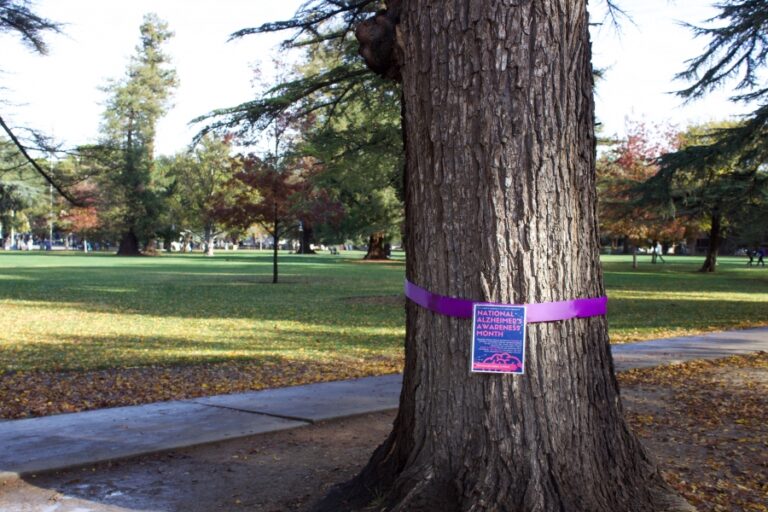
Organizations around campus hang colorful ribbons on trees around the Quad to raise awareness about issues and causes facing the community.

A big, perfect bow tied on a tree in the Quad flutters softly in the wind. It’s a vibrant purple and a small white card sits next to it, informing passersby about Domestic Violence Awareness month and the resources available to students at the The Women’s Resources and Research Center.

Different organizations around campus can contact Grounds and Landscape Services to reserve a time to hang ribbons on the trees around the Quad to raise awareness about different issues and causes, explained the associate director of Grounds and Landscape Services Cary Avery.

“The ribbons on the trees around the quad are organized by different campus departments/units depending on what the ribbon signifies,” said Memorial Union Director Janna Tolla.

If the trees are available, Grounds and Landscape Services will let any organization that is legitimate and affiliated with the campus hang ribbons, Avery said.

“We really only let them [hang ribbons] for major types of causes,” Avery said. “It would get too crazy to let anyone put them up all the time. It must be an established organization.”

The Women’s Resource and Research Center hung purple ribbons for the entire month of October to build awareness about Domestic Violence Awareness Month, said assistant director for outreach for the Women’s Resource and Research Center Sara Blair-Medeiros.

“The whole idea is to build education and awareness about the resources that are on campus to help them navigate some of the situations that people find themselves in, in regards to domestic violence,” Blair-Medeiros said.

To make sure the community knows what the purpose of these ribbons are, most organizations put up information cards explaining their cause. The Women’s Resource and Research Center put up cards with as much information as possible about Domestic Violence Awareness Month and the resources available to students regarding domestic violence, Blair-Medeiros said.

“Last year when we had the ribbons in the quad, we had a number of drop-ins because of the ribbons,” Blair-Medeiros said.

The specific organizations are in charge of putting up the ribbons, Avery explained. Grounds and Landscape Services makes sure they do it in a neat and orderly way, and if not, they are taken down.

“There’s a policy on campus about no posting on trees,” Avery said. “We allow the ribbons in the quad because they are not posting or nailing anything. We monitor them so nobody takes them down, and we make sure that only one organization has them up at a time.”

Blair-Medeiros said the Women’s Resource and Research Center wanted the community to be involved with hanging the ribbons, so they put the event up on their student affairs calendar and their personal calendar and invited people to wrap the trees with them. Because of this, Good Day Sacramento heard of the event and interviewed them.

“We had a number of people reach out because of that,” Blair-Medeiros said. “We were able to build awareness in other ways this year too, and we wouldn’t had been able to do that if we had not put up the ribbons and stuff and showcased it as an event.”

Domestic Violence Awareness Month is the issue that the Women’s Resource and Research Center focuses on, but other organizations additionally put up ribbons for other causes. The Veterans Success Center hung yellow ribbons around the Quad outside the Memorial Union, Vanderhoff Quad, the ARC area, and the Equestrian Center for ‘Veterans Week’ in November, said coordinator for the Veterans Success Center Earl Raehsler.

“Doing things like this helps [the veterans] feel like this campus is theirs just as much as any other students,“ Raehsler said. “And it brings awareness to the sacrifices and other stuff that they have done.”

The Veterans Success Center also posts cards next to the ribbons explaining the cause, Raehsler said. But since they hang them right around Veterans Day, he thinks a lot of people understand what they are for.

Raehsler said that he likes how these ribbons help spark conversations and help raise awareness about veterans in the community and other causes around campus.

“Different groups have used [the ribbons] as a symbol to bring awareness to their programs,” Raehsler said. “It brings awareness to the campus and shows the unity of the campus against or for a particular cause, which is great. ”

Written by: Margo Rosenbaum — features@theaggie.org

Police Logs

0

Sticks and stones

November 21

“A driver of a gold Ford sedan threw a rock at reporting party’s vehicle. No damage to reporting party’s vehicle and reporting party would like it to be logged.”

“Male subject threatening to hit people with a large flashlight.”

November 22

“Injured hawk, unable to fly.”

“Reporting party’s roommate became upset after a disagreement and threw a beverage can at the reporting party.”

November 23

“5-6 dogs running loose in neighborhood for last 20 minutes.”

November 24

“Heavy walking coming from unit above responding party.”

November 25

“Transient yelling at customers and hit store window with a stick 3 times.”

November 26

“High school aged juveniles smoking marijuana at the playground.”

November 27

“Neighbors door knob on the floor in front of door, unknown if break in or resident aware.”

Farewell Fuji

3

Local sushi restaurant announces closing on Facebook

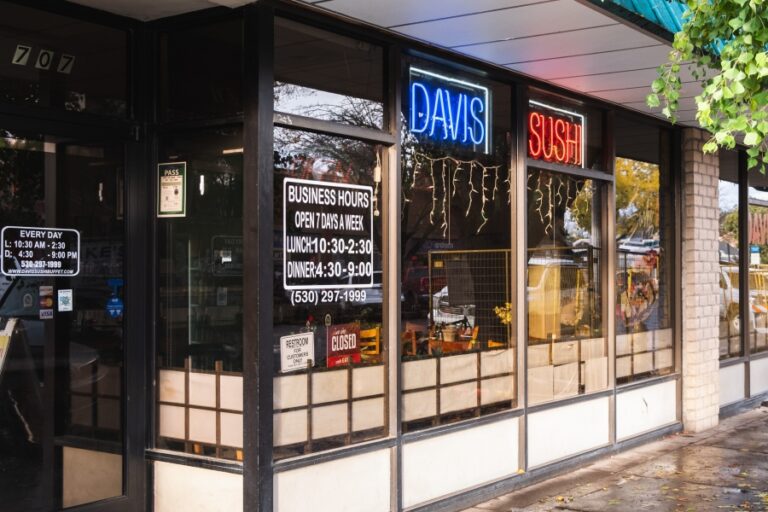
After many years in Davis, Fuji Sushi Boat & Buffet officially announced on Nov. 1 via Facebook that it will be closing. Established in 1997, the restaurant aimed to become the go-to place for sushi at prices college students could afford.

At a $17.99 lunch fee ($20.99 on weekends) and a $21.99-$24.99 set price for dinner, the buffet allowed customers to consume as much as they wanted at varying costs. Fuji was also notorious for staying open and being available on most holidays, except for Thanksgiving, Christmas and the Fourth of July. The sushi restaurant closed in the owner’s best interest, rather than for any financial reasoning.

“The owner is retired and the lease has ended,” said Chaio Lai, the chef at Fuji. “We live in Brentwood that we used to drive 2.5 hours everyday. We just think it’s time to end [it]. It’s a good location and I think someone will take over soon.”

Several customers of the buffet were saddened by the news.

“I don’t live in Davis, but do stop by Fuji’s from time to time as I pass through,” said Elle Emi Ryu Rose, a former customer of Fuji. “My wife and I love sushi, so we love stopping by whenever we get a chance. As far as knowing why it’s closing, I have no idea. Their food was very good, but they did lack customer service.”

Their menu consisted of weekly popular rolls, new creations made specifically by the restaurant and classics that established loyal customers for Fuji over other sushi restaurants. There were certain aspects to the dining spot that customers considered could be reasons for Fuji closing, but none seemed to do with their food.

“I always get the feeling that the employees don’t enjoy what they’re doing,” Rose said. “[I] wished they hired more friendly-oriented employees to [make] you feel welcome.”

In 2014, the owners decided to open up another Fuji Sushi & Buffet in Vacaville to provide more of its all-you-can eat options to residents in the area. Now, the Vacaville location will be the only restaurant, as the new owners do not plan on expanding again any time soon.

“Being a chef and a mother that has a daughter who attends UC Davis, I was surprised that she was going to this restaurant, but I think when you’re a student, you will eat wherever the price is right,” said Diana Roque, another former customer of Fuji. “The service was horrible, the food was really bad, they trick you with the buffet prices.”

Written by: Lauren Tropio — city@theaggie.org

Ally Property Management: Ally or enemy?

As the season for finding housing and renewing leases approaches, many students will begin researching the different property management companies that serve the Davis area.

Ally Property Management is one group in particular that has come into recent controversy. A look at its Yelp page shows an average rating of one and a half stars out of five from a total of 50 different reviews. Several of the reviews are harshly worded, and only seven of the 50 reviews have three or more stars.

Similarly, the Davis Wiki page refers to Ally as “notoriously the worst property management company in Davis.” It also notes Ally’s name change from Acadian Properties to Ally Properties in 2010, which individuals in Yelp reviews have speculated was due to poor reviews — nonetheless, it appears that criticism has followed the group.

Fifty Yelp reviews have left the company with a one-and-a-half stars out of five star rating. A common thread in the complaints left by reviewers regard allegations of poor customer service from management, who is described on the page as “rude,” “unprofessional” and “inconsiderate.”

A Yelp review left in December of 2017 from someone who identifies themself as a renter of an Ally Properties property stated the condition of the house upon moving in was “disgusting,” with “trash everywhere, dirt all over the floor, moths in every cabinet.”

“We called them and demanded they send a cleaning service, and they said they would but never did,” the review states. “Our whole plumbing system went out, dryer broke, circuits always broken, the list is endless. Whenever we called and asked for help or for them to even just do their jobs all their employees were so inconsiderate and not helpful. This company takes advantage of UC Davis students.”

But what do the experiences of Davis students renting from Ally Property Management look like in reality?

Bennett Pollack, a UC Davis alumnus and a former Ally tenant of two years, voiced frustration about his experiences with the company.

“Quite frankly, Ally knows they have all the power,” Pollack said. “They know our vacancy rates and take advantage of students by not providing basic repairs in a timely manner, as well as simply not caring about the well-being of their tenants. This type of greed is what leads students to be displaced and homeless.”

A current Ally tenant, who contacted The California Aggie via email and wished to remain anonymous, voiced their concern over the property management group, saying that after their “horrible experience” with Ally, they researched the group and found they weren’t alone from the looks of the Yelp page.

“As a current resident in one of their properties, I don’t believe it is in my best interest to be named,” they said. “It appears that this company is hurting UC Davis students. There should be media coverage on this to warn students (and their parents) to not sign leases with them.”

The California Aggie reached out to Ally Property Management, but the group declined to comment on this issue.

Not everyone, however, has had poor encounters with Ally. Justin Moreno, a fourth-year mechanical engineering student at UC Davis, hadn’t heard of any negative reviews against the property management company nor  had any issues to report.

“The staff has been well prepared and very friendly every step of the way,” Moreno said. “You can tell they’ve been doing this for a long time […] I felt it [the house] was in great condition and all fees were duly warned and reasonable.”

Another student who had a fairly neutral experience with Ally was Orlando Razo, a former communication major at UC Davis, who recounted his experience renting from the property management group.

“I’d say they were professional but inefficient,” Razo said. “We would just have to call them a couple times in order to get them to fix something.”

Written by: Claire Dodd — city@theaggie.org

The medicine of the mind

Music therapy shown to have benefits for medical patients

With the developing progression of music therapy, hospitals and other facilities have begun to adopt various methods of incorporating the therapy into their services. The personalized elements of music therapy allow it to be used as a treatment for a wide variety of patients.

Tori Steeley, a music therapist at UC Davis’ Children’s Hospital, was initially on track to obtain a doctorate and teach at a university or even play in an orchestra after studying music performance as a student. However, she felt a desire to help people and use the skills she learned in music performance to enhance those abilities.

“I wanted to find a job that used my music performance skills but also my skills of empathy and wanting to help people and do something better for my community,” Steeley said.

While the former music therapist at UC Davis’ Children’s Hospital was only part-time, Steeley now works at the hospital full-time. Her patients can range from premature infants to 18-year-old teenagers with each receiving individualized treatment. According to Steeley, music therapy is centered around creating specific goals for each patient and having the session personalized to meet those goals. Thus, the benefits vary depending on the purpose of the session.

For babies, singing lullabies not only helps their sleep, but also helps develop their language skills and gives them positive stimulation that they may not usually receive at a hospital. Patients with autism or communication impairments may be able to strengthen their communication skills. Children undergoing chemotherapy who are constantly at the hospital can play instruments as a form of distraction or a healthy, productive way to release their emotions. Steeley also helps children write songs to express their feelings.

“Often times children don’t have the words to express how they’re feeling because they just haven’t developed that vocabulary yet,” Steeley said. “But through music, they can express themselves without words.”

Henry Spiller, a professor of music at UC Davis, also believes that music has the ability to help people understand their emotions better. Through his studies in ethnomusicology, Spiller has seen instances where rhythmic activities can help people transcend into a sacred mental space or different psychological states that can heighten their awareness and have healing benefits. He stated that people can utilize musical activities to access parts of themselves that are usually inaccessible.

“The reason [music] works is because it’s not describable in words,” Spiller said. “Music communicates at a very different level than words do, and that can be very valuable. It can say two things at the same time that are contradictory, which is difficult to do with language.”

Spiller stated that the research he has done in music therapy suggests that music therapy depends a lot on the acculturation of the individual patient, such as what music they have been exposed to in the past or what behaviors they associate with music. However, he also stated that other research suggests that music has the ability to access parts of patients unrelated to culture.

“Based on my own personal experience, of course, I think music can be transformative. It can provide the kind of social lubrication required to get people who are making music together or who are sharing music as performers and listeners, provide a context, in which they can open up to each other,” Spiller said. “They can lay bare elements of their personalities that otherwise need be kept at bay.”

Over the years, more and more studies on music therapy have been conducted. Debra Bakerjian, a clinical professor at the Betty Irene Moore School of Nursing at UC Davis, worked together with Elena Siegal, an associate professor at the Betty Irene Moore School of Nursing, to design the study implementing the Music and Memory program. The program was a collaborative effort between UC Davis and the California Association of Healthcare Facilities to use personalized music as an way to help patients with dementia.

“Our study found very positive results in improving the behaviors of persons with dementia, reducing the use of several psychoactive medications and improving the quality of life for residents in nursing homes,” Bakerjian said. “We also saw reductions in resident falls and complaints of pain. So, the music was very effective for many residents with different types of problems and conditions.”

Steeley also stated that music therapy can help in cases of memory care and those with dementia or Alzheimer’s disease in order to orient them to their reality. Bakerjian stated that research shows that music therapy is being increasingly recognized as a non-drug intervention for varying patients and conditions. Like Steeley, she hopes that music therapy can be further implemented to various adult settings.

“I would like to see the Music and Memory program that we studied expanded into other settings to include the acute care hospital, assisted living settings as well as in people’s homes where there is a significant amount of caregiving happening,” Bakerjian said.

Written by: Michelle Wong — science@theaggie.org

The Bacteria That Could Curb the Rise of Antimicrobial Resistance in Infants

UC Davis researchers find a link between Bifidobacterium and lower levels of antimicrobial resistant genes

The bacteria Bifidobacterium infantis started disappearing in Western countries in the 1950s. UC Davis researchers have found that the lack of B. infantis in the infant gut microbiome could negatively impact the health of these infants.

Human milk contains oligosaccharides, which are short chains of sugar molecules that babies can’t digest. Bruce German, a professor in the Department of Food Science and Technology and director of the Foods for Health Institute, worked with a team of scientists, including graduate students Bob Ward and Danielle Lemay and faculty members David Mills and Carlito Lebrilla, to isolate the indigestible oligosaccharides and test bacteria to see if they could grow with these oligosaccharides as their only carbon source for growth. Most bacteria didn’t grow at all, but B. infantis did. On further analysis of the bacterium, they realized how important it could be.

“In essence, this bacterium had a genome that had all the characteristics of a benevolent bacterium dedicated to thrive in the intestine of a breastfed baby,” German said.

Professor David Mills and post-doctoral fellow in Mills’ lab Diana Taft, started studying the effects of B. infantis in infants. They started by examining the data gathered from infants in Bangladesh and Sweden, where infants had B. infantis in their gut.

“I found a correlation between high levels of Bifidobacterium species [not necessarily just B. infantis] and lower levels of antimicrobial resistance within the infant gut metagenome,” Taft said. “This means that an infant where most of the bacteria in their gut was Bifidobacterium also had lower levels of antimicrobial resistance genes. However, correlation is not causation so I cannot definitively say that having higher levels of Bifidobacterium causes lower levels of antimicrobial resistance.”

So the increase of B. infantis in the infant gut microbiome could be the key to better health for infants. The disappearance of B. infantis in Western countries is an issue, but not one without a solution.

“One of the obvious approaches is to simply give B. infantis as a probiotic to breastfed babies,” Mills said. “It has been shown to work well in restoring the breastfed infant gut microbiome to what it used to be [over 50 years] ago in the USA.”

Written by: Kriti Varghese — science@theaggie.org

A look inside the growing professional eSports industry

0

Aggie gaming’s Overwatch captain attempts to break through and rise to the top

It wasn’t until Aggie Gaming’s Overwatch team captain started going to church that he got hooked on video games.  

“We had youth groups where all the kids would get together,” explained junior Justin Koh, Aggie Gaming’s most experienced player, on how he started playing video games.

The Atlanta native continued with his initiation story, crediting his older church group friends.

“They were all super into games, they basically preached that stuff to me rather than teaching me about Jesus and all that,” Koh recalled. “They were like ‘you should play this new video game, instead’.”

That game was Runescape, a massively multiplayer online game in which players interact with each other in an open world without a linear storyline.

“I thought that stuff was the coolest thing, I was like, ‘I don’t have to fish in real life. That’s something boring,” Koh said. “Catch a fish within three seconds [in RuneScape] and I’m done. This sh*t is like the future.”

Koh filled his free time with playing games ranging from CartoonNetwork.com games to more competitive games like StarCraft II and the widely popular League of Legends in which players compete in a ladder system to climb the ranks.

“My very first competitive game that I took seriously was StarCraft II,” Koh said. “I ended up hitting a pretty high rank with that. Played against a professional player on ladder, got completely destroyed and then gave up my hopes of a StarCraft II professional [career] at the time.”

After sticking with League of Legends for about four years, Koh remembered checking a website that explains how many hours someone spends playing League of Legends. Disgusted with the amount of time he had spent on the game, he decided to stop playing.

“I don’t even want to remember. I saw the number, I legit was like, ‘all right, I’m closing out of this’.”

The release of League of Legends and StarCraft II came at a perfect time, coinciding with the launch of Twitch.tv. This website allows players to stream online to viewers, which helped fuel an explosive rise in popularity in eSports. In 2014, Amazon took notice and acquired Twitch for $970 million.

Koh eventually found some success in first-person-shooter games, and his girlfriend’s group of friends convinced him to start playing Counter Strike. The overtly strategic nature of the game wasn’t his style. He did like the run and gun action of FPS, and so he took up Overwatch.

After putting in a significant number of hours dominating opponents in Overwatch, he got noticed by some prominent players.

“Eventually, I got reached out by a couple of people I know, they were like, ‘Hey, I’m trying out for the team. I think you’d be pretty good on the team if you came with me.”

Koh had finally found his place.

“All of the sudden, I went from the more casual side of gaming into a completely different environment of competitiveness and everyone pushing themselves to achieve a different goal than what a casual gamer would do.”

Koh didn’t stop there, he started applying to some of the more well known eSports organizations like Splyce and compLexity. In the process, Koh ran into a couple of obstacles. He wasn’t too fond of player contracts, he couldn’t say which organization his contract was from.

His other obstacle came from a small but debilitating problem: carpal tunnel syndrome, a common affliction among those in the eSports community, according to Dr. Levi Harrison, an orthopedic hand and upper extremity surgeon in Los Angeles.

Harrison told Vice that MMA fighters are his most common patients. After that, professional eSports players.

“Got tested positive for it in both of my wrists, and it was pretty much thought in my head, like, ‘It’s time to go to school. It’s time to get a degree, get a job’.”

Koh likened carpal tunnel syndrome to a torn ACL in other sports.

“Tore his ACL and just can’t come back into the scene –– I’m more of a guy like that.”

The growth of eSports continues to rise at an astonishing rate. According to Newzoo, 2018 global eSports revenues will reach $906 million, up 38 percent from 2017.

Part of this rising popularity comes from fans and their dedication to watching their favorite players. Much like the passionate following of Kobe Bryant or LeBron James, superstars build the value of eSports.

“That’s something we are trending toward in eSports,” said Chief Operating Officer and General Manager of compLexity Gaming Kyle Bautista. “The cult of personality in these mega influencers is something that’s really incredible. It’s something that organizations are really going to have to adapt to going forward. Making sure that you can align these huge star brands with your organizational brand so that both can maximize the synergy.”

In 2018, brands poured $694 million into sponsorships to capitalize on the influence of superstars.

Michael Hogman, who plays Fortnite, and Shahzeeb “ShahZaM” Khan, who plays Counter Strike: Global Offensive, are some of compLexity’s players who drive the brand forward and attract fans, according to Bautista.

It has become a priority for organizations to recruit talented players. Jerry Jones and the Dallas Cowboys recently invested in the Texas based company as a partner, and Bautista explained how this helps compLexity attract potential talent.

“We put them in luxury apartments, we provide top level training resources, health care, gym memberships –– they’re able to eat at the Cowboys Cafeteria twice a day –– eating food from dietitians and nutritions that are helping them perform at their peak level,” Bautista said.

Despite some setbacks in a professional eSports career, Koh was able to lead Aggie Gaming to fifth place in the Overwatch Tespa Collegiate Series in Aggie Gaming’s first year as a team in the 2017-18 season. Koh cobbled together a roster and put together a team.

“It was really exciting because that whole time, we were considered the dark horse, the underdogs,” Koh noted. “That just made it even more hyped for everyone on the team.”

Written by: Bobby John — sports@theaggie.org