55.4 F
Davis

Davis, California

Monday, December 22, 2025
Home Blog Page 470

Review: Icarus Falls

Zayn Malik’s sophomore album flies too close to the sun

Zayn Malik released his sophomore album, “Icarus Falls,” on Dec. 14. This sultry and rhythmic R&B album contains 27 tracks and is separated into two discs. Since leaving boyband One Direction in 2014, Malik has released many hit singles, appearing alongside top selling artists such as Sia and Taylor Swift. His first solo album, “Mind of Mine,” debuted at No. 1 on British and American charts.

It appears that “Icarus Falls,” however, will not be following Malik’s prior success. After half-hearted promotion from Malik and his team, “Icarus Falls” has struggled on the charts since day one. Though he released singles off the album leading up to its release, they all went virtually unnoticed and received little air time from radio stations. There is no stand out single, and therefore a lack of interest being generated about the album as a whole.

The album is conceptual and is modeled after the legend of Icarus. According to Greek mythology, Icarus received wings made of wax from his father, who warned Icarus not to fly too close to the sun, or else the wax would melt. Icarus ignored his father’s advice and flew as high as he could before his wings melted and he fell into the sea. This is not exactly a hopeful message to base a long-awaited for second album off of, and Malik’s wings seem to be melting already. The first disc contains 13 tracks, and seems to illustrate Icarus’s flight. The second portion of the album then symbolizes the inevitable fall back down to earth.

The first disc is more or less a classic R&B album. Most of the songs depict a relationship with a woman and speak to themes such as true love and lust. The opening track “Let Me” showcases Malik’s breathtaking falsetto that shot him to stardom in the first place. The song is mellow and vibey, and introduces Malik’s softer side, which is explored in the first 13 tracks. The woman in the songs seems to be a motivating force in Malik’s life, and a savior in some ways to him. The third track, “Back to Life,” is a catchy and passionate tribute to this woman. The track opens with calm guitar strokes and Malik’s soft rifts rising in power. In the chorus, Malik belts out “Honestly, she’s the only one that’s watching over me,” hinting at Malik’s struggles in life while also maintaining the theme of the power of true love.

Of the first 13 tracks, “Common” is by far one of the strongest. A gentle piano plays in the background of a strong beat, and Malik’s powerful yet soft voice is hypnotic. When Malik belts put “When I hold you in my arms / There ain’t nothin’ common ’bout us” the listener can truly feel his passion for the subject of the song. While this song stands out, many of the rest fail to do so. Songs such as “Natural,” “Imprint,” and “Flight of Stars” feel generic and, due to the lengthy nature of the album, are entirely forgettable. The listener may wonder why some of the more generic songs were not cut from the final track-list all together. The length of the album is by far a downfall, especially with so many song that do not feel necessary.

After the album’s 13th track “Icarus Interlude,” the themes and production of the following songs paint a much darker image of love, fame and what Malik truly thinks of himself. “Icarus Interlude” opens slow and melodic, with Malik’s voice murmuring “guess I flew too close to the sun / Myth will call me legend.” The concept of flight portrayed in the first 12 tracks sets up the idea of  “falling” in the remaining songs. The 14th track “Good Guy” opens up with alluring, yet ominous guitar notes as Malik warns his love interest “Don’t you fall for me, girl / I’m not the right kind / I’m a bad man.” This song marks a shift of the lovestruck, tender man in the previous songs.

The rest of the second disc explores the darker side of Malik’s mind. He speaks to the hardships of fame and the superficiality he sees in those around him. “Satisfaction” opens up with thudding drum beats and Malik’s hauntingly soft voice singing that “life is always in the way,” possibly speaking to fame and how he has struggled in the spotlight. “Satisfaction” succeeds in utilizing Malik’s voice to convey emotion in ways the songs “Insomnia” and “Entertainer” do not. It is not as though Malik’s voice ever wavers in strength or talent, but the songs feel like replicas of any R&B artist, with nothing personal holding to Malik.

Malik has always been a sort of enigmatic figure in the industry, and the release of his second album does nothing to define who he is as an artist in any way. After being molded into the “bad boy” of One Direction, Malik grew evidently miserable over the years of constant stadium tours and the carefully crafted persona Malik had to maintain in order to please his fans. He eventually split with the band in 2015, and has since been floating around the limelight, without ever fully immersing himself in his potential.

One of the second disc’s strongest ballads, “Good Years” will have any One Direction fan aching with nostalgia and pain for what the band put its members though. Even before Malik split with the band, it was evident that he had lost a spark and had been struggling with the idea of being in the spotlight. Among drug and alcohol abuse, Malik also struggled with an eating disorder. Listener’s can’t help but reminisce on the stadium tours he participated in with his fellow boybanders when Malik belts out “I close my eyes and see a crowd of a thousand tears / I pray to God I didn’t waste all my good years.” “Good Years” is a tragic song about regret and conveys the feeling trapped that Malik felt while in One Direction.

Malik is also at his strongest in the album when he explores new sounds and experiments with the genre. There are funky, synth-inspired beats in “Sour Diesel” and “Rainberry.” It makes the listener wish Malik was more experimental in more of the album’s 27 tracks. “Rainberry” is also an example of smooth and sexy funk that breaks from his typical R&B mode. These songs are mysterious and maintain Malik’s brooding image, yet they sound distinct and could really define him as an artist. The only problem is that they are drowned out by the 20 other more generic, less inspired songs.

Overall, the album is too long and convoluted, which shows in record sales. Despite a long tracklist, no song stands out. “Icarus” does not deviate enough from “Mind of Mine,” and many of Malik’s new songs feel as though they were mere leftovers from his first album. The instrumental production of each song feels too similar, and it is hard to truly pull each track apart or find a distinction between them.

The concept of Icarus is gently touched upon, but mostly feels forced on the album. The concept of flight and fall is interrupted and distracted by the album’s length, and therefore is not as poignant as the message could have been. While it is understandable that this previous boybander may have gotten so close to the limelight that his wings may have melted, it is not a strong message to send for his solo career. Icarus falls to the earth never to return again. Let’s hope that Malik’s solo career does not follow in the same direction.

Written by: Alyssa Ilsley — arts@theaggie.org
Mental health strike against Kaiser Permanente

National Union of Healthcare Workers, others picketed for more mental health resource allocation

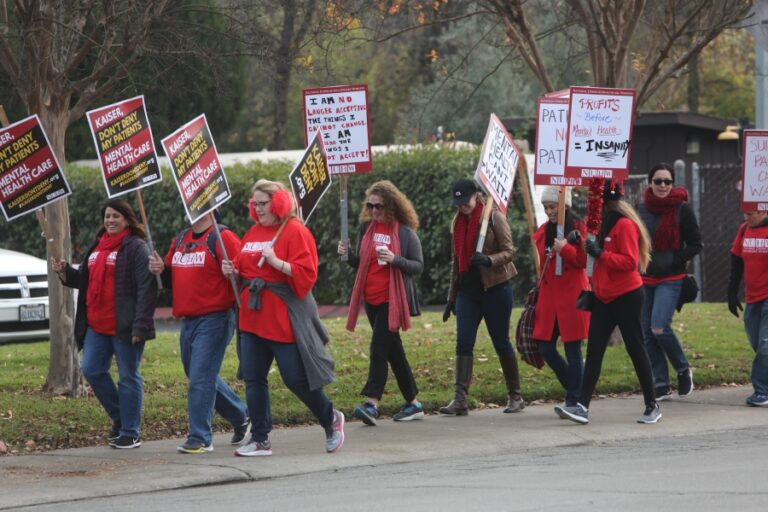
Across California, the fight for mental health rights picked up momentum as psychologists, therapists, nurses and teachers began a five-day strike against Kaiser Permanente. Strikers demanded for more resource allocation for mental health services.

Ken Rogers, a psychologist at Kaiser Permanente in Elk Grove as well as a shop steward for the National Union of Healthcare Workers, explained the main reasons for the strike.

“The mental health strike is kind of an extension of the contract bargaining where we had a concern with the amount of access time for new patients and return patients for treatment with the employer,” Rogers said. “Although Kaiser has made a number of improvements in this direction, patient care — especially return access for care —  is still pushed out for some providers for five, six, even eight weeks. And when I talk about return access, I mean the patient has come in for services and all the sessions that are after that initial appointment. We’ve been bargaining with the employer since June, and they have not responded meaningfully, and we felt like we needed to strike to push the issue.”

Michelle Gaskill-Hames, the chief nurse executive for Kaiser Permanente in Northern California, gave a different perspective in that she felt the strike had unfortunate timing and posed a risk for patients during the holidays.

“This strike was unnecessary, and poorly timed, coming during the holiday season when many of our patients with mental health needs were seeking care,” Gaskill-Hames said via email. “It needlessly put our patients in the middle of the union’s contract demands, which is especially disheartening because the union’s principal demands at the bargaining table have not been about improving care and access. Rather, the union leadership is seeking even higher wages and benefits and demanding operational changes that would reduce the availability of mental health care for our patients.”

Fourth-year psychology major Michelle Melton countered the idea that the union wanted solely higher wages.

“One thing that instigated me wanting this to be looked at was because Kaiser was doing [public relations] about the strike saying that clinicians wanted more money and that they were putting patient health care at risk when really, I know a lot of clinicians who were on strike who were doing it to help their clients,” Melton said. “And so what my hope is that the community needs to be more aware because this is a social justice issue, considering that the majority of Kaiser patients were low income and working families that can’t afford Kaiser.”

Nevertheless, Gaskill-Hames confirmed that Kaiser Permanente has value for the unions and workers, wanting the best for patients as well.

“We are pleased that the union’s leadership has agreed to return to the bargaining table,” Gaskill-Hames said via email. “We are prepared to reach a responsible new contract agreement and are confident that with active engagement on both sides, we will be successful. We value our therapists and are calling on them to urge their union leadership to bargain constructively and stop putting our patients in the middle of contract demands. It’s just not right to disrupt their care.”

Susan Whitney, a psychiatric social worker at Kaiser Permanente and union steward for NUHW, contended how discouraged she was during the bargaining.

“It’s been extremely frustrating,” Whitney said. “When I go to a bargaining session, I’m not paid for that — it’s on my own time. I drove from Bakersfield to Orange County, and there was nothing new presented at the bargaining table.”

Whitney emphasized the importance of the sessions, as they are crucial for patient care.

“We had a bargaining session today, and it was rather disappointing because the message we got in bargaining was not the same as what they put out to media during the strike which was that they really value and want to work with us,” Whitney said. “They are refusing to respond to our demands to address the patient care issues other than saying that the committee — that has already been set up and has been going on for years and years and years — will have a discussion and make recommendations. I think when you have situations where people do not have needed medical and mental health care, then there needs to be a little more urgency when addressing the problem.”

Rogers also participated in the strike and he brought up another issue regarding working conditions in addition to a need for better patient care.

“We’re hoping that Kaiser will take patient care issues more seriously in terms of improving return access,” Rogers said. “There’s also the issue of working conditions for employees. We often have to use time outside of what we’re provided to provide care — booking into lunch appointments and times where you don’t even work to provide an adequate level of care for patients.”

Melton has had experience with Kaiser’s mental health services and praised their clinicians. The one drawback for her, however, was that she could not readily access them on her own time.

“My experience at Kaiser with the clinicians I had was phenomenal — that’s the reason why I stayed at Kaiser,” Melton said. “The only drawback with Kaiser is that they’re only able to be seen out of six to eight weeks. If something pops up and you need to be seen sooner than later, [then] that’s not really going to happen because their schedules are impacted so you’re not going to be able to see them and you have to go with their system.”

Gaskill-Hames acknowledged that Kaiser Permanente has the utmost quality in care programs.

“Alongside our therapists, Kaiser Permanente has been on a path to be the best mental health and addiction care program in the nation,” Gaskill-Hames said via email. “The quality of the care we provide has been recognized by the state’s Office of the Patient Advocate, and by national quality organizations. We don’t think there is any other organization that is doing more than we are to make mental health care better in the United States. We are committed to doing even more, to innovate, to advance care, and to continually seek to improve what we do.”

Though Kaiser Permanente’s services are at a renowned quality, Melton remembered how she had trouble gaining access to care.

“This past summer, I had a family member die and I was in a car accident and I was going through a lot while going to grad school,” Melton said. “I really needed help with some things. Because I had Kaiser insurance, I wasn’t able to be seen at UC Davis to receive any assistance because they are like well, you have Kaiser insurance so we can’t really help you, but then I wasn’t able to see anyone at Kaiser because you are only able to be seen out of six to eight weeks.”

Whitney clarified that strikers like herself are fighting for patient rights, and they wanted more awareness brought to how patients can access mental health care.

“This is really about patient care,” Whitney said. “Our patients understand because they have the same concerns that we do. We have had patients reach out to us and to the media. I believe that at this point, we have over 750 different stories of people reaching out to us wanting to tell their story or to ask for help or assistance to solve the problems they have with getting mental health care.”

Written by: Stella Tran — city@theaggie.org


UC Davis students launch natcar.org

UC Davis students organizing electrical engineering program to make grade school robotics more affordable, accessible.

Undergraduate students at UC Davis are developing a new electrical engineering program for high school students across the Sacramento area. These students will receive robotics kits this month and begin a 10-week learning experience that will culminate in a robotics competition at UC Davis on May 5. The project is called natcar.org and it is the brainchild of second-year computer engineering major Dong Gyum “Daniel” Kim.

Since 1994, the UC Davis Department of Electrical and Computer Engineering has held an annual competition called NATCAR. Natcar.org is an extension of the pre-existing undergraduate program. Teams build model cars from basic electrical components and rely on sensors and autonomous algorithms to guide their car around a course made of white pieces of tape.

Over the summer, Kim decided he wanted to create the natcar.org program to make high school robotics more practical. In the early stages of development, Kim and his team of UC Davis students noticed a trend when they spoke with high schools about introducing competitive robotics.

“They were saying they didn’t have the money,” Kim said. “Another thing we ran into was that there were no teachers to teach it.”

Affordability and accessibility became the two defining obstacles that the program would attempt to tackle. The answer to the affordability issue was solved by using the existing NATCAR kits. The kits for the competition, which are sold by Texas Instruments, are around $100.

“NATCAR is unique because it’s relatively inexpensive compared to a lot of other programs,” said Avery Turk, a first-year computer engineering major who is helping to develop the program.

Many other high school robotics have considerably higher startup costs. Vex Robotics, a popular high school robotics competition sells starter kits for $599.99 according to their website. Pitsco sells a $709.95 competition kit for the FIRST Tech Challenge, another popular option for high school robotics. These other robotics competitions emphasize physical variation in the design of the robots, while NATCAR is more focused on the computer programming and electrical engineering, keeping costs comparatively low.

The natcar.org team has worked all quarter to create an online curriculum that will be available to high schools and individuals who sign up on the program’s website. The natcar.org organization has also arranged for UC Davis electrical engineering students to be available in an online forum, so teams can ask questions and receive help when they get confused. They hope this will make the program accessible to high schools who can’t afford to hire dedicated teachers. The easy-to-understand program will also support individuals who want to participate but don’t have the support of their school.

“It’s explained in a way that people without experience are able to learn,” said Katherine Tran, a first-year electrical engineering major who is working on the curriculum.

The team was intent on making sure they did not skip steps in their explanation of key topics. They wanted the high school students to understand how the algorithms control the most basic circuits in the model car.  

“So, we go from the volt and the current lighting up an LED,” Kim said. “We then move on to controlling that through very low-level code, and the curriculum keeps going and builds on top of things to make it more abstract, and by the end, they are just designing algorithms.”

The team also wanted to make their curriculum broad and encompassing in order to expose students to all aspects of electrical and computer engineering.

“I think giving them this opportunity allows them to see if they have an interest toward CS [Computer Science], CE [Computer Engineering] or EE [Electrical Engineering,]” said Brandon Trong, a first-year computer engineering major. “It allows them to choose early.”

Written by: Peter Smith — science@theaggie.org

Cancer Treatment Works Better in Obese Patients


UC Davis Researchers find that a novel cancer treatment is more effective in obese patients.

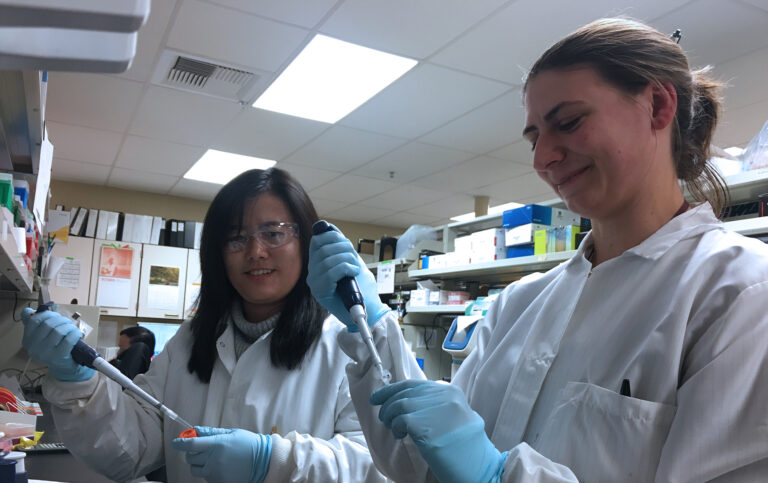
Researchers at UC Davis found that a promising new cancer treatment called checkpoint immunotherapy works better in obese patients than it does in lean patients. The scientists, who published their research in Nature Medicine on November 12, originally hypothesized that checkpoint immunotherapy would be less effective in obese cancer patients because obese people generally have weaker immune systems. Their research showed exactly the opposite.

“What we found to our surprise, we didn’t see more toxicities using this approach [Checkpoint Immunotherapy], if anything we saw just the opposite.” said William Murphy, the professor who leads the team that conducted the research. “We found that, clinically, the obese patients responded better and survived longer than the lean patients.”

Checkpoint immunotherapy relies on the immune system to fight cancer, as opposed to other treatments like chemotherapy or radiation. The immune system is the body’s natural mechanism for fighting pathogens, but it often struggles against cancer because cancer is the uncontrolled growth of cells. The immune system has white blood cells called T-cells which are used to kill pathogens. T-cells have “switches” on them called checkpoints which allow other human cells to control the immune system.

Often cancer cells take advantage of these switches and use them to turn off the T-cells so they will not eliminate the cancer. With checkpoint immunotherapy, doctors administer special drugs that attach to checkpoints on T-cells and physically prevent the cancer from turning off the T-cells. Checkpoint immunotherapy is often referred to as “releasing the breaks on the immune system” and allowing it to attack and kill cancer. Doctors are excited about the treatment because it is effective and often has less side effects than other approaches.

“The immunotherapy approach has been called the magic bullet because what it does is it seeks out the cancer and you don’t get the collateral damage or the toxicities normally associated with chemo or radiation,”  Murphy said.

Murphy and his team were concerned that because prior research demonstrated obese people have weaker immune systems, the new revolutionary treatment would be less effective in a growing part of the population. They hypothesised that lean people who have stronger baseline immune systems would benefit more from the treatment. However, as they did clinical trials comparing lean and obese animals as well as lean and obese humans, the data pointed to another conclusion.

“What we saw was quite the opposite,” said Arta Monjazeb, the head clinician on the project. “The therapies seemed to work better in obese patients.”

The immunotherapy treatment researchers used targets a checkpoint on T-cells called PD-1 that, when activated, can slow down the immune system. The immunotherapy drugs block cancer cells from activating the PD-1 pathway. That way the cancer cannot slow down the immune response and grow unencumbered.

The researchers found that in obese people, the human body had already activated the PD-1 checkpoint in many of T-cells to prevent the immune system from going out of control. The obese body slows down the immune system because an obese person has more fat, carbohydrates and hormones that could potentially allow the system to become too aggressive. This becomes dangerous when cancer develops because the immune system is not able to effectively respond. In addition, the obese environment allows the tumor to grow much faster than it would in a lean person.

“Not only does the tumor have an environment where it can grow faster, but the immune system that’s supposed to fight it is starting to shut down.” Murphy said.

In lean patients, when doctors used checkpoint immunotherapy, the therapy prevents cancer cells from activating the PD-1 pathway and slowing immune response. In obese patients, the therapy does the same but it also removes the restrictions that the body placed on the immune system.

“If you compare a non-obese and an obese person, there’s actually more exhausted T-cells,” said Cordelia Dunai, an immunology Ph.D. student working in Murphy’s lab at UC Davis. “So when you give the checkpoint blockade, which is blocking PD-1 signaling, then you have all those T-cells unleashed.”

This allows the immune system of obese patients to fully respond to the cancer. In addition, the T-cells in the obese patients benefit from the obese environment allowing for a more ferocious immune response. This explains why the research group found that immunotherapy is more effective in obese people.   

Now the research team is interested in understanding if the conditions which make immunotherapy effective in obese people can be replicated in lean patients. One suggestion is that doctors might be able to replicate the success by prescribing high-fat diets to lean patients undergoing the treatment.

In the meantime, the study will help doctors make better decisions about which cancer treatments to prescribe. The data from the study will allow doctors to better tailor cancer treatments to individual patients. According to the research group, one of the most important takeaways from the study is that more knowledge is needed about physiology and the immune system.

“Most people thought uniformly obesity was bad; this is telling us that it can be good if you use the right type of therapy,”  Murphy said. “As we understand the patient or the individual more, we are going to better tailor how we attack cancer.”


Written by: Peter Smith — science@theaggie.org


The Grinch in Culture

Saying goodbye to minions, welcoming in the Grinch

When “The Grinch” was released on Nov. 9, there was a lot of buzz surrounding it. Some of the buzz was due to the soundtrack that ranged in sounds, featuring rap artists like Tyler, the Creator and Run-DMC, while still containing other more “grinch-typical” Christmas songs from the Supremes and Nat King Cole. It’s often a comical combination when childhood remakes synthesize with more contemporary and relevant artists or pop culture symbols, such as the unique and radical sound of Tyler, the Creator as he raps about such a common and popular Christmas figure. For many college students, this juxtaposition is almost intriguing in its opposition, and because of that, an interest has intentionally been sparked in The Grinch.

While many would argue that the Grinch never left as a cultural celebrity and name in American culture, the publicity and advertisement for this new film was  promotionally similar to the way the minions from Illumination’s “Despicable Me” franchise took off as a cultural phenomenon.

For a film that has devoted $80 million to various promotion campaigns, the most recent Grinch movie has surpassed all other promotions for previous versions of the movie. In an article by Deadline titled “‘The Grinch’ Global Promo Campaign Grows Several Sizes from First Movie to $80M,” the various portrayals of the Grinch in advertisements are compared and expanded on in regards to past portrayals.

The article writes, “first time partnerships for the studio with Grinch include Wonderful Pistachios, Ebates, Pur and China Glaze. There’s also returning Illumination partners too including as IHOP, Bloomingdales, 23andMe, General Mills, Puffs and BarkBox.”

While IHOP focuses on Grinch-green colored pancakes and hot chocolate, Bloomingdale’s windows feature Grinch-themed decoration and decor, while Puffs has created holiday boxes that center around the Grinch and other Whoville characters.

How this promotional campaign differs is through its choice to appeal to a wider ranging audience, which can be seen in its soundtrack but also in its ad campaigns and partnerships with the NBA. In Ringer’s article, “The Story Behind ‘The Grinch’ and the Weirdest Marketing Campaign of the Year,” Illumination’s partnership with the Grinch is explored in great detail, questioning why a movie that is classically focused and geared towards a younger audience is attempting to attract a different age, specifically the age group of 18-34 year olds that most frequently watch NBA programming. In addition, the article explores various realms of social media that have been created as advertisement techniques to mimic the voice of the Grinch in a comical and mature (yet still appropriate) manner, as the Grinch tweeted on the turnout of a sports game.

The article ended reflecting on the current state of advertising and consumerism saying, “In an era of unceasing appetites and fleeting attention spans, perhaps a movie’s best bet is to throw everything at the wall and see what sticks, even if it happens to be at J.R. Smith’s expense.”

In addition, many of the Grinch billboards were specific to the cities they were placed in, with slogans that said “I could watch you crawl through traffic all day” and “Rent is so cheap here” along an all green billboard with the Grinch on it. These snarky billboards add to the comical persona that Universal and Illuminations helped craft of a 2018 Grinch that would say things such as “I put gluten in your smoothie” and other slogans that helped evoke the comical negativity of the Grinch.

While this push in advertising can be attributed to its goal of getting more people to go see “The Grinch” in theatres, it has kicked off a more cultural trend of Grinch costumes, funny Youtube makeup videos, and catchy music (including Tyler, the Creator’s album titled “Music Inspired by Illumination & Dr. Seuss’ The Grinch”). As the modern day Grinch has attempted to rebrand in matters that echoe the comical interests of millenials and young adults in advertising attempts, he still remains accessible for children to enjoy.

Many children’s films that have gained attention recently have been similar in that they are continuing the legacy of movies that ages 18-34 remembered as kids. Movies such as “Monsters University,” “Incredibles 2,” and the highly anticipated “Toy Story 4” have gained attention from and attracted an older audience because of the resonance and attachment that many had to these films as adults.

Although the Grinch is a character that everybody grew up with, this attention to advertising and creating a franchise among older people seemed to be echoing and attempting to invoke the same emotions that these other continuations and remakes have gained without holding the exact same level of endearment in terms of cultural importance. Partially, this disconnect seems to be in the difference between the Grinch as a character that has been created, and these other films as entire stories and worlds that were adored.

Nevertheless, this influx in promotion and advertisement has been exciting this holiday season as the snarky, negative Grinch has taken over and appealed to all ages, urging them to buy in (pun intended) to the new accessible version of the Grinch.

Written by: Rosie Schwarz — arts@theaggie.org
Review: Green Book

Ali, Mortensen deliver a heartwarming performance

The movie “Green Book” features stars Viggo Mortensen and Mahershala Ali as they make their way through the Deep South during the Jim Crow Era. Ali graces the screen as the renowned African American pianist Don Shirley, who tours high-society venues throughout the South with the goal of changing racist perspectives with his performances.

“Green Book” begins by introducing the Italian-American Tony Vallelonga, played by Mortensen. When the nightclub where Vallelonga works as a bouncer closes for renovations, Vallelonga finds himself struggling to pay rent and support his family, going so far as to compete in a hotdog eating competition.

Shirley hires Vallelonga as his driver and bodyguard for his tour. While Shirley is refined, dignified and holds a doctorate in Psychology, Music and Liturgical Arts, Vallelonga is crude, vulgar and illiterate. Vallelonga is also racist. An early scene finds Vallelonga’s wife, Dolores, offering lemonade to African American repairmen, to which Vallelonga responds by tossing the used glasses in the trash. He reluctantly accepts the job as Shirley’s driver.

To be expected, Vallelonga clashes with Shirley, and the two begin the eight-week tour in mutual dislike. Vallelonga becomes increasingly impressed with Shirley’s classical performances and the high end venues. He writes his wife that he thinks Shirley is a genius.

Vallelonga also becomes more and more aware of the blatant prejudice Shirley endures. He is forced to refer to a pamphlet called the Green Book, a guide for African Americans on where they are welcome to shop, eat and sleep.

The duo manage their way through segregated hotels and bathrooms, sundown towns and violent exchanges. Throughout the trip, Vallelonga writes letters to his wife detailing his experiences and attempting to express his love for her. With help from Shirley, Vallelonga improves his romantic prose and a new understanding between the two men develops.

While the movie is ripe with comedic moments, a dialogue is opened about race in America. At one point, Vallelonga claims that with his low-income and living situation, he is more African American than Shirley. He cites the fact that Shirley was raised in a high-class society, lives in an ornately decorated apartment above Carnegie Hall and is not at all familiar with the stereotypical food and music of African American culture. Shirley shuts him down by distinguishing between race and class. Even though poor and uneducated, Vallelonga is still white and this ultimately grants him privilege and access.

“Green Book,” directed by Peter Farrelly, is based off a true story. Vallelonga’s son, Nick Vallelonga, wrote the screenplay based on his father’s letters to his mother and interviews with his father and Shirley, who reportedly remained good friends. There has been recent controversy, however. Shirley’s living relatives condemned the film for overstating the friendship between the men, in addition to falsely portraying Shirley as isolated and uncomfortable with his identity. “The Green Book” also depends on the problematic “Magical Negro” trope, where a black man and his story only exist to help a white man with his problems, which is seen is “The Green Mile,” “Ghost,” “Shawshank Redemption” and “The Legend of Bagger Vance.”

Despite this, “Green Book” is a feel-good optimistic film. While at first glance the film comes across as formulaic, subscribing to both the buddy movie and road trip plot cliches, the phenomenal acting by both Mortensen and Ali contribute to a fresh, nuanced performance.

So far well-received by audiences and critics, “Green Book” is already generating awards season buzz. The National Board of Review has named it the best film of 2018.

“Green Book” is playing at Regal Davis Stadium 5 as well as at multiple theaters in Sacramento.

Written By: Cheyenne Wiseman — arts@theaggie.org
PTSD on the set

“Hereditary” actor burdened with dark remembrance from time on set

When an artist becomes too invested in the craft, it can consume the mind. So is the tale of Alex Wolff, an actor with post-traumatic stress disorder from his lead role in A24’s latest horror film, “Hereditary.” Wolff’s character, Peter, is a disengaged teenager that toes the line between masochism and innocence in the face abysmal despair. Peter’s wretched fate is to be expected, but not Wolff’s; for the post-production symptoms he describes having are concerning to say the least.

In an interview with Vice, Wolff said that the nerve-racking production left him in a “raw and volatile state.” Furthermore, he described having fits with memory loss, as he couldn’t remember shooting some of the film’s most iconic horror scenes, not to mention the post-production flashbacks he has experienced regularly. Much like his character, Wolff isn’t letting this torment consume him, but he is aware of its presence and mindful of its gravity.

For anyone who hasn’t seen “Hereditary,” it will go down in history as an “Exorcist”-esque family drama that wheels through perpetual grief and satanic rituals only to leave the audience with a black hole where their soul once was by the time the ending credits roll. In the film, every character either ends up decapitated or possessed in some way. To say that the cast had to embody a level of darkness for their role is putting it lightly. Even watching the movie is emotionally taxing, as it is a two hour cinematic dance with one of the eight kings of Hell.

“It’s hard to describe eloquently, it’s just a feeling,” Wolff said in his interview. “I don’t think you can go through something like this and not have some sort of PTSD afterwards.”

Although vague at first, Wolff’s statement makes sense after seeing what his character goes through in the film. To omit the main spoilers, Peter’s torment in “Hereditary” is, in some ways, relatable to Frodo Baggins’s plight in “The Lord of the Rings,” if, instead, Frodo fell into the pit of Mount Doom and watched Middle-Earth turn to darkness as he slowly burned alive rather than returning home to the Shire at the trilogy’s end.

Wolff, a rising star on the silver screen, is widely known for his role in “The Naked Brothers Band,” a Nickelodeon musical-show that he starred in as a child in the early 2000s. Then for his recent acts in “Jumanji: Welcome to the Jungle” and “Patriots Day,” where he proved his acting prowess as an adult. But Wolff’s most recent performance in “Hereditary” sheds light on the darkness he is willing to embody for a serious acting career, as his dedication to the role required some weighty preparation tactics.

In discussing the film and the repercussions it had on his psyche, Wolff revealed that some of the movie’s disturbing scenarios haunted him during the filming process and is still doing so today. But Wolff does not shy away from the abyss, instead he sees it as a petrol for an acting career.

“When I started talking about it, all these flashes with all this disturbing sh*t I went through sorta came back in a flood.” Wolff said, “It kept me up at night to where I got into a habit of emotional masochism at that point of just trying to take in every negative feeling I could draw from.”

Wolff described the darkness he forced upon himself in order to tap into the role of Peter. He described it as sitting on a furnace: rather than abandoning the pain, he would sit and soak every ounce of the inferno until it became unbearable — then remain seated.

“It’s a reverse emotional thing […] I had to do the exact opposite of that and absorb the pain and let it burn.” Wolff said.

When asked why he took on such a traumatic role, Wolff responded, “I sorta hate myself, so that’s probably it. I just want to punish myself and give myself the hardest time possible.”

“The unique experience of ‘Hereditary’ was that I was very very isolated in a way that I had never really experienced.” Wolff continued, “I just felt like I was literally in the wilderness, literally. I was in the middle of Park City, Utah, [the setting of “Hereditary”] so it’s like me and a hotel clerk that was like that one dude from ‘The Shining.’ Just this terrifying experience.”

In one of the more terrifying scenes of the movie, Wolff’s character becomes possessed in the middle of a highschool lecture and breaks his face on a classroom style desk. What’s more appalling was Wolff’s dedication to that scene.

“I remember telling Ari [Aster] when we were talking about it to give me a real desk.” Wolff said, “I told him, I wanna do a real desk man, and he was like, ‘I appreciate the commitment, but I’m pretty sure legally, I’m going to get sued if I do that.’ So we went with a foam desk.”

However, Wolff went on to describe how he intentionally jammed his face onto the foam desktop so hard that it began to flow with real blood. And being the young, dedicated actor that he is, he simply laughed it off and called it, ‘a unique experience.’” But an experience is not much if it can’t be remembered.

Wolff commented, “I watched [“Hereditary”] for the first time and I was like, holy sh*t, I don’t remember shooting that scene. I’m not even kidding, I was like, what the f*ck is going on?”

Wolff is proving that his post-production PTSD is merely a facet of his ability to act. He has a few upcoming movies to be released and is well recognized for his groundbreaking performance in A24’s highest grossing film. Amidst the darkness, the future’s looking bright for Wolff. But one cannot help reminiscing to recent years where another actor fell too deep into their character.

In 2008, Heath Ledger portrayed a terrifyingly, unforgettable likeness of the Joker in Christopher Nolan’s Batman film, “The Dark Knight.” Known for his method acting and weeks spent in isolation to prepare for the film, Ledger did not live to see the screening, as he died from a prescription drug overdose months before the film’s release.

That is not to say that Ledger’s role consumed him to the point of death, but the eeriness of the situation is that he kept a personal diary for the Joker, filled with disturbing entries that acted as triggers for him to break into the persona. And one of the final entries that Ledger added was, “Bye Bye,” etched in a large disordered font across an entire page, as if to say goodbye to the life of the Joker. But, sadly, there was more tied to the Joker than just a script, and shortly after that entry, Ledger passed away.

The surroundings and situations of both actors are similar in ways and vastly different in others. There are a hundred different stories where acting has gone too far and, in turn, corroded a vital part of an actors subconsciousness; when taken seriously, character portrayals have the potential to consume a person to a point of erraticism.

It is important to remember that pain is pain; it is relative to the beholder. Many will take their pain and create an art piece with it, while few will embody the world’s pain and create a masterpiece. Though we were not bred for this: to become a vessel which collect the world’s despair. It may be the formula for a masterpiece, but it requires something more than just dedication. It requires a soul.

Written By: Clay Allen Rogers – arts@theaggie.org
Inside Travis Scott’s Astroworld

Travis Scott creates a world worth seeing

Travis Scott released his album “Astroworld” to high praise on Aug. 3, 2018. The album accumulated a score of 85 on the review aggregating website Metacritic.

Scott Glaysher, a writer for XXL Magazine laid out his thoughts on the album in a review for the magazine.

“While Astroworld has some slight flaws, the project is Travis’ best, most-progressive and most-well-rounded album to date,” Glaysher wrote. “Hip-hop’s token rager is becoming a truly unstoppable force.”

The album was named after Six Flags Astroworld, which originally existed in Houston, Tex., but is no longer open. Scott has consistently presented his newest album and tour as being a theme park of its own and the album’s cover conveys the presence of this element.

Scott began his “Astroworld: Wish You Were Here” tour on Nov. 8, 2018, which recently arrived at the Golden 1 Center in Sacramento for an inimitable experience.

Sheck Wes was the first of the night to take the stage. He performed a few songs including his incredibly popular hit song “Mo Bamba”, which certainly elevated the energy level and set the ball rolling for the following performances. Gunna was the second and last opener before Scott performed. Gunna kept the energy high and delivered trippy rhymes conjoined with wavy, heavy-hitting beats.  

A few minutes after Gunna’s performance, the lights went dim. A video erupted on the center screens assuring everybody that Astroworld was beginning. Almost instantaneously, Scott shot out from underneath the stage and began performing “Stargazing,” which is also the opening song on the album. Scott painted the stadium with energy and his musical performance was accompanied by what seemed like an unlimited supply of lighting equipment, pyrotechnics, huge digital screens and roller coasters.

Most of the show was comprised of fulfilling and bombastic moments that satisfied any prior expectations as to what Astroworld would be. At one moment, Scott entered a circle shaped roller coaster, strapped in, made a complete 360 degree loop, all while continuing to both talk and rap. Scott also embarked on a much larger and truly impressive roller coaster track, which was suspended in the air. He performed while slowly moving to both ends of the track above the audience.

During the performance of “R.I.P. Screw,” a giant veil released from the ceiling and colorful images were projected onto this draping veil for the entire stadium to see. Some of these images were “Astroworld,” “Wish You Were Here,” smiley faces, carnival tents and others that were thematically relevant. The show was full of alternating set pieces that resulted in a constantly changing atmosphere for a show that never ran out of surprises. Videos were shown intermittently throughout the performance and these videos were both mysterious and cryptic, but appeared to reveal tidbits of Scott’s life and the paths he has traversed. Scott performed most of the tracks found on “Astroworld,” but he also paid fans service by playing a few of his more popular tracks from the past.

The performance was one of a kind and provided plenty spectacular moments, but it was not perfect. Most of Scott’s vocals were easily heard and sounded on point, but the sound was inconsistent. Scott’s auto-tune style is by no means a detriment; he uses an electric sounding voice to provide a unique take on rap, but when performing live, the sound was not at the same level as his studio recordings. Something about the effect applied to his voice sounded a bit off when inside the enormous Golden 1 Arena. The volume was also incredibly loud and made it even more difficult to discern the presented layers of sound. The vocals were still quite enjoyable, but certainly not perfectly mirroring the quality found on his albums.

Scott tweeted after the performance to display his pleasure with the performance.

“Sac town kicks the west coast off something serious. Oh my geeze” Scott said on Twitter.

Each song Scott performed was accompanied by perfect choreography and effects executed with incomprehensible precision. Scott performed his sharp and swift rhymes with ease and a layer of immense intensity, his psychedelic tones were on full display with music so loud, it could be felt throughout the entire body and he provided a visual spectacle so grand that it can best be described as remarkable and unrepeatable. Experiencing “Astroworld” was a one of a kind experience. It solidified my appreciation for Scott as an artist and performer and I look forward to seeing more of what he has to present in the future.

Written by: Ethan Pearson — arts@theaggie.org
Native American Archeology

Part seven of a continuing series about experiences on an archeological dig in Poland

After looking at the wide selection of archeology field schools to attend last summer, I ended up picking one in Poland, run by the Slavia Foundation. There were many reasons why I chose that field school, one of which is that we were excavating a cemetery and I was interested in looking at human skeletons. If I had done a field school in the U.S., I would have been unable to excavate any human remains that were that old.  

People lived across the Americas 15,000 years ago. Drawsko 1, the site in Poland, had both Bronze Age (IV and V Period) cremations and Early Modern (16th -18th century) coffin burials. So if it’s not age that was making it hard for archeologists to excavate sites in the Americas, what was it? Turns out, archeology has a racist past and protections were put into place for Native American remains.

“In this profession [archeology] you have to be respectful, you can’t mess around,” said  Lucia Valerio, a student at the field school in Poland. “It’s not funny because we’re working with human bones.”

Historically, anthropologists and archeologists believed that Europeans were “more evolved” than Africans. While this theory is blatantly untrue and does not follow the basic principles of evolution, it persisted for some time. And, unfortunately, scholars used the same racist theory on Native Americans.

Abuses of Native Americans and their remains were common well into the 1900’s. Researchers dug up graves without permission and did studies to try and prove their evolutionary theories. Other abuses, like keeping humans ‘on display’ for the public and performing autopsies without the family members’ permission also occurred.

“Relations between European Americans and Native Americans have been abysmal forever,” said Ashley Stewart, the field osteologist in Poland. “And you know, we dug up all their ancestors a long time ago. And so like the collection [for her dissertation] specifically, we’ve had for almost 100 years, or it’s been out of the ground for 80 years or whatever. That’s a long time. And if you believe that you should leave your ancestors in the ground, that’s really terrible for them to be out for that long.”

Several laws were enacted to prevent these abuses. In 1990, the most stringent law was put into place: the Native American Graves Protection and Repatriation Act, or NAGPRA. This act requires institutions to inventory the Native American remains they had and artifacts associated with them, in addition to consulting with the tribes whom the remains belonged to. The most important part of the act is the repatriations part, wherein institutions who had remains were required to give the remains to tribes for a proper burial if the tribes wished.

Some collections were so vast that even an inventory of what the collection held was next to impossible. For example, in the 1980’s, the Smithsonian Institute held somewhere between 15,000-18,000 Native American remains. Since then, about 5,000 of those have been repatriated.

“Any big Native American site, you always have to get permission to dig it…and if you run into any bone, you have to stop immediately unless you have an osteologists there to tell you whether it’s human or not,” Stewart said. “If you run into Native American bone though in the US you have to stop digging completely unless you have explicit permission.”

Working as an archeologist in the United States, Stewart has had to work with the wishes of Native American tribes in the South. Archeology researchers there are not allowed to perform a lot of tests on Native American remains. Even though some of the tests are not considered invasive by archeologists, they could be considered invasive by some Native American groups.

Stewart and Victoria Swenson, the osteology instructor in Poland, both work on a study called bio-distance. This is the idea that related people will have similar patterns on their bones, such as whether or not their molars come in and how far apart certain teeth are set in the mouth. This study is considered to be non-invasive by archeologists and Native American groups.

“I like to look at teeth, specifically bio-distance, looking at kinship patterns within different cemeteries…like one of the things I really like is the tori, the mandibular torus and the palatine torus which are massive bone growths in the mouth,” Swenson said. “It’s just natural, nothing pathological at all.”

While there are more legal obstacles to excavate ancient human remains in North America, it is possible. When archeologists and Native Americans work together, more can be learned about the ancient peoples of North America with proper respect.

“So I understand where they’re coming from, and that it goes completely against all of their beliefs and cultural systems and all of that stuff to have [the remains] out of the ground, especially for as long as we’ve had them,” Stewart said. “On the other hand, there’s always new techniques, new tests to do, there’s always better ways to analyze them. So from a scientific point of view, it is a loss. But if we are careful in documenting what we have, we can still do a lot.”

Written by: Rachel Paul— science@theaggie.org

Davis wraps up holidays at Farmers Market

0

Davis Farmers Market offered free gift baskets with three or more items purchased

From Dec. 1 to 22, the Davis Farmers Market offered shoppers free wrapped gift baskets when they purchased any three items from a wide range of vendors throughout the market. Maggie Dorsey, the office manager of the Davis Farmers Market, stood at the center of the information booth, distributing holiday cheer.

“It’s wonderful because we get to encourage people to visit all of our vendors stalls,” Dorsey said. “Then, if they buy three or more items, they can come back and we can make a nice super easy gift-giving process. They’ll get to chose anyone of our decorative baskets and then we package it nicely. It makes it super easy to just give a gift and they’re wonderful unique items that they can use.”

This festive holiday packing was made as a way for the market to boost customers into the market, as well as give the Davis community a chance to experience the wonders of the city’s fresh produce and support local farmers. Katie Demers, the manager of Heringer Estates Vineyard and Winery and a vendor at the Farmers Market, took advantage of the holidays to sell festive gift boxes.

“We do gift baskets all year round,” Demers said. “Usually, we’ll include something that you can bake, so you can share it with friends and family. Sharing the wine and sharing the goods provided in those gift baskets are really important to us. As a family-owned and run business, it’s really important to keep that tight knit closeness.”

This tradition started several years ago. Some of the most popular items were jars of fruit, including blueberry and honey. Chocolates, popcorn and various fruits were also popular gifts with which people filled their bags. Others bought handcrafted sculptures or picture frames and other work of art. Elizabeth Rosner, a sales marketing manager of one of the market’s many booths, expressed her adoration of the festivities surrounding the market place.  

“I think it’s a good collaboration for all of us in the community, especially the vendors who come,” Rosner said. “Today seems to be a very festive day. Earlier we had women come through dressed up in holiday attire. [It was] very Christmasy-like, and a very gay and happy [fashion].”

Tomas Palpallatoc, a first year sociology major at UCSB was the recipient of one of these baskets.  

“It was very nicely made,” Palpallatoc said. “It captured the essence of Christmas, and had all my favorite foods in it. My favorite was the chocolate. [It was] a nice gift from my friends in Davis. It really showed the hard work of the community. ”

Written by: John Regidor  — city@theaggie.org
Yolo County District Attorney’s Office part of statewide settlement with Target

0

District attorneys found Target violated state environmental laws, injunctive terms

Yolo County District Attorney Jeff Reisig and 23 prosecutorial offices announced on Dec. 5 a $7.4 million settlement with Target after investigating the corporation for continued environmental violations. The coalition, which consisted primarily of district attorney offices and included California Attorney General Xavier Becerra, alleged Target improperly disposed of hazardous waste into landfills.

According to a press release, “improper waste included items such as electronics, batteries, aerosol cans, compact fluorescent light bulbs, and medical waste such as over-the- counter and prescribed pharmaceuticals, as well as confidential medical information from its customers.”

This settlement is the latest development in a series of issues involving investigations of Target’s waste practices.

In 2011, Target agreed to pay $22.5 million and to comply with injunctive terms including audits and stricter waste disposal policies to resolve compliance allegations. Throughout 2012 and 2014, however, Target was inspected and found to have evidence of continued problems; this included the unlawful disposal of 2,038 items of hazardous waste. These findings led to revision and the new resolution approved by the Alameda Superior Court this December.

David J. Irey, Yolo County’s assistant chief deputy district attorney, was involved in the recent investigation.

“We saw some problems, and then we expanded the investigation to see if they happened statewide, and we found that they did,” Irey said. “Then we did some compactor audits, which is an investigation into what they actually were throwing away, and we filed a lawsuit and litigated for a little while — we resolved it.”

Target’s written statement claims that store practices have changed due to these events.

“We’ve made significant progress in the way we handle hazardous waste following our 2011 settlement with the state of California,” the statement read. “We have enhanced team member training, store operations and auditing processes and we continue work to improve our operations.”

The statement went on to promise future improvements.

“Target also will remind team members on best practices for handling environmentally sensitive items, commit to regular third-party audits and upgrade to clear trash bags in our stores for easier visual inspections.”

According to Kelly Brandt, a Target employee and first-year managerial economics major at UC Davis, one challenge Target has faced has been effectively implementing existing Target policies.

“Generally, the resources are there to dispose of the materials properly,” Brandt said. “I think it’s just the capacity and given [that] both of the stores that I worked at were understaffed, trash naturally takes a back burner, as our priorities are customers.”

Brandt continued, addressing weaknesses.

“I could see where [procedures] could fail, given time constraints,” Brandt said. “I don’t think it’s anyone intentionally trying to put trash in the wrong spot. It’s just because of time and procedures are there but are not something that, in the grand scheme of things, are super heavily enforced.”

So far, Brandt has not seen any immediate changes in employee training or store procedures, and has not heard about the settlement from work.

As for the district attorney offices, Irey stated that the Yolo County District Attorney’s Office is pleased with Target’s response to the settlement.

“Target was easy to work with this time, [and] did the right thing,” Irey said. “Target modified their program and we’re happy with the resolution.”

In addition to paying $7.4 million for items such as civil penalties, supplemental environmental projects and education classes and programs, Target will also provide reports and implement a customer trash receptacle inspection and management program to prevent future improper waste disposal.

Written by: Anne Fey — city@theaggie.org
Camp Fire Clouds UC Davis: During and After

How the smoke from the historic Northern California wildfires changed the campus environment

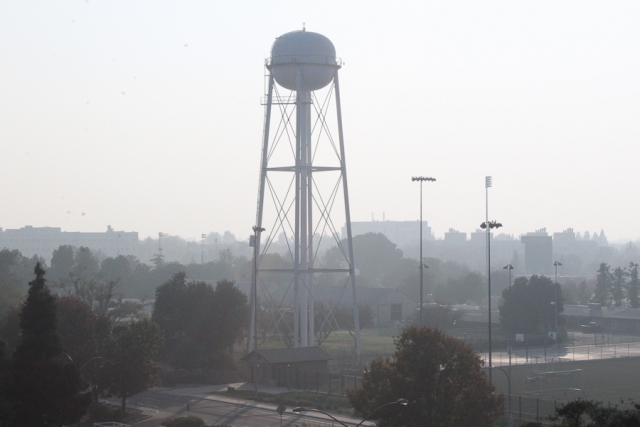
A cloud of haze hangs over Tercero’s Wall Hall after having snuck into the area’s dining commons a couple of nights before.
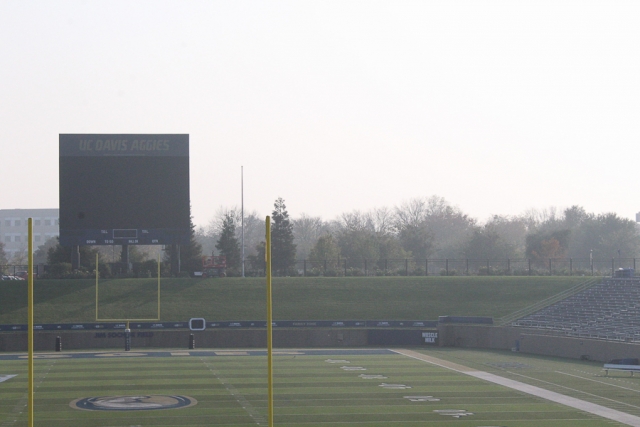
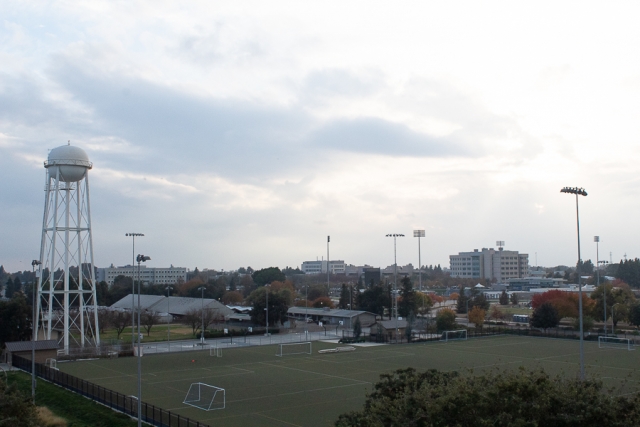
Smoke clouds Aggie Stadium, having forced the team to relocate their game against Sacramento State to Nevada.
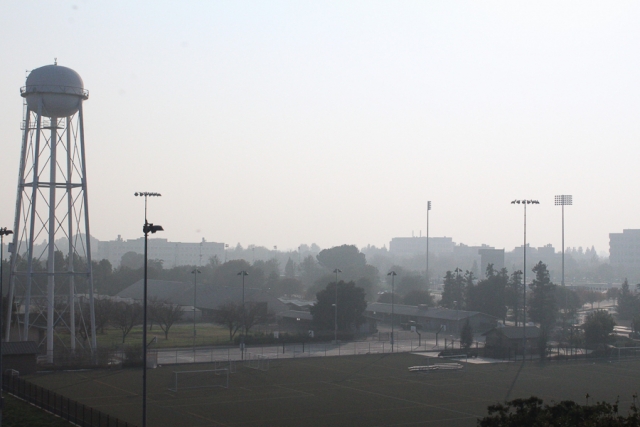
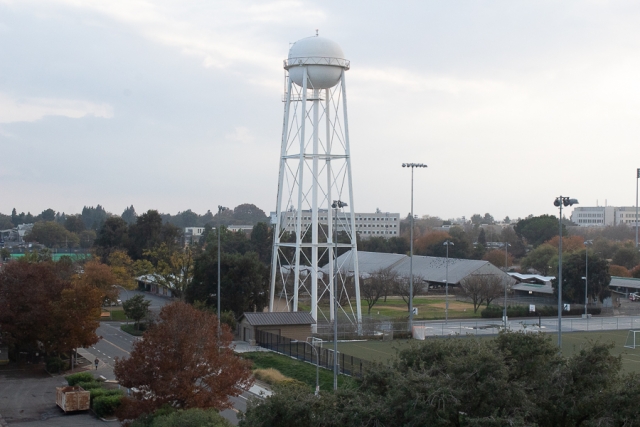
Unhealthy conditions on UC Davis roads such as California Ave prompted the university to cancel classes for seven days.
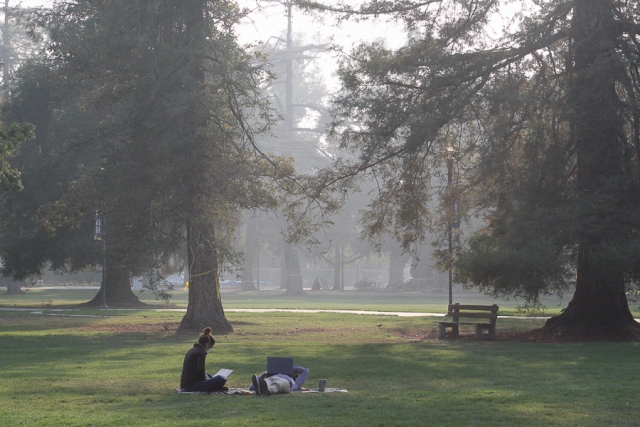
Students wearing smoke masks study on the hazy quad.

By: Quinn Spooner — photo@theaggie.org

Yolo County announces new text-to-911 service

0

9-1-1 emergency dispatchers in Davis, surrounding areas can now be contacted via text message

On Dec. 5 Police and Yolo County emergency dispatchers announced the launch of their text-to-911 service, which allows Yolo County residents to contact emergency services via text message. If circumstances make it difficult or impossible to speak on the phone, those in need of emergency assistance can now use their cell phone’s messaging service to reach nearby dispatch centers.

Winters city manager John W. Dovely mentioned the new county-wide service in a city council meeting on Dec. 4. He noted that the service was not meant to go live until January, but had been made available earlier than intended. Dovely joked that service was ideal for millenials who preferred texting to talking over the phone.

“You know, these millennials, they don’t even call anybody on the phone anymore,” Dovely said. “We now have to have text-to-911. So just to let you know, if anything ever goes down you can whip your smartphone and you can text a message to 9-1-1.”

Joking aside, the service isn’t intended for conversation-phobic millennials. Text-to-911 provides a useful option for people unable to speak over the phone due to disabilities, injury or dangerous circumstances. In a press release announcing the new service, The Yolo Office of the County Administrators detailed the specific situations where texting 9-1-1 may be the best option.

“Text-to-911 is intended primarily for use in specific emergency scenarios, such as; for individuals who are speech or hearing impaired; for those unable to call 911 due to a medical emergency that renders them unable to speak; in the event of a crime, such as a home invasion, where speaking might give away the location of a person hiding, or in an abduction situation; in domestic violence situations where it’s not safe to make a voice call,” the release read.

County officials laid out important rules of thumb when texting 9-1-1, reminding readers to include the location and the nature of the emergency in the initial text. They urged 9-1-1-texters to avoid using slang, emojis or abbreviations, and to not include pictures, videos or any other media besides text in their messages.

Dispatch administrators emphasized the importance of calling instead of texting whenever possible. Texts aren’t always delivered or received instantly, so calling is the best way to ensure a speedy response to the emergency. The dispatcher may also need additional information, which could require multiple texts back and forth before emergency services can be deployed.

To reach emergency dispatchers via text, simply enter 9-1-1 into the “To:” field of a text message, just as would be done for any other phone number. Include a brief description of your location and the nature of the emergency, then hit send. Texts to 9-1-1 will be routed to the closest available dispatch center after they are sent out.

Leah Goodwin, the operations manager at Yolo911 Emergency Dispatch, explained the how the text-to-911 service determines the closest dispatch center to contact.

“It uses cell phone routing, just like a 9-1-1 call that comes in a voice call on a cell phone,” Goodwin said. “It hits the closer cell phone tower, and then that tower routes to the closest dispatcher center. So for example, if you call 9-1-1 [via] voice call from in the City of Davis, it should go to Davis Police. If you are on campus, that call should go to UCD police. Same with text.”

Goodwin noted that it takes longer for dispatchers to locate the longitude and latitude coordinates of cellphone via text compared to a phone call — yet another reason it’s better to call if the situation permits.

“It’s not a precise technology, so it doesn’t get routed correctly every single time,” Goodwin said. “That’s why it’s very important for callers to understand where they are so they can tell the dispatcher so they can get them the correct help.”

She emphasized dispatchers’ preference for calls over text due to both the limitations of their location tracking technology and the difficulty of communicating quickly through texting.

“We always prefer for the caller to make a voice call if they can,” Goodwin said. “We don’t want text messages to replace making a voice call to 9-1-1 because the quality of location information we have is degraded, and the ability to communicate with someone quickly is degraded in text. So the slogan is ‘Call if you can, text if you can’t’.”

Don’t text and drive, and no texting emojis, memes or reaction gifs to emergency services. Just state your location, the nature of your emergency and hit send.

Written by: Tim Lalonde — city@theaggie.org

How California fails its inmate firefighters


Volunteer inmate firefighters are at the frontlines of California’s wildfires but are often left jobless upon release

Across the nation, Americans have been bombarded with harrowing images of the destructive wildfires that have devastated California this fall.

For those of us in Northern California, the effects of the so-called Camp Fire have been particularly apparent. For many, the major repercussion has been a week and a half of class canceled due to — at times — some of the worst air quality in the world, but for those further north the story is a much more somber tale.

Paradise, less than two hours north of Davis, was at the heart of the Camp Fire. It is there that nearly 18,000 structures have been destroyed, 85 people have been confirmed dead and hundreds more are still feared missing. Paradise, along with the nearby community of Concow, was virtually annihilated in the firestorm. The situation is so dire that people are now warning the community is on the verge of a “humanitarian crisis,” with federal officials telling Butte County that a full recovery will likely never be possible.

At the frontlines of the Camp Fire, as well as the Woosley Fire further south, have been roughly 9,400 firefighters. Among them were 1,418 incarcerated firefighters. These low-risk inmates are drawn from California’s prison system and paid $2 a day (plus an additional $1 an hour while fighting active fires) to assist in combating wildfires. The program saves the state an estimated $90 to 100 million a year.
Yet despite extensive training and experience fighting wildfires, these inmates are almost entirely prohibited from pursuing careers in firefighting upon release. The state of California requires potential firefighters to be licensed as emergency medical technicians. Not only are inmate firefighters denied EMT licensing or an equivalent upon completing their training, but they are also oftentimes rejected the opportunity of acquiring this qualification outside of prison. Currently, state licensing boards are provided with applicants’ criminal histories and are allowed to block potential candidates based upon this.

As insane as it may seem, a state that is annually fighting devastating wildfires is also blocking thousands of qualified applicants from potentially putting their skills and experience to work. Given that a history of non-violence is required for enrollment in prison firefighting programs, many of these low-risk, former inmates are incorrectly lumped in with high-risk violators. Rejecting these individuals’ right to put their skills to use creates yet another barrier to their reintegration into society.

If the state is worried about high-risk criminals infiltrating public services, they should create a distinct regulatory system that bars these individuals from the application process. Otherwise, they continue to run the risk of ousting thousands of qualified applicants from re-entering the labor force, potentially forcing these individuals back into a life of crime as a means of subsistence.

At the very least, the state should issue some form of EMT qualifications to inmates upon completion of their prison firefighting training. Alternatively, if the state is that concerned about inmates integrating into fire crews upon release, they could follow what the state of Arizona has done and establish professional firefighting programs consisting entirely of ex-convicts. Ideally, both of these options would be pursued in addition to removing some of the institutional constraints that currently block former inmates from re-entering the labor force upon release.

In the last few years alone, California has lost hundreds of lives and billions of dollars in destructive wildfires. It is absolutely absurd that state agencies would institute restrictions that block thousands of experienced firefighters from helping combat these fires. Addressing the barriers that prevent ex-inmate firefighters from utilizing their skills outside of the prison system would assist the state not only in fighting deadly disasters, but also in reintegrating such individuals into society.


Written by: Brandon Jetter — brjetter@ucdavis.edu

Disclaimer: The views and opinions expressed by individual columnists belong to the columnists alone and do not necessarily indicate the views and opinions held by The California Aggie.

Chancellor, Vice Chancellor address most pressing campus concerns of Fall Quarter

Discussion over campus closure, anti-Semitic fliers, AFSCME strike, other student, faculty concerns


After a busy Fall Quarter characterized most distinctly by UC Davis’ first campus-wide closure in over 30 years, The California Aggie sat down with Chancellor Gary May and Vice Chancellor of Student Affairs Emily Galindo to discuss the most pressing campus issues.

May and Galindo responded to concerns about anti-Semitic fliers on campus, the lack of student input in the appointment of a new director for the AB540 and Undocumented Student Center, the AFSCME 3299 strike and lawsuit and a number of other topics at the forefront of campus-wide affairs.

Air Quality/Campus Closure

The discussion began with California’s recent devastating wildfires. May noted the varied volunteer efforts by the UC Davis community, including the treatment of both human and animal victims, and said he was proud of the way the university responded.

The Camp Fire in Butte County affected air quality in Sacramento and Yolo Counties to such an extent that both UC Davis and Sac State cancelled seven days of instruction. When asked what the decision making process looked like on a day-to-day basis, May said it was only after he saw Sac State’s announcement it was closing its campus that he first considered doing so.

After classes were cancelled at both universities on Tuesday, Nov. 13, UC Davis announced classes would resume the following day. Following this announcement, there was an enormous and overwhelmingly negative response and backlash — including an online petition which gained over 17,000 signatures in less than a day. May said he had never received a response of that caliber to any decision he had made previously in his career.

“I appreciate the emotion behind the response and the concern students expressed,” he said. “There’s two things I kind of wish would have been different. Right now, there’s sort of a reflexive action to do petitions or resolutions, and I sort of wish student leaders would just contact me directly and talk about it. The second thing is I thought it was a little ironic that after people were so concerned about the air quality, 17,000 of them, the next day 3,000 of them are throwing rocks at the air.”

Taking student concerns into consideration, university leadership did decide to close the campus the next day, Nov. 14. Day-by-day decisions were made as to whether school would take place for the rest of that week. Ultimately, the campus was closed from Nov. 13 throughout Thanksgiving break. It reopened Nov. 26.

May emphasized the complexities involved with shutting down “a 60,000 person operation.”

“UC Davis had never been closed before, or maybe not in 30 or 40 years,” he said. “It was not as simple as flipping a switch and closing. We have two hospitals, the veterinary hospital and the human hospital, we’ve got thousands of animals on campus, we’ve got students who are on campus in the dorms that have to be fed and taken care of regardless of whether classes are happening or not, we’ve got a nuclear reactor — we’ve got all these things that people don’t consider.”

May said he and other university administrators were tasked with deciding which employees were essential and nonessential, “because some things have to happen regardless of whether the classes was operating or not.”

In the aftermath of the campus closure, the university has decided to create more clear guidelines in the case of a future closure — “so the next time this happens, because it will happen again, we’ll have a little bit better response,” May said. And the UC system is also working on its own uniform guidelines for air quality-related closures.

Asked to what extent he takes responsibility for the distress caused to students left in a state of limbo while the decision-making process was happening each day, May said it is typical, in other parts of the country, for decisions to be made that way.

It’s difficult to predict the air quality for the rest of the day, let alone the rest of the week, May said, and since the campus community is not used to that kind of decision-making, that contributed to the stress.

“My daughter goes to school in Florida where they have hurricanes and they have a similar system — they wait and see day-by-day,” he said. “As a parent, if I’m not satisfied with that, I just tell her to go home. And our parents have that same opportunity if they chose. So I don’t necessarily feel like all the responsibility is here, in Mrak Hall. I think people have to make decisions themselves for what’s best for themselves.”

Campus Security

Following a string of burglaries and a number of anti-Semitic incidents which occurred both on and off campus, the Chancellor addressed the measures being taken by campus police to ensure the safety of students and the commitments made by university leaders to address the campus climate.

In early October, anti-Semitic fliers were posted throughout campus. Following the incident, The California Aggie criticized the university’s response to the fliers, including issuing criticism in a editorial over the lack of a campus-wide email sent out by the Chancellor’s office.

Addressing this criticism, May said he believes he has been clear about his campus-wide email policy — such an email is only warranted if there’s an emergency or an immediate threat.

“I think our response was actually quite good, we got lots of positive responses from the external community — Jewish and otherwise — about how fast it was and how definitive it was,” he said. “I was a little disappointed one, that The Aggie wrote that article and two, that some of the students were expressing some negative thoughts about it because I thought we acted quickly and decisively. And I think if I hadn’t, I would’ve gotten criticism for not reacting swiftly enough. You can’t win sometimes.”

Following a meeting with Jewish student leaders, the university pledged its commitment to both short-term and long-term efforts to address anti-Semitism on campus, including holding a town hall and a series of trainings for students and staff led by the Anti-Defamation League. The first of the ADL’s workshops occured on Nov. 29.

Vice Chancellor Galindo was asked, from the student affairs perspective, whether any administrative officials organized events or healing or safe spaces for Jewish students immediately following the posting of the fliers.

“We provide, just through our regular community centers — we’re very connected with Hillel — opportunities for students to get together and talk through the impacts and talk through what they think would be helpful for them to feel safer,” she said.

In response to general campus safety concerns, May said Police Chief Joe Farrow secured a $1 million grant which will be used to install additional blue lights with better cameras as well as generally improve campus lighting over the course of a year.

Once complete, the goal is for individuals to be able to spot one blue box from anywhere they are standing on campus.

UC Davis Campus Police have not changed its enforcement policies. The Chancellor said he offered the police chief additional resources, but the department has instead increased its awareness and focus on ensuring students are protected and safe, especially early in the morning and late at night.

One of the crimes which occured on campus was an armed burglary which took place in late September. Victims of the incident, one of whom was punched in the face several times, met with the Chancellor and Vice Chancellor Galindo following the event.

“We tried to express our concern for them and our sorrow that this had happened to them and tell them what measures we were taking to one, find the perpetrator and two, make sure that didn’t happen again at UC Davis,” May said. “We were really sorry that happened, especially to freshmen students [having] their first experience here.”

Student Affairs

Addressing a number of student concerns from the 2017-18 school year, the chancellor convened three task forces on mental health care, housing and food security in March of 2018. Official recommendations were submitted by each of the task forces to the Chancellor’s office. In response, the Chancellor said all of the recommendations have been accepted.

Vocal student concerns and protests at the Mental Health Town Hall last school year over the university’s failure to hire additional mental health counselors following a four-part Aggie investigation was one of the catalysts for the creation of the mental health care task force.

Under a four-year initiative by the UC Office of the President begun in 2016 and ending in 2020, student fees from UC Davis, specifically, allowed the university to hire 12 additional counselors. As of last year, there was a net gain of only a half of a full-time equivalent employee.

Asked whether there was now a timeline in place for when those counselors will actually be hired with the funds earmarked for that specific purpose, Galindo said, “it depends on who you ask in regards to what the exact number is supposed to be” and May said “there was some discrepancy as to the difference between FTE’s and headcount on those numbers.”

“We’ve already hired two and we have plans to hire an additional one each year for the next two years,” Galindo said.

Elsewhere on campus, a number of concerns from students and staff have been raised regarding resources for Latinx students.

UC Davis is on track to become a Hispanic Serving Institute in the Spring, but some faculty members from the Chicanx Studies Department have raised concerns — saying the existing Latinx student population is not being properly served. Asked how these concerns were being taken into consideration, May said the university formed the HSI task force, which both faculty from the Chicanx program and students sit on.

“We’ve got AB540, we’ve got El Centro, we’ve got myriad different enrichment and intervention activities for that student population and I’m not sure what they’re referring to when they’re saying those students aren’t being served well,” he said. “I wish people would express those concerns directly to us rather than just express them to a reporter.”

Galindo added since May 1, staff has been added at both the AB540 and Undocumented Student Center and El Centro.

One of the new staffing changes made at the AB540 and Undocumented Student Center was the appointment of a new permanent director.

Before the appointment, an open letter sent to May, signed by 11 faculty members in the Chicanx Studies Department, demanded the university hire a full-time director. Additionally, an ASUCD Senate Resolution demanded the position be filled and asked that the hiring process be more transparent and student input be taken into consideration.

On Oct. 29, students packed Galindo’s office and criticized her for failing to consider student input in the decision-making process.

“I did meet with a number of students after the fact, I shared with them that ideally, absolutely we would have brought students in as a part of the recruitment process for these positions,” Galindo said. “We do plan to do that — we’re in a process right now of identifying an assistant director and we’re recruiting students to help with that.”

Additionally, Galindo said the article published by The Aggie made it appear as if the appointment of a new, permanent director was based on “faculty input and pressure,” when Student Affairs was actually “undergoing restructuring.”

“As a result of that, in order to address the budget deficit, we did move some staff into leadership roles,” Galindo said. “That’s something you typically try to do so you can avoid lay-offs at any cost.”

Additionally, this quarter also saw the opening of the nation’s first Filipino-American research space.

“We always like to be in leadership in any area of scholarship or research, so it’s exciting for us to have yet another area of exploration and discovery into this population,” May said. “I think Filipino students and faculty and staff have unique experiences that are worth studying and celebrating.

Labor

Lengthening impasses and unsettled contracts are still pending with the UC and the American Federation of State, County and Municipal Employees 3299 and University Professional and Technical Employees CWA 9119.

AFSCME 3299 held its second three-day, systemwide strike in October with UPTE CWA 9119 members striking in solidarity.

Asked to what degree he agrees or disagrees with the UC’s handling of worker demands, May said he is a “supporter of collective bargaining,” but since the UC’s best-and-final offer was rejected, he said it seems AFSCME 3299 has not issued a response other than engaging in “PR-oriented tactics” rather than “negotiations in good faith.”

“I wish that this particular labor situation would reach a resolution more quickly,” he said. “I understand there’s some real thorny issues that have to be worked out. My understanding is — and I’m sure people on the other side will dispute this — we in the UC are waiting for AFSCME to come back to the table. I care very much for all of our staff and workers at UC Davis and would like to see them treated fairly and be part of the family here. Sometimes I wonder if there’s a good communication between the leadership and the rank-and-file, but I don’t know the details.”

One of AFSCME 3299’s primary concerns is the outsourcing of jobs. During the three-day October strike, a number of AFSCME 3299 and UPTE CWA 9119 workers voiced these concerns to an Aggie reporter following the announcement of a partnership between UC Davis Health and Kindred Healthcare, which will construct and operate a new rehabilitation hospital.

“No UC employees will be displaced by the Kindred partnership,” May said. “We’ve made this very clear. In fact, we will create 200 new jobs and some of those jobs may be potentially filled by our UC workers.”

In addition to outsourcing concerns, the general labor practices of the university and of the UC itself have come under fire recently.

Within the past two months, the Public Employment Relations Board, a neutral state agency which enforces the state’s labor relations statutes, filed a number of complaints with the UC alleging officials engaged in union-busting activity. And just recently, this same agency filed complaints alleging UC Davis violated labor law in its termination of contracted counselors in the summer of 2017 while accretion negotiations were occuring.

Although he did not officially begin his position as Chancellor until Fall of 2017, May said he does not believe “the university has violated any labor laws or policies.” And in regards to the complaints lodged against the UC Office of the President, May said the university is “sort of at the mercy” of whatever occurs between UCOP and union leadership in negotiations.

May said it is hard to say how these allegations, in addition to the lengthening impasses with AFSCME 3299 and UPTE CWA 9119, might impact the image that the UC has with regard to its labor practices.

“You certainly hear things and read things in the media that sound pretty harsh,” he said. “But at the same time, when I walk around campus and talk to the folks in those unions, it’s very cordial. I ask folks how they’re doing and they tell me ‘hello.’ It feels like those folks are anxious to get this out of the way and move on and are generally happy with being employed at UC Davis.”

Housing/Campus Projects

With newly-announced plans to break ground on the West Village expansion project before the winter holiday and construction continuing in the Cuarto residence halls, the university is moving forward with its goals to expand affordable housing options.

Earlier this quarter, however, AFSCME 3299 announced it was filing a lawsuit against the university, which could potentially stall the construction of student housing.

“We’ve had at least one interaction with our leadership and AFSCME leadership to see if we can get that resolved, but they’re not willing to budge,” May said. “The concern I have is that that’s a lawsuit against our environmental impact report. Even if that lawsuit wins, which I don’t think it has a very good chance to, the only impact is that we have to rewrite the report. I’m disappointed that they would choose to use that attack, because the only people that get hurt are students — it delays the project and increases costs.”

The university came out in strong opposition of the lawsuit, even paying to take out a full-page advertisement condemning the suit in an issue of The California Aggie.

“We wanted the students to understand, we wanted the community to understand, we are trying to fulfill our obligations that we talked about in our housing initiative and do it quickly and efficiently and affordably,” May said in regards to why the university paid for an ad in the newspaper. “And this was a hindrance to that. We don’t want anyone to be confused about that fact.”

In addition to housing projects, there have been developments with both the To Boldly Go campaign, a campus-wide strategic plan which is now in its final draft, and the Aggie Square project, which secured state funds and looks to develop UC Davis’ partnership and presence with and in the City of Sacramento.

May said the university plans to establish an oversight steering committee for the To Boldly Go plan.

“We counted 178 promises that we made in the document,” he said. “We want to make sure we’re following on those promises, so we think we need a group to oversee that.”

The plan aims to support diverse research and provide students with a multi-dimensional, comprehensive educational experience. Asked how the plan expects to support these feats in both the STEM fields and the humanities, May said the plan accounts for “growth in research enterprises on all parts of the spectrum, from the STEM fields to the arts and humanities.”

Additionally, two oversight committees have been established for Aggie Square. One is comprised of neighborhood leaders and faculty members “doing research in the community,” May said. And the other is comprised of elected officials, council members and individuals in the mayor’s office.

The first project will be UC Davis Health’s rehabilitation hospital, which is expected to break ground in early 2019. Other projects include a parking structure, housing, a classroom/office building and a laboratory/research building.

“We have two major industrial partners who’ve already agreed to collaborate with us and we’ll announce those as soon as the agreements are signed,” May said. “12 electric buses are under construction right now and we hope to have those mid-2019 [with] a frequency of every 30 minutes.”

Written by: Hannah Holzer — campus@theaggie.org