55.9 F
Davis

Davis, California

Tuesday, December 23, 2025
Home Blog Page 505

Waterway Steward interns’ latest creation

JORDAN KNOWLES / AGGIE

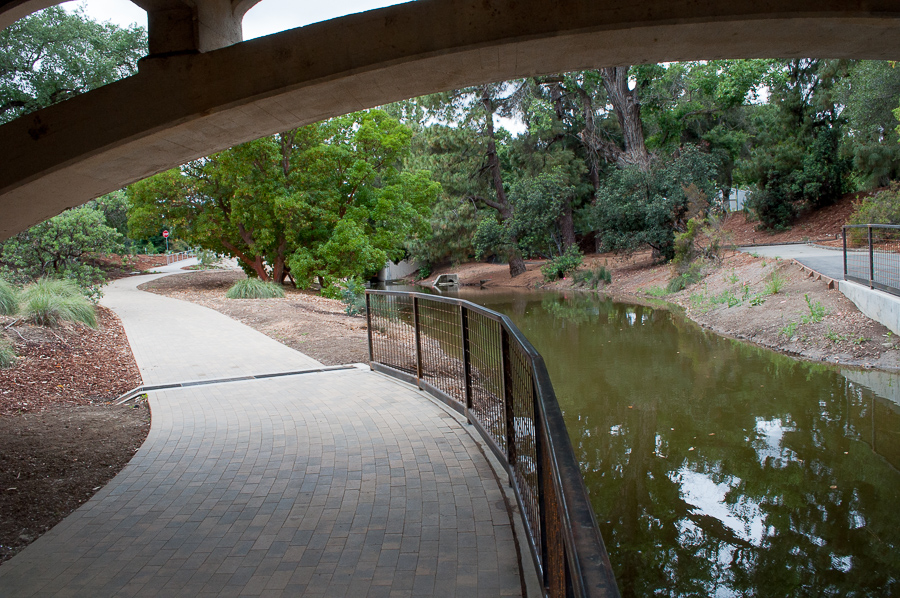
Floating island added to Davis arboretum by interns to act as small wetland, promote better water quality

Internships are a major part of many college students’ lives. At UC Davis, interns are fortunate enough to help improve their very own campus through the Learning by Leading Program at the Arboretum and Public Garden. These Waterway Steward interns tackled a project to better the Arboretum ecosystem by providing a site that stops the growth of excess algae and a place for the California freshwater turtle while cleaning the water for fish residing there. Every part of this creation is native to California, further adding to the benefits of implementing this island.

“The Waterway Stewardship interns and I applied for a $2,000 The Green Initiative Fund grant in November of 2017,” said Nina Suzuki, the leader of Waterway Steward. “We were awarded the grant in December and started designing the project in January. Students did research on other floating islands and floating treatment wetlands, created their own designs, collaborated with each other to refine their designs, presented their ideas to Arboretum staff and incorporated feedback and ultimately created their final design to meet their goals and the project budget. We ordered materials and assembled the island during Spring Quarter. The island was installed on April 11.”

This small representation of a wetland has been worked on by these students for over a year now, and the current state exhibits promising results for the future of the Arboretum. Not only did this island complete the first phase (of four) of the Arboretum Maintenance and Enhancement Project, it was also a learning experience for everyone who took part in it. And as with any learning process, difficulties were encountered along the way (although the team encountered few problems overall).

“While building the island was successful, the project was not without a few obstacles,” said Kendal Hicks, the Waterway co-coordinator. “One problem that we ran into was assessing how to clearly show where each plant goes on the island. We managed to use chalk to mark areas for the plants without creating permanent lines on the mat. This allowed everyone to understand the overall design of the island. Even now, we are currently figuring out how to keep the ducks from eating our plants as they begin to grow. Once the plants are more developed, the ducks will not be as much of an issue.”

Perseverance was a key component to get the results they wanted, and all those involved were content with the finished waterway. The team had many options when it came to what to focus on but they were all united in wanting to bring about positive change for the arboretum.

“Since our internship revolves around the Arboretum waterway, we wanted to focus on

something that would directly involve the water,” Hicks said. “We have all had heard about floating wetlands, and decided this would be an interesting and valuable learning experience for the internship. I am so happy that we accomplished this project, and I am excited to see future changes for the waterway.”

The interns will not stop here though — there is a bright future for the arboretum, thanks to the students and their passion for promoting sustainability. The interns hope to bring awareness to water quality as they continue to offer more projects for the lowest spot (in terms of elevation) on campus since this is where rain run-off and recycled water first hit. The students involved are heavily tied to this area and want everyone who enjoys this beautiful spot to feel the same about the significance of keeping it clean and preventing algae bloom.

“The floating island was great student project opportunity that Kendal and I were extremely interested in undertaking,” said Tiffani To, a third-year environmental science and management major. “Being interns for the waterway, the floating island has the potential to improve water quality and absorb excess nutrients in the water to prevent algae growth. The project was also a great way to get the public more aware about the changes happening with the waterway and the importance of water quality.”


Written by: Lauren Tropio — city@theaggie.org
 

Incoming Aggie impresses U.S. Women’s Soccer National Team

MARGOT RIDGEWAY / COURTESY

Ridgeway earns invitation to training camp

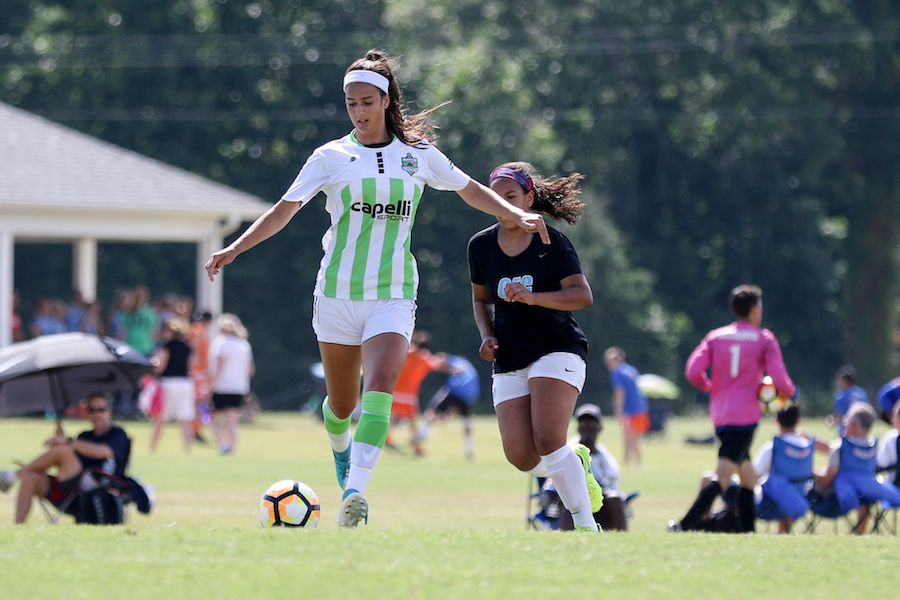
UC Davis women’s soccer received a national letter of intent from New Jersey native Margot Ridgeway in February, who just completed her senior year in at Rumson Fair Haven High School and also just completed a week of training with the Under 18 and Under 19 U.S. National Women’s Soccer Team, making this her fourth training camp with the USWNT.

The U-18 training camp invited 24 athletes, including eight defenders, to train at the Elite Athlete Training Center in Chula Vista, Calif. from May 5-12. Ridgeway is one of those defenders, usually playing center back.  

Being one of the select few to receive the invitation from the U-18 USWNT head coach Jaime Frias, Ridgeway reflected on her experience with the other athletes in Chula Vista.

“It’s an amazing opportunity because [defenders] were all paired together in one dorm,” Ridgeway said.

This gave Ridgeway the opportunity to learn from other defenders and improve her game from other players.

“A few of them have more experience at national team camps, we got to learn from each other and give each other advice at practices and games,” Ridgeway said.

Because it was a concurrent training camp, Ridgeway and the U-18 team trained and  scrimmaged with the U-19 team. Ridgeway enjoyed the challenge of playing with older and more experienced athletes.

“It was a good opportunity because we were with the [Under 19] camp, too, and we got to play them twice in scrimmages and games,” Ridgeway said. “It was really exciting.”

The USWNT currently holds the top spot in FIFA World rankings and has largely been that way since 2003 — momentarily falling to No. 2 to England in 2014, then bouncing back to the top with a third World Cup victory in 2015.

The World Cup is among the most popular sporting events worldwide; it would no doubt be any serious soccer player’s dream to snag a spot on the team. One of Ridgeway’s soccer goals is to compete in the U-20 Women’s World Cup when the opportunity arises.

And while training in Chula Vista, she moved one step closer to this goal — mixing and mingling with the U-20 team. This is the team that will compete in the U-20 Women’s World Cup in August in France.

“We ended up on the last day driving up to the StubHub center and doing an 8v8 tournament with the U-20 team,” Ridgeway said.

This reminded Ridgeway that playing soccer at this level takes unwavering commitment.

“I’ve heard about those players before, I’ve seen all the hard work and dedication they have put in, and for them it’s finally paying off,” Ridgeway said. “It’s not just this year that they’ve been preparing for it, but for a while now.”

Despite more World Cup victories and performing better on the international stage, professional opportunity for women lags behind men’s soccer in the U.S. With the men’s soccer team failing to secure a spot in the 2018 World Cup this summer, the women will be U.S. soccer fans’ main hope in 2019. Although not a guarantee, these training camps can serve as a stepping stone for women who want a spot on the WNT. Some girls from this year’s U-18 and U-19 camps will be invited to play for the 2018 U.S. U-20 Women’s World Cup team.

UC Davis isn’t a typical destination for soccer players from the East Coast, but Ridgeway is the second from New Jersey on the roster for the 2018-19 season — redshirt freshman forward Casey Palmer, from Brick, N.J., joined last year.

“A lot of people in my area stay on the East Coast, or go to the south,” Ridgeway said.

Women’s soccer head coach Twila Kaufman first discovered Ridgeway at a tournament near Oceanside, where Ridgeway competed almost every year. Ridgeway was eventually put in contact with Kaufman. When Ridgeway attended an overnight UC Davis camp, she was convinced it was the place for her.

“Being on the West Coast, even though it’s so far, is a good opportunity to challenge myself and meet a lot new people and get out of my comfort zone,” Ridgeway said.

After starting soccer at the age of 5, Ridgeway has remained dedicated to the sport, playing in middle and high school, club soccer and tournament across the nation and most recently in the inaugural girls U.S. Soccer Development Academy.

“On my high school and club soccer teams, I’ve tried to be a leader,” Ridgeway said.

Ridgeway has an impressive amount of experience, but the move to Division I soccer has been a humbling experience for her.

“Coming in as a freshman for [Division I] soccer is a bit of a challenge, but I’m hoping to lend all my experiences from high school, club and the national team as best as I can and have a really good season,” Ridgeway said. “My goal is to be better at ball-winning and distribution and really using my height and size to my advantage, controlling the backline and using my voice to communicate.”

Given her experience, Ridgeway already stands out as a potential asset as a center back for the women’s soccer program for the next four to five years.


Written by: Bobby John — sports@theaggie.org

Defining a generation

JULI PEREZ / AGGIE

First-generation college students share insights on collegiate journeys

Navigating one’s way through college may be difficult as is, but having to do so as a first-generation college student can be exponentially more challenging. This is understood by many UC Davis students and faculty members. In fact, over 45 percent of UC Davis undergraduate students are first-generation college students.

Being the first in your family to attend college is no easy endeavor. To some, it means having to invest extra time and effort into school. To others, it means constantly having to step out of their comfort zones and onto foreign frontiers. To Cirilo Cortez, director of the Center for Chicanx and Latinx Academic Student Success, being a first-generation college student meant having to fight through language barriers.

“Being first-generation [college student] brings different challenges, but one that I remember growing up was learning a second language,” Cortez said. “I was born in Mexico and I migrated to California when I was four years old. I remember being frustrated not being able to speak English.”

Because Cortez was the first one in his family to attend a four-year university, he was not able to look to his family members for guidance throughout his collegiate journey. Cortez says the most difficult part of college was having to learn the ins and the outs of the higher education system on his own.

“You can’t call your parents [for help] necessarily; that was a challenge for me,” Cortez said. “Not being able to have many mentors or role models in the family that have gone to college, having to seek [help] outside your immediate family. You learn as you go once you become a university student. You’re doing a lot of the work yourself, learning and adjusting to the new culture. Going into the university system, I had a difficult time adjusting to the new environment. And this is a common experience with many first-gen students — the adjustment, the sense of belonging that you need to go through, the homesickness.”

Taylor Lam, a fourth-year economics major, says that he too, felt a disconnect with his family members due to the lack of shared experiences in the realm of  education.

“As a first-generation [student], your parents didn’t go to college, so they have no understanding about what you’re doing,” Lam said. “They don’t really fully understand […] the struggles you have to deal with because it’s entirely different from what they had to struggle with.”

For Lam, attending college was especially hard because the burdening weight of familial expectations rested on his shoulders, making it difficult for him to establish his own identity in college.

“It’s basically the reason why my parents left Vietnam to come to America,” Lam said. “The whole reason my family left is because they wanted a better life for their children and their grandchildren. For my grandparents, it’s basically a fulfillment of their dreams. My family really wanted me to [be] pre-med, just because they know it’s stable. But you really can’t follow that [path] if your heart isn’t in it.”

Aisha Jimenez, second-year biological sciences major, knew that her lack of familiarity with the inner workings of a four-year college institution meant that she would have to seek out resources on her own. Jimenez feels fortunate enough to have received guidance from the Special Transitional Enrichment Program (STEP) offered on campus, a program designed to aid first-generation and low-income students in getting acclimated to the higher education system.

“I was in the STEP program, so with that I came to Davis in the summer for three weeks of workshops and presentations on [things like] how to take notes and what are the best study strategies,” Jimenez said. “That helped me a lot.”

Though Jimenez initially struggled to find her place in college, she continues to persevere because she wants to set a precedent for her family. Jimenez wants her hard work and dedication to act as a beacon of hope for her younger siblings — she strives to encourage her younger siblings to see the value in pursuing higher education.

“Being the first in my household family to go to college [means] setting the bar for my younger siblings,” Jimenez said. “Even though we come from a low-income family and our parents never went to college, this shows them that we can do it. It’s important to inspire my younger siblings to maybe continue the same.”

First-generation students undoubtedly have to face hurdles along their collegiate journeys, but many students have proved that these hurdles are not impossible to overcome. Through Cortez’s own experiences in college, he believes that in order for first-generation students to truly excel, they must fight through the various stigmas against them and be confident and wholehearted in pursuit of their passions. Only then can they truly claim their identities.

“You need to believe in yourself,” Cortez said. “Things can get hard. You might feel alone, you might feel like this space is not for you. But it is. You were accepted, you’re at a top university and there’s a reason behind it. It’s just embracing the first-generation identity and using that to empower you instead of [letting it] oppress you. By doing that, you reflect on the sacrifices that your parents made to [give] you this opportunity. Always believe in yourself, because the moment that you don’t believe in yourself is the moment that others don’t believe in you. You just have to never lose faith.”


Written by: Emily Nguyen — features@theaggie.org

UC Davis Athletics: Year in Review

DIANA LI / AGGIE

Aggie Sports sits down with athletics director Kevin Blue, discusses state of the program

As UC Davis wraps up its 2017-2018 academic year, the UC Davis athletics department likewise finds its season winding down. With 23 distinct NCAA programs competing over the course of the past 10 months, there are an abundance of performances, accomplishments and storylines to examine before the curtain officially closes on another year in Aggie sports.

For UC Davis director of athletics Kevin Blue, his second year as the head of the program was one of progress. A number of teams and individual student-athletes competed at very high levels this season, making their mark both in conference and at the national level. Even for the teams that did not win titles or get showered with accolades, Blue felt that several of these programs took an important step in the right direction.

UC Davis football exemplifies a program on the rise. Following a 2016 season that resulted in just three wins, the football program entered the 2017 campaign with a new head coach, Dan Hawkins, and a fresh playing style. Though the team still finished below .500 and missed postseason play, the Aggies managed to improve to a 5-6 record in large part behind a prolific aerial attack led by sophomore quarterback Jake Maier and junior wideout Keelan Doss.

“I think everybody is excited about the continued progress that the football team is making,” Blue said in a recent interview with the Aggie. With a sizeable recruiting class and foundational pieces like Maier and Doss set to return next fall, there is a fair amount of upside surrounding this new era of Aggie football. Blue added that he is confident in the leadership and direction Hawkins brings to the program while also acknowledging that no one can rush winning.

The Aggies will be tested early next season with a couple of premier non-conference matchups. UC Davis opens the 2018-2019 season with a game at San Jose State of the Mountain West Conference on Aug. 30. Two weeks later, the Aggies are scheduled to return to the Bay Area to take on Blue’s alma mater and Pac-12 power Stanford on Sept. 15.  

“I think it’s a really good opportunity for the student-athletes to see where we measure up,” Blue said. “I expect that we’re going to compete with a lot of passion and a lot of enthusiasm, a lot of positivity. That’s certainly a game that everybody is looking forward to.”

Another UC Davis athletics program that has bounced back over the course of this past year is lacrosse. In her first year as head coach, Suzanne Isidor led the women’s lacrosse team to an 8-6 record and an appearance in the conference title game, where the Aggies suffered a one goal overtime loss to San Diego State. Despite falling short of winning the title, the Aggies’ accomplishments this season were enough to award Isidor with MPSF coach of the year honors. Junior midfielder Taylor Cuenin, who netted 37 goals and finished with a league-leading 2.85 points per game, was also praised for her performance this year by being awarded MPSF player of the year. In Blue’s eyes, Isidor’s ability to bring almost immediate success to the team and to get the most out of standouts like Cuenin this season has “really transformed” the program.

Progress was made on the pitch too. Building upon a promising 2016-2017 season that ended abruptly in the first round of the Big West conference tournament, UC Davis men’s soccer finished this year’s regular season at the top of the table. After racking up 22 points in conference, the Aggies battled their way to the Big West title game this past November, where they ultimately lost in penalty kicks to Cal State Fullerton. For its efforts this season, UC Davis’ coaching staff was recognized by United Soccer Coaches as the coaching staff of year in the far west region, and was one of eight finalists for national coaching staff of the year.

UC Davis also found tremendous success in the water this season. The women’s water polo team had a productive regular season, finishing second in conference and ranking as high as No. 8 nationally. Star seniors Paige Virgil and Greta Kohlmoos each earned all-Big West first team honors in their final season as Aggies.

The men’s water polo team was also ranked as high as No. 8 in a wildly impressive season of its own. The Aggies repeated as Western Water Polo Association champions and earned a second consecutive NCAA national tournament berth after defeating UC San Diego in the WWPA title game on Nov. 19. Senior utility Cory Laidig was awarded WWPA player of the year and his junior utility teammate, Ido Goldschmidt, was given all-America third team honors.

Additionally, UC Davis’ Child & Meisel Families Director of Men’s Water Polo, Daniel Leyson, was awarded WWPA coach of the year for the second year in a row.

“I think that one of the things that stands out about that team is that they compete and are coached in a way that they know who they are,” Blue said. “They work hard and they don’t cut corners and the work that they’ve put in, and the work that coach Leyson has put in, over the last few years is showing up in the results and we’re really excited about that continuing.”

The UC Davis sport that exhibited perhaps the most overt level of success this season was basketball. Returning from deep title runs in 2017, both the women’s and men’s basketball teams entered the new season with heightened ambitions that, at least for the most part, were realized.

For the men, the year was marked with early adversity. Senior forward Chima Moneke was suspended indefinitely from the program following a mysterious incident that occurred in southern California in February. The uncertainty surrounding Moneke’s availability down the final stretch of the regular season caused observers to question whether or not the Aggies had a legitimate chance at competing for a conference title.

Moneke never played in another game. In spite of his absence, however, the Aggies won six of their next eight games, including five straight victories to round out the regular season. A thrilling double-overtime win over UC Irvine on March 3 allowed the Aggies to clinch the Big West regular season title and guarantee the team a berth in the men’s National Invitation Tournament.

The Aggies won the conference in the regular season, but were ultimately unable to defend the Big West tournament title, falling to Cal State Fullerton in the conference semifinal game. Although the disappointing end put somewhat of a damper on an otherwise impressive season, UC Davis walked away from the 2018 campaign with a regular season title, a Big West coach of the year in head coach Jim Les and a Big West player of the year in junior guard TJ Shorts II.

“[Men’s basketball] did an extraordinary job,” Blue said. “I felt like they exhibited the type of competitive spirit and team first attitude that is necessary to be at your best, and there’s a lot of credit that is due there to the student-athletes and the coaching staff for achieving highly in less-than ideal circumstances.”

Not to be outdone, the women’s basketball program experienced an enormous amount of success of its own. The Aggies practically flew through the regular season, rattling off eight straight conference victories to begin the year. Finishing with a 14-2 record in Big West play, UC Davis secured the regular season title and cruised into the conference tournament as the Big West’s top seed.

Like the men, the women’s hopes of winning the conference tournament and securing a spot in the NCAA tournament were dashed. The Aggies were defeated by Cal State Northridge in the conference final, but because of their successful regular season, the Aggies were still invited to compete in the women’s NIT.

On the national stage, UC Davis shone. The Aggies won each of their first three NIT games, beating the likes of Idaho of the Big Sky conference, Wyoming of the Mountain West and finally Kansas State of the Big 12 conference (which is widely regarded as one of the nation’s “power five” conferences). The UC Davis run finally ended with a loss at Indiana in the WNIT quarterfinals.

The women’s basketball team turned finals heartbreak into the one of the program’s deepest national tournament runs –– one Blue believes has served as an important learning experience that will continue to strengthen the program going forward.

“I think that whenever you can have a win like beating a Big 12 team like Kansas State on the road in a postseason environment, it shows the quality of what we are doing here,” Blue said. “And that’s something that everybody associated with the program I think is very proud of, and they should be. I think that the NIT result was an indication of the quality that characterizes that program.”

UC Davis student-athletes, in a wide range of other sports, have accomplished some terrific individual feats as well. Aggie baseball’s Ryan Anderson, a redshirt junior outfielder from Pleasanton, Calif., received his first all-conference honor by being named to the Big West first team. Starting in all 53 games this season, Anderson led the team in batting average (.345), at bats (220), hits (76), runs scored (36) and tied for the team lead in RBI (36).

Softball’s Brooke Yanez, a freshman left-hander from Ventura, Calif., was recognized as the Big West’s freshman pitcher of the year, and simultaneously received a spot on the all-Big West first team. In her 26 starts this season, Yanez collected 15 wins and sported an ERA of 1.75.

In track and field, Aggie junior Kyle Clancy stole the show. Clancy finished first in the Big West in the decathlon with a score of 7,181 points –– the third-highest all-time in UC Davis history.

The state of UC Davis athletics after the 2017-2018 season is stable, yet still growing. Looking ahead, the department will be adding two new women’s sports programs very soon. Blue says that the selection process in picking the new programs –– beach volleyball and equestrian –– was thorough. The ramp-up process of hiring staff, building new facilities and recruiting athletes to get these programs running, he added, will still take a few years.

“The campus working group and the intercollegiate athletics staff left no stone unturned as far as the analysis and the amount of data that was gathered and considering the opportunity from all possible angles,” Blue explained. “I think where the process ended up is exactly the right combination of participation opportunities for the university and everybody is excited about the path forward.”

In addition to getting these programs solidified, Blue says he is committed to improving the UC Davis athletics department every day. This means increasing fundraising and revenue-generating efforts, continuing to improve fan experience at events and creating a product that the Davis community is “proud of.”

“The athletics program –– when it’s at its best –– is an opportunity to enrich the undergraduate and graduate school experience for all UC Davis students,” Blue concluded. “We do place a lot of priority on making that experience available and increasing the quality of it for all the students on the campus.”

As a mid-major program on the rise, UC Davis athletics has taken strides this season toward becoming something bigger. The changes that Blue and his department are making are tangible, and the continued success of the student-athletes will only reinforce these changes in a positive way by giving Aggie fans a product to cheer for. The upcoming season will be filled with new opportunities and new expectations of steady improvements to come.


Written by: Dominic Faria — sports@theaggie.org

What the Russians can teach us

NICK IRVIN / COURTESY

How looking past vodka and politics opens a whole new world

What can the Russians teach us? I asked this question as I packed my bags, preparing to leave the country I’d called home for the last four months. It’s a question of immeasurable importance, as we find ourselves fighting a neo-Cold War against a foe most Americans do not understand and don’t want to.

The political stigma surrounding Russia has reached hysterical proportions, one I’m not sure has been surpassed in the millennial lifetime. The special investigation by Robert Mueller into Trump ties to the Kremlin, along with the 2016 election cyber-sabotage orchestrated by Putin himself, has brought a fear that conflates the Russian government with its people.

One of the great things about studying abroad, or just traveling in general, is the opportunity to see a place and meet its people unfiltered. Our home media is unlimited in its ability to muddle us with bias. There’s reduced exposure to ideas that blind us to the benefits of harmony and global outreach — think protectionism and the crusade against globalization. There may be misconceptions and stereotypes we bring with us, but even a short time abroad will generally add more nuance to these premonitions or dispel them altogether.

Studying abroad has an almost mystical reputation. The idea is that an experience sipping wine near the Eiffel Tower or feeling the rare London sun along the banks of the Thames is the perfect way to enrich ourselves while attending school. We can take part in cultural immersion that gives us something different than what we know back home. We can meet our own counterparts born across oceans, mountain ranges and deserts. Friendships can form and, if life gives us the opportunity, they can last.

Our advisors in Russia informed us about the burden of our ambassadorship once we returned home to the United States. The stories we told and the details we omitted would allow our fellow Americans to understand the real Russia, not the one focused on vodka, bears and a shirtless Putin riding a horse. Those things exist, in some respects, but even the dullest internet research and the smallest bit of curiosity would show the richness of Russia without all the stereotyping.

Settling down back in the United States, it didn’t take long for reductive statements about Russia to reveal themselves. It wasn’t surprising, or new — I’d just failed to notice them before. In one segment of a popular ESPN radio show, the host joked that only two things are served hot in Russia, one of them being vodka. My barber asked how much vodka I consumed, but the questions stopped there (I thought the beer was tastier, anyway).

To the average citizen of the world — be it here or anywhere else — it seems Russia is often distilled to a single essence or, in this case, drink.

And it’s not just alcohol that runs the gamut of simplified perceptions. The adage that paints Vladimir Putin as a controversial leader ignores the fact that nearly 80 percent of Russian voters chose him in the most recent elections, and more than that number approve of the job he’s doing for the country.

President Trump is controversial in our country and outside. Putin is demonized by the outside world to far greater effect than within his own borders, reflecting the West’s self-aggrandizing way of viewing outside places through the “Other” lens.

Russia is maligned for a few good reasons, but they needn’t be the final verdict. Election hacking and a tendency to peddle misinformation over its involvement in quite a few international scandals, some involving death, are good reasons to criticize Putin’s government.

But criticizing its method of governance because it doesn’t follow the Western-democratic model — as the American psyche almost demands of other nations — minimizes Russia’s history. Strong rulers from the top down offer comfort and stability to much of the populace, and it has almost always been that way.

Besides, there are many positive aspects of Russian society that don’t get much coverage at all. Take education, for example.

According to the most recent data available, Russia is one of the most highly educated countries in the world — over 50 percent of Russians aged 25 to 64 have a tertiary education, second only to Canada.

Russia is also one of the most literarily inclined. The average Russian will spend seven hours a week reading books, good for one of the top spots in the NOP World Culture Score Index from 2005. Reading is clearly a national pastime. Steep discounts at book retailers encourage people to grab classic literature, including works by foreigners.

Long commutes by metro and bus are managed by bringing a book — it’s normal for half the passengers to be carrying one, according to my own estimates. Even metro stations themselves are often named for esteemed authors of the Russian literary tradition. A trip underground in St. Petersburg will take you through stops honoring Gorky, Dostoevsky and Pushkin. A visit to Moscow will inspire the curious onlooker to pick up Chekov and Mayakovsky.

I’ve been asked about anti-American sentiment abroad, and whether I’ve encountered much. In that respect, Russia seems to be one of the most feared places — perhaps due to the State Department’s travel advisory list. It’s an interesting question, and a well-meaning one. We expect the world to be dangerous for us, because that’s what we’re told.

When thinking of Russia, I recall laughter instead of danger — laughter with local students as we try to understand each other’s jokes, made more difficult by language; with my hostess after fumbling a translation; with friends who taught me the finer points of barbecuing kebabs over an open fire.

I recall beauty, found under warm boots and half-frostbitten ears when the sun goes down and the chill subsequently turns to icy madness. Beauty is found in the flowers and blue canals once winter turns to spring and people shed their heavy overcoats for slightly lighter ones.

I’ve written about the allure of St. Petersburg and the therapeutic, cross-continental journey of the Trans-Siberian Railway. Russia’s magic lies in her landscape, her cities and her people. If only we sprinkled a little more effort into understanding the place we’ve feared for so long.


Written by: Nick Irvin — ntirvin@ucdavis.edu

Disclaimer: The views and opinions expressed by individual columnists belong to the columnists alone and do not necessarily indicate the views and opinions held by The California Aggie.

The subtle yet sharp politics of “Twin Peaks: The Return”

CAITLYN SAMPLEY / AGGIE

The gum you like is NOT coming back in style (the gum is America)

It’s been a year since the revolutionary third season of “Twin Peaks” began its stunning 18-episode run, about 25 years after the conclusion of the original show. Seemingly an apolitical escapist mystery, “The Return” actually provides sharp commentary on modern American life and politics, especially when viewed in the context of the original seasons.



The first two seasons of “Twin Peaks” oozed a deep love, warmth and tenderness that seduced viewers. The show was filled with delightfully quirky characters who helped the show become a cult classic. There was the earnest Sheriff Harry S. Truman, the eye-patch-clad and silent-drape-runner-obsessed Nadine Hurley, the eccentric red-and-blue-glasses-wearing Dr. Jacoby, the charming but blissfully naive Lucy and Andy and of course The Log Lady, who receives messages on a log that she carries around (as one does).

It had a stereotypical daytime TV aesthetic, fusing murder mystery with cop drama, soap opera tropes, and added Lynchian flavor that is just straight-up bizarre. This genre-fluidity created a very distinct tone and brilliantly used the McGuffin of “Who killed Laura Palmer?” as a way to explore traditional idealized small-town American life, sometimes in a celebratory way and other times in a more satirical or critical manner, akin to Lynch’s 1986 film “Blue Velvet.” The show is made all the more remarkable for how it demonstrates the importance of enjoying the little things in life, like damn good coffee and cherry pie, when we live in a world filled with evil and injustice.

In “The Return,” however, David Lynch and Mark Frost use audience expectations about the show as a way to communicate ideas about America as a whole. They employ two techniques that work in tandem to achieve a unique style of social and political commentary.

First, they manipulate the sense of nostalgia for the elements that characterized the original episodes. In distorting the traditional ingredients of Twin Peaks into a totally different product, it makes audiences yearn for what they initially fell in love with and showing how sad and futile it is to try to revisit or replicate them. This message can relate to non-political ideas, as it often does within the show itself, but the idea acquires great political significance as Americans are in the midst of a political movement predicated on the idea that we need to return to something lost in order to make something great again.

Second, Lynch and Frost deconstruct many elements of American mythology, like the steadfast heroic male figure, the glory of the West and the power (both political and destructive) of the nuclear bomb, making viewers question why they were so transfixed by glorified American lore in the first place. On a more meta level, the former technique serves as a simulation of the latter, with idealized elements of the show filling the place of idealized elements of America as a whole.

In “The Return,” Lynch harnesses all of the nostalgia for this universe that viewers came to love in order to show us why we can never go home again — and why it is dangerous to think that we can. Fans are given virtually nothing they want, from tone and narrative down to the music. Many critics noted how Angelo Badalamenti’s music that played multiple times in every episode of the original show was used sparingly in “The Return” with “weaponized” precision to maximize the emotional impact on the viewer. The aesthetic was quite different as well, with more realistic lighting, no variability of lens focus and a much colder feel in general, excluding the more abstract scenes. “The Return” is really the perfect name for a season that is indeed a return to this beloved world, just like we wanted. But this world has changed and has not been preserved as we remember it or want it to be, just like with many people’s view of America.

Lynch’s drastic changes to the style and characters make viewers desperately miss what couldn’t be replicated or preserved when he presents not the lovely, enchanting town of Twin Peaks fixed in the viewer’s mind, but a decaying America. A hapless man who lives in a trailer park discusses how a friend is struggling to pay medical bills, how he has been selling his own blood to get money and has been getting ripped off for work he is doing. We witness the Twin Peaks chapter of the opioid epidemic from the perspective of a drug-dealing crime ring and see how it has claimed the futures of Shelly’s daughter and son-in-law. As the narrative expands out of Twin Peaks to depict more of America, we are shown decrepit empty neighborhoods of large houses in Las Vegas, one of which is tragically occupied by a young child and his drugged-out mother. In almost every episode, Lynch presents in a booth at The Roadhouse seemingly random stories from random people struggling through their lives in modern America, working multiple jobs in the service industry and dealing with difficult employers.

Many fan-favorite characters now have an air of sadness. Despite having had a (now drug-addicted) child together, Shelly and Bobby Briggs are divorced. Big Ed Hurley and Norma Jennings are still trying to ignore their overwhelming love for each other. Sheriff Truman (whose actor Michael Ontkean retired from acting) never appears and is said to be quite ill, presumably with cancer. His brother Frank has taken his place as sheriff, a character whose own son was a combat veteran who committed suicide. Audrey Horne is trapped in a weird Lodge-like purgatory, arguing in exasperation with her husband in what can only be described as Lynch’s version of “Waiting for Godot.”

And then there is Dr. Jacoby. In his older age, the oddball psychiatrist has amazingly transformed into Dr. Amp, an anti-government, borderline-conspiracy theorist in the mold of Alex Jones (a fan of Lost Highway). Despite his bravado and showmanship, most of what he says sounds relatively reasonable, reflecting some of the fears, anxieties and skepticism that are felt on both ends of the political spectrum. He discusses “microbial toxins, bacterial toxins, environmental toxins, our air, our water, our earth, the very soil itself, our food, our bodies poisoned, poisoned,” as well as the “vast global corporate conspiracy.” In a show largely about the passage of time, this showcases how some people can get a bit nutty and politically extreme as they age, something very relatable for most Americans.

The intersection between the show’s manipulation of nostalgia and its ruthless dissolution of American lore occurs when looking at the iconic protagonist, Special Agent Dale Cooper. Audiences love Dale Cooper because he is idiosyncratic and unconventional but also the embodiment of the straightlaced, virtuous lawman who’s ready to take on the world. After all, he works for the FBI, which is supposed to be seen as an overwhelming force for good, an institution that represents American values and American justice (this has taken on additional political relevance with today’s attacks on the FBI).

The subtitle “The Return” also applies to the long-awaited return of Cooper, who has been trapped for 25 years in the purgatory of the Black Lodge, or the Red Room. But Lynch withholds the satisfaction of seeing Cooper for almost the entire season. After Cooper exits the Black Lodge, he’s an a catatonic state of shock at reentering the world and forced to live in the role of Dougie Jones.

This is not the Cooper the audience wanted. He is unresponsive and his only words are repetitions of what is said to him, and his portion of the plot seems to go nowhere. This apparent narrative paralysis initially confounds and frustrates the viewer. Lynch joyfully teases the audience with hints of the old Cooper, like his extreme positive reactions to coffee and cherry pie and his fixation on a police badge and a statue of a cowboy, a classic symbol of American heroism — suggesting that this is a role that Cooper, trapped inside Dougie, is anxious to fill himself.

As the possibility that Cooper may never awaken becomes more and more real, it becomes easier to really start enjoying the weird experiment in performance art that is Dougie Jones. Dougie is actually extraordinarily entertaining and fascinating in his own Chauncey Gardiner-like way. This is one of Lynch’s most interesting exercises in nostalgia. After letting go of Cooper, we start to love Dougie-Coop and realize that the positive impacts that Dougie-Coop unwittingly brings to everyone around him make him fulfill the same function as the original Cooper. Thus, Lynch succeeds in defying nostalgia by teaching us to let go of the old and fall in love with the new. He gives us someone new to love, bringing us to a new destination that we didn’t expect or know we wanted, a new home. (Home. Lancelot Court. Red Door.)

Lynch eventually stops trolling the audience and allows Cooper to wake up, but this ecstasy does not last. After what briefly appears to be a hint of a “satisfying resolution” in the penultimate episode, Lynch turns the story on its head. Even though we now have our idealized version of Cooper back, Lynch forces us to confront our expectations and preconceived notions about the confident ready-for-anything American hero by destroying Cooper’s morale and sense of purpose one step at a time.

In the finale, Cooper finds himself on a cowboy-like interdimensional odyssey as the lone hero intent on saving the girl. The New Yorker’s Richard Brody likens this to John Wayne’s character in “The Searchers.” He is out to achieve what he thinks will restore order, but unlike in “The Searchers,” the hero is not successful and we learn that he is naive to think that he knows what he is doing. As Hawk says to Cooper in the original series, “Cooper, you may be fearless in this world, but there are other worlds.”

Cooper travels through time and space in an obsessive attempt to save Laura and thinks he has been successful, but Laura is then plucked away by Judy (the extreme negative force and mother of all evil) and inserted into another horrible situation in some parallel reality. Cooper’s heroic odyssey to save her leads him to Laura’s new location, Odessa, fittingly, where he actually has an altercation with three cowboys.

After Cooper finds Laura, he’s confident he’s following a smart plan by taking her home, even though she thinks she’s somebody else now. When arriving at the original Palmer house, they find that it’s occupied by residents with no knowledge of Laura’s mother, which unsettles and perplexes Cooper, making him realize he doesn’t even know what year it is. The audience then realizes that he’s in over his head against forces that he doesn’t understand.

The credits are faintly superimposed with the one of the series’ most important recurring images: Laura whispering into Cooper’s ear inside the Red Room. I believe that she is whispering that she is doomed to suffer no matter what and that Cooper’s heroism cannot change the evils that were wrought upon her, no matter how hard he tries. Because of Cooper’s failure to understand the evil forces he is facing and even his own purpose, he effectively can’t be the heroic savior. Lynch brutally humbles Cooper and shatters our profound reverence for him. This makes us doubt why we put so much stock in seemingly infallible hero-figures, both in works of fiction and in the real world.

Deflating Cooper and likening him to a Western hero is a crucial part of Lynch’s larger indictment of the glorification of the American West. The show’s plot itself is a reenactment of America’s westward expansion, spreading from Philadelphia and New York to South Dakota, Texas, New Mexico, Nevada and eventually the Pacific Northwest. This expansion is associated with the great injustices done to the Native Americans, a chapter of history that is too often ignored. While Lynch is sometimes criticized for the overwhelming whiteness of his work, there is also a view that, in his vision of America, “whiteness is the source of all evil” — that much of the terror, horror and misfortune experienced by white people in his films are manifestations of white guilt over the evils they have committed in the past.

Lynch also twists imagery associated with the West to give a sinister, not comforting, vibe. Stand-alone convenience stores and gas stations appear frequently in the show, but not as a type of weigh station where good old small town folks can cross paths with travelers and truckers along vast stretches of empty American highway. Instead, Lynch uses a convenience store as a type of portal through which evil spirits can congregate and enter and exit our world.

Long stretches of episodes also take place behind the wheel of cars. Rather than showing the beauty of the West’s expansive landscapes during the day, Lynch almost always films driving scenes at night, showing what the driver sees — only what the headlights can illuminate. The rest is pitch black. These driving scenes make the viewer “feel the road” and all the loneliness and isolation attached to it. The grainy imagery of passing power pole after power pole gives the sensation of being transferred down the wire-like highway like an electric charge, with only brief stops at the familiar, recognizable or distinguishable.

Arguably the most crucial scene of “The Return” occurs in “Part 8” in the great emptiness of the desert near White Sands, New Mexico. This is a flashback to the Trinity Test, the first ever detonation of a nuclear weapon. The nuclear bomb can be seen as a symbol for American dominance, ingenuity and leadership that defined post-war America, contributing to the sense of “greatness” that so many people think we lost and feel nostalgic for today. This was a defining moment of “The American Century,” for better and for worse.

Lynch goes with “for worse.” In the midst of the hellfire that follows the detonation, Lynch depicts the birth of Bob, the villain for most of the series, who is synonymous with evil. Lynch sees this first nuclear detonation as a rip in the fabric of space time that birthed a new strain of modern evil, embodied by the violent lust of Bob, and conveyed with greater efficiency and ruthlessness than before with modern technology, represented by seemingly-benign electricity. Much of the season took place in Las Vegas, just miles from the immense power and electricity-generating capacity of Hoover Dam. Making ordinary things like chairs, lamps, phones or electricity take on a sinister character all throughout “The Return” is a common Lynchism.

Bob’s violent lust and his lust for violence tie into the show inciting action and abuse against women. Since Bob represents this violence and abuse and is a product of nuclearization, this reminds me of the misogynistic conversations at the end of “Dr. Strangelove” that are just as much about women as they are about war. Conversations of course end with the same familiar yet, in this case, non-comforting mushroom cloud imagery.

In “The Return,” Lynch and Frost don’t present what many fans thought they wanted. However, they certainly provided something that nobody expected or realized needed to be said about an America that desperately clings to the past.

It’s no coincidence that Lynch has long ardently advocated and practiced Transcendental Meditation. He often discusses the role that this plays in his creative process, which is all about “fishing for ideas” in the subconscious, letting them grow organically and following intuition. Lynch is a very sensitive and keen observer and thinker, and it’s for these reasons that modern America is reflected so accurately in his magnum opus — not because he actively set out to be political, but because he simply couldn’t have arrived at another possible way to revisit the material with honesty and authenticity after seeing three decades of change in America.

Reboots of old television shows are typically made to satiate strong cravings for nostalgia and escapism. With this understanding, Lynch works against the collective desire for what is old, familiar and accepted, instead showing the dangers of fixating and obsessing over the past and the mythologized.


Written by: Benjamin Porter — bbporter@ucdavis.edu

Disclaimer: The views and opinions expressed by individual columnists belong to the columnists alone and do not necessarily indicate the views and opinions held by The California Aggie.

My college experience, told through movies and TV

JAMIE CHEN / AGGIE

Aggie writer reflects on experience as arts journalist

As an arts writer, movies and television have made a huge impact on my life. While at UC Davis, I expanded my knowledge of the two mediums drastically. For instance, I’m known for watching at least two movies a day. Freshman year, I believed that taking a nap was a waste of time; it could instead be used for watching a show. As a senior, I now love naps — though I still agree with my freshman year mentality. So for each year of college, here is one television show or movie that defined my experience.


Freshman year: “Criminal Minds”

This was the year I learned what my binge-watching endurance was. I discovered this show early on freshman year and it quickly took over my life. I would watch six episodes a day and managed to finish all 10 seasons by the end of the year. It also helped bond the people living in my dorm. We would watch this show together for hours, allowing us to experience something together.

For those who don’t know, the show is about the behavioral analysis unit of the FBI which is dedicated to catching serial killers all around the U.S. I was known as the girl obsessed with “Criminal Minds,” which made getting me a gift for secret Santa very easy. I ended up receiving two Criminal Minds calendars and a mug which said, “BAU Quantico, Virginia” that Christmas season. The summer going into sophomore year I went to an event in Los Angeles where I met Kirsten Vangsness, who plays Penelope Garcia. I told her that Criminal Minds got me through my freshman year of college, to which she replied, “I don’t know if that’s a good thing.” But it was; I found a lasting group of friends from it.


Sophomore year: “Big Fish”

Exhibiting storytelling at its finest, Big Fish made me realize how much truth and fairytale mean to each person. The vibrant colors and stories that are told throughout the movie made me realize the beauty of Davis. The cinematography stood out to me the most, especially the way the scenes came alive. This was achieved through the whimsical characters and the colors on the screen. I looked at the world in a different light. What was once simply a path in the arboretum now represented the future adventures I would be having over my next few years at Davis.


Junior Year: “The Truman Show”

Junior year solidified my love for media and journalism. When I watched The Truman Show for the first time, I fell in love with the novelty of having someone’s entire life being filmed. This movie was released before the reality TV craze began, making it ahead of its time. The Truman Show also demonstrated that someone could live in a false reality, but still have a rewarding life. I related to this because in college it often feels like you are isolated and your life is planned. However, you actually have the ability to make it exactly what you want. Junior year was the year that I finally realized of what I wanted to do with my life. After discovering this, I made it happen, just like Truman did after discovering he wanted his own life.


Senior Year: “The Newsroom”

This is my all-time favorite television show and I have watched it too many times to count. Ever since high school I loved the world of journalism and everything behind-the-scenes of making a broadcast show. When I was a junior in high school, I spent the summer studying journalism at Oxford. I wasn’t sure if I was good enough to even call myself a writer, but by the end of the summer and with the help of my amazing teacher, Paul McClean, I felt more confident.

Cut to sophomore year of college when I joined The California Aggie (or as I like to say, the best decision I ever made in college). I felt as though I found my place in college. Whenever I feel down or have a block in my writing, I put “The Newsroom” on. It reminds me why I love this job. Our role as journalists is to inform the general public. I love being a journalist and I hope to bring that love with me wherever my career goes.


Written by: CaraJoy Kleinrock — arts@theaggie.org


A Statement of Love

CAITLYN SAMPLEY / AGGIE

Mural and mosaic in the works: Celebrating communal differences, promoting change

In response to the 2016 presidential election, Kate Mellon-Anibaba started the nonprofit organization Statement of Love to start conversations and promote positivity. The organization later won a grant from the city to create a mural celebrating the differences within the community.

“I started Statement of Love after I got married to a black and Muslim immigrant,” Mellon-Anibaba said. “The weekend after I got married in this beautiful blending of cultures, we had a lot of friends from diverse backgrounds. We [then] found out that people in our community were too scared to go outside. It really affected me, and I wanted to show that there are people who are here for you and are there for you.”

Kate Mellon-Anibaba’s partner in the art project, Toni Rizzo, remembered how she felt post-election. She later joined Mellon-Anibaba on her endeavors to promote change.

“For me, I knew Kate for a while,” Rizzo said. “It really resonated with me that, instead of feeling defeated and taking on the weight of how terrible it was after the election, Kate was there and ready to make change. She wasn’t going to let any of these really important topics get swept under the rug. She wasn’t going to let any voice stop from being heard. At the end of the day, it feels so much better to fight the fight and make change and to support your community however you can. We want to uplift everyone to shine light on voices that are not heard. A lot of the marginalized group do not have the luxury to forget — they’re dealing on a day to day basis.”

Mellon-Anibaba elaborated on the goals of the nonprofit organization she created and what inspired her to create the mural mosaic.  

“Our goal is to support marginalized communities in Davis,” Mellon-Anibaba said. “I have a family and I have a full time job. I was trying to find ways to make an impact in the community. Toni and I came together and brainstormed, wanting to do a mural mosaic. We organized a grant for the city of Davis and won.”

Rizzo explained the process of planning out the mural in its early stages through a mock up.

“We went through phases of rearranging the mockup,” Rizzo said. “It’s just been a wonderful process of figuring out what we want to convey and all of the different people we want to highlight. There are so many communities, and we want them to look at this mural and see themselves. I think that was an important aspect of this — we wanted to find a way to balance highlighting so many different groups and topics that are relevant right now while making it a cohesive mural.”

Rachel Hartsough, the arts and culture manager for the City of Davis, is in favor of this project.

“While the city is providing support for the project, the Statement of Love team is responsible for the design and implementation of the project,” Hartsough said via email. “We are really looking forward to being able to see this beautiful and welcoming mural in our Downtown, and looking forward to working with Statement of Love more in the future.”

Mellon-Anibaba noted how grateful she was for the support from the city.

“We had an awesome idea and people on the panel in the city of Davis who believed in the Statement of Love’s accomplishments,” Mellon-Anibaba said. “They gave us the money and supported us in finding a space and timeline.”

Rizzo will be painting the mural, which will be situated at the Odd Fellows building, featuring themes of community organizing, LGBTQ acceptance, woman’s rights, social justice and freedom of religion.

“While I have had such a great time painting, the whole border will contain hand-painted tiles from community members,” Rizzo said. “We’ve had community outreach groups, which is more important than the actual mural. In those times where the community is coming together, we can start to nurture homogenization between different people, and we can start to come together over a lot of different topics to understand each other and uplift one another. We can start the conversation through the acknowledgement of pain and hurt.”

Mellon-Anibaba acknowledged that Davis is a small town, and she hopes that this project will provide those who do not have a voice with representation.  

“We know how the Davis bubble can really get into your own space, and we’re hoping this project can get people exposed to what others are going through and their life experiences and allow those connections to happen and have empathy for each other,” Mellon-Anibaba said. “We can create that impactful message that way that is representative of people who don’t see themselves often reflected in public art.”

Rizzo believes that the art can provide a space where people can talk about their differences, bringing everyone together.

“We can start the process of healing in our community,” Rizzo said. “We have to get uncomfortable and have these conversations by having the community come together to paint these tiles — this is just the first step.”

Sarah Rizzo, the head of the mosaic and also Toni Rizzo’s mother, has contributed a large part  to the project as well.

“We want to give a shout-out to her [Sarah],” Rizzo said. “She’s doing an amazing job.”

More information can be found about Statement of Love on its Facebook page. The mural and mosaic is projected to be done and unveiled by June.


Written by: Stella Tran — city@theaggie.org

Davis hosts Juneteenth celebration

JAMIE CHEN / AGGIE

Yearly event encouraged participants to ROAR: rise, organize, activate, realize

The Juneteenth celebration took place on Sunday, June 3 at the Davis Senior Center. The event was organized by the Yolo County Library, the Culture C.O.-O.P., the Friends of the Davis Public Library and the City of Davis.

The annual event, celebrated by many African Americans, recognizes the delayed arrival of the announcement on the end of the American Civil War and abolishment of slavery in Texas. The event aims to promote strength and resilience in the face of hardship.

“Juneteenth derives its history from the enforcement of the Emancipation Proclamation by the Union army in Galveston, Texas on June 19, 1865 and is the oldest known celebration commemorating the ending of slavery in the United States,” said Beth Gabor, the public information officer for the City of Davis, in a press release.

Sandy Holman, the founder of the Culture C.O.-O.P and organizer for the Juneteenth celebration in Yolo County, stressed the importance of the event on a more symbolic level to stand up for justice.

“It’s an incredible celebration and commemoration of American history,” Holman said. “It’s symbolically huge that it took over two to three years for the news to reach slaves in Texas. [The celebration] is about celebrating the tenacity of the human spirit and not giving up to injustice.”

The theme for this year’s Juneteenth was “R.O.A.R.: Rise, Organize, Activate, Realize” as a rally for the community to engage with each other and collaborate effectively. The message was meant to be practiced and promoted outside of the celebration as well.

“It is a call-to-action ceremony to remind members of our diverse community that we must celebrate each other and work together in order to create positive social change,” said Scott Love, the Yolo County Library regional manager.

Performers at the Yolo County Juneteenth celebration included violinist Kippy Marks and singer and actor Charlo Crossley. A fashion show based on the outfits featured in the Marvel superhero movie “Black Panther” was performed by JTL Productions. Spoken word performances were also part of the line-up.

The event also featured a community dessert potluck in addition to the performances, educational material and art. Organizers encouraged attendees to mingle and connect with one another in a safe, communal environment around celebration.

Holman gave a few words of inspiration for all attendees who came, and for any community members interested in the thematic topics of the Juneteenth celebration.

“Never give up when it comes to promoting the best that we can be in making the world a better place for people to live triumphantly,” Holman said.


Written by: Dante Valenzuela — city@theaggie.org

The dubious case of love at first sight

NICKI PADAR / AGGIE

UC Davis study shows long-term and short-term relationships are not differentiable

The old adage “love at first sight” might’ve just been weakened by UC Davis professor Paul Eastwick’s recent study. The study compared the timing of milestones in short-term and long-term relationships along with the occurrence and intensity of romantic experiences. They found that when people first met, there was no telling whether or not the relationship was going to be short-term or long-term.

We asked participants to reconstruct the entire history of their short-term and long-term relationships, beginning with the moment they met the person who would eventually become a short-term or long-term partner,” Eastwick said. “It’s a procedure that takes people anywhere between 30 minutes and an hour to complete — it’s quite time-intensive because they have to reconstruct a series of dates when important events in that relationship took place.”

What made this research different from other research conducted in the field was that participants were asked to reconstruct their current or prior relationships from the beginning rather than studying participants while they were in the relationship, which is the usual approach. After surveying over 800 people, they found that short-term and long-term trajectories normally only split up after a few weeks or even months of getting to know someone. This research also led to other findings like increased romantic interest when the other party is a stranger and not a friend.

One of the major questions that many people who are single and dating want to know is, ‘how do I predict whether this relationship has a future?’ In human studies, it’s actually very rare to examine the beginning of relationships,” said Karen Bales, a professor in the Department of Psychology at UC Davis. “Dr. Eastwick and his co-authors used some very novel methodologies to look at the beginnings of short-term vs. long-term relationships, and their main finding is that the two types of relationship are very difficult to distinguish at the start. Overall, this research gives significant insight into a period of relationships about which we know very little.”

The romantic interest levels were significantly higher for the first meeting in a short-term relationship at 41%, compared to a long-term relationship at 34.2%. Romantic interest rises at the same rate for both short-term and long-term relationships but by the 25th turning point in the relationship, the trajectory of the short-term relationship has declined while the trajectory of the long-term relationship has remained relatively higher.

“Identifying similarities and differences in the relationship trajectories, and the experiences along the way, of what ultimately turn out to be shorter vs. longer term relationships is very important, yet is understudied,” said Lorne Campbell, professor in the Department of Psychology at the University of Western Ontario. “The research by Eastwick and colleagues is therefore very timely.”

The main takeaway from this research is that first impressions aren’t the be-all and end-all when it comes to romantic relationships.

It suggests to me that it is worth being skeptical of one’s own impressions of a potential partner, at least right away,” said Eastwick. “If we don’t really know whether we would like to be in a relationship with someone for the short-term or the long-term until some time has passed, it suggests that we should not put too much weight on our own first impressions.”


Written by: Kriti Varghese — science@theaggie.org


Seaweed may help reduce dairy cattle methane emissions

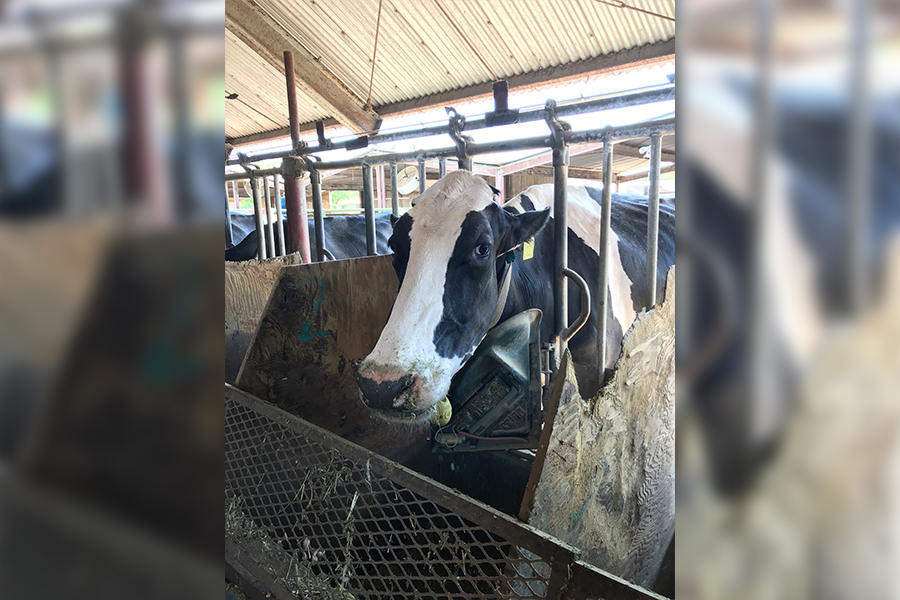
Seaweed is incorporated into the diet of cattle. (ALICE ROCHA / COURTESY)

First animal trials connect bovine seaweed consumption to lower enteric methane emissions

California’s Senate Bill 32 has called for a greenhouse gas (GHG) reduction in the state of California. By the year 2030, the state hopes to be 40 percent below 1990 level emissions. This calls all industries into action, including California’s massive and influential dairy industry. In order to meet the pressure of decreasing emissions, UC Davis researchers from the Department of Animal Science have started the world’s first seaweed animal trial. Based off several in vitro trials in Australia, two professors started feeding a dozen Holstein cows seaweed about a month and a half ago in hopes of replicating the potential the past studies have shown.

One of the investigators, animal science professor Ermias Kebreab, held a media event on May 24 to showcase the new and promising research.

8 percent of GHG emissions come from agriculture, Kebreab said. Several estimates from the Air Resources Board show that 60 percent of this is attributed to methane, 30 percent of which comes from enteric fermentation, 25 percent from manure and 3 percent from rice production along with some other sources.

The trial started with in vitro trials, performed by Matthias Hess, another professor in the Department of Animal Science.

“We used an artificial gut system to mimic a rumen,” Hess said. “This allows us to screen for the most efficiency dosages of seaweed and the best means of administering it. The artificial gut acts like a small bioreactor using a sample of rumen fluid from a fistulated cow. How a cow reacts to a treatment will vary because each animal has a unique microbiota within her gut. Because of this, we mixed the samples together to homogenize the microbes present.”

Some studies in the past have struggled to accurately measure the potential of seaweed as a methane suppressant, as they are unable to maintain the microbiota environments for prolonged periods. Hess’ artificial gut system allows the microbes to thrive in the controlled environment without dying off prematurely.

The in vitro trials performed on campus confirmed the potential of the seaweed, Asparagopsis armata, as an anti-methanogen. Although there are other species of seaweed like Asparagopsis taxiformis that have proven to be better methane suppressors, this seaweed does not grow as well in California as its A. armata counterpart.

The animal trials, taking place at the UC Davis Dairy, are composed of three different treatment groups receiving different amounts of the seaweed. The control group does not receive any seaweed and eats a normal total mixed ration like the other cows housed at the dairy.

The two treatment groups receive either 0.5 or 1 percent seaweed as a proportion of their daily intake, said Breanna Roques, the graduate student working on this trial. According to Roques, the dosage is determined by how much the cow normally eats. All the cows being used in this trial are Holsteins in the middle of their lactation cycles. In order to ensure that the cow eats the seaweed, it is finely ground by hand and mixed with molasses to improve its palatability.

Cattle are unique animals. With their rumens, they are able to ferment and digest just about anything they eat, especially things like brewer’s grains leftover from beer production, which humans cannot consume. However, in order to do so, they need to ferment indigestible substances like cellulose and lignin. All mammals, cattle included, have microbes living within their digestive systems. These microbes are responsible for producing the methane gas a cow breathes out. This is done to remove excess hydrogen from the rumen, which protects the microbes from an overly acidic environment.

The seaweed works to block the microbial enzymes responsible for generating methane gas, Hess said. It depresses the function of the microbes without depleting their natural population.

Using Green Feed, a turn-key system designed to measure gases like methane, carbon dioxide and hydrogen, Kebreab and Roques are able to determine how well the seaweed is reducing methane emissions.

A “cow cookie” drops into the Green Feed chamber, attracting the cow’s attention. It’s made up of all the things a cow loves, Kebreab said. As the cow eats and breathes with its head in the chamber, the gases are measured and sent to a lab in South Dakota.

Some people believe that most methane comes from a cattle’s flatulence. However, research has shown that only about 5 percent of methane is emitted from the rear end. The remaining 95 percent is released through a process called eructation, also known as burping.

Green Feed is only one of the means researchers can use to measure GHG emissions from cattle. Other forms are head chambers and sulphur hexafluoride tracers.

Many studies have gone into comparing the accuracy of these different systems, Roques said. But all the results show similar accuracy. In addition, the Green Feed system has better flexibility and mobility without having to limit where research can be done.

With the relative newness of the trial and its unique position, there are not many results available, but Kebreab said they have been seeing reductions of upwards of 30 percent in the cows’ emissions.

The work does not end there. The ultimate goal would be to make this method and the seaweed commercially available to all producers, but this remains several years worth of testing away. Further testing in the coming months will determine the safety and product quality of the milk coming from cows receiving seaweed in their diets. Due to the low dosages, it is not expected that the seaweed will cause a change in milk taste, but research is needed to confirm this.

“We are going to have a milk tasting panel, sampling 150 gallons of pasteurized milk from these cows,” Kebreab said. “We’re going to see if people can notice a difference between the cows eating seaweed and those that are not.”

The research team also plans on performing a similar, but much longer trial using beef steers at the UC Davis feedlot.

To make this work feasible and widespread, there needs to be more work put into the seaweed industry. Kebreab has been working with several marine biologists to make seaweed collection and feeding more cost-effective.

The main objective of this testing is to see if seaweed reduces methane emissions in an efficient manner without negatively impacting the cow’s health and body composition or decreasing milk yield. Early results have provided surprisingly positive outcomes with the future of seaweed research looking bright.


Written by: Alice Rocha — science@aggie.org


Bleachers: A Review

JUSTIN HIGUCHI [CC BY 2.0] / COMMONS
A concert you can laugh, cry, dance to

On the night of May 7, Ace of Spades was filled with emotion — the rollercoaster kind that makes you want to cry, laugh and cry again. Jack Antonoff, the frontman of Bleachers, wasn’t just performing for hundreds of people; he was getting to know them, one song at a time.

The event opened with New York pop-punk duo Diet Cig. Throughout the show, vocalist Alex Luciano talked about matters pertaining to sexual harassment, queer representation and empowerment, using her platform to discuss relevant social topics. Luciano was filled with effervescence, twirling on stage and kicking her leg up high in true punk fashion.

Diet Cig’s music was reminiscent of teenage angst and relatable life experiences. Songs like “Sixteen,” which referenced Luciano’s terrible ex-boyfriend from high school, brought me back to my youth. Fast forward to this year, in this moment, I realize that both Luciano and I have overcome those obstacles with age and with music.

Minutes after Diet Cig’s last song, Bleachers appropriately led into its concert with “Good Morning,” a track from their most recent album “Gone Now.”

Jack Antonoff is transparent and a perfectionist when it comes to his music. Each beat and note needs to be executed seamlessly. As “Everybody Lost Somebody” began to play, Antonoff stopped the song abruptly only to start it over. He talked about the musical note that sparked his inspiration for “Rollercoaster,” the second song in his first album, “Strange Desire.” The birth of Bleachers began with a secondhand piano in Antonoff’s apartment.

Bleachers overflows with talent. Saxophone player Evan Smith masterfully mimicked each guitar riff played by Antonoff, creating a playful, instrumental banter that lasted forever. Antonoff, a lover of music, is also very much for the people. Comedic and humble, he talked about his band members, his life in New Jersey, and feelings of loneliness that we’ve all felt before. His life was a journey of discovery and building relationships, which is articulated through his lyrics.

“When me and this band set foot on this stage for however many minutes, that’s when the world makes sense,” Antonoff said.

The show consisted of 17 songs, including a cover of “Carry On” by fun., a band co-founded by Antonoff, and “Just Can’t Get Enough” by Depeche Mode. As expected, it ended with Bleachers’ top hit “Don’t Take the Money.”

Bleachers knows how to perform and engage with an audience. Whenever Antonoff stood close to the edge of the stage, the room shifted forward and sang together, word-for-word.

At the end, I stood feeling completely awed by the performance and in deep reflection of the experience. There are only a few shows that have completely moved me, and this one did exactly that.


Written by: Becky Lee — arts@theaggie.org

Crisis Text Line: resource for anytime, anywhere

MEENA RUGH / AGGIE

Texting for help, mental health, crisis remediation

The Crisis Text Line is a free national service provided around the clock by volunteers who are trained to be crisis counselors. Founded in 2013 by Nancy Lublin, this service opens up another medium to help someone in need that doesn’t involve traveling any distance or feeling the pressure of having a spotlight. Instead, someone in need can reach out with a quick text message to 741741 anytime, anywhere.

Emilia Aguirre is a health promotion specialist for the Mental Well-Being team for UC Davis Student Health and Counseling Services. About a year ago, she started working on the keyword “RELATE” for UC Davis students to text to the hotline. She wanted to bring the Crisis Text Line (CTL) option to the forefront at Davis.

“It’s been something that’s been on my work plan for quite some time,” Aguirre said. “We actually started it back in February of 2017, so it’s been a little over a year in the process. And the whole idea about it has been that since CTL started in 2013, we have known of other college campuses that have implemented the same process, and so we wanted to really be in the proactive, forward movement in being able to support our students. We know that they are experiencing increasing mental health challenges and concerns. So we really wanted to be able to offer another resource to students [ … ] to give another option to students if there is a barrier for them to seek the help that they need.”

There are many different keywords that have been implemented in different regions for different purposes, but the keyword “RELATE” will help gather more data specific to Davis students, and that information can be used to better the services and raise awareness.

“The significance of the keyword is that we are going to be able to get aggregate data that [can] tell us [things such as] the time of day, the type of crisis, and the age [of students] so that we can further do outreach and prevention to help support students based off of what we are able to get through CTL,” Aguirre said.

The text line option creates a new space for people to seek help that technology is now making possible. Sofia Molodanof, a fourth-year English major, is one of the mental well-being team student coordinators. She expressed that especially in the busy lives of students, CTL can allow for immediate help that would otherwise require much more of time commitment and planning.

“From a student perspective, texting is an option that may be easier for students to do,” Molodanof said. “I think that a lot of times, students may not be super comfortable [with] going to talk to someone right away. Texting is an option for students to seek help that they need in that moment — [they’re] able to kind of feel more comfortable than talking to people like a counselor. I think that’s definitely a barrier for a lot of people who feel uncomfortable kind of just seeking the help they need in person. So this definitely offers a way for students to use their phones to get the access they need.”

Crisis counselors are required to undergo a rigorous 34-hour online training and a final exam that involves various role-play instances before they are allowed access to the online platform where they can directly help those that reach out. They often conduct a 4-step risk assessment to discern the situation, and especially to understand if there is an immediate threat involved, such as a physical threat as serious as suicide.

Kevin Trujillo, a third-year mathematics major, has been working as a crisis counselor for the past three years. He found out about the opportunity when he watched Nancy Lublin’s TED talk about her company, and was inspired to get involved.

“I am a volunteer crisis counselor,” Trujillo said. “If you text in, you are connected to one of 4,000 of us, and we help you move from a hot moment to a cool calm through problem solving, through evaluating where you are right now, [and letting] you talk out your issues and giving you the resources to help yourself too.”

During the training, Trujillo was taught about all the different types of issues that someone may be facing, and how to approach them in an appropriate manner.

“That was hard, because you learn about all types of issues that someone might be going through,” Trujillo said. “And you learn how to approach them, how to make them feel empowered, how to empathize and how to listen — that’s our main tool. And then [we learn] how to use specific resources and referrals to help them help themselves. After the training you have a final examination where we go through a series of role plays and once you pass that they let you go on the platform. You have supervisors all the time, and you have a community there, so we’re all on the same platform. If you have a question, you just go to the chat bar and ask if anyone knows how to approach [the issue].”

An important part of empathizing with a person in need is emulating their language to show that you are listening, and can relate to them, as Trujillo expressed. Some people may use abbreviations such as “lol,” others may not. Some may use emojis or not. It is important for the crisis counselor to use language that shows the person that they are truly listening and empathizing — an endeavor that is not easy on a platform such as text where words are devoid of the human tone of voice.

“It’s really difficult because a lot of people in their first text message will [ask] are you a robot?” Trujillo said. “And how do you have a conversation through text and not sound robotic? So you have to learn how to listen appropriately and let them know that you’re listening. And there’s a whole training module on that when we’re getting trained. That’s still a difficulty that all the counselors go through continuously. That’s the beautiful thing about it — strangers helping strangers with very intimate issues.”


Written by: Sahiti Vemula — features@theaggie.org


ASUCD holds annual budget hearings for 2018-2019 school year

TREVOR GOODMAN / AGGIE

Federal increase in labor costs demands extra $300,000 cost, diminishing money available to units

From Friday, May 18 to Monday, May 21, the ASUCD executive team and Senate table conducted annual budget hearings in the Mee Room on the third floor of the Memorial Union. Units, committees and commissions each drafted individual proposed budgets for the 2018-19 school year. The executive office offered the president’s proposed budget for every respective ASUCD organization and, with deliberation from Senate, created a final approved budget.

Budget hearings were initially scheduled for the weekend of May 18 — 5 p.m. on Friday and 10 a.m. on Saturday and Sunday. At the May 17 Senate meeting, the table voted to extend proceedings to Monday after senate pro tempore, Jake Sedgley, brought forward complaints sent via email by unit directors about lack of preparedness from both sides.

“To my knowledge, budgets are supposed to be in by Week 5 of Spring Quarter,” said Destiny Padilla, a second-year community and regional development and Chicano studies double major and unit director of the Office of Advocacy and Student Representation. “Unit directors didn’t get hardly any reminders about budgets being submitted by Week 5.”

Monica Dwight, a fourth-year Spanish and political science public service double major and Whole Earth Festival unit director, said she did not see the president’s proposed budget for WEF until the day before their unit’s hearing on Monday, May 21.

ASUCD Bylaws 1004 and 1005 say it is the job of the controller, a position currently held by Meital Machlusky, a second-year managerial economics and international relations double major, to coordinate preliminary budget meetings with each unit and stay in communication throughout the budget drafting process so as to ensure budgets are in by Week 5.

The president’s proposed budget is to be sent “to the ASUCD Senate and The California Aggie no fewer than five (5) business days in advance of Budget Hearings. Copies of the ASUCD President’s recommendations for each Unit shall be sent to the appropriate Unit Directors and the ASUCD Business and Finance Commission,” according to Bylaw 1003(B).

The president’s proposed budget was not completed until the morning of the first day of budget hearings. The executive office cites lack of responses from units after emailing them for the prolonged release of their president’s budget.

“We started this process April 26,” said Shellan Saling, a fourth-year international relations major and executive chief of staff. “Some directors received three or four emails, like, ‘You need to come in for budget hearings.’ [With] some units, it got to the point where I was literally messaging the adopted units’ senators on Facebook saying, ‘Okay, where is this? Where are they? Why haven’t they been communicating with me?’”

ASUCD President Michael Gofman said the executive team began reaching out to units right after Machlusky was sworn in on April 19, the third week of Spring Quarter. This is not in line with ASUCD bylaws saying the budgeting process was to start in Winter Quarter.

“This is how it has worked for the past two executive teams,” Gofman said. “People in this association live very busy lives doing their work and one thing that hindered [Meital’s] progress was getting responses. So, we didn’t actually have the responses from every unit, given that we were in communication with every single unit for close to three weeks until the Monday before budget hearings.”

Hearings were extended rather than postponed as unit directors requested to avoid scheduling them on Memorial Day weekend and to secure quorum on the Senate table.

“We were in the position where budget hearings have to happen now, because if they’re going to happen during the weekdays not all senators will be there for every single occasion and then all of a sudden we’re put in the position where someone who cares a lot about a particular issue won’t be able to speak,” Gofman said.

Due to a California-mandated yearly dollar increase to all minimum wage workers and a 12.5 percent pay increase in stipend positions, ASUCD has accumulated a $300,000 increase in labor costs this year. The executive team also entered budget hearings with a $13,852 deficit. Consequently, significantly less money was made available to distribute among units.

OASR’s budget hearing took place on Saturday, May 19. Its proposed budget was $81,564. This proposed amount was an increase of $30,000 as compared to the $50,474 budget OASR had received for the 2017-2018 school year. The majority of their proposed budget was $59,834 in Special Projects. These projects include funding for students to attend conferences such as UC Hill Day, Student of Color Conference and Labor Conference. From within OASR’s proposed Special Projects budget was $39,086 in fees owed to the University of California Student Association.

“We have not paid fees for the past four years, but every other UC campus does,” Padilla said. “We’ve gotten fee waivers but UCSA, won’t let us this year.”

OASR approached budget hearings with a desire to add two paid positions to its membership for a cumulative six. The unit has remained understaffed and underfunded compared to other UC’s OASR, departments preventing students from attending conferences.

“If we don’t pay the fees, our access is shut off,” Padilla said at OASR’s hearing. “That’s Davis’ voice in those meetings cut off. […] We already are largely out of the conversations because we don’t have the capacity.”

Gofman is confident the amount in UCSA fees will be waived again this year as they have been in the past. What cannot be explicitly given from ASUCD’s operating budget for special projects is encouraged to be acquired through the unit’s pursuit of grants.

“Additionally, I’m working with Student Affairs so if that fee isn’t waived, we have funding from it internally to pay for it for this year as we work out a permanent solution for the coming years,” Gofman said.

A point of contention pointed out by OASR at hearings was over the CoHo, the day prior, being issued $3,000 in their final approved budget for optional-to-wear staff t-shirts. According to Padilla, this amount of money would have funded more than one new OASR position.

OASR’s final approved budget allowed for the same number of four paid positions and an overall total of $44,632. Of that amount, $15,507 was allocated for special projects.

The Whole Earth Festival’s budget hearing fell on Monday, May 21. A day prior to budget hearings, the unit noted a line item in the president’s proposed budget for WEF to acquire $10,000 in sponsorships and advertisements.

“We were not happy about that because that had not been mentioned in our meeting with the controller when the president wasn’t present,” Dwight said. “We had explicitly said we did not support sponsorships because we don’t support corporations and it’s not really feasible to get a large amount of money out of small businesses.”

The line item was included as a means of increasing revenue from notably profitable units like WEF and Picnic Day. In response to its addition, WEF made a call to community members or any individuals affiliated with the festival to provide testimonials on behalf of the festival against the line item.

Ultimately, the line item was eliminated in exchange for WEF cutting elsewhere in its budget. Four new stipend positions were reduced to three and a new staff development position was eliminated.

The Mental Health Initiative, like other committees, was allocated $100 in the president’s proposed budget. MHI proposed $15,000.

“[UC Davis’] counseling program is really underfunded,” said Katrina Manrique, a third-year history and English major and co-director of MHI. “There’s not a lot of mental health resources out there. There’s a ton of accessibility issues. This all leads to students needing these resources. A lot of students go to us for support, for navigation, to compensate for the lack of resources that already exist on this campus. As a result, we kind of have to go the extra effort of compensating for what administration fails to do.”

MHI co-director Sam Chiang claimed the assertion by the management team — composed of the president, vice president, controller and ASUCD business manager, Greg Ortiz —  that no extra money was available to MHI was false.

“If you wanted to make us a priority, you could,” Chiang said. “The money is there; you just need to find it. It’s a question whether you care about our mental health.”

As committee members are not paid, the unit also advocated for six new paid stipend positions to compensate for the level of labor members put into the initiative. Similar to WEF, individuals were present to provide accounts of MHI’s impact on their personal lives and of its significance to students.

After much discussion, MHI was allocated the same $100 as other committees were given. The table committed to advocating on behalf of MHI to campus administration through the passing of emergency legislation promising “that ASUCD Senate will work with administration (primarily Student Affairs and the Chancellor) to help secure further funding,” according to Manrique.

“There were a lot of senators that were hesitant to give us money, again, out of fairness,” Manrique said. “But I would continue to argue that our work is way more expansive than I think other committees are.”

Both Padilla and Chiang claimed during their unit’s budget hearings that the reason their respective units were not granted the amount of money they felt they deserved was due to lack of appreciation.

“As much as they say, ‘If we had more money we could have given it to you,’ I don’t believe that,” Padilla said. “OASR has never been a valued unit, because I think the advocacy that they want is different from the advocacy we do for OASR, because we prioritize marginalized identities on this campus.”

Gofman’s response to claims of preferences between units was: “Our perspective is exclusively to make a balanced budget and making sure that each unit is treated equally but at the end of the day, honestly, very few units had what they needed, let alone what they wanted.”

A packet by the executive office is currently being created that will detail the process of budget hearings for the next administration. It will contain instructions and dates which can be found in the bylaws for readers to follow in order to avoid the rushed process of this year’s hearings.

Units, senators and the executive alike shared sentiments of emotional exhaustion after the events of the weekend.

Gofman acknowledged the inefficiency in which budget hearings were conducted providing that they went, however, as efficiently as they could have gone. In the coming school year, he predicts the executive team will be more closely involved in their relationship with units, saying many promises were made that they intend to act on.

“We had to make a lot painful choices, rather, these weren’t choices, we had to make a lot of painful decisions and we made them,” Gofman said. “And I, in my role, was more than willing to take the heat of it and basically the brunt of the results of it because it will save a lot of other people from doing so.”

“I think I understand how it can be difficult to be in a bind of a big budget, and I feel like the senators felt a lot of that pressure but I think what I would want from ASUCD as an association is to be better organized and to understand what their priorities are,” Padilla said.

The approved budget will not be revisited until the first week of Fall Quarter to be approved as Senate Bill #1.


Written by: Elizabeth Mercado — campus@theaggie.org

Senator Danny Halawi announces resignation from Senate

BRIAN LANDRY / AGGIE FILE

Halawi steps down after expressing frustration with alleged ASUCD corruption, collusion

Senator Danny Halawi, a second-year applied mathematics and computer science double major, announced his resignation from the Senate at the May 3 Senate meeting. Halawi ran for Senate on the Unite! slate in the Fall 2018 election.

His platforms focused on increasing STEM representation in ASUCD. Halawi also hoped to bridge the gap between Greek life and ASUCD, increase representation for Middle Eastern communities and work to support mental health initiatives on campus.

Vice President Shaniah Branson commented on his early resignation.

“Danny Halawi’s resignation was anticipated due to his increased absences this quarter,” said Branson.

Halawi, a second-year, will not be returning to UC Davis for the 2018-19 school year.

“I know that Danny has had a difficult time, personally and academically,” said Branson. “I wish him the best in his endeavors and have thanked him for the work he has done during his term.”

During Halawi’s last Senate meeting on May 24, he said his resignation was due to personal reasons and frustration with the current state of the association.

“Even if I wasn’t leaving, I wouldn’t be a part of ASUCD because I am not happy with the misconduct, collusion [and] corruption,” Halawi said at the Senate meeting. “I’m not
happy with the Unite! slate. As an insider, I have a packet full of evidence of collusion, corruption, racism, transphobia, and it’s very hard. I will take it to Greg [Ortiz] and The Aggie for everyone to see, and you will lose your jobs.”

Halawi declined to comment to The California Aggie on the reasons behind his early resignation or progress on his platform goals.


Written by: Ally Russell — campus@theaggie.org