52.4 F
Davis

Davis, California

Tuesday, December 23, 2025
Home Blog Page 504

Police Logs

NICKI PADAR / AGGIE

Who doesn’t like volleyball?

May 25

“Male parked in front of business started to exit vehicle with a baseball bat, but then drove away, staring at reporting party standing at the ATM machine.”

“Subject seen on surveillance stealing unknown item and still on site in the store.”

“Food delivery person was at reporting party’s door 1 hour ago. Prior to leaving, subject appeared to be casing reporting party’s residence, asking inappropriate questions about reporting party’s schedule, overly interested in reporting party’s broken doorknob.”


May 26

“Vehicle parked impeding traffic and blocking vendor vehicle — vehicle parked and currently running but unoccupied.”

“20+ subjects. Loud music, loud subjects, whistles. On-going since this afternoon.”


May 27

“People out playing and screaming at volleyball court.”


May 28

“Female next door was upset after being told her guests were being loud. Currently outside yelling and slamming her front door. Request officer speak with her. Reporting party does not want contact.”


May 30

“2 male juveniles jumping on the portable roofs — both wearing maroon shirts, blue jeans.”

 

Spring/Summer 2018 Style Inspiration

ALLYSON KO / AGGIE

Confused on what to wear? Look no further

Spring is nearly over, but summer is just around the corner. For some direction on what to wear, the following is a list of common themes I noticed by looking at runway shows from a variety of designers. Although many of us can’t afford expensive and high-fashion clothing, the creative forces behind these shows heavily influence the clothing that become more widely accessible.

A useful tool for determining trends or overall themes for any season before they even arrive (keep in mind the real fashion industry — not fast fashion — has only two seasons: Fall/Winter and Spring/Summer) is using the online Vogue show finder under the “catwalk” tab. There you can search up runway collections from specific designers, seasons or both. I focused on “Spring/Summer 2018 Ready to Wear” for Acne Studios, Rick Owens, Maison Margiela, Creatures of Comfort, Carolina Herrera and Jacquemus.


Colors: Pastels, Bright Burnt Orange, Neutrals, Metallic

Neutrals (think earthy and burnt colors like browns, black, white, beige, forest green, greys and blood red) will always dominate because they are sophisticated, elegant, easier to work with and go with everything. Although those were very prominent, a couple designers featured a more vibrant orange and some even went for almost neon yellow and pink. Many of them also featured pale and pastel shades. Metallic, shiny, reflective touches on some areas of the material (or the entire material) were pretty common too.


Structure: Fabric Manipulation, Flowy

There was a good mix of both stiff structures and easy, stereotypically summer flowiness to materials and the way they were placed on bodies. I will refer to the former as fabric manipulation because it seems like a lot of designers were building larger shapes and design through the clothing itself rather than letting the pattern, color or material tell the story. This has probably been done before, but it was just quite pronounced this season, especially with Rick Owens. It makes sense, though, since there is more room to do this without the worry of winter layers and clothing covering up the piece for warmth.


Fabrics: Sheer, Mesh, Fringe, Texture, Shine, Ruching

With designers like Jacquemus and Rick Owens, there wasn’t too much of a stray from simpler clothing, as they focused more on fabric manipulation and simple techniques like ruching. However, most of the other designers decided to tie in those reflective, colorful and louder fabrics while, for the most part, not letting it get too extravagant. There was a lot of sheer and meshy material showcased as well, which looked very beautiful.


Belted Layers

Hear me out on this. All over the Fall/Winter runways that took place earlier this year, you can spot models in thick, warm winter coats layered with scarves and other clothing but finished off with a belt holding it all together at the waist. This same idea was also used for Spring/Summer but with thinner materials and often showing off leg. The key for executing this in the summer is thinking about lightweight materials that can be built upon but still keep you cool. Also make sure to keep the silhouette sort of against your body and not have materials bulging out.

Layers in general were pretty popular. Long dresses and flowy pants were often paired with other puffier dresses on top or bulky, oversized but light jackets.


Remember, though, that trends are ephemeral. Take it from Yves Saint Laurent: “Fashions fade, style is eternal.” Find designers that inspire you and be more aware of pieces that might last past their trendy limelight.

Yet this is all to say have fun with your decisions too and above all, be comfortable in your own skin. You might be wearing what others see as strange or different, but as long as you are confident in it, that is really all that matters.


Written by: Cecilia Morales — arts@theaggie.org


Humor: Student spaces out in lecture for all four years, graduates with mostly Bs

CHRIS RADCLIFF [(CC BY-SA 2.0)] / FLICKR
Davis student grants insight into new condition affecting many recent grads

Here at The California Aggie, we’ve covered some intense graduation stories. We thought we’d seen it all — police arresting walking grads for public intoxication, keynote speakers advising students to sell their bodies online, apes from the primatology lab escaping and attempting to take over the school while riding cows and horses, nearly succeeding if not for a daring flank from the Davis carriage division. This year though, one student proved us wrong.

“My name is Jeff Spacey, graduating fourth-year, and I just woke up from a lecture-induced coma.”

You heard that right. Jeff Spacey has spent the majority of his college career in a rare form of coma that scientists are calling a “four-year space out.” For the last four years, Spacey has spaced out in every lecture. It started during his first class at UC Davis, Astronomy 10G.

“The last thing I remember is the professor saying the word ‘space,’ and from there it’s just a blur,” the “Space Cadet,” as his friends refer to him, said. “Since I woke up, I’ll get flashes every so often, an interesting concept or a quote, but other than that I hardly remember anything. I’m just glad this disorder didn’t affect my college career too much.”

At this point you’re probably thinking, “What in the damn hell? There’s no way Space Cadet could get through college in a coma! I’m never reading The Aggie again!!1!” However, sometimes truth is stranger than fiction.

“One of the most common symptoms we find in patients suffering from the ‘four-year space-out’ is actually unconscious retention,” Dr. Doc Terr told The Aggie. “Usually, if we press patients enough, we can get them to recall at least some basic facts from their time spacing out. Even more interesting is that non-learning memory seems completely unaffected.”

So, how do you like that, doubters? An actual doctor proved you wrong. Don’t ever hypothetically question me again unless you want another verbal annihilation.

Jeff Spacey may never fully recover from these four years, but he is confident he will eventually move past it.

“I mean, how much of this stuff was I supposed to remember, anyways?”


Written by: Conner Shaw — cjshaw@ucdavis.edu

(This article is humor and/or satire, and its content is purely fictional. The story and the names of “sources” are fictionalized.)


Interdisciplinary Environmental Justice Symposium

TAYLOR LAPOINT / AGGIE

IEJS brings students, professionals together to get involved in environmental justice activities

The Interdisciplinary Environmental Justice Symposium brought together community members, professionals, students and researchers to discuss methods of improving environmental health in vulnerable populations. The event was organized by Joelle Toney and Alexandria Igwe, the special events coordinator and student director of the GAAAP program, respectively.

“I wanted to create an event that would elevate marginalized voices as well as bring together people who are not normally in the same room to discuss their approaches to addressing environmental degradation and the uneven effects it has on our communities and planet,” said Toney, a fifth-year community and regional development student. “All too often, we are zoomed into just one aspect of an issue — not realizing that we can create alliances and collaborate with people who are trying to solve the same issue but from a different perspective.”

Breakfast was followed by brief welcoming remarks and the first three breakout sessions. One session was the Water Is Life panel, detailing the ways in which Native American and indigenous people consider water sources as entities intimately tied to the health of human populations. Kaitlin Reed, a Ph.D. candidate in Native American studies, discussed the problems the Yurok tribe is facing due to illegal Northern California marijuana growers polluting crucial Yurok waterways around Humboldt County with pesticides and human waste.

“For indigenous communities, when we’re talking about environmental justice, we have to talk about settler colonialism, what that is, and how its legacy is still produced today,” Reed said. “Unless environmental justice talks about decolonization in its own way, it’s not going to make sense or be effective for indigenous communities.”

Keynote speaker Margaret Gordon described her work with the West Oakland Environmental Indicators Project, in which citizens were equipped with air monitors to measure how severe the air pollution was in their Oakland neighborhoods. Gordon detailed how an Oakland highway was rerouted outside of residential areas due to the air monitoring data collected by her teams.

“Citizen science gives you the ability to have your own evidence,” Gordon said to the audience.

The second set of three breakout sessions included the Sustainable Agriculture Panel. UC Davis alumnus Karishma Sethi detailed her work in Brazil as the founder of Saúde, Educação, Renda, which is Portuguese for “health, education and income.”

“I was able to put together this idea of incorporating hydroponics to grow plants with the concept of food as medicine, bringing that to a population that suffers severely from diabetes,” Sethi said.

Igwe mentioned that studying how plants absorb heavy metals from the soil could be a way to revitalize areas near factories, ports and other pollution sources. Such areas have been contaminated with materials that are harmful to both humans and the environment like lead, nickel and cadmium.

“One way I hope to change that is through the work with plant-microbe interactions — using more plant-based remediation techniques in urban areas where there are a lot of brownfields and contaminated lands,” said Igwe, a third-year Ph.D. candidate in the microbiology department.

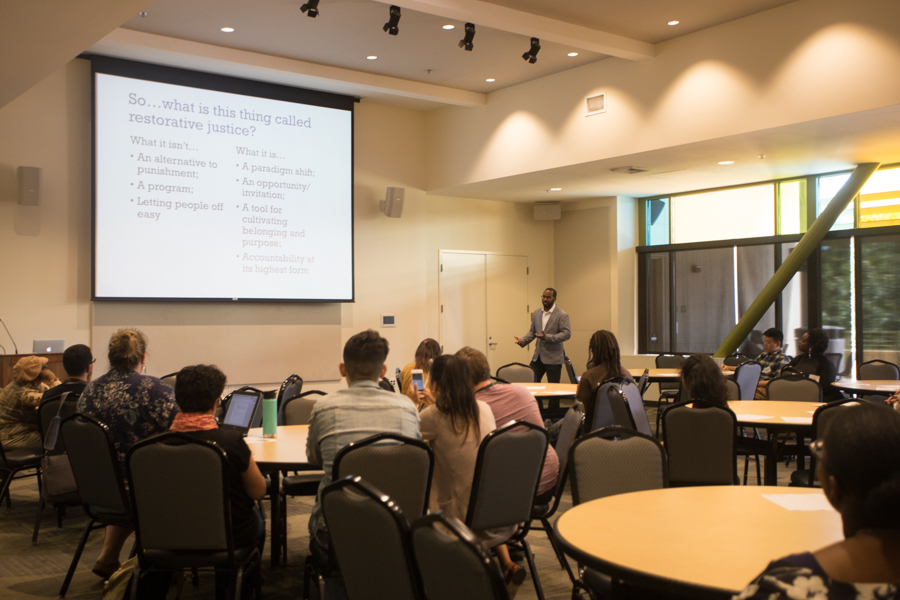
Other sessions included Fashion’s Contribution to Pollution and a Restorative Justice Workshop with Cal EPA. The event concluded with closing remarks from Lawrence Torry Winn, the co-director of Transformative Justice in Education Center at UC Davis. Time was available for networking and conversations about what the attendees and panelists learned from each other during the day.

“The idea is that an event like this would allow students to be able to contextualize their work in the broader sense of what’s going on with people who aren’t in academia and what’s happening in the community,” Igwe said. “They could better identify what they want to do with research or identify places where they would like to work, volunteer or connect with.”


Written by: George Ugartemendia — science@theaggie.org


Review: Solomon’s Delicatessen

DAVIS WHALEN / AGGIE

New downtown deli brings quality Jewish cuisine

Solomon’s Delicatessen officially opened its first location, located in the central Davis Commons, on May 21. The menu offers a wide variety of Jewish-style artisanal sandwiches, soups, salads and of course, world-class bagels. There is also a variety of beer and wine to pair with a scrumptious babka for dessert.

Solomon’s draws its name and decorative inspiration from the Sacramento based chain of music stores, Tower Records, founded by Russell Solomon. Tower Records opened all around the country and internationally. The interior feels modern and contemporary, but still houses the spirit of the 60s when Tower Records first opened.

The sandwiches are fresh, authentic and delicious. I particularly enjoyed “The Stanley.” A simple, yet noteworthy take on a pastrami sandwich. The in-house-made spicy mustard has a good kick, which gives the sandwich its unique flavor. This combination pairs well with any of the available craft beers (don’t worry, there’s also a wine selection).

The matzo ball soup is definitely an item to try. The broth is light and fresh, and it seems like a soup that would have cured my winter cold in no time. The matzo balls themselves don’t feel heavy, but rather, have an airy sensation about them.  

Of course, the bagels are to die for. As soon as one walks in, there they are, glistening in their shiny golden wonder. Solomon’s bagels can be eaten with a variety of schmears (also known as spreads), and their breakfast sandwiches are served all day. The smoked lox bagel is always a great choice if you’re unsure of what to try.

Solomon’s is the first Jewish deli in Davis, and despite opening up in a location that has historically not served businesses well, the new kid on the block seems to be successful so far. It’s a family-owned business and such character shows in the quality of the food and its service.

Solomon’s Delicatessen brings a new type of cuisine to downtown Davis and I hope they are here to stay. In the adopted words of Russell Solomon, “No bagel, no life.”


Written by: Josh Madrid — arts@theaggie.org

UC Office of the President fails to complete budget on time

JORDAN KNOWLES / AGGIE FILE

UC system falling behind on implementing auditor’s recommendations from 2017

The California State Auditor’s one-year evaluation of the University of California found that the UC did not implement all the recommendations from its 2017 audit and that the UC Office of the President failed to complete its budget on time.

The 2017 audit found questionable financial practices as well as millions of unreported dollars. The State Auditor made 10 recommendations for the UC to be implemented by 2018, including implementing best practices for budgeting, developing and implementing a method for weighing comparable public and private sector pay data when establishing salaries for all positions and developing a clear definition of systemwide initiatives.

According to the auditor’s evaluation, of the ten recommendations, the UC has only completed six.

The UC’s failure to complete all the recommendations on time may lead to the state government withholding millions of dollars from the UC system.

“It’s discouraging that this happened,” said fourth-year political science and history double major Chelsea Chavez. “It’s up to the UC system to figure out the flaws in their process and hold those involved accountable.”

Despite these findings, UC President Janet Napolitano’s office maintains it is on schedule and UC officials such as board chairman George Kieffer disputed that the unreported money was in “hidden funds” that had been allocated to various university programs.

However, they did acknowledge a need for more transparent reporting.

“We are confident that we have complied with all of the mandates by the California State Auditor and we are doing everything we can to ensure that the auditor is satisfied,” said Dianne Klein, Napolitano’s spokesperson, according to the Santa Cruz Sentinel.

This statement is supported by an independent consultant report from Sjoberg Evashenk Consulting, commissioned by UCOP, which showed that the UC has met all 10 recommendations.

According to the Santa Cruz Sentinel, “the firm argued Napolitano’s office is on track to meet its own budget deadline next month and that the office shouldn’t be expected to change its own budget schedule to meet the auditor’s April deadline.”

In response to last year’s audit report, the UC Regents scrutinized Napolitano’s proposed 2018-19 budget, which included a reduction on the amount of money requested for systemwide initiatives on issues such as carbon neutrality and food security.

The Regents recently approved what the LA Times says is a “leaner, more transparent budget.” The budget approved Napolitano’s shift of $30 million to campuses for housing and the redirecting of $8.5 million to enroll more than 1,500 additional California students this fall.


Written by: Clara Zhao — campus@theaggie.org

Editor’s note: A previous version of this article originally stated that UC Regents Board Chairman George Kieffer claimed UCOP’s unreported money was in “hidden funds.” He has disputed claims that the funds have been held in such funds, and the article has been updated to reflect this change.

Why Tinder can be emotionally damaging for women

JEREMY DANG / AGGIE

The dating app can further exploit the double bind that women experience related to sex

Tinder has long been considered a legitimate dating forum in the online world. The popular app, frequently used among college-age students, enables individuals to “swipe right” on those they find attractive or interesting. If the recipient swipes right as well, the two can converse, exchange contact information and from there, presumably, go on a date. It’s an easy way for people to meet one another in an environment like a university, which, while social, is not necessarily conducive to forming friendships. For example, many of the main social activities in the first quarter of the first year are drinking-related, which can often blur and confuse connections between people.

Those who are supportive of Tinder might say it’s a practical way to meet people without undergoing the potential awkwardness and uncertainty of a first date. The difficulty of knowing whether or not the other person actually likes you is eliminated; after all, if he or she has swiped right, that indicates some level of interest. In a way, Tinder allows people to get down to the brass tacks of dating without all of the initial he-likes-me-he-likes-me-not angst. Tinder proponents may also say it’s a way for people who might not otherwise have met to connect with one another.  

In particular, Tinder is used among college first-years as an efficient way to gain social and, sometimes, sexual experience. The first quarter of one’s first year can be especially overwhelming. Students who have had limited freedom in high school might feel ill at ease in an environment with thousands of other students, none of whom they know personally. Tinder therefore provides a handy answer to this particular social anxiety and artificially creates connections between individuals. Additionally, in recent years, Tinder has come to represent the increasingly popular hookup culture at college. The easy and efficient “swipe-right” era of dating has come to the fore. And this has its downsides, especially for young women in search of heterosexual relationships.

Similar to social media, Tinder allows people to curate their lives to a certain extent and to present their best assets — both physical and personality-wise — to the world. Image retouching and careful use of cropping, however, often blur the lines between a person’s Tinder profile and their actual appearance and behaviors. This already sets a precedent of artificiality in terms of communication and can ultimately lead to disappointment for both parties. While women might join Tinder in hopes of building a more lasting personal connection with someone, this desire is not always mutual for their male counterparts. The disconnect between what different people want from their Tinder experience can lead to disappointment at best and emotional damage at worse. While one person may be interested in dating seriously, the other may be more invested in a casual hookup. This is not necessarily clear just from viewing someone’s profile, and often times the divide between the intent portrayed and the person’s behavior can be disconcerting.

What makes Tinder particularly complicated for women is the ongoing double bind that we experience in terms of sex. Refusing to hook up on the first or second date may invite the unwanted label of “prude.” However, young women who do choose to hook up during this short time frame may be deemed too “easy,” and the partner will move on to someone who seems less eager. This then perpetuates the twisted perception that many people still have of female sexual activity today. The emotional risk of pursuing online dating, coupled with the higher physical risk that women experience in sexually ambiguous situations like Tinder dates amount to personal costs often greater for females.

Tinder also has the potential to encourage emotionally vulnerable, mostly young men to embrace toxic masculinity. Because there’s usually not a pre-existing emotional connection between the two parties, the consequences for a person being sexually aggressive or uncommunicative are minimal. The ongoing controversy surrounding consent culture complicates this dynamic. While women are more likely to be raped by someone they know, casual setups also represent an unprecedented level of physical danger because Tinder is viewed by many as an ideal forum to solicit sexual encounters. And while some people may view a Tinder date as a direct invitation to sex, it can be both disconcerting and embarrassing for the other individual if this desire is not shared. This difficulty is acutely felt by young women, who are still pressured to stay silent regarding their own sexual needs. Saying “no” can often result in anger or outright rejection and indifference.

The image-based nature of Tinder means that, essentially, participants don’t really know who or what they’re signing up for when they pursue a connection. The “swipe right” concept usually limits people to pursuing others entirely on the basis of physical attraction. While this is important, attraction usually needs other elements, like intellectual and emotional compatibility, to be sustainable. Tinder thus embraces the culture of lookism — that is, making judgements and decisions based on the other person’s physical appearance, rather than on their character — and doesn’t often establish genuine connections between people.

It’s difficult to say whether or not this is any different than non-online dating. In general, romantic attraction is complicated, and there’s an almost unavoidable level of awkwardness involved in going on a date with someone for the first time. But instead of eliminating this uncomfortable stage, Tinder merely encourages its participants to skip ahead to the even more emotionally fraught territory of hooking up, where the motives of both parties may not be clear — even to themselves.


Written by: Rebecca Bihn-Wallace — rlbihnwallace@ucdavis.edu

Disclaimer: The views and opinions expressed by individual columnists belong to the columnists alone and do not necessarily indicate the views and opinions held by The California Aggie.


Sequencing life on Earth

EARTH BIOGENOME PROJECT / COURTESY

The Earth BioGenome Project will sequence the genome of all eukaryotic species on Earth

Fifteen years after the conclusion of the Human Genome Project, scientists are proposing an ambitious sequel: the Earth BioGenome Project. The EBP is a large-scale effort to sequence the genome of not just a singular species, but of all eukaryotic species on Earth.

On April 23, 2018, a coalition of scientists spanning multiple countries released a proposal at the Proceedings of the National Academy of Sciences describing their vision for the EBP.

Characterizing the project as “a moonshot for biology that aims to sequence, catalog, and characterize the genomes of all of Earth’s eukaryotic biodiversity” the paper estimates a total project duration of 10 years with a cost of US $4.7 billion.

The project is possible due to a significant reduction in genome sequencing costs over the past years. In contrast, the Human Genome Project, which determined the DNA sequence of only a single species (humans, as the name aptly suggests) cost a total of US $4.8 billion.

The EBP also has close ties to UC Davis: its chairman is a faculty member in the university’s Evolution and Ecology department.

“We are well-known as a center for biological, environmental and medical research,” said Andy Fell, STEM news and media relations specialist at UC Davis. “This [project] certainly helps to build on our reputation as a major center for research in biology, medicine and genomics.”

“Through the project, we expect that we will discover new sources of food and food proteins from different species of animals and plants,” said Harris Lewin, chairman of the EBP and Vice Chancellor for Research, professor of Evolution and Ecology and Robert & Rosabel Osborne Endowed chair at the University of California, Davis. “In addition, we expect to discover new medicines derived from various plants and botanicals.”

“Plants and less complex eukaryotes make a ton of natural products that we can’t,” said Pradnya Narkhede, a senior studying chemistry and biochemistry at The University of Chicago. “And a lot of them have therapeutic uses.”

According to Narkhede, who has been conducting genetics and genomics research over the past five years at UCSF, UChicago and the Blaustein Institutes for Desert Research, one such example is paclitaxel, a chemotherapy drug used to treat lung, ovarian and breast cancer.

Narkhede also pointed out opportunities for agricultural advancement. Many plants produce their own pesticides as protection against insect predators. Studying the genome of various plant species can allow scientists to figure out the pathways corresponding to the synthesis of naturally-occurring pesticides. Using this information, we can then genetically engineer crops so that they can produce a variety of their own pesticides, rather than having to spray additional human-made pesticides on them.

“Basically, there are a lot of big ways that sequencing, assembling, annotating and analyzing genomes can help us humans,” Narkhede said.

Analysis of a wide variety of genomes also allows us to develop better conservation strategies for rare and endangered species.

“This is important for everyone, because our ecosystems are dependent on biodiversity,” said Lewin. “If that biodiversity disappears, entire ecosystems could collapse.”

With the ever-increasing effects of climate change, developing conservation strategies for the most at-risk species is crucial.

“Because climate change is happening so quickly now, species are not able to adapt fast enough,” Lewin said. Knowing the genetic markers for important characteristics such as drought resistance and tolerance towards increasing temperatures gives conservation biologists a vital tool to create strategic breeding programs. These programs involve carefully selecting and breeding only those individuals of a species whose offspring stand the best chance of survival in the changing climate.

The EBP will focus specifically on sequencing eukaryotic genomes. While there are already existing programs that focus on prokaryotes, such as the Human Microbiome Project, there has not yet been a massive, concentrated effort in sequencing the genomes of eukaryotic species.

In addition, eukaryotes are more critical to study, according to Dr. Lewin. Out of an estimated 15 million eukaryotic species on the planet, we are aware of approximately 1.5 million. And out of those 1.5 million species, we have sequenced the genomes of about only 2500.

“There’s just so much out there, and now we have technology to do this at a reasonable cost and in a reasonable time frame,” Lewin said.

The Amazon Bank of Codes and the World Economic Forum have partnered with the EBP to kick-start a pilot program in Brazil. Brazil is home to about 10 percent of the planet’s biodiversity, making it an ideal place to start the project. If successful, the pilot program will pave the way for future efforts in regions comparable to Brazil in biodiversity.

Scientists are still in the process of developing the pilot program. Other countries such as China, the UK and Chile have also started planning programs to contribute to the EBP. Saudi Arabia has expressed an interest in being a participating nation as well.

“It’s all coming together,” Lewin said.

The success of the EBP is reliant on countries cooperating with one another and being committed to collecting and sharing their data with the global public freely and openly.

“What we have is a memorandum of understanding,” Lewin said. “Any institution or country that signs it is committed to the principles of open access to the data.” Countries that disagree with these principles will not be considered as part of the EBP.

Lewin acknowledges the challenges of maintaining a project of such breadth and scope, but he is eager to see what lies ahead.

“It’s very exciting to be at this stage, considering it was just an idea a couple years ago,” Lewin said. “Now it’s really becoming real and that’s very exciting to me and all the scientists that are working on this.”


Written By: Nausheen Sujela — science@theaggie.org


UC Davis custodians protest management treatment

GEORGE LIAO / AGGIE

Human resources grants meeting, continues hashing out concerns

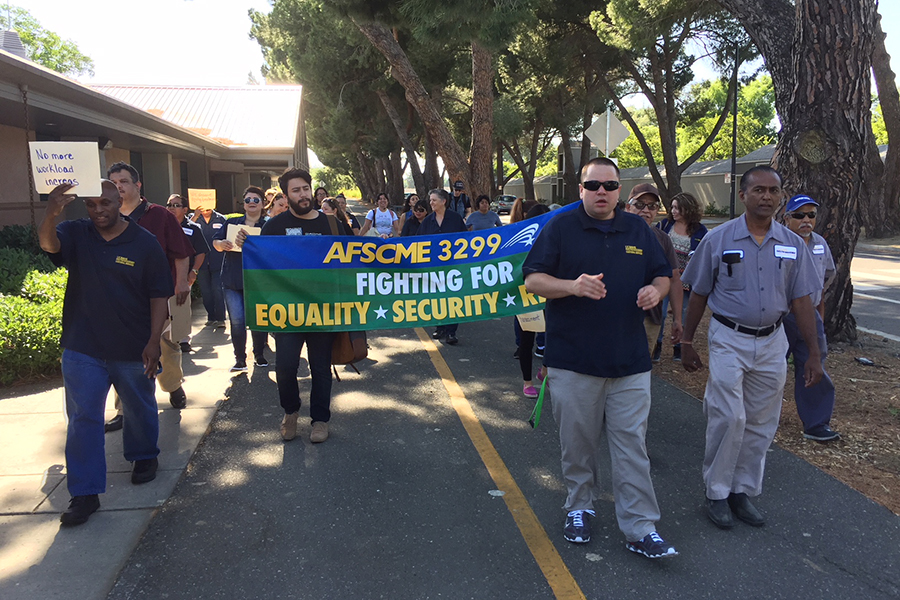
UC Davis custodians from the American Federation of State, County and Municipal Employees 3299 conducted a work action on May 22 at 4:00 p.m. in the UC Davis Human Resource Administration Building. At issue were work-related actions taken by Finis Jones, the director of Custodial Services at UC Davis.

An interview request was made by The California Aggie to Jones, who declined to comment.

Benny Contreras, a senior custodian at UC Davis and a 37-year employee of the university, participated in the work action. He spoke about the reasons they protested.

We had an event that is called an action,” Contreras said. “I am a union member of 3299, and we are taking action against our director, Finis Jones, because he is implementing some work actions that we do not have time to [complete]. Our union is bargaining right now, and he is not supposed to be making any kind of changes, but yet he is.”

Contreras said Jones is adding additional work to their schedules, although he and his colleagues don’t have the time to complete the extraneous workload.

Contreras expressed optimism that an official from UC Davis Human Resources agreed to meet with them.

“We were protesting with our signs and yelling, telling unfair treatment, […] finally the labor relations director came out,” Contreras said. “They have been avoiding our meetings, so now she says, she will meet with us tomorrow from 4:00 to 5:00 p.m. Hopefully, that will get done. I am surprised that she came out actually.”

Contreras further commented about the actions taken by Jones as well as the the length of time this has been occurring. Contreras said that temporary workers were not hired to cover for sick or vacationing custodians.

“Jones does not want to hire no more workers, no temporary people,” Contreras said. “We are so stressed out. When a person is out on vacation or call in sick, we [have] to assume that eight hour load plus our eight hour load. Jones does not want to hire temp people, yet he is going to buy phones for every custodian on campus with a GPS, so they can monitor [them]. What is that all about? We need workers. We need help. We don’t need no phones for everybody.“

Jones referred The California Aggie to Julia Johnson, the labor relations manager for Employee and Labor Relations at UC Davis and UC Davis Health, who subsequently referred The California Aggie to Kimberly Hale, the interim director of News and Media Relations for UC Davis.

Hale confirmed that after the initial worker protest took place a subsequent meeting was conducted between HR and the custodians.

“What I know of the situation is that a group of about 25 to 30 employees and students [had gone] to HR wanting to be heard about their concerns,” Hale said. “That stemmed from the [strike] earlier in the month […by] the unions that are currently negotiating with the University of California as a whole on their union labor agreements. As I understand it, this group went to talk to share some concerns and to talk with some folks, so Johnson […] did go out that afternoon to understand what their situation was and set up a meeting for the next day.”

Hale said that the custodians and HR are continuing their conversation. Hale also said that the workers and HR are continuing to “work through” the issues.

Regarding the complaints about Jones, Hale offered what she understood about the situation.

“I am not sure I can connect those two dots, because I was not there [at the meeting],” Hale said. “I did not know [more] about what their concerns were. What I do know is that they did voice some concerns about staffing levels and other [matters] that the HR Office of Labor Relations and the Office of Finance […] are still in discussion with.”

Contreras was asked about what students can learn from their protest.

“First of all, let me say thank you to them,” Contreras said. “Most of all, […] thanks to the students, because they can help us. The thing is this can affect them too. You know they are raising prices on their tuitions every year and nothing is getting done.”

Blanca Centeno, an executive board member of AFSCME 3299, offered the union’s perspective on the protest.

“We just organized this action to let them know, so they can hear our voice,” Centeno said. “They can hear our concerns, because they are putting a lot of workload increases on the department. And not only that, but people are being mistreated — very disrespectful and they are not being treated with dignity either. We do not want any of our fellow workers to fall into a problem by mistake.”

Martín Giron, a fourth-year community and regional development and Chicano/a studies double major at UC Davis, joined the protest in solidarity. Giron also participated in the three-day strike held by AFSCME 3299 from May 7 to May 9 and wanted to lend his support for the custodians.

“While I was in the strike marching alongside those workers, I was able to build kinship with them as well as continue fighting for their struggles,” Giron also said. “We just received word [about] how the university administrators who directly work with the union such as the custodial supervisor is micro-managing and intimidating these workers as they continue to go without a fair contract.”

Giron wants the student population to learn about the reasons behind the labor dispute.

“I think one thing to recognize is specifically how this goes unseen at a lot of different levels,” Giron said. “We have to recognize our own privileges as students, and whose voice gets uplifted in the narratives of struggling at the university. It is oftentimes the university employees such as the lowest-paid workers in AFSCME 3299, [who] do not get their voices uplifted.”

Destiny Padilla, a second-year community and regional development and Chicano/a studies double major, agreed with Giron’s stance.

“[Giron and I] are with the group United Students Against Sweatshops [at UC Davis],” Padilla said. “What really brought me out here today is noticing that the struggles the workers and students face are interlinked because the greediness of the [UC]; the increase of the pay [and] the increase of the administration getting higher pay cannot secure a fair contract with these workers is really telling [about] what they think of these workers and what they prioritize on this campus.”

Padilla said that labor protests were common in the past and still occur today.

“Students should learn from these protests that it is not something new,” Padilla said. “I would like to highlight: ASFCME has, every four years, [been] asking for a contract, and they usually have to go on strike like they have before. I think that students need to realize when they are advocating and fighting for issues on campus, these are happening right under their noses. We are the future. We are the next generation to continue in workplaces, and if we do not try to change these conditions now, it is going to continue to happen.”

Contreras explained what the custodians want from their management.

“Just to be treated fair,” Contreras said. “Just to be treated right with, respect. We are humans, we got families, we got goals. Just because we are custodians does not mean we are not people.  All we want is to be treated fair, be treated right — no more no less.”


Written by: George Liao — campus@theaggie.org


From the California Chronicles

CHRISTIE NEO / AGGIE

We both knew that it would be a while before we saw each other again…

Time passed and we continued to see each other. I think I liked that he wasn’t very emotional, which is what I thought I was until I discovered that I’m actually not at all. I never liked “The Notebook” anyway.

For the first time, I found myself eating watermelon Sour Patch in bed and sleeping in till noon after long movie screenings on my eleven-inch laptop. Spring Quarter finals were approaching and the nice weather was driving me to check out early. Paul hardly ever slept in his own bed, but he would get close. He’d often pass out drunk with at least one limb reaching for the bed from the ground.

I picked up a job working at restaurant at the beginning of the quarter, but I quit the week before finals. People born with common sense have to deal with everyone that doesn’t have it, so I ditched the service industry — hopefully, for good. It seemed like I didn’t get into a routine until it was almost time to leave, but that’s usually how it goes. I had mastered my finals technique by then, so they went rather well. I only pulled a Hail Mary for two of my four finals.

The time came to pack up my things and head home to Los Angeles for the summer. He helped me pack the arsenal of clothes I brought from home, though I only ever managed to wear about ten percent of it. It was a silent time because we both knew that it would be a while before we saw each other again, so I made myself look extra focused in my sorting. The time came to say goodbye, which we were both terrible at doing. He gave a kiss on my forehead and held himself back from saying or doing more. I smiled and held a gaze. It was all I needed.

At that moment I understood timing is everything; rushing things before their time is like pulling too hard on a condom — it becomes useless.


Written by: Terry Hudson — arts@theaggie.org

Disclaimer: The views and opinions expressed by Terry Hudson are completely fictional and do not necessarily indicate the views and opinions held by The California Aggie. The story is fictionalized, as is Terry Hudson.

UC Davis fraternity raises $50,000 for cancer research

MARCUS KAKO / COURTESY

Bringing Davis, Greek community together over a common cause

In recent years, Greek life has gained some negative publicity that has damaged its overall reputation. But many also fail to recognize the great philanthropic efforts facilitated by these organizations.

Each Greek chapter designates a philanthropy to sponsor and, each year, the students affiliated with their respective sorority or fraternity raise awareness for and donate to these causes.

In December of 2012, Sigma Chi at UC Davis designated the Huntsman Cancer Foundation as its primary philanthropic partner. The Huntsman Cancer Foundation was founded by John M. Huntsman, an alumnus of Sigma Chi, who suffered from cancer a total of three times in his life. Since the founding of the foundation, the institute has worked towards finding causes of cancer and creating safer treatment options.

Markus Kako, a brother of Sigma Chi and a fourth-year managerial economics major and psychology minor, was this year’s “” coordinator. Kako explained the purpose of the week-long philanthropic event.

“We fundraise throughout the week and all the proceeds go to the Huntsman Cancer Foundation,” Kako said. “[The foundation] is one of the leading cancer research institutes. It’s a week long event with the nine sororities and the main goal is to fundraise, and then we also try to raise awareness by holding fun events.”

In past years, the majority of the fundraising for the event was based on attendance to the events held throughout the week, such as a talent show, a zorb soccer tournament, trivia night, scavenger hunt and a candle-lit vigil. This year, Kako and his brothers took a different approach to fundraising for the organization.

“In the past we’ve done some unorthodox ways of fundraising,” Kako said. “We used to sell tickets for our Derby Darling events […] this year we switched things up and we created fundraising pages for Sigma Chi as well as all nine sororities so that the brunt of the fundraising would come to from these pages, all of which came together.”

In previous years, the fundraising was successful largely due to the efforts of the women in the nine sororities fundraising and attending events. During the week of Derby Days, the sororities Delta Gamma, Alpha Phi, Kappa Kappa Gamma, Pi Beta Phi, Alpha Delta Pi, Chi Omega, Alpha Chi Omega, Tri Delta and Kappa Alpha Theta compete in an effort to raise more money and awareness. However, this year Kako envisioned a plan to push for more involvement from the brothers and raise more money and awareness as a whole.

“In the past most of the fundraising solely relied on the work of the sororities, which didn’t seem fair to me,” Kako said. “So this year we wanted to team up with the sororities as a show of faith that ‘this isn’t going to rely on you this year,’ but that this is going to be a community-based effort.

Kako explained in further detail his reasoning behind changing the structure of Derby Days for this year.

“Before, the week of events didn’t really fundraise,” Kako said. “It was more of like fun things for people to do. What we realized this year is that we could raise a lot more money just fundraising and we kind of steered the week of events to celebrate the sororities and have fun and spread awareness, but the week itself was primarily focused on the fundraising pages.”

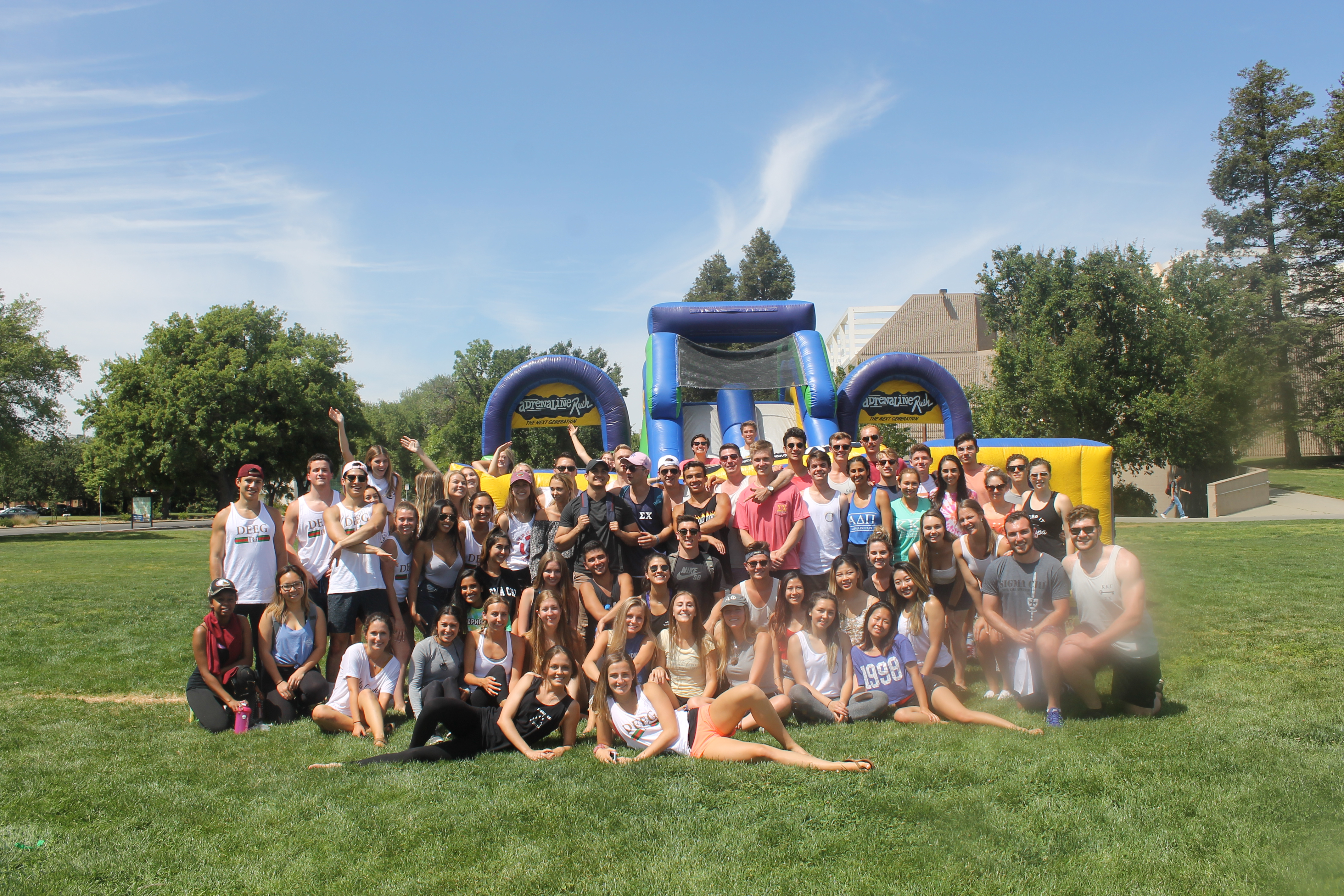
Before the week of Derby Days, the chapter had raised 17,000 dollars in donations from friends and family. By the end of the week Sigma Chi as well as the nine sororities raised over 47,000 dollars. Once the week came to an end, the brothers collectively decided to aim for a grand total of 50,000 dollars. They achieved this new goal within the following week.

Throughout the week, the sororities competed for who could raise the most money and awareness through the donation page. To increase awareness, the sorority women shared a link to the foundation’s donation page on behalf of their respective sorority. Kako explained how the competition was used as a way for the sororities to have fun with the fundraising and catalyze growth in donations and awareness.

“My goal this year was to bring Greek life together,” Kako said. “And have that sense of community that we are all working together to create something. I think moving forward it would be really great to get the rest of the Davis community involved and networking outside of organizations that aren’t just Greek life.”

Kako explained how Derby Days has affected his experience at Davis and the Greek life community as a whole.

“Out of my four years here Derby Days was one of my favorite things to be a part of,” Kako said. “Being able to coordinate it myself and change the things I think that needed changing was a really cool experience and it’s something I’m proud to be apart of. [At the end] I think we all felt a sense of unified accomplishment, it’s a community-based effort. Cancer in some way or another affects everybody and in the grand scheme of things there is no competition when it comes to raising money for cancer.”

Although the importance of the cause transcends the competition, this year’s Derby Days champion was Alpha Phi. The chapter president, Harley Hoy, a third-year economics major and statistics and accounting double minor, explained how Derby Days has been an important cause to Alpha Phi.

“Our house as a whole is very close to Sigma Chi,” Hoy said. “They are some of our closest friends and we get to go out for the entire week and fundraise money for an amazing cause. Even though the week is super competitive at the end of the day we think about why we are doing this and the fact that together we were able to raise $50,000 gives us all a sense of accomplishment because we contributed to an amazing week of fundraising.”

Julian Burns, Sigma Chi’s chapter president and a third-year classical civilizations major and human development minor, explained in further detail the changes that were made to the fraternities flagship philanthropy.   

“Headed into the week we had already raised 17,000 dollars,” Burns said. “We wanted to make sure that this year and every year moving forward that we are pulling our weight in our own philanthropy. In past years the event has been criticized because it was primarily female labor that contributed to raising money for a fraternity cause and the guys were sort of passive. This year we wanted to do something different by going into it and saying ‘hey, we have come into this ourselves and we’re really proud of the work we did’.”

Two years ago, the fraternity raised 21,000 dollars. In 2017, Sigma Chi raised a total of 12,000 for the foundation. This year, the chapter quadrupled the amount of money they raised. Burns explained why he believed that the event had been tremendously more successful this year compared to previous years.

“I think this year the fundraising pages got everyone involved,” Burns said. “Having everyone ask and not making it a requirement like, ‘Hey we need money,’ but rather conveying the message, ‘Hey this is important to me, would you mind donating?’ Because any amount helps and just having 600 or 700 people ask goes a long way.”

Earlier this March, the founder of the organization, John M. Huntsman, passed away from cancer. Burns explained how Huntsman has inspired the fraternity on a chapter-based and national level.

“We really wanted to rally behind him and his spirit and do something big as a whole fraternity,” Burns said. “We have endeavored to make over 1.7 million dollars all together and I think we’re only a few thousand dollars away from that and out of 242 chapters our chapter will be 3rd in the nation and were very proud of that and so are our alumni.”

In the years to come, Burns hopes that the cause will gain more attention and participation from the rest of the Davis community and not just students affiliated with Greek life.

“For the future of fraternities and the future of Greek life we have to sort of get out of that insular of ourselves,” Burns said. “We have this pretty close community that we form, but it’s in some ways isolated and its not really accessible for people who aren’t affiliated and I think by bringing [the cause] to the forefront, and having events that engage all of the student body and not just those in Greek life would one: we could raise so much more money, and, two: I think philanthropy and causes like this is what will save us if anything can.”

Derby Days has been and will remain one of Sigma Chi’s most important and cherished events, Burns explains.

“This is where we show the world and the rest of the country that we’re trying to do something good here,” said Burns. “And that we love each other and we love this chance to be here and to do some good for the world. we can do alot more good if we work together. I don’t think a lot of people see that when they see Greek letters but my hope and my vision is that we can show people why we are here.”


Written by: Sneha Ramachandran — features@theaggie.org


Understanding SONA Research

ALYSSA HADA / COURTESY

Classes encourage students to participate in research study programs on campus

Many people at UC Davis have participated in research study programs, better known as SONA. These research studies are open to any student and require an individual to voluntarily sign up and attend the research study at the scheduled time and date. For some students, participation in research studies may offer extra credit, while for others, they may be a requirement for the class.

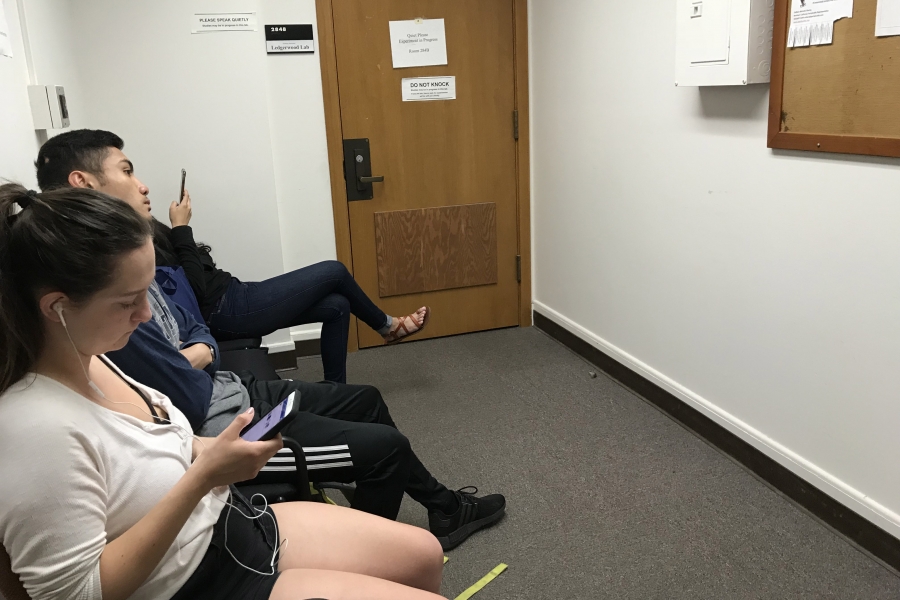
Research often occurs in Young Hall, and participation may consist of a time investment from several minutes to several hours. Most often, these studies require a student to answer questions or respond to stimuli on a computer, observed by a research assistant manning the room.

The research is offered in both an in-person and an online setting, with tasks differing slightly for each setting. Johann Leffler, a third-year communications major, has participated in SONA research in the past, and elaborates more on the experience.

“I’ve participated in a few studies, but only the online ones, never in person,” Leffler said. “They’ve been pretty straightforward and simple to get through, and usually don’t take very much time to finish.”

As communication is one of the only departments that offers extra credit for participating in research, students generally aren’t offered much information regarding the studies, or the opportunities that they provide.

“I didn’t know that only certain majors were offered these opportunities,” Leffler said. “I’m not sure what would make communication majors better equipped to be participants. Maybe it’s because they’ve had to study various research methods and are familiar with the types of surveys or experiments they see through SONA.”

Students generally participate in SONA purely because they’re required to or are offered the potential for extra credit. However, students note that participating in research could potentially be a good experience for those hoping to go into research in the future.

“It’s always nice to have an option for extra credit,” Leffler said. “If you’re someone who’s particularly interested in research, I’d imagine that having easy access to studies you can participate in would be a good learning experience.”

Most research opportunities of SONA require students to simply answer questions or analyze a scene. However, some students have the opportunity to participate in more exciting activities. Kelly Ko, a third-year communication major, described her more enjoyable experience with SONA.

“I usually enjoy participating in the interactive research opportunities, not so much the computer ones,” Ko said. “One time I got to play a lot of video games for an hour, and that one I felt like I gained something out of. They were testing brain memory, and that was a pretty fun experience. I’ve had good experiences with SONA so far. The people who coordinate them are pretty nice and considerate.”

While many students in the communication or psychology departments have participated in SONA studies, most students haven’t had the experience of getting involved with on campus research. Professor Veronica Hefner of the Communication Department explained why communication students are often offered the opportunity to participate in SONA research for extra credit.

“Communication as a field is an offshoot of the Psychology field, which is the department on our campus that houses the SONA program,” Hefner said. “I think that communication majors can benefit from being a part of empirical research. When you read a story in the media about a ‘recent research study demonstrated that…,’ the students can be excited because they were a part of that research. Also, research productivity at a university has an impact on the ranking of that university. That means that by helping out the researchers at your school, you are indirectly helping boost the value of your degree from that school.”

While some psychology classes require students to participate in SONA, Hefner notes that communication classes don’t require students to participate, nor do they require teachers to offer it for a chance of obtaining extra credit.

“We are not required as faculty to provide extra credit for SONA participation,” Hefner said. “I do it because I am a researcher, and I understand the value of conducting empirical research, but I also value my students and want to give them every opportunity to succeed in classes, so extra credit is an opportunity to do that. I also believe that participating in research helps students understand the entire research process, and I’m always looking for ways to help my students get a well-rounded educational experience because I really care about my students.”


Written by: Alyssa Hada — features@theaggie.org


Title IX controversy at FAU highlights nationwide problem

JEREMY DANG / AGGIE FILE

Allegations include inflating number of female athletes, misappropriation of scholarship money

Florida Atlantic University is in hot water after allegedly inflating the number of female athletes enrolled at the school. In a report first published by My Palm Beach Post, the university was found to have reported that 51 percent of their student athletes were women, a number which was 20 percent larger than the number it reported in the previous year. According to the report, this would make them the lowest ranked school of the 127 schools which participate at the highest level of college sports.

Misreporting numbers such as this is a violation of Title IX, the amendment which was signed into law by President Richard Nixon in 1972 promising equal opportunity to students of educational institutions, which states, “No person in the United States shall, on the basis of sex, be excluded from participation, in be denied the benefits of, or be subjected to discrimination under any education program or activity receiving Federal financial assistance.”

Failure to accurately report these numbers is not as simple as inflating demographics and quotas for the sake of looking good — it is a vital component of deciding how much scholarship money a school can give its athletes. According to the Post report, despite boasting generous scholarship numbers in the past, FAU was found using the inflated numbers to bolster the men’s scholarship while the scholarships surrounding women’s sports remained unchanged.

FAU spokeswoman Lisa Metcalf denied the allegations raised by My Palm Beach Post, stating that that the report by the Post was itself at fault for the misreported information.

”FAU became aware of inaccuracies in the data and alerted the reporter prior to publication, of the clerical errors made by a former employee of the university,” Metcalf wrote in an official statement. “FAU offered to provide the updated data expeditiously to the reporter, but the reporter intentionally ran the story based on knowingly inaccurate data, rather than waiting for the updated report.”

MyPalmBeachPost responded to FAU’s denial by using its editorial board to question where the false numbers came from if they were as simple as a clerical error. They also questioned how exactly the school came across their new numbers, which lowered the discrepancy between male and female athletic scholarships to 1.9 percent.

Although the controversy is ongoing, the allegations of behavior such as FAU’s are not unique to the school itself. Title IX is meant to help with a variety of different issues from fair treatment to dealing with campus abuse, such as the high profile allegations against Baylor in 2017. As long as schools continue to skate the line, fudge the numbers and sweep incriminating evidence under the rug, these allegations will continue across the country.


Written by: Bradley Geiser — sports@theaggie.org


Humor: Squirrel burying acorn pauses momentarily to shed one tear for departing grad

CAITLYN SAMPLEY / AGGIE

Unnamed squirrel feels touched while observing student taking grad photos

This squirrel overheard the sound of your giggles as you posed in your white dress and wedges — or was it a pair of slacks and a button-down? — for your graduation photos. He listened as you carried on about how excited you were. He stopped burying his nut and stood up in the grass, his little nose quivering, his small hands drawn together in front of his body. He heard you joke about the countdown of days until commencement, and his little heart leapt into his throat. He couldn’t help feeling nostalgic about you.

He remembers when you two shared a moment after he approached you curiously and you idiotically threw him a piece of pastrami (squirrels don’t eat pastrami, dammit). He knew you were only trying to be nice, in your own “special” way. And by “special,” he means stupid. He remembers the time he approached you rather aggressively in an empty breezeway. He’s sorry about that, but he had just fruitlessly chased a lady squirrel for an hour around a tree, and he found your goofy expression to be mocking. He remembers the time you saw some moron lady trying to take his picture. For a second, you both locked eyes as if to say, “Can you believe her?” He remembers that you once shared a bench with him on the Quad, in front of Wellman and on the bridge near the library. He remembers that you once caught him burying an acorn and, although you watched him finish the job, you’d never, ever tell anyone where he buried it. You would guard his secret forever. And he remembers what you once said aloud to him: “You know, the Davis mascot should really be a squirrel.” Even though he feels bad for you because you looked really dumb in front of other humans for that, he thought the sentiment was sweet.

He’s overwhelmed with feeling for you — the one person who understood the little guy, and he cries a single, jagged tear down his tiny, furry face. He hates to see you leave, but he’s glad that you’ll be on to bigger and better things. And he’s really proud that he could help you by teaching you that squirrels don’t eat deli meat, you dummy. When he’s done reminiscing, he finishes burying his acorn and scampers away. While taking pictures, you never paused to look around and notice him watching you, but you should’ve known. He was there.


Written by: Jess Driver — jmdriver@ucdavis.edu

(This article is humor and/or satire, and its content is purely fictional. The story and the names of “sources” are fictionalized.)


Concert review: Benny Benassi at The Midway

JOSH MADRID / COURTESY

Electronic dance, house music pioneer performed on Memorial Day weekend

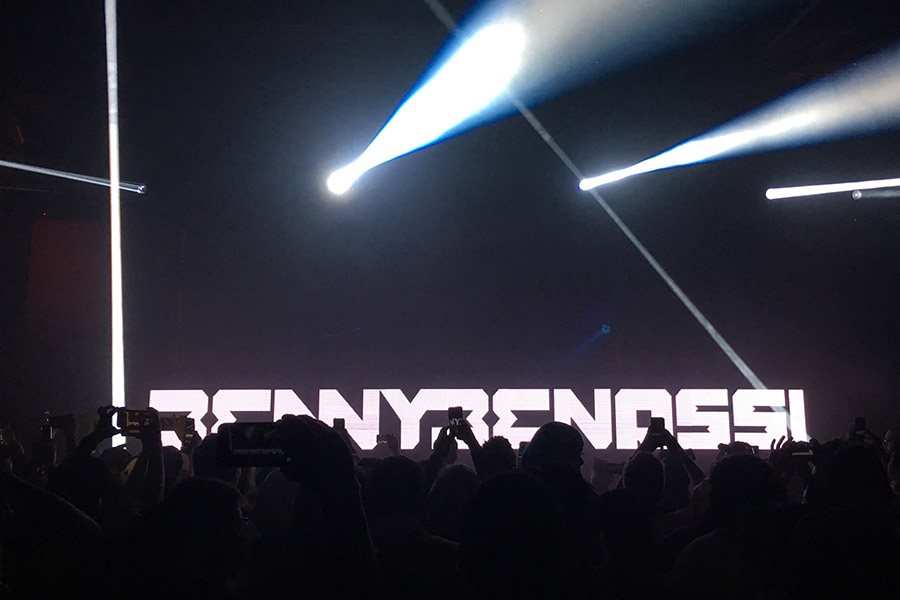
My childhood memory of being in the backseat of my mom’s rundown Mitsubishi while jamming to the engineered electro-house beats of Benny Benassi ran through my mind as I saw the digital marquee light up in his name. Ten years later, there I was, standing below his mixing board, anticipating the show of a lifetime.  

The Milan-born DJ Benny Benassi performed this Memorial Day weekend at The Midway in San Francisco at ETD Love, a show dedicated to electronic disco. There were hundreds of people at the venue, but the way he spoke into the mic was as intimate as having a coffee with him in an Italian piazza.

The Midway is located in the central waterfront district overlooking the ruins of an abandoned-looking factory. No one told me that venues in San Francisco often times will have a coat check. Being from Los Angeles myself, I’m capable of braving the chilly 70 degree weather without a jacket. That night was a crisp 50 and I was nearing hypothermia waiting in the line to enter.  

Benassi first hit the charts in 2002 with his single “Satisfaction.” Of course, he did a rendition of this iconic single. As soon as the famous “Push me / And then just touch me / Till I can get my satisfaction” started to play, the crowd sank into a grooving bliss.  

The sound equipment was state of the art, and I could feel the pulse of the bass in my spine. I forced my way to the front because I had been waiting to see Benassi since I was a kid, and I needed to make the most of the moment. I put my shirt in my back pocket and danced the full hour and thirty minutes until my feet ached.

Throughout his set there were two fairy-looking backup dancers that I never really decided how I felt about, but they were a neat addition.

The set concluded with the 2011 hit “Cinema.” This song has a special place in my heart because it plays on cinematic film metaphors — another nostalgic aspect of my childhood: “I could watch you for a lifetime / You’re my favorite movie / A thousand endings / You mean everything to me / I never know what’s coming.” There were slow moments that let me catch my breath and then I was immediately thrown back into a dancing frenzy.

The work ethic and talent of Benassi is undeniable and he deserves recognition as the inspiration for several of today’s younger, prominent DJs. More of his music is available on his Spotify and Apple Music page, and tour dates are available on his website.


Written By: Josh Madrid — arts@theaggie.org