

By: Diana Olivares — deolivares@ucdavis.edu
Disclaimer: The views and opinions expressed by individual cartoonists belong to the cartoonists alone and do not necessarily indicate the views and opinions held by The California Aggie.
By: Diana Olivares — deolivares@ucdavis.edu
Disclaimer: The views and opinions expressed by individual cartoonists belong to the cartoonists alone and do not necessarily indicate the views and opinions held by The California Aggie.

 The reaction to violence is almost always violent retaliation. If one commits violence on a sufficiently mass scale, the likelihood of war is high. Therefore, when discussing religious extremists who believe they are God’s faithful workers in bringing about the apocalypse and leading their group to salvation, it’s important to note that violence as a response to violence is not prophetic; it’s simply the mathematical and horrific outcome. What drives continued attempts to end the world, ironically, is when things go according to plan — the self-fulfilling prophecy.
When discussing self-fulfilling prophecy, religious extremists are a flashing “Exhibit A.” Through their violence, they’ve successfully created war — perhaps something they see as an affirmation of the end of the world and subsequent justification for their actions. But perpetuating a cycle of war is not affirmation of end times; it’s the natural consequence of organized violence. Religious extremists’ ridiculous yet successful attempts to bring about the apocalypse has emboldened them.
There is a shared belief among Christian Zionists, and some evangelicals, that the return of the Jewish people to the Holy Land and the establishment of the state of Israel in 1948 is in accordance with Biblical prophecy. The return is necessitated by the rapture, or apocalypse. This has led many Christians to assist, either monetarily or with time, in the building of settlements on Palestinian territory. Obviously, these actions — especially those of settlement construction — angers Palestinians. Belief and behavior in this scenario go hand-in-hand. Some people believe the apocalypse will occur after Jews “repossess” Palestinian territory and destroy the Jerusalem Mosque al-Aqsa to rebuild the Temple of Solomon and try to assist by contributing to one of the most tense international issues. In turn, they foment violence. Is this prophecy or logic? One group occupying another group’s land will obviously create problems — that doesn’t make you a servant of the Lord because you contributed to international turmoil.
Attempts at the apocalypse extend beyond Christians. There are also Jews and Muslims who have tried to carry out their extremist versions of the end of the world.
In Israel, for example, there have been multiple attempts by Jews to destroy or blow up the Dome of the Rock, a holy site for Muslims. One attack, by gun-wielding extremist Alan Harry Goodman, led to the deaths and injuries of worshippers inside the Dome of the Rock. He had fliers from the Kach Movement, an extremist group of ultranationalists who advocated for the expulsion of all Arabs from Israel and replacement of the mosques on the Temple Mount with Jewish temples.
The days and weeks following the incident brought about uproar from both Israelis and Palestinians. Violent clashes ensued, stirring up enough anger to the point where a 17-year-old Palestinian boy was shot and killed by Israeli forces for throwing a rock at a tank. Now imagine if attempts at destruction of the Dome were successful: What kind of violent reaction would the world see then? If you’re trying to bring about the end of the world, blowing up the Dome of the Rock is the best way to do that — it’s the excuse some might need to wage full-blown war.
It’s sad that humans believe in myths (I am not talking about religion in general) and even more tragic that they are willing to act violently based on those myths. For Muslims, the apocalypse (a myth based on historical accounts called hadith, not the actual Koran) will occur in stages, the first being world-wide injustice in addition to the oppression of Muslims. Settling on Palestinian land or blowing up the Dome of the Rock play into these apocalyptic narratives by either justifying the violence (violent response) necessary for end times or creating a society of religious followers who, in light of the comfort provided to them by the possibility of end times, view the regression of their country passively.
It’s tragically sad that humans ignore God’s basic message of compassion and tolerance in favor of focusing on religious nonsensical prophecy and, in turn, brutalize one another. Perhaps this is why the New Atheists like Sam Harris and Bill Maher are accumulating a following — they properly ridicule the barbarity of religion and focus on the compassion and logic of universal humanity. Ironically, these New Atheists may be the people walking closest in line with God’s path.
Written by: Hanadi Jordan — hajordan@ucdavis.edu
Disclaimer: The views and opinions expressed by individual columnists belong to the columnists alone and do not necessarily indicate the views and opinions held by The California Aggie.
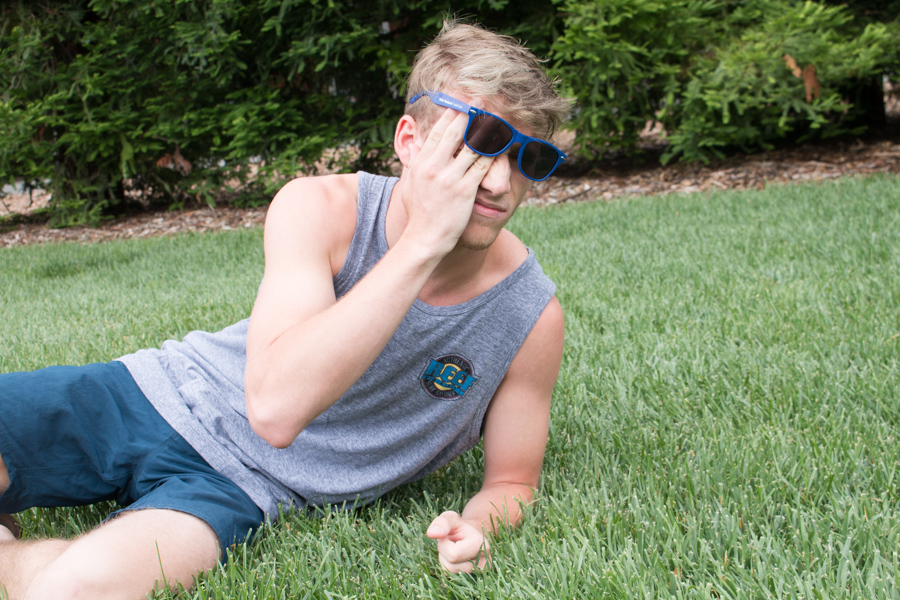
One quick afternoon power nap went awry
 On Thursday morning, third-year philosophy major Andrew Gerber jolted awake in the center of the Quad, wearing a bro tank and clutching a Hydroflask full of not-water. With a deep breath, he released his first words in weeks.
“This isn’t the Turtle House,” Gerber screeched through the driest throat known to man.
Students armed with final exam study guides and extra coffees promptly shushed Gerber. Did he not know? It’s week nine! We do not speak!
“Did I miss the Doxie Derby?” Gerber asked as he grabbed an unsuspecting first-year by the shoulders. “Who won? TELL ME IT WAS ANTHONY WIENER!”
Everyone was confused. For starters, this dude had been splayed out on the Quad for the past five or six weeks and, to be honest, the student body had assumed it was an act of political protest.
“I mean, I thought he was protesting the amount of work put on students with the stress of having to find a job, extracurricular activities and having to study well into the night… but now I’m starting to think that he was in a comatose state and we really should have done something…” Chancellor Gary May said.
Fellow Quad-sitters finally understood what had happened: Gerber had taken the world’s longest Picnic Day power nap. For those unfamiliar with the concept, a local Picnic Pro described it.
“The name’s Chad Slice, Ph.D.,” Slice said as he popped the tab on a can of beer right in the middle of my foyer. “I’ve been studying Picnic Day synergy for all seven of my years here. What we see in Gerber is a classic case of the afternoon, pre-second rally nap. This is often taken at 3 p.m., in the lull of the day. What our little trooper did was forget to set that timer for an hour. He trusted his little body too much… a rookie mistake.”
Slice removed his pair of 3D glasses with the lenses popped out, which I figure he was using as a way to look smarter or something, and grabbed Gerber by the cheeks.
“Listen here, fella, I’m going to tell you something that might blow your noggin,” Slice said, squishing Gerber’s cheeks harder and harder with each word. “First of all, did you know that the daddy seahorses carry the babies? It’s wild. Secondly, Picnic Day was over a month ago and you’ve been sleeping. You’re probably failing at least one of your classes. I mean, I haven’t gone to lecture either, but I’ve been checking Canvas, so I get it.”
Gerber began to cry, and they weren’t pretty tears. You know when, like, a 10-year-old starts to cry and their whole face kind of vortexes into the center of their skull like they just ate a full bag of lemons? It was like that, but with a month’s worth of stubble decorated with pollen in the mix.
“You mean… you mean I missed the second rallying?” Gerber sobbed into Slice’s shoulder. “And now I have to take finals?”
This is a cautionary tale to all who wish to celebrate Picnic Day with the vigor of Andrew Gerber. May you familiarize yourself with your phone’s clock app and may you never miss out on those Picnic Day nights.
Written by: Olivia Luchini — ocluchini@ucdavis.edu
(This article is humor and/or satire, and its content is purely fictional. The story and the names of “sources” are fictionalized.)

After spending an entire Sunday scrolling through Tinder, Casey Mallock was feeling rather unlikeable. It seemed as though the same, uninteresting 15 people would move past their thumbs as they scrolled through singles in the area.
“There has to be an easier way to make people think that other people think I’m attractive,” Mallock pondered. “Maybe I can hire someone to ‘run into me’ at the CoHo and make overly flirtatious comments about my hair. I could even have a dozen carnations delivered to my nutrition class, or have one of my parents call and refer to them as ‘Daddy’ aloud.”
Luckily, their mistakes turned into fortune.
“As I was getting ready in the morning I was thinking about going to eat at Raja’s with a managerial economics major when something miraculous happened!” Mallock recalled. “My skin scorched and simmered under the heat of my hair appliance. My curling iron burned me, and left me with a perfect mark. I spent the rest of the day beaming with what appeared to be the release of sexual frustration! My friends spent the rest of the week in anxious questioning. I answered their questions about my new partner in glee. ‘He’s hot,’ I said. ‘When I turn him on, things really heat up between us. And he really complements my hair, which is rare.’ They haven’t stopped begging to know who this mystery partner is.”
Casey Mallock has since come out with a line of overheating styling appliances that help you get the look you desire — that is, recently sexed. A blow dryer that creates perfectly tousled hair is among the many products available in Mallock’s stock.
“There’s no need for game when you have these! Let the public know that you’re getting some, without ever lifting a finger.” Mallock stated as they endorsed their new products. “Except, of course, the finger that turns on the rogue hair straightener.”
Find the product that’s right for you this summer!
Written by: Beck Nava — rnavamcclellan@ucdavis.edu
(This article is humor and/or satire, and its content is purely fictional. The story and the names of “sources” are fictionalized.)
Four awards given to those who improve Davis community
Four community members and organizations accepted the Thong Hy Huynh awards for their involvement in helping improve the Davis community on Tuesday, May 15. These recipients received awards in four categories: civil rights advocacy, community involvement, young humanitarians and lifetime achievement.
The Thong Hy Huynh awards are presented each year in memory of the death of Thong Hy Huynh, a former Davis High School student who was stabbed at the school in a racially motivated incident. After his death in 1983, the award was established to raise awareness of social justice issues in the community of Davis. This award is presented each year to community members and organizations that advocate for diversity, community, social justice and equal rights. The Davis Human Relation Commission leads the nomination process.
The civil rights advocacy award was presented to Wendi Counta, the executive director of the Progress Ranch. This award was given to an individual that the Humans Rights Commision felt helped the disadvantaged and disempowered in the community. Counta and Progress Ranch give boys ages 8 to 14 facing homelessness a temporary home. Progress Ranch provides professional mental health assistance to the boys while also maintaining a homelike environment.
“I’m surrounded by people who are passionate about what we do, and we have a wonderful program here in Davis and it stands out in this field,” Counta said. “I am strengthened daily by the resiliency of the boys that we work with, and there’s nothing like having the Davis community to support our boys. They really change because of our community and how much they […] support them.”
The community involvement award was presented to Greg Wolfe, a rabbi who has been an interfaith leader in the Davis community for over 20 years. Wolfe received his award for promoting positive human relations, equal opportunities and civil rights in Davis. His congregation consists of over 260 families.
“To be able to be honored for something you had really loved to do and is so important […] there’s really no words to express what that means,” Wolfe said. “I am so proud of [the] community for the work that we’ve done in building bridges between the two communities and of course there is a lot more work to be done.”
The next award that was presented was the Young Humanitarian Award to the Student Solidarity Task Force. The group was formed in Fall 2014 as a response to incidents of racism, homophobia and anti-Semitism. The group consists of people from many racial and ethnic backgrounds. One of the reasons that the SSTF was presented the award was through six panel discussions, in which minority groups spoke about their experiences in the Davis educational spaces.
“The students of the SSTF embody some of the best of this generation,” said Will Arnold, Davis city councilmember. “A sense of responsibility based on personal experience, universal well-being and an approach to change that insists that our capacity to listen to all voices and perspectives directly affects our ability to solve all of the problems of the present and of the future.”
The lifetime achievement award was presented to Gwyneth Bruch, a Davis High School teacher. The award is given to someone for their significant civil rights efforts over a long period of time in Davis. One of the reasons that Bruch was given the award was because she put on drama productions that highlighted social justice issues.
“When several incidents of hate occured on the DHS campus this fall, [Bruch] announced that she would be looking for a production that would help the community understand and process events that are both well understood and difficult to reconcile,” said Lucas Frerichs, a Davis city councilmember. “[Bruch] embodies so much of what the Thong Hy Huynh award is intended for: abiding personal and professional commitment to justice and civil rights.”
Written by: Hannan Waliullah — city@theaggie.org

Who puts soil on cars?
May 17
“Westbound Russell from Anderson. Sounds like 2 cars racing and doing donuts on Russell.”
May 18
“Reporting party and boyfriend in verbal. Male now hitting his head against wall.”
May 19
“Reporting party heard noise from backyard, looked outside and saw unknown subject.”
“Reporting party can hear banging sounds on the walls and yelling. Reporting party does not know if the yelling is hostile or not. Reporting party concerned as she attempted to contact the residents, but they would not answer the door.”
May 21
“Occurred overnight, male subject was on reporting party’s property, attempted to open a door to housemate’s parked car and eventually dumped a bag of potting soil over the car instead.”
May 22
“Male subject in clown costume with large circular wood blade and pointing it at passerbyers.”
May 23
“Dog barking outside.”

Both excellent breath fresheners before a potential kiss…
I felt slightly transplanted out of Sacramento. The restaurant looked like it belonged in Fisherman’s Wharf because there was lots of seafood and all the men had beards. But everyone else was dressed like Taylor Swift during her “Red” era.
Don’t worry, this wasn’t all just in my head; we were discussing this together and it made me like him even more. A defining characteristic of mine is that I notice the subtle details around me, so meeting someone that shared my investigative nature helped the conversation move along.
I ordered fish n’ chips, and he got pasta with clams (both excellent breath fresheners before a potential kiss). I hadn’t eaten all day so I was not eating gracefully — at all. He noticed and said, “It seems like you have a big appetite.” To which I replied, “Yep — it’s a bottomless pit!”
We talked about school and compared how awful our classes were. He was an engineering student, so he won that argument. I told him the hardest thing I do every week is figure out a story to write about in the newspaper. He wanted to be an engineer because he sought to create something that would stand the test of time. Meanwhile I wanted to write because a jumble of words can facilitate change and make you laugh along the way.
He said he admired that and I thought to myself — I’ll give this one a chance.
Next week: The End
By: Terry Hudson

Student MCs comment: How Aggie Pack affects sports experience for students, fans
While many factors contribute to the fan experience at college sporting events, one of the loudest is the student spirit section. Their energy can significantly impact the way fans, students and student-athletes alike think about sports games.
Since being founded in the winter of 1993, UC Davis’ Aggie Pack has grown to become the largest student-run spirit organization in the entire country. A unit supervised by ASUCD, its mission statement is concerned with increasing attendance –– specifically student attendance –– for sporting events on campus, with the ultimate goal of cheering loudly and supporting UC Davis’ athletes and their teams. Membership of this student-spirit group is completely free for all UC Davis students, and the group receives designated seating sections in Davis stadiums; Aggie Pack even provides their members free blue T-shirts to wear during sports games and also gives students the opportunity to win tube socks, blue-and-gold beaded necklaces and free food. Students involved in Aggie Pack usually lead the student section in various cheers, chants and games.
As a veteran MC for Aggie Pack, third-year political science and psychology double major Kasey Carlson explained what goes into deciding which sports are given MCs.
“We really focus on the student experience and the fan experience more generally for ticketed events,” Carlson said. “So that’s basketball, football, baseball, soccer, and these aren’t ticketed for students, but for the general population they are, so they bring in money. We want to make sure that people are leaving happy, so we put a lot of energy and effort into those. It’s just [about] where it’s appropriate and where we can hype people up for ticketed events.”
Aggie Pack, like many other college student sections around the nation, works to take care of the fan side of sports. For ticket-buying fans, spirit sections are a source of enthusiasm and entertainment. They hold games and competitions during breaks in play, provide various free merchandise and add a positive energy to the game’s atmosphere. Being a part of a spirit section as a student also allows one to become part of a community and make new friends.
Enthusiastic student sections can also have an effect on the athletes competing. Home teams may experience a case of home field advantage with the roar of their fans behind them, while visiting teams may find the loud student section to be much too distracting.
MC Desi Rakela, a second-year communication and cinema and digital media double major, recalled a particular game where UC Davis’ Aggie Pack was able to make its presence known at Aggie Stadium.
“My favorite part for the football games is just getting the student section really riled up. Their energy actually helps the game,” Rakela said. “I remember one time, we were playing against Cal Poly and everybody was cheering and screaming and I could see the coaches and the players looking back at us on Cal Poly’s team. For me, being an MC is so fun when you can see everybody having a great time in the crowd.”
Managerial economics major Kevin Zhao, another second-year intern and MC for Aggie Pack, reflected on a men’s soccer game he attended last year. The level of support the game received inspired him as a leader of Aggie Pack.
“It was a really packed game […] and part of the reason of why [people] were there is that they wanted to be there,” Zhao said. “They wanted to show their support. It wasn’t just friends and family; it was actually a lot more people from the campus. One of my goals with doing this entire gig is to see students come out [to sports games] because they want to come out and support their school. I want them to have fun and to show some school spirit.”
First-year neurobiology, physiology and behavior major Anysa Razaghzadeh added to her colleague’s sentiment, sharing how Aggie Pack has impacted her college experience.
“I think that my favorite part of being involved in Aggie Pack has been the connections it has brought me,” Razaghzadeh said. “I have met so many amazing people, and many of them have become lasting friends. It has also made me love UC Davis even more than when I first came here.”
Aggie Pack continues to expand, with a growing staff, new projects and enthusiasm –– all in hope of leaving lasting impressions on its crowds and enriching the sports experience for UC Davis’ fans.
Written by: Kennedy Walker — sports@theaggie.org
New research gives new hope to a treatment for ASD
According to the Center for Disease Control and Prevention, 1 in 68 children born in the U.S. are diagnosed as being on the autistic spectrum, and these numbers are projected to rise. Despite the high frequency of autism, very little is actually known about the disorder.
“Autism affects each person differently,” said Aurelia Grayson, the senior director of media strategy for Autism Speaks, an organization that advocates for greater research and support of the ASD community.
ASD refers to a range of conditions that are often characterized by difficulty with social skills, repetitive behaviors, speech and nonverbal communication, as well as by unique strengths and differences, says Autism Speaks.
A team of researchers from UC Davis and Stanford University have joined forces to bring more understanding and clarity to these disorders. In a study released earlier this month, researchers found that low concentrations of arginine vasopressin in cerebrospinal fluid was a marker for low sociability, a common symptom of autism. Karen J. Parker is the principal investigator on this paper and a faculty member in the department of Psychiatry and Behavioral Sciences at Stanford University.
“There are no laboratory-based diagnostic tests to detect autism and no medications to treat its core symptoms,” Parker said. “This is because autism disease mechanisms remain poorly understood. Progress has been hindered by challenges accessing patient biological samples and the lack of animal models with direct relevance to the human disorder. I saw a tremendous opportunity to advance our understanding of autism by developing the first monkey model of naturally occurring social impairments and in identifying innovative ways to obtain cerebrospinal fluid from human patients.”
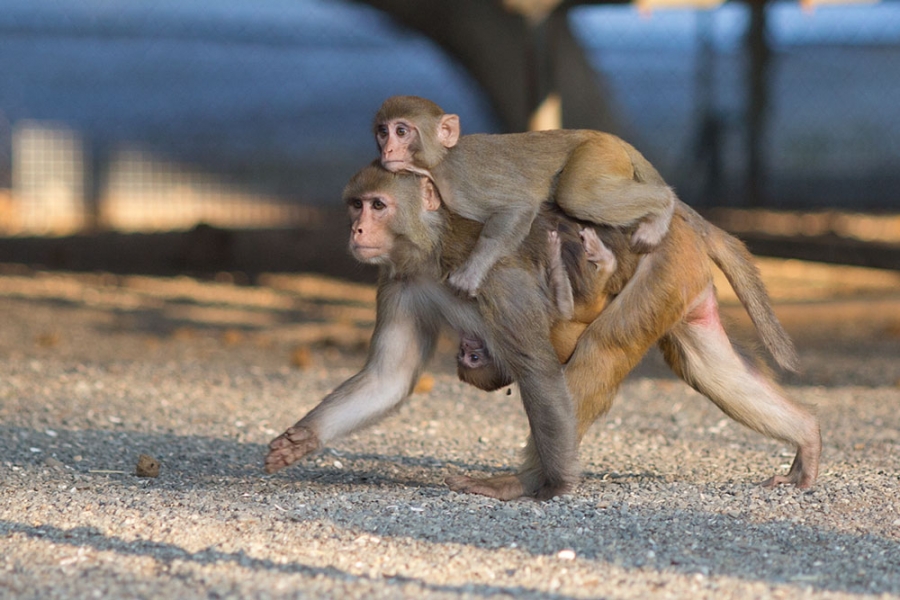
The study was done using rhesus monkeys at UC Davis’ California National Primate Research Center. After identifying male monkeys with naturally low levels of sociability, researchers collected samples of cerebrospinal fluid and noted significant differences in the neuropeptide concentration in the samples. The most notable difference was that of vasopressin.
“Vasopressin is a neuropeptide, a very small protein, synthesized in the hypothalamus,” said John Capitanio, a researcher on this project and a scientist at the CNPRC. “It was associated with fluid metabolism and blood pressure but it is also a peptide that is released into the brain as well. It is very closely related to oxytocin. Both oxytocin and vasopressin are peptides that have been suspected of being associated with autism spectrum disorders.”
Upon further analysis and a replication of the original experiment, researchers were able to confirm the correlation between low concentrations of vasopressin and low sociability. The monkeys acted as a vital model in confirming the research, Parker said.
Researchers were also able to use human cerebrospinal fluid samples from several hospitals across the country, provided through either excess CSF or CSF about to be disposed. The human subjects were 14 children, all boys. Seven were diagnosed with ASD and seven were not. Within this human cohort, despite its small sample size, the researchers confirmed their findings once again. The boys with low levels of CSF vasopressin had lower sociability than the boys with higher levels.
“These CSF biomarker findings suggest that vasopressin treatment may improve social abilities in people with autism,” Parker said.
But the study isn’t over yet. The researchers are planning on continuing their work, supported by the positive outcomes they discovered. Within their already four-year long professional partnership, Parker and Capitanio hope to continue their work with ASD until they can definitively have causal proof between the role of vasopressin and the development of autism.
“With all this work, we have correlational studies. What we want to show — and the work that we’re going to be starting in the next few months — is giving low social monkeys vasopressin to make them more social,” said Capitanio. “If we can do that, we have a causal model. At that point, we can say we are able to change social behaviors by altering concentrations of vasopressin in the animal’s brains.”
Written by: Alice Rocha — science@aggie.org
Concern over dinner cost, student benefits weighed
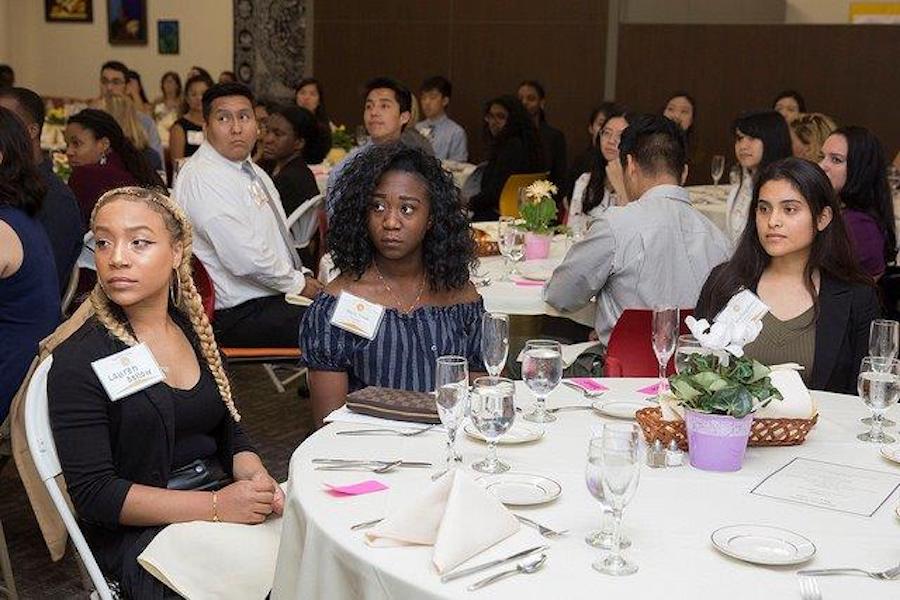
The Internship and Career Center at UC Davis held the “Shine While You Dine” event at the Center for Chicanx and Latinx Academic Student Success on May 10 to provide dining etiquette training for undergraduate STEM majors.
The dinner brought together approximately 70 UC Davis students from different STEM majors to learn about dining etiquette and how to conduct business conversations in a simulated professional setting. The dinner also featured Syndi Seid, a professional trainer from a business called Advanced Etiquette.
The cost of the dinner drew concern from Atanas Spasov, a third-year economics and mathematics double major and a member of the ASUCD Senate.
“I was at the Council on Student Affairs and Fees meeting, and we received information that the ICC received a $100,000 grant from Chevron, of which $7,500 was going toward an etiquette dinner which [would] be a three-course meal to teach students how to behave properly during a business meeting,” Spasov said. “[The dinner] possibly could have been useful, but in my opinion, it was frankly a waste of money that [could have been] used for much better projects to benefit more people on campus.”
Spasov recognized that although the money that was used for the event did not come out of student fees, he felt the money “could have definitely been used for a better purpose.”
“I feel like there are many ways that students can learn about the business world especially here on campus,” Spasov said, “For example, I was part of the Economics and Business Students Association for a year. I am also part of the Finance Investment Club. There are many other ways which you can really immerse yourself in the business world and learn how to act properly than spending $7,500 on an etiquette dinner.”
Luis Esparza, the assistant director of the Internship and Career Center, provided details on the purpose of the dinner.
“The ‘Shine While You Dine’ dinner was a new event,” Esparza said. “It was a dinner etiquette training event focused on helping students better understand dinner etiquette so that they can be more comfortable and confident in professional settings, be it at a formal dinner, a professional conference or maybe [when] they are being interviewed.”
Esparza said that the dinner provided students with “a tool to be more confident in those settings.”
When asked about how the “Shine While You Dine” dinner came to be, Esparza reflected on his experience as a first-generation college student, a graduate at UC Davis and now as an assistant director and advisor at the ICC.
“I hear [perspectives] from students based on my personal experience as a first-generation college grad and some of those things that I had a challenge with when I was going here,” Esparza said.
Esparza realized that if a student knew how to conduct themselves during a formal dinner situation, it could help them with their professional conduct.
Regarding the student groups that were reached out to for the dinner, Esparza said that they looked primarily at “those groups that have students in the STEM areas” as well as “students and organizations [from] underserved or underrepresented communities” such as “the Chicano and Latino Engineering and Sciences Society, Society for Women Engineers, Black Engineers Association.”
The dinner was made possible by a grant of $100,000 given to the ICC by the Chevron Corporation, of which approximately $7,500 was allocated for the dinner.
“We were able to offer this program in part because of a grant from Chevron,” Esparza said. “They support programs nationwide to encourage people currently underrepresented in STEM fields to pursue these disciplines in which there are great career prospects. Part of the emphasis of this event was to provide students interested in pursuing careers in the sciences, engineering and other physical sciences information on what to expect during professional meetings/interviews over a meal. We wanted to demystify the process so students can focus on the conversations, not which fork to use. Some students who were not in the STEM field attended, but the majority of participants are studying STEM disciplines.”
In an email interview with Marcie Kirk Holland, the director of the ICC, she offered details on the cost of the dinner.
“The budget for the event was $7,500,” Holland said via email. “We are finalizing accounting, but anticipate the event was about $1,000 under that budget. It was a pilot to see how we could deliver the content in a broader and more cost effective way. It is a topic that all of us benefit from hearing, for the first time, or as a refresher. We want students to be as comfortable in interview situations as possible. If we can take away anxiety about which fork to use and other protocol issues, our students can focus on the conversations and interactions, which means more opportunity to ‘Shine’ while they dine.”
Cirilo Cortez, the director of the Chicanx and Latinx Retention Initiative and the Student Center, spoke about his department’s contribution to the dinner.
“Initially, having the event at [the] center was one of our objectives to empower students by preparing them with preparation for what life will be like after they graduate,” Cortez said. “We do a lot of collaboration with the ICC, so, with a grant from Chevron, the idea was to bring a professional who is very familiar with dinner etiquette. Since the mission of the [ICC] program was to provide these opportunities to underrepresented students given we serve one of the Chicanx populations, it was very appropriate for us to host it here and open that up to the larger community as well so that we can create awareness of the new center.”
Cortez then offered his thoughts on the dinner.
“I think that these opportunities are very effective and beneficial,” Cortez said. “I think about my experience as an undergrad and not having too many of these opportunities in front of me and how I would have benefitted from having those as an undergrad going into my professional career. Skills that we take for granted [… are] so important when you are networking and getting to know future supervisors and colleagues in the professional world.”
Written by: George Liao — campus@theaggie.org
Everyone saw that, Preston
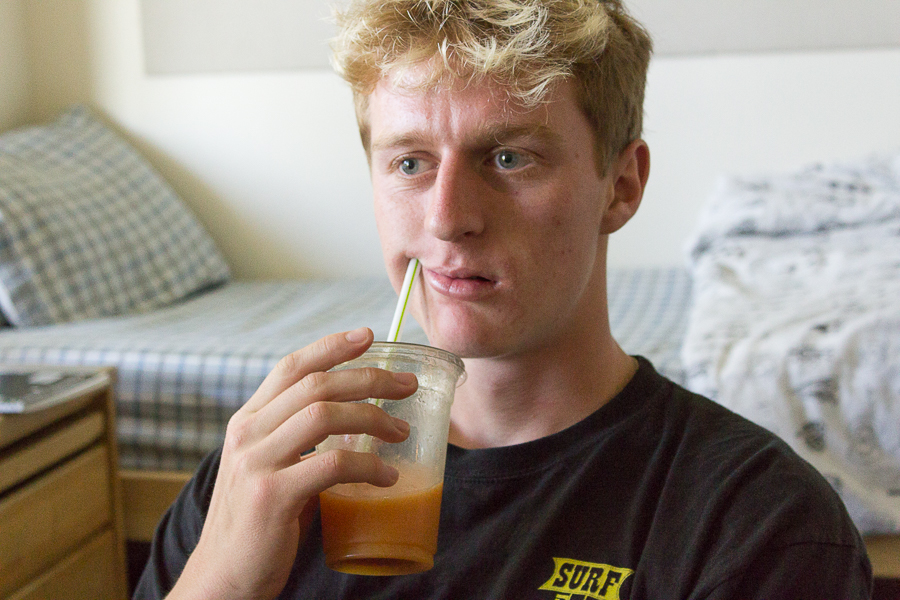
 Preston Troutman, a fourth-year landscape architecture major, had just made a somewhat witty remark to his buddy Clint’s anecdote about shopping for the perfect summer mandals when it happened. Troutman drew his Yoo-hoo milk box to his mouth for a sip, while puckering his smirking lips, only to stick the straw an inch north-east of his mouth. The straw was on a trajectory to meet Troutman’s flexed upper lip, when his groping mouth realized something was wrong, very wrong.
He managed to correct the mistake by redirecting the bendy straw in the right direction, but not before at least two others had seen. Poor Troutman attempted to act as though nothing amiss had occurred, hoping against all odds that no one had witnessed the shameful act.
Three people at the table were not watching when the event occurred. Two people, who were acting like they didn’t hear the remark — because they were tired of Troutman’s lame jokes — were pretending to be caught in an intense philosophical conversation with one another. (“When someone smiles at you, they’re showing you part of their skeleton. Think about it.”) One person was surfing the FriendMatch app, obviously. But Beth Rock, a fourth-year engineering major, was watching.
“What a doof!” she said when asked for a comment. “I wish I had filmed it in slow motion.”
Elisha, a third-year French major and avid YouTuber at the next table over, also happened to see and was filled with immense schadenfreude. He repressed the faintest flicker of a smile at the failure.
“That made my day,” Elisha said.
He later posted a vlog to YouTube about the incident.
“You never know what will happen on campus to turn the bleakest of week-nine days into small, radiant moments of joy. The next time the coffee stain on your shirt looks a little too much like cat pee for comfort, or the girl from your comparative literature class hesitantly gives you the old smile and nod when you flash her a big, toothy grin and a hearty, two-hand wave, remember: Somewhere out there, someone else is making a total idiot of themselves, too.”
Written by: Jess Driver — jmdriver@ucdavis.edu
(This article is humor and/or satire, and its content is purely fictional. The story and the names of “sources” are fictionalized.)
Perpetrator described as white with brown curly hair, glasses and a beard
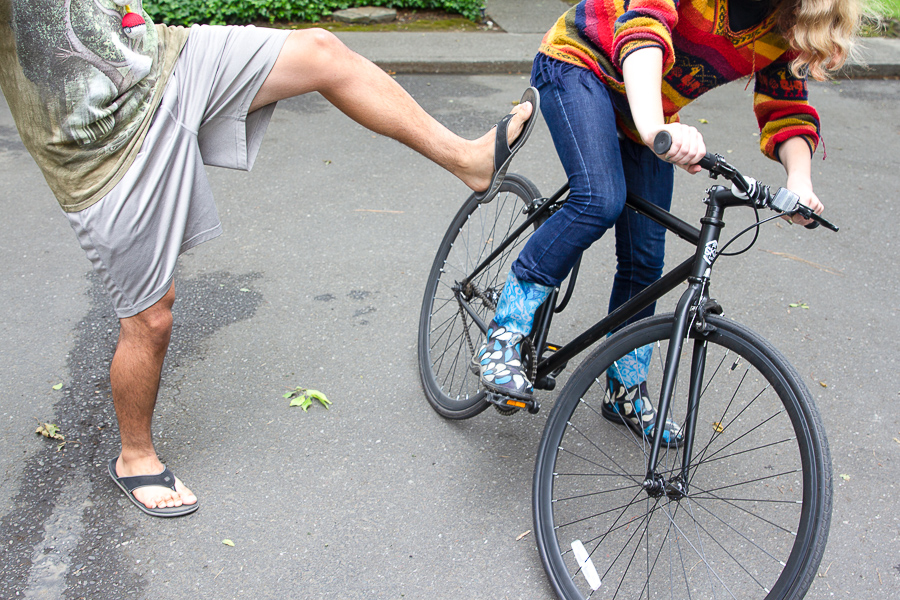
The UC Davis Police Department issued an official crime alert this week notifying students and staff about a wanted man with unknown motives. The notice comes after a series of incidents occurring throughout the week involving the still-unidentified criminal “kicking moving cyclists off of their bicycles, yelling ‘blam!’ and then proceeding to run in a random direction.” Officers tell The California Aggie there have been over 40 incidents involving similar circumstances.
Many victims of this terrible crime are still experiencing trauma.
“It was 9 a.m. on a Monday, and I was riding to my French class,” fourth-year Kyle Jordan recounted. “I was hitting a pretty nice tailwind on California when all of a sudden I hear this… inhuman sound. Then, I’m on the ground, scrapes everywhere. Someone comes up to me and tells me they saw this guy kick me off and run into some nearby bushes. I haven’t been back on the bike since, and now every morning I wake up to that sound ringing in my ears.”
After collecting each victim’s testimony, the police department has released a list of physical characteristics to help identify the vigilante. Consistently, victims with memories of the perpetrator remember a tall white male with curly hair, glasses and a beard. One student recalls him “looking vaguely like Seth Rogan” and another claims he “just had that English major look.” While this is still a rough profile, Davis police officers are confident they will find the man they are now calling the “Davis Bike Blammer.”
“There’s no question that we’ll get this guy,” said Guy Sogud, chief of the Davis Police Bike Division. “In cases like this, we’re more concerned with copycats. In the last two days, we’ve already seen reports of people being punched or flicked off of their bikes after hearing ‘ka-blammo’ or ‘blippity bloppity, you’re not the boss of me.’”
The Aggie is asking anyone with information about the “Davis Bike Blammer” to call the “DBB Hotline” at 1-530-BIKEBLAM.
Written by: Conner Shaw — cjshaw@ucdavis.edu
(This article is humor and/or satire, and its content is purely fictional. The story and the names of “sources” are fictionalized.)

The dark web has proved fertile ground for men who hate women
The dark web has long been a haven for some of the most unpleasant aspects of society to burrow. This is the world of trolls and trolling, we tell ourselves; these are people who have too much time on their hands, who have nothing better to do all day. These are people who can’t stand the fact that they’re irrelevant. Nobody takes them seriously.
However, as the #MeToo movement has evolved, amplifying already controversial debates about consent and sexual harassment in the public sphere, a disturbing backlash has begun to emerge on the internet that is far more dangerous than this country might have anticipated. Specifically, an online group has emerged in recent years that calls themselves “incels,” or “involuntary celibates.” Incels declare themselves sexually frustrated and blame women for their unhappy celibacy. Some have professed a desire to create a “war on women,” and approximately three have been responsible for mass shootings in the last four years. Normally, groups like these have stayed underground, thus failing to garner much attention. But with the rise of populism in the United States and the intersection of white supremacy with deeply misogynist views, they have gained a disturbingly substantial following in the more unpleasant depths of social media and the like.
The incel movement can easily be passed off as one for “guys without dates,” a harmless subgroup for the desperate and lonely. Picture a baggy-clothed 20-something eating potato chips and watching television in a basement somewhere. But the sexism and violence expressed in their comments is indicative of something much darker at play. Doubtless, we are living in an era where the definition of manhood is rapidly changing, where those previously in power have been taken to task for actions that just 10 years ago would not have been considered worthy of attention.
It’s this shift, perhaps, that’s partially responsible for the backlash emerging online and in the public sphere about women’s place in society. The underlying social belief that sex and entertainment are a man’s due have been called into question, and some apathetic young men, it appears, hold tight to this misogynist ideal. Interestingly, although they have limited access to the opposite sex, incels are highly specific about what kind of women they prefer. “Good” women are modest and submissive. “Bad” women speak their minds and dress provocatively. It’s a pathetic caricature that would be easy to laugh at if it weren’t so dangerous.
As a woman, it didn’t come as much of a surprise to me that there are groups like this emerging on the internet. Debates about consent on college campuses and beyond have reminded us that there remains a contingent of people who firmly believe in their own sexual supremacy and who are disinterested in the feelings and thoughts of others over their personal needs. Indeed, one only has to scroll through the comments on YouTube or Facebook or Reddit to find the underbelly of society raging at full tilt, an American subset screaming for attention and recognition. I still believe, however, that the incel movement is indicative of a larger problem in the U.S. as a whole. Our president has been accused of sexual assault and harassment, has openly endorsed a candidate who was accused of having inappropriate affairs with teenage girls and has not hesitated to make his contempt for powerful women clear. With a White House that condones, if not accepts, such conduct on the part of the man in charge, and that has taken a deeply traditional stance on women’s professional and reproductive rights, it’s easy to see why such subgroups like incels would feel emboldened and empowered.
Incels tell me something about womanhood that I already knew but didn’t want to think about: Somewhere out there, there’s someone who hates you simply by virtue of your sex. Somewhere out there, there’s someone trying to take away your power. And somewhere out there, there’s someone who wants to harm you. There have always been people like this. But in today’s America, they’ve been given an unprecedented voice, a space that renders their actions both permissible and justified.
Written by: Rebecca Bihn-Wallace — rlbihnwallace@ucdavis.edu
Disclaimer: The views and opinions expressed by individual columnists belong to the columnists alone and do not necessarily indicate the views and opinions held by The California Aggie.

Supreme Court’s latest ruling opens door for individual states to legalize sports gambling
The United States Supreme Court officially repealed the Professional and Amateur Sports Protection Act of 1992 early in the morning of May 14, clearing the way for every state in the country to offer legalized sports gambling.
The ruling stems from a lawsuit between the state of New Jersey and the NFL, NBA, MLB, NHL and NCAA. The Supreme Court made the decision that PASPA was unconstitutional.
From now on, it is up to individual states to determine if they want to allow sports gambling and, if so, come up with their own rules and regulations.
According to the American Gaming Association, Americans illegally wager about $150 billion every year on sports. Back in February, an estimated $4.7 billion was bet on Super Bowl 52, with only about 3 percent of that amount wagered legally.
With easier and safer access to sports gambling now, there’s no reason to believe that those numbers won’t continue to grow in the near future.
This ruling will stand to have a tremendous impact on all sports in America, at both the professional and collegiate levels.
The major sports leagues will surely end up receiving a cut of this revenue from bookmakers. Already, the NBA and MLB have publicly advocated for 1 percent of the profits, in order to fund compliance efforts that would ensure the integrity of the game remains intact. After a closer look, this seems like an unreasonably high asking price. Sports bookmakers typically have a profit margin of around 5 percent, so in reality the leagues would be asking for about 20 percent of the money, which just isn’t realistic. No matter what happens, the leagues will be financially compensated one way or another because without them, sports gambling would be nonexistent.
This ruling will also possibly change the viewing habits and motivations for people who watch sports. Betting will give people a reason to tune in to games that they would otherwise have no intention of watching. This will clearly affect stadium attendance and television ratings and drive engagement and interest even more. All of these things are very positive signs for the major sports leagues of the United States.
Sports gambling will also be a lot more visible in our society with this new legislation. The United Kingdom provides a preview of what to expect over here in the near future. Bookmakers have an incredible presence all over English soccer, with top sponsorship deals and naming rights to many of the teams. There are numerous stadiums that are named after bookmakers and many teams have these companies printed on their jerseys. In addition, these bookmakers run their own shops on seemingly every corner of every little town and city in the UK.
With the levels of technological advancements and innovation in our world today, as well as the growth of data systems and statistical analysis, the sky is the limit for sports betting. Don’t be surprised if, in the next decade, fans have the ability to walk up to a concession stand at a stadium, place bets on the game they’re watching live and collect their winnings all at the same time. The types of bets will go far beyond the traditional winners, losers and point totals.
One of the primary concerns regarding the idea of legalizing sports betting is the potential for “the integrity of the game” to be compromised and the outbreak of practices like point shaving. It’s not difficult to imagine a scenario in which players, coaches or referees are caught fixing a game to accommodate point spreads and game totals.
Point shaving scandals have been a commonplace occurrence over the years, especially in NCAA men’s basketball, and numerous investigations have been conducted to prove it. Obviously, the NCAA has bylaws in place that forbid all student-athletes and athletics department officials from betting on sports. Student-athletes automatically lose all of their eligibility if they’re caught being involved in any way.
The NCAA has conducted studies on sports betting among student-athletes in 2004, 2008, 2012 and 2016.
The 2016 study revealed that “11 percent of Division I football players and 5 percent of men’s basketball players reported betting on a college game in their sport (but not involving their team).”
The 2012 version of the study provided even more details on the matter: 2.1 percent of Division I men’s basketball players and 1.2 percent of Division I football players had received requests to alter the outcome of a game that they were personally involved in. In addition, 0.8 percent of men’s basketball players and 1.3 percent of football players admitted to placing wagers on their own teams.
The NCAA has continued to try and combat this issue through educational programs such as the “Don’t Bet On It” initiative.
The NBA and MLB have already been employing sports data agencies, such as Sportradar, Perform and Genius Sports for quite some time. These companies act as compliance agencies for the leagues and monitor betting activity around the world. If any unusual or suspicious activities are happening on the betting market, they will pick it up and immediately alert the leagues to conduct an investigation. For example, if a large amount of money or wagers were suddenly placed on a certain team out of nowhere, that would be an automatic red flag.
Let’s just say the Raiders and 49ers are playing each other in an upcoming game and the 49ers are favored to win by 6.5 points. Normally, you would expect the percentage of wagers placed on each team to be somewhat even. If a significant amount of money is suddenly bet on the Raiders on the night before the game, especially from a small number of sources, that could be a sign of potential corruption.
Overall, the Supreme Court’s ruling will have a lasting effect on sports as we currently know them. It’s just a matter of time for each state to enact its own laws and regulations, before we can go all-in on this new generation of sports.
Written by: Brendan Ogburn — sports@theaggie.org
How Aiello balances her opposite passions
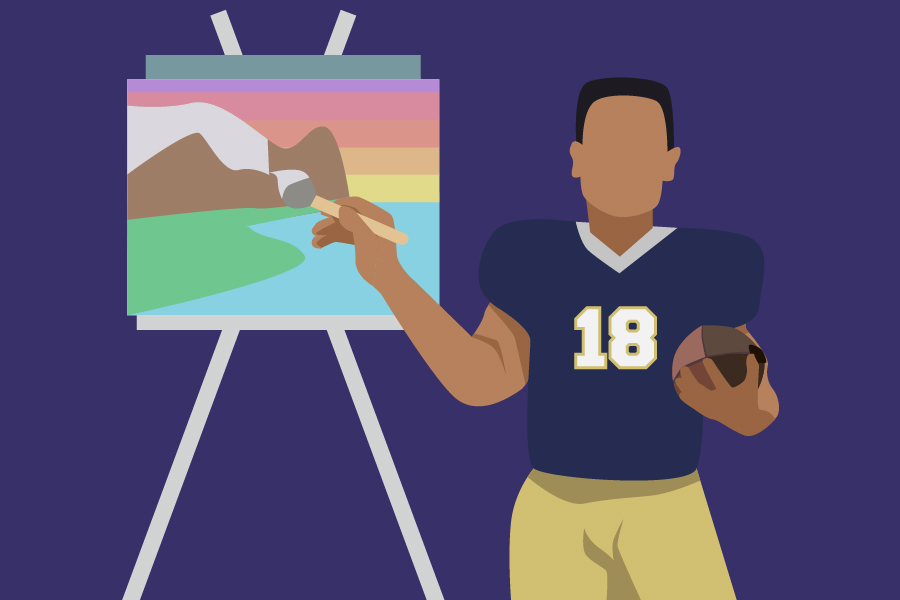
It seems many students have had a similar childhood experience: parents urging them to try a new instrument or sport, ultimately finding the niche activity that suits them best — often choosing between an individual artistic passion or finding joy in an athletic outlet. Yet there are some who have found dedication in both, including second-year art studio and psychology double major Maxine Aiello.
“I have been doing art forever and really focused on that,” Aiello said. “I got really into sculpture after taking a class winter quarter, but I still do painting and drawing as well. I wasn’t super into sports, but I have been wakeboarding since I was about seven and when I saw there was a team on campus I tried it out and it kinda developed into a bigger thing.”
Aiello recognizes that each of her hobbies requires a different mindset or area of effort while participating, pushing her in different directions.
“I get different things out of both of them,” Aiello said. “When I’m making my art, it’s more emotionally expressive and helpful for me in that way. When I water ski, it’s more physically expressive.”
Moreover, time management has proven to be difficult, as Aiello often feels pulled in these different directions.
“I’ve learned that you can’t do everything all the time, and to focus on specific projects and take advantage of time that you do have,” Aiello said.
Yet, art and athletics seem to have more fundamental commonalities than initially expected. Aiello notices that both have granted her the opportunity of being comfortable with the uncomfortable — to not be afraid to fail. With her serious dedication to both art and water skiing, she has more mediums to experience personal growth through.
“Obviously the art I do is by myself, but both push me into different uncomfortable areas and trying new things and to improve,” Aiello said. “Learning how to fail is something I’ve gotten better at, and am less afraid to try new things on the water and I’m getting less afraid to make bad art and to start things and not like them later; letting yourself fail so you get better at it eventually.”
The sense of community and team makes its way into both art and athletics
“It definitely is an individual sport, but it is still very team oriented,” Aiello said. “There is a lot of things we do together and comradery and team traditions and stuff. I definitely missed the team aspects of sports. And with art, I still feel like I’m very much a part of the team. Most of my art classes are pretty small so you have to learn how to critique others but in a really supportive way. Waterskiing is the same way.”
The community aspect of both creates a symbiotic relationship for Aiello; as she learns from one activity, she can improve in the same way for the other.
“I think it’s added a lot to my life to be a part of two communities; it helps me with my art getting more experiences,” Aiello said. “There has been an improvement in my life since joining water ski. It’s good to try new things, to meet more people and have more experiences and have different conversations than you usually would […] You can always weave it into your artwork in some way.”
Whether students occupy their time by physically training for an upcoming competition or by bending over their newest masterpiece, Aiello proves there is benefit in both — together or separate.
Written by: Caroline Rutten — arts@theaggie.org

©2021, ASUCD. Designed by Creative Media.