59 F
Davis

Davis, California

Thursday, December 25, 2025
Home Blog Page 566

Engineering: an endeavor beyond hard skills

0
SONIA KRISHNA / COURTESY

Engineers Without Borders, global impact of engineers, senior design project

On the UC Davis campus, engineers are employing communications and various interdisciplinary skills to be successful.

Engineers Without Borders is a student organization similar to the concept of Doctors Without Borders. The main idea is that the tools of science can transcend man-made borders, as people work to help other members in global communities who are in need.

The UC Davis chapter of EWB currently has parallel projects running in three countries: Peru, Bolivia and Indonesia. Most of the projects pertain to issues of water and water systems, such as building eco-latrines and implementing a completely new water system.

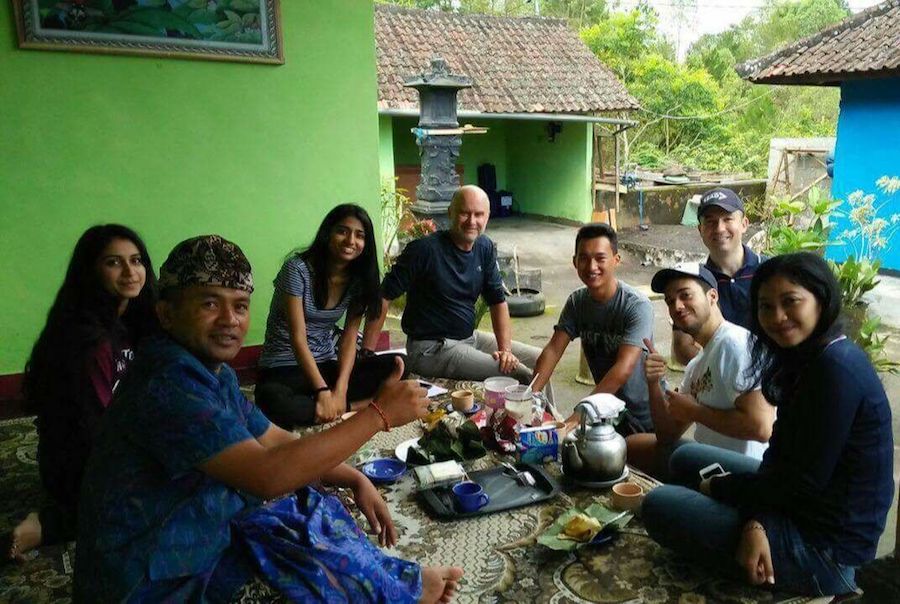
“Our goal at the end of the day is to help these communities get more clean water, more plentiful amounts of water and [to] really just appease the needs of their community,” said Sonia Krishna, a fourth-year electrical engineering major and the president of EWB. “We are more of a technical needs club; we don’t really tend to mix with the social but we do have to be prepared for that too. When I went to Peru for example, there were some clashes with different communities and we had to be prepared.”

EWB strives to allow undergraduates to delve into real-world projects abroad, network with different companies and develop some soft skills. It gives them the chance to go beyond the classroom academics and be able to perceive the breadth of the application of their technical knowledge.

“When I came in, I was a little bit overwhelmed like any freshman would be,” Krishna said. “I didn’t know anything about application of skills. [But] my personal experience is that this club isn’t just about introduction to these skills, it’s about empowering you to use these skills.”

These projects don’t have immediate gratification, Krishna said. Unlike the satisfaction of conducting a successful surgery, these sorts of projects span about five years and are very large scale.

“We spend so much time [on these projects], and it seems like a quick fix, but being able to work through these problems […] it’s a phenomenal experience,” Krishna said.

Tanisha Potnis, a third-year mechanical engineering major, is the project lead for EWB’s Indonesia project. Potnis provided more insight into the genesis and implementation of the project, and the nuances it encompasses. These projects require multiple trips to the country they are based in and the collection of very comprehensive data.

“The project has three trips: assessment, implementation [and] monitoring/evaluation,” Potnis said. “We just completed our assessment trip this past summer. It’s usually about two weeks long, and we collected everything from soil data, water data, elevation data and data on the community — their opinions, satisfaction with the current system and what they’d like to see improved.”

In addition to providing a platform for developing technical and soft skills, the travelling involved in the projects, according to Krishna, is a learning experience in and of itself.

“It was a really good experience for me, because it was not only humbling to live in a place where people were so generous with so little, but I [also] never realized how much we can do as students, and how much power we have,” Krishna said. “Every engineer in my trip was a different major. We had biomedical, electrical, civil, mechanical — so working with all these different majors was phenomenal because we all had something to offer. We all kind of learned to communicate not only with each other but also with the community.”

But all engineering students, regardless of whether they are in EWB, are required to apply their skills before graduation through the senior design project.

“Senior design— it’s basically an organized internship,” said Krishna Basude, a fourth-year mechanical and biomedical engineering double major. “Companies apply to be part of the program, they put forward a project and we decide what we want to do. [But] my team decided that we wanted to do something a little bit different. We wanted to do something that could possibly continue [and] get patented.”

Basude and his team are working on a project related to musculoskeletal mechanisms involved with overuse injuries in athletes and others who undergo physical exertion. The team is trying to help customers predict when they’re going to face an injury. Using the example of running, Basude explained how overuse injury occurs when muscles grow increasingly tired, and may eventually “snap” like a rubber band stretched beyond its limits.

“If you’ve been lazy up to this point, [this is] forcing you to do an internship,” Basude said. “And if you do it well, typically it can have an impact on your future job prospects. It’s a real life thing. There have been students that have come out with patents and written some provisional patents.”

Part of Basude’s project is finding ways to quantify muscle fatigue, and in an effort to develop a user-friendly device, Basude and his team are sending out surveys to patients and clinicians to learn more about how to cater their device to people’s needs. In the survey, they are presenting different facets of the device, such as accuracy, price, set-up time, portability and asking for patient and clinician opinions on the matter in order to cater to their needs.

“Oftentimes we try to make a product before identifying and catering to a specific need,” Basude said. “The problem is, you can’t have form before function. You can’t design something and try to make it work. You have to find a need, and design something very much based on that need.”

Basude’s team is taking on business and engineering roles by conducting their own market research, effectively demonstrating the interdisciplinary nature of an engineer’s career.

“Being an engineer, especially if you want to design a product, you have to be a businessman in some sense — at least in those initial stages,” Basude said. “There’s a lot of market research that goes into this. The current state of the art is really important, [which is] what people are doing right now. What you really want to make sure is that you’re better than them.”

Engineers are tasked with more than just solving physics problems. They are tasked with taking those skills and applying them to real-life situations, while keeping in mind the sociocultural framework within which they are trying to work.


Written by: Sahiti Vemula — features@theaggie.org
Mussels, seaweed beds control temperature in intertidal areas

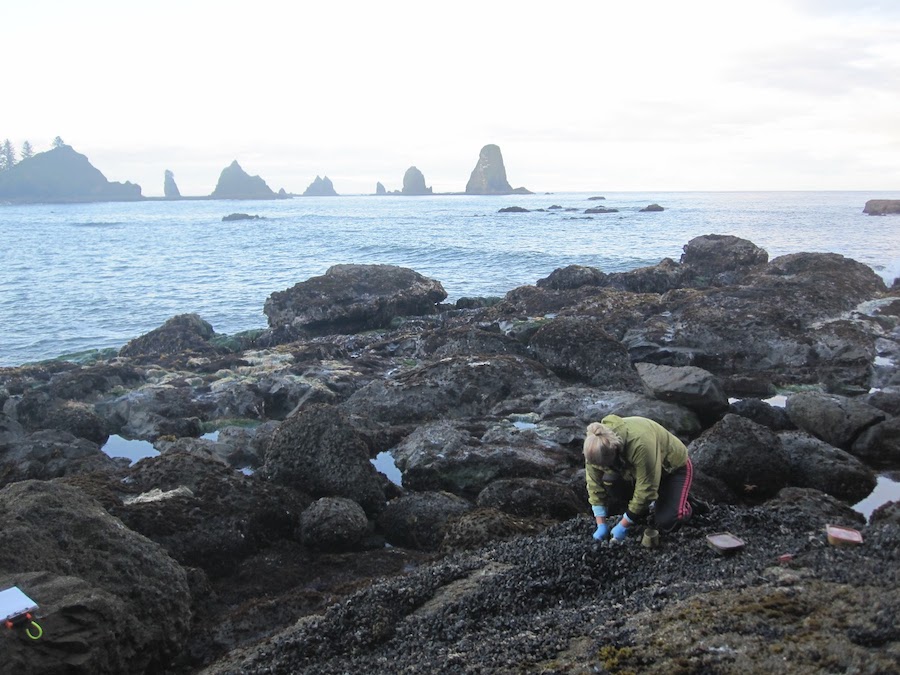
Laura Jurgens deploying instruments (temperature loggers) in mussel beds in Olympic National Park (Washington, USA). (JEFF JURGENS / COURTESY)

Creating their own air conditioning may help local species resist climate change

Even on hot summer days, forest temperatures are much cooler. According to Laura Jurgens, plants and animals can change the temperature of their environments.

Jurgen’s focus is dissertation research of the temperatures of mussel and seaweed beds over the course of a year. From the UC Davis Marine Reserve at Bodega Bay, Jurgens traveled to the Channel Islands and Olympic National Parks. Despite the geography ranging from Southern California to Washington state, the temperature of the habitats stayed relatively the same and cooler than the outside environment.

“We often think in ecological conversation that the physical environment affects organisms,” Jurgens said. “The reverse can also be true, so many different creatures live in habitats formed by other creatures.”

Mussel and seaweed beds just a centimeter thick can act as thermal buffers and reduce temperatures. This, in turn, helps species that would get stressed and possibly die at higher temperatures.

“We expected temperatures within mussel beds to be buffered relative to those outside, but we were not prepared for the extent to which this was the case,” said Brian Gaylord, Jurgen’s advisor and co-author. “We typically expect to see warmer environmental temperatures at lower latitudes and cooler ones nearer the poles, but this trend was essentially eliminated in the mussel beds.”

Habitats where species play an active role in maintaining the local temperature may be able to resist rising temperatures due to climate change, but only up to a certain point. Once a certain threshold is passed, and the species responsible for acting as the local air conditioner are gone, even more species will disappear.

“Places with more severe heat waves will lose habitats faster,” Jurgens said.

In the warmest areas of the study, San Diego and Baja California, Jurgens noticed the mussel and seaweed beds were not as common. It’s not clear if this is simply the edge of their range, or if the lack of organisms is due to rising temperatures.

The Channel Islands National Park, one of the areas Jurgens used for her research, does not specifically study climate change, but has seen rising temperatures throughout the park, excluding the mussel and seaweed beds.

“There has been a decline since 2014 in sea stars due to wasting disease,” said Yvonne Menard, the chief of interpretation and a public information officer.

Climate change does not cause this deadly disease, but it makes it worse.

Jurgen’s study points to assumptions that are made about how climate change may affect species. Predictions about the world getting warmer do not take into account how some areas regulate their own temperature.

“For habitats that are degraded, we don’t know how that will affect the species [that live there],” Jurgens said.

For more intact areas, there may be some hope that species living there can resist the warming climate since they have their own natural air conditioning.

“We’re already outstripping the worst case scenario [for climate change] faster than thought,” Jurgens said.


Written By: Rachel Paul — science@theaggie.org

No more dark energy?

MORGAN TIEU / AGGIE

UC Davis mathematicians find different explanation for cosmic acceleration

The universe is quickly expanding through a phenomenon called cosmic acceleration. The theory of general relativity, written by Albert Einstein, contains a cosmological constant. This constant balances gravitational force, the force of attraction between all masses in the universe, and was put in by Einstein to produce a static universe.

Einstein’s theory of general relativity and his work on the photoelectric effect, as well as the work of others, showed that the assumption that there is an ‘aether’ that can’t be detected, is unnecessary, and today no one believes that this aether exists,” said UC Davis math professor Elbridge Puckett.

Now that we know the universe expands and therefore isn’t static, scientists have used the cosmological constant as interchangeable with dark energy. Joel Smoller, a late professor of mathematics at the University of Michigan, Ann Arbor and two mathematics professors from UC Davis, Blake Temple and Zeke Vogler, didn’t think that was the right way to go.

Our starting conviction that there was no dark energy was based on the insight that the fingerprint of mistakenly adding a fudge factor to a set of equations because you think you have the wrong equations, when in fact you have the wrong solution to the correct equations, is that the theory with the fudge factor must be fine-tuned so that the fudge factor is on the order of the errors you need to correct,” Temple said. “In dark energy theory, this requires that the cosmological constant be roughly the same size as the energy density of the universe at present time.”

The mathematicians didn’t set out to prove Einstein wrong. Rather, they started by assuming that Einstein’s equations were right without the cosmological constant and proved, if they were right, the critical Friedmann space time, the standard model of cosmology after the pressure drops to zero, is unstable.

But the fact that we have characterized an instability in the Friedmann spacetime, a spacetime which has been the centerpiece of cosmology since the 1920s, is a remarkable thing to discover 100 years later,” Temple said. “This, together with the fact that the phase portrait of the instability describes exact perturbations created by the the instability that mimic the effects of dark energy so closely, is the reason that the Proceedings of the Royal Society supported the paper and published it, even though it is quite controversial because it challenges a long-accepted model in physics.”

When asked about the conclusion of the paper, distinguished professor of mathematics David Levermore at the University of Maryland said that the paper makes a strong case that dark energy is unnecessary.

“Their paper makes a strong mathematical case that there is no need to postulate the existence of dark energy in order to explain the observed ‘acceleration’ of the expansion of the universe,” Levermore said.


Written by: Kriti Varghese — science@theaggie.org

Back to school: a playlist to squash winter angst

JEREMY DANG / AGGIE

Songs to start the new year positively

Returning to school after the long, much-needed holiday break can be disgruntling. Despite its reputation among students as the worst of the academic quarters, Winter Quarter can offer a fresh start. It’s all a matter of having the right attitude. Brace yourself for the new year with this playlist to push through each obstacle.


“Sweater Weather” by The Neighborhood

Perfect for an overcast afternoon, The Neighbourhood’s biggest hit since 2013 still remains the ultimate winter song. Curl up in your favorite hoodie and listen to this somber tune on repeat. This cold weather anthem is an oldie but a goodie.


“Dreary” by Lo Noom

Winter Quarter is hands-down the absolute worst. The incessant rain and bitter chill makes it a soul-sucking quarter, year after year. Dreary encapsulates the lethargic emotions we all experience after the three-week break. Relatable would be an understatement when describing this song.


“Revvin’ My Cj7” by Summer Salt

The monotony of a fixed schedule can quickly become exhausting. Momentarily avoid your stress with this summer ballad. “Revvin’ My Cj7” describes the craving to escape the “long year” and transport elsewhere by listening to your “favorite song.”


“Silhouettes” by Colony House

“Silhouettes” sends a message about the importance of optimism during hard times. If your glass looks half empty, “fill up” because “there’s no sense in holding onto something broken.” Lead singer Caleb Chapman emphasizes that every memory, good and bad, should be cherished. Start this new quarter hoping for the best even when it’s tough.


“One Foot” by Walk the Moon

In the midst of a rough patch, the band was inspired to write this song to push onward. Lead singer Nicholas Petricca says “It’s a choice we make every single day to keep going or give up.” Your path may be uncertain, but it’s worth every risk and ounce of perseverance. Winter Quarter may be hellish, but it’s all uphill from there.


“Don’t Take the Monday” by Bleachers

Jack Antonoff wrote this song as a message to stay on track. “Don’t take the money” is a phrase he reminds himself of when his gut feeling turns him away from something positive. Break down negative barriers this quarter by reminding yourself the same.


Written by: Becky Lee — arts@theaggie.org

A Day at the Shuk

CAROLINE RUTTEN / COURTESY

After spending some time in Israel, Aggie writer recounts her favorite food and cultural moments

Over winter break, I had the privilege of representing UC Davis in an educational program called The David Project, which brings student leaders from different college campuses to Israel in order to learn about the conflict and culture there. During my 10 days spent there, I was introduced to a variety of cultural practices and settings that took me out of my comfort zone to witness a spectrum of new tastes, sights and experiences. One of my most memorable moments was the day I spent at Mahane Yehuda Market, a popular Jerusalem market also known as the Shuk. Crowded grids of vendors with various items and food for sale filled the concrete grounds. Large bowls of tea, produce and grains enticed patrons. Some of the best food and greatest insight into it and the everyday art of Israel was seen in this Jerusalem market; if one ever has the chance to visit Israel, here are some of my favorite food, drink and sights from the Shuk.


Best Meal: Malawah

Not only was this my favorite meal from the day at the market, but probably from the trip as a whole. What looks like a thin pancake has layers of fried pastry cooked with oil in a frying pan and stuffed with a variety of toppings. My personal favorite toppings included tahini, hummus, pickles, Israeli salad (diced tomatoes and cucumbers), parsley, hard-boiled egg, onion, green onions and caramelized onions. The flakey wrap was what made the meal, the lightness to balance out the various flavors that were filled inside. This meal is a must-try, and I’ll be on the search for the nearest one in the Davis area.


Best Beer: Gold Star

This top-selling (and kosher) beer in Israel is a great staple beer. While darker, it is not the heaviest of beer, which makes it a great universal choice, no matter your beer preference. While I’m not the biggest light beer fan, there was no watered-down taste, as commonly be expected with popular light beers. Israelis know how to do beer right.


Best Dessert: Halvah (and Ice Cream)

This soft, sweet, fudgelike cake is a common item in Israeli and Middle Eastern markets. The base is surprisingly made with sesame paste (forewarning: the sesame taste is very prominent) and is topped with a variety of flavors, including nutella, coffee, various fruits and more. While the intensity of flavor does not call for this to be eaten on a daily basis, the distinct flavor and variety of customizations make it a must-try.


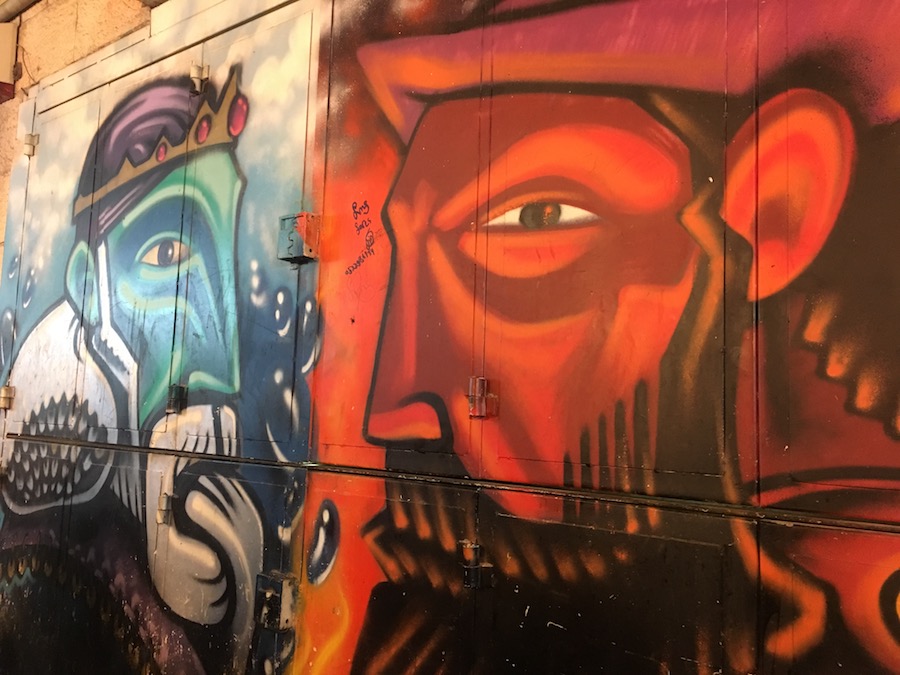
Best Graffiti: Solomon Swaza

Solomon Swaza’s graffiti cannot be missed when at the Shuk. It’s not hard to do so either — most empty doors and walls are adorned with his colorful, eclectic portraits. Added to the Shuk four to five years ago, Swaza spray paints images of people, often rabbis and religious figures. He’s not necessarily making a religious statement through his work, but highlighting the religious prominence of the city of Jerusalem, combining traditionally held ideals with the colorful modern culture. Such display of the juxtaposition that describes Israeli culture makes him the perfect artist to decorate this cultural hub.  


Written by: Caroline Rutten — arts@theaggie.org

Creating a SAFE space

0

Community program inspires healing, acceptance among Southeast Asians

For another consecutive year, the Southeast Asians Furthering Education community program at UC Davis will be hosting its annual Southeast Asian Youth Conference for the 2017-2018 school year. This year, the conference will take place from Jan. 26 to 28 and will follow the theme “Transformative Healing: Our Continuous Narratives.”

SAFE, a community program under UC Davis’s Student Recruitment and Retention Center, aims to provide support and resources to individuals who identify as Southeast Asian while also trying to create an environment of acceptance and inclusion.

“Our mission is to help the Southeast Asian community, specifically those narratives that are tied to the Southeast Asian wars,” said Marady Chhim, a third-year organizational sociology major and SAFE’s community development and advocacy coordinator. “This includes the Khmer Rouge, the Vietnam War, the Pathet Lao, the Secret War and so on.”

SAFE follows two core pillars: retention and recruitment. The retention aspect of the program works on a campuswide level, mainly focusing on assisting Southeast Asian students at UC Davis on their pursuit and continuation of higher education.

“When SAFE was first established, the retention rate was very low here,” Chhim said. “There were many Southeast Asians attending the school, but there weren’t enough of them graduating. […] We try to find holistic ways to support our students, whether it be through encouraging academic excellence, talking about mental health or addressing issues that directly impact the Southeast Asian community.”

SAFE also focuses many of its efforts on the recruitment aspect of the program, holding an annual Southeast Asian Youth Conference for middle and high schoolers. The three-day, two-night conference, held at UC Davis, provides a safe space for Southeast Asian youth to explore and discuss the Southeast Asian experience.

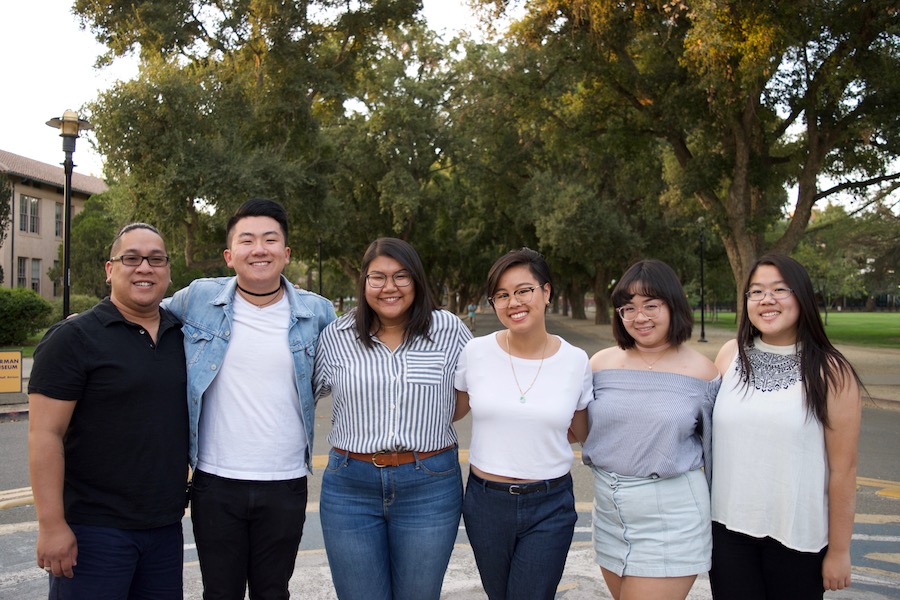
Judy Chang, a third-year human development major and middle school outreach coordinator for SAFE, and Shayla Phothisene, a third-year human development major and high school outreach coordinator for the program, work meticulously year-round to plan and organize the conference.

“We host workshops throughout the three days, facilitated by members of our [SAFE] community, that revolve around cultural identity and [which] focus on the narratives that different ethnicity groups experience,” Chang said. “This year, Shayla and I are incorporating contemporary issues that Southeast Asians might have. That way, students are aware of [how] their history could affect them today.”

SAFE’s ultimate goal is to encourage Southeast Asian youth to embrace their heritage because, according to the program, those narratives are instrumental in their journeys toward higher education and beyond.

Our main objective for the Southeast Asian Youth Conference is to advocate for middle school and high school students by empowering them and giving them the resources to pursue higher education and other pathways they desire,” Phothisene said. “This year’s theme, ‘Transformative Healing: Our Continuous Narratives,’ is [intended] to create a space […] for students to share their narratives, to find a way to heal from their traumas and to empower them to pursue higher education.

SAFE hopes that the theme for this year’s youth conference will empower members of Southeast Asian youth to seek healing through both self-reflection and community.

“Our theme has to do with healing from trauma, whether it be historical trauma or personal trauma,” Chang said. “We want students to realize that ‘healing starts with you.’ Once they understand this, then they can start to heal with others [in their] community.”

Chang and Phothisene both started their journeys in SAFE early on in their college careers, maintaining their positions as active members before eventually adopting leadership positions in the program. They both agree that being involved in SAFE has completely transcended their experiences here at UC Davis.

“I’ve been involved with SAFE all three years I’ve been here at Davis,” Phothisene said. “It was difficult for me to transition to Davis my first year, but once I found SAFE, I was able to feel more comfortable here and grow. Being a part of this community has given me so many opportunities to […] thrive beyond what I could ever imagine when I was a first year.”

Chang also attributes much of her personal growth to SAFE and the nurturing environment that it has created.

“Being in SAFE helped me navigate through college,” Chang said. “Most of the friends I’ve made were through SAFE, and being [in the program] helps me feel like I am not far away from home. SAFE has been a family for me, and it continues to help me grow.”


Written by: Emily Nguyen — features@theaggie.org
Reviving Capay Open Space Park one plant at a time

ALLYSON KO / AGGIE

Community planting days established for regional park restoration

Capay Open Space Park, a regional park northwest of Davis, is no longer merely an open space, as volunteers have come together to beautify the area. In an effort to restore regional parks, the Yolo County Resource Conservation District partnered with the Cache Creek Conservancy.

Tanya Meyer, a project manager of the YCRCD, explained how the organizations came together to give life back to Capay Open Space Park.

“About two years ago, the Resource Conservation District wrote a grant to the Natural Resource Agency, and we worked with the Cache Creek Conservancy,” Meyer said. “The grant was to improve the Capay Open Space Park.”

Meyer noted that the soil of the park was in need of improvement.

“It’s been around for about 10 years,” Meyer said. “It’s a pretty rough site because it wasn’t actively a gravel mine but it was used for staging. The soil is very tough and doesn’t take plants very well and it’s barren, so we’re trying to improve it.”

Meyer then worked with the conservancy to coordinate planting days for volunteers to help out from Jan. 6 to 7.

“It’s a small community,” Meyer said. “We had eight adults and two children on Saturday and five adults and three children on Sunday.”

While the group was small, Meyer noted how much the volunteers cared by coming out to help.

“It’s always great to see people volunteer, especially since everyone is busy these days and people come out because they want to improve the park and be outside and plant native plants,” Meyer said.

Nancy Ullrey, the executive director of the CCC, praised the volunteers.

“People who are interested in helping with restoring native grasses are marvelous,” Ullrey said.

Ullrey also compared the restoration procedures to historical influence.

“It combines the whole historical stream in my mind — it’s the past, present and the future,” Ullrey said. “We are honoring what used to be and what thrives in a particular ecosystem region, and we are making a difference in the present, and it is for the future to benefit from. To me, it’s just part of that great march of history.”

Ullrey explained that the goal of the CCC is to assist in restoration of these regional parks.

“We get restoration funding from various sources, and we help restore those parks,” Ullrey said. “The aggregate companies do the initial restoration. We come in and we enhance and we make sure that their initial restoration work continues to thrive, and that’s what we’re doing with Capay Open Space right now.”

James Mizoguchi, a habitat restoration program manager for the CCC, described how the dates were set for planting.

“The dates were set to capitalize on seasonality,” Mizoguchi said. “We have plants that have been in the ground for a certain time. We had community volunteers come out to help us plant native wildflowers and create a pollinator habitat.”

The community’s involvement along with the restoration plans are a start to restoring Capay Open Space Park.

“The project itself is most inspiring to me because Capay Open Space Park is perhaps an overlooked parcel of land,” Mizoguchi said. “It has had significant soil compaction and other challenges to habitat restoration, yet the community is interested and engaged. Restoration staff at the Yolo County Resource Conservation District have done a great job of preparing planting areas and sites with novel approaches to restoration.”

Mizoguchi recounted the mood surrounding the planting days.

“On an emotional level, the activity itself is so tranquil and gratifying at the same time,” Mizoguchi said.

Mizoguchi also emphasized that there will be more projects to come as the movement shifts forward to bring the community together and make a difference with wildlife habitats.

“We’re all dedicated toward enhancing and restoring high-quality wildlife habitats and outdoor space within Yolo County and the Cache Creek Watershed,” Mizoguchi said. “This is one of many projects that the Yolo Resource Conservation District, Cache Creek Conservancy and Yolo County have embarked upon. There will be more in the future, and we invite everybody to join in on it.”

The next planting date is set on Jan. 27, and others are welcomed to join and volunteer to help revive Capay Open Space Park.


Written by: Stella Tran — city@theaggie.org


Reality of counseling services in UC system

JAMIE CHEN / AGGIE

Staff from five different UCs discuss retention, recruitment issues, understaffing, wait times

This article is the second in a three-part series examining issues that counseling psychologists in the UC system are currently facing, including under-market wages, understaffing and high demand leading to systemwide recruitment and retention issues. The final installation will examine how these issues affect UC Davis.


When Rodolfo Victoria, a senior staff psychologist at UC Irvine, first began working for the university as an intern in 2011 and then as a postdoc from 2012-15, every senior staff psychologist was doing about two intakes — initial appointments with students — every week. Now, every senior staff psychologist does an average of four to five intakes a week in order to “get folks in […] within 10 business days.”

But seeing a student within 10 business days is just the goal for an initial appointment and assessment. According to Victoria, the follow-up appointment, to actually give therapy to students, can take up to two to four weeks to schedule. At particularly hectic points in the quarter, a follow-up appointment can take up to six weeks.

In conjunction with what Victoria says is an increase in “the severity or acuity” of student mental health needs on campus, UC Irvine also struggles with recruiting qualified mental health professionals and retaining staff.

“In the last three years, we have been trying desperately to fill vacated spots, and because of the turnover that we’ve been experiencing, essentially over the last three or four years, we’ve only increased our full-time senior staff by one,” Victoria said. “We constantly have searches for a senior staff psychologist — we’ll interview three or four people [and] we offer offers. In the last two or three years, I can list off probably six names of people that didn’t last more than two years. Retention has been a huge issue.”

When asked whether or not UC Irvine was meeting the overall mental health needs of students in a timely and efficient manner, Victoria first said “yes and no.” Later, Victoria qualified his answer. After the initial appointment, he said, “no, we’re not meeting the mental health needs of students. I think we could do more.”

A very similar sentiment was expressed by Diana Davis, the clinical director of Student Health and Counseling Services at UC Davis.

“Sometimes people have to wait for an appointment because we only have so many of those,” Davis said. “We’re very accessible. I think where it gets slowed down is if students want ongoing counseling. We may not be able to see them every week for like four or five weeks and usually […] five sessions is an average amount we can offer students. The appointment, getting it for ongoing counseling, may require a wait.”

Issues relating to wait times, recruitment and retention, turnover and burnout are apparent at several, if not all, UC campuses. These issues are ongoing, even two years after the UC Office of the President announced serious steps toward promoting and expanding mental health resources at all UC campuses.

In 2016, UCOP announced that an additional $18 million, composed of annual student service fees, would be added to the mental health budget to hire 85 new clinicians UC-wide. According to UC Spokesperson Stephanie Beechem, “as of October 2017, 98 mental health providers have been hired across the UC system.”

“I would expect there’s also a significant number of staff who have left,” said Aron Katz, a psychologist at UC Davis’ SHCS.

The additional hires “will bring UC staffing in line with recommended ratios” of one psychologist per 1,000 to 1,200 students and one psychiatrist per 6,500 students. The staff-to-student ratio UCOP recognizes is a number established by the International Association of Counseling Services, Inc. The IACS states on its website that when a university is not meeting the recommended staff-to-student ratio, there will likely be longer wait times, decreased availability, increased risks for liability and an overall decrease in support for students.

“Imagine the liability that the counseling center and university would have if it was discovered that a student who went on a shooting spree had gone to the counseling center for help only to be put on a wait list,” the IACS website states.

Jamie McDole, the vice president of the University Professional and Technical Employees, which represents counseling psychologists, said she doesn’t know of any UC campus that is currently meeting or close to meeting the IACS ratio.

“There are some campuses that are certainly better staffed than others,” McDole said. “Throughout the campus, the one that is absolutely the worst staffed that I’m aware of is UC Riverside who’s currently at, I believe, six therapists for 22,000 students.”

A source from UC Riverside who wished to remain anonymous stated that the current number of counseling psychologists is five full-time staff members. With a total student body of 23,278, the ratio of psychologists per students is roughly 1:4,655. In the past, UCR has had as few as three full-time psychologists.

“Prior to me working there, UCR lost their entire staff and had to rehire,” the anonymous source said. “I know that […] probably at least over the last three years [they’ve] lost their staff three times. We should be hiring about three times the amount of people we have now.”

According to the source, retention issues are not unique to UC Riverside, but are “especially worse at UCLA and UCR.”

An anonymous counseling psychologist at UCLA spoke about the reality of counseling services at the university.

“I would say UCLA has a reputation in the mental health community in the wider Los Angeles area of being a very challenging place to work at due to the acuity and the large caseloads and the pace of work here,” the source said. “That became rapidly and readily apparent when I began working here. We have a large staff, but we have an enormous student body too, and we also have one of the highest utilization rates of any campus in the country, […] in terms of the percentage of students that seek counseling.”

Due to retention issues at UCLA, the counselor said that when they were first hired, they were “struck” by the number of staff members who would jokingly ask how long they planned to say.

“Like, ‘Are you going to stick around?,’” the counseling psychologist said. “It was very apparent that there was a fear, basically, and sort of a trauma of the number of people that had left. I kept hearing […], ‘We keep losing really good people.’ It’s often like you don’t have any idea why people are leaving either because it’s sort of shrouded in secrecy often due to HR reasons.”

Victoria spoke about a systemwide issue regarding the recruitment and retention of qualified mental health professionals. Just last quarter, Victoria said UC Irvine lost one staff psychologist and one social worker — “we just don’t have enough staff to provide the services that we want.”

“All of this kind of preventative work that we could be doing to prevent the next kind of crisis from occurring, that gets put off and completely put on the side because we can’t give our attention to that,” Victoria said. “We are a place that really values doing preventative outreach work, and that I can tell you has gone down over the years because we just can’t dedicate time and attention to that. I worry that eventually we will simply become just a crisis center — […] that’s an important element of what we do, but it can’t be the only thing that we do. Not only is that not really addressing the mental health needs of students, but it’s not fulfilling. That’s what leads to these burnout and turnover numbers that we’re seeing, because it takes a toll.”

According to the IACS website, after the 2007 Virginia Tech shooting, which left 32 people dead, counseling centers nationwide were “asked to provide training to faculty and staff to help them detect warning signs of students who might be a risk to themselves or others.”

“It would be very difficult to find the time to do this when the counselors are hardly able to keep up with the growing clinical demand,” the IACS website states.

With regard to to the additional $18 million of student fees allocated across the UC system by UCOP specifically meant to bring staff in line with recommended staff-to-student ratios and “increase access to mental health services,” neither the source from UC Riverside, Victoria or a counseling psychologist from UC San Diego who wished to remain anonymous could say definitively how much of the money has come to their respective universities or where it has been allocated.

Another issue prevalent at several UC campuses is the lack of space allocated for mental health resources and professionals. The anonymous counseling psychologist from UCLA discussed their frustration with seeing a multimillion dollar football facility built “less than a hundred yards” from their offices, while the campus says “they, ‘can’t find any more space.’”

“If student mental health is a priority of this campus, as they seem to indicate, it would be important to demonstrate that with actions,” the UCLA counseling psychologist said.

Victoria also said he sees the lack of space allocated to counseling services at UC Irvine as a reflection of how the university chooses to prioritize mental health needs on campus.

“Even if, by some miracle next month we got 10 new staff, where would we put them?” Victoria said. “You can say all the right things about how mental health is a priority to the campus, but unless you show me, it’s just talk.”

The anonymous counseling psychologist from UCSD expressed, almost word-for-word, the same problem.

“Even if we have the money right now and had a great candidate, we wouldn’t have any place to put them,” the UCSD counseling psychologist said.

The IACS website discusses a nationwide trend regarding the increase in the severity of mental health issues in recent years.

“Of the 367 universities and colleges that filled out the National Survey of Counseling Center Directors (2013), 95% reported that the number of students with severe psychological problems has increased in recent years,” the website states. “As the severity increases, so does the time that’s required by the mental health professional to adequately manage the case. Thus, the ratio of counselors to students should actually decrease as severity of issues increase.”
The UCSD counseling psychologist, alongside the aforementioned sentiments from Victoria and the counseling psychologist from UCLA, discussed an overall increase of the acuity in the problems seen on campus.

“My biggest concern is wanting to not just have the quantity of staff but the quality of staff,” the UCSD counseling psychologist said. “Our staff is really hard-working. The stuff that we’re dealing with is not what some of the administrators would make it sound like, like we’re just dealing with people with relationship problems or someone’s having trouble in their classes. We’re dealing with really intense, acute issues — people who are seriously contemplating suicide, people who are going through their first mental or psychotic break. It’s just a ton of stress that we have in our job, and there’s this pressure that we need to be the ones preventing anything from happening, like preventing someone from acting out in a suicidal manner or a homicidal manner. I know that’s something that weighs heavily on our staff. With limited resources, that just adds to […] the pressure and stress and frustration, […and] it’s a reality of our experience as a psychologist on campus.”


Written by: Hannah Holzer — campus@theaggie.org

Humor: Tide Pods voted best snack of Winter Quarter

BRIAN LANDRY / AGGIE

Forbidden fruit prevails as the students’ favorite food

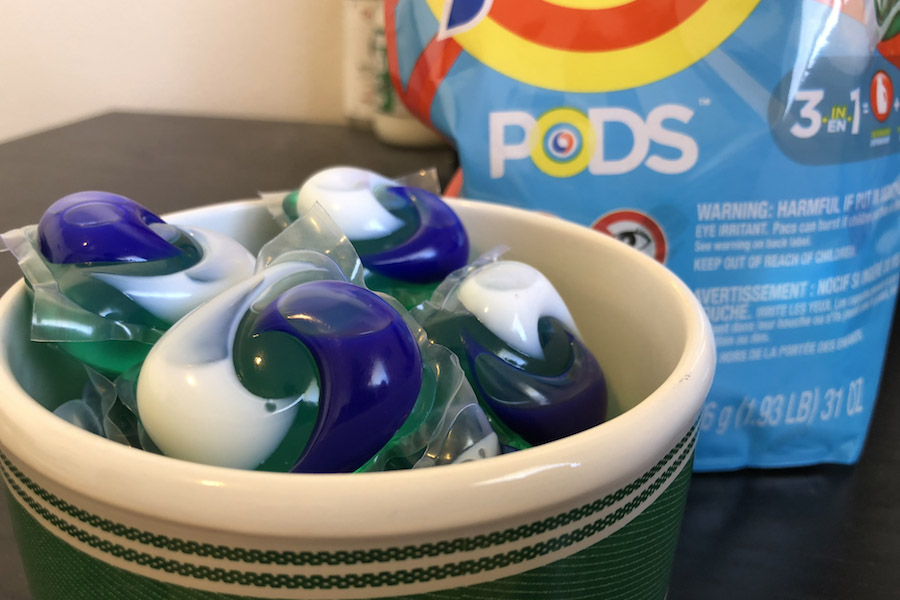
Tide Pods are the great mystery of America, with their delicious-looking colors and forbiddenness. Logically, we all know that we aren’t supposed to eat a sack of bleach and detergent, but spiritually, we are connected to these jewels of mystery. With Winter Quarter strutting through the door like a cowboy no one invited to the saloon, students have grown even more infatuated with these little wonders.

“Oh, I eat damn near 10 pods a day!” third-year Noah Chipper said. “The first one is always out of curiosity, but the last nine are always with the attempt to make Winter Quarter fade away… like a stain on a fresh pair of pants… or on your favorite shirt after your ex throws her drink on you. I’m looking at you, Marianne!”

The CoHo has taken advantage of this new snack craze that has jazzed up the campus. It will be offering Tide Pods as an optional topping for both acai bowls and taco salads, so you can get your pods any time of day.

“I’ll get pods on my salad every Friday to treat myself,” said second-year Susan Bowl. “My New Year’s resolution was to watch what I eat, but no one knows the caloric value of Tide Pods, so they’re basically like eating air. I can eat as many as I want! I’m invincible! I can fly!”

Students believing that they can fly is just one of many side effects that come with Tide Pod addictions. Many people have been found standing in the Quad with one fist above their head, like Superman, just hoping that their bodies will naturally lift themselves. However, some of these fists in the air have been mistaken for protests, causing other students to flock to them to get in on the nonexistent action.

“I’m a simple man: I see a fist in the air, I go,” said first-year Diego Pear. “So, there I was, charging toward this kid in the Quad, thinking we’d be chanting about something, but it was just a group of seniors who had eaten like 40 Tide Pods. I felt awkward, so I put my fist up too and waited five hours until they gave up. It was treacherous.”

Professional fake scientists agree that Winter Quarter is totally why people are chugging these bleach berries.

“These kids are cray!” said fake scientist Dr. RuPaul Dragrace. “Winter Quarter gets all sad and then they immediately go to the laundry room? No! Get yourself a dog and let’s keep going.”

Tide’s executives created a child lock for the bags that they are stored in, but alas, UC students are just wise enough to crack the “push down and slide” mechanism. It took them two weeks to figure it out, though.

“This new design almost ruined my life!” third-year Harriet Brushers said. “I missed 14 days of sweet fruits.”

God is confused as to why Tide Pods are such a big deal for college students.

“You pepper in a lil’ seasonal depression, and they resort to eating forbidden fruits? Again? Really? Ugh!” he said.


Written by: Olivia Luchini — ocluchini@ucdavis.edu

(This article is humor and/or satire, and its content is purely fictional. The story and the names of “sources” are fictionalized.)

Vandalism across campus restrooms

Putting actions into perspective

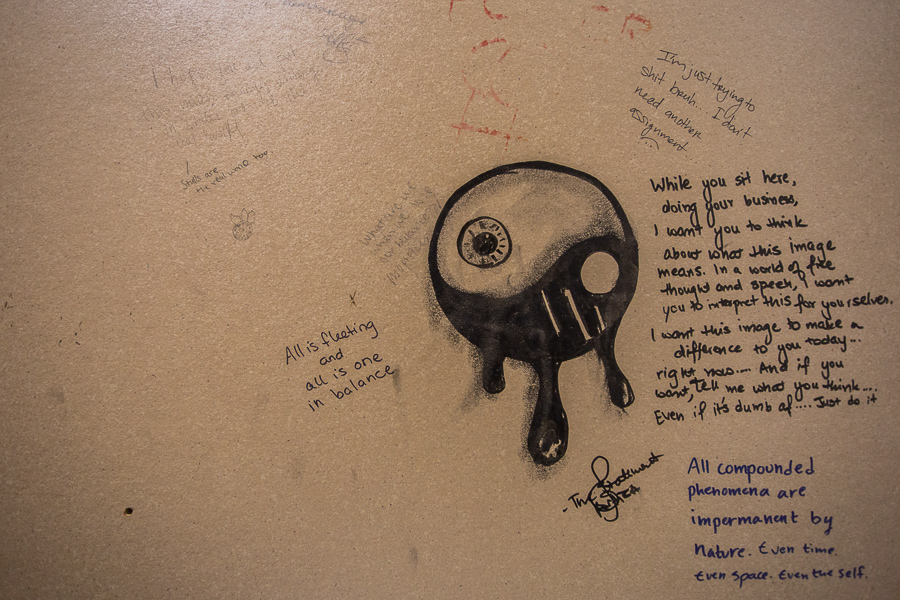
Writings and drawings splattered across restroom stalls are to be expected of high school bathrooms. Crowd a giant group of angsty teens into one building and out pop scribbles of mini rebellion in the confines of a stall. However, finding it on a college campus was a surprise. Retrospectively, it shouldn’t have been.

After all, most of the strangers on this campus hail straight from high school. Many are also still figuring their lives out and learning to grow up, encountering their own struggles on the way. Provided the pure anonymity that a toilet cubicle wall brings and the guarantee of an audience, it shouldn’t have been a surprise that a lot of them on this campus are decorated with jokes, drawings, supportive words, relatable frustrations, theological debates and spontaneous ramblings.

For example, in the men’s restroom on the first floor of Bainer Hall, the message “Until you check, the toilet is simultaneously flushed and filled with a log of yesterday’s Shah’s” is written with a bubble around it labled “Schrodinger’s crap.”

The women’s restroom in the CoHo showcases a lot. In one stall, political opinions are discussed in a small upper corner of one wall. In the same stall, others fuss over navigating a large campus, the patriarchy, an existential crisis and people slamming the doors. Among these are more excited messages written in colors and fonts shouting for attention, and some humble ones are mixed in as well. For instance, “A kite flies highest against the wind” is displayed, but in pencil and in small letters. “Sweetie, You Deserve Better. Love Yourself” is almost unnoticeable. In another stall, a positive message shaded by poor lighting sits below where most messages tend to get written: “I don’t know you. I’ve never met you. But I’m thinking of you, reading this. Sending some love & good vibes. Have a beautiful day, darling.” Drawings of a cow, a yin and yang symbol, a bat and a potato turning into fries are also scattered between messages.

In Rock Hall, a stall in the women’s restroom features discourse mainly stemming from a quoted Bible verse. Another questions, “Wouldn’t it be more enjoyable for everyone if we all were able to release our bladders in peace?” Most of the other responses to it are hard to make sense of — faded, blocked out by black permanent marker or written over by other unintelligible writing.

This past Fall Quarter, Wellman, Olson and Haring halls’ women’s restrooms all had a lot of vandalism as well. However, during breaks, the custodial department uses the time to do more in-depth cleaning across campus, so all of it has since been removed.

Yet this is not to say that the UC Davis campus and its workers don’t experience negative repercussions from this graffiti. On Jan. 30 last year, UC Davis police sent out a timely warning regarding a “suspicious circumstances vandalism/hate incident.” The letters “KKK” had been written in the same aforementioned CoHo women’s restroom. Ricky Flores, a custodial supervisor, has also seen other negative vandalism.

“There was another [instance of hateful vandalism] that had come out and it was in this area [the Memorial Union] by the coffee [Swirlz] in the males’ restroom,” Flores said. “[A student] had drawn Bin Laden carrying a bomb. And I can see where some of the other students that come in would take offense to it.”

Finis Jones, the director of custodial services, recommends sending in a “work task” to deal with offensive graffiti.

“We want to keep all restrooms suitable for use at all times. However, there are times when the staff may miss graffiti and/or vandalism which may be the reason you might see some delay in its removal,” Jones said. “A work task can be submitted via our website if you notice graffiti or vandalism that hasn’t been addressed in a timely manner.”

According to Jasmine Aranda, a principle custodial supervisor, removing all the graffiti is more difficult than it seems.

“The products we have to use are expensive, and it is a very time-consuming job to remove the graffiti,” Aranda said. “Because of all the scrubbing we do, we sometimes take paint off the walls, and then we have to get the paint shop involved to patch up the area. It is a complete inconvenience to everyone involved in the cleanup process.”

Flores, too, voiced concerns about combating this problem.

“I’ve been out there doing it. I know they [the custodians] get stuck there doing it,” Flores said. “Yeah, it is a struggle, frustrating. I see their frustration because they’re trying their best to get it off. And again it’s really the offensive ones [that make it harder].”

One might see a joke written on a restroom wall as an unexpected opportunity to laugh, a kind message as a lifting of their spirits and arguments over controversial or trivial topics as a nonsensical waste of time. Nowhere in these lines of thought does vandalism really come into play. Interest in the subject matter of the messages and drawings themselves overrides the core of what is truly being observed — displays of graffiti. Furthermore, it makes it easy to overlook the effort and frustration that goes into cleaning it up. For now, though, it might at least help to be informed of the trouble custodial staffs goes through in dealing with vandalism and how their lives would be made a little bit easier if the problem were to occur less.


Written by: Cecilia Morales — arts@theaggie.org

700 students to attend 24-hour HackDavis hackathon on Jan. 20

NADIA DORIS / AGGIE FILE

UC Davis’ third annual student-run hackathon strives for social progress

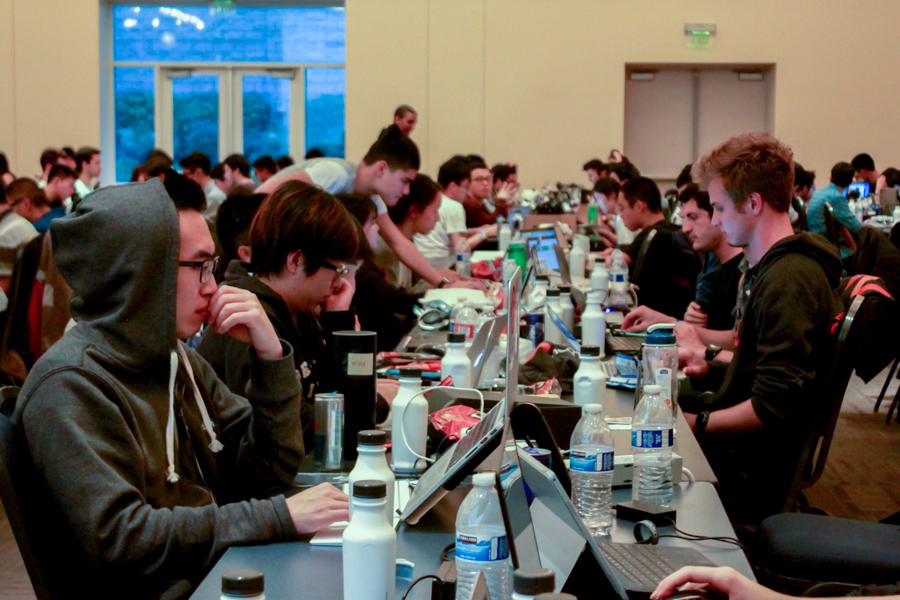
On Jan. 20 and 21, HackDavis will host 700 college students, alumni and high schoolers in the Activities and Recreation Center to code for social progress in three given tracks: health and wellness, education and the environment. Participants of all levels of expertise will create code for 24 hours, starting at 12 p.m. on Jan. 20. Judging and demonstrations will begin at 1 p.m. the following day.

Applications closed Jan. 5, and this year the event accepted 700 applications from college students, high school students over 18 and alumni who graduated within the last year.

The goal of a hackathon is to provide a space for usable, problem-driven software development in a timed competition. HackDavis harnesses this development to tackle social problems, teaming up with Habitat for Humanity this year. According to marketing team member Annie Lin, a third-year computer science major, this is what makes HackDavis unique from other hackathons. Its slogan is “code for social good.”

“HackDavis is one of the few hackathons in the country known for providing students with a platform and encouraging them to solve pressing social issues,” Lin said. “This is important because we feel that young individuals are incredibly bright, and they can achieve and learn all while helping society through health and wellness, education, or environment. HackDavis also attracts many talented students to UC Davis which helps out university recruitment.

Sriya Maram, the director of HackDavis’ external affairs and a third-year cognitive science major, participated in the 2017 event and later went on to join the team. Maram explained how the event utilizes outside nonprofit organizations involved in health, environment and education to effect true impact in the world.

“Last year, we partnered with Teach For America, and they helped make a randomized feeding chart for students,” Maram said. “We also partnered with the California Water Project. Something else that I thought was really cool was a mental health application.”

Maram talked about the impact for social good that partnering with nonprofit organizations can bring. She said she was excited for this year’s involved nonprofit organizations.

“This year we already have two confirmed nonprofit partners,” Maram said. “Habitat for Humanity — the Sacramento chapter — and Beyond Twelve, an education nonprofit.”

The event is partnered with multiple UC Davis STEM departments as well as the nonprofits and is sponsored by technology companies such as Intel, AT&T and Google Cloud Platform.

Participants in the race to code are also bolstered by hardware and technology provided by HackDavis. Lin explained how helpful it is to provide equipment for students to incorporate into their creations.

“Usually we provide gadgets like virtual reality headsets and Amazon Alexas, so teams can incorporate some hardware into their projects,” Lin said. ”My prediction is that students will be using a lot of the hardware [this year].”

Lin said workshops are provided throughout the year and at the hackathon event, so beginner and expert students alike can tackle computer coding and programming. Throughout the year, the Facebook group posts event pages for student tutorials and workshops, offering website development series, game development series and professor talks. According to Lin, the events they hold are “beneficial to the students” as they “teach students important programming skills.”

On its website, HackDavis states that it hopes to “inspire change and cultivate a growing hacker opportunity” by intersecting coding with social change. The 1,600 people who like the HackDavis Facebook page seem to agree.

“We find that hackathons often don’t result with projects as practical solutions to specific societal problems and we’re looking to change that,” the website states. “Our goal is to foster a community that uses technology to pave the way for social change. For the 3rd year in a row, we’re bringing together the most talented students in California to address the world’s most pressing issues.”


Written by: Aaron Liss — campus@theaggie.org

Support student workers in UC contract negotiations

CAITLYN SAMPLEY / AGGIE

UC Student-Workers Union releases bargaining demands

The UC Student-Workers Union UAW Local 2865 recently made known its bargaining goals for its 2018 contract negotiations with the UC. There are 12 detailed demands, ranging from improved compensation to expanded childcare, which were drafted using feedback from surveys taken by over 4,000 members of the union.

The union represents job positions, such as readers, tutors and teaching assistants throughout the UC — most, but not all of these student workers are graduate students. The union currently represents over 16,000 Academic Student Employees.

As the Student-Workers Union enters into negotiations with the UC’s bargaining team, it is critical that the Union be supported by the larger campus community. The best interest of the Student-Workers Union is also the best interest of undergraduate students and faculty members.

In the previous contract negotiated between UAW Local 2865 and the UC in 2014, several of the terms agreed upon proved beneficial for the campus community as a whole. The 2014-18 contract includes access to lactation stations and gender-neutral restrooms on campus, to which individuals outside of the union now have access.

This contract also included provisions related to class size. Both parties agreed to terms that would allow for the establishment of committees “to track the ways teacher-student ratios are affecting the quality of UC education.” Teacher-student ratios directly affect both the teachers’ workloads and students’ access to their teachers.

Some of the noteworthy demands include the establishment of the UC as a sanctuary campus with legal and financial resources available for undocumented, immigrant and international students in the union; improved resources for student workers with disabilities; “socially responsible” UC investments and divestments and a reduction in class size and teacher-student ratios.

The Editorial Board feels it’s important that the UC Student-Workers Union be vocally supported as it enters into negotiations. These specific demands all have the potential, if won, to benefit UC-wide campus communities.

Additionally, the student workers’ minimal salaries are often used to pay rent and support families or dependents. It’s imperative that these workers be granted increased compensation and improved standards of living as well as expanded health care coverage and childcare options.

Student workers balance school, work, family and personal responsibilities. They work extremely hard: they grade assignments, hold office hours, act as resources for information and perform a tremendous amount of behind-the-scenes work that goes largely unnoticed. The 12 demands they have highlighted are reasonable and fair.

The 2014-18 contract took almost one year to successfully negotiate. With negotiations for the new contract set to begin this year, we are in support of the UC Student-Workers Union and its demands.


Written by: The Editorial Board

The Burden of Beauty: We must move away from our destructive perspectives on valuing women

CAITLYN SAMPLEY / AGGIE

Our deep-rooted perceptions of beauty can seriously damage women’s mental and physical wellbeing

In a world inhabited by 7.6 billion people, who determines what qualities meet the standards of beauty? Beauty seems like such a simple, positive concept, but a lack of self-esteem and body positivity is linked to depression, anxiety and suicidal tendencies — afflictions that can affect multiple aspects of life from relationships to work. Not feeling beautiful can have serious negative impacts on one’s life, which is why billion-dollar industries have popped up to fill the voids in our society’s acceptance of all types of women.

India’s skin-lightening industry generated $432 million in 2017 and is growing 17 percent annually, playing a major role in the $10 billion global market dedicated solely to changing the natural color of people’s skin. Throughout my life, I’ve been told by innumerable relatives to try different products, scrub my skin harder, stay out of the sun, try X, Y and Z — all to lighten my naturally dark skin. Although my extended family has become increasingly progressive over the years, the culturally ingrained tendencies of valuing a woman for her looks lie deep. In some regions of India, women are considered unfit to marry if they don’t maintain a proper physique, fair skin and overall good looks. In Indian film industries, it’s a very, very uncommon occurrence to see a dark-skinned woman on screen. Almost all actresses are fair-skinned in Bollywood.

The damaging emotional effects of this type of thinking have spurred movements like the “Dark is Beautiful” campaign, held by the Indian nonprofit Women of Worth in the form of workshops and advocacy. Another concerning thought is the impact of using so many beauty products to enhance looks. On average, men use six personal care products, whereas teenage girls use around 17. The average white American woman exposes herself to 168 personal care product chemicals in a day, and the toxic exposure for women of color is thought to be even higher.

But it’s surely not just India with these beauty biases that hold women back from being confident in their own skin. In Seoul, South Korea, often recognized as the plastic surgery capital of Asia, girls as young as 12 years old are receiving surgery to adopt more “Westernized features,” such as larger eyes, high profiles and slim noses. Asian pop culture heavily focuses on exaggerated cuteness, with concepts such as “kawaii” encouraging fragile, excessive femininity.

Social scientists have determined through several studies, such as one conducted by the Perception Institute, that African American women’s hair was rated less attractive and less professional when it’s natural than when it’s synthetically straightened. In 2017, Mystic Valley Regional Charter School suspended two black students for wearing their hair in braids, deeming it “distracting,” an action that was admonished by the Lawyers’ Committee for Civil Rights and Economic Justice. Notably in the U.S., some aspects of different cultural styles, ranging from dreadlocks to Native American apparel, are appropriated as fashion statements, which raises controversial questions — specifically of whether these statements should be seen as appreciation or disrespect.

In our daily lives, there are so many instances when a woman’s beauty is considered more important than her other qualities. Receptionists throughout the world are expected to meet standards of beauty that reach far beyond what should be expected for the job. High school men (at least at my school) rank girls on a scale to determine the “prettiest” one. People pass comments on others’ looks without considering the insecurities those people may already be harboring. We’re bombarded with photos of women digitally altered to unrealistic levels of beauty.

When you search online for images of the term “beauty,” the top results are women wearing heavy amounts of makeup — a shocking revelation since not a single picture of a joyful, natural-looking woman, or even a man for that matter, is used to represent beauty in our society. Why is the burden of beauty placed solely upon women, and why are our standards of beauty so flawed throughout the world?

Despite this, there are currently many movements to prevent body image insecurities in women. Aerie, the lingerie company under American Eagle, stopped airbrushing its models in 2014 and sells comfortable, realistic products that have been directing attention away from Victoria’s Secret’s over-the-top, extremely sexualized apparel.

With popular songs such as “Most Girls” by Hailee Steinfeld, “Sit Still, Look Pretty” by Daya and “Scars to Your Beautiful” by Alessia Cara, powerful young singers encourage women to feel comfortable and confident however they choose — whether that means giving up makeup or wearing it everyday, wearing short dresses or sweatpants. This ultimately means embracing themselves while also understanding that they can be powerful, not only good enough to “sit still, look pretty” for their lovers. The standards of beauty vary greatly between cultures. But the era of toxic necessity for perfection needs to end for it to be replaced with  increasing momentum toward feeling comfortable and confident instead of meeting the impossible expectations of our communities.


Written by: Akshita Gandra — agandra@ucdavis.edu

Disclaimer: The views and opinions expressed by individual columnists belong to the columnists alone and do not necessarily indicate the views and opinions held by The California Aggie.

Contracted workers in the gig economy to benefit from Trump administration tax cuts

0
CAITLYN SAMPLEY / AGGIE

Passage of Senate tax bill has potential to increase profits of sharing economy workers

Follow-up to a December article about the benefits and drawbacks of participating in the sharing economy.


The lures of the gig economy, from flexible scheduling to easily attainable jobs, may become more attractive with tax cuts from the Senate bill that passed on Dec. 19. Already, a quarter of Americans report earning some form of income from digital platforms. According to data from Earnest, about 80 percent of Uber and Lyft drivers make under $500 a month, but new tax provisions could make earning extra money in the gig economy more profitable than ever.  

For the most part, gig workers are classified as independent contractors rather than formal employees. This means that, under the new tax law, contracted workers such as Uber and Lyft drivers will be able to deduct 20 percent of their yearly earnings from their taxable income — another incentive for Americans to move away from formal employment.

Companies often favor contractors over employees because they can save up to 30 percent in costs — from payroll taxes to health care provision. The classification of gig workers as independent contractors, however, has been up for debate since the digital job market started exploding in 2009. In 2015, a California court ruled that an Uber driver who had filed a claim against the company was an employee, not an independent contractor. There have also been a number of class action lawsuits against Uber and Lyft in which drivers have tried to argue that they should be classified as employees rather than contractors under the Fair Labor Standards Act. Courts in Florida sided with Uber in 2017 by characterizing employees as independent contractors, while courts in California and Massachusetts have rejected cash settlements that attempted to compensate upset drivers for misclassification.

The issue comes down to whether an employer controls the work of the employee, but defining “control” is subjective. Is Uber “controlling” its employees by setting a pay structure and issuing a code of performance, or is it simply acting as a platform for riders and drivers to connect at their own convenience? Future court rulings will have to set this definition in an ever-growing sharing economy where employment status is hazy.

Debates between companies and workers over employment status may settle down now that gig workers have the ability to save more of their earnings as contractors. Formal employment, though, still offers protections to employees such as healthcare, workers compensation and anti-discrimination protections that contracted working lacks. As mentioned in a previous article, economists such as Janine Wilson of the UC Davis Department of Economics believe that the growth of the sharing economy will bring private insurers to the market, offsetting the absence of a safety net for contractors.

Observations over time will show if new tax provisions will be another incentive to boost the size of the already growing gig economy, but adding increased profitability to a market that already offers schedule flexibility and easy-to-obtain jobs could outweigh the cost of having limited workplace protections as an independent contractor.


Written by: Olivia Rockeman — features@theaggie.org

Humor: New Year’s resolution: Don’t Listen To The Globalist Agenda Of Making The U.S. Men’s Soccer Team Better

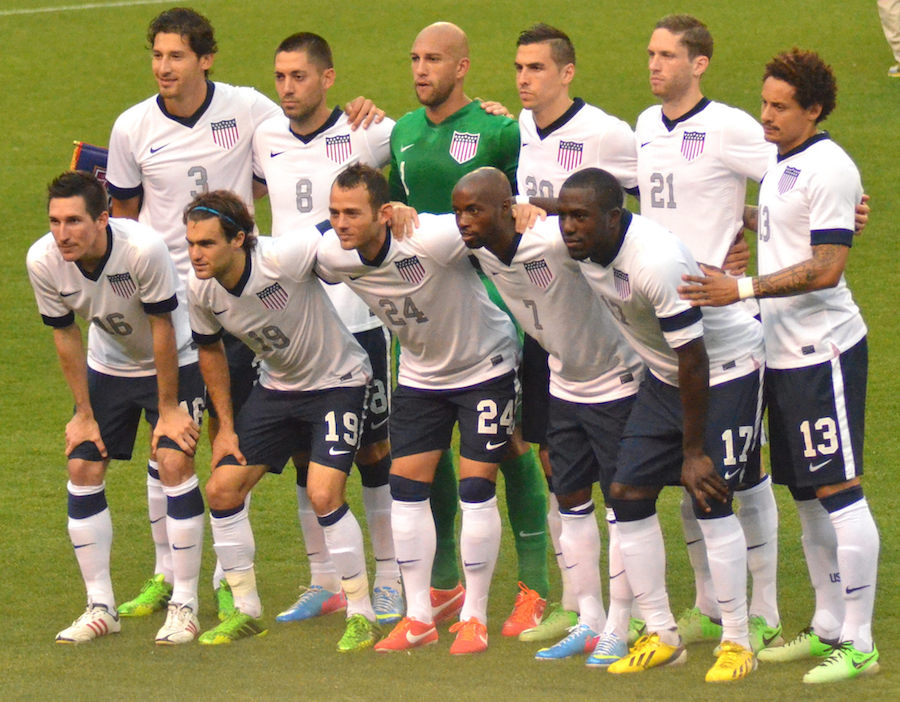
ERIK DROST [(CC BY 2.0)] / FLICKR
This idea for self-improvement is so cute — and so easy!

Perhaps you find yourself in the new year hazily gripping to reality through the fog of a hangover. Perhaps instead you’re simply buried in regret because Kyle called you up and you went to see him and it just made you feel bad because he just wanted someone to kiss at midnight, and like it’s not a big deal but you just kind of feel used… go to hell, Kyle. I can’t and won’t be used by you anymore.

Anyway, wherever you find yourself after this New Year’s, whether it be in a state of happiness and optimism or weary reluctance, I have one very quick, easy and essential tip to help you make the most of this brand-spanking-new year.

Under no circumstances whatsoever — no matter what they say or try to use on you — believe the globalist agenda that we must make the U.S. men’s soccer team better. There are so many reasons why this is a problem, and I can list them if you aren’t willing to just take my word for it. Oh, okay, fine I’ll say them, if you insist. Well, I will say at least one.

Soccer is a globalist sport because the ball is a sphere. Well, what does a spherical play thing have to do with geopolitical policy? If you are saying that to yourself right now, then you are probably not the most smart person. That’s okay, I’m going to tell you what it is anyway.

Globalist: from that we get the word global. From global, globe. From globe, we can think of the Earth. From the Earth, we may instead want to switch to something more spherical, since the earth is flat and really isn’t a great example of what I’m getting at. How about SPHERE. And what was it I said earlier about goddamn spheres? A soccer ball is a SPHERE. So let’s connect the dots if you are not following. Globes are spherical, soccer balls are spherical. Therefore, because of the mathematical rule of commutation, globalists and soccer balls are directly related.

Use this cute fact to change the way you go about your new year. I’m sure it will make your 2018 much better!


Written by: Aaron Levins — adlevins@ucdavis.edu

(This article is humor and/or satire, and its content is purely fictional. The story and the names of “sources” are fictionalized.)