57 F
Davis

Davis, California

Monday, December 22, 2025
Home Blog Page 574

Words in the Library

KYLA ROUNDS / AGGIE

Growing creative writing series starts 2017 strong

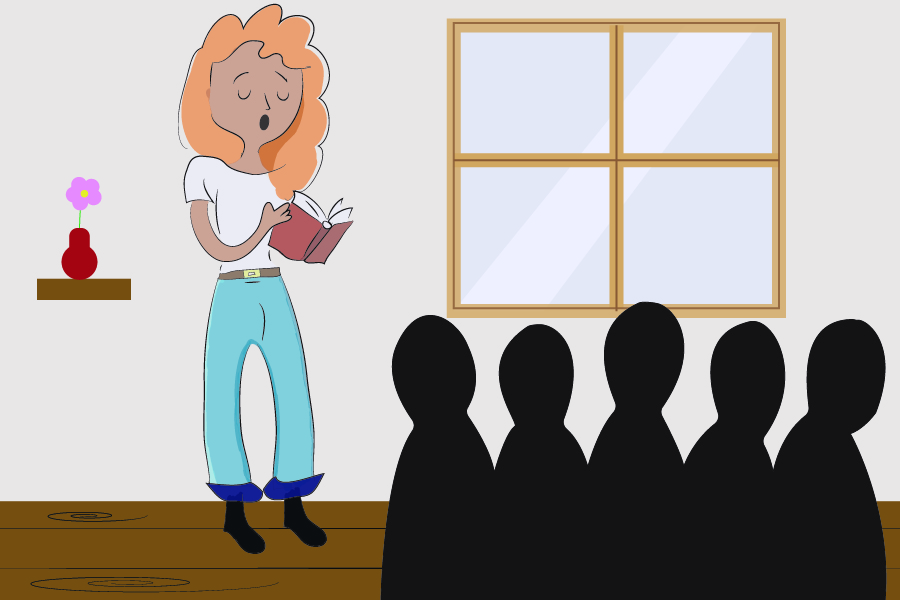
The city of Davis rarely fails to impress with its commitment to art, music and other related fields, and the Creative Writers Series exemplifies such commitment. Hosted in the Shields Library, the event ushers in writers, pushing the avant-garde, to exhibit their coming work. The events are scattered throughout the year, but anyone attending these readings can expect to gain insight on storytelling and the Creative Writing Department at UC Davis.

Greg Glazner, the current event manager and a professor of English at UC Davis, talked about the event and what it shows of Davis.

“There’s really a lot of interest in writing at UC Davis,” Glazner said. “The room that we have the event in is always full […] People really do turn out and it’s really gratifying to see that.”

Each event is separated into two components: the reading and a Q&A portion.

“It’s very engaging,” Glazner said. “There is always a Q&A, that’s always part of what we do, and there are always aspiring writers in the audience, a lot of them UC Davis creative writing students.”

Each event shows the multifaceted nature of creative writing through its display of many different writers. There are a variety of genres and works displayed, giving attendees a well-rounded perspective of the field.

“All the events are so different from each other,” Glazner said. “So far we’ve had Danez Smith, who is an incredible performer of his poetry […] then we had the quiet-spoken Tommy Orange, who read from his novel, and the writing was so compelling he had everyone on the edge of their seat. I don’t think there is one specific way it’s going to be, they’re all kind of different from each other.”

“The writing was really incredible, and I basically cried the whole time,” said Madeline Bigger, a second-year English major who attended the Nov. 14 reading by Tommy Orange. “The event shows good things about Davis. I’m hoping there are more.”

Melissa Mack, a recent writer at the series, spoke beforehand about which pieces she chooses for a reading.

“Every time I do a reading it’s different,” Mack said. “I really like to share new work. It’s kind of a way of feeling on how I feel on the work, to read it to an audience. But this time I have a book coming out; I’ll likely read mostly from that.”

Mack further mentioned how the environment and her audience affects what excerpts she will read from.

“One thing I will think about is reading pieces that I think will translate, you know, things people can enter into when hearing it just one time,” Mack said.

Mack, an alumna of the Creative Writing master’s program at UC Davis, is familiar with Davis and commented on the significance of this event.

“It’s really exciting that there is a creative writing series at Davis,” Mack said. “It’s been a while; I graduated from Davis in 2010, so the vibe of the school may be very different now, but the fact that there is still a creative writing series makes me think that there is still an interest in language art. That makes me happy.”

On Jan. 16, poet Mai Der Vang will be presenting. If you like creative writing or poetry, mark your calendars for the always-interesting Creative Writing Series.


Written by: Nicolas Rago — arts@theaggie.org

Scientists send humanity a second notice to save the planet

NASA GODDARD SPACE FLIGHT CENTER [(CC BY 2.0)] / FLICKR
We’re headed for trouble unless we can overcome cynicism and learn to work together

It’s like a bad episode of “Intervention”: 16,000 scientists from 184 countries issued a second “warning to humanity” earlier this month, exposing the consequences of the world’s dependence on pollution-causing industries and hoping that we’ll see through years of denial and broken promises.

William Ripple, an ecologist and professor at Oregon State University, led the scientists’ warning letter, published in BioScience journal. The new warning letter reflects on environmental issues exacerbated by climate change after a first warning letter was published by the Union of Concerned Scientists in 1992. Since then, we’ve continued down the same path of self-destruction. What will happen if we wait another 25 years to contemplate our progress toward environmental stability?

In the Sacramento area, the number of extreme heat days, in which temperatures reach 101 degrees or higher, will increase from four to 17 days per year by 2050. The number of days with temperatures of 95 degrees or higher will increase to 22 by 2050. The area will also experience a “heat-island effect,” which could make temperatures in urban areas seem 10 degrees hotter than rural areas. And the projections go on and on.

“Uncertainty over the extent of these effects cannot excuse complacency or delay in facing the threats,” the Union of Concerned Scientists said in their letter to humanity.

Unfortunately, we’re still dealing with the same complacency from policymakers that we dealt with 25 years ago.

White House environmental official Kathleen Hartnett White recently said, “I think we indeed need to have more precise explanations of the human role and the natural role.”

That’s enough to make any environmentalist retire to their hammock with a bucket of Cheese Balls and say, “I give up.”

I’d like to think that our country and its citizens are more analytical and less defeatist about the problems they face.

California Gov. Jerry Brown unapologetically offered the crowds his thoughts at a climate change conference in Bonn, Germany.

“The science is getting clearer and the extreme weather events are getting more frequent. All of that leads to more understanding, more clarity and then more action,” Brown said.

Brown’s right about that. It’s getting harder to ignore climate change, especially after this year’s fires and hurricanes, which explains why the scientists’ message was urgent:

“To prevent widespread misery and catastrophic biodiversity loss, humanity must practice a more environmentally sustainable alternative to business as usual.”

The letter may seem to echo similar doomsday sentiments presented by the theory of the planet’s sixth mass extinction, which stirred controversy among scientists for its dire message. But there’s a dire need to address climate change, and scientists are trying to get our attention.

CNN called the scientists’ warning a plea for humans “to change our wicked ways to help the planet.” Their commentary could be misconstrued, however, especially considering recent comments by Hartnett White.

“There’s a real dark side of the kind of paganism — the secular elites’ religion now — being evidently global warming,” Hartnett White said.

It’s difficult to understand these and similar cynical comments that undermine researchers and environmentalists’ efforts to improve life for everyone.

The warning letter importantly addressed personal decisions, empowering average people to do something about environmental issues.

“It is also time to re-examine and change our individual behaviors,” the letter said.

“We are hoping that our paper will ignite a widespread public debate about the global environment and climate,” Ripple said.

The letter — covered by numerous media sources — has encouraged dialogue on climate change. Hopefully, it has also made individuals think about what they can do to mitigate climate change impacts.

“Working together while respecting diversity of people and opinions and the need for social justice around the world, we can make great progress for the sake of humanity and the planet on which we depend,” the letter said.

This is the part we could all take something from: learning to work together despite our differences. We’re faced with divisive politics when we should be coming together, not as the “one-world state ruled by planetary managers” imagined by Hartnett White, but just as average Americans working to reduce our carbon footprints, sorting our recycling and turning off the water when we brush our teeth.


Written by: Jessica Driver — jmdriver@ucdavis.edu

Disclaimer: The views and opinions expressed by individual columnists belong to the columnists alone and do not necessarily indicate the views and opinions held by The California Aggie.

Challah for Hunger addresses food insecurity locally and nationally

Davis Challah for Hunger chapter has student representative in Campus Hunger Project

Challah For Hunger is a community service program with a mission to counter food insecurity on college campuses by baking challah, traditional Jewish bread. There are CFH chapters at 80 campuses nationwide.

UC Davis’ CFH chapter recently sent Hana Minsky, a second-year plant biology major, to Philadelphia to represent the university on a national level for the nonprofit organization’s Campus Hunger Project. According to the CFH website, the Campus Hunger Project is a group of nine students from eight campuses creating “their own hypothesis for how to support their peers” who are food insecure and testing their projects on campus.

“Food insecurity is when you’re not sure when or where your next meal is coming from,” Minsky said. “It also means not having easy access to nutritious food. A good example people may not immediately consider is the ‘I can only afford ramen’ culture on college campuses.”

At Temple University in Philadelphia, Penn., Minsky and eight other representatives from USC, Temple University, Stanford University, the University of Arizona, Binghamton University, University of Virginia and the University of Wisconsin, Madison, discussed their approaches to food insecurity and tailored initiatives to bring back with them.

“Many students have on-campus jobs in order to afford tuition and housing, and food often times comes second,” said Katherine Popovich, a fourth-year genetics major and the president of the CFH Davis chapter, in an email interview. “These students turn to on-campus farms that give out free vegetables or the food pantry, but many still don’t know where their next meal might come from. I don’t think it’s something that’s […] talked about among students, as people might be embarrassed to share they are food insecure”

The University of California’s Global Food Initiative conducted an online survey in 2016 administered to 66,000 randomly selected students. Of the 9,000 who responded, 42 percent indicated they had “low” or “very low” food security.

“[Food insecurity] is especially true for a lot of students because we don’t have a steady source of income, we’re very busy with school and lots of other commitments that we have,” said Jacob Newman, a third-year civil engineering and environmental engineering double major and the CFH treasurer.

Founded in 2010, CFH at UC Davis is composed of a board of 12 people, but is dependent on walk-in volunteers from other community service projects, fraternities or sororities and other individuals.

“In order to make so many loaves of bread we have to have the help of our awesome volunteers,” said Elissa Goldman, a fourth-year microbiology major and a member of CFH’s productions committee.

Proceeds from CFH are split between the Yolo County Food Bank and Mazon, an international Jewish nonprofit fighting hunger.

“We’ve donated over $17,000 to the Yolo County Food Bank, which has been able to provide around 52,500 meals to those in need in Yolo County,” Goldman said.

Challah for Hunger bakes and braids loaves every week at the Hillel House in Davis on A Street. Interested volunteers can reach out to the organization at cfhdavisvolunteer@gmail.com.


Written by: Elizabeth Mercado — campus@theaggie.org

Mobile ordering app aids impacted campus services

0
KAILA MATTERA / AGGIE

Should excellent customer service be sacrificed to accommodate hectic schedules?

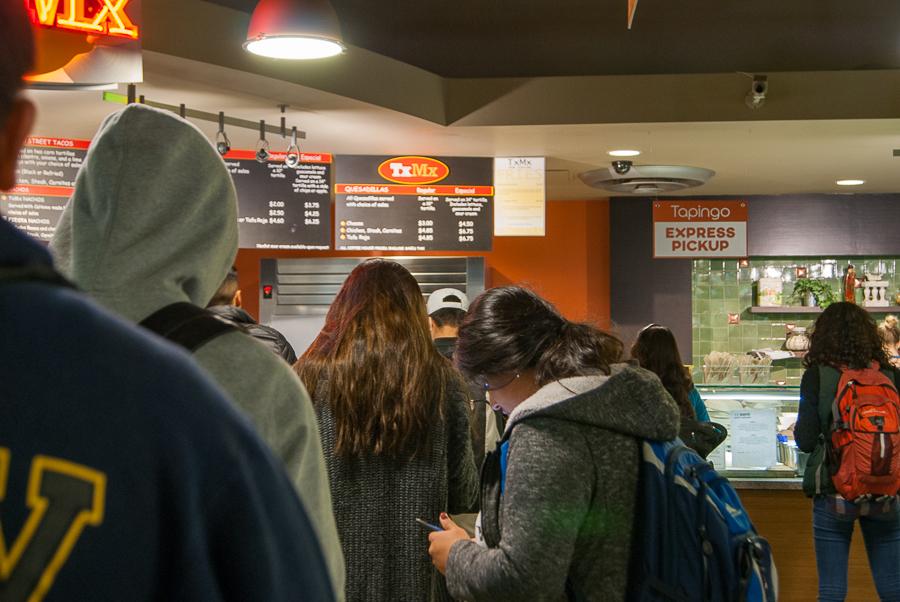
The best solutions to systemic problems are often multilateral. Tapingo, the mobile ordering app recently introduced at the CoHo, the CoHo South Cafe and Biobrew, is no exception, as it manages to ameliorate the experience of the user, the typical customer and the front-of-house employee simultaneously. Not only are these parties eager to ease their lunchtime woes, but the user neither has to wait in line to order nor wait for their food. How does Tapingo accomplish so much? It’s only a tap, after all. The answer is best understood through the sentiments of Darin Schluep, the food service director of Associated Students Dining Services.

“The idea is it not only provides quicker service to those people that are utilizing the app but because they’re not in line ordering the line to order is shorter and the people walking in to order are having a quicker experience as well — that’s the hope,” Schluep said. “The great thing about Tapingo is it alleviates the need to wait in line to order as well as the need to wait for your food to be prepared and then wait in line to pay. Our hope was that as people start to use the app more and more […] then you won’t have people coming in seeing the lines and turning away because they don’t think they’ll be able to wait that long. We do our best to turn the lines over really quickly, but no matter what […] not everybody has the time to wait. So we were hoping to alleviate some of those lines, alleviate some of the crowding in our dining room and hopefully capture more business that way.”

Schluep’s words allude to another feature of Tapingo: delivery. Students on campus, whether in the library or in student housing, can have CoHo treats delivered to a non-CoHo address, increasing access to good food and widening the breadth of business for the CoHo.

Schluep is not the only person who understands the positive potential of Tapingo. ASUCD President Joshua Dalavai is also enthusiastic about the app.

“I’d really like to see more student engagement with it, I think that would be the most important thing for me,” Dalavai said. “I think it would make us all happier.”

While the goals surrounding the app are lofty and aspirational, Levi Menovske, the cafe manager of the CoHo South Cafe and diversity coordinator, identified a way in which Tapingo eliminates an opportunity for excellence in service.

“The CoHo South has always prided itself on its customer service aspect,” Menovske said. “We have really long lines and our way of dealing with that is making sure our customers have a great experience with us, that face-to-face interaction with the cashier, and Tapingo kind of removes that aspect of our customer service and I don’t like that about the app. I think our customer service is what makes us so special and we may we have 1,100 customers that come in every day but 400 of those customers come in everyday because of our customer service. This mobile ordering app is moving away from that interaction where we don’t get to build that relationship with our customers […] but it makes sense for those customers who just want to come in and get out.”

Not only does Tapingo eliminate some of the excellent customer service cultivated at the CoHo South Cafe and other locations, but its introduction was difficult for the front-of-house staff teams either as they had to learn new skills and incorporate them into their pre-existing systems. The app’s employees, who work out of San Francisco, were able to remedy potential initial difficulties by going so far as to meet with CoHo supervisors via Skype. The app team’s diligence should ultimately allow Tapingo to ease the strain of lunchtime rushes for employees in the long run as it more evenly distributes customer flow.

Nerves have settled since the app officially launched on Oct. 23, but the question remains: is it worth it to cut down on wait time to optimize our busy schedules at the expense of the interpersonal customer service that set the CoHo and its satellites apart? More simply, does an app like Tapingo practice empathy for the chaos of our busy lives or does it disgrace the very essence of service itself? Schluep enumerated what motivates him to share the app with his community.

“We know that the students today have more and more demands placed on them,” Schluep said. “I mean our students, we have 400 students working here for the Coffee House and for AS Dining Services and so we’ve seen the demands placed upon them as students at UC Davis go up and up and up. So this is a way for us, although it’s a small thing, to help in some ways. We want to make the experience as quick and painless as possible.”

In addition to being the first UC to incorporate Tapingo into its dining services, Schluep hopes to ultimately share Tapingo with the Dining Commons and the Silo alike. This step toward increased mobile access to campus services is a goal of Dalavai’s as well.

“I think Tapingo aligns with a lot of the recent initiatives that ASUCD is currently trying to undertake especially in the era of increased student growth as we’re seeing people are feeling the squeeze,” Dalavai said. “I think Tapingo does a really good job to alleviate some of that stress if students get behind it and use it.”

Whether or not Tapingo can solve the crisis of astronomically high student population and its escalating growth aside, there’s nothing like a student’s experienced voice to shine a light on the utility of the app at lunchtime.

“The hope is to have all food service entities at UC Davis utilizing the app at some point,” Schluep said. “There is the hope the entire campus will be Tapingo-friendly.”


Written by: Stella Sappington — features@theaggie.org

First ever tight wire course offered at UC Davis

KYLA ROUNDS / AGGIE

A lesson in mind over matter

For the first time, the Department of Theatre and Dance offered a tight wire course undergraduate students. The course began this fall and has been well received by enrolled students. The course is dedicated to hands-on training and discussions of the anthropological as well as philosophical implications of the tight wire. The concept began as a first-year seminar last year and has since evolved into a full course.

Antes Ursic, a Ph.D. student in Performance Studies, serves as the visionaire and instructor for the course. He had an extensive career working with the largest theatrical producer in the world — Cirque Du Soleil. Ursic was at the forefront of the movement to make this course a reality.  

He spoke of the marriage between the physical and mental aspects of the course.

“It’s good to have a sense of balance and embodiment,” Ursic said. “The tight wire is a great way for students to understand they can overcome their obstacles.”

A community formed among the students that participated in the course. Ursic explained that the tight wire is able to bring people together regardless of their area of study.

“It’s not about oneself,” Ursic said. “You’re not alone on the wire because everyone is there for you.”

Elena Battas, a liaison for the Theater and Dance Department, uses the the tight wire as a way to prepare for any role that may come her way.

“I love pushing myself physically and seeing how far I can go,” Battas said. “As an actor, the course allows me to be versatile.”

Ratnapala K Gamage, a third-year Middle East and South Asian Studies major who is enrolled in the course, enjoys the change from the everyday school experience.

“If you’re stressed, it’s a great positive release,” Gamage said. “It helps me to get away from everything.”

Faculty and students are hopeful that the course is here to stay. The official title of the course is “Tight Wire and Thinking.” The course runs twice a week for two hours.


Written by: Josh Madrid — arts@theaggie.org

Women In STEM: Breaking Barriers with Bravery

0
LAILA HASSEN / COURTESY

Women in STEM create nurturing environments, student org support

UC Davis was ranked number one for launching women into science, technology, engineering and mathematics careers and has proven successful in providing a nurturing environment for STEM success. However, just a generation ago, the presence of women in STEM had completely different ratios across the country in higher education, and the progress we see today is the fruit of many magnitudes of effort and the tenacity of some brave women.

LeShelle May, a two-time Computerworld Smithsonian award winner and the wife of Chancellor Gary May, is a pioneer woman of color in STEM who entered the field of information technology at a time when the internet didn’t exist, and neither did many female engineers. She earned a degree in electrical engineering from Boston University and went on to study operations research in graduate school at the Georgia Institute of Technology. Behind her success lies passion, grit and the gumption to navigate a path where she was one of the first.

Back then it was low-level software,” May said. “It wasn’t the platforms we have now and all the cool stuff. My first job out of graduate school, I was developing some software — just remember […] in 1989 when I got a graduate degree, the internet hadn’t launched yet.”

May was hired at CNN to launch CNN.com, a project she described as “digitizing the newsroom.” She was there to help construct and kickstart their internet. The powerful tool they created is called “media source” — it’s still in production today and won CNN a Technology and Pioneering Emmy Award in 2000.

“When I joined CNN, they hired me knowing I was pregnant, so that’s how much they had invested interest in me,” May said. “In a nutshell, I’m still with CNN and I build web applications. That’s my world — software. I know every language, every platform, every database.”

When May was an undergrad at BU, she didn’t find much diversity in color or gender in the engineering field. In retrospect, she finds that she lacked a group of people to study with and didn’t have the kind of collaborative efforts she observes between students today. She joined the National Society of Black Engineers, but unfortunately her local chapter didn’t have a lot of members. Regardless of these challenges, May loved her field of study and knew she wanted to stay in it.

“As a woman in this field, I was the only developer for a long time,” May said. “Male, period. This gave me confidence that I was one of the first, but as the company grew in the IT area, I’ve come to realize that there weren’t that many women, so I took initiative and started to pair with some universities, [and] we started to hire a lot of [women]. The numbers are higher now. So I changed the landscape there personally, and I think a lot of women are doing that now. They are taking personal initiative to add their own diversity in their own environment.”

Fast forwarding to present-day academia, college campuses across the country have many more resource centers and student organizations aimed at supporting and uplifting women into STEM fields. Here at UC Davis, two students, Ashmita Chakraborty and Anita Gunaseelan began an undergraduate chapter of the American Medical Women’s Association (AMWA), aimed at recruiting and supporting aspiring women physicians, and in turn, providing services to women and children in need. Some of their events include panels with medical students and various doctors to allow students to get a better idea of the medical field and how to navigate it. They also help connect students to mentors and even made a field trip to the UC Davis School of Medicine last spring.

“It’s really nice, because I feel like here [at Davis] I can talk about having a feminine product drive, and people aren’t [disrespectful of] that,” said Gunaseelan, a fourth-year neurobiology, physiology and behavior major. “It’s very accepting here, and I know that somewhere else in the country that might not be the case, so we’re really lucky to be in that kind of environment where it’s not going to be an issue.”

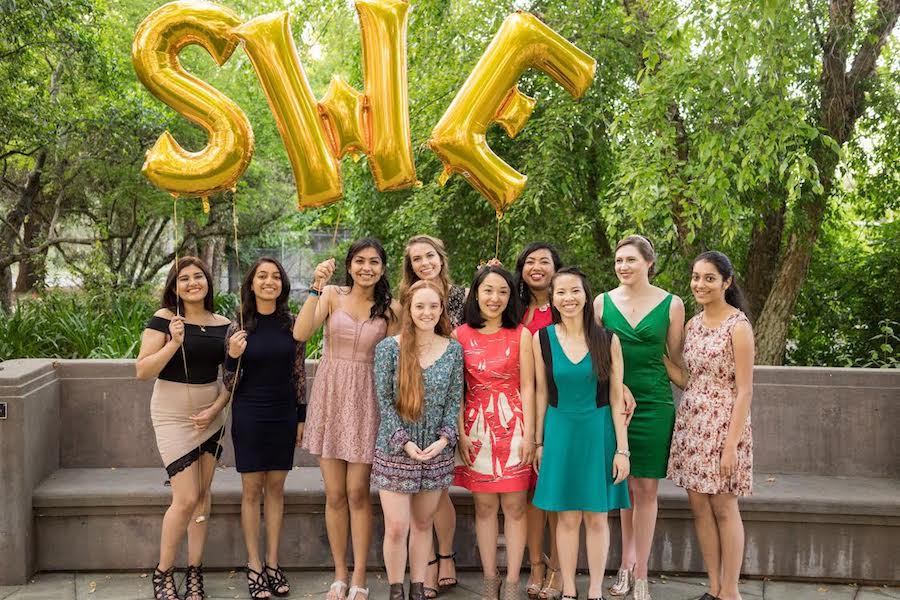
Laila Hassen, a fifth-year civil and environmental engineering major and president of the Society of Women Engineers (SWE) at Davis, described how SWE creates a “SWE-ster hood” that helps the retention of women in STEM and specifically engineering.

“We currently have over 200 members,” Hassen said. “We try to focus on our core values of advancing, inspiring and allowing women to achieve their goals, be that professional, career, academic or even social goals.”

Hassen emphasized the necessity for a support system in order to persevere through tough times in this challenging field.

“I think SWE is probably one of the biggest influences on whether or not a woman stays in engineering in college, or STEM in general,” Hassen said. “If we don’t keep engaging them or help them out and follow up, we can be the difference [between] whether or not they stay in engineering. A lot of our members, including myself, are first-generation Americans, [and\or] first-generation college students, so it’s not like we have a lot of family or prior experience we can rely on. By having SWE, we [gain] that support network.”

Hassen found that there are many setbacks academically and socially when pursuing these rigorous fields, but passion and determination make the four or five years of this study feel shorter.

“There’s always going to be sexism, there’s always going to be racism, there’s going to be all those ‘-isms,’” Hassen said. “But despite that, it’s focusing on what really matters — this inherent belief that as women in engineering we can change the world. As cliche as that might sound, there’s a lot of us that still think it’s true.”

Although there has been much progress since the time when May entered the field in the 1980s, many of the issues from that time persist. Hassen mentioned that she has been in physics classes where out of 150 students, about 10 were female. Although she has had good experiences in her engineering classes, she has faced sexism from a math professor before, and has felt undermined in another STEM class. But she also brought up the fact that much of the time, the inherent bias society harbors is so deeply rooted that people may sound undermining or sexist without even realizing that they do. In these situations, Hassen advises a non-confrontational conversation to elucidate the fact that words hurt, whether intended or not.

Hassen also added that being a woman in STEM may insinuate being part of a specific category or a certain “type of person,” creating a bias in and of itself. As Hassen expressed, a woman shouldn’t have to feel pressured to choose between her “femininity” and what is often perceived as “masculinity.”

“It’s still okay to embrace your femininity if that’s what you are,” Hassen said. “You don’t have to sacrifice one or the other. It’s less about enforcing gender roles or trying to fit a model [and] really just letting people do what they want to do and embrace it. If you want to play with Barbies and dress up and play with Legos — all power to you. Why should we have to be one thing? Why can’t we be everything? Why can’t we be well-rounded?”

Moving forward and uplifting women, however, doesn’t exclude or overlook the involvement of men and their very much necessary contributions in creating a nurturing environment.

“I think we really move forward best when we have everybody on our side,” Hassen said. “We have a T-shirt that says: It’s not a boy’s game, it’s not a girl’s game, it’s everyone’s game.”


Written by: Sahiti Vemula — features@theaggie.org

The two kinds of Davis students in the winter

ELLIOT WHITE / AGGIE


By: Elliot White — opinion@theaggie.org


Disclaimer: The views and opinions expressed by individual cartoonists belong to the cartoonists alone and do not necessarily indicate the views and opinions held by The California Aggie.

Living a Waste-Free Lifestyle

MORGAN TIEU / AGGIE

UC Davis moves toward goal of waste-free campus by 2020

It seems that a number of people fully embrace the zero waste trend. One woman dedicated herself to zero waste for four years and the amount of trash that she accrued filled only the space of a large peanut butter tub. Another person tried to completely remove plastic from her life. Meanwhile, one can take a look at a typical college bedroom and see a trash can overflowing with used floss and failed midterms with fuzzy tendrils of mold growth.

However, as daunting as eliminating waste from your lifestyle is, it’s important to start with the small things.

“The easiest way is to make little changes,” said Kelly O’Day, the production manager and sustainability coordinator for the CoHo. “You can’t do everything all at once.”

For example, a new rule was made so that CoHo staff can only get free coffee if they bring their own cups, as opposed to using the normal disposable cups. While this rule only affects a relatively small amount of people, it is a tangible difference and reinforces a culture of environmental thoughtfulness within the CoHo.  

Many places, including the CoHo and Peet’s, will not only fill your cup with your drink of choice, but will also give discounts if you bring your own ware. And while trash is often inevitable while going out, simply being mindful of what you are using goes a long way. Forgoing a paper bag with your to-go order or using reusable bags instead of plastic bags for grocery shopping are just a couple ways to get started.

A big part of living waste free is not only minimizing trash, but also minimizing food waste. Sustainability coordinators on campus are pushing for more people to compost their waste, as much of what we throw away is either food or made of organic materials. However, it isn’t as easy as simply placing more compost bins around campus.

“I tried really hard to get compost bins in the library,” said fourth-year sustainable environmental design major Brooke Garcher. “In theory, [it] sounded like a really good idea, but there’s just a huge educational component; just because there’s a compost bin there doesn’t mean people are going to use with the right purpose.”

She also stressed the cost of maintaining separate trash bins on campus, which have to be serviced differently from normal bins. These two combined have contributed to the limited existence of compost bins outside the CoHo.

Sue Vang, the engagement and zero waste program manager in the Office of Environmental Stewardship and Sustainability, also emphasized the importance of trash-mindfulness education, but added that it’s on the university to provide awareness for the issue. The CoHo conducts trash audits to determine how people are sorting their trash, and while the compost bins are for the most part uncontaminated, the landfill stream often contains compostable waste because people don’t know what goes where.

“Signage is very important […because] people are very visual,” Vang said. “If they see a cup, and they see the same picture of their cup over one bin, they think ‘oh, this is the right one.’ But if they have a cup and the cup in the sign isn’t exactly what they’re holding, then they’re a little less sure of what to do.”

Instances like these indicate that to reach its goal of being waste free by 2020, UC Davis has much left that needs to be accomplished. In the meantime, simply being conscious of whenever you feel the need to throw something away can begin the glacial process of changing your consumption habits.

“Not thinking about your impacts is a big [reason] why people are wasteful,” Garcher said. “As long as you are conscious, [you will feel] motivated to continue.”


Written By: Dylan Hendrickson — science@theaggie.org

North Davis lot to go through habitat restoration

VENOOS MOSHAYEDI / AGGIE

Restoration will give rise to ecological activity, encourage nature walks

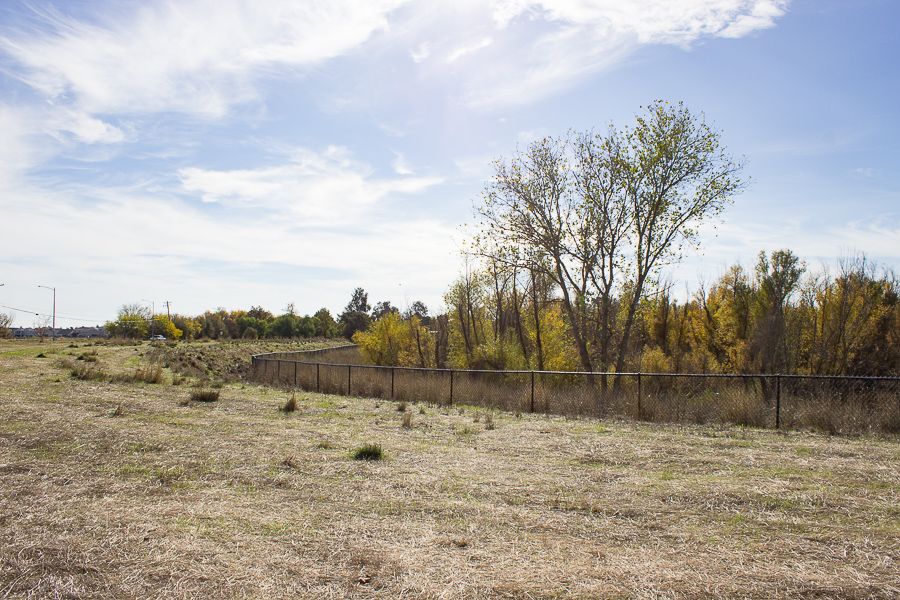
City-owned land in North Davis on the southwest corner of F Street and Anderson Road is set to undergo habitat restoration. The project is set to restore the vacant lot to a California-native grassland with trees, shrubs and wildflowers. It is designed to complement the existing pond habitat by providing upland habitat with additional value for wildlife and public access.

“The overall design is open, allowing views of both the pond and the surrounding vistas to the East, North and South,” said Tracie Reynolds, the property management coordinator for the City of Davis and manager of the city’s Open Space Program. “In addition to the grassland, a hedgerow-style feature will be installed on a short slope along the west edge of the project area.  The hedgerow will provide a buffer between humans and wildlife in the pond area as well as prevent encroachment of invasive weeds into the restoration zone.”

The site is set to be part of a growing ecological system in the city of Davis and in surrounding areas.

“What is most important about this F and Anderson site is its spatial context,” said Patrick Huber, the chair for the Open Space and Habitat Commission. “It’s right next to the North Davis Pond, which functions as habitat […] By bringing [the site] into Open Space management, we can have a well-connected ecological network on the North part of town and even beyond town.”

At the site, there is expected to be a walking path, interpretive panels and valley oak trees for shade. There is also the possibility of a bike crossing in the future.

“Once it is restored, I think it will be popular with people looking for a more natural walking experience through wildlife habitat,” Reynolds said. “The city’s greenbelts and parks are awesome and beautiful, but they are human-tended [and] contain turf and other non-native plants. The F and Anderson site will provide people with a more natural experience within the city limits.”

The City of Davis’ Open Space Program is undertaking the F and Anderson project. The program was established in 1990 to implement longstanding policies that called for the protection of the farmlands and wild areas that surround the community.

The major goals of the program include securing long-term protection of open space lands around Davis; providing and improving long-term management and monitoring of natural habitat and other open space values on city-owned lands; supporting the enjoyment of public open space lands, both within the city limits and in the broader Davis Planning Area; engaging citizens in planning and caring for open space areas and nurturing productive partnerships with other organizations, according to the Open Space Program’s website.

The program has led to the protection of about 5,300 acres of agricultural land and habitat areas surrounding the city through the acquisition of lands, either in fee titles or under conservation easements.

The program is funded mostly by Measure O, which was passed in November 2000. Measure O brings in more than $14 million in state and federal funding.

“Some recent projects [by the Open Space Program] include invasive Tamarisk control at South Fork, major vegetation control for public safety at Lincoln Highway and tree care with volunteers at multiple sites, among other things,” said Chris Gardner, the open space land manager for the City of Davis.

In the next few weeks, a community group called Friends of North Davis Ponds is expected to hold a meeting with the City of Davis to set a schedule and come to terms on the details of the project.


Written by: Dylan Svoboda — city@theaggie.org

Fighting mental illness through organizations, social movements

CAITLYN SAMPLEY / AGGIE

Nonprofits help those who struggle with mental health feel less alone

It’s easy to feel alone while struggling with mental health. On one hand, the feeling of being alone is better than being surrounded with people because no one wants to negatively impact another’s positive mood. But on the other hand, being alone is not the best thing for someone who feels like they have nothing to live for. When living with a mental illness, it makes it difficult to find a place of belonging. When the topic isn’t openly discussed, it can feel like there is nowhere to turn to speak up about a personal experience.

I’m here to bring attention to social movements and organizations developed to advocate for mental health and provide an inclusive environment for people who live with mental illness. These organizations and movements are created for real people who have struggled with issues like depression, self-harm and suicide attempts. They bring awareness to the topic by sharing real people’s stories and to providing a place where people can feel safe enough to tell their own story. Society avoids speaking about mental illness, but these organizations fight back to reduce stigma and represent a mutual goal of a better life.

These organizations start with stories, which is how Jamie Tworkowski began his own, “To Write Love on Her Arms” (TWLOHA). In the beginning, it started out as a story based on his friend Renee and her struggle with depression, drug addiction and self-harm. Renee had five days to clean herself up before she would be allowed into a rehabilitation program. Tworkowski spent those five days getting to know her as the person she was behind her mental illness. When she was accepted into the program, Tworkowski took her story and shared it on a Myspace page to bring awareness to mental health. He began selling t-shirts to provide funds for Renee’s treatment. The shirts had the words “To Write Love on Her Arms,” meaning that love is the most important thing we can give to people who struggle with mental illness. It alludes to the self-injury often inflicted on someone’s arm, aiming to replace that pain with love.

The movement became an official nonprofit organization in 2007 and began donating its profits from shirts and other merchandise toward treatment and recovery facilities. The group accepts messages from people around the world who wish to share their story and ask for advice. Some request to have their story shared on the organization’s blog to let others know they aren’t alone. And now, 10 years later, the organization continues to provide an environment for open discussion, inclusivity and hope that life is worth living.

Another social movement on the rise is The Orange Project. The movement stemmed from a tragic story, in which a woman lost her partner to suicide after a battle with depression. She wanted to break the silence and spread the awareness that suicide deserves. Among adolescents, suicide is the second leading cause of death and is referred to as a “global epidemic” — yet it’s rarely talked about. This project is meant to call attention to young adults and ask them to share handwritten notes of hope and inspiration on orange post-its. The color offers emotional strength and represents positivity to encourage communication. As the campaign travels to several locations, the vibrant color also catches the attention of passersby. The movement exists to provide a place for everyone to share their words of encouragement and let others know they aren’t alone.

These organizations are created from real stories of real people, which adds to their significance. They are created as support systems to give people who struggle with mental illness a place where they feel included in something. We aren’t alone, we never were and we never have to be. And from the words of TWLOHA, “Love is the movement.”


Written by: Jolena Pacheco — mspacheco@ucdavis.edu

Disclaimer: The views and opinions expressed by individual columnists belong to the columnists alone and do not necessarily indicate the views and opinions held by The California Aggie.

Police Logs

NICKI PADAR / AGGIE

Who let the chickens out?

Nov. 15

“Reporting party is reporting that subject is at In-N-Out driveway exposing himself while urinating.”

“Checking parking signs for the run this weekend.”

“Apartment was vandalized by acquaintance on 11/11/2017.”

“Reporting party’s roommates all received a call from an unknown subject, the caller ID on their phones was the reporting party.”


Nov. 16

“Several cars parked in the fire lane.”


Nov. 17

“In the northbound lane on F Street, the left turn arrow not turning green.”


Nov. 18

“Transient woman singing loudly in the area.”


Nov. 20

“Ongoing issue with chickens being within 40 feet of reporting party’s residence.”

Inside the Game: Jake Maier, Keelan Doss

0
IAN JONES / AGGIE FILE

The California Aggie sat down with UC Davis football’s dynamic duo

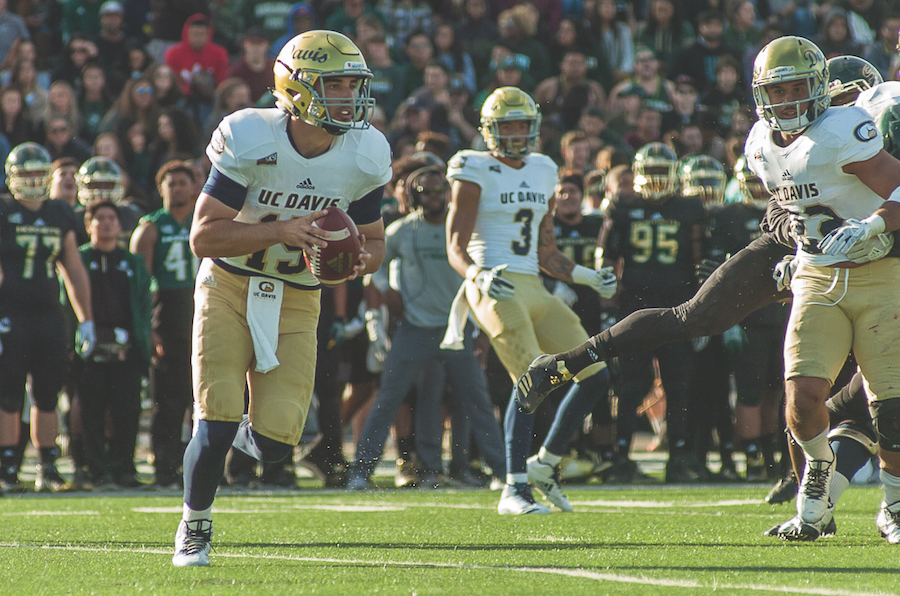
Junior wide receiver Keelan Doss and sophomore quarterback Jake Maier were this season’s UC Davis football stars. Both players were placed on the Walter Payton Awards list, and Doss was just named a finalist for the Walter Payton award.

Doss is the new all-time single season record holder for the most receptions in a year and has been leading the nation in receiving yards, receiving yards per game and receptions per game. Doss is the eighth Aggie in history to record 1,000 receiving yards in a single season.

Maier, a new addition to the team this season, became the first quarterback in UC Davis football’s Big Sky era to record 3,000 or more yards in a single season.

The Aggies just finished their season with a disappointing 52-47 loss to Sacramento State in the 64th annual Causeway Classic. UC Davis football ended its season with a record of 5-6 regular season and 3-5 Big Sky. The Aggies’ five overall wins are the most the team has won in a single season during its time in the Big Sky Conference.

The Aggie sat down with Doss and Maier to talk about their season, their personal futures and the future of the team.


You both have had fantastic seasons so far — breaking records, leading the nation in statistics.


Maier: For me, this is such a team game that it’s hard to focus on that kind of stuff because all of our — me and Keelan’s — success that we’ve had so far has a lot to do with the guys around us, our teammates, our coaches, our game plan. You know, all that stuff is far more important and means so much more to us than any individual number. We’re proud of what we’ve done, but this is such a team effort. Keelan can’t do what he does without the protection upfront. I’m not able to do what I do without coaches calling the right plays. This is such a team game that the individual accolades are not the end all be all for us.


You two have great chemistry. You’ve said that you just clicked. How?


Doss: It’s hard to explain because that’s really rare, in my opinion, when you get a quarterback and a receiver on the same page from the very start. I don’t know man, it was just during the summer, I remember we would come out here, work out a couple of times, and there was just a bond there. We felt connected as soon as we got together and started throwing and everything. We just built on that connection into season. We just play football. We don’t think about it too much and that just allows us to go out there and play free and confidently. It allows us to make plays at a more efficient level.


Maier: And to add to that too, a lot of it has to do with the off the field stuff as well. I mean, the film room and understanding what the opponent is doing to us. Me and Keelan spent a lot of time in that area, really game planning on our own time. What Keelan does is great. He gets open, he catches everything, we all know that. But what people don’t know is that when he comes to me in the middle of the game, he’s telling me what the defense is doing, what coverages they’re in, and he’s pretty much 100 percent right. He’s got the opponent figured out.


Jake, you recently joined Keelan on the Walter Payton Awards list. How do you feel about that?


Maier: That’s a huge honor. That’s something I never thought would ever happen. I always thought that I was going to work extremely hard and try to get to that point and be included in such a prestigious list. To see it actually happening now is just very humbling, you know, just to be on the same list [as] all those talented players. It makes my family proud, it makes me extremely proud. It wouldn’t happen if it weren’t for the team and the teammates that we have, our offensive line, and our running backs. There are a lot of unnoticed things that happen for [Keelan and I] to get to that point. We’re just extremely grateful and proud to represent that school.


Doss: That’s awesome, man. You know, the only reason I’m there is, well a big reason for why I’m there is because of [Jake]. He just puts the ball out there in perfect spots every time and I just catch it. […] it’s awesome. It’s an honor. I know it’s awesome for both of us.


What’s it like being part of the new Dan Hawkins era? How is this season different than your past seasons?


Doss: As of right now, feel like every time a coaching shift happens, there’s a new energy that’s brought with it. You know, I wasn’t here when [former head coach Ron Gould] first got here, but I was for his second year here and there was a lot of excitement around that, as well. And Coach G and the staff were awesome. I couldn’t ask for a better staff to have brought me in here. Coach Hawkins and the new staff, I love them just as much and they’re awesome. I feel like the energy right now is where it needs to be. […] Winning brings a whole amount of energy that is pretty awesome towards the program. It’s been fun. Coach Hawkins is great, Couch Plough is great, Coach Tolr is great. It’s just been a fun time so far and I hope to keep going.


What is the ultimate goal for you to achieve athletically at UC Davis during your next couple years?


Maier: We want to win a championship here. Truthfully, that’s really all I want. Obviously there’s other things that come with it, you know, spending time with your boys, bonding, experiencing UC Davis college life, that’s obviously something you’ll never forget and always carry with you. In regards to football and what we do on the field, we want to win a championship. We’ll give all of our efforts and we’ll sacrifice anything to get to that point.


Doss: There’s nothing better than winning a championship, from a Big Sky championship to a National championship. One of my goals, for myself, has been to be legendary. And with that, it’s just in every aspect, just drive for your hardest, to accomplish the impossible. And there’s no reason why you can’t go out there as a team and compete for a national championship or a Big Sky championship. I feel like you all have that mind set and if you do, we’ll achieve that.


What are your plans after UC Davis?


Maier: I’ve always had aspirations to be a coach one day. I think I’d really want to get into that as soon as I can. My family is just a houseful of coaches, I’ve just been around it my whole life. My dad’s a coach and I really look up to him and he inspires me to do that. God willing, if the good Lord says ‘Jake, you’re going to keep playing after college,’ then that’d be one heck of a blessing. I think it’s every kid’s dream, since they’re 10 years old or so, to be on that stage and inspire others to try to strive to do what you do. I have really really big dreams, whether it’s being a coach or continue playing, that’s really what I want to do when I’m done here.


Doss: I want to play in the NFL. That’s been a goal of mine since I was little boy when I first started [playing football]. Hopefully, I’m capable [of doing] that. I feel like I’d play in the NFL at a high level as well so it’d be fun. It’d be interesting.


Written by: Liz Jacobson — sports@theaggie.org

Humor: White elephant ideas to distract from the fact that men still don’t respect women in the workplace

ZACK ZOLMER / AGGIE

Happy Holidays to everyone except men

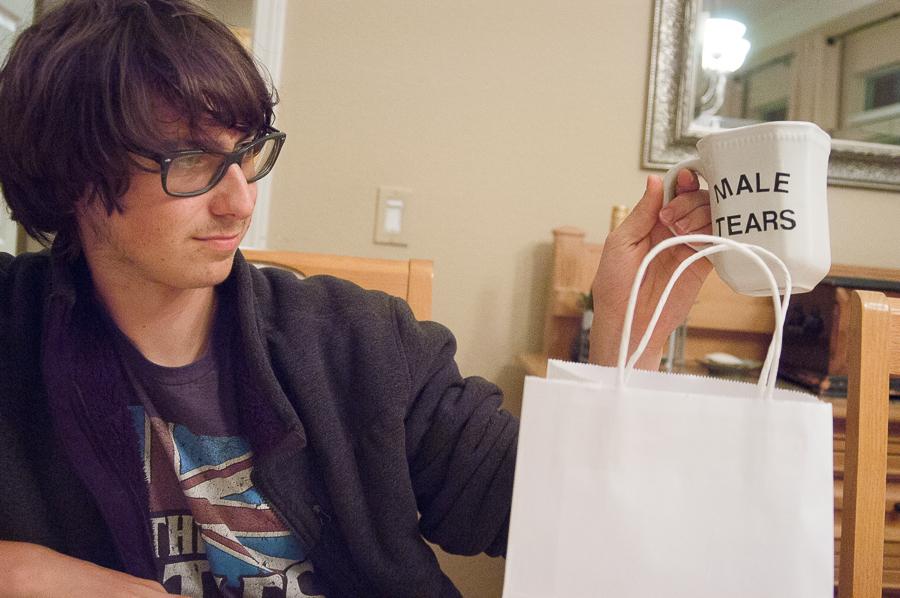
With the holiday season just around the corner, you’ve probably got a lot on your mind: what gifts to get your family, where you want to travel during winter break and how it’s possible that men still don’t know how to respect women in the workplace.

Thinking about all of these things can take up a lot of time and energy. So in order to get your mind off of the holidays, winter break and the perpetual gender discrimination that for some reason never seems to be fully addressed, The Aggie has compiled a handy list of cute white elephant ideas you can break out at your next holiday shindig.

An Inspirational Pillow

This is a groundbreaking gift that will be sure to momentarily distract you and your loved ones from the jarring realization that men continually view women as lesser beings in the workplace. A super cute quote like “Be yourself, everyone else is taken” will be the icing on the cake. This quote specifically will have a lasting impact on whomever you choose to gift the pillow to, as most women can relate to wanting to be someone else — like maybe a man, upon realizing how little respect is apportioned to them in commonplace settings.

An Easy Bake Oven

This gift in particular will really get your mind off of gender discrimination. It’s a super ironic kind of gift that says “I’m trying to force traditional gender roles on you but in a hilarious throwback kind of way.” Too funny! This subtle, subliminal kind of gender reinforcement from the ‘90s is sure to help you forget that men today still treat women like objects.

A Candle

To be clear about this gift, we’re talking about a generic, sad candle — not to be confused with a fancy candle. This is a great gift because it so bluntly tells anyone who receives it that you don’t care about them at all and put little to no thought into buying this depressing pile of wax. Luckily, this ends up being a good thing because it will help you forget about how men treat women in a similarly careless manner.

The list really does not get any more comprehensive than that. So if you want to forget about the disproportionate amount of discrimination and disrespect aimed toward women in the workplace, be sure to pick up a few candles and pillows this season. 🙂


Written by: Lara Loptman — lrloptman@ucdavis.edu

(This article is humor and/or satire, and its content is purely fictional. The story and the names of “sources” are fictionalized.)

Aggies of the Past

0
JAMIE CHEN / AGGIE

A look at The California Aggie 40 years ago, alumni experiences in a different world

40 years is a huge gap in time with lots of room for change. In 1977, the world was vastly different than it was in 1937, before World War II, the Civil Rights movement and humans walking on the moon. Today in 2017, with the advent of computers, cell phones and DNA testing, the difference from 1977 could not seem greater.

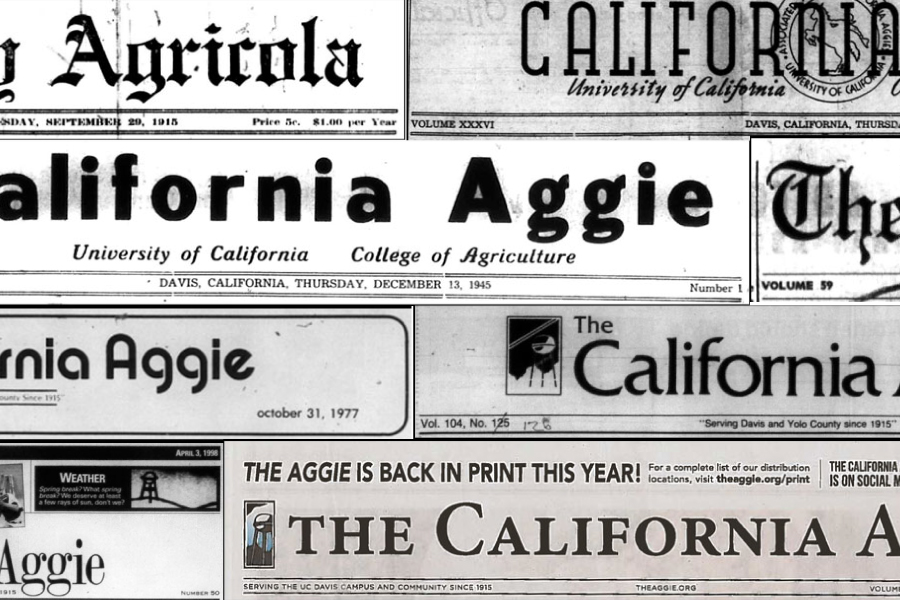
At UC Davis, the newspaper is one constant part of campus life that has existed for over 100 years. But there are certainly differences between The California Aggie 40 years ago versus today.

“I would type up a story on paper [with a typewriter] and then I would hand that story to one of the composing typists who would retype it into a machine that would spit out a little yellow tape that was about an inch thick,” said Derrick Bang, who graduated in 1977 as an English major with an emphasis in creative writing. “And then you’d run that tape through a machine which would spit out a tape of column-wide strip of your story, and then that would be given to the layout people […] and they would run the strips through a waxer […] so that it would stick when you put it down. One story at a time.”

Bang started writing for The Aggie in the fall of 1974 as a sophomore. He started at UC Davis as pre-vet, but quickly realized that writing was his strong suit. After his stint as a reporter, he transitioned to become the entertainment editor for his junior and senior years.

“We had no way of knowing how long or short the story had to be, so cuts would be made at the last second literally by taking pair of scissors and cutting out two paragraphs in order to get the story to fit with the ads,” Bang said. “That was one of the reasons we were there for so much time because it was a much more time-intensive process. When I wasn’t in class and not doing homework, I was there.”

As entertainment editor, Bang experienced an emerging entertainment scene in Davis. At the time, Davis only had two theaters and couldn’t accommodate the number of movies that were coming out. Nowadays it’s easy to look up movies and reviews at the click of a button, but Bang came up with the innovative idea to run listings of movies that were playing in Sacramento — something none of the other local papers were doing then.

“I knew that people were going to Sacramento [to watch movies],” Bang said. “So every Monday night I would spend two hours calling all of the managers in about 20 different movie theaters and finding out what they were going to be opening that coming Friday, which I would then run in Wednesday’s or Thursday’s paper.”

Today The Aggie runs once a week, but for a long time it was running daily, Monday through Friday. Needless to say, staff members were constantly writing in order to fill the 14 to 16 pages of the daily paper.

“You ended up writing just a lot and it seemed to me that it wasn’t unusual that you would write a story every day, and sometimes more,” said Richard Moreno, a 1978 graduate who majored in political science. “We used to have Associated Press and we were able to plug in wire service stuff to fill some of the holes, but we always tried to make the front page as much as possible local stories in the school or city stories.”

During Moreno’s time with The Aggie, he was at one time or another a reporter, campus editor and city editor. He eventually became managing editor for an entire quarter before becoming ASUCD President. He worked closely with the editor-in-chief at the time, Rob Pattison, and the other staff to run a fun and professional paper.

“I really loved being managing editor,” Moreno said. “We did a lot of projects together, […] and I think that’s part of what I liked, is we were a good team and we liked each other. I remember we did a series called ‘All the Chancellor’s Men,’ which obviously we’re talking about right after the book [‘All the President’s Men’] came out. [It was] a series on each of the vice presidents. It was always fun, there was a good staff of people that we worked with.”

The Aggie ran a few fun and creative projects at the time, including a daily soap opera known as “From the University Chronicles.” Every day ended with a cliffhanger, leaving readers begging for more.

“There was at that time so much freedom,” said Erin McGraw, who graduated in 1979 as an English major with a creative writing emphasis. “I could do anything I wanted to, and I could try anything. If I wanted to write a review in the form of a question and answer series, I could have. Anything would have been a totally reasonable thing to try, as long as I put my back into it and as long as I didn’t make it a joke. That was just super fun, it really was, it was awesome.”

McGraw worked at The Aggie as a writer for the entertainment desk. When she first started, she was assigned to cover a city hall meeting but soon discovered she truly prefered covering dance shows and classical music.

“I really did stay in my narrow little furrow and I was cranking out all of these reviews which were fun for sure and allowed me to see performances and to hear performing arts and all kinds of stuff that I wouldn’t have been able to do on my own,” McGraw said.  “There was wonderful, wonderful classical music that came to Davis. There was a terrific arts scene in Davis in those days, and that was before the Mondavi Center!”

Throughout history, the public’s view of media has come in waves. Moreno said that despite the fact that The Aggie was underappreciated while he worked there, it was still seen in a positive light compared to the public’s opinion of news outlets in 2017.

“In those days there was the Davis Enterprise, and the Woodland Democrat had the Davis Edition […] so I think that was always a challenge to try to get respect and have people look at the paper and consider us serious,” Moreno said. “[Students] don’t get the respect they deserve for the amount of work they put in. Especially in this new era of ‘fake news,’ it’s even harder. We were coming out of a post-Watergate period where there was a little higher opinion of news outlets.”

Despite these waves in attitudes through the years, something Bang, McGraw and Moreno all share is a deep reverence for journalism and journalists themselves. Working at The Aggie helped prepare them beyond college in various writing careers.

“Working at the Aggie prepared me for the 13 years that I was a desk editor at the Davis Enterprise, though one did not immediately follow the other, there’s no question that the experience of one led to the other,” Bang said. “Journalists are fabulous people and nothing distresses me more today than the realization that for about the past 18 months, journalists and journalism in general have been held and are being held in such low regard. I certainly hope that I live long enough to see that trend reversed.”


Written by: Marlys Jeane — features@theaggie.org

Life as a UC Davis musician

TAYLOR LAPOINT / AGGIE

How students “face the music” despite busy schedules, large workloads

Most students have enough on their plates with classes. Adding extracurriculars on top of that can stretch people thin, but it pushes them to develop time management skills and a strong work ethic. Students involved in campus-affiliated music groups take these steps in stride — specifically, with a musical beat.

UC Davis has a multitude of options for those seeking to get involved in local music and even for those wanting to be appreciative listeners. From ensembles such as jazz band to university chorus or marching band, there is sure to be a spot that fills each musical need.

For Caleb Chen, a second-year anthropology major, his group of choice is jazz band, and his instrument is guitar. His commitment requires a mandatory two-hour rehearsal once a week, plus practicing on his own. Chen balances this time commitment with his other responsibilities by coordinating his schedule beforehand.

I try to find gaps in my schedule and try and strategize what to do so that I can be the most efficient with my time. For example, I’ll try to use breaks in between classes in order to study at the library,” Chen said.

Interestingly enough, the activity that takes away from his time to study also serves as a method of relief when studying gets to be too much.

“I also try to get practicing done when I am mentally exhausted from school work, as it allows me to take a break from academic material while still being productive,” Chen said. “I enjoy playing music significantly, so I can also look forward to it as a reward at the end of a studying session.”

Like Chen, drummer Josh Zucker, a second-year atmospheric science major, has to balance out jazz band commitments on top of marching band duties.

My schedule is pretty busy with both groups. Jazz band is only on Thursday nights from 7 to 9 p.m., so [there’s] not too much time,” Zucker said. “Marching band takes a lot of time, especially in football season and right before Picnic Day, at least 10 hours a week during those times.”

For him, spending time with friends is sacrificed in order to maintain his school work.

“It’s hard to balance. I have to stay up late many nights working on [homework] and studying, taking time away from hanging out with people if necessary,” Zucker said. “But it’s still manageable.”

Vocalist and cellist Austin Kyan, a second-year biological sciences major, faces challenges in terms of both the number of music groups he belongs, as well as his large course load.

Kyan is taking 23 units in addition to his involvement with symphony orchestra, video game orchestra and two chamber music groups. Despite this, Kyan puts a positive spin on his engagements and the time they consume.

“Honestly, I don’t know how I balance my commitments with school. I just spend very little time for myself. For example, I used to spend at least two hours a day playing video games or reading, but I haven’t done either of those things since summer,” Kyan said. “But then again, the more time I have to myself, the more I slack off on my schoolwork, so this is another way of keeping myself on task and always working.”

For all three of these players though, the struggle is worth it. For Zucker and Chen, playing music at UC Davis has positively impacted their social lives as well as helped them develop as musicians.

Being part of the campus band has been great and has introduced me to new, like-minded individuals who are committed to playing together with one another,” Chen said. “There’s also not as many people as you would have in a lecture hall for a class, so you can really get to know the people who you’re playing with. Jazz band has also been tremendously helpful in helping me to discover new music and incorporate different ideas and expand my musical vision.”

Moreover, Zucker enjoys being able to represent his school.

“I feel proud to be an example for the school in marching band at gigs and football games. Nothing but good things,” Zucker said.

For many musicians, the motivation to continue can be found in remembering their humble beginnings. For Zucker, his drumming curiosity was sparked by the video game Rock Band. Chen, on the other hand, switched to guitar after realizing his dislike for the piano in sixth grade.

“I would say that I didn’t really take [playing guitar] seriously until junior year of high school, but ever since starting guitar, I’d started listening to a lot of classic rock and blues, my main influences being Led Zeppelin, Jimi Hendrix, Stevie Ray Vaughan, Pink Floyd, among others,” Chen said. “Music really spoke to me because it felt incredibly relatable. Many artists’ personalities aligned with mine — I am naturally a pretty shy person, and I found many of my guitar influences to be the same way. For them, music was a way to speak, and I quickly found that to be true of myself as well.”

Just as important as keeping in mind what these musicians love about their instrument, they must also remember the inspirations that fuel their playing.

“I really love the variety of sounds I can make with my cello, exploring the different ways the notes sound when I play something differently,” Kyan said. “For example, the cello can play low notes to solidify the rhythm of the piece or play high notes like a solo violin.”

Being involved in any UC Davis music ensemble requires a lot of dedication. For these musicians, it seems that the talent they foster, the connections they develop and their ability to represent their college campus make the sacrifices fade to background noise. The sound of the music they play drowns out their worries, and they make sure their climb through college is one with a good soundtrack.


Written by: Cecilia Morales — arts@theaggie.org