57.7 F
Davis

Davis, California

Sunday, December 21, 2025
Home Blog Page 575

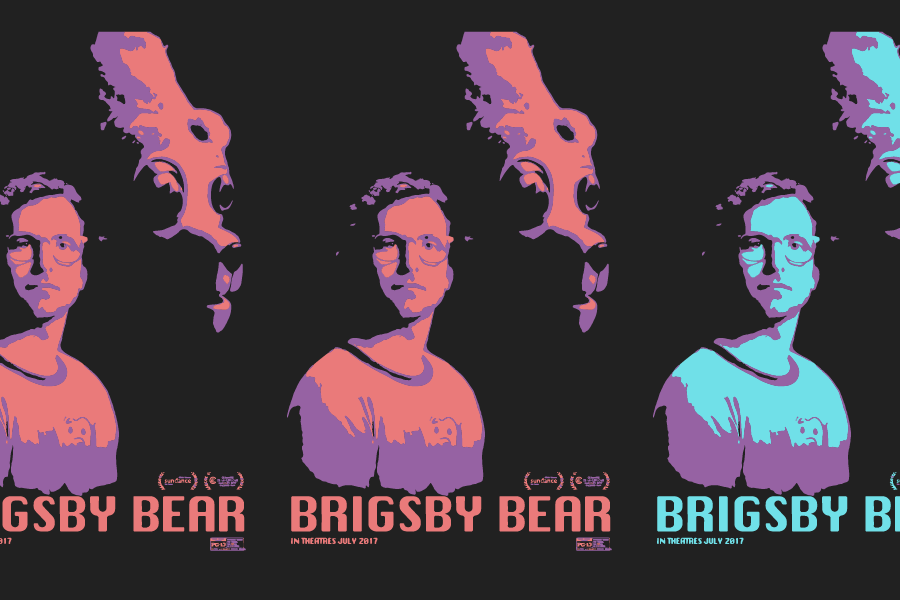
Movie Review of “Brigsby Bear”: Lessons from a Plush Bear and Master Comedian

JEREMY DANG / AGGIE

A bear to remind us of what makes us who we are

Co-written and starred by Kyle Mooney himself, dramedy “Brigsby Bear” demonstrates Mooney’s cinematic and creative genius. Expanding beyond his early YouTube days of Good Neighbor Stuff (which launched his career) and current place on Saturday Night Live, Mooney finds a coexistence of humor and sentimentality — a balance not often mastered by comedians or filmmakers. Mooney proves himself beyond a goofy yet skilled comedian, a media craftsman willing to explore underlying sentiments that impact each of us on a personal level. Through “Brigsby Bear,” Mooney comments on our personal realities and the idiosyncratic characteristics of it that make it special to each of us.  

The film starts with what would have been considered nostalgic if we grew up in the 1980s: a glitchy VCR taping of live-action plush characters in a fictional fantasy setting, low-quality neon graphics and a distinctive ‘80s, techy musical score. The film starts with a snippet of the fictional “Brigsby Bear Adventures,” the fake TV show that protagonist James Pope (played by Kyle Mooney) has spent his whole life watching. Brigsby Bear, however creepily endearing, means everything to James — and is the central artifact of the movie itself.  

James has spent his entire life watching “Brigsby Bear Adventures,” which turns out to have been made only for his viewing pleasure by his “parents” (who actually kidnapped him as an infant and have raised him in complete isolation). Brigsby was used by these kidnappers to brainwash James, and the bear would utter things intended to teach James how his pseudo-world runs and to convince him of its legitimacy. Quotes from the bear like “prophecy is meaningless, trust only your familial unit” and “curiosity is an unnatural emotion” cannot go unnoticed.

That isolated existence creates a reality that is far different from ours, complete with mannerisms and ideas only specific to James. James’s fundamentals — his social skills, his ability to decipher right from wrong — have been constructed by and centered around Brigsby. Brigsby Bear is the centerpiece of his reality.

It takes the rescue of James from his capturers to learn that the only world he’s known is a lie — or at least not part of ours. As James attempts to cope with the dynamics of the new world and his actual family, he sets out to write and film the last episode of “Brigsby Bear Adventures” — the only thing he knows is true. But not all that James learned from Brigsby was strange propaganda; a lesson from Brigsby to never give up is repeated multiple times by James. His filmmaking quest was therefore still an embodiment of his old reality.

Indeed, a testament to how different his reality is, the seriousness and sheer insanity of what happened to him cannot be fathomed by James, a dramatic irony that is almost uncomfortable to witness. His quest to finish his beloved series is a symbolic attempt to craft the world that directly molded him. Whether his finishing of “Brigsby Bear Adventures” terminates his long-held reality based on Brigsby or embeds it into ours is up to the discretion of the viewer. I am not even certain which it does; such ambiguity is what makes this film so masterful and spot-on with the point it is trying to make.  

The film feels like a paradox of emotions — as the viewer, you can’t help but feel a disgust for Brigsby as a character, yet somehow resonate with James’ love for the plush character. Meanwhile, in our reality, Brigsby Bear was used as a brainwashing tool to occupy James’s mind while living in his isolated commune; all the lessons and sentiments James has created during his 25 years of life have been based on this show. It’s disturbing, but simultaneously enchanting. It’s a comment on the various and differing realities that raise us; a statement that, while bizarre (and maybe not as extreme as James’s case), both realities can be full of love and personal meaning.

It has been a while since I have seen a movie as genuinely innovative as this, as close to authentic creativity. And while this movie may not be the hallmark of Mooney’s comedic career, the storyline, production, writing and depth of thinking are of high quality — easily making it one of the best movies I have seen this year.  

Your heart can’t help but feel a little warmer.


Written by: Caroline Rutten — arts@theaggie.org
Shaniah Branson sworn in as interim senator

FARAH FARJOOD / AGGIE

Branson hopes to help transfer students adjust, succeed

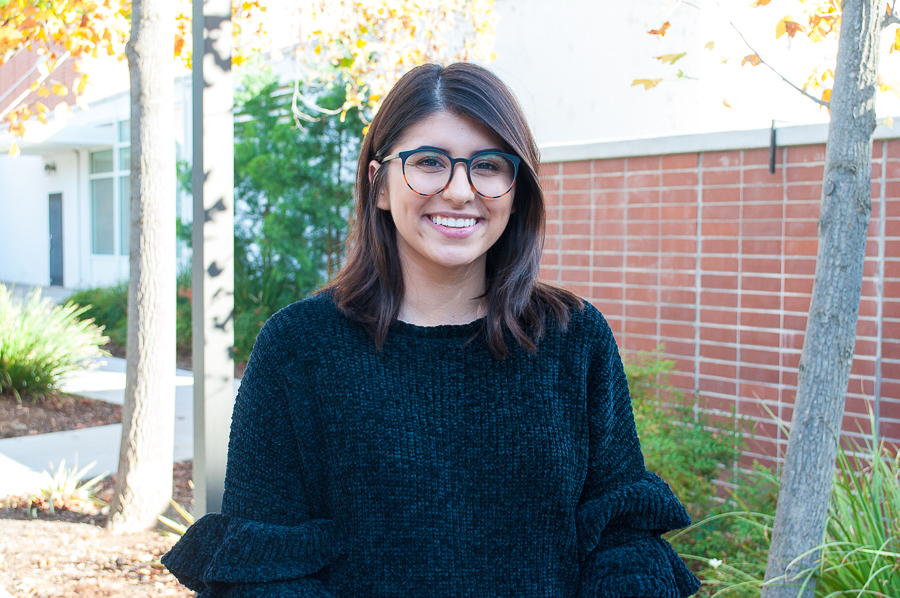
On Oct. 26, third-year communication major Shaniah Branson was sworn in as the third ASUCD interim senator. Branson is a transfer student from Huntington Beach, Calif., where she attended Golden West College.

Branson was an active student leader at Golden West College and took on various roles within her community, including her position as president of the California statewide Alpha Gamma Sigma Honor Society and vice president of the Peace and Leadership Club.

“My community college experience was amazing, and I was honored as the Student of the Year at graduation,” Branson said.

Branson was interested in the interim senator position because she wanted to continue her leadership development and contribute to ASUCD’s mission of creating a fulfilling and comfortable experience for every student at UC Davis.

“During my time as interim senator, I want to focus on increasing the efforts of transfer and reentry student outreach and engagement,” Branson said. “I believe that the transfer and reentry student community needs more consideration, as the spotlight is not equally shared with the incoming freshman every year. As a transfer student, we have to overcome social and cultural barriers, get accustomed to a brand new environment and ensure our transition is constructed properly so we may attain our degrees within the two years many of us plan to be here — this transition is not seamless.”

To better ensure that the needs of transfer and re-entry students are met, Branson discussed the need to initiate early identification via social media, email or in-person tabling.

“We need to figure out what students need before they arrive here; students do not have the same accommodations from year-to-year, and we need to ensure that this is the case,” Branson said. “There also needs to be a stronger safety net of resources and overall accessibility [as well as] other ways to inform our students of campus resources and events.”

After her term as interim senator, Branson plans to run for a full term as an ASUCD senator to continue her efforts of helping the transfer and reentry student community as well as improve the overall transparency and accessibility of ASUCD.

“Students need to know more about what ASUCD is up to,” Branson said. “But, first things first, we need to make the ASUCD floor of the Memorial Union known. I am excited to be representing the student body and to be an Aggie.”


Written By: Clara Zhao — campus@theaggie.org

Capitol Corridor train station provides another choice for transportation

CAITLYN SAMPLEY / AGGIE

New train stops opened in Fairfield, Vacaville

The Capitol Corridor train stations recently opened up new stops in Fairfield and Vacaville to provide commuters another option for travel.

Meanwhile, the City of Fairfield plans to revamp the area with a new downtown so that people have easier access to the train station. Dave Feinstein, a planning division manager for the City of Fairfield, notes that the station will provide more than just transportation for commuters.

“The train station is the centerpiece for a much larger land plan around the station itself,” Feinstein said. “We have a land plan within half a mile of that station, which will include a new downtown. There is a street that will lead from the town centre area right to the train station about a block away. It’s what we call a ‘transit village’ here in the city of Fairfield.”

The new stops were installed after years of planning.

“The earliest planning that I’ve seen for this station leads to the early 1990s,” Feinstein said. “In 2005, the Capitol Corridor approved a resolution. There were a collection of decisions along the way that lead to the station. It takes a long time for the fundings and to actually build it and working with the Union Pacific Railroad to stay within their right of way and accommodate the platform. It takes a long time, but we’re finally there.”

The train will provide an alternative option for commuters, which could also lessen the congested traffic during rush hours.

“One of the things we work very hard to do is to provide people with choices for how they get places,” Feinstein said. “The problem is so many people try to drive at the same time, which clogs our freeways during the commute hours.”

The stops will allow commuters to travel to neighboring cities like Davis, and the train will also link commuters to other forms of transportation at different stops as well.

“It goes to UC Davis, downtown Sacramento, and you can connect to the bus system,” Feinstein said. “It goes all the way down to the heart of the East Bay and connects to BART in Richmond. It continues all the way down to San Jose so there are a large range of options.”

Michael Hendley, a transportation services manager for Capitol Corridor, considered both the negatives and positives of the new train stations.

“Trains will have more noise, as far as the sounds of horns and safety measures for the crossings,” Hendley said. “[However,] the positives outweigh the negatives because now you’re reducing the amount of cars that are within the city and reducing greenhouse gasses.”

Hendley also noted that students and other people headed for Davis would be able to travel more efficiently.

“The new Fairfield and Vacaville stop will positively impact Davis because there will be less passengers going into Davis to get on the train because some passengers live on the outskirts of Davis, like Dixon, [which is] in between Vacaville and Davis,” Hendley said. “We’re going to see those passengers boarding from Fairfield and Vacaville and bringing out traffic from Davis.”

People moving away from the Bay Area will also be looking at transportation services provided, so the new stations could allow more options for those new to the area.

“As the real estate market increases in the Bay Area, people moving out will look for housing and choose to commute, and they’ll be on the freeway,” Hendley said. “So, to get them off the freeways, I think the stations that we have like Fairfield and Vacaville will give them the opportunity for convenience. The trains have Wi-Fi, so people can start their workday on the train, so that helps them out.”

Priscilla Kalugdan, a marketing communications officer for Capitol Corridor, explained that adding the new stops would not impact travel times for the other stations.

“The new stop has been planned for within our new schedule,” Kalugdan said. “We’ve reduced the station dwell times from two minutes to one minute at four of our stations, and that’s part of an overall project that we’re embarking upon. Dwell times is how long a train will stop to board passengers.”

Kalugdan pointed out that people are still searching for new ways to travel or commute, and that Capitol Corridor could potentially provide more choices for those who seek ways to avoid traffic.

“Our riders continue to grow each year, and people are searching for options away from the congested freeways,” Kalugdan said. “We certainly welcome more riders on board and are happy to offer any convenient mode of travel for them.”


Written by: Stella Tran — city@theaggie.org

Women in Computer Science

DIANA LI / AGGIE

Only 24.4 percent of computer science majors are women

There was a time when women were at the forefront of computer science. Many of the first programmers were women. Now, people learn about Alan Turing, creator of the Turing Machine, but forget about Ada Lovelace, the mathematician whose ideas about computing were so advanced it took close to 100 years for the rest of the world to catch up.

“From what I’ve seen in the past, there was actually a large number of women in CS in, I think, back in the 80s and then there was a sudden drop-off,” said Thao Pham, an undergraduate program coordinator and an advisor in the CS department. “There were supposedly more women PC users back in the day than there were men and the industry wanted to change that. They wanted to make computers and computer science more interesting to men. So they changed the culture, they changed the way it was presented and [that] created a shift. Whatever increase in females that was occurring kind of stalled and then dropped off.”

A recent study showed that in order for a woman to drop out of STEM, multiple events need to occur. It isn’t just a lack of representation, or getting bad grades or the perception of STEM subjects individually, but all three at once that can lead to plummeting enrollment.

“You are at the forefront right now,” said Pham. “You are essentially very much like the civil rights protestors. You are the one that’s going to have to take the brunt of all of the terrible things going on right now and create the change so that it’s better for the future generations.”

Currently, some female students have expressed that they enter the tech field with a feeling of perceived inadequacy and low self-esteem.

“I just had an interview and it was with two male engineers and it was on the phone…I felt intimidated,” said Alisha Nanda, a second-year computer science major and the event chair for the Davis Computer Science Club.

Premkumar Devanbu, a computer science professor, teaches a class that is supposed to prepare students for internships by teaching them vital technical skills for the industry. However, technical skills are not enough to prepare women for the sexism they face in the industry.

“I think part of it is this mindset that women are quiet, that they are meek,” Pham said. “That’s what [society is] used to. So change what they’re used to.”

Sexism, though it can stem from malicious intent, often signals a lack of awareness that men have of the challenges that women face.

“I can’t speak from first-hand experience on the challenges a woman might face in the industry,” Devanbu said. “I take [it] as a challenge. What can a male faculty member do to prepare women for the kind of issues they might face? I don’t have an answer to that because I don’t really know. I haven’t faced those issues.”

Zhou Yu, a professor in the Department of Computer Science, believes that the best way to make men more aware is simply by telling them, something women tend to avoid doing for fear of seeming more emotional.

“I was in graduate school and I was working on a project with another guy, a friend, and we were talking to the faculty member about how our project was going,” said Nina Amenta, a professor in the Department of Computer Science. “I said something and my partner did that thing where he paraphrased what I just said. And the professor turned to him and said ‘That’s exactly what she just said.’ And I was like ‘Yes! Thank you!’.”

The CS department is actively trying to alleviate the female minority issue by adding two more female professors to their faculty this year, including Yu, who is featured on the Forbes “30 under 30” list for science in 2018. However, that still only brings the grand total of female professors to five out of 40 overall in the department faculty.

“You need to have certain people with more experience, with a similar background as you to form this community, to support each other,” said Yu. “I would say that’s very important. You need to have somebody you can trust to actually see you through the difficulties and give you support and guidance.”

UC Davis has a supportive community that includes clubs like the Society of Women Engineers and Women in Computer Science. While it is a difficult endeavour that requires unity, persistence and increased awareness, women have been computer science pioneers in the past and can continue to do so.

““I would say that if you look back in history, there are a lot of amazing female figures in STEM that have faced adversity and that everyone has a moment where they’re like, ‘I don’t want to do this, this is not for me’,” Pham said. “So I would say to them that superheroes might face tough situations. They might say ‘I don’t want to go to this dangerous, life-threatening situation’ but they do, because that’s who they are. They fight where people can’t…What if Batman never put on his mask and decided to fight crime? You don’t know that you’re a superhero until you try. So try. And don’t let the world say that you can’t do this…We have a lot of female historical figures who have done incredible things. That could be [you]. [You] could go down in history books.”


Written by: Kriti Varghese — science@theaggie.org

Humor: Turkey survivors of Thanksgiving regroup and plan for counterattack

JAMIE CHEN / AGGIE

Humans are about to get stuffed

After a very deadly and delicious Thanksgiving, the turkeys who evaded being devoured are now regrouping to strike back against the humans who ate their families. The turkeys were incensed by the holiday, whose historic origins were not only problematic in their estimations, but also needlessly excessive.

The turkeys are preparing for a full-on assault of downtown Davis, having sent scouts far in advance to scope out the town and find its weaknesses. The types of assaults that can be expected range from overturned garbage cans to the stealing of food from people at restaurants. These turkeys are very angry and very merciless.

One UC Davis student, Brian Smith, had a run-in with these turkeys recently.

“They stole my wallet and lightly pecked my feet,” Smith said. “It was annoying at the time, but became increasingly more humiliating later that night as I thought about the fact that I had been bested by a group of turkeys. I guess that’s what I get for supporting the factory farming industry. Oh well.”

Davisites are nervous about the impending turkey assaults and so are preparing themselves for whatever the turkeys may bring against them.


Written by: Aaron Levins  — adlevins@ucdavis.edu

(This article is humor and/or satire, and its content is purely fictional. The story and the names of “sources” are fictionalized.)

KDVS beats and Venus vibes

TREVOR GOODMAN / AGGIE

KDVS hosts dance party fundraiser at Delta of Venus

In downtown Davis on Nov. 16, KDVS hosted its fall fundraiser at Delta of Venus cafe. As part of a yearly effort to raise $70,000, the Davis radio station brought out its local DJs to bump music for a night of drinks and dancing.

“All my DJs did a great job,” said Mitchell Rotter-Sieren, the general manager for KDVS. “All of them did this thing called free pledges, where they ask a different family to help support the station, and we got funds from listeners as well. I’d say overall it went really well.”

The lineup included Larry Rodriguez, Breezy, Cherry Blossom and DJ Tropa, among other KDVS DJs. According to KDVS design director Violet Elder, most DJs played “their greatest hits and favorite songs for their show.” A DJ table was set up both inside the cafe and outside on the patio, with the inside DJ playing rock and funky music for dancers and the outside DJ acting as backdrop for a more mellow vibe. Party attendees could choose to mingle outside or venture onto the dance floor inside.

Beyond radio listener generosity, the night’s fundraising was also achieved through purchase of KDVS merchandise and tips put in the displayed donation jar. Additionally, drink purchases could be made from Delta of Venus’ selection of beers and hard ciders.

Members of KDVS prepared for the dance party fundraiser by hyping one another up before the event.

“There was a lot of love and excitement,” Elder said. “A bunch of people were hanging out in the lounge — way more than normal. Somebody brought down a whole bunch of food for us two days in a row. There was just a whole lot of excitement, especially because of our events like the dance party.”

Nithya Kumar, a fourth-year food science major, attended her first Delta of Venus event for the KDVS fundraiser.

“I thought it was really cool,” Kumar said. “It really fit KDVS’ vibe. It felt like a house party, but it was a more mature setting, which I really liked.”

As students like Kumar and Davis residents engaged in an evening of freeform radio music, KDVS worked toward fulfilling its operating budget. The $70,000 raised between the spring and fall fundraisers will help to pay KDVS salaries, radio tower rent and general maintenance. The radio station aimed to collect $35,000 from the dance party fundraiser.


Written by: Eliana Sisneros — city@theaggie.org

Can Religion Be Replaced?: What can overcome the secular dismantling of community?

Hobby, political groups seem a lousy replacement. Or are they?

Of all the intellectual topics thrown around the dinner table or coffee shop, religion is one of the most compelling. Everyone speaks political language these days, and there’s nothing more cliche than opening a conversation — or a column — with a snark on Trump himself. Oh, it’s funny, to be sure, especially because I do a fair bit of it myself. But still.

A conversation about religion, on the other hand, is just more interesting than regurgitated political talking points. Religion packs a lot of stuff in a ginormous box — there are texts to interpret, deities to worship, ceremonies to endure and sermons to hear (or sleep through, depending on the speaker’s drawl or intonation).

About 84 percent of the world’s population holds some sort of religious affiliation, according to a 2012 study from Pew Research Center. Religion is therefore central to many cultures and nations. It can be an impetus for warfare and tribalism, or a catalyst for charity and a certain amount of morality. Religion can also provide an acute sense of community.  

Domestically, this past decade has seen Americans leave organized religion in droves. While the number of Americans calling themselves religious has been steadily declining since the 1970s, the lack of religious beliefs in younger generations has reached epic proportions. A third of Millennials are religiously unaffiliated, and a quarter say they are “nothing in particular.”

In short, American society is less religious today than at any point in modern history. At first glance, we could congratulate this development. Reducing the influence of religion on decision-making has generally allowed for a more open-minded approach to contemporary issues — think of the recent successes of marriage equality.

But religion’s decline in America might have an unintentional side effect. This is a country where religion (namely Christianity) has generally provided a strong institutional backbone for community vibrancy — a place where people feel they belong. The Establishment Clause of the Constitution has played a supporting role, allowing diverse pockets of faith-based communities to thrive from the Deep South to Utah.

What happens when that social structure begins to crack, as indicated by the ever-growing number of religious dissenters?

In other words, what can replace that sense of community shared by members of a religion?

As a nonreligious person, my business with religion is predicated on what I’m missing. Is there anything that can provide an equivalent dose of social companionship and existential comfort?

Hobby groups, you say. On campus there are clubs channeling an inner urge to fire fake weapons at other people — meaning there’s probably a hobby group for just about everyone on the planet. Yet it seems flawed to equate the passions of quirky hobbyists with the more transcendental connection that links those of a religious faith to one another.

Political groups and party affiliations, then? There’s nothing like a shared opinion on abortion to bring people together. The problem is, there’s also nothing to feel good about in politics, either. Political talk –– even within carefully crafted echo chambers — is hardly a place for eternal optimism. It’s too divisive.

There’s no denying how these options can bring satisfaction to an otherwise boring life. But they seem to fail where religion is strongest, in providing community-based comfort to people on an emotional or existential level rather than on a completely rational or interest-based one.

Or is this type of comfort even necessary? The rise of scientific enquiry has provided concrete answers to many of the same questions that generated ancient religious beliefs in the first place — Zeus is not the source of thunder and lightning, for example. Many people are unfazed by the thought of dying without an afterlife. To them, comfort through a religious community is unnecessary.

What do you think — can religion be replaced?


Written by: Nick Irvin — ntirvin@ucdavis.edu

Disclaimer: The views and opinions expressed by individual columnists belong to the columnists alone and do not necessarily indicate the views and opinions held by The California Aggie.

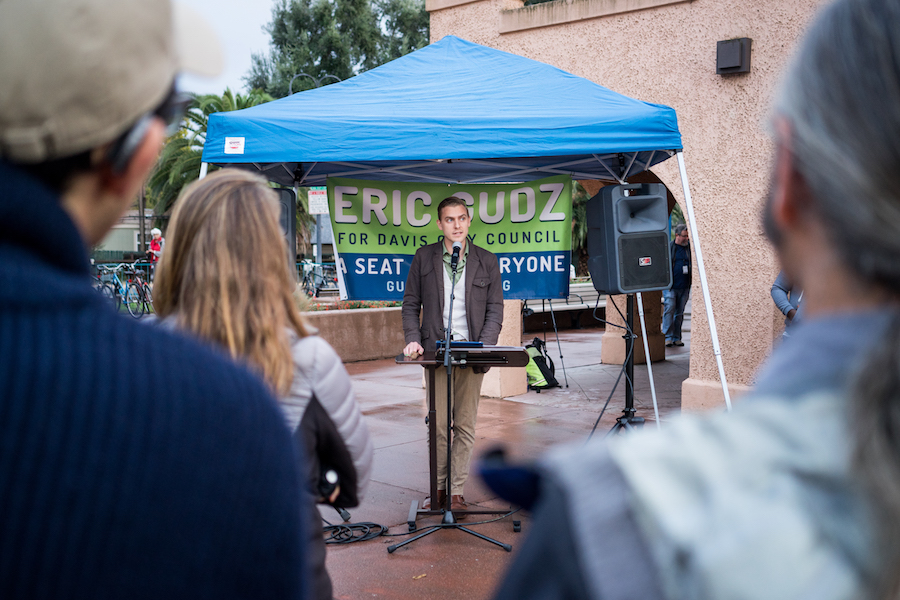
Brody Fernandez, Eric Gudz, Dan Carson announce runs for Davis City Council

NICHOLAS CHAN / AGGIE

Candidates for City Council discuss changes they hope to bring to Davis

The upcoming election to determine who will fill the opening spot on Davis City Council in 2018 has already sparked the campaigns of several candidates in the Davis community, including Brody Fernandez, Eric Gudz and Dan Carson. All three candidates have a variety of experiences and goals they wish to show to the city of Davis.

At age 28, Brody Fernandez is the youngest candidate running for city council and is an enrolled returning student at UC Davis. His interest in running for office sprouted from his ongoing experience within the Davis community over the past decade as both a student and an Uber and Lyft driver.

“When I started going out there and talking to the constituents, to the citizens of Davis, to my neighbors, I discovered that there are people in the city who have the same fervent passion about fixing these issues as I do,” Fernandez said. “When I moved to Davis, I recognized that there were so many similarities with my hometown and so much that I saw that was positive, but additionally I started to see things that could be fixed and could be changed for the better. And being a journalist, I wanted to stop writing and wanted to actually go out and do things.”

His campaign focuses on a variety of issues, including normalizing the housing market as well as addressing parking in the city, transit and traffic safety and the campaign of loving your neighbor, in order to increase cooperation with neighboring cities.

“I not only identify with the students and the young people, but at the same time I can identify as a 28-year-old college graduate and effectively represent that demographic as well,” Fernandez said. “I was born into a working-class family. My father was a janitor and my mother is a retired school bus driver — that’s what I’m proud of most — to be able to have tangible experiences with the middle-class constituents that work in Davis.”

Eric Gudz, a recent UC Davis graduate, is also one of the youngest candidates running for office. They served as one of the architects for cannabis policy throughout the city and are on the Unitrans advisory, due to their experience with transportation research. Gudz became intimately familiar with particular issues and struggles that younger people were facing through their experiences both on and off campus.

“One of the biggest tragedies of Davis is that the connection we once had with the university is tragically under par and needs work,” Gudz said. “I want to build and provide for the next generation that will be a part of our Davis community, especially those that are struggling to find their place within our community. Front and center with that is issues around housing, the supply and condition specifically.”

Gudz’s interests also expand to getting solutions for economic innovation through creating space- and base-level entrepreneurship, as well as increasing spaces for social services like Planned Parenthood. They also are the first openly gender non-binary candidate to ever run in a Davis election.

“We’re building a movement that’s fueled by the next generation of Davisites,” Gudz said. “The campaign slogan is ‘A Seat for Everyone,’ and that means the necessity of including everyone, even those who haven’t been traditionally included. The ability to be able to connect with all that makes Davis what it is, [which] is absolutely imperative.”

The third candidate is Dan Carson, a 30-year-old Davis resident. His campaign focuses on three vital issues: the city’s financial condition, the town’s relationship with the university and sustainability in terms of issues such as homelessness, housing and climate change. Carson worked as a fiscal and policy expert for the state legislature in a nonpartisan and independent office for 17 years.

“The heart of my campaign is to protect the quality of life we all enjoy, and to do that we need to [be] fiscally stable and we need to address some of the real challenges this community faces including the shortage of affordable student housing,” Carson said. “One of the things I’m going to do if I’m elected to council is to try to establish an effective process for how we deal with this next round of growth in student enrollment and make sure we have a process where everyone is heard and we have a real dialogue that’s created to have a healthy long-term relationship with the university.”

Carson also recognized the high spirit of volunteerism in Davis, proactively working on a lot of these issues, and said that the Council’s task is to ease the burdens of the volunteers and share those appropriately.

“It gets down to the fact that Davis is such an amazing place,” Carson said. “We’ve got all of these passionate and dedicated people here — none of this is accidental. People choose to live in Davis or attend UC Davis in part because of our shared values.”

The election will be held on June 5, 2018. Community members have up to 15 days prior to the election to register to vote.


Written By: Hadya Amin — city@theaggie.org


Social Media: A decade of connecting and distracting students

0
SHEREEN LEE / AGGIE

Help or hinderance?

Over the last 10 years, social media has transformed the way people interact and learn, for better and for worse, raising many questions about how it impacts education. In a recent interview with Axios, Facebook’s founding president Sean Parker made a few quite revealing remarks about the potential negative impacts of Facebook and other platforms like it.

“I don’t know if I really understood the consequences of what I was saying, because [of] the unintended consequences of a network when it grows to a billion or 2 billion people,” Parker said. “It literally changes your relationship with society, with each other […] It probably interferes with productivity in weird ways.”

With Facebook and other social media platforms exploding in popularity during the formative years of today’s college students, it’s worth considering whether UC Davis students generally view social media as a help or a hinderance in education.

On the positive side, social media, especially Facebook, is conducive to allowing students to coordinate more easily by creating pages and groups for specific class years, majors, clubs or courses.

“I’ve joined several groups for courses, like MCB 103, BIS 102, BIS 101, PHY 7C,” said Simranjeet Benipal, a fourth-year biochemistry major. “I usually don’t join them initially, but in the past friends have let me know that I should because they might have answers to questions I have.”

Benipal noted that having easy access to friends as resources through social media can make things more convenient by allowing students to move at their own pace and perhaps avoid interacting with professors. While this may be helpful if students have difficulty with those types of interactions, it may also prevent those skills from being built.

“It can be a pain to go to office hours because coming up with smart questions can be difficult,” Benipal said. “It’s my personal belief that you learn better if you find a solution yourself […] Talking to a professor in office hours or in lecture can be daunting. You don’t want to be the person who asks a stupid question.”

While many professors provide notes and study materials through their Canvas pages, student-run groups on Facebook can often be reliable sources for finding supplementary materials or for getting notes for classes when the professors don’t make notes readily available.

“Facebook pages for classes are helpful if someone needs help finding information for a class,” said Karen Zuniga, a fourth-year wildlife, fish and conservation biology major. “I’d say I join two groups on average each quarter.”

On the other hand, Zuniga also pointed out some of the negative impacts that social media has on study habits. She indicated that having class resources readily available on social media through their peers can create a type of dependency.

“Sometimes, I don’t go to class because I know someone will post the notes,” Zuniga said. “However, if you totally slack off, that’s your fault.”

In addition to perhaps fostering dependence or incentivizing laziness, social media can also distract students during or outside of class. Computer science graduate student Parsoa Khorsand explained that social media can have good impacts for education, but he also admitted that he has allowed it to have a fairly large presence in his routine.

“It’s generally a positive thing,” Khorsand said. “But with Twitter, I guess I’m kind of addicted to it. I have three desktop displays and Twitter is always open on one of them. I look at it every couple of minutes automatically. It probably has a negative effect.”

While the problem of checking phones in class is not always because of social media, social media certainly contributes to the problem. That said, students have varied opinions regarding whether this should be acceptable.

“Sometimes [a lecture] is a little boring so I take out to my phone,” Zuniga said. “I obviously get less out of it, but it can make it more bearable. I try not to judge others when I see them do it because I know that that’s me sometimes.”

On the other end of the spectrum, Benipal made it clear that he disagrees with the habit of checking phones during class and encourages students to listen to what the professor is saying.

While many people scroll through news feeds to briefly escape from a study session or a lecture, social media can also serve as a direct source of information that must be dealt with carefully. In an age with so much misinformation, it can often be difficult to separate fact from fiction, which makes social media sites potentially even more dangerous for influencing the way people think. Zuniga, Khorsand and Benipal all said that it’s important to try to remain objective and to let information discovered through social media simply stimulate curiosity about subjects rather than coax one’s own opinions too far in any direction.

“Sometimes [information I find on Facebook] makes me think about a topic more,” Zuniga said. “Some people only rely on what they see on Facebook, but I’m always trying to balance it out to understand problems fully.”

Khorsand emphasized that it is the responsibility of students to carefully evaluate the information they find on social media because if they do so, it can open up many doors for discovering new ways of thinking about topics.

“Exposing yourself to opinions that aren’t your own is healthy […] and can help you learn something new,” Khorsand said.

With such conflicting feelings regarding the ability to reconcile social media’s usefulness with its addictive power and potential to misinform, these three students effectively demonstrate the many challenges society faces in containing social media as a tool that can be utilized to learn rather than manipulate people. Parker’s statement captures the uncertainty over just how much society’s embrace of social media impacts students.

“God only knows what it’s doing to our children’s brains,” Parker said.


Written by: Benjamin Porter — features@theaggie.org


Anti-fascist researcher Mark Bray speaks at UC Davis

ALEXANDRA PRIMIANI / MELVILLE HOUSE PUBLISHING

Dartmouth professor, author supports those who fight against white supremacy, fascism

Mark Bray, a Dartmouth history lecturer and author of the national bestseller “Antifa: The Anti-Fascist’s Handbook,” came to UC Davis on Nov. 16. Bray spoke in Voorhies Hall about anti-fascist movements throughout history and answered questions related to his book.

As well as researching anti-fascist history, Bray sometimes defends it. He has been on NBC’s Meet the Press, and conservative sites Breitbart and Campus Reform have criticized Bray’s support of anti-fascist groups and actions.

“I think it’s important for people of all walks of life […] to take a clear stand against white supremacy,” Bray said. “I don’t hide my political perspectives.”

While being a researcher and, often, supporter of antifa, Bray himself has no personal experience with anti-fascist movements outside of journalism and academia.

“I don’t have personal experience doing this,” Bray said. “I think of my book as a kind of menu of resistance, and encourage people to eat what they want.”

Bray explained the difficulty of defining fascism, but did offer his own general description.

“Fascism is a source of danger, but is also a symptom of underlying social problems,” Bray said. “Anti-fascism becomes a common sense response to a threat. It’s a self defense against the far right. It’s also a strategy of tactics of direct action. Fascism is not easy to define — historians can’t agree on a definition. We can think of it as a map of overlapping traits that grew out of the political context of post-WWI Europe, a return to a gendered, racial fantasy.”

The event began with English professor Joshua Clover introducing Bray and telling the audience that no filming or recording was permitted. This sparked an audience reaction from some of those already filming, who began to disrupt the event.

Bray stopped his presentation in the midst of this interruption. One of the individuals causing a disruption was removed when he refused to turn off his recording. Bray addressed the interruption after the man had been escorted out of the room.

“My guess is you don’t have innocent intentions in your recording,” Bray said. “If you go to places and they tell you not to record, you respect that.”

Jose Lopez, a Davis community member who came to protest Bray’s message, was part of the right-wing group of men who interrupted Bray’s talk.

“We are in a public building, and it is a public school — these guys have a right to film if they wanted [to],” Lopez said.

Later, Bray mentioned that he “[doesn’t] mind recording,” and that recording was not permitted at the request of the UC Davis event hosts.

During his powerpoint presentation, Bray delineated the history of anti-fascist movements, emphasizing those in 20th-century Europe.

“Some historians have argued seeing the KKK as an original proto-fascist organization,” Bray said. “Likewise, we can look at some of the anti-Semitic leagues during the Dreyfus Affair. Fascism often follows in the heels of a revolutionary upsurge.”

According to Bray, an informal or disorganized rejection of white supremacy can be traced back to aggressive colonialism.

“Opposition to white-supremacy has existed since 1492, since the first slave ships, and is no way unique to the 21st century,” Bray said. “[We can] understand fascism as one facet of the global phenomenon of colonization and death brought home back to Europe.”

Bray focused largely on the lack of political unity of the left in 1920s and 1940s Europe in opposing fascist authoritarians like Adolf Hitler and Benito Mussolini.

“The rank and file of socialist party was very alarmed by the growth of Nazism, whereas leadership was reluctant to encourage anything outside of the realm of civil discourse,” Bray said. “The leadership thought it was uncivil to mark three downward arrows over the nazi swastika. Until it was really too late, the left in Germany was more interested in fighting amongst itself rather than opposing the Nazis.”

Bray criticized any leftist division causing lack of protest, and said that if “anti-fascists during that era had tried to cater to the perspective of larger London society, Jewish citizens would have been sending letters to [the] government” rather than fighting back against the Holocaust’s doorstep. In his talk, Bray used that sense of political urgency as justification for many modern day anti-fascist techniques in America such as protesting and direct action. He talked about how “countries like Germany, Italy and France responded to a regrowth of fascism and Nazism [by] simply making it illegal,” not by installing actual safeguards against new fascism.

According to Bray, post-WWII racial anxieties in Europe began to shift following Nazism in the 1950s and 1960s.

“The threat from the far right in Britain shifted from targeting Jewish people to immigrants from Africa, Asia [and other countries],” Bray said. “Especially after the Berlin Wall falls in 1989, there is an ultra-nationalist insurgency leading the far right to come out of their holes — there’s threats to immigrants and leftists.”

Bray stated that he views the left as more united now than in his examples of wartime Europe.

“In the big counter-protests in Berkeley or Charlottesville, there are people in all sorts of different parties that show up,” Bray said.

Connecting disparate anti-fascist techniques, Bray talked about anti-fascism in America.

“It was very effective for the Black Panthers to talk about the fascist pigs in the way that police occupation was similar to occupation in Europe,” Bray said. “The moment that you can see the two struggles intertwined is to start to understand the significance of what’s happening with anti-fascist politics.”

He said that fascist movements stay viable in America through the interconnection of loose right-wing political groups, networks and individuals such as the alt-right.

When asked about how the press has characterized anti-fascism — and characterized Bray himself — Bray said he thinks “there is a tendency by the media to reduce movements to personalities, and I think that is problematic.”

“The alt-right is not right in the sense of morally correct,” Bray said. “How it tries to brand itself is pushing back against what it claims of a stilted, PC, Marxist kind of world. The alt-right is neither alternative nor right.”

Ross Hernandez, a graduate student studying comparative literature, said the right-wing protesters in the room were purposively disrupting Bray’s presentation.

“I couldn’t really concentrate that much,” Hernandez said. “I think he went through the talk really quickly because there was a lot of tension in the room. It’s too bad that those fascists — I don’t know what you want to call them — those gentlemen in the back of the room were intimidating people and sort of distracting. I know there was some people around me that were very nervous.”

Hernandez said he feels it is good to “be open to these ideas and hear people talk about things in a real, historical way.”  


Written By: Aaron Liss — campus@theaggie.org

Humor: Winter Fashion: How to make torrential downpour look sexy

JORDAN CHOW / AGGIE

Where there’s a will, there’s a way

It’s often easy to get into the habit of wearing sweats every day during Winter Quarter as it pours rain nonstop and you question why nobody explained to you that weather happens in Davis. But I urge you to rethink this. People say winter is “cuffing season,” and my question to these individuals is: How are you going to get cuffed to your CoHo/classroom/Trader Joe’s employee crush if you aren’t dressing like you care?

The first step to making torrential downpour look sexy is accessories. And I can’t emphasize this enough — if you’re bringing an umbrella to school, you best make sure your backpack and rain boots match it perfectly. If you think anyone is going to look your way if your clear umbrella doesn’t match the rest of your wardrobe, I urge you to think again. My solution: Plastic bags. They’re cheap, sexy, easy to find and have a hint of originality. So put some bags on your feet (double points if you don’t wear shoes underneath), carry your books in a nice trash bag over your shoulder and make a nice poncho that says “I’m practical but fun” with any extra plastic bag scraps. You won’t regret it.

People always talk about fenders for bikes, but what they neglect to mention is that fenders can be worn as articles of clothing. I don’t quite know how yet, but it’s in the works. I mean, maybe just try taping it to your back and having the rain pour right off you. It’s a drainage system that will allow you to show off your clothes under 50 layers of rainwear.

This next suggested item is a personal favorite of mine, and while it might not have any place in a list like this, I think it’s time to bring Juicy tracksuits back for everyone. I want to walk into class and see my professor in the limited-edition velour that I wanted for my birthday. They’re warm, stylish and will create a sense of community if everyone on campus is in their Juicy products during such a wet and miserable part of the year.

You’re probably going to get sick from this rain, and since no one knows how to make appointments at student health, you’ll probably end up convincing your roommates to drive you to an urgent care for your cold. In the event that this happens, which it will, I suggest you ask for a few extra hospital gowns for a night out on the town. Let’s be honest, your weekend clothes probably can’t handle the extreme weather of Davis, so it would probably be better to just go out in a disposable gown. Double points if it comes undone while you’re out.

While the fashionable items in this list have no particular order or relation to one another, it’s important to change your mindset of how you view the winter. It will rain and you will hate it, but why not look like a baller while doing so? I have provided the perfect list of items to mix and match while allowing room for creativity and innovation. You will never see me during Winter Quarter without wearing at least one of these items, and I will be personally offended if nobody follows this fashion-forward advice.


Written by: Rosie Schwarz — rschwarz@ucdavis.edu

(This article is humor and/or satire, and its content is purely fictional. The story and the names of “sources” are fictionalized.)

Cartoon: He’s making a list, he’s checking it twice

Cartoon: He’s making a list, he’s checking it twice

JULIE TORRES / AGGIE


By: Julie Torres — opinion@theaggie.org


Disclaimer: The views and opinions expressed by individual cartoonists belong to the cartoonists alone and do not necessarily indicate the views and opinions held by The California Aggie.

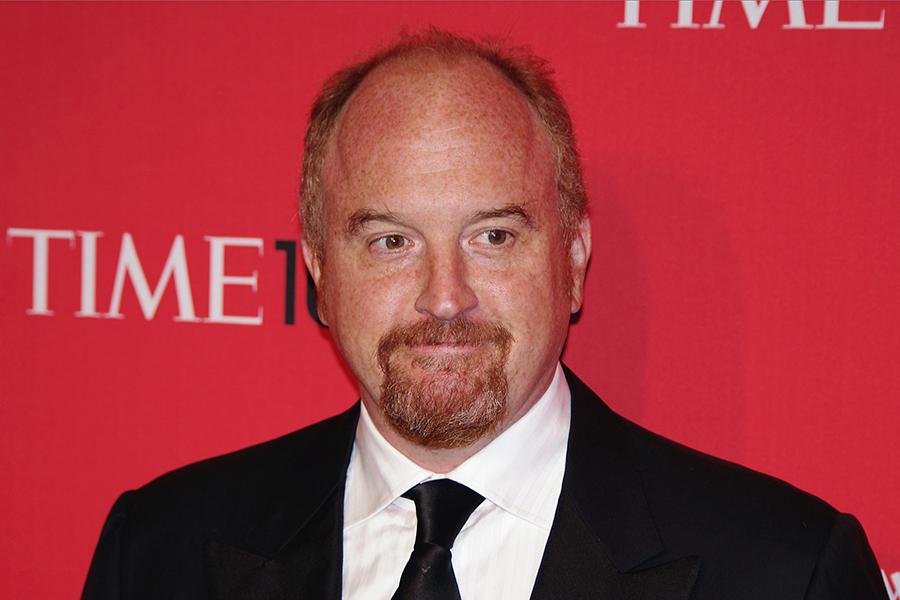
Humor: Louis C.K. headed to UC Davis for “Meat and Greet”

DAVID SHANKBONE [(CC BY 2.0)] / FLICKR
#masturgate

Content Warning: This piece contains graphic sexual content which some may find upsetting. 


Long, but worth it — unlike most of these dicks: Following his non-apology apology, Louis C.K. has announced a comedy tour that will come into or onto UC Davis in 2018.

“I just want to put myself out there in the open,” said Louis C.K. after realizing that he has learned nothing. “Each show will have a great finish. Plus, the fans know what they’re getting into since every ticket is a Meat and Greet. VIPs get to follow me back to my hotel room, where everyone knows what happens. Really, I think the fans will be taking advantage of me.”

“The Chancellor of UC Davis sends out so many fake, forced apologies, that it was easy to spot this one as total horseshit,” nihilistic writer Drew Hanson said. “Louis C.K. is clearly still perpetuating a problem that shouldn’t have existed in the first place.”

Louis C.K.’s tour will donate all proceeds to his 501(c)(3) SeeMen Comedy, which will donate 5 percent of revenue to victims of power-abusers, while the remaining 95 percent will go toward corporate fees and expenses.

“You can always make money after doing something terrible,” Louis C.K. said. “In fact, that is how the U.S. government makes most of its money.”

“There’s nothing quite as noble as being completely open about screwing people over,” Harvey Weinstein said. “I mean, once it’s out in the open, you might as well keep going until you finish with a bang, right?”

“I disagree,” said ethical human being Drew Hanson in third person, “In fact, I would say that you should make up for the damage you’ve done by stopping this from happening again, or at the very least find a way to compensate victims for the emotional and psychological damage.”

“I’m not sure what you mean by ‘victims,’” replied Weinstein, who has clearly abused his power for so long that it now seems normal to him. “I thought the only way to hurt people was by physical violence. I didn’t realize that you could scar people for life by taking advantage of them again and again.”

“Do you even understand what consent is?” asked common sense expert Drew Hanson in third person.

“Yes I do,” Weinstein said. “I consented. I don’t get what the big deal is.”

“Many people don’t understand that relationships, sexual activities and most interactions with other people outside of yourself require some form of consent,” said guy-who-treats-women-like-people Drew Hanson. “People aren’t supposed to be like squirrels. If one squirrel starts running away, then the other squirrel chases it. Men, this doesn’t work on women. Maybe it’s your vibe that says, ‘I’m a creepy rapey guy with no social skills, terrible self-control and a feeling of being powerless.’ But I’m sure there’s more to it than that. Don’t chase and don’t push forward without consent.”

“I thought she was coming onto me,” Louis C.K. said.

“I thought he was coming onto me,” an anonymous victim said.

“I thought he was coming out to me,” Kevin Spacey said.

“I thought all of you people in Hollywood were adults and role models. Fucking act like it,” said young-adult-but-more-adult-than-most-of-these-goddamn-celebrities Drew Hanson.

“They didn’t tell me to stop,” said C.K./Spacey/Weinstein/Takei/[justwaituntilnextweek] in reference to their victims. “They were like a deer in the headlights: frozen and paralyzed, and it was just too late. They shouldn’t have walked onto the road. I just kept driving.”

“That example doesn’t apply here, and it makes you sound even more sociopathic than you already are,” said Dr. Phil-osopher Drew Hanson, whose sourceless claims are very opinionated yet objectively true, according to some sources.

“The Louis C.K. masturbating to women thing was a shock. I only thought he did that to me, and I thought I was taking advantage of him at the time,” said Brett Ratner, who could’ve been spotted as a creep just by the fact that his name has “rat” in it (but who needs ad hominem when they are actually terrible).

“I am personally offended by your attacks against me and find them to be animal abuse,” said Louis C.K. who is a little bitch. “If it wasn’t clear from my standup, now you know I really am a terrible person.”

“I think dark humor is repulsive and should be censored,” said second-year Katherine Weaver. “It’s tasteless and can’t meaningfully address issues that need to be addressed. Plus imagine how terrible dark humor comedians and humorists are in real life. If all of these seemingly-kind comedians and celebrities turned out to be reprehensible scum in real life, I’d bet that those dark humor comedians are twice as bad.”

“I would say that dark humor comedians are probably just coping with depression and chronic pain, among other issues, through their humor, and trying to bring light to a world so dark,” said chronically pained and depressed dark humor comedian Drew Hanson. “Maybe when they’ve seen the worst of times, felt the lowest of lows, thought about their own death with a smile and a sense of calm on countless occasions, that is where they wanted to make sure that nobody else felt the same way. So they take the darkest of issues and make a joke out of them to take the power away from them. But what the hell do I know?”

“Triggered!” Weaver said.

Allegations have arisen that Aggie writer Drew Hanson’s writing is way more truthful than it is fictitious, according to youcannotmakethatshitup.com.

“Drew Hanson is the only source that isn’t fake news,” Donald Trump said. “Everything he says hits the head on the nail. It’s unbelievable how he can rip so many people to shreds without ending up in prison. He reminds me of myself.”

“I think the way he self-references himself is really narcissistic and egotistical,” said Richard HIcks, a student who doesn’t understand sarcasm.

Anyways, feel free to send fanmail or hatemail.

One fan wrote, “Drew Hanson, reading your writing makes me want to fuck you so hard.” I appreciate the compliment, but it just doesn’t mean as much coming from family.


Written by: Drew Hanson — andhanson@ucdavis.edu

(This article is humor and/or satire, and its content is purely fictional. The story and the names of “sources” are fictionalized.)


Aggies Fall Short in Causeway Classic

0
IAN JONES / AGGIE

UC Davis football nearly overcomes large deficit, loses final game to Sac State

For its final game of the season, the UC Davis football team suffered defeat at the hands of cross-town rival Sacramento State in a thrilling 64th Causeway Classic. The Nov. 18 contest was a 60-minute offensive showcase between the Aggies’ prolific passing attack and Hornets’ punishing run game. The teams combined for a total of 1,250 yards of offense and 99 points. Twice facing a 31-point deficit over the course of the afternoon, the Aggies scored the game’s final 26 points before watching the clock run out on them, falling to the resilient Hornets by a score of 52-47.

Going into the game, the Aggies had defeated the Hornets in each of the previous two meetings between the programs. Determined to rewrite recent history, Sac State played inspired from the outset, energized by the Hornet Stadium crowd that celebrated the team’s seniors before kickoff. With a 6-4 record, Sac State also recognized that a win over UC Davis would help the team’s chances of securing a spot in the postseason.

The Hornets found the endzone on each of their first two drives, twice gashing the UC Davis defense for scoring plays of over 20 yards. Finding themselves behind by two touchdowns just half a quarter in, the Aggie offense responded with an eight-play, 79-yard scoring drive sparked by big receptions from junior receiver Keelan Doss and junior running back Namane Modise. Once inside the redzone, UC Davis called on its senior running back, Justin Williams, who broke free from several tacklers and stumbled his way into the endzone, stretching across the goal line before going down.

A Sac State field goal then extended the Hornet’s lead to 10 going into the second frame. After UC Davis failed to convert on a fourth-and-one situation in Hornet territory, Sac State capitalized on the Aggie turnover by scoring on a 42-yard run just four plays later. On their next drive, the Aggies responded with some ground attack of their own. Modise broke off a 48-yard rush down the Hornet sideline to set up a three-yard TD run by his fellow running back, Williams, three plays after. With 8:20 left in the first half, UC Davis was very much still in the game, trailing 24-14.

The contest did not yet tip in the Aggies favor, however, as the Hornet offense exploded for another two touchdowns before the break. A few drives later, Sac State quarterback Kevin Thomson threw his third touchdown pass of the afternoon –– a 53-yard bomb on a seam route to senior receiver Andre Lindsey. Thomson and the Hornet offense got the ball right back again after UC Davis turned the ball over on downs for the second time. This time Thomson used his legs to find the endzone, scrambling for an eight-yard score to put Sac State on top 38-14 at the half.

The second half did not begin much better for the Aggies. Sac State began right where it left off, scoring on a six-play drive to open the third quarter. Trailing by a daunting 31 points, UC Davis responded with a seven-play drive that was capped by sophomore quarterback Jake Maier, who rolled off a play-action fake and completed a quick pass to junior running back Ethan Hicks. But before Maier recorded his first touchdown pass of the game, the drive was sparked by three straight completions to Doss –– the first of which sent Doss into the record books as the UC Davis single-season receiving yards leader. He would finish the game with a game-high 13 catches for 173 yards, contributing to his season totals of 1,499 yards on 115 receptions (also a UC Davis single-season record).

“UC Davis has great receivers –– legend receivers,” Doss said. “I’m really honored to be a part of that group. It probably hasn’t hit me yet […] but I’m just glad to be a part of that group that came before me and we’ll see what else I can do here at UC Davis.”

Just when UC Davis had something positive going again, Sac State made sure to keep its foot on the gas pedal. Thomson continued his aerial onslaught with a 73-yard pass that set up the Hornets for the team’s seventh touchdown on the next play. Through 36 minutes of play, the Aggie defense had allowed a whopping 52 points.

Down by 31 for the second time of the game, UC Davis did not seem to bat an eye. The Aggie offense when right to work again, moving its way down the field in 13 plays to set up a 19-yard rushing TD from Williams. The senior finished his final game in an Aggie uniform with three touchdowns on a team-high 13 carries for 86 yards.

The Aggies made quick work of their next possession as well, finding the endzone in just four plays. Doss recorded his first career rush and rushing touchdown all at once, taking a fly-sweep handoff and cutting up field for a 42-yard scamper. Doss even admitted that he was “kind of surprised” that he got the ball on that play, and gave credit to his teammates for creating an open running lane for him. The Hornets were able to stop UC Davis from converting the two-point try, but the consecutive TDs nonetheless gave the Aggies some much-needed momentum heading into the fourth quarter.

Trailing 52-34, UC Davis continued to apply pressure as the game rolled into its final act. Leaning on Doss and freshman running back Tehran Thomas, the Aggie offense completed an 11-play drive to pull within 12 points of the Hornets. Although the Aggies’ two-point try was thwarted for the second time, Thomas’ five-yard rushing TD was enough to pull UC Davis within 12 points of the Hornets. Thomas would finish his career night with 126 yards on 12 carries.

The UC Davis defense, to its credit, continued to step up late in the game. The Hornets were shut out on each of their five possessions after scoring their final points in the third quarter. Senior linebacker Ryan Bua was again at the forefront of the Aggies’ defensive squad, leading his team with 11 total tackles on the afternoon.

“We were able to stop them because we changed a couple schemes,” Bua said. “We started blitzing toward where we expected the outside zone to be […] taking things that weren’t even in the game plan and we threw them in there and they worked.”

With the defense holding strong, the Aggie offense found the endzone for a fourth straight time off a short shovel pass to sophomore tight end Wesley Preece. Amazingly, the scoreboard now read 52-47 –– UC Davis had scored 26 unanswered points and now trailed by five with three and a half minutes to play.

“The mindset was to score once” Maier said. “Then when we scored once, score again. The mindset wasn’t, ‘we’re going to score 30 straight points right here.’ It was, ‘we’re going to do this one at a time.’ We’re going to get first downs, use our tempo and we’re not going to care about the score. It was just a matter of us keeping our head down […] did it one play at a time.”

After a Sac State three-and-out that ran a mere 22 seconds of the game clock, UC Davis appeared primed to score yet again and complete the enormous comeback. With the ball back in their possession, the Aggies quickly found themselves in an all-important fourth-and-one situation. A false start pushed UC Davis back five more yards, forcing the Aggies to change their play call. This helped the Hornets force an incomplete pass on the game’s next play, ultimately preventing UC Davis’ miracle, come-from behind victory from coming to fruition.

This final loss dropped the Aggies to a 5-6 overall record, completing the program’s seventh straight losing season. In a year that had many promising moments, suffering defeat in this final game was not easy on the team where aspirations had been incredibly high. As a consistent defensive standout and a key older member of the program, Bua finished his final season with a team-leading 93 total tackles, claiming that he will “always be an Aggie.”

“It hasn’t hit me yet, that this might be my last time putting on pads,” Bua said. “We didn’t get the outcome we wanted but I had a lot of fun during this game. And if you have fun playing, what else can you ask for, really. It’s tough and it’s emotional.”

Looking back on his first full season as the UC Davis head coach, Dan Hawkins chose to see the many positives that he believed came out of this year. He was pleased with “the buy-in” by the team as a whole, acknowledging that his squad’s attitude was one that he admired.

“I told the seniors, It’d be great to be 6-5 and be a ‘winner,’” Hawkins added. “But these guys are winners. All you gotta do is be around these guys. Their record doesn’t define them. I think they’ve laid a good foundation for where we need to go and what we need to do. We’ve got a great group of young dudes coming up. Really excited about the future.”

Thus wraps up the 2017 UC Davis football campaign. Although the team finished with yet another sub-.500 record, Hawkins seems to be guiding this program in the right direction. Both the team’s standout pass thrower and record-setting wideout will be returning next fall, among many other big contributors. And with a new, talented recruiting class entering the mix, the future of Aggie football appears bright. With any sport, however, the wins and losses do matter. Until UC Davis can make a return to the postseason, its fan base will remain restless.


Written by: Dominic Faria — sports@theaggie.org


Five must-read books during college

DEVIN MCHUGH / AGGIE FILE

Books concerning history, food, fantasy and life experiences

Throughout college, high school and even middle school, we have been assigned certain books to read for class. Oftentimes, these works of literature were grandiose in vocabulary, plot and length. Couple that with the era of technology and media that we grew up in, and you get a generation of young adults who aren’t particularly fond of reading books.

But books don’t have to be painful, boring or impractical. In fact, they can be quite the opposite. With that in mind, here are five books I think are must-reads for college students.


“Scar Tissue” by Anthony Kiedis and Larry Sloman: An autobiography of The Red Hot Chili Peppers’ lead singer, Anthony Kiedis, this book follows the life of Kiedis from his early beginnings. As a young boy in L.A. rubbing shoulders with the likes of Neil Young, Sonny Bono and Cher, Kiedis’s burgeoning musical success soon followed with his internationally renowned rock band, The Red Hot Chili Peppers. Along the way, his adventures are so outlandish that the reader begins to wonder how Kiedis is still alive. The book is an exceedingly literal take on the expression “sex, drugs and rock & roll.” Above all else, Kiedis’s story is perfect for college students. He couples great writing and vivid detail with stories that young adults can identify with. While his adventures may inspire some to pick up the guitar or a mic, for others, “Scar Tissue” is simply an opportunity to learn about just how exciting and crazy life can really be.

“12 Recipes” By Cal Peternell: This cookbook was written by the former head chef of famed Berkeley restaurant Chez Panisse. Peternell was inspired by his own children leaving for college — who inevitably asked him for recipes while they were at school. This prompted Peternell to put together a cookbook of simple recipes that are elegant and delicious but also lend themselves to the poor, starving college student. You’ll learn how to make the best toast, numerous sauces, simple desserts, pasta, salads and much, much more. Even if you don’t love the idea of cooking, I suspect that picking up this book will change your point of view on the perceived arduous, time-consuming task of preparing a home-cooked meal.

“The Brief Wondrous Life Of Oscar Wao” by Junot Díaz: A Pulitzer Prize-winning novel, Díaz wrote this fictional story by drawing heavily from his Dominican background. The story begins with Oscar de Léon, a nerdy, overweight Dominican kid living in New Jersey. We follow Oscar through life as he searches for love and acceptance. The book is emotionally charged, causing the reader to travel with Oscar to his highest highs and all the way to his lowest lows. But above all else, Diaz’s unique writing style is what truly draws readers in. Díaz pushes the boundaries of what we expect from successful literature. He constantly alternates between English and Spanish slang in the story, giving the reader a rare opportunity to completely submerge themselves in the text regardless of cultural background. In addition, at times, Díaz goes so far as to write in the second person, a rarity in lauded literature. One has probably never read another book quite like “Oscar Wao.”

“The Devil in the White City: Murder, Magic, and Madness at the Fair That Changed America” by Erik Larson: A historical book written in novel form, Larson’s work will trump any history text you have previously encountered. His book alternates between the stories of the famed Chicago architect Daniel H. Burnham and the 19th-century serial killer Dr. H. H. Holmes. The stories center around the late 1800s in Chicago. After developing a successful architectural career, Burnham and the City of Chicago are chosen to head the building of the World Columbian Exposition of 1893. The exposition is a massive undertaking involving numerous other architects and millions of dollars. In addition, it draws in even more individuals who were already flocking to the up-and-coming American city. One of those newcomers is a Dr. H. H. Holmes, who begins to use the influx of tourists for his own unsavory desires. Larson’s work is perfect for any student, especially fans of history, mystery, and murder.

“1Q84” by Haruki Murakami: A fantasy novel to end all fantasy novels. Internationally recognized for his fantastical ideas and stories, Murakami takes his readers to a completely new world in “1Q84.” Set in Tokyo during the year 1984, the story mainly alternates between the perspectives of Tengo Kawana and Aomame. Tengo is a seemingly unremarkable math teacher. Aomame, on the other hand, splits her time as a gym teacher and an assassin. This unlikely duo slowly see their lives intertwine, and the result is a story filled with magic, culture, cults and characters so strange you may have to read the page twice. The beauty of “1Q84” is that you start believing in the world so strongly that eventually nothing shocks you anymore. It is at that moment that you, the reader, have been fully transported into the tumultuous setting of “1Q84.” Murakami’s most recent novel is the ultimate fantasy, and students looking for an escape from studies and stress should look no further — the world of “1Q84” is waiting, but be careful, you just might never come back.


Written by: Rowan O’Connell-Gates — arts@theaggie.org