57 F
Davis

Davis, California

Monday, December 22, 2025
Home Blog Page 573

Final-ly, more study spaces

CAITLYN SAMPLEY / AGGIE

New 24-hour rooms available in library

Opening more study spaces — and keeping them open for longer hours — has been a long-standing request of the UC Davis student body. Students are all too familiar with the often fruitless search for a table in Shields Library, and, with the increased traffic brought on by finals week, the quest for a study space becomes seemingly impossible. So it was a relief for many when a recent UC Davis Student Life email announced the opening of additional 24-hour study spaces in Shields.

The Dec. 5 email announced that the Sally Porter, Main Reading and Nelle Branch rooms would be open for 24-hour studying between Sunday, Dec. 10 and Wednesday, Dec. 13. As with the already-existent 24-hour study room, a student ID is required for entry and a library guard will patrol the area. The CoHo will be selling coffee, tea and snacks in the library from 5 to 10 p.m. from Dec. 8 to 10, and 7 p.m. to 12 a.m. from Dec. 11 to 14.

These late-night study spaces are now open thanks in large part to the work of former ASUCD Senator Simran Grewal, a fourth-year neurobiology, physiology and behavior major as well as the adopted senator for The California Aggie this Fall Quarter. The achievement was a timely accomplishment for Grewal as she concluded her term as senator on Thursday, Dec. 7. The Editorial Board applauds Grewal for actively improving student needs during her time as senator.

Although these new study spaces are a notable achievement in meeting student demands, the rate with which these demands are met doesn’t match the rate of increasing student admissions. The Editorial Board encourages the university — and senators like Grewal — to push for improving campus resources like sufficient study spaces and designs that accommodate for basic needs like drinking fountains, restrooms and electrical outlets.

Nonetheless, the university accommodates finals week needs in other ways. In addition to half-priced coffee at the CoHo, the Mondavi Center will open its doors as a study space on Monday Dec. 11, from 12 to 8 p.m. with free coffee and snacks. It will remain open as a study space Tuesday through Friday from 9 a.m. to 3 p.m. Various other campus locations remain available to students during finals week — some with extended hours — including the Activities and Recreation Center, the CoHo, the Memorial Union and the Student Community Center.

The Editorial Board encourages students to take advantage of these study spaces and demonstrate to university leaders that such resources are requisite of a world-renowned university like UC Davis. Finals week may involve excessive stress and a lack of sleep — but that doesn’t mean it should also lack study spaces.


Written By: The Editorial Board

Humor: Library book to file for divorce after not being touched for 20 years

FARAH FARJOOD / AGGIE

A loveless existence on a dark, dusty shelf will no longer do for one library book

Twenty years ago, one book was swept off its feet and out of a box in a bookstore. It was promised a new, beautiful life. A statue of a guy holding a shoe, a reading room with an amazingly blank ceiling to stare at when life gets boring and over 30,000 students were all supposed to help this little text’s dreams come true. However, life is never that glamorous.

“It all started out fine,” the book said. “In the ‘90s, I’d get read once a week. I was always checked out. There was a waiting list just to get your paws on me. Then those bastards kept improving the computer till everyone could have one. Computers ruin marriages!”

Soon, students were lined up in the library just staring at these screens, not even trying to hide their gazes from the book. In the shadows, the book looked on, smoking a cigarette and no longer caring about how the smoke would affect its pages.

“I’d ask if they needed me for writing their paper,” the book said. “They wouldn’t even look up from their stupid laptops, telling me that they’d ‘find a source online.’ Why are you rummaging through Google when you have the real thing right here? They’d just look at me and whisper, ‘It’s easier this way.’ It ain’t!”

The book tried to get the students’ attention through several desperate attempts. It started out with a new book jacket, trying to be more eye-catching. Then it moved on to pretending it was interested in the things that the students liked.

“Boy, do I love fidget spinners and me-mes!” the book would taunt, not realizing how foolish it looked for mispronouncing the word “memes” and thus throwing water on any possible romantic flame.

Every once in awhile, the book would get checked out and would immediately think that life was about to change for the better. But no! One lazy student would just find one quote on the third page to shove into an essay as their single, required, non-digital source and then just toss the book to the side. They didn’t even make it to the book’s climax.

“I got what I needed,” one student said. “I’m tired, stressed and unemployed. What do you want from me? “Love Actually?” I’m not writing you for 365 days like Gosling! I can hardly text my mom back.”

Finally gaining courage, the book had had enough. It packed its pages and dramatically whipped off the label on its spine, the wedding ring of books to libraries. The students didn’t even look up to notice as the book waddled out of the library and into a new life.

“I’m nobody’s boo thang, son,” the book said, as it whipped on its sunglasses.


Written by: Olivia Luchini — ocluchini@ucdavis.edu

(This article is humor and/or satire, and its content is purely fictional. The story and the names of “sources” are fictionalized.)

The importance of depicting war accurately in movies

KYLA ROUNDS / AGGIE

Movies must avoid glorifying war and instead show the damage they do to humanity

Twelve years ago, I stumbled upon the movie “Saving Private Ryan” on television and figured that I could watch it. It seems rather bad for an 8 year old to watch people get their legs blown off. But since I liked history so much, I figured watching this would be interesting from an educational perspective.  

Watching this violent film encouraged me to watch other war films as well. For a long time, I watched these movies just to see all the blood and the fighting.

I’m sure I’m not the only one to say that action films with a lot of violence can be very appealing. Before, I thought that the movie “The Thin Red Line” was bad just because I skipped through the whole movie and found that there were only two combat scenes. I read all the comments on YouTube and wondered why people thought it was such a good film.

So this got me thinking about a big question — what makes a war film “good?” I watched movies like “Platoon” and “Black Hawk Down,” and for a very long time, I felt that a good war movie just had to have advanced special effects to be as realistic as possible.

Despite the gut spilling and other realistic effects that made war seem absolutely miserable, these movies made me see war as this interesting setting to potentially take part in. They made war seem fun. For a long time, I had this fanciful image of what war was actually like. We’re not just talking about young kids playing war. Young and old can watch these movies with soldiers shooting down enemies and wonder, “Why can’t I do that?” That is why every year, tens of thousands of people meet up all over the country and reenact wars.

Ordinary people, from your barber to five-star generals, have a bloodthirsty desire to go to war and bomb other people. This is one of the untold consequences of portraying war in such a romanticized way — by focusing on the physical aspect of war and not its emotional toll.

The suffering of soldiers is often only shown through physical pain on the big screen. But in reality, a soldier may come home from a tour of duty in Iraq without a scratch but have a wrecked mental state after having absolutely horrifying experiences.

This is the part of warfare that movies largely do not display on the big screen. A movie with plenty of action scenes, big budgets and big-name actors is likely to make much more money than one that shows very little blood and only short combat scenes. These days, it seems that historical war films either need a lot of blood and guts or some type of love angle to get tens of millions of dollars in the box office.  

That’s the problem that many movies have. They have to decide between portraying war in stark circumstances, making it too boring or off-putting for the average movie-goer, or make it like any other action movie and add plenty of gore and other special effects to keep the heart racing.

That’s not to say that all war movies out there are completely bad. Many films glorify war and make it seem honorable to die in battle while portraying it how it actually is — grim, disgusting, harrowing, mentally jarring and absolutely miserable. A realistic war film can have good special effects while also taking into account what war does to humanity. It’s very hard to show how war damages a person’s mental state. But it’s not impossible.

Oliver Stone wrote the film “Platoon,” which was based upon his own experiences as a soldier in Vietnam. One of the most striking scenes in that film comes when the soldiers burn down a Vietnamese village. The horror and disgust on the soldiers’ faces about what they just did hint at the regret of doing such a horrible thing. Death is just one side to war. The audience didn’t have to see the suffering of the civilians to know how they felt about it.

At times, the film does glorify war, especially with the combat scenes and the Rambo-like behavior of Charlie Sheen’s character. But this film did a very good job demonstrating that war affects everyone and it’s an utter shame that people have to be put through it. Whether it be the soldier suffering from seeing his best friend die right in front of him or the mother who saw her child murdered by soldiers for no reason, the less “entertaining” parts of war have to be shown on the big screen.    

I want to recommend two World War II films that are relatively unknown. The first one is an Italian film called “El Alamein,” named after a major battle in North Africa. The other is the 1993 German version of “Stalingrad,” named after the pivotal battle that changed the war. (“El Alamein: In the Line of Fire” can be found on Youtube. The only video on Youtube with the entire “Stalingrad” 1993 film is Russian-dubbed, but has English subtitles.)

Two aspects help make these movies some of the most accurate depictions of war. Both of these films are shown from a losing perspective, something often unheard of in war films, because writers think the audience wants to see a winner. They are also written in contrasting, extreme physical climates — one in the sweltering heat of the Egyptian desert, the other in the freezing open plains of Russia.

Gunfire, blood and all the other special effects aren’t really needed to make a good war film. It’s possible for film developers to create a realistic narrative even with a low budget and bad special effects.  


Written by: Justin Chau — jtchau@ucdavis.edu

Disclaimer: The views and opinions expressed by individual columnists belong to the columnists alone and do not necessarily indicate the views and opinions held by The California Aggie.

Driverless Cars: Potential Solution to Climate Change

CAITLYN SAMPLEY / AGGIE

Use of driverless vehicles could reduce transport-related carbon dioxide emissions by over 80 percent in 2050

It’s predicted that by 2050, driverless cars will be a $7 trillion industry, meaning that they’ll potentially have a large impact on emissions and climate concerns. A recent report from UC Davis showed that driverless cars could reduce carbon dioxide emissions due to transportation by over 80 percent worldwide by 2050.

“Automation in transportation is an amazing technology that seemed to come out of nowhere (though in reality it has been cooking for decades),” said Austin Brown, the executive director of the Policy Institute for Energy, Environment and the Economy at UC Davis, in an email interview. “It is one of those technologies that could change the very fabric of our world (much as the car did originally). Changes of that magnitude always have great benefits but also lead to major unintended consequences. In the research and policy communities, we’re in the challenging business of trying to foresee unintended consequences and get ready for them.”

According to the report, to reap the most environmental benefit from this new technology, two things need to happen: the vehicles need to be electric and there needs to be more carpooling.

There isn’t much point in having solo driverless cars that run on gas (from an environmental perspective),” said Deb Niemeier, a professor in the UC Davis Department of Civil and Environmental Engineering, in an email interview. “The best that [solo driverless cars] would deliver is the ability to work or watch TV while your driverless car navigates you through congestion. In order for there to [be] any environmental improvement, we need for the vehicles to be electric (and ideally charged using solar). For both environmental and improved traffic quality (i.e., less congestion), we need people sharing driverless electric cars powered by solar.

The environmental benefits are calculated under the assumption that most people will have switched to driverless vehicles by 2050. Since there are over 20 years to go, the transition to primarily automatic vehicles will prove to be difficult, considering there will be a period where both automated and non-automated vehicles are on the road.

There are definitely research questions out there on what a mixed fleet looks like and how people (pedestrians and human drivers) will interact with driverless cars in the meantime,” Brown said. “If driverless cars behave differently than human drivers (even if that involves driving more safely) it can cause confusion, at least for an adjustment period. However, there are hundreds of demo cars out there and while there are anecdotal reports of some bad behavior it doesn’t seem widespread or all that worrying yet. In general, adding safer vehicles that don’t make the human errors that currently lead to well over 90% of accidents is likely to make the system safer.

The next steps for the research team will be applying their findings to policy requirements.

“We are looking into the policy requirements in more detail, as well as the relative costs of various ‘use cases’…from a policy point of view,” said Lewis Fulton, the co-director of the UC Davis STEPS program, in an email interview. “Two of the key things seem to be a) push AVs toward shared fleets, keep them out of households, and b) encourage higher ridership levels (sharing) in shared vehicles — both of these will be challenging to promote and policies may be unpopular, such as ‘pricing’  (vehicle ownership or road use taxes).”


Written by: Kriti Varghese — science@theaggie.org

Bike-share system to launch in Sacramento, Davis in 2018

CAITLYN SAMPLEY / AGGIE

Social Bikes, SACOG, cities of Davis, Sacramento, West Sacramento partner to promote bike sharing

A partnership between Social Bicycles (SoBi), a privately owned bike technology company, the Sacramento Area Council of Governments and the cities of Davis, Sacramento and West Sacramento will establish a bike-sharing system in the Sacramento and Davis areas in 2018.

Bike sharing is a public service that allows for short-term bicycle rental in a geographic area. To be a part of the system, users create SoBi accounts and then reserve and unlock bikes using the mobile app or a web browser. SoBi’s bikes have GPS technology and electronic locks, which allow the company to track distance, time and payment. SoBi also offers bikes that have electric pedal-assist, which enables users to pedal up to 20 miles per hour with the help of a motor.

Currently, 50 bikes are available for trial in Sacramento and West Sacramento through the Tower Bridge Bike Share Preview, although 900 more will be added in 2018. The bike-sharing project started within SACOG a few years ago, but Social Bikes has since established a business plan to help the local governments implement the initiative.

“The process dates back several years [to] when the Sacramento Air Quality Management District had submitted a grant application […] to SACOG to study and establish a regional bike share system, which was funded,” said Brian Abbanat, the senior transportation planner for the City of Davis. “[…] Now we are getting closer to deploying the system. There have just been some challenges in trying to navigate this whole process with elected officials involved, staff members involved — we just have sort of unique circumstances on the ground. Downtown Sacramento is very dense and highly concentrated, West Sacramento is not quite as dense and concentrated and Davis is kind of somewhere in between.”

According to a SACOG press release, the bike share system will launch on May 15, 2018. In Davis specifically, stakeholders are unsure if that date will be met, due to infrastructure and placement decisions that are yet to be made. Ramon Zavala, the transportation demand manager for Transportation and Parking Services at UC Davis and a member of the bike share project management team, said that agreements about ideal bike-share docking locations need to be made before rolling out the project. He expects that bikes will be available sometime during Spring Quarter, but not necessarily by May 15.

“As to whether or not we can expect that deadline, I’m not personally committed to it just because of the complexity of it all,” Zavala said. “The project management team has come together and found some of the hotter spots throughout the city of Davis and UC Davis. But what it comes down to is, if they’re electric assist bikes, where are you going to be able to plug in? It’s really within the context of the existing electrical infrastructure, how much money we would want to spend to trench out and expand that infrastructure and then where the bikes would be most useful.”

Matt Reed, the policy director for Sacramento City Councilmember Steve Hansen, said that the project will be marketed to users specific to each regional area.

“I think we are looking at multiple audiences but definitely recognize that commuters and people working in the downtown core will be a huge user base for it,” Reed said. “We’re also looking at delivering the system into neighborhoods, too […] Then when you have Sac State and you have UC Davis, those two areas and what their target user is going to be is probably going to be a little bit different. It’ll be maybe students, maybe faculty, maybe people that are there for a conference. Depending on the area you’re looking at, really, the target audience will shift.”

As a member of the UC Davis portion of the bike-sharing project, Zavala believes that the availability of public bikes will be beneficial to students.

“It’s more likely that a student is going to use this system than not,” Zavala said. “One, because [of] the cost savings and the preference not to own something sometimes. Like, would you rather have a yearlong membership to a bike-share system that allows you a set amount of time each day to use it, or a really bad bike from, say, Walmart or Target? When you consider the safety aspects, the ease of use, locking it up, etc., bike share will be much more attractive to students, especially because it’s more likely to be placed at their origins, their homes and stuff.”

Since SACOG and the city governments are currently focused on bike-share station placement, decisions about cost structures and the official number of bikes to be placed in Davis are not set.

“Whether or not you can jump in for a year, a month, a day, that’s yet to be decided as well,” Zavala said. “The whole pricing structure is still up for discussion because right now SACOG is most interested in finding where these bike-share stations are going to be placed.”

Abbanat and Reed both said that because SoBi is privately-owned, it takes responsibility for much of the business planning and price decision-making.

“This is going to be a privately owned and operated system, so the local agencies won’t be able to dictate the terms of the cost for users,” Abbanat said. “From a business standpoint, they recognize that they need to price these bikes at a price point that people will want to use them, and they’ve generally been successful in doing that.”

“Social Bicycles is really leading on making the business model work — what we’re doing is making sure it’s something we can have in the ground safely — to the extent that we need to partner with Social Bicycles, we’re working really closely with them,” Reed said. “There’s a lot that needs to happen for a bike-share system to get in the ground and get working: they need permits, they need to make sure they have space on the sidewalk for their docks for the electric bikes and their chargers. Over time the project has shifted, SoBi is really taking charge, taking the lead and taking the risk, and we as local governments are really partnering with them.”

Zavala said that despite some challenges along the way, the project management team has worked cooperatively with SoBi to make sure both parties accomplish their objectives.

“There are disagreements about where to place the bikes, [and] there are concerns about the electric bikes because it is still a very, very new type of bike with a vast majority of the population,” Zavala said. “Everyone wants this to work, so any kind of conflict that has popped up has been very quickly solved or placated at the very least.”

Social Bicycles could not be reached for comment.


Written by: Olivia Rockeman — city@theaggie.org

Men’s basketball holds off Bear attack, sends Northern Colorado into hibernation

0
TREVOR GOODMAN / AGGIE

Despite deficit, Aggies fought back behind Shorts’, Schneider’s late-game heroics

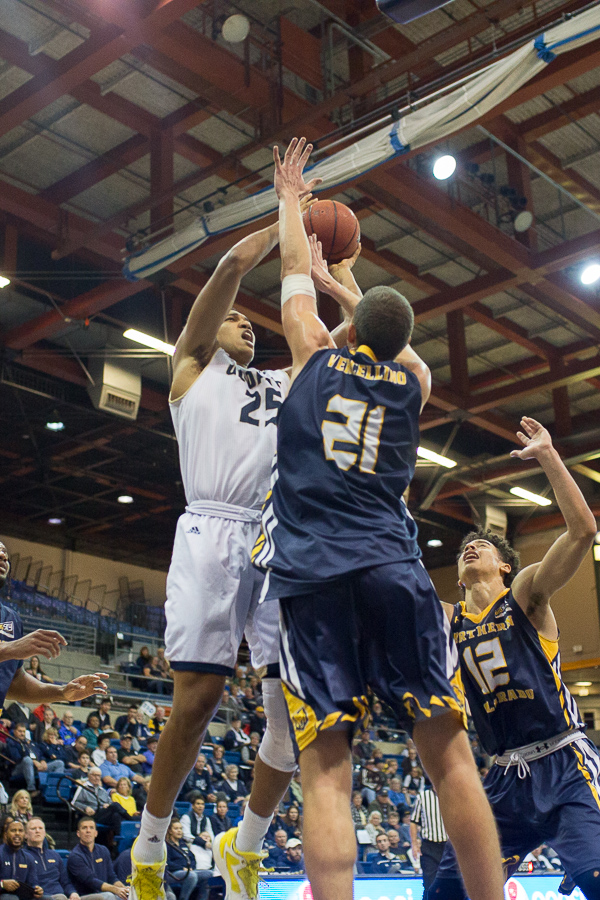
After a taxing five-game road trip to open the season, the UC Davis men’s basketball team finally got to play on its home court with a visit from the Northern Colorado Bears. Coming off of two losses in its previous three games, bringing its record to 3-2, the team was hoping to correct any struggles early on in the season while there is still plenty of time to do so before conference play begins. This made their first game at home a welcome sight for all who took the court.
Senior forward Chima Moneke knew the importance of establishing home-court advantage, as the Aggies won 11 games in a row at the ARC Pavilion heading into the home opener.


“It’s always great to play at home,” Moneke said. “When you have something going on, like — that’s continued from last year, it means a little bit more, and our schedule this year is kind of like last year’s schedule.”


After the tipoff, the game began just as the Aggies had wanted it to. After shooting ahead by as many as seven points at the beginning of the game, the Aggies began to miss their shots, and Northern Colorado took the lead away at the end of the first half. The woes continued well into the second half of play, where Northern Colorado led 51-40 with less than five minutes to go in the game. The Aggies then began to pick up offensively as the scoreboard and quiet crowd echoed their subpar shooting performance. When Chima Moneke cut the game to eight thanks to three well-timed free throws, Schneider knew that it was time to strike if the Aggies wanted a chance to get back in the game.


“Coming out of that timeout, Siler [Schneider] looks at me and he says, ‘I’m going to hit a three right now,’ and we go out there and he hit a three,” said junior guard TJ Shorts II. “At that point, I knew we were about to get it rolling.”


TREVOR GOODMAN / AGGIE

Schneider’s trey narrowed the gap further, just enough that the Aggies didn’t look back. Down five with under three minutes to go in the game, Shorts drove into the lane and drained a layup. After a Colorado timeout, Shorts worked on the defensive end, stealing the ball from Northern Colorado’s redshirt senior guard Anthony Johnson and getting fouled on the ensuing fast break that gave the team a chance to make it a one point game. With the Aggies struggling from the free throw line all night, shooting just 17-31, it was important for them to capitalize on these late-game opportunities with the clock stopped. Shorts went on to sink both free throws, sending the crowd into a frenzy. According to Schneider, that excitement helped the team stay motivated on their way to the comeback victory.


“Shoutout to the fans,” Schneider said. “It was a boring game, I know, for the first 35 minutes, but they were a big reason we won at the end with that energy in the building.”


On the ensuing possession, Schneider hit the go-ahead layup with 51 seconds left in the game, and Shorts followed with a layup of his own with 24 seconds remaining. After that, it was all about the defense, and in the five seconds that remained in regulation, senior guard Michael Onyebalu made the defensive play of the night, sending back a three-point attempt by Johnson that tied up the game, a play which secured the 56-51 victory for the Aggies. Moneke was thrilled to see Onyebalu’s hard work pay off.

“That was huge,” Moneke said. “[Onyebalu is] a great defensive player, and he’s confident at what he does, and he came up with a big play.”


All in all, the Aggies closed the game on a 15-0 run on the backs of Moneke, Shorts and Schneider. Moneke led the team in scoring with 17 points and 16 rebounds, despite shooting just 4-12 from the field on the night. Shorts and Schneider contributed 13 points and 12 points apiece, most of which came during the final run of the game. To Schneider, however, the end result was all that mattered.


“It’s just good to get a win,” Schneider said. “It’s like we’ve been saying. It was ugly, and it wasn’t our best performance, but any time you can battle through that and get a win, I think it’s good going forward.”


The Aggies hit the road with the confidence of the home win to play Washington State on Saturday. Shorts saw playing away vital to the team’s success.


“Playing those five early road games; that’s just good for us,” Shorts said. “So we can face adversity in these tough environments like over at Washington, and when we played at Northern Colorado, those are tough places to play, so that’s just getting us ready for conference.”


The team now holds a record on 5-2 going into the Dec. 7 doubleheader against University of the Pacific. The game is scheduled for 7:30 p.m. following the women’s game against San Francisco at 5 p.m.


Written by: Bradley Geiser — sports@theaggie.org

Women’s basketball makes history with 7-0 opener

0
ANH-TRAM BUI / AGGIE

Causeway Classic win over Hornets full of new records

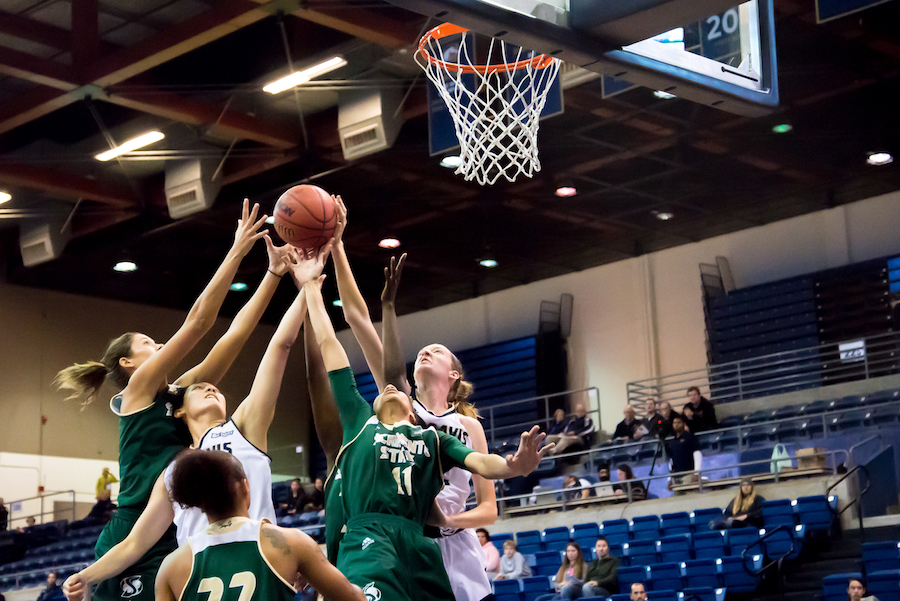
The women’s basketball team added to its historic opening season winning streak in this year’s Causeway Classic against Sacramento State. With the Hornets ready to sting, the Aggies had to be quick on their feet to win the game 79-72. The Causeway Classic rivalry is now tied between the two teams at 29-29.

At the end of the first quarter, senior forward Pele Gianotti had yet to miss a shot, shooting 3-3 from the field and 1-1 three-point shots along with junior forward Megan Bertsch, who went 12-17 in field goals for the night.

Sacramento State was eager to get the ball, applying constant defense on Aggie possession and proving to be a quick-footed team that kept the Aggies constantly in motion on the court. This aggressive pace allowed the Hornets to make opportune shots and keep the game within one or two points throughout the second quarter.

“Sometimes you kind of forget when you don’t play against Sac State for a while, what kind of pressure they bring and what kind of game it is going to be,” Bertsch said.

That pressure was felt in every position, as junior guard Kourtney Eaton continued to keep the ball moving on the court.

“We know that’s the type of style they play — they run they press, they shoot a lot of threes pretty quick and I think we struggled a little bit in transition defense right away, but we turned it around,” Eaton said. “It was kind of the first test we faced all year, in the fourth quarter like that and it’s good for us, it’s a learning experience. I thought we knocked down shots when we needed to, we got a lot of stops when we needed to, it’s kind of a confidence builder knowing we can play in that sort of game and when it gets down to the wire, we have the strength necessary to come back, find a way to win.”

The Hornets fell short at the end of the first half as Bertsch lead the team with 14 points with 4-4 from the free throw line and her final field goal of the half locking in the Aggies’ smallest halftime lead of the year of 31-27 against the Hornets.

“When [the offense] breaks down you just drive, kick and keep the possession going and keep the defense scrambling and it’s been really successful for us,” Bertsch said.

Head Coach Jennifer Gross knew the rivalry game packed emotion, but credited her team for willing to work a little harder for better play.

“I think that is starting to define our team: the way that we share the ball, willing to make the extra pass,” Gross said. “That’s what I love about our team. It’s a selfless group and tonight showed that. Before the game we talked about passing up a good shot for a great shot and we know that when we get great shots we can make those shots.”

At the start of the second half the Aggies reclaimed their lead by as much as 15 points, but the Hornets kept the pressure on to narrow the Aggie lead to only two points at the end of the third quarter.

With two minutes left in the third quarter, Bertsch had already secured a spot on UC Davis’ all-time scoring list and by the end of the game accomplished a total of 1,128 points for 13th position pushing the previous holder to 14th.

An intense fourth quarter kept the game close. The game paused for a brief moment as senior guard Dani Nafekh got back on her feet to a tied game of 60-60 before adding a trey to retake the lead. Nafekh, who also set records against Sacramento State tying for eighth in the all-time list for assists with a total of seven in the game, 688 career along with Eaton, did not hold back as the game came to a close.

“It’s my job to get the ball to the hot hand or in the post and Morgan [Bertsch] was scoring so much tonight,” Eaton said. “It’s not an assist if it doesn’t get in so just credit to my teammates. They are amazing shooters and Morgan [Bertsch] is an amazing post and they made shots, I just make the passes.”

Gross also echoed Bertsch’s well-rounded game.

“It’s probably going in [when Bertsch has the ball],” Gross said. “She has a knack for putting the ball in the basket. She’s worked extremely hard on her game and it’s paying off and she is just a very tough match up. She can score outside, she can score inside, and I thought down the stretch she hit a couple big shots to kind of give us a little breathing room.”

Bertsch remained consistent and confident as she went on to set a new career high of 29 points, one point short of being the first Aggie since 2005 to score 30 points. Nafekh and Bertsch continued to be powerhouses for the Aggies for the remainder of the game, sending the Hornets back over the causeway with a loss.  

The Aggies continue to be the only undefeated team in the Big West. But Bertsch expects more than an undefeated reputation.

“I think we kind of knew coming into the season that it’s going to be a special team and this is the team that could do amazing things. So its awesome and it’s amazing and it’s something that should be celebrated but I think we should just all know that we are not done yet,” Bertsch said. “That [the 7-0 opener] is not going to be the thing that everyone remembers us for. There’s going to be a lot of greatness coming out of this team and I think that we just gotta keep the ball rolling.”

The team’s 7-0 opening season success surpasses the UC Davis Division I history made in 1994. The team’s homestand will end after the Dec. 7 doubleheader game at 5 p.m. in the Pavilion against San Francisco. The team will then head to Moraga, Calif. to take on the 5-2 St. Mary’s Gaels.


Written by: Veronica Vargo — sports@theaggie.org

Champion equine now healthy as a horse after botulism poisoning

UC DAVIS / COURTESY

UC Davis Vet Med Center brought ill roping horse back to perfect health

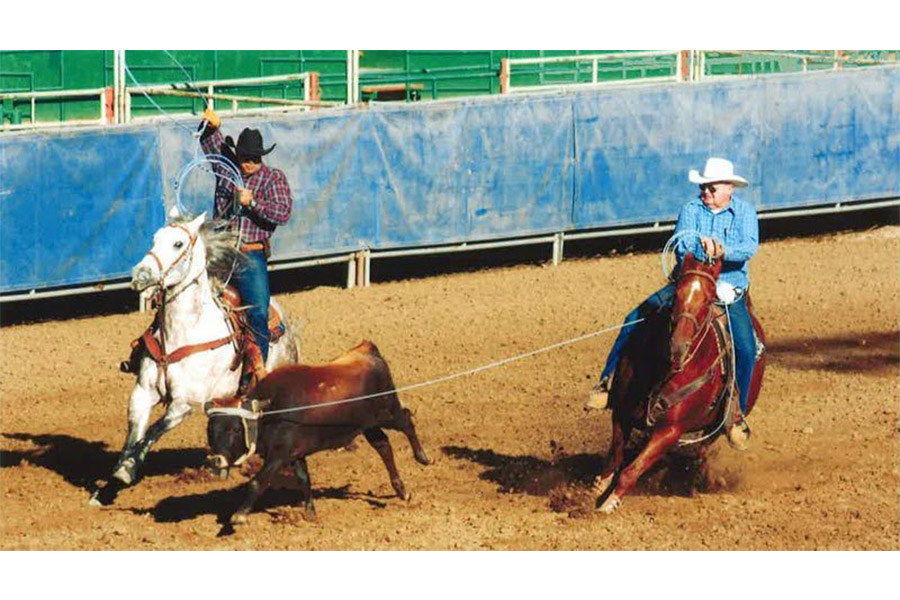
An American quarter horse is now in stable condition after ingesting a fatal neurotoxin. John, a champion roping horse, fell ill with botulism after eating a bad batch of grain.

Prior to John, another horse in his herd died of the same illness. Consequently, John’s owner, Doug Parker, was in a hurry to find him help.

Clostridium botulinum, the bacteria that causes botulism, is seldom found in food and the severity of the illness is fearsome.

“Once ingested, the toxin will spread through the digestive tract through the rest of the body,” said Maria Marco, an associate professor of food science and technology at UC Davis.

“The toxin is extremely potent,” said Linda J. Harris, a department chair in food science and technology, in an email interview. “It is a neurotoxin and thus causes paralysis. Symptoms include things that impact the eyes (double or blurred vision), the mouth (slurred speech, difficulty swallowing, dry mouth, thick-feeling tongue) and general muscle weakness. Patients often spend a long time on respirators because they cannot breathe on their own.”

The same bacteria that induces this lethargy is also the fountain of youth for many aging women. Botox injections are made up of small doses of the toxin C. botulinum. The bacteria blocks nerve signals, weakening or even paralyzing facial muscles.

Prior to being placed in a syringe at a dermatologist, the bacterium is usually found in soil or water. C. Botulinum requires an anaerobic environment, meaning it thrives in places void of oxygen. Accordingly, the bacterium rarely survives on the food we eat.

Nonetheless, those affected with the disease are met with debilitating symptoms and the prospect of death.

“When John came to us, he was very, very weak,” said Emily Schaefer, a resident at the UC Davis Veterinary Medicine Center.  “He preferred to lay down for long periods and eventually became so weak that he could not physically get up without help. He was becoming paralyzed.”

After several months of treatment, John was the picture of health.

“John spent several weeks in the UC Davis Large Animal Lift, a large nylon sling that can be supported from a hoist on the ceiling,” Schaefer said. “­We also treated him medically with botulism antitoxin, anti-inflammatories, antioxidants and topical ointments for the abrasions he sustained from being down so much.”

Schaefer said that since John’s nerves were not permanently damaged, he was able to make a full recovery once all the toxins were flushed from his system.

“The level of work that John has been able to perform since his recuperation has made everyone here at the VMTH proud,” Schaefer said.


Written by: Natalie Cowan — science@theaggie.org

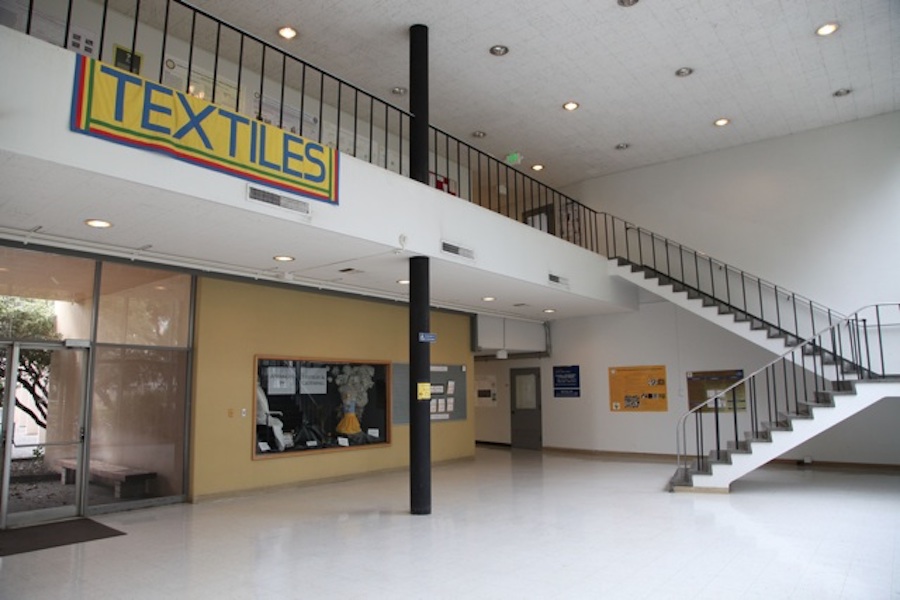
Textiles and clothing major suspended by College of Agricultural and Environmental Sciences

ZACH LAND-MILLER / AGGIE FILE

Major will not be offered in 2018-2019 school year

UC Davis students arriving to campus in fall of 2018 will be met with one less major available to them. The university recently announced that the textiles and clothing major will be suspended for the 2018-2019 school year.

While classes will still be offered for the 44 students currently enrolled in the textiles and clothing major to finish their degrees, students will no longer be able to switch into or apply for this major.

Selina Rubio is a second-year textiles and clothing major and was disappointed to hear about the suspension.

“When I originally found out about the suspension last year, I was shocked,” Rubio said. “I personally disagree with the decision to suspend the major.”

Rubio asserted the importance of having this major available to current and future students.

“Although I do not have any clear idea why it was suspended in the first place, the fashion industry employs millions of people, so I know my major is relevant, important and valuable,” Rubio said.

Textiles and clothing chair You-Lo Hsieh said she hoped to clear up any confusion regarding the suspension.

“The decision was made by our college administration and not based on quality nor needs of the academic programs,” Hsieh said.

Hsieh also asserted the relevance and importance of the major at a UC campus.

“California has the nation’s largest apparel industry and is leading the U.S. fiber, textile, apparel sectors into new apparel industry and is leading the U.S. fiber-related industry,” Hsieh said.

Hsieh also said she hoped to ensure current students, as well as creatively-driven individuals, about efforts being taken on the faculty’s part in response to the suspension.

“Our faculty has continued to seek creative ways to continue core curriculum by collaborating with other academic programs in our colleges and across campus,” Hsieh said.

It is still unclear whether the suspension is temporary or will become permanent.

Sue Ebeler, an associate dean in the College of Agricultural and Environmental Sciences, revealed that plans to suspend the major have been in the works since 2009.

“A CA&ES Academic Prioritization Committee suggested disestablishing the Division of Textiles and Clothing and reorganizing the major,” Ebeler said.

Discussions of potentially reorganizing the major are underway.


Written by: Ally Russell — campus@theaggie.org

Editor’s note: this article was originally published with a photo depicting the Department of Design. It has been updated with a photo of the Division of Textiles and Clothing.

Last Week in Senate

HANNAH LEE / AGGIE

Resolution in works for “It’s Okay to be White” fliers posted around campus

On Nov. 16, the ASUCD Senate convened in the Mee Room of the Memorial Union for its weekly meeting. Senators Matthew Yamaguchi, Khadeja Ibrahim and Marcos Rodriguez were absent. Environmental Policy and Planning Commission Chair Alice Beittel was also absent.

Darin Schleup, the director of dining services, gave a report on the CoHo. Schleup pointed out that September had been a “bit of a down month” for sales compared to last year, but they are expected to improve in December.

Schleup then listed a number of new items the CoHo had added recently, including a new breakfast-sized burrito at TxMx Grill, Tachos (cheesy tater tots) at TxMx and new, gourmet pizzas at Ciao. Schleup said that the CoHo anticipates at least an $85,000 price increase for January 2018 due to minimum wage increases.

The next part of the meeting was the Picnic Day quarterly report. Picnic Day Chair Grace Gaither, a third-year theater and dance major, informed the Senate that the Picnic Day team was fully hired. The theme of this year’s Picnic Day will be “Where the Sun Shines,” and the team is aiming for zero waste.

During questioning, Gender and Sexuality Commission Chair Becca Nelson asked Gaither about the police involvement planned for Picnic Day. Gaither said her staff will work with Davis police and will be meeting with the police department in the near future.

The meeting then moved on to Disability Rights Advocacy Committee (DRAC) chair confirmations. Third-year computer science and statistics double major Andy Wu was recommended for the position.

Wu was described as an “active member of the community” and “has a proven record of work ethic.”

During questioning, Senator Gogineni asked Wu how he plans to increase areas for students with disabilities. Wu said that he wanted to create a space similar to the Shared Services Center for students with disabilities to come together.

Next, Tipsy Taxi delivered its quarterly report. A representative from Tipsy Taxi said that the unit is working with Unitrans to merge two units back together in an effort to receive more funding. Additionally, it is working to get disability training in the training manual.

The meeting then moved onto the Judicial Council’s monthly report, followed by a public discussion and DREAM confirmations. Two candidates discussed their previous experiences and a motion was made and seconded to confirm both to the DREAM Committee.

Time was then allocated for public announcements. Ethnic and Cultural Affairs Commission Chair Julienne Correa brought up the “It’s okay to be white” posters found on different areas of campus recently. The posters were immediately taken down. According to Correa, a resolution condemning the fliers will be written because the posters were written out of hate. Additionally, Correa plans to bring together people from different communities to help write the resolution and provide a safe space to talk about these issues.

KDVS and the Food Pantry seeking Senate support for their events and fundraisers was also brought up.

The Aggie Reuse store then delivered its quarterly report. According to the presenters, the store has doubled its leadership team from last year and has over 1,900 likes on Facebook. It hosts free craft workshops twice a quarter. During the past quarter, the theme was Halloween. As of week six, it had made 33.9 percent of its yearly quota, and its goals for the future include increasing intern productivity, expanding intern roles and increasing intern skillsets.

The Senate then took a short break. After the break, Senate Bill 16 was introduced, which sought to amend bylaw Section 616 by striking out the requirement of cutting the number of stipend positions within the budget by 12.5 percent while maintaining the 12.5 percent stipend increase.

The meeting concluded with ex-officio reports followed by elected officer reports. The meeting adjourned at 9:53 p.m.


Written by: Clara Zhao — campus@theaggie.org

Former Chief Official White House Photographer Pete Souza speaks at Mondavi Center

BRIAN LANDRY / AGGIE

Souza shares favorite photos, White House experiences during Mondavi Center Distinguished Speaker Series event

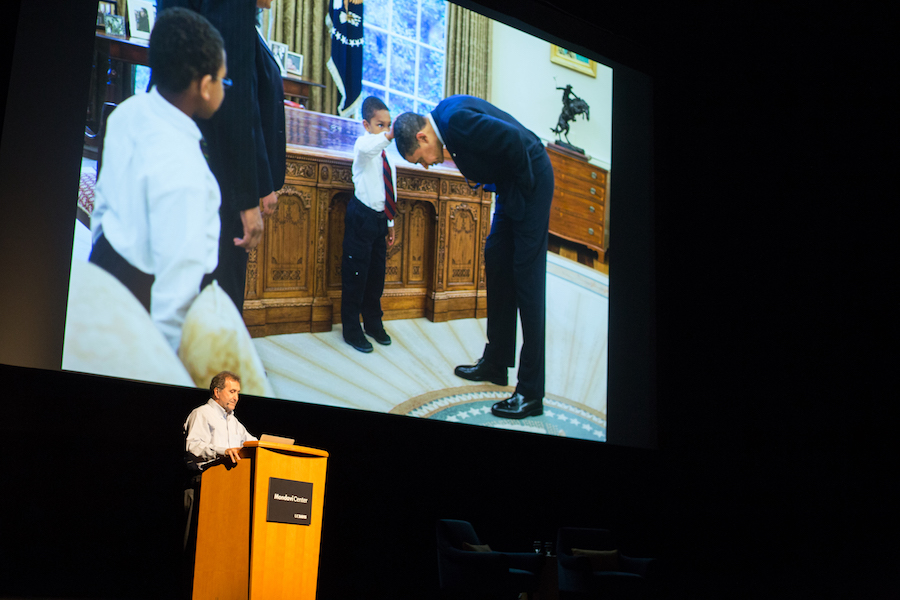
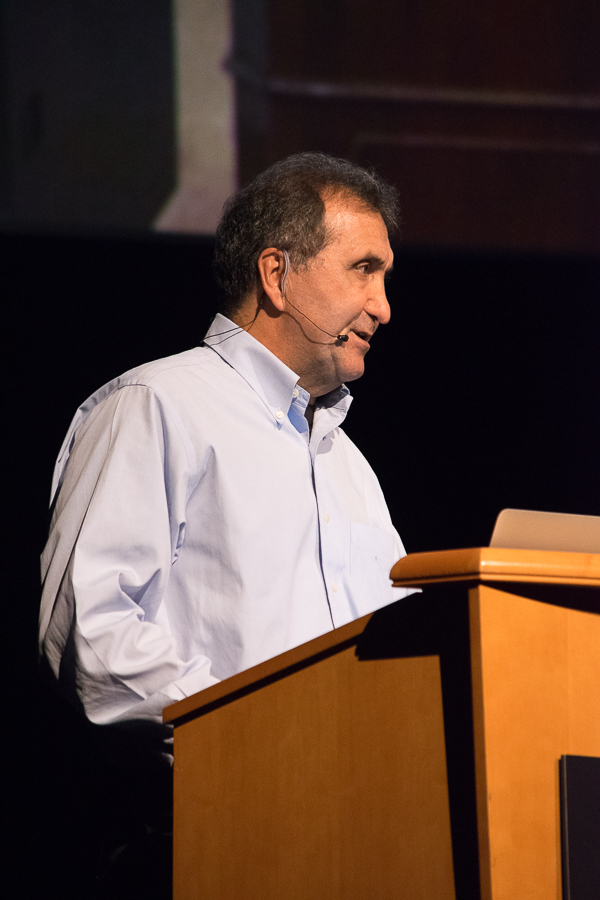
Pete Souza, the former chief official White House photographer, spoke in Jackson Hall at the Mondavi Center on Dec. 1. Souza was also the official White House photographer during the Reagan administration and is a freelance photographer in the Washington, D.C. area as well as a professor emeritus of visual communications at Ohio University.

The event was part of a speaking series in conjunction with Souza’s new book, “Obama: An Intimate Portrait.” Prior to his presentation in Jackson Hall at 8 p.m., Souza offered a student-oriented moderated discussion where students and professors asked questions backstage in a more intimate setting.

Shelley Holt, a third-year transfer student and cognitive science major, attended the student-oriented discussion and said that she was interested in Souza’s role in documenting Obama’s presidency as compared to Reagan’s presidency.

“Obviously [Souza’s] enthusiasm for Obama is really high, so I’m curious to see how that progression went from the Reagan era to playing such a prominent role in Obama’s image,” Holt said.

At the backstage discussion, Souza shared his observations of former President Obama and his experiences as a behind-the-scenes White House staff member.

“I knew [President Obama] for four years before he became president, when he was senator and I was working for the Chicago Tribune,” Souza said. “And I didn’t think he changed that much between when he was first senator and even throughout his presidency. The sort of core character of him stayed the same. The one thing that’s changed since he’s left is it’s as if […] the weight of the world has been lifted off his shoulders — you forget how everything that was going on in the world and in the United States was on his shoulders when he was president.”

BRIAN LANDRY / AGGIE

During his presentation in Jackson Hall, Souza shared some of the prominent photos from “Obama: An Intimate Portrait,” which is currently No. 1 on the New York Times Hardcover Nonfiction bestsellers list. The photo slideshow was grouped into categories that included best and worst moments of the presidency, family photos, photos of Obama’s interactions with others and images of the final weeks of his presidency.

In his time as Obama’s White House photographer, Souza captured 1.9 million photos — sometimes up to 2,000 per day. Souza explained to the audience how he was able to capture so many intimate moments of the presidency.

“With President Obama, I asked to have access to everything he did,” Souza said. “I thought that was the only way to really document his presidency for history. I was trying, when I could, to also show the big picture of the presidency. From a photographic standpoint, you’re trying to capture candid moments, but you’re also trying to do scenes that are everyday. Sometimes those are little moments — they’re not at big events, but they’re little moments that tell you a lot about him as a person.”

After Souza’s slideshow presentation, Scott Syphax, the executive producer, head writer and host of “Studio Sacramento,” moderated a Q&A session with the audience.

An audience member asked Souza what the most difficult part of photographing the president was, and Souza said it was the grueling daily schedule. In eight years, Souza only took three weeks of vacation and one sick day, mostly because he was worried that he might miss an important moment in history while he was away.

“I was literally with the president from 9:30 in the morning ‘til he went home at like 6:30 or 7,” Souza said. “The grind of the job, the 24/7 aspect of it, that was the hardest thing. But in terms of these stressful situations that maybe the people in the pictures were experiencing, I wasn’t under the same kind of stress they were. Over time, people came to appreciate what I was doing, and they took it seriously.”

Syphax was curious about Souza’s observations of President Obama as a figurehead.

“One of the things that’s interesting as you go through the book is that it’s a wide cross-section of people,” Syphax said. “But when I look at, for instance, the entertainers, the celebrities and the athletes, it almost seems more like they’re the fans and he’s the star rather than the other way around.”

Souza explained that people gravitated toward Obama in a way that he had rarely seen.

“I think people just saw hope when they saw him,” Souza said. “I don’t mean to sound cliché, but they saw a man who was genuine, who truly was thinking long-term, thinking about what was best for the country.”

Reflecting on his time with Obama, Souza said that historical documentation was the most important aspect of his job. Although there were boring and tiresome meetings, he said that the Osama Bin Laden raids, the success of the Affordable Care Act and the debt ceiling crisis were some of the most rewarding moments to photograph.

“Hopefully I captured what the Obama administration was like, what he was like as a president, what he was like as a person [and] what he was like as a dad,” Souza said. “Hopefully people think that I presented a well-rounded view of his presidency.”


Written by: Olivia Rockeman — campus@theaggie.org

UC Davis students part of nationwide protest over proposed graduate tuition tax in GOP tax plan

MARINA OLNEY / AGGIE

House tax plan would eliminate graduate student tax exemption

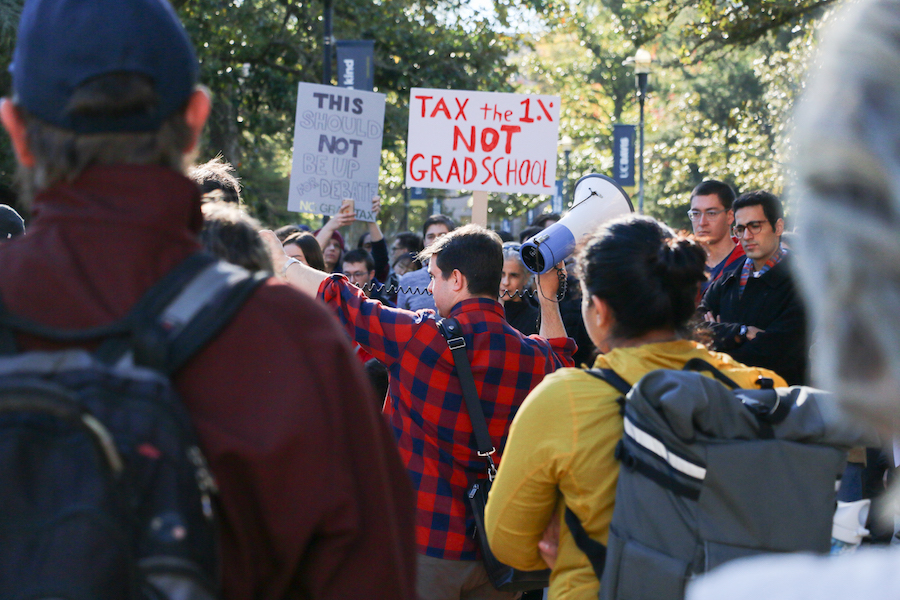
On the morning of Nov. 29, graduate students, undergraduates, faculty members and community members organized at UC Davis, as well as nationwide, to protest the Republican tax plan with a walkout over the taxation of tuition waivers. These waivers allow graduate students to teach and research in exchange for tuition exemptions. UC Davis graduate students and the UC Davis chapter of UC Student-Workers Union (UAW) 2865 — the largest student worker union in the United States — coordinated the event.

About 80 participants congregated by the Quad flagpole, some holding signs which read “Tax Me Like Trump” and “Higher Ed is Already Classist Enough.” After several speakers addressed the audience, there was an organized write-in/call-in at the Graduate Studies Office to urge congressional representatives to vote against the tax plan — which has since been approved in both the House and the Senate.

Lindsay Baltus, a graduate student researcher in the English department, spoke at the protest representing the Women’s Resource and Research Center.

“We’re outraged,” Baltus said. “Graduate students are part of the university’s invisible and cheap labor force. This tax reform will bring tax cuts to the wealthy while pushing the burden onto students and workers. We would lose tax exemptions on education that serve to incentivise students to further their education and allow us to subsist while pursuing our degrees.”

Averyl Dietering, a co-organizer of the UC Davis Grad Tax Walkout event and an English graduate teaching assistant, explained how an erasure of low-income graduate student workers creates a teaching assistant force of the independently wealthy. Dietering talked about the impacts of the bill not only on graduate students, but also on undergraduates.  

“What I want undergraduate students to know about this rally and about this tax bill — if they want to go to grad school and this tax bill passes — [is that] they are going to have to pay those taxes as well,” Dietering said. “Even if they don’t want to go to grad school, losing graduate students from the university is going to change your education more than you can possibly imagine right now. Especially if those graduate students are replaced by graduate students that are wealthier, it’s going to change your education in ways you can’t imagine.”

The GOP tax plan, which includes the grad tax, is part of the recently-passed Senate and House tax plan. In addition to the removal of tuition waivers, interest paid on students loans will no longer be tax deductible under the tax plan.

According to The New York Times, Republicans characterize the changes on higher education brought forward in the tax plan as simplifying national tax code — allowing more room for cuts in the middle class income by eliminating individual tax breaks. Critics argue, however, that the elimination of individual tax breaks levied on graduate and doctoral students will ultimately heighten the financial burden of higher education and student debt, targeting low-income and middle-income families who can’t afford unsubsidized higher education.

The bill also lowers corporate taxes from 35 percent to 20 percent to create trickle-down “windfall”. Underrepresented and impoverished graduate students largely depend on tax-free tuition waivers, according to CNN, while independently wealthy students who do not need subsidized education will be unaffected.

Gabi Kirk, a UAW organizer and a geography graduate student worker, introduced the speakers at the event. Kirk talked about her surprise at UC Davis’ recent administrative support for graduate students protesting the tax plan; Chancellor Gary May wrote an op-ed in The Sacramento Bee speaking out against the GOP tax plan and signifying himself as a supporter of the Nov. 29 walkout.

“I am really grateful for the grad students here and around the country that turned this into a national issue enough that the administration had to come out and support it,” Kirk said. “When this was called for a week ago, the UC put out one really brief sentence about [the graduate student tax exemption]. But they had four paragraphs about how they were upset about getting taxed on capital building projects.”

Kirk told the audience it was “surreal for [her] to be at a UC protest that was endorsed by the chancellor.” However, sociology department teaching assistant and UAW 2865 officer Emily Breuninger reminded the audience that not endorsing the GOP’s tax bill was profitable for a public California university.

“If the optics are good, and it’s against Trump, they’re willing to come out and pay lip service to the economic benefit and value of grad students,” Breuninger told the audience. “We all saw that anti-unionization email. They try to stop our organizations and continuously try to block us and send out anti-union propaganda.”

Roy Taggueg, a graduate student studying sociology and the President of the UC Davis Graduate Student Association for Sociology, spoke about how being undocumented intersects with his fight for subsidized education. According to Taggueg, education should rely on proving oneself through merit and motivation, not finances or nationality.

“I am undocumented,” Taggueg said. “It seems as though every month something new pops up — the people I work with everyday, we feel attacked. And as graduate students, we have one thing going for us that no one else does: we’re really friggin’ smart! All of us are going to be affected. You all made it here to grad school on the virtue of the narrative that you push forward to show other people why they should care about you, and you have to keep on doing that.”

Connor Gorman, a graduate student worker in the Department of Physics and a UAW member, emphasized the value of graduate student workers at UC Davis. According to Gorman, the money graduate workers earn for the school through teaching and research falls into the pockets of administration.

“It is not the administrators who do the bulk of the work that makes the university what it is,” Gorman said. “The university is great because of the workers, because of the faculty, because of the students. As graduate students, we are both workers and students. We deserve to be justly compensated for our labor, [but] we do not actually ever see this money. They need to stop compensating administrators so highly and instead start compensating the workers — the graduate students — who make the university run. They need to give us a living wage.”

According to Baltus, graduate students already face financial stress even with the tax exemption.

“We work much more than 40 hours per work and we are also full-time students,” Baltus said. “Many undergo poverty, food insecurity [and] homelessness. From my own experience as a graduate student with a child, I have already faced financial hardship as a result of the university’s failure to provide affordable health care or quality affordable housing for grad students families.”

Graduate student worker and president of the Anthropology Students Association Mayowa Adegboyega spoke about how the bill affects international students. According to Adegboyega, the bill will strip away newfound access to opportunities and financial capital from many marginalized students.

“Many amongst us are disproportionately affected by this bill,” Adegboyega said. “Many of your your fellow grad students come from really underrepresented communities. Many of us are breadwinners in our families. We have been left out for generations and are just now building our wealth [and] building our families. Apart from being a scholar [and] a black women, I am also an international student. Because we cannot apply for in-state tuition, it will be almost impossible for many of us to come here [without tax exemptions].”


Written By: Aaron Liss — campus@theaggie.org

Kill the (House) bill

CAITLYN SAMPLEY / AGGIE

Not too late to protest graduate waiver as taxable income

The 440-page document passed by the House is one of two GOP tax bills passed in recent weeks. While the Senate has also passed a version of a tax bill, its contents are not as great a threat to the future of American education.

The proposed House bill includes a tax that would apply to graduate students who receive tuition waivers for teaching or conducting research. Under the bill, students would be responsible for paying the taxes on tuition wavers they receive. This means the graduate student teaching your physics or English class or leading your chemistry discussion will have to pay taxes on money they haven’t even seen.

The Senate bill makes no mention of the graduate student waivers; however, the bill still has major flaws. The bill passed by the Senate, by a margin of 51-49 along party lines, includes an excise tax of 1.4 percent on 25 to 30 private colleges with large endowments.

Both bills are a disappointment to the Editorial Board: the House bill for it atrocious contents and Senate bill for the means by which it was passed.

With only two weeks to review the Senate bill, the vote occurred with day-of amendments in the margins and dreadful clauses remaining in its bounds. The future of American families rests in the hands of the Senate that treated it like a procrastinated paper due at midnight.

As both tax bills shuffle through Congress, a final bill in which the House and the Senate work together to reconcile their differences will be presented to President Donald Trump in the near future lest the government shuts down.

The Editorial Board is displeased with the House including the graduate student waivers as taxable income. Many graduate students on the UC Davis campus teach lower division classes and receive this waiver. The dozens who marched in the UC Davis’ Grad Tax Walkout are only a small sliver of Teaching Assistants and Associates who work on the campus and the thousands across the country.

The fight to remove the graduate tax from the House bill is not yet over. Students, faculty and community members have other means of making their voices heard. By calling their local representative, the nearly 40,000 students attending UC Davis can make their pleas resonate beyond their individual representative and into the White House.

The Editorial Board hopes that the members of Congress will not just flip the pages of a dense $1.4 trillion tax plan, but closely scrutinize the bill keeping lower and middle income households which make up 80 percent of American households, in mind. A majority of the households in America will be critically affected by the passing of this legislation, whether it be the House or the Senate version of the bill.

It is time for our representatives to think about the people they represent before killing the future of higher education and maiming public education as a whole. The Editorial Board urges all to join this fight by calling representatives in an attempt to not leave our fellow graduate students — and graduate students across America — in unrecoverable debt and maintain their much-needed active presence on campus.


Written By: The Editorial Board

Humor: UC Davis wants international students for diversity… of income

FARAH FARJOOD / AGGIE

The University does not care about you

INTERVIEWER (IN): Hi, Chancellor May. Thank you for speaking with me today. First of all, are there any exciting new plans for UC Davis?

GARY MAY (GM): We’ve been considering moving UC Davis into the middle of the ocean. That way we can call it the International University of Rapture. It would be international to everyone, and we could then price-gouge people from all over the world. It’s the apex of capitalism.

IN: How do you plan on charging people?

GM: We’ve actually started a new pricing method for international students consisting of $100,000 per year for each first-born child, which is a pretty high price to pay for students in a one-child policy country.

IN: Wouldn’t that be a way for students to get rid of their child and then have a replacement one?

GM: Well, the idea behind it is that the children will be owned by the university and will grow up to teach courses in place of current professors — without any pay, though. Plus they will be very grim and bitter, so they will essentially be TAs.

IN: Do you have any other plans?

GM: We have been putting some funding into NASA and outer space research in hopes of finding interplanetary students. Image how hard we could rail them. The challenge would be getting them past Trump’s planned wall around the Earth. That wall won’t keep out aliens — I mean, interplanetaries — but it will block out the sun, which will really put a damper on our organic, solar-powered death ray.

IN: Do you think that using interplanetary or international students displaces the spots that in-state students could be filling?

GM: As the UC puts it, we allocate spots for international and interplanetary students. That way they don’t displace in-state students.

IN: But that is displacement since there is a maximum capacity on class sizes and in-state students might lose their spots to out-of-state or international students. No?

GM: No.

IN: Explain the diversity spiel.

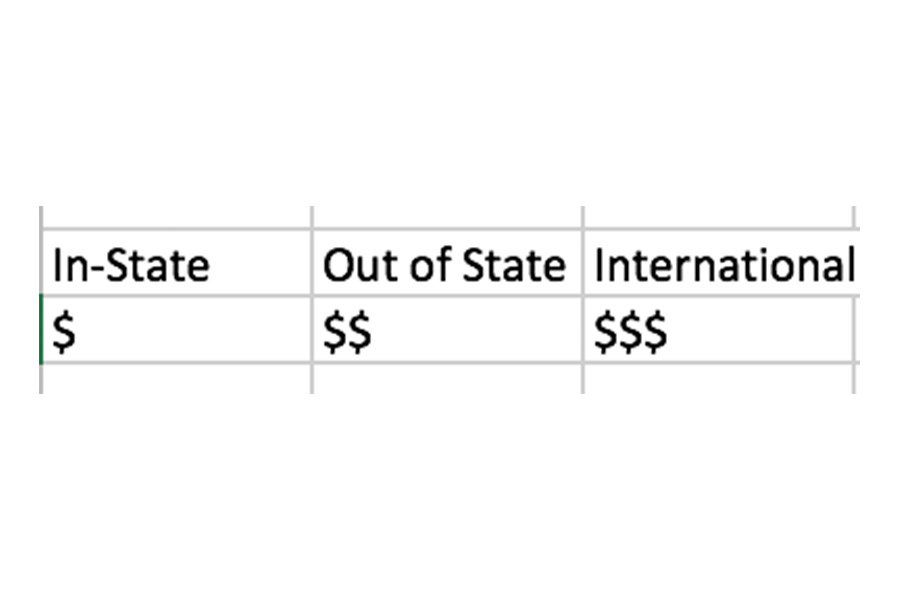
GM: We are all about diversity until you get to the campus. Once you’re here, we couldn’t care less if you starved to death in the 24-hour study room. We’ll write your death off on our taxes. But prior to that, we want to have in-state, out-of-state and international students to diversify our income. Imagine that a state gets destroyed by fracking, lack of nuclear power plant regulations and leaky oil pipelines. Students from that state will no longer be able to contribute to the UC. Imagine Trump levels another country that has many students at the UC. Once the mushroom cloud clears, you see there’s nobody to pay the bills. We send those students back for nuclear winter break. If we truly cared about them, we would charge them the same rates as in-state students. Catch my drift?

IN: That sounds rather harsh. Does the university create these ideas, or do fascist dictators?

GM: The university lacks creativity in many ways, but not in railing students. We take credit for those ideas. Just look at how we brand on everything possible. You can get our logo on a shirt, hat, sweater — everything. You know what we got your name on? Our list of assets. We would charge both arms and both legs if we could. But then how would you sign the checks?

IN: What is your main inspiration?

GM: The university’s main inspiration is colonization. Go to a country. Take all its resources. Give nothing of value in return. We rewrote that. They come to our country. We take all their resources. Give nothing of value in return. It’s brilliant.

IN: What do you mean nothing of value?

GM: Imagine you go to a restaurant and order a burrito. Out comes a pile of steaming shit. You ask, “What they hell is this, Chipotle?” The waiter tells you that the burrito is doing research and trying to get grant money, but this steaming pile of shit is very high and very mighty. Additionally, this steaming pile of shit is brand new and fresh, and it determines your grade. Does “TAs in place of professors” sound like “we care” to you?

IN: You’re depressing me.

GM: Welcome to life, kid. It gets worse.

IN: Do you have any final comments?

GM: Do you have any last words?


Written by: Drew Hanson — andhanson@ucdavis.edu

(This article is humor and/or satire, and its content is purely fictional. The story and the names of “sources” are fictionalized.)


Thursday Live Christmas Shows at Odd Fellows

JERO REAL / AGGIE

A night of giving and music by Johnny Cash

This holiday season, give back to your community with friends and family. Odd Fellows Lodge Hall in downtown Davis is hosting their Thursday Live event with covers by local musicians.

Juelie and Kurt Roggli started Thursday Live nine years ago and have continued the tradition ever since.

“My husband and I joined Odd Fellows about 10 years ago, and he’s a musician here,” Juelie said. “Music has always been a big part of our lives, and there was no music committee at the time. We thought if we could start something it would not only bring awareness to Odd Fellows, but it would [also] just be a great community event. We try keeping it donation-only. We keep a bucket at the door, and all the money goes to either the musicians or whatever charity we’re raising money for.”

Kurt Roggli looks forward to Odd Fellows’ music events as they are an opportunity to play music that is not typically showcased.

“I think my favorite events are the tribute shows, where we honor people like Bob Dylan, Pete Seeger, the Summer of Love and the Beatles by having a collection of musicians interpret and play their fantastic music,” he said.

Odd Fellows is known for giving back. It focuses on giving to nonprofit organizations within Yolo County, whether it’s the victims of the recent fires or a student who needs money for textbooks. For this Thursday Live, the goal is to gain funds for kids to attend summer camp in the upcoming months.

With a special appearance from Santa, Odd Fellows hopes that this Christmas show will not only attract its usual audience, but families with children as well. Since this is an all-ages event, the goal is to reach out to everyone — including UC Davis students.

“We’d love to get the word out to UC Davis students,” Juelie Roggli said. “First of all, it’s only a donation. You know, no one’s at the door collecting money. Also, it’s music that they might not be hearing lately and might be interested in.”

Like most of their events, this Thursday Live will be presenting bluegrass, folk and Americana. Keyboarder for the event Aubrey Jones will be performing songs with other local musicians.

“We’re playing a number of covers from different artists from Johnny Cash, Elvis Presley, Merle Haggard and Buck Owens,” Jones said.

Perhaps the season of giving doesn’t come in bows and wrapping after all. The event is free and will start at 7:30 p.m. on Dec. 7 at Odd Fellows Hall in downtown Davis.


Written by: Becky Lee arts@theaggie.org