55.5 F
Davis

Davis, California

Tuesday, December 23, 2025
Home Blog Page 594

Wildfire smoke blankets Davis

JEREMY DANG / AGGIE

Effect of wildfires all over Northern California on Davis

Since Monday, Oct. 2, smoke has been floating in and out of Davis, blanketing the city. The smoke was largely due to a fire at Northern Recycling, a compost facility in Zamora, Calif. The Yolo-Solano Air Quality Management District sent out a mass alert the day the foul-smelling fog appeared.

Jenny Tan, the public information officer from YSAQMD, commented on the Zamora fire situation via email.

“The fire started Sunday night on 10/1 around 10:30 pm and on Monday 10/2 we immediately sent staff to investigate the issue,” Tan said. “Also on Monday, the District sent out our first smoke alert to notify residents that smoke was impacting Woodland, Davis, Zamora and some of the surrounding communities. We sent another alert Monday night and the third Tuesday morning, 10/3. There were still parts in the recycling plant that were smoldering on Wednesday, but it was much better than what was seen on Monday. The cooler weather over the past weekend helped with the smoldering.”

The Zamora fire burned out in the days following the smog’s appearance. Now, wildfires are sprouting up all over Northern California, affecting Napa, Sonoma, Yuba, Butte, Nevada, Calaveras and Mendocino. Unpredictable winds have blown smoke from these fires over to Yolo County, often putting Davis under a cover of uncomfortable smoke.

Though only the smoke touched Davis, UC Davis’ own firefighters were among thousands of California firefighters who were dispatched to contain the actual fires.

Battalion Chief Nate Hartinger is assigned to the LaPorte Fire in Butte County. The fire has merged with another nearby fire, the Cascade Fire,” said UC Davis Fire Chief Nathan Trauernicht. “Our type III Engine (Wildland Fire Truck) was initially assigned to the point fire near the Stanislaus National Forest. They have been reassigned to head toward the Napa Fairgrounds this morning in preparation for today’s north wind. On the engine is Captain Dave Stiles, engineer Kyle Dubs, firefighter Jon Poganski and firefighter Gerrit Dykzeul.”

Trauernicht emphasized that, although the fires are a serious natural disaster, they don’t currently pose an imminent threat to the city of Davis. His main concern was the smoke that plagues the city’s skies.

“The source of the [current] smoke is about 17 major wildfires that are burning in Northern California right now,” Trauernicht said. “Closest to us are the fires in Napa, Lake and Sonoma County. Butte County is to the east of us. We’re surrounded […but] there’s at least one county between us and all of the active fires right now, so there’s no threat to Davis or the campus.”

Trauernicht elaborated on the potential duration of the smoke in Davis.

“At this point, we really don’t know,” Trauernicht said. “It all depends on which way the wind blows. People should anticipate periods of smoke off and on, at least for the next several days.”

To stay updated on the fire’s placements and smoke alerts, follow the UC Davis Fire Department’s Twitter or sign up for YSAQMD’s air quality alerts.

While the smoke may be a mild irritant to Davis residents, its sources are a much more dangerous issue for other Californians and for the firefighters working to contain the blazes. Inconsistent and strong winds have pushed the fire into neighboring counties, and, as of Oct. 11, the fire has spread into neighboring Solano County, which is located near Fairfield. At the time of publication, 33 Californians have lost their lives, thousands of California residents have lost their homes, and thousands more have been left without electricity. Students have already started volunteering and sending aid to those affected, creating Facebook donation pools and crowdfunding pages. Though the fires haven’t touched Davis, many local students and residents have been personally affected by the blazes. Some air quality alerts and evacuations are being announced to ensure the public’s safety while the situation is handled.


Written by: Ahash Francis — city@theaggie.org

   

Perspective in Politics: A personal dilemma with hate speech

TAYLOR LAPOINT / AGGIE

My experiences and core beliefs affect my views on hate speech

“Hate speech” is a term that’s used often on this campus and at universities across the country. Before coming to UC Davis, I had never heard of the term “hate speech.” It’s not like I hadn’t witnessed or faced racial abuse before; I just didn’t expect universities to have expansive speech codes that included racist language as part of the definition of hate speech.

My past experiences with racial abuse had contributed to my initial understanding of hateful incidents. I’m thankful to have not faced many of these incidents, but I have witnessed many friends and strangers in such unfortunate situations. A classmate of mine was called “Ling Ling”  by those who didn’t care to learn her name and wanted to make fun of her for being a recent immigrant who spoke little English. Classmates have also asked me on several occasions to say something in Chinese with the intention of repeating it mockingly. These anecdotes heightened my hatred of racism, but at the time, I didn’t see how there could be much done to stop my peers from spouting abuse.

My opinion on hate speech and its restrictions have largely been influenced by what has happened in the last few years. Ever since I first learned about the First Amendment and the Supreme Court’s considerably wide range of allowable speech, I’ve been rather open to almost all forms of speech. My perspective has been reinforced by events that have unfolded on many campuses — not just ours — where many forms of speech are viewed in violation of campus policies and either forbidden or highly impeded by protesters. Upon reading our university’s policies, you’ll find that the school offers a basic commitment to the merits of free speech. But university policy also recommends reporting hateful or biased speech that may violate the university’s speech codes.

I feel that the weight of my school experiences has made it harder for me to be critical of hate speech restrictions. These codes play a crucial role in attempting to prevent the incidents I’ve experienced from happening to other people. The issue is with the subjective nature of these rules, which depends on perspective. These speech codes can attain more legitimacy if universities set out their definitions properly for what hate speech actually is rather than giving vague examples. This will set a standard for each case to prove beyond a doubt that there’s hate involved in a given incident.

UC Davis has tried to find a compromise on this subject. The school has affirmed its commitment to free expression while reserving the right to review hate speech cases for bias. This may lead to a confrontation in the future: the guarantee of free expression may end up lacking dedication, or the restrictions on hate speech may not be as broad as proponents want them to be. It could really go either way.

Our perspectives on this issue may change as we talk to people of different backgrounds, especially since this is an ongoing issue that never seems to go away. Personal experiences have a strong impact on how we feel about political topics. If I had had different experiences, then the arguments presented here would likely be different. Hopefully there’s some form of compromise between the many different perspectives that will balance the good that would come from setting a limit on hate speech restrictions and define plainly and definitively the steps necessary to prove bigotry in hate speech cases.


Written by: Justin Chau — jtchau@ucdavis.edu

Disclaimer: The views and opinions expressed by individual columnists belong to the columnists alone and do not necessarily indicate the views and opinions held by The California Aggie.

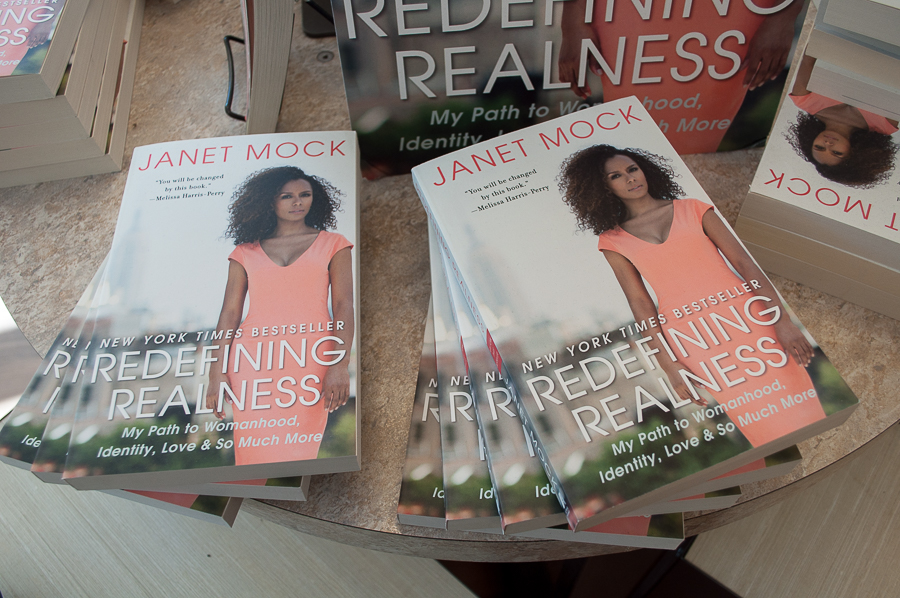
2017-18 Campus Community Book Project chosen: Janet Mock’s “Redefining Realness”

JORDAN KNOWLES / AGGIE

Several events planned around book, including Oct. 4 transgender rights talk

Janet Mock’s New York Times bestseller “Redefining Realness: My Path to Womanhood, Identity, Love and So Much More” has been chosen for UC Davis’ 15th Campus Community Book Project. Campus workshops, conferences, film screenings, lectures and Q&As have been curated around Mock’s book, which addresses the intersection of LGBTQIA and racial identities.

Mock is a well-known transgender activist, writer and reporter. On Feb. 5, 2018, Mock will come to the Mondavi Center for a panel discussion and book signing.

Mikael Villalobos, the associate chief diversity officer in the Office of Campus Community Relations, provided insight into how he and other committee members chose Mock’s book. Villalobos, who chaired the book project and directed the program, said the committee, which is “made of faculty, students and staff,” selects the book based on a chosen topic.

“More than 40 books were looked at,” Villalobos said. “The committee was focused on ensuring that the book […] chosen really addressed the intersection of race [and] gender identity. Janet Mock’s book [is an] intersection between racial [identity], ethnic identity and LGBTQIA identity.”

When asked about his thoughts on the coordinated events accompanying “Redefining Realness,” Villalobos explained how impactful the events are in promoting the book.

“We do our best to make sure the events that support the featured book will be diverse,” Villalobos said. “We wanted the events to explore the themes from the book, like gender identity. It’ll include how laws and policies impact members of a particular group and […] explore [opportunities] to bring awareness in terms of how folks may experience the society by virtue of their identities. We made sure the program would include research, services and programs that very much deal with the topic that was the impetus for Janet Mock’s book.”

Villalobos said UC Davis plays a role in developing LGBTQIA rights and advocacy as well as in ensuring the safety of individuals within the community.

“As an administrator, I think the book project serves as a jumping-off point to build awareness of knowledge for folks who may not be familiar with what it means to identify with [the] LGBTQIA community,” Villalobos said.

One event that covered court proceedings for transgender discrimination was given by Brian Soucek, a King Hall acting professor and a Martin Luther King Jr. Hall Research Scholar. On Oct. 4, he delivered an hour-long lecture titled “Trans Rights and Fights in the Time of Trump“ to kick off the lecture series. Soucek’s lecture covered individual cases and gave a history of gender anti-discrimination laws in the United States, focusing on laws like Title IX.

Soucek pointed out how most UC Davis students are of an age where they “haven’t navigated race-segregated bathrooms or locker rooms” yet have become inundated with sex-segregated ones.

“When you have a transgender woman, should she be allowed to use the women’s restroom?” Soucek said. “School districts, government [and] private organizations have said ‘no’ — that gender is determined by biology. Especially if they have anatomical features associated with a man. Sometimes, a special occupancy bathroom will be offered.”

Soucek talked about a specific case where 15-year-old Gavin Grimm, a transgender boy, was offered the option of his nurse’s bathroom at his public high school.

“Grimm rejected the accommodation to go to the nurse’s bathroom,” Soucek said. “His case said that he should be able to use male locker rooms and bathrooms in his school. The process has been long and arduous.”

Soucek explained how the Obama administration sent out a letter to U.S. courts and public schools explicitly allowing transgender students to use facilities consistent with their identities. However, the Trump administration withdrew this position and left nothing as a replacement, providing reason for the Supreme Court to send the case back to trial courts.

With student cases centered around using public restrooms, Soucek contested that “it’s never just bathrooms” but also about “navigating public spaces.”

Soucek provided examples of defenses that U.S. judicial courts will historically accept which legitimize gender discrimination. Soucek said that while processes dealing with gender discrimination cases are a legal quagmire, the Supreme Court has tried to tackle its understanding of gender identity.

“To the courts, things must first be compared to race and, second, compared to religion to make them understand identity,” Soucek said. ”What the trans plaintiffs have asked, under the constitution, [is] that gender identity get at least intermediate scrutiny in court.”

The sliding, non-binary scale of gender identity is still not recognized by courts and judges; Soucek said that this leads to a concern that courts will apply an understanding of gender as a spectrum for some but not all trans people.

Soucek talked about how he has learned that students in 2017 want to see the legal system fully legitimize gender fluidity. Currently, Soucek said the “law sides with the Janet Mocks rather than the genderfluid.”

Upcoming events structured around the Campus Community Book Project include “Trans Students Speak” on Oct. 19, a film screening of “Major!” — a documentary about a transgender activist — on Oct. 27 and a Nov. 8 discussion of “Redefining Realness.” More information about scheduled upcoming events can be found on the Campus Community Book Project website.


Written by: Aaron Liss — campus@theaggie.org

Hillary Clinton gives speech at UC Davis

UC DAVIS PHOTO / COURTESY

Clinton spoke about women in politics, Russian involvement, gun reform

On Oct. 9, former Secretary of State Hillary Clinton addressed a packed crowd in the Mondavi Center, who greeted her with screams of “I love you.” In Clinton’s first speech at UC Davis, she talked about her recently-published memoir, “What Happened,” which addresses her becoming the first-ever female Democratic Party presidential nominee, the unprecedented 2016 presidential election and its aftermath.

UC Davis Chancellor Gary May introduced Clinton, whom he said needed “absolutely no introduction.” The night’s event comprised two parts: Clinton gave a speech focused mainly on the issues she touches on in “What Happened” and then sat down with moderator Scott Syphax, the CEO of a Sacramento nonprofit, to answer questions mainly about the election.

Both at the beginning of her speech and toward the end of the Q&A portion, Clinton addressed the need for an increase in gun restrictions in the wake of the mass shooting in Las Vegas.

“One of the fatalities [was] a UC Davis graduate by the name of Michelle Vo,” Clinton said. “I read about how last week Michelle’s friends and family as well as members of the UC Davis community have remembered her as a joyful, kind person who made friends everywhere she went. She was just 32 years old. Every time there’s a mass shooting, people claim, ‘Well, it’s somehow impolite or too soon to address the need for common sense gun safety reform.’ I disagree. It’s always time and what better time than now?”

Clinton, who spoke in front of a wall stocked with copies of “What Happened,” said that the book is her “most candid” and “most personal effort” yet to write about personal experiences.

Fourth-year African American and African studies major Denisha Bland was chosen to address house rules before the event started; backstage, she shook Clinton’s hand and took a photo. Bland said she was “so excited” when Clinton thanked her by name in her speech.

To hear her say my name, […] it felt like she really cared,” Bland said. “I also liked her spirit and I wish she would have had that spirit through the election and showed her truth.”

Speaking openly about her reaction to the election, Clinton said she spent a significant amount of time with her family before deciding to get back to work.

“I […] started a new organization called Onward Together,” Clinton said. “It is designed to […] encourage the outpouring of activism and engagement that we’re seeing across America now. I still yell at my TV, [but] it helps a lot to be able to channel the worry and the pent-up emotion into something constructive. I hope that many of you here tonight will come to that same conclusion about how important it is to stay engaged, stay active [and] fight for causes and candidates you believe will make a difference. There is too much at stake not to speak up about the things that matter most.”

At several points throughout the night, Clinton addressed Russian involvement in the presidential election. When asked by Syphax whether she thought the scandal could be “larger than Watergate,” she said yes.

“Everyone, regardless of political party, should be disturbed by the fact that Russian agents used Facebook and Twitter […] to place targeted attack ads and negative stories intended not only to hurt my chances but to fan the flame of division within our society,” Clinton said. “New research […] found that content posted by Russian trolls and bots had been shared upwards of 340 million times. We’ve never seen it on a scale like this. When it comes to the threat we face from Russia, we need to get serious about cybersecurity and closing loopholes in our election process, get tough with Putin [and] get to the bottom of what really happened in 2016.”

One continuing theme throughout the event was the topic of women in politics. Syphax inquired as to the advice Clinton might give to senators such as Kamala Harris or Elizabeth Warren or other women who might run for president in the future.

“You have to have a high pain threshold, because the double standard is alive and well,” Clinton said. “Kamala was questioning Jeff Sessions, who […] deserves to be questioned, and […the] chairman tells her, ‘Enough.’ One commentator said she’d been ‘Hillary’d.’ For any woman in politics — [or] in the public eye — you have to call it out, but you have to do it in a way that doesn’t create a backlash against you for calling it out. It’s a constant balancing act. The final thing I would say to them is […] just be prepared if we have another reality TV campaign to have the most horrible lies said about you.”

The final question Syphax asked was whether Clinton would “indulge” the audience and read a part of her prepared victory speech to the audience; the request was met with a roar of applause.

“This summer, a writer asked me if I could go back in time and tell anyone in history about this milestone, who would it be?” Clinton said. “And the answer was easy — my mother, Dorothy. You may have heard me talk about her difficult childhood, she was abandoned by her parents when she was just eight years old. I think about my mother every day. I dream of going up to her [at eight] and sitting down next to her, taking her in my arms and saying, […] ‘As hard as it might be to imagine, your daughter will grow up and become the president of the United States. America is the greatest country in the world, and from tonight going forward, together we will make America even greater than it has ever been for each and every one of us.’”

When speaking about her future, Clinton said she is “not going anywhere.”

“If you take nothing else away tonight, please understand I am here to tell you we cannot just move on,” Clinton said. “The lessons we draw, or fail to draw, from 2016 will help determine whether we can heal our democracy and protect it in the future [and] whether we can begin to bridge the divide that is tearing up so much of America. I’m going to do everything I can going forward as an active citizen to speak [up] and I hope you will do exactly the same. I’m confident and optimistic that we’ll win together.”


Written by: Hannah Holzer — campus@theaggie.org

Aggies come up short in overtime thriller

0
DIANA LI / AGGIE FILE

Men’s soccer falls 4-2-1 in conference play

UC Davis men’s soccer suffered a heartbreaking 3-2 loss in overtime to visiting Cal Poly on Wednesday evening. Down 2-0 in the 84th minute, the Aggies (7-7-2, 4-2-1) scored two goals in the span of 48 seconds to tie the game at 2-2, but the comeback effort was not enough as the Mustangs netted the game-winning goal less than two minutes into overtime.

“It shows a lot of character,” said head coach Dwayne Shaffer. “They have a lot of heart and fight in them, but unfortunately it took until the 85th minute or so to show it. I think we did everything necessary to win that game, but it just didn’t go our way today.”

The Aggies had a big chance to finally get on the scoreboard when redshirt sophomore forward Adam Mickelson lined up for a free kick outside the box on the left side with under six minutes remaining in the contest. Mickelson promptly fired an absolute strike to the top-right corner of the net to cut the UC Davis deficit to one goal.

“We were talking about it and I just really wanted to hit it,” Mickelson said. “I saw the keeper was leaning to the other side a little bit and I decided to take the shot towards his left and it went in.”

The Aggies went right back down the field and tied the game on a header to the bottom-right corner of the net by redshirt junior forward Matt Baringer, his team-leading fourth goal of the season. Mickelson and senior midfielder Lizandro Torres were credited with assists on the play, as Mickelson passed a through ball into the edge of the box to Torres, who chipped the ball to Baringer in front of the net.

After staving off the relentless Cal Poly attack in the final two minutes of regulation, the Aggies were unable to capitalize on a couple scoring chances early in the overtime period. Less than a minute later, Cal Poly junior forward Sean Goode handled a deflection near the back of the box and launched a perfect strike into the the top-left corner of the goal to win the game for the Mustangs.

“Ultimately, we let them hang around,” Shaffer said. “We had a big opportunity here at home today and we didn’t take advantage of it.”

The first half of the match was largely dominated by UC Davis, as the home team was relentless in its offensive attack, racking up a total of eight shots and dominating possession.

“In the first half I thought we played really well,” Shaffer said. “I thought it was kind of one-way traffic and once again we were just unfortunate to not score the first goal. We did everything right and we did everything well, and we just didn’t score.”

The Aggies were persistent in applying pressure on both sides of the ball, but ultimately were unable to finish in front of the net on numerous scoring opportunities.

“I think we’re gonna get a lot of chances like that, but I think we’re eventually going to put some in the net,” Mickelson said. “It’s just unfortunate that it didn’t go our way tonight.”

Cal Poly only managed to muster two shots in the opening 45 minutes, including just one shot on goal.

After 28 consecutive minutes of back and forth action to start the second half, the Mustangs finally broke through when senior forward Kaba Alkebulan scored on a header just inside the right post from a free kick on the right side.

Cal Poly added another goal seven minutes later when freshman forward Angel De Leon dribbled into the box and shot a perfect ball into the right corner.

Despite losing a tough match, UC Davis remains atop the Big West Conference standings, with a total of 13 points. The Aggies still have three matches remaining on the schedule, and will look to lock up the top seed in the Big West tournament, which begins in early November. UC Davis travels to face UC Santa Barbara and Cal Poly in the next week, before returning home for the regular season finale against Sacramento State on Oct. 29.


Written by: Brendan Ogburn — sports@theaggie.org

Money should not buy moral absolution

HANNAH LEE / AGGIE

USC refuses Weinstein’s money, sets example for institutions

In response to The New York Times’ story detailing allegations of sexual harassment and abuse stretching back decades, Hollywood film producer Harvey Weinstein sent a statement to The Times apologizing for his behavior and renewing his pledge to create a $5 million scholarship fund for female directors at the University of Southern California School of Cinematic Arts.

The university confirmed in a statement to The Hollywood Reporter that it “will not proceed with Mr. Weinstein’s pledge.” The same day, a student petition was released calling on USC to “muster the moral spine to reject Harvey Weinstein’s blood money in exchange for its soul.”

USC’s rejection of Weinstein’s money is a bold, principled and all-too-uncommon stance. To accept the donation would be to enable the familiar pattern — self-flagellating public statement, large donation to relevant charity or nonprofit to assuage public outcry, soft landing, no substantive change — that often occurs when a similar set of accusations surfaces.

When politicians receive donations, it is in the public interest to know from whom or whence they came, because we recognize that money buys influence for its donor over its recipient, placing them in the donor’s debt.

Morally, ethically and politically, individuals and institutions must account for who or what shapes their views and who can pull strings. $5 million, given by one of the most powerful men in one of the world’s most powerful industries, pulls quite a few strings. In accepting the money, USC would have had to account for tying itself to a man accused of actions that are beyond reprehensible. We demand that our politicians and policy-makers justify the influence of their financial backers. We should demand no less from our institutions of higher education.

The Editorial Board therefore applauds USC for rejecting Weinstein’s money and refusing to be the site of his moral buy-back program. The university’s stance sends a message to all that money should not buy moral absolution. Weinstein’s attempt at image rehabilitation and a generous donation cannot take away the profoundly painful violation of so many women.

The unfolding story of Weinstein’s alleged misdeeds is a story about sexual harassment and abuse. But it’s also a story about power and money and reputation, about cover-ups and threats, out-of-court settlements and non-disclosure agreements.

USC’s stance should also serve as a reminder to the powerful — both institutions and the individuals who run them — that you are judged by the company you keep. You will be called on to account for and justify whoever or whatever bankrolls your enterprises.

Weinstein has previously been successful in using his wealth and power to make problems go away. For USC to refuse to play this game is a bold move that we must demand from every person, organization and institution. We must not allow our universities to become sellers of indulgences. To do so would be to declare absolute moral bankruptcy.

As the student petition says: “We don’t need this money. What we need is some damn principles.”


Written By: The Editorial Board

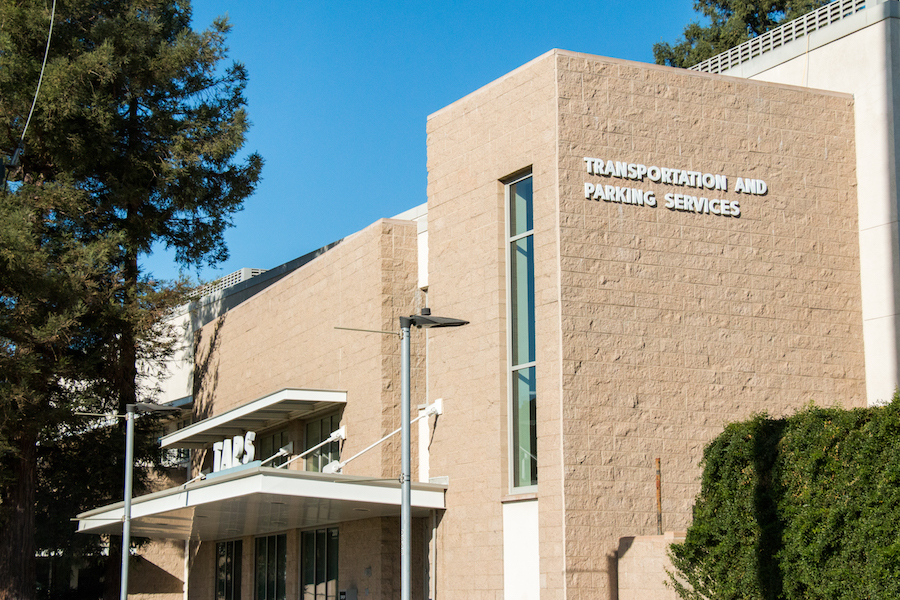
Humor: Frats now saying “I’d TAPS that” after being screwed by TAPS

TAYLOR LAPOINT / AGGIE

TAPS: Those Awful People Suck

Catcalling and the objectification of women have been taken one step further with reports that frats are now saying, “I’d TAPS that” in place of the traditional “I’d tap that.”

“It’s abhorrent,” said Katherine Weaver, a second-year gender studies major. “Both phrases are disgusting, but at least ‘I’d tap that’ implied that they may in some way be pleased.”

“We also say, ‘That ass is fine. You know, like a fine?” said self-identified frat bro Jared, when asked about this newly trending phrase. “But the main phrase, ‘TAPS that’ — I think it manifested out of our joint anger toward TAPS. Like, yeah, my dad can afford the ticket, but still. It’s the principle, the fact that they’re using their dirty tricks to screw us.”

With 1.8 out of 5 stars on Google Reviews, TAPS clearly cares about maintaining its image — an image similar to that of government bureaucracy.

“We modeled TAPS after the DMV’s overall attitude, along with the University of California’s motto, ‘Money Money Money,’” an anonymous TAPS spokesperson said. “It was Bernie Madoff’s idea. We still reach out to him for improvements.”

TAPS has recently been under attack by antifa, which purportedly stands for Anti-First Amendment.

“I hate TAPS,” CommuNick, who may or may not even be an enrolled student, said. “They’re a bunch of fascist dicks.”

When asked if he had received a parking ticket or something that had upset him, CommuNick said, “Oh, I don’t have a car. Those fashies wanted me to pay $10 for my bike registry.”

“You can’t win everyone over,” said Paul Morgan, the head of TAPS. “In a rush to class? A little too tired? Bad at driving in general? That’s where we make our money. But these antifa goons? They’re telling us that we’re fascists. Just because we designed our business like fascists, doesn’t make us fascists. I’d say to get a life, but really, get a car.

Some students have switched from commuting via car to taking the rail to school.

“Yeah, I tried to appeal a parking ticket and the officer said, ‘Take the rail or get railed, kid,’” an anonymous second-year said. “My old pastor said the same thing.”

There are reports that TAPS is being charged with prostitution since they’ve been screwing people for money. Such charges will likely be hard to prove, since they’ve already got Katehi wiping all claims from the internet.

“I told my friends that I got screwed in my car,” said Timmy Vargas, a first-year computer science major. “They asked me her name, and I said it was on the ticket. They all just laughed and said, ‘Ticket to dick-it?’ I don’t think they understood me, but I don’t want to say anything. I feel cool now.”


Written by: Drew Hanson — andhanson@ucdavis.edu

(This article is humor and/or satire, and its content is purely fictional. The story and the names of “sources” are fictionalized.)

My experience with mental illness is real, and now I’m ready to share

CHRISTIE NEO / AGGIE

No single story looks the same — and that’s why listening is so important

I can’t stress enough that mental health is a serious issue that needs to be openly discussed. There are research articles and even personal stories that are shared, but they’re often not the first pieces viewed on a Facebook feed, on the main page of a web browser or even on the front page of a magazine or newspaper. This material is out there to be read, but so many people steer clear of it. I agree it’s not always the first thing I want to read, but I read it because it’s been made accessible for a reason. It’s sad to hear another statistic or another personal story, but they’re shared to provide information and insight into a complex subject that affects so many individuals. When it comes to sharing a personal story about mental health, it’s easier said than done. People tend to disregard how significant it is when a person takes the time to share personal experiences, especially on such a serious topic.

I can attest that speaking about personal experiences with mental health is the toughest thing I’ve had to do. However, it has also been comforting and uplifting to share and meet other people who have gone through similar experiences. It took me several months to finally address the emotions and thoughts I’d been having. When these feelings first came up, I pushed them to the side, thinking it was just a bad day. Those bad days kept making their presence known to me. I began losing interest in the activities I had enjoyed so much, such as writing, reading, spending time with friends and playing music with my Cal Aggie Marching Band-uh family.

Every day for months, my own negative thoughts about myself consumed my mind. I didn’t want anyone to know what was going on internally. I felt full of shame wondering how I ended up in such a low mental state, and due to stigma, I was afraid of what other people might think, including my close friends. I didn’t want to speak up about it and then be treated differently, whether negatively or positively. I was afraid of what might change. I kept asking myself why and how I let myself get to that state, continuously putting the blame on myself as if I had control over what was happening. But that’s where I was wrong — I did nothing to set off the change in my mental health.

It’s common for people to find some way to blame themselves for having a mental illness, but there’s no way to prevent a chemical imbalance. Again, that’s easier said than accepted. When struggling with a mental illness, it’s difficult to pinpoint the cause of it. Individuals will replay their past in an attempt to identify what led them to their low mental state. Speaking from personal experience, I did the same thing. However, in doing this, I realized I couldn’t remember the exact “moment” of my mental health shift. In an attempt to speak out to others reading this, determining the reason that a mental illness develops isn’t simple. In some cases, a change in mental wellbeing is caused by a specific trauma. For many others, however, mental illness can creep up without an evident origin. I would look back and think, “Maybe if I did this differently…,” but it didn’t help my situation. Looking for an explanation shouldn’t have been my main focus. I should have instead focused on how to move forward and improve — the direction in which everyone deserves to go.

I’m sharing my personal experience in hopes that people who are struggling with their mental health know they’re not alone. I’m sharing this so those who may have had an experience in the past are proud that another person is willing to speak. I’m sharing in hopes that this is not overlooked as these stories usually are in other media. Shying away from this subject does not make it disappear, and acknowledging it can lessen the stigma.


Written by: Jolena Pacheco — mspacheco@ucdavis.edu

Disclaimer: The views and opinions expressed by individual columnists belong to the columnists alone and do not necessarily indicate the views and opinions held by The California Aggie.

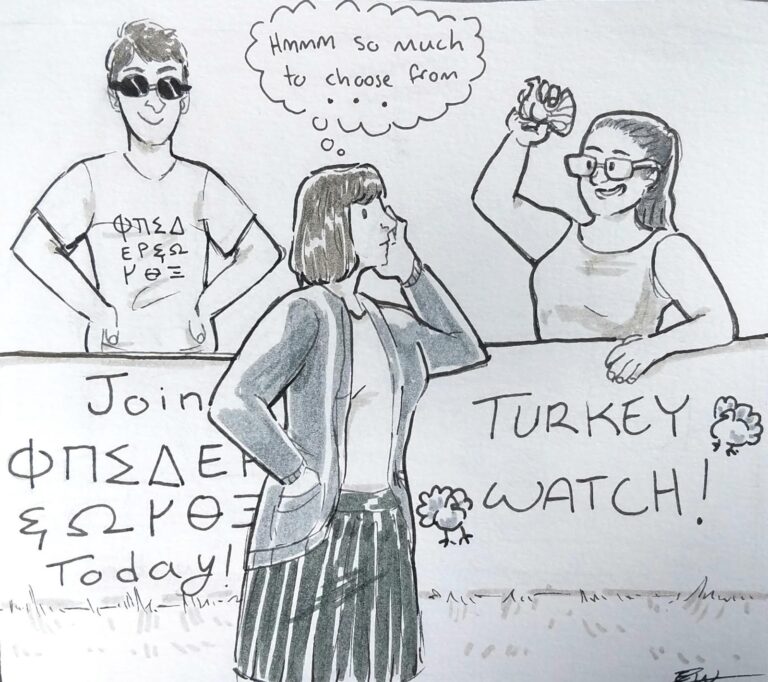
Cartoon: Are clubs getting too specific?

ELLIOT WHITE / AGGIE


By: Elliot White


Disclaimer: The views and opinions expressed by individual cartoonists belong to the cartoonists alone and do not necessarily indicate the views and opinions held by The California Aggie.

Early earthquake warnings can help protect Californians

JEREMY DANG / AGGIE

More comprehensive early earthquake warning systems exist in nations like Mexico and Japan

In September 2017, Mexico was rocked by a series of earthquakes. A powerful tremor of magnitude 8.1 struck off the southern coast on Sept. 7, followed by a magnitude 7.1 quake further inland on Sept. 19. Early warnings were sent out through television sets, loudspeakers and Twitter, giving people precious seconds of time to prepare for an earthquake in a seismically active area.

“Earthquake waves are caused by slip on faults and travel at the speed of sound in rock, about a few kilometers per second”, said Alex Morelan, a fifth-year PhD candidate in the Department of Earth & Planetary Sciences. “Seismic stations and computers near the fault that slipped detect the earthquake in a couple seconds or less and send the warning out to the surrounding region that an earthquake has occurred, including an estimate of when shaking will start in different areas. The reason this works is that the earthquake waves travel significantly slower than electronic signals, which travel at the speed of light. This means that the further the city is from the fault that slipped in the earthquake, the more warning a city will have before shaking starts.”

Early earthquake warnings alert people to tremors which are actively occurring. This differs from future projections about when the next quake will strike.

“Forecasting involves probabilistic models, and there’s no broad agreement on what you should use; that’s one thing”, said John Rundle, an interdisciplinary professor in the physics, civil engineering and geology at UC Davis. “The second thing is that in places like California, the probability of a major earthquake is generally pretty low. It’s challenging to do forecasting in a low probability environment because it’s difficult to test forecast models. The events happen pretty rarely, and that makes it hard.”

Mexico developed SASMEX, the Mexican Seismic Alert System, to help protect the population from frequent earthquakes. A massive, deadly earthquake in 1985 made clear the need for such an alert system. Additionally, Mexico is vulnerable to powerful quakes off of its southern coast caused by the Cocos plate sliding beneath the North American Plate. Tsunamis can be generated this way when the ocean floor is uplifted.

Japan has similar concerns of powerful earthquakes generated offshore and is also vulnerable to earthquakes inland. A devastating quake under the city of Kobe killed over 6,000 people and cost $200 billion in 1995. To help prevent a disaster of the same scale, the island nation launched a system in 2007 called J-Alert, which sounds out emergency broadcasts in five languages through text messages, loudspeakers and radio. The J-Alert system will even activate television sets which are off to help alert people to volcanic eruptions, typhoons, earthquakes and tsunamis.

“In order to get a tsunami, you need a vertical motion of the ocean floor to move the water up, and then pile it up, and then it goes out,” Rundle said. “That’s why you have major tsunamis in these areas like Japan, near subduction zones.”

California is at less of a tsunami risk due to the location of its fault lines, which tend to be inland. However, large tsunamis have hit the Pacific Northwest due to a complicated fault zone north of Cape Mendocino that includes subduction zones where powerful earthquakes have historically been generated.

“As a state with numerous faults, such as the San Andreas, many areas in California are very vulnerable to seismic shaking,” said Veronica Prush, a fourth-year PhD candidate in the Department of Earth & Planetary Sciences at UC Davis. “Areas of particular concern tend to be large cities, such as San Francisco, the general Bay Area and Los Angeles.”

The main concern for early earthquake warning systems in California is the proximity of large metropolitan areas to potential tremor epicenters.

“The thing about California is we built our major cities on these faults,” said Dr. Michael Oskin, the chair of the Department of Earth & Planetary Sciences. “San Francisco is straddled by the San Andreas Fault and the Hayward Fault. In Southern California, the San Andreas sits between the desert and the mountains north of Los Angeles, but then it comes in towards the eastern part of the urban area near San Bernardino.”

The further away large urban areas are from earthquake epicenters, the more time early earthquake warning systems can give people to prepare themselves. Japan and Mexico can often give people 30 seconds to a minute of preparation, while similar systems in California would only offer the people of Los Angeles or San Francisco a few moments. At worst, city dwellers would feel the shaking while their phones lit up with warning alerts.

“Warning systems can help, but that depends a lot on where the earthquake is,” Oskin said.

The best way to prepare for earthquakes in seismically active states like California is to construct homes, offices and factories strong enough to withstand severe shaking.

“As long as it has adequate shear bracing, wood frame homes are light and they’re not going to break apart,” Oskin said.

The powerful earthquake near Mexico City in 1985 killed around 10,000 people, but the Sept. 19 quake in 2017 claimed less than 400 lives due to regular earthquake drills and stricter building codes.

“We don’t have anything other than construction that we can do, because you can’t affect the earthquake itself,” Rundle said. “You have to build your house so it’s resilient.”

A powerful earthquake has not caused grave damage or significant loss of life in California in quite a few years. To better prepare for this inevitable event, California has been developing an early earthquake system called ShakeAlert, which recently entered a new phase of testing in January. More seismic measuring stations and routine earthquake drills could help Californians better prepare for a devastating earthquake near its dense metropolitan areas.

“I don’t think people are prepared as much as they should be,” Rundle said.


Written by: George Ugartemendia — science@theaggie.org

Fall Style Watch

MEENA RUGH / AGGIE

Bold and Adventurous style pays off

Fourth-year psychology major Helya Zand can be spotted a mile away, rocking her unique style. She prefers to dress more laid-back, but makes sure to always add a little something to each outfit in order to make it pop. She combines a variety of different styles and pieces of clothing — yet, together, her outfit looks like it belongs on a pinterest board.


ASW: Can you describe your style?

Zand: I’ve had a style evolution over the years. I used to have a Kim K look, but now I like a casual, laid-back look. I always look for something in my outfit to stand out. It could be my shoes, my earrings, my makeup — or it could be anything. I just don’t like looking like everyone else. I would always go for something vintage over a modern look.


ASW: What is your favorite thrift store in Davis?

Zand: I always go to All Things Right and Relevant, but I love to go in Oakland and in San Francisco because that’s where all the best stuff is.


ASW: What is the best piece you’ve found at a thrift store?

Zand: I always wanted one of those over-the-top jackets, like the faux fur ones. One day in the summer last year in Davis I found it for an amazing price that I couldn’t pass up. I had to get it because I knew I would wear it, and I was right. It’s my most prized possession.


ASW: What fashion advice do you have for someone trying to figure out what style they want?

Zand: Everyone does fashion differently. If I have a good outfit on, I feel good, and I think it has to do with having confidence. Find your thing within fashion. Like if your makeup looks on point or you have a great outfit, you will feel confident, and that’s all that matters. The girls that can rock a red lipstick at 10 in the morning I can see have a lot of confidence, and I give them props because that is something I couldn’t do. But that’s their thing within fashion.


ASW: What are your favorite stores?

Zand: I love Madewell, even though they are really simple, and I also love Free People. I wish that Madewell and Free People would make a baby because that would be my dream store. I always have to have a boho flare to my outfits, which is why I love those stores. Thrift stores are always amazing, especially for finding unique items.


SW: Where are your clothes from?

Zand: My pants and earrings are from Madewell, my shirt is from Clade and Cloth and my shoes are from Nordstrom Rack. I use my Instagram to find new online stores, which is how I found Clade and Cloth.


ASW: What was your worst fashion choice?

Zand: I love leopard print when it’s done right, and I definitely did not know how to do it right when I was a freshman in high school. I came from the low-low, and now I know how to style myself. It is constantly a thin line between ‘“is this bold and adventurous or this ugly?” If it’s unique and no one else has it, it can be a risk — but also worth it.


Written By: CaraJoy Kleinrock — arts@theaggie.org

Police Logs

NICKI PADAR / AGGIE

Loud, suspicious activity

Sept. 28

“Reporting party heard tapping on a window, was unsure if it was her window or her neighbor’s window, which is just over the fence.”

“Open line, no obvious sounds of distress, very faint male voices in background only.”

“Vehicle doing donuts.”


Sept. 29

“People dressed up like ghosts outside — doing something with lighting.”


Sept. 30

“Complaint of loud radio.”


Oct. 1

“Loud talking.”

“Female screaming for past three hours.”

“Audible alarm.”


Oct. 2

“Loud party in the backyard.”


Free bike clinics offered in Davis

JAMIE CHEN / AGGIE

Bike Campaign’s free bike clinics assist with proper bicycle care, safety

Students and residents of Davis are encouraged to attend upcoming “Ask a Local” bike clinics hosted by The Bike Campaign in Davis and Woodland, with the next one being held on Oct. 24 from 3 to 5 p.m. at the Anderson Place Apartments on Hanover Drive. These events will each include a free two-hour bike clinic led by professional mechanics, during which anyone is welcome to get assistance with anything regarding cycling, including how to ride a bike, how to take care of a bike, how to follow traffic laws applied to cyclists and more. Additional information about when these clinics are being held can be found on The Bike Campaign’s events calendar.

With a growing influx of students every year, the City of Davis is forced to be increasingly accommodating to cyclists, since cycling is the only mode of transportation for many students. Therefore, The Bike Campaign decided to address the growing dangers for both cyclists and drivers in order to create a safer environment for everyone.

“Even though Davis is the biking capital of the United States, that doesn’t make it any easier for someone who is new to riding a bike,” said Maria Contreras Tebbutt, the founder of The Bike Campaign. “For many people, the last time they rode a bike might have been when they were a kid. Or they may have never learned how to ride a bike.”

Tebbutt explains that the embarrassment felt by many new students prevents them from asking for help, and assuming that everyone should know how to ride a bike is an unfair sentiment. She attempts to make people feel more comfortable by encouraging and accepting every rider, regardless of age or experience level.

“Learning how to ride the bike is one thing,” Tebbutt said. “Learning how to feel comfortable and savvy riding the bike in an urban setting is another thing. That takes practice.”

Topics that will be covered during the clinics include recognition of specific parts of the bike, being able to see whether the cables have disintegrated, whether the chain is rusty, whether the seat is down too low and learning how to use a bike pump. Felipe Giusti, a professional bike mechanic who leads these clinics, explains how having these conversations with people creates a safer city for everyone.

“The people who come to the bike clinics will leave knowing better of what specific things that they need to take care of their bikes. They’ll know exactly what is wrong and what to do to fix their bikes,” Giusti said. “As they start to see bikes in a different way, they also start to pay attention to traffic safety, so it’s a huge improvement for the whole city […] they don’t see themselves as just a bike user; they see themselves as an active cyclist.”

Giusti also notes that lack of knowledge about traffic laws, such as hand signals, creates danger for cyclists and drivers alike. Many newcomers have not had time to adapt to cycling in an urban setting amidst their academic commitments. Giusti therefore hopes that UC Davis will enforce a mandatory training for all incoming students to ensure everyone’s safety.

The Bike Campaign recently held one of their free bike clinics at the Arbors Apartment Complex, where Joe Cinelli, the residential assistant, saw the clinic’s positive impact on residents.

“Our residents really appreciated it,” Cinelli said. “I would say that our main goal is safety. A bike that is not well maintained is a danger not only to everyone around, but the cars also are in danger, so it’s really a benefit to everyone involved.”

The Bike Campaign looks forward to scheduling more bike clinics in the future, as more apartment complexes and locations are demanding these “Ask a Local” clinics.

“We do this because we love new riders in Davis. We want to give them a platinum, friendly welcome to Davis,” Tebbutt said. “We want to live up to the reputation we have in the nation, which is to be kind and patient with people who are new to the community so we can welcome them into our cycling lifestyle.”


Written by: Hadya Amin — city@theaggie.org

New cannabis dispensaries opening in Davis

MORGAN TIEU / AGGIE

City ordinance allows four dispensaries to open in next 18 months

On July 11, the Davis City Council passed an ordinance for a permitting and regulating system that allows commercial cannabis businesses to operate in Davis. The city’s Department of Community Development and Sustainability has opened up the permit application process. Businesses have until Oct. 13 to apply for a permit to begin producing or dispensing medical marijuana in the city.

“The City Council passed an ordinance that would allow for the approval of up to four dispensaries for an initial 18-month period. Thereafter, Council could choose to consider additional dispensaries,” said Ashley Feeney, the assistant director of community development and sustainability. “In our research of jurisdictions with permitted dispensaries, the feedback has been that operators are good business stewards and active community members that care about making a positive contribution to the places where they do business.”

The city has already received one application from a company that has an existing dispensary in Sacramento, but many other businesses have expressed interest in opening up shops in downtown Davis. City staff expect several more applications to open dispensaries as well. A Therapeutic Alternative, a Sacramento-based dispensary, already submitted a pre-application over the summer to set up on Second Street.

“We want to provide high-quality products and an educated staff to the patients and consumers in the city of Davis,” said Kimberly Cardiel, the owner of A Therapeutic Alternative. “I’ve been involved throughout the entire process. Nothing has surprised me. We’ve been working with the city staff on the process the whole way through. It’s been a very transparent process the public has been involved with. It’s very comprehensive.”

The city is still establishing a fee system for businesses to buy permits. City Council held a meeting on Oct. 3 where it continued to discuss how much companies would have to pay and whether or not the council will implement a payment plan for these prospective vendors.

Kelly Stachowicz, Davis’ assistant city manager, voiced her opinion during the meeting.

“We re-thought our regulatory process with an effort to streamline it,” Stachowicz said. “We separated the fees into eight fairly distinct types, based on the likely license types we will see in Davis […] The fees are different — they range from the upper end at Volatile Manufacturing at $42,359 to the smallest and lowest fee that’s proposed at about $8,300 for non-Davis-based delivery companies.”

City Council is still working on finalizing and establishing regulation fees, although permits should be issued by early 2018. Dispensaries that are approved by City Council and the Department of Community Development and Sustainability through the application process could open their doors in Davis as early as Spring 2018.

“It’s about time,” said Monica Wenneker, a third-year history major at UC Davis. “I think usage will go up if they open up. Davis is the kind of place where I’m surprised there aren’t already more dispensaries. I’m excited. Medical marijuana is a very good alternative for a lot of people […] This [will] benefit a lot of people.”


Written by: Ahash Francis — city@theaggie.org

Guest: Dear Chancellor May: Please restore a badly broken trust

IAN JONES / AGGIE FILE

Reuniting the community with truth and transparency after years of corruption

Dear Chancellor May,

The UC Davis campus, including its extended community, has been put through a lot these past eight years. In addition to whatever else you hope to accomplish as chancellor, your first challenge will be to restore a badly broken trust. First and foremost, please be willing to show us who you are and what your system of values looks like.

I hope you understand this is not about you — at least not yet. It’s about us and the wounds and divisiveness inflicted by your predecessor’s failed ethical leadership and UCOP’s and the Regents’ failed guidance and oversight. But the task of restoring trust and reuniting our community now falls to you.

Below are three things you can do that I believe will help. All are within your control, and all can be initiated immediately.

First, based on the prior administration’s misuse of nearly $3 million in student fees, which UCOP’s investigator Melinda Haag confirmed, and what the university’s own reports to the NCAA clearly show — that the cuts to intercollegiate sports in 2010 were based on a lie — you should commit to paying the students back in the most appropriate and meaningful way possible: by promptly and unconditionally restoring these sports, starting with women’s rowing and men’s swimming. You need to return to the students, past and present, what they’ve been paying for and what the Regents committed in 2003 to providing — without further delay. To not do so would be to perpetuate a shameful legacy of denial and cover-up that would necessarily involve you going forward.

Second, because the violations of Regent-approved student fee initiatives and the misuse of student fees may be even larger, broader and more prolonged than what’s been confirmed so far, you should commission a fully independent audit of the sources and uses of all student fees from July 1, 2010 to the present, with a specific focus on how well those uses comport with the intentions, terms and conditions of each source initiative. Even the administration’s use of facilities that student fees paid for should be examined. Better still, ask the California State Auditor, Elaine Howle, to do it. She’ll know exactly what to do. You should do this for your own protection, too.

Lastly, for now, please be willing to think again about your decision to continue participating on the board of any for-profit corporation. You’ve made it clear you don’t consider it a conflict of either interest or even just availability, and UCOP and the Regents seem to agree. But like I said, it’s not just about you. And not many expect to bump into UCOP or the Regents on the moral high road these days. When it comes to earning this community’s trust, what matters is what the community thinks. And in large measure, what it thinks about this issue was made clear last year when a group of incredibly brave students risked their futures by occupying what’s now your lobby for five weeks in protest. Please — be willing to reconsider your decision and show us that you understand.

There’s plenty more you can do, and it’s going to take time, but these would be good for starters. Please show the world that this university’s core values and commitment to the truth are back in good hands.


Written by: Paul Medved, ’78

Disclaimer: The views and opinions expressed by individual columnists belong to the columnists alone and do not necessarily indicate the views and opinions held by The California Aggie.