57 F
Davis

Davis, California

Monday, December 22, 2025
Home Blog Page 599

Men’s tennis looks forward to new season

0
JAY GELVEZON / AGGIE FILE

Aggie tennis hosts Aggie Invitational, looks ahead to Northwest Regionals

The Aggie Invitational took place the weekend of Sept. 29, 2017 and had the UC Davis men’s tennis team hard at work. During a midday practice prior to the tournament at the Marya Welch Tennis Center, head coach Eric Steidlmayer was heard reminding his players to stay aggressive and complimenting them on their serves.

The Aggie Invitational, the first competition of the season for UC Davis men’s tennis, hosts 72 players from 10 universities. All Northern California Division I teams, Gonzaga University, Portland University and the University of Nevada, Reno will be represented.

“It’s a great event to jump start our season,” Steidlmayer said. “It’s just going to be great tennis all weekend.”

With five new players on the roster, as well as a new assistant coach, Nathan Robinson, this is the first opportunity for the Aggies to compete as a new team. Senior Tommy Lam, who played both singles and doubles in the tournament, is looking forward to his last season on the team.

“I’m feeling excited,” Lam said. “This is my last season and I want to do my best in it. My goal right now is to just try to stay healthy. I can’t really hit my two-handed backhand, which is one of my best shots, so I’m just trying to recover from [my wrist injury].”

On day one of the tournament, senior Everett Maltby and sophomore Mitchell Iwahiro won their first singles tournaments, with Maltby advancing to the Flight “A” round of 16 singles and Iwahiro the Flight “B” round of 16 singles. Doubles team sophomore transfer Jonathan Star and freshman Ivan Thamma qualified for the Flight “A” semifinals after defeating both Sacramento State and St. Mary’s University. Despite a loss to Portland University, doubles duo Maltby and sophomore David Goulak came back with an 8-2 win against Gonzaga University, advancing to the semifinals.

Saturday saw the Aggies kick it into gear, with Maltby qualifying for the Flight “A” main draw semifinals after winning his matches against Nevada and Santa Clara. Goulak, Thamma and Star all won their matches in the first round of singles consolation play. Despite his injury, Lam and freshman Arjith Jayaraman were victorious in their singles matches against Saint Mary’s. Doubles team Goulak and Maltby continued to sweep the competition with a win against Santa Clara in the consolation draw. Duo Star and Thamma fell to Nevada in the main draw.

For Flight “B,” Iwahiro won his match against Gonzaga, but fell short in his quarterfinal match against Cal. In the first round of singles consolation play, Jayaraman, freshman Chethan Swanson and freshman Dariush Jalali all won their respective matches. Swanson also won his quarterfinals match against St. Mary’s. In the doubles consolations matches, the Aggies were victorious, with Iwahiro and Jayaraman winning their match against Santa Clara and duo Lam and Swanson defeating Stanford.

On the third and final day of the Aggie Invitational, Aggies Lam, Goulak, Thamma, Swanson, Jayaraman and Jalali earned victories in their consolation play matches. Maltby fell to Cal’s freshman Paul Barreto in the singles Flight “A” semifinals.

Following the Aggie Invitational, the Aggies will travel to Pacific University for the ITA Northwest Regional Championships at the end of October. The competition will include Top-20 teams.

“Every tournament in the fall is something to learn from,” Steidlmayer said. “I expect our guys to compete at their best and then review, whether they win or lose, figure out how to get better.”


Written by: Liz Jacobson — sports@theaggie.org

Aggies Annihilate Anteaters

0
DIANA LI / AGGIE

UC Davis men’s soccer defeated the UC Irvine Anteaters 2-0 in their first game of conference play

The sun was out and shining last Thursday, Sept. 28, when the UC Davis men’s soccer team took on the UC Irvine Anteaters in its first conference game of the 2017 season.Coming out of last season, the Aggies went 8-9-3 overall and 4-6 in conference play, making it to the Big West Conference Tournament, where they took a hard fought loss in the first game to Cal State Fullerton in penalty kicks. The team is looking to improve on their efforts this season.

“The biggest thing we have been training and working on is our defense,” said head coach Dwayne Shaffer. “The second thing would probably be getting more of our players back and healthy to add more depth for our games.”

The Aggies went into the game possessing a 3-5-1 record overall on the year, and were looking to add a win to that record.

The first half belonged to the Aggies. UC Davis took an impressive seven shots in the half, three being on goal, while its defense limited the Anteaters to just two shots in the entire half, one of those being on goal. Out of the seven shots taken by the Aggies, two were taken by senior forwards Kyle Higgins and Noah Wilson, and redshirt sophomore goalkeeper Wallis Lapsley had one save in the first half of play. However, none of the shots by either team were enough to put a goal on the board, bringing the score to 0-0 at the half.  

UC Davis did not slow down the energy going into the second half, as junior midfielder Justin Wright made an incredible run in the 18-yard box, putting the ball in the back of the net and giving the Aggies the 1-0 lead at the 46th minute. Redshirt sophomore forward Adam Mickelson earned an equally impressive, no look assist on the goal. At the 59th minute of play, UC Irvine nearly equalized with a short cross into the box — the only thing stopping them was an incredible save from Lapsley. The Aggies were not done scoring goals, and in the 74th minute of play, Mickelson put one in the back of the net on a header assisted by senior midfielder Miguel Acevedo, bringing the score to 2-0.

“I just heard him come over my shoulder and call for the ball, so I played it to him and he was there with a great touch,” Mickelson said. “I think we [the team] need to continue with our defense and continue to get shutouts.”

The Aggies’ lead proved to be too much for UC Irvine, and UC Davis took home the 2-0 win. Overall, the Aggies produced 13 shots, half of them on goal, and limited the Anteaters to only 8 shots in the entire game. Lapsley had four saves in the game.

“It’s [soccer] a tough game to win, so anytime we get a win it’s huge,” Shaffer said. “I am extremely happy and pleased with my team, and I think I have a really good team. It was a good game for us to get a victory, and that is our first shutout of the year so that was awesome to get that result.”

The Saturday following the double header UC Davis took on California State Northridge and went into double overtime. However, the extra time was not enough for either team to secure a victory, leaving the game a tie and pushing UC Davis’ overall record to 4-5-2, going 1-0-1 in conference play.


Written by: Ryan Bugsch — sports@theaggie.org

A Baptism of Excellence

0
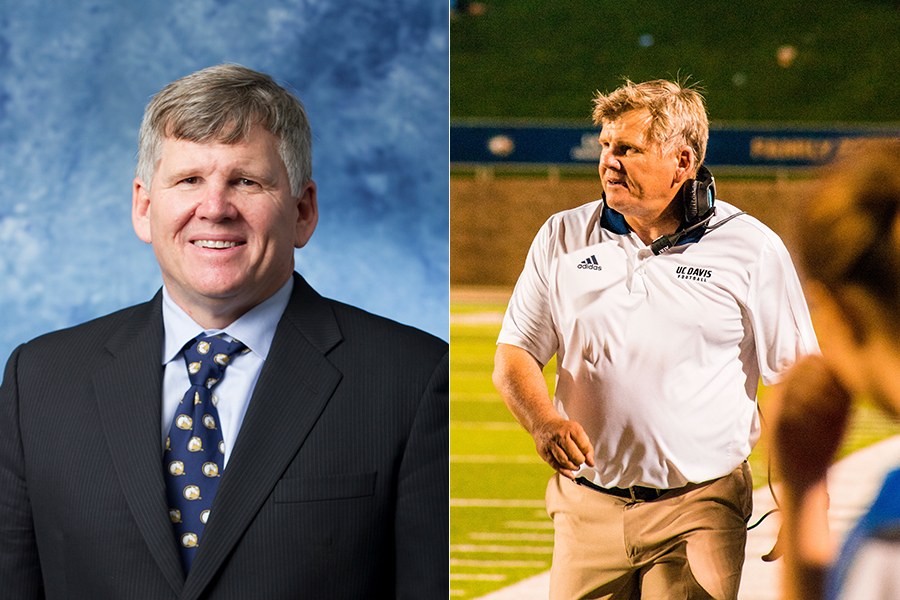
MARK HONBO / UC DAVIS ATHLETICS COMMUNICATIONS (left), NICHOLAS CHAN / AGGIE (right)

How coach Dan Hawkins is reinvigorating Aggie football

You’ve probably heard already, but a new era of UC Davis football is unfolding. The Aggies are competing this season under the leadership of head coach Dan Hawkins, who was hired following the completion of the 2016 football season. After six straight losing campaigns, the UC Davis football program desperately needed something to change for it to veer from the unsuccessful course it had been charting. Now, with the first half of the 2017 season nearly complete, the program seems to have found a new captain who is capable of steering the ship in the right direction.

The Aggies currently sport a .600 record through their first five contests — three of which were on the road — and have already matched last season’s win total of three. No matter the result, the team’s style of play with Hawkins influence is gutsy and entertaining. The Aggies play an up-tempo, pass-heavy attack, coupled with an aggressive defense, that has resulted in some impressive statistics and solid performances against big-time teams. So far this year, UC Davis averages one-and-a-half sacks, 343.6 yards passing, 469.4 yards of total offense and two fourth down conversion attempts per game. Hawkins knows the value of having the Aggies play what he coins as a “visually stimulating” brand of football. Moving the ball, making plays and scoring points not only gives this team a better chance at winning ball games, but also serves as entertainment, drawing much-needed attention from a UC Davis fan-base that has had little to cheer for in recent years.

But the impressive numbers and flashy game-play are still only a small part of what a coach like Hawkins brings to the table for a collegiate program. Hawkins is a well-spoken and well-traveled man who possesses a truly unique, incredibly diverse resumé that highlights his vast wealth of experience when it comes to football and life. He began his college football career at College of the Siskiyous in Weed, Calif. and soon transferred to UC Davis to play ball for legendary coach Jim Sochor. UC Davis became the birthplace of Hawkins’ coaching career, as he worked as an assistant under Sochor for a number of years after his playing days ended. Those years under Sochor still remain an influential part of Hawkins’ life. Sochor’s winning philosophy is ingrained in Hawkins’ mentality as he now coaches the Aggies generations later.

“I always tell people, [UC Davis] is my baptism of excellence,” Hawkins said. “I was on some good teams in high school and in junior college, but there was just some things here [at UC Davis] – some subtle and some not-so-subtle – that you just figure out. If you want a perpetual upward cycle, this is what you do. If you want perpetual excellence, there’s certain things you gotta do.”

Since then, Hawkins has coached at all different levels at programs across the nation and across the globe: high school ball in Sacramento, junior college ball in Weed, his first head coaching gig at Division II Willamette University in Oregon, then on to Boise State and the University of Colorado, Boulder. Hawkins has even coached in the Canadian Football League and overseas in the Austrian Football League, all packed around a two-year broadcasting stint with ESPN. Hawkins’ body of work, spanning over 30 years, gives him a worldly perspective that excellently reflects the eclectic UC Davis student body, including his football team.

“I’m into the Davis culture,” Hawkins said. “I’ve coached in 13 different countries and recognize all the international students — we have a nice international flavor on our team and on our staff, so I get that whole component and I want to be a part of that. I think football, when it’s done well, it’s marketing, it’s promotions, it’s branding. It represents the spirit of your school, the heart of your school. We want to be a vibrant part of [UC Davis], we want to be an interconnector.”

Much like his background, Hawkins possesses a mindset and personality that extends far beyond the realm of football. He recognizes the importance of a program that is “interconnected” with its school’s culture. In Hawkins’ eyes, the success of a college program is not simply measured in wins and losses. For him, it is more than just what occurs on the football field; it is building his players up to be top-tier students, teaching them to be men who work hard the right way and who will one day be “leaders in their industry and communities.” He envisions his program and his players as ambassadors of the UC Davis way of life. Hawkins embraces the high standard that UC Davis holds all of its students to, including its athletes.

“In our entire athletic department, there are 77 different majors,” Hawkins said. “This isn’t a bunch of lunk-heads. [The players on my team] are unbelievable dudes. They’re people you want to support. You come and cheer for those guys because they’re great people, they’re great Aggies.”

Underneath his obvious passion for football and for his team, Hawkins is a kind, charismatic, humorous and humble figure. It is not typical of Hawkins to talk about himself, and when he does it is often only for a brief moment. He has the ultimate trust in those around him, always knowing just how to show his appreciation for his coaching staff and players. He is cognizant of the fact that a successful program requires not just a capable head coach, but an outstanding supporting cast as well. While Hawkins admits that he still has a significant influence over his team, he claims that it is those in his supporting cast who perform the “vital components” on gameday.

“The best leader is the one where everybody says, ‘we could have done it without him,’” Hawkins said. “I really try to be that way. On gameday, if I were the one that missed the bus and didn’t make it to the game, I would probably be missed the least.”

It may sound like a joke, but Hawkins genuinely believes in his team. His players have bought into his humble leadership and, as a result, have come away with a fresh, fighting spirit that is palpable. The gritty effort, the confidence and the enjoyment displayed by this team is unlike previous years — and it all starts with Hawkins’ unrivaled allegiance to Aggie pride.

“One of our guys said, ‘Aggie pride is not just a song, it’s a way of life,’” Hawkins said. “I feel pressure to represent Aggie pride, and Aggie pride is not winning football games, it’s how you’re conducting business, how you’re responding and how you’re acting. I feel a deep responsibility to that, because I believe it is the success model for [the players] in life, it’s the success model for [the players] in football. And I know that seems corny, like it’s some movie, but it’s real to me. That’s the beauty of sport done well, because it’s a laboratory for life.”

Hopefully this re-establishment of the Aggie pride tradition will breed success, and ultimately culminate in motivated student-athletes, improved recruiting and a brighter future for this program. With four of the team’s last seven games at home, including a two game homestand,with North Dakota and Eastern Washington, UC Davis students will have plenty of opportunities to show their Aggie pride in person and to witness first-hand the new football culture that Hawkins is building.

“We need [the students’] energy and their emotion and their flavor to this thing,” Hawkins said. “Although it was in the dinosaur days, when we played at [Toomey Field] and we played big games, the students would come in there and just be crazy. It was awesome. It was a great environment, and [the students] add a lot to it. Hopefully we can get the students out here and get them engaged.”

This is a hungry, talented, and focused Aggie team that, despite two early losses to tough opponents, has the potential to finish out this season near the top of the conference. So roll through in numbers, Aggies; you won’t want to miss.


Written by: Dominic Faria — sports@theaggie.org

Alcohol amnesty policy a step in right direction

HANNAH LEE / AGGIE

UC Davis grants conditional immunity to students in drug, alcohol emergencies  

UC Davis recently became the third UC campus to enact an amnesty policy for its students.  Deemed the “good Samaritan policy,” amnesty grants an official pardon, or immunity, for student drinking and drug use in the face of emergency medical situations.  The policy went into effect on Sept. 25, the first day of Fall Quarter.

The academic records of students who are involved in a drug or alcohol incident resulting in a medical emergency will remain untarnished, although those students may be required to enroll in an educational course about the impacts of substance abuse.

Immunity can only be granted once every two years and ceases to apply if the incident involves assault or violates the Student Conduct Code in another critical way.

Given that a tainted educational record is a central source of anxiety for students, removing that disciplinary action encourages students to dial 911 without fear of repercussions.  

While the Editorial Board applauds the university for its efforts, we are concerned that the one-call limit will discourage students from making multiple calls.  Students should always feel empowered to call for help.  

The beginning of the school year is notorious as a season of partying and reckless behavior. It’s in every university’s best interest to address that underage drinking is inevitable and can result in dire medical emergencies.  

UC Davis should unequivocally prioritize students’ health and safety over imposing punitive measures that would serve to deter students from helping someone in need.   

To avoid preventable deaths due to substance abuse, universities must allow easy and unrestricted access to medical help that is free from consequences.  By joining the list of universities who have embraced the amnesty protocol, UC Davis has taken a step in the right direction. We hope this will serve as a model for other universities.

The Editorial Board strongly suggests to students that if they are going to drink, they should learn their alcohol tolerances, always pour their own drinks and drink in a safe environment with people they trust.  If you witness someone who is unconscious or needs medical attention, be an active bystander and call for help immediately.  In other words, be a friend to a fellow Aggie in need.


Written By: The Editorial Board

Write On!

LAURA LONG / AGGIE

The Annual Creative Writing Faculty Reading Night

Every year, the Creative Writing Faculty honors writers with their annual reading. Known for wowing the crowd and always starting a conversation, opening night is always a memorable event.

“Opening night is one of my favorite events of the year,” said Pam Houston, a professor in the English Department. “All the students are back and ready to write, [and] the new crop of graduate students are getting settled in Davis. It is a time to showcase exactly how eclectic our writing faculty is — one of our strengths.”

For those considering continuing their studies in creative writing, the event provides students with an opportunity to hear from the department staff and even to make professional connections.

“[This annual reading] allow[s] students to get a sense of who they might want to study with,” said Joe Wenderoth, a professor in the English Department.

The reading both kicks off the school year and opens up a larger community for creative writers.

“It’s a really fun gathering of community,” said Jacinda Townsend, an assistant professor in the English Department. “Opening night is a big celebration of community — a celebration of the creative writing community.”

When asked how he became interested in writing, Wenderoth explained his introduction as a “solitary pursuit.”

“Like a great many children, I fell in love with certain things and people, and then discovered that they were all going to be lost,” Wenderoth said. “A staggering discovery.  Staggering, one reaches for something to hold oneself up.”

Writing is Wenderoth’s anchor; Houston says writing is the way she processes the world.

[Writing] is the way I […] appreciate the physical world around me as well as the way I learn how to be a more complete and useful human being,” Houston said.

However, this annual reading is not only for those who are interested in becoming creative writers.

“Aside from it being a really fun display of what we do as artists, poets and writers,” Townsend said. “If you’re not part of the community, there’s tons of entertainment. There are such brilliant writers.”

The Oct. 4 event, held in the arboretum, included works and readings from Pam Houston, Jacinda Townsend, Joe Wenderoth, Greg Glazner and Joshua Clover.


Written by: Akaylah Ellison — arts@theaggie.org

Perspective in Politics: Does identity play too much of a role?

JEREMY DANG / AGGIE

Identity politics can often pressure people to adopt assigned beliefs

With recent political developments, identity politics play a large role in how the public interprets and discusses key issues. Regular people, not just politicians, have categories that they believe they belong in — just as they might list credentials and skills for a job interview. In the United States in particular, we see various identities cited as determining a person’s core values and political positions. If a person defines themselves as poor and feels threatened by police because they purportedly target people by their national origin or skin color, then it’s easy to determine what that person’s views on other issues are. Or at least that’s what we think and what we often assume of other people. We assume how one identifies themselves will determine much of how they think, feel or act.

The main issue with this strain of identity politics is that it influences how people see themselves and puts them in a position where they must conform to what is expected for that identity group. The clearest example is the social pressure for minorities to vote Democratic in any and all forms and that the Republican Party is full of racist, sexist, bigoted homophobes. This pressure makes it harder for a person — especially a minority — in a place like Davis to even identify as supportive of the president or in favor of the Proposition 8 ban on gay marriage since they’ll likely face severe backlash, scorn and utter condemnation. This is because American society doesn’t take into account many factors that may influence what a person believes in politics and often judges people based on simplified expectations of what that person probably identifies as. Minorities in the United States hold diverse political views on topics like marriage and drugs, but overarching societal pressure pushes for at least a hollow commitment to progressive politics.

The common narrative in this country is that people who are not white often suffer common injustices that can be countered through unity among races. That is why we hear of cases in which people like George Takei argue that Japanese internment during World War II and the current Trump travel bans are reminiscent of the same evil and that we must all stand to fight issues like racism, bigotry and Islamophobia. But, considering the positions of Asians in the United States, many are at a halfway point between being classified as an oppressed minority and people who hold just as many advantages as their white counterparts. Asians are placed in an “us versus them” situation — and whether they act or remain silent, the resulting criticisms range from “white supremacy apologist” to “social justice warrior.” Simplified notions of advantages and disadvantages for Asians show the uninformed nature of the general public. The situation for Asians in the United States varies, but that obviously doesn’t sound like as clear of a narrative as people want to preach.

Although not picking on anyone in particular, Asians in America are often expected to also adopt a pan-Asian identity, to be united with other Asians and fight against injustice together. Identity politics lump people into the category of “Asian,” an all-Asian identity that pervades the United States and the rest of the West. If you grew up with other Asians, there’s often a social pressure for Asians to band together due to perceived similarities in beliefs and physical characteristics, in direct contrast to non-Asians and other minorities.  

In reality, there are plenty of divisions within the Asian community that do not just exist because of ethnic or national differences, but also due to linguistic or cultural distinctions. Pan-Asian unity is not necessarily a façade, but its pervasiveness in the West is a successful attempt at socially engineering a sense of brotherhood among often culturally divergent Asian peoples. Even so, it’s definitely difficult to tell some hardcore Chinese nationalists that the Japanese are fellow Asian friends who face similar disadvantages in the United States when the memory of Japanese atrocities on Chinese civilians during World War II remains strong in political discourse in China and the diaspora.

Having all of that in mind, we find that identity politics affects not just governmental decision-making, but everyday life. Whether people like it or not, identity politics often reinforces the stereotypes for particular identities. People who hold certain identities are expected to believe certain things — or else people expect something is off-kilter. People naturally seek the truth, and the truth often doesn’t require the sentence starter “As a ______, I believe ______.” The right answers are not always the ones prescribed for you based on your identity, but the ones that stem from your own individual conclusions.


Written by: Justin Chau — jtchau@ucdavis.edu

Disclaimer: The views and opinions expressed by individual columnists belong to the columnists alone and do not necessarily indicate the views and opinions held by The California Aggie.

UC system launches mentorship effort for first generation students

JEREMY DANG / AGGIE

First generation students make up 42 percent of entire UC undergraduate population

On Aug. 23, the University of California announced that all ten of the UC campuses will participate in a campus-wide campaign to pair first-generation students with first-generation faculty members who will serve as mentors. The universities will also provide these students with increased access to valuable resources to help them succeed in college.

According to a statement released by UCOP, around 45 percent of incoming California freshmen will make their mark as the first in their families to pursue a degree from a four-year university. Additionally, across the UC system, first-generation students make up around 42 percent of the entire UC undergraduate population.

“As a first generation student, […] my first year of college was challenging and it continues to be,” said Monserrat Rodriguez Ortiz, a second-year theatre and dance major. “I feel that part of this was due to the lack of support that us first-generation students receive. From personal experience, I know that oftentimes I wish I had someone to talk to and express my concerns or even just share the hardships that I was undergoing.”

To address the concerns that Rodriguez Ortiz and others may share, around 900 first-generation faculty members across the ten campuses have signed up to assist with the effort and serve as mentors. During the first week of classes, the staff members will wear identifiable T-shirts and pins showing that they are the first in their families to graduate from college. These new efforts will also expand upon programs already in existence at each campus –– providing counseling, advising and assistance as well as networking opportunities to first-generation students.

“It’s great that UC Davis is providing extra support for first-generation college students with much-needed counseling,” said Brian Trat, a fourth-year chemical engineering major. “If these students are anything like me, then we come from a low-income family where we are the only competent English speaker. I had to learn to navigate my financial aid situation all by myself. Taking out student loans and figuring out long-term repayment plans was something I wished I had help with as a financially illiterate freshman.”

To start off the mentoring and outreach effort, the UC published a new report, “First-Generation Student Success at the University of California.” The report examines how the UC system plans to help first-generation students, including goals of outreach and preparation for college as early as middle and high school. It also details the level of support these students receive on their respective UC campuses.

The UC also launched a website, firstgen.universityofcalifornia.edu, to assist both “current and prospective first-generation UC students.”

“Educating first-generation students is a big part of what this university is about,” said UC President Janet Napolitano in the UCOP statement. “When faculty members identify themselves as mentors who have experienced many of the same circumstances and challenges, it creates an environment where students are more comfortable seeking guidance.”

The UC system currently enrolls more first-generation students than similar university systems nationwide. According to the UCOP statement, 81 percent of UC first-generation students “graduate within six years,” which is much higher than the national average of only 60 percent of first-generation students who graduate within six years at other universities.

“Being in a program that connects me to [people] that have gone through my same struggle makes all of the unfamiliar difficulties ahead of me seem a little less daunting” said second-year mechanical engineering and aerospace science engineering double major Dominic Phillips. “Ultimately, I’m attending the best university for me and I’m incredibly grateful for that.”

Written by: Clara Zhao – campus@theaggie.org

Humor: UC Davis now No. 1 in Cabbage Patch agriculture

WILLIAM MCKEEHAN [(CC BY-SA 2.0)] / FLICKR
The Aggies produce the freshest babies in the game

UC Davis is no stranger to agricultural success: it has killed it with olive oil, saved the tomato industry and continued to make amazing wine. However, it has long been striving to win the title of “No. 1 Cabbage Patch in the Lands.” Finally, with this year’s summer harvest, the university did it: UC Davis has the freshest babies in the game.

“When I popped the first baby out of the soil, I knew we had a good bunch,”  said

second-year Jimmy Pops. “The big cheeks, the yarn hair and the haunting grin were all there. We had babies of every variety. We also had one old man, but that’s what happens when Paul doesn’t fertilize properly.”

Boxes on boxes of babies sit out in the fields, waiting to be sent across the country to consumers everywhere. Cabbage Patch Babies are a great way to tell someone that you’re thinking about them or wanting them to feel like they have a haunted doll in their home. Bulk orders of Cabbage Patch Kids can be found at Costco, but one’s always a tad banged up.

“I only get my babies from the Farmers Market,” said Nat Valley, a local granola enthusiast. “Sure, they wilt sooner and they’re a lot smaller, but that’s what the planet is supposed to be full of! GMO-free babies! Get it through your head, corporate America!”

Unfortunately, with every crop of amazing babies, there are always a few duds. Students have been sifting through the supplies, pulling out some real heads of cabbage — a true disappointment. Wilted Cabbage Patch Babies are sold, but all of them look like older Michael Jacksons and seldom do well in the harsh baby market of 2017.

Gary May did the ceremonial honors of plucking the first baby from the ground.

“It is my honor to be here at UC Davis,” May said. “I hope to one day find this Cabbage Patch Baby protesting in the quad, like any born and bred UC Davis baby is destined to do.”

The baby was named Deborah Brittany and now has the honor to haunt one lucky math professor every night from the corner of his room. We can only hope that next year’s crop of babies will be even fresher.


Written by: Olivia Luchini — ocluchini@ucdavis.edu

(This article is humor and/or satire, and its content is purely fictional. The story and the names of “sources” are fictionalized.)

Ketogenic Diet Increases Life Longevity

CHRISTIE NEO / AGGIE

Study at UC Davis School of Veterinary Medicine finds ketogenic diet increases life expectancy

A recent study by the UC Davis School of Veterinary Medicine shows that a high fat, low carb diet, more commonly known as the ketogenic diet, increases life expectancy and encourages healthy aging by improving physical characteristics such as muscle endurance.

“My lab’s main research has been aging and the impact diet has on aging,”  said Jon Ramsay, a UC Davis professor in the Department of Molecular Biosciences.

While Ramsay was conducting research on calorie restriction, he noticed that mice would eat a high carb diet where the carbohydrates would later be converted to lipids, which is what the mice would be living on for the rest of the day.

“We had this question of: is that change in metabolism having some impact on aging? Is there a way we could test that?” Ramsay said.

Zeyu Zhang, a graduate student researcher in Ramsay’s lab, performed behavioral tests on the mice.

“We tested on muscle performance and cognitive function,” Zhang said.

For cognitive function, Zhang used a process called the Novel Object Recognition Test to evaluate recognition memory in rodents.

While Ramsay wasn’t shocked by the results, what surprised him was the number of benefits besides the lifespan increase — in every physiological measure, the mice on the ketogenic diet seemed to do better.

Professor Craig Warden from the Department of Neurobiology, Physiology and Behavior affirmed that there was nothing that surprised him.

“The high quality randomized control trials in humans have already shown many health changes that are positive rather than negative for people eating ketogenic diets,” Warden said.

In the future, Ramsay plans to do more research in order to find less restrictive approaches that can induce periods of ketosis and whether or not those diets will have a benefit on longevity. Ramsay hopes to make the ketogenic diet easier to follow for humans.


Written by: Kriti Varghese — science@theaggie.org

October Event Calendar

JERO REAL / AGGIE FILE

What to look forward to in the coming month

Hillary Rodham Clinton: Live, Monday, Oct. 9

Where? Mondavi Center, Jackson Hall

When? 7 p.m.

What is it? As part of her nationwide book tour, former secretary of state Hillary Rodham Clinton will be visiting the UC Davis campus to talk about her book, What Happened. The book details Clinton’s devastating loss to President Donald Trump in the 2016 presidential election. In the wake of the current political climate, don’t miss the chance to hear about Clinton’s take on her journey throughout the campaign. With limited availability, tickets are for sale at the Hillary Clinton Book Tour’s website.


Disney’s Aladdin, Jr., Friday, Oct. 6 to Sunday, Oct. 8

Where? Davis Musical Theatre Company

When? 2 p.m. and 7 p.m.

What is it? Experience Disney’s classic tale of Princess Jasmine and Aladdin, as Aladdin uses the power of a magical genie to win the heart of the beautiful princess. Put on by the Davis Musical Theatre Company, Aladdin, Jr. features a cast of Davis’ youngest and most talented performers. Find more information on the Davis Musical Theatre Company’s website.


TASTE 2017, Saturday, Oct. 21

Where? Robert Mondavi Institute for Wine & Food Science

When? 4:30 p.m.

What is it? Calling all wine and cheese connoisseurs, join the Mondavi Center at their annual fundraising event, TASTE 2017, for a night of live music, art and, of course, wine. The event will feature a vast selection of food and drinks from local wineries and breweries. Tickets are $35 general admission and $25 for UC Davis students over the age of 21. For more information, visit the event page on the Mondavi Center’s website.


Hudson, Saturday, Oct. 21

Where? Mondavi Center

When? 8 to 10 p.m.

What is it? Following a delicious and savory experience at TASTE 2017, enjoy the rest of the evening with a performance at the Mondavi Center by Hudson. From the Hudson River Valley, this group of talented musicians draws influence from artists such as Bob Dylan, Joni Mitchell and Jimi Hendrix. For more information, visit the Mondavi Center’s website.


Dia De Los Muertos, Sunday, Oct. 22

Where? Davis Cemetery

When? 10 a.m. to 3:30 p.m.

What is it? Prior to the actual holiday (which takes place from Oct. 31 to Nov. 2), the Davis community will gather together to celebrate the Mexican tradition of Dia de los Muertos, or “Day of the Dead.” Dia de los Muertos is a time for families to honor their ancestors, as they pray for their loved ones to continue on a positive spiritual journey in the afterlife. The early celebration will feature a variety of performers and artists, in addition to an altar of remembrance available for public contribution. More information can be found on the Davis Cemetery’s website.


Written by: Sydney Odman — arts@theaggie.org


Davis Beer Week 2017

CAITLYN SAMPLEY / AGGIE

With greater support, Davis Beer Week is taking off

Four years ago, de Vere’s Irish Pub and Sudwerk Brewing Co. joined forces to create a Beer Week in the city of Davis. Given the city and the university’s background in agriculture and food science, it’s surprising that a Beer Week has only recently been established. Henry de Vere White, the owner and namesake of de Vere’s Irish pub, is making up for lost time by pushing the Beer Week to new heights, even in its infancy.

“Up to this point, it’s just been Sudwerk and my family covering the cost of it all,” de Vere White said. “Now Davis Beer Week has moved under CHEF, where we can help promote it, help it grow and get sponsors.”

Chefs Harvesting Educational Foundation (CHEF) makes all the difference in this year’s festivities. As a non profit 501(c)(3), CHEF utilizes the support of local Sacramento and Davis foodies, most notably Josh Nelson of The Kitchen and Selland Family restaurants — all while focusing on the farm-to-table movement.

“The idea is that we want to generate events and support the farm-to-fork movement throughout our region,” de Vere White said.

In the past, de Vere White was unable to attain any support for the Davis Beer Week. Now, CHEF is stimulating immediate growth by unifying the Davis Beer Week organizers and the restaurateurs with beer aficionados in downtown Davis.

This year, de Vere White and his CHEF and Beer Week partners are using their newfound platform to raise money for a potential scholarship for the UC Davis brewing school.

“We give back to brewers by helping future brewers” de Vere White said.

One of the highlights of Beer Week is a distinctive flight of beers that de Vere’s Irish Pub has put together and will sell all week long. The flight consists of four beers that have either been brewed or directly impacted by UC Davis graduates. True to his word, de Vere White will be donating $2 from each $10 flight sold to the UC Davis brewing school scholarship.

Nicholas Drake, a third-year food science major at UC Davis, recognizes the impact of Beer Week and its scholarship fund.

“It’s cool that the community is getting together and giving an opportunity to someone for higher education who might not necessarily have the means,” Drake said. “Our school is really good for this type of thing.”

The Davis Beer Shoppe, owned by Taylor Ramos, is one of the event’s sponsors. Ramos sees the Davis Beer Week as an exciting opportunity for both beer enthusiasts and novices alike.

“It’s a good week for people who are just kind of getting into beer,” Ramos said. “And then for people who are already into beer, there are some pretty extreme events that you won’t find most of the other parts of the year.”

The current schedule consists of the previously mentioned week-long fundraising flight for the UC Davis brew school, as well as tap takeovers and varying events at the likes of Bistro 33, Sudwerk Brewing, The Davis Beer Shoppe and many more locations.

Thanks to the pairing of the eighth annual UC Davis Athletics Brewfest and the Beer Week Blowout, the week will end with a bang. The Brewfest will take place outside of Aggie Stadium from 3 p.m. to 5:30 p.m., leading up to the football game against Eastern Washington.

“Maybe on Monday you really wanted to go out and try this fantastic IPA, but you had to study for a test or maybe you’re a parent and you live in Davis and you just couldn’t go on a Wednesday night,” de Vere White said. “Well, [Davis Beer Week sponsors] are going to showcase all of [their] beers until they’re gone on Saturday.”

Davis Beer Week 2017 began on Monday Oct. 2 and runs until Sunday, Oct. 8. Be sure to check out the Davis Beer Week website for more information concerning events, sponsors and times.

Cheers!


Written by: Rowan O’Connell-Gates — arts@theaggie.org


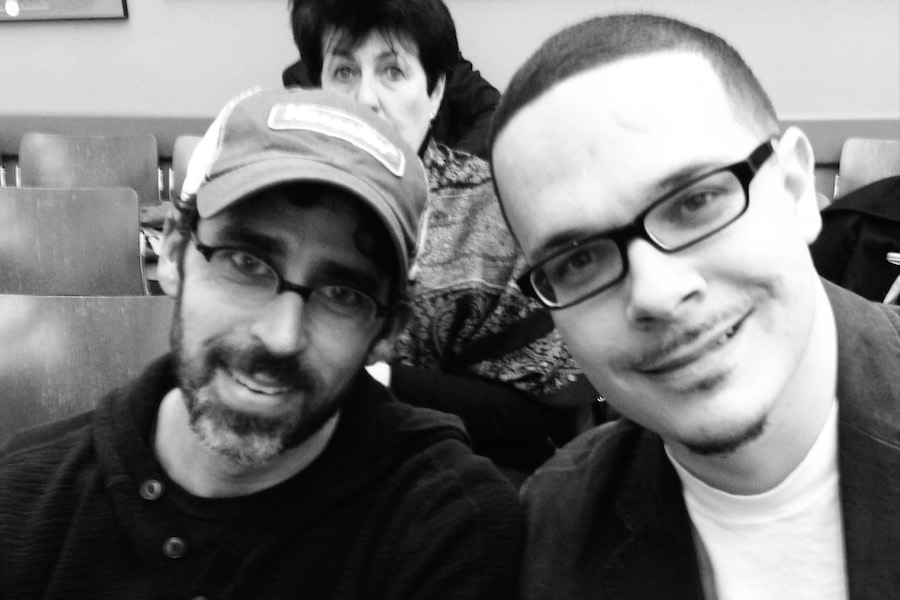
Shaun King to speak at UC Davis on Oct. 18

GEOFF LIVINGSTON [(CC BY-SA 2.0)] / FLICKR
Tickets for event are $5 for students

On Oct. 18, civil rights activist Shaun King will speak at UC Davis’ Main Theatre in Wright Hall, which has 428 seats for students and members of the public. The event, scheduled for 7 p.m., is hosted by the UC Davis Cross Cultural Center.

Shaun King is a writer and activist known for using social media to talk about issues relating to social justice, including civil rights, police brutality and racial discrimination. He is also the senior justice writer for the New York Daily News and a commentator for the YouTube commentary program “The Young Turks.”

“Here I’ll be breaking down the root causes of systemic injustice in America and what we can do to affect change,” King posted on the event’s Facebook page.

King’s speaking event at UC Davis is titled “The New Civil Rights Movement.”

King has a large social media presence, which includes over 1.6 million followers on his Facebook page and 810,000 followers on his Twitter account.

As part of his speaking tour, King will be stopping at several universities, including Stockton University, the University of Chicago, Penn State and the University of Massachusetts, Boston, among others.  

“King [will discuss] how this generation must come to grips with its own unique challenges,” the Facebook page states. “Instead of wondering who they would be and what they would have done had they been alive in the 1960s Civil Rights Movement, King asks his audience to see their present place in the modern movement and what they can do for a more just world.”

Tickets are available online and at the Aggie Stadium ticket office beginning Sept. 25. The price for UC Davis students is $5, while the price for a general admission ticket is $10.

“I think Shaun represents a strong social justice focus,” said Bruce Smail, the director of the Cross Cultural Center. “He is addressing issues and concerns that impact many communities of color.”


Written by: Clara Zhao –– campus@theaggie.org

Humor: Climate change — Hoax, voodoo magic or both?

IAN D. KEATING [(CC BY 2.0)] / FLICKR
The Aggie asks the important questions about global warming

There has recently been an abundance of natural disasters across America, prompting the question: Could it be possible that climate change actually exists? Hard to say. While it’s so easy to call these unprecedented and clearly warm weather-driven patterns the result of climate change, The Aggie remains unconvinced that so-called “climate change” has anything to do with these literal climate changes.


In order to shut down skeptics, The Aggie has heavily researched the topic and now has some questions that it’d like climate change believers to answer.

For one thing, if climate change is real, how come you still need to put a blanket on when you blast the air conditioning in your apartment in 110-degree weather? It just doesn’t add up. If the planet were getting any warmer, we obviously wouldn’t need a blanket inside the comfort of our heavily air-conditioned homes. Better luck next time, skeptics.

Secondly, people are calling Hurricane Harvey and Irma “unprecedented,” but what they fail to realize is that a hurricane has never been our president. So, we don’t really get what that’s all about.

Lastly, if climate change were actually real, then wouldn’t the weather become so hot that every bit of water would dry up? So if climate change was really a thing, floods wouldn’t be possible.

As you can tell from our extensive research, we know what we’re talking about here at The Aggie when it comes to climate change. We have one message for skeptics who still believe in the voodoo magic that is climate change: Do your research next time.


Written by: Lara Loptman — lrloptman@ucdavis.edu

Putting an end to mental health stigma

MEENA RUGH / AGGIE

Both those with and without mental illness must feel comfortable talking about it

Mental health stigma is primarily composed of two sides: the surrounding society and the person who is experiencing the illness. On society’s side, people’s attitudes are characterized by prejudiced behavior and discrimination against those who have mental health problems. The person who’s struggling with their mental health holds a stigma about themselves that’s constructed of shame and embarrassment. This self-stigma forms by going through an illness that no one can actually see. People who are unfamiliar with symptoms of mental illnesses can overlook them and view a person who’s really struggling as someone who’s simply not having a good day. Mental illness, however, encompasses so much more than meets the eye. The symptoms and level of severity also vary among individual experiences.

According to the National Alliance on Mental Health (NAMI), one in four young adults between the ages of 18 and 24 has a diagnosable mental illness. Those who experience a mental illness feel ashamed to openly talk about it or to ask for help because it has been deemed personal and a weakness. This stigma develops from the people on the outside not having sufficient knowledge on what it means to have a mental illness. However, this is also not something for which a person should be judged. Mental illnesses are shamed in society, shoved behind a closed door and unaddressed. The stigma of this topic causes it to be avoided in discussion — yet it should be at the top of the list in importance. With this in mind, it’s important to know that it’s possible to end the stigma.

We must, first of all, realize that a mental illness is exactly what it sounds like: an illness. Just because the symptoms are not visible to the eye does not devalue its need to be discussed. There are ways to take notice of symptoms, but they require close attention. If you notice unusual patterns in a friend’s behavior, reach out to them and ask how they’re doing. Due to stigma, many people don’t feel comfortable reaching out for help and sometimes hope that others will take notice of their behavior. When trying to help from the outside, it’s important to remember to not disregard how someone says they’re feeling. Remember to listen closely, not be quick to judge and ask questions with proper intention. The only way we gain knowledge about anything is asking questions. Stigma causes us to be afraid to discuss the subject; so, when talking to someone about it, realize that both sides are hesitant to speak up. People on the outside don’t want to overstep boundaries, while the person going through the experience feels ashamed for having the illness in the first place. It takes patience and close listening because it’s a sensitive topic.

For the people struggling with a mental illness, don’t be afraid to seek help. There’s no need to feel embarrassed or afraid that someone will judge you based on what you’re experiencing. Start small and confide in a friend you trust, and inform them so they may learn and lead you to useful resources. When you’re ready or feel the need for professional help, you can take advantage of the resources waiting for you.

As college students, it’s possible that the enormous amount of stress on our shoulders has a heavy, negative effect on our health. This is a topic that deserves to be addressed and no longer avoided. We’re an age group that’s highly affected by mental instability, so we must be support each other. We’ll each have our own unique experiences in college, but we’re also all here for the same reason. It’s important for us to help each other so that we can make it to the finish line together. Become informed, become a resource and aim to put an end to mental health stigma.


Written by: Jolena Pacheco — mspacheco@ucdavis.edu

Before Gary May, an unsuccessful attempt was made at a “student-built” chancellor

JULIE TORRES / AGGIE


By Julie Torres

(This article is humor and/or satire, and its content is purely fictional. The story and the names of “sources” are fictionalized.)