
57.9 F
Davis

Davis, California

Monday, December 22, 2025
Home Blog Page 606

2016-17 Goodbye Editorial

HANNAH LEE / AGGIE

The Editorial Board bids farewell

Scott Dresser, Editor-in-Chief

By Eli Flesch

Let’s talk about Scott Dresser. But let’s keep it brief. We don’t want this to go to his head. We don’t want him to think that bringing the Aggie back to print is that much of an accomplishment. Print is dead, Scott! Or that skyrocketing Aggie readership is all that important. I remember when the Aggie was a “cult-classic” — not this corporate behemoth, this multimedia juggernaut. Yes, Scott guaranteed this paper’s solvency for years to come. But not decades! Not centuries!

There are some good things to say about Scott. He’s tall. A former basketball player.

Also, he’s handsome, and nice and gregarious — but not at the expense of being level-headed and a truly incredible friend. He’s dedicated and strong-willed. What an asshole…

Boy, will I miss Scott Dresser. Did I mention he was editor-in-chief? My fearless boss.

Too sentimental? Maybe. Maybe too sentimental. It’s not like the guy died. He’s still here, still dressing like a dad on a chilly boat. So let’s wrap this up. Thank you, Scott, for everything.


Ellie Dierking, Managing Editor

By Sam Solomon

Ellie is a British person with a lot on her plate and that is all you really need to know about her. But if you want to know more, she is also an okay managing editor and a decent friend. 8.3/10. The best thing about Ellie, actually, is her dad, a jovial and sophisticated gentleman, whom I met on a single occasion, and who brightens every room he walks into. All silliness aside, Ellie is a great person with whom I would go on adventures… if she ever invited me. She is the equivalent of Andrew Garfield because of her British-ness, but also because she’s secretly Spiderman. Ellie is the type of person to ask you if you need anything at least four times in the same hour; she mostly does this at parties and she’s mostly asking if you need any more alcohol, but still. Her hospitality is off the charts. Her blonde hair is like a halo of wispy light because she’s a saint. She returns to London next year for school, and Ellie, dear, you will be sorely missed. Throughout all our time together and the little journeys we have had, you always managed to make things slightly less depressing. #WCW.


Alyssa Vandenberg, Campus Editor

By Emilie DeFazio

With an iTunes chock-full of 2000s throwback singles and a heart of pure gold, no one runs Campus News better than our favorite guest humorist Alyssa Vandenberg. Four years of commitment to the desk that showcases the best ASUCD drama was not enough, as Alyssa has spent her final year of her undergraduate career with her finger on the pulse and her eye on the sky — no question of “Are we covering this protest?” was left without an “I have a writer on it!” in response (If you doubt this, check the managing staff group chats).

If we could only grant Alyssa one thing as she sets off for better and brighter things — which include, unfortunately, becoming one of the best English teachers a Sunnyvale high school will find — it would be to let her have at least one oxford comma in a print issue of The Aggie by the time she graduates. But, alas, though she’s got spunk, intellect and great baking skills, this newspaper would rather lose funding, be ridiculed by The Tab and be set aflame than go against AP style. Sad.


Sam Solomon, City Editor

By Ariel Robbins

It was the highest of honors to be City’s only reader (besides copy). Just kidding. I never read City. JUST KIDDING! Remember that one really interesting City article? Me neither. Okay, but for real my sweet, sweet, tender, succulent Sam, no one could have brought out the best in The Big D (Davis) like you did. Your dedication was as boundless as the number of shoes you own and your content, much like your hair color, kept everyone on their toes and excited to see what would come next. I also know I speak for everyone when I say thank you for shouldering the burden of Police Logs — you were the life and soul of that tradition as old as time itself. Above all, Sam, I really just wish I could’ve sat closer to you in Ed Board, but if I’m honest with myself… it never would have been close enough. Love you, Smam.


Eli Flesch, Opinion Editor

By Scott Dresser

Eli, thank you for keeping editorial board meetings engaging, fun and substantive. Even though your fashion sense — namely your brown shoes with white socks combination — was often pitiful, your thoughtful, critical and insightful writing inspired campus-wide dialogue about various issues, and you developed an extensive staff of witty, sharp and versatile columnists. With you on staff, there were few boring days, both in the office and in the public sphere (for better or for worse). Did you make a few of my days more difficult than they needed to be? Oh yes, yes you did. But you made so many more of my days at The Aggie fun and lively, and your wit and perspective on world events and on life made my time in the office so incredibly enjoyable. We all look forward to following your future in the journalism world, and thank you for your invaluable insight over the past year; we never would have come up with any good headline/kicker combinations without you. (Enjoy that semicolon.) You are an incredible writer, a diligent editor and and an even better friend. Thank you for memories that will last a lifetime.


Emilie DeFazio, Features Editor

By Alyssa Vandenberg

I first met Emilie during an English class Winter Quarter of freshman year. We did not interact again until this year, when we met again at The Aggie’s editor training at the start of Fall Quarter. I would have never guessed freshman year that I would end up becoming such good friends with this beautiful, intelligent individual. In addition to being incredibly witty, Emilie is the heart and soul behind this year’s Best of Davis issue of The Aggie, a fantastic storyteller and a Gilmore Girls fanatic. She is also always willing to overthink things with me when we probably should be working on homework, which I greatly appreciate. I am honored to make up half of the best corner of The Aggie with her (shoutout to the campus news, features, sports and opinion desks). Emilie, I can’t wait to see what amazing things you do with your life. If anyone wants to get to know this wonderful person, catch us at the Jason Mraz concert this summer, where Emilie will be crying tears of joy!


Amanda Ong, Arts and Culture Editor

By Bryan Sykes

Amanda has spent the past two years as Arts and Culture Editor for The Aggie, and under her direction the desk has produced wide-ranging and innovative content.  As an editor at The Aggie, a PEACE trainer at the Cross Cultural Center and a peer advisor for the College of Letters and Science, Amanda gives wholeheartedly to each community she is part of, bringing a thoughtful and considerate approach to everything she does.

She is compassionate, so funny and such a good friend. Amanda gives heartfelt and candid advice and offers unconditional support regardless of if the advice was heeded. Her passion for The Office and Gilmore Girls runs deep, and her blindingly quick Jeopardy skills are simply breathtaking.

And although Amanda will do an outstanding job as she pursues an English Ph.D. at the University of Wisconsin–Madison, her presence will be deeply missed by all who have had the pleasure and privilege of being her friend.


Bryan Sykes, Sports Editor

By Amanda Ong

The day I first met Bryan Sykes, he came into our managing staff meeting wearing a Death Cab for Cutie shirt. That’s when I knew he had good taste in music. But over the next two years, I’ve discovered so many more things about Bryan: his dedication to The Aggie, his goofy sense of humor, his passion for foosball and his incredible kindness. As sports editor for the past two years, Bryan has led with grace and consideration, always being available to his writers and helping to make the transition from online to print a smooth one. As a member of the editorial board, Bryan has grown tremendously; he is comfortable voicing his opinions while still respecting and listening carefully to other opinions.

Next year, Bryan will lead The Aggie in a new role — editor-in-chief. His experience as sports editor will certainly serve him well, but it is not simply his past experience that makes him ideal for the job. Bryan’s ability to listen and empathize make him a leader that others will open up to. It has been a joy to watch him grow the past two years. Hail to the Chief and to the man we’re so privileged to call our friend.


Ariel Robbins, Science Editor

By Ellie Dierking

If there was a place in the Guinness Book of World Records for most puns used in daily conversation, Ariel Robbins would easily take that title. Ariel splits her time pretty evenly between her two favorite activities: making constant sly digs at our opinion editor, Eli Flesch, and having passionate discussions about flat earth theory with anyone ridiculous enough to engage with her about it. Aside from participating in these two pastimes, she has spent the past year successfully reviving The Aggie’s Science and Technology desk after a two-year hiatus, and bringing you news on the most cutting-edge scientific research happening at UC Davis. Ariel’s dedication, bright spirit and natural ability to make people laugh have brightened the dark and dingy corners of our Lower Freeborn office this year, and it is without a doubt that she will continue to brighten up the lives of those around her wherever she goes next.

 

Last week in Senate

HANNAH LEE / AGGIE

ASUCD Vice President Adilla Jamaludin called the June 1 ASUCD Senate meeting to order at 6:16 p.m.

Numerous senators were not present when the meeting opened. Senators Matthew Yamaguchi and Michael Gofman arrived late to the meeting, while Senators Anastasia Ruttkay and Khadeja Ibrahim did not attend the meeting.

Since certain people who were necessary to complete other agenda items were not present at the beginning of the meeting, the senators deviated from the original agenda and took up legislation. All previously passed legislation had been signed into law. Four new bills regarding dissolving the legislative appeal committee, amending the bylaws, the Whole Earth Festival and a money allocation bill were sent to commissions.

Under old legislation, a bill to realign the 2016-17 budget of the Office of Advocacy and Student Representation was discussed. After discussion, the bill was called into question and Senator Marcos Rodriguez objected to the bill, so the bill was put to a vote. The bill passed 6-0-5, with Rodriguez abstaining.

The second piece of old legislation, one to purchase food and supplies for the “It’s Time to Reclaim Our Bodies” sexual assault prevention event on June 6, 2017 hosted by Ruttkay, was called into question without discussion and passed 7-0-4.

The senate then moved to a presentation from Lincoln40, a proposed housing development on Olive Drive. The representatives of the development brought pizza and drinks for the senators and public. External Affairs Commission Chairperson Sara Williams assured the senators that although the price point of $700 to $900 is high, having more housing in Davis at all will help control rent in other complexes, freeing up cheaper units. The Senate cannot draft legislation supporting this development, but can draft a resolution addressing issues that this development may help alleviate.

Senators then heard a unit report from the Whole Earth Festival. The unit directors reported that there were no major issues except for takedown because there were not enough people to help tear down the festival. They are adding a requirement in job descriptions that members of the unit must help with teardown in the future.

Next was a one and a half hour long presentation from a representative of the UC Student Association (UCSA) on what UCSA is, its responsibilities, various campaigns and lobbying efforts.

Senators then took a recess for 10 minutes. At roll call after the break, Senator Daniel Nagey had left and Senator Simran Grewal came back late.

Confirmations for new members of the Environmental Policy and Planning Commission were then held. Daniel Graves, Amber Medina, Casey Walker, Lauren Murihill, Milo Kahney and Lois Kim were all confirmed without objection. The new chair of the International Undergraduate Student Committee was also confirmed unanimously.

The minutes from the May 25 meeting were approved without objection. Ex-officio reports and elected officer reports were given.

The meeting adjourned at 9:34 p.m.


Written by: Kenton Goldsby — campus@theaggie.org

7th Annual Davis Music Festival

DAVIS MUSIC FESTIVAL / COURTESY

Benefit concert to support Davis School Arts Foundation

This year’s Davis Music Festival — which will run from Friday, June 16 to Sunday, June 18 — happens to coincide with UC Davis spring commencements, so it is a perfect time for students to attend this local music event before leaving for summer break.

“The music festival is a South-by-Southwest-style benefit concert to support the Davis School Arts Foundation and features one venue on Friday, five on Saturday and two on Sunday,” said Danny Tomasello, the festival’s director.

Since not many students are aware of the local bands that exist in town, the event’s main goal is to bring attention to the oft-overlooked Davis music culture. The event is also an opportunity for community members to have a good time while supporting a local cause.

We do have a music scene here, and people should know more about it,” Tomasello said. “Part of the mission of this festival is to showcase our local talents as well as our local venues. We also want to reward our local fans by bringing some bands from the Bay Area and beyond.”

With the growing popularity of large music festivals like Coachella and Outside Lands, people often expect concerts to have larger venues with more artists. In contrast, the Davis Music Festival has not increased the number of performing bands over its lifespan, but rather remains intimate by hosting a small collection of unique, talented musicians.

“We fine-tuned the Davis Music Festival for a better experience as opposed to a bigger experience,” Tomasello said. “This year in particular is the first time the festival coincides with UC Davis commencement, so that will be interesting. Since the festival is usually after school gets out, we don’t have a lot of students attending.”

The event takes place across a variety of downtown locations, such as Sudwerk Brewery, Armadillo Music, Delta of Venus and Odd Fellows Lodge. The festival also includes a variety of musical genres: folk, funk, indie, jazz styles, world music, pop-punk, indie, garage rock and more. As Tomasello mentioned, the festival is not only a fundraiser to support the Davis arts, but also a means of supporting local businesses.

Brian Morgan, one of the organizers for the festival, will also be performing with his band, Sometimes Warren. They will play on the trackside stage, an outdoor venue that will feature five different bands from 5 to 11:30 p.m. on Saturday.

“The festival starts on Friday, and we have a kickoff event at Sudwerk’s dock store,” Morgan said. “I play lead guitar in our band, Sometimes Warren, performing at 7:30 p.m. [Saturday] on trackside [stage]. It’s really cool because the performances are within a short distance from each other, and you can see each one with your wristband.”

Among the performers is UC Davis alumnus Kasra Mirblouk, who graduated in 2016. Mirblouk has previously performed at the festival, and he will be kicking off the festival Friday night.

“It’s really hard to hear about the house shows in Davis, and I think I was fortunate to learn about them in my freshman year because I used to work for the radio station,” Mirblouk said. “I was actually the primary booker for bands out of town, up until I left school. Even to this day I get requests from bands […] the best way to find out about these shows is to get involved in parts of campus that work with the music scene like the radio station. If people want to be aware of what’s going on, there’s always a way to find out.”

Although Davis may not be well known for its music culture, it is full of community members that have a deep admiration for local artistic talent.

“The vibe we get from the festival is an appreciative music audience who are music fans first and foremost,” Tomasello said. “It’s always been a town event for the community and a fundraiser for our local schools’ art foundation. We are a music-loving community, and you might find some of the older residents rocking out that you might not see on a typical Saturday night in downtown.”

The Davis Music Festival is currently looking for volunteers to help out at the door. Two hours of volunteer work with earn you a wristband for full access to all three days of the festival. A wristband will cost $30 for the presale general admission, and a single access pass will cost $15. For more information, go to www.davismusicfest.com.


Written by: Becky Lee — arts@theaggie.org

Humor: Student goes to college, realizes he’s been living in a bubble his whole life

MORGAN TIEU / AGGIE

Yes, an actual bubble

Jonathan Byers, a first-year plant biology major, recently realized that he’s been living in a bubble his entire life. It took coming to college for him to arrive at this life-changing revelation.

Oh yeah, it’s like a real bubble. With a ten-foot circumference.

“No one decided to tell me my entire life that I had a bubble following me around everywhere I went,” said Byers. “I mean, it would have been nice if my friends or family had told me or something, but I guess they were all too polite. It took coming to college for my bubble to pop.”

Indeed, Byers had spent his whole life with a massive bubble floating around his body, following him everywhere. The bubble was totally transparent, as bubbles are. Byers believes that no one telling him about the massive bubble could have had something to do with its transparency — because, you know, it was transparent.

“I suppose that, when you live your whole life with a bubble around you, everyone gets used to it,” Byers said. “So they don’t even think to let you know about the absolutely huge bubble. I guess it takes fresh faces and a new environment to finally know that you’ve been living inside a literal bubble your entire life.”

We asked Byers what he did to remove it.

“We had a big party,” Byers said. “By then everyone had named my bubble Cherry, ‘cause, you know, a bubble is spherical like a cherry. So we got together and had a party to pop my big ol’ Cherry! It‘s nice when all your friends get together and pop your Cherry. And I think popping my Cherry was a life lesson. Sometimes you need friends who are willing to pop your Cherry!”


Written by: Aaron Levins — adlevins@ucdavis.edu


(This article is humor and/or satire, and its content is purely fictional. The story and the names of “sources” are fictionalized.)

Six students win inaugural library undergraduate research prize

ARIEL ROBBINS / AGGIE FILE

Only six out of 29 applicants received the prize

On May 24, six students were presented with the inaugural Norma J. Lang Prize for Undergraduate Information Research. This prize is given to students whose academic research projects make extensive use of library resources.

The 29 applicants were selected by a panel of library experts and faculty. The first prize awards $1,000, the second prize awards $750 and the third prize awards $500.

In the arts, humanities and social sciences category, Brian Wright, a third-year history and English major, received first prize; Funke Aderonmu, a fourth-year international relations and economics major, received second prize and Harley Wong, a fourth-year art history major, received third prize.

In the science, engineering and math category, Elizabeth Chan, a fourth-year biological sciences major, received first prize; Arianna Stokes, a fourth-year evolution, ecology and biodiversity major, received second prize and Brooke Robinson, a fourth-year biological sciences major, received third prize.

The Lang Prize is supported by an estate gift of late UC Davis professor emerita of botany Norma Lang, who taught at the university for almost 30 years.

“The library chose to use part of her donation to honor her legacy by creating an endowment for the prize, which means that funding will be available for the library to award this undergraduate research prize every year in perpetuity,” said Beth Callahan, the Lang Prize chair and the UC Davis Library head of research services, via email.

The prize is in commemoration of Lang’s dedication to her students and appreciation of the research process.

“As Andy Lang, Professor Lang’s nephew and trustee, who worked closely with the library to determine how Professor Lang’s gift would be allocated, said, ‘We wanted the funds to be the right balance between supporting students and supporting research – that felt true to who she was and what she valued,’” Callahan said via email.

According to Callahan, the Lang Prize is a huge opportunity for the undergraduate recipients. Besides recognition as prize winners, this year’s recipients told the Lang Prize team that the prize money will help them with graduate school application fees, publication fees associated with getting their papers published and study abroad costs.

Chan mainly used the library’s databases such as Google Scholar, PubMed, Web of Science, OED, Scopusin and borrowed books for her term paper “All Because of a Cup of Qahwah.”

“I feel very honored to be a recipient of the Lang Prize, especially as a 1st place winner in Science, Engineering, and Math,” Chan said via email. “This prize means a lot to me, as it showed me the importance of undergraduate research, along with the resources undergraduates have at their disposal to carry out their research.”

Aderonmu won second place for her honors thesis titled “A Conflict of Interests: Revisiting Development Assistance Committee Members’ Tied Aid Policy Post 2001.”

“I am very grateful for the support I received from the library as well as my thesis advisors, professors Jeannette Money and Ethan Scheiner from the Political Science department,” Aderonmu said via email. “Lastly, I am thankful to the Lang Family and the selection committee for this prize. It’s not often that undergraduate students receive such a level of recognition for their research and I am truly appreciative of this award and the continuing of Norma J. Lang’s legacy in her passion for students and research.”

Wright utilized the vast amount of books from Shields Library and the exclusive proxy access for online resources and scholarly journals.

“The library’s vast holdings and extensive connections were invaluable for my work, and search databases were intuitive and very accessible for someone so new to the game like myself,” Wright said via email. “I hope to further consult library archivists and specialists in any future research I’m lucky enough to do.”

Wright won first place for his research paper “Southern Whigs, a ‘British Conspiracy,’ and the Annexation of Texas.”

“It’s a great honor to be recognized for scholarly research as an undergraduate,” Wright said via email. “The generosity of the donors and the library has been frankly overwhelming. A prize like this both validates the hard work that I and the fellow winners did and shows that UC Davis and the library seriously value high-level work by undergraduates.”

Callahan believes the Lang prize is important for highlighting the research UC Davis undergraduates are undertaking.

“So often, people associate research with graduate students and faculty,” Callahan said via email. “We believe that the opportunity to do research can also be an important part of the undergraduate experience — and that the research undergrads are doing is just as deserving of recognition.”

Those interested in finding out more about the Lang Prize, how to apply, the winners and their winning papers can go to the library website.


Written by: Yvonne Leong — campus@theaggie.org

Summer concerts galore at Golden 1 Center in Sacramento

JERO REAL / AGGIE FILE

From Bruno Mars to Lady Gaga — there’s something for everyone

This summer at the Sacramento Golden 1 Center, there will be plenty of concerts to attend in order to get your music fix. At this venue alone, there are 15 concerts to choose from. Here are a few suggestions to get those summer vibes flowing.


Bruno Mars 24K Magic World Tour

Bruno Mars is known for his energetic concerts and unforgettable performances. Tickets to his July 18 concert are a little pricey, but he is sure to put on a great show.


Lionel Richie: All The Hits Tour

Lionel Richie and very special guest Mariah Carey will put on a show for the ages. The tour was rescheduled from May 2 to July 22 due to Richie’s knee injury. Be sure to get your tickets, because this is a once-in-a-lifetime event. Make sure your dancing shoes and vocal cords are ready, too.


John Mayer: The Search For Everything World Tour

John Mayer is coming to Sacramento on July 27. He will be accompanied by a full band and will play both solo acoustic and trio sets. There will be lots of John to enjoy (who doesn’t love that?), and tickets are on sale now at reasonable prices.


Ed Sheeran: Divide Tour

Ed Sheeran is on tour with special guest James Blunt, and the pair will inevitably perform crowd favorites. Ed will be performing from his new album, Divide, which will surely melt hearts. This concert will kick off August with a show on the first of the month.


Neil Diamond 50th Anniversary Tour

Rock and Roll Hall of Fame member Neil Diamond will be coming to Sacramento on Aug. 2. The legend himself will put on an incredible show. Diamond fans know this show will be iconic.


Kendrick Lamar: The DAMN. Tour

In addition to Kendrick, this concert will feature opening performances by Y.G. and D.R.A.M. The show will be held on Aug. 13 and is not one to miss. Any fan of his new album DAMN. should be sure to attend.  


Lady Gaga: Joanne World Tour

After her successful album and Super Bowl performance, Gaga is now gracing the world with an international tour and making a stop in Sacramento on Aug. 15. She is known for her killer concerts, so make sure to get tickets for this one. Her show would be a great way to kick off the new school year.


Written by: CaraJoy Kleinrock — arts@theaggie.org

Documentaries: An Artistic Retelling of Mankind’s Stories

AGGIES FOR HUMANITY / COURTESY

Documentary screenings on campus

Documentaries are a form of film art that have long been used to tell the true stories and histories of various people, while nonetheless serving as an artistic expression. In this sense, they form a unique intersection between creativity and awareness of social issues. Students have been utilizing documentary screenings on campus as a means of spreading awareness of issues they are passionate about and mobilizing action toward addressing these issues.

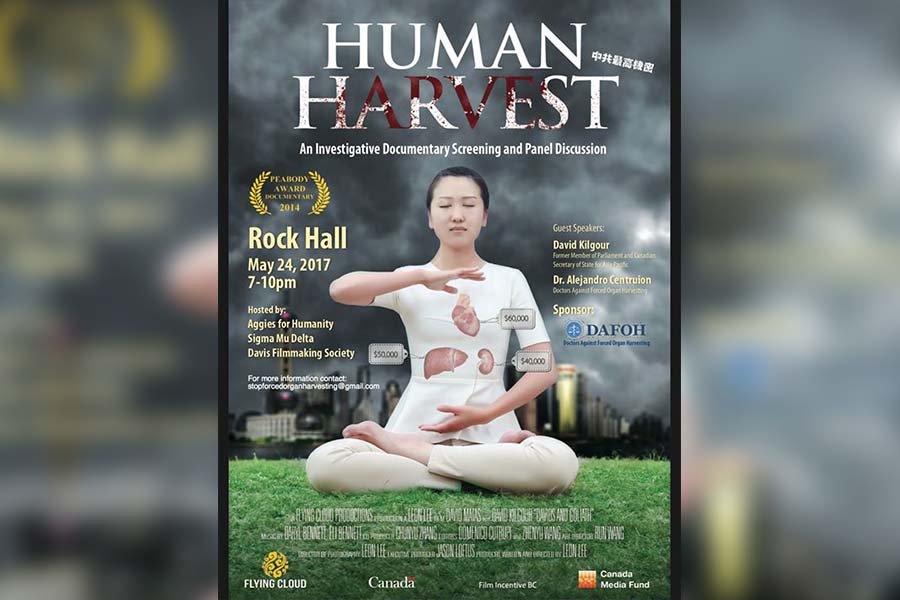
Justin Kaplan, a third-year political science major, has been a part of this documentary culture as president of Aggies For Humanity (AFH). As a part of its work, AFH holds occasional documentary screenings about various issues, and recently held a screening of The Human Harvest, a documentary which explores organ harvesting crimes in China.

“I didn’t know that was an issue,” Kaplan said.

Kaplan appreciates that documentaries often portray an issue from someone else’s perspective. He found that what viewers might believe to be a solution to an issue may not be fully appropriate for the people living in that reality.

Our issue for Aggies For Humanity this year was homelessness,” Kaplan said. “Toward the beginning of the year we did [a screening] about homelessness in San Francisco. It was interesting to see — from the perspective of the homeless people of course — [that] some of the people had the disposition that being homeless wasn’t necessarily a bad thing. It reminded me of some rural Middle Eastern community where a Western nonprofit organization went in and built houses for people, because they didn’t have houses [there]. When they built these homes, the people ended up using them for their livestock. [So] it’s easy to look at someone and say, ‘hey, you don’t have something, obviously my way of life is better’ — but it’s not always that case. It’s important to tackle these issues from others’ perspectives.”

Lily Karim, a first-year biomedical engineering major and a member of the Sexual Assault Awareness and Advocacy Committee , spearheaded a screening of The Hunting Ground in April — Sexual Assault Awareness Month. She chose to hold a documentary screening instead of presentation because she believed it would be a more effective way to communicate complex realities.

“I can’t really tell the stories of sexual assault as well as actual victims and people who are fighting for better treatment towards victims all the time,” Karim said. “I could’ve done a presentation on sexual assault and rape culture on college campuses, but I think that this movie and hearing these testimonies from victims was much more impactful. [And] there’s a lot of documentaries about toxic masculinity and how that plays a role in rape culture and gender norms, [which] really harm the ability to overcome gender-based violence”


Karim also believes there is an educational value in engaging with these first-person  narratives.

“I just [feel] it’s a really good idea to mix our education with supplemental resources such as documentaries,” Karim said, “especially having it in an environment where you have to actively seek out and choose this kind of education. When someone has a lot of passion and seeks out primary sources of information, there’s just something really effective about it. [But] I think that it’s not just the education component to it that we need to consider — it’s also the ability to create an emotional response.”

Anita Yu, a fourth-year political science and English double major and president of the Davis Filmmaking Society, receives many requests for documentary screenings and help with publicity. Most of those who reach out to Yu are passionate about a social issue and want help in spreading awareness.

“I get the sense that a lot of people who do documentary screenings want to inspire change on campus in a very real way,” Yu said. “From the pattern [of requests], it’s not just screening a documentary to say ‘this is a problem,’ they also say ‘this is a problem and we can do something about it.’ That seems to be very much the intention of every documentary screening that I’ve heard about.”

However, Yu complicated the idea of straightforward storytelling by a documentary. Even though the film shares true stories, it is nonetheless framed by a person with their own creativity and ideas. But at the same time, Yu believes that such an artistic expression can sometimes be a more true rendition of one’s story than simply stating facts.

“I do think documentaries are so inspiring,” Yu said. “They’re so probing. They’re like a video essay, but fun to be a part of, fun to consume and learn from. It’s so artful. Just because it’s about true stories, doesn’t mean the very art of the film form is irrelevant. It’s actually really important.”

Whatever their chosen creative outlet may be, Aggies are actively fighting for causes that they are passionate about. Whether it is through concerts for refugees or a night of poetry, these forms of art become the scaffolding upon which social issues can be manifested, talked about and fought for.

“There are plenty of ways to do it,” Kaplan said. “These issues aren’t fun [the creative outlet is good] to try and — not necessarily see the light — but to remain optimistic in these situations that [through] what we are doing, even in small Davis, somehow we are making a difference.”


Written by: Sahiti Vemula — features@theaggie.org

A clear path found only in retrospect

JERO REAL / AGGIE

UC Davis faculty reflect on their transitions out of undergraduate careers

Professor Susan Taber Avila’s first thought after her graduation from UCLA in 1982 with a degree in textile design was a feeling that many students can relate to this spring.

“I kind of panicked,” Avila said. “I enrolled in a typing class. I thought [that] I better learn how to type so I can at least get a job as a secretary.”

With commencement just around the corner, UC Davis students — both those graduating this quarter and those finding themselves simply thinking of “the real world” with an air of desperation — are thinking about, and doubting, what they should do next.

Avila, now the chair of the Design Department, found her way not by deciding immediately what she wanted to do after graduation, but by taking every opportunity she encountered. She spent the first few years after graduation restoring antique textiles, working as a studio assistant, selling handmade belts, scarves and matching vests on Melrose Avenue in Los Angeles and exhibiting her own work.

“At school you’re paying to learn stuff,” Avila said. “The next year out, you’re still learning stuff but you’re not necessarily paying to learn stuff anymore. I think students put too much pressure on getting the perfect job right away, and sometimes the imperfect job is just what you need.”

After moving to Oakland for cheaper studio space, she found a day job at Planned Parenthood and didn’t decide to go back to get her master’s degree until the ‘90s. After graduating from UC Davis with her Master of Fine Arts in textile arts and costume design in 1996, she took the opportunity to teach as an adjunct professor and has been a faculty member of the university ever since.

“It’s sort of a circuitous route that got me here, but I think my own experience has made me keenly aware of students,” Avila said. “I’ve had many a student come to me just crying because they don’t know […] what they’re supposed to be doing. There’s designers out there who didn’t study design, who came to it later in life or by other means. If you have a passion for something, there’s no reason why you can’t shift and do that.”

Encouraging students to take advantage of faculty connections, internships, research and projects that come with a university environment is one of her focuses as department chair, as any kind of experience can lead a student in a direction they had never before considered. But still, the question prevails of how one can get out and meet these opportunities head-on.

“I get that some people worry that they’ll become a Cheez-Its-eating lounge lizard [after graduation], not doing anything — [but] I don’t think so,” said professor of nutrition Liz Applegate. “You have a discipline you developed here at UC Davis and you [will] keep that intact. You got here by being disciplined [and] by being a hard worker. You’re going to still be that way.”

Before becoming a professor of nutrition and the director of the sports nutrition program, Applegate spent her undergraduate and graduate careers taking advantage of opportunities that helped her forge her own way on campus — something she couldn’t predict when she started on a pre-med track as a biochemistry major at UC Davis. Also, if it weren’t for her major professor who told her that she had to improve her writing skills, she would never have written her books, graduate thesis and articles for magazines like Runner’s World.

“I wish I had known [in my undergraduate career] how important writing was for my success,” Applegate said. “Every letter, every word is painful — I’m not comfortable with writing, but I do it all the time. I can’t emphasize enough to students that […] both written and oral communication skills are of the utmost [importance] and I was never told that. The [worker] that is the better communicator is the most successful, in my mind.”

Applegate’s success in her postgraduate career came through dedication and hard work, but not without a price. Applegate described a feeling of self-doubt once she graduated, something anyone embarking on a new chapter can identify with.

“I [had] always felt like I was inadequate, that there’s got to be other people who can do a better job,” Applegate said. “While smarts and intellect is part of your performance, the other part of your performance and your success is being a hard worker, respectful to others, organized [and to] get your work done on time.”

English professor Frances Dolan has found that this feeling of inadequacy unfortunately prevails all through life, and that figuring out one step in a post-graduation career path does not provide a solution — thankfully, this kind of feeling is what grounds even the most impressive graduates.

“Either you have a robust and inaccurate sense of your worth, or you’re most of us,” Dolan said. “Most of us are really haunted by the sense that we’re not smart enough, [and that] we don’t belong here. We all have those feelings.”

Dolan walked to Loyola University in Chicago from her parents’ house all four years of her undergraduate career to study English and classics and immediately pursued a graduate degree in English literature across town at the University of Chicago. Growing up with an Irish-Catholic background, it was out of the norm in her family for her to move to a different neighborhood after graduation. Because of this, Dolan remembered being excited to move on but recognized that she was working on autopilot.

“I worked really hard as a college student and then — boom — there I was in graduate school,” Dolan said. “In some ways I had a very limited scope of action [and]  in many ways it would have been great for me to work or do something else after college. Sometimes I think when I talk to students they want to know if I had this vision of my life, which I completely did not have.”

Despite the immediate transition into graduate school, Dolan’s path didn’t come without some perfectly-timed failures. Dolan spent many summers and school years working in her father’s office, being berated by bosses for her performance as a program assistant in the Newberry Library and even walking around the Weebles department store dressed as Mr. Potato Head — a job that taught her “that I have no dignity.”

“Don’t be afraid to fail — I learned the most in my life from the stuff that I did badly,” Dolan said. “It’s precisely because I had actually moved directly through [my academic career] in this way that I tend to encourage students […] to do some different things. The more experience that you get, the more you think of every experience as an opportunity.”

As Dolan moves along in her career, she reminds herself to take everything a year at a time, and advises graduating seniors to do the same.

“It has worked well for me in life to often think ‘well, what would I enjoy doing for the next year?’ — which is not exactly not a long-term plan,” Dolan said. “The more you can actually value your own responses and scrutinize them […is] really helpful. And you never stop doing it.”

Susan Keen, an associate dean and professor of biological sciences, decided to take two years to work as a lab technician after her graduation from the University of British Columbia in Vancouver.

“I thought I would always go back to school,” Keen said. “That real-world experience gets you in good stead.”

However, while at University of Michigan at Ann Arbor for her graduate studies, Keen decided to take a year to assist a colleague with their research — in South America.  

“At the time i was very worried that the whole year will damage my career,” Keen said. “And it was silly — but at the time, I didn’t know that was silly. I think very little can actually derail your whole life. At least, that’s my suspicion.”

According to Keen, very few people have a plan from birth that they set out on and accomplish in an ideal time frame. Instead, she described it as a process, with one step taken at a time. Expecting that every step will work is “just not realistic.”

“Sometimes you learn more when it doesn’t work than when it does work,” Keen said. “You also think that you’re supposed to have a path, and really almost nobody has a path unless they look backward.”

What’s important to remember at any turning point is to ground oneself in a search of happiness and self-improvement — no pressure from outside sources or what one believes is expected of them can justifiably forge a life outside of an undergraduate career. After all, this is not the beginning of life, it is “just a part of your life.”

“[If I could go back] I would tell myself to calm down, it’s going to be okay, you’ll land on your feet,” Avila said. “Lifelong learning is really important. Maybe I thought I was done with learning, but the reality is that I’m constantly learning, and the more I learn the more I need to learn.”


Written By: Emilie DeFazio — features@theaggie.org

Accessibility for disabilities: beneficial for all

NICHOLAS CHAN / AGGIE

Making accessibility, accommodations for employees with disabilities a norm on campus

From top-of-the-line voice recognition software to tables that height-adjust depending on load weight, UC Davis’ accommodations for employees with occupational and cognitive disabilities are becoming increasingly ubiquitous. However, many issues still persist.

Tim Kerbavas, the special event support technical director for UC Davis’ Academic Technology Services, was working at an event when he fell off a stage and sprained his ankle. Coming back an hour later in crutches, he started to consider the circumstances those with disabilities face daily.

“The aisles are too narrow and I can’t get past the chairs,” Kerbavaz said. “I came back with a temporary disability and realized I [couldn’t] get around this event that I’m running. It was this wake-up call, like, ‘I am contributing to all these events.’ I’m a part of the problem here.”

Those without disabilities often find it difficult to identify the widespread lack of accessibility across campus and the daily problems it causes for those with disabilities. Kerbavas spoke at UC Davis’ fourth annual Global Accessibility Awareness Day (GAAD) on Thursday, May 18 among other concerned UC Davis faculty and staff working to engage with more accessible university practices.

Many GAAD speakers emphasized how accessibility improvements help not only those with disabilities, but the entire population as a whole. The application of a concept called universal design accomplishes this.

“We would like more instructors, faculty and [teaching assistants] to be aware of these principles and to be applying them,” said Dr. Cara Harwood-Theisen, an education specialist at UC Davis’ Center for Educational Effectiveness.

Universal design encapsulates the idea of access for all, anticipating the needs of a wide range of potential individuals by considering factors such as height, reading skill and auditory and visual capabilities.

“Rather than designing experiences with the average user in mind, we consider what we know as a diverse population and their needs,” Harwood-Theisen said.

While California’s population of working-age individuals with disabilities is the largest in the country, California’s total number of individuals with disabilities is 42nd nationally. Disabilities are often not congenital and instead are acquired through work and aging among the common population.

“It’s one thing that will hit all of us at some point — as we get older, the more disabilities we’ll have,” said Joshua Hori, an accessible technology analyst for UC Davis’ Student Disability Center. “I didn’t have tinnitus when I was younger. I didn’t have anxiety when I was young. As the environment changes, so will your disabilities.”

Though widely varying depending on type of work, UC Davis’ departments have set practices to anticipate, prevent and accommodate injuries and disabilities. All of its delivery and mail staff have lift gates and hand trucks to carry heavy items. Faculty and staff with offices choose from three types of chairs and endless combinations of keyboard, monitor and desk configurations, as office work can often result in repetitive motion injuries.

“We spend a lot of time coaching and training supervisors so that they understand [disabilities] law,” said Dave Ritz, a vocational rehabilitation counselor for UC Davis’ Disabilities Management Services. “We have developed partnerships and case coordination meetings monthly with large departments so that we’re able to do on-the-spot training, talk about cases [and] talk about accommodations.”

Ritz explained the organic conversation an individual with an injury or disabilities can have with their employer to receive effective job accommodations through the American Disabilities Act of 1990-mandated Interactive Process.

“The Interactive Process is a good-faith conversation with an employee about what we can do to help you,” Ritz said. “There’s no right words, there’s no wrong words, there’s no buzzwords, there is no step A, step B, step C.”

Supervisors engage in the Interactive Process with their employees to assess their limitations, often review a medical note and determine the best way to make accommodations. Employees’ precise disabilities remain confidential and usually are not disclosed at all.

With some resources and creativity, UC Davis employers usually make accommodations with no loss to any party and rarely find providing accommodations unattainable.

“For example, we have some custodians that have bad knees.” Ritz said. “We let [them] use the elevator. Now, that person can’t clean the stairwell and so they have to clean more bathrooms or vacuum more and somebody else is going to clean the stairwell. […] That’s why we can make accommodations for everything if we try to think about it.”

Especially when compared to other employers, UC Davis offers a variety of solutions for employees with disabilities.

“I’ve never had [this support] anywhere else,” Hori said. “Here, I have a slew of options. PG&E, Wells Fargo, […and] even on military bases — nope, nothing.”

With new accessibility technology created every year and several university units dedicated to implementing them, the percentage of UC Davis’ population helped by disability services has tripled since 2007 to 4.4 percent, according to Ritz.

However, many of UC Davis’ employees do not report their disabilities or have not been reached by the services. Accessibility still has much room for improvement.

“I feel bad touting [campus accessibility] like a good thing because we should have been doing this forever,” Kerbavaz said. “How do we fix these things before it affects […] an attendee or presenter’s ability to be a part of an event?”

Despite lack of complete accessibility, UC Davis recognizes disabilities as part of campus diversity and accessibility as part of social equity. In the past, and even presently, many institutions have not.

“Being told you can’t fly, you can’t do this, you can’t do that,” Hori said. “There’s going to be somebody who’s going to prove you wrong. We have a blind optometrist here. We have a deaf music professor here.”

Ritz said that while supervisors on an individual level readily make accommodations for staff with disabilities, fear of lawsuits under disabilities law historically has driven much of the systematic change toward universal accessibility in colleges.  


Written by: Kristen Leung — features@theaggie.org

Folk benefit concert to support FARM Davis

BRIANA NGO / AGGIE

Farm tour, dinner and live music at Watermelon Music

A folk benefit concert held at Watermelon Music on June 3 enabled the Davis community to learn about FARM Davis, an organization that actively works to help homeless people in the local community. The event featured live music from singer-songwriter Dave Nachmanoff, who is also passionate about helping others and sending a positive message through his music. Nachmanoff wanted to find a nonprofit in Davis to support as a way of motivating Davis residents to get involved and help change the world.

Robyn Waxman, the executive director of FARM Davis, has ideas and goals that align with Nachmanoff’s. Growing food and feeding homeless people is Waxman’s form of protest, a word that traditionally is associated with yelling and aggressive behavior.

“I was very interested in learning how to use my skill in design to bring people together, especially this next generation who is a much more quiet and subtle generation,” Waxman said. “I was always fascinated by ‘protest,’ and Wikipedia defines ‘protest’ as a public and forceful way to make change. I felt like, after the research, the word ‘forcefully’ was not really in the lexicon of how this generation of millennials operated, so we changed the definition to ‘productively.’”

Waxman continued to explain her definition of the word “protest” as a productive way to make change in the world rather than a forceful one. This definition enabled her to characterize her work as a form of protest — being active in a society that needs help. After deciding to donate her front yard to the cause, Waxman’s journey as part of the food justice cause was ignited; she grew 1,000 pounds of food during the first year and had an increasing number of organizations who needed food reach out to her.

“We’re trying to solve the problems of the larger Davis community, but at the same time we’re trying to balance it with the needs of our community to connect,” Waxman said. “What is key is to have the right person who understands what a community needs.”

Orhan Orgun, a professor of linguistics at UC Davis, began volunteering for FARM Davis in 2009 and eventually decided to become farm manager due to his passion for the movement.

For me personally, the food is what it’s really about. I do admire the political and community aspects, but feeding people is what motivates me. The number of people who depend on us for an essential component of their nutrition — for many, we are their only reliable source of fruit and vegetables — number in the hundreds,” Orgun said.

The enthusiasm for this cause is shared by Dave Nachmanoff, who strives to send similar messages through his music. He also hopes to encourage a more optimistic view of the world that will spark activism.

“There’s a general message that pervades in a lot of my songs that has to do with the importance of kindness and helping one another,” Nachmanoff said. “And that’s what they’re doing in FARM Davis. They’re not just talking about it; they’re actually doing it and I think that’s really inspiring.”

Tickets for the event included a tour of Waxman’s farm, a dinner and an inspiring musical performance. Jared Ingersol, the communications director for Nachmanoff, explained that those who attended supported an important cause and felt the effects of Nachmanoff’s music, which will hopefully inspire more community involvement.

Dave’s music reaches people across all backgrounds — he is eloquently able to cut through the noise, promoting compassion, celebrating the human condition and bringing people together through audience participation,” Ingersol said. “His music can make you think and tap your foot at the same time. His philosophy of life aligns perfectly with the mission of FARM Davis.”


Written By: Hadya Amin — city@theaggie.org

Is the water you’re swimming in safe?

CAITLYN SAMPLEY / AGGIE

Cryptosporidium in Davis public pools

With summer in full swing and the sun pushing more and more people to the pools, it’s a good time to consider safety in all manners, including the water we swim in. Cryptosporidium outbreaks, while extremely infrequent, have been on the rise over the last few summers, with detectable signs that can easily be treated with prescription medications after consulting a doctor.

        The Centers for Disease Control and Prevention (CDC) recently reported via their webpage that “At least 32 outbreaks caused by Cryptosporidium linked to swimming pools or water playgrounds in the United States were reported in 2016, compared with 16 outbreaks in 2014.”

        Typically spread by younger children who wear diapers in such public places, Cryptosporidium is a parasite that causes dehydration by extreme loss of fluids, such as vomiting and diarrhea. The parasite must first be exposed to the area, usually by a child swimming in a full diaper, which contaminates the water. The parasite must then be ingested in order to infect a person.

        According to The Weather Channel’s website, “Crypto, which can survive up to 10 days, is not easily killed by chlorine […] It doesn’t take much to induce illness that can last up to three weeks. Just one mouthful of contaminated water is all it takes to contract the parasite.”

        However, there are ways to prevent the contraction of this unpleasant parasite. The CDC recommends that you “Don’t swim or let your kids swim if sick with diarrhea […] Don’t swallow the water while swimming. Rinse off in the shower before getting in the water to help remove any germs on your body that could contaminate the pool.”

        Though there is not a particularly large percentage of pools that have been contaminated in recent reports, there is an increase from past years that sets off red flags for pool goers. In no way should any of the contaminated sites keep people from attending public pools and water parks altogether. On the contrary, they are merely informing those that prefer to cool off in the water to be aware of noticeable symptoms and signs.

        All this comes in time for students to enjoy the heat of the summer following the main quarters of school. One of the many pools around campus, the Rec Pool provides an oasis of relaxation for both students and residents within Davis.

        When it comes to cleanliness, the site states that the pool will be closed for “Chlorine levels [that] register under 1.0 ppm […], chlorine levels [that] register above 5.0 ppm [and] fecal incidents.”

        The site goes on to state other weather-related reasons for pool closure, aside from health hazards. However, this intent care of the pool water cleanliness confirms that the Rec Pool staff is taking acute precautions to protect its visitors. So if the Rec Pool is looking like the best place for those staying in Davis for the next couple of months to spend the summer, there is no need to fear contracting Cryptosporidium. Just make sure to apply sunscreen every once in awhile and drink plenty of clean water –– not the water in the pool!


Written By: Madison Lyznick — city@theaggie.org       

University of California stereotypes

CHRISTIE NEO / AGGIE

Students from different UC campuses share ideas about each other

Ever wonder what other UC students think about UC Davis? Bikes, cows and agriculture are all words often used to describe Davis. It’s that one farming school in the middle of nowhere, right? Not exactly. But since California residents and students tend to generalize each of the UCs, labels get thrown around to describe every campus, helping spread surface-level conclusions.

California has nine undergraduate UC schools and each has its own personality. There are a lot of preconceived notions about each campus and, whether they are correct or not, they circulate throughout California’s population. For example, Jason Chay, a fourth-year mechanical engineering major at UCLA, sees Davis as a bike-friendly agricultural town.

“Davis has cows, a lot of cows, a lot of bikes. [It’s] flat and very ag-based,” Chay said.

According to Derik Bessler, a second-year aerospace engineering major at UCLA, even people who do not know much about the area know that Davis is farm-centric.

“The first thing that comes to mind is that it’s a cow town, you know, farm-y,” Bessler said. “When I think of Davis […] first thought is maybe like ‘oh they didn’t get into a certain UC they wanted.’”

While Davis is ranked high academically, some students refer to it as “UCDidn’t get into LA or Berkeley.”

But UCLA students also get labelled as students who likely did not get their first-choice UC.

“We are Berkeley and Stanford rejects,” Chay said. “We are the kids who tried really hard to get into Berkeley but got rejected but now still try hard.”

The UCLA stereotypes reach further than the reason the students are there, according to Bessler.

“There’s lots of hills [here] so everyone is like ‘oh, so you must have really good legs and calves’ — UC Legs and Ass — that’s what people say sometimes,” Bessler said. “Everyone is really into school spirit, I feel like more people who go here are very pro-UCLA, like they’ll let you know they are going there.”

According to David Sun, a fourth-year civil engineering major at UC Irvine, UCI is commonly described as a commuter school.

“One of the biggest things that you’ll hear is that UCI is a commuter school which a lot of people experience in their first year,” Sun said. “Most of their friends go home from the halls even if they are dorming — which is something that I definitely experienced — a lot of times people will say the social life is kind of dead on campus.”

While Irvine isn’t known as party city, UC San Diego is the campus that has been dubbed “UC Socially Dead.”

“Socially dead, that pretty much sums it up — UC San Diego […] but the location is really nice,” Bessler said.

UC San Diego is known to have a quieter social scene but is in a gorgeous area of California, which draws students in. Similarly, UC Santa Barbara boasts a wonderful location, but its main draw for students is the social scene.

“Well, I know everyone thinks that we party too much and that it’s just a big party school and that there is a lot of drugs and alcohol — kind of like a no-rules place,” said Ian Schwann, a third-year psychology major at UCSB.

Whether or not UCSB lives up to its stereotype, students from all over the UC system know Santa Barbara as a beachy party town.

“From a social standpoint, you definitely think it’s one of the higher party schools of the UCs,” said Austin Chadwick, a fourth-year molecular biology major at UC Santa Cruz. “Strong Greek life presence, beachy, a lot of skateboarding and good weather is probably the stereotype. I’m picturing short-shorts, tank-top riding around on a little Penny board, very bro’ed out, a lot of like social gathering — that’s kind of how I’m picturing them.”

One UC in particular is known for its competitive cutthroat nature, according to Drew Fagerlin, a first-year economics major at UC Berkeley.

“Everybody is a try-hard,” Fagerlin said. “People are mean, competitive, always busy and they think they’re better than everybody.”

Since UC Berkeley is known as having a “know-it-all” crowd, it is interesting to see how many other UC students are upset about being more or less Berkeley rejects.

“People who go to Berkeley are very smart, some of them have an ego,” Bessler said. “They are very academically motivated and driven, very liberal [with] hippie kind of vibes there.”

And while Berkeley is thought to have a lot of hippies, it is nothing compared to the Slug Capital of the UCs — Santa Cruz.

“UCSC is definitely super liberal, a lot of like hippie, nature stereotypes,” Chadwick said. “I think a lot of people think of it as a forest because it’s like very outdoorsy and natural, like a free-spirited kind of thing, compared to most of the other UCs that are more urban and city-like.”

According to Bessler, UC Santa Cruz is one of the most relaxed UCs in the system.

“My first off-the-bat thought when I think of stereotypes of [UCSC] is that they are all super laid-back stoners,” Bessler said.

While Santa Cruz is thought of as a chill scene, other UC’s, such as Riverside, are known for their rave culture.

“UC Riverside’s nickname is Ratchetside,” Sun said. “A stereotype is there is nothing to do in Riverside so the gyms are really packed and people get really fit just because there is nothing to do. A lot of them are very into raves.”

According to Sun, UC Riverside can be summed up in one sentence:

“People there know how to party, they have good concerts, they are buff [and] there is nothing to do,” Sun said.

Last but not least is UC Merced,  the newest addition to the UC system. Young in age and located in central California, it is often forgotten, according to Alex Benson, a fourth-year economics major at UC Davis.

“Where even is Merced?” Benson said.


Written by: Elizabeth Marin  — features@theaggie.org

Letter from the Editor — The end

In high school, I wrote an analysis of the future of journalism as part of my senior project:

“Although the landscape is morphing, journalism is as healthy and alive as ever, and it’s not going away anytime soon. The battle with extinction continues, but journalists seem to be holding the upper hand.”

The California Aggie is a testament to this.

In my four years at The Aggie — the last two of which I have served as editor-in-chief I’ve watched this publication grow and flourish, hitting several milestones along the way. In 2015, The Aggie turned 100, and, in 2016, The Aggie returned to print after a two-plus year hiatus.

From a content standpoint, we have a regular weekly newspaper again. We also now have a weekly newsletter. We have a science desk again and a new humor section. We have produced videos for The Aggie for the first time and have even hosted concerts in our office. We have taken on the extensive project of digitizing our entire 102 years’ worth of microfilm archives to make them accessible and searchable for anyone online.  

On the business side, our annual budget has grown from $4,000 to $350,000 in two years. We now have a fully-functioning business office and a restructured, revamped advertising department, led by a full-time business development manager to ensure long-term financial sustainability. We have guaranteed revenue for four more years and a new business model in place to allow The Aggie to operate fully — with regular printing and paid staffers — for at least a decade. This year alone, we put over $100,000 into our reserves.

Operationally, we currently have over 120 staffers, which includes 60 new paid positions that enable us to provide a system for incentivizing staff members and for recruiting applicants who may be unable to work unpaid jobs. Most importantly, we have a culture of transparency and professionalism that underscores all of our operations, leading to better journalism and a stronger office dynamic. The newsroom is alive again.

Serving as The Aggie’s editor-in-chief the past two years has been far and away the most rewarding, fun and challenging experience of my life. College suddenly became The Aggie with a side of academics (sorry, Mom). But I learned more about myself from dealing with staffers, campaigns and crises than I ever could have in class. The experiences and life lessons presented to me have been invaluable, defining my identity and passions as I transition from the windowless office in Lower Freeborn into the dreaded “real world.”

Four years at The Aggie have passed by unbelievably quickly. As I have written before, my time at the paper has been sometimes turbulent and other times unrivaled in its thrill, and I worked constantly to make sure that I did my best to effectively translate these experiences into me being a better leader with an understanding of the “big picture” as it pertains to the organization. Many former editors-in-chief have told me that the position is the best job they ever held, and I fully understand that now.

I always felt an obligation both to the UC Davis community to create an engaged, informed student body and to the thousands of Aggie alumni who came before me to carry on the legacy of this campus institution they helped create. With The Aggie’s return to print, and with the project to digitize our archives underway, I feel assured as I prepare for graduation that the legacy of this campus and its relationship to student media is as strong as ever.

I spoke last year about college campuses providing a niche audience for printed campus papers, and I said that this meant that college papers can still be profitable and relevant in an age of primarily digital news. For those who were concerned with the financial responsibility of printing a regular newspaper, we made over $20,000 in profit from printing the paper. These revenue figures will only grow as we continue to build up our advertising department and re-establish our presence within the greater Davis community. With the work of our full-time business development manager, whom we brought on board in January, accomplishing these financial goals is well within our reach.

The fact that we can even talk about our newspaper as an actual newspaper is a testament to last year’s staff, who campaigned day and night for weeks to pass a referendum that will have provided $1.2 million in funding to The Aggie between 2016 and 2021. That “Print the Aggie” campaign seems like years ago, and it all still seems fairly surreal at times, but the diligence and dedication of the staffers who helped pass the legislation is forever engrained in the history of this campus. UC Davis is no longer the only UC campus without a print newspaper. The Aggie is back to providing a service to both the community and also to the hundreds of aspiring journalists on campus.

My gratitude to The Aggie’s staff extends beyond a successful “Print the Aggie” campaign. The countless hours spent weekly following up with sources for articles, travelling across the city to take photographs, catching the most miniscule of grammatical errors and laying out our pages have not gone unnoticed, and I cannot fully articulate my appreciation for the sacrifices made by these staffers for the sake of this newspaper.

Returning to print should not solely define the legacy of the last few years at The Aggie — our digital content and presence has evolved to compete and thrive in today’s digital news landscape. We often receive over 80,000 readers on our website each month — a 30 percent increase from our average for the 2014-2015 year. On social media, our base of followers has almost doubled in two years, and our posts now regularly reach the feeds of over 80,000 users, which is roughly 80 times higher than our weekly reach just a couple of years ago. These improvements in digital outreach are directly reflective of a new, specialized and expanded new media team put together in the summer of 2015, and this team will continue to grow and provide new, innovative methods for driving digital engagement.  

The Aggie has been my safe haven, my once-in-a-lifetime opportunity to work for and run a newspaper (and a business) with some of my closest friends. I will be forever grateful to have been able to work with the sharpest, most thoughtful minds on this campus every day for four years.

Thank you to our readers, who provided us thoughtful feedback, who held us accountable and who somehow never figured out that our humor articles weren’t actually real news. We were not perfect along the way, so thank you for challenging our content and our decisions — hearing from you and learning from you made me a better editor and continues to make The Aggie a better newspaper.

I want to say a special thank you to my high school journalism teacher, Ms. Gunnison, for teaching me the power of asking good questions, staying true to your ethics and not taking any nonsense from anyone. I want to thank my incredible managing editors over the past two years, Ritika Iyer and Ellie Dierking, for doing the impossible job of coordinating so many of the day-to-day operations of the paper. And I want to thank my parents, who I often felt were our only two readers, for teaching me the importance of taking all aspects of my job in stride and of never getting too high or too low about anything. And to all of the Aggie staffers and school administrators who provided assistance, meaningful feedback and unforgettable memories along the way, thank you, truly, for everything. It’s been an absolute pleasure to serve as your editor-in-chief.


Scott Dresser can be reached at skdresser@ucdavis.edu.


Disclaimer: The views and opinions expressed by individual columnists belong to the columnists alone and do not necessarily indicate the views and opinions held by The California Aggie.

Three UC Davis students awarded prestigious Strauss Scholarship

MORGAN TIEU / AGGIE

Select students set to implement public service projects funded by $10,000 grant

Catherine Rivas, Sina Soltanzadeh Zarandi and Ioannis Kournoutas were recently awarded the Donald A. Strauss Scholarship, a public service scholarship given to 15 California college students annually. The winners are each granted $10,000 in funding to implement a public service project that will make significant, sustainable improvements to their communities.

Rivas, a third-year global disease biology major, plans to implement the Esperanza Project, a women’s health initiative intended to bring breast cancer prevention and awareness services to rural communities in Yolo County. Rivas’ experience working as the women’s health director in Knight’s Landing, a rural community 30 minutes outside of Davis, inspired her to seek better care and health education for women in underserved communities.

“The population that we serve is largely Spanish-speaking migrant workers, who are in general subject to a lot of barriers when it comes to good health,” Rivas said. “It is very difficult for them to get consistent access to primary care services. That’s why our clinic is there, because the community doesn’t have any other access to these services.”

Numerous women in the community had noticed that there were higher than normal occurrences of breast cancer in Knight’s Landing, which Rivas partly attributed to the community’s lack of breast cancer prevention awareness resources such as mammograms and proper education.

Rivas, who started out just trying to get funding for mammograms, saw the Strauss Scholarship as an opportunity to expand the breast cancer awareness initiative into a community-based women’s health coalition.

“We would be working with the women of the community, and seeing how we can empower them to advocate for their own health,” Rivas said. “Our goal is to eliminate the barriers that they face and hopefully bring down the levels of breast cancer.”

Rivas’ project is separated into three parts. The first, referral services, which will include access to mammograms, diagnoses and a yearly mobile mammogram event. The second part is education workshops, which will help to educate groups of women on a variety of women’s health issues with an emphasis on breast health. The final step involves establishing leadership within the community, which includes developing undergraduate leaders in the health clinic itself. Rivas, who understands that implementing the plan will not be easy, expressed concern about participation in the workshops.

“There’s an issue of trust,” Rivas said. “This is a group that has been systematically neglected. Our presence as a clinic within this community is a very delicate balance, and we’re trying to figure out how to maintain that balance while also building on relationships.”

Regardless, Rivas, who will take over as the executive of the clinic next year, maintains a positive disposition.

“[Being awarded the scholarship] was really emotional for me,” Rivas said. “This is something that I’ve been working on for a really long time and it’s really exciting that I’ve been given this opportunity.”

The other two winners, Zarandi, a third-year neurobiology, physiology and behavior major, and Kournoutas, a third-year psychology major, are partnering up to implement their project titled “Inspire to Aspire,” a student-run mentoring program focused on helping at-risk high school students in underserved communities of the greater Sacramento area. The program aims to help students deemed as having low chances of finishing high school to not only graduate but seek higher education as well. For Zarandi and Kournoutas, their inspiration for the project comes from their own experiences as an immigrant and a first-generation student, respectively.

“For us personally, we didn’t go through the U.S. education system,” Zarandi said. “We had to figure out many things on our own, but with the help of our advisors we were able to overcome many challenges. Unfortunately in many high schools in California, the ratio of students to advisors are pretty skewed.”

Zarandi and Kournoutas plan to recruit UC Davis students who can mentor and guide at-risk students who may otherwise be ignored.

“These [UC Davis] students have already gone through the process,” Zarandi said. “We hope that by sharing the experiences that they have had, the mentors will be able to help the at-risk students overcome their challenges.”

Additionally, the two are partnering with renowned psychologists such as Dr. Philip Zimbardo of Stanford in order to implement various programs that have been shown to increase retention rates in high schools. One such program is the Future Authors program, a writing workshop that helps students get in the mindset of what they want to achieve in the future.

Starting next year, the program will be implemented at Davis Senior High School and Vacaville High School. However, Zarandi and Kournoutas hope that the program will expand to other high schools in the Sacramento area as their organization grows. The mentor selection process brought in a wide range of students hoping to help others.

“We had more than a hundred applicants apply from all different fields, from engineering all the way to humanities,” Zarandi said.

Zarandi and Kournoutas understand that implementing the program could be a long and arduous process, but the two are prepared to approach the project with patience and a willingness to adapt.

“One of the reasons we decided to only start with two high schools was to downscale and try to perfect our formula per se,” Zarandi said. “Working with high schools can be difficult. Working with students can be difficult, but I think with experience we will be able to overcome all of these challenges.”

For Zarandi and Kournoutas, being awarded the Strauss Scholarship was an opportunity to help those who were in the same position they were.

“I believe that we have a lot to offer,” Zarandi said. “Because of our backgrounds, it was very difficult for us to navigate through the U.S. educational system. This scholarship has given us the opportunity to help students that are unsure about their futures.”

For Rivas, Zarandi and Kournoutas, the Strauss Scholarship is an honorable achievement but only the beginning of their pursuits. Implementing their projects is the first step, but keeping them running is the ultimate goal.

“The sustainability aspect is really important,” Rivas said. “I want to have a lasting impact.”


Written by: Eddy Zhu — campus@theaggie.org

International undergraduate, graduate students face increased fees, some lose eligibility for childcare grant

ANH-TRAM BUI / AGGIE FILE

International Student Administrative Fee for international undergraduates to increase by 428 percent next year

International undergraduate students at UC Davis are facing a 428 percent increase in International Student Administrative Fees (ISAF) starting in the 2017-2018 school year. Additionally, a childcare grant that some international students currently qualify for will be changed, prohibiting certain international students from receiving it.

The ISAF has historically been a $159 one-time fee, paid upon entrance into the university. Under the new plan, international undergraduate students will be charged $210 per academic year, starting in 2017. This $210 price tag will increase incrementally until the fee is $348 per year by 2021. The final percentage increase from current rates to 2021 rates will be approximately 775 percent.

While this fee hike is currently only applicable to international undergraduate students, this was not initially the case. According to numerous international graduate students, it took significant effort, including contacting the labor union, to prevent the fee hike from affecting them.

“It is still affecting only international undergrad students, which we think is discriminatory,” said Rebeca Rubio, an international graduate student and an associate instructor in the Department of Spanish and Portuguese. “[…] I think the most important action that we took was contacting the union and submitting a grievance to labor relations, saying that this fee hike was a violation of our contract.”

According to a copy of the grievance supplied to The Aggie, the union claim was based on Article 20, Section A.1 of the BX contract.

“Given that ASE [Academic Student Employees] enrollment rests on one’s enrollment as a student, and enrollment rests on the successful payment of fees, the ISAF represents a form of discriminatory wage theft based on national origin, a category protected under Article 20, Section A.1 of the BX contract,” the grievance reads.

Although the fee increase has been revoked for international graduate students, some still fear that international students will be a target for a later fee hike.

“Right now, [international students] are easy targets for the university to go ahead and obtain whatever funds they want, but at what point are domestic students also going to be targeted as well or are also going to end up having to pay more?” said Emily Frankel, a graduate student in the Department of Spanish and Portuguese. “[…] I think that the university needs to be more transparent with its funding.”

With regard to the grant for child care, the grant being eliminated for certain international students is the Community Based Care Grant (CBCG). This grant is worth between $1,200 and $1,600 per quarter beginning next year, depending on the age of the child, according to Julia Ann Easley, a media relations officer for UC Davis.

These changes are being made to better reflect the goal of the need-based grant to provide funds for required care for present children so the UC Davis student can attend to their studies for the completion of their degree,” Easley said via email.

This change is coming about because of closer analysis of visa and spousal support, according to Sandy Batchelor, a work-life coordinator for the Heitman Staff Learning Center at UC Davis.

“The statement is indicating that if the student receives specific dependent care resources on their Visa (enumerated for number of dependents) — there is a separate allowance line specifically for dependent care (not living expenses, nor school costs), they are unable to receive the CBCG,” Batchelor said via email. “[They] are still eligible for [Graduate Student Child Care Grant] funds, so essentially, they already have two sources of income specifically for dependent care expenses. […] If the spouse is in-eligible [sic] to work it goes to the question of necessity of outsourcing childcare. While the child care may be desirable, the necessity of using these limited need-based funds come into question. These students are still eligible for the GSCCG funds of up to $3600 per year for outside child care.”

The concern on the part of the international students interviewed is that there was a lack of transparency and information regarding these changes.

“No one included us, there was no survey, there was nothing,” said Elena Atanasiu, a graduate student in the Department of Spanish and Portuguese. “We were just communicated that this was what was going to happen. And when we asked why, they said that the [Campus Community] Council [which is headed by the current UC Davis chancellor] decided that as their priority, and their priority to distribute funds wisely.’”

Anastasiu described the strain that eliminating the CBCG will put on international graduate students with families.

“Part-time day care is [over $600] per month,” Atanasiu said. “So basically, you will not be able to take your kid to daycare. How are we supposed to live here and how are our kids supposed to learn about the culture and the language and meet other people and feel good? This is our home, too. We live here for six, seven, eight years. Davis is our home.”

Written by: Kenton Goldsby — campus@theaggie.org