55.7 F
Davis

Davis, California

Monday, December 22, 2025
Home Blog Page 607

Quincy Amarikwa: Professional soccer player and entrepreneur

CORBIN ELLIOTT [CC BY 2.0] / CREATIVE COMMONS (changes made)
Former UC Davis men’s soccer player leads successful double life

It’s a spring evening in San Diego. UC Davis men’s soccer head coach Dwayne Shaffer sits in the stands overlooking the fields of the 2005 San Diego Nomads soccer club showcase tournament. The tournament is hosted by the Nomads, a powerhouse soccer club in Southern California. Shaffer is at the tournament to see a coveted prospect play, but on another field across the way, an unknown striker by the name of Quincy Amarikwa is putting on a show.

“I kept hearing the roars from the crowd,” Shaffer said.“Eventually I just started watching from afar and I noticed [Amarikwa] right away.”

At that time, Amarikwa was a 17-year-old high school senior with no realistic aspirations for Division I soccer. Coming from a small club team known as the Bakersfield Alliance, Amarikwa had always played the sport with a competitive edge and fiery work ethic, but he had never received the recruiting exposure that bigger clubs provide.

“I watched for literally 30 seconds before I was like ‘Wow, who is that?’” Shaffer said. “It took me about a minute before I was already setting up an official visit.”

Amarikwa’s skills during the San Diego Nomads showcase tournament carried over to UC Davis. During his time as an Aggie, Amarikwa was honored as an All-Big West second team selection and he took UC Davis men’s soccer to its first ever NCAA tournament. But perhaps his most memorable accomplishment took place against perennial Big West contender UC Santa Barbara.

“He drew a bicycle [kick], a special goal of a lifetime, but that’s what the special strikers and attacking players do,” Shaffer said. “They do something different than anybody else, and Quincy had the confidence in himself to take that opportunity.”

The goal eventually earned Amarikwa the Big West Conference Goal of the Year. After the NCAA tournament, Amarikwa completed his degree in biological sciences at UC Davis, graduating in only three years. Much like his high school days, Amarikwa had no intention of moving onto the next level of soccer, but during his final year at UC Davis, Amarikwa attended the Major League Soccer (MLS) Combine, where his performance was strong enough to warrant a third round pick by the San Jose Earthquakes in the 2009 MLS Superdraft.

Today Amarikwa is in his ninth full year as a professional, and, after bouncing around with other MLS teams, he is back with the Earthquakes. In his second stint with San Jose, Amarikwa sustained the first major injury of his career.

“It was a really bad knee injury,” Amarikwa said. “I tore my IT Band, my ACL, my LCL, my bicep femoris, so I tore my hamstring muscle from the bone as well as my patellar tendon.”

While this would devastate most professional athletes, Amarikwa accepts the injury as a new challenge.

“The second it happened, I kind of chuckled to myself,” Amarikwa said. “When I felt what happened to my knee I knew I had messed it up really badly, but I laughed to myself because I knew this was a great opportunity for me to overcome adversity.”

Amarikwa has been recovering for upwards of eight months now and while he has yet to return to the field, the other side of Amarikwa’s passion has greatly benefited from his time off from the soccer field.

“This is an opportunity for me to really triple down on the things that I’ve been working on outside of soccer,” Amarikwa said. “And really get an understanding of what will be possible for me post-career.”

While soccer is a significant part of Amarikwa’s life, he has ties to the business world as well.

“My real-life aspirations or goals is that I am a serial entrepreneur, I love starting businesses, marketing, and online advertising,” Amarikwa said. “Since my injury my businesses have really, really grown in a great capacity.”

Amarikwa co-authored his first book in 2015, increased his fan outreach and invested in real estate throughout the San Jose area.

“My plan is to play soccer as long as they’re willing to pay me and I always know business opportunities, ventures and entrepreneurship is always going to be there,” Amarikwa said. “I can do both which I have been doing the entire time I have been playing, so I don’t see any reason to change that up now.”

Amarikwa expects to return to the field this season, where he’ll be joining an Earthquakes squad that currently sits at fourth place in the Western Conference table of the MLS. Regardless of when he returns to the soccer pitch, however, Amarikwa is on a successful path that will have significant implications for any area that he decides to focus his time and energy.


Written by: Rowan O’Connell-Gates — sports@theaggie.org

Asexuality: Questioning the age-old playbook on romance, intimacy, love, sex

CAITLYN SAMPLEY / AGGIE

Davis asexuals discuss experiences of being overlooked members of the LGBTQIA community

When Claire Rapp was in high school, she began to notice a difference between her and the rest of her classmates. Rapp, who had numerous relationships with religious men practicing abstinence, was confused as to why she able to brush off sex so easily. After all, she wasn’t religious herself and saw no moral imperative to wait until marriage. Her confusion culminated during her senior year, when she was in a relationship with a man for whom she especially cared. Rapp didn’t understand why she had no sexual interest in someone with whom everything — at least on paper — aligned. She searched for answers online. One just clicked: she is asexual.

“I thought I was super normal and everyone was just bonkers,” said Rapp, a fourth-year environmental policy analysis and planning major. “And then over time you sort of realize that your experiences aren’t normal.”

Asexuality is defined as a lack of sexual attraction, although “aces” — an umbrella term for anyone who identifies as being somewhere on the asexuality spectrum — experience varying levels of interest in sexual activity. Demisexuals may experience sexual attraction only in the context of a powerful emotional connection, while gray-asexuals fall somewhere between asexuals and allosexuals (people who aren’t asexual).

Asexuality, like other sexual orientations, is not a choice, and therefore differs from celibacy — the intentional abstaining from sexual activity. Although some asexual individuals do decide to remain celibate, many also choose to engage in sex for various reasons, such as compromising in a relationship, wanting to have children or experimenting to better understand their sexuality.

For most allosexual individuals, sexual and romantic attraction have always been bundled together, making it hard to imagine them as two distinct, separable phenomena. But ace individuals often still feel romantic attraction toward others, as well as a drive to cultivate intimate, loving relationships — just without an intrinsic interest in pursuing the sexual aspect.

“When I try to explain it to my coworkers when they ask, I’ll usually say, ‘You know how if you ever go somewhere and you’re trying to hook up with someone, you’ll look at them and think, ‘I’d be down to have sex with them’? My thing stops with, ‘I want to cuddle with them,’” said Nicole Neeley, a fourth-year microbiology major. “I’ve never looked at anyone and been like, ‘I’d tap that,’” she added with a laugh.

Diverse romantic identities span the asexual community, but all ace people share the desire to feel connected with others — a feat that can sometimes be challenging in an overwhelmingly sexual world. When Rapp, a heteroromantic asexual person, first arrived at Davis, she struggled through a phase common in the asexual experience: a poignant loneliness grounded in the feeling of being different than seemingly everyone around her.   

“The narrative in college, especially during the orientation process, is a whole lot of safe sex ed, a whole lot of sex positivity — which is fantastic and important and healthy and wonderful, and I’m so glad they do it,” Rapp said. “But it’s incredibly isolating when you’re asexual.”

In search of others like herself, Rapp looked to the LGBTQIA Resource Center but was disappointed to learn that, save a binder of information, UC Davis didn’t offer any resources for aces. A few months later, however, the center asked her to participate in an ace awareness event they were planning. Rapp and another asexual student soon began hosting weekly educational, discussion-based meetings about asexuality, which Rapp registered as the official Ace Club at the start of her second year. The organization has since expanded from a mere two members to a vibrant, diverse community of aces who span the spectrum, peaking at 36 members at the beginning of last fall.

“The ace community was one of the driving forces in me coming to Davis,” said Caitlyn Sampley, a first-year cinema and digital media and theatre and dance double major and panromantic ace. “I had no idea where Davis was, or what it was, or what I was going to do when I got there, but I was walking around in the Quad and the Ace Club had their A-frame out. And everything in me just stopped, and I was like, ‘This is real! There are ace people besides me!’”

***

The asexual movement emerged in 2001 when David Jay, an asexual activist and at the time an 18-year-old college student, launched the Asexual Visibility and Education Network (AVEN), a website devoted to providing education about asexuality and a supportive online community for aces. Over the years, AVEN has become the primary place for ace individuals across the globe to assemble and discuss their identities. The organization now champions tens of thousands of members worldwide.

“I really wanted to create a space for us to come together and […] talk about what it meant to be asexual in a culture that a lot of times assumes that if you’re not forming a sexual relationship you’re not really achieving emotional intimacy,” Jay said in a phone interview. “A lot of us really wanted to challenge that idea, and I think we have in a lot of ways over the years of our community.”

Thanks to support from the broader LGBTQIA community, Jay and other ace activists have translated the energy from AVEN into wide-reaching, tangible change — from getting asexuality delisted in the DSM-5 as a mental disorder to successfully advocating for ace-inclusive sex education in schools. The ace movement was built on decades of empowering activism by other sexuality and gender identity-based communities. And many ace youths, such as Rapp, have flocked to and found refuge in their local LGBTQIA centers — which have welcomed them with open arms and hearts.

Still, some members of the LGBT community have questioned whether asexuality holds a legitimate place in the overall queer community. Compared to other identities within the LGBTQIA community, asexuality doesn’t carry the same history of systemic discrimination and violence, and it’s important for ace individuals to recognize that their sexuality alone doesn’t necessarily topple their other platforms of privilege. The level of quantifiable discrimination shouldn’t be a qualifying factor in their ability to identify as queer or apart of the LGBTQIA community. The experiences of two different LGBTQIA identities shouldn’t be pitted against one another. Individuals of all LGBTQIA identities have confronted alienation that has pushed them to seek a community in which they can relate to one another and feel supported. The ace community is no different in this respect.

It’s also crucial for allosexuals to understand that aces — whether they possess intersecting identities or not — face their own prejudices, challenges and feelings of isolation and demonization from outer society. Because sex and intimacy are often considered intertwined, many people wrongly perceive aces as being fundamentally broken and in need of a “cure.” And according to one academic study, asexual individuals are frequently characterized by heterosexuals as machine-like, emotionless and inhuman. The study also found that, out of all sexual identities, the surveyed population wanted the least amount of contact with asexuals, and were even less willing to hire or rent an apartment to an asexual person.

“There’s so much placed heterosexuality in every movie, in every book, in every sense of what you see in the world, that it seems just unnatural and wrong and awful to not feel some kind of sexual attraction — which is I guess why people are afraid of it [asexuality] or admonish it,” Sampley said.

With an estimated 1 percent of the population being asexual, and with a considerable amount of them choosing to remain silent about their sexuality, many people go their entire lives without coming across an “out” ace individual.

Accurate media portrayals of ace individuals play an integral role in creating visibility and dispelling misconceptions about asexuality. As of now, there have been few complex, nuanced depictions of aces in the mainstream media — most likely because asexuality is generally misunderstood and television writers don’t know how to construct intriguing storylines for ace characters.

Fortunately, groups like Aces of L.A. are visiting writers’ rooms to pitch compelling ace plotlines beyond the archetypal narrative of inescapable loneliness and the inability to form romantic relationships. Well-written ace characters are vital to helping asexual viewers feel more represented and less alone while also educating audiences that wouldn’t have been reached otherwise.

Ace-inclusive education — for which Jay recently advocated in New York — is another effective way to spread awareness and foster acceptance. This kind of education is important not only in helping ace youths discover their identities, but also in unspooling the complex relationship between romantic and sexual attraction, between love and the desire for sex as well as the need for communication and consent in relationships.

Although the ace movement began as a way to support other aces, activists like Jay are now hoping to help everyone examine the ingrained playbook of romantic relationships. He wants a broader discussion of sexual expectations and stereotypes entrenched in different cultures, belief systems and even neighborhoods. All people, regardless of sexual orientation, could benefit from challenging the script of how good, healthy and traditional relationships function — as well as questioning what it means to be intimate, to develop meaningful connections and to simply be human.

“There is a real desire among everyone to break out of the script of intimacy that exists in our culture,” Jay said. “As aces, we’re leading the way. We’re not walking away from everyone else — we’re creating a path that everyone else wants to follow.”

The Davis Ace Club meets every Friday at 4 p.m. in the LGBTQIA Resource Center and is open to aces and allies alike.


Written by: Taryn DeOilers — tldeoilers@ucdavis.edu


Disclaimer: The views and opinions expressed by individual columnists belong to the columnists alone and do not necessarily indicate the views and opinions held by The California Aggie.

LGBTQ youth counseling group established

CAITLYN SAMPLEY / AGGIE

Fighting social stigmas in the community

Amid turbulent political and social climates, the Davis community aims to foster and support its local LGBTQ adolescents. Beginning this summer, Davis will welcome its first LGBTQ youth counseling group in an effort to provide local teens with resources for healthy social and emotional development.

The first LGBTQ group session will be held on July 24 and will be facilitated by Julie Weckstein, a licensed clinical social worker who specializes in working with LGBTQ youth. Weckstein recognized the value in establishing the counseling group and considered how the adolescent participants would react to the dynamics of its therapy.

“The kids [and] the issues these days are different,” Weckstein said. “For almost all the kids that are in the group so far, being gay is not the issue anymore. Mostly these kids just want their own safe space to be social and to get support.”

The LGBTQ youth counseling group will strive to provide its participants with social connections and emotional support within the guidelines of traditional therapeutic boundaries. Other goals of the group include the promotion of individual self-esteem, support from others and the acquisition of proper communication skills for dealing with stressful situations and potential discrimination.

While the greater LGBTQ community continues to affirm its identity, presence and rights in a rapidly changing political and social climate, Weckstein explained that the adolescent members of the LGBTQ support group are more comfortable with their identity and social integration compared to previous generations.

“It’s amazing to me how articulate these kids are,” Weckstein said. “They already know what feelings are. They are much more communicative and have good relationships with their parents. These kids are just very different.”

The current generation of young LGBTQ individuals aims to break down barriers and rethink identity labels. Although the word “queer” was once deemed a slur by the LGBTQ community, members of the current generation have largely reclaimed the word as a positive term of self-identification. Weckstein noted that several of her younger clients have adopted the term “SAGA,” or Sexual And Gender Acceptance, as an all-encompassing and alternative group identifier for the terms “LGBTQ,” “LGBTQIA” and “LGBTQ+.”

Lawrence Shweky, a licensed therapist and youth activist, worked with Weckstein to establish the LGBTQ youth group via the EMERGE Center for Social and Emotional Learning. EMERGE caters to local adolescents in need of social and emotional growth by normalizing discussion of mental health. As the executive director of EMERGE, Shweky assessed the unique needs of LGBTQ adolescent community in Davis.

“There’s a lot of really wonderful, positive things about growing up in Davis,” Shweky said. “But it can be a difficult environment in ways that adults don’t often understand.”

While Davis is a liberal and diverse city, the presence of a large university can also cause added stress and difficulty for local adolescents. Shweky highlighted the necessity of providing them with proper guidance and encouragement through “culturally relevant and age-appropriate”  services.

The LGBTQ youth counseling group may help participants to transition from a high school to a college environment. According to Monique Merritt, a recent UC Davis alumna, having exposure and information regarding the LGBTQ community prior to attending college benefits incoming LGBTQ college students. Monique identifies as a queer, black, cisgender woman. During her collegiate career, Monique worked at the UC Davis LGBTQIA Resource Center as its high school outreach community coordinator. Merritt believes that social networking within the LGBTQIA community can positively impact the self-esteem of queer adolescents.

“Outreach lets younger folks know that they are not alone,” Merritt said. “It’s important to remind folks that their identities are valid, that their identities should be celebrated and that they will find other folks like them in the future.”

For more information regarding the LGBTQ Youth Counseling Group, please contact Julie Weckstein, LCSW at jaw@jps.net.


Written by: Eliana Sisneros — city@theaggie.org

Davis journeys come full circle

CAITLYN SAMPLEY / AGGIE

UC Davis students find jobs at university after graduation

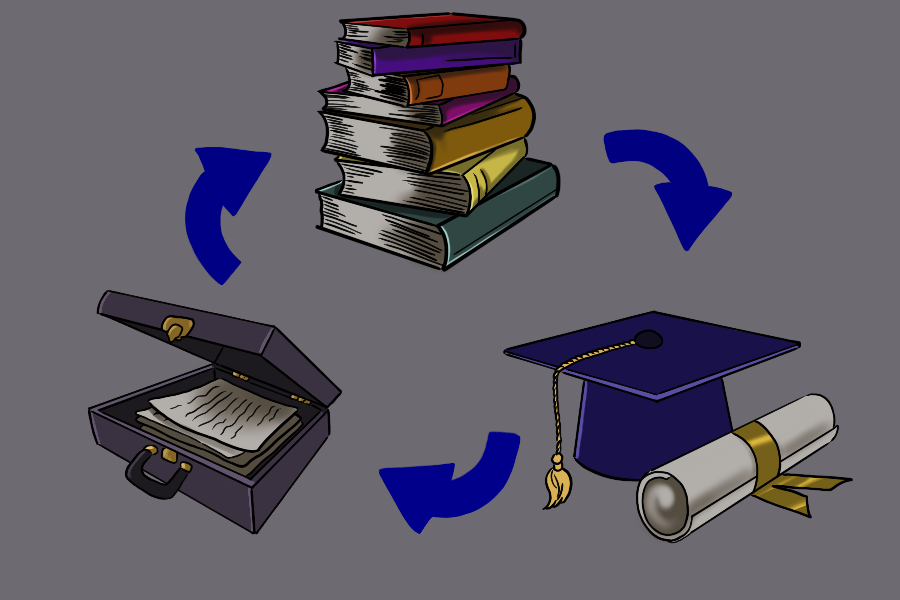
As graduation approaches, so does the question of what students are going to do when they leave UC Davis. For many students, that answer is coming back — as faculty members. As the education process comes full circle, many UC Davis alumni land jobs with the university immediately after they receive their diplomas.

“When I was an undergrad, […] I was hired as a student assistant at Academic Technology Services,” said Tim Kerbavaz, the special event support technical director for the UC Davis Academic Technology Services Department and a UC Davis alumnus. “I graduated at the end of Winter Quarter, so I stayed as a student employee until the end of spring, and then a job opened. My boss […] retired right as I graduated, so I was able to apply for his job.”

For alumni like Kerbavaz, the transition from being a student to becoming an employee of the university fosters a variety of different perspectives on the UC Davis community.

“When I started [working] I really felt like, ‘Okay, I know that it’s like to be a student here, and I know what […] would help the students at the university,’” said computer science lecturer Robert Gysel. “[I was] thinking I could probably do some things to change that, and then [the transition made me] realize how entrenched everything is. The system is kind of just the way it is.”

After completing his undergraduate degree at UC Davis in 2006, Gysel spent his graduate education at the university as well, receiving his Ph.D. in 2014. As with many alumni-turned-faculty scenarios, the kind of transition that Gysel made can largely indicate the differences between staff and students.

“When you’re a student […] you’re very focused on your schoolwork and your labs and your friend groups and all of that student stuff that you have to deal with,” said Trevor Ehlenbach, the multimedia coordinator for UC Davis Athletics and a 2015 alumnus. “When you start working here, you get to kind of take a step back and see students from the opposite side. I get to see all the things that are provided to the students, all the structures that are there to support students and all the behind-the-scenes work.”

Like Gysel and Kerbavaz, Ehlenbach switched to becoming a staff member right out of school. However, Ehlenbach’s multimedia position at the university’s athletic department was created for him once the interim athletic director took a look at his videography work for Aggie TV (now Aggie Studios) as an undergraduate.

Over the years, these alumni have seen changes everywhere around the university, from the opening and closing of restaurants downtown to their own ideas of how the campus operates.

“My perception of campus may have changed more than campus itself,” Kerbavaz said. “There [are] a lot of things [that] I think, as a student, struck me as really cryptic or […] hard to understand. As a staff person, I’m like, ‘Of course that’s the way it is.’ I was a student and had that great deal of investment on campus, [and] now I’m on the other side of it. As a student, it’s like, I have five years to finish my degree, these things have to change now. As a staff person, […] everything moves more slowly.”

Because these staff members have been students at the university, their perspectives often help shape the decisions they make.

“I have to make a decision and choose what battles to fight,” Kerbavaz said. “I really have to remember the student experience. That student experience can get lost amongst the bureaucratic machine of the university.”

Another factor that many alumni did not take into consideration upon transitioning into an employee position at the university is the status change from student to faculty.

“I get recognized around campus or downtown,” Gysel said. “That’s weird, [but] I’m a bit used to it now. When you’re a student, if you walk around and your friend sees you, [it’s not a big deal if] your friend sees you. But [as faculty], all of a sudden, strangers go ‘Oh hey!’.”

Despite the somewhat strange shift from student to staff, Gysel, Kerbavaz and Ehlenbach agree on the many reasons for graduates to stay in Davis.

“One of my favorite parts about UC Davis is it’s a very relaxed campus,” Ehlenbach said. “Everyone’s very friendly [and] happy, and since there isn’t anything too crazy to do in Davis, [recent alumni] all just spend a lot of time hanging out with each other and learning more about each other. It’s a very diverse campus.”

For others, staying in Davis has less to do with the environment of the university and more to do with friends, career paths and other factors.

“I […] have a lot of friends that are still doing their undergrad at Davis or graduate school, so that was one of the reasons I wanted to stay in Davis,” said Dani Judal, an athletic development assistant and a 2016 UC Davis graduate. “I also wanted to start a career in athletics, so I thought this would be a good stepping stone. I love it now, I think it was the right choice for me.”

Regardless of their reasons for staying in Davis, many alumni agree that UC Davis is a perpetually changing university with many more changes to come.

“Every four years, it’s a completely different student body,” Ehlenbach said. “What the students wanted while I was a student is incredibly different than now. It’s one of those things where sometimes students forget there were a lot of people here before them, and there will be a lot of people after them. It’s kind of important to take a step back and learn about the school’s history so you can put it on the right path.”


Written by: Allyson Tsuji — features@theaggie.org

Yesterday’s tomorrow: Why nostalgia culture holds us back

ANH-TRAM BUI / AGGIE

Modern science fiction looks to the past instead of the future

Science fiction, by definition, is a genre about the future. It’s about places we haven’t discovered and technologies not yet invented. In all cases, sci-fi looks beyond the real, modern world and tries to think of what might become rather than what is. Yet for all its foresight, modern science fiction seems to be equally — if not more — interested in the past. In fact, science fiction plays a huge role in our nostalgia-obsessed culture that, if anything, holds us back.       

One of the most obvious examples of this is the new Star Wars films. The Force Awakens essentially retells the original ‘70s film, A New Hope, but with new characters. While it still made for a compelling story, it’s clear that J.J. Abrams and company wanted to remind the audience of the thrills of A New Hope — bringing back the original actors, using a familiar storyline and reviving a universe that had not been seen on screen for 10 years. The original Star Wars was a trailblazer in special effects technology that still holds up today and portrayed futuristic technology, even if the film claims to be set a long, long time ago. The Force Awakens returned to this past moment of innovation and tried to recapture its spirit rather than innovate its own.

Another more prevalent example is superhero movies. Though superheroes have evolved to become cultural icons in our present moment, they’re all based off of characters that were created in the past. Superhero films repurpose past characters for the modern world instead of creating something totally new. Classic franchises like Star Trek, Mad Max, Alien and Blade Runner have also found new life in the modern world, reviving what was instead of looking forward to what could be.

Netflix’s hit show Stranger Things is one of the best examples of sci-fi looking back instead of forward. It’s without a doubt a sci-fi show, yet it shamelessly places itself in the 1980s. The costume design, the lighting, the music, even the characters explicitly recall ‘80s sci-fi movies like E.T. through the means of science fiction. The characters interact with futuristic technology and fearsome creatures, but the show is more about evoking the feeling of retro sci-fi than using these elements to say anything about the future. It’s more about nostalgia than futurology and in a way seems to say that yesterday’s future is brighter than today’s.

This is all part of the nostalgia culture that dominates America in 2017. The romanticized glory days of the prosperous post-war period are gone, and the country has been in decline for at least the past couple of decades. America’s role in the world has dramatically changed as well, from being a strong, righteous leader to being seen as an aggressive bully around the world and an embarrassment among first-world countries for its turn toward regressive social policies. The economy is also not what it used to be, particularly in rural parts of the country, and many of the industrial jobs that propelled economic prosperity either no longer exist or have been outsourced to the detriment of the working class.

America arguably hit peak nostalgia when it fell into the trap that was Trump’s campaign to “Make America Great Again,” based on the idea that there was a past, “great” America to which we could return by electing him.

As America continues to decline, the future for many Americans continues to look more and more bleak. The country’s problems with racism, education and income inequality become clearer and messier by the day and can seem unsolvable.

It’s easier to look back than forward, harder to imagine a bright future with the dark state of the modern world. Success in the future from our point in history will require radical change — something many are uncomfortable with. The institutions, policies and customs that brought prosperity in the past are no longer working as smoothly and require updating as they slowly decay. Nostalgia culture is a way of keeping these institutions alive by yearning for a past when they worked instead of confronting the realities of their decay.

The sooner the world leaves behind nostalgia culture and stops romanticizing the past, the sooner we will be able to deal with the world’s decaying institutions, find solutions and move toward a prosperous future.

Science fiction is as popular as it has ever been, but it needs to take this popularity and use it for innovation. Instead of reviving the settings and cultures of the past, it should take after past sci-fi’s visionary qualities and look forward into our future, wherein lies a better tomorrow if we work for it.


Written by: Noah Pflueger-Peters — napfluegerpeters@ucdavis.edu


Disclaimer: The views and opinions expressed by individual columnists belong to the columnists alone and do not necessarily indicate the views and opinions held by The California Aggie.

New strains of mosquitoes to fight malaria in Africa

JEREMY DANG / AGGIE

Scientists hope to control spread of illness with genetically modified mosquitoes resistant to malaria parasite, use of CRISPR/Cas9 gene-editing tool

Malaria is responsible for about half a million deaths every year. The Center for Disease Control (CDC) currently reports that 3.2 billion people inhabit areas at risk of malaria transmission. The prevalence of this mosquito-borne disease in Africa costs at least $12 billion per year for treatment, reinforcing high poverty rates.

UC Davis vector biologist Greg Lanzaro and research teams have joined the initiative to fight malaria in Africa. Utilizing an innovative approach — the genetic modification of mosquitoes in order to disrupt transmission of the disease — provides a promising tactic to potentially eliminate the disease.

“I think it is important to understand that in regions of the world [which are] most heavily impacted by this devastating disease that it imposes a burden on individuals and society as a whole of enormous magnitude, similar in may respects, to that imposed by cancer on citizens of the developed world,” said Ethan Bier, a professor of cell and developmental biology at UC San Diego.

Malaria is spread by the bite of a female Anopheles mosquito. Symptoms of the disease include fever, chills and flu-like illness. Without treatment, it may cause serious health complications and eventually death.

“It is estimated a child dies in Africa from this illness every minute,” Lanzaro said.

UC Davis is collaborating with the original UC Irvine Malaria Initiative project, directed by UC Irvine vector biologist Anthony James. This project has extended throughout the UC system, including participation from experts of various disciplines such as molecular biology, entomology and public health.

Lanzaro and the UC Davis research team will be identifying field sites for trials to measure how effective the genetically-modified mosquito is in reducing malaria transmission.

“It is going to take four years until a field trial and release,” Lanzaro said. “Then it will take another two to four years to just document what is happening because we want to make sure there are not unanticipated variables occurring.”

Some criteria used to determine ideal field sites for trial include finding a genetically isolated population of mosquitoes so the experiment does not accidently spread geographically, consists of existing regulatory structure and local scientists with whom to collaborate.

“The best candidate […] is an island, but it must first be determined [that] those mosquitoes are genetically isolated on the island from those on the mainland in order to spatially contain the tests,” Lanzaro said.

The goal of releasing the mosquitoes with a synthetic genetic element, preventing progeny from becoming affected by the malaria parasite, is to cause this gene to sweep through the population.

“If we see there is a reduction in malaria cases where we choose to release the mosquitoes, we need to make sure that the impact is the result of our science and not something else,” Lanzaro said.

The most vulnerable groups of this disease are young children, because their immune systems are not yet fully developed. In addition, pregnant women are also at high risk of malaria because of decreased immunity.

“The ultimate impact [of the project]  will be an epidemiological one, reduced morbidity and mortality,” James said.

Malaria is a disease that has been known for thousands of years, with records of the ancient Greeks describing its symptoms. Despite its prevalence over a long time, it still is a major global health problem.

Current mosquito reduction measures include insecticide-treated nets, which have reduced malaria infections and mortality. However, such efforts have not achieved eradication of the illness.

Because the biology behind the disease is very complicated and also involves a mosquito host, a multidisciplinary effort is needed to help reduce negative health impacts.

“[With] using modern molecular methodologies, people are a bit uneasy since it brings in ethical, social and legal components,” Lanzaro said.

The first genetically modified mosquito model was created in James’ laboratory back in 1998, alongside the development of artificial genes resistant to malaria based on antibodies that prevent mosquitoes from transmitting the actual parasites that cause the disease.

The synthetic genes were inserted into mosquitoes via a genome editing method called CRISPR/Cas9. Essentially, Cas9 acts as a pair of scissors to cut or snip a specific target on DNA so pieces of DNA can be added or removed.

Laboratory studies proved the antimalarial trait was successfully passed down to 99 percent of the progeny, confirming its effectiveness. In order to determine if this method truly works, it must be tested outside of a laboratory to address any confounding variables.

“It is very important to listen to how people are thinking about gene-drive technology in those areas where malaria is endemic and not to rely solely on thinking from the developed world,” Bier said.

Further information about malaria and its impacts globally can be found on the CDC website.

Students on campus interested in getting involved in helping those affected by the illness by joining clubs and organizations that fundraise for relief and spread awareness about its impact. Such clubs include American Red Cross Club, Global Health Brigades and Public Health Club.

“There are a lot of opportunities for students interested in global health in general and I hope they get involved sooner rather than later,” Lanzaro said. “Other mosquito-borne diseases needed to be studied too like Zika and Dengue, which can greatly affect human health.”


Written by: Shivani Kamal — science@theaggie.org


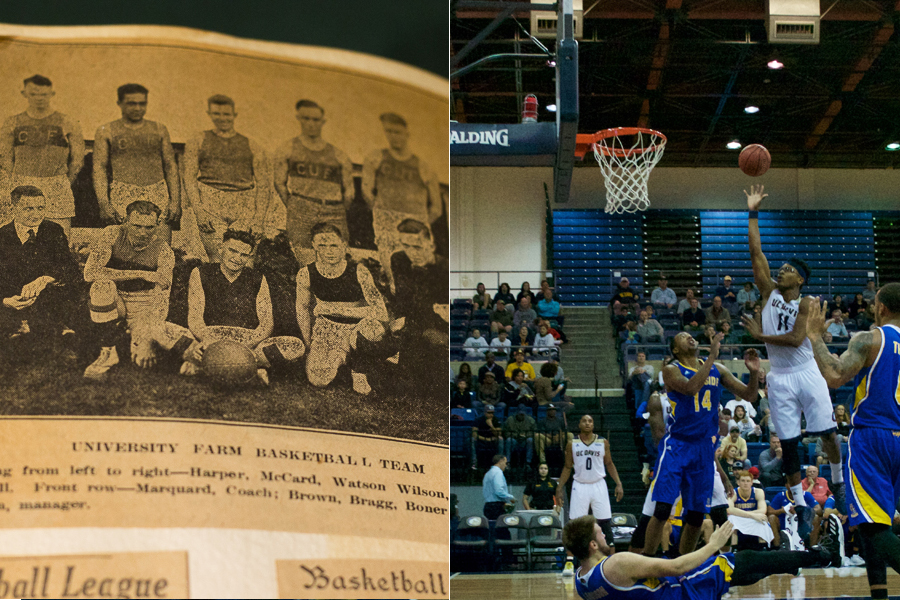
Special Collections offers peek into the past

MEENA RUGH / AGGIE (left), CAT TAYLOR / AGGIE FILE (right)

Archives include artifacts from around the world, Davis

It’s certainly not every day that you get to look at a 1974 B.C. Sumerian clay tablet and Shakespeare’s second folio in the same place. At Special Collections, however, it’s just another day on the job. Established in 1966, Special Collections is located inside Shields Library, and houses the library’s rare books and pamphlets, photographs, manuscript collections and university archives.

Commonly utilized by students and faculty for research, Special Collections is the perfect place to get in-depth knowledge for any paper or project.

“The reason why primary sources are so important is that everything you are getting is from the open stacks and from the general stacks has already been interpreted,” said Christine Cheng, the instruction and outreach librarian at Special Collections. “It is meant for publication, meant for mass consumption, so it has already been filtered for you. When you’re working with primary sources, these were things that weren’t meant for the public eye, so that’s why it’s so important to have that experience with eyewitness firsthand account.”

The staff at Special Collections also makes sure to support researchers in whatever subjects and time periods they’re studying.  

“It’s helping the patrons find the materials that they need for their research projects and then helping them put together the pieces of the puzzle to find more,” said Sara Gunasekara, the public services and archives specialist. “I really like thinking about it as detective work.”

Cheng also enjoys working with the objects themselves.

“In terms of self-interest, I just like handling the uniqueness,” Cheng said. “[…] it is not everywhere you can handle an original second folio of Shakespeare’s plays and comedies. It’s not every day you could handle a Sumerian clay tablet.”

The story of how UC Davis came to own Shakespeare’s second folio is interesting, to say the least.

“That was acquired by betting on a game — the World Series. It was the New York Yankees playing against the Milwaukee Braves, and at the time the Yankees were the underdogs,” explains Cheng. “So UCLA and Berkeley already had their copies of Shakespeare’s second folio, so that left UC Santa Barbara, Riverside and us. So, to determine who would have the second folio, […] instead of doing a coin toss, they decided to bet on the World Series […] So Richard Blanchard, who was the university’s librarian, bet on the New York Yankees, and they ended up winning.”  

Now artifacts are either donated to Special Collections by professors or they are purchased. Each UC has their own Special Collections Library, each with different strengths. UC Davis’ strengths are viticulture culturology, agricultural technology, agriculture, apiculture, brewing, beekeeping, entomology, zoology, religion, British and American literature and British history. They also have significant collections in the humanities, including 19th and 20th-century social movements and the history and contributions of women, queer folks, Native Americans, Chicanos, Asian Americans and African Americans.

“My favorite part of working in Special Collections is the constant learning,” said Jenny Hodge, a Special Collections assistant. “Every time a researcher or a student comes in you learn more about that specific project they are doing. They’re asking questions, and you have to start thinking outside the box. And we have such a breadth of subject matter here it’s impossible to know everything, but it’s really fun to poke your nose in everything and get a taste for what’s there.”

Special Collections is located on the first floor of Shields Library and is open Monday through Friday from 10 a.m. to 5 p.m. You can also contact Special Collections via its website.


Written by: Abigail Wang — arts@theaggie.org

Paving the way for community service

VENOOS MOSHAYEDI / AGGIE

Yolo Community Care Continuum receives grant to replace farmhouse roof

After being damaged during this year’s harsh winter storms, the roof at the farmhouse in rural Davis was in dire need of repair. The Yolo Community Care Continuum (YCCC) was able to receive a $6,240 grant from the Sacramento Region Community Foundation to replace part of their farmhouse’s roof.

As the director of development at YCCC, Debbie Woodsford noted the simple nature of reaching out to the foundation.

“The process was very easy,” Woodsford said. “It’s through the Sacramento Region Community Foundation, and every year they put out a grant opportunity that they call their ‘immediate needs’ grants.”

Acquired in 1986, the farmhouse was YCCC’s first facility where people with mental illnesses could work.

“We acquired [the farmhouse] by virtue of a group of parents who had adult children with mental illnesses,” Woodsford said. “Their illness was too severe to live at home, but they didn’t want them to be locked up.”

This facility remains a place where people with mental illnesses can learn to work and live productively before returning to the community.

“People live there; it’s a 10-bed facility,” Woodsford said. “They can stay at the farmhouse for up to 18 months –– they have group counseling sessions, and they learn how to work cohesively.”

The farmhouse was atypical and a place of refuge for the mentally ill. This grant serves a greater purpose in helping the local community.

Vasey Coman, a marketing associate at the Foundation, explained the Foundation’s role.

“The review committee looks for immediate needs. They score the narrative questions, and they also score the budget that the nonprofit provided,” Coman said. “Beyond that, our goal is to make sure that we are diversifying our funding regionally and also by what we are funding that is representative of the needs in our community.”

The Foundation strives to enhance the work that local nonprofits are doing in the region, allowing access for people who want to better serve the community.

“Impactful. Impactful is really the one word I would choose to describe the Foundation,” Coman said. “It started about 35 years ago by a group of really dedicated community leaders who love this place and they thought, ‘How can we better collaborate and pool our funds and resources to make a better impact?’”

Amy Eubank, a senior program associate at the Foundation, described the initiatives within the organization:

“Our foundation has four initiatives that we focus on,” Eubank said. “We focus on nonprofits and capacity building like the Big Day of Giving. Our other three are on food access, the arts and education.”

As advocates for a better quality of life, the Sacramento Region Community Foundation and the Yolo Community Care Continuum continue to serve the city of Davis in different ways. The grant put toward the farmhouse is a step forward in helping people thrive within the community.


Written by: Stella Tran — city@theaggie.org

Humor: NASA discovers 7 UC Davis students containing signs of life

CAROLINE DAVIS2010 [(CC BY 2.0)] / FLICKR (left), FARAH FARJOOD / AGGIE FILE (right)
Spring Quarter all but wipes out the spirit of the student body

As the end of the quarter nears, signs of life within the student body are getting harder and harder to find. Campus morale is lower overall, with the Facebook memes pages taking some dark turns, even for college meme pages. Students are burning out mentally, as well as astrologically — whatever that means.

But not all hope is lost. The National Apricots and Sandals Administration (NASA) recently discovered that there are still seven students on the UC Davis campus who contain minimal signs of life.

One of these students is Amanda Towell, a second-year managerial economics major and owner of the second-largest collection of moldy citrus in her home state of Wyoming.

“I don’t have much of a life to be honest, so it’s nice to get this recognition,” Towell said. “Little does stupid and also dumb NASA know, the only life I contain is the miniature version of the board game I carry around in my backpack at all times, just in case something crazy happens. I’ve actually been dead for years — for as long as I can remember, really,” she said before disappearing in a puff of smoke.

Another lively student discovered by NASA is Michael B. Michael, a first-year English major and author of his autobiography, Michael Michael by Michael Michael, a Michael Michael Story.

“I think what keeps me alive is myself,” Michael said. “I’m just really great. The other day I was shopping at Michael’s and I just decided to buy everything. All of it! Because I deserve it.”

Although five other students were discovered along with the two listed here, none of them were interesting enough to be included in this article. Sad. Now if you’ll excuse me, I’ve got to go find my son.


Written by: Brian Landry — bjlandry@ucdavis.edu


(This article is humor and/or satire, and its content is purely fictional. The story and the names of “sources” are fictionalized.)


Last week in Senate

HANNAH LEE / AGGIE

On May 25, the ASUCD Senate held its weekly meeting on the third floor of the Memorial Union (MU). The meeting was called to order at 6:12 p.m. by ASUCD Vice President Adilla Jamaludin. Senator Michael Gofman was absent at the start of the meeting and President Josh Dalavai was not in attendance.

The meeting began with the selection of a new pro-tempore. Senator Samantha Chiang, who resigned the previous Monday, previously occupied the position. Senator Julie Jung, nominated by Senator Jose Meneses, was selected to fill the position.

The first item on the agenda was a presentation by the Environmental Policy and Planning Commision. Sarah Risher, the chair for the commission, spoke to the Senate about important environmental facts, the commission’s participation in recent events such as the Aggie Food Connection Fair and the new toilet talk posters they distributed around campus.

Afterward, the Center for Advocacy Resources and Education provided consent training, touching on a number of issues such as sexual assault and intervention. The training, which included the entire table, lasted just under an hour.

During break, senators headed to the first floor of the MU to gather for a photo.

Senator Daniel Nagey was absent at the beginning of the second half of the meeting, which began with the unit report for Experimental College Garden, a group focused on sustainable gardening and health.

Next, the Senate moved to confirm a new chair for the DREAM Committee. Enrique Lopez, previously the vice-chair, was selected for the position.

Afterward, the Senate motioned to reopen the ASUCD 2017-18 student government budget. With Jamaludin excusing herself for the budget process, Jung served as the presiding officer while Senator Simran Grewal served as interim pro-temp.

The Senate moved to correct a pay issue with the Student Government Administrative Office, whose pay was previously approved as stipended. The Senate motioned to approve the salaries to hourly with 10 yes votes and one abstention.

Next, KDVS, which hired a news media director, had its budget approved with 10 yes votes and one abstention.

After motioning out of the 2017-18 budget, the status of previously passed legislation was discussed.

New legislation was then introduced. The legislation considered included a senate bill to shift the funds allocated to the Office of Advocacy and Student Representation by the 2016-17 ASUCD Budget, a senate bill to allocate $173.62 for food and art supplies for Senator Anastasia Ruttkay’s “It’s Time to Reclaim Our Bodies” sexual assault prevention event, a senate bill to establish the Food Security Task Force Committee and a senate bill to allocate $175.00 for the purchase of ASUCD graduation stoles. The senate bill for the purchasing of new stoles, SB #108, has since been withdrawn.

Afterward, the consideration of old legislation began.

The first bill presented was SB #102, which would allocate $1,000 for the ASUCD Volunteer Award. Authored by Jung, the bill originally intended for six people to receive awards of $150. The bill was amended so that 10 people would receive awards of $100. With 10 yes votes and one abstention, SB #102 was passed.

Next on the list was SB #103, which would make the budgetary seminar a mandatory seminar. With 10 yes votes and one abstention, SB #103 was passed.

Afterward, emergency legislation was introduced to the table. With Nagey joining, all senators were present.

The first piece of emergency legislation, which moved to hire a new chair, vice chair and three director positions by the end of the quarter for the elections committee, was unanimously passed with 11 yes votes.

Next, a senate bill to amend the procedure for ASUCD scholarships was introduced. The ASUCD Scholarships Committee normally receives information on students’ financial needs from the financial office after their applications are submitted to the committee. Afterward, the committee interviews potential awardees. Calling the process redundant, the bill would amend the bylaws to remove the interview portion. With 11 yes votes, the bill passed unanimously.

The last piece of emergency legislation was a senate resolution introduced by Nagey. SR #14 moves to support students in their efforts to advocate against a number of administrative issues with the University of California, including calling on reversing recent tuition hikes, redistributing funds to university workers and restructuring the UC system in a more democratic way for students and workers.

The resolution also calls on the senate to endorse a petition demanding these reforms, as well as demanding the resignation of UC President Janet Napolitano. Gofman moved to remove the inclusion of the petition, which failed with three yes votes, five no votes and three abstentions.

Next, Jung moved to call the bill into question. With nine yes votes and two no votes from Gofman and Senator Matthew Yamaguchi, the resolution was passed by the Senate.

Lastly, ex-officio and elected officer reports were given, with the table updating one another on recent developments. With the approval of last meeting’s minutes, the meeting adjourned at 11:40 p.m.


Written by: Ivan Valenzuela — campus@theaggie.org

To Graduation and Beyond

NICKI PADAR / AGGIE 

The benefits of taking classes with friends

As a biochemical engineering major, TJ Blackburn took ECM 1: The Design of Coffee, a class specifically designated for engineering students, during his first year at UC Davis. When he walked into the small lab, he noticed two people in the class who he recognized from his dorm building. As it turns out, they were both chemical engineering majors as well and would end up being in almost every single one of Blackburn’s classes for the rest of his college career.

“I started talking to them more and [began] sitting with them in class,” said Blackburn, now a fourth-year student. “Then […] we hung out [more], and it was really easy because we saw each other outside of class a lot too. That really helped our friendship grow.”

Sharing classes with friends comes with many benefits. Alex Chapman, a second-year animal science major, has made many friends in her classes — something she has valued since starting school at Davis.

“I feel like the fact [that person is] a friend [means] you’re so much more comfortable going to them and asking for help,” Chapman said. “If it’s just an acquaintance or sort of a stranger that you happen to meet in a class, you’re not necessarily going to be as inclined to reach out if you want help with homework.”

Chapman notes that it’s especially easy to meet and make new friends within her major. This is because animal science majors are taking the same classes at relatively the same time during their college careers.

“I see a lot of the same people, which kind of helps keep the friendships going,” Chapman said. “There [are] a lot of faces and names that I know and a lot of friends that I’ve made. [I’ve found that] taking all the same classes as them [is] valuable because […] you have people to turn to and to hang out with outside of [class, which] is also really cool.”

The same rings true for Blackburn, who has really come to understand the benefits of making friends within his major. Since biochemical engineering is such a small major, it’s no secret as to how well he knows these people after four years of sharing classes with them.

“I’ve been in a group project setting with basically everybody in that class over the course of a year,” Blackburn said. “I’ve been doing my senior design project now so I have three other guys that I work with that are in my major and I’ve gotten really close with them because we spend a lot of time together working on our […] project. When we’re done meeting one of our goals or project milestones, we’ll go out and get a beer together or get food and hang out outside of school.”

However, as great as it is to meet and take classes with friends, every rose has its thorn.

“[Friends] can be a distraction,” Chapman said. “If you’re sitting next to your friend in lecture you might be talking to them when you should be paying attention to what’s happening in lecture. Or sometimes [getting] together with a friend to study, I’ll find that we’ll go off on tangents and do other things we probably shouldn’t be doing even though we’re studying together.”

Along with the distraction, Chapman pointed out that sometimes she also feels competitive among her friends  — which can be beneficial or a challenge. Although friends push each other to do their best, that doesn’t mean comparing grades can’t cause a little bit of tension.

Despite these minor negatives, Blackburn and Chapman, who are both Regents Scholars, consistently take advantage of their priority registration to get in the same classes as their friends. The same is true for second-year animal science major Iris Chen, who is also friends with Chapman.

“Alex and I have priority so we’re pretty good at setting up our schedules together,” Chen said. “Another girl on the ultimate [frisbee] team doesn’t have priority, but she’s also an animal science major so we’re always like ‘oh my gosh, I’ll sign up for the later sections so that she can get in,’ or we’ll have the same discussion or sit in lecture together.”

Chen has yet to have an experience where a new acquaintance from class becomes a lasting friend, but she recalls her past classes with friends as thoroughly enjoyable.

“My friends I’ve made are from a sports club or the dorm, and [although] we’re all different majors […] we took a general education [course] together and we were able to see each other at least three times a week,” Chen said. “That was really nice even though we never really got to hang out. [Now] we can talk about it and we have inside jokes from the class, which is really funny.”

College can be busy and stressful, but sharing classes with a friend — or better yet, meeting a new friend in class — can help make academic life a lot more bearable, and oftentimes a lot more fun. Not to mention it opens the door wide to make friendships that last to graduation and beyond.

“I think that, inherently, people who are in your major or are taking similar classes will have similar interests and personal traits or characteristics, [becoming] people you’ll get along well with,” Blackburn said. “I think if you take the time to go meet people who are in your classes or your major, you’ll find that you have a lot in common with them, and I think that that can lead to some good, long-lasting friendships because of your similarities.”


Written by: Marlys Jeane — features@theaggie.org

Protesters shut down Woodland Monsanto

NICKI PADAR / AGGIE

The fight against GMOs in modern agriculture

While California was waking up on the Monday morning of May 22, the Anti-Monsanto Project was already on the move. As early as 4 a.m., the Anti-Monsanto Project assembled in front of the Woodland Monsanto for a protest. While the protest began with numbers above 30, the crowd eventually thinned out as the Yolo County Sheriff’s office arrived at the scene, with only the most faithful protesters remaining.

“There were a group of protesters outside the business,” said Sergeant Matt Davis of the Yolo County Sheriff’s Office. “A number of them made the decision to sit down in front of the driveway that effectively blocked the entrance, ingoing and outgoing, from the highway onto the property.”

Davis explained the situation and his interactions with the protesters:

“They were advised to move or they would be arrested, and 10 individuals chose to remain,” Davis said. “And they were taken into custody.”

Davis then commented on the nature of the protesters:

“The individuals were cooperative,” Davis said. “There was no incident, other than they stood up, they were placed in handcuffs and walked to a nearby van. It was as simple as that.”  

Although the protesters blocked the entry and exit points for a little over an hour, Davis witnessed no further interaction between the protesters and employees of Monsanto.

“I didn’t see any interactions between any Monsanto representatives and the protesters,” Davis said. “I don’t know if there was, prior to us getting there. I didn’t see that take place, though.”

The Anti-Monsanto Project made a public statement on Facebook, claiming responsibility for the protest and commenting on the day as a whole:

“Yesterday [May 22] we gathered at our meet-up spot,” the Anti-Monsanto Project said. “Once there was a sufficient crowd, approximately 4:15 [a.m.] we gave a ten minute brief, then began shuttling people to the main gate to begin coordinating where to position people.”

The statement also mentioned the arrests:

Now, we have held shutdowns of Monsanto facilities for five years, and never before had there been arrests, until yesterday,” the Anti-Monsanto Project stated. “Within moments, the [sheriff] gave a warning that he would make arrests. Undeterred, the protectors remained seated. Then came the call of an unlawful order, and three minute warning before arrests would be made.”

The statement elaborated on the time spent in jail, after the arrests:

“While doing jail support, several others joined us as we awaited our allies’ return,” the Anti-Monsanto Project stated. “Some brought food, some brought beverages and snacks, some brought good vibes and compassion. As each individual was released, they left the jail to be greeted with cheers from those outside. After about seven hours, the last of the #Monsanto10 was released.”

Chris Horner, the testing and operations manager at the Woodland Monsanto facility, provided a statement on the event over email.

The more than 20,000 people of Monsanto are committed to having an open dialogue about modern agriculture and how food is grown as we focus on using digital tools, data and research to find solutions that balance the need to feed people and protect the planet –– we’re proud of the work we do, and we’re eager for people to know more about us,” Horner said. “Through innovation and collaboration with farmers and partnering organizations, we develop new tools that help the world’s farmers grow food using less of the Earth’s natural resources. We know people have different points of view on these topics, and it’s important that they’re able to express and share them.”

Emily Radusovksy, a first-year environmental science major, voiced her opinion on Monsanto.

“As far as Monsanto goes,” Radusovksy said. “A lot of what they do is very unethical because they have so much power. I don’t think any group should ever be given that much power.”

Despite the arrests, the Anti-Monsanto Project does not plan on halting their crusade against Monsanto.

“We may not have succeeded in shutting down Monsanto yesterday, but we proved our conviction and showed that we support each other,” the statement read. “This won’t be the last attempt. We will begin early, and push to have even more people. Next episode, we will shut them down, arrests or not!! We will be back, and we will be stronger!!”


Written by: Nicolas Rago — city@theaggie.org

Spring Sports Rundown

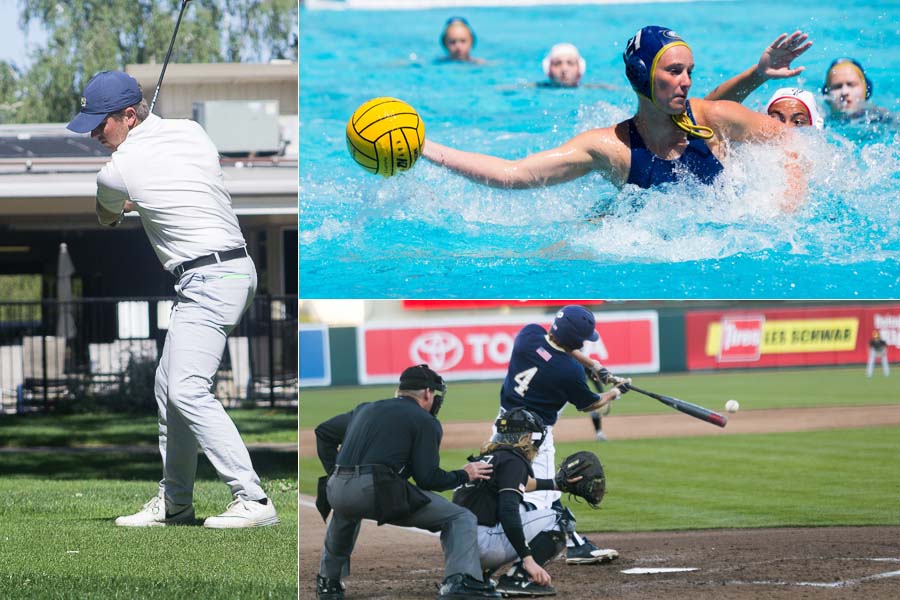
RAUL MORALES / AGGIE FILE (left), CAT TAYLOR / AGGIE FILE (top right, bottom right)

Wrapping up another busy year of Aggie athletics

As the impending doom of Spring Quarter finals is fast approaching, so is the end to another year of UC Davis athletics. This year in Aggie sports was marked by tremendous feats both on the team and individual level, as well as some less-than-stellar performances. With several different programs starting in the winter and competing well into the warmer months of May and June, the final quarter before summer break has been filled with intriguing ends to seasons as well as a host of NCAA playoff appearances.

Both the UC Davis men’s and women’s tennis teams put on impressive performances this season. The men’s team finished with a 14-8 record and managed to climb its way into the Big West conference tournament semifinals. Six members of the men’s team received all-conference honors, including freshman David Goulak, who was named Big West Conference Freshman of the Year, and senior Alec Adamson, who was named to the All-Big West first team in singles for the fourth year in a row. The women’s team finished 15-10 overall only to fall in the quarterfinals of the Big West tournament. Junior Kristy Jorgensen and sophomore Kelsie Bryant were honored with All-Big West second team for their doubles play, where the tandem collected 10 wins over the course of the season — more than any other women’s doubles duo.

The UC Davis men’s and women’s golf teams also ended their seasons this May, with the men finishing fifth and the women placing fourth in their respective Big West championship tournaments. Senior Ben Corfee was the men’s standout this season, earning himself a spot on the All-Big West second team. For the women’s team, it was yet another superb year for senior Paige Lee, who has not slowed down since being named Big West Conference Player of the Year back in 2015. Lee appeared in her fourth straight NCAA postseason and collected her fourth All-Big West first team honors to cap off her final season as an Aggie.  

“[Lee] has been a solid player for us, for sure, for the last four years,” said UC Davis athletic director Kevin Blue. “Obviously I’ve only been around her this year, but those are the type of players that have helped us be successful in women’s golf in recent years and our expectation is that we’ll continue to attract those type of players to come here.”

Speaking of success, both the UC Davis men’s and women’s club rugby teams experienced another season of high achievement. The teams traveled to Life University in Georgia, where the women’s team won its second straight national title, defeating Notre Dame College 27-19. The men’s team appeared in its third straight national championship game, but in the end failed to claim the three-peat D1-AA title, losing to the men from the same school by a score of 40-20.

In track and field, two Aggies, senior middle distance runner Rianna Goins and sophomore high jumper Erinn Beattie, qualified for the NCAA Outdoor Track and Field Championships held in Eugene, Oregon on June 7-10. Goins will be competing in the 800-meter, an event in which she ran a personal-best 2:05:42 in qualifying. In her high jump qualifiers, Beattie was one of only 10 jumpers to clear 1.79 meters, making her the highest jumper in Aggie women’s history.

“We’re excited for both of our students that are competing in the NCAAs,” Blue said. “Those are the type of results that we want to shoot for and we want to continue growing the number of teams and athletes that are competing at the national level in NCAA competition. Our focus is on doing the things required to continue building this program and we expect the results will follow.”

Finishing its season with a one-goal loss in the Big West championship third-place game back in late April, the UC Davis women’s water polo team battled through a daunting schedule to end with a 16-18 overall record. For their performances this season, juniors Greta Kohlmoos and Paige Virgil earned All-Big West Conference first team and second team honors, respectively. Kohlmoos led the Aggies with 66 goals.

The UC Davis baseball team wrapped up its sub-.500 season this May. The team finished 21-30 on the season, but still managed to pick up double-digit conference wins. Junior outfielder Ryan Hooper was named to the All-Big West conference second team for his stellar season. Hooper sported a .310 batting average, 52 hits, six homers, 29 RBIs and led the Aggie starters in on base percentage.

Closing out a losing season of its own was the UC Davis softball team, which ended with a record of 22-32. Despite the lack of wins, six of the team’s players received all-conference honors, including senior centerfielder Brianna Warner, who was named to the All-Big West first team.

This spring brought some excitement for Aggie athletics off the playing field as well.  Warner, along with several of her fellow Aggie athletes — gymnastics’ Yonni Michovska, baseball’s Elijah Ontiveros and basketball’s Brynton Lemar and Darius Graham — were all selected to attend the NCAA Career in Sports Forum, a four-day enrichment program designed to give collegiate athletes from across the country the opportunity to explore careers in the sporting world.

“[The fact that these five players were all selected to attend] is a highly positive reflection on the commitment that our student athletes have to not only their academic work, but their careers after they finish competing,” Blue said. “We’re excited about the fact that five-sixths of the representation in the Big West comes from UC Davis. We take pride in that and we anticipate those students having a very good experience at that event.”

Early in its offseason, the UC Davis men’s basketball program has received solid transfer players — such as guard Stefan Gonzales from Saint Mary’s College and forward Matt Neufeld from Saint Louis University — to supplement an already exciting high school recruiting class.

“There’s no question that the quality of the program at the moment and the steps that it has taken over the last number of years — culminating in last year’s NCAA tournament appearance and victory in the first four — has helped our ability to attract top-level student athletes,” Blue said. “With recruiting, obviously you have confidence in the people you recruit, it’s a little difficult to compare from year-to-year but nonetheless we’re confident in the group that’s coming in.”

And who can forget the UC Davis football team? Head coach Dan Hawkins has been busy at the helm of his team this offseason, as the new coaching staff works to reinstate a winning culture.

“I think that everybody is very excited about the prospects of the football program,” Blue said. “I can confidently say that [the fans are] going to see an exciting brand of football. We feel really good about our team, while also understanding that the building process takes place over a number of years.”

Exciting is the word that best describes the atmosphere surrounding the football program these days. Fans are anxious for the team to return to its winning ways, and it seems like Hawkins’ history as an Aggie alum is only adding the hype.

“Members of the UC Davis community and students should come out because it’s going to be a lot of fun next year,” Blue said. “On the field, as well as tailgating and some of the things that are going on around the games — it will be a pretty fun and entertaining experience.”


Written by: Dominic Faria — sports@theaggie.org
Academics Without Borders in developing countries

MORGAN TIEU / AGGIE

A nonprofit organization working toward sustainability

There are hundreds if not thousands of charities and nonprofits that work toward helping developing countries by sending aid money and materials its inhabitants may need. It makes people wonder why there are still so many prevailing issues in third-world countries, when there seem to be millions of dollars and lots of aid going into building up these countries. There is a new nonprofit in town that may have an answer to that question.

Academics Without Borders USA (AWB-USA) is a nearly-three-year-old nonprofit organization with strong ties to UC Davis. Their primary goal is to “increase the capacity of colleges and universities in developing nations” to shape the engineers, doctors and teachers that these countries so desperately need in order to face their problems. AWB-USA sends trained academics and experts in their respective fields to universities and institutes all around the world to “teach the teachers.”

AWB is unique in its proposal process. Rather than taking suggestions for projects from professionals here in the United States, the nonprofit has a year-long cycle in which they take proposals from the foreign institutes they assist. When the board decides which projects they are going to fund, they either connect the institute with the experts they need or build on established relationships between foreign institutes and academics that they have already been in contact with.

One of AWB’s recent projects was in Sri Lanka at the University of Peradeniya. Dr. Michael Wilkes had already been involved at the institute, traveling back and forth over the course of a couple of years. Last year, AWB got involved by providing grant money to fund travel expenses for Wilkes and for Patricia Conrad, a professor in the Veterinarian Medicine Department at UC Davis as well as the rest of their team. While Sri Lanka has come a long way from the war-torn third-world country it was at the beginning of the century, problems have continued to come up in the 21st century. Chronic kidney disease, rabies, malaria, Dengue fever and environmental issues with conservation and agricultural impacts are all serious issues the small island country is still facing. Wilkes and Conrad looked to address these problems by helping the future leaders of the country — the students and faculty at the University of Peradeniya — learn how to solve problems together and be leaders. They taught the One Health research approach used at Davis, focusing on collaboration between different fields.

“There’s a lot of overlap between all these schools: veterinary sciences, medicine, nurses and doctors,” Wilkes said. “They learn a lot of the same things. So by teaching these students and faculty how to learn and collaborate, we can get a lot more done.”

A second program in Haiti was also funded by AWB this past year. Dr. Anthony Phillips and Dr. Douglas Gross had already been in contact with the Hôpital de l’Université d’Etat d’Haïti (HUEH), visiting a few times before AWB started funding their efforts. In developing countries, medical experts are often given general training without any specialty or subspecialties due to their lack of resources or even lack of knowledge. Imagine having a general surgeon perform cardiac surgery, or an OB specialist forced to perform spinal surgery. Phillips and Gross addressed this problem by bringing a new subspecialist with them on each visit to help the students, faculty and residents at the HUEH learn how to deal with more specific health issues. On their most recent trip, they brought with them Dr. Jong Hee Chung, a hematologist. Sickle-cell anemia is a huge issue in Haiti, and teaching doctors how to treat blood-related diseases will go a long way in making the country more healthy.

“It’s not good enough to visit and just leave them with a bottle of pills that will run out within a month. We try to make sure everything we teach them is sustainable,” Phillips said.

Sustainability lies at the heart of AWB and all of its projects. The typical AWB grant for travel expenses is around $5,000, which is paltry in comparison to the millions donated by the Red Cross or even the Gates Foundation. But all of these experts are aware that what these developing countries and people need is training, resources of knowledge and experience.

“We’re pretty frugal,” said Bob Agee, the chairman of AWB. “We don’t fund buildings; we don’t fund equipment. It all goes into getting an expert there for enough time to make a difference. We have a high cost-benefit ratio. We’re proud of that.”

What makes AWB unique is the “people” approach. As Agee stresses, the core of the nonprofit is “people who know people.” There is already enough money going into these countries, but that money and aid only provide short-term solutions. For a country to change and for problems to be fixed, real change has to come from among the people themselves. Sending experienced academics and experts abroad to teach willing professionals who only lack resources and training seems like a new, effective model to aid countries in need.


Written by: Ahash Francis — city@theaggie.org

California Road Trip: Secret Locations

GENESIA TING / AGGIE

Less than quintessential, but equally as memorable, locations in the state we call home

People who live in California know that the North and the South are definitely not the same state — from Eureka to San Diego, every city in between seems to have its own distinct culture and sites that comprise the state’s unique dynamic. Indeed, our state seems to follow the Gestalt principle: California is greater than the sum of its parts. As such, the bucket-list road trip through California cannot be complete without a stop in each and every region. And with such vastness, unknown attractions seem to hide amid every mountain, forest and sandy beach. This summer, take time to explore the unknown of our own backyard. Here’s your starting map:


Northern California

  1. Emerald Pools — Tahoe, California

Nestled in the expanse that is Lake Tahoe, the emerald pools in the South Fork Yuba River are true to their name — bright, crystal-blue waters rest between large rock walls that create an isolated area naturally made for bouldering, cliff jumping and even slack-lining. Accessible via a short and rocky hike, the Emerald Pools take visitors off the beaten track of Lake Tahoe to a “road less traveled by.” This illusive Tahoe location makes all the difference in a California road trip.

  1. Albany Bulb — Albany, California

An inherent contradiction rests in the makeup and design of Silicon Valley. An area that produces, promotes and praises its clean and forward-thinking technology and innovation is a massive waste contributor. This underground and well-kept secret of the industry has inevitably been a catalyst for artistic counter-expression. A walk through the nearby Albany Bulb — a former landfill in the San Francisco Bay — paints an oh-so-perfect irony.  

A walk through this dystopian landscape and art display grants a different perspective than the glitters of the Bay. Along the Golden Gate skyline are graffiti-covered rocks and even grotesque statues of people composed of rusted metal and wood, the most poignant of which is a woman with her arms pleadingly stretched toward the sky. Introspection and travel seem to go hand-in-hand; the Albany Bulb is a site of profound thought, a spark of commentary concerning the detrimental cost of our technological advancements.


Central California

  1. Forestiere Underground Gardens — Fresno, California

A labyrinth of sedimentary blocks and carefully-placed cobblestone highlights complex architecture. In 1901, Sicilian immigrant Baldassare Forestiere created this expansive 10-acre home by hand in his free time over the course of 40 years while pursuing a career in citrus farming. Taking inspiration from his home country, he constructed an expansive display of catacombs using only the simple farm tools that he owned. More impressively, Forestiere left no written records or blueprints for his property, creating the whole historical landmark as he went — a display of genuine artistic genius. Forestiere Underground Gardens is an intriguing beauty amid the Central Valley’s desert landscape.


  1. Trona Pinnacles — San Bernardino, California

The Trona Pinnacles appear straight from Mars: the flat, dirt landscape gives rise to small hills with jagged 140-foot rock formations on the top. It’s no wonder, then, why multiple science-fiction movies, like Star Trek V: The Final Frontier, Battlestar Galactica and Planet of the Apes, have been filmed here; the eerie feel from the vast expanse of the natural formations feels unearthly, wild. With only a small, sparsely inhabited town nearby, the Pinnacles’ unique geographical features create an isolated space all its own.


Southern California

  1. Salvation Mountain — Calipatria, California

A large, bright, multicolored monument is not exactly what one would expect to see in the middle of the Imperial Valley. Built by ardent Christian and self-trained artist Leonard Knight in the 1990s, the massive structure was sculpted out of adobe and paint — and even out of trash from a nearby dump — in order to make a statement proving Knight’s faith. Indeed, “God is Love” is clearly painted on the site’s main attraction. However, a trip to Salvation Mountain is not necessarily a religious feat, but often a focus on the concept of love and understanding coming from the most unexpected places. In the middle of the desert with little civilization nearby, there can be life, color and a statement of love.


  1. Sunny Jim Sea Cave — La Jolla, California  

What would a Southern California stop be without a beach location? After descending a stairway walk and going through a small rock tunnel, the visitor enters a vast cave filled with multicolored sea rocks. Waves enter the cave and crash among the rocks. What draws visitors, however, is the profile of the cave’s entrance: it resembles the profile of a man with a pointed beard. The enchantingly serendipitous opening is a landmark different from any conventional beach location.  


Written by: Caroline Rutten — arts@theaggie.org