57.9 F
Davis

Davis, California

Monday, December 22, 2025
Home Blog Page 660

Better together: UC Davis religious groups unite against hate

0
REVEREND JOCELYNN HUGHES / COURTESY

An interfaith effort to fight against hate crime, eradicate misconceptions

A day after UC Davis’ Muslim Student Association (MSA) had one of its biggest charity programs, an unidentified female broke the windows, slashed bike tires and hung bacon strips on the door handles of the Islamic Center of Davis on Jan. 22.

“A lot has happened in the past week,” said Omar Abdel-Ghaffar, a fourth-year political science major and board member of MSA. “I think one thing right after another has been a lot for MSA to deal with. Every time you try to stabilize yourself you are hit by something new.”

Soon after this event came news of President Trump’s executive order banning travelers of seven Muslim-majority countries from entering the United States.

“I am anticipating really good [campaign] work to come in response to the travel bans,” Abdel-Ghaffar said. “I think this is something that hits a lot of students. There are plenty of Iraqi, Iranian, Sudanese and Yemeni students on this campus, and it’s important for us to address their concerns, and see how we can support them.”

The magnitude of these events requires a community effort. MSA has been active in establishing a network of Muslim students on campus to provide self-empowerment and to establish spaces where people can ask questions about Islam to dispel misconceptions.  

“These types of events are really disgruntling to a lot of Muslim students,” Abdel-Ghaffar said. “And I think we as Muslims have to take the steps necessary to ensure that we are safe and can live normal lives.”

Members of MSA table at the Memorial Union several times a week in collaboration with campus administration to ensure that students feel safe and comfortable on campus.

“[The members] are there just to answer people’s questions,” Abdel-Ghaffar said. “Someone can come and say, ‘Hey, I was watching the news yesterday and I saw this.’ It has been really incredible to see people who keep coming with more and more questions.”

Even before the incident at the Islamic Center, MSA had been working on various projects focused on educating others about Islam and counteracting Islamophobia. These projects include “The Davis Muslim,” a month-long series of lectures and panels focused on  sharing the lives of Muslim students with the rest of the campus.

In addition to their individual efforts, the Muslim community has received aid from an interfaith support system of campus religious groups. MSA has raised almost three times more money than needed to repair the damages to the mosque.

“We’ve had a lot of support from different religious groups, and that’s really heartwarming,” Abdel-Ghaffar said. “Jewish Voice for Peace has been amazing, along with Orthodox Christian Fellowship, who has also reached out. In the wake of the attack, I spent hours and hours the day after just answering emails. There were so many people that were concerned and wanted to help out.”

Sigma Alpha Epsilon Pi, a Jewish-interest sorority on campus, has had its own experience with intolerance on the UC Davis campus. Julia Lopez, a first-year economics major reflected on an incident in which swastikas were written on the Alpha Epsilon Pi fraternity house.

“I don’t really know why someone would go out of their way to put someone else down,” Lopez said. “We as a Jewish population understand what that feels like.”

The sorority sent the Islamic Center of Davis a letter of support because they could resonate with the feelings of hate crime.

“We sent them a letter saying that we stand behind them, and that no one should feel unsafe or scared about where they come from or what they believe in, especially on our campus,” Lopez said. “We apologized for what happened, and sent along some cookies.”

The Interfaith Campus Council (ICC) is a group of religious organizations that work together in programming and exploration across multiple faiths. They believe in different faith groups and non-faith groups collaborating for the common good and in the value of building relationships with one another.

“Our community is obviously devastated that this happened,” said Reverend Jocelynn Hughes of The Belfry, a campus chaplain and convener of the ICC. “In January of last year, we put this sign on our building saying that we stand with our Muslim siblings against fear and hatred, believing that we were responding to a candidate [Trump] that would eventually dissipate. It’s shocking that a year later, that sign is still necessary, and that in light of this crime we have to double down harder.”

The ICC had planned a World Interfaith Harmony Week and, in wake of the attack, doubled its efforts in fostering interfaith conversations. It also planned an interfaith Shabbat at the Hillel House followed by an open mic night during which people could address their recent fears.

“We have more in common than not at the end of the day,” Hughes said. “When religious groups are under attack, especially when it is seen as driven by another religious group, it’s really important for those of us that disagree with that to stand up and say that’s not us, and that’s not acceptable.”

Hughes believes in building relationships between different religious groups.

“When we are working together, even when we have some distinctions and differences amongst us, it makes all of us better [to do so] and it gives students the opportunity to live into what UC Davis is about as a community,” Hughes said.

In times when one religious group is singled out for hate, Hughes chooses to focus on how similarities can bring different communities together in support.

“I think that all the major world religions have some version of the golden rule,” Hughes said. “In their scripture or important writings, there is some instantiation of the idea that one should treat people well. I think that’s the basis that we all build upon.”


Written By: Sahiti Vemula—features@theaggie.org
Coders at #DataRescueDavis archive federal, at-risk databases

CHARLES MIIN / AGGIE

UC Davis volunteers compile archive of scientific data at hackathon

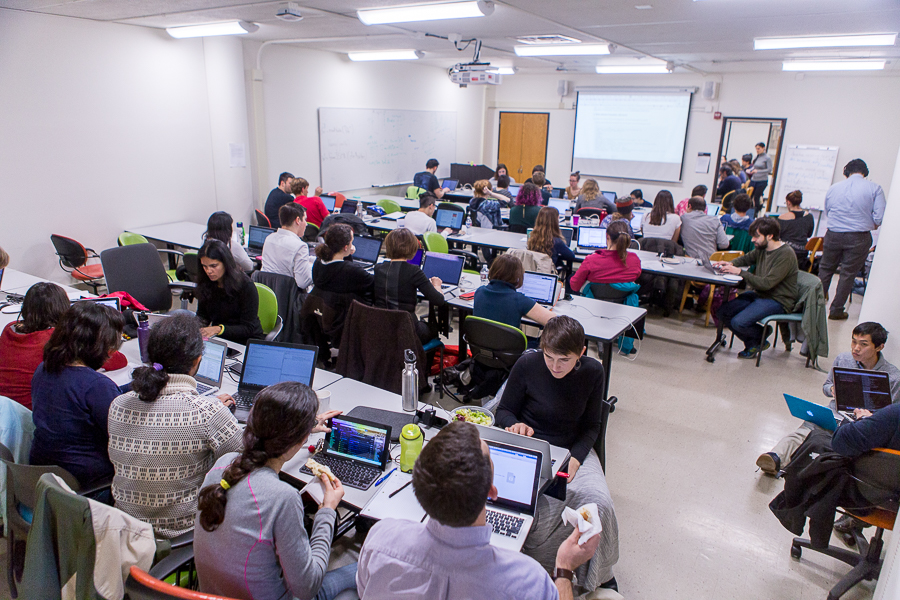
UC Davis community members gathered at the Peter J. Shields Library on Feb. 2 for #DataRescueDavis, a hackathon intended for archiving reliable scientific data. Volunteers spent the day on their laptops backing up data specifically related to climate change and the environment.

The hackathon was sponsored by DataRefuge, a public and collaborative project by the University of Pennsylvania that aims to safeguard scientific, federal data and ensure that data remain accessible to researchers around the world. The project has inspired communities across the country to host DataRescue events and to contribute to preserving public databases.

“These events are meant to pull down federally funded and publicly available data on federal websites and back them up in a location that isn’t under control by the government,” said Kevin Miller, the university archivist at UC Davis. “We want to ensure that any digital form or research dataset survives and is accessible over the long term.”

#DataRescueDavis began at 10 a.m. with an introduction of the project’s purpose and goals followed by a coding workshop. The volunteers were then split up into groups and worked on different coding tasks for the remainder of the day under the guidance of Shields Library staff members.

The DataRefuge Project kickstarted in December 2016 in anticipation of the U.S. presidential transition. Federally available data, such as the information found on the White House and U.S. Environmental Protection Agency (EPA) websites, are often updated whenever a president begins a new term, which can result in lost data. Shields Library staff members were inspired by the project’s objective of archiving these data and began organizing an event for the UC Davis community shortly thereafter.

“Libraries are committed to ensuring the preservation of and public access to knowledge,” said MacKenzie Smith, a UC Davis university librarian in an email interview. “It is critical that valuable scientific data remain available to researchers, so the UC Davis Library is offering its space and expertise in managing data to facilitate this important effort.”

Volunteers at #DataRescueDavis were divided into two main groups. The “nominator” group identified federal websites that had information about environment, climate, datasets or public research. These volunteers picked out websites that were “web crawlable,” websites that can properly index downloaded pages. When a web page was loaded with large data or media (an uncrawlable website), it was flagged and sent to the “scraper” group, who reviewed the websites and dug deeper to “scrape” out and manually download the data. The web crawlable data was backed up into the Internet Archive, a nonprofit digital library based in San Francisco, while the scraped data was backed up into an archive provided by DataRefuge.

Fernando Espinosa, a third-year neurobiology, physiology and behavior major, volunteered as a scraper at the event. He saw the project as a great opportunity for him to apply his knowledge of data science and coding toward a good cause.

“We know that we can prevent important scientific data from disappearing — data that can help us predict future climate change and other issues,” Espinosa said. “We want to create a large enough database that can be accessible to not only Davis residents, but to data scientists around the world.”

The project is currently collaborating with the Environmental Data & Governance Initiative and the Internet Archive’s End of Term Project to archive data involving climate change and the environment. According to Miller, preserving this information is crucial to research institutions like UC Davis.

“A lot of strength and focus here at UC Davis is on the environmental sciences, and that’s a part of the reason as to why we want to focus on those types of websites,” Miller said.

Some volunteers at the event expressed concern about the possible censorship of these public databases. Rachel Baarda, a physics graduate student and another scraper at the event, emphasized the importance of protecting reliable data so that future generations may use them with assurance.

“I remember it was only last quarter when I was trying to do research on my own about climate change, and I was using the EPA’s website to look at their climate change links,” Baarda said. “At that point, I started thinking, ‘In a year, these data might not be here if they’re not backed up.’ If you Google it, you should be able to go to these government websites with reliable data because there’s so much misinformation out there. We want to back up what we know is accurate and reliable data so that they can be accessible in the future.”

#DataRescueDavis’s dedicated volunteers made the event a true success; even at full capacity, volunteers continued to code and web crawl while sitting in groups on the floor and up against walls.

“I think what’s driving these numbers is that people are sensing that they have a skill that they want to use for good,” Miller said.

Upcoming DataRescue events are scheduled to take place at UC Berkeley, Georgetown University, Haverford College and MIT. No coding experience is needed in order to volunteer with the project.
Written by Emma Sadlowski — science@theaggie.org

Valentine’s Day haikus by the Editorial Board

HANNAH LEE / AGGIE

Short tales of love and loss from Aggie editors

Scott Dresser — Editor-in-Chief

Today is the worst

I had dinner with my cat

At least there’s Netflix


Ellie Dierking — Managing Editor

Valentine’s? Who cares.

It’s girl scout cookie season.

Thin mints: here I come.


Alyssa Vandenberg — Campus News Editor

Nothing better than

Cheap candy the day after.

I love you, Target.


Sam Solomon — City News Editor

My apartment is

infested with bed bugs, so

Netflix at your place?


Emilie DeFazio — Features Editor

Roses are red and

Cliches are ubiquitous.

Valentine’s Day sucks.


Eli Flesch — Opinion Editor

If you were born Nov.

Your birthday’s nine months away

From this special day.


Amanda Ong — Arts and Culture Editor

Oh no. He lives eight

bus stops away from my stop.

Long distance is hard.


Ariel Robbins — Science and Tech Editor

There once was a man

from Nantucket. He didn’t

text back. F*CK YOU, MARK


Bryan Sykes — Sports Editor

All these sad Haikus.

Why don’t they like Valentine’s?

I am very loved.


Photo of the Week: 2/8/2017

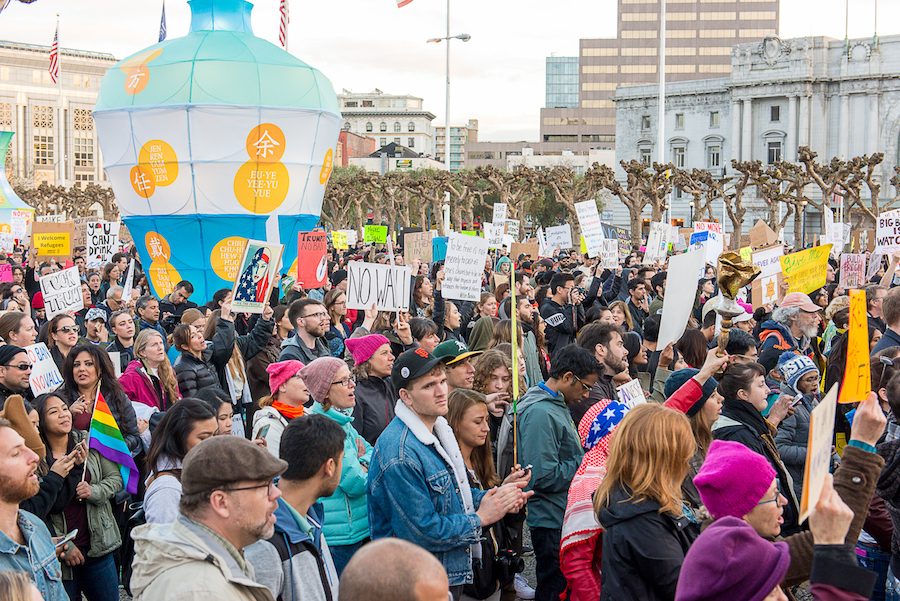
Thousands gathered at Civic Center Plaza, San Francisco denouncing their support on President Trump’s recent executive order. (JAY GELVEZON)

UC Berkeley shows how ideological fringes dehumanize one another

DANIEL KIM / THE DAILY CALIFORNIAN / COURTESY

The violent clash of liberal and conservative self-righteousness

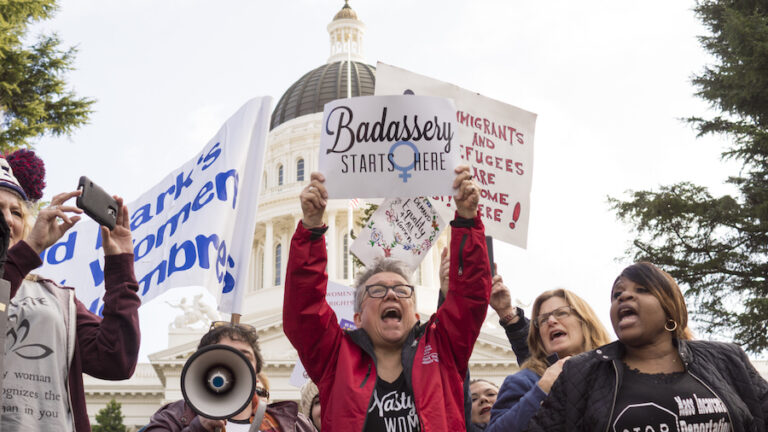
Mayhem in Berkeley last week exemplifies how physical violence and destruction become possible when extreme ends of the political spectrum dehumanize those with different opinions.

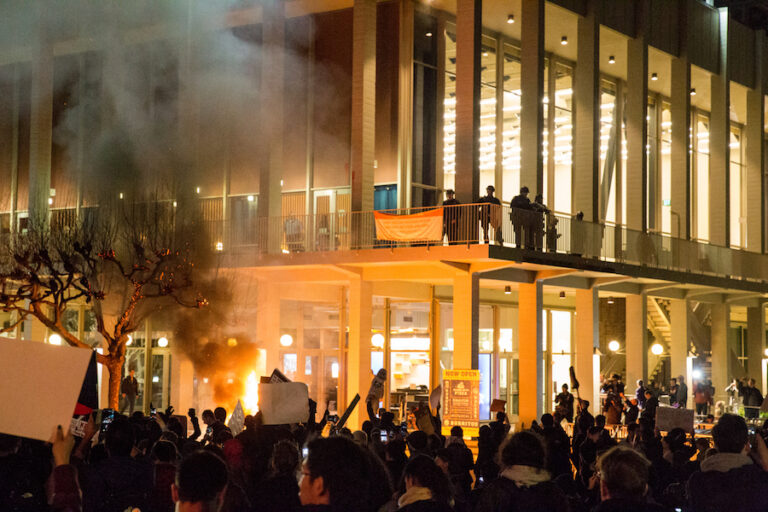
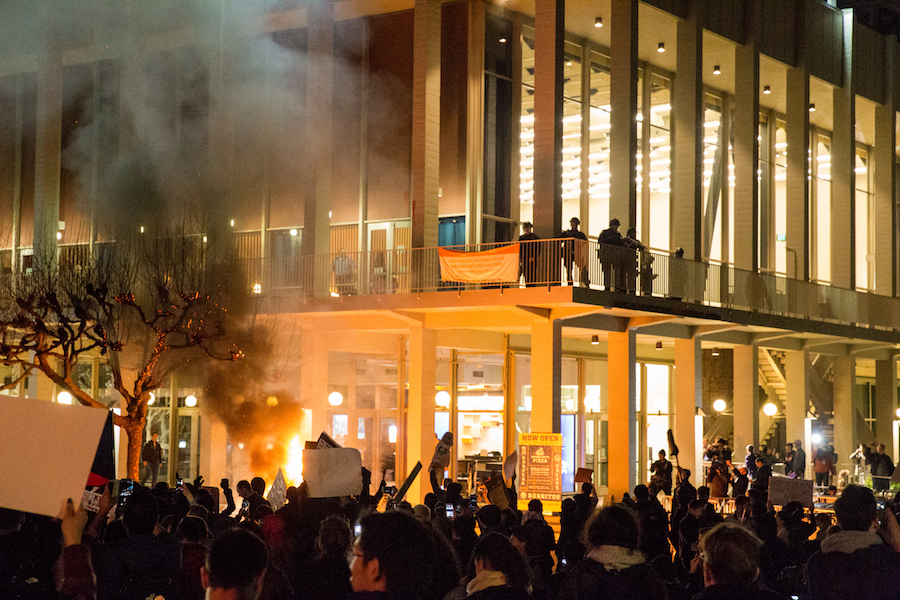
Although over 1,000 protesters peacefully assembled to shut down the Milo Yiannopoulos event, hosted by the Berkeley College Republicans this past week, the night quickly spiralled into a chaotic storm of broken glass, blazing piles of trash and physical assault as approximately “150 masked agitators” devolved the action from a calm protest to a riot.

In addition to shattering the windows of numerous banks and commercial stores, the extreme left-wing group responsible for the rioting, ANTIFA, endangered public safety by sparking fires in the street, throwing Molotov cocktails, attacking attendees and pepper-spraying a woman. The total damage is estimated at $100,000.

ANTIFA’s lawlessness is an example of the unethical and harmful actions that members of the far ends of the political spectrum engage in. And even those who aren’t at the very fringes but are nonetheless extreme in their liberalism and conservatism substantiate hate, belligerence and — in the most severe cases — crime, while hypocritically acting behind masks of love, morality and justice.

The religious far-right frequently dismisses one of the Bible’s most vital messages — to love others, even their enemies — and instead condemns those who they perceive as backwards, sinful and worthy of Hell.

The regressive left ostensibly operates under principles of acceptance and equality, but they often smugly and impatiently decry those who aren’t as progressive as them. They shut down the very conversations that lead to education, compassion and progress.

Amid the pretension, neither “team” lives up to their well-intentioned philosophies.

Both extremes hold an inflexible mentality that their worldview is so unequivocally, infallibly correct that listening to other ideas is not just pointless but toxic. The far right trusts the fantasy world of a self-interested demagogue over verifiable facts. And the far left shouts down any idea or headline that falls outside the increasingly restrictive laws of political correctness.

When liberals and conservatives are so contemptuously certain in their beliefs, they feel that any action they take in allegiance to their ideals is acceptable. This certitude can quickly manifest into the dehumanization of not only the other side, but also of those who take a more moderate position on their side. A person who doesn’t view their opponent as human can easily justify to themselves the morality of personal attacks, destruction and violence.

Not being able to see “the other” as a person creates an environment in which increasingly severe forms of assault, from pouring hot coffee on a news photographer at the UC Davis Yiannopoulos event, to calling to light a black protester on fire at a rally, to live-streaming the torture of a white disabled man out of hatred for Trump, are normalized.

Refusing to talk with each other only prolongs conflict. Liberals and conservatives — while already intensely polarized — recoil even further into their nests and grow more certain of their correctness. Even worse, the far left and far right cast the shadow of their destructive tactics onto moderate supporters.

Fox News can portray violence at Berkeley as a representation of all liberals, while MSNBC can depict the violence at Trump rallies as the behavior of all conservatives. Many people never challenge these faulty illustrations and instead sharpen their animosity toward the opposite party.

To ignore the other side is to perpetuate a longstanding ideological war that isn’t so abstract to liberals living in conservative areas, and vice versa. It leaves liberals in red environments hopeless for change, and isolates and pushes conservatives in blue areas to lash out to defend their beliefs. Progress may be achieved for people within insulated groups, but no progress is made as a whole.

Individuals on both sides are angry, upset and hurt — for good reason. But expressing these frustrations by treating the other side like scum isn’t constructive —  it tanks our chances at achieving harmony. There are ways to exemplify strength, confidence and passion without attacking those who stand opposite of you. Progress requires that both sides critically assess their methods, swallow their pride and admit their contribution to political polarization. Until then, have no doubt: Berkeley will just be the beginning.

Written by: Taryn DeOilers — tldeoilers@ucdavis.edu

Disclaimer: The views and opinions expressed by individual columnists belong to the columnists alone and do not necessarily indicate the views and opinions held by The California Aggie.

Top three places to eat when hungover

CHELBERT DAI / AGGIE

Breakfast burritos, potatoes and pancakes galore

Oftentimes, the worst part about drinking alcohol is the dreaded aftermath: the hangover. Here are a few places in Davis to help ease that painful hangover and soothe that hungry stomach.

Ali Baba

The number-one item people mention as their go-to hangover food is the breakfast burrito or veggie breakfast burrito from Ali Baba. The classic breakfast burrito consists of two eggs, bacon, beef gyro, cheese, fries, honey and Tapatio. And, for the people who can’t stomach any meat when hungover, the veggie breakfast burrito, which includes two eggs, grilled onions, tomatoes, mushrooms, cheese, fries, honey and Tapatio, is the better choice. Alex Vavan, a third-year biotechnology major, enjoys the large portions that Ali Baba offers.

“The fact that there is syrup in the breakfast burrito is just absurd and it makes me feel like a real boy again,” Vavan said.

The dim lighting and non-judgemental clientele make for a perfect place to eat when all you want to do is think about your regrets from the night before.

Ali Baba is located at 220 3rd Street and is open from 7:30 a.m. to 9:30 p.m. Monday through Friday and 9 a.m. to 9:30 p.m. Saturdays and Sundays.


Delta of Venus

Delta of Venus is a great place to sit outside and let the nice breeze wake you up while sipping on a hot cup of coffee. If your plan to cure a hangover is to drink even more, then this is the ideal place, as Delta offers delicious mimosas.

Charline Delkhah, a third-year managerial economics major, believes that Delta is the ideal place to recover after a night out.

“The potatoes are the best cure to a hangover,” Delkhah said.

There are an abundant amount of books and board games inside, which contributes to Delta’s calm and cozy atmosphere.

Delta is open during the winter on Monday and Tuesday from 7:30 a.m. to 4 p.m. and Wednesday, Thursday and Friday from 7:30 a.m. to 1 p.m. Unfortunately to many, it is closed on the weekends during winter quarter. Delta of Venus is located on 122 B Street.


Black Bear Diner

Black Bear Diner is the place to go to get a lot of bang for your buck. The serving sizes are ginormous, which allows for people to share and save money. The diner also serves breakfast all day, so, no matter what time you wake up, a big stack of pancakes is always waiting.

Geraldin Bravo, a third-year psychology major, loves being able to share a big breakfast plate with her roommate.

“It has one of the biggest breakfast selections in town, so that’s why I go there,” Bravo said.

This is one of the most common places for students to eat on the weekends, so be ready for a long line and to run into people you know. This is also a family-friendly restaurant, so beware of loud children. The diner is located on 225 2nd Street and is open everyday from 6 a.m. to 10 p.m.


Honorable mentions:

Crepeville: The classic item to get here is the strawberry nutella crepe.

3rd and U: The breakfast burritos and chili cheese fries are its best cure for hangovers.

Written by: CaraJoy Kleinrock — arts@theaggie.org

Women’s March anticipates new era in women’s health

BRIANA NGO / AGGIE

New administration poses fundamental threats to women’s rights
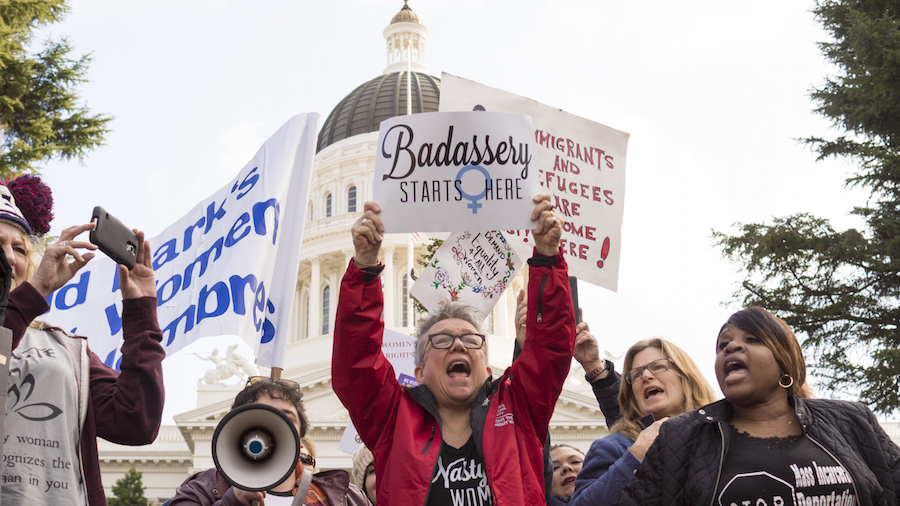
Just one day after Donald Trump was sworn in as the 45th president of the United States, millions of women took to the streets. They marched in Washington, Los Angeles, New York, Rome, Paris, Seoul, Tokyo, Bucharest, Bangkok and even Antarctica — uniting against one man who represents much of what’s wrong with society’s treatment of women today.

Turnout was even larger than expected, and the march clearly showcased that party ideologies don’t necessarily unify us — we are stronger when we believe in a common cause. Of all the minorities that Trump has slandered, women are the largest, and inclusive of every other group. Women come in all ages, sizes, colors and sexual orientations, but we all deserve equal rights to live and make decisions about our own bodies.

From his past interactions with women, his vicious campaign against what would have been the first female presidency and his recent Twitter attacks on prominent female figures like former Fox anchor Megyn Kelly, the President’s attitude towards women leaves much to be desired. During his presidential campaign, Trump hardly, if ever, addressed women’s issues.

However, his actions reek of misogyny, sexism and the degradation of women to mere “objects” for the purposes of male gratification. While his views on women’s healthcare and social issues are inconsistent, during his campaign he promised to nominate anti-abortion justices and defund Planned Parenthood. He also promised to make the Hyde Amendment, which prevents federal money from being used to fund abortions, permanent. Coupled with his effort to repeal Obamacare, Trump’s government could likely take away crucial health care from millions of people.

So far, he has only appealed to his female voters by making his daughter Ivanka the face of his campaign for women. Polished and suave, she brought up issues like maternity leave and childcare and promised that her father would push for equal pay for equal work. She cited her own business dealings and holds herself up as an example for what her father wishes to accomplish but doesn’t realize that her lifestyle is only possible because of the privileges she has had.

From Trump’s first days in office, it’s clear where his priorities lie. The appointment of Mike Pence as Vice President, a politician who notoriously tried to pass a blanket ban on abortion in his home state of Indiana, clearly indicates which way the government is headed in regard to women’s health and social issues.

Trump reinstated Ronald Reagan’s “global gag rule,” which stops all federal aid to foreign nonprofits that facilitate or talk about abortion. This includes the United Nations (UN), which gets most of its funding from the U.S. This time, the order not only affects the U.S., but millions of girls and women around the world who depend on the help offered by the UN. Many developing countries are far too poor to afford family planning services, and the UN’s programs are a lifeline to the rural communities in these countries. The LGBTQIA community in developing countries is also adversely affected, especially in countries where people believe that rape is a “cure” for homosexuality, thereby creating many unwanted pregnancies due to sexual assault.  Perhaps the worst effect of this “gag” order is on those affected by HIV, AIDS and the Zika virus. While it has always been difficult to provide assistance for underserved communities, it may become obsolete when there is a lack of funds. Without access to contraceptives and counseling services, women will remain at a much higher risk of contracting and spreading diseases.

If Trump repeals the Affordable Care Act, the government’s next priority could be to defund Planned Parenthood. Established in 1916, Planned Parenthood has its roots from the first-ever women’s health clinic started by Margaret Sanger, a notable birth control activist. Since then, it has provided services for women including not only birth control, but also cancer screenings, STD tests, abortions and general medical care. Planned Parenthood is estimated to perform at least half of all legal abortions in the U.S. In the political debate over legal abortion, the system and safety net for family planning and cancer prevention might just become collateral damage.

Trump has made it clear that policies affecting women’s health are a priority to him — but the actual health of women is not. Whichever direction the Trump administration decides to go, it should consider that we’re all human and deserve equal rights that allow us to live our lives the way we want. Trump may not like women making decisions, but we certainly don’t like him making our decisions for us either.

Written by: Shohini Maitra — samaitra@ucdavis.edu

Disclaimer: The views and opinions expressed by individual columnists belong to the columnists alone and do not necessarily indicate the views and opinions held by The California Aggie.

Humor: Man breaks Tinder after adding that he likes Netflix to his bio

KELSEY GREGGE / AGGIE

Student Daniel Fallon is just the man ladies are looking for
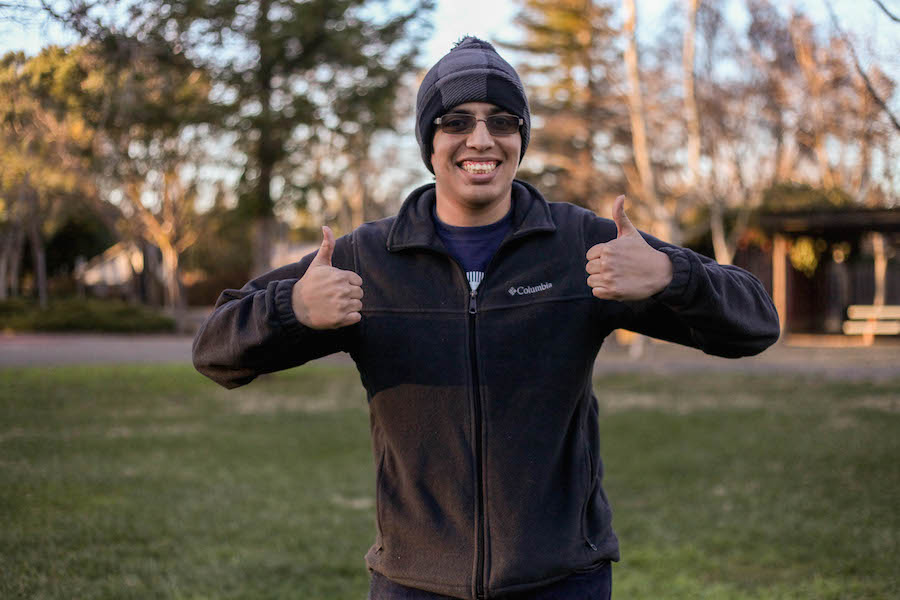
Every so often, God takes just a little more time on one person than the others. In the year 1996, this person was Daniel Fallon. When it comes to having a unique personality, Fallon runs circles around the average Joe. His favorite movie is “The Dark Knight,” an indie film that you’ve probably never heard of, and his favorite food is pizza, an Italian dish that has yet to make its way to the states. The point is this: we can expect magic from Daniel Fallon.

However, not even Fallon could have predicted the amount of fame that would come to him when he downloaded Tinder. He couldn’t decide on a bio at first, but then he found it — the most unique one possible.

“I really went with my gut,” Fallon said. “My bio reads: ‘Chill guy who likes Netflix and hiking. Not looking for anything serious.’ I thought it was pretty wild because pretty much no one likes Netflix. It’s kind of controversial. I thought it might even lead to a backlash.”

But oh, how wrong Fallon was! Women flocked to his profile in awe of his utter superiority to the average human male. Accompanying this genius bio was a photo of Fallon, not smiling (an artistic choice to represent the economy), in front of a nature-centric backdrop of trees, rocks and other outdoors stuff like, I don’t know, bears.

“The minute I saw the picture of him hiking combined with the bio that said he likes hiking, I knew I was dealing with someone special,” eligible suitor Hannah Jones said. “It’s like, how is he not married or something?”

Fallon sadly had to delete the app after a hailstorm of notifications made his phone freeze. Just like Icarus, this man flew too close to the sun. All of the women who swiped right on him held a funeral for his profile.

“It’s just so tragic,” one sobbing member of the congregation said. “We finally find the perfect man, someone with a pulse and decent grammar who knows what a hill is, and he’s gone… just like that.”

Daniel Fallon is now working out a brand deal with Dos Equis to replace their current “Most Interesting Man in the World.” He met with me one last time before he flew to the City of Angels to make it big. Letting out a single chuckle, he looked back fondly on his Tinder career.

“It’s actually funny,” he said. “I don’t even like hiking, I just thought it was sketch to not have a bio. Bon voyage!”


Written by: Olivia Luchini — ocluchini@ucdavis.edu

The importance of celebrity endorsement at the Women’s March

RALPH DAILY [CC BY 2.0] / FLICKR (changes made)
America Ferrera and Scarlett Johansson spoke fervently to Washington crowds
Celebrity endorsements have been historically effective for selling merchandise and procuring large profits — for both the recommended product and the illustrious sponsor. The exact opposite effect? Gratuitous and unanimous celebrity disapproval (often in 140 characters or fewer). Here, I’m not-so-cryptically referring to the Hollywood-wide dissent against President Donald Trump.

In the tense weeks leading up to the presidential inauguration, many called for a boycott of the televised event and many people actively protested in Washington, D.C. On Jan. 21, millions of Americans rallied together at Women’s Marches across the country and around the world to send a message: Hear our voice.

Among the attendees were celebrities, including actors Jessica Chastain and Nick Offerman, singer Alicia Keys and comedian Chelsea Handler, among many others. This is a different sort of celebrity endorsement. Yes, it would probably be more humanistic of me to refer to them simply as concerned Americans. But I invoke “celebrity” here to remind us that their public profiles grant them a platform. It’s the free tote that comes with the subscription. And yes, while it would be somewhat dehumanizing of me to constantly address them as “celebrities,” the fact of the matter is that they have major influence — for better or worse. But their participation in the Women’s March is undoubtedly a positive thing. Celebrity support of women’s rights and other social justice issues bolsters necessary conversation and the media’s (and subsequently, the general public’s) attention toward these problems.

Actress America Ferrera delivered some of the most resonant remarks during the march. From a podium in Washington, she said, “[T]he President is not America. His cabinet is not America. Congress is not America. We are America. And we are here to stay. We march today for our families and our neighbors, for our future, for the causes we claim and for the causes that claim us.”

In discussions surrounding Trumpist politics, the term ‘normalization’ is often used. One of the dangers of having Trump as president is that his hateful rhetoric will become a new norm. Ferrera speaks directly to this concern when she says that civilians, not bigoted politicians, are America. What remains unspoken is that Ferrera, much like Trump, invokes her power to influence. Their stances are completely different, however, as she attempts to unify and he seeks to divide.

Scarlett Johansson provided another important celebrity endorsement. She said, “President Trump, I did not vote for you. That said, I respect that you are our President-elect and I want to be able to support you.” In order for that to happen, she said that she wanted him to “support the men and women here today that are anxiously awaiting to see how [his] next moves may drastically affect their lives.” Johansson’s message was personal. She spoke of how her family and friends had relied on Planned Parenthood, which faces budget cuts under the new administration and Congress. Once again, we see how celebrity outreach in the emerging era of Trump is becoming increasingly important if we want to defend our rights.

What we see is a battle of powers: Hollywood versus Washington. It’s an arm wrestling match to see who can influence the most people. But make no mistake: we, the public, are not mere spectators. Like Ferrera pointed out, it’s up to us to decide which vision of America we want to endorse and enact. There is hope in such messages, and thankfully we have the entertainment industry backing the country through these trying times.
Written by: Jazmin Garcia — msjgarcia@ucdavis.edu

Disclaimer: The views and opinions expressed by individual columnists belong to the columnists alone and do not necessarily indicate the views and opinions held by The California Aggie.

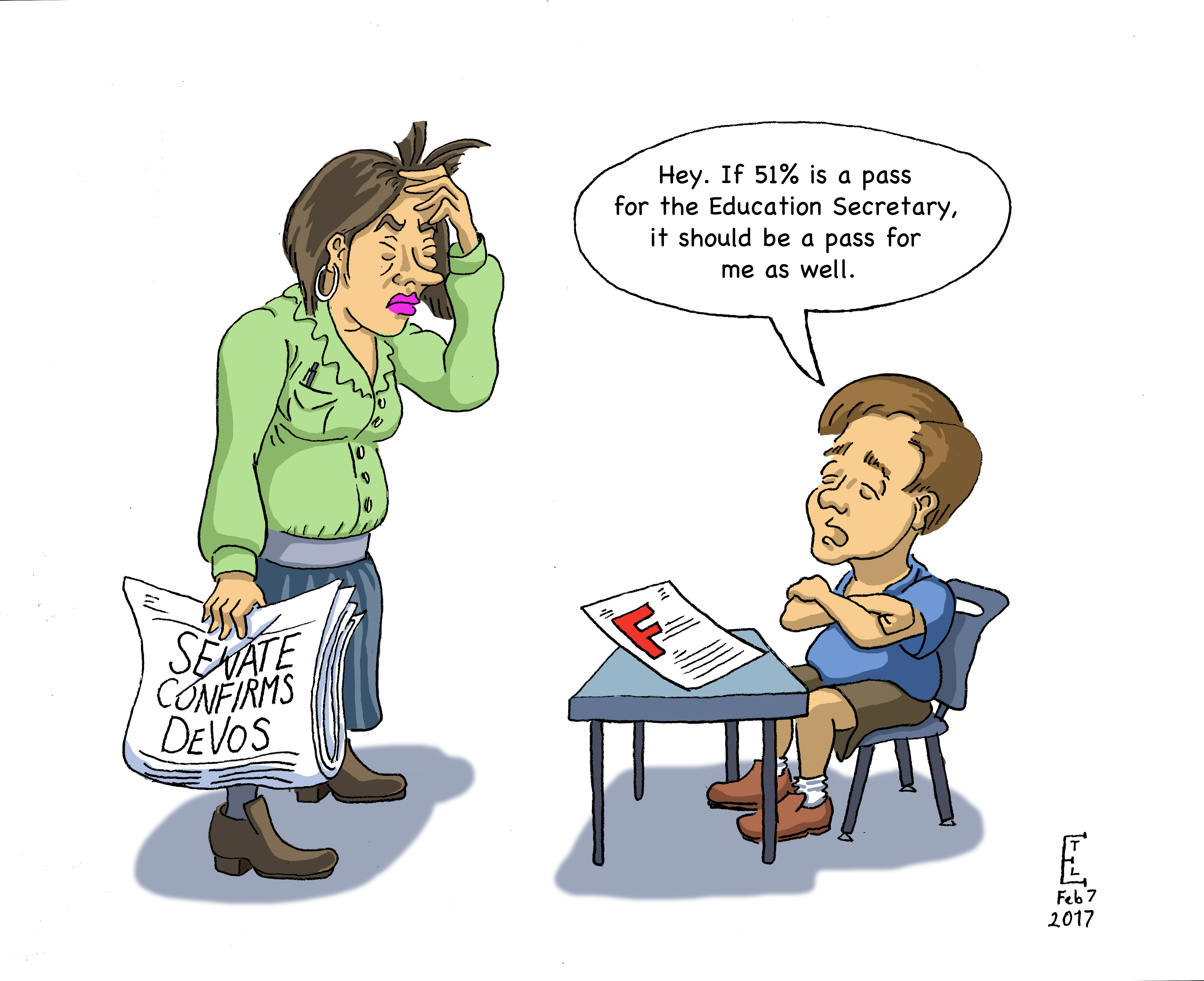
Cartoon: Pass/Fail

EVAN LILLEY / COURTESY

A powerhouse in the making

UC DAVIS SOLAR DECATHALON TEAM / COURTESY

UC Davis Solar Decathlon team to begin construction of sustainable house

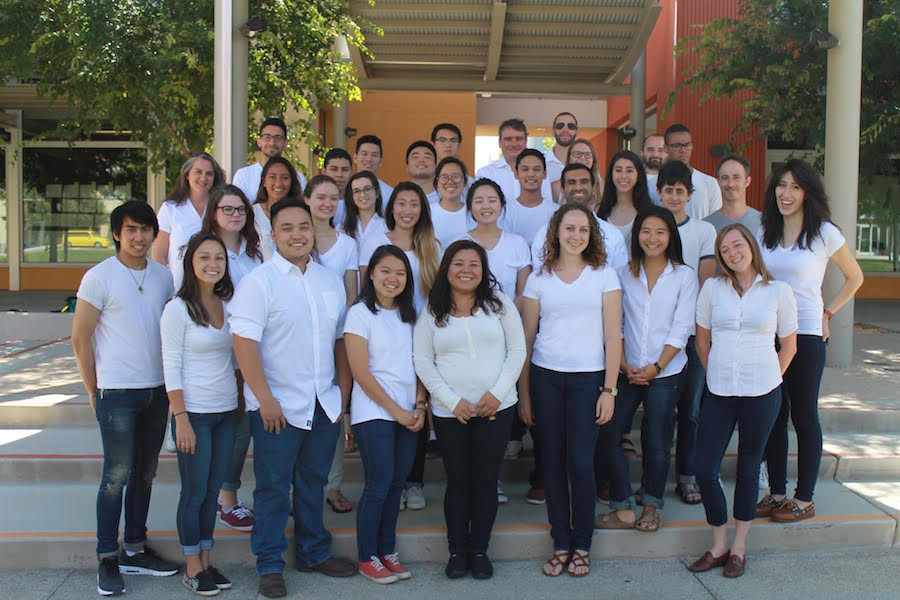
After months of preparation and design, the UC Davis Solar Decathlon team is officially in the works of constructing an affordable, sustainable house for the 2017 Solar Decathlon. Known as the Blue Mustangs, the multidisciplinary team aims to take home the competition’s top prizes this October.

The Solar Decathlon, a biennial collegiate competition held by the U.S. Department of Energy, is made up of 10 contests that challenge student teams to design and construct full-size, solar-powered houses. UC Davis will join universities from around the world in Denver, Colo. this fall to compete for prizes up to $300,000.

UC Davis provides its Solar Decathlon students with educational opportunities and resources throughout the year to ensure success at the event.

“In preparation for the Solar Decathlon, UC Davis sets up classes usually once a quarter that allow students to learn about the project and sustainable practices,” said Brooke Carey, a fifth-year civil and environmental engineering (CEE) major and the team’s student project co-manager. “This quarter our team is focusing on construction, so we’ll be in the field about eight hours a week working on our house.”

During the design period in the winter of 2016, the Blue Mustangs brainstormed innovative ways to address notable environmental problems in Davis. Kara Barcza, the Blue Mustangs’ Water Engineering Lead, explained in an email the team’s efforts to incorporate water efficiency and affordability into their house’s design.

“Because of the recent drought, this year we’re really striving to get as close to zero net water as possible,” said Barcza, a fourth-year CEE major, via email. “To do this, we’re emphasizing the use of efficient appliances and fixtures along with educating users on how to change habits and conserve water. We’re also reducing water usage by treating greywater and using it for outside irrigation purposes.”

However, engineering isn’t the only aspect of the Solar Decathlon. The UC Davis team is made up of a variety of students across different majors, ranging from interior design to landscape architecture and communications.

Alysia Love, a fifth-year CEE major and student project co-manager, emphasized the role the of communications team during the Solar Decathlon.

“Communication is one of the biggest parts of the competition,” Love said. “It’s really important that we make the house look desirable and communicate all of its features. We’re really trying to incorporate a lifestyle into the house.”

Teams will specify their goals before the competition and are graded on how well they manage to accomplish them. According to Carey, the communications team helps articulate the team’s goals and accomplishments to the judges, which can have a huge impact on the final score.

The Blue Mustangs occasionally deal with project drawbacks, such as insufficient funding and limited supplies. To combat these mishaps, the team must employ creative alternatives.

“In the real world, especially in construction, what might go wrong could definitely go wrong,” Love said. “It’s all about working with what you have and problem solving.”

As Solar Decathlon volunteers come and go, the Blue Mustangs continue to learn from one another and improve their house design.

“The greatest thing about the Solar Decathlon is having a such a multidisciplinary team,” Love said. “We’re always learning and teaching each other. It’s been a really great resource as a student and professional-wise.”

The 2017 Solar Decathlon will take place in Denver, Colo. from Oct. 5 to 15. Donations to the Blue Mustangs’ project can be made on the team’s website.
Written by: Emma Sadlowski — science@theaggie.org

Humor: Edgy KDVS to play full hour of Ralph J. Hexter passing kidney stone

PUBLIC DOMAIN (top), CIERA PASTUREL / AGGIE FILE (bottom)

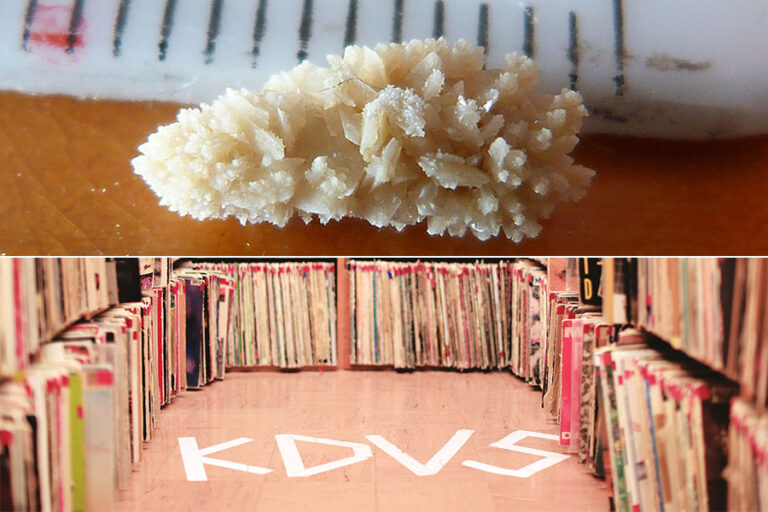
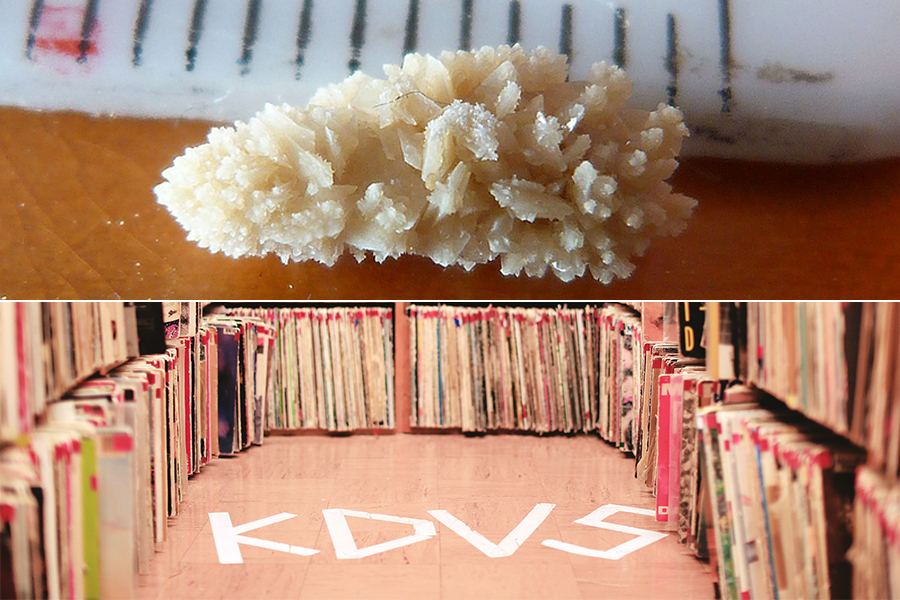
This rock is real

DAVIS, CA — After a unanimous decision by KDVS staff, the freeform radio station will air an hour of interim Chancellor Ralph Hexter passing a kidney stone the size of a mature blueberry.

The Aggie spoke with KDVS DJ DeadCow5, who explained that, in order to be at the very forefront of music experimentation, KDVS needs to take risks. Sometimes, he explained, those risks involve recording and playing the screams of a 62-year-old man passing a chunk of calcified metabolic byproduct through his urinary tract.

“No one out there is playing stuff like this!” DeadCow5 said. “We are literally the first people on Earth to record Chancellor Hexter complaining loudly to those around him about how painful it is to pass a bean-sized pebble of calcium out of his body.”

“KDVS isn’t on the cutting edge — KDVS is the cutting edge” he continued. “Is it too edgy? No, no it’s not. It’s perfectly edgy. But not too perfect, because perfect is not edgy. But we are. Edgy, I mean, not perfect — edgy. We are edgy.”

The radio station is, in fact, edgy, according to KDVS’ fanbase — comprised solely of KDVS employees and their parents.

“KDVS makes a huge impact on the Davis community,” said DJ Anonymous, who hosts the Wednesday 3 a.m. slot. “When people listen to KDVS, we want them to ask themselves important questions, like ‘What am I listening to?,’ ‘Is that sound coming from my car?’”

KDVS has long been known to be more edgy than Edward Scissorhands combined with Linkin Park and Daria. But on the heels of this most recent announcement, KDVS is now edgier than a Gillette Mach3 Fusion Proshield Razor with flexball technology. KDVS may have even become more edgy than a dodecagon by playing a recording of Hexter attempting to extricate a hard chunk of mineral through his sensitive renal system.

When KDVS was pressed as to why it had chosen this particular event over its regularly scheduled programming, a spokesperson had this to say: “Look, the normal stuff isn’t cutting it anymore. Elliott Smith sings about depression, My Bloody Valentine sings about heartbreak and Metallica sings about disfigurement, but what do they know about real pain, about real rock?”

This isn’t the only edgy event KDVS has planned. Starting next week, listeners can tune in nightly from 12 to 1 a.m. to a brand new live segment during which former chancellor Linda Katehi cries herself to sleep.


Written by: Parker Nevin — phnevin@ucdavis.edu

Dance, dance

DIANA LI / AGGIE FILE

UC Davis’ dance groups start preparing for annual Davis Dance Revolution

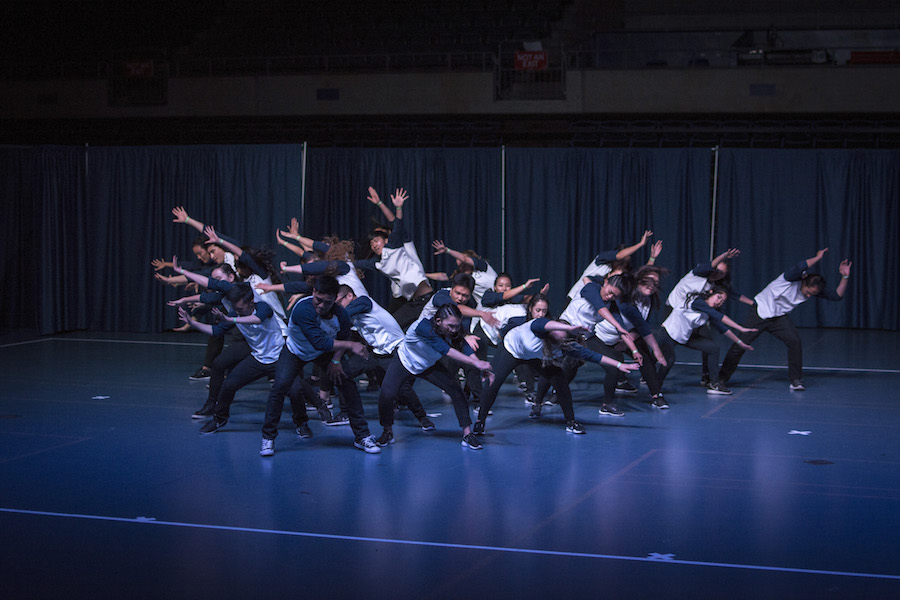
In preparation for the annual Davis Dance Revolution in April, campus dance groups are working hard to create fresh routines to perform for their audience and competing teams.

Amy Lin, one of the directors of MK Modern and a third-year human development major, believes that dance is a great unifier.

“MK Modern is a dance group that primarily focuses on hip-hop dance and urban choreo and we basically strive to be a dance team that tries to bring Davis and the community in general a vision of what is fresh in the dance community and what new styles are being offered every year,” Lin said. “We strive for our team to be a place where people can come together to grow and dance and get to know people because we have this one common passion which is dance.”

MK Modern focuses heavily on the teamwork aspect of dance and uses this approach to share ideas and create completely new routines. Ashley Jones, another director of MK Modern and a fourth-year human development major, said that MK Modern encourages individuals to share their talents and combines these talents to make a larger, unified piece.

“In preparing for the competition as a team we share our own choreography with each other,” Jone said. “Our entire set is choreographed by members of our team so it’s a product of solely our team members and something we work hard together with. Team members teaching team members choreography. It’s purely from us.”

However, these dance groups face several obstacles during preparation. Since many of the members often join without any prior experience in dance, returning members need to teach them how to dance from scratch.

Allie Young, one of the directors of MK Modern and a third-year clinical nutrition major, said that diversity is both a strengthening component but also an occasional obstacle for the group.

“Our team is very diverse with a lot of different dance backgrounds, so a challenge would definitely be trying to utilize our strengths and weakness to their optimal potentials,” Young said.

Sometimes, dance is not the only thing bringing these groups together. One such example is the dance group SoNE1, the first and only Korean pop dance group at Davis. Chelsea Chan, the executive director of SoNE1 and a fourth-year landscape architecture major, said that the music is actually what brings SoNE1 together.

“We united because we like the music genre,” Chan said. “Everyone is a K-pop fan first and foremost when they join SoNE1. That’s also a challenge because a lot the people that join aren’t advanced dancers. A lot of people are beginning dancers so as directors we have to train a lot of people from the ground up.”

K-pop is popular for its catchy beats and intricate group choreographies. Shannon Morrissey, the director of SoNE1 and a third-year animal biology major, explained how the group gives K-pop fans the chance to learn their favorite choreographies with people who share the same love for this music genre.

“Because we all like K-pop it gives us a good family feel and gives a nice community for people who just like to dance to covers,” Morrissey said. “Usually you do it on your own, but we give people the outlet and support to do that with others. Like other dance teams we take inspiration from other dance styles. Some of us have experienced making our own choreography as well so we blend the two.”

Like SoNE1, not all members of the Christian contemporary dance group Agape started off as experienced dancers. Both SoNE1 and Agape are non-audition groups, meaning that anyone can join if they are willing to be committed and are passionate about the group’s interests.

Emily Collins, the director of Agape and a fourth-year biological sciences major, believes that dance has a greater purpose to deliver the message of love and compassion to the audience.

“I think we’re a very loving community,” Collins said. “The point of our group is to touch the audience in ways other groups maybe not able to and just really convey a lot of emotions and something that’s deeper than this life gives us. The idea of this group and what we set out to do is to just harness the love that God gave us in the beginning and perform through the talents he’s given us […] My favorite part is having our own members say that they felt something from it [the performance] themselves. The word Agape is Greek for unconditional love, so we really do a part to make sure that we hold up to that name of it.”
Written by: Becky Lee — arts@theaggie.org

Senator Bill Dodd visits UC Davis

JAY GELVEZON / AGGIE

Davis College Democrats host Dodd for question and answer session

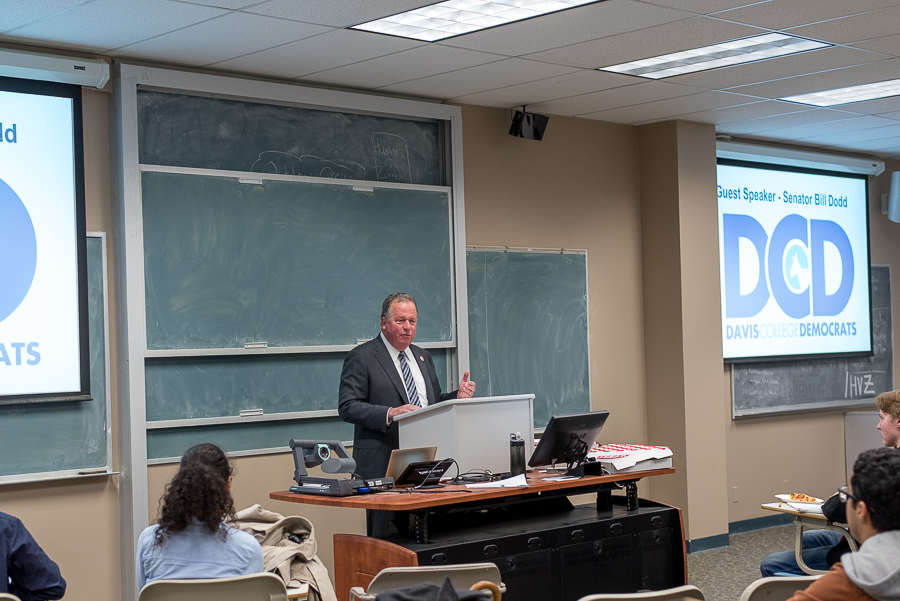
During the Davis College Democrats’ (DCD) second meeting of the quarter on Jan. 18, attendees were given the opportunity to speak with California Senator Bill Dodd (D-3).

“Let me tell you, the Davis College Dems were the first Democratic organization that supported me,” Dodd said regarding his run for the state senate in 2016. “I’m telling you, it means something, and this club, I tell you, I will be at your disposal.”

After his speech, Dodd took questions from students on topics ranging from taxes and tuition, to the housing situation in Davis.

“Education is something that is really, really important to me,” Dodd said. “I’ve always represented UC Davis and Sonoma State, but now I’ve got Cal State Maritime Academy over in Vallejo as well, and the tuition increases that we’ve seen in the past have gotta come to a halt. It’s just unbelievable the burden that students are having to pay and obviously those that can’t do it all on their own have college loans, and those build up, and it’s just a bad deal.”

Christian Monsees, a third-year political science major and the director of finance for DCD, said that the event created an opportunity for students to engage in policy.

“It’s one thing to show up to a club and feel the social aspect of it,” Monsees said. “It’s another thing to actually see what their futures could be, to be exposed to career opportunities and all of that kind of thing. It’s always great to hear Dodd speak and hear him go through his views on California policy, which is always super interesting for our members.”

Dodd also gave students the chance to talk about getting involved in politics as student Democrats continue to regroup after the 2016 presidential election.

Elizabeth Nash, a fourth-year environmental policy analysis and planning major and co-chair of the Indigo Awards, an annual fundraiser hosted by DCD, said that Dodd’s visit will help attract new students who might be interested in joining the group and supporting the Democratic party.

“For me, I was happy to see so many people engaged,” Nash said. “After the election of Trump, a lot of people on campus just felt really defeated and really scared. And at the same time, we were looking to expand our member base. So, if there’s going to be a silver lining, it’s that we’ve seen more people get involved in politics who really want to, not just, ‘Oh I really want to have my voice heard,’ but show up and actually put action behind their values and what they want to see in the world.”

Dodd, who spoke for approximately 40 minutes, also encouraged new members to think about their influence on American politics.

“For those of you that are new, it does make a difference,” Dodd said, referring to student participation in the DCD. “What you guys do in this room, it does make a difference and the job that we have to do in the future, as Democrats in the State of California, protecting the values that we have, is going to make a difference.”

According to Nash, the event provided a space for students to share input with their state senator, allowing them to expand their understanding of the legislative process.

“It gets students involved in politics,” Nash said. “It lets them be more knowledgeable about the system so that they can, I’d say, be more informed about what’s going on. It can help them express their views to their representatives who are then able to go and make policies that are better for the students.”
Written by: Ivan Valenzuela — campus@theaggie.org

The history of advocacy

0
JAY GELVEZON / AGGIE

Profiling student-led movements that have shaped UC Davis

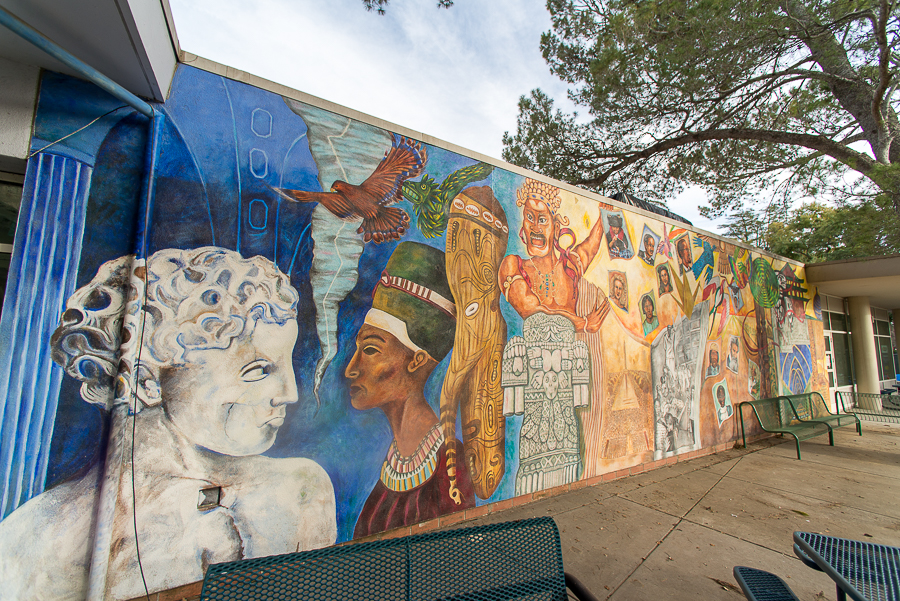
At the Memorial Union (MU), the eyes of important global and local activists gaze upon passersby to remind them that UC Davis students of both the past and present have felt compelled to advocate for change. “The Unfinished Dream,” a mural at the MU that depicts multicultural art pieces like Greek and Egyptian busts alongside portraits of activists like Harriet Tubman, was commissioned in 1991 to celebrate diversity and acknowledge the importance of activism.

“We wanted [to convey] that things were not perfect, that one always has to keep agitating and going forward,” said Kim Anno, one of the artists who co-created the mural. “This idea of a utopian society, where all people sit around a table, is not yet achieved. We wanted to make something that was triumphant.”

A look through Shields Library’s Department of Special Collections will show UC Davis’ history is deeply characterized by student-led movements. A 1969 protest which confronted then-Chancellor James Meyer in regard to the excessive use of police force at People’s Park was attended by his own children. The 1969 March for Peace at Sacramento, organized by UC Davis, was attended by between 6,000 and 8,000 people. In 1970, the Rally on the Quad for Vietnam involved the planting of 500 white crosses, symbolizing war deaths, which were subsequently uprooted and carried to then-Chancellor Meyer to demand that the university cut ties with the war effort. After the Kent State shootings in 1970 and the deployment of US troops in Cambodia, two molotov cocktails were thrown at the UC Davis Reserve Officers’ Training Corps building.

Students gathered in the 1980s and ’90s to protest Apartheid in South Africa, the first war in Iraq, sexism, racism and in support of Affirmative Action. In 1989, students protested the presence of Robert Bork, the rejected Supreme Court Justice nominee who opposed federal anti-segregation laws, when he came to campus for a university-funded event.

“What the demonstration [showed] to the university leadership and the greater community was that people were not going to be silent and let their rights be squashed to protect the rights of others,” said William Schlitz, who graduated in 1993 and who was involved in the protest. “Just because you have your rights and I have my rights doesn’t mean asking for my rights infringes on your rights. I tell people, ‘What the nation is experiencing now, California went through in the ’80s and ’90s.’”

Four students in 1990 began a water-only hunger strike that lasted six days and called for an investigation into alleged racism in the Spanish Department against native Spanish speakers, the establishment of an on campus ethnic and cultural center and an increase in full-time ethnic studies faculty members. Andrea Gaytan, one of the four hunger-strikers and now the director of the AB540 and Undocumented Student Center, said that the effect of the strike was greater than the granting of the three demands.

“The whole gist of the protest […] was really the mobilization and awakening of the community,” Gaytan said. “Afterwards, […] we had a humongous coalition for the anti-war movement. When we had the anti-fee hike protest, students and the campus community mobilized faster. We had members of the community and staff and faculty […who] became more widely-known as advocates and allies for students.”

Shortly after the hunger strike, the Office of Student Affairs and the Campus Art in Public Places Work Group decided to commission a piece of art that would both celebrate achievements and inspire further advocacy. This piece became “The Unfinished Dream.”

“The demand and the desire to have a mural was part of showing an unfinished dream [for] real equity and international respect and collaboration,” said Miranda Bergman, who co-created the mural alongside Anno. “[The mural] was combatting Eurocentrism in education and also remembering and honoring both students from the school and people throughout history who took that step to stand up for equality.”

Today, Gaytan said that she sees a large difference in modern UC Davis student activism as compared to the activism of 1988 to 1992, when she was a student. The AB540 and Undocumented Student center she directs is the result of student advocacy.

“Watching the students originally organize and […] write a plan and proposal for this AB540 Center was so different from what my experience had been,” Gaytan said. “It’s been really full-circle. Davis has made a lot of progress, just for Davis, but we’ve made even more progress compared to other universities in California and across the country. I feel extremely proud of what we’re doing now.”

More recent movements include the Occupy UC Davis movement with regard to tuition hikes in 2011, during which students were pepper-sprayed by university police. Evan Loker, a 2012 graduate who was involved in the Occupy movement, said that this event resulted in a mobilization similar to what Gaytan described after the 1990 hunger strike.

“What made Occupy unique from other cycles of political resistance was that it localized these new connections and energies into a particular territory — traditional political actions like marches and pickets taking place alongside micro-political processes […like] building relationships alongside ideologies and strategies,” Loker said. “The UC movement and Occupy shared a set of political concerns, symbols and tactics [which] created a set of common experiences and images that offered many millennials and older folks an entrance into radical politics.”

Just last year, the “Fire Katehi” movement played a part in the resignation of former Chancellor Linda P.B. Katehi. Even more recently, student protests manifested in opposition to the highly-controversial scheduled appearance of far-right conservative Breitbart editor Milo Yiannopoulos, accompanied by entrepreneur Martin Shkreli via invitation from the Davis College Republicans (DCR).

“We decided to host [Yiannopoulos] in order to allow our fellow students the opportunity to hear about ideas, policies and theories that may be entirely alien to their background,” said Deborah Porter, a fourth-year biological systems engineering major and political director for DCR. “We had hoped that liberals alongside conservatives would attend Milo’s talk with the purpose of pondering his ideas, asking difficult questions and promoting UC Davis as a place where we challenge the ideas set before us rather than blindly accepting them.”

Eric Gudz, who graduated in 2016 and who provided support and assistance to event protesters, said that he is opposed to the presence of “hatred and bigotry” on campus.

[Not] having the platform for that speech is not the same as losing your right to be able to conduct free speech,” Gudz said. “[I] wanted to show my support and solidarity to resisting and voicing my concerns over what I see [is the] proliferation of hateful and fearful rhetoric that is becoming more […] normalized in our communities. This provides other communities an example of how [they] can be powerful enough to really counter the spread of hate that’s happening and demonstrate that everybody has that ability to be able to […] stand up for what they believe in and what they know is right […] for the community.”

One day after the cancelled speech, Yiannopoulos returned to campus for a free speech countermarch, during which the 2011 pepper-spraying incident was reenacted with silly string. The “Shkrelopoulos” event directly referenced recent student movements at UC Davis and was similar in character to speaker-related protests like the 1989 Robert Bork controversy. According to Porter and the DCR, the re-enactment “especially reiterated” its rights.

“Just as the Occupy protesters had a right to be there, so did we,” Porter said. “It doesn’t matter the material they discuss, they have a right to peacefully do it.”

According to the UC Davis Policy and Procedure Manual, anybody may exercise First Amendment rights — including free speech — on all public university grounds. Symbolic structures are permitted at a designated site on the Quad meant for “symbolic speech,” but acts of civil disobedience are not condoned. Though the manual acknowledges that civil disobedience has played a historic role at UC Davis, it is not specifically protected.

For those looking to get involved in the future of activism on campus, Gudz recommends that students join established groups and organizations first before launching their own movements.

“Organizing in this era is going to be critical to move things forward,” Gudz said. “A good first place to start is to check in with those pre-existing activism groups. One of the big keys for activism [and] advocacy going forward is that these struggles are intersectional whether we want to realize them or not. The struggles of all these different groups are […] intertwined and they must be treated as such to be able to advance the causes forwards.”
Written by: Hannah Holzer— features@theaggie.org