55.7 F
Davis

Davis, California

Tuesday, December 23, 2025
Home Blog Page 661

The musical train to memory lane

LAURA LONG / AGGIE

Davis Sunrise Rotary Club grant benefits Alzheimer’s patients at Yolo Hospice

After years of planning and working to obtain the necessary funding, Yolo Hospice received a $1,500 grant from the Davis Sunrise Rotary Club, enabling it to become a Music & Memory Care Certified Organization. This distinction allows Yolo Hospice to provide its patients with iPods and music. Studies have shown that patients with Alzheimer’s or dementia who listen to music are more likely to retain their memories.

In order to become a Music & Memory Care Certified Organization, a pre-certification webinar must be watched. The cost for one year of certification plus five iPods is $1,000. However, there are various other costs associated with the program other than the initial amount. Yolo Hospice asked its volunteers to look for funding through donors, and it ended up obtaining $1,500 from the Davis Sunrise Rotary Club.

“The grant was wonderful and very generous,” said Sheryl Mahoney, a marketing and communications specialist at Yolo Hospice. “It does not cover the total cost of the program, however. We are a nonprofit, and this relies on philanthropic support.”

Patients with Alzheimer’s or dementia are given a playlist, tailored to their individual personalities and based upon their past. Family members and friends are asked to determine the music style, since the genre of music doesn’t affect patients’ ability to recall information; rather, the music should be something that each person can personally connect with on a deeper level. Each patient is then given two playlists, one calming and one upbeat, with 10 to 15 songs each from iTunes.

“You figure out an individual’s specific likes of their music, so their favorite song and the memories about the pieces of music, not necessarily the genre,” said Nancy Johnston, the social work and spiritual care manager at Yolo Hospice. “It’s more about them connecting to their past in their music.”

Although music isn’t said to be a complete cure for Alzheimer’s or dementia, it does help  bring some of the patients’ memories back for the time being.

“[Patients are] encouraged to use iPods before bathing or bed,” Johnston said. “Medication is used less and music is used more, because music is more effective. Music is one of the major contributors to the quality of life.”

The Music & Memory Care Certified Organization has proven to be beneficial for the Yolo Hospice in aiding those with Alzheimer’s or dementia.

“Alive Inside” is a documentary by Dan Cohen, founder of Music & Memory, in which he tries to prove that, through music, people can regain some of their past memories and rediscover a part of themselves. This commended cinematic piece was shown at the 2014 Sundance Music Festival and won the Audience Award.

There will be a local event in the spring showing this documentary, and all are encouraged to attend to learn more about the organization. Yolo Hospice is also looking for additional donations, whether they are in the form of new or gently used iPods or monetary contributions.

“The program guides caregivers to create personalized playlists on iPods,” said Elena Siegel, an associate professor at the UC Davis Betty Irene Moore School of Nursing. “These personalized playlists can be used to help residents with Alzheimer’s, dementia and other cognitive and physical challenges reengage and reconnect with their world through familiar music-triggered memories.”


Written by: Kaelyn Tuermer-Lee — city@theaggie.org
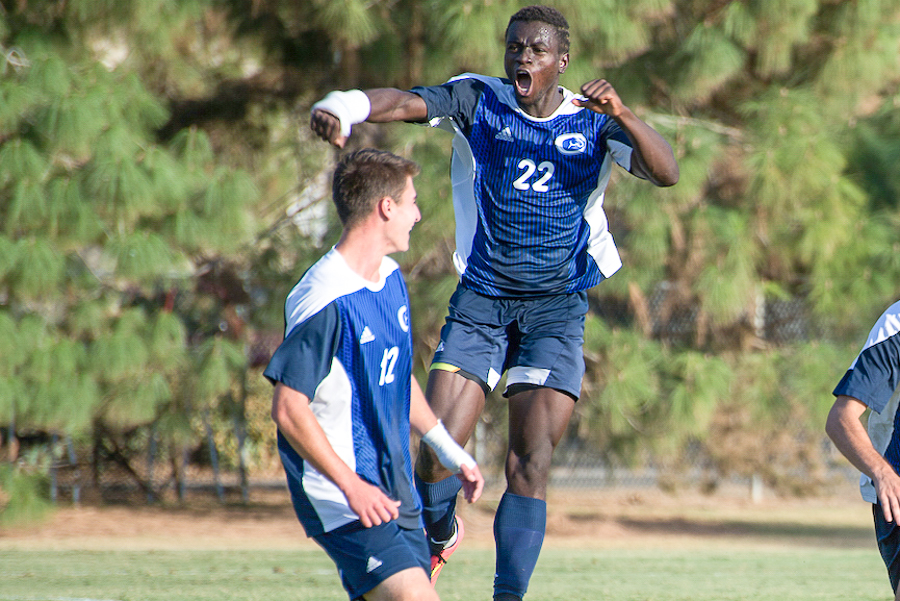
Inside the Game: Roy Boateng

0
ANH-TRAM BUI / AGGIE FILE

The Aggie sat down with the men’s soccer defensive star at the end of last season

Roy Boateng

Height: 6’2”

Year: Redshirt Sophomore

Position: Defender / Center-back

Major: Managerial Economics

Hometown: Rohnert Park, California

High School: Rancho Cotate High School ‘14

History: Went to a Cal-Cup title and State Cup with his club team, Santa Rosa United, in 2013 – Four-year varsity letterwinner for Rancho Cotate High School and named All-North Bay League First Team as a Junior and Three-time all-league first-team selection — Multi-sport athlete in high school, also playing basketball and football as a sophomore.   

Accolades: 2015 Big West Conference Honorable Mention — Big West Conference All Freshman Team — Named in top 100 freshman (No. 92) in nation according to TopDrawerSoccer.com — Fourth UC Davis player to be named to the league’s all-freshman team.

How long have you been playing soccer and how did you get into it?

I’ve been playing organized soccer since I was eight, but when I was in Ghana [where I was born] I’d play backyard soccer with the neighborhood kids… [so] since I could kick, basically. When I first came to the U.S. my dad thought that it would be a good idea to assimilate and he knew I liked it, [he suggested] I could make some friends. That was the motivation behind that.

What made you choose soccer over other sports that you played in HS?

Soccer has always been the number one sport in my life. In Ghana, [soccer] is the sport. I have always loved it. I tried out basketball and football and they were fun but nothing brought me that much joy other than soccer.

What was the injury you sustained your senior year in HS?  How long were you out?

I was playing against one of my buddies in [a] high school game and I was running down the line at full speed and the guy on [the other] team jumped and [went for] a slide tackle and missed so his whole body landed on my ankle, dislocating it right there. It [happened] right in the beginning [of senior year]. It took me out six or seven months.  

Were you still healing from the injury when you came in your freshman year?  Is that why you were redshirted?  

I was still good to play but I was still needing to wear a brace and [build] strength.  Yes, it was mainly the fact that they wanted me to be at full capacity once I started.  


What was it like redshirting your first year?

It was interesting… it was playing and practicing knowing that you weren’t going to be playing in games, but still going in and [giving] 100 percent because you want to help the team and you still want to improve yourself. I’m very thankful for it and it made me appreciate it that much more — I learned how to be a team player. That time was also difficult, traveling and having to watch games on my laptop and streaming it when they were away but I [feel] that the experience made me more appreciative when I did get my chance.  

Has defender always been your position of choice?  

Not at all. I played striker all my life because I was always the biggest body on the team, so the coach would just put me up-top. It wasn’t until my junior year of high school where I was at a camp in Davis and it was near the end of the first day and Dwayne [Shaffer, head coach] comes up to me and says ‘Have you ever played center-back?’ It was this one little scrimmage drill and he put me there told me to try it out and see how it goes. I remember not really knowing what to do from a positional sense but the defending part of it and the physical aspect of it came naturally. I ended up being MVP of the camp as a center-back. It was really encouraging.

What is your preferred position?

I like center-back because I get to see the whole field and I get to direct and distribute and having that experience as a striker helps me at center-back be more technical and know the ideas of my opponents. I love center-back, I have the best of both worlds now.          

What are your plans for the offseason?

Offseason is time for you to give your body a little rest.  We had a week off and to really work on conditioning, strength and building back up.  When the seniors leave it is the time where you regroup and see what you need, see what you need to work on.  Me individually, it is a great time to rebuild my body and fix the wear and tear of the season.  

How has the level of competition changed since playing for the Aggies? Is it more mental?

It’s completely different because as you improve and get to a different level — a higher level — It narrows down and everybody knows how to play. Everybody was the best guy on their team, so it makes it that more competitive and it becomes about the little tiny things, like who can execute on this given day or who can execute every single day, who can give in the effort every single day.  It doesn’t really matter if you have skills — that’s good — everyone has talent but that’s not what separates you anymore. Putting in the time and the work, what are you going to do by yourself, not just practice [but] how can you look at yourself and objectively analyze, [if] I’m not good at this, let me get better. A major part of the game is mental, really concentrating. One of the things that really helps me out is visualizing what I’m doing before the game even starts, visualizing the movements I’ll be making, the challenges I’ll be into and the plays that I will be involved in.  If you’re not concentrated, the things that come natural to you aren’t going to work… you have to mentally be there, mentally be present.   


You’ve had a lot of success in your soccer career thus far, do you have plans/desires to continue after your time at UC Davis is through?  Where would you like to be?

It has always been my dream to play professional soccer and I am really thankful for all the success I’ve had so far. I want to progress and get better.  It would be really nice to play professional soccer. Being a fresh out of college player, honestly, I wouldn’t be picky — I would just want to play at a level that is high and that really tests me.  

Written by: David Flores — sports@theaggie.org

“SKAM”’s universal appeal

HANNAH LEE / AGGIE

Norwegian show takes the world by storm

I’m usually not a fan of shows about teenagers because the characters tend to be cliched stereotypes, and the storylines are too “out there.” Where are everyone’s parents? Do these people ever go to school? Why couldn’t they just text each other in this crisis situation? So, as crazy and exciting as show premises may be, not many people want to stay tuned if there is too large of a disconnect between what we are willing to accept as “believable” and what we are seeing on the screen.

And this might be why the hit Norwegian show SKAM (translated: “shame”) has taken the world by storm; it all just feels so real. I often felt as if I was overhearing a personal conversation between the characters because the acting is incredibly authentic, and the dialogue doesn’t feel scripted even for a moment. Maybe that’s why it’s watched by people of all ages in Scandinavia. I also love that SKAM focuses on the daily dramas and heightened emotions of young people that are often dismissed.

The show centers on the students of Hartvig Niessen School, with each season focusing on one character and a specific dilemma that they are facing. The audience watches them struggle, learn about themselves and eventually accept themselves. They deal with rape culture, Islamophobia and homophobia, and it’s all addressed in an authentic way, unlike the preachy, afterschool special vibe present on so many teen shows.

Besides the realistic dialogue and acting, the series also has each episode posted online in real time. For example, if a character texts another that there will be a party on Wednesday night, that segment of the episode containing the party will be posted online on Wednesday night for viewers to watch – almost as if they were right there with them, and were personally invited. Then, all of the segments are combined at the end of the week to form one complete episode. The characters also have their own Instagram accounts, and text messages between them are also posted sporadically online. The young actors themselves, however, are incredibly sheltered from the public to maintain the authenticity of the show. They have made few promotional appearances and are strictly forbidden to talk about the show, which only adds to the mystery and allure.

The creator of the series, Julie Andem, auditioned over 1,200 actors for the roles, and built the characters around the chosen actors, adding to the realism. I have reluctantly gotten used to 25-year-old male models playing 16-year-old sophomores in high school, so I was a little taken aback by how accurately young and acne-ridden the characters are — truly a refreshing sight today in television.

Since the show is entirely in Norwegian, some fans have been adding subtitles themselves and spreading the content online. NRK, the Norwegian producer of the show, will not be providing subtitles for the show despite its massive popularity, stating that “the music rights are only negotiated for a Norweigan speaking audience.” This has apparently caused issues, as no one expected the show to blow up quite like it did, and it’s become a complicated process to work out music rights of featured songs by NAS, Justin Bieber, Lana Del Rey and N.W.A. Hopefully, this will all be worked out in time for Season 4, which is set to premiere in March.

So far, each season has ended on the character on whom the following season was focused, but the answer isn’t so clear for the fourth season, and there’s been a lot of speculation online. Looks like we’ll just have to wait and see.

Written by: Pari Sagafi — arts@theaggie.org

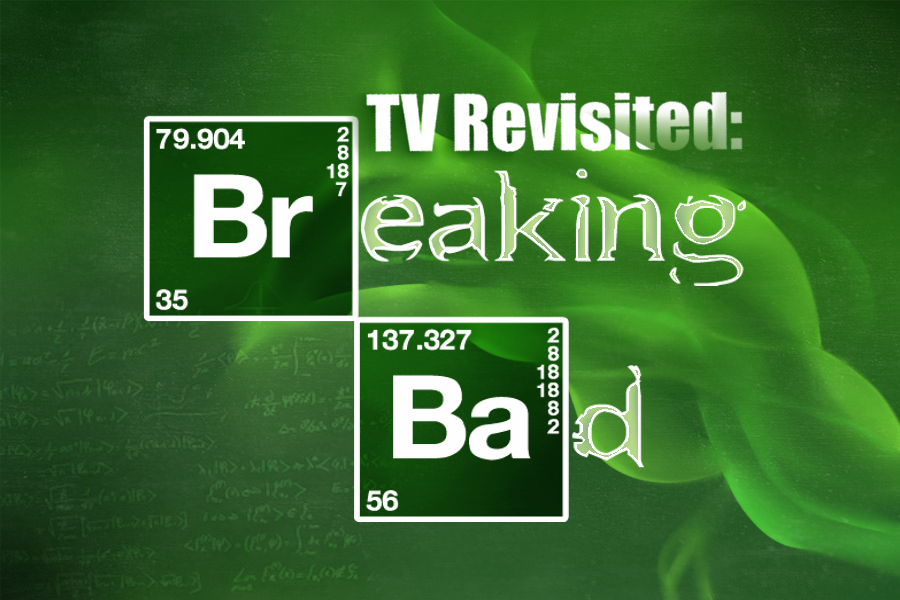
T.V. Revisited: Breaking Bad

MORGAN TIEU / AGGIE

Get your baby-blue meth and popcorn ready; we’re cooking Breaking Bad again

(Editor’s note: This article contains spoilers.)


My dad never watched Breaking Bad, and his reasoning was surprisingly poignant  — the concept of a dying teacher turned bad was his worst nightmare. Indeed, a show about the absurdly creepy scenario of a lower middle-class suburban New Mexican family hit way too close to home. Breaking Bad turned an awkward character like the dad from “Malcolm in the Middle” into “the one who knocks.”

Breaking Bad has left its mark beyond the dramatic 2013 finale, and it was rightfully deemed one of the best televison series of all time — earning the awards to prove it. As an avid fan and former binge-watcher of the show, I, prompted by that week-too-long winter break, decided to rewatch the show. Rewatching all five seasons (I’m not lying when I say I’m a binge watcher) brought about new revelations and ideas concerning the masterful show. I gained further appreciation for the main character’s (Walter White, played by Bryan Cranston) complexity and show creator Vince Gilligan’s genius. In case you haven’t watched or finished the series yet, spoiler alert ahead.

After a second look, the extreme use of foreshadowing became blatantly apparent. The episode “Box Cutter,” notably, had a single shot in the opening scene that focused a second too long on a box cutter, and would serve as the clue for the gruesome act that would follow. There are plenty more examples, but their significance stems from Gilligan’s shot-by-shot detail of the show. Each scene is handled with care and contributes to the show’s most important moments, making them all the more dramatic, often without the viewer even noticing. This minor artistic detail is, however, the least of what I overlooked in my initial viewing.

Walter’s wife, Skyler (Anna Gunn), emerged as a much more interesting character than before. I’ll jump on the bandwagon with most viewers’ opinion: Skyler is really annoying. But only at first. She goes through three stages in the show: first, the overprotective, suburban wife, and second, a sympathetic, naive and confused character who is grieving and piecing together the lies of her dying husband.

Her final stage is the most interesting. At this stage, she transforms into a version of Walter. She is manipulative, controlling and brutal. Her full-fledged new persona is especially evident in her request for Walter to kill Jesse Pinkman (Aaron Paul), justifying it as merely “one more” murder. Of course, this could be interpreted as trying to keep herself and her family safe from the dangers of Walt’s meth business. But she is much more powerful and complicated than that. She publically kicks Lydia out of her car wash, she “f****d Ted” out of defiance, she buys a car wash to launder money and, most importantly, when her brother-in-law and DEA officer Hank Schraeder (Dean Norris) gives her a free send-Walt-to-jail card, she keeps quiet.

She protects her husband, even though she was previously “waiting for the cancer to come back” so she could be released as his “slave.” She’s smart, and she proves this throughout the show with her wit and manipulation. She even faked a panic attack in front of a locksmith in order to break into Walter’s apartment. Though simply an annoying character at the start of the show, Skyler proves she is not subservient — she gets to the bottom of things.

And thus my sympathy for her diminished by the end of the show. As much as she would not admit it, she consciously involved herself in the meth business, beyond the basic purpose of survival. She is not a “slave” to her husband. Instead, she knowingly becomes the right-hand woman of a meth dealer, and had an oddly interesting development in the process.

Walter White had similarly interesting character developments. At first, viewers are sympathetic with Walter — he is a dying high school chemistry teacher with little to his name. While that sympathy remains dominant in the first couple of seasons, by the end, all sympathy has vanished: he is a drug dealer, a murderer, and will go to any lengths to manipulate others for his benefit. Especially noteworthy is his relationship with Jesse, who he claims is “like family.” That may be so, but he nonetheless destroys everything Jesse holds dear, taking advantage of his underlying innocence.

Each of his actions are seemingly for the benefit of Jesse, yet they turn out to be a ploy in the grand scheme of Walt’s plans. While Walt is complicated, my disgust for him as a character is unwavering. I might add, however, that though Walt is a horrible person, he ends up a scared man who, as Skyler puts it, “is way in over his head.” He is not Tuco. He is not Krazy 8. He is not Gus Fring. He is a chemistry genius who was at the right place at the right time and who managed to pull off his Drug Lord facade well.

He is undoubtedly smart, but simply being book-smart does not make one cut out for such endeavors. Walt knows this, and he despises it. There appears to be an internal struggle with Walt as he battles his own capabilities, desires, fate and free will.

While he can pose and slide by as much as he does, he is still chained to his inevitable death in the finale. No matter the degree and multitude of his accomplishments, there is no avoiding this conclusion. That is why the finale is so perfect — he has to die. It was destined from the moment he was diagnosed with terminal lung cancer. Even though he could create a brand for himself and his scientific genius, he is a simple, cowardly man who cannot escape death.
Written by: Caroline Rutten — arts@theaggie.org

Humor: School book club loses funding after asking Ayn Rand to come speak

ROMAN KRUGLOV [] / FLICKR
Davis Campus Readers feel heat after inviting dead author to campus

Davis Campus Readers (DCR), a book club at UC Davis, has had its funding cut and will be forced off campus by the end of Winter Quarter after providing a platform for some questionable speech. The club asked Ayn Rand to come speak to its members, but failed to notice that the award-winning author is, in fact, dead.

The club of 40 members has asked speakers such as Ray Bradbury, Jhumpa Lahiri and Stephen King to come speak, all of whom declined due to the pointed books that have been on the club’s reading list, including former chancellor Linda Katehi’s upcoming memoir.

Rand, the author of Atlas Shrugged and The Fountainhead, is the founder of objectivism. The Atlas Society says of the belief system: “There is no greater moral goal than achieving happiness. But one cannot achieve happiness by wish or whim […] Politically, Objectivists advocate laissez-faire capitalism. Under capitalism, a strictly limited government protects each person’s rights to life, liberty, and property and forbids that anyone initiate force against anyone else.”

Though UC Davis does not agree with the beliefs that Rand or objectivists follow, the school allowed for Rand to speak — but neglected to mention to the club’s president that Rand is deceased.

“I told them that Rand could come to the school. I disagree with them giving her a platform, but I couldn’t stop them from bringing her to campus,” said Bryan Lewis, director of Campus Clubs and Circles. “I think, even though she’s dead, that she has every right to come share her beliefs. Shame on the club for providing such a soapbox in the first place. We can’t stop people from taking a stance, but we can do our best to stop the spread of such opinions.”

Lewis went on to say that there was no room for such speech on campus and that, while he feels that such values exist, there is no reason for the club to bring such a controversial and divisive figure to campus.

DCR president Logan Marx claimed that the club “would not be silenced and had every right to make their voices heard on campus.”

While Rand has unpopular beliefs, DCR should not provide the contentious figure with a platform to spread ideas based around a highly capitalistic and self-centered society. These beliefs are obsolete and ridiculous, and they have no place in an intellectual setting. UC Davis administration elected to go straight to the source by punishing the group that provided a platform for dangerous dialogue by preventing the spread of such rhetoric.
Questioning the credibility of ETHAN VICTOR? You can reach him at ejvictor@ucdavis.edu. Feel free to help with his followers-to-following ratio on Twitter @thejvictor, because it is pathetic right now.

Police Logs

LUCY KNOWLES / AGGIE FILE

False alarm, false alarm

Jan. 22

“Female was running around complex screaming.”

“Landscapers on site using leaf blowers for the past several mins.”


Jan. 23

“4th time alarm gone off since midnight.” 

Jan. 24

“Dog running in traffic, husky puppy.”

Jan. 25

“On the top floor east side, grey Toyota Corolla taking up two spaces.”

Jan. 26

“3 hrs ago nonclient male came into business, was extremely agitated and left a note for the reporting party advising that he was possessed and was requiring that reporting party stop harassing him.”

Jan. 28

“Vehicle was temporarily parked in handicap spot with a placard, but reporting party believes driver was not handicap.”

Written by: Kaelyn Tuermer-Lee — city@theaggie.org

Davis owls face eviction at Marriott Residence Inn

SCOTT ARTIS / COURTESY

Burrowing Owl Preservation Society sues City of Davis for improper assessment of environmental impact of Marriott hotel

The Burrowing Owl Preservation Society (BOPS), which aims to educate the public and support conservation efforts for our feathered friends, filed a lawsuit on Jan. 5 against the City of Davis for its insufficient report on the environmental implications of the Marriott Residence Inn building site.

A pair of burrowing owls lives on the vacant plot of land located on Fermi Place, near the Mace Boulevard and 2nd Street intersection in East Davis. The hotel, which plans to break ground this fall, will stand four-stories tall with 120 rooms, a meeting room and other amenities; however, the burrowing owls will no longer have a place to reside once the project beings.

In 2007, BOPS conducted a study that counted 63 breeding pairs of burrowing owls in Yolo County. In 2014, a census calculated that the estimated population declined to 15 breeding pairs. This sharp decline was attributed to a loss of habitats, a presence of predators and the California drought.

Burrowing owls were once extensively dispersed and were considered common birds but they have substantially dwindled down in the past half century. Now the population stands as a State Species of Special Concern and a Federal Bird of Conservation Concern.

Janet Foley, a professor of medicine and epidemiology at the School of Veterinary Medicine, works as a board member for the BOPS. Foley hopes to create a dialogue between conservationists, the City of Davis and the California Department of Fish and Wildlife (CDFW) to protect these owls, which can then be a model for better protection for birds statewide.

“In Davis, virtually every spot that used to have owls has no owls,” Foley said.
“This is in my backyard and I feel that this city presents itself as environmentally friendly. I think it’s really important in a university town that it is environmentally friendly and we take care of one of our most endangered resources.”

Attorney Dan Mooney is representing BOPS for this case. BOPS alleges the council inaccurately concluded that the construction of the hotel would not have a substantial effect on the environment despite the abundant evidence that proves otherwise.

The complaint called into question the city council’s decision to approve a Mitigated Negative Declaration (MND) for the Marriott property. An MND states that an initial study yielded no significant impact on the environment and that certain mitigations will reduce or eliminate the implications of the project; no further studies are needed. It assesses whether there may be a slight impact on the surrounding habitat but certain mitigations lessen or eradicate the aftereffects to less than significant, as required by the California Environmental Quality Act (CEQA).

“We are not opposed to the hotel,” said Catherine Portman, the BOPS president. “Our issue is not with the developer or the builder. Our issue is with the City of Davis certifying an MND as an adequate level of CEQA review when there are burrowing owls on the property. They should not count eviction as mitigation.”

BOPS decided to take legal action to call attention to the shortcomings of CEQA and of Davis’ leadership. The council’s MND called for “passive relocation” of the fowl. BOPS strongly opposed this mitigation and explained that this method evicts the owls from their burrows, which the CDFW still allows and routinely practices.

“Passive relocation” involves installing one-way doors on the burrows, which provide owls with shelter year-round. Once the owls leave the burrow, they cannot return. The owls are often harmed through the repercussions of this forced removal and may not always find new places to burrow due to existing developments, much like in the case of the pair at Fermi Place.

“City council made a statement on Tuesday night (Jan. 24) at the council meeting…[that] the council believes the city went beyond what is legally required in mitigating the impact of the project on burrowing owls,” said Katherine Hess, a Davis community development administrator. “We believe that petitioners should take their concerns to [CDFW] since they are the regulating agency and the city must comply with Fish and Wildlife requirements.”

Written By: Bianca Antunez — city@theaggie.org

AB 1887 prevents use of state funds, including UC funds, for travel to states with anti-LGBT laws

MORGAN TIEU / AGGIE

Law to affect students selected to attend National Conference on Undergraduate Research

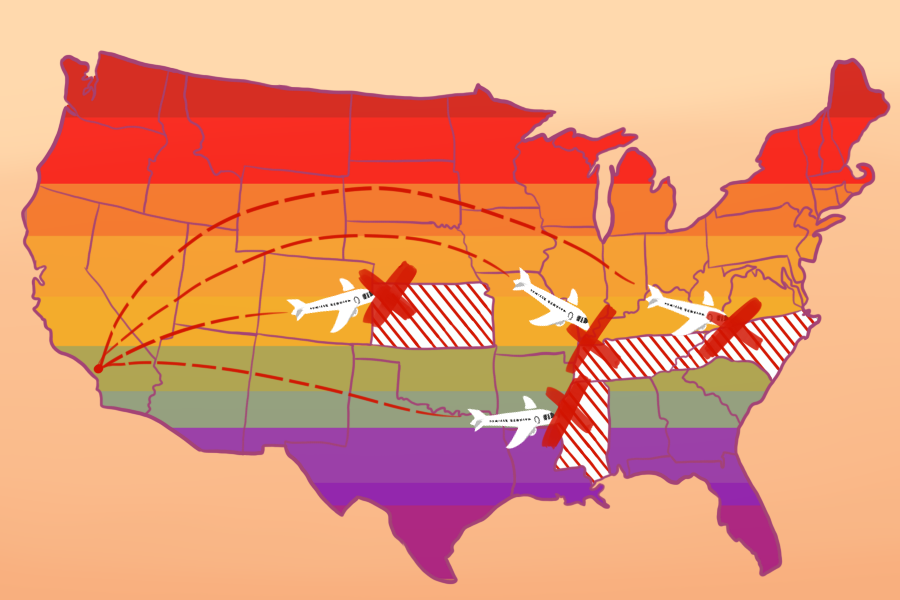
One of the many new California laws that took effect on Jan. 1 was Assembly Bill 1887, a bill written and sponsored by Assemblymember Evan Low (D-28). The law, a response to “religious freedom” and “bathroom bills,” prohibits state-funded travel to states outside of California with anti-LGBT laws. Since the University of California (UC) is funded by the state, this law impacts travel opportunities for both students and faculty.

The four states where state-funded travel is currently prohibited are Kansas, Mississippi, North Carolina and Tennessee.

“The impetus for this [law] was that there were states that were passing very anti-LGBT, discriminatory laws,” Low said. “In response to that, companies, not only in my district, but companies, tech companies, industries, such as Hollywood, indicated that they would boycott and withdraw any of their businesses in these discriminatory states because they did not want to subject their employees to potential discrimination. [The state does] not want to subsidize discrimination.”

Low views this law as an attempt by California to ensure that it does not fund other states that do not uphold California’s values.

“The difference [between companies] and the State of California, so a government entity, and these are taxpayer dollars, so we will not allow taxpayer dollars to support any kind of discrimination, ” Low said.

At least four UC Davis students and their sponsoring faculty will be impacted by this law, as they will not be able to receive funding from UC Davis to travel to the National Conference on Undergraduate Research (NCUR) this April at the University of Memphis in Tennessee.

“The students can go with alternate travel funding, and approval of their supervising professor for whom they’d be presenting their research work,” said Kimberly Hale, the interim director for UC Davis News and Media Relations, via email. “The university cannot contribute to their travel expenses due to the location of the conference.”

One of the students who will be impacted by this law is Mark Rivera, a fourth-year cognitive science and religious studies double major, who was selected to attend the NCUR.

“It’s quite the obstacle,” Rivera said. “No, [I] probably [won’t look for alternative funding]. I don’t want to have to expend the extra energy and time. I’m just kind of like, ‘okay, oh well, I missed out.’”

Rivera did express some discontent with the law.

“It’s silly,” Rivera said. “I think it’s exacerbating the exact problem it’s trying to address. If they don’t allow people from other parts of the country to come in, it’s going to make [those states] even more insular.”

Low countered this argument, stating that upholding the Californian value of inclusion is a foundation of the new law.

“I understand that viewpoint; I respectfully disagree,” Low said. “You saw the backlash of impact that these laws had in various places. Because of the swift backlash from so many forward-thinking companies and businesses, we have seen that individuals feel that perhaps this was just a wedge issue. We really need to have this occur and hit [these states] in the pocketbook where it really matters.”

According to Hale, if arrangements for the conference had been made before Jan. 1, there would have been no problem funding the travel, as the law is not retroactive. That is, the law cannot make punish an act that would be considered illegal under the new rule if it was committed before the law was in effect.

“It’s possible that the arrangements for the conference were made before January 1,” Hale said via email. “Also, if the travel [is] not funded by the state of California, then it does not fall under this state law.”

Apart from not applying retroactively, there are six other exemptions to the law: enforcing California law, litigation, appearance requests from the federal government; performing functions to keep grant funding, completing training for employment that is not available in California; and for matters of public health, welfare or safety.

Written by: Kenton Goldsby — campus@theaggie.org

Humor: I took a personality test that ripped me a new one

NICKI PADAR / AGGIE
NICKI PADAR / AGGIE

headshot_yrDon’t take the Enneagram in front of your friends


“My parents met through a personality test.”

A few years ago, my friend in high school was trying to convince me to take a personality test called the Enneagram, and I was in no mood for any crunchy, Berkeley, spirituality mumbo jumbo. I’m a man of science, reared on Mythbusters and Good Eats, and I simply had no use for anything that involved figuring out my “energies.”

Plus, I had done some of my own reading into these tests, and whether it’s the Big 5 or the MBTI, I have never found any use for personality assessments. I felt like they failed to capture any nuance or complexity in someone’s personality. They’d ask things like, “Do you consider yourself more of a thinker or a doer?” and I’d hate answering because, honestly, it depends.

When I order food, I’m a meticulous, thoughtful scholar, a lover of learning, one who painstakingly looks deep within himself to figure out if he wants jambalaya or a poke bowl. When I’m on the aux cord, I shoot from the hip, all gut instinct, no hesitation — just an intuitive grasp for the vibes that usually lead me to playing “Nobody Has To Know” by Kranium (Major Lazer Remix). I’d rather not get categorized into narrow silos.

But my friend was adamant. This test was way different, she told me. She described it as an older, wiser friend who’s been around people long enough to really figure them out; the one with the best advice when it came to everything from relationship issues to tips on self-improvement. She told me how her parents individually took the test, figured out their Enneagram “types” and went to a local singles event that matched compatible types — the types most likely to form strong relationships. 30 years and a couple kids later…

“I literally exist because of this test. You seriously can’t give it a chance?”

I gave in. She told me that I need to be super honest with myself. “No one is actually reading your answers, so really dig deep here. The more self-aware you are, the better the results.” Okay, okay. I trusted her judgement.

The test had 52 questions, each question having two qualities, and you had to pick, on a sliding scale, which one was more you. Soberingly enough, the instructions on the test say to “not to enter how you wish you’d be, but how you actually are,” which was quite the challenge to Yinon at 17. I ended up putting “neutral” for almost a quarter of the questions. My friend told me that’s okay, because it’s better to admit your gaps in your self-awareness than to report something that might not be there.

The main idea behind the Enneagram is that the types are based on fears — each of the nine types have their own base fear that drives every other portion of an individual’s personality. It’s fluid and multifaceted, so you can have several elements of different types, but there’s usually one dominant drive, which is your primary type. And that primary type has two variants, or wings, which are elements of a secondary drive (because yes, people are complex and nuanced, and I like that this test gets that). There are different websites that offer different interpretations of these types, so some research is necessary once you get your result.

When I got my Enneagram result, I wasn’t reading a clinical, detached diagnosis of my personality. Instead, I was reading a letter from an old friend who figured me out to the point of what felt like powerlessness. As I read all the ideas behind my type, I found plausible explanations for elements of my personality that, up to that point, never made sense to me. I found deep, incisive analysis into my most base, primal drives. I found some random touchy-feely horoscope-esque test that managed to cut to my soul.

The Enneagram is less about knowing yourself right now and more about knowing what you need to do to become who you want to be. As a senior in high school, that involved putting a lot on my plate, chasing success and dealing with the stress. My Enneagram type told me that people like me have an issue with pushing too hard for external validations. My type often associates their accomplishments with their self-worth, and they lose their own sense of identity because they’re so used to being the “successful” person.

People that know me today as a guy that can write about his degenerate habits (one of my humor articles in the pipeline is titled “I am a Trash person and I am proud of it”) for an audience of thousands can thank the Enneagram. My intense drive in high school to do it all — play football, take leadership roles in my teen-led youth group, succeed in AP classes and still find time to have an active social life with a serious girlfriend — made me smooth over my personality quirks and deny my own flaws.

My high school buddies poke fun at me these days for “peaking” in high school. But they also say that I’m way more fun to be around now, and that comes from me learning to be okay with not fulfilling the image I instinctively and subconsciously create for myself (I also didn’t drink or smoke in high school — so that may really be it). Leaving Silicon Valley and entering UC Davis’ culture helped — the diversity of personalities and characters in my friend group has dramatically increased. But I’ll give credit where credit is due: sometimes the crunchy, Berkeley, spirituality mumbo jumbo holds some real truth.


Written by: Yinon Raviv (Type 3, Wing 2)— ravivyinon@gmail.com


The corrupting power of too much democracy

GENESIA TING / AGGIE

headshot_SBExploring link between excess democracy and Trump


Talking heads have speculated since the election about the million dollar question: Why did Donald Trump’s authoritarian and nostalgic message of “Make America Great Again” resonate so deeply in a country experiencing its third-longest economic expansion?

The answer might not be so complicated. His victory isn’t such a surprise when you take a long view of American history.

Since the mid-1970s, with the exception of second-term bids, every presidential election between an “establishment” and an “outsider” candidate has seen an outsider victory. Carter, Reagan, Clinton, Bush Jr. and Obama all won by campaigning on some variation of a middle-finger to establishment politics. In the same time, Congress, the core of the political process, has been mired by poor public approval ratings.

It wasn’t always this way. For most of American history, political experience was a celebrated quality, and Congress was the pride of the republic. But now “insider” has become a dirty word.

Why has Congress, the most democratic branch of government, also become the least popular? Ironically, a shift towards more democracy is the root of this mass discontent.

It all started with Watergate. Richard Nixon’s criminal cover-up rattled American trust in government. To bandage the broken nation, Congress passed a series of democratic reforms, including the Government in the Sunshine Act. This made the policy-making process public for the first time in history. Crucially, it put an end to closed committees, private meetings etched in pop-culture as smoke-filled bastions of privilege where lawmakers struck unscrupulous deals. Congressional leaders figured that exposing the reality of the legislative process to the American people would restore faith in government.

Closed meetings allowed lawmakers to debate, amend and make deals out of the public eye. Assured of opacity, politicians could ignore opinion polls and special interests and make unpopular decisions that were in the national interest.

Legislators drafted the sweeping New Deal and Great Society programs behind these closed doors. Wasteful subsidies were cut and existing programs were tweaked to keep the government financially solvent. Ideological differences existed, but they rarely obstructed the duty of public service. Governance was, in the words of Franklin D. Roosevelt, an act of “bold, persistent experimentation.”

The Sunshine laws have torn apart Congress’s republican safeguards. Lobbyists and hyper-partisans now use a lawmaker’s every move as ammunition. Lawmakers constantly shoulder the burden of appeasing their donors and ideological constituency. A conscientious Republican who votes for firearms background checks, or a Democrat against excess agricultural subsidies, can bid farewell to a cushy primary victory.

Congressmen have hollowed out to become at best, to paraphrase President John F.  Kennedy, “seismograph[s] to record shifts in popular opinion,” and at worst, in the words of Mark Twain, “a distinctly native American criminal class.” Corporate welfare, pork-barrel spending and congressional gridlock are rampant. The federal government has become an inflexible behemoth.

So despite long periods of economic growth, Americans are frustrated — they regard their weakened institutions with mistrust. Watergate’s legacy has become permanent.

Enter Donald Trump. The ultimate outsider, a man who did not mince words as he bashed the status quo and labelled his opponents “lying,” “crooked” and “weak” — crude articulations of what Americans have told pollsters for years. He proved himself a man who never backs down from outrageous statements, unlike other politicians who cower behind talking points and engage in perpetual sycophancy. A man wealthy enough to self-fund his campaign and remain above the special-interest fray. A pragmatist not beholden to traditional partisan alliances. A behind-the-scenes dealmaker.

Donald Trump is the very antithesis of the post-Sunshine politician.

And so Americans held their noses, ignored his very rough edges and voted to “Make America Great Again.”

Congress is the only branch that can restore the luster of American politics by repealing the Sunshine laws. But this is politically impossible. Every industry benefits from the information made available by transparency laws, so every single special-interest group and lobbyist on K Street would collude to stop a repeal. Congressmen would be barraged with advertising maligning their opposition to democracy.

Democracy is not an inherently virtuous institution. Individual liberty and effectual governance are the true cornerstones of the American Republic. We ought to teach the public the true source of its malaise: too much democracy.

Written by: Sid Bagga — sabagga@ucdavis.edu

Disclaimer: The views and opinions expressed by individual columnists belong to the columnists alone and do not necessarily indicate the views and opinions held by The California Aggie.

Better bee-lieve it: UC Davis entomologist helped list bee as endangered

GARY ZAMZOW / COURTESY

U.S. Fish and Wildlife Service list the first ever bumblebee in continental United States as endangered; recovery plan in progress

The famous black and yellow rusty patched bumblebee is at risk of extinction, and it was recently listed as an endangered species by the U.S. Fish and Wildlife Service (USFWS).

UC Davis professor emeritus Robbin Thorp of the Department of Entomology and Nematology was a key actor in in the process of labeling the bee as endangered.

Thorp co-authored a petition in 2010 to call for the endangered status of the rusty patched bumblebee, species name bombus affinis. Several service programs are underway to collaborate with partners such as the North American Pollinator Protection Campaign to help restore general pollinators and their habitats.

“It had been a very common bee in western United States, but surveys done in early 2000s showed it had just disappeared from its original habitat,” Thorp said.

The bombus affinis live in colonies that include a queen bee and female worker bees. Male bees and other queens are produced during the late spring as part of the annual cycle of the colony.

“Only the queen survives for an entire year, with most members of the colony only living a few weeks,”  said John Mola, a Ph.D. candidate at Williams Lab at Davis and part of the Davis graduate group of ecology.

The worker and male bees have rusty-colored patches on the center of their backs, hence their nickname: the rusty patched bumblebee.

“[Endangerment to bombus affinis is caused by] habitat loss because we convert land [for] cities and agricultural uses,” Thorp said. “This tends not to support bees and they have a loss of flowering plants for food and nesting.”

The declining population of bombus affinis can also be attributed to reduced genetic diversity, high levels of fungal infection and pesticides and insecticides used in agricultural production.

“The U.S. Fish and Wildlife Service has now recognized the role neonicotinoid insecticides play in the decline of bee populations,” said Sarina Jepsen, the director of endangered species for the Xerces Society, a nonprofit invertebrate conservation group.

Toxins used in pesticides can be directly absorbed through a bee’s exoskeleton from contaminated nectar and pollen. Rusty patched bees risk additional contamination from chemicals in soils, often the location of nesting zones for this organism.

“When a species is protected, it becomes illegal to do [things] that might further cause harm to it,” Jepsen said. “Regulations exist and can impact a range of human activity, from approving a pesticide to building a new road or structure.”

The rusty patched bumble bee can be found in the eastern United States in Maine and southward, stretching down to Georgia and all the way across the midwest into the western states, according to USFWS.

The bees like to live in grasslands and prairies — areas that provide nectar and pollen from flowers. In addition, these areas provide nesting sites for the bees and undisturbed soil for hibernating queens. However, commercialization use of bees for agricultural purposes today has led to a dramatic change in the wild population.

“Bumble bees were commercialized in the 1980s and a disease spread among the population into the wild population of our bees,” Thorp said. “Other species may be carriers but not affected like the rusty patch bumblebee.”

Bees are vital to agriculture, serving as essential pollinators to various  kinds of plants.

In fact, bees contribute to pollinating about 85 percent of all flowering plants. Reproduction of plants requires pollination and many plants could not achieve this without the help of bees.

“Bumblebees are some of the dominant pollinators in colder climates — hence their fat and fuzzy bodies — pollinating charismatic and beautiful spring wildflowers like lupines, delphinium and clovers,” Mola said.

When a bee lands on a flower, it picks up pollen on its legs and body from the male part of a plant, called stamen. As the bee travels from flower to flower, the pollen is transferred from the bee to the female part of another flower, called stigma.

This process allows fertilization to occur, so a plant may produce fruit, carrying seeds and can develop. Examples of bee-pollinated crops include blueberries, cranberries, almonds, watermelon, cantaloupe, citrus fruits and apples.

“Some of these bees pollinate our own crops, and help with our national food production,” Thorp said. “A significant example would be bees pollinating greenhouse grown tomato plants.”

If bees went extinct, the berries, seeds and fruits that other wildlife depend on would be detrimental. The impact is not solely on agricultural food for human consumption.

“Bumblebees were previously called ‘humblebees,’ and before that, they were called

“Dumbledores,” Mola said. “[Apparently] J.K. Rowling, [author of the Harry Potter series] named Albus Dumbledore after bumblebees because supposedly he’s always humming about.”

While only one bee, bombus affinis, is listed under the Endangered Species Act, many bee experts hope this will bring awareness to the threats against bee populations in general.

“If folks want to help conserve bee populations, the best thing they can do is plant a flower garden rich in pollen and nectar for as much of the growing season as possible,” Mola said.

The USFWS has additional information about getting involved with the conservation of the rusty patched bumblebee, including tips on gardening and landscaping as well as minimizing use of toxic pesticides.

“Becoming aware of the roles that other organisms play in our environment, no matter how tiny, can help us better understand the ecosystems around us,” Thorp said.


Written by Shivani Kamal — science@theaggie.org

The Patriots are going to win Super Bowl LI

NICKI PADAR / AGGIE
NICKI PADAR / AGGIE

Aren’t you tired of hearing about this headline again? Yeah, me too. It’s exhausting. It feels as if, year after year, we hear the same old narrative at the end of January through the beginning of February. Brady and Belichick. Brady and Belichick. Brady and Belichick. Next week, the New England Patriots are headed to Houston for Super Bowl LI to face off against Matt Ryan and the Atlanta Falcons for their ninth Super Bowl appearance, a league record.

In the world of sports, a committee of elders would say it is always wisest to make the safest bet. In taking the opposite stance as Aggie reporter George McConnell, I believe I have taken the right steps to hedge myself this coming Sunday. When McConnell predicted a 36-7 thrashing of the Broncos at the hands of Cam Newton and the Carolina Panthers just a year ago, I immediately knew they were impending victims of the infamous “McConnell Curse.” After the Broncos defeated the Panthers by a score of 24-10, McConnell took a temporary leave of absence after request to have his article rescinded was denied by our sports editor. Okay, fine, that’s not true at all, but in a world in which “alternative facts” can be construed as reality, I like to think that’s what happened. This time around, McConnell is going with that high-octane Atlanta Falcons’ offense to emerge victorious on Super Bowl Sunday, so naturally, I must go with the Patriots.

Don’t get me wrong: Atlanta had a tremendous season thus far, but when you put these two franchises side-by-side, there’s simply no comparison. The Falcons have only ever been to one other Super Bowl, back in 1999, when they lost to John Elway and the Denver Broncos by a score of 34-19. Before this postseason, their last meaningful game came against Colin Kaepernick and the San Francisco 49ers back in 2013, when they predictably coughed up a 24-14 lead at the half to ultimately fall to the Niners. They’ve long had a reputation as being an unthreatening playoff team, and congrats to them for shedding that label, but surely, that is as far as they’ll go.  

The Falcons’ combined 80 points against the surging Green Bay Packers and the Seattle Seahawks in the first two rounds demonstrates how prolific their offense is, but they’re the Falcons! Atlanta just isn’t a city that has a winning sports culture, as each of its current franchises have been seemingly stuck in perpetual mediocrity. I hate to place too much emphasis on the history and culture surrounding a team over what it has done in a given season, but that is the way this needs to be approached. It’s the same reason why the Los Angeles Clippers get bounced every year in the second round of the NBA playoffs. It’s the same reason why that elusive championship ring will continue to evade Carmelo Anthony. It’s the same reason why my spring quarter IM softball team will miss out on the playoffs for a fourth and final consecutive year. Some guys just don’t have the it factor.

Super Bowl LI is not about the Patriots vs. Falcons. It’s about Tom Brady vs. Roger Goodell. It’s about revenge for “Deflategate,” the elongated, annoying, petty scandal about Brady supposedly deflating footballs in the 2015 AFC championship game against the Indianapolis Colts. The scandal resulted in a four-game suspension for the Patriots quarterback that was imposed at the beginning of this current season, and many thought this would give the Pats a big enough disadvantage that someone else could hopefully lead the pack and emerge out of the AFC. Brady said to hell with that, and he came back with a vengeance. In 12 games, he went 11-1. He accumulated 3,554 yards with a 67.4 completion percentage. He threw 28 touchdowns and an infinitesimal two interceptions, all in his age 39 season. I think he may have found the fountain of youth.

Roger Goodell, the wildly unpopular commissioner of the NFL, has been avoiding New England like the plague since the incident. He chose not to attend Gillette Stadium at all during the regular season. He avoided going to New England in its divisional round game against the Houston Texans. He decided on going to the NFC championship game between Atlanta and the Green Bay Packers as opposed to New England again during the conference championship round. He really, really, really didn’t want to face the music. Can you blame him? Folks from the New England area can be intimidating. Have you seen The Departed? Maybe The Town? You’d have to have seen Good Will Hunting, at least. How do you like them apples, Roger?

It’s going to be a sublime feeling on Feb. 5, when Roger Goodell is forced to hand over the sacred Lombardi Trophy to Tom Brady for the fifth time, cementing Brady’s legacy as the greatest quarterback in the history of the NFL. As a New York Giants fan, I’m no Tom Brady apologist, but Goodell atrociously mishandled the “Deflategate” scandal and turned it into a grotesque and unnecessary witch-hunt. I sit back now and envision how awkward and glorious it will be when those two share the same stage. The crowds will relentlessly boo Goodell, and Brady will probably try to diffuse that tension being the professional that he is. Regardless, it’s going to be hilarious. What goes around comes around, and I’m telling you right now, the Falcons will not get in the way of that.


Prediction: New England Patriots 35, Atlanta Falcons 24


Written by: Michael Wexler — sports@theaggie.org

UC Davis men’s basketball dominates, usurps UC Irvine

0
DANIEL TAK / AGGIE
DANIEL TAK / AGGIE

The Aggies defeat the UC Irvine Anteaters 74-65, now sit first in Big West Conference

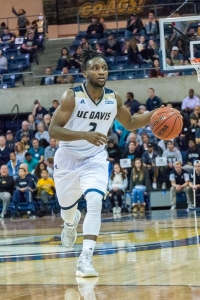
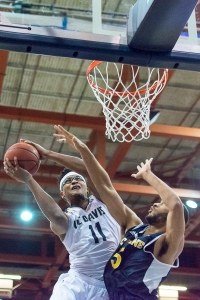
Finishing last season with the number-one defense in the Big West Conference, the UC Davis men’s basketball team showed why it deserves to be at the top of the table, earning a thrilling comeback victory last Saturday night against the UC Irvine Anteaters, 74-65.

This win pushed the Aggies into first place in the Big West Conference, bringing their overall record to 13-8 (5-1 in conference play and continuing their dominating performance at home games, remaining the only team left in the Big West with an undefeated home record (6-0).

“We can’t get too hot,” said junior forward Chima Moneke. “First place is great but at the end of the day, you can lose it very quickly. We have to stay consistent but be confident in ourselves and execute the game plan every time.”

ANH-TRAM BUI / AGGIE

It was a rough start for the Aggies, as they found themselves in an 18-point deficit just seven minutes into the first half of play.

However, UC Davis quickly picked up its performance, going on 13-2 and 6-0 scoring runs in the end of the first half, leading into the second. At halftime, UC Irvine held a 33-27 lead. Once the second half began, it was lockdown defense for the Aggies, as the Anteaters’ field goal percentage slowly dwindled from 40 percent in the first half to 32 percent in the second. UC Irvine also saw a decrease in its three-point percentage, going 4 of 7 (57 percent) in the first half and 0-8 in the second.

“I think getting down early was because we came out too energetic and didn’t play our brand of basketball,” Moneke said. “It started with coach because he didn’t overreact, it trickled down [to the team] and we cut their lead.”

Success did not only come with the Aggies’ defense, but their offense as well. Moneke led the night on offense, scoring 22 points (all in the second half) shooting 7 of 12 from the field and a perfect 8 of 8 from the line. Moneke also grabbed eight rebounds.

Senior guard Brynton Lemar finished with 13 points on the night, 10 of those coming from the free throw line — a career high. To add to the offensive performance, senior guard Darius Graham added 13 more points and five assists. Going to the line 10 times during the game, senior guard Lawrence White finished with nine points and five rebounds. Sophomore guard Siler Schneider and senior forward J.T. Adenrele scored eight and seven points, respectively.

DANIEL TAK / AGGIE
DANIEL TAK / AGGIE

If there was one thing that was certain in this game, it is that the Aggies are locking it down from the free throw line. The team hit 35 of 46 free throws (76 percent), setting a new team high in free throws made and attempted. This success from the free throw line could be attributed to practice early in the week, as each player shot 100 free throws in Monday’s practice to sharpen their skills at the line.

“I think it played a big part in being confident at the line,” Lemar said. “It just made us more confident and those are the little details that we don’t focus on a lot, so it was great that coach gave us the opportunity to work on that.”

The Aggies leave town to head on a two-game road trip against Cal Poly and UC Santa Barbara on Feb. 2 and 4, respectively.

“This group has been pretty good about taking 24 hours and enjoying the victory of the game and then coming back with great focus each week,” said head coach Jim Les. “They know how quickly the tide can turn. We will get back to attention to detail and focus on Cal Poly. We need to continue to focus on defense and continuing to clean up some of the offense so we don’t dig ourselves into a hole.”

Written by: Ryan Bugsch — sports@theaggie.org

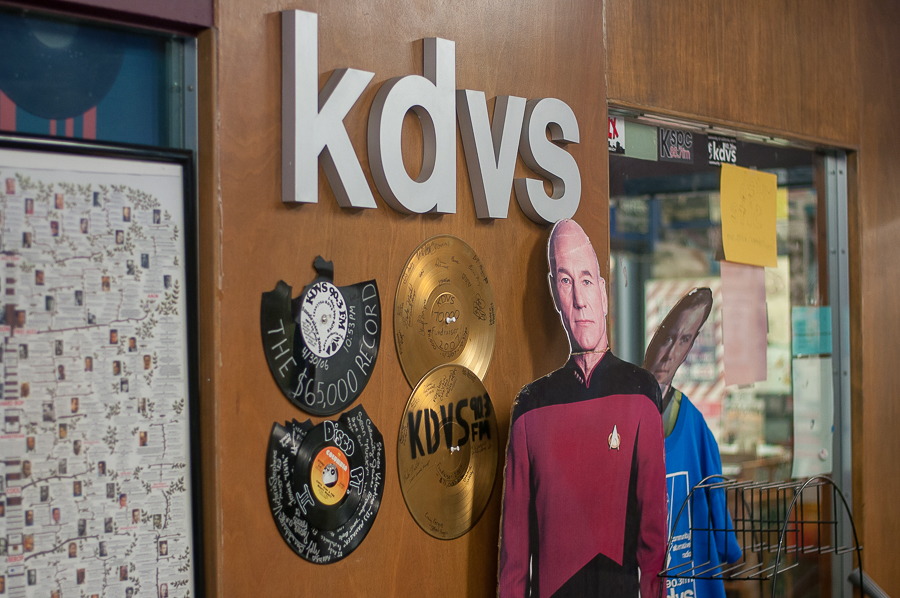
A look Inside KDVS

IAN JONES / AGGIE
IAN JONES / AGGIE

UC Davis’ freeform radio station serves as platform for alternative community

Whether through through music, talk shows, announcements or advertisements, KDVS 90.3 FM, UC Davis’ freeform radio station, serves as an ongoing resource for the community. While the station is both literally and figuratively underground, its utility for the campus and Davis/Sacramento community is limitless — KDVS runs 24 hours a day, 7 days a week, year-round.

Though the station has evolved since its birth in 1963, its commitment to alternative music and news remains. Originally run out of the laundry room of a campus dorm, the station first operated as KCD in February of 1964, according to the KDVS website. The station has since relocated its tower, modernized and renovated, but it remains one of UC Davis’ most influential nonprofit organizations.

UC Davis alumna Janie Lozano first joined KDVS in 1998 as an undergraduate student looking to get more involved. Like all KDVS members, she began as a volunteer, cleaning and organizing music.

“I didn’t think I wanted a radio show at first, but then people kept asking me, ‘So what kind of show are you gonna do?’ And so I thought: maybe I could do a rock show,” Lozano said. “I was starting to get into punk rock at the time, so I started a punk rock show in April of ’99.”

Since her first show (for which she was admittedly nervous to go on the air), Lozano has continued to DJ, and she still DJs for the station to this day. She noted that, among other changes, more women have become involved with KDVS since she began volunteering.

“I think when I first started I could count on one hand all the female DJs that I knew about,” Lozano said. “And now, it’s pretty 50/50. It’s better; it’s not as male-dominated. And, as you know, our general manager is Olivia [Henderson].”

Volunteers at the station have a variety of duties, primarily helping DJs so that their shows run smoothly and the station functions efficiently. Volunteers organize records, mark songs with radio or TV profanities and perform a variety of other tasks as needed.

“Everyone gets a show if they put in the work,” said Henderson, a fourth-year communication major.

Henderson has been the KDVS manager since 2015, and, because KDVS is mostly comprised of volunteers, she noted that the station is entirely self-run.

“The DJs are responsible for their own transitions. The only time myself or the programming director get involved is if they’re showing up late or there’s a content issue on their show,” Henderson said. “Otherwise, they are supposed to be there 15 minutes early — because it runs 24/7 — but if they’re irresponsible and they don’t show up, the programming director issue[s] them a violation.”

This emphasis on independence translates into KDVS’ content as well. As a freeform radio station, the music and talk shows played on-air are original content and represent an underground community ignored by many mainstream radio stations.

“The DJs have agency over their own content,” Henderson said. “We bring the music that no one else is going to hear.”

Owen Martin, the KDVS business manager and a second-year sustainable agriculture and food systems major, is consistently amazed by KDVS’ self-sufficiency.

“It kind of blows my mind every time that I go down [to Lower Freeborn] that our completely student-run station — which at pretty much every other UC has at least one faculty member — runs itself,” Martin said. “These hundreds of volunteers coordinate to make this thing run 24 hours a day, seven day[s] a week, 365 days out of the year.”

Part of this commitment to alternative music includes hosting KDVS’ annual festival, Operation Restore Maximum Freedom (ORMF). The festival varies in music from year to year, depending on the KDVS events director and what bands are on tour around that time.

“KDVS has always been really closely linked to the alternative art scene, and what that shows up as […] is events like ORMF,” Martin said. “One of the business managers for the school itself was suggesting bringing bigger artists like Chance the Rapper, but we were thinking we have to cater to the alternative community, because we’re one of the only outlets, physically.”

Throughout her time at the station, Lozano has also grown to recognize that KDVS fills a particular niche within the Davis community and campus.

“I think it fulfills a need for scratching underneath the surface for music that wouldn’t be heard anywhere else,” Lozano said. “And also for opinions that aren’t heard elsewhere. Because not only do we do music shows, but we also have news shows.”

In addition to organizing ORMF, the radio station hosts various house shows within the Davis/Sacramento area. Student bands have the opportunity to perform and promote their content at these shows, as well have their music on air.

“KDVS — it’s not just a radio station. It extends into real life,” Lozano said. “There’s often a show and it’s a ‘KDVS Presents’ show.”

But for Lozano, having command over the content played on air — whether it’s new music or a morning talk show — is liberating in many ways: “If I’m not DJing, it feels like I have a super power I’m not using.”

Those looking to become involved at KDVS may email the general manager, Olivia Henderson, at gm@kdvs.org.

Written by: Ally Overbay — arts@theaggie.org

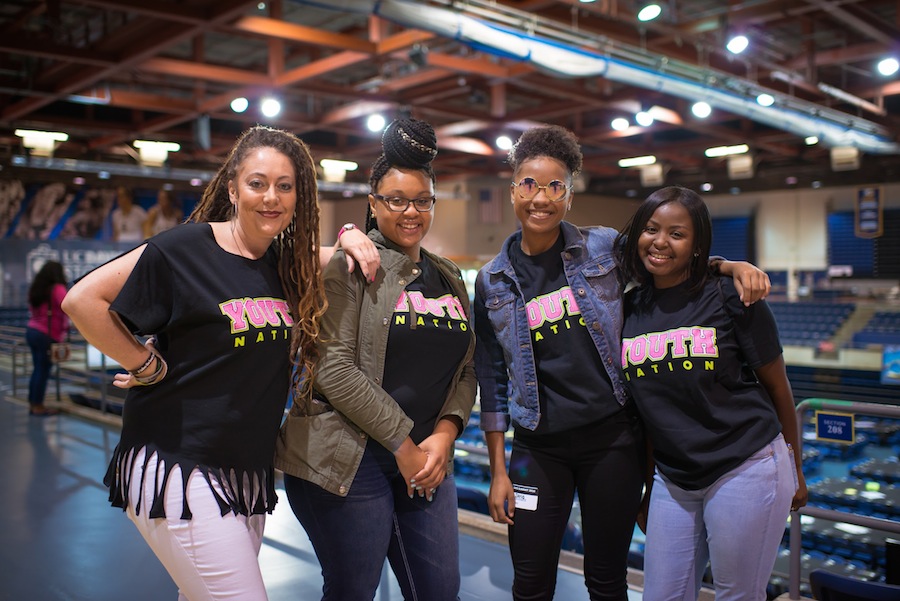
Spoken word allows for expression of much more than words

VAJRA WATSON / COURTESY

SAYS promotes social justice and empowerment of youth

“If you’ve got something to say — say something!” is the mantra of Sacramento Area Youth Speaks (SAYS), a literacy program that supports the improvement of schools, teachers and students through spoken word and social justice curriculum. Dr. Vajra Watson, who started SAYS nine years ago, has her students participate in this call-and-response before each spoken word performance. She started the program after completing her doctorate in education at Harvard University, and she wanted to apply her dissertation to the Davis and Sacramento area, where there is a need for students to improve their literacy and writing skills.

“Young people have been at the forefront of every transformative, revolutionary and radical work in the world,” Watson said. “There’s something unique as young people look at our society and determine the type of world they want to go create, and I think that’s where agency comes in, that’s where voice comes in, and that’s where empowerment comes in. So a lot of work is not seeing young people as the leaders they’re becoming but as the leaders they already are.”

SAYS includes a variety of different programs and events, including classroom residencies. Through the residency program, poet-mentor-educators go into middle and high schools, often ones they graduated from, and teach lessons to the students for one hour each week. Other programs SAYS includes are assemblies, after-school workshops and poetry slam competitions.

“The young people and classroom teachers, every single year they say that [SAYS] gives them life, and it makes literacy alive in their lives, and if it wasn’t relevant to them, we wouldn’t do this work,” Watson said.

Denisha Coco Blossom, the operations manager for SAYS and a third-year African-American studies and communication double major, got involved with the program after SAYS visited the school she worked at. She has now been involved with SAYS for six years, and the program encouraged her to apply and attend UC Davis. She said that the work isn’t only rewarding for the students, but also for herself.

“The best part about spoken word is that it’s healing,” Blossom said. “I see my students being involved with their story and I see them being able to release with their stories, so spoken word is healing.”

Patrice Hill, the program coordinator for SAYS, finds that spoken word offers a unique experience that many other art forms don’t allow.

“I think spoken word is maybe derivative of hip-hop or actually supersedes hip-hop because in spoken word there’s no beat — just a poet and the words,” Hill said. “So it allows for the human connection that is not communicated thoroughly through other art forms because there’s no music. There’s no beat and there’s no instruments to get in the way — there’s just human voice and a story and a passion for it to be told.”

Hill was originally a performer herself and was the grand slam champion of Sacramento from 2003 to 2004. Now, as an educator in the program, Hill sees the positive impact spoken word can have on the youth.

“I kept coming back simply because this is transformational for the young people,” Hill said. “I wasn’t introduced to poetry or spoken word until college, and if I would have had this opportunity to be introduced to the power of my voice in middle or high school, what could that have done for me and my journey?”

In light of recent events, the work of SAYS has become even more relevant and poignant, its staffers said.

“I believe [SAYS is] something very pivotal to this country at this time,” Blossom said. “Especially in a time where we are going to be silenced, we’re probably going to be voiceless. People are not going to care about the youth and giving [them] the actual opportunity to share their voice and to share their challenges and share their opinions. Because I believe the youth are the truth and children will change the future.”

Each year, 1,000 middle and high school students from across the region come to UC Davis to participate in the annual SAYS summit. The students are introduced to spoken word and can perform their pieces at the end of the event. For many of the students, it is their first experience with spoken word.

“Spoken word performance poetry has so much to do with authentic voice and experience,” Watson said. “We say that you don’t just have a story, we are our stories. So if we are the living embodiment of our stories, what does it mean to first name them, write them, but also share them in this collective process of becoming more human and finding out who each other truly are?”

In addition to teaching the students about poetry, SAYS interweaves common core curriculum with social justice, covering topics like the school-to-prison pipeline and the prison-industrial complex in their class residencies. At the end, students share the poems they created.

“Sometimes they share a word, sometimes they share a sentence, sometimes they end up sharing pieces and pieces, and they’re part of our slam team,” Watson said. “But our goal is to turn that pen into a weapon of self-expression. And the microphone? It can come and it can not come — not every kid is going to end up on the final stage.”

In order to help the students find inspiration to write, the poet mentor educators pose questions to their classes.

“In the end young people create these poems with even writing a poem,” Hill said. “They’re just writing about their lives and their experiences.”

The SAYS Youth Slam Finals will be held on Feb. 5 and Feb. 17 in Sacramento. These events will whittle the contestants down to the final six, who will go on to perform at the Crocker Art Museum in Sacramento on Feb. 25. The event is open to the public and the tickets are $5.

Those interested in more information on SAYS may visit its Facebook page, website and Instagram. SAYS is located at 3725 Marysville Blvd. in Sacramento.

Written by: Abigail Wang — arts@theaggie.org