55.5 F
Davis

Davis, California

Tuesday, December 23, 2025
Home Blog Page 663

City leaders address panhandling issue in Davis

BRIAN LANDRY / AGGIE

Davis gets a handle on panhandling

The Davis City Council recently discussed the panhandling problems downtown, particularly with regards to protecting both the safety of citizens and the rights of panhandlers. Many citizens and shop owners have expressed concerns regarding panhandlers and their possessions blocking sidewalks or the public right of way.

The solution may not be so simple, as panhandling and other forms of asking for assistance are protected by the First Amendment; however, the Council may approve ordinances regulating panhandling and solicitation. There are many options to help alleviate the growing issue, including a sit-and-lie ordinance, which the council determined to be too strict and severe for the community.

Sit-and-lie ordinances are implemented in cities where panhandlers and homeless people are much more prevalent and tend to generate additional complications. San Francisco, Palo Alto and Santa Cruz uphold sit-and-lie ordinances during certain hours; often, a warning is given before any citation or action ensues.

Davis residents rarely encounter aggressive altercations with panhandlers. City leaders actively and firmly assert that residents should take appropriate steps to ensure that the homeless population does not feel criminalized, but that the public should also feel safe.

Kelly Stachowicz, Davis’ assistant city manager, emphasized the distinction between panhandlers and homeless people.

“Panhandling does not equal homelessness,” Stachowicz said. “While they may overlap, they are different issues. Not all people who panhandle are homeless.”

Stachowicz also called attention to the numerous services and programs in Davis. She notes that the panhandler-related disturbances are subjective to the individuals involved, but that the city wants to ensure public safety.

“I am hoping that the city is able to take a more compassionate approach than we might be able to, and just because we might be able to pass some ordinances doesn’t mean we should,” said Denise Hoffner, a Davis citizen, during the Jan. 10 council meeting. “Putting those things together [panhandling and homelessness] is not very constructive […] I understand the businesses are frustrated, but I would ask there would be a very compassionate response from businesses.”

One ordinance that the Davis City Council has previously implemented restricts panhandling within 50 feet of an ATM to protect citizens’ safety and privacy. Moreover, the state of California bans aggressive panhandling and solicitation, which entails following pedestrians, using abusive language, using unwanted physical contact or blocking pedestrian or vehicular rights of way.

In addition to panhandling, there is a growing concern about possessions being left in pedestrians’ right of way. At this time, the city has not enacted any ordinances regarding the confiscation of property, but there is a lengthy process for items left behind for extended periods of time. The city can hold the property for up to 90 days and then decide to discard or sell it so as to not violate rights protected under the Fourth and 14th Amendments.

Some suggest that creating locker spaces where people can securely place their belongings may help. To further address related issues, Davis will build public restrooms downtown. The city and service providers also have information cards of local services for the homeless population and panhandlers in need of assistance.

Mayor Robb Davis expressed concern over the situation and offered some possible solutions to public safety concerns and other limitations.

“We do want to maybe place further restrictions [on panhandling],” Davis said. “There was a suggestion that we also limit panhandling to people who are in their automobiles.”

Mayor Davis suggests that instead of merely limiting or criminalizing the actions of panhandling citizens, the city plans to assess and amend the underlying issues and provide support for these citizens in need of assistance. The city staff is determining the appropriate actions to take and what, if any, ordinances to implement.
Written By: Bianca Antunez city@theaggie.org

Just a number on a calendar

0
MORGAN TIEU / AGGIE
MORGAN TIEU / AGGIE

Students reflect on New Year’s resolutions, self-improvement

Maddie Elliott and her date moved down the assembly line at Blaze, interacting with multiple employees to craft perfect, individualized pizzas. With each question asked of him, Elliott’s date never failed to use a “yes, please” and “thank you.” Elliott had already ordered her pizza, and, with a twinge of regret, remembered the New Year’s resolution she had made just a week earlier.

“This year I actually did make a New Year’s resolution — I decided I wanted to work on saying ‘please’ more often,” said Elliot, a third-year managerial economics major. “But I have gotten out of the habit of saying ‘please’ when I am requesting something of someone else. Manners are something that is important to me and something I value [in] other people.”

New Year’s resolutions are a tradition in which many Americans take part. According to the Statistics Brain Research Institute, about 41 percent of Americans usually make New Year’s resolutions. However, the study reports that only 9.2 percent of those people feel successful in achieving their resolutions.

Elliott, determined to be more kind in the new year, has not only been more conscious of her manners, but also wants to approach the world with a warmer persona.

“Another thing I’ve started to do is smile at a new person each day,” Elliott said. “There’s so many times I’ll be walking around campus and lock eyes with someone, and then we both just look away. Instead, I’m trying to start giving them a soft smile, even if I’ve never seen them before. You never know what someone is going through, and if I can be the one small act of kindness out of their day, I would be very happy knowing that.”  

Along with committing to do more good deeds, many people focus on overall self-improvement, with goals of losing weight and eating healthier. Health-related resolutions make up more than 30 percent of the resolutions made by Americans each year, according to a Nielson survey from 2015.

“This year’s resolution was pretty cliche, but I think it’s pretty important,” said Kawayan De Guzman, a third-year wildlife, fish and conservation biology major. “It’s to go to the gym no less than four times a week consistently and, during the process, learn how to exercise more efficiently, as well as expand knowledge on how to exercise.”

Although people in their 20s report higher rates of resolution success than those in their 50s, success rates are still low, and resolution maintenance tends to decline just two weeks into the new year. For students, this decline in dedication can be attributed to a number of factors including time management and unrealistic expectations.

“I feel like setting New Year’s resolutions, although they can be really great, puts a lot of pressure on yourself,” said Mazie Lewis, a first-year human development major. “Once you don’t accomplish that resolution, you feel like you’ve messed up for the whole year. At least that’s the feeling I sometimes have.”

The environment of an unrelenting quarter system can make students feel as though there is simply not enough time in the week for schoolwork, jobs and extracurricular activities, let alone a New Year’s resolution. When unrealistic goals are adopted overnight, it can be challenging to work them into a busy schedule.

“It may be hard to keep a New Year’s resolution because things like diet, personal progress etc are goals that you don’t achieve at a specific time,” said Brian Trainor, a professor of psychology, in an email interview. “We’ve learned from neuroscience that the brain circuits we use for working towards a goal are not exactly the same as the brain circuits we use when we are enjoying that accomplishment. The brain circuits function best when we get the reward in close proximity to when we worked for the goal.”

Trainor further explained that immediate feelings of reward come from activities like shopping, when there is a relatively short delay between the parts of the brain used when shopping and feeling good about what was bought. Exercise, on the other hand, has a longer time between the activity and the payoff. Seeing results such as weight loss lasts longer than the time it takes to go on a shopping spree, therefore the brain has a harder time making the connection between the choice to achieve a goal and the good feeling of achieving it. This can help explain why New Year’s resolutions, which often take longer than a day to achieve a goal, could be short-lived and eventually fail.

“I think New Year’s resolutions are good if you can stick with them and are dedicated to them,” said Macyn Kopecky, a third-year English and history double major. “But in general, creating goals for yourself is a good thing to do no matter what time of year it is because it gives you something to strive for. Life is sometimes really boring if you just let it pass you by without trying to make it the best [it can be].”

A common theme among these students is that they agree resolutions don’t have to be one-time deals that happens on Jan. 1 every year. The tradition of a New Year’s resolution is simply a building block in the act of recognizing faults in and improving our lives whenever it is most appropriate.

“Most people do not keep their resolution [because] they see it as ‘new year, new me,’ but in reality nothing has really changed except a number on the calendar,” said Matthew Iwahiro, a third-year cinema and digital media and communication double major. “I know I personally made a New Year’s resolution, but I would call it more of a lifestyle change and I just decided to make a resolution on New Years, because it was most convenient.”

Iwahiro’s resolution was to better involve his friends into aspects of his life. Whether it’s inviting them to go for a run or cook a meal, Iwahiro wants to take advantage of his time with his friends before college ends. His approach to this resolution was to make minor achievements to reach his greater goal.

Kopecky made a resolution back in 2012 to lose 70 pounds. She achieved her goal despite knowing that others thought such large, specific goals would be “inaccessible.” Just like Iwahiro, Kopecky took to her resolution one step at a time, planning out her transition to a healthier and happier lifestyle.

“I think you need to set a goal that you’re actually capable of, [and if] you can’t and get down on yourself about that, it kind of spirals,” Lewis said. “I feel like we’re constantly resolving ourselves. Now I do small daily goals [like] ‘do these homework assignments’ and ‘talk to five new people,’ and I feel like that’s a lot more successful.”

It seems that choosing a realistic and achievable goal that can be reached with minor increments is the most reliable path to making successful resolutions. A resolution doesn’t have to be made on New Year’s Day, but rather anytime in life — whenever it is relevant.

This is the first year I’ve been honest with myself and made a realistic resolution, which I think is good,” Elliott said. “But what I think it comes down to is making a goal, a plan and a timeline. Making resolutions and goals and improving yourself is a great thing, and I think it is something that can be done all the time — not just once a year in January. My advice to others that maybe are struggling with their resolutions or goals is that it is never too late to get back up and start over.”
Written by: Marlys Jeane — features@theaggie.org

UC Davis graduate creates online website to connect students with professionals for career advice

CHRIS TUNG / COURTESY

Huttle helps students receive career advice from professionals at Google, Amazon, Facebook

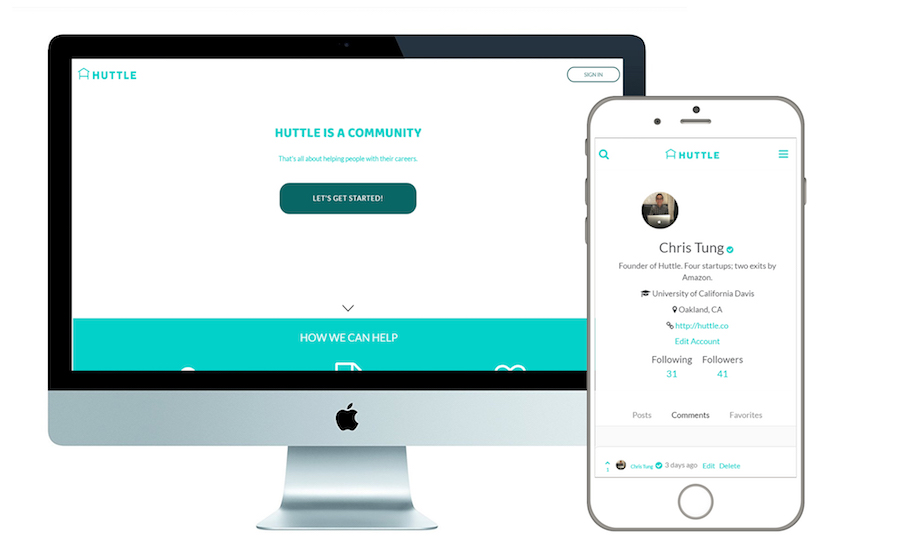
Recent UC Davis graduate Chris Tung along with Michelle Masek from Arizona State University have created a website and app called Huttle, an online system that connects college students with recent graduates and working professionals in top businesses such as Google, Amazon and Facebook. Students on this site can seek career advice and ask any questions they have about potential career goals.

“Huttle is a community for career help,” Tung said. “Huttlers can ask questions to our tight-knit community and get fast, personalized answers from successful professionals and peers who tackled similar career problems. Huttlers can also share links and advice they read on the internet to surface up content that other Huttlers might find helpful in their career journeys.”

According to U.S census data, 40 percent of the nation’s unemployed are millennials: 4.6 million young people out of work. The amount of millennials making less than $25,000 a year has also spiked significantly in recent years. Tung said that this is why Huttle was created: to give students access to honest, meaningful and personalized career advice to help them jumpstart their career journeys.

Tung and Masek were coworkers at Imgur, a popular website for image discovery. While discussing one day what they would do if money was not an issue, they both realized they were most fulfilled when helping other people with their careers. They then began researching and decided to create Huttle. The two are currently a small unit in Silicon Valley consisting only of themselves and two student interns from Sacramento State and Arizona State Universities.

Masek believes that Huttle has the ability to help and support students who do not have access to important networks by giving them the chance to expand their career knowledge and connections. Masek described Huttle as a “supportive, mission driven [and] democratized” company.

Since its launch in August of last year, over 300 users have signed up across its three target universities — UC Davis, Sacramento State and Arizona State University. The website has helped over 20 students and recent graduates with career questions and connections with companies like Google and Amazon.

On the site, new Huttle users are introduced to a feed of customized career topics most interesting to that user, plus some professionals the user might be interested in learning from. The main feed also consists of all the current posts on Huttle sorted by most popular. “Your Feed” is where the user is recommended posts based on other “Huttlers” and topics the user follows. A “Huttler” can share their own post, comment on other posts, upvote posts and favorite posts to read later.

The website has been promoted through the company’s student interns and PR work. Huttle’s network has also increased by welcoming new professionals and college students.

“One of the most magical things is seeing new users and not knowing where they are coming from,” Masek said. “The network is growing exponentially and it’s a nice feeling.”  

Masek and Tung hope Huttle’s next wave of features will include collaboration on cover letters or resumes, private messaging and a way to send personalized thank you’s to Huttlers who gave exceptional advice.

Christa Lin, a fourth-year economics major, finds this site to be extremely helpful and believes that it has a lot of potential.

“Looking at the site and reading posts already motivates me to learn more from the professionals on here,” Lin said. “I think this would be really helpful for people like me about to graduate and low-key worrying about my future.”

Tung and Masek hope to continue growing and expanding Huttle to create a helpful and advantageous community for many college students.

“There’s a lot for us to do so we’re trying to stay focused on the projects in front of us,” Tung said. “Our long term mission is to build a global community where people support each other in their careers, and if we’re successful, then we’ll build a world where people are never alone on their career journey.”

Huttle is currently looking to hire student interns. Interested students can visit Huttle’s website and create an account at http://huttle.co or download the iOS App on the Apple app store.
Written by: Demi Caceres — campus@theaggie.org

What being “poor” really means

KEN WALTON [] / FLICKR
headshot_taHow stereotypes and educational inequality tie into poverty

Defining poverty is far from straightforward. The condition spans a range of complexities, from social problems to the federally determined economic poverty line. However, understanding the basics of poverty, and some of its most pertinent issues, is imperative to making a lasting difference in the lives of America’s poorest.

To summarize, individuals or families are defined as impoverished if their yearly pre-tax income falls below a certain dollar amount identified as the poverty threshold. This threshold — which is recalculated every year — is determined and reported by the U.S. Census Bureau. The poverty threshold serves a variety of purposes, including tracking poverty over time to measure the progress of antipoverty efforts, comparing poverty across different demographics and determining eligibility for federal assistance programs.

Comparing poverty levels across demographics sheds light on how poverty affects various races. Based on a 2015 U.S Census Bureau report, 24.1 percent of people below the poverty threshold are African American and 21.4 percent are Hispanic or Latino.

Concentrated poverty, in which poverty is spatially dense in specific neighborhoods and communities, is a worsening epidemic that dates back decades, and it is intrinsically connected to racial segregation. The first public housing program in the United States began as a part of the New Deal and segregated Black people from White people. The Federal Housing Administration, created in 1934, could have easily prevented segregation by enforcing a nondiscrimination policy. But it didn’t and instead, according to historian Kenneth Jackson, embodied and fueled the “racist tradition of the United States”.

This system of financial apartheid prevented Black people from receiving legitimate bank mortgages, and led to financial predation. In poverty-ridden cities like Baltimore and Chicago, African American buyers resorted to the contract system. Sellers would drive up monstrous rent prices and set financial traps so that they could repossess the home and sell it again if the buyer missed a single payment. This system was unfair, to say the least, and propelled cities such as the ones mentioned into further blight and decline.

That’s how concentrated poverty came about. Currently, poverty among Black and Hispanic communities further propels lower education levels and higher unemployment rates. But more importantly, it ingrains a stereotype about Black people in Black communities as well as the broader American society. In the education system, teachers have been found to hold lower expectations of African American students. And according to a 2013 Association for the Study of Higher Education paper, students of color reported that faculty members were often unwilling to mentor or work with them because of their race. White peers were usually reluctant to share their work with peers of color.

This negative stereotyping has profound effects on not only Black students’ psyche, but also on communities of color. As a result, Black students can easily fall into the societal stereotype of being “lazy” and “troublemakers.” On the other hand, they can take it upon themselves to counter the stereotype and not be another Black statistic.” These students try to do well in school, study hard and refuse to accept the stereotype that places poor expectations on them.

It’s important for both insiders and outsiders of a community to reject harmful stereotypes about others and to try to recognize each person’s individuality. Kill the idea that people of a certain community need to act a certain way or have a certain level of achievement.

Instead of putting people down for defeating their stereotype, celebrate it. One of the most important implications of doing otherwise is that we leave behind some of the most brilliant and talented individuals because they simply never get a chance.
Written by: Tamanna Ahluwalia — tahluwalia@ucdavis.edu

Disclaimer: The views and opinions expressed by individual columnists belong to the columnists alone and do not necessarily indicate the views and opinions held by The California Aggie.

Women’s water polo struggles in first matches of season

0
ZHEN LU / AGGIE FILE

With an early record of 0-4, the Aggies look to turn play around

It is no secret that consistency is key in developing a program that finishes at the top of the standings year after year. Unfortunately for the UC Davis women’s water polo team, the Aggies have slowly turned around their performance, but not in positive direction. The Aggies have a current overall record of 0-4 in the 2017 season, a fall off from where they were at this point in 2015 (1-3) and in 2016 (3-1). They finished last season ranked 16th overall by the NCAA.

Even though the team has not performed well early on this season, it is important to look at some of the key differences between this season’s and last season’s teams. Most notably and perhaps the biggest blow to the Aggies are the five seniors from last season who were huge in contributing to the team’s overall stats and winning performance. The 2017 season starts with almost an entirely-fresh team with the loss of the five seniors and absence of junior center Carla Tocchini, who is redshirting the 2017 season. Last season, she contributed 43 goals and earned All-Big West honorable mention. While there are a class of veteran sophomores and juniors on the team, they are joined by mostly freshman and sophomore players who look to grow the team into the Big West competitors they have proven to be in previous seasons.

There are still players to watch out for this season, however, such as senior utility Hannah Harvey, who had 39 goals with 21 assists, 36 steals and earned All-Big West honorable mention in 2016. Freshman goalkeeper Caitlin Golding is most likely going to be the one looking to replace last year’s senior goalkeepers Haley Cameron and Olivia Husted, who both helped set a team record of 314 saves. Golding will share some time in the net with senior Avery Dotterer. Freshman attacker Kathleen Schafle is the young offensive threat to watch this season. Her height (5 foot 11) and speed helped her earn 146 steals at Vintage High last year. Chloe Robinson, a freshman utility and All-Southwestern League honoree for Temecula Valley should be a strong left-handed threat for the Aggies. Finally, freshman attacker Ariana Momen, originally from British Columbia and who played for Canada’s U-17 national team, will be the fastest swimmer on the UC Davis women’s team.

It seems that all that is needed for this struggling UC Davis women’s water polo team is time to know the system and grow into a threat, and, under USA Water Polo Hall of Famer Jamey Wright as head coach coming into his 34th season at UC Davis, this team could grow into a strong Big West competitor.


UC Davis Women’s Water Polo Compared Stats: 2015-2017


2015 Season 2016 Season 2017 Season (In progress)
Overall 19-4 17-3 0-4
Conference 2-3 2-3 0-0
Home 11-2 7-2 0-0
Away 1-2 1-2 0-1
Neutral 7-10 9-9 0-3
Seniors graduating after season 3 5 4


Written by: Ryan Bugsch  — sports@theaggie.org

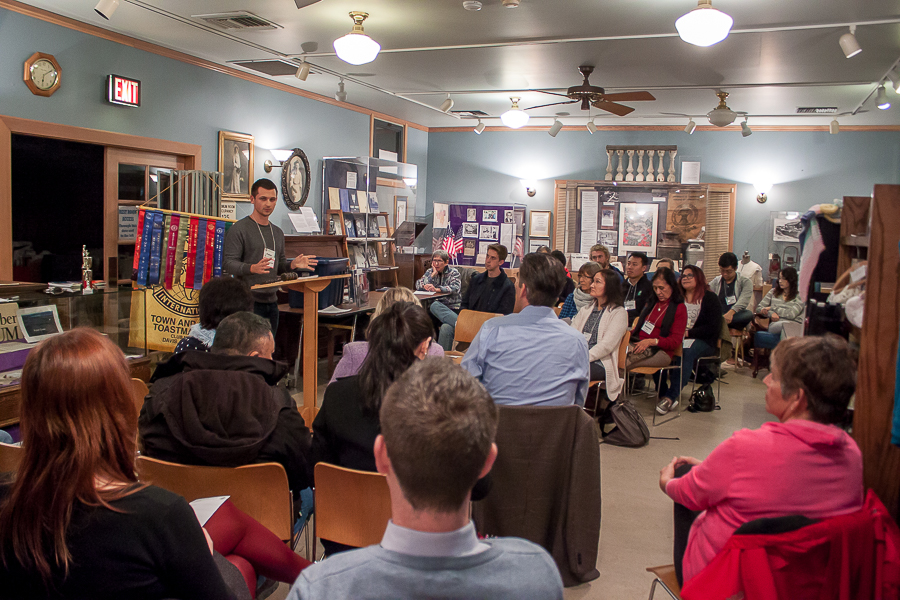
Toastmasters help members conquer fear of public speaking

NADIA DORIS / AGGIE
NADIA DORIS / AGGIE

Local groups meet every week to provide practice, support for those looking to build communication skills

Public speaking is a valuable skillset that can have a profound impact on personal lives and professional careers. For many, however, it is a fear and anxiety-inducing endeavor. In a recent survey conducted by the National Institute for Mental Health, it was revealed that 74 percent of respondents reported feelings of anxiety in regard to public speaking.

For people looking to conquer their fear of public speaking, there is a nonprofit educational resource that can help. Toastmasters International, founded in 1924, is an international organization that aims to help its members improve their communication, public speaking and leadership skills.

“Toastmasters International is a really large international organization with thousands of clubs, that exists to help people conquer their fear of public speaking and […] practice speaking and leadership skills […] Every meeting is kind of a practice business meeting,” said Holly Wong, current president of the Davis Daytime Toastmasters.

There are two Toastmasters clubs in the City of Davis. The Davis Town and Gown Toastmasters meet every Tuesday evening at 6 p.m., and the Davis Daytime Toastmasters meet every other Wednesday at 12 p.m.

Wong first joined the Daytime Toastmasters to sharpen her public speaking and communication skills as she prepared for a career change.

“When I moved to Davis about a year ago, I decided that I wanted to go into consulting for myself, and realized that that would involve a lot more public speaking and being able to clearly communicate with potential clients,” Wong said. “I got involved with Toastmasters right when I moved to Davis so that I could be practicing those skills.”

Both Toastmaster clubs feature many roles for their members, including president, secretary, toastmaster, humorist, grammarian, timer, table topics master and general evaluator. Members switch roles every few months so that everyone is exposed to different leadership positions.

Michael Bobell, longtime member and secretary of the Davis Daytime Toastmasters, likes the club because it provides a supportive environment for its members.

“What I like about it is there’s plenty of opportunity, especially because this is a smaller club, to speak,” Bobell said. “It’s a very kind audience: they’re very forgiving; they care about you; they give you support, and it gives you a chance to go in front and move beyond your comfort zone.”

With practice, public speaking can become an enjoyable experience. Anna Pischer, a third-year chemical engineering major, said she thoroughly enjoys public speaking.

“I love public speaking,” Pischer said. “The last time I did it was when I spoke at my high school graduation […] Lots of people are scared of it, but I really enjoy it.”

Information about Toastmasters International can be found on its website.

Written by: Raul Castellanos Jr. — city@theaggie.org

The intergenerational technology divide

VENOOS MOSHAYEDI / AGGIE

headshot_SMAs technology advances, a generation of workers is left behind
Technology has the awesome ability to connect me with my friends halfway across the world. I can record every second, every minute of my day and have everyone know about it without expending any effort.

But technology and grandparents are another story. I must’ve taught my grandfather how to use Skype a million times, but he is just never able to grasp  it. He is way ahead of my grandmother, though, who simply refuses to learn and dismisses modern technology as something she will never need.

Today, there’s a whole generation of people nearly as old as my grandparents who are still working but are on the verge of retirement. They grew up without social media, at a time when not every home had a computer. Now, they’re losing their jobs because of the loss of industries that technology has rendered obsolete and this has only caused bitterness among this generation. They consider themselves too old to go back to college, gain new skills or adapt to new technology, but at the same time also too young to retire because they don’t have enough savings for the future.

The decline of the Rust Belt significantly changed the U.S. economy, and some people still haven’t recovered from the transformation. What was once a powerful industrial sector has deteriorated due to increased automation, an overall loss of US coal and steel industries and outsourcing. The internationalization of American businesses, as well as liberal foreign trade policies related to globalization, has only caused further bitterness among people who once held jobs at these factories. While some cities have adapted to new technology, many haven’t — and they suffer from high poverty levels and crime rates, poor education and a weak economy.

The city of Detroit, for example, has undergone a complete change in the past few decades. What was once the center of the world’s automobile industry has now become a landscape of urban decay. The population has decreased 61 percent since 1950. As global competition grew from countries such as China, Germany and Japan, companies were forced to reduce production costs by outsourcing jobs to other countries. In doing so, they could uphold their position in the global market. Slowly, the center of industrial activity moved away from Detroit, along with most of the population, who left to look for jobs elsewhere.

Amid all the noise regarding Trump supporters being racist, misogynistic and xenophobic, we should also be looking deeper at the various issues that have been revealed by this election. Many Trump supporters were victims of the sharp decline in Rust Belt manufacturing and wanted to return to a normal, financially comfortable life. Feelings of discontent start to develop when you see others getting opportunities that you feel you should’ve had, and instead of thinking rationally people search for a scapegoat.

What can we do to fix this issue? Clearly, the jobs that have left aren’t coming back. Progress is inevitable. We might be at the beginning of a new phase in which everything is automated and human labor may not be required at all. As we come up with new technology faster than ever before, even our recently acquired technology may become obsolete. When was the last time you used an email to communicate with friends? Yet a mere two decades ago, emails were revolutionary.

The best option to help those affected by automation is to provide them with adequate social security so that they may retire if they so wish. Otherwise, we must provide pathways for them so that they can seek out a different profession and live fulfilling lives.

But the real focus should be on children who will go on to shape the future. The presiding government should make sure that students can get a well-rounded education so they are able to venture out into new areas that will allow for unique jobs to be created.

Progress waits for nobody, and moving backwards only means that the rest of the world will leave us behind.

Written by: Shohini Maitra — samaitra@ucdavis.edu

Disclaimer: The views and opinions expressed by individual columnists belong to the columnists alone and do not necessarily indicate the views and opinions held by The California Aggie.

“Pronoun” highlights struggles of transgender youth

ACME THEATRE / ROBERT SCHULZ / COURTESY

Transgender youth strive to educate audiences of all ages about the LGBTQIA+ community through theater

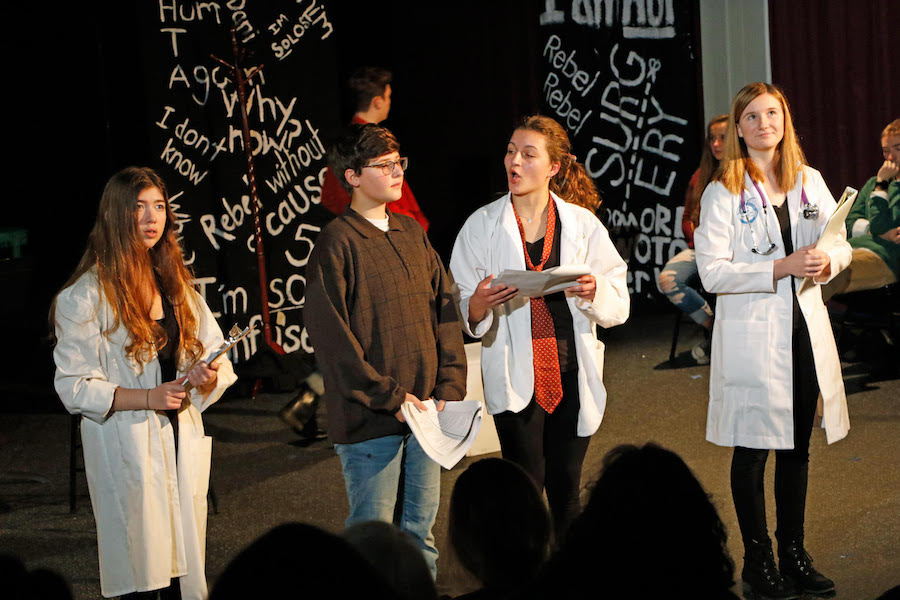
This January, Acme Theater Company hosted its new play, Pronoun, written by British playwright Evan Placey. The play is about a transgender teenage boy, Dean, and how his transition affects his relationships.

Director Emily Henderson wanted the play to be an outlet for young individuals to speak to audiences of different ages and experiences. However, beginning the project was not an easy task.

“I first read this play about three years ago and I really loved it,” Henderson said. “I thought it was a great match for our theater company. I thought it played to our strengths and I really was excited by the subject matter. It felt very topical to what’s happening in the world right now. At that point I looked around and was like, ‘There are only cis-actors in my theater company at the moment, and I can’t do this play without those voices in the room, without that representation in the cast.’”

Fortunately, she found students from multiple experiences and gender identities eager to perform. It was perfect timing. With help from the Davis and Sacramento communities, the cast learned about transgender lives, helping them to better understand the play and prepare them for their roles.

“We rehearsed for 8 weeks and did a series of workshops. We did one workshop with the UC Davis LGBTQIA Center,” Henderson said. “They did a really nice overview of terms and language, and it was right at the start of the rehearsal practice so we immediately established a shared vocabulary. Then about midway through we had [people from] the Sacramento LGBT Center come and give a presentation on gender and gender identity.”

The Acme Theater Company plays are run by students, which sets them apart from other Davis theater companies.

“The students do all the acting and technical work, so it was really fun to use that as an opportunity to dive deeper into learning about some of the issues faced by the trans community,” Henderson said. “For example, our sound designer spent hours and hours of time listening to music by trans artists and emailing people whose YouTube videos they found and asking, ‘Hey can I use this for the scene transition?’ All of the music is echoing and resounding around what the play is talking about.”

She hoped that the play would equally impact the cast and crew as it had the audience. As members of the LGBTQIA+ community, the actors felt deeply connected to the main character of the story.

“One of our goals is to amplify and support trans youth voices,” Henderson said. “I feel like in these discussions, where grown-ups are coming with questions and the young people are able to speak with power and assurance, [young people] are able to respond as equals. I’m most excited to see youth speaking to adults with a lot of power.”

Grey Turner, a freshman at Da Vinci High School and an actor in the play, said that Pronoun was particularly relatable to his transition story.

“The main character is a trans guy just starting his transition — that’s literally me,” Turner said. “I’m trans and I just recently started testosterone hormones which Dean also does in the play,”

Unlike Dean in the play, Turner feels fortunate to be surrounded by people who support and accept his identity.

“In the play, Dean’s parents have a hard time accepting it,” Turner said. “My parents are completely accepting and wonderful people, they fully support me. I think that I’d really like for people to understand that it’s so hard for trans people.”

Cory McCutcheon, a sophomore at Da Vinci High School and an actor in Pronoun, also relates to the story.

“I’ve been struggling with my gender identity for a couple years,” McCutcheon said. “This year I started using gender neutral pronouns. This is my first show with Acme and I joined because this play seemed relevant to a lot of the stuff talked about in the news right now. Now is a really good time for this play.”

McCutcheon also talked about the importance of acceptance and normalization in the transgender community.

“If someone were to get a breast reduction, people would probably consider it a change in your body to feel more comfortable,” McCutcheon said. “I think that top surgery should be regarded in the same way. It’s really just making an alteration in your body so that you’re more comfortable.”

Pronoun allowed these students to share some of the adversities faced by the transgender community. These student actors want an audience of all ages to see the play and leave with valuable takeaways.

“In my conversations with the cast, something that’s come up is how much they wish they had seen this show when they were in 6th or 7th grade and how they’re really hoping that age group comes [to the show],” Henderson said. “When you’re a young person, three or four years is a huge difference. So they really see themselves as supporting the youth that are coming up behind them.”

For the cast and crew, the play served as a coming-of-age experience. They became confident in themselves and their identities while supporting each other and their community.

“My favorite part of any play is watching these young people really grow into themselves and take on challenges that really stretch them,” Henderson said. “I feel like there are positive, tangible impacts that this piece had on the community.”
Written by: Becky Lee arts@theaggie.org

Humor: Crowded bus offers great experience for future career as canned sardine

STIJN NIEUWENDIJK [CC BY-NC-ND 2.0] / FLICKR
headshot_blStudents make the best out of a steamy, overcrowded situation


It’s that time of year again when it rains non-stop and everybody takes the bus to campus. It might be tempting to view this experience in a negative light, but some local UC Davis students are taking another approach entirely.

“I sort of like the crowdedness of the bus,” said Arnold Mantube, a fourth-year neurobiology, physiology and behavior major and proud owner of an ‘I’d rather be welding’ bumper sticker. “I’ve always wanted to feel what it’s like to be a sardine in one of those strange rectangular cans at the grocery store. And this is probably the closest I’m ever gonna get,” he said before canoeing away down the sidewalk.

Other students agreed with Mantube’s assessment of the situation and even took it one step further.

“Yeah, I love the idea that we’re all sardines in a giant red can,” said Carissa Sludge, a second-year animal science major and firm believer that “Grown Ups 2” starring Adam Sandler was snubbed by the 2013 Academy Awards. “In fact, I try to think of it as good preparation for what I’d like to do in the future. Everybody at this school wants to be a doctor or a lawyer or my son, but nobody ever has their sights on what really matters — being a canned sardine. The world could always use more canned sardines to sit, unbought and unloved, on a grocery store shelf. And I think a lot of people tend to forget that when they’re deciding what to do with their lives.”

Strangely, not everyone seemed to be quite on the same page as Mantube and Sludge.

“What…the hell…,” said Mariana Trench, a third-year hydrology major and flat Earth conspiracy theorist.

It’s unclear why Trench thinks it’s strange for students to aspire to a career as a canned sardine. But one thing is clear — next time you think about how awful it is that the bus is crowded, think about people who will never get a truly authentic canned sardine-like experience. Think about how sad that is. Sad.


Written by: Brian Landry — bjlandry@ucdavis.edu

Creating products out of passion

0
HANNAH LEE / AGGIE
HANNAH LEE / AGGIE

UC Davis students, alumni enter entrepreneurial world with apps, companies

Nicholas Doherty started creating apps when he was in high school. Now, as a third-year computer science major at UC Davis, an app which he started on in his senior year of high school has surpassed 300,000 users.

Study Cal is a student-planning app that allows users to track their academic progress by recording classes, grades, assignments and other school-related materials. Study Cal acts as both an academic calendar and a grade calculator.

“It was supposed to help me senior year so I wouldn’t get senioritis,” Doherty said. “It took off from just a small project and turned into this big thing.”

Doherty’s other major app, Aggie Health, creates a system for users to track their eating habits in the UC Davis Dining Commons. Students can select the foods they have eaten from the dining commons menu, and the app will generate the amount of calories and nutrients consumed.

In creating both Study Cal and Aggie Health, Doherty, who started programming before his freshman year of high school, has learned about not only the app development process, but also the entrepreneurial side of starting a business as a student.

Last year, Doherty coordinated with UC Davis to market the Aggie Health app around campus.

“I made [placards] and I ran around one day putting them in the [dining commons],” Doherty said. “That night I […] watched everyone going up to get food. They would see the sign and they’d point at it and they’d look at their friend and they might talk about it. The next morning I’d wake up and check the download [statistics] and I’d see that hundreds of people had downloaded it. That was really cool, to see all that hard work actually […] have an effect.”

For app developers and aspiring businesspeople in the making, Doherty advises that they be persistent.

“It takes a lot of time to get good at anything, and being a programmer, app developer or designer is just like that,” Doherty said. “I think […] the reason that I was successful […] is because I kept with it for so long and I never gave up.”

Another millennial-founded business that originated in Davis is Caravan, a ride-sharing app that simplifies the process of finding inexpensive transportation.

Shane Smith, the founder of Caravan and a UC Davis alumnus, found ridesharing groups available on Facebook and other sites to be “very unorganized and a bit of a mess.” Starting development in June 2015 and launching the app in August 2016, Smith built a team that included designers and engineers to help him finish the product that began from his own programming.

“I […] learned a ton,” Smith said. “I learned a bunch of new technologies. I learned how to work with a team [and] how to hire people. [I learned] a great deal of professionalism. What it really gave me was something to talk about, […] a product to call my own. My goal was to be self-employed — it still is.”

While Doherty and Smith work with students’ technological needs, other young entrepreneurs find business in areas such as alcoholic beverages. UC Davis alumni Ian McCaffrey and Chris Borges founded Crew Wine Co. in the fall of 2014 while still at university.

“There’s a lot of history in wine,” McCaffrey said. “[It’s] a product that stands as different from food and art but at the same time [is] both.”

Crew Wine Co., which has so far produced two collections of wine, currently hand-sells to restaurants and retail groups located around the Bay Area. McCaffrey and Borges produced their first round of wine in 2015 and now focus mainly on white wines and rosés.

“We’re happy-go-lucky guys,” McCaffrey said. “Our wines […] portray that because they’re playful […] and tasty and delicious. [They’re] summertime poolside wines.”

Despite a lot of hard work, Crew Wine Co. has faced many obstacles in terms of promoting and advancing their business.

“Communication is an underlying theme that, in the world of business, you really undervalue […] until you actually need something done […] in someone else’s hands,” McCaffrey said. “It’s [also] difficult to be able to start a business out of pocket.The other thing with young businesses [is] the credibility or bias [people have] against you based on your age, disregarding how much passion you have for something. It’s a bummer sometimes for people to look down on you and not take you seriously.”

Regardless of the challenges that many young entrepreneurs may face, the learning process and personal benefits seem to give value to the hard work endured.

“I think that there are two kinds of things in life,” Doherty said. “There are things that you have to push and things that pull you. I think I found the thing that pulls me, something [where] I wake up every day and I want to do it, and I hate when I have to stop and go to class or go to the gym. I feel very grateful for that.”

Written by: Allyson Tsuji – features@theaggie.org

Through the Artist’s Eye: Sammy Sanchez-Monter

SAMANTHA SANCHEZ-MONTER

UC Davis student artist uses paintings to communicate emotions

Although art has always been her calling, Sammy Sanchez-Monter, a third-year art studio major, was in denial at the beginning of her college career.

“My whole life I’ve been doing art, and initially coming into Davis I was an animal science major and then I switched to a animal biology major, and after taking some classes I wasn’t happy and even my parents would ask me ‘what are you doing, you should be an art major,’” Sanchez-Monter said.

After her second quarter at UC Davis, she switched to an art studio major and immediately noticed a difference.

“I was completely happy and my mood totally shifted, I was excited all over again, so that’s how I knew I should do art […] it was the best choice ever,” Sanchez-Monter said.

In addition to exploring her passion, Sanchez-Monter has developed a strong bond with  other art studio majors.

“I’ve never experienced this much community within a major,” Sanchez-Monter said. “[In other majors] there’s that sense of competition but in our major everybody helps each other out even if you don’t ask for help, people give you suggestions on how to be better, and I noticed that community as soon as I made that switch.”

For Sanchez-Monter, painting has always been her primary medium, and she enjoys using vivid colors in her creations.

“I like painting because of the blending aspect of it, and you can make so many colors, the possibilities are endless for me and you can quickly make changes,” Sanchez-Monter said.

Sanchez-Monter has found inspiration from Frida Kahlo and often takes influence from her dreamlike style.

“I really like her not only for the work she does, but because she was very ahead of her time in that she didn’t conform to what people expected out of female artists,” Sanchez-Monter said. “She set her mind to doing something and she would do it no matter what other artists thought. I think that’s something I need to work on in my pieces — not caring what others think. It was amazing seeing her express herself no matter where she was, she painted whatever she wanted.”

SAMANTHA SANCHEZ-MONTER

Sometimes Sanchez-Monter feels that her realistic style can be frustrating and never feels like her work is complete.

“My art style is very realistic especially with my paintings, I’m still working on it because sometimes I kind of tend to be a perfectionist, but I’m working on that and expanding my technique in being more gestural with my brush strokes or being more free with the energy that I put into my work,” Sanchez-Monter said.

Sanchez-Monter feels that art acts as a diary without words and utilizes it to convey her emotions or stresses she faces.

“I can spend hours painting and forget other things are important too like eating or going to the bathroom,” Sanchez-Monter said. “When I paint I think about things but in a new perspective. In the end I feel very relaxed.”

Even though Sanchez-Monter is very open in her art, she is constantly pushing herself to be more vulnerable.

“My style overall has evolved in that it is more serious, and especially this year I’ve told myself I want to make my pieces more vulnerable and raw and not hold back,” Sanchez-Monter said.

Sanchez-Monter’s connection to art goes beyond the canvas as she finds her work to be very therapeutic. Although she often shares her artwork with her friends to get their opinions, she keeps some pieces to herself.

“In my free time I paint or draw for myself because of the emotional release I get. I can choose to share it and most pieces I create I do show my friends and some I just keep personal and I don’t feel the need to share it, it’s just for me kind of a time-lapse,” Sanchez-Monter said.

In the summer of 2016, Sanchez-Monter was invited by a family friend to paint a mural at a Larson Park elementary school, which had been experiencing many problems with graffiti and tagging.

“Even as I was painting people would come up to me and say ‘it’s going to get tagged eventually,’ but I’d also get like ‘oh it’s so beautiful’ so it was very conflicting,” Sanchez-Monter said.

The mural was revealed at a local festival and Sanchez-Monter left part of the mural blank so the youth could help her paint the last part to complete it.

“It was really cute, everyone was taking pictures and I went back recently and it hasn’t been tagged so people appreciated it,” Sanchez-Monter said. “I was really happy about that, it was my first mural and I went back and it was spotless still, it was definitely my biggest accomplishment.”

In the future, Sanchez-Monter would love to make art full-time but plans to be an art professor due to the influence and inspiration she has received from some of her professors at UC Davis.

“I’ve talked to my professors and just seeing how passionate they are has inspired me to pursue the art professor pathway,” Sanchez-Monter said. “But if I could be an artist and just do that, that’d be the dream.”

Written by: Abigail Wang — arts@theaggie.org

Betsy DeVos’ backwards vision of American education

KEITH ALAN ALMLI II [CC BY-SA 3.0] / CREATIVE COMMONS
Eli Flesch

The future of American education is uncertain under Trump’s pick for Secretary of Education


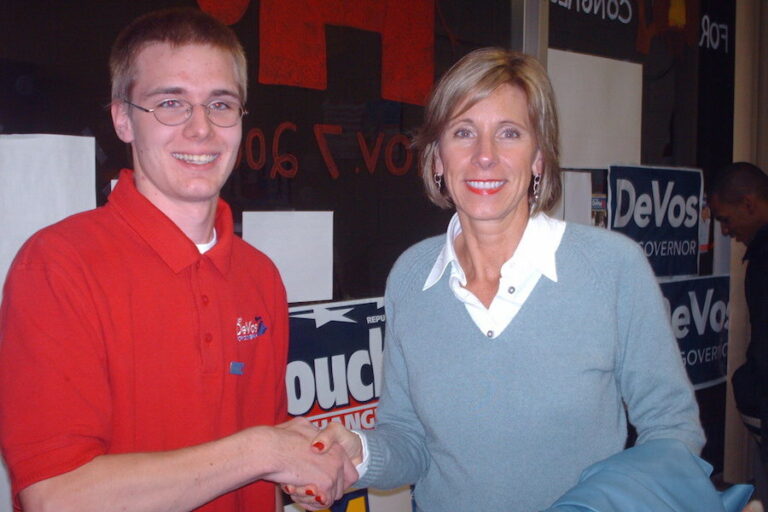
Senate Democrats voting on Tuesday to prevent Betsy DeVos’ confirmation as Secretary of Education underscored the existential threat American public education would face under who may be President Trump’s most dangerously unqualified nominee.

DeVos’ confirmation hearing — primarily devoted to questioning her positions on K-12 education and her support of voucher systems in which public funds are given to families to help pay for private charter schools — revealed the astonishing lack of knowledge the former Michigan lobbyist would bring to her new job leading the Department of Education.

In one of many notable exchanges, Senator Al Franken, Democrat of Minnesota, quizzed her on a common question in education circles: whether standardized tests should measure how much students improve over a year (the growth view), or if they should measure to see if students are performing at grade-level (the proficiency view). DeVos embarrassed herself by confusing proficiency for growth. “I’m surprised you don’t know this issue,” Franken said.

But it’s not surprising that DeVos fumbled on a question regarding how to hold schools accountable. A political action committee she helped start in Michigan, The Great Lakes Education Project, has spent millions trying to buy policies that would expand charter schools while exempting them from proper review. The DeVos family gave almost $1.5 million to Michigan GOP lawmakers after they killed a provision that would have held Detroit charters to higher accountability standards.

And her lobbying efforts in Michigan have had little to no bearing on the quality of schools there. Detroit’s charter schools are among the worst in the nation. And the glut of school choice — Detroit has the second-largest share of students in charters in the nation — has not fostered the type of competition that school choice advocates like DeVos say will improve educational quality.

DeVos’ blind commitment to a free-market vision of American education is at odds with reality. Her willful ignorance — blatantly obvious by her efforts to kill even the most basic oversight — amounts to a moral failing that threatens students in public schools everywhere.

As Secretary of Education, DeVos would be responsible for implementing Trump’s plan to help alleviate the student loan crisis millions of Americans face. Though he hasn’t made much information or details publically available, Trump has said he wants to alleviate student loan debt by capping annual payments a person can make at 12.5 percent of their yearly income. Any remaining debt after 15 years would be forgiven.

This is not an inherently bad idea. Countries like Australia and England have similar income-based repayment programs that ensure debtors don’t pay more than they can afford — about three to eight percent of yearly income, with payments ceasing during periods of unemployment. But it’s unclear how such a system would work in the United States, where student loan debt totals close to $1.4 trillion — more than that owed for credit card and auto loans.

Unfortunately, DeVos’ confirmation hearing was irritatingly scant on questions and details of how she might implement such a plan. She incorrectly claimed that student debt had risen almost 1,000 percent since the Great Recession — the true amount was a 118 percent increase — but was otherwise largely left uninterrogated on the issue of student loans.

And questions remain in general as to how DeVos would oversee America’s thousands of colleges and universities. She ominously refused to say whether she’d continue President Obama’s directive to punish schools that breached Title IX by improperly investigating cases of sexual assault. Asked by Senator Bernie Sanders, Democrat of Vermont, what she thought of tuition free college, she demurred, calling the idea an “interesting” one.

Betsy DeVos’ repugnant and breathtaking lack of knowledge of the education system over which she will likely preside does nothing but cast great uncertainty over American public schools. Ensuring that her backwards beliefs in the efficacy of privatized schools do not translate to law will be one of the most significant challenges facing opponents of the Trump administration.

Written by: Eli Flesch — ekflesch@ucdavis.edu

Disclaimer: The views and opinions expressed by individual columnists belong to the columnists alone and do not necessarily indicate the views and opinions held by The California Aggie.

Don’t forget LGBTQ individuals in conservative areas

COURTESY
COURTESY

headshot_tdJai Bornstein’s suicide reminds us that trans youth still face severe prejudice in red regions of the nation

This past December, 19-year-old transgender woman and activist Jai Bornstein took her own life. Bornstein, who was from the conservative town of Bakersfield, dedicated her time in both her hometown and British Columbia, where she attended school, to soothing the pain of her community and empowering the vulnerable and downtrodden — even when surrounding social structures seemed uncompromisingly intolerant.

Growing up was very challenging because Bakersfield is very conservative when it comes to gender roles and what people’s places are in society,” said Em Opperman, a transgender man and marriage and family therapist intern at the Gay and Lesbian Center of Bakersfield, via email. “I remember driving to community college during [the] Prop 8 [campaign], and I was brought to tears by the large numbers of ‘Yes on Prop 8’ sign-holders,” he said, referring to the 2008 proposition that made gay marriage illegal in California.

The blatant and subtle acts of discrimination that trans individuals encounter in conservative towns like Bakersfield are easily forgotten in light of LGBTQ successes blossoming in progressive cities like the San Francisco Bay Area — which many UC Davis students call home — and small towns like Davis.

“In Berkeley, I found a community of diverse LGBTQ people who thought and felt like I did,” recalled Opperman, a UC Berkeley alumnus. “I felt powerful for the first time in my life, like I mattered and could be anyone I wanted to be.”

But the attitudes toward trans people can differ greatly between red and blue counties, leading students in more progressive regions to underestimate the level of persecution that trans and gender non-conforming youths must brave.

In conservative environments, transgender individuals face greater rates of discrimination because we are seen as ‘other’ or ‘weirdos,’ whereas in more progressive environments, being different and diverse is perceived as a strength,” Opperman said.

Yet even a community as conservative as Bakersfield holds glimmers of hope for transformation. Dozens of residents from churches, schools and the LGBTQ community quickly mobilized to find Bornstein in the pouring rain when she was missing, while over a hundred attended her memorial service.

“Because Jai decided to take her life in a public place, a place where many people go to escape and be around trees and streams, the trauma of the situation became collective, shared by the Bakersfield community,” Opperman said. “Jai’s suicide has increased awareness in our community as to what it means to be transgender and the additional struggles we face due to society not being accepting.”

Bornstein’s GoFundMe page offers evidence of this growing movement toward acceptance. Originally created by the Bornstein family to fund searching costs, the campaign garnered over $10,000 in just two weeks. After covering funeral fees, Bornstein’s family donated the remaining money to three of her favorite charities — Club GEN at the California State University of Bakersfield, CampOUT! at the University of British Columbia and Bakersfield’s AIDS Project & Ricky’s Retreat — to support trans youth in Bakersfield and beyond.

But progress shouldn’t hinge on the loss of a community member; it requires allies in progressive cities to take more active approaches to support LGBTQ individuals in conservative areas as well as ostensibly liberal or progressive ones. For some, that entails protesting, writing to elected officials or voting against the recent influx of ‘bathroom bills.’ For others, that means contributing time or money to an organization, supporting trans artists or simply listening openly and lovingly to gender non-conforming friends.

Change will undoubtedly be uncomfortable because it demands levelheaded confrontation with people of opposing opinions. But running from the problem only leaves behind millions of persecuted individuals who don’t have the resources to escape.

I would encourage college students who go away to school yet grew up in conservative places to go back to their hometown and educate others,” Opperman advised. “Additionally, people all over California need to be more mindful of the people they’re electing to positions of power, because this will shape what services and rights are protected, especially in conservative communities.”

We need to emphasize that LGBTQ rights aren’t mere political rhetoric, but substantial policies that radically influence the lives and well-being of those around us. When trans individuals are humanized, entire ideological landscapes can be transformed.

Most importantly, we must work to honor Bornstein’s mother’s concluding words at her daughter’s memorial service: “Let love and kindness, compassion and inclusivity be my child’s legacy.”


Written by: Taryn DeOilers — tldeoilers@ucdavis.edu

Disclaimer: The views and opinions expressed by individual columnists belong to the columnists alone and do not necessarily indicate the views and opinions held by The California Aggie.

Sacramento’s new public transportation

ERIC FREDERICKS [CC BY-SA 2.0] / FLICKR
A resurgence of the streetcar systems

The Sacramento Streetcar project has become official after much debate about Sacramento public transportation. The City of Sacramento had a streetcar system decades ago, but was taken out by competition with the development of more automobiles and big oil companies. The proposal called for a $200 million streetcar line, which would span 3.3 miles, running between Sacramento and West Sacramento. This project has been underway for over 10 years, and is being finalized within the next few years.

“I think we’re at a tipping point now where people are recognizing the benefit of living closer to the central city and recognizing that it’s beneficial to have more transportation options that don’t require them all to have a single occupancy vehicle, especially when you’re talking about shorter trips between home and work, home and entertainment, things like that,” said Fedolia Harris, a City of Sacramento Streetcar Project member. “A system like a streetcar is perfectly suited for those kinds of trips.”

The environmental review and preliminary designs have been completed, and members are now waiting to finalize some of the details of the financial plan. Once the federal government makes its final decision on a large portion of the funding— about 50 percent — the project will continue to progress. If the final approval is given this year, it will take approximately seven or eight years to complete.

“If all goes well, we want the system to be under construction in 2018 and open to the public in late 2020/early 2021,” Harris said.

The Downtown/Riverfront Streetcar Project has been seeking funding through the Federal Transit Administration. When the project organization first applied for it, the maximum possible amount to receive was $75 million. The Obama administration agreed that the streetcar project was beneficial and that $75 million should be set aside.

The program then changed and maximum set allowance went from $75 million to $100 million, so the streetcar project was given additional components and is now waiting for the federal government to react to the $100 million proposal. Additional money is coming from the City of Sacramento, the City of West Sacramento, the State of California and the county of Sacramento.

“I think it’s going to be awesome,” Harris said. “We refer to the streetcar as a pedestrian accelerator — it goes to all those places that you could technically walk to, but if you’re really trying to enjoy yourself, getting there a little bit faster, really comes in handy. It connects the two cities across the river, which effectively expands our downtown into […] West Sacramento.”

The streetcar line will potentially connect three major sports facilities, including Raley Field, home of the Sacramento River Cats baseball team, a new Downtown Sports and Entertainment Center and the Golden 1 Center for the Sacramento Kings.

“What the streetcar system is is a connector system, so it connects you between various types of existing public transit systems,” said Mike Luken, the Port and Transportation manager for the city of West Sacramento. “It provides a connection between downtown West Sacramento to downtown Sacramento, and it also provides great economic development benefits to promote redevelopment of both riverfronts and downtown Sacramento.”

The streetcar line will also connect major parts of the city, including Midtown, the Washington District, the Downtown Plaza, the old Sacramento Historic District and the Sacramento Convention Center. In addition to providing a major mode of transportation throughout the cities of Sacramento and West Sacramento, the streetcar system comes with major economic benefits. Many storefronts that are expected to open up along the line will have high value, since they will be common and easily accessible destinations.

“I think it’s a nice asset to have and we also believe that we’ll have pretty substantial financial benefits for the property owners, as well as the city within close proximity to the line,” Harris said. “It’s a great transportation component, it’s a great economic benefit component, just all around the type of system that the city of Sac stature should have.”

The streetcar is also very environmentally friendly; it will reduce both traffic and carbon dioxide emissions from single-occupancy vehicles.

Although the project is only in its early stages, there are hopes of expanding it down the line by providing additional tracks to connect the south over the proposed Broadway Bridge into the Broadway area.

“Projects and other development is proposed in association with a streetcar line because it’s a permanent investment in the public center and private sector into an area and it spurs additional development around it,” Luken said. “So when you look at the city of Portland, or the city of Seattle, or other places that have put in street cars, you essentially see hundreds of millions of dollars of additional investments in those areas directly related to the investment in the streetcar, with a permanent infrastructure improvement in those areas.”

The addition of the Downtown/Riverfront Streetcar Project running between Sacramento and West Sacramento will add to the resurgence of streetcars across the country, and provide the public with economically friendly transportation.

“A lot of the infrastructure [of streetcars], in theory, is already there — we did have streetcars for over a century, the first one pulled by mules, then electricity; they covered both sides of the river,” said Christopher Cabaldon, mayor of West Sacramento, on KVIE. “And today it’s just putting that back in place, so we know how to make that work, and it’s happening in city after city around the country.”
Written by: Kaelyn Tuermer-Lee  city@theaggie.org

UC Davis plans to bottle student wine for $80

BRIAN LANDRY / AGGIE FILE

Campus winery aims to remain environmentally sustainable

Due to the passing of state law on Jan. 1, the UC Davis Department of Viticulture and Enology can now avoid pouring student products down the drain — and these high quality bottles of wine won’t be cheap.

The newly-established California law introduced by former Senator Lois Wolk, Senate Bill 683, allows the university to sell its student-produced wine to other wineries for handling.

“[The law] authorizes the Department of Alcoholic Beverage Control (ABC) to issue a special nonprofit sales license to a nonprofit mutual benefit corporation that is associated with the Department of Viticulture and Enology at UC Davis,” the law reads.

The department has been discussing the complex process with campus counsel, but must first get approval from the university to form a nonprofit organization, obtain an official license from the ABC and draw funds from the federal government.

David E. Block, Department of Viticulture and Enology chair, said bachelor’s and master’s students are able to gain a hands-on experience in the department’s wine production lab. To meet the class’ wine excellence standards, the state law authorizes underage students to engage in all aspects of the class, including wine tasting.

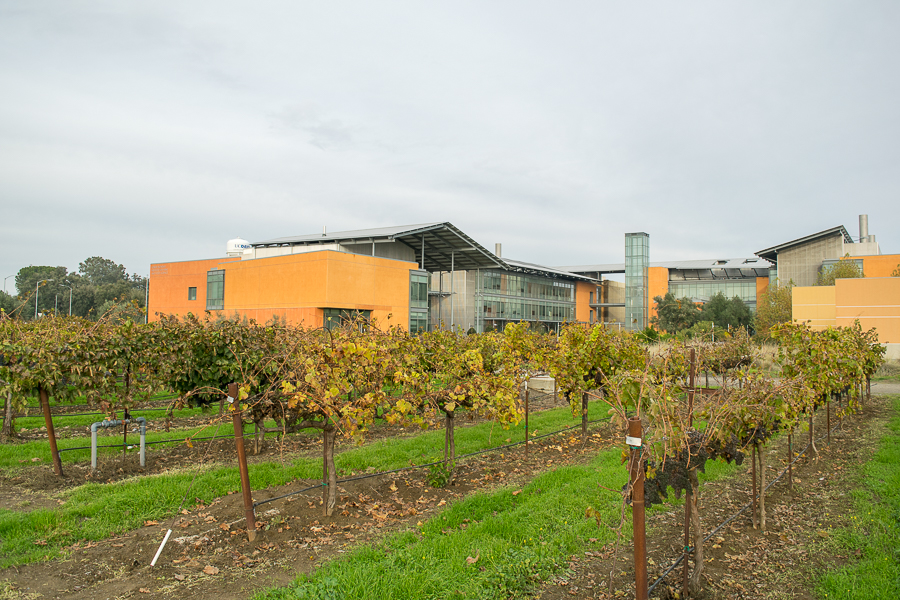
The department collects its grapes for wine production classes from the vineyards on campus, from its Oakridge Station in Napa Valley and from donations from companies that value what chief campus counselor Jacob Appelsmith calls the “next generation of winemakers.” Of the 70 to 100 tons of grapes that the department crushes every harvest season, Block said about 250 to 300 different batches of wine are made, which translates to between five and seven thousand gallons per year.

“The plan with the new legislation is to sell most of this wine to the bulk market,” Block said. “It would end up getting sent to other wineries and they would mix it with their wine, package it and sell it.”

Appelsmith said the department will most likely operate with California wineries it currently has connections to through research purposes and grape purchases. According to Block, UC Davis works closely with Silverado Vineyards in Napa Valley to produce wines with similar qualities to those at UC Davis, arriving at its $80 value.

“The $80 bottle of wine is really a function of how good our land is [at] Oakville Station, the quality of grape we’re producing and the quality of wine,” Appelsmith said.

Despite the money involved in the wine market, Appelsmith and Block said it is crucial the department does not have a profit motive and stays true to its ultimate goal of environmental conservation. After all, UC Davis is home to the most sustainable winery in the world and is Leadership in Energy and Environmental Design (LEED) Platinum certified.

“We don’t want to have to just throw the wine away because of primarily the environmental issues and just the general wastefulness of it,” Appelsmith said. “The idea that you would have to take a perfectly good product and pour it down the drain when it has to be treated, is contrary to our mission.”

Block added that it would also be more financially stable for the facility to sell the wine to companies since the department can recover some of the labor, grapes and equipment costs in order to enhance student programs.

Though the arrangements to sell the wine are not yet completed, Block said the department is going to expand the program next year and produce even more red and white wine varieties.

“We’ll be adding another class in the Spring Quarter,” Block said. “[Students] will take the same wines and finish them through everything after the fermentation […] so they can understand how to do all the rest of the steps in the winery from filtration to bottling to cleaning.”

Further developing the program is a step in the right direction, as Block hopes to take advantage of the department’s vineyard and one day even sell a small production of the student wine with a UC Davis label on it.

“It would be very high quality wine that would be up to UC Davis standards,” Block said. “[The wine] would be something students, alumni, faculty and staff could be proud of.”

Appelsmith and Block anticipate finalizing the legal process for the sale of wine by the fall of 2017.
Written by: Jeanna Totah — campus@theaggie.org