55.5 F
Davis

Davis, California

Tuesday, December 23, 2025
Home Blog Page 664

Socially abroad: an opportunity for heightened communication

0
NICKI PADAR / AGGIE
NICKI PADAR / AGGIE

French Embassy, Office of Global Affairs encourage social networking

Studying abroad is an opportunity for students to find themselves living in a Moroccan wilderness town of 11,000 inhabitants, studying evolution in the Tahitian tropics or simply people-watching for hours at a Parisian café. No matter where their travels take them, social media allows students to leave a virtual breadcrumb trail of their exciting international stories.

Last December, the UC Davis Office of Global Affairs said oui, merci to a $20,000 grant from the French Embassy. Global Affairs matched this amount, and most of the $40,000 will be awarded in scholarships to students studying abroad in France. In order to receive a scholarship, students must develop a blog, video blog or photo album during their travels in order to promote study abroad programs through social media.

“Social media is a powerful tool and no matter what platform students use, the Study Abroad Office encourages students to take social media to the next level,” said Blake Cooper, the manager of Study Abroad Marketing and Communications. “I meet with students before they travel and help them address beforehand how they want to use social media to share their experiences abroad.”

Cooper has an extensive background in building social networks and and specializes in helping students document their stories on various social media platforms. One such platform is a collection of stories and articles written by students who have studied abroad, Study Abroad: Our Stories, of which Cooper is the managing editor. Aside from simply posting photos of food or landscapes, Cooper specifically aims to help students document their travels in a way that benefits them in their future careers.

“I’m constantly thinking of ways to help students tell their stories from abroad so when they graduate, they know how to articulate those experiences in an interview,” Cooper said. “Social media platforms can be fun and inspiring to others at home, but is also an important tool to differentiate yourself from hundreds of applicants applying to the job you want.”

Cooper aims to help students harness their social media expertise into an online portfolio, such as LinkedIn. This way, students can present to employers exciting content from several months abroad in 30 seconds or less. It is also a handy tool to use when living abroad.

“Studying abroad led to many adventures and social media was a really big part of that,” said Andrew Borst, a third-year managerial economics major. “There were times when I would travel to a new city and didn’t have a place to stay, so I reached out on Facebook and a bunch of people were able to hook me up with accommodations through distant relatives and friends.”

For Borst, one of the highlights of the trip was being able to capture moments on Instagram and Snapchat so friends and family were able to keep up with his dynamic adventures. However, even an avid social media user like Borst realized the importance of stepping back from electronics during his travels to Barcelona, Dublin and other cities in Europe.

“There were definitely people in my program who let [social media] encroach on their lives,” Borst said. “We would go somewhere and there would be a beautiful waterfall […] and I would sit and look at it and take in the moment trying not to have too much of a distraction. Many people would just take a picture then go back inside because it was cold […] that’s when social media got too far.”

Through his program, Barcelona Study Abroad Experience, Borst spent Fall Quarter in Europe taking classes during the week and taking the weekends to travel. Despite this fast-paced lifestyle, it is still possible to miss home and the people back in Davis. For Borst, social media was a crucial component in staying connected to his California roots.

“Without social media, the biggest change in leaving for three months would be not keeping up with anyone and probably feeling lonely and detached,” Borst said. “I was doing amazing and fun things, but still it gets rough and you want to keep up with your life back home. Social media kept me tied to Davis and my friends at home could also live through [my trip] with me.”

Professor and language program coordinator Julia Simon also expressed the importance of balancing social media usage while experiencing foreign places and cultures.

“I have seen people go through Le Louvre or Musee d’Orsay and just look at things through the camera on their phone instead of having a relationship with the art in front of them,” Simon said. “We often see people here who have to photograph something before they eat it but if you go to France, you’re not going to get away with that […] the French take eating very seriously.”

While social media can help people brush up on the places they will be visiting before they leave, most travelers believe it is important not to let it impede experiencing the unique cultures in the moment. Simon noted that immersion allows for cross-cultural connections to be built and new perspectives on world politics to develop. Whether students stay in London or the Moroccan wilderness, every abroad story is worth sharing. Even the simplest Instagram post could encourage fellow UC Davis students to venture abroad, or help one stand out to potential employers as a worldly, cultured member of society.

“My daughter travelled to Sri Lanka and posted a video of her at a wildlife sanctuary picking up a tiny, baby sea turtle, and that had much more of a living, breathing impact versus if she had told me about it over the phone,” Simon said. “Social media allows for a running commentary on your daily existence and becomes an interesting living journal where you record things but are able to share them. I’m sure the French government was hoping for more of that with these scholarships.”
Written by: Gillian Allen — features@theaggie.org


UC Davis to host first ever mental health conference

MORGAN TIEU / AGGIE
MORGAN TIEU / AGGIE

Conference aims to destigmatize mental health, inspire students to engage in mental health work

UC Davis will host its first ever mental health conference at the UC Davis Conference Center from 9 a.m. to 8 p.m. on Feb. 5. The UC Davis Mental Health Conference “aims to engage students in destigmatization and education efforts, prompt attendees to organize around mental health issues and offer them the opportunity for self-reflection and healing through mental health discourse,” according to its event page.

The idea to host a conference at UC Davis began after a delegation of 16 students were sent to UC Irvine for its mental health conference in May of 2016, using funds from the Division of Student Affairs. UC Irvine, UC Santa Barbara and UC Los Angeles already have mental health conferences. After the conference, Davis attendees of the Irvine conference approached ASUCD Senator Samantha Chiang, a third-year English and psychology double major, to help organize a conference at UC Davis. Chiang, who has worked on mental health efforts and helped orchestrate the trip to Irvine, became the founder and director of UC Davis’ conference.

Chiang spoke with Associate Vice Chancellor Milton Lang from the Student Affairs Office of the Vice Chancellor in May of 2016 and was able to secure some funding for the conference. She then reached out to students to help put the massive event together and warranted the help of eight board members.

Over 150 people will attend the conference. Due to limited funding, 125 attendees were selected through an application process that took place online from late December to early January. 50 people were selected on the basis of personal need and the remaining spots were allocated based on ability to help give back to the community. The conference will include workshops, panels and performances from student groups as well as opening and closing remarks.

Students and professionals will run the workshops. Those involved come from departments of ASUCD such as the Office of Advocacy and Student Representation, the Gender and Sexuality Commission, the Tri Co-ops and the Asian American Studies Department.

Workshop topics include race and ethnicity; sexual assault and mental health; Question, Persuade and Refer (QPR) certification for suicide prevention; student leader mental health; body positivity/disability; LGBTQIA mental health and spiritual healing.

There will also be two panel sets. Panelists include nine panelists who applied online, three psychologists from UC Davis Counseling and Psychological Services as well as administrators. The administration panel includes the director of Student Health and Counseling Services and the director of Academic Satellites. The speakers are Monica Porter from Disability Rights Advocates and Juliet Forbes from Crisis Text Line.

“We want this to affect people beyond the scope of the conference,” Chiang said. “We tried to choose workshops and panels that would give people the ability to take this outside. […] we really wanted to be able to inspire people to do more mental health work and really break down and destigmatize student mental health.”

Chiang has been a vital part of bringing the conference together. Her platform in ASUCD is focused on mental health awareness and providing benefit academic and mental health communities. The conference has been her largest undertaking so far. In May, she and her associates are planning to dedicate the full month dedicated to mental health awareness.


Written by: Jayashri Padmanabhan — campus@theaggie.org

UC Davis sets example for environmental progress

HANNAH LEE / AGGIE
HANNAH LEE / AGGIE

Trump Administration casts dark cloud over environmental policy

On Dec. 16, 2016, UC Davis was ranked the most sustainable university in the world by the University of Indonesia’s GreenMetric ranking. This ranking takes into account a total of 516 universities and the ways that they approach and address infrastructure, water usage, transportation, education and climate and energy impact.

The environmental progress made by this university should serve as an excellent example to campuses around the nation, especially in the wake of the recent report that the world experienced its hottest year on record for the third year in a row.

But recent actions taken by the Trump Administration put ideals of an environmentally-secure world in peril. Barely a week into Donald Trump’s presidency, his administration has already ordered the Environmental Protection Agency (EPA) to freeze its grants and contracts, has removed most mentions of climate change from the White House website and has demanded that multiple government agencies — including the EPA — cease external communications. The administration even temporarily shut down the National Park Service’s Twitter account after it retweeted in response to the park service’s tweets

The environment is, without a doubt, the most important long-term issue of our time — but immediate action is required. Those who deny that fail to see the consequences that we are even now beginning to face. As a massive contributor to global greenhouse gas emissions, the U.S. must take a strong stance against climate change. Up until Jan. 20, this was a priority of the federal government. Now, it is in serious danger of falling by the wayside.

Donald Trump is a president who has called climate change a hoax invented by the Chinese, has said he will back out of the 2015 Paris climate agreements, has adopted environmentally-dubious policy stances and has appointed cabinet members who have climate-skeptic views or who are strongly tied to the oil industry.

With objective facts more important than ever, the Editorial Board applauds those who defy the new norm and publish information regarding scientific accuracies. There is no room for “alternative facts” in a rational society — only in an Orwellian nightmare.

The environmental direction that this administration seems to be taking could have monumental implications for the future of our planet. We have the responsibility to fight complacency and acquiescence by continuing to highlight the importance of this issue.

A small group of UC Davis students has already staged a walkout to protest the recent climate change-denying stance adopted by the new president. This is a step in the right direction, but we must do more.

The world depends on it.

A symphony to children’s ears

MORGAN TIEU / AGGIE
MORGAN TIEU / AGGIE

The Ukulele Kids Club donates instruments to UC Davis Children’s Hospital

What started off as one man’s hope to provide community service has expanded into a volunteer organization that fundraises to send ukuleles to children’s hospitals. Corey Bergman, founder of Ukulele Kids Club Inc., was inspired to help others through music — one of his passions — after the loss of his son.

Bergman began volunteering at Nicklaus Children’s Hospital and Joe DiMaggio Children’s Hospital in 2012. A year later, he received the President’s Volunteer Service Award from former President Barack Obama. In 2014, he and his wife founded the Ukulele Kids Club Inc., a nonprofit organization that aims to aid music therapy in children’s hospitals by providing them with ukuleles.

Initially, bigger cities and hospitals were identified for ukulele donation, but requests began rolling in from all across the country and world. The club transformed into something much bigger and more powerful, yet manages to stay close to its roots.

“Music therapy is utilizing music, music techniques and music interventions to achieve non-musical goals,” said Stephanie Epstein, a board-certified music therapist at the Holtz Children’s Hospital and Jackson Pediatric Center. “Goals can include improving speech and language skills, physical [and] motor skills, cognitive abilities, emotional expression and coping, and interpersonal skills.”

Epstein first met Bergman in the fall of 2014 when she was working at the Jackson Pediatric Center, a Pediatric Prescribed Extended Care (PPEC) facility. After further communication regarding music therapy, Bergman appointed Epstein as the Ukulele Kids Club music therapy advisor. Since its start just a few years ago, the organization has grown significantly by means of social media coverage and fundraising.

“We have donated to a little more than 150 pediatric hospitals. Eight or nine of those are in the UK, five or six in Canada, and the rest in the US. We will be approaching 3,000 instruments by February,”  Bergman said. “It’s hard to put into words — it has a physical, mental, [and] emotional effect.”

Board-certified music therapists at various hospitals select children to receive instruments as Bergman tries to fulfill the many requests for the donation of ukuleles. Although only five ukuleles are shipped to hospitals at a time, some hospitals have received multiple shipments over the years.

The UC Davis Children’s Hospital has been one of many to receive ukuleles from the Ukulele Kids Club. The hospital has been the recipient of several shipments since April of 2015, when it was one of the first of 10 hospitals to be a beneficiary.

“In the hospital, music therapy helps to reduce anxiety and help kids cope with being in the hospital,” said Tori Steeley, music therapist at the UC Davis Children’s Hospital. “It’s using specific music interventions that are created for each individual.”

Steeley is a full-time music therapist, who came into contact with the Ukulele Kids Club through another music therapist. She studied music performance in college and wished to continue with music by empowering others.

“[The Ukulele Kids Club] helps kids cope with being in the hospital by giving them something to do here,” Steeley said. “That could be combatting boredom, but music provides an outlet for them [the kids] to express themselves without having to use words.”

The Ukulele Kids Club receives donations from fundraising and is looking for corporate sponsors. All fundraising occurs on a personal level, as it is a nonprofit organization. There are hundreds of volunteers involved across the country — a number that is expected to increase as the organization receives more publicity.

“It’s like we’re giving away gold, it’s amazing, it’s such a simple concept,” Bergman said. “Identifying the hospitals and musical therapists is not going to be the problem.”
Written by: Kaelyn Tuermer-Lee city@theaggie.org

Exploring the night sky

0
ALEXA FONTANILLA / AGGIE

A closer look at the Hutchison Hall Observatory

Peers, faculty, friends and family crowd the roof of the Physics Building, mingling and huddling to stay warm. A laser pointer flits across the night sky, pointing to various stars and constellations as a member of the Astronomy Club gives the audience some facts about the stars. Other members set up telescopes, assisting the group so that they can get a closer look of the wonders of the sky.

Some people hear the word “space” and think of something inaccessible, full of wonder and mystery. Students at UC Davis, however, get the opportunity to learn more about space than the average person, and those with a will to pursue a physics degree, like many members of the Astronomy Club, can do so with an astrophysics emphasis.

Prior to 2006, the Physics Department at UC Davis did not offer this particular specialization. Patricia Boeshaar, Undergraduate Curriculum chair for physics, and other members of the department had noticed that almost all of the other University of California (UC) schools had specializations in their physics department.

“We said, ‘Why not offer what [students] would like?’” Boeshaar said. “We noticed the other UC’s had programs. [We] want to give [our] students as many options as possible.”

Boeshaar also noticed that more women tended to gravitate toward the astronomy courses.

        “When you think of physics, you don’t think about a lot of women,” Boeshaar said. “About 20 percent of undergraduates in physics are women, but in astronomy, it’s about 40 [or] 45 percent. It’s always been higher.”

In 2007, the Department of Physics’ proposal for the addition of an astrophysics emphasis was approved. Now students have the option of getting a bachelors of science in physics while also taking classes more focused in astrophysics.

“So when you go out, you can get all the jobs you would get in physics but you can also work in astrophysics,” Boeshaar said.

Both students who choose to take this route and students of other majors often take the lower division astronomy labs: Observational Astronomy Laboratory and Introduction to Modern Astronomy and Astrophysics. These labs are held on the roof of the Physics Building and students who do well in the lab can come back to be teaching assistants (TA) for the class, even as undergraduates.

Jacob Lambeck, a fourth-year physics major and president of the Astronomy Club, took one of the labs during Fall Quarter of his freshman year and was invited back to be an undergraduate TA during Spring Quarter of that same year.

“We have one grad student who does a short little lecture of what [students] are going to see at the start and does all the grading, but then it’s actually all undergraduates like myself,” Lambeck said. “[We] are working with the students on the roof [and] helping them through the lab and teaching them what they’re going to be doing.”

Students who take the upper division Advanced Laboratory in Astrophysics class get the opportunity to work in the Hutchison Hall Observatory.

“There’s a lot of interesting objects in the sky,” said Andrew Bradshaw, a TA and graduate student in the Physics Department. “For instance, the one they normally target in their observations […] is the whirlpool galaxy. What they do is they take extended observations of it in different filters and they form a composite image. Then they also, from the amounts of light collected, can predict how many stars are being formed per year in this very distant galaxy.”

Located on the roof, the observatory is not open to the public. The class is offered every other year during Spring Quarter and cut offs at eight students. Only four students are allowed in the observatory at a time and must be accompanied by faculty due to Occupational Safety and Health Administration (OSHA) requirements.

Students taking the class learn to make observations with the software and equipment available. Prior to 2006, students took their observations with a 12-inch Newtonian telescope but now, students use a newer 14-inch Celestron telescope.

“It’s small but it’s perfect for students learning to do work up there and who want to do research,” Boeshaar said.

Although the Hutchison Hall Observatory is not open to all students, the Astronomy Club offers public viewings every other week during Fall and Spring quarters on top of the Physics building. Club officers and members take out telescopes, point them to different planets and star clusters and teach students, faculty and community members about what is in the sky.

“In my opinion, almost everyone has access to the Internet these days and you can look stuff up but it’s something else to be able to look through the telescope,” Larissa Schumacher said, a fourth-year physics major and an officer of the Astronomy Club. “Not everybody owns a telescope. [We] try to bring it to as many people as possible [and] answer their questions. It’s really great when we get these little kids up on the roof […] and then they look through the telescope at the moon and they just get the biggest smile on their face.”

Besides putting on public viewings, the Astronomy Club also takes trips out to Lick Observatory. Located on the summit of Mount Hamilton, Lick Observatory is owned and operated by the UC. The club members are able to get a private tour of the observatory on these trips.

“Being a member of the club is very open —  we don’t have dues [and] you don’t have to show up to meetings,” Lambeck said. “Being a club member usually just means that either you’ve liked our Facebook page or you’ve subscribed to our email list. We want it to be open to everyone.”

At these meetings, the club invites members of UC Davis faculty to come and speak about their research, work or subjects that interest them.

“We can only do so much by showing you the stars but there’s a whole other part to it that’s a less visual thing,” Lambeck said. “So we’re trying to get people who are interested in it, but don’t want to pursue it, to get exposure.”

In the past, the club has made trips to Lake Tahoe, Mendocino National Forest and even further east into Nevada. Away from major cities, students pitch tents, hike around and are able to see a lot more of the sky — even more than what can be seen from the UC Davis campus.

“Space is one of those things where you don’t have to study it for very long to learn a bit about it,” Lambeck said. “It’s always going to be there […] and there’s so much out there that we still don’t know.”

Written by: Fatima Siddiqui — features@theaggie.org

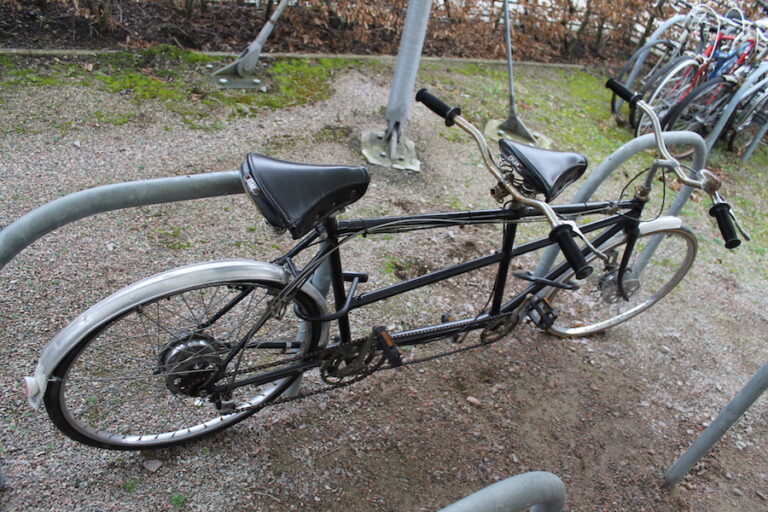
Humor: Tandem Tipsy Taxi rolled out to make Davis more green

TIM REGAN [CC BY 2.0] / FLICKR
headshot_evNumber-one sustainable school looks to extend its lead
After earning the rank of number-one sustainable university in the world, UC Davis has unveiled its next step toward zero emissions. To go along with Safe Ride vans, students will now have the opportunity to bike home with the help of a licensed safety officer.

Just like van drivers, tandem pilots will be tasked with handing out bike lights. They’re expected to follow the rules of the road, including using hand turn signals. Pilots will also offer helmets, although passengers are not required to wear them.

Additionally, pedaling, while recommended, is not mandatory. Fenders will be included on both the front and back wheels to prevent the dreaded “freshman stripe.” Water bottle holders will be featured on the back seat, along with a basket at the front of the bike. Each bicycle will be Vegas Gold so that it can be seen at night. Students will also be provided with stickers if they are “good passengers,” a subjective decision that will be made by the driver.

“I like this — it’s quirky, fun and practical,” said Robert Rosen, a third-year environmental policy and planning major. “This is just something else that makes Davis the greatest place to be on Earth.”

When users open the Safe Ride app, they will be prompted to either request a tandem or car ride to their desired location — if the service is available during the hours desired. Safe Rides runs seven days a week from 5 to 10 p.m. anywhere on campus and from 10 p.m. to 6 a.m. from campus to anywhere in the city of Davis.

“Opening Tandem Tipsy Taxi promotes a green alternative to walking,” said Jeff Raines, head of Safe Ride Services. “During warm spring nights, we fully expect students to make the most of our eco-friendly alternative to the van.”

The tandem service will create jobs for 15 students on campus, with 10 new bikes being shelled out starting the first week of February. Five manager positions have also been created to help get the process off the ground and to ensure the operation runs smoothly.

Applications will open next week. There are few requirements to become a driver, but applicants must have the ability to ride their bike with no handlebars. Safe Ride has also requested proof of registration and insurance for one’s bike.
Questioning the credibility of ETHAN VICTOR? You can reach him at ejvictor@ucdavis.edu. Feel free to help with his followers-to-following ratio on Twitter @thejvictor, because it is pathetic.

Yolo County’s poverty rate higher than before recession

DANIEL TAK / AGGIE FILE

Recent report finds that many other California counties rates also higher

Yolo County’s poverty rate remains higher than before 2007, prior to the onset of the Great Recession, according to a new report issued by the California Budget & Policy Center from the beginning of this year

This report, titled “Few California Communities Have Fully Made Up Ground Lost Due to the Great Recession,” used the U.S. Census Bureau’s official poverty measure to determine its findings.

The report concluded that in Yolo County alone, more than 18 percent of individuals were living in poverty. The report also looked specifically at childhood poverty rates. It found that there was an increase in poverty rates by nearly 3 percentage points between 2007 to 2015, with about 17 percent of children living in poverty in 2015.

For the greater Sacramento region, three other counties rates remain higher, occurring in Placer, Sacramento and Sutter counties. Not only are the surrounding region’s poverty rates higher than before 2007, but so are 26 other counties rates across California. Kings, Madera and Sutter counties were found to have the highest recorded poverty rates from 2015 figures, with more than 8 percentage points higher than 2007s numbers.

These high rates of poverty seen across the state and our country indicate issue’s seriousness. Every year, millions of California residents alone cannot adequately support themselves and their families. High housing costs, the lack of affordable child care available and low-wage jobs are a few main reasons why individuals may be struggling to get by.

“For a family of four with two adults and two children, the official poverty threshold was $24,036 in 2015,” stated the Supplemental Poverty Measure: 2015 Report by the US Census Bureau.

In specific, children of color are hit hard by higher levels of poverty; Black and Latino children are about three times more likely to live in poverty than white children. Policy analysts suggest that by increasing the incomes of low-earning families to a living wage, these families struggling to get by will be able to provide better for themselves and their children.

“In California, two-thirds of the people living under the poverty line are working. It is critical that we make sure those people working having a living minimum wage,” said Steven Bliss, the director of strategic communications at the California Budget & Policy Center.

In particular, Bliss stressed the importance of making sure that the various federal and state programs such as Social Security, CalFresh and CalWorks aren’t scaled back in funding due to the assistance they provide to millions of low-income individuals each year. He argued that it is important that that our congressional delegations in both Washington, D.C. and California protect these programs since millions of people depend on them.
Written By: Anya Rehon — city@theaggie.org

Rodgers falls short in attempt to run the table

0

MIKE MORBECK [CC BY-SA 2.0] / FLICKR
Incredible showing of Green Bay Packers ends in conference championship game

Standing at 4-6 through Week 11 of the NFL season, Aaron Rodgers and the Green Bay Packers look destined to fall short of their playoff goals. They had just been demolished by the Washington Redskins by a score of 42-24 and had lost in a similar fashion to the Tennessee Titans 47-25 the week prior.

Rodgers had an unusually sluggish start to the season, and the Packers had lost four straight, but somehow his swagger and sense of self never wavered. He made comments to the media following their most recent loss that the Pack was bound to run the table and sneak their way into the playoffs. He was correct. Green Bay rattled off six straight victories on their way to a 10-6 record to win the NFC North and Rodgers was playing at an  unbelievable level.

The run of success up until this weekend was something I had never seen before. Aaron Rodgers looked bionic. He was capable of fitting any pass into any space he desired. He didn’t throw a single interception since Week 10 against the Redskins until his second playoff game against Dallas. His tremendous achievements made me realize that Rodgers wasn’t just the best quarterback in the NFL, he might be one of the best quarterbacks in league history.  

In the Wild Card round, Rodgers made a mockery of the hottest defense in the NFL by completing 25-40 passes for 362 yards with four touchdowns and zero interceptions and dropped 38 points on the New York Giants. In that game, he lost his star receiver, Jordy Nelson, to a vicious helmet shot to the body which caused fractures in his ribs. Losing Nelson made the upcoming challenge against the Cowboys a lot tougher.

He went to Dallas the week after, sans Nelson, and did pretty much the same thing. Rodgers slung 43 passes and completed 28 of them for 355 yards, two touchdowns and one pick. The most memorable moment of the game for the Packers came after Dan Bailey of the Cowboys tied up the game on a field goal with 35 seconds left on the clock.

With so little time left, you’d have to be thinking overtime. Nope.

3rd and 20 with 12 seconds left on the clock and Green Bay on its own 33, Rodgers magically rips the ball for 36 yards on the run to tight end Jared Cook to set up a game-winning field goal in the final seconds.

What Rodgers was doing to make up for the injuries and weaknesses of the rest of the Green Bay Packers was simply jaw-dropping. Football is obviously a multifaceted game in which not one man can carry a team, but that’s exactly what Rodgers was doing. Max Kellerman of ESPN’s First Take stated that Rodgers was playing like the Michael Jordan of the NFL, and he was absolutely correct. Aside from the star quarterback, the Packers didn’t have the makeup of a playoff football team. Their secondary had gotten ruthlessly beaten up during the tail end of the season, their running game was pretty much non-existent and injuries continued to decimate the roster. Success for the Green Bay Packers has hinged on one thing, and that one thing is Aaron Rodgers.

In a sport where the most complete and well-rounded team ends up always taking the cake, Rodgers made us reconsider that widely-accepted logic. Many thought that he could continue the one-man show, but unfortunately he ran into a very talented Atlanta Falcons offense that turned out to be way too much for the Green Bay defense. In Sunday’s game, Matt Ryan tore up the suspect Green Bay secondary to the tune of 392 passing yards and four touchdowns. Green Bay looked lifeless throughout the entire game, but even after being down 24-0 by half, many still wondered if it was too late to call it.

Is Aaron Rodgers capable of pulling this comeback off? If anybody could do it, it would surely be him.

The rally never manifested itself, and the Falcons defeated the Packers by a score of 44-21. The Falcons finally overcame their reputation as notorious playoff chokers and will meet the New England Patriots in Super Bowl LI, in which they will surely enter as underdogs.

Aaron Rodgers by himself wasn’t enough to drag the flawed Green Bay Packers to the Super Bowl, but his historical stretch following his “run the table” comments at the end of November is one to remember. I write this article on the 11 year anniversary of Kobe Bryant’s 81 point game which showed that in basketball, one man can carry a very flawed team. Rodgers’

stretch proved the same, but unfortunately for Green Bay, they couldn’t go the entire distance.

Regardless, this man has established himself as a living legend of the game.
Written by: Michael Wexler — sports@theaggie.org

UC Davis Sexual Violence Awareness and Education Campaign wins award

BECCA RIDGE / AGGIE
BECCA RIDGE / AGGIE

AMCP award recognizes excellence in marketing, communications

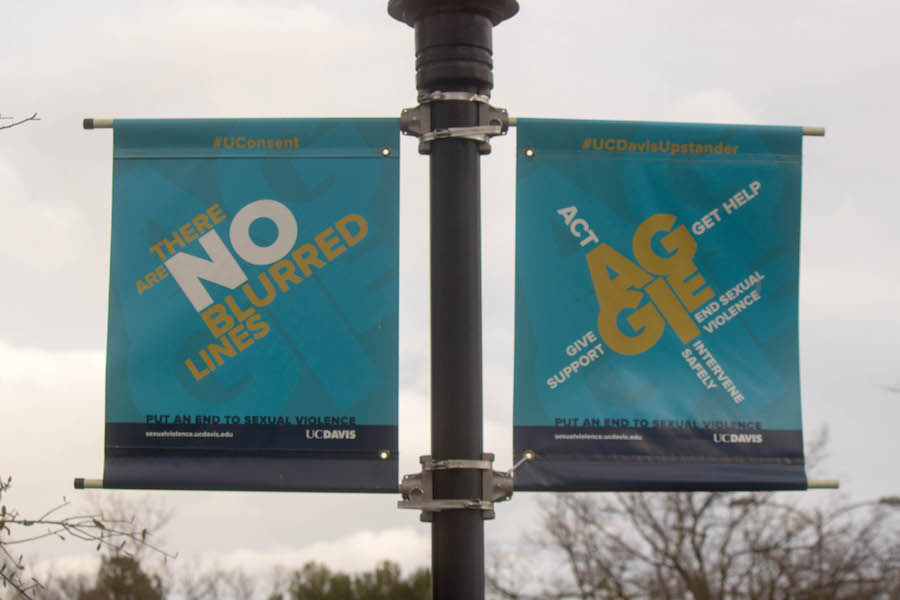
The Sexual Violence Awareness and Education (SVAE) Campaign, a project aimed at encouraging students at UC Davis to take an active role in preventing sexual assault, has won a MarCom Award for its achievements in marketing and communications.

The Association of Marketing and Communication Professionals (AMCP), which administers the award, reviewed 6,500 entries throughout the United States, Canada and 17 other countries. The SVAE Campaign received a Platinum Award, the highest award in the competition.

“MarCom Awards recognizes outstanding achievement by creative professionals involved in the concept, direction, design and production of marketing and communication materials and programs,” said Ed Dalheim, the executive director of AMCP, in a press release. “Judges are industry professionals who look for companies and individuals whose talent exceeds a high standard of excellence and whose work serves as a benchmark for the industry.”

Sam Alavi, a fourth-year sociology major and co-chair of the Gender and Sexuality Alliance Network (GSA), attributed that the effectiveness of the campaign was due to its prevalence on campus.

“I think my approach to sexual violence prevention education is that it really has to saturate every aspect of campus,” Alavi said. “So not only in our classrooms or our orientations, and kind of embedded it in our curriculum, but also embedded everywhere else in student life, which was the idea behind the coffee sleeves and the posters and our sexual assault videos, all of those were […] meant to remind students about consent and bystander prevention in all the other moments of their lives at UC Davis, and I think we did a pretty good job of it.”

Andrew McDaniel, a campaign specialist for Student Affairs Marketing and Communications who oversaw the campaign, said that the campaign has effectively helped students have conversations about consent.

“For me personally, working on this campaign is incredibly rewarding,” McDaniel said via email. “These topics can sometimes be uncomfortable for people to talk about, but the campus has reacted very positively to the messages. It’s exciting to help facilitate these necessary conversations.”

The campaign also recently won a Silver Award in the Council for Advancement and Support of Education (CASE) District VII Awards of Excellence. The campaign has also started another segment called “Dear Survivors,” which is a series of photos that aim to support and empower survivors of sexual assault.
“We started the letters to survivors project, which is kind of like a visual forum where people can write letters to themselves or to their loved ones or to survivors in general, and really give them affirmation, and part of my inspiration around was because of Donald Trump, was because of all of these things happening,” Alavi said. “You know it’s kind of emotionally exhausting to talk about this all the time. We don’t really talk about survivors, ever. Even in the beginning of this campaign, it’s very towards preventing sexual violence and not really towards what do we do and how do we support survivors after it happens, and so I think the next part of the campaign for me was making sure they were talking about survivors and how to support them and how to empower them.”

While the campaign released its first set of photos last quarter, its full launch will come in April as part of National Sexual Assault Awareness Month.

“I’m very proud of the work that we have done so far,” McDaniel said. “It’s been amazing to watch so many people across campus come together to support this campaign.”

Regarding the long-term effects of the campaign, Alavi said that students will be able to remember what they learned through the campaign after they graduate, which could help advance sexual assault awareness for generations to come.

“I really strongly believe in the domino effect,” Alavi said. “These students who we are reaching with this campaign are our future teachers and our future police officers and our future doctors and lawyers and judges and presidents. These are the people who, if we teach them now, [will] teach their kids about consent and those people will teach their kids about it, and I think that there’s something really valuable about engaging all 30,000 students here, plus our staff and faculty. If we can actually reach them and teach them, I think that we’re doing a service, not only to our community but to the larger community.”
Written by: Ivan Valenzuela — campus@theaggie.org

The books that inspire UC Davis faculty

IAN JONES / AGGIE
IAN JONES / AGGIE

Check out the books below for some potential inspiration

Books can have deep and profound impacts on the reader, spanning content, time and place. And if we’re lucky enough, they may even help us find the right career. Faculty members Jennifer House and Kristin Kiesel shared their favorite books and the ones that contributed to them finding their professional paths.

Kristin Kiesel

Kiesel is a lecturer in the Agricultural and Resource Economics Department with an emphasis on teaching and research. She has been teaching for eight years, and recently received a USDA grant with her colleagues to promote a “farm-to-fork” food business incubator in Sacramento. She is currently reading My Life on the Road by Gloria Steinem and The Attention Merchants by Tim Wu and teaches Intermediate Microeconomics and Environmental Economics.

Books that contributed to pursuing profession:

“I love books and there is always a stack of them next to my bed. Children’s books had the biggest influence on me, the stories my parents read to me. I wanted to write my own, to explain the complex world around me in a playful way when I started studying. A number of these were German classics and fairy tales. My all-time favorites are Pit Pikus und die Möwe Leila by Friedrich Wolf and Der Tannenbaum by Hans Christian Andersen. Maybe these powerful stories influenced me in wanting to become a teacher.

Then came the classic novels of the 18th, 19th and 20th century: Goethe, Tolstoi, Feuchtwanger, Mann, Hesse, etc. One that shifted my focus from literature towards social science as a field of study was Friedrich Schlegel’s Lucinde. In addition to being an autobiographical love story, it is a complex social critique of its times. Reading the news in addition to getting lost in these books and being curious about the underlying causal relationships is probably why I ultimately ended up studying and teaching Economics.”

DIANA LI / AGGIE
DIANA LI / AGGIE

Favorite Books:

“There is a long list of novels I deeply cherish and enjoy knowing that I have them on my shelves. Some I have re-read over the years such as Milan Kundera’s Unbearable Lightness of Being while some are more recent additions, like Anthony Doerr’s All the Light We Cannot See. With my now-teenage daughter, we regularly return to those childhood classics already mentioned and added a couple new ones over the years (like Dr. Seuss’ Oh, the Places You’ll Go!). And then there are my art and poetry books. On top of that list are books about my favorite painter — Paul Klee — and poems by Rilke. I never fail to get lost in these, even for a little while.”

Jennifer House

Professor Jennifer House teaches a farm management course once a year with her husband, Professor Greg House, and their son Henry. All three attended UC Davis, and Jennifer and Greg met in a Pomology class. The family founded Coco Ranch near Davis, where they specialize in organic apples and other fruits, and also own a consulting business called House Agricultural Consultants.

Books that contributed to pursuing profession:

“As a young agricultural student sorting out the ways of the world, I was inspired and shaped, as so many are, by philosopher-farmer Wendell Berry’s collected essays in ‘The Long-Legged House’ and ‘The Unsettling of America.’ Then, belatedly, I began reading his fiction, starting with Jayber Crow, a decades-long witnessing of 20th century economic and social change from the perspective of a small-town barber. I continue today to reflect upon that very human story. I gave the book to my farmer husband Greg; he read the four-hundred page novel to the last page, sighed and went back to the beginning to read it again!”

Favorite Books:

“When my life gets crazy-busy and I just want to be elsewhere, I escape into the science fiction worlds of wise woman Ursula K. Le Guin, daughter of writer anthropologist Theodora Kroeber and UC Berkeley anthropologist Alfred Kroeber. Depending upon the weather, I read from ‘The Birthday of the World,’ ‘A Fisherman of the Inland Sea,’ or ‘Four Ways to Forgiveness’ — short story collections, often interwoven, with time travel, ancient civilizations, cultures in collision, colonization, decolonization, detailed agricultural scenes, mystery, longing, human struggles and brightness, all there.”

Written by: Pari Sagafi — arts@theaggie.org

UC Davis study abroad secures $22,000 in grants from French government

CAT TAYLOR / AGGIE FILE

Awards geared toward students of color, students from underserved communities

At the end of last year, the French Embassy in Washington D.C. gave the UC Davis Office of Global Affairs a grant of $19,386, while the UC Davis Study Abroad Club won a $2,000 grant from French Mission for Culture and Higher Education, located in New York City.

The Transatlantic Friendship and Mobility Initiative, in collaboration with the French Embassy, aims to strengthen the ties between the U.S. and France by diversifying and doubling the number of students from France and the U.S. studying abroad in their respective countries by 2025.

Under the leadership of Joanna Regulska, vice provost and associate chancellor at UC Davis, UC Davis Global Affairs showed a willingness and ability to leverage the goals of the proposal. UC Davis will match the grant, making the total budget nearly $40,000.

“We were honored to be selected and awarded $20,000 by the French Embassy[,] a sum that will be matched by Vice Provost and Associate Chancellor Joanna Regulska of Global Affairs,” said Aliki Dragona, a faculty director for UC Davis Study Abroad, via email. “The award will promote student mobility to France and enhance partnerships with French partner institutions in 2017 and beyond.”

The budget will allocate $30,000 for 20 students studying abroad in 2017. Each award recipient must develop a project such as a video blog or photo album for outreach purposes.

Half of the travel funds will be aimed toward students of color and underserved communities.

“UC Davis Study Abroad offers a robust portfolio of faculty-led programs (several in France) as well as programs through UCEAP; consequently, these student travel awards will be critical in supporting UC Davis students (and in particular, students of color and from underserved communities) studying in France in 2017,” Dragona said via email.

The application for the grant outlined a number of new initiatives with France, including the Performing Arts Live! Summer Abroad program launching in 2017 with the Institute for American Universities (IAU) College in Aix-en-Provence, and further collaboration between Summer Abroad’s art studio program at Paris-Sorbonne University.

Global Affairs is also working on partnerships with other French institutions for students in the arts and viticulture and enology fields.

Alexandria Hartwell, a fourth-year managerial economics major, considers the grant a great opportunity for individuals to experience traveling abroad.

“I think that is is so great that the French embassy is giving UC Davis a $20,000 grant,” Hartwell said via email. “So many people on campus […] would love to study abroad but simply do not have the money. […] This past summer, I studied abroad with the UC Davis Fashion Marketing in Paris, France program. I enjoyed myself greatly and appreciated the chance to travel that the program afforded me.”

Hartwell is not surprised by the French government’s decision to aid the program.

“Once I actually placed my feet on a Paris sidewalk and had a chance to look around, I was truly amazed and surprised,” Hartwell said via email. “Having been in France, I’m not surprised in the least that wonderful people are generously facilitating the study abroad experiences for our Davis students.”

Dragona believes the grant is both a testament to UC Davis’ efforts and strengthens the school’s relationship with France.

“This is an important award for UC Davis Study Abroad because it affirms the work we do and it further builds on UC Davis’ existing relationships with France and French partner institutions,” Dragona said via email.

The UC Davis Abroad Club was also awarded $2,000 for winning the 2016 France on Campus Award. Under the guidance of film director Wes Anderson, the award aims to discover, support and celebrate initiatives to innovatively and creatively explore France.

Student organizations are expected to display French culture on their campuses and beyond by launching a France-related project with a “unique package of funding, mentoring and networking,” according to the website for the Cultural Services of the French Embassy.

Julianna Roy, president of the Study Abroad Club and a fourth-year psychology major, said the club plans to have a series of 360-degree videos of UC Davis students’ experiences in France by providing participants with 360-degree cameras, creating a website for the videos and developing mobile apps that are compatible with virtual reality devices.

“As president of the Study Abroad Club and as a peer advisor at UC Davis Study Abroad, I helped design a proposal for a project that will give students an interactive experience and encourage them to study abroad in France,” Roy said via email.

Although there will be study abroad staff members helping this initiative, it will be mainly student run.

“Staff members at the Study Abroad Office will be assisting us through the process, but this project will be entirely student run,” Roy said via email. “We also hope to involve other students on campus who are interested in app development, or who have an interest in French culture.”

Students who are interested can learn more by watching the Study Abroad video on Roy’s YouTube channel.
Written by: Yvonne Leong — campus@theaggie.org

An Earful: Introducing Andy Shauf

CINDY CHEUNG / AGGIE

Saskatchewan musician builds an introvert’s world in his album “The Party”

Music, like black coffee, is an acquired taste. It isn’t easy to swallow, but it’s manageable if the flavors are rich and the undertones are subtle. And though I’m a frequent believer (and consumer) of “no room for cream,” singer-songwriter Andy Shauf was the musical equivalent of drinking my first bitter brew.

The Saskatchewan musician has been making and releasing music since 2009, but his talent went largely unrecognized until the 2016 release of his album The Party. An ingenious conceptual album above all else, The Party is a real-time walk through of a party from an introvert’s perspective.

The album kicks off with “Magician,” a track that is all too real for anyone who’s ever felt alone among a crowd: “Oh fools, / the magician bends the rules / as the crowd watches his every move / Just a shaking hand without a concrete plan.” A short song with only a few lines and a chorus of Shauf’s “doo doo doo,” this track sets the mood for what follows: a long and heart-tugging journey.

After the opening track, “Early to the Party” addresses exactly what the title suggests — coping with the awkwardness of arriving too early: “You’re the first one there / overdressed and underprepared / standing in the kitchen / stressing out the host.” This song is also the listener’s first introduction to Shauf’s multi-instrumental sound. The collection of delicate drums, fireside acoustics, prominent bass lines and echoing clarinets melt into Shauf’s melancholy world, leaving listeners heavy-hearted and breathless.

A heartbreaking tale of rejection, “To You” blurs the already ambiguous

boundaries between love and friendship. The song’s main character approaches one of the album’s recurring characters, Jeremy, and dares to confess some muddled feelings: “Sometimes when I’m by your side / It feels just right / It feels like nothing could go wrong.” Written from the primary character’s perspective, we are left wondering Jeremy’s response. But the rejection is immediately made obvious: “Oh get over yourself / I’m not in love with you / It just came out all wrong.” Though the speaker denies being in love, it’s uncertain if it was truly a product of drunken speech, or a declaration of love. The heaviness of the rejection remains powerful nonetheless, and is only heightened by the progressive intensity of clarinets.

But the chorus of clarinets — featured throughout the album — aren’t easy to fall in love with. In contrast to Shauf’s soft and easy melodies, the clarinets initially feel out of place and deliberately contrived. But they eventually grew on me. Just like what once puckered my cheeks and had me reaching for creamer, I now find smooth and soothing.

With each flux of the chorus, “Why am I even surprised / That it never / feels like that to you,” the clarinets swell, sounding different in each context. The first time, quiet and timid, the clarinets backdrop the character’s request to talk: “I have something to get off my chest / But if I wait / I might never tell you.” They grow loud and ominous following the rejection, giving sharp punctures to each word from “Oh get over yourself / I’m not in love with you.”

Journeying through the rest of the album, you will find the speaker hitting on a friend’s ex (“Quite Like You”), another character that dies from smoking too many cigarettes (“Alexander All Alone”) and the self-deprecating contemplations of “Worst in You.”

Dancing, heartbreak, humiliation — the night’s events have all the necessities for a memorable party. And although the abundance of emotions make it diffic­­­­ult to digest, I don’t mind; I can sustain myself on lattes and cappuccinos, but nine times out of ten I’m drinking it black.
Written by: Ally Overbay — arts@theaggie.org

The UC Davis ModLab

COLIN MILBURN / COURTESY

Standing at the intersection of cultural anthropology, English, computer science

The UC Davis ModLab, located in Cruess Hall, is a place where the humanities and STEM fields collide. The ModLab has multiple ongoing projects at any given time, ranging in topic from video game design to wearable technology.

Ranjodh Singh Dhaliwal, a Ph.D. student in the Department of English, is the project director for a game coming out of the ModLab called “Frack the Game,” which puts the player in the shoes of a fracking corporation.

Fracking is the process of pumping liquids (water, sand and chemicals) at high pressure into the ground. The high-pressure liquids create fissures in the shale rock layers deep underground, from which oil and gas can flow and be collected from. Fracking has a controversial history. While proponents say that the practice has driven down gas prices and will provide energy to the United States for years, opponents of the practice say that fracking releases radioactive chemicals, produces large amounts of toxic waste and is polluting people’s drinking water.

The concept for “Frack the Game” came from an undergraduate class at UC Davis that was taught by Dr. Joseph Dumit.

“One of the activities in the course was that students came up with this game,” Dhaliwal said. “You have to capture as much territory as you [can] to frack and to defeat your competitors by making the most money possible. The whole goal was to get into the mindset of a fracking company, where you might actually be aware of the environmental problems, but you still would choose to ignore them because of your immediate desire to win over your competitor and make more profit.”

After seeing the success of the game in the classroom, Dumit decided to make a video game with the same concept in collaboration with a team at ModLab. According to Dhaliwal, the game gives the player a more contextualized look at the thought process behind a CEO’s choices when it comes to making important environmental decisions.

“There was a very binary, very rudimentary understanding of what things at a corporate level entail,” Dhaliwal said. “Generally, the idea was that either [CEOs] don’t know about the harmful effects of the environment, or, if [they] know and [they] still continue doing it, [they’re] just plain evil. I don’t think that’s an unfair assessment, but I think it’s an inadequate assessment, as anyone playing the game would understand.”

The process of taking a complicated idea and translating it into a medium like a video game is a practice that is commonplace at ModLab, according to Dhaliwal.

“One of the things that we do at ModLab is critical game design or critical video game design,” Dhaliwal said. “The idea is […] to make video games open certain possibilities of experience and knowledge acquisition that just chatting or talking about them doesn’t.”

Like Dhaliwal, Katherine Buse is another Ph.D. student in English who works on projects at the ModLab. Buse also believes in the efficacy of video games in learning complex ideas, especially ones pertaining to science. This is because instead of observing a situation, like one would while reading a book or watching a documentary, the player is put inside of the situation, which allows for enhanced learning.

In addition to producing games that help players think about topics from other perspectives, ModLab also serves to bridge different parts of campus.

“We have people in performance studies; we have people in cultural studies; we have people in sociology, […] and we have people from computer science,” Buse said. “We’re pretty interdisciplinary.”

The field of English specifically has a long history with games and game design, according to Buse.

“The field of game studies and of critical game design […] was born to a large extent out of English departments,” Buse said. “[English departments] started looking at different kinds of texts besides literary texts […] People believed that one of the reasons you looked at literary texts was to study culture, and as new media come up, like television or film or now video games, and become incredibly important to culture, it seems silly to restrict yourself to only look at books.”

Kris Fallon, an assistant professor of Cinema and Digital Media, has been with the ModLab for two years. Fallon believes that the ModLab serves to bridge communities at UC Davis by erasing the pecking order.

“[One of the things that] Modlab does really well, and perhaps uniquely on campus, is that it [brings together] multiple people at different stages in their academic careers,” Fallon said. “There are undergrads, graduate students, faculty and postdocs all collaborating on these projects in this really interesting way […] It gives undergrads the chance to do some research, it gives faculty a chance to draw on their knowledge, and it breaks down the traditional hierarchy in good ways, or at least it tries to.”

One of the projects that Fallon has been working on at ModLab is the Critical Wearables Computing project, which uses wearables (like iWatches or Google Glasses) in its research.

“Wearable computing […] proposes to help us improve ourselves by getting us to take more steps or consume fewer calories or sit up straighter,” Fallon said. “If wearable computing wants to help us be our best selves, what is the type of self that we want to be, and what sort of assumptions are made when you say you can expose a self through technology? So we started thinking about different ways we could not just analyze how people were using the existing devices, but in a broader research context, what kinds of devices might be different than what was already out there.”

ModLab serves as a place where professors and students from both STEM fields and the humanities can collaborate using critical thinking and technology.

Written by: Meral Basit — science@theaggie.org

UC Davis women’s basketball team rides monstrous third quarter to victory over UC

0
CIERA PASTUREL / AGGIE

Aggies dominate Highlanders; helped by 22 points from Pele Gianotti

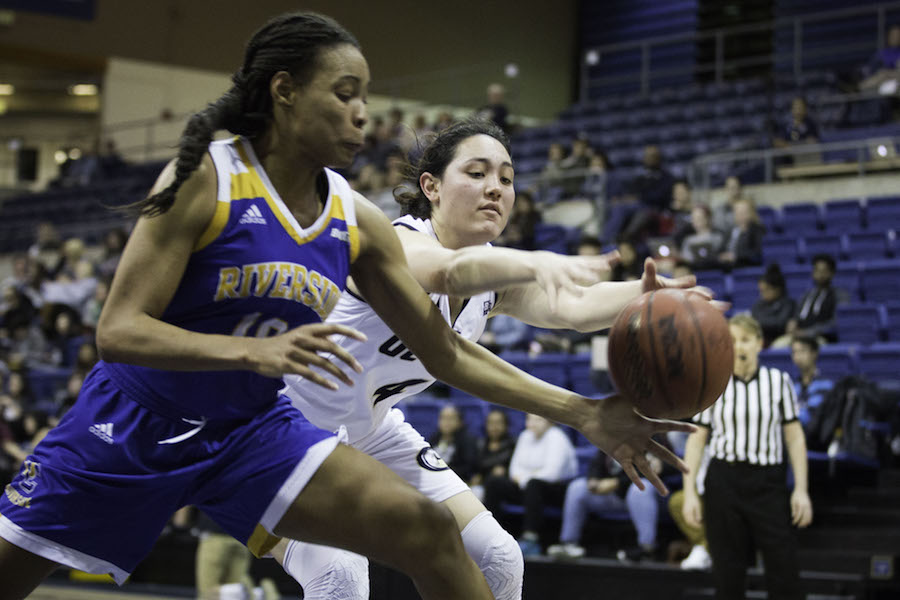
The UC Davis women’s basketball team came into Thursday night’s game having won four of its last six games. However, with the team’s most recent game a loss to Long Beach State, the Aggies had to get back on the right track with UC Riverside coming into town, and they prepared as such. The result of their hard work was a 72-55 victory.

Junior forward Pele Gianotti, who led the Aggies in scoring with 22 points, said that the team knew what it needed to do against the Highlanders, who came into the game with a 4-1 record in the Big West Conference.

CIERA PASTUREL / AGGIE

“We were totally prepared,” Gianotti said. “We knew that they’re a very good offensive team and we knew that we’d have to get stops.”

Gianotti wasn’t the only Aggie who stood out. On top of her own season-high performance, sophomore forward Morgan Bertsch scored 13 points, and junior forward Rachel Nagel contributed 10 points along with eight rebounds. Twin sophomore guards Kourtney and Karley Eaton helped spark the run, which aided in sealing the game.

For head coach Jennifer Gross, the entire game was a testament to her team’s drive and competitive spirit.

“I was really pleased with our focus and our energy to start the third quarter,” Gross said. “The first half was so back and forth. We got a little lead, and then they cut it.”

The Highlanders, who came out shooting 4 of 5 from three-point range in the first quarter, were unable to match their success over the next two quarters, shooting making just one of their next 16 attempts thanks to a combination of good defense and bad shooting. Gross considers the team’s defense to be a work in progress.

“Defensively, our goal is to play like it’s the championship possession every single possession, and we’re still working on that with our urgency and our communication,” Gross said. “There’s always places where we’re looking to improve, but like I say, it’s always fun to improve while you’re winning.”

CIERA PASTUREL / AGGIE

That third quarter proved to make a significant difference for the Aggies, who outscored  the Highlanders 26-4 — UC Riverside was never able to climb out of the hole it dug itself earlier in the game. Gianotti said that attacking the opponent was always part of the plan.

“[Coach] Jen warned us in the beginning: ‘We have to jump on them right from the start.’” Gianotti said. “The whole team was in attack mode mentality, and we were super confident coming from the first half making shots. So we were like, ‘Just keep pushing, just get shots and we’ll be fine.’”

The Aggies victory against UC Riverside proved to be a foundation for future success, as they picked up another win against Cal State Fullerton on Saturday on Jan. 26 at the ARC Pavilion with a final score of 59-39.
Written by: Bradley Geiser — sports@theaggie.org

UC Regents vote to raise tuition for UC campuses

BRIANA NGO / AGGIE
BRIANA NGO / AGGIE

Tuition to increase by $336

On Thursday, Jan. 26, the UC Regents voted to raise the tuition for all of the 10 UC campuses. The 2017-18 tuition will increase by $282 and the student services fee will increase by $54 — a $336 increase overall. It will be the first tuition increase since 2010.

“It was frustrating and disappointing to watch such a debate result in such a bad result, but I predict a worsening affordability crisis among UC students,” said ASUCD President Alex Lee via email. “Officially [the UC Regents] claim 2/3 of students will not feel the increase because of increased financial aid, but that still leaves 1/3 (thousands of students!) who will feel the punch of $336 a year.”

UC Regent Gavin Newsom, who voted against the tuition increase, released a statement on Thursday after the vote.

“We talk about how much we value the middle-class, yet this decision doesn’t demonstrate that commitment to the middle-class,” Newsom said. “New York is moving toward free education while California moves toward increasing its cost. We are heading in the wrong direction and today’s decision has let Sacramento off the hook from reinvesting in public higher education and offering all Californians a place of ascent on the ladder of economic mobility.”

Written by: Alyssa Vandenberg  — campus@theaggie.org