55.7 F
Davis

Davis, California

Monday, December 22, 2025
Home Blog Page 665

Teaching togetherness

0
NICKI PADAR / AGGIE
NICKI PADAR / AGGIE

Wellness activities create campus community

In her senior year of high school, fourth-year clinical nutrition major Megan Settles became interested in yoga and went on to complete the 200 hours of training needed to become a yoga instructor. Settles, who now teaches yoga classes at the Activities and Recreation Center (ARC), said the activity has significantly changed her for the better.

“[During] your first sun salutation […] you’ll probably feel a little tight and not super relaxed,” Settles said. “Once you do a million of them, you’re going to feel better. [You will feel] a sense of strength in your body which will [allow] you to feel strength outside of class. Feeling good can bring out […] confidence. It has this domino effect. You feel really powerful and lifted up.”

On and off campus, students and faculty are engaging others in wellness activities as a means to self-improve and create communal bonds. One pioneer of these activities is Stacey Brezing, the director for the UC Davis Staff and Faculty Health and Wellbeing Program. Brezing and two student assistants use a small budget and pre-existing resources to organize wellness activities for the campus community.

The upcoming Mindfulness Meditation series, a four week class which aims to foster personal well-being, will be offered at the Mondavi Center starting on Jan. 31.

“Going back to work after meditation, [staff and faculty are] a little more resilient, [and] able to handle more,” Brezing said. “It [also] decreases stress levels.”

Another event, the four-part Lunchtime Gentle Yoga series, had 50 slots available that sold out in 20 minutes, Brezing said, with another 70 on the waitlist. From this high demand came the inception of the Meditation Ambassadors and Wellness Ambassadors Program. The Meditation Ambassadors Program trains those interested in meditation so that they can provide meditation techniques to their colleagues, whereas a wellness ambassador volunteers mainly to promote general wellness activities.
“Especially with [the] wellness ambassadors, they can do something as simple as passing on the word about what’s happening on campus,” Brezing said. “It’s kind of a grassroots effort to promote stress reduction and wellbeing.”

According to Brezing, data from surveys given after the meditation series in the fall showed that 94 percent of those in attendance felt their health had improved, 97 percent felt their wellbeing had improved and 83 percent felt their work performance improved following the series.

Engaging in wellness activities can be experienced as an individual, but oftentimes shapes and creates new bonds with others.

Wellness activities can definitely be communal,” Brezing said. “A lot of groups get together and knit, color, play four square, meditate, bring in group exercise instructors, et cetera. The social aspect of these activities can really help motivate people to make long-term behavior changes. It also increases employee morale.”

One drawback in seeking out wellness activities such as yoga classes is the typical cost associated with involvement. Yoga classes at the ARC can range from around $50 to $70. Fueled by their passion for yoga and the desire to bring it to fellow students, fourth-year clinical nutrition major Athena LeMay and fourth-year food science and technology major Ana Skomal co-founded the UC Davis Yoga Club.

“The Yoga Club offers free classes and workshops every week,” LeMay said. “We have guest teachers and provide a variety of all sorts of yoga styles. We have worked with sororities […] and the new Manetti Shrem Museum [on their] opening day. The Yoga Club also offers hikes for building community and relationships with fellow yogis.”

With almost 300 “yogis,” or members, on its Facebook page, the Yoga Club’s activities are addressing the student demand. However, Skomal said that the club aims to provide more than just yoga.

“The simple mission of the Yoga Club is to provide a safe community for students to relax, meet new people and practice the art of meditation and yoga for free,” Skomal said. “For being a fairly new club, I believe we have engaged many students to start and continue their yoga journey in the midst of the college environment. Each yoga class or workshop is beginner-friendly and all levels are welcome.”

In addition to the Yoga Club, Skomal has sought out additional ways to teach others about yoga. In addition to instructing donation-based yoga classes at a studio in Davis, in which all proceeds went to Wind Youth Services for homeless youth, Skomal also taught mindfulness and meditation classes at the Center Against Sexual Harm in Oak Park.

“I made a commitment to continue on my path of yoga outreach,” Skomal said. [I want to] create a community within the UC Davis campus where yoga is available to all students who are interested in starting and continuing their yoga journey.”

Yoga instructor Maria West teaches a variety of yoga classes, including several at the ARC. West taught yoga at the Juvenile Detention Facility in Woodland and believes yoga can bring personal growth and much-needed reflection.

“The practice of yoga encourages letting go of thoughts that do not serve you,” West said. “I remind my students [that] this is where [they] are today […and] nothing is permanent, so tomorrow might be different. Tomorrow, [they] just might be more steady in this pose, or not. We’re all trying to do our best. Yoga is also the unfolding experience of humility.”

Both Skomal and West share a passion for using yoga expertise as a way to give back to the community.

“Initially, it was not my intention to teach, [but] after I taught my first class, I was hooked,”  West said. “There’s something about teaching that feels like a privilege — [a] privilege to serve and give back, to encourage, to break through walls and help someone feel good, not just about their body but about themselves.”

Brezing said that after meditation or other engagements in wellness exercises, workers are invigorated. Similarly, Settles said that over the course of the ten-week period she spends teaching yoga to students at the ARC, she sees a definite change for the better.

“If you can find five minutes to lay or sit and meditate […] just with yourself and try and focus on your breath […], I feel like that would have so many benefits on this campus,” Settles said. “I think an awesome aspect of [yoga] is community. We’re not all like-minded […] but we’re all here, together, in that time, practicing the same thing. There’s such a powerful, almost magical, experience to just feel so connected to so many people.”

Written by: Hannah Holzer— features@theaggie.org
Healing the mind, body and soul

VENOOS MOSHAYEDI / AGGIE

Thriving Pink offers free yoga sessions for cancer survivors at Fit House Davis

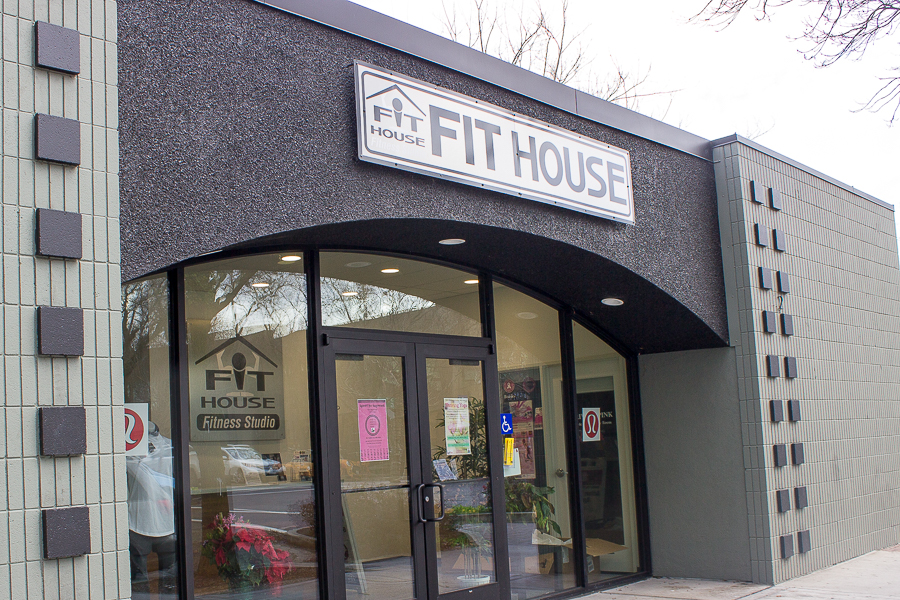
For local cancer survivors, a new yoga program called “Thriving Yoga” is coming to Fit House Davis in February. Teaming up with nonprofit organization Thriving Pink, the program will offer four yoga classes free to “anyone who has experienced cancer.” There will be a social reception following each class, allowing participants to network and meet other survivors in the community.

Thriving Pink is a relatively new nonprofit in the City of Davis. Founded in the summer of 2016, its members aim to help local breast cancer survivors thrive by engaging the community to provide a network of support for local women in Davis and have held a number of programs to do so over the past half-year. Thriving Yoga will be a welcomed addition to the lineup of upcoming events. These sessions will be instructed by Laura Murray and Blanche McNaughton.

“There’s no cost to attend, and we invite anyone who has experienced or has been affected by any form of cancer to participate and register,” said Mary Liu, the executive director of Thriving Pink. “It’s every Saturday in the month of February from 2 to 3 [p.m.] [….] We’ve heard back from emails and phone calls that people are very excited and looking forward to it. And not just the yoga, but also the opportunity to connect with other cancer survivors in the Davis community.”

Yoga has been scientifically proven to have restorative powers in healing the mind, body and soul. Multiple studies by the University of Illinois, the University of California, Los Angeles and many more, have found that practicing yoga has many short and long-term effects on the body. During the observational study, researchers found that, right after a class, participants exhibited improved brain functions and lowered stress levels. After years of yoga practice, stronger bones and lower risk of heart disease were observed.

“There’s some aspects of self acceptance that come along, you know?” said Nick Dasklos, a yoga instructor at Akasha Yoga. “People tend to look at it as a physical practice, but there’s a huge mental benefit. It’s really good for the parasympathetic nervous system, so it helps keep that fight-or-flight system off. When it comes on, you know how to deal with it […] You’ll be more in control of yourself. You just have a really nice, unique experience with yourself that no one else can explain for you.”

Besides organizing community events such as Thriving Yoga, Thriving Pink also has segments called Mentoring Pink, Granting Pink and Flashing Pink.

Mentoring Pink focuses on one-on-one mentoring for newly-diagnosed breast cancer patients. They are matched with compatible mentors and are then guided through their breast cancer journeys via emotional and practical support.

Granting Pink is an individual grant program sponsored by Wells Fargo that aids current patients with medical bills. The grants average about $1,000 in financial aid per recipient each year. Flashing Pink is an outreach program that interacts with the community through booths at the farmers market or through the flash mob series.

Flashing Pink will be present on Feb. 22 at the UC Davis women’s basketball game. Despite having been around for just about half a year, Thriving Pink is making significant efforts to bring the community together.

For more information on Thriving Pink and the Thriving Yoga program, visit its website.

Written By: Andie Joldersma — city@theaggie.org

Police Logs

NICKI PADAR / AGGIE
NICKI PADAR / AGGIE

Slim Jims and beer cans

Jan. 15

“Son is making holes in the walls.”

Jan. 15

Man “on bike with backpack had a flashlight and possibly a Slim Jim was looking at parked vehicles.”

Jan. 17

“Reporting beer can art at Village Bakery.”

Jan. 20

“Male in his 20’s on bicycle went to open garage on Humboldt and took beer and drank it on campus.”

Jan. 20

“Intoxicated subjects running up and down the street.”
Written by: Sam Solomon — city@theaggie.org

Humor: Argue basketball with me and I’ll fall in love

ALEXA FONTANILLA / AGGIE

headshot_yrLooking at common interests in relationships
I visited my housemate in Colombia over Winter Break.

We went to the coast to celebrate New Year’s with his sister and her boyfriend, and we met his sister’s friends, a newlywed couple from Mexico City. They were living proof of the idiom “opposites attract.” The wife was lively, energetic, outspoken, assertive. She demanded that techno music be played at their wedding; she knew all the best clubs in Barcelona, and she was the first to hit the dance floor when we got to the club to celebrate the new year.

Her husband, on the other hand, didn’t say much when we first met him, but he was nice enough. His wife did most of the talking, and he seemed content to just observe. I asked him some questions, and once I hit something he was passionate about, be it European health policy or the state of modern rock music, his eyes would light up and he’d rattle off eight different thoughts in five sentences. His party happened in the club hallways, where he would chat with a beer in his hand. He was a classic introvert, and she a classic extrovert.

Two completely different people. One took charge of every room she entered, the other absorbed her energy and internalized it. I was able to have one conversation with her and a totally different one with him. Even though we were all speaking English (and the occasional “mas aguardiente” from the token American), they each seemed to have their own separate language. It was a miracle they understood each other.

Only when I asked them the most mundane, boring question in the world did I find out how they made their marriage work.

“What do you do for a living?”

He’s getting his master’s in public policy. She’s working for the United Nations, helping resettle refugees from Venezuela and Colombia.

I’ve heard two ideas about the role of common interests in relationships. The obvious one is that common interests matter. What we enjoy doing, what we associate ourselves with, what we spend our precious little free time doing definitely matters when finding our partners. For some, two people with lots in common is exactly what a partnership should look like. That is part of the definition of a relationship to them: two people that trust each other and want to spend time together and have physical chemistry — and also have a lot in common. And I understand this point.

A girl that can argue basketball with me? You’re goddamn right I’ll respond to those texts.

On the other hand, one of my older friends once told me that she thinks it’s narcissistic to expect your partner to like the same things you do. In placing a premium on someone liking the same music as you, you’re only doing it so that you can listen to your own music while spending “quality time” with your boo. I see this point, too. I had an ex-girlfriend that only liked the shows I hated, and hated the shows I was obsessed with. Seeing her made me happy. Watching TV with her made me wonder if robots could ever be realistic enough to pass for humans so that they could be suitable spouses. But we shared enough of the same values that it didn’t matter to me that she liked country music and wanted to see the same Grey’s Anatomy episode again (all they do is have sex and die in horrific freak accidents — I still don’t get the point). We weren’t really able to talk about music, but talked about our hopes, our dreams, our fears and what our next meal would be because damn, did we love food.

I think both of these ideas have some truth to them. Common interests matter, but not in a vacuum. It’s the right common interests for the right reasons that matter.

That Mexican couple doesn’t have the same go-to playlists on Spotify, but they live, breathe and eat politics. They know what they want to dedicate their lives to — what they want to spend their working hours, their social hours, their waking hours thinking and talking about. They share incredible meaning and pleasure in something that’s both extraneous and deeply a part of them.

It’s not just things as significant as a life path or career. Sometimes we like what we like for the pleasure of it. I like plantains because they’re delicious. No backstory there. I love coffee because it reminds me of my mom and dad serving cappuccinos after hosting dinner parties, as Israelis customarily do — coffee was usually around when their guests would turn and welcomed me into their conversations. I love coffee because I feel like myself when I’m sipping an espresso while hammering away at my keyboard in a coffee shop. So whenever I drink it anywhere else, I’m reminded of how I see myself as a creative person. I have reasons for coffee.

Meeting someone who has her reasons for enjoying coffee isn’t about drinking some dank, overpriced coffee at my favorite espresso bar in San Francisco or her favorite coffee shop in Brooklyn. What matters is that we have a shared meaning for a part of our lives that we enjoy together. A strong, healthy relationship isn’t just about two people enjoying each other, physically or emotionally. You can physically enjoy many people (as seen in hook-ups) and you can emotionally enjoy many other people (such as your friends).

It’s about two people who are able to connect the dots on what they enjoy, to what they value, to who they are.

Written by: Yinon Raviv — yraviv@ucdavis.edu

Women’s basketball prepares to take on UC Riverside

0
CIERA PASTUREL / AGGIE FILE

With conference play in full swing, Aggies look to continue strong start against UC Riverside

Heading into Thursday night’s home game versus UC Riverside, the UC Davis women’s basketball team will have a tough hill to climb. While it has been a successful season up to this point, the Aggies will need to make sure they show up and compete so that they do not have a repeat of their loss to Long Beach State on their home floor on Jan. 12.

At 13-6 overall at press time, the team has entered conference play looking strong, sitting comfortably at a 4-2 record within the conference. All season, the team has benefitted greatly from sophomore forward Morgan Bertsch’s stellar play, but as the Aggies learned during their loss to Long Beach State, they need to step up in the games in which their leading scorer’s shots may not be falling. Junior guard Dani Nafekh and junior forward Pele Gianotti have been doing their parts, providing scoring as the second-and-third leading scorers, respectively.

UC Riverside has struggled to find a consistent groove all year, collecting a fair amount of winning streaks and losing streaks throughout the season. The team has an overall record of 10-8 — 4-1 in conference — and hopes to gain some momentum as it heads into the final month of the regular season behind its leading scorer, senior forward Réjane Vérin.

With UC Riverside holding a 4-6 record away from its home court, the Aggies will need to take advantage of games like this.

Heading into the final month of the regular season, the Aggies must take advantage of games in which they may have the upper hand from the outset. The team has won many of its games by double digits, and many have been blowouts. The Aggies lead the Big West Conference in points per game and rank fourth in points allowed, and they will need to keep up this effort on both ends if they want to finish the season on a high note.

UC Riverside comes to the Pavilion on Jan. 26 at 7 p.m.

Written by: Bradley Geiser  — sports@theaggie.org

Show solidarity with Islamic Center of Davis

HANNAH LEE / AGGIE
HANNAH LEE / AGGIE

Islamic Center of Davis vandalized in heinous hate crime

The Islamic Center of Davis was vandalized early last Sunday, Jan. 22, in the latest abhorrent hate crime to afflict the Davis community, smashing windows and hanging scraps of bacon hung from the door handles.
After an inauguration that culminated in an unforgettable year for America, and the world in general, it seems ringing in the new president has invoked the bigoted sentiment we all knew would abound, but had desperately hoped would not occur.

Statements from individuals — both those who attend the masjid and those who do not — spread the general disappointment and outrage that we share as the Editorial Board. To be so base as to attack a religious center that advocates for nothing but peace is truly to be the lowest of the low.

In a message to the community, Interim Chancellor Ralph Hexter, Mayor Robb Davis and Adela de la Torre, vice chancellor for student affairs and campus diversity, expressed their “disgust, outrage, and sadness” over the incident and addressed that “acts and words of hatred directed toward Muslims as a group is an urgent and growing problem across our society.”

This incident not only occurred just hours after the inauguration of notoriously Islamophobic President Donald Trump, but also arrives in the wake of the campus visit of Milo Yiannopoulos, an ultra-conservative media personality who has written, among various columns outwardly offensive toward Islam, that America has a “Muslim problem.” The event, which was sponsored by the Davis College Republicans (DCR) and which was was eventually cancelled due to protests outside of the event location, sparked counter-protests and then counter-counter-protests.

The Editorial Board condemns the actions of those who committed the vandalism and sympathizes with the Islamic Center of Davis. We express our disgust at the actions that took place this past Sunday. We hope to never hear of another malicious hate crime occurring in the City of Davis in the future, but the fact remains that racist and malignant sentiment has been on the rise since the election of President Trump.

For students at a loss for how to show support and help those affected by this crime, we can offer a few suggestions. Donate to the LaunchGood campaign created by Omar Awad, a student at UC Davis and member of the Muslim Student Association, aimed at raising money to repair the damages inflicted on the mosque. In less than 48 hours, the project has raised over $20,000. Watch the surveillance video of the perpetrator and offer any information you might have to the Davis Police Department. Attend “The Davis Muslim,” a lecture series created to spread awareness of Islam on campus and the Muslim experience, presented by The Muslim Student Association in collaboration with ASUCD.

But above all, reach out to your Muslim friends and those affected by the crime — to be silent would be to accept this bigotry as commonplace.

Former White House speechwriter comes to UC Davis

BRIANA NGO / AGGIE
BRIANA NGO / AGGIE

Kevin Samy of Forbes’ 2016 “30 under 30” list brings Dog Whistle event to UC Davis

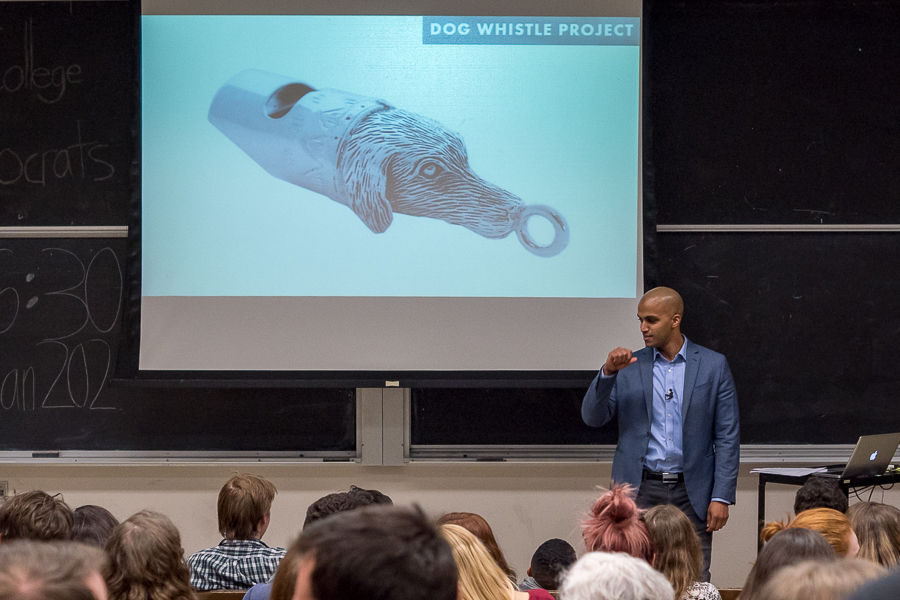
Kevin Samy, former speechwriter to the Obama Administration Secretary of Defense, Environmental Protection Agency (EPA) and Pentagon and special assistant to the Secretary of Energy, spoke at UC Davis on Jan. 13 as part of his Dog Whistle event. According to Samy, this event was hosted by the Davis College Democrats (DCD) as an alternative to Milo Yiannopoulos’ UC Davis stop on his “Dangerous Faggot” Tour on the same day.

Yiannopoulos, an editor for Breitbart News and a controversial “alt-right” figure, planned to speak at a UC Davis event that was cancelled due to a large protest.

UC Davis was Samy’s first official stop on his Dog Whistle Tour, sparked by a response to a Yiannopoulos event at Miami University.

“I thought, ‘Maybe I’ll stop in Ohio and offer another perspective’,” Samy said. “We don’t have the resources of internet troll royalty that Milo does — in three days, we packed a room full of hundreds of students.”

According to the Dog Whistle Project’s Facebook and website, Samy and partner Chris Roessner’s mission is to “decode the politics of hate and reaffirm our American identity, and shine a light on the algorithm of the kinds of messages and arguments they’re making that frankly appeal to the extreme fringe.”

Samy said that he and Roessner, who could not attend the UC Davis event, began noticing a trend in politics since the recent presidential election — dog whistle messages. Samy explained dog whistle politics as coded appeals or euphemisms. One example he gave was how supporting “family values” can be associated with anti-gay rhetoric.

“We are not an America that says, ‘Since you’re Muslim, we’re going to put an asterisk by your name,’” Samy said. “I see the way people talk about immigrants from Pakistan and it riles you up.”

Samy believes that America needs to become more cognizant of dog whistle politics in order to prevent it.

“There is a lack of depth of understanding of the mechanism by which this kind of affected coded strategy [dog whistling] works that is inherently deceitful,” Samy said. “I had conversations with people of color, and they wanted people to explain ‘What do we do now?’”

Samy also followed Yiannopoulos to the next leg of the “Dangerous Faggot” tour on Jan. 20 at the University of Washington.

In Samy’s opinion, Yiannopoulos was able to play the victim card after his cancelled UC Davis event.

“First, [Yiannopoulos’] message upon return [to the next day’s protest] was predictable and potent, rabble rousing around one-liners we can all agree with, such as ‘they care about diversity, but not diversity of opinion,’” Samy said. “Free speech can be used to tear down or build up. As a guy who goes around saying ‘faggot’ and bad-mouthing entire groups of people, Milo embodies the former.”

Christian Monsees, DCD president and a third-year political science major, wanted to support Samy’s message and provide an alternative to Yiannopoulos’ event.

“We are thrilled to have Kevin Samy in light of the [Yiannopoulos] event; he believes, as we do, in the dangers of the alt-right and how it’s damaging to our political system,” Monsees said. “He is here to talk about implicit bigotry and how politicians can use dog whistle politics to inspire hatred and bigotry that some people have in order to gain support. We believe that while it is absolutely important to enforce freedom of speech, that does not mean that you should invite just anyone onto a campus.”

Samy described Yiannopoulos as a “provocateur” and “super-villain,” monikers that Yiannopoulos has used to describe himself as well.

“Yiannopoulos is like a toddler in a Darth Vader costume,” Samy said.

For Monsees, Yiannopoulos was not an appropriate guest for the UC Davis community.

“It is one thing to have the right to free speech, but it is another thing to deserve to be heard,” Monsees said.

However, Samy said that he still upholds Yiannopoulos’ right to free speech.

“His action of espousing [his ideas] is an artifact of a functioning, open, free republic,” Samy said. “His existence is actually proof that our nation built on an ideal is working.”

Written by: Aaron Liss — campus@theaggie.org

Thousands gather at Sacramento Capitol building for women’s rights

BRIAN LANDRY / AGGIE

More than 600 women’s marches held throughout the world

In response to the recent election and inauguration of President Donald Trump, thousands of women’s rights activists rallied in front of the California State Capitol Building on Jan. 21 to join in the fight to protect equal rights for women and for all.

“Ladies, and those of you that love them, respect them and know that they deserve equal rights, thank you for being here today,” said Angelique Ashby, a City of Sacramento councilmember, at the March on Sacramento.

The Sacramento Police Department estimated that around 20,000 people attended the rally on the west steps of the California State Capitol Building after a one-mile march that began at Southside Park. The March on Sacramento was just one of nearly 600 sister marches that took place around the world in support of women’s rights, with the grassroots march taking place in Washington, D.C.

This march was the first of its kind and welcomed any person, regardless of gender identity, to attend in support of women’s rights. Women, men and individuals of all ages, races, ethnicities and religious and social backgrounds were in attendance.

As countless individuals chanted, “The people united will never be divided” and “We’ve got stamina,” many other people carried posters and banners with slogans reading, “Love not hate makes America great” and “Love is love.”

Nikki Eman, a fourth-year environmental policy and planning major at UC Davis, attended the event to show her support for equal rights and for climate change research, another issue that has been challenged by the current U.S. administration. She was proud to attend the march and felt empowered by all the people present.

“The atmosphere of the crowd is especially inspiring. Just seeing everyone out here trying to show their representatives that they care is amazing,” Eman said.

Numerous organizations set up tables at the march as well. Some of the groups that participated included the National Alliance on Mental Illness, Women’s Empowerment, My Sister’s House and the National Association of Social Workers (NASW).

NASW works to be a voice for social justice by bringing resources and services such as mental health and professional support to individuals in need. Anthony DiMartino, the chair of the NASW local chapter, said that he is proud to work for the organization and serve as a voice for people who are underrepresented.

“[The organization] is a place to be with other people who are working for social justice and serving people,” DiMartino said. “It’s good to be around other individuals who are serving similar goals and dreams.”

Individuals present at the event showed support for one another through tactics such as banners and safety pins as a message that they stood beside vulnerable, minority groups who may have felt targeted by remarks made by the President Trump.

As the event continued, dance and music groups such as the Sacramento Taiko Dan and Sacramento Women’s Chorus performed, and local politicians spoke in solidarity for the event. Mayor of Sacramento Darrell Steinberg spoke about how proud he was to see the march’s outcome.

“Our values proclaim that all of our population is worthy of equal pay, equal opportunity and basic reproductive rights,” Steinberg said.

Councilmember Ashby stressed that individuals should get involved in the community by joining committees, boards and organizations that promote social activism.

“No one is here by accident today. You are all part of the solution and part of the energy that is going to propel us forward, from this day forward,” Ashby said.
Written By: Anya Rehon — city@theaggie.org

Last week in Senate

HANNAH LEE / AGGIE
HANNAH LEE / AGGIE

ASUCD held its first senate meeting of Winter Quarter on Thursday, Jan. 1. ASUCD Vice President Abhay Sandhu called the meeting to order at 6:10 p.m. Senator Sam Park was absent and Senator Ricardo Martinez arrived late.

Senator Irveen Grewal was elected senate president pro-tempore. The president pro-tempore is the official representative of the ASUCD Senate and is elected each quarter.

Public discussion began with an appeal for Housing Day volunteers by Juliana Luna, director of the Housing Advising for Undergraduate Students unit. Environmental Policy and Planning Commission chair Sarah Fisher presented a proposal concerning the environmental impact of houseboats and was directed to a member of ASUCD administration.

Kevin Blue, the UC Davis athletics director introduced Dan Hawkins, the new head football coach. Hawkins gave a short speech about the campus, his experiences coaching football around the world and his desire to make a difference through football. He stressed the importance of the creativity and dedication in football and ensuring that players focus on both sports and academic excellence. The floor then opened to the senators to question Hawkins.

Internal Affairs Commission chair Nick Flores asked what football can do to engage students and increase school spirit. Hawkins proposed ideas of contacting Greek life, having camps or clinics or following a past strategy of marching football players through the campus and residential areas.

Gender and Sexuality Commission chair Alison Tam questioned how football players were educated on consent, sexual harassment and cultural competency. Hawkins responded that players were required to undergo a program when they come to campus and would be required to repeat it once they began football season. Hawkins concluded by stating that football players’ academic progress rate was very high and that football staff was very strict about keeping players on a path to academic success.

Next, senators were assigned to ASUCD committees and units. Senators nominated themselves or other senators for open positions, and roll call votes were held if there were more nominated senators than positions available.

Following presentations and assignments, legislation was presided over. Senate Bill #10, introduced by Joshua Dalavai, concerns giving marketing money to the Aggie Reuse Store. The bill was tabled.

SB #15, introduced by Internal Affairs Commissioner Jacob Engel, concerned a $1,000 ASUCD volunteer award. Senator Julie Jung wanted the bill to be an incentive to volunteer and a way to recognize volunteers of ASUCD without whom many ASUCD operations would not be able to function efficiently. SB #20, also authored by Engel, concerned awarding temporary/trial scholarships that do not fall under the ASUCD Bylaws.

After some corrections, the bills moved into public discussion. Controller Joe DeAngelo expressed concerns over both bills because senators have not been identified to sit on the committee and there was no outline to what method would be used to award money. There was concern over taking money from senate reserves that could be given to staff or misused. Additionally, certain committees and units that were not as active and had fewer volunteers were less likely to be recognized. After discussion by the senators, the bills were called into question by Senators Sofia Molodanof and Shaitaj Dhaliwal, respectively. SB #15 and SB #20 both failed with a vote of 0-11-1, with abstentions by Park.

SB #30, authored by Flores, asks to remove section 1410 of the ASUCD Bylaws titled: My Student Government Channel, as it was not in use. Senator Irveen Grewal moved to call SB #30 into question and the bill was passed 11-0-1, with an abstention by Park.

New legislation was introduced and will be sent to committees in the following weeks. There are bills to allocate $650 to the Aggie Public Arts Committee for its piano project, recognize the longstanding symbiotic relationship between ASUCD and the Student Alumni Association, change staff pay from hourly salaries to stipends for The California Aggie’s 2017 budget and incorporate UndocuALLY and Sexual Assault Bystander Intervention training into the ASUCD Senate’s mandated trainings.

After ex-officio reports and elected officer reports, the meeting adjourned at 7:47 p.m.
Written by: Jayashri Padmanabhan — campus@theaggie.org

Smartphone use: the smoking of our time

CHELBERT DAI / AGGIE

headshot_SBThe worrying implications of escapism at our fingers
As late as the 1960s, taglines like “More Doctors Smoke Camels than any other Cigarette!” and “20,679 Physicians say ‘Luckies are Less Irritating!” blared from brightly hued tobacco advertisements. These slogans distracted Americans from long-standing folk wisdom and developing medical knowledge of smoking’s harm.

It horrifies us now that America turned a collective blind eye to the dangers of smoking. Yet our contemporary incessant use of smartphones — the electromagnetic fields of which the World Health Organization said in a somewhat lacking 2011 study could be “possibly carcinogenic to humans” — hearkens back to days of willful ignorance.

Even if we brush aside the cancer conjecture, there is a sharp parallel between smoking and smartphone use: harmful forms of escapism.

Smartphones are addictive. Researchers have found that internet use triggers the release of the dopamine, the same reward chemical implicit in orgasm and (cough, cough) smoking. The tolerance the body builds to the hormone means we eventually need hours of stimulation to match initial levels of gratification. And less exciting activities, like reading, just don’t do it for us anymore. The percentage of 17-year-old girls who “never” or “hardly ever” read for pleasure has increased from nine percent in the pre-smartphone days of 1984 to 27 percent in 2014.

This constant back and forth between virtual and physical realms — the average consumer spends 4.7 hours on their smartphone — also comes with some nasty side effects. A smartphone screen’s blue light harms eyesight, sleep patterns and occipital nerves. The common behaviors of glancing and typing cause long-term damage to our back and wrists. Earbud and headphone use can lead to irreversible hearing loss. Juggling multiple apps at once lowers productivity and can affect emotional intelligence. This is your body on smartphones.

There is a caveat to the smoking analogy. Unlike cigarettes, smartphones can be helpful tools when used the right way. They bring distant loved ones and a world of information to our fingertips. But I implore you to leave your phone at home one of these days, and watch your peers while you go through your daily grind.

Take a ride on Unitrans in the morning. Show up five minutes before lecture to grab a good seat. Line up at TxMx for a delicious taco salad at lunchtime. Stop by Shields to finish up that political theory paper. Hit the ARC to work off that delicious taco salad.

You’re likely to find that, instead of dedicating the devices to productivity, much of our generation uses them to escape the real world. At the first sign of boredom, we immerse ourselves in inane status updates and snap stories. While studying or working out, we drown our inner thoughts with DJ Snake’s blaring bass or Migos’ sweet nothings.  

It’s time to quit.

Giving up chronic smartphone use doesn’t mean sentencing yourself to an ascetic existence. Be mindful. Don’t think of exercise or studying as a chore. Consider that, in the traditions of Socrates and Aristotle, these acts of excellence are themselves the definition of happiness. Listen to your body while doing bench presses. Ponder the intellectual implications of that problem set.

And for true instances of boredom?

Pick up a novel. Bookworms are exposed to 50 percent more words, have 32 percent better cognitive function, are 2.5 times less likely to get Alzheimer’s and have 68 percent lower stress levels than non-readers.

Do a crossword. Doodle. Do origami. Read the newspaper. Play Sudoku. Make small talk. Keep a journal. Daydream. You don’t need cognitive studies to tell you what your common sense knows.

Your brain will thank you.

Written by: Sid Bagga — sabagga@ucdavis.edu

Disclaimer: The views and opinions expressed by individual columnists belong to the columnists alone and do not necessarily indicate the views and opinions held by The California Aggie.

Robbins Hall: Six pillars, one community

0
ANH-TRAM BUI / AGGIE

A look into location for plant science, revolutionizing research

Robbins Hall catches the eye of any passerby with the large, colorful space it occupies and the remarkable six pillars at its entrance — each embellished with specific life-science mosaics, including illustrations for the ideas of evolution, genetics, sustainability, agriculture, plant pathology and plant weeds.

As part of the UC Davis Art/Science Fusion program’s community outreach and spearheaded by ceramicist Donna Billick, post-docs brought each pillar to a local school in Davis to teach children concepts of science, and allowed them to lift these concepts out of books and into three-dimension through art. The beauty of life science and furthermore the beauty of community effort have been made into works of art, appropriate for the goings-on in Robbins Hall.

Besides the UC Davis plant transformation facility, which provides cost-effective services for the plant research community, another asset of Robbins Hall is its newly renovated laboratory facility.  Professor Jorge Dubcovsky and his team use this new facility for betterment of wheat.

“The major goals of my program are to gain a better understanding of the effects of allelic variants of wheat genes that are relevant to agriculture and to develop the tools required for an efficient manipulation of these genes in wheat improvement,” Dubcovsky said in an email interview.

This program requires the incorporation of a broad range of research projects having to do with the biology of the crop.

“[These projects] include whole genome studies, mapping, positional cloning, marker-assisted selection, and a traditional breeding program,” Dubcovsky said. “This integration has provided our group the ability to discover and deploy new genes or gene variants into commercial wheat varieties.”

Over the years, Dubcovsky and his team have brought about many tangible changes in wheat production, along with educating the next generation of researchers.

“We published [over] 210 peer reviewed papers that have been referred [more than] 12,500 times,” Dubcovsky said. “We released 15 wheat cultivars (and one malting barley) and 55 improved germplasm. I trained 22 Ph.D. students and nine M.S. students.”

“We are in the new remodeled section […] about 30 members of project scientists, post-docs, graduate students, and 4 to 7 undergrads are working in the lab,” said Francine Paraiso, a lab manager and a research technician for Dubcovsky. “We moved here [to Robbins Hall] in 2011, but before then Jorge […] was in an old lab in Hunt Hall. We got lucky to get upgraded to the newly remodeled place.”

Dubcovsky continues to make strides in this field, earning national, and even international recognition. In the Robbins Hall laboratory facility, his team has cloned the genes that control wheat flowering, frost tolerance and forms of natural rust resistance.

“I have been leading large consortiums of USA wheat public breeding programs for the last 15 years that received multiple awards from USDA,” Dubcovsky said. “I have been elected as a member of the National Academy of Science in 2013, and in 2014 I received the Wolf World Prize in Agriculture.”

These awards are held in a location well-known for its history in the field. Robbins Hall was named after Wilfred William Robbins, one of the pioneers in agricultural sciences. He was particularly interested in botany, and has authored several books along with widely published research. Established under his name, the Wilfred William Robbins scholarship in the college of biological sciences is specifically catered to students majoring in botany.

Tyson Howell is a post-doc that works in Dubcovsky’s lab. As an undergraduate at Davis, he worked as a lab technician and applied to the graduate program. He has been working on plant genetics research for a while, and is now working with wheat, specifically drought tolerance. Howell began his journey planning to become an engineer, but completely shifted gears.

“I was really interested in engineering, but I’m not the biggest fan of math, which is basically all engineering is,” Howell said. “But I liked creating and organizing things, and I started hearing about biotechnology, so I started getting interested in genetics that way. Right now nothing I do is really transgenic, but I’m still using genetics to do things.”

Visiting Japanese scholar, Takanori Yoribe, is excited to learn about plant research and some of the most novel techniques here at Davis.

“I applied for a government program in Japan,” Yoribe said, “and I was sent here to learn state-of-the-art things, like techniques and what kind of research is done in UC Davis. I’m doing research with Professor Abhaya Dandekar using walnuts.”

All these milestones and opportunities do come at the price of hard work, however.

“I think that everything that we do is important.,” Paraiso said, “and just like any research it takes a long time and a lot of trial and error and hard work.”

Robbins Hall is a hotspot for anyone interested in the plant sciences. Its this location, built on six pillars of UC Davis’ agricultural history, that allows research like Dubcovsky’s to flourish.

Almost all areas of plant  biology are well represented here,” Dubcovsky said. “For me, being at UC Davis has been like being a kid in a candy store. I have enjoyed my experience as professor and the exciting interactions with my colleagues!”

Written by: Sahiti Vemula – features@theaggie.org

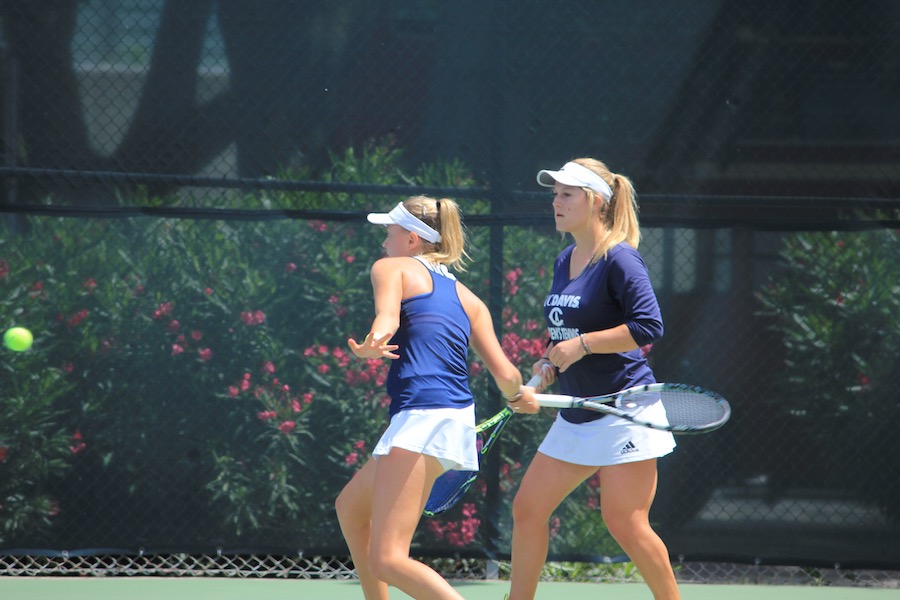
Women’s tennis is a doubles force to be reckoned with this season

0
ASHLEY LUGO / AGGIE FILE

Aggies to host San Francisco State in home opener

After almost three months on hiatus, the UC Davis women’s tennis team traveled to Arizona last weekend to open its season against the Northern Arizona Lumberjacks and the Arizona State Sun Devils, where the team won 4-3 and lost 7-0, respectively. However, this weekend, UC Davis is focusing on getting its revenge at the Causeway Classic showdown held in Sacramento before the Aggies’ home opener on Sunday, Jan. 29 against San Francisco State.

Last year, the Sacramento State Hornets edged out the Aggies in a close 4-3 matchup, in which now-junior Lani-Rae Green and alumni partner Jessie Lee led the doubles teams. Sophomore Isabella Von Ebbe also had an undefeated singles record of 5-0 after the Causeway Classic matchup.

The Ags have a packed, exciting schedule for the rest of their spring season, including matches against Santa Clara, Air Force and the Big West Conference opener in Hawai’i. Since  fall, the Aggies’ head coach Bill Maze announced the hiring of Raquel Atawo, a doubles specialist and internationally-ranked professional tennis player, as volunteer assistant coach.

UC Davis found its rhythm in the fall season with its doubles teams, most notably with the duo of freshman Kristina Breisacher and Von Ebbe. Breisacher and Von Ebbe’s success on the court led the Aggies early in the fall season. With the addition of Atawo as volunteer assistant coach, fans should expect an even stronger performance from the Ags’ doubles for the rest of the season.

In singles matchups, some performances to watch include the team’s veterans, senior Kamila Kecki and Green, who both posted big wins during the fall season. Kecki and Green competed together in the finals doubles consolation round and were the only Aggies to advance to the final singles consolation rounds at the ITA Northwest Regional Championships at Stanford to end the fall season.

Von Ebbe has impressed with her wins from both last season and the fall season matches at the Battle of the Bay tournament. Breisacher, one of the newest members of the squad, has also proven that she has the potential to improve her singles game with her upset win at the Cal Nike Fall Invitational back in October.

UC Davis has several tough matches ahead, but, with this season’s team, expectations are high. The Aggies will face Sacramento State this Saturday before hosting San Francisco State to open their season at home at the Marya Welch Tennis Center at 12 p.m.

Written by: Nicolette Sarmiento  — sports@theaggie.org

Davis area receives nearly eight inches of rain in first half of January

HANNAH LEE / AGGIE
HANNAH LEE / AGGIE

Police chief provides information about safety, Unitrans asks riders to remain patient throughout delays

 A deluge of winter rain recently hit the UC Davis campus — in the period of Jan. 1 to Jan. 18, 7.83 inches of rain were measured in the nearby Sacramento Executive Airport according to the National Oceanographic and Atmospheric Administration (NOAA).

Large amounts of rain pose a particular set of challenges for campus management and students, especially when it comes to maintaining safety. According to Interim UC Davis Police Chief Jennifer Garcia, the most important part of remaining safe is planning ahead.

“Check the weather before leaving [for campus], especially if you are going to be gone all day,” Garcia said. “For students, you leave your home in the morning and you don’t go back until the evening or sometimes late in the evening. Check the weather throughout the day. It might be really sunny and bright in the morning but by the evening it’s torrential floods.”

Even in the rain, police officers have to be ready to respond at a moment’s notice. Garcia encourages students to make use of police officer’s weather preparation methods.

“One of the things we like to encourage officers to do is to have what we call a ‘go bag,’ in a case like this when we are experiencing flooding […],” Garcia said. “In a ‘go bag,’ you have extra socks, extra clothes, your toiletries, any medications you might need, jammies, snacks, a couple bottles of water — to have that in your car at all times. I suggest that for everybody in times of severe weather.”

According to Garcia, a lot of work related to winter weather, especially flooding, falls onto UC Davis Facilities Management.

“What we do for severe weather is we do rely on Facilities [Management] to supply sandbags if needed, and they would be the response to areas on campus that are flooding as far as if we need to divert the water or pump out the water of a basement,” Garcia said. “We would work with Safety Services risk management if there was a major problem on campus.”

Garcia also advised students to take extra caution when biking during severe weather.

“Wear some sort of reflective gear, because when it’s darker out it’s harder to see people,” Garcia said. “Also your peripheral vision is very important when you are driving and/or on a bike and even walking. So you want to make sure that your headgear, even though you’re trying to keep yourself really warm, you’ve got to make sure that your peripheral vision is really clear.”

This extra caution when driving also applies to Unitrans drivers. According to Amelia Bizjak, the operations manager for Unitrans, bus drivers must take extra precautions to maintain safety.

“Logistically, the rain provides an extra challenge for our drivers, similar to how driving in the rain in a car is more difficult,” Bizjak said via email. “Like in a car, vision is reduced and in order to be safer drivers need to go slower. There are also many more cars on the road, as people who would normally bike either switch to driving their own car or riding the bus.”

In addition to having to drive much more attentively, drivers also face the challenge of increased ridership on buses.

“A lot of people who ride their bikes switch to alternative methods of getting around Davis on stormy days, and Unitrans is the alternative for a good number of people,” Bizjak said via email. “Our buses tend to be a lot more packed on rainy days as a result.”

Because of increased ridership, late and crowded buses are the most common complaints during rainy weather. Bizjak wants to assure riders that Unitrans does everything it can to keep the system running smoothly.

“When the weather is more severe we tend to get more concerns about lateness or being passed up at stops than in the more mild weather,” Bizjak said via email. “As mentioned before, the increased ridership and hazardous conditions tend to make our buses run late, and we are always very sorry to inconvenience our passengers who are trying to reach their destinations in a timely manner […] All of our drivers work hard to ensure we can provide safe transportation on a daily basis in rain or shine to the City of Davis.”

For Ariana Camarena, a first-year environmental policy major, the biggest challenge on stormy days is the decrease in morale to face the day.

“It usually just makes me want to stay in my dorm and not really go outside,” Camarena said. “Even though I do have class, I have to force myself to go. Whereas days where there is nice weather, I am kind of more encouraged to go because you can dress nice and look nice.”

Camarena’s experiences in the rain have taught her how to prepare for such weather.

“I have to wear a lot of layers: three layers of jackets, a scarf, an umbrella and my rain boots,” Camarena said. “It’s a lot more of a process. And you have to deal with locking your bike, so that takes like longer. It’s a hassle.”

Written by: Kenton Goldsby — campus@theaggie.org

Presenting Hasan Minhaj

COMEDY CENTRAL / COURTESY

UC Davis alum and comedian Hasan Minhaj to bring his Netflix special, social commentary to campus

One of stand-up comedy’s most memorable moments is from Chris Rock’s 1996 special Bring the Pain. Rock joked about race relations in America, including a segment that is too inappropriate for print and likely made the white portion of the audience feel uncomfortable. That was the point, though — they were supposed to be uncomfortable.

What made Rock’s special so famous was his unapologetic and blunt attack on a serious and prevalent issue. But, because it’s hard to feel attacked by a knock-knock joke, therein lies the beauty of comedy as a political platform.

Hasan Minhaj, a UC Davis alumnus and correspondent for The Daily Show, will be performing and filming his Netflix special Homecoming at the Mondavi Center on Jan. 27. Having an alumnus performing is a “major point of pride” for UC Davis, said Jeremy Ganter, the associate executive director and director of programming for the Mondavi Center.

We were selected to film the special because we’re his hometown theater, it’s as nice and simple as that,” Ganter said. “Hasan is extremely popular, and Netflix has a great track record for producing these comedy specials.”

While he is not the first political humorist to perform at the Mondavi Center, Minhaj is expected to bring a new perspective to the array of performers at the Mondavi Center.

“We have presented other political humorists before, and they’ve always been very well received. UC Davis, Davis and Sacramento are very politically engaged communities,” Ganter said. “I think the main differences with Hasan are that he brings a younger perspective, and of course that he can speak about personal connections to our community. As always, our goal is to reflect as many perspectives and experiences as possible through our programming. He has a great story to tell, and that’s really what he brings to our campus.”

Similar to Rock’s famous material, Minhaj’s performance will cover his first-generation Indian American experience while growing up in Davis, California, touching on topics of love, racism and bullying. To some students, this material is appropriate given the current political and social climate at Davis.

“It is such a good move on the Mondavi Center [to bring Minhaj],” said Rebeca Nava-McClellan, a member of the Stand-Up Comedy Club and a second-year communications and theater double major. “Everyone is getting such a platform in Davis right now. For example, Milo Yiannopoulos was still allowed to talk; he was part of a protest and addressed the public. He was still given a platform, but we need people to give more productive platforms. Hasan is like our mother who is coming to help us after we were beat up by the bully. We need him. We don’t need to be uptight or tense when we see him.”

Minhaj is not revolutionary in combining politics and humor, however. According to Karma Waltonen, a senior lecturer in the University Writing Program and the faculty mentor for the UC Davis Stand-Up Comedy Club, the first ancient comedy plays were political and could be used strategically.

Comedy is a natural tool in politics,” Waltonen said. “It can get people to look at things in a new way, it can draw in audiences who don’t have the temperament or patience for ‘serious’ discussions and it can help us blow off steam. If you can get someone to laugh, it means they’re listening — they haven’t shut down.”

”[Comedians are in a place of] privilege because they can say whatever they want as long as they are funny,” Nava-McClellan said. However, “most of the time comedians are straight, white males who don’t have to apologize for what they say.”

Successful political humor, then, comes in the humorist’s ability to make fun of him or herself.

“The majority of my material is feminist,” Nava-McClellan said. “For me to make a point about feminism, I have to make jokes about me being a feminist and put me down in order for people to relate to me. There are negative stereotypes and poking fun at them makes the audience realize that those negative ideas are not what we are about, they are just stereotypes.”

To Nava-McClellan, the work being done by comedians such as Minhaj is especially necessary in this political climate.

“I really appreciate Minhaj, and I really appreciate everyone that works on The Daily Show,” Nava-McClellan said. “They are people of color who have such a third-person perspective on America. It is eye-opening because the points they make are so true, and it hurts a little bit but we need to hear it. They say it in a comedy setting which makes it more comforting. You have to be really talented to do social justice comedy. For these people to be so well-liked and so famous definitely makes me feel viewers are finally starting to understand what they are saying since they say it so plainly and logically.”

For some people, comedy has been a way to cope with their displeasure.

“Our comedy is changing, our news is changing and our country is changing,” Waltonen said. “Each day when I listen to the news, I know I’m faced with a choice. I can weep or I can laugh. So I laugh. And then I’m stronger and more ready for the fight.”

Tickets for Minhaj’s special are sold out; to be added to the waitlist and for more information, visit the Mondavi Center website.
Written by: Caroline Rutten — arts@theaggie.org

“Who is U.S?”

ASHLEY LUGO / AGGIE
ASHLEY LUGO / AGGIE

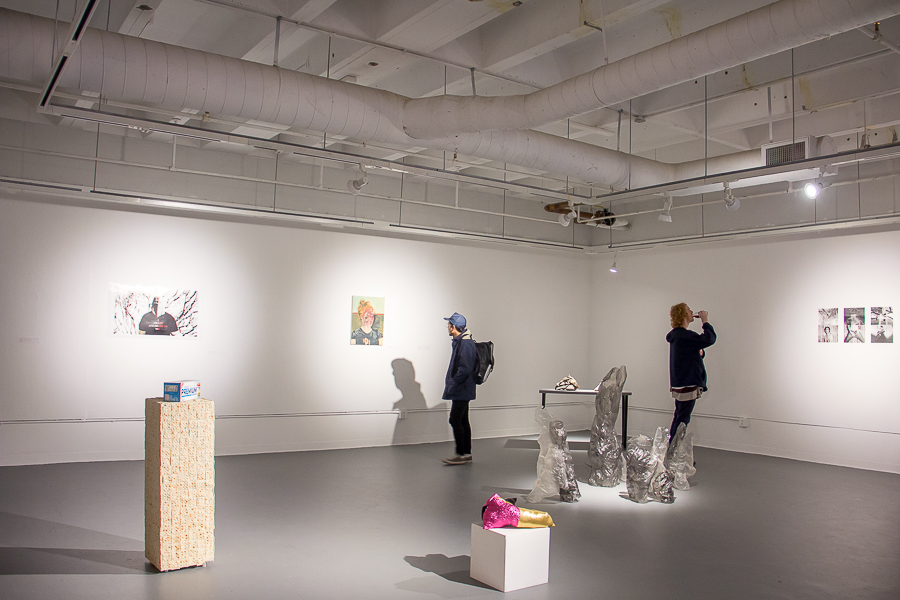
Basement Gallery’s newest art exhibit centers around the celebration of American identity

Over the past few months, Americans have experienced a whirlwind of events, from the beginning of the primary elections to the inauguration of President Donald Trump. Trump’s rise to the presidency has incited a multitude of thoughts, spanning the political spectrum. This recent exchange of ideas inspired the students of the Basement Gallery to host an art exhibition relevant to this pivotal moment in history.

The Basement Gallery is an undergraduate student-run art gallery on campus that hosts a variety of exhibits throughout the year, featuring the work of students, faculty and local community members. The Gallery is a unique place for people to express their thoughts through visual expression.

We at the Basement Gallery want to challenge our ideas of who we are as individuals, as a nation and as humans,” said Michael Cole, the graduate director of the Basement Gallery, via email. “So, the work is as varied as the ways we define ourselves.”

Beginning on Jan. 20 — Inauguration Day — the Gallery will be hosting its newest exhibit, “Who is U.S.?” The show revolves around American identity, whether that be through personal experience or focused on a specific aspect of American society. The show strives to honor and celebrate the diverse identities and experiences among people across the country.

“We have so many viewpoints all over the United States, so it’s really great to see these artists’ inner thoughts and how they express them,” said Kaitlyn Griggs, a fourth-year art studio and communication double major and lead director of the Basement Gallery.

Previously, the Gallery has hosted events similar to “Who is U.S.?” on the day after the election, as well as the night of. It held a poetry reading, partnering with graduate writing group Fig and Axel, to supply an outlet for people to voice their opinions.

“Since then, people in Davis have had time to process the events of Election Day and create art in reaction to that,” said Helena Zittel, a third-year English and art history double major and director of PR & Marketing for the Basement Gallery.

The Gallery expects to feature approximately 10 artists in the exhibit, and its staff is excited to showcase the submitted works. The art will be a combination of 2-D representational pieces, 3-D forms and some video and mixed media works.

“Some pieces are self-reflections, while others are more politically centered, but that’s definitely not the whole point of the show,” Griggs said. “Not every single artist was leaning toward a political notion when they submitted their work. The art will definitely give you something to think about after.”

“Who is U.S.?” opens Jan. 20 and runs until Jan. 31 in Room 60 of the Art Building.
Written by: Sydney Odman — arts@theaggie.org