55.5 F
Davis

Davis, California

Tuesday, December 23, 2025
Home Blog Page 666

Waltz in Magic

GENESIA TING / AGGIE

The Davis Alliance to host Annual Yule Ball at the CoHo

Ever dreamed of taking part in the dazzling, magical world of Harry Potter? If so, the Third Annual Charity Yule Ball hosted by UC Davis’ Harry Potter Alliance, the Davis Alliance (DA) will be the perfect opportunity to escape from reality and waltz into a world of magic.

“[DA] use[s] the lessons learned in the Harry Potter books to advocate for the changes in our communities. Some of the topics we cover in our meeting include bathroom justice, gender equity and community support through involvement,” said David Chambers, a second-year gender, sexuality and women’s studies major, DA vice president and coordinator of the Yule Ball. The Davis club is just one of the many chapters of Harry Potter Alliance, an organization formed in 2005 to engage Harry Potter fans in social justice issues.

“We’re kinda like a Dumbledore’s Army in the muggle world,” said Katie Mignola, a fourth-year animal science major and DA community service and fundraising coordinator.

The DA hosts Yule Ball every year not only to dance and celebrate their love for Harry Potter, but also to uphold the group’s mission of community service and social justice. This year, all the proceeds from the ball will be donated to Med & Food For Kids, a non-profit organization dedicated to “saving the lives of Haiti’s malnourished children and other nutritionally vulnerable people.”

“When it comes to choosing the organization, […] Katie thoroughly researches a few organizations. She tries to find organizations that align with the Davis Alliance’s goals and that also use their donations appropriately to what their mission is,” said Julissa Larios, a second-year civil engineering major and the club’s publicity coordinator. “This year she came up with four organizations that we then voted on, as a club, to decide who the final organization would be.”

The group has gone through tremendous effort in planning and preparing for the event. They always try to improve the ball experience for attendees by making more elaborate decorations, offering better raffle prizes (the prize this year will be a cake from Let Them Eat Cake) and listening to previous attendees’ feedback.

“One way that this Yule Ball will be different is that our tickets will be cheaper so as to avoid the overpricing sentiment expressed by many last year,” Chambers said. “Additionally, we will be improving our decorations and music selection so that the Yule Ball experience is enjoyed by more.”

Mignola is mostly looking forward to the giant cauldron of Bertie Bott’s Every Flavour Beans.

The third Annual Charity Yule Ball will be hosted on Jan. 28 from 7 to 10 p.m. at the CoHo. Tickets are $7 each and can only be purchased in advance. For more information about Yule Ball, please visit its Facebook event page, or visit the Davis chapter’s Facebook page.
Written by: Betty Wu — arts@theaggie.org
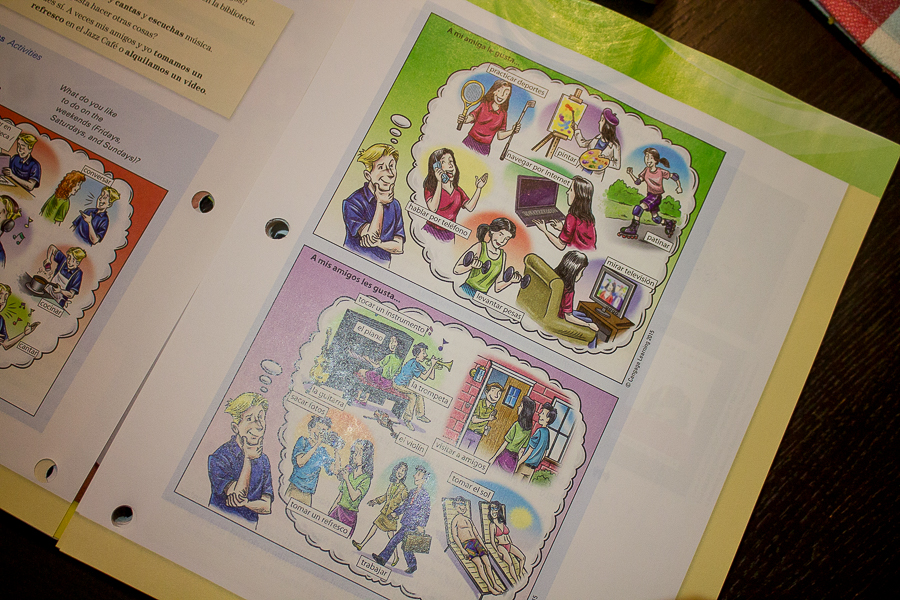
Humor: Why is everyone in this Spanish textbook having more fun than me?

LUCY KNOWLES / AGGIE

headshot_PNHelp

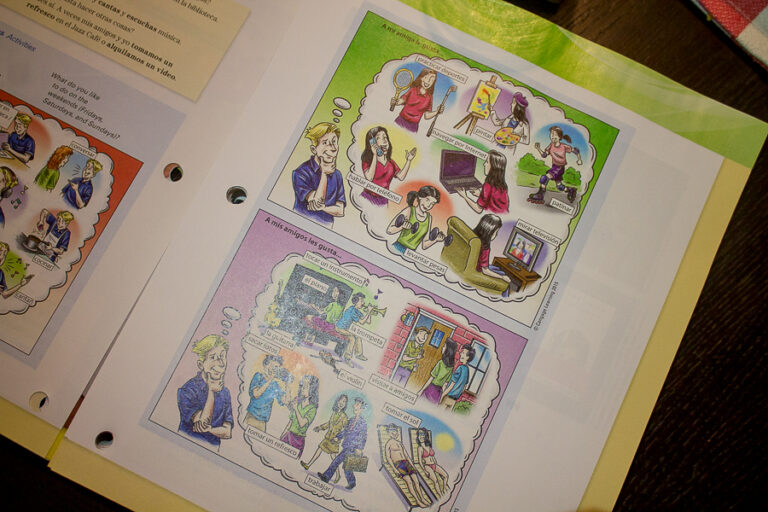
It’s 11:30 a.m., and I’m in class looking at slides. I’ve had an adequate amount of sleep. I drank in moderation last night. I did everything right. How are these verb conjugations of “nosotros” not more fun for me? Look at the dude in this book: He’s driving a 1994 Camaro, and his cabello is blowing in the viento. Why is this not me? “¿Porque no me llama Fernando?”

Fernando’s girlfriend is dressed in attire that I can only assume was popular in early 1996. She has a broad smile on her face, and she’s sipping a tall glass of diet coke with ice.

I study hard. I pay my taxes. I shared my bedroom with my brother until my last year of high school. I didn’t smoke weed until I was 18. Why does Fernando’s girlfriend Marie get to have a chill time in a Camaro while I’m forced to sit here and look at that smug grin on her face? She knows I’m not going to pass this class. Dude, she knows. Screw you, Marie. I love you, Marie.

Luis el hombre de negocios está trabajando en negocios”: “Luis the businessman is working on business.” His company definitely paid for that fancy computer. It probably came pre-loaded with Encarta and Microsoft Money.  He’s closing deals with AOL, Yahoo, Radio Shack and Kmart on that thing — it’s the pinnacle of 1996 technology. Check out that power pinstripe. It makes a statement — that statement being “I am literally made of money. And when I say literally I mean literally ‘literally.’”

 “¡Es una fiesta!” Easy for you to say. The last time I was at a party I drank too much Captain Morgan and fell asleep. The last time I saw balloons and streamers at a party I was about to go play laser tag. Nowadays, the pinnacle of festivity is a string of lights pathetically draped over a couch. Wait, is that Fernando in this picture? Fernando, whom are you dancing with? Fernando, what are you doing? WHAT ARE YOU DOING, FERNANDO?

Marie, if you are out there — if you can read this — Fernando is not the man he seemed to be on page 137. Marie, I think you haven’t been looking in the right places. Maybe the answer is staring you right in the face. Maybe the answer is someone you would have never expected. Maybe the answer is Luis.

Written by: Parker Nevin — phnevin@ucdavis.edu


Is breast really best?

GENESIA TING / AGGIE

Study examines contaminants found in human breast milk, toxicants originated from personal care products

The health benefits of feeding infants breast milk, as opposed to formula or other milk substitutes, have been well studied and documented. Immunological protection and significantly decreased risk of asthma, allergy, obesity and various cancers are a few advantages that breast-fed infants have over infants fed substitute milk.

However, contaminants found in human breast milk raise question to the risks associated with breastfeeding. A study funded through the UC Davis Environmental Health Sciences Center examined human breast milk for presence of harmful chemicals, specifically toxicants that originate in personal care products such as toothpaste and liquid hand soap.

As breastfeeding rates continue to rise in America, with 81.1 percent of infants being breastfed, according to the CDC Breastfeeding Report Card, the discovery of toxic chemicals in breast milk raises significant health concerns for the environmental health research community.

“The main goal of this study was to identify the transfer of contaminants from personal care products into our bodies and to bring awareness [to] how we can avoid them,” said Candace Bever, principal investigator and assistant project scientist

The chemical triclosan, an antibacterial agent commonly found in consumer products such as toothpaste, soaps, detergents and toys, served as the study’s model research contaminant.

“We chose triclosan to observe because it passes through the body quickly, and we have good detection techniques for it,” Bever said.

Breast milk was used to measure contaminants because it is seen as a food product rather than a waste product. A waste product, like urine, has a higher accumulation of contaminants that pass out of the body; however, milk is seen as more important.

“The most dominant amount of triclosan was found in Colgate toothpaste,” Bever said.

The function of triclosan in toothpaste is to fight harmful plaque germs and reduce the risk of gingivitis, a gum disease.

“The triclosan in hand soap products was not demonstrated as more effective than products without it, so the Food and Drug Administration (FDA) banned this chemical from soap products,” Bever said. “Companies had to take their triclosan soaps off the market.”

There are personal care products that contain much lower levels of triclosan such as mascara and deodorant; however, its purpose is to prevent bacterial growth within the product —  essentially to act as a preservative.

Although triclosan was used as a model chemical for research purposes and has no documented health impact, many other environmental toxins have the potential to harm infants and children, with risks such as abnormal brain growth and development.

“Neurodevelopmental disabilities, including autism, attention-deficit hyperactivity disorder, dyslexia and other cognitive impairments affect millions of children worldwide, and some diagnoses seem to be increasing in frequency,” said Birgit Puschner, a professor and the chair of the Department of Molecular Biosciences at the UC Davis School of Veterinary Medicine.

Some of the highest levels of contaminants in breast milk are seen in women who live in agricultural areas of the world that are treated extensively with pesticides.

“Industrial chemicals that injure the developing brain are among the known causes for this rise in prevalence,” said Jennifer Smilowitz, an assistant professional researcher for the Department of Food Science and Technology at the Foods for Health Institute.

A great area of concern is the San Joaquin Valley region, just south of Sacramento and home to many UC Davis students and their families — key cities include: Modesto, Stockton, Fresno and Bakersfield.

The San Joaquin Valley is the agricultural heart of California and a crucial food production zone for the country. Yet, it is one of the most polluted areas nationwide, and does not meet the health standards for ozone and pesticide levels set by the United States Environmental Protection Agency.

Research that involves measuring harmful chemicals and how they impact human health is imperative in a society that continuously affects the environment.

“By assessing environmental contaminants in available breast milk samples, we will be able to determine inter and intra-individual variation among women and across lactation, and assess a pathway for unintended exposure to infants,” Puschner said.

Human milk contains numerous beneficial proteins, fatty acids, minerals, vitamins and disease-fighting potential that is crucial for an infant’s healthy development.

When a woman creates milk for her infant, her body utilizes its fat storage. This also happens to be where many toxic chemicals are stored. Therefore, the body transmits a portion of environmental contaminants to the newborn during breastfeeding.

“Typically pyrethroids, organophosphates, organochlorides and flame retardants (not pesticides) are found in breast milk. Concentrations are low, however. Home products that kill bugs or insects contain pyrethroids. [Pet flea] shampoo may also contain them,” said Ameer Taha, assistant professor in the Department of Food and Science Technology.

In 1951, dichlorodiphenyltrichloroethane (DDT) was the first environmental pollutant found in human milk, and today is found in breast milk in women around the world.

Additional well-studied toxic metal contaminants in breast milk include: lead, mercury, arsenic and cadmium. These are of great concern to infants because it has been well documented that contamination of these metals lead to neurodevelopmental disorders, lower IQ and mental disabilities.

Further research is required to study environmental contaminants in breast milk in order to raise awareness of the issue and to find solutions.

Note: Despite the chemicals studied above and those found as contaminants in human breast milk, the benefits of breast milk consumption still outweigh the risk. As mentioned above, breast-fed infants have immunological and metabolic advantages, and lower risk for allergies, asthma and obesity over non-breast-fed infants. Bringing awareness to potential risks of contaminants in breast milk is important to help women and their families avoid harmful toxicants and more safely breastfeed their infants. For example, avoiding seafood consumption, known to have heavy metals that can negatively affect infant brain development. In addition, avoidance of home products that kill bugs and are known to contain pyrethroids. Specific cases where breastfeeding is not recommended include use of radiation and chemotherapy.

The health benefits of feeding infants breast milk, as opposed to formula or other milk substitutes, have been well studied and documented. Immunological protection and significantly decreased risk of asthma, allergy, obesity and various cancers are a few advantages that breast-fed infants have over infants fed substitute milk.

However, contaminants found in human breast milk raise question to the risks associated with breastfeeding. A study funded through the UC Davis Environmental Health Sciences Center examined human breast milk for presence of harmful chemicals, specifically toxicants that originate in personal care products such as toothpaste and liquid hand soap.

As breastfeeding rates continue to rise in America, with 81.1 percent of infants being breastfed, according to the CDC Breastfeeding Report Card, the discovery of toxic chemicals in breast milk raises significant health concerns for the environmental health research community.

“The main goal of this study was to identify the transfer of contaminants from personal care products into our bodies and to bring awareness [to] how we can avoid them,” said Candace Bever, principal investigator and assistant project scientist

The chemical triclosan, an antibacterial agent commonly found in consumer products such as toothpaste, soaps, detergents and toys, served as the study’s model research contaminant.

“We chose triclosan to observe because it passes through the body quickly, and we have good detection techniques for it,” Bever said.

Breast milk was used to measure contaminants because it is seen as a food product rather than a waste product. A waste product, like urine, has a higher accumulation of contaminants that pass out of the body; however, milk is seen as more important.

“The most dominant amount of triclosan was found in Colgate toothpaste,” Bever said.

The function of triclosan in toothpaste is to fight harmful plaque germs and reduce the risk of gingivitis, a gum disease.

“The triclosan in hand soap products was not demonstrated as more effective than products without it, so the Food and Drug Administration (FDA) banned this chemical from soap products,” Bever said. “Companies had to take their triclosan soaps off the market.”

There are personal care products that contain much lower levels of triclosan such as mascara and deodorant; however, its purpose is to prevent bacterial growth within the product —  essentially to act as a preservative.

Although triclosan was used as a model chemical for research purposes and has no documented health impact, many other environmental toxins have the potential to harm infants and children, with risks such as abnormal brain growth and development.

“Neurodevelopmental disabilities, including autism, attention-deficit hyperactivity disorder, dyslexia and other cognitive impairments affect millions of children worldwide, and some diagnoses seem to be increasing in frequency,” said Birgit Puschner, a professor and the chair of the Department of Molecular Biosciences at the UC Davis School of Veterinary Medicine.

Some of the highest levels of contaminants in breast milk are seen in women who live in agricultural areas of the world that are treated extensively with pesticides.

“Industrial chemicals that injure the developing brain are among the known causes for this rise in prevalence,” said Jennifer Smilowitz, an assistant professional researcher for the Department of Food Science and Technology at the Foods for Health Institute.

A great area of concern is the San Joaquin Valley region, just south of Sacramento and home to many UC Davis students and their families — key cities include: Modesto, Stockton, Fresno and Bakersfield.

The San Joaquin Valley is the agricultural heart of California and a crucial food production zone for the country. Yet, it is one of the most polluted areas nationwide, and does not meet the health standards for ozone and pesticide levels set by the United States Environmental Protection Agency.

Research that involves measuring harmful chemicals and how they impact human health is imperative in a society that continuously affects the environment.

“By assessing environmental contaminants in available breast milk samples, we will be able to determine inter and intra-individual variation among women and across lactation, and assess a pathway for unintended exposure to infants,” Puschner said.

Human milk contains numerous beneficial proteins, fatty acids, minerals, vitamins and disease-fighting potential that is crucial for an infant’s healthy development.

When a woman creates milk for her infant, her body utilizes its fat storage. This also happens to be where many toxic chemicals are stored. Therefore, the body transmits a portion of environmental contaminants to the newborn during breastfeeding.

“Typically pyrethroids, organophosphates, organochlorides and flame retardants (not pesticides) are found in breast milk. Concentrations are low, however. Home products that kill bugs or insects contain pyrethroids. [Pet flea] shampoo may also contain them,” said Ameer Taha, assistant professor in the Department of Food and Science Technology.

In 1951, dichlorodiphenyltrichloroethane (DDT) was the first environmental pollutant found in human milk, and today is found in breast milk in women around the world.

Additional well-studied toxic metal contaminants in breast milk include: lead, mercury, arsenic and cadmium. These are of great concern to infants because it has been well documented that contamination of these metals lead to neurodevelopmental disorders, lower IQ and mental disabilities.

Further research is required to study environmental contaminants in breast milk in order to raise awareness of the issue and to find solutions.

Note: Despite the chemicals studied above and those found as contaminants in human breast milk, the benefits of breast milk consumption still outweigh the risk. As mentioned above, breast-fed infants have immunological and metabolic advantages, and lower risk for allergies, asthma and obesity over non-breast-fed infants. Bringing awareness to potential risks of contaminants in breast milk is important to help women and their families avoid harmful toxicants and more safely breastfeed their infants. For example, avoiding seafood consumption, known to have heavy metals that can negatively affect infant brain development. In addition, avoidance of home products that kill bugs and are known to contain pyrethroids. Specific cases where breastfeeding is not recommended include use of radiation and chemotherapy.

Written by: Shivani Kamal — science@theaggie.org

Men’s basketball looks to stay hot against UC Irvine

0
DANIEL TAK / AGGIE FILE

Ags face off against Anteaters on Jan. 28

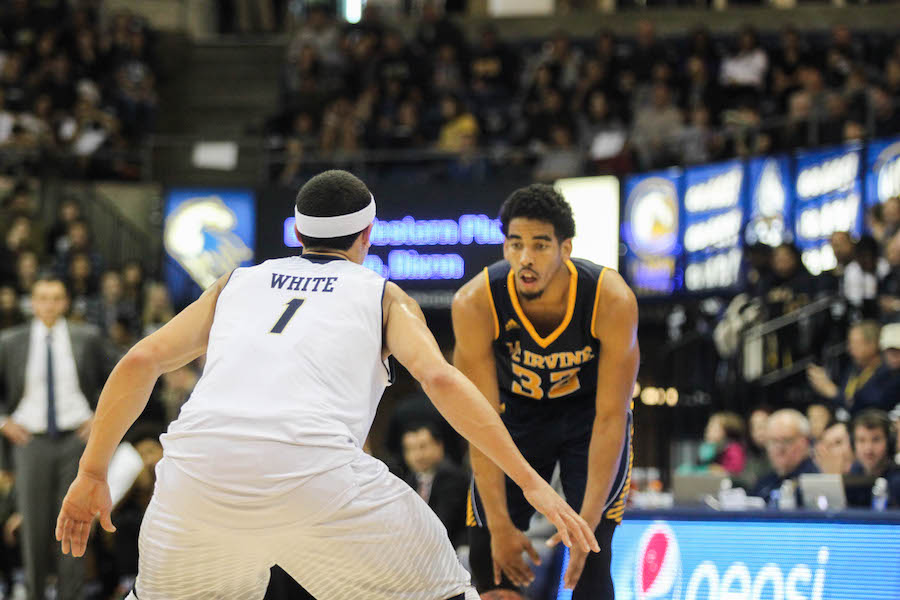
Even though the UC Irvine Anteaters remain unbeaten in the Big West Conference at 6-0, the UC Davis men’s basketball team is well-positioned for a win in the matchup on Saturday, Jan. 28. The Aggies will look to utilize a home-court advantage, having not lost a home game so far this season.

The UC Davis men’s basketball team’s high point scorers — senior guard Brynton Lemar and junior forward Chima Moneke — both have the skill and the drive to challenge UC Irvine’s tendency to score big throughout the game. Moneke’s rebound strength should pave the way for plenty of scoring opportunities.

Senior guard Darius Graham has been a leader right alongside Lemar and Moneke. Both Lemar and Moneke have earned Big West Conference Player of the Week honors this season, and all three have been vital in the Aggie’s season so far. In the recent 76-70 Hawai’i win, Moneke led the Aggies with a career-high 26 points, recording his fourth 20-and-10 game in the process. Graham had eight points and four rebounds and Lemar helped drive the win home with four assists and 18 points.

The team will need to focus on being aggressive during the first half of the game. As of late, the Aggies have been securing their wins in the third or fourth quarter. Scoring an average of 71.2 points per game as a team this year, the Aggies will need to work hard to compete with UC Irvine’s Jaron Martin, Max Hazzard and Ioannis Dimakopoulos, who, in their last game against Cal State Northridge, scored a combined 67 points.

The crowd at the Pavilion can expect a fast-paced, high-energy game. The Aggies’ ability to move the ball on the court will create quite the opponent for the Anteaters, who will be coming off of eight straight wins.

Tip-off is scheduled for 5 p.m. on Saturday, Jan. 28.

Written by: Liz Jacobson  — sports@theaggie.org

Humor: “Alternative facts are still facts!” says flying man made of Chicken McNuggets, giggles and wishes

altfacts_opheadshot_PNTim Allen chimed in: “I am Jesus of Nazareth.”

Senior Trump advisor Kellyanne Conway was asked Sunday about Press Secretary Sean Spicer’s decision to make up information regarding inauguration crowd sizes. In defending Spicer, she coined the term “alternative facts.” The term has been the subject of some controversy. Many have speculated that the alternative to facts may not be facts at all. However, the distinction is unclear for some.
“Facts are overrated,” said a wildebeest as it was being born. “I think the term ‘facts’ is problematic. It sets a dangerous precedent that lies shouldn’t be taken seriously,” the newborn wildebeest said before turning into an old Chevrolet and swimming away to assassinate Abraham Lincoln’s father.

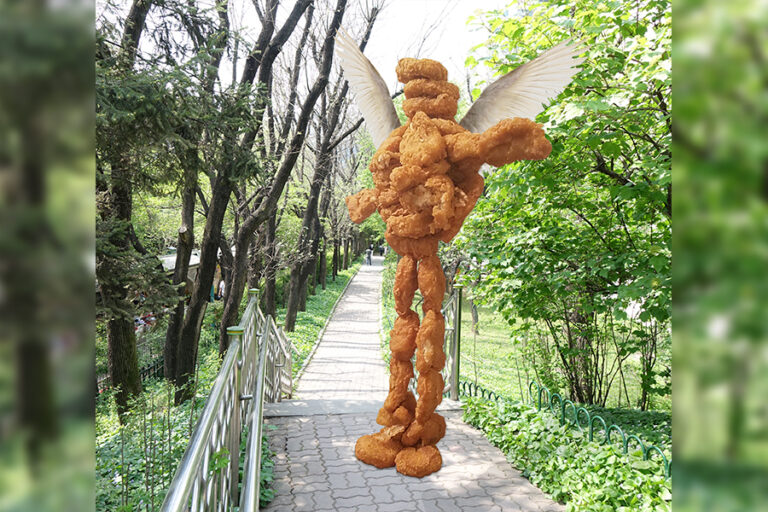
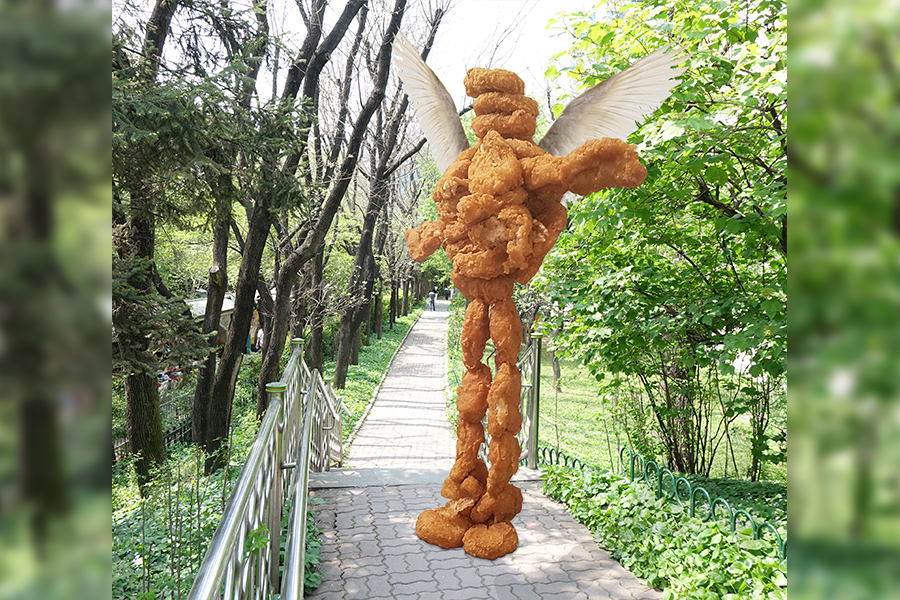
“Maybe I want raw hot dogs to be good for me,” a flying man made of flakey chicken McNuggets said. “Who are you to crush my dreams? Alternative facts are still facts.”

Before ascending to space the winged man proclaimed loudly: “New alternative fact: Eating slippery uncooked hot dogs will now make you live longer.”

While the term “Alternative Facts” may continue to be hotly contested, three things are for sure:

  1. John Madden can shoot pudding from his eyes.
  2. Bernie Sanders is cheese: one little baby cheese.
  3. Barry White was just reincarnated as a plum named Berry Barry.
  4. Trump’s inauguration was uuuuuge

Written by: Parker Nevin — phnevin@ucdavis.edu

Students walk out of classes to protest Trump’s climate denial

CAT TAYLOR / AGGIE
CAT TAYLOR / AGGIE

Protesters demand that Trump, UC system support divestment of fossil fuels

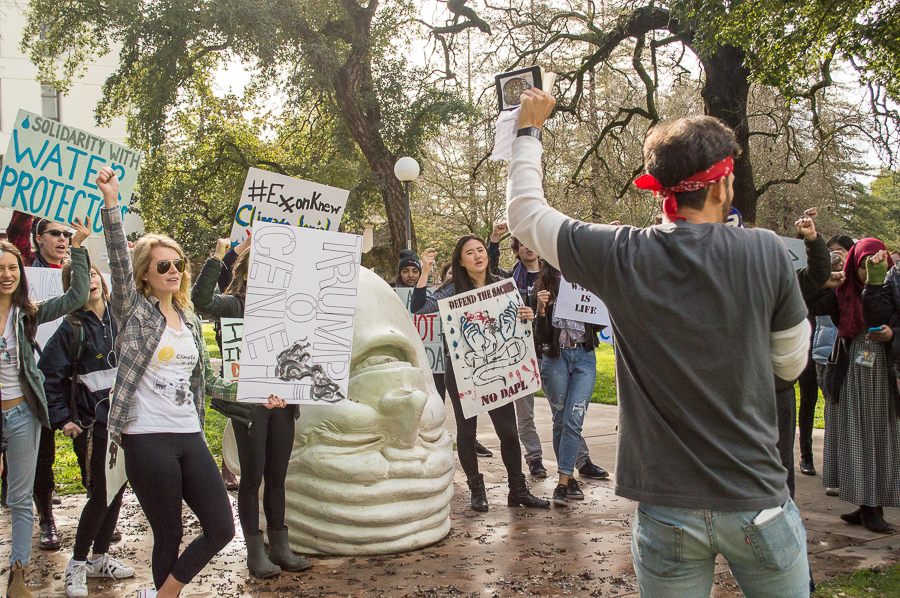
Approximately 30 protesters gathered at the Memorial Union flagpole on Monday Jan. 23 and marched through the Quad toward Mrak Hall to protest President Donald Trump’s climate denial and the university’s investments in fossil fuel.

The protest included chants such as “UC Davis not so cruel, we are still a fossil fuel,” “What do we want? Fossil freedom. When do we want it? Now” and “If we don’t get it, shut it down.”

Sarah Risher, a third-year environmental policy analysis and planning major, stated that the protest was a way for students to demand that the University of California (UC) system stand up to Trump by fully divesting from fossil fuels and reinvesting that money into renewable energy sources. The protesters also demanded that the new chancellor openly and actively support fossil fuel divestment.

I think it was an important opt-out/teach in because today was a nationwide day of action and protest against Donald Trump’s climate denial,” Risher said. “In the face of an anti-science administration, we as a institution, world-renowned for our research and public service, have an ethical responsibility to divest.”

Many protesters emphasized that the UC should invest in sustainable opportunities to help students.

“Because we’re investing in our future by being here, the UC should invest in our future by altering our investment portfolio in a way that invests their money for a liveable future for students […] by ceasing to support companies that continue to pump CO2 in the atmosphere through the use of fossil fuels,” said Nina Minaarasteh, a fourth-year communication and environmental policy analysis and planning double major.

Kevin Horng, a fourth-year sustainable environmental design major and evolution, ecology and biodiversity minor, shared the same sentiments.

“We want to make a moral political statement that we do not support fossil fuel because they are not sustainable and the university investing in our education should be investing in our future,” Horng said. “Education at the forefront is the future and fossil fuels are a dead end.”
Written by: Yvonne Leong — campus@theaggie.org

Islamic Center of Davis victim of hate crime

AGGIE FILE
AGGIE FILE

Local Masjid had broken windows, slices of bacon on door

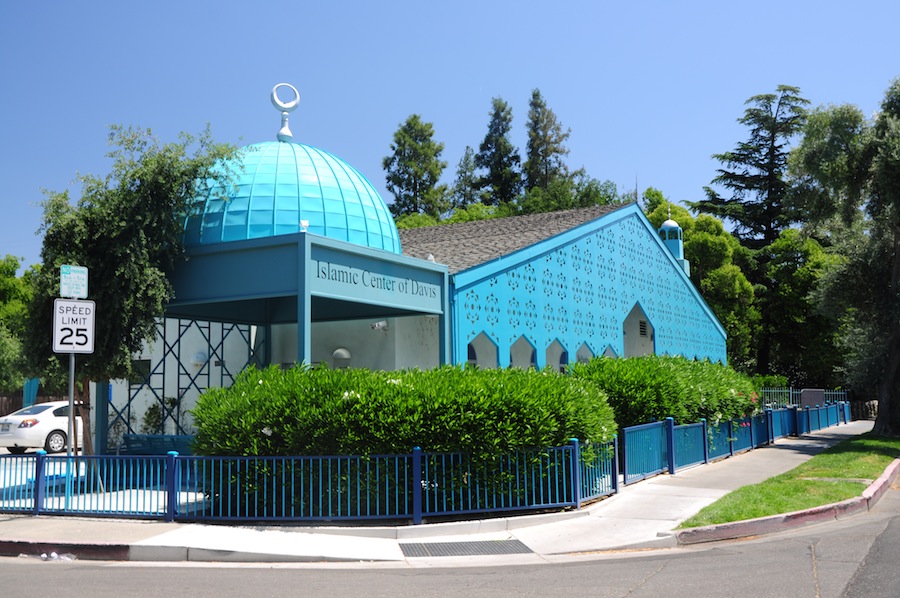
The Islamic Center of Davis was the victim of vandalism early on the morning of Jan. 22, the suspect of which appears in a surveillance video as a female with long hair. Windows of the Masjid were broken and bacon was put on door handles in an attempt to offend the sensibilities of the Muslim community (Muslims are prohibited from eating pork).  

“I think it’s really important to recognize that what is happening is kind of a surprise to all of us,” said Nida Ahmed, the internal vice president of the Muslim Student Association of UC Davis. “We just kind of woke up to this news that our Masjid, or our mosque, had been vandalized.”

This incident, now being treated as a hate crime, comes in the wake of controversy surrounding an event hosted by the Davis College Republicans (DCR), featuring Milo Yiannopoulos of Breitbart News. Yiannopoulos has been called a spokesperson for the “alt-right”, and his invitation to speak at UC Davis caused immediate outcry and protest, resulting in the cancellation of the event.

The crime also came just two days after the inauguration of President Donald Trump, who has advocated for the “extreme vetting” of Muslim persons.

The two events coinciding with this most recent hate crime have been the subject of discussion amongst those affected by the crime and their allies. However, members of the mosque have expressed their desire to continue to participate with Davis in spreading a message of tolerance.

“Whenever something like this happens we’re always taken aback,” Nida said. “But I think something that we’re going to do to move forward is to engage with our communities. We’re going to make sure that they know that we’re here […] and that we are a part of this community.”

The Sacramento Valley chapter of the Council on American-Islamic Relations (CAIR-SV) issued a statement calling on state and federal law enforcement. The organization is offering a monetary reward for any information that leads to the arrest of the perpetrator.

“We ask state law enforcement authorities and the FBI to investigate the apparent bias motive for this vandalism and to bring the perpetrator to justice,” said Basim Elkarra, the executive director of CAIR-SV in a press release. “The swift apprehension and punishment of those responsible for this act of religious intimidation will send the message that the growing Islamophobia we are witnessing in our nation will not be tolerated or ignored.”

In a message to the community, Interim Chancellor Ralph Hexter, Mayor Robb Davis and Adela de la Torre, vice chancellor for student affairs and campus diversity extended their sympathy to those who were affected by the crime.

“We want to express the disgust, outrage, and sadness we feel over this incident. We know that it has caused, and continues to cause, great distress and fear among members of the Muslim communities at UC Davis and in the City of Davis,” the message said.

In an effort to mend the damage inflicted on the Islamic Center, a LaunchGood funding campaign was started on Jan. 22 to raise money for repairs. The project has since raised almost 20,000 dollars, more than twice the initial goal amount, in less than 48 hours.

In collaboration with ASUCD, the Muslim Student Association is hosting a lecture series, “The Davis Muslim,” “to spread awareness about Islam on campus, in light of recent historical events”

“Even though this incident has happened, we’ve seen an outpour of love,” Nida said.

Donate to the campaign, or learn more about the Islamic Center of Davis on its website.

Written by: Samantha Solomon — city@theaggie.org

Letter to the Editor: The Davis College Republicans reject UC Davis’ narrative on Yiannopoulos protest

HANNAH LEE / AGGIE
HANNAH LEE / AGGIE

Congress shall make no law respecting an establishment of religion, or prohibiting the free exercise thereof; or abridging the freedom of speech, or of the press; or the right of the people peaceably to assemble, and to petition the Government for a redress of grievances.

~1st Amendment, U.S. Constitution


The Bill of Rights was added to the U.S. Constitution to protect Americans from incidents they had experienced under British rule. Many delegates from varying states refused to sign unless the Bill of Rights was added, because it protected them against tyranny. Since then, freedom of speech and assembly have been included as the freedoms that distinguish the free world. These rights should be offered to everyone equally, but as we have seen at our public university, some people believe speech and assembly are rights offered only to those with certain views.

Many news sources have challenged the Davis College Republicans’ portrayal of the Milo Yiannopoulos event, saying the protesters were nonviolent and the DCR executive board canceled their event of their own volition. We believe this narrative to be simply untrue. The executive board was told by administration and campus police officials that they feared for the safety of their officers and the students. They also provided DCR what we see as false information, like how the UC Davis Police Department confiscated hammers that would be responsible for the protesters’ violent and destructive actions. After painstakingly reviewing footage from the event myself, I can only conclude that the UC Davis staff lied to the executive board with intent to stop the event. While the violence was clear, with cameras everywhere there is still no footage of hammers, and DCR could in no way be held liable for damages by the protesters.

I wish I could trust UC Davis administration to tell the truth. However, I am led to believe by their actions that they cannot be trusted. From the 2011 pepper spray incident to the allegations against former Chancellor Katehi, UC Davis is desperate to cover up negative news. UC Davis has plenty of positive news, like Most Sustainable University and Top College for Women in STEM. If UC Davis had protected our First Amendment rights, even at the expense of their image, I would be here defending my school. But the truth is that UC Davis threw DCR under the bus when pressured to do so. Once they realized that UC Davis would have to repeat the pepper spray incident or some equivalent to protect our rights, they refused to take the proper course of action. For that, I have to condemn their actions, and all the staff who didn’t defend what was right, no matter their personal beliefs. Some students displayed more maturity attending the protest. With signs stating, “Protect Free speech even ‘Hate’ speech,” they demonstrated commitment to a free dialogue. I applaud these students in their bravery to protect what is right, potentially risking their lives through their exposure to Friday’s violence.

Can UC Davis recover from this incident? There are two courses of action. UC Davis can commit their officials to defend and honor the law and rights of students, even at the cost of the image of the school. We can do it, because it’s the right thing to do. Otherwise, UC Davis can continue lying to the press, and to the clubs that invite controversy to campus with hopes of education, but then who feel utter betrayal when the UC Davis administration fails them. Either way is hard, but I hope UC Davis can move beyond its façade and help student organizations bring controversial speakers that challenge the status quo.

Disclaimer: The views and opinions expressed by individual columnists belong to the columnists alone and do not necessarily indicate the views and opinions held by The California Aggie.

Letter to the Editor: Jeffrey Weiner: “Milo Yiannopoulos protesters bring us one step closer to the death of the university”

    HANNAH LEE / AGGIEHANNAH LEE / AGGIE

After writing his lofty letter to the campus, Chancellor Hexter did nothing in his power to uphold free speech at the Milo Yiannopoulos event on Jan. 13. There were rumors on the web of an intervention from the upper echelons of the UC Davis administration. However, the protesters shut down an event that drew at least a thousand attendees.  

Edmund Burke, describing the storming of the Bastille by a mob, drew attention to the irrational and inhuman tendencies of enraged revolutionary mobs.  Although the highest Enlightenment ideas inspired the French Revolution, the conservative philosopher reminds us in his description of the assault on Queen Marie Antoinette in her chambers of a mob’s self-righteous abandonment of compassion and civility.

I don’t think I am disrespecting Mr. Yiannopoulos by saying that we, too, were waiting for the Queen of Free Speech. The mob drove him hence. The “peaceful protest” was terrifying.  

How did supposedly peaceful protesters manage to shut down a talk? The cyber grapevine reported that the police deemed the menace of the mob — its potential for assault, battery or damage to property — urgent enough that the event should be cancelled.  

My partner and I waited for almost two hours after the supposed start of the event. I think most of those on the ticketed and endless non-ticketed lines believed the two sly young speakers would manage to outwit the mob.

If the protesters actually did throw eggs and other objects at the attendees of the talk, why weren’t they arrested on charges of assault? Why weren’t they registered and disciplined for infringing on our First Amendment right to peaceful assembly? Will they be? Or will Mr. Hexter sweep this all under the rug and affirm free speech while actually upholding censorship and intolerance?

Like virtually all the people standing in line with me, I went to this lecture to hear what these speakers, whose personalities and philosophies differ from many of us, had to say about contentious issues.  

Everybody I met in line, some who identified as politically to the right and others, like a student of mine I spotted, as a progressive, just wanted to see what these two larger-than-life young men had to say.  

In the conduct of protesters there was no compassion, only tyranny demonstrated through an attempt to control the campus. They were not concerned with the thoughts and feelings of their neighbors, but only in the control and censorship of them. They demonstrated that free speech is dead on college campuses. The UC is but another casualty of the Orwellian silencing of ideas across American universities.

A university system that is by and large the common treasure of all taxpayers, Republicans and Democrats, cannot be controlled just by the left. It’s bad enough that Ms. Napolitano, the president of the UC system, was raising money this autumn and making excuses for Hillary Clinton while heading a huge public university system.

I find it profoundly ironic, but not unexpected, that the regressive left component on campus, a small but loud voice, managed to stop a gay man with his own vision of the world from talking to our community.  

In the end, we are numb, and everything becomes white noise if we don’t encounter opinions that differ from our own with all our intelligence, emotional presence and good will. The protesters think they triumphed, but they only succeeded in taking us one step closer to the death of the university.
Jeffrey Weiner is a lecturer in the Department of Comparative Literature

Disclaimer: The views and opinions expressed by individual columnists belong to the columnists alone and do not necessarily indicate the views and opinions held by The California Aggie.

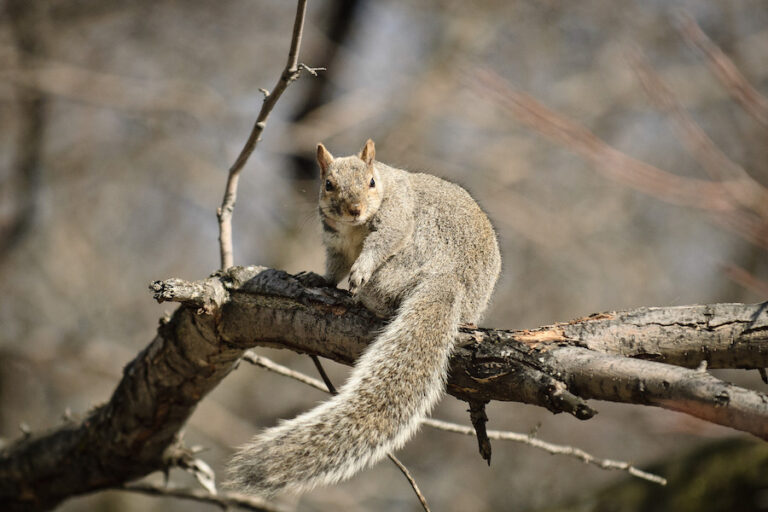
Humor: Terrorizing turkeys found to be in cahoots with Davis squirrels

DLLU [CC BY-NC 2.0] / FLICKR
headshot_OLPoultry and rodents form an unlikely partnership to get snacks and entertainment
We all know that turkeys are currently gobbling up the previously comforting and fun streets of downtown Davis with their violence. What we didn’t know was that the squirrels from the UC Davis campus were the ones who ordered these feathered fiends to wreak havoc upon us fragile humans.

Student Lynn Guini interrogated one of the turkeys after battling him one afternoon so that she could get to her car after buying a new recorder from Watermelon Music.

“I was hyped as hell because I had just gotten this dope recorder so I could kill ‘Hot Cross Buns’ for my roommates,” Guini said. “The day turned dreary when I saw him… menacing.”

Turk E. Smith, a member of the Terrorizing Turkeys gang, stood on the hood of Guini’s car wearing a ski mask and flashing his tattoo of a skull. But instead of retreating, Guini did what others have not been strong enough to do.

“I got in my car and just started driving,” Guini said. “His talons went through my roof. I knew it was war.”

Upon arriving home, Guini wrestled the bird into her home, tying him to a chair and blaring her bike light into his eyes. The turkey was quiet for a little while, but when Guini lifted a turkey sandwich from her backpack, Turk E. Smith finally broke down.

“Alright!” Smith hollered. “I’ll talk. We’re takin’ over downtown because we struck a deal with the campus squirrels. You see, when you guys come eat downtown, they lose out on all your trash. You guys keep comin’ out here for your pad thai and your boba, and the little mongrels outside of the Silo are deprived of their half-eaten Doritos Locos Tacos. You pushed us to this! You’re the real criminals!”

Guini was still perplexed as to why the turkeys would get in on this deal. What was the benefit for them? What was the motivation?

“It’s actually quite simple,” Turk E. Smith said. “The squirrels had tickets to Kanye’s show; we wanted to go, and we made it happen. No one even caught onto the fact that one of the audience members was just three turkeys in a trench coat. It was the perfect crime.”

The turkey stated that, even though they have already gotten what they wanted, the partnership would continue indefinitely because the squirrels continue to provide the flock of birds Radioshack gift cards, and they feel awkward about declining gifts.

Written by: Olivia Luchini— ocluchini@ucdavis.edu

Student Sounds: Tempura

TEMPURA / COURTESY
TEMPURA / COURTESY

Student musicians talk Boysenberry Funk, choosing a band name and Open Mic Nights

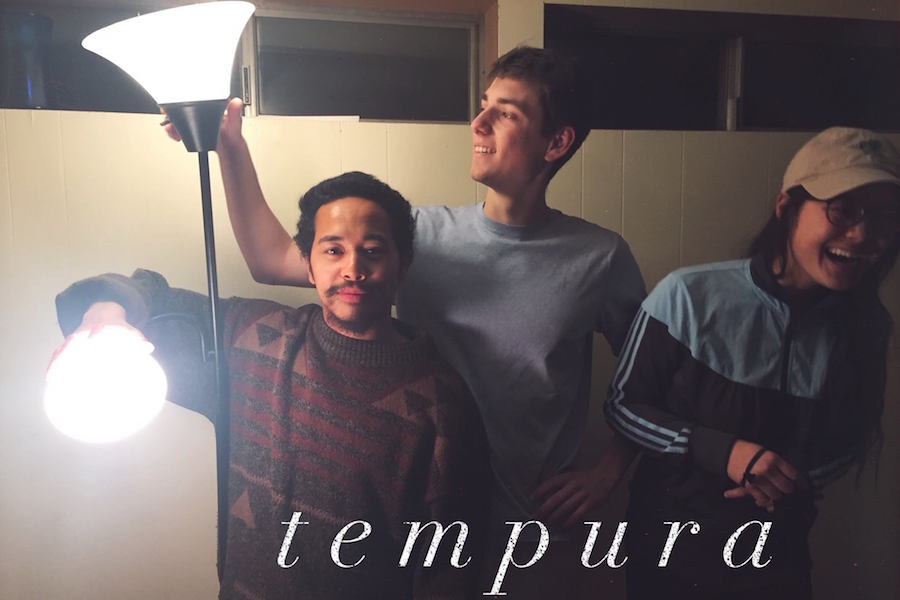
Kelly Chang, a third-year design major, hurriedly drove her band, Tempura, to its next gig. In the back, her bandmates were wedged between instruments, all rattling around in the backseat, anticipating their performance.

“We have all of this shit crammed into our car, all these drums on [top of] us in the back seat,” recalled Sam Hornstein, a third-year biological systems engineering major and the band’s bassist. “And [Chang] was driving, and [she] asked, ‘Are we a band?’”

The three of them laughed in recollection of the event, reinforcing their friends-turned-bandmates dynamic.

“I remember [Sam] said, ‘This is like the moment you want to tell someone you love them, but you don’t know how to say it,’” Chang said.

But the evolution of Tempura was more gradual than this tale suggests. The band members met the way most first-years do: Chang’s roommates were high-school friends of Hornstein, and Hornstein lived in the dorms two doors down from Kawayan De Guzeman, a third-year wildlife, fish and conservation biology major and the band’s guitarist and vocalist.

Chang recalls meeting De Guzeman, however, in a more memorable way.

“I was jamming with another group of people, and then [Kawayan] showed up in [his] shower shoes, shirtless and in a towel,” Chang said. “Literally we were outdoors, in Segundo.”

The fourth member, Kelly Hutchinson, has since left UC Davis, but he remains significant to the band’s origins.

Before Tempura started performing — or even calling itself a band — the members simply got together to jam. Eventually, they planned their first show at one of Entertainment Council’s Open Mic Nights. And, to the band’s surprise, people were more than impressed; listeners approached them after their set, asking if the four would perform at various events and house shows in Davis.

Since then, Tempura has become a local favorite at house shows and small parties. The band spends the majority of its musical efforts on live shows, but have released one track on SoundCloud, titled “Pink Submarines,” and hope to release more recorded content in the near future. They plan to continue their live shows as well.

“We have a Wine to Water performance, which is a fundraiser for Engineers Without Borders,” Hornstein said. “And we’re trying to play Picnic Day again, and maybe a couple other house shows.”

But before Tempura became Tempura, the band struggled to find a name. In fact, during their first CoHo performance over a year ago, the band had no title. Thinking little of it at the time, they presented themselves by the most random words they could think of: “Boysenberry Funk.” Despite the moniker, their music is not funky, nor particularly fruity.

Chang recalls getting emails in the following days beginning with “Hey Boysenberry.”

And, though amused at the result of their success, they chose to spend more energy on giving themselves an official title.

“We thought hard about [our band name]. We were like, okay guys, Boysenberry Funk… we made that on a whim,” De Guzeman said. “We got to think of something legit before it gets too permanent. So we started brainstorming.”

Though the name was a top contender, Hornstein recalls a few strangers’ approval that served as a solidifying force.

“[De Guzeman] came up with ‘Tempura,’ and I was kind of on the fence about it, but I saw these two guys [outside De Guzeman’s apartment] who asked me, ‘Yo, you guys jamming in there? What are you guys called?’” Hornstein said. “And I said we were still thinking about it, but one of the names was Tempura. He said, ‘That’s a cool name, man.’ And I was like, ‘Alright.’”

Among the many names the band’s members bounced off each other (including The Stumps and Folk-A-Dots), they finally settled on Tempura, especially liking that it was just one word. The name suits them well; tempura, a deep-fried Japanese dish, is both flavorful and well-loved — Tempura is no different.
Written by: Ally Overbay — arts@theaggie.org

Meet the Meat Lab

1
CAT TAYLOR / AGGIE FILE

UC Davis staple processes fresh, local product humanely

As a second-generation butcher, Caleb Sehnert’s roots in the meat industry were established before he was even born. Sehnert works with and teaches students how to humanely slaughter and process animals for consumption as part of his job as the manager of the UC Davis Meat Lab.

“I really, really like my job,” Sehnert said. “It’s a really rewarding and fun job. I get to work with our researchers and facility managers when they bring animals in and help collect certain tissues and data, [I] get to teach the whole process of slaughter and processing to our students, and then I get to help our students prepare it all and sell it to our customers.”

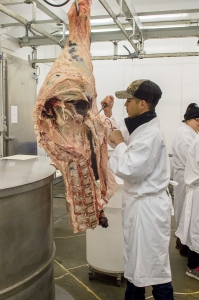
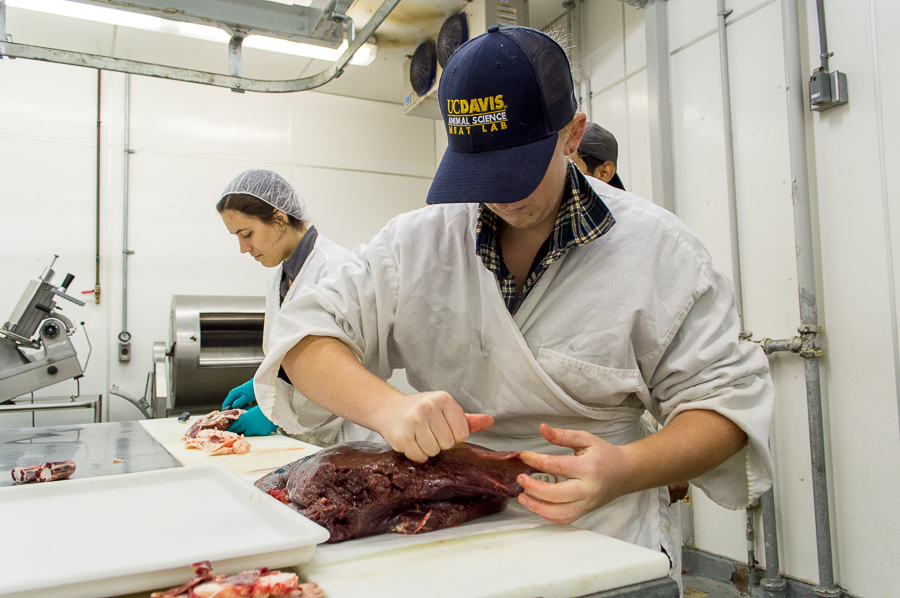
Serving a multitude of functions, the Meat Lab is equipped with a kill floor, processing and cutting rooms and classrooms where students in classes such as Animal Science 49G — Animal Management Practices learn the entire process of meat production. A part of the Department of Animal Science, the Meat Lab has been processing and selling fresh, local meat to the community since the 1990’s and is the only one of its kind in the UC system.

CAT TAYLOR / AGGIE FILE

Krista Leili-Marrazzo, a fourth-year animal science student, is a self-described  butcherette who has a close relationship with the handful of other student employees and interns at the Meat Lab.

“We spend a lot of time together because if we’re not in class, we’re probably at work,” Leili-Marrazzo said. “I’ve learned so much more than I thought I was going to at this job, so that has been really rewarding.”

Similarly, Geoff Koch, a fourth-year sustainable agriculture and food systems major who worked at the Meat Lab for about nine months, said his experience at the lab was both enjoyable and extremely rewarding.

“I don’t come from a farming background, so it was another way that I [learned] a whole lot about what it takes to get food to our plates,” Koch said. “I had a really excellent experience working at the Meat Lab. I made some really good friends and I got to be involved in a lot of events on campus with the Animal Science Department.”

The Meat Lab processes a total of 600 to 800 cows, pigs, goats and sheep yearly, all of which are raised at UC Davis. Weekly sales are Thursday and Friday from 1 to 5:30 p.m. in the Cole C Facility.Meat products are also ordered by restaurants from the community, departments on campus, local butcher shops and, occasionally, the dining commons.

“We do sell to campus catering quite often when they do events,” Sehnert said. “The G Street WunderBar in Downtown Davis [uses] our bacon, ground beef and pastrami on some of their burgers and sandwiches. We also sell lots of carcasses to other local butchers [because] they know they can get fresh, consistent, good animals here.”

In addition to sales, the Meat Lab workers compete with the five other collegiate meat labs in the state at the annual California Association of Meat Processors (CAMP) competition. Leili-Marrazzo, who was awarded the CAMP scholarship, said that each student is allowed to enter a sausage that they have created which follows the CAMP requirements for that year.  Last February, the UC Davis Meat Lab took home top honors and student-specific awards.

“Each year there’s a different requirement for the sausage, so last year we had to have a pale ale in it […but] this year it’s an Italian sausage,” Leili-Marrazzo said. “I know in past years they’ve had to have an apple ingredient or a weird candy, so this year is not too bad. We’ll spend about a month experimenting and perfecting our own sausages.”

Last year, Denelle Flake, a second-year managerial economics major, was awarded grand champion for her sausage, “The Bangkok Banger.”

“The annual convention provides great networking opportunities with potential employers and fellow college students,” Flake said. “It opens your eyes to the many components of the meat industry.”

The Meat Lab sales room is covered with plaques, noting the many achievements of past and present students. However, the most important factor for workers at the Meat Lab is that the livestock are cared for and slaughtered as humanely as possible. Sehnert said that most people are not aware that an inspector from the United States Department of Agriculture is present for every slaughter.

“All these animals are very well taken care of at our facilities,” Sehnert said. “Our inspectors are always complimenting us on how healthy our animals are, so we’re pretty proud of that. Without humane handling, if you’re not handling the animals properly, you’re going to have a poor product.”

CAT TAYLOR / AGGIE FILE

Involvement at the Meat Lab, in classes such as Animal Management Practices, allows students to receive a hands-on interaction with the entire meat production process. Leili-Marrazzo said that she thinks that the opportunity for hands-on learning clears away misconceptions about the meat processing industry.

“I think it’s cool for students to see that everything is done very humanely and the animals [are] really taken care of beforehand and even during the slaughter process,”  Leili-Marrazzo said. “I like [for] students to have that realization of, ‘Oh, this isn’t such a terrible industry and the animals aren’t suffering.’”

Student workers at the Meat Lab are often working while Animal Management Practices students use the facilities for class. Koch said that while he worked to process meat, students in classes would observe and absorb practical information.

“We get the opportunity to teach by showing what we know,” Koch said. “I got the opportunity to relay the knowledge I had in the short time I was there to some students, but I was also learning myself. You learn by experience.”

According to Koch, every Thursday and Friday — when the Meat Lab is open for business — the lines stretch out the door. Sehnert said that there are dedicated customers that come every week, rain or shine. But, for Sehnert, the Meat Lab is not about profit.

“We’re not really here to make money or lose money,” Sehnert said. “Everything that we sell or produce here is a byproduct of teaching and research.”

Leili-Marrazzo doesn’t believe many students are aware that the UC Davis Meat Lab exists.

“It’s on campus, it’s so close and I think more people should know about it,” Leili-Marrazzo said. “It’s a nice way to get really local and fresh meat and it’s very humanely slaughtered and processed and we’re really proud of what we do. It’s like the hidden gem of Davis.”
Written by: Hannah Holzer — features@theaggie.org

Unveiling Sproul’s past

0
LAURA LONG / AGGIE
LAURA LONG / AGGIE

Chipping away at 44 years of history

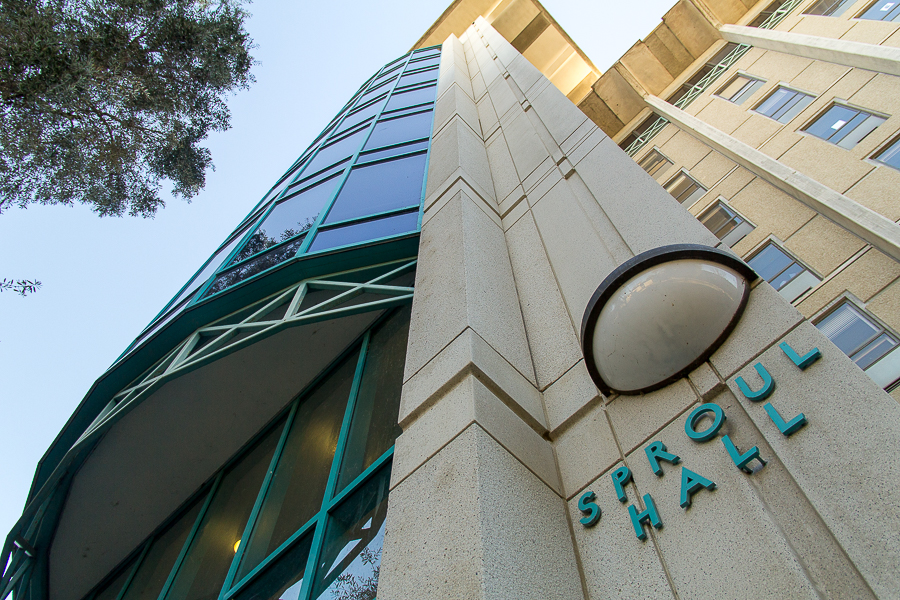
California-native Robert G. Sproul began his career in 1930 as president of the University of California. Sproul’s wide range of interests and impactful personality live on in the legacy he left behind in UC Davis’ Sproul Hall.

“We think it is important to capture the history of the buildings on campus, especially the named buildings to understand the people being honored and their history on campus,” said Daryl Morrison, the department head of Shields Library Special Collections.

Sproul Hall retains its original purpose as a teaching building, unlike many other structures that were intended for agricultural use. The building is home to nine floors full of departments including classics, foreign languages, humanities and religious studies.

“Sproul Hall is global diversity in action,” said Rex Stem, the chair of the Classics Department. “The best thing about this building is you get in the elevator and one person is speaking French, one person is speaking Arabic and another is speaking Chinese. You get people who speak all kinds of languages in the same building teaching and working together.”

Until 1998, Sproul was the tallest building on the West Coast, according to the special collections, and remains the tallest building in Davis today. From the ninth floor students can see the Sacramento skyline, all of Yolo County and even the Sierra Mountains.

“We get to know people by seeing them so often in the hallways and we can always drop by each others’ offices and get to know what everybody’s up to,” said Melanie Barbier, an assistant instructor in the French Department. “However, the elevators are horrible […] they are really old and often don’t work, one is even broken right now. Sproul totally gives a Tower of Terror feel — something about the concrete and the turquoise is really bizarre.”

Despite the retro style of the building’s exterior, Sproul makes use of every inch of its interior, offering modern study spaces and conference rooms. While Sproul Hall is usually quiet and calm, by the end of the quarter it is buzzing with students from all cultural departments who are studying or rehearsing for speaking exams.

Robert Sproul himself received degrees from universities around the world, was a member of numerous international boards and was honored as Knight of the Order of the Iron Crown of Italy. He even belonged to a private club in which artists, journalists and musicians would share cosmopolitan stories. Sproul’s world legacy remains in the diverse structure of his building.

“The faculty here has a shared mission,” Stem said. “Whether we teach Chinese or Greek, it doesn’t matter, because we’re all trying to further language education. It’s a shame that the building geography divides the faculty up.”

Stem was not the first to search for unity among the university departments. Robert Sproul spent many of his presiding years calling for unity of the university system and even created the Cal Club to bring together student leaders from all UC campuses. Just as Sproul sought to increase University prestige and unity, UC Davis faculty and students uphold this legacy every day in Sproul Hall.

As it resides in the southeast corner of campus looming over the rest of the structures, Sproul has an ominous air that seems to hold more secrets than Plato’s undiscovered works. Rumours of underground tunnels have circulated throughout campus over the years, but without special privileges, these rumours may be hard to prove true.

Barbier explained that, at night, after everyone has gone home, the building has an eerie mystique in its stillness. However, Stem has a different idea of his workplace and described it as a Holiday Inn in Florida — a 1970s resort that has not been updated.

Whether or not students take a language class during their time on campus, Sproul Hall is a unique and intricate monument of UC Davis and reflects the importance of diversity in education.

“The university strives to continue to memorialize those who impacted our campus,” Morrison said. “It’s very important to understand sense of place, and the buildings are a big part of that both for their beauty, their architecture and their history which build knowledge throughout our campus.”
Written by: Gillian Allen — features@theaggie.org

Love Laundry accommodates student schedules with extended hours

LUCY KNOWLES / AGGIE

New, modern laundromat spreads love, laundry around Davis

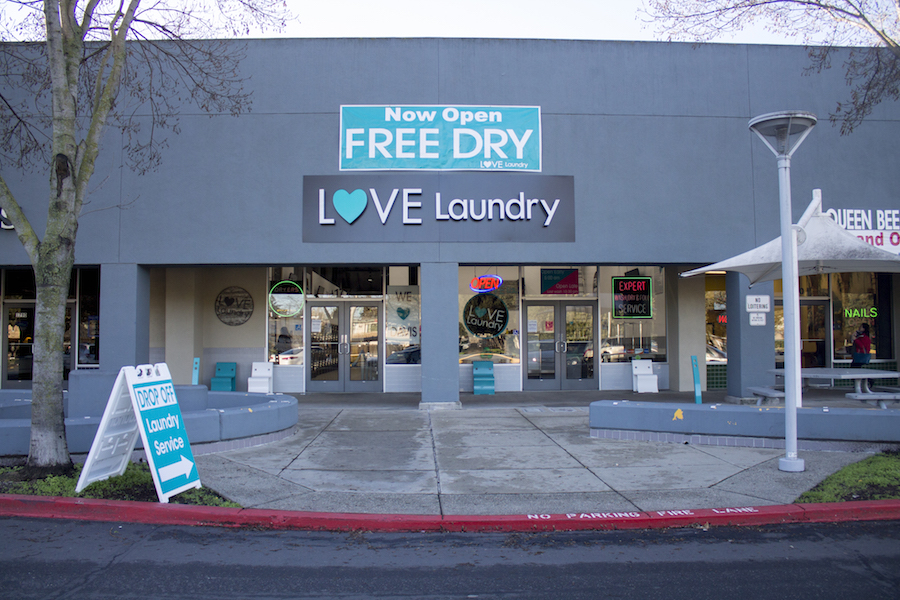
Adding to the ever-growing, enriched Davis community, Love Laundry opened as the second laundromat in town. While The Laundry Lounge on Hanover Dr. remains open, this new laundry facility caters to residents on the east side of town.

Love Laundry is located at 1776 E. 8th St. in the Davis Manor Shopping Center. Open 7 days a week from 5 a.m. to 12 a.m., the laundry facility caters to everyone from busy parents to students with any type of schedule.

“The reason why we are [open from 5 a.m. to midnight] is because of the business out here,” said Petra Montano, Love Laundry manager. “You have the college, you have a lot of business people, you want to have the door open so that people can get their laundry done on their time. That’s the need.”

This family-owned laundromat opened for business on Dec. 30, 2016. In addition to a self-serve laundry service, it offers a drop-off laundry service, in which all soap and other laundry materials are provided. The staff washes, dries and even folds the laundry. Customers can choose next-day pick-up or same-day service for a slightly higher fee.

Owner Chris Washnsiedler saw the need for another laundromat in Davis and chose to open the location, amounting to six Love Laundry locations total. There are two in Southern California and three in Sacramento. Washnsiedler noted that some Davis residents even used to go to the Sacramento locations for laundry services.

“We are excited to be in Davis,” Wahnsiedler said in an interview with The Davis Enterprise. “We’ve been looking in Davis for a while now. Everyone needs to do laundry […] it’s resistant to economic issues.”

Ailin Goff, a second-year biochemistry and molecular biology student, has been working at Love Laundry for a short time now and is grateful that it accommodates student’s class and extracurricular schedules.

“I showed them my schedule […] and they told me they would work with every single day,” Goff said. “It’s a very happy work environment. Everyone is really friendly.”

The washers in the facility range from basic top-loaders to cost efficient front-load washers for bigger loads. The machines range from a capacity of one to eight loads. All of the dryers in the laundromat are free to use. There are 35 washing machines and 34 dryers, leaving an abundance of machines always open to use.

Love Laundry accepts Apple Pay, Google Wallet, credit and debit cards, as well as cash and coins. Flat-screen TV’s provide entertainment while doing the monotonous task of laundry, in addition to free Wi-Fi.
Written By: Bianca Antunez  — city@theaggie.org

UC Davis ranked most sustainable university in the world

BECCA RIDGE / AGGIE
BECCA RIDGE / AGGIE

GreenMetric names UC Davis the greenest university overall

The University of Indonesia’s seventh annual Greenmetric ranking has declared UC Davis the world’s most sustainable university.

By using environmental conservation and carbon footprint reduction criteria, UC Davis achieved an aggregate score of 8,396 out of 10,000, while the two runner-ups scored 8,079 and 7,658. UC Davis was ranked highest out of the universities for transportation, including bus and bike usage as part of environmentally-friendly public transportation.  

UC Davis also achieved a perfect score of 1,800 in the waste section, regarding waste treatment, recycling, paper and plastic policies and sewerage disposal.

The ranking, which was announced on Dec. 16, highlights universities that are combating global climate change as well as bolstering energy and water conservation, waste recycling and green transportation.

UC Davis scored far ahead of other University of California (UC) campuses, with UC Berkeley earning a 7,156 and UC Riverside earning a 5,346. 516 universities were included in this ranking.

Riri Fitri Sara, chairperson of University of Indonesia GreenMetric Rankings of World Universities, congratulated UC Davis on this accomplishment.

UI GreenMetric team is proud to announce [UC Davis] as the greenest and most sustainable campus in 2016 UI GreenMetric Rankings of World Universities,” Sara said via e-mail.  “We congratulate [the] UC Davis team for their achievement in making their campus an excellent example for some criteria in UI GreenMetric.”

Interim Chancellor Ralph J. Hexter announced his gratitude toward the UC Davis community in helping reach this impressive position.

“This ranking not only reaffirms our standing as a global leader in sustainability, but also demonstrates our continuing commitment,” Hexter said in a press release. “All the credit goes to our staff, faculty, and students for being so dedicated to this cause.”

According to Camille Kirk, UC Davis’ assistant director of sustainability, the score reflects the continuous efforts of the university community.

“Maybe our UC Davis DNA includes a motivation for sustainability because we have been doing this work for decades,” Kirk said. “The way we run the campus, what we research, what we teach students and many of the activities our campus community undertakes all contribute to striving for a more sustainable campus and a more sustainable future for the globe.”

In addition to existing sections of transportation, setting and infrastructure, waste, water and energy and climate change, GreenMetric added an education section in 2012, measuring student performance and achievement. UC Davis has a high individual score of 1,382 within education.  

“Being externally recognised as number one in the world for our efforts is wonderful,” Kirk said.

Anthony Estrada, a third-year managerial economics student, said that he is proud of this achievement, and believes that environmental sustainability is one of UC Davis’ drawing factors.

“I chose UC Davis for the academics, but other factors like being really green and environmentally friendly are important,” Estrada said. “I know that’s one of the things that makes UC Davis special.”

Written by: Aaron Liss — campus@theaggie.org