55.5 F
Davis

Davis, California

Tuesday, December 23, 2025
Home Blog Page 667

US Department of Transportation awards $14 million grant to National Center for Sustainable Transportation

GENESIA TING / AGGIE

UC Davis-led institute one of five national transportation centers awarded under the University Transportation Centers program

The U.S. Department of Transportation announced in early December that it had selected the National Center for Sustainable Transportation (NCST), led by the UC Davis Institute of Transportation Studies, to receive a five-year $14 million federal grant to work on a more sustainable transportation system.

The NCST is one of five national transportation centers awarded under the University Transportation Centers’ program that was reauthorized by the federal Fixing America’s Surface Transportation (FAST) Act. It is the only national transportation center focused on environmental preservation and the only one in California.

The NCST is part of UC Davis’ Institute of Transportation Studies (ITS-Davis). Other institutions partnered with the NCST are California State University, Long Beach; UC Riverside; University of Southern California; Georgia Tech and the University of Vermont.  

The institution works on improving the environmental sustainability of transportation  nationwide. The institution helps federal, state, regional and local agencies reduce the greenhouse gas emissions from passenger and freight travel that contribute to climate change. Its goal is to enhance the environmental sustainability of the United States’ transportation system through reducing fossil fuel consumption and greenhouse gas emissions.

“Our research is organized around three themes, each essential to the goal of sustainability: environmentally responsible infrastructure and operations, multimodal travel and sustainable land use and zero-emission vehicle and fuel technology,” said Susan Handy, the NCST director and an environmental science and policy professor.

Handy believes that finding more eco-friendly and sustainable alternatives to modern transportation are highly important.  

“Preserving the environment is called out in federal policy as a priority research area, for good reason,” Handy said. “The transportation system is one of the largest sources of greenhouse gas emissions and air pollution. It degrades water quality, increases noise levels, fragments natural habitat [and] creates barriers within our communities. All of these impacts have consequences for human health, social equity, economic vitality and our overall quality of life […] now and into the future.”

Since its creation in 2012, the NCST has funded 68 research projects on topics related to sustainable transportation. The NCST also published 25 white papers written to help policymakers address critical sustainability issues. It has worked with influential leaders and stakeholder groups, making it a leader in advancement of environmentally sustainable transportation and making UC Davis as a whole the nation’s leading university on sustainable transportation.

With the federal grant, the NCST plans to launch new research initiatives that will focus on the electrification, sharing and automation of passenger vehicles, as well as the development of more educational programs, not just for graduate students but also for undergraduates and high school students.

Dahlia Garas, the NCST program manager, believes that, with this federal grant, the institute will be able to efficiently find alternatives that are affordable and a positive resource for everyone.

“Finding win-win solutions that reduce environmental impacts while enhancing the economy and making travel easier, affordable and more convenient will provide a better future for everyone,” Garas said.

Carina Tejada, a fourth-year community and regional development major, believes it is important that a school known for its emphasis on agriculture work to continue to make a positive environmental impact.

“As an agriculture school focused on being green, it is important we also do our part in helping the environment and coming up with ways that will make transportation be more sustainable,” Tejada said. “UC Davis is the perfect school really to work on a sustainable project like this.”
Written by: Demi Caceres — campus@theaggie.org

Photo of the Week: 1/25/2017

A young marcher shows another child her "Future Madame President" sign. (BRIAN LANDRY / AGGIE)
A young marcher shows another child her “Future Madame President” sign. (BRIAN LANDRY / AGGIE)

Isaiah Thomas is On Fire Right Now

0

SHOTGUN SPRATLING / NEON TOMMY [CC BY-SA 2.0] / FLICKR (changes made)
Isaiah Thomas deserves some long-overdue recognition as one of the premier talents in basketball. He’s the leading scorer in the fourth quarter in the NBA, he’s probably the best closer in the game and he’s carrying his Boston Celtics right now, as they’ve won eight of their last 10 behind the 5’9” guard out of Tacoma, Washington. Yeah, you heard that correctly. Isaiah Thomas is 5’9” and dominating the NBA right now. If you saw him on the A court at the ARC and he called “next,” you probably wouldn’t bat an eye.

When many first heard about Thomas, they probably thought he was the son of NBA legend Isiah Thomas, the twelve time all-star, two-time NBA champion and Finals MVP. Nay, they are unrelated. Isaiah Thomas’ father simply lost a bet on the 1989 NBA Finals in which he gambled on his favorite team, the Los Angeles Lakers, to beat Isiah Thomas and the Pistons. If the Lakers lost, he was to name his unborn son after the famed point guard. The Pistons swept the Lakers in convincing fashion. The tale of this man having a chip on his shoulder goes back to his father making an ill-advised bet to a friend resulting in his name being a gaffe, but it doesn’t end there. The newer Thomas was the last overall pick of the 2011 NBA Draft — a slot which usually goes to some guy you’d never heard of who probably now plays overseas for pennies on the dollar.

To the surprise of everyone, Thomas has forged an identity of his own. The average basketball fan no longer associates the current NBA superstar with the fifty-five year old legend.

Despite his rise to superstardom, I still wonder why Isaiah has yet to achieve the same level of  marketability as some of his peers. Usually, one could attribute this lack of attention to the franchise a player plays for. Stars in small towns are obviously lesser known, but Thomas is the head honcho for the winningest franchise in the NBA, the lauded Boston Celtics. In Boston, you’d be able to find Nike advertisements of the Celtics’ guard on transit stations throughout the city reading “Pick Me Last Again,” yet media coverage has yet to permeate through the rest of the country. The man is still criminally underappreciated by the casual basketball fan throughout the United States.

In his ice-cold performance during the final minutes of a recent road victory against the Atlanta Hawks, Isaiah Thomas helped the Celts stave off a comeback in a big way. The Celtics were up by 14 points with about seven minutes left, but in the final minute the Hawks came back and tied it up. In Boston’s final possession of the game, Thomas allowed the game clock to roll down to about five seconds and then went to work. He drove right against Kent Bazemore, stepped back at the elbow and drilled a game-winner. This has become a recurring theme; he’s become the clutchest performer in the NBA, averaging 9.9 points per game in the fourth quarter, a total that hasn’t been reached since 1996.

Isaiah Thomas deserves your attention. He deserves more endorsements. He deserves a better nickname than the Pizza Guy, and he deserves more All-Star votes than Zaza Pachulia. Give him all the love.


Written by: Michael Wexler — sports@theaggie.org

UC Davis research may lead to custom transplant organs grown in farm animals

LUCY KNOWLES / AGGIE FILE

Reprogramming cells, gene editing contribute to the latest organ transplant research

Approximately 22 people die each day out of the staggering 119,000 plus people on the national transplant waiting list, according to the US Department of Health and Human Services. While 48 percent of adults in the US are registered organ donors, only 0.3 percent of them will pass in a way in which their organs can be repurposed.

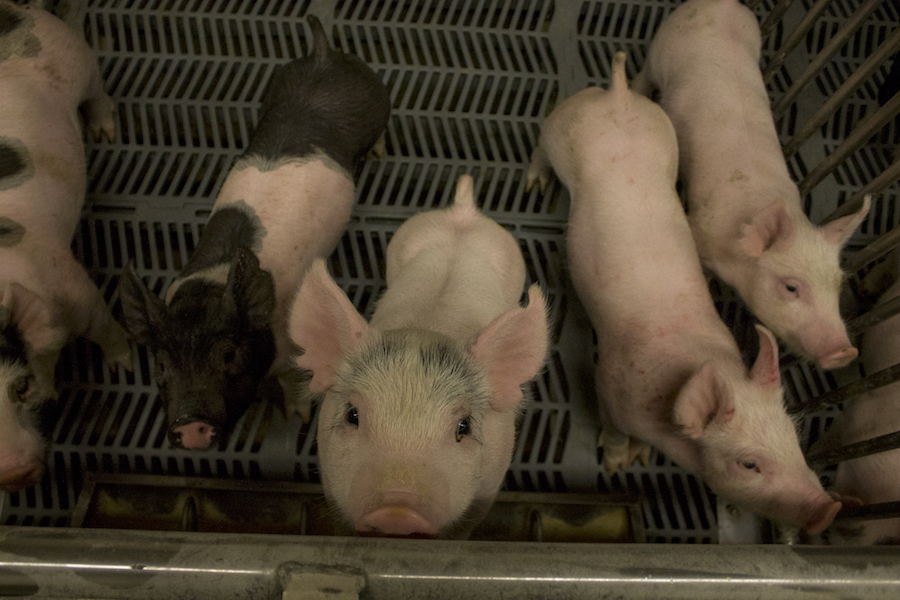
Pablo Juan Ross, an associate professor of animal science at UC Davis, is working to grow organs from the patient’s own stem cells inside the body of a sheep or a pig.

Conducting an en vivo study, or a study inside of a living organism, is a complicated process. Ross said that in addition to obtaining the right kinds of permission, doing a study involving chimeras — single organisms comprised of cells of at least two different species — can make procuring funding harder. However, Ross believes that the results of an en vivo study will be worth the extra effort.

“[From studies that are] en vitro or ‘in the dish’, in general, we get very primitive, immature cells that are not good for transplantation,” Ross said. “And, of course, we’re limited to only creating cells. Creating organs, creating the 3D [structures] that are required for a transplant for an adult is, right now, something that’s out of our possibilities”.

The process of creating a custom organ would, hypothetically, go as follows: first, Ross would obtain cells from the patient that needs the transplant, a process which could be as simple as taking a few skin cells. Then, Ross would express key genes in the skin cells, reprogramming them into pluripotent stem cells, or cells that have the capacity to become any cell in the body.

If Ross were to inject these stem cells into an early pig or sheep embryo, it would be hard to predict where the cells would be used in the animal. The pig cells have what Ross referred to as a “home field advantage” so they would likely outcompete the human cells in most places. The possibility of uncontrolled mixing of human and animal cells, however, would create a large ethical problem.

To help the visiting team, Ross would use gene editing techniques to “edit out” the genes necessary for the formation of a key organ which, in Ross’ case, is a pancreas. This gene editing would ‘edit out’ the competition because the pig or sheep would not have the genes or blueprints necessary to build itself a pancreas, so the human stem cells could step in relatively unchallenged.

After Ross completes the process of gene editing and injecting the stem cells into the embryo, the embryo would be placed back into its mother, allowed to grow and birth naturally, and once the organ of interest matures and develops to the proper size, it would be harvested.

As of right now, most of this process is theoretical. Ross’ research is two pronged. One field of investigation deals with the problem of completely eliminating the genes for the pancreas using CRISPR, or gene editing technology. The other investigative field is trying to narrow down the best type or state of human pluripotent stem cells to use for this research. Some research is already being done inside animal models.

Elizabeth Maga, an adjunct professor in the Department of Animal Science, is also involved in the project. According to Maga, the research is being done cautiously to avoid any possible ethical issues.

“Right now, we’re going slowly because people aren’t sure if the human cells will migrate to other places in the pig, not just contribute to the organ that has been knocked out by the CRISPR technology,” Maga said. “We only have approval from campus to have the pigs be pregnant for 26 or 28 days because after that time of development the brain starts forming, and so the concern was if there were loose human cells in there, they could contribute to the development of other tissues, mainly the brain, and what would be the implications of that.”

Joan Dean Rowe, a professor of population health and reproduction at the UC Davis School of Veterinary Sciences, performs the embryo reinsertion surgical procedures on the pigs involved in the study.

“The transfer of the embryos [is] a surgical procedure that involves a small incision, then the exteriorization of the uterus and then introduction of the embryos into the uterine horn,” Rowe said. “The novel aspect of the research is, of course, Dr. Ross’ procedures with the embryos. Relative to the recipient — the sow that’s receiving the embryos — the embryo transfer procedure […] is one that is very well established and is a very routine procedure”.

While Ross’ research is innovative for combining gene editing and pluripotent stem cells in the form of a chimera, according to Rowe, research regarding chimeras has been commonplace at UC Davis for some time.

“The Department of Animal Science and the School of Veterinary Science have a long history of participation in research involving chimeric animals. For example, sheep and goat chimeras that were used to study some of the basic physiologic questions,” Rowe said. “These kinds of studies to help benefit man and animal, and understand physiological processes [have] been going on literally for decades at the university.”


Written by: Meral Basit – science@theaggie.org

The hidden museums of UC Davis

JAY GELVEZON / AGGIE

Learn more about your campus museums

With the grand opening of the Manetti Shrem Museum, other on-campus museums may have been overlooked. Here’s a short list of other UC Davis museums, whose focuses range from insects to activism to design.


Bohart Museum

Many UC Davis students may not know about the unconventional Bohart Museum.

“People find us by accident,” said Lynn Kimsey, the Bohart Museum director. “Everybody in the Sacramento Valley area with a kid knows about us, and almost nobody on campus does. I can’t explain it. It’s hard to become well-known on campus.”

Insects may not be everyone’s favorite topic, but the Bohart Museum, UC Davis’ museum of entomology, might be able to change that. Researchers at the museum dedicate themselves to teaching people about the importance of insects in ecosystems.

museums_ar_Jay_Gelvezon2Upon entering the facility, one will notice that it resembles more of a research platform than a typical museum setting — because that is exactly what it is.

“We are a research museum, meaning we have specimens that are collected all over the world by various people,” Kimsey said. “One thing that’s different about us is that this is probably the only insect collection in the world that invites the public into the collection.”

The museum contains about 7 to 8 million specimens of terrestrial arthropods that are in some part open to the public. Given the stigma surrounding insects, one of the museum’s primary goals is to educate people — especially youth — and serve the campus community.

“One of our real strong emphases here is to educate people — to show them in a very harmless and careful way exactly how important insects are, how [they can be] dangerous or not, how we can live with them and really can’t live without them,” Kimsey said.

The Bohart Museum not only displays an immense collection of pinned insects, but it also allows guests to interact with live ones as well.

“We have a petting zoo, that’s what we call it,” Kimsey said. “We have kids come here. We hold the animals out to them to make them feel comfortable.”

The insect petting zoo serves as a method of education for people who are afraid of insects, allowing them to feel more comfortable with them.


C.N. Gorman Museum

Another lesser-known campus museum is the C.N. Gorman Museum. Located in Hart Hall, it is entirely student-staffed and hosts quarterly museums_ar_Jay_Gelvezon3exhibitions featuring contemporary indigenous art. With the recent protests of the Dakota Access Pipeline, the Gorman Museum is exhibiting pieces related to this issue.

“There’s 15 artists in this exhibit all addressing issues of indigenous protest and prayer and ongoing acts of resistance,” museum curator Veronica Passalacqua said. “The Dakota Access Pipeline is heavily featured and all of that is extremely recent and relevant. We have a range of artists. There’s three UC Davis faculty, students, alumni and indigenous artists in the show.”

The museum also serves as an educational and interactive platform for students interested in the exhibitions.

“We will be having some public events that will be announced soon on our website,” Passalacqua said. “In relation to this exhibit we will be having an academic panel to discuss some of the issues. Towards the end of the quarter we will have a student-led event that will [offer] screen printing and spoken word.”


Design Museum

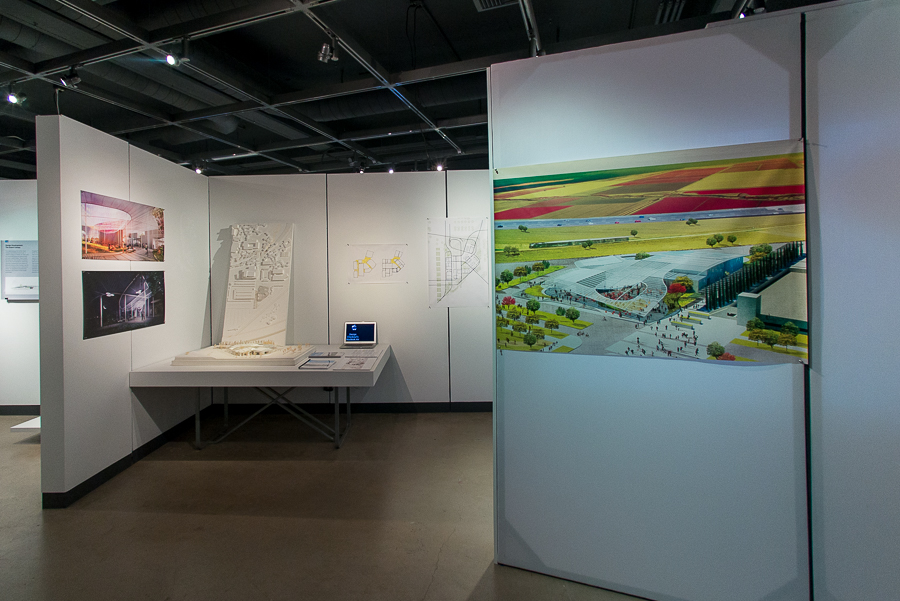
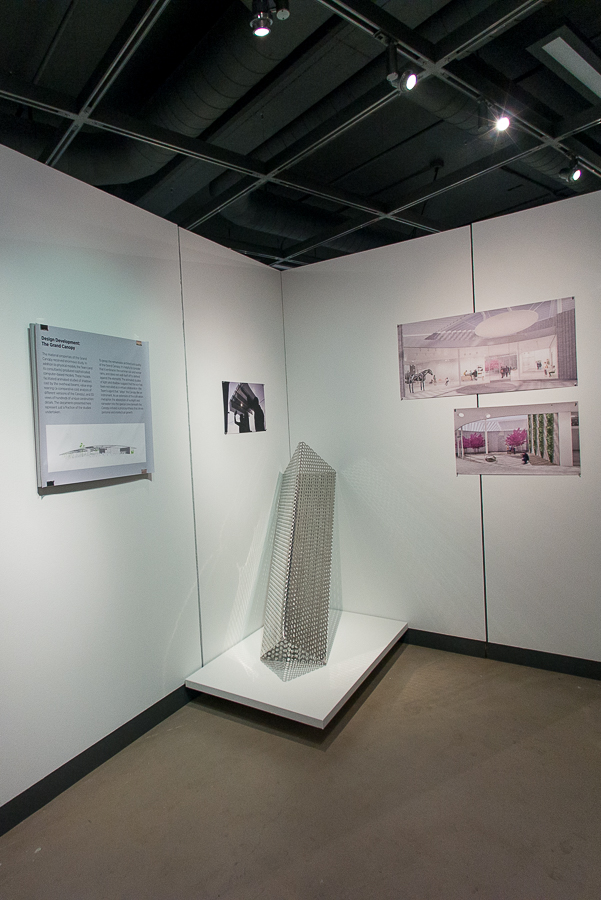
With the arrival of the Manetti Shrem Museum this past fall, the UC Davis Department of Design, in partnership with the Design Museum in Cruess Hall, organized an exhibition revealing its painstaking design process.

“Everyone was so cooperative and generous in lending us things that are very beautiful and a little fragile,” said Mark Kessler, the Design Museum curator. “Although these materials will be sent back, I hope that the documentation of this exhibit serves as a long-term archive for this museum. Most of the buildings in UC Davis are like fortresses […] guarding against the elements. They’re precast concrete, very heavy and sometimes very ponderous.”

In contrast to other UC Davis buildings, the Manetti Shrem is more open to the atmosphere and the elements.

“This is the opposite of that. In this building, the grand canopy — which is a signature feature — embraces the summer sun and the winter rain,” Kessler said. “There’s really no wall or bounding facade that you have to penetrate to get into the building.”

The museum’s grand canopy also beautifully resembles UC Davis’ cultural values of friendliness, openness and growth, making it a work of art that can resonate with faculty, students and alumni for years to come.

“The grand canopy was inspired by the Central Valley landscape,” Kessler said. “If you look up at it, you can kind of recognize this kind of quilt that is similar to the quilt of separate plots of agriculture land. This generated a kind of metaphor surrounding the idea of cultivation. Just like in agriculture you cultivate crops, on campus you cultivate young minds.”

Tim McNeil, a professor in the Department of Design and director of the Design Museum, wants students to know one thing about design: it is not just art.

“Most people interpret is as more of an artistic field, but it’s actually a really interesting mixture of the arts, sciences and social sciences,” McNeil said. “If you look at a lot of innovative products, design is what’s making them successful. Design isn’t just about making it look nice, but it’s also about making it work really well.”


Written by: Becky Lee arts@theaggie.org

Aggie Style Watch: Winter edition

BRIANA NGO / AGGIE
BRIANA NGO / AGGIE

Windbreakers, onesies and mismatched socks

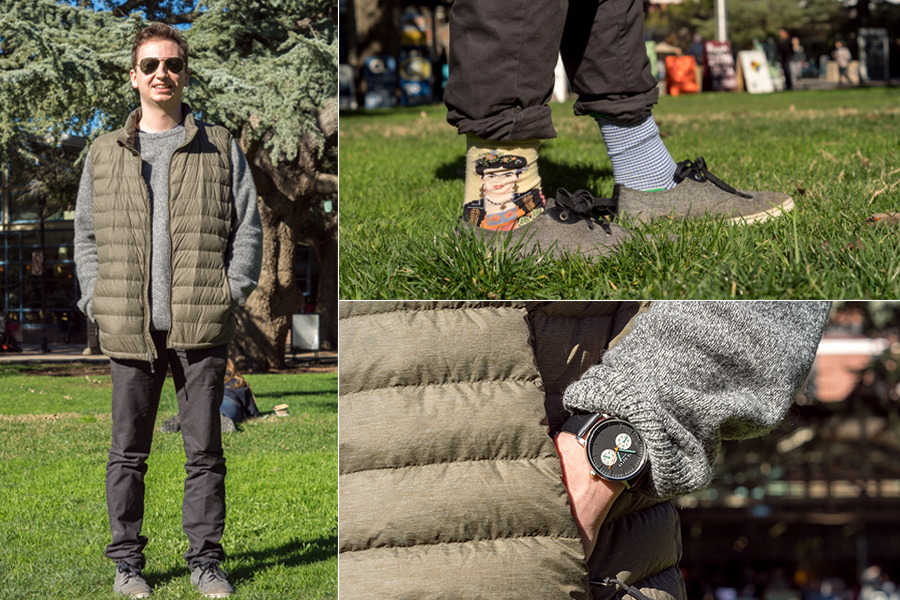
This week’s Aggie Style Watch focuses on Ryan Brady, who, from mismatching socks to bold onesies, is always full of fashion surprises. Brady, a third-year statistics major, knows how to survive the storm with layers, but admits he’s not as confident in the shoe department.


ASW: What is your style inspiration?

Brady: Honest answer: I just see magazines around, like H&M and Urban Outfitters and base my style on what I like. The main person I get my inspiration from is Russell Westbrook, and he is not stylish, but he’s really funny. When I go shopping, I see something that’s pretty cheap and looks nice so I get it. Or when I’m shopping online and I see a good-looking jacket online and just pray it will look good on me. Sometimes I look on Reddit for male fashion advice but not as much as I should. But my biggest inspiration comes from the actor Steven Anthony Lawrence.


ASW: Where did you buy everything you’re wearing?

Brady: The jacket is from Macy’s, watch Nordstrom Rack, shoes Nordstrom, the left sock from Sock City Sacramento, the right sock from Nordstrom, and both the sweater and jeans are from H&M.


How did this past storm affect your style?

Brady: It didn’t, I was just soaked and miserable. Half of my shoes were dripping, and I don’t have any boots, so I should probably get a pair.


ASW: Do you have any style advice?

Brady: It’s all in the sweater vest. You put on the vest, and you just look stylish. Just wear the basics, it will always make you look better than everyone else.


ASW: What is your go-to outfit?

Brady: A windbreaker, a t-shirt or a sweater vest when it’s colder, nice pair of jeans or a onesie if we get weird.


Written by: CaraJoy Kleinrock — arts@theaggie.org

The dangerous return of nationalism

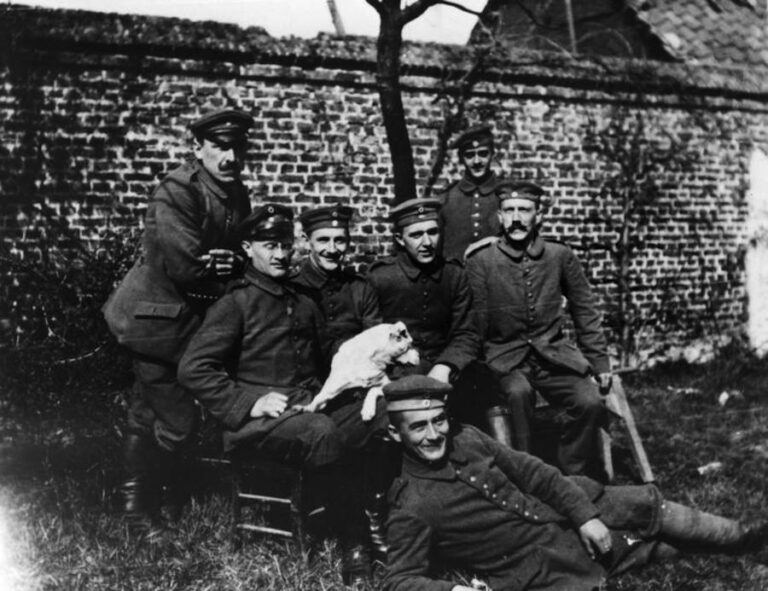
BUNDESARCHIV, BILD 146-1974-082-44 [CC-BY-SA 3.0] / CREATIVE COMMONS
headshot_SMAn uptick in right-wing movements bodes ill across the globe
The rise and fall of nations is inevitable — it’s a cycle that has gone on for centuries. The Middle East was the center of scientific discovery and other literary pursuits, but now its very name is considered synonymous with chaos and terrorism. Greece, one of the oldest civilizations in the world, suffers from chronic bankruptcy and a corrupt government. Empires and civilizations have risen, only to fall to outside enemies, or crumble from within. Doesn’t it seem like the cycle has started again?

The start of World War I can be attributed to nationalism fueled by political propaganda and rulers who prioritized their own interests. It was nationalism, or the tendency to view your own country as superior to the rest, and to place your country’s interests first, that significantly helped European nations develop. Most modern European countries developed around a shared national identity. But that “national identity” often had the effect of dividing a country along racial, ethnic or linguistic lines.

Sound familiar? In 2016, we witnessed two major countries cast their votes — Britain in favor of leaving the EU, and the United States for Donald J. Trump. Both events were partially caused by a dislike or mistrust of people who may have represented some kind of “other.” Brexit was caused by a resentment building among the working classes who felt that their jobs were being taken away by immigrants and who felt threatened by the large numbers of immigrants fleeing from Syria. Terrorist attacks in France and Germany only added to their fears.

The US is a melting pot of diversity, with immigrants coming from all over the world in search of a better life. Voting for Trump effectively meant voting against LGBTQ rights, against women’s rights and against immigrants. Working-class white males, whose jobs have either been rendered obsolete by technology or have been outsourced to other countries where labor and manufacturing are cheaper, sought someone to blame and were ultimately pointed to easy targets: immigrants and women moving into male-dominated professions.

After World War I, participating nations suffered serious economic and social repercussions. The League of Nations was formed to maintain peace and the losing countries, especially Germany, were penalized heavily. However, they failed to prevent leaders like Hitler and Mussolini from rising to power and paving the way to World War II. Today, we wonder how the public could have elected someone as horrible as Hitler. But the crux of the matter is that he promised jobs and wages amid economic trouble. He positioned himself as a strong alternative to the corrupt governments that had come into power after the war.

We can see history repeating itself today. The Arab Spring of 2011 was the common man’s rebellion against a dictatorship in Egypt. But the government was replaced by right-wing fundamentalists. In 2014, India voted overwhelmingly for Modi and his party — the right-wing BJP — which has close ties to Hindu nationalistic organizations. It was a bold move against the secular but corrupt Indian National Congress party which had held the office almost uninterrupted since India’s independence in 1947. The Philippines voted for Duterte, a president known for being brash, violent and very different from his predecessors. The integration of immigrants from Syria into European society has fostered widespread resentment among members of the working and middle classes there. Right-wing fundamentalist parties in Germany and Italy have grown as a result. As ISIS continues to wreak havoc in Syria, it seems that religious and right-wing radicals are increasingly taking hold of our world.

For those of us who believe in progressive mindsets and globalization, the world seems to be moving backwards. Perhaps, we will see our way through these conflicts, and when we come out on the other side, the tables may be turned for the most powerful nations. Or maybe, for the first time, we could learn from history and stand together in unity to ensure that our progressive empires don’t crumble.


Written by: Shohini Maitra — samaitra@ucdavis.edu

Humor: Winter storm manifestation of student body’s sadness

DANIEL TAK / AGGIE
DANIEL TAK / AGGIE

headshot_blStudents react to recent revelations that their mood has a dramatic impact on the weather

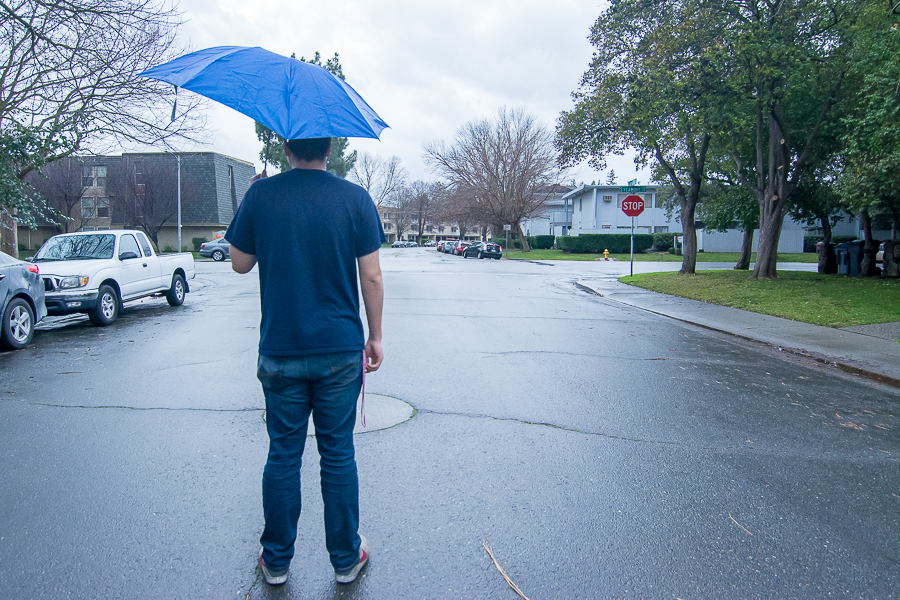
It’s agreed upon by most students at UC Davis that Winter Quarter tends to be the worst. The gloomy, rainy days tend to put a damper on students going to and from class under cloudy skies. This year is no exception.

It turns out that the long storm, which has plagued the beginning of Winter Quarter 2017, was actually caused by the pessimism of all the students returning from winter break, according to an email sent out by the six-sided Interim Chancellor, Ralph J. Hexagon. The California Aggie asked students how they reacted to this revelation.

“I’m honestly not surprised,” said Tina Nebraska, a second-year psychology major and erotic lamp saleswoman. “If I were the sky, I would probably be crying too. These are sad times we’re living in. The buses are always crowded, the CoHo is constantly packed with people trying to get out of the rain and I can’t find my son.”

Other students shared in Nebraska’s troubles.

“I wasn’t surprised at all when I found out,” said Tim McGraw, a first-year graduate student in civil engineering and author of way too much Harry Potter fanfiction. “Although I was a little surprised to learn that it’s not Linda Katehi who controls the weather. I mean that would make sense. It’s been raining a lot, and if anybody can make it rain it’s Katehi with her paid leave. Also, has anybody seen my son?”

One student reacted much differently to the news.

“I was actually really surprised to hear that people feel sad during Winter Quarter,” said Tanya Smash, a fourth-year human development major and woodchip impersonator. “I love the rain. I love rolling around in the mud on the quad. I love pretending that I’m a horse that loves being rained on. I usually do these things with son, but I actually haven’t seen him in a while. Now that I think about it — where the hell is my son?” Smash said before galloping away abruptly.

One can only hope that the weather eventually gets better and improves the mood of the student body. Also, it would be great if the interviewees could locate their sons.


Written by: Brian Landry — bjlandry@ucdavis.edu

Looking into Kerr Hall

0
LUCY KNOWLES / AGGIE

Building provides budding history, questions for students

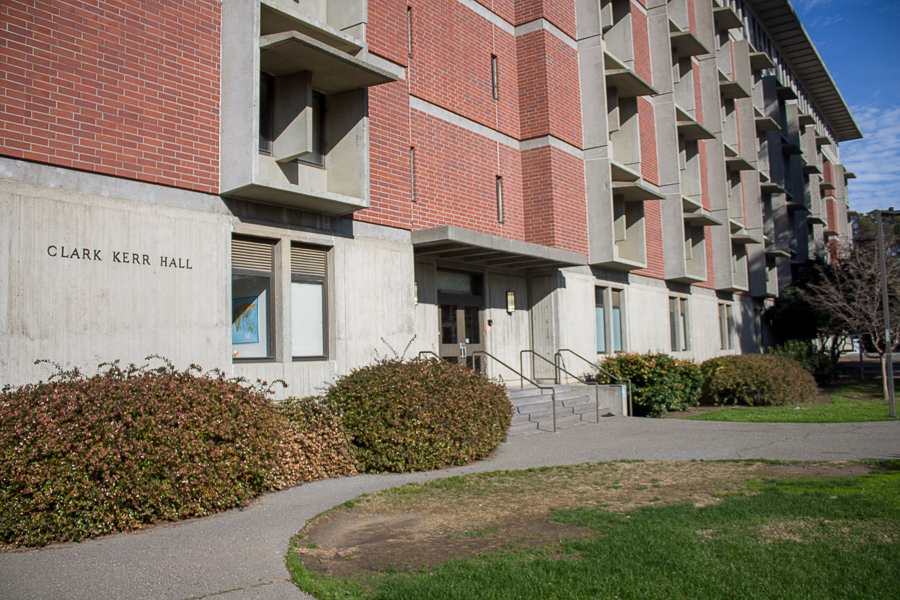
Buildings such as The Death Star and Olson Hall stand out on the UC Davis campus because of their unique structures. Although other buildings are not as well-known, they still pose a great significance to UC Davis. Near the academic hub that is Wellman Hall, Kerr Hall is defined by the red bricks that line up its six stories. It’s one of the tallest buildings on campus, and the interior of each floor is painted a different color.

“Kerr Hall and Wellman, which [are] from the same sort of wave of buildings are just very functional utilitarian buildings,” said Laramie Taylor, associate professor in the Department of Communications. “They were designed to meet specific needs for the university.”

Kerr Hall formerly housed both the Mathematics and Statistics Departments. When the departments were moved, Kerr Hall was abandoned for about a year, until it was restored in 2007. Now, Kerr Hall houses the Linguistics, Political Science and Communication Departments  on different floors of the building.

“I think it’s really valuable that we’re getting multiple departments from the division of social sciences closer together,” Taylor said. “Before Kerr Hall, we were just all over campus. It’s hard to maintain a sense of identity if you’ve never seen the people with whom you share that identity.”

The Department of Political Science resides in the top three floors of Kerr Hall. Due to competition for getting a top-most office, the department actually auctioned off the offices on the top floor around 2008. If a faculty member wanted an office on the top floor, it would cost them about $1,000 more.

“It is a terrific view because there’s nothing else obstructing it — there’s no other buildings getting in your way,” Taylor said.

Zoey Liu, a teaching assistant and graduate student in linguistics, also has an office in Kerr Hall. According to Liu, there is a “secret” tunnel on the first floor of Kerr Hall that lets out at the bottom floor of Wellman Hall.

“I’ve never walked down it […but] I’ve seen it,” Liu said. “Last Fall Quarter a lot of my friends took the shortcut to class and it would save [about] 30 seconds.”

In 1975, Kerr Hall was dedicated to Clark Kerr. After receiving his Ph.D. from UC Berkeley, Clark Kerr returned to Berkeley as the head of the Institute of Industrial Relations. In 1949, the UC Regents had employees sign an anti-communist loyalty oath. Clark Kerr signed the oath himself, but also fought to retain the faculty that didn’t sign. This won him regard from the faculty and helped Kerr make his way to becoming UC Berkeley’s first chancellor in 1952.

In 1958, Kerr became the 12th president of the UC, and oversaw the creation of three UC campuses during his presidency: UC Irvine, UC San Diego and UC Santa Cruz. Now, UC Davis, UC Santa Barbara and UC Santa Cruz have buildings named after him.

Some students may know next-to-nothing about Kerr Hall, despite it being named after an important figure in the UC’s history. The Special Collections at UC Davis houses the University Archives and information about the campus buildings. About three or four times a year, Special Collections puts on exhibits from their collection about the history of the Davis campus.

“We’re interested in gathering and building history, and it’s a good place to start for doing research on building history,” said head of special collections Daryl Morrison.

According to Taylor, UC Davis students and faculty share a very pragmatic approach to education and learning in the college experience. This may be the reason that many students and faculty alike are not aware of the relevance of the buildings they’re in.

“Our students are hard workers, and they are engaged, and they’re community-minded, but they’re here to get [an] education,” Taylor said. “There’s not a lot of sentimentality, superstition or whatever it is that makes every student at Harvard touch the statue of John Harvard on the foot when they walk […] to their first class — it’s just not here.”

Over three years ago, Taylor saw that someone had placed a bike reflector on the frame of the portrait of Clark Kerr in Kerr Hall. Rather than taking it off, Taylor chose to wait and see how long it would be until someone noticed and removed it. After a whole three and half years, the reflector was finally removed.

“This reflector didn’t look like it belonged, but nobody both looked at it and cared enough to move it,” Taylor said. “I don’t know if that’s entirely a bad thing. […] We’re a world-class university, but in many ways but we’re just a really well-kept secret.”


Written by: Fatima Siddiqui — features@theaggie.org

Yolo County Farm Bureau to honor Local Winery

GENESIA TING / AGGIE

Farmer advocacy organization will honor Heringer Estates Family Vineyards and Winery at 103rd annual meeting

When it comes to dealing with the challenges of farming and agriculture, Yolo County farmers are not alone. The Yolo County Farm Bureau — a local farmer advocacy organization — provides political representation to Yolo County farmers. Gretchen Schauer, a UC Davis alumnus and the executive assistant at the Yolo County Farm Bureau, said that the organization supports farmers in any way it can.

“We are a nonprofit, non-government affiliated organization, and we represent Yolo county farmers however they need us to represent them,” Schauer said. “So, for example, if they see a need for road repair, something like that, we try to influence the county to help out with that. If there’s something going on locally that politically disagrees with farmers, or maybe farmers want changed, then Yolo County Farm Bureau will step in and try to help with that as well.”         

In addition to providing farmers with political representation, the Yolo County Farm Bureau works closely with the Yolo County Farm Bureau Education Corporation to provide farmers with grower education and employee safety programs.

Jessica Reiter, a UC Davis political science graduate, sees the Farm Bureau as a valuable asset for local farmers.

“People are quick to talk down special interest groups, but not all special interest groups are big money bad guys,” Reiter said. “Yolo County Farm Bureau is a good example of how specialty groups within communities need someone to stand up for them in government.”

The Farm Bureau holds a general meeting every year and encourages all farmers to attend. This year it will hold its 103rd annual meeting at the Yolo County Fairgrounds on Jan. 19.  The theme of the meeting is “adapting to thrive.” The Farm Bureau will honor Heringer Estates Family Vineyards and Winery, a local winery in Clarksburg. Schauer said Heringer Estates is a great example of this year’s theme.

“A small committee decided that the theme of this annual meeting would be ‘adapting to thrive,’ which seems to be the theme of agriculture nowadays,” Schauer said. “They thought that Heringer Estates is a good example of how agriculturalists have had to adapt to thrive, especially recently. Heringer Estates has been around for 140 years, which is remarkable.”

Heringer Estates has been owned by the Heringer family, which includes several graduates of UC Davis, for six generations. In the past, the family has grown field and road crops. It was not until the 1970s that they began to grow grapes, and not until the early 2000s that the farm established a winery. Steve Heringer III said he enjoys the social aspect of winemaking.

“One of the nice things about the grape and wine industry, as opposed to anything else we have ever done, is everybody is interested in what we’re doing, how we’re doing it, how we’re making the wine,” Heringer said. “Wine is a very social agricultural product, and it opens up incredible opportunities to tell agricultural stories and our own personal story.”

The story of Heringer Estates is one of constant change and adaptation. The 140-year history of the farm has not been without its challenges — the decades have brought years of excessive rain, years of drought, market changes, industry changes and periods of high interest rates during the 1980s, to name a few. Heringer said that adaptation has been the key to the farm’s longevity.

“Just the ability to adapt to the situation, whether it’s weather, whether it’s finances, whether it’s crops, or whether it’s family,” Heringer said. “The ability to adapt to meet the challenges […] persistence, resiliency, a ‘never-say-die’ attitude.”

With regard to the honors that the family will receive at the Farm Bureau meeting, Heringer said the family is humbled.

“We are very, very humbled by the honor, and I will tell you, in my mind, we’re not doing anything that any other farmer doesn’t do if he’s going to survive, and that’s adapt to whatever the current situation or markets are,” Heringer said.


Written by: Raul Castellanos Jr. — city@theaggie.org

Napolitano to reinforce tentative plans to expand UC Davis into Sacramento

DANIEL TAK / AGGIE
DANIEL TAK / AGGIE

Former plans paused in light of Katehi’s resignation

Prior to her resignation as UC Davis chancellor, Linda P.B. Katehi laid out tentative plans to extend UC Davis into Sacramento. The plans were brought to a halt during the chancellor search process.

In 2014, Katehi had begun plans to integrate UC Davis into Sacramento and add campus buildings in the downtown Sacramento area. The expansion plans had failed to receive significant traction, and no physical drawings had been produced for the intended infrastructure. Katehi also lacked faculty support for the proposition, and the plans failed to be presented to the UC Board of Regents. Following Katehi’s resignation, the plans were ultimately dropped.

However, University of California (UC) President Janet Napolitano announced on Jan. 4 that she would like the next chancellor to continue to pursue extending UC Davis into Sacramento in order to bring additional jobs and commerce to the area, and also to provide space to accommodate a growing campus.

I think there is a real opportunity to bring Davis over the highway, so to speak, and to do more in this general economic area of California,” Napolitano said in an interview with The Sacramento Bee. “What I am looking for in a chancellor is someone that has the capability of doing that.”

Proposed aspects of the extension include housing a World Food Center in the downtown railyard area. The center would be a satellite campus to attract top educators in food safety, agricultural policy and nutrition. The site would also include a medical center to focus on food-related illnesses such as diabetes and obesity. Additional plans included creating a political center similar to the UC Washington Center in D.C. for students to live, study and intern in the state Capitol.

“We will create the world’s preeminent center where scholars, policy experts, government officials, media and others come for research, guidance and direction on all food related issues as they pertain to our planet,” Katehi said at a presentation to the UC Regents in July 2013.

City officials also support the idea, noting that the standing railyard building could house a year-round farmer’s market, and the initiative could open up “America’s Farm to Fork Capital” to more agricultural and food related businesses.

Napolitano met with Sacramento mayor Darrell Steinberg in June following his election to discuss the possibility of UC Davis having a larger presence in the Sacramento area. Steinberg was receptive to the idea.

“We want to invite the university to come across the causeway, because whether it’s food policy research, entrepreneurship around food and agriculture, whether it’s literally bringing some of their graduate programs across the causeway to Sacramento, I think we can be of great benefit to the university and we need the university,” Steinberg said in an interview with The Sacramento Bee.

Katehi declined The California Aggie’s request for comment.


Written by: Lindsay Floyd — campus@theaggie.org

Former chancellor turns down feminist leadership role at UC Davis

JAY GELVEZON / AGGIE FILE

Feminist Research Institute nominates Linda Katehi for director position amid criticism

Linda P.B. Katehi, the former UC Davis chancellor, turned down a nomination this past December for a position to lead the UC Davis Feminist Research Institute (FRI).

“As I wrote to the Board of the Institute in my resignation letter, while I was honored by the nomination, I could not accept it due to the projects and related travel that I have committed myself to,” Katehi said in a Facebook message. “This year I am on a sabbatical leave, the first one in my 32 years as a faculty member (usually faculty go on a sabbatical leave for a year every seven years) and I am spending this time working with the National Academies in Washington DC on two separate reports and with the Association for the Advancement of Science also in DC as the President of their Engineering Section. In addition to these activities, I am working to develop a National Think Tank that will focus on Women’s Issues.”

The nomination, put forth by the institute’s board of directors, requested that Katehi be chosen as the new director for the FRI. Since then, many members of the UC Davis community have taken issue with the consideration of Katehi, who last August resigned after criticism of her decision to accept seats on the boards of private education companies and her spending of funds to remove negative publicity after the 2011 pepper spray incident.

Sarah Shemery, a fourth-year gender sexuality and women’s studies major and deputy director of the Office of Advocacy and Student Representation (OASR), said that, while Katehi’s work concerning women in STEM was admirable, her subsequent scandals were hard to ignore.

“People definitely try to argue that she’s done so much for women in STEM, and I’m sure she has,” Shemery said. “It’s important for women and femme-identified individuals to be in those spaces because those are spaces where you really don’t see a presence of people like that. At the same [time] it doesn’t cancel out, one, the pepper spraying incident. She should have been fired immediately after that. That doesn’t cancel out the unethical board positions. And that doesn’t cancel out any of Linda’s decisions that were inherently corrupt but ignored by everyone.”

The FRI was established in 2015 and focuses on how gender, sexuality, race and other social structures influence the research process, according to their website.

The institute’s mission statements says that the “FRI will generate transformative, paradigm-shifting linkages across disciplines by bringing feminist ethics and methodologies to bear on the basic sciences, social sciences, humanities, health sciences, engineering, law, economics and agriculture and environmental science.”

In an interview with the Davis Enterprise, Katehi noted that she had not known about the nomination until after it had been submitted. While she is supportive of the institute, she told the Davis Enterprise that she is “working on a think tank for women on a national level.”

Shaitaj Dhaliwal, a third-year international relations major and ASUCD senator, believes that feminism should be an inclusive movement.

“Katehi was a strong advocate for women’s needs and resources, particular for STEM fields,” said Dhaliwal in an e-mail interview. “She was successful considering UC Davis was most recently named the best university for women in STEM. However, being a leader on campus and advocating for women’s equality and respect, while simultaneously engaging in false practices as chancellor, sets us further back.”
Dhaliwal said that women of color and transgender individuals deserve an equal level of advocacy and that there is more work to be done to make feminism inclusive for all women.

Since the beginning of the 2016-17 school year, Katehi has continued to receive her chancellor’s salary of $424,360. Next year she will return to the university as an engineering professor.

“The topics of feminism in education and research and feminist research are important and require discussion and constructive debate,” Katehi said. “My views on these issues, informed by my education in engineering and my experience as a female engineer, faculty member and university administration, are broad and inclusive and are demanding the presence of an intellectual space which is progressive and innovative; progressive as defined by its ability to recognize systemic problems, and innovative as defined by its willingness to accept creative ideas and adopt unique methodologies from a broad spectrum of possible solutions.”

Meanwhile, Shemery stressed the need for intersectionality in feminism on campus.

“[A goal] that is inclusive, absolutely,” Shemery said. “One that kind of goes beyond […] white feminism and that really gives a platform to people of identities that really need it, people […] that are more marginalized and are more vulnerable on this campus. Those voices need to be heard, and yet they’re not.”

For Dhaliwal, her hope for women in education includes a need for encouragement and equal treatment.

“Women need to be empowered at a young age to pursue certain fields that are male-dominated,” Dhaliwal said. “Women should then go on to earn an equal pay and have equal job prospects as men. We cannot expect women to pursue fields that they won’t be respected in.”


Written by: Ivan Valenzuela — campus@theaggie.org

WWPA Coach of the Year: Daniel Leyson

0
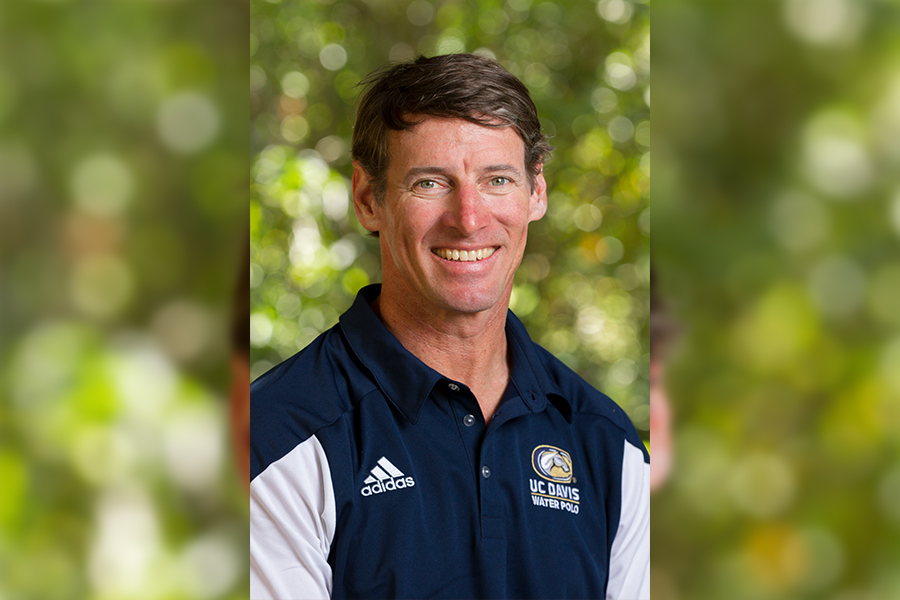
UC DAVIS ATHLETICS / COURTESY

UC Davis men’s water polo head coach Daniel Leyson receives 2016 WWPA Men’s Coach of the Year award

During winter break, while many UC Davis students were relaxing for the holidays and catching up on their favorite Netflix shows, Daniel Leyson, the UC Davis men’s water polo head coach, was selected as the 2016 Western Water Polo Association [WWPA] Men’s Coach of the Year, decided by his conference peers.

This is the first time that Leyson has received this honor, after leading the men’s water polo team to 23 overall wins last season — a school record — a WWPA championship and receiving the team’s first NCAA postseason selection in 19 years.  

The WWPA Coach of the Year Award has only gone to a UC Davis coach three previous times in the 36 years that the WWPA has been functioning.

It is no secret that the UC Davis men’s water polo team had great success this year under Leyson, having an undefeated 6-0 conference record to earn the first seed in the WWPA Championships. The team later defeated three-time defending champion UC San Diego in the final. However, the Aggies fell in the NCAA play-in game, losing to Harvard 16-15 in overtime.

Nonetheless, the team’s overall winning percentage of .793, 12.6 goals per game average and number 10 final ranking by the NCAA are school benchmarks. Along with Leyson’s award, sophomore attacker Ido Goldschmidt received WWPA Player of the Year honors, and junior goalkeeper Spencer Creed was named the most valuable player of the WWPA Tournament.

The California Aggie had the chance to sit down with Leyson and ask him about his playing days, his transition into coaching and the feeling of receiving this award.


How did you first get into playing water polo? Was it an interest you found on your own or did you decide to try from the advice of someone else?

It’s really serendipitous because I happened to grow up in an area of Orange County that the high school that I was eventually going to go to had a great water polo program with an outstanding coach. It was a stroke of luck, I always loved sports and my mom didn’t want me to play football, and it so happens that I took to [water polo] right away.


What, in your opinion, was the best part about playing the sport in all of your years of experience as a player?

I like the sport a lot. I like everything about it from the physical contact aspect because I am a competitive person. I also liked the grind. I know there were some days where you knew that it was going to be a miserable practice but I liked going to the pool everyday and I think that was important.


When did you first realize that coaching was something you wanted to pursue?

I think inevitably I was going to get into coaching. Coaching is teaching, and both of my parents are teachers so I think that I have that character of wanting to teach. I retired at the age of 28 and lived in Barcelona, came back to the U.S., and was wondering what to do. I was able to be a volunteer assistant at USC and from there I kept going. I was extremely lucky.


Did the way you were coached as a player have any effect on your coaching style? If so, in what way?

One million percent yes. I am a collection of all the different people that have coached me over time in different levels and styles of play. I have taken information from these people and it has had a huge impact on me. My high school coach was an outstanding teacher of the fundamental skills of the game and he dedicated to his life to his players. I needed to find out who I was a little bit because I didn’t want to be someone that I’m not.


Do you try to keep the same coaching style year after year, or try to adjust and change it up based on the team you have?

I think there are certain things that are always constant, but tactically and technically I think that things are going to change based on players and personalities as well. I believe that certain things work no matter who the generation is, so certain things remain constant, but I am aware of trying to stay fresh in my coaching style by being involved.


What was the feeling when you saw that you were awarded the WWPA Coach of the Year Award?

It is a good feeling. I felt like I knew I was going to get the award once we won conference, but it is nice to receive awards of recognition like this from your peers. It is a team thing and what has allowed for the success of the program is the commitment of the players, so, it is a team thing.


Written by: Ryan Bugsch sports@theaggie.org

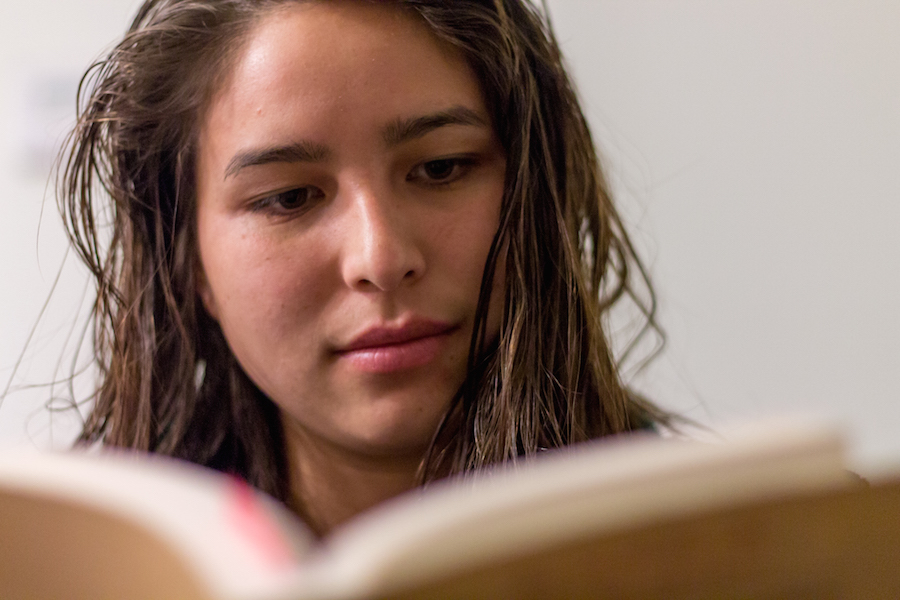
A window into observing brain activity during reading

LUCY KNOWLES / AGGIE

Neuroscientists combine eye-tracking methods, magnetic resonance imaging to analyze how the brain reads texts

The brain: an organ consisting of about 75 percent water and powered by sugar. The right and left hemispheres constantly communicate, allowing the human body to perform the simplest of tasks. New advancements in brain analysis bring to light neural pathways involved in human learning and understanding.

Neuroscientists have created a new observational method to study brain activity while reading texts according to a study published by UC Davis psychology professor John Henderson and colleagues in the Journal of Neuroscience.

“The purpose of the study was to find how meaning is represented in the brain, across words phrases and contexts,” said Rutvik Desai, associate professor of psychology at the University of South Carolina and co-author of the published study.

Potential long-term applications of this research could help with understanding dyslexia as well as other reading and learning disabilities.

Previous brain activity could only be recorded from subjects looking a a single phrase or sentence. Data gained from those studies were valid, but may not be an accurate portrayal of how the brain functions during natural reading.

“This new method [of utilizing many words at a time] allows us to study the brain while in context. It allows us to confirm or modify previous results,” Desai said.

People do not read just one word or a phrase at a time, but instead read complete texts such as a newspaper or magazine article. A combination of eye-tracking technology and functional magnetic resonance imaging (fMRI) was used to analyze how the brain reads longer texts.

“Eye tracking provides a rich record of what visual information the brain is selecting to process at any given time,” said Taylor Hayes, postdoctoral scholar at the UC Davis Center for Mind and Brain.

The eye tracking device, called the EyeLink 1000 Plus keeps track of which words subjects are attending to when reading.

“The EyeLink […] consists of a high-resolution camera which samples the eye image 1000 times per second (1000 Hz), and a near-infrared panel that is directed toward the eye to produce a visible reflection in the cornea called a corneal reflection,” Hayes said.

The fMRI technology measures and maps brain activity by detecting changes associated with the blood oxygenation and flow. Using only fMRI technology was problematic because it was too slow to keep up with subjects reading when more words were involved.

However, when fMRI is combined with eye-tracking technology, researchers are able to know which words subjects are looking at during any given time and see the brain activity associated with it.

“[This new] technique called fixation-related fMRI co-registers fixations with fMRI activity during scene perception and reading,” Hayes said.

Additional uses for eye-tracking technology includes research in cognitive domains such as visual search and development, as well as decision-making.

“It’s an exciting time because we have the technology and methods to study and analyze the brain,” Desai said.

Natural reading involves a variety of processes including in orthographic, visually recalling how to write words, phonological, where auditory detection of a word occurs and semantic, where processing a word happens after we hear and encode a word.

More processes are associated with natural reading such as attention and working memory. Gathering information on this subject has the potential for benefits in advancing human health.

Analyzing the brain activity behind reading and language in natural conditions remains an important but largely unexplored area.

“The knowledge that we gain from our research may help study what happens in the brain for people with Alzheimer’s or Dementia, and potentially create novel therapies,” Desai said.

In the long-term, this study has the possibility of benefitting children, helping them to absorb and learn information in the most effective way in order to succeed in school.

Neuroscience has made enormous progress in understanding one of the most complex living structures in the known universe: the human brain.

“We seek the nature of our minds. There are as many differences between minds as there are similarities. What is very interesting is the machinery of the brain and how it functions,” said Kenneth Britten, professor in the Neurobiology, Physiology and Behavior Department.

Despite advances, scientists still have yet to discover the full extent of what the brain can do.

“The bigger picture of neuroscience and our research is how the brain and mind works,” Desai said. “It is fundamentally important to all humans, across any gender or race or additional categories.”


Written by: Shivani Kamal – science@theaggie.org

Modern love

HUAN YU / UC DAVIS
HUAN YU / UC DAVIS

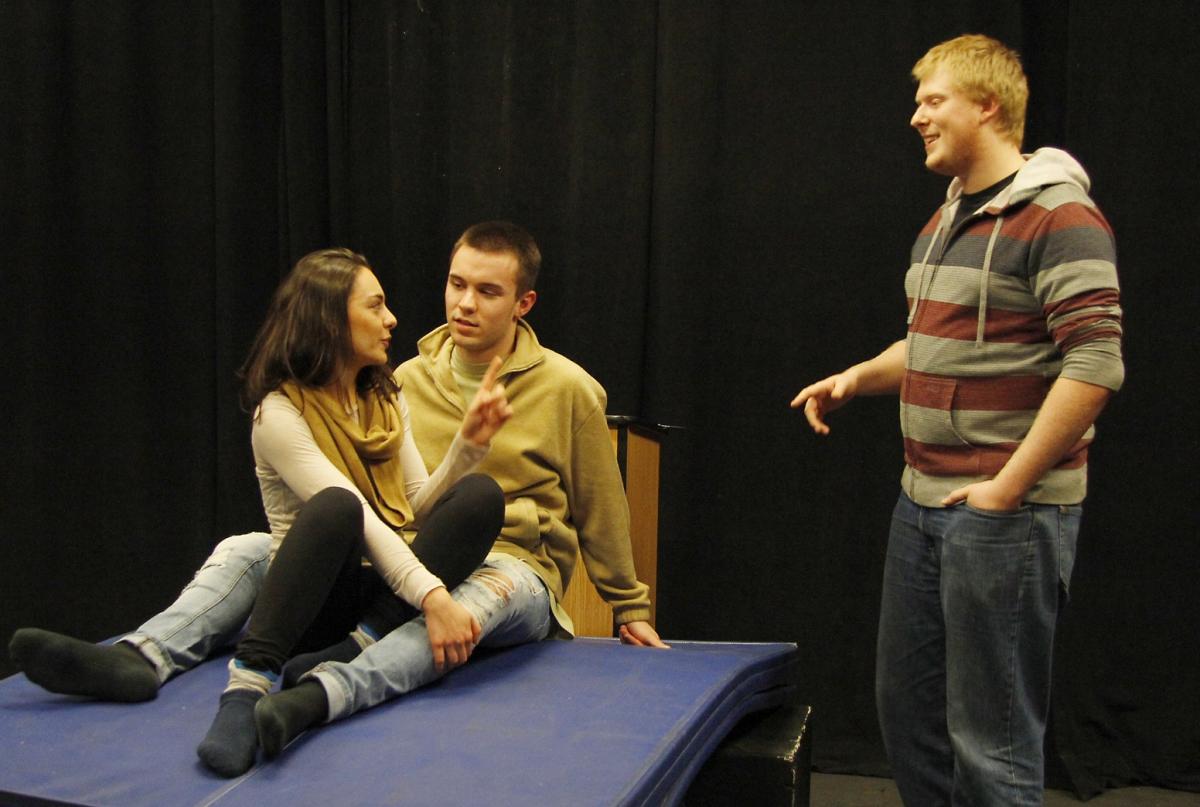
“The Shape of Things” explores representations of love

Love stories in plays can often verge on the melodramatic; it seems we all know the type — conflicting emotions personified in a climatic screaming match and an emotional reconciliation at the conclusion.

The Shape of Things, a contemporary play written by Neil LaBute coming to the UC Davis Theater Department, however, is a more accurate representation of modern love.

“It’s a relatable play with human interactions and social situations and moral dilemmas,” said Taylor Church, a third-year theater and dance major who plays the co-lead role of Adam. “It’s super relatable.”

Similarly, according to Melissa Cunha, a fifth-year dramatic arts and film studies double major, who plays the other lead role of Evelyn, the show is unique in that the UC Davis Theater Department rarely does “normal productions that involve similar situations that students go through.”

Even more relatable to the student body, The Shape of Things is the second performance in the Theater Department’s Second Season, which started this year. Productions in Second Season are entirely student-acted and student-produced.

“With Second Season, everything is really a learning basis,” said Gregory Holmes, director and fourth-year theater and dance major. “A lot of us have worked on shows but have never been in a head or leading position, so we don’t usually have this much creative control.”

Having a more active and leading role in putting on a production has been a learning experience for Holmes.

“This is my first experience directing, since I’m usually an actor,” Holmes said. “I learned about directing by watching other directors and reading a lot of books, but also by just doing it. I learned from a lot of mistakes. Communication is a big thing I had to learn […] as a director, you are involved with both sides of production — you have to also talk to the people in charge of costumes, the [public relations] and the production manager, to name a few. I also had to learn how to find boundaries when talking to the actors, since a lot of them are my friends and peers.”

Despite navigating a new dynamic as director, Holmes was discerning when choosing the actors of the four-person cast.

“[Neil LaBute’s] writing isn’t very sugar coated,” Holmes said. “The play is about changing in a relationship and how it affects people around them and how love makes you do anything, whether that is love for a person or a passion. I was looking for actors who could be casual and pull it off. A lot of the scenes are intimate with just two people on stage. It’s nothing like Shakespeare where there are people dying from sword battles — it’s a lot of moments of intimacy and honest moments of confrontation that don’t involve fist fights. These are moments of real relationship problems and I needed actors who could understand and recreate that.”

The complicated role of Adam needed an especially talented actor, according to Holmes.

“I see this play about a young man [Adam] who gets a little bit over his head when it comes to love,” Holmes said. “When someone is searching for something too long, and once they have it, they go a little too overboard. I think too much love can be dangerous.”

However, for Church, getting the part of Adam was out of the norm of characters he usually plays.

“I usually get roles that require me to be more of the ‘asshole’ type of character,” Church said. “My character in The Shape of Things is way different — he is this introverted and dorky guy, so it has been interesting trying to tune out all of my other experiences. I went into auditions thinking I would get the asshole role because [Holmes] knows that that’s what I usually do and can do it well. He wanted to challenge me to act outside of my usual range; he said he thought it would be good for me as an actor, and he thought that i had the skills to do it.”

Cunha experienced a similar adaptation in order to play her character Evelyn, even with some similarities between herself and the character

“I haven’t really done a contemporary play like this one before, where I play someone that is actually my age and is an artsy girl like myself, but Evelyn’s personality is completely different than me, though,” Cunha said. “She is a Pisces and I’m a Taurus. She would do anything for art and I would do anything for the people I care about. But […] I think that was one of the difficult things about portraying this role, is that Evelyn is my age and in a similar time period, and I can relate to her in so many physical ways, but it has been a lot harder to find things in common with her or ways to relate or justify her actions.”

Another difficulty has been the breaks from rehearsal due to winter holidays, as the cast was able to rehearse together during week 10 of Fall Quarter and then only a few times all together during winter break. Week one of Winter Quarter has been the first time since the end of Fall Quarter that all the cast has been together.

“For a lot of the time over break it was me, Melissa and Gregory when we were rehearsing,” Church said. “It was hard not having the whole cast here because we couldn’t string everything together. It’s only been a full week since we’ve had the full cast back together. It’s been a little rough because we’re getting back in the groove of things and we’re about to start tech rehearsal.”

Despite any temporary hitches in rehearsal, the dedication of the actors and the quality of the performances are expected to make a strong show.

“The actors are doing fantastic, especially the leads bringing life into these characters,” Holmes said. “They are both nervous about performing, and I’m a little nervous too about directing for the first time, but we’re so excited about performing.”

The Shape of Things will begin showing Jan. 19 in Wright Hall, and tickets can be purchased on the production’s website.


Written by: Caroline Rutten — arts@theaggie.org