55.7 F
Davis

Davis, California

Monday, December 22, 2025
Home Blog Page 676

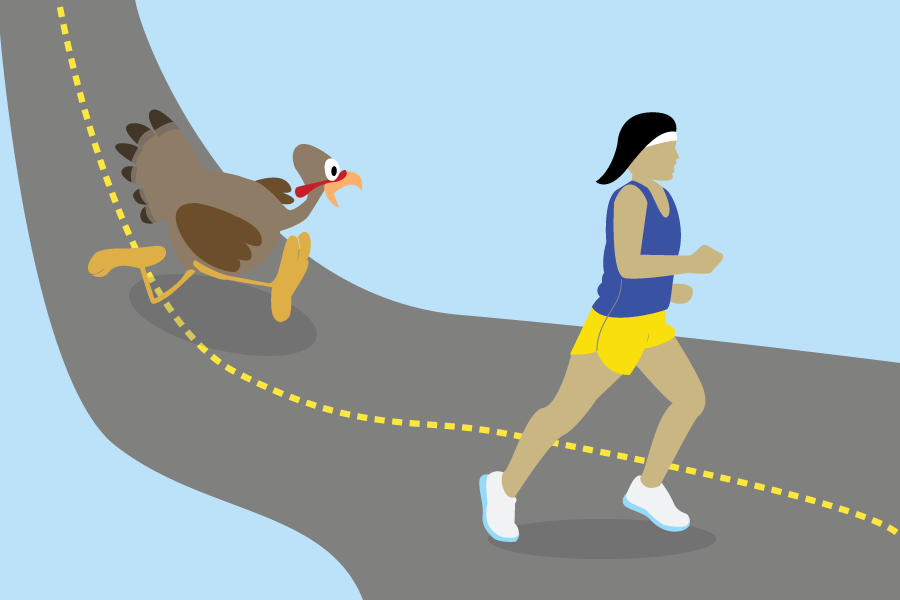
Davis Turkey Trot: more than just another race

NICKI PADAR / AGGIE
NICKI PADAR / AGGIE

Participants gathered for 5k, 10k, half marathon races

Five, four, three, two, one… Go!

Those were the words that sent off just over 1,750 runners in the 29th annual Davis Turkey Trot on Nov. 19. The chilly and rainy weather didn’t stop these determined athletes from running their hearts out. Hosted by A Change of Pace Foundation, race events included a 5k, 10k, half marathon and kids’ fun runs.

Many who have run in similar events know the kind of atmosphere community races provide; they tend to offer another reason to run besides the competition alone. Some run the event for fun while others seek a challenge. Amber King, fourth-year managerial economics major, knows just what that feels like.

“I decided to run the Turkey Trot because my co-workers at FIT House Davis were sponsoring it,” King said. “Even though I didn’t put in much time training, I knew it was my last chance to run it again before I graduate.”

Regardless of why people chose to run, it’s clear that this Davis tradition is more than just another race: it’s a way to bring people of all backgrounds together to promote well-being and a sense of community. According to Dave Miramontes, race director and executive director of A Change of Pace, the encouraging environment of the event has increased attendance and attracts people from nearly 250 cities.

“Over the years, when we first started this, it was a very highly competitive event,” Miramontes said in an interview with KCRA Sacramento. “After about five, six, or seven years into it, we decided it was going to be more of a family tradition, a family style race. So our numbers boosted […] It is a pretty popular event for both competitive runners, for people who are just starting their running careers, and for various reasons, and for the middle of the packers.”

1st place results for the 5k, 10k, and half marathon are as follows:

5k: Adam Cobert, 15:57.123

10k: Clancy Mcconnell, 32:55.770

½: Reed Scott, 1:19:55.217

A Change of Pace organizes numerous running events throughout the year in Davis and Sacramento. The next event, the Davis Stampede, will take place in February.

For more information on the Turkey Trot results and future races, visit its website.

Written by: Andie Joldersma — city@theaggie.org
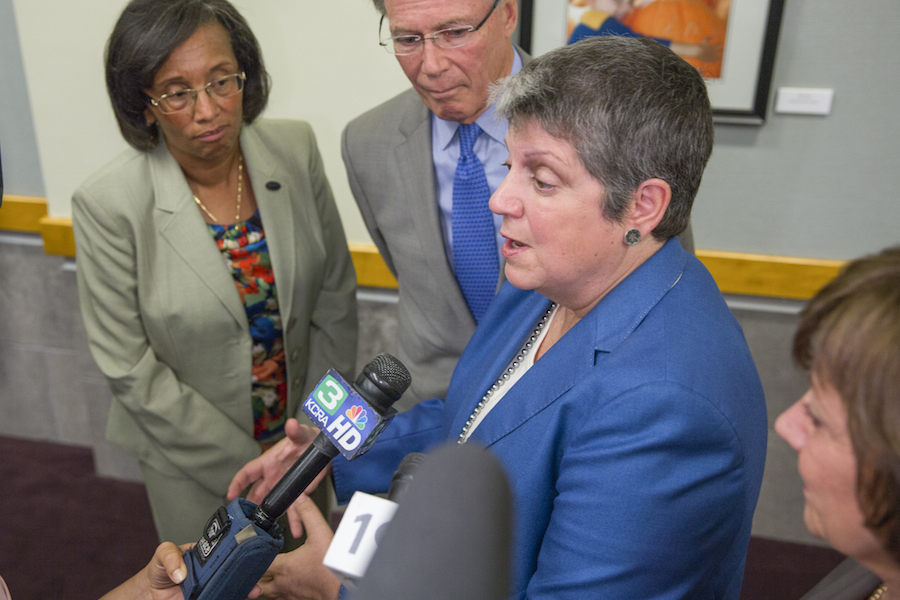
UC Board of Regents meeting to discuss current issues within the UC system

ROBERT DURRELL / UC DAVIS FILE PHOTO

UC Regents members review possible tuition increase, sexual harassment

On Nov. 16 and 17, UC Regents met at the San Francisco Mission Bay Conference Center to discuss pressing issues with regard to faculty, students and staff.

On Nov. 16, UC Santa Cruz and UC Berkeley students from Fossil Free UC, a UC systemwide, student-led organization, asked the regents to divest from fossil fuels. Students from UC Berkeley presented a letter to the board of regents which was signed by more than 650 faculty members from across the UC system, urging members to take action against the use of fossil fuels like other universities have.

“By choosing not to lead with us, Regent Sherman, you are spreading a diseased lie about the impact of the oil industry, on the climate and on people,” said Sam Weinstein, a UC Santa Cruz student. “This issue is not going away, and we are not going away.”

Students stated this topic was especially relevant in light of Donald Trump winning the presidential election, as he has denied climate change and global warming and also appointed a climate change skeptic to direct the Environmental Protection Agency.

Jasmine Marshall Armstrong, a doctoral candidate at UC Merced, also addressed the presidential election and the impact it had on students the night Donald Trump was won the presidency.

Armstrong stated that many members of the UC system, especially LGBT+ students, students of color and undocumented students are fearful of hate crimes and deliberate violence. Armstrong herself received a death threat from a white nationalist due to her support of minority groups.

“We all need to feel safe, valued and protected,” Armstrong said. “I ask you to live up to our motto of ‘let there be light.’ Let California be the light in this moment of darkness.”

The UC Board of Regents also addressed and approved a policy change requiring board members to comply with ethical conduct and sexual harassment policy in private as well as public life. This policy change comes after controversial issues pertaining to sexual harassment, including an incident in which Regent Norman Pattiz asked a female colleague if he could touch her breasts during the public airing of a recording, as well as an incident in which Pattiz was accused of saying to a female “If I wasn’t married I’d be chasing you down the hallway.”

The new policy will require regents to complete sexual harassment prevention training.

Pattiz, who sits on the Governance and Compensation Committee and was present at the meeting, said he had already begun the mandated sexual harassment training.

The board voted on reducing the number of standing committees from 10 to six and will also allow committee meetings to be held concurrently. Committee chair Regent Russell Gould stated these changes would allow each committee to be more engaged and effective during meetings.

The six renamed and standing committees are Academic and Student Affairs, Compliance and Audit, Finance and Capital Strategies, Governance and Compensation, Health Services and Public Engagement and Development.

The regents also discussed potential tuition increases.

UC chief financial officer Nathan Brostrom pointed out the existing gap between the $7 billion received from UC tuition and state funding and the $30 billion operational budget. Brostrom proposed an increase in tuition of about $300. He addressed the system’s preliminary 2017 to 2018 budget, which included growth of undergraduate and graduate student enrollment, resulting in mandatory cost increases.

“There was discussion of potential tuition increases, but we don’t know at this point in time,” said Regent Hadi Makarechian.

Makarechian presented a report by the Finance and Capital Strategies Committee explaining that further consideration of tuition hikes would occur in January.

The regents approved a three year financial sustainability plan, which includes cost-saving alternative revenues.

This discussion lead to protests on the second day of meetings, where more than 50 students protested tuition hikes outside the conference center, marching around the driveway and insisting that the regents not only freeze tuition but also to roll back existing fees.

Students moved into the meeting room and spoke over regents numerous times in the ensuing discussion. Vice Chair Bonnie Reiss gave several warnings, threatening police intervention if there were continued disruptions. Students entered at 10:30 a.m., and left the meeting room and continued to protest outside by 1 p.m.

The meeting adjourned around 3 p.m. on Nov. 17.

Written by: Demi Caceres  — campus@theaggie.org

Fall Quarter ASUCD voter turnout faces steady decline

VENOOS MOSHAYEDI / AGGIE FILE

Results show lowest turnout in four years

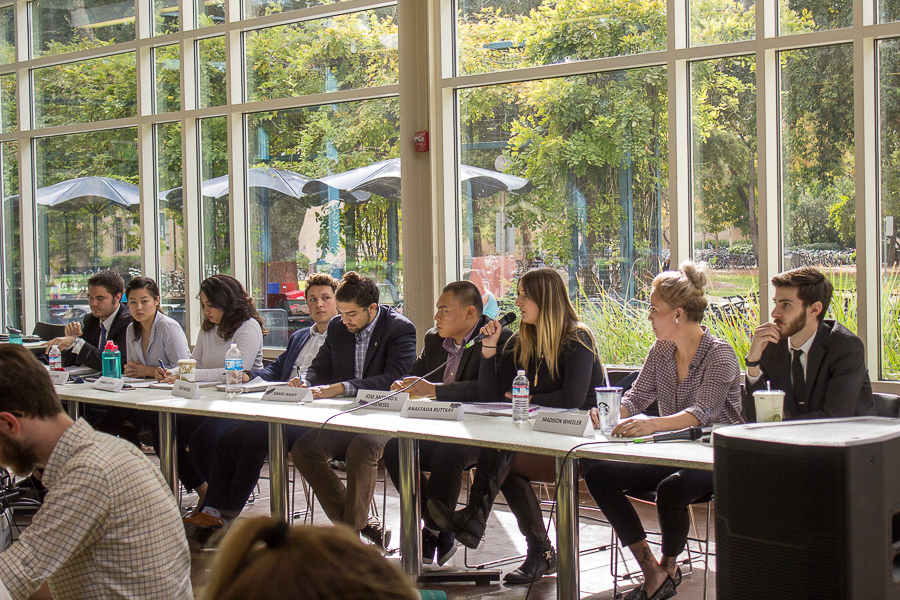
Over the past few years, the number of students voting in the Fall Quarter ASUCD elections has steadily decreased. 2,287 ballots were cast during the recent fall 2016 election, which coincided with the 2016 presidential election. While the past few Winter Quarter elections have ranged from 730 to 4,441 votes, recent Fall Quarter elections have not seen an increase. Out of an undergraduate population of 28,324 students, less than eight percent of students voted in the Fall Quarter 2016 election.

ASUCD holds two elections every year: one in Fall Quarter and one in Winter Quarter. Six senators are elected during each, and the ASUCD president and vice president also run for office during Winter Quarter. Students can also vote on ballot measures, which are amendments to the ASUCD Constitution or Bylaws.

Fall Quarter elections tend to have lower voter turnouts than Winter Quarter elections.

“The best explanation I can give is a combination of official elections marketing […] and the candidates campaigning themselves,” said current ASUCD President Alex Lee.

While an elections committee or party can ask students to do their civic duty and vote, much like in a general election, Lee said that candidates and their campaigns ultimately drive voter turnout.

“Voter turnout is primarily driven by the candidates,” Lee said. “We have declining voter turnout in the nation, too.”

ASUCD Election Committee Chair Sevan Nahabedian agreed with Lee’s concerns regarding voter turnout.

“Voter turnout is highest when we have more candidates running,” Nahabedian said in an e-mail interview. “Candidates and slates inform their communities about elections and students participate because the benefits of voting are clear my friend, colleague, brother or sister [or] teammate will be elected.”

While marketing for ASUCD happens year-round, candidates are officially given five weeks to declare candidacy but can begin campaigning unofficially at their discretion. Anastasia Ruttkay, a fourth-year international relations major, recorded the second highest number of votes to win her Senate seat during the fall 2016 election. Ruttkay found it was best to campaign under the BASED slate and use both social media and personal connections to form relationships with students.

“It’s extremely important to campaign in person,” Ruttkay said in e-mail interview. “This not only helps establish credibility, but it allows you to engage with the students you will be serving.”

Both Ruttkay and Lee agreed that making a campaign personal drives voter incentive. Lee, a veteran of ASUCD campaigns, stressed the importance of a candidate’s campaign and marketing.

“In my four years at ASUCD, the level of campaigning has decreased,” Lee said. “The less people you engage, the less voters you have.”

Ruttkay noted that the reach of ASUCD needs to be extended.

“Most students did not know about ASUCD or the voting process,” Ruttkay said. “I had to walk a lot of students through the responsibilities of an ASUCD Senator and how to vote online.”

Ruttkay believes that students will not vote if they share no interest in the election, do not know how to vote or if no candidate represents their interests.

According to Nahabedian, students may simply be unaware of the role of senators on campus. ASUCD controls a budget of over $11.8 million, and operates many units including Unitrans, The Pantry, Tipsy Taxi and Entertainment Council. The senate also approves the budget at the end of every academic year and oversees the development of ASUCD policies.

“I think it is a real problem if the average student does not know that they have elected leaders who [should] represent the entire student body,” Nahabedian said.

ASUCD voter turnout was likely impacted by the 2016 United States presidential election as well. Lee predicted that voter turnout would increase with the presidential elections, but was proven wrong.

“Election day was the first day of voting for ASUCD elections which caused a lot of students’ attention to be drawn from ASUCD elections and go to the national election,” Nahabedian said.

According to Ruttkay, senate candidates did not campaign as hard out of respect for the community after the presidential election, as many students were angered or upset by its results.

“I personally feel like the presidential election took away from ASUCD elections because candidates, like myself and my colleagues in BASED, did not feel [that] campaigning post-election day was appropriate to our campus climate,” Ruttkay said.

ASUCD’s marketing for elections was also affected by the presidential election.

“We were planning to do an Instagram challenge to bolster our marketing efforts but chose against doing so because of the mood on campus following the national election,” Nahabedian said.

ASUCD hopes to increase voter turnout in the future through a combination of institutional efforts as well as increased engagement by the candidates.

“There definitely needs to be more institutional knowledge about voting and what they’re voting for, […] once people understand that, it helps,” Lee said. “But that is a harder route than, ‘My friend is running, please vote for them’.”  

Written by: Jayashri Padmanabhan — campus@theaggie.org

Talking Sports With Aggie Talk

0
BECCA RIDGE / AGGIE
BECCA RIDGE / AGGIE

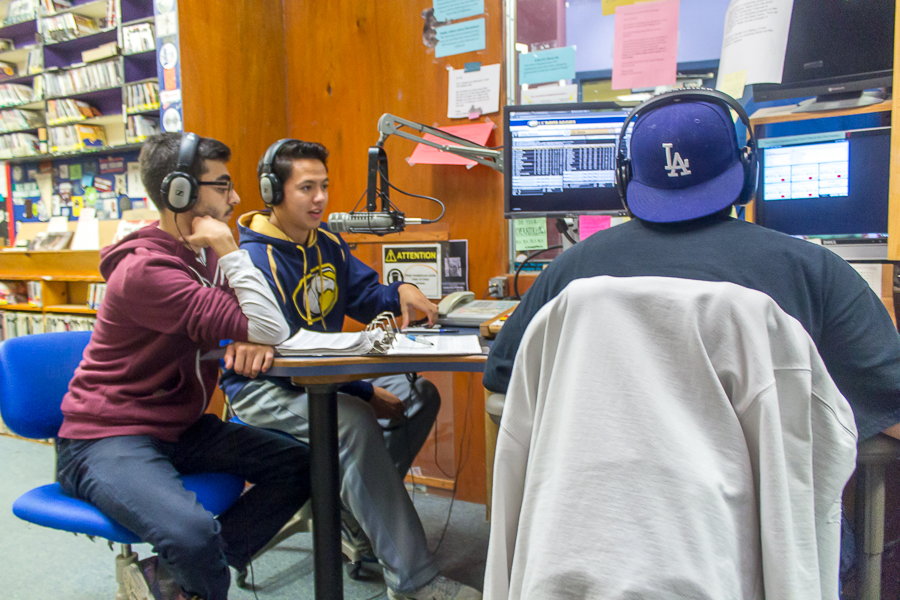
Every Tuesday night, UC Davis gets the opportunity to discuss the week in sports at KDVS’ “Aggie Talk”

Sports talk radio is a staple for sports fans across the country. It provides an avenue where fans of all different sports can talk about the teams, players and events that they are most passionate about. On “Aggie Talk,” UC Davis gets its own place in the sports talk world. For over three decades, KDVS has been covering sports, but in his second year as sports director, Andy Clausen wanted to make sure that he brought athletics to the forefront. Many radio veterans, such as Andy Reichwald of “Sunday Night Baseball” and Miami Marlins play-by-play announcer Rich Waltz, have lended their voices to KDVS in the past, but Clausen hopes to make its reach go even further.

“I think I brought the sports department back into the fold,” Clausen said. “We want student broadcasters to sound as professional as possible.”

With “Aggie Talk,” students and sports fans of the Davis area have a show where they can discuss not only the UC Davis Aggies, but professional sports from all over the country as well.

“It’s a place where people can gain a solid background in radio and sports while gaining a solid background in sports, while still putting out an entertaining product and putting out something that people want to listen to,” Clausen said.

“Aggie Talk,” which airs every Tuesday from 7 to 9 p.m aims to provide the people of Davis a place to talk about sports both local and national. While it may not have the budget — according to Clausen, the show itself draws no funding from the Athletic Department — or the reach of a commercial radio station. Clausen’s goal is to give both hosts and listeners a professional experience and won’t let the dated equipment or diminishing funding hold back his pursuit to put on a great show. The show, and station, rely greatly on two fundraisers, one every spring and fall, to stay on its feet.

“If you’ve ever been in our studio you can see that it’s really old,” Clausen said. “Literally one of our broadcasting boxes is held together by tape.”

This doesn’t keep the KDVS crew of mostly volunteers from putting out high quality content, and “Aggie Talk” is no different. The show’s format is simple and free-flowing. For the first half, the hosts typically cover Aggie sports. Volleyball, baseball, football, basketball — whatever sports are being played, they hope to cover it. Though “Aggie Talk” itself has no official connection to the Athletic Department itself, Clausen does his best to bring on guests from within athletics, and works hard to keep the program’s listeners informed; often drawing from the station’s work with the teams broadcasting the games.

“We don’t get told what to talk about,” Clausen said. “We’re very independent. We work with [the Athletic Department] in that they run the sports that we cover.”

For the second half of the show, the hosts of “Aggie Talk” move more toward the national sports scene, where they cover any headlines or stories which they feel the listener may want to hear. If something comes up that may warrant an increased conversation, the format may get switched up.

“Luckily our format is very loose,” Clausen said. “The host’s job is steer the conversation where he wants it to go.”

In a time where off the field issues may dominate the sports media, Clausen tries to avoid any issues which may be dominating the other media. If something comes up that warrants a greater discussion, it is up to the hosts and the guests to keep the discussion civil, as long as it fits the format of the show.

“We’re not trying to emulate other stations or channels,” Clausen said. “If it’s something we legitimately feel interest about, we’ll do it. It doesn’t always make for good radio, because we’re all probably going to get in a huge argument about it, [but] we try to do things that will make our listener want to pay attention.”

Aggie Talk can be heard every Tuesday night from 7 to 9 p.m. at KDVS 90.3 and online at KDVS.com.  Those with inquiries on the show, as well as the rest of the sports program can contact Andy Clausen at sports@kdvs.org.

Written by: Bradley Geiser — sports@theaggie.org

The UC Davis Botanical Conservatory

ANH-TRAM BUI / AGGIE

3,000+ plant species right under your nose

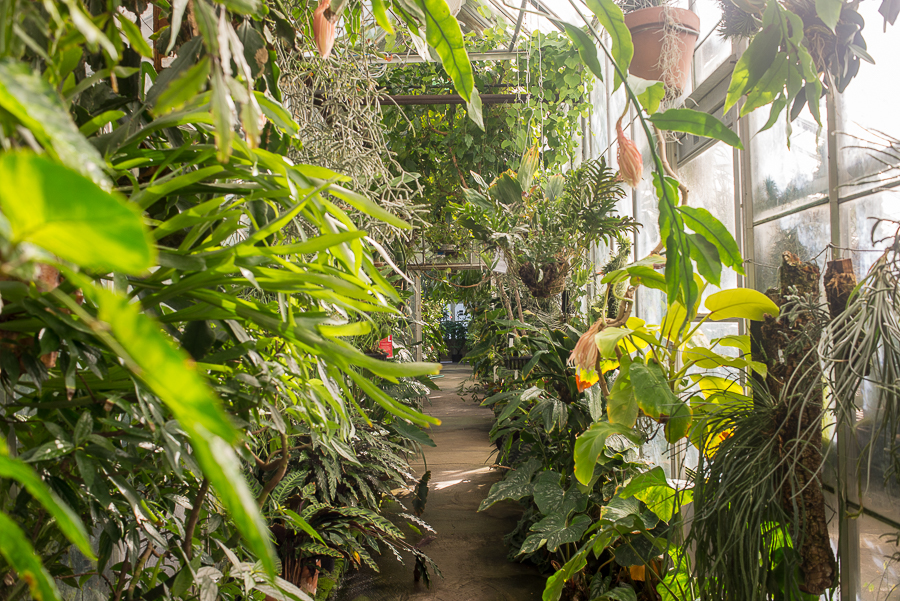
The UC Davis Botanical Conservatory can be seen glowing a hazy orange at night, in its location behind Storer Hall. Behind the glass, the greenhouses are filled floor to ceiling with greenery. Since it was founded in 1959, the conservatory has amassed a collection of more than 3,000 plant species both rare and common. The plants are used for everything from teaching in biology labs, to experimentation by researchers, to showing elementary school kids what plants have to offer.

Marlene Simon is the staff horticulturalist for the conservatory. Simon cares for the plants and conducts tours for elementary school classes, master gardeners and everyone in between. Simon said the conservatory got its collection to the size it is now because the exotic plants are mostly donations, and the main focus of the conservatory is not growing the collection, but maintaining it.

“We have over 3,000 different species, and we’re very limited on space, but we will never pass up a plant if we need it for teaching,” Simon said. “We are selective, we try to have plants or species that are pertinent to what students learn, but we also do have rare plants.”

Examples of rare plants that the conservatory houses are the corpse plant, the osa plant and a collection of cycads. While most of these rare specimens are out on display in the main greenhouse, the conservatory is not always vocal about certain plants that it houses.

“Some [rare plants] we don’t like to let people know we have,” Simon said, in reference to the need to protect some plants from collectors. “[We house them] mainly [for] preservation. When you’re talking about these plants, there are only a few out in nature and a few housed in botanical gardens. We are a living museum. We’re responsible for caring for the plants as their habitats are being destroyed.”

One of the rare plants that the conservatory is not shy about holding is the corpse plant (Titan arum), a flowering plant native to the large Indonesian island of Sumatra. When the corpse plant is in bloom, it has a vibrantly colored flower that can reach up to 3 meters in length, and smells like rotting flesh.

“Someone was able to collect [the corpse plant] out in the wild […] legally, and had been in contact with the conservatory,” Simon said. “[UC Davis] was one of the first places to have this plant grow.”

After growing their own corpse plant from the seeds they were sent, the conservatory staff was able to give offspring corpse plants to Sacramento State and UC Berkeley. The Conservatory of Flowers in San Francisco is also interested in renting Davis’ plant when it blooms, Simon said.

Not only are corpse plant seeds hard to come by, but the corpse plant is also extremely hard to get to flower in botanical gardens, requiring precise conditions and years of patience.

Because the conservatory has such a wide variety of plants, it is particularly important that each individual plant’s backstory, care-needs and scientific name be carefully kept track of.

Eva Bayon is a volunteer at the Botanical Conservatory, but previously held the position of assistant curator for almost 10 years. Now, Bayon is responsible for archiving the plants in the collection by inputting information like the plant species’ name and where it is normally found, as well as how the conservatory acquired the plant into a database which, once finished, will be hugely helpful for researchers.

“If someone is studying the genus aloe, from South Africa, [and] they want to know how many aloe [plants] we have at the conservatory, they can look online at the database, and they should know how many species we have,” Bayon said.

According to Bayon, although the conservatory is fairly small in size, it is incredibly impressive in terms of number of species housed.

“Other conservatories around the world, they have beautiful buildings,” Bayon said. “Maybe there are not as many different species, but they can put [them] in a way for exhibition so many people will come to see them. But here it’s more for a teaching experience. […] We have a lot more species than many conservatories around the world.”

In particular, Bayon mentioned the carnivorous plant collection, which is world renowned.

“[The carnivorous plant collection] is one of the biggest collections, if you count the number of different species. We’re one of the best in the country here,” Bayon said.

Many classes at the university take advantage of the conservatory as an educational resource on campus. As manager of the conservatory, Ernesto Sandoval helps to grow and water the plants and supervises the teaching aspect of the conservatory. While biology classes do heavily rely on the conservatory, STEM students are not the only ones who use the space.

“English classes come in sometimes [and are asked] to describe a plant. Even a couple of art classes [visit] every year,” Sandoval said. “Other classes include fiber and polymer science [and] plant-insect interactions classes that come to visit and use the conservatory for research and learning.”

While the conservatory hosts classes frequently, it is also open to the public from 9 a.m. to 5 p.m. on weekdays. Community members and students are encouraged to visit and learn about UC Davis’ wide array of plant life.

Written by: Meral Basit — science@theaggie.org

Knock knock. Who’s there? The UCD Stand-up Comedy Club

BRIANA NGO / AGGIE
BRIANA NGO / AGGIE

Club provides jokes, showcases to Davis community

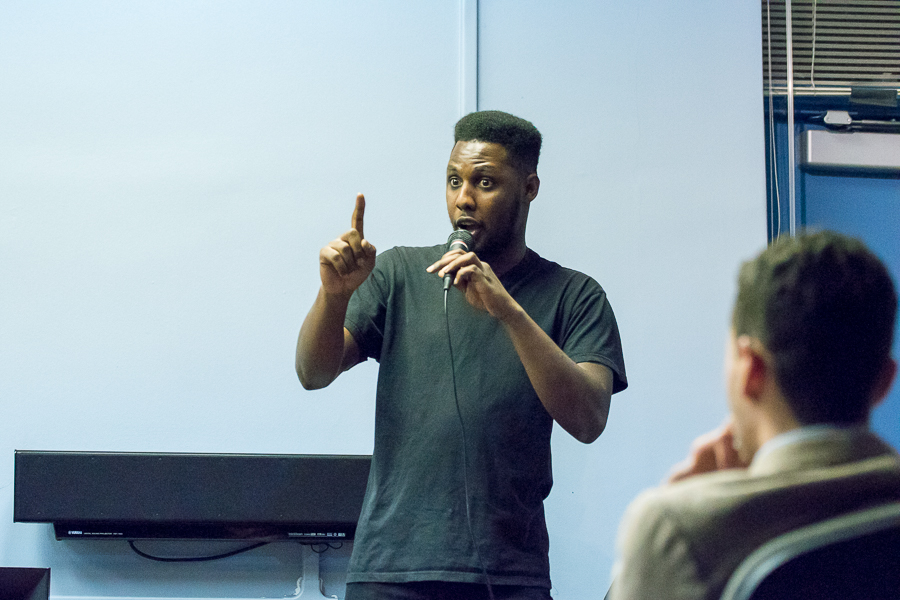
There are two necessities to surviving college: caffeine and jokes. While caffeine is easily accessed from the CoHo, good jokes can be a bit harder to come by. Fortunately, UCD Stand-up Comedy Club is here to provide the laughter.

“Our goal is to provide a raw, uncensored open-mic environment where anything goes, which we didn’t have access to anywhere else,” said Drew Hanson, a third-year managerial economics major and president and co-creator of UCD Stand-up Comedy Club.

The club started when Hanson and Ethan Victor (who also works as a humorist for The California Aggie), both first-years at the time, took a freshman seminar with Karma Waltonen (Dr. Karma, as her students call her), a professor in the UC Davis University Writing Program. The final for the class was to perform stand-up comedy. It was then that Hanson and Victor discovered their mutual interest in performing.

BRIANA NGO / AGGIE
BRIANA NGO / AGGIE

Victor, a fourth-year English major and the vice president of the club, still remembers the joy and fulfillment he felt after his debut performance for Waltonen’s final.

“My first [performance] was probably my favorite […] it’s a cool experience telling jokes in front of 200 people,” Victor said. “Although I don’t entirely remember it, because I was so afraid while I was performing. But it’s something that I hope can stick with me forever.”

Aside from bringing jokes to the Davis community, the club also hopes to create a welcoming platform where all thoughts and concerns can be openly discussed, especially in the wake of the U.S. election this year.

“It gives you a floor to talk and gives you a floor to give off messages. From there, you can decide how you want to portray and give off whatever it is you want to send,” Victor said, “So I think there are a lot of jokes we’re trying to make: there is something underlining. At least for myself, there is more than just trying to make people to laugh, but also trying to tell people something.”

During their weekly meetings, the club members are free to talk about any topic they please.

A lot of times I talk about my workplace, family or roommates, but it can range anywhere from Donald Trump to an event […] in class,” said Joey Warren, a club member and first-year undeclared student. “It is an open experience with no judgment and only help. Even if you bomb, they will help you make your jokes better.”

BRIANA NGO / AGGIE
BRIANA NGO / AGGIE

Though they hardly meet each other outside of club events, members form invaluable bonds with each other because of the personal communication and mutual understanding amongst the group.

The Stand-up Comedy Club had its first showcase in Spring Quarter 2016, in which each member performed for five to 10 minutes.

“[It] was an absolute blast […] with no one ‘bombing’ (nobody laughing at their jokes),” Hanson said.

For highlights from the performance, check out Hanson’s YouTube channel.

For more information about the Stand-up Comedy Club and upcoming showcases, check out their Facebook page.

Written by: Betty Wu arts@theaggie.org

Album Review: 24K Magic

GENESIA TING / AGGIE

Bruno Mars makes us reminisce on the 1990s school dances we never had

When thinking of the best way to describe Bruno Mars’ third album, the image of the quintessential 1990s geometric neon patterns and disco balls spinning overhead comes to mind.

After a four-year album hiatus, Mars returns with 24K Magic, which can only be described as a major ‘90s throwback. Think funkadelic R. Kelly. Mars has shown us hints of funky R&B potential in his previous album Unorthodox Jukebox, especially notable in my personal favorite song, “Treasure,” and he definitely plays this off to the max in the new release.

It’s tricky to play off an old, outdated and established genre and to make it something new and original. While his songs are undeniably catchy, they follow the ‘90s formula far too closely, which has restricted anything new and creative. Mars has sadly fallen into the curse of the genre’s past.

The album begins with its title song, “24K Magic,” setting the precedent for the rest of the album with electro-hyper keyboard notes, a catchy beat and simple, repetitive lyrics about a sick party and pretty girls. Autotune makes some appearances, as does Mars’ characteristically talented falsetto, which hasn’t changed since his last album. The song is reminiscent of “Uptown Funk” (sorry I had to bring up that overplayed song), but it seems obvious from the start that the album is just an extended version of his greatest hit.

“Versace on the Floor” is one of the slower tempo songs of the album. Again keeping with the genre customs, the high notes on the keyboard are accompanied by high “pop” sounding background beats found in ‘90s R&B. The slow songs of the album are seductive. His clean and smooth voice was made for songs like this, and illustrates the range of sounds Mars can execute.

My favorite song of the album is “Perm,” which is the most organic song. The back-and-forth between a new, rough version of Mars’ voice and the backup singers feels more playful and less forced than other songs. Horns and intricate percussion are more artfully incorporated, and it is the song that is closest to the coexistence between the old and new sound I was hoping for from Mars. It’s fun and super funky, and is my prediction for one of the more popular songs on the album.  

Let me say this: the album is not bad. The songs are catchy and it’s certainly a fun listen.

However, Mars had a rare opportunity to establish his own unique sound, and I am disappointed in his attempt. He previously gave us hints of what he could do but fell through. He is a talented artist and has a voice made for something more creative and funky in the modern age, but he resorted to just copying a past genre rather than being inspired by it. His attempt to try something original in the pop scene was simply not executed as well as it could have been — it came across as an unoriginal throwback.

But hey, the 1990s are popular with the kids these days, so I could see this album producing a couple chart-toppers. But for a more conscious music consumer, I simply have to take this album the way it is, and maybe lower my expectations for Mars.

I’ll wait for a redeeming album number four.

Written by: Caroline Rutten — arts@theaggie.org

Guest: Silence is violence: a call for student action

AMY HOANG / AGGIE
AMY HOANG / AGGIE

Trump’s election requires the active participation of students everywhere

Donald Trump became President-elect of the United States of America late in the evening of November 8, 2016. Within hours, students on college campuses across California joined others nationwide to voice their collective refusal to honor his vision of America. Many thought a Trump presidency would never happen. But now that it will, we need to recognize that we are not outnumbered; we are out-organized.

Only 120 million out of 231 million people eligible to vote actually did so in this election. A tradition of decades of deafening silence has culminated in this moment. Silence is violence and the violence needs to end now.

This isn’t politics as usual. From 1968 to 2004, presidents have on average fulfilled 67 percent of their campaign promises. Trump, with full executive power and conservative control of every other branch of government, also has much of a chance to fulfil his ideas. At this point, we should underestimate nothing about this man or his capabilities. If he gets his way, over 20 million people will lose health insurance, efforts to curb climate change will be virtually annihilated, the right to choose won’t be supported by our federal government, gun control will be significantly relaxed and criminal justice reform will be completely forgotten. Our cultural progress has already been dealt a devastating blow. Because our President-elect has admitted to sexually assaulting women and our Vice President-elect has supported conversion therapy, Muslim, Hispanic, Black and LGBTQIA people everywhere now live in a country where their leaders actively declare they don’t care about them — and the public follows their lead.

The time is now. Take your time to grieve and process, then be ready to finally stand up and speak out. Groups on campus are already mobilizing and we’re asking for your participation. We need to send a loud, clear, and strong message of unification, preparedness and protection. Students do not stand for this vision of America.

Our work is more critical than ever. We are mobilizing the student voice to preserve progress. We are invoking our rights to freedom of speech, press and assembly to protect our collective interest.

Students are leading a concerted objection to the cultural devolution this election has legitimized. This is a point-blank refusal to erase the rhetoric of the past year just because Trump is now “President-elect.” Normalizing this election is being complicit in the legitimization of all the problematic behavior he has encouraged.

This fight to preserve decades worth of progress and prohibit cultural downfall is intersectional. This call for mobilization is rooted in strong allyship. We acknowledge the people for whom a Trump presidency poses a disproportionate threat to themselves, their families and their communities. We are committed to protecting you. We stand together.  

Students are organizing to preserve progress, prevent cultural decay and protect communities for which this is personal and legitimate threat. Get on the right side of history. It is our responsibility to make sure Trump’s America does not become our America.

Katelyn Costa is a former California Aggie columnist.

Disclaimer: The views and opinions expressed by individual columnists belong to the columnists alone and do not necessarily indicate the views and opinions held by The California Aggie.

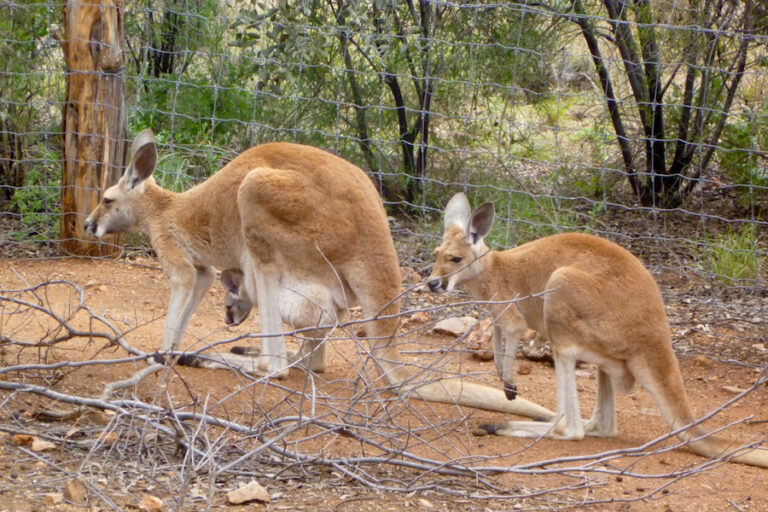
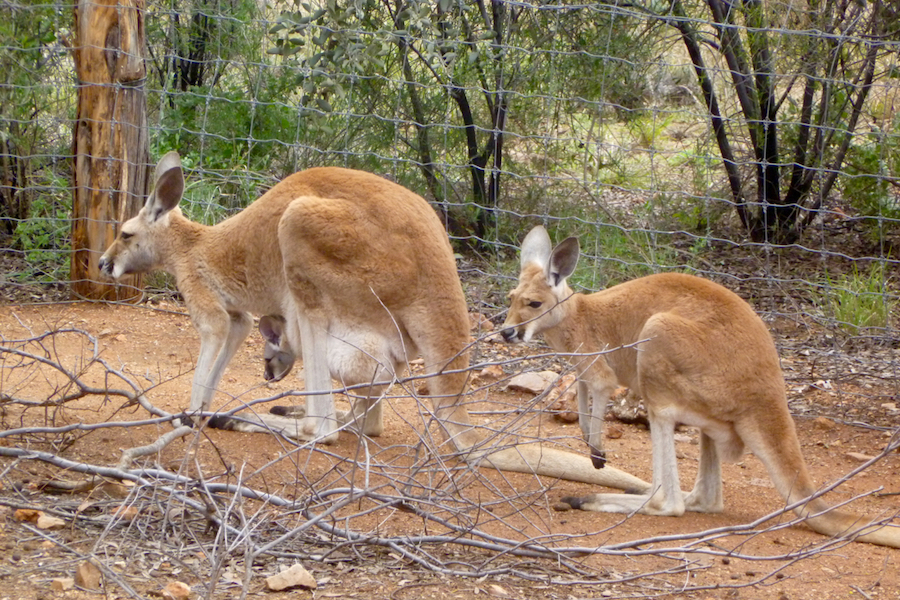
The vicious and careful critters of Australia

CAT TAYLOR / AGGIE
CAT TAYLOR / AGGIE

headshot_mcAppreciating animals helps us understand our place in nature

Australia is certainly a country known for its rather inhospitable environment. Whether it be huge spiders, creatures capable of killing you within the hour or the deathly dry, hot and vacant center of the country, Australia runs the gamut of unforgiving life forms and ecosystems.

However, the animals are far more than otherworldly creatures that hold humanity’s downfall as their primary objective. All of the creatures in Australia are only acting as they would back in California or anywhere else in the world: they are trying to survive.

Take the magpie. It’s a bird found in Australia known for swooping down on people and attacking them for entering their territory. There is even a website and articles detailing the horrifying event of having a black-and-white bird chasing you away from its territory. Why is the magpie so aggressive? Simply because it views anyone, people included, as a threat to their young, ever vulnerable in their nest home. Can we blame the magpie for its response? With global issues of deforestation, pollution in the ocean and the overall destruction of animals’ habitats and ecosystems, it seems that the only time we’re consciously aware of our outsized place in nature intrusion is when we’re being attacked by a frightening bird. Maybe it’s a wake-up call.

Spiders, which run around in droves in Australia, also happen to be quite venomous and deadly here. They’re small creatures — for the most part. But that doesn’t mean they’ll be amenable to being eaten by other, larger animals. And because of this their defense mechanisms, which for many species here include a powerful venom, make them a real danger to humans. That is, humans that provoke them. A spider really has no reason to bite or attack someone if they remain vigilant and aware in the outdoors and do all they can to make sure that they are not encroaching on the animal’s sense of space and the place they call home. Creating a culture in which humans respect the boundary between animals and themselves is key to protecting the environment.

That ethic of conservation is strong in the Taronga Zoo in Sydney, Australia. Most zoos go to great lengths to try and ensure that they are doing their best to rescue, protect and rehabilitate animals — along with educating the public on each of the critters — but I find that Australia takes the job much more seriously.

Australia is home to some animals that are unavailable anywhere else, like the platypus or the echidna, not to mention all the plants and types of birds that are exclusive to the continent. These beings are not capable of surviving in other locations because they have already adapted to a unique environment with a certain set of predators and prey. With these types of restrictions, Australia really is stuck with the challenge of ensuring that they are capable of protecting and preserving not only these wonderful animals, but also their homes. And that starts by creating a zoo curated to the particular challenges this continent and its animals face with the increasing specter of climate change.

It’s good to remember that while animals like spiders, snakes and birds can be dangerous, they attack, for the most part, only when threatened. Even more docile creatures like the echidna or the koala can get aggressive if put under great stress. But this certainly doesn’t mean that all of Australia’s famed wildlife is out to try and get us. At least that’s what I’ve been telling myself.

Written by: Michael Clogston — mlclogston@ucdavis.edu

Disclaimer: The views and opinions expressed by individual columnists belong to the columnists alone and do not necessarily indicate the views and opinions held by The California Aggie.

Adventuring away to find community

0
ALEXIS ALBERINI / COURTESY

Students bond over their love for escaping stress, embracing nature

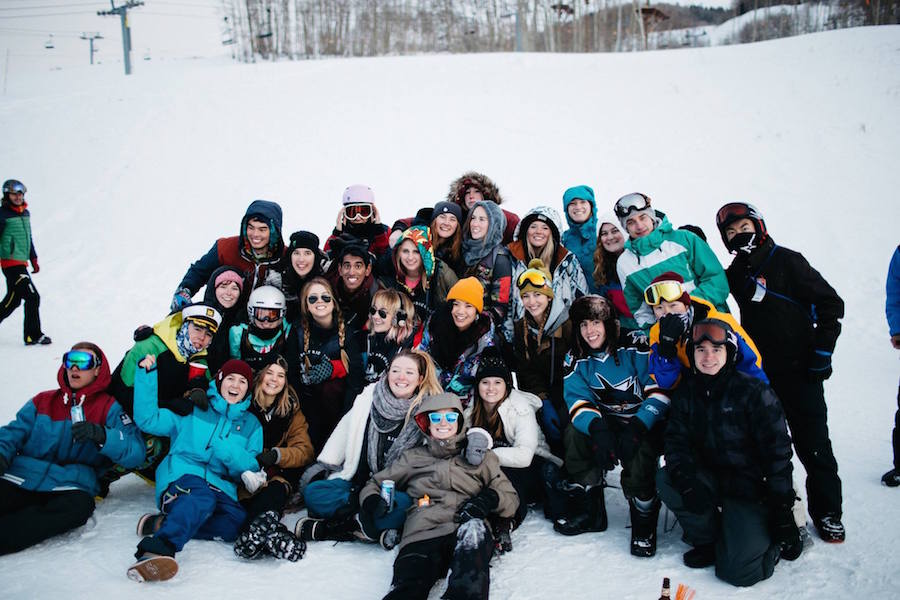
Mountain cabin trips and snow sports are things both UC Davis Outdoor Adventures (OA) and the Ski or Snowboard Club (SOS) look forward to in winter months. But for these outdoor enthusiasts, the significance of winter extends beyond spending a day on the slopes.

Ayla Lebovitz, a second-year psychology major and backpacking and rafting guide, has many years of extensive outdoor recreation experience. Two years ago, Lebovitz gravitated toward the club due to its dynamic community and because of her love of nature and adventurous sports.

“I like to describe OA as an outdoor program for the school, but it’s so much more than that because it’s a community if you choose to make it that,” Lebovitz said. “We go kayaking or rafting probably three to four times a week, but besides that we go out to pizza once a month, have homecomings and proms, as well as Thanksgiving dinner together.”

Both students and non-students alike can join the program, and each person can decide how involved they are depending on personal preferences. Lebovitz values the tight-knit community of OA so much that she lives with eight OA members and is constantly absorbed in the excitement of the outdoor community and in planning the next adventure.

“We bond by doing a lot of adventurous things together, but we also have the other events on a daily basis that create this really fun, epic community within itself,” Lebovitz said.

Classic OA trips are backpacking in Point Reyes and Yosemite throughout Fall Quarter, a spring break trip to the Grand Canyon, sea kayaking, snowshoeing or cross country skiing in Tahoe and rafting in the American River.

“It’s really awesome to be able to leave Davis, and it’s so helpful to remove yourself from school and just get away,” Lebovitz said. “The memories and the friends you make are for life, and it’s really nice to have an outlet from school and be in such a surreal state of mind.”

SOS is a campus-affiliated social club that takes mountain cabin trips during the winter and is open to anyone who wants to join. Skiers and snowboarders of all levels are welcome, and the club encourages people who do not do either to go on the trips to learn how. Despite each member’s winter sport preference, the social environment and love for getting outside is common for all 500 SOS members.

SOS has a core leadership staff of 20 people who are constantly spending time together, whether that be going on small weekend trips or just cooking dinner together. Abbo Nathan, a second-year evolution, ecology and biodiversity major and secretary of SOS, had never seen snow before college, but is now a passionate staff member and winter sport enthusiast.

According to Nathan, pulling off a 40 to 60 person cabin trip is a great feeling of accomplishment.

“We spend so much time together, so we are bound to get to know everyone [on staff] really well,” Nathan said. “However, there is a lot of problem-solving that goes into planning the trips that just one person cannot do all alone, so we have to work together really well.”

Mia Reynolds, a second-year marine and coastal science major and SOS staff member, set straight the common misconception that SOS is not school-oriented by explaining that on trips, many members will sacrifice a day on the slopes to go to a coffee shop to study or finish assignments.

“If you really want to go out but you have school work you need to get done too, there are always people that will do that with you because everyone works hard and takes school very seriously,” Reynolds said. “At the end of the day, we’re taking a trip out of school and spending the day in a beautiful place with a bunch of people you have something in common with. There is no way to be unhappy on the mountain because it’s such a great stress relief.”

Lebovitz, Nathan and Reynolds all believe that getting a break from stressful school or work environments by going into nature is a perfect way to make new friends and continue bonding with old ones, which brings the outdoor community closer.

“A reason why people are drawn to the club and why we’re drawn to each other is that we all share this need to not be in the stressful college environment all the time,” Nathan said. “We love Davis, but going up to the mountains has a completely different vibe because instead of seeing Davis farms and buildings, you see trees and mountains and get an overstimulation of fresh air and being with friends.”

Lebovitz sees outdoor trips as a great getaway from the everyday monotony of being a college student.

“Being away from technology and these distractions for two days is a feeling I don’t know how to even describe in words,” Lebovitz said. “It’s one of those things where you have to experience it personally to understand it and to just know that it’s there. I feel like […] our generation especially is so wrapped up in the past or the future and we don’t pay enough attention to the present.”

Written by: Gillian Allen — features@theaggie.org

A new technological community

0
MORGAN TIEU / AGGIE
MORGAN TIEU / AGGIE

Exploring the many forms of interactive virtual environments on campus

Walk on the moon, swim through coral reefs, battle mythical beasts — all while never leaving the same building. These are opportunities that one can experience with virtual reality (VR) systems, which can be found in various forms throughout the UC Davis campus. From Gamers Gift to Play the Knave, several campus organizations and projects feature interactive virtual systems.

Gamers Gift is a nonprofit organization that provides video gaming and VR experiences for children at hospitals and elderly at assisted living facilities. The organization was founded in February of this year by Dillon Hill, a first-year cognitive science major, who started Gamers Gift as a senior in high school.

“Our mission […] is to promote well-being and positive spirits through video games and technology,” Hill said. “In fifth grade, my best friend was diagnosed with cancer. A big thing that helped us as he was going through the tests and everything at the hospital was playing video games. [Video games] allow people to escape what they’re going through.”

After starting school at UC Davis this quarter, Hill brought Gamers Gift to campus. The campus organization now has 20 to 30 participating members, and meets every Monday to discuss fundraising projects, volunteer opportunities and video game topics.

Gamers Gift has visited two assisted living facilities and three children’s hospitals. VR experiences offered to these communities include job simulations, rollercoaster rides and space exploration.

“We allow people to either do something that they can’t do anymore — for example, an elderly woman [we visited] used to ski a lot, and we were able to find a program where she was able to experience that again,” Hill said. “We [also] let people try and experience things that they wouldn’t ever be able to do, like go to Mars or fight a dragon.”

In addition to promoting health and wellbeing, Gamers Gift also pursues educational goals. Recently, the organization visited a school to teach young students about VR technology and provide them with immersive learning experiences through the use of VR. The organization also donated laptops and tablets to the school.

Hill remembered a specific moment in a children’s hospital, when a patient was playing a scuba-diving game.

“He was talking to the nurses, to me and to his parents about how he feels like he can almost touch the fish,” Hill said. “He was going to reach for the jellyfish and he touched his dad’s hand. [He] thought there was actually a jellyfish in the room!”

A different type of virtual world is Play the Knave, a video game in which players act out scenes from Shakespeare plays using motion capture technology. Conceptualized in the fall of 2013 and created through the UC Davis ModLab, Play the Knave is a collaboration between students and faculty from a wide range of departments, including English, sociology, theater and computer science.

“[The game] is essentially a digital platform for performing Shakespeare,” said Gina Bloom, associate professor of English at UC Davis and project director of Play the Knave. “You select your scene and customize your production of a Shakespeare play. Once everything has been set up, the players then play out their scene through their digital avatar on their digital stage.”

The game includes scenes from about 20 plays, including Romeo and Juliet, Henry V and Macbeth, and each scene features one to four players. The system uses the motion capture technology of a Kinect camera, which is directly connected to a computer. During the scenes, lines from the script roll across the top of the screen for players to read and act out. The scenes are recorded into video clips.

“[The game is] like Shakespeare karaoke,” Bloom said. “You read the line however you want and then use your body to move your avatar.”

Although VR headsets are becoming increasingly popular, Bloom believes that using the Kinect interface adds to the theatrical aspect of the game by allowing spectators to observe the scenes and immerse themselves in the environment, as well as allowing the players to become more aware of their own body movements.

“I would like more people to have a chance to perform Shakespeare — the plays really make more sense when you play them,” Bloom said. “Sometimes it’s hard to integrate performance into the classroom, [because] it takes a lot of time [and] a lot of students don’t want to perform. [The game] takes the pressure off players and turns it, literally, into a game. You get all the benefits of Shakespeare performance without the anxiety.”

Play the Knave has not been released yet, but a team of 15 undergraduate interns are currently working on the project by play-testing and creating scenes, helping with installations, finding music, creating trailers and more. They aim to release the game in Winter Quarter.

VR games can allow users to experience entertainment, education and literature in a new, interactive way. Similarly, the touch screen wall at the UC Davis Welcome Center provides campus visitors with an interactive environment to quickly and conveniently learn more about the school.

The UC Davis Welcome Center first opened in the fall of 2013, and is where visitors begin campus tours and receive information about the university. A unique feature of the Welcome Center is a large touch screen wall, comprised of 12 screens, located near the entrance.

“We wanted to have something that provided [visitors] with a ‘wow’ and ‘aha’ experience,” said Walter Robinson, the associate vice chancellor for enrollment, “And [that] is captured in that MultiTaction wall that we call mira, which is Spanish for ‘look.’”

By interacting with the touch screen wall, visitors can learn a about wide variety of information, including academic programs, services and tidbits of UC Davis data. The information is displayed in the forms of videos, text and visuals. The primary function of the wall is to provide an interactive environment for inquiry and discovery about all things UC Davis.

“[The wall] has capabilities that go well beyond what we’re currently utilizing,” Robinson said. “There’s content that’s updated on a regular basis […] about our programs, all of our different majors, our graduate programs, our celebrations like Picnic Day, athletics, housing — almost anything you can imagine that someone will want to know about UC Davis.”

Interactive computer-generated environments, Gamers Gift, Play the Knave and the Welcome Center’s touch screen wall all leave a lasting impact on students, campus visitors, children and even the elderly.

“[The wall] is probably one of the most exciting aspects of the visit when people come here,” Robinson said. “I would have colleagues of mine from other universities [come to campus], and I would showcase that space. They would go back to their campus and they would tell the campus leaders, ‘You should see UC Davis’ Welcome Center, especially that wall they call mira. We need one of those.’”

Written by: Jennie Chang — features@theaggie.org

Affordable, clean, green energy is coming to Yolo County, Davis

0
NICKI PADAR / AGGIE
NICKI PADAR / AGGIE

Citizens can expect more cost-competitive clean energy for 2017

With rising concerns of climate change, green energy continues to gain interest in communities such as Davis and Yolo County. On Oct. 25, Davis and Yolo County representatives voted unanimously to create the Valley Clean Energy Alliance (VCEA), which aims to deliver cost-competitive clean electricity by fall 2017.

“Community Choice Energy (CCE) programs have shown the ability to deliver consumer choice and greener electricity with competitive pricing,” said Mayor of Davis Robb Davis, in a press release to the Davis Vanguard. “We are in a period of rapidly changing electricity generation options and a CCE enables us to proactively be part of that change creating a more resilient supply of green energy to our consumers.”

The formation of the VCEA and CCE programs in Davis and Yolo County gives the communities freedom to come together collectively and purchase their electrical power rather than just buy it from an industrial utility. While customers may continue to use Pacific Gas & Electric (PG&E) as their main source for electricity, they now have other options as well.

Currently, PG&E sources and delivers energy to residents of Davis and the greater Yolo County area. The VCEA is looking to follow in the footsteps of current CCE programs already in place throughout the state of California. Electricity will be purchased from local sources and will use greener and cleaner methods. PG&E will continue to own the transmission and distribution system because of the large investment in infrastructure pre-established, meaning that a small percentage of the rates that customers pay for VCEA electricity will go to PG&E as well.

Yolo County supervisor Don Saylor believes that this program will greatly benefit the community.

“The purpose of this authorization is to enable communities to increase the portion of the energy they purchase and consume from renewable sources and to reduce the rates that customers pay,” Saylor said. “This means we can generate electrical power using solar facilities that we own and operate. We can use our own power or we can purchase from renewable sources such as biogas, wind power, solar power, hydropower, and we can purchase on the open market.”

In addition, the program is expected to increase the renewable energy portfolios of Davis and Yolo County, as well as support the implementation of Yolo County’s Climate Action Plan, which was adopted in 2011. The official action plan calls for “detailed strategies and measures to achieve these goals and contribute to State and international climate protection efforts.”

Written By: Andie Joldersma — city@theaggie.org
ASUCD Coffee House celebrates its history

LAURA LONG / AGGIE
LAURA LONG / AGGIE

Fall campaign engages students in activities surrounding CoHo history

Throughout this quarter, the ASUCD Coffee House (CoHo) has been promoting its history in a campaign titled Students Serving Students Since 1968.

CoHo director Darin Schluep and front of house manager Lauren Woods had been planning the campaign since Spring Quarter of 2016 in partnership with ASUCD Creative Media and launched it at the beginning of fall.

According to Woods, the campaign was initiated due to the CoHo’s struggle to share its story with current employees and students.

“The Coffee House is here for the students, [so the campaign is] to help people not only appreciate what the Coffee House has to offer, but [also] what the Coffee House stands for,” Woods said. “Part of understanding that is knowing the history and having the students take more pride and ownership of that as well.”

CoHo cashier Raphie Del Mese, a fourth-year international relations major, believes the campaign has been a good way of promoting the CoHo’s history.

“Reading the timeline as a worker is fun because we have our own traditions, but seeing how it has evolved is kind of fun […] to learn about the history,” Del Mese said. “It’s such a big part of campus — it’s easy to go [to the CoHo] and not realize that there’s actual history.”

Creative Media played a substantial role in marketing the campaign, with techniques such as showcasing the CoHo’s history with a timeline hanging outside of Swirlz Bakery.

The project also encourages students to learn more about the CoHo’s history through “Throwback Thursdays,” in which community members can share then-and-now photos of themselves at the CoHo on Facebook and Instagram. Students can also answer weekly trivia questions outside of Ciao for the chance to win a $10 CoHo gift card and were also encouraged to attend the throwback pricing day on Dec. 1, during which low prices on select items such as coffee were offered.

Sophie Maquiling, a third-year design major Creative Media Marketing co-director and project manager, worked closely with CoHo administrators to make the campaign possible. Maquiling said that teams used old photographs, t-shirt designs and newspaper clippings to generate a timeline that properly embodied the students’ influence on the CoHo.

“We really want an emphasis on the Coffee House’s history and the student impact, […] so we wanted to show the student body what impact the Coffee House has had on student life and on the life of people who have worked [here] and graduated,” Maquiling said.

Woods pointed out the CoHo’s success in staying true to its intentions with only nine career managers on staff since 1968, regardless of its expansion.

“We are the largest student-run organization in the country, so the fact that it started as student-run and and is still student-run, I think is pretty remarkable,” Woods said. “Even though we’ve gotten bigger and [are] offering more food and serving more people than ever, we still keep the original purpose of the Coffee House intact.”

For the future, CoHo and Creative Media administrators hope to engage more students by better publicizing the campaign and increasing the campaign’s social media presence. Maquiling and Woods said plans to hold campaign centered around sustainability and student employment are in the works for Winter and Spring Quarters as well.

Written by: Jeanna Totah — campus@theaggie.org

UC Davis Dining Services collaborates with UC Health System in search for new coffee provider

KELSEY GREGGE / AGGIE

UC Davis looks for partner to provide coffee, interactive programs, opportunities for students

UC Davis Dining Services has teamed up with the UC Health System to develop a new coffee agreement. This coffee agreement will establish a new coffee provider after the current contract with food company Sodexo expires on June 30.

Sodexo has maintained a contract with UC Davis for the past 46 years.

Kraig Brady, director of Hospitality and Dining Services, believes that UC Davis needs to move forward and develop an independent coffee agreement. UC Davis announced earlier this year it was installing university management in place of Sodexo.

“Having a vendor partner that will provide a quality coffee program and support our students and other academic programs is very important to our campus,” Brady said. “It’s important that we seek out such a partner and test the market on what opportunities are available to UC Davis.”

The agreement requires that the chosen contractor provide coffee for campus locations such as the Silo and ARC Starbucks, and for Sacramento locations such as the UC Davis Medical Center.

The Coffee House (CoHo) is independently run and is not influenced by the contract. The university, however, is asking bidders to leave open the opportunity for ASUCD and the CoHo to take advantage of the coffee price that is being negotiated.

The UC Davis campus combined with the UC Davis Sacramento location use about 32,000 pounds of beans a year, enough for 1 million 8-ounce cups of coffee. This requires the agreement to also request for its average annual amount of beans used: 10,000 lbs for the UC Davis Dining Services and 22,000 lbs for the UC Davis Medical Center and retail and catering services.

The university is looking for a partner that will provide not only coffee but also direct engagement with the students. This includes, but is not limited to, annual internship opportunities and/or work-study programs, scholarships, investment in student-led sustainability initiatives and financial and product support for the ASUCD Student Pantry.

The coffee partner will also engage with the new coffee center on campus by supporting the coffee sciences program through funding of industry training, facilities and research.

Arthur Lysov, a third-year computer science major, said he drinks coffee on campus not only because he enjoys it, but also because he feels it keeps him focused. He hopes the new coffee provider continues to do that with its coffee.

“It is important for us to have a good brand of coffee on campus so we can […] boost our focus,” Lysov said. “More than anything we need it to help us through our essays, midterms and sleepless nights spent studying.”

Harshdeep Kaur, a fourth-year neurology, physiology and behavior major, start every one of her days on campus with a cup of coffee.

“Having a good coffee partner is essential to a college campus because college students are heavily dependent on coffee on a everyday basis,” Kaur said. “Coffee is pretty important to me.”

Bids for the coffee contract are coming in for review by the Coffee Partnership Committee, which hopes to make a decision by Jan. 1.

Written by: Demi Caceres — campus@theaggie.org

Guest: We will defeat Trumpism with caffeine and EDM

JAY GELVEZON / AGGIE

headshot_yrPlugged in and wired up

I find bliss when I’m plugged in and wired up.

Plugged in and wired up is when I’m at the CoHo: Diplo and Friends blaring, a large, black iced coffee coursing through my veins, pounding away at my keyboard, writing thousands of words and finishing projects — creating.

Plugged in and wired up is when I’m with the people that love me, Major Lazer blaring, vodka-coke-zero-redbull in hand, dancing, mingling, meeting hazily.

Writing (one of the most natural and pure movements in the world to me) and organizing projects like fraternity philanthropies, Spring Formal or large events, are critical joys in my life. Similarly, I find bliss in partying with positive people in positive environments, whether in my fraternity house or at a concert or at an apartment party a hundred miles away in the big city. Those are two things that I need in my life to be happy, to wake up on a dreary and busy Tuesday morning and smile because I know I can look forward to these things on Thursday.

Right now, I’m holding on to these joys as my coping mechanism, because life is about to get a lot less joyful with President-elect Donald Trump. I’m largely unscathed as a straight, white, upper-middle-class male from the Bay Area (although there’s something to be said about the intense anti-Semitism that accompanied his campaign), and I recognize that I’m able to think this way because it doesn’t directly impact me as much as my friends and family.

Someone I admire said on Facebook that Trumpism’s victory means that “our right to quit is revoked,” not our right to scream and cry and shout and eat comfort food and call our parents and hug our partners extra tight. Our right to quit. Not our right to find the healthy emotional release we need in a time like this. Our right to leave the country, our right to disengage from politics, our right to give up our energy because of this loss.

We stared evil in the eye and evil didn’t flinch. We jousted with xenophobia, misogyny and utter disrespect for people and the planet, and the evil knocked us off our horses. We got our asses kicked. Yes, popular vote; yes, razor-thin margin; yes, third parties; yes, Bernie Sanders; yes, swing states. But we’re not going to go back and win the 2016 Presidential election by scapegoating. Churning out thoughtful, insightful analysis by identifying mistakes and trends for the future is one thing, but this is the (meaner, crueler, regressive) world we live in now. And just as the world changed Tuesday night, the world will keep changing.

Our generation is at a crossroads. Our alarm went off, and it yelled to us that it’s going to take conscious, intentional effort from as many people as possible in order to shape the world to our values. Plenty of optimists posted Martin Luther King Jr’s quote that “the arc of the moral universe is long, but it bends towards justice.” It doesn’t bend because of some cosmic force that shapes history. It bends because we f*cking bend it.

Plugged in and wired up is my favorite way to bend.

Two days after the election, my boss, opinion editor Eli Flesch, sent out an email to the columnists and humorists. Eli, a skilled and intelligent human who can do everything from writing, to research, to interviews, who with his resume can work anywhere he goddamn pleases, wrote that he’s “doubling down on journalism, and I hope this election shows you that it really is one of the best, if often heartrending and imperfect, professions you can hope to make a stable career.” Journalism is a burning building, and Eli chooses to run into the flames to put them out.

One of my best friends in the world, Allison, is someone I often view as a mirror image of me, but other times I’m too astounded by her resolve and competence to even relate to her. She worked on both the Hillary Clinton and Evan Bayh campaign in Indiana while taking a full course load and staying active in her sorority, reminding me and everyone else in her life of Hillary Clinton (Secretary Clinton, if you somehow read this, trust me: you’re her spirit animal), texted me the day after the election that she’s decided her life path: politics.

Both Allison and Eli have the world at their fingertips. Their careers are incredibly, incredibly bright because they’ve earned it. And both are so moved by this that they’ll throw themselves at jobs with low salaries, low job security, poor work-life balance and low general respect. They’re turning down better-paying jobs in more fun cities because both journalism and politics are high in one thing and one thing only meaning.

Plugged in and wired up is where I find meaning.

It might be just Allison and Eli out there. There might be thousands of them. There might be millions of young, smart and hard-working people who are turning up the talent level for the campaigns, nonprofits and entities that can help us fix this thing. And maybe specifically Allison and Eli decide to do something else with their lives — that’s perfectly okay too. But if this isn’t just my two incredible friends, and it’s actually a wave, and if these professions become flooded with America’s best…

The first person I wanted to talk to as I saw the battleground states flip red was my little sister. She’s been paying rapt attention to how her country is treating the tough, passionate, intelligent woman she aspires to be and the ignorant and aggressive bigot she’s never met thanks to her blessed upbringing. When I was in middle school, an African American man was elected president on the platform of hope and change. I really think my generation is going to be totally different from hers because of that. She’s not going to grow up with any shred of hope or change. She’s going to become a woman knowing that nothing is given, knowing that without finding her version of plugged in and wired up, and without her friends doing the same, bad can and will beat good every time.

The day after the election, her teacher asked the students to write and talk about their feelings. My sister, a shy and sweet girl who’s still finding her confidence and is just getting used to her own voice, called Donald Trump an “ancient, ridiculous asshole.” I’ll put aside that I’ve never heard her swear in my life, which makes zero sense because my brother and I swear like a Tarantino film.

If this isn’t just my sister, and it’s actually a wave, and girls across the country are learning that “bossy” is a BS putdown that insecure men use when they feel threatened, listening to Clinton when she tells them to “never doubt that you are valuable and powerful and deserving of every chance and opportunity in the world to pursue and achieve your own dreams” and take it to heart.

Plugged in and wired up is when I find inspiration.

40 million people in the right states, because of their socioeconomic suffering, because of their hopelessness and desperation and lack of access to things like diversity that we on the coastal cities take for granted, voted for Trump. There are over 200 million eligible voters in the United States. We didn’t just lose the privilege to quit — we lost the privilege to be passive. It doesn’t have to mean reorienting our lives and careers. I still plan to enter the tech industry, but I lost the ability to not sign petitions, to not be “annoying” or “taboo” on social media and I sure as hell lost my ability to not call out injustice when I see it.

As a straight, white, upper-middle-class male, I’ve lost my right to not confront people similar to me about misogyny, racism and xenophobia. Every man in my position is one of two things: an ally, an upstander and a platform; or complicit in the marginalization of women, Muslims, immigrants, Mexicans, poor people and queer folk. I’m not advocating for us to step in the “social justice warrior” space and become the activists that plenty of us find annoying. I’m saying that when our buddies try to play off Trump’s “grab her by the pussy” comments as a joke when we play FIFA, when our uncles raise the issue at the dinner table on Thanksgiving, when our homies support the problematic elements of Trumpism (yes, there are legitimate reasons to support him as a candidate, but they exist in a vacuum and not in the real world), we, as them, have the single most powerful platform to change their minds: having been in their shoes.

Plugged in and wired up is where I find myself.

We’re staring into an abyss. We’re staring at frustration, at long hours and little pay and delayed rewards. We’re staring at years of pain. I think it’s more important than ever that we scream our faces off.

It’s healthy, mentally and emotionally, to reconnect to what makes us truly happy. It’s so critical that we still hit the gym, that we still eat healthy and take care of our bodies and practice self-love. That we still play our favorite instruments and listen to our favorite music and play our favorite sports. That we still smoke weed and get drunk and have sex and watch Netflix and fall in love and hang out with friends.

If we lose our drive to be happy, Trumpism really wins. We won’t be able to be at our best on Monday morning, fighting for what we deeply believe is right, if we sacrifice our weekends to misery and despair. Yes, the world needs us to party, or do whatever it is that puts smiles on our faces and makes us feel like ourselves. I’m going to drink more caffeine and listen to more EDM than ever, because I’m not going to accept this as anything more than a lost battle. Hillary Clinton kept saying that America is big-hearted, that it’s always been great. Let’s prove her right.

Plugged in and wired up is how we’ll defeat Trumpism.

Written by: Yinon Raviv — ravivyinon@gmail.com

Disclaimer: The views and opinions expressed by individual columnists belong to the columnists alone and do not necessarily indicate the views and opinions held by The California Aggie.