55.9 F
Davis

Davis, California

Tuesday, December 23, 2025
Home Blog Page 692

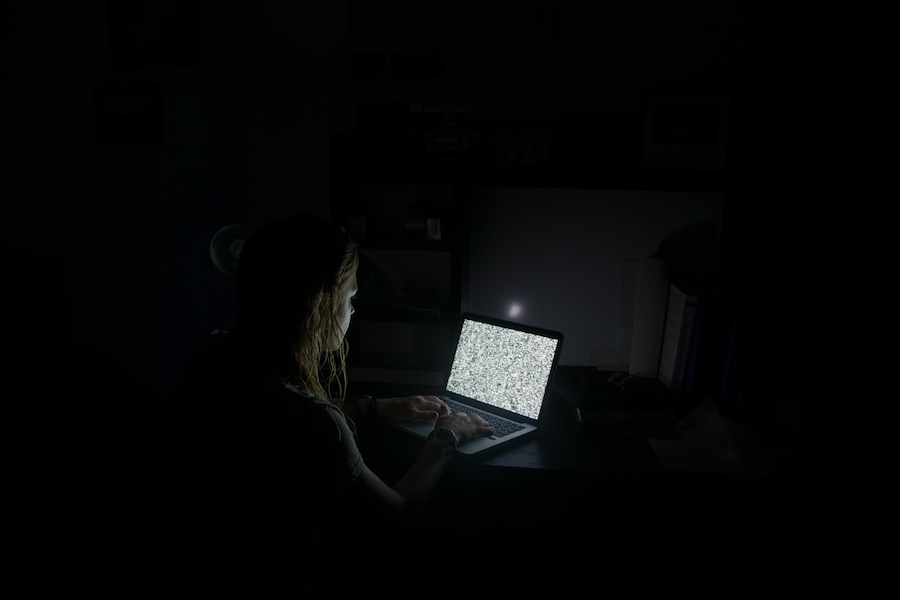
Tech dirty to me: Microdosing

BRIAN LANDRY / AGGIE

Professionals in Silicon Valley taking off-label, psychedelic drugs to improve cognition, links to UC Davis

Lisa* is an undergraduate biochemistry and molecular biology major at UC Davis who has been regularly taking off-label modafinil, a cognitive-enhancing drug normally prescribed for people with narcolepsy, for roughly six months. The reason: microdosing, or the experimental act of administering drugs in such a low dosage that one reaps benefits without suffering the full-bodied effects.

Lisa was first introduced to modafinil when she started her internship this summer at a small financial technology company in San Francisco, where she said cognitive-enhancing supplements were taken commonly and talked about openly.

“It wasn’t a taboo thing,” Lisa said. “I worked on a team of four in a company with around 25 people. I’d say out of the 25, 15 to 20 [of my colleagues] took something beyond caffeine […] ranging on the scale from little powders you can get from GNC just to be more awake, to stuff like adderall and ritalin.”

Although self-medicating was pervasive at the company, Lisa said that she felt no external pressure to take cognitive-enhancing drugs, and that she took them for experimental reasons.

“The idea of biohacking is what appeals most to me. Rather than finding a solution to my problems, it’s more like finding a new way to become a better version of myself,” Lisa said.

Aside from the mostly internal reasons for self-experimentation, taking cognitive supplements has become a prestigious way to show dedication to one’s work.

“It was like bragging wars over who had the most dedication to their job,” Lisa said. “I think that’s why Silicon Valley tends to have this reputation of being the heart of experimentation and innovation, and people feel the pressure to keep up that reputation.”

Initially, when Lisa first started taking modafinil, she kept detailed journals of when she took the tablet, drank coffee, exercised and how her energy fluctuated throughout the day. She also took daily online cognitive-battery tests in an effort to quantify the fluctuations in her cognition. Although she kept careful notes, other people at her internship documented their off-label drug trials even more rigorously, according to Lisa.

“Some people take self-experimentation to a whole other level,” Lisa said. “They’ll collect their urine daily, they’ll test their feces. I went to [the chief technology officer’s (CTO)] house for a drink after work, and in his refrigerator he had a part where he kept his bodily fluids to take into a lab to test.”

Although the CTO was not taking cognitive-enhancing drugs for the duration of Lisa’s internship, he had done so in the past.

Among the fields in Silicon Valley to be affected by cognitive-enhancing drugs, the computer science industry is anecdotally considered a hot spot. Natasha Coulter, an undergraduate program advisor for computer science at UC Davis, believes that the computer science field is unique in the challenges it poses for its employees.

“I think there is a consistent pressure on the tech industry to do very good work at a very quick rate,” Coulter said. “The [computer science] field is getting competitive […] I can see people feeling like they need to get an edge.”

Dr. Jing Xu, a medical doctor of internal medicine at Kaiser Hospital, Santa Teresa explained that the drug modafinil in particular is only available legally by prescription .

“You give [modafinil] to patients with narcolepsy, and also if they are having sleep apnea,” Xu said. “You need a special construed prescription.”

In addition to off-label drugs, professionals in Silicon Valley are also experimenting with microdosing psychedelics like LSD, dimethyltryptamine (DMT) and magic mushrooms. Google Trends shows that the number of people that search the word ‘microdosing’ in the San Francisco-Oakland-San Jose area has risen roughly 400 percent in the last five years.

Dr. David E. Olson, an associate professor in the Department of Chemistry and the Department of Biochemistry and Molecular Medicine at UC Davis, is researching how DMT, a potent psychedelic, mechanistically affects sleep-dependent memory. He is making an effort to manufacture similar compounds without hallucinogenic properties for therapeutic use.

“With psychedelics in general, very little is known about how they affect brain function, and because of that, they’re kind of the frontier of neuropharmacology,” Olson said. “DMT is one of the only endogenous [made within the body] hallucinogens that we know about”.

DMT is classified as a Schedule I drug a drug “with no currently accepted medical use and a high potential for abuse” — by the United States Drug Enforcement Administration (DEA). This scheduling comes with an increase in restrictions for academic research.

“It took us about eight months of paperwork and […] getting the necessary security in place to be able to work with it,” Olson said. “The rules are that you have to obtain permission from both the State of California, as well as from the federal government. It is a little difficult, and I do think that hinders many people from getting into this field, but it’s such an exciting field that I think that […] it’s worth it to go through the hassle of getting approval to be able to do this kind of research.”

Olson also said that there were significant financial costs associated with upgrading the lab’s security features, which may further bar some researchers from entering this area of research.

“If the psychedelics were moved to Schedule II, it would make it much easier for academics to do research on them. Now, to be moved to a Schedule II drug, you need to have a demonstrated medical use. I think that this is kind of a catch-22. If you have a hard time studying these things, you have a hard time demonstrating that they have a medical use,” Olson said.

Although Olson is researching the mechanisms of DMT for therapeutic use, he is skeptical that any formal research will be done in search of cognitive gains of microdosing.

“You have to remember that microdosing is hypothesized to enhance cognition, and the NIH doesn’t fund cognitive enhancement. It funds the treatment of diseases, not the enhancement of normal performance,” Olson said. “So the likelihood that you’re going to see a study like this come out soon is pretty low.”

*Name changed for source’s anonymity

Written by: Meral Basit – science@theaggie.org

Fall TV Preview

CHRISTIE NEO / AGGIE

Get ready for the cold season with these new shows!

If you’re a college student who wants to procrastinate on some upcoming deadlines, here are a few shows to spend an entire weekend binge-watching. This year’s fall lineup provides a lot of obsession-worthy shows to fall in love with.

Conviction / Airs on ABC, Mondays at 10 p.m.

Conviction might have the same set-up as most legal dramas, but it brings new concepts into play. Hayley Atwell plays a former president’s rebellious daughter who regularly gets herself into trouble until an encounter with the police forces her into a deal: she is tasked with leading the new conviction integrity unit, which investigates people who might have been wrongly convicted. The show has some of the same characteristics of Scandal, but it focuses more on the cases rather than the personal lives of the characters.

Speechless / Airs on ABC, Wednesdays at 8:30 p.m.

Speechless is a show that nails the humor that often comes with having a disability without being insensitive. The main character, JJ, is played by Micah Fowler, who actually has cerebral palsy — just like his character. This show breaks barriers and raises awareness about people with disabilities while being hilarious.

Minnie Driver plays JJ’s mom and is phenomenal at playing the overprotective mother. One of the best things about this show is that it draws attention to how people treat people with disabilities. For example, on JJ’s first day at his new school he arrives to class and all of his new classmates begin to clap and stand up. The teacher then goes on to talk about how excited they are to have him in class and one kid even makes a sign that says JJ for president.

To JJ, this is ridiculous, because he views himself as a normal kid; he then tells the class that they don’t even know him, which points to how society often treats those with disabilities as martyrs rather than people.

Designated Survivor / Airs on ABC, Wednesdays at 10 p.m.

Designated Survivor is an unusually timely show considering the current political climate.

The setup: all of the people fit to run the government are killed after a bombing at the Capitol during the State of the Union and America must deal with the aftermath. The “designated survivor,” who is generally a lower-level cabinet member, is the next successor in line to be president because all of the higher-ups in government were wiped out.

Kiefer Sutherland does a great job portraying someone who has been thrust into an office that he has no right to be in. (We’ll have to wait until Nov. 9 to see whether the show is speculative fiction or reality.) The show manages to tackle some serious issues like race and public hysteria after a major attack and does so in a subtle yet engaging way.

The Good Place / Airs on NBC, Thursdays at 8:30 p.m.

The Good Place is a surprising hit in my book. The show centers around Eleanor (Kristen Bell) who was supposed to be sent to the “bad place” upon her death but is accidentally sent to the “good place.”

She was extremely selfish and rude in life and has no right to be in Heaven, which leads to hysterical encounters between all of the characters. This show revolves around Eleanor trying to become a good person (even if she has to to fake it) to keep her place in Heaven. The premise sounds hokey, but it’s definitely worth a watch.

Written by: CaraJoy Kleinrock – arts@theaggie.org

Organic fast food enters Davis scene

VENOOS MOSHAYEDI / AGGIE

The Organic Coup offers healthy chicken sandwiches

Davis recently opened up its first organic fast-food store, The Organic Coup, located in the old G Street location of Vampire Penguin and Bon Mange.

The interior, however, has been extensively renovated and looks nothing like the interior of the previous stores. The store has a farm-like style, with some of its walls painted red to replicate a barn. It also has a modern ambience, and orders are taken through tablets instead of a typical cash register.

Although small, this shop offers a plethora of seating and its interior is relatively spacious. Additionally, it offers a lot of table space for one’s meal.

The Organic Coup’s mission is to provide healthy yet fast food. All of the ingredients used are organic, and the only type of meat that served is poultry along with unique sauces, such as sesame ginger. Aside from main entrees, tater tots and organic lemonade are also offered. The shop also offers a habanero hot sauce for an extra kick.

VENOOS MOSHAYEDI / AGGIE

When I came here, I tried the chicken salad while my friend tried the chicken sandwich. The workers are friendly and helpful, and because it is fast food our meals came out within minutes. However, the salad that I ordered was mediocre.

The chicken was on the drier side and I thought that the some of the vegetables in the salad were somewhat bitter. Although the salad is advertised as having “spicy” vegetables, I did not expect the bitter taste and found it to be unpleasant.

I also tried the sesame ginger sauce with my salad. Although the sauce was good, it didn’t complement my salad too well and I would’ve suggested trying a different type of sauce, such as the spicy chipotle ranch.

My friend’s chicken sandwich was simple to a fault.

It came with a sauce of your choosing, some salad and a chicken patty. I was disappointed in the lack of ingredients and thought that the sandwich would have tomatoes or other vegetables to enhance its flavor. Although this chain is healthier than other fast food joints, I felt that the food generally lacked flavor and was not as substantial as I would have liked.

Despite not fully enjoying my meal, I think The Organic Coup is worth a try, particularly if you enjoy organic food. It is located in a convenient area and it is affordable enough to try at least once.

The Organic Coup is open from 11 a.m. to 7:30 p.m. Sunday through Thursday and from 11 a.m. to 9 p.m. Fridays and Saturdays. For more information, please visit their website.

Written by: Jennifer Duong – arts@theaggie.org

At The Crossroads: When song and science collide

DANIEL EPSTEIN [CC BY-NC 2.0] / FLICKR
Björk’s Biophilia combines music, technology to create an educational app

During indie harpist Joanna Newsom’s concert at Los Angeles’s Orpheum Theater last March, I wasn’t exactly surprised to see a crowd of peculiar characters.

Glancing around, my friend and I took turns pointing out the most unusually-dressed audience members. My friend nodded towards the balcony, where a woman with an elaborate veil over her face was sitting. As we shuffled out of the theater afterwards, I overheard a woman gushing to her friend: “I can’t believe I just saw Joanna Newsom and peed in the same stall as Björk! And to think I almost didn’t recognize her, with that veil on and all.”

Despite her offbeat form of expression –– her veil unnervingly resembled a bedazzled Hannibal Lecter mask –– Björk has permeated pop culture and pushed art beyond the bounds of normality. Most people, however, don’t view Björk as a visionary for technology, science and education.

In 2011, Björk released her eighth studio album, Biophilia, a highly ambitious project that incorporated technology, cosmology, biology, geology basically anything ending with ‘-ology’ with, as always, unprecedented music. The songs explore nature through poetic lyricism, likening the human experience to the minute and cosmic intricacies of our universe.

The instrumentals also reflect natural phenomena in awe-striking ways. “Moon,” a gentle melody, presents four continually-looping motifs that represent the lunar cycle, while “Thunderbolt” champions an arpeggio-rich baseline generated by the electrostatic discharge of a Tesla coil. Complex, innovative gems like these span the record and emphasize the relationship between music and technology.

Perhaps the greatest collision of science and sound is Björk’s use of instruments that harness the power of nature itself. “Solstice” features my favorite invention: the gravity-harp, a towering apparatus composed of four massive pendulums each capped with a cylindrical harp. As the instrument’s name suggests, Earth’s gravitational pull plucks the harp strings during the pendulums’ downward swings, resulting in harps that literally play themselves.

Amid the creative and technical accomplishments of Biophilia, its impact on education is its most stunning and unexpected quality.

With the goal of inciting a love for nature and music in younger generations, Björk worked with a diverse team of scientists, engineers and other artists to devise an interactive app that blended her musical expertise with her collaborators’ varying fields of study. The app has even been adopted by schools in numerous Scandinavian countries a pretty staggering feat for an oddball musician widely known for her swan dress.

The success of the app resides in its interactive, hands-on approach to education. It encourages children to write musical compositions and contemplate the consequences of their creations by displaying the ways in which nature reacts to the music.

Students can form connections between multiple seemingly unrelated subjects –– a skill that grows increasingly vital as we tackle complex, worldwide issues like climate change, or as we delve further into the implications of technological advancements like artificial intelligence. They also become accustomed to working with topics outside their comfort zone while developing a confidence in their own creative contributions.

Instead of boxing herself in as a mere entertainer, Björk has proven herself a limitless thinker and defender of an exciting, dynamic education. The American school system could learn a thing or two from this program that emphasizes and embraces harmony between science, technology and art.

In the case of Biophilia, all it took was one woman with a vision.

Written by: Taryn DeOilers — tldeoilers@ucdavis.edu

Guest Opinion: I left my heart at Standing Rock

FRANCISCO FERREYRA / COURTESY

Native Americans are a ceremonial people of song and prophecy. One prophecy, that of the Seventh Fire, predicts that protectors from the four sacred directions will rise to defeat a sinister black snake that burrows deep in the earth and ravages the lands. The protectors are led by the seventh generation — today’s young people — and guided by the wisdom of the elders.  

Indigenous people have been plagued for centuries by demons imposed upon them by our American government. Native children taken from their families and placed into strict boarding schools, the illegality of prayer in the first half of the 20th century, the tragedy of discriminatory police slayings and the highest suicide rates in the country represent just some of the injustices they have endured.

Our native comrades have been systematically stripped of their land. They’ve been pushed onto reservations where poverty and drug abuse run rampant and made to witness the plunder of Earth’s natural resources from their homes.

This summer I had the privilege of spending time at the Standing Rock Indian Reservation in North Dakota, where thousands of Native Americans and their allies are currently resisting a $3.7 billion crude oil project known as the Dakota Access Pipeline (DAPL). The struggle garnered national attention when a group of indigenous youth ran from Standing Rock to Washington D.C. around 70 miles a day for three weeks.

The 1,172 mile pipeline is expected to transport around 500,000 barrels of oil per day and, if completed, will burrow under countless water sources, including the Missouri River, threatening water for 18 million Americans. Because DAPL never consulted with the tribal nations whose lands will play host to what natives have labeled “the black snake,” DAPL violates the UN Declaration on the Rights of Indigenous Peoples.

The resistance of the water protectors at Standing Rock is justified then, not only through international law, but also through the US Constitution’s Supremacy Clause and agreements such as the 1851 Fort Laramie Treaty, which promised these lands to the first nation’s people.

While at the encampment, which has evolved into a vibrant community, I interviewed several water protectors, including a young medic from the Red Warrior Camp named Alas.

“People think we are fighting for the right to clean water, but really it is the Native American people’s responsibility to ensure that we have clean water,” Alas said. “That responsibility puts us at odds with the colonial government that is strong arming around here. It’s not up to us that we have reached peak oil, you know? Greenhouse gases and ozone layers, all this shit, water levels are rising. That’s not happening because we say it is, it’s happening because that’s what this machine is creating. [This #noDAPL movement] is a continuation of the indigenous resistance and indigenous protection that has been happening here since the beginning of time.”

In early September, DAPL bulldozed over three sacred indigenous burial sites and hired private security officers who confronted unarmed praying protectors at construction sites with pepper spray and vicious dogs.

Since then, dozens of water protectors have been arrested and fully-armed state and local forces have been deployed on more than one occasion. While the media has remained largely silent, social media has brought the story to audiences around the world, where many are beginning to make the connection between the battle for water in Standing Rock and the global struggle against capitalism, fossil fuels and American imperialism. Indeed, letters pour into camp every day from organizations commending the encampment and pledging their solidarity with the largest gathering of tribal nations in history.

Our own City of Davis passed a resolution in early October in solidarity with the Standing Rock Sioux Tribe, and fellow students organized a march on campus on this past Indigenous People’s Day. But the battle continues.

Starting Oct. 17th and leading into COP 22 (the international climate change negotiations), all those able and trained in nonviolent direct action should head to Standing Rock for one month to put that training to good use and defeat the black snake!

Written by: Francisco Ferreya 
Francisco Ferreyra is a third-year community and regional development major.

News in Brief: Police investigate West Village clown sighting

VENOOS MOSHAYEDI / AGGIE FILE

Clown potentially armed with knife spotted on Sunday evening

On Sunday evening, UC Davis Police searched West Village after receiving a report of a person dressed as a clown potentially wielding a knife.

“Subject seen wearing clown costume in area of West Village,” read a text message sent to the UC Davis community via WarnMe at around 8:40 p.m.. “Subject possibly armed with a knife. UC Davis police searching the area. If seen call 911.”

According to UC Davis Interim Police Chief Jennifer Garcia, four people saw the clown at around 7:40 p.m.. The police were unable to find the clown after searching the area.

This possible clown sighting comes after a series of incidents involving clowns throughout the country.

“While no one was harmed, with the recent activity across the nation, particularly on college campuses, this behavior is concerning,” read an e-mail from West Village to its residents. “The UC Davis police department responded to the calls and remained on site through the evening to monitor our community. They will continue with an increased police presence at West Village for the next few days.”

West Village asked its residents to report any clown sightings to the police, and requested that its residents not wear clown costumes to the upcoming West Village Halloween party on Oct. 28.

“The police are taking this matter very seriously,” the West Village e-mail said. “This is not considered a prank and any person caught in this matter will be held accountable.”

Written by: Alyssa Vandenberg  — campus@theaggie.org

The underdog story: Queen of Katwe

WALT DISNEY MEDIA
WALT DISNEY MEDIA

Lupita Nyong’o, David Oyelowo, cast of child actors shine in this uplifting movie

Queen of Katwe is based on the true story of Phiona Mutesi’s life, a young girl growing up in the Ugandan slum of Katwe who discovers she has an extraordinary talent for the game of chess.

The film begins with Phiona (Madina Nalwanga) returning home from a long day of selling maize. She stops to longingly watch a group of children playing chess and is invited in by a man named Robert Katende (David Oyelowo), affectionately referred to as “Coach.” The other children mock her, telling her that she smells, to which she responds by throwing some punches. “Ah, a fighter,” says Coach. “Welcome this is a place for fighters!”

We learn that Coach had at first started a missionary sports program for the children in Katwe, but soon realized that many of them are forbidden to play by their parents because they may break a bone and become unable to work. When Coach suggests chess instead, the kids are initially not interested, until he says, “Too bad… I thought you’d like beating city boys”.

The film does an excellent job of addressing barriers to success that the characters must face, such as poverty, corruption and classism. Coach is at first refused when he attempts to enroll The Pioneers, as he calls the group of kids, in their first tournament, which takes place at a prestigious private school.

After he finally succeeds in raising enough money to enter, he must then delicately deal with the children’s shocked reactions to being outside of the slum for the first time. The first night at the tournament, all the children sleep tightly packed together on the floor, although there are beds available for each of them.

Phiona, who we soon learn possesses a natural ability for chess, wins the tournament and is awarded a medal for “Best in Boys.” Everything seems to be going well, with Phiona’s constant wins and traveling for tournaments, but tragedy strikes again and again in the form of a storm that destroys her home and a nearly-fatal accident for her brother Brian.

Lupita Nyong’o gives a powerful performance as Phiona’s widowed mother, who struggles to take care of Phiona and her three siblings. She is the ever-concerned and stern mother who initially doesn’t approve of this “gambling game” and is torn between giving Phiona a chance at greatness or keeping her “safe” in the slums. When Phiona gets to travel and compete, her mother realizes that she now longs for a different life a life which she may never have.

“You’ve shown my children paradise, and now they are like ghosts who can’t rest”, she says to Coach. He in turn believes that Phiona “shouldn’t be denied the glory of victory because she was born here,” and the two clash as the hopeful Coach sees a bright future for Phiona that her mother does not.

This beautiful movie centers on a young girl’s true story of overcoming hardship through her intelligence — as well as the support of her family, Coach and the community — and does not neglect the difficult topics of classism and poverty.

I appreciated that this film was realistic in its portrayal of poverty showing that a brilliant mind alone may not always be enough to remove oneself from hardship.

Written by: Pari Sagafi – arts@theaggie.org

UC Davis men’s water polo scores early, but falls short

0
DANIEL TAK / AGGIE
DANIEL TAK / AGGIE

The Aggies lose to UCLA 15-8 in non-conference match last Sunday

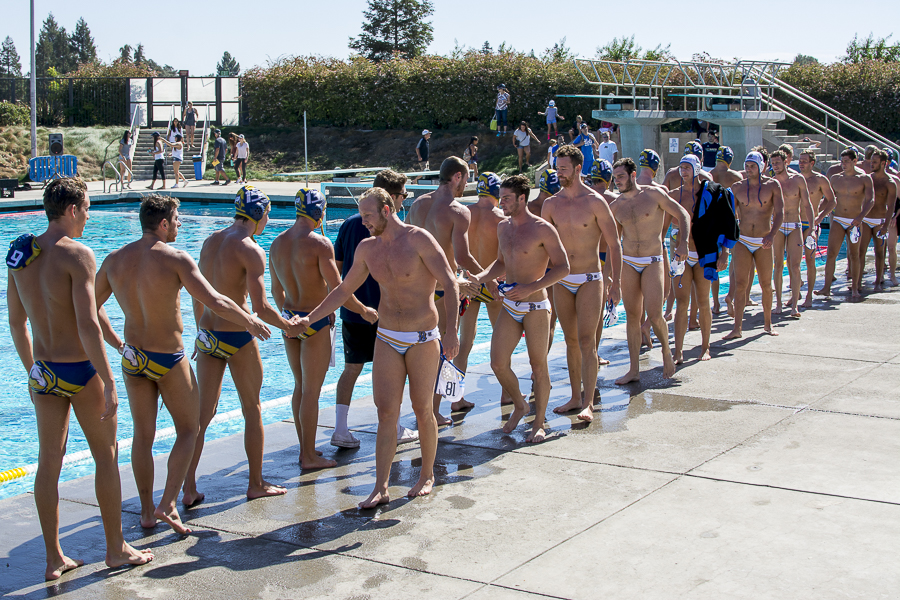
It was a beautiful day at Schaal Aquatics Center last Sunday as the UC Davis men’s water polo team snatched two early goals from the UCLA Bruins in a non-conference match.

However, the two early goals were not enough to give the Aggies the victory, and UC Davis went on to lose a hard-fought game, giving UCLA its 52nd win in a row, breaking the NCAA record for most consecutive wins. The Collegiate Water Polo Association and NCAA rank UC Davis at No. 11, while UCLA stands at No. 1.

“You always learn that there is a low margin for error in terms of mistakes,” said head coach Daniel Leyson. “As soon as you make a mistake, you get punished by the other team.”

Senior center Tennyson May scored the Aggies’ first goal at the 6:24 mark, and junior attacker Spencer Galli repeated the action only seventy-five seconds later to give UC Davis an early 2-0 lead.

UCLA reacted strongly by scoring three unanswered goals to end the first quarter and hit five more straight goals before the Aggies found the net again. They made two more goals, one from sophomore attacker Marcus Anderson and the other from sophomore utility Nick Coufal, for an 8-4 score at the half. When the final whistle sounded, the Aggies took the loss 15-8.

“We got a quick start today and that’s good. We’ve got a good team and we are capable of a lot, so I am not surprised we were able to give UCLA a strong game,” Leyson said. “I think the positives are the amount of energy that we brought to the game. We didn’t roll over just because they were UCLA. I wouldn’t call mistakes negatives, but [instead] points that we can learn from, and those are the opportunities we let get away this game. We didn’t execute under the level we would like.”

Leyson also spoke about what to expect from UC Davis men’s water polo this season.

“We are looking to get better in every performance and today I think we got better by coming out faster,” Leyson said. “There are a lot of things we can improve on, and our motto this year is try to get better every single practice and every single performance.”

UC Davis men’s water polo is now 12-4 overall for the year and will continue conference play, in which they are currently 2-0, this Sunday, Oct. 16 at 2 p.m. when they travel to play Fresno Pacific.


Written by: Ryan Bugsch sports@theaggie.org

The Tragic Loss of Jose Fernandez

0

ARTURO PARDAVILA III [CC BY 2.0] /FLICKR
On Sunday morning, the baseball world was robbed of one of its youngest and most exciting stars. Jose Fernandez, the Ace of the Miami Marlins, was tragically killed in a boating accident off the coast of Miami after clipping a rocky jetty at full speed. Neither drugs nor alcohol are suspected to be a part of the incident, and Fernandez was simply a passenger on the boat.

Jose Fernandez was different. From the various people close to Fernandez who have spoken of his death, the same adjectives are used consistently to describe him: polite, respectful, humble, kind, confident, fearless. The last two adjectives are the ones that resonate the most with me.

I remember back in 2013, my senior year of high school, the Marlins were to add this 20-year-old kid to their opening day roster due to unforeseen injuries to the Marlins rotation. Fernandez had only pitched a miniscule 134 innings in his minor league career before getting promoted. It’s also not like he rapidly worked his way through the minor leagues, with the natural progression from A ball, to Double A, to Triple A. Fernandez had never pitched above Class A, and there he was, thrown into the fire, named to a Major League roster just days before the season started.

My initial thoughts were that this poor kid is going to get rocked in the Majors. I thought to myself “oh man, this 20-year-old kid’s development is going to be stunted by the stupidity of the Marlins front office; his confidence is going to wither away and he might not recover.” Boy was I wrong.

Fernandez took the baseball world by storm. He had one of the most historic rookie seasons in the history of Major League Baseball. The dude was absolutely electric. Fernandez finished the 2013 season with 172.2 innings pitched a 12-6 record, a 2.19 ERA, and 187 Ks. He was named to the National League All Star Team, he won Rookie of the Year and he finished third in the National League Cy Young race behind Clayton Kershaw and Adam Wainwright. Yeah, I think that “confident” and “fearless” are the kind of adjectives used to describe a 20-year-old who’s capable of pulling that off.

As he garnered more and more publicity, we learned that his charisma was not just an in-game persona. This is who Fernandez was. It took him four attempts to successfully defect from Cuba, and on the fourth and final attempt, he had noticed that someone had fallen off the boat. Fernandez, at the young age of 15, jumped in without a second thought to save the person who had fallen into the water at night. It was his mother, and he ended up saving her life. Hopefully now you are beginning to understand the essence of this kid.

I’m going to miss the passion and excitement that Fernandez brought to the game. For those of you who had no clue of what I was talking about when I mentioned his rookie year statistics, it’s probably because you are one of many who believe that baseball is a boring sport. To a large extent, I agree with you. There are a lot of unwritten rules in this game, and a lot of them target players who are particularly flamboyant and animated. Fernandez wasn’t too fond of these rules. He celebrated like a boy in a little league dugout. If more guys had as much fun playing the game as he did, the game’s popularity would surge — this is why he was beloved by the younger generation of baseball fans.

Jose Fernandez defected from Cuba at 15, saved his mother in the process and was an MLB superstar by his rookie season five years later. This is who we have been robbed of, and to be honest, finding a silver lining at this point is all but impossible.

Written by: Michael Wexler – sports@theaggie.org


(Not) Just Kidding: Comedy during election time

PUBLIC DOMAIN / PETE SOUZA

Will comedians elect the president of the United States?

Satire has been perhaps the most powerful force in this year’s election build-up. With every absurd Donald Trump remark, Hillary Clinton email and Republican candidate’s endorsement (or lack thereof), every talk show and light-night comedian has reacted with gusto.

Like Tina Fey’s celebrated impersonation on Saturday Night Live of vice-presidential nominee Sarah Palin in 2008, Darrell Hammond’s Trump impersonation has reflected the shocking absurdity of the Republican nominee. Talk show hosts Trevor Noah, John Oliver, Seth Meyers, David Letterman and Stephen Colbert have lead the political charge just like The Daily Show and The Colbert Report have in the past.

But not all comics use their platform in a responsible or effective way.

Jimmy Fallon’s recent choice to bring Donald Trump onto The Tonight Show was one of the latest examples of a non-confrontational host having an extremely controversial figure on his program. In his interview, Fallon is friendly and unassuming and offers no grilling questions. In fact, he was so friendly that the next week’s guest, Hillary Clinton, handed him a literal bag of softballs that had been left in the dressing room Trump had vacated. Fallon’s response? “I gave them to [Trump] as a gift.”

The interview prompted Full Frontal’s Samantha Bee (herself a Daily Show alum) to make the unusual move of speaking out against NBC and Fallon himself. In a recent New York Times article Bee is quoted as saying: “If he thinks that a race-baiting demagogue is O.K., that gives permission to millions of Americans to also think that.” Fallon’s choice to focus on humor in the interview as opposed to confronting serious issues with Trump’s campaign may be a recurring issue in America’s political satire.

Writer Malcolm Gladwell, known for his long career at The New Yorker and best-selling books, discusses satire in a recent podcast entitled “Revisionist History: The Satire Paradox.” He argues that much of the American brand of satire often appeals too much to the side opposite of the one that they intend to court.

Take Stephen Colbert for example. His new show has not diverged from political discourse, but the thick layer of satire that enveloped his right-wing persona has certainly lessened. Although his previous act was so well-loved, Gladwell argued that his new show is actually exceedingly more effective in accomplishing his political goals. The same jokes Colbert would make satirically about his liberal guests would appeal earnestly to conservative watchers.

In doing so, Gladwell says, Colbert created a political program that held both liberal and conservative audiences –– no small feat –– but was ultimately not effective in accomplishing his goals.

Perhaps content that spends less time being satirical and more time being articulate, which has been modeled well by The New Yorker in recent weeks, is better for American politics. In George Saunders’ semi-serious, semi-humorous article for the magazine, “Who are All These Trump Supporters?,” the Trump demographic is explored and deconstructed through genuine but often ironic interviews and interactions with supporters. Saunders notes the real tragedy that occurs when individuals across party lines miscommunicate, indulge hypocrisy and are generally immature. But he still allows humor to play a role in political discourse when he subtitles a section “A Tiny Pissed Voice Rings Out” in reference to Donald Trump’s rally diatribes.

In many ways satire is incredibly necessary to politics. It heightens the general public’s interest during election time, translates political events and mostly doesn’t let politicians get away with uncouth behavior. Comedians may play a large role in the results of the upcoming election because they are the source from which many citizens learn and think about politics.

Fallon’s choice to make his audience laugh with Trump, as opposed to reconsider him, is problematic because of Fallon’s power. Our democratic system is possible because of satire. If the public can’t criticize those in power, power can be abused. When the public cannot criticize their leaders, citizens of a democracy are unequipped to make informed voting decisions.

I don’t discredit satire for the positive role it plays in politics. However, while watching Jimmy Fallon’s interview with Donald Trump, even I, a self-proclaimed liberal, found myself smiling along with Trump every few minutes. Between Fallon’s encouraging laughter, gentle questioning and excessively subtle sarcasm, Trump seemed affable. It’s for this reason that scholars like Malcolm Gladwell and entertainers like Stephen Colbert must exist to both educate and actualize politics for the public, but also to scrutinize its players.

Written by: Stella Sappington – opinion@theaggie.org

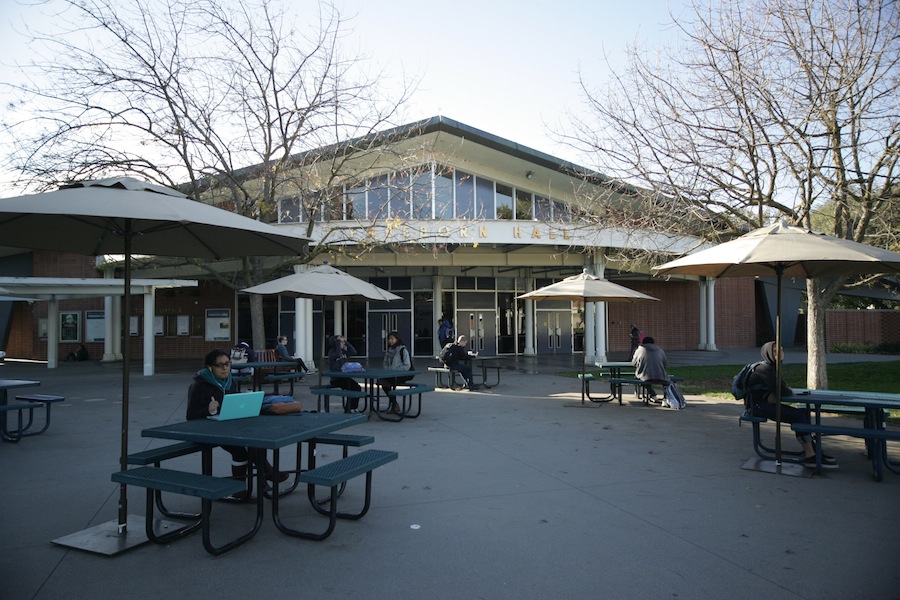
Humor: School to stop working on Freeborn hall because it “feels like it”

MISHA VELASQUEZ / AGGIE FILE

After nearly three years of construction on Freeborn Hall, UC Davis has decided to halt construction once and for all. Given the university’s lack of progress on retrofitting and modernizing its largest lecture hall, Ronald Elliott, Davis’ chief architect on the project, decided it was time to lay the work to rest.

“We’ve put a lot of work in the past three years, but it was an oversight on my part and the rest of the administration to think that this could be done so quickly,” Elliott said. “This has nothing to do with the workers; we [the administration] take full blame for what has happened.”

The updated hall would have included new flooring and desks with built-in tablets, but structural problems abounded. Project managers were unable to locate enough bricks to build up the walls to their required heights. Additionally, the wood used in the roof did not pass inspection after it was listed as a fire hazard due to the quality of the wood in the Yolo County climate.

“We warned the school against using birch trees in this area, but the school insisted we do it in order to cut costs. I let them know that this was a poor idea,” said Ron Hinch, the lead architect for Davis Architecture Company. “We did everything we could, but the university felt that it was time to cut ties with us. They now don’t have an architect. Everything seems to have fallen apart for them, metaphorically. Thankfully it wasn’t Freeborn.”

When asked for a response outside the Mrak Hall offices, Elliott rushed off and simply said, “We felt like it was a necessary to stop. We don’t have the budget for this anymore.”

Many students, particularly fourth-years who only got one year with the lecture hall before it was shut down, expressed confusion. Freeborn is now in the middle of construction, and there aren’t enough funds to keep it up to safety regulations.

“I just want the noise to stop. There’s too much going on, and it’s been happening for pretty much my entire college experience,” said Michael Davis, a fourth-year international relations major. “I’m tired of not knowing what to do as I walk around school. I had a blast in there for Psychology 1 and my big brother in my fraternity heard Drake there. Freeborn has history.”

The lecture hall is conveniently located next to the Memorial Union, at the heart of campus. It has hosted performances, concerts and conventions.

“Freeborn is a staple to the Davis student community that has been lost over the past three years. The end is not in sight, except for the construction, simply because some suit felt like it was time to stop spending money,” said an anonymous student.

The school’s failed attempts at cutting corners is another notch in the belt of failures that comes at the expense of students. Instead of using students’ money for personal gain, the university should be taking measures to ensure the quality of its facilities. This means using appropriate wood in a lecture hall and not stopping because it isn’t in the budget.

Davis has a one billion dollar endowment. There is enough money; it needs to be used to benefit the students.
Questioning the credibility of ETHAN VICTOR? You can reach him at ejvictor@ucdavis.edu. Feel free to help with his followers-to-following ratio on Twitter @thejvictor, because it is pathetic right now.

HUMOR: How To Become Funny

PHIL SHIRLEY [CC BY-NC-ND 2.0] / FLICKR
A Journey of Redemption

After a quarter full of hard-hitting, weighty op-eds touching on serious topics such as houseboats and the benefits of drinking cheap vodka, I couldn’t wait to get to work on my next slate of articles for The California Aggie. But when I pitched my stories to Eli Flesch, the Opinion Editor, as part of my application, he sort of went quiet on me. Like, “read receipts turned on” or “your anonymous animal is on my Google Doc and not commenting” sort of quiet. He even reposted the opening for the Opinion Columnist position — because nothing inspires confidence like your potential boss posting your job as “open.” After multiple calls and several dozen Snapchat messages, he finally got back to me.

He hired me as a humor columnist.

My first reaction was absolute gratitude and astonishment that someone would find me funny and articulate enough to write nine to 10 columns for them this quarter.

No, that’s a complete lie.

I am a small, petty man. I am a writer. I write to shine a light and reveal truths about life. So what if I pitched a story about Kanye West’s poop, and so what if the first Google Image search to my name is a bottle of Burnette’s plastic vodka? The New York Times wrote over a thousand words about the three dots that pop up when someone’s about to text you.

That wasn’t in their “Humor” column — it was in their “Cultural Studies” column. I am not some dancing clown meant to entertain the lowbrow masses. I am a serious clown. Not a scary clown, no, but definitely a low-key and focused clown who has a lot to say about “cultural studies” such as read receipts and pre-gaming.

And then I told my mother, who reminded me that this is the first time in my life that anyone has actually found me funny. I started realizing this curse was actually a blessing. I can say whatever I want under the guise of it being funny. Even Eli gave me the go-ahead in his offer letter: “When people are able to meld comedy and tough issues — as I believe you can — it’s enormously effective.” And it doesn’t even have to actually be funny — I am now a Humor Columnist at The California Aggie, the official student publication of the University of California, Davis. According to the law and university policy, people are actually forced to laugh at every single one of my jokes now.

As someone who’s formerly not funny, I want to share some insights with anyone who wants to make the leap, like I did.

Step one is to always laugh at your own jokes. Sometimes people can’t hear your joke, especially at a party, and they don’t want to be impolite so they’ll laugh along with you. Studies have shown that we have mechanisms in our brains called mirror neurons, which trigger people to have the same reaction as those reactions they observe. It’s why if you see someone else yawn, you’ll yawn too, and why that video of that old man laughing like “huehuehue” is so hysterical. If you can’t use your own sense of humor to make them laugh, use mind control and psychological manipulation.

Step two is for when people aren’t laughing at your jokes. Comedians call it a “bomb.” I don’t think I ever bomb, but my audiences certainly bomb sometimes by not laughing. When it happens, aggressively own it. Point out what a horrible joke you just made. Make your telling of a god-awful joke… the joke. So then, when people aren’t laughing, they’ll think you’re pathetic and horrifically not funny. Which is exactly what you want because then they lower their expectations of you, so when you do say something funny, the bar is set much lower. It’s a win-win, really.

Step three is to figure out your style. I have some friends that are incredible at coming up with  absurdly specific analogies that compare mutual acquaintances. They’ll say that a friend dresses like a forty-five-year-old Midwestern woman on her way to put the family dog down. And it’d make perfect sense. I have another friend whose brain is wired for puns and witty, clever one-liners. Coupled with his neurotic, Larry David-ish vibe, he’s able to own that lane. Another one of my friends exclusively makes stupid poop jokes, but they’re hilarious, and sometimes you don’t want to ponder deep, philosophical satire. Once you figure out which flavor of jokes comes easily for you, just run with it, and run with it hard

I’ve held a lot of responsibility in my time at UC Davis. I’ve spotted people lifting weights at the ARC and I’ve watched over people’s stuff at the CoHo, so I know what it means to have a lot riding on your shoulders. This humor column is by far the most serious and impactful responsibility I’ve held, and I am — all joking aside — pumped to explore different topics every week. I doubt I’ll get laughs from anyone besides my grandma, but if I get a chance to make my sweet Savta happy, I’ll take it.

Written by: Yinon Raviv –– ravivyinon@gmail.com

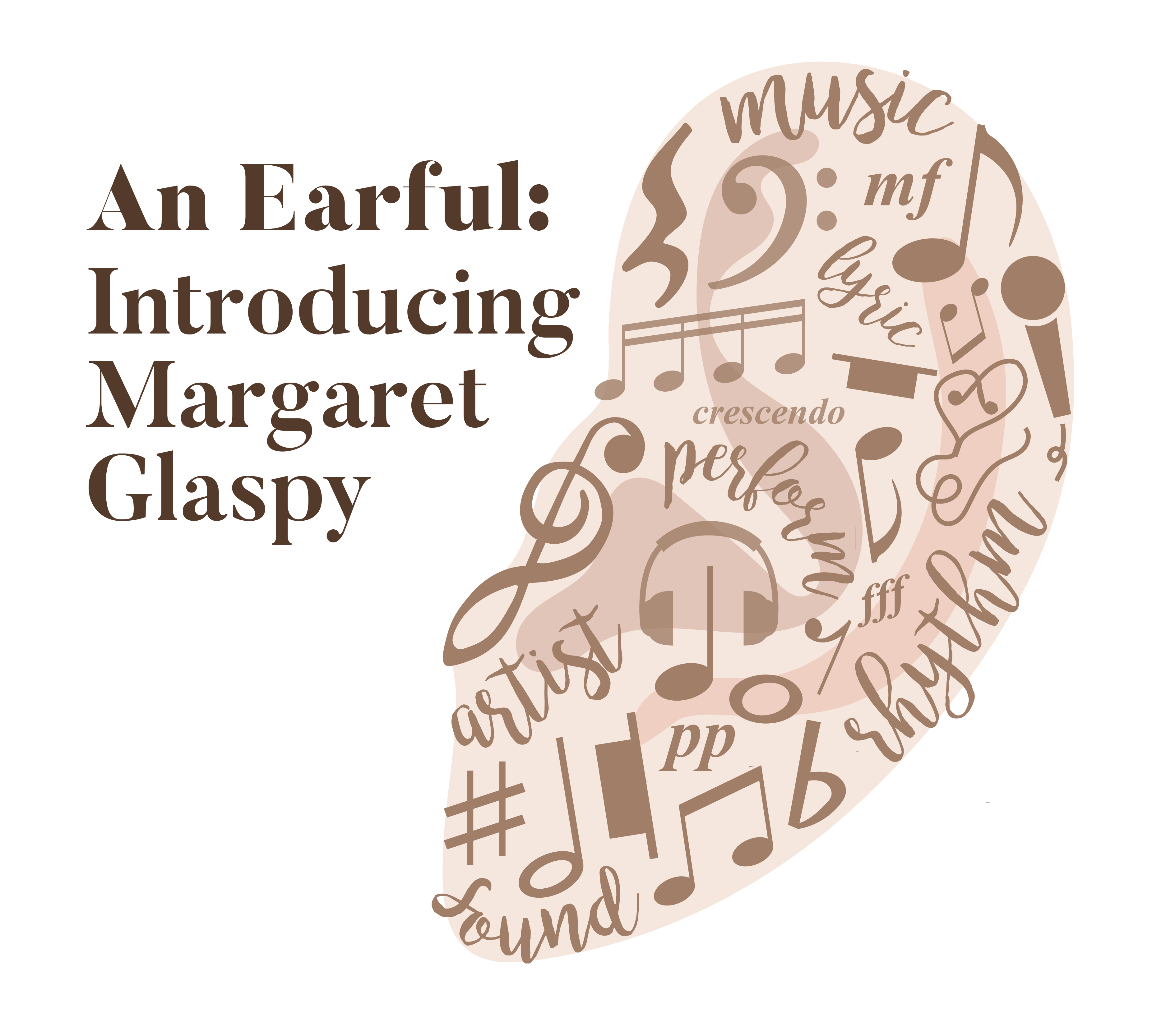
An Earful: introducing Margaret Glaspy

CINDY CHEUNG / AGGIE

A Review of Glaspy’s new album, her performance at Hardly Strictly Bluegrass

When I discovered that Margaret Glaspy — the talented, toothy-grinned musician that occupied my Spotify for the entirety of July — would be playing at San Francisco’s Hardly Strictly Bluegrass Festival, there was little that could stop me from attending.

So with my blanket, six-pack and eagerness in tow, I made my way through Golden Gate Park. Anxiously snaking through the crowds, I only thrice forgot about the entourage of friends trailing behind me. (Claiming that I “snaked,” however, is a bit too kind; my pace more closely resembled that of a hungry viking hunting the last wild boar).

Glaspy primarily played tracks from her newest album, Emotions and Math, and all but lacked the growling vocals and buzzing guitar that characterize it. Though Glaspy released her first work (a five-track EP) in 2012, it is the simplicity of her electric guitar, offset by her haunting vocal fluctuations, that gives her newer gwork a bit more spunk. As a solo act backed only by a bassist and drummer on stage, Glaspy is truly original.

Her stage presence oscillates just like her outfit: her ruffled blue dress for the melodic swing of her voice and the chunky white sneakers for each twanging guitar riff. But more worthy of our attention is her relatability as a musician, whether it be her bad one-liners (“It’s only me singing this two-part song. We call it a duet on a budget”) or the profundity of her lyrics in day-to-day life.

Simply put, Glaspy is loveable for her ability to be so easily loved.

“Somebody to Anybody,” a personal favorite track from Emotions and Math, is a perfect example of this down-to-earth nature and the music that stems from it. Most interesting about this track, however, is that within its self-deprecating lyrics, there’s a greater message of strength in anonymity: “I don’t wanna be somebody to anybody, no. I’m good at no one.”

On a more literal level, the song continues, “I keep my head down and both eyes wide / I don’t look up, just side to side / but I stay well kept so they can see / There’s nothing wrong with me.” It’s safe to say that everyone has, at some point, felt this way: when we feel out of place or without purpose, we “stay well kept” for the sake of public perception.

And so, though the chorus, “I’m good at no one,” is far from a cry of confidence, it is somehow self-assuring that we — both literally and metaphorically — belong to no one.

This song, however, remains consistent with the album’s greater theme: long distance relationships.

In fact, the album title can be taken quite literally… the feelings associated with any relationship (Emotions), and the countdown associated with being reunited (And Math). This idea is explored more in the eponymous track from the album, with Glaspy contemplating her feelings during a period of separation: “Counting all the days till you’re back / Shivering in an ice cold bath / Of emotions and math.”

Tracks like “Memory Street” explore almost identical notions, but with a darker perspective that is characterized by disjointed chords and throaty growls.

“Memory Street” is by far the most classically rock-style track from the album in its exploration of lyrics and composition. Less focused on melody, Glaspy cooes, “The record skips, but I let it play.” But, during the next chorus, she repeats, over five times, “I try to remember all the times I / Times I / Times I…” in a style that emulates a skipping record.

This deviation from standard composition (something I value in her artistic endeavors) was not as appreciated by the audience at Hardly Strictly; there were more than a few iterations of “What the hell.”

That is, of course, unless their commentary was referring to Glaspy’s incredible performance, most notable for her simultaneous intensity and aloofness.

In which case, I would have to agree: What the hell (was that astounding performance).
Written by: Ally Overbay – arts@theaggie.org

Humor: Only clowns in West Village are clowns paying to live in West Village

NICKI PADAR / AGGIE FILE

WEST VILLAGE — A police search for a potentially armed clown turned up empty late Sunday as investigators determined the only clowns to be found in West Village were the ones paying for its overpriced amenities. Officials said there is no longer the threat of a knife-wielding circus performer, but only the threat of overpriced housing and expensive grocery stores.

“The urge to live in West Village is ridiculous to me,” said deputy of the Davis Police Department Paul Whitney. “There are plenty of other housing options in North and West Davis for almost half the cost!”

The scare started Sunday evening, when an emailed alert was sent to all UC Davis students warning of a clown possibly armed with a knife roaming the streets of West Village. Students in the area took to Facebook to notify their loved ones of their well-being. Other, smarter students took to Facebook to find more affordable apartments on the housing page.

Police warned students Monday afternoon that in order to avoid further clown scares, immediate cost-saving actions must be taken, including turning off lights and air-conditioning when not in use.


Written by: Eli Flesch — ekflesch@ucdavis.edu

Guest Opinion: Vote Yes on Prop 54 to Put Voters Ahead of Special Interests

CHELBERT DAI / AGGIE FILE

The 2016 presidential election has without question shown that Americans are frustrated with the political process. From the presidential nominees to the lack of transparency and accountability in our state government, voters feel powerless and long for change.

As the Chair of the UC Davis College Republicans chapter and a political science major, I believe government should always be transparent and accessible to the people it represents.

That’s why I’m voting for Proposition 54, the California Legislature Transparency Act, which will be on the Nov. 8 ballot.

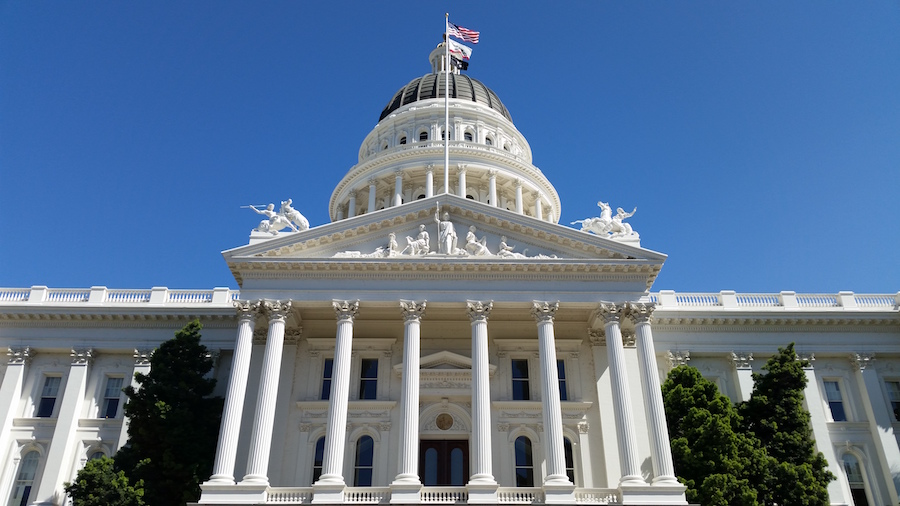
In my view, Prop 54 is the most important measure on the ballot. It will do three simple things to wrest power from the special interests that run Sacramento and give it back to the people.

First, Prop 54 will require a bill to be posted online and in print 72 hours prior to a final vote in either legislative house. This common-sense time limit will prevent last-minute backroom deals brokered by special interests. It will give enough time for legislators and their staff to analyze a bill and ensure only well-crafted and thoughtful legislation passes, leading to better public policy.

Second, Prop 54 will require all public legislative committee hearings to be recorded and posted online. Currently, many of these committees are held in small, obscure capitol rooms to avoid public scrutiny and media attention. With little media and public oversight, special interests have unchecked power to whisper into legislators’ ears.

While the Legislature streams many hearings, hundreds of other committee hearings are completely uncovered, hidden behind the doors of the capitol. Not every Californian has the luxury of being only 30 minutes away from Sacramento like we do, so this feature of Prop 54 is key. By posting committee hearings online, faraway constituents that do not have the means or the time to travel to Sacramento can still keep track of legislation that affects them and be part of the political process.

Finally, my favorite thing that Prop 54 will do is allow citizens to record legislative hearings and share them publicly. I was surprised to find out that this practice is currently against the law. It’s crucial that our state government catch up with the times and allow visitors to the capitol to record, tweet and snap videos.  Now, anyone with a phone or camera can “report” what they saw and share it with their followers.

Prop 54 will bring much-needed transparency and accountability to how our legislature operates. By increasing access to the public and catching up with the digital age, Prop 54 ensures all Californians have a fair shot at being included in the political process.

All Californians will benefit from Prop 54. I encourage all of my fellow Aggies to vote

“yes” on Prop 54 on Nov. 8. And, if you are not registered to vote, you can register to vote online at www.RegisterToVote.CA.Gov until Oct. 24.
Nicholas Francois is a third-year political science major, Chair of the UC Davis College Republicans, Capitol Region Vice Chair of the California College Republicans and member of the Delta Lambda Phi Social Fraternity.