58.4 F
Davis

Davis, California

Tuesday, December 23, 2025
Home Blog Page 691

HUMOR: ASUCD President’s approval ratings down after Aggie Card redesign

LAURA LONG / AGGIE
LAURA LONG / AGGIE

A new study released by the Davis Polling Society (DPS) on Wednesday revealed that the ASUCD President’s numbers appear to be “less favorable” given the new design of the Aggie Card.

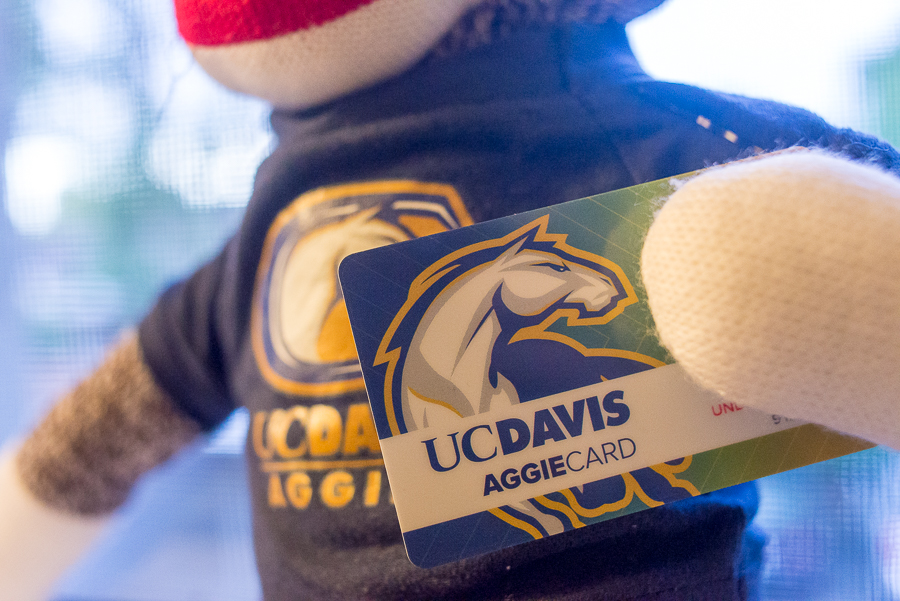
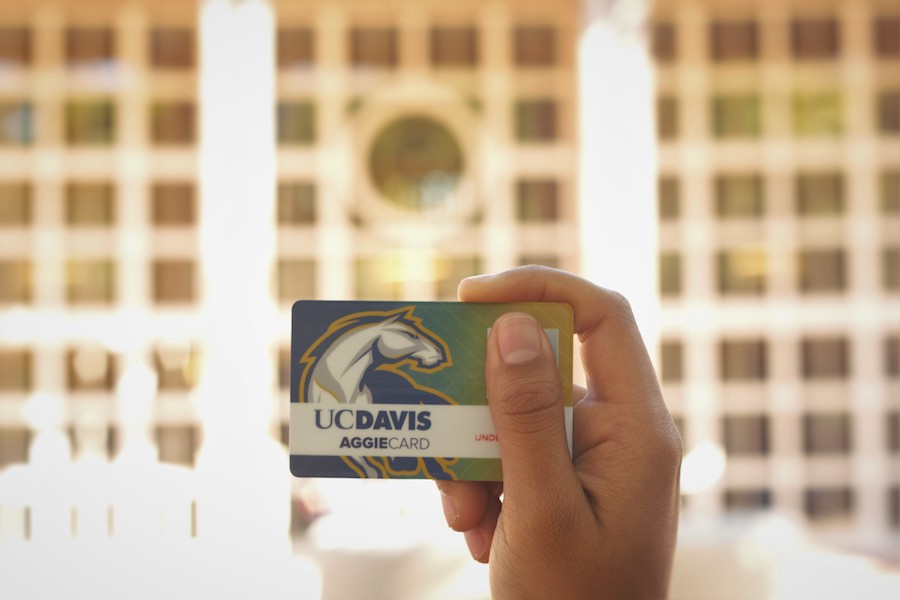
Last Winter Quarter, the school’s new commander-in-chief ran on the platform of designing a new card, which is now a mix of blue, green and yellow, with Gunrock on the left next to the student’s photo.

Given that the President ran on this platform, the new logo’s flop has led to the drop of the President’s approval ratings, from 46 percent at the beginning of the school year to 19 percent three weeks into the year, per DPS reports. According to official school rules, elected officials need to have a 20 percent approval rating by week five in order to be considered legitimate. If the president does not reach this benchmark, there will be recall election.

“Using that ID card makes me look like a stupid freshman,” said Steve Dexler, a fourth-year political science major. “I am not a stupid freshman, but nobody can tell because now I have a target on my back.”

All new students were given the redesigned ID card, setting them apart from students of previous years. It became clear to them that they were being set apart, resulting in a 7 percent favorable rating among first-year and transfer students.

“I just don’t understand the reason for the change or why it would be used as a platform to do anything,” said Michael Franks, a first-year viticulture and enology major. “I’ve been here for four weeks and I can tell you that I would rather have internet in the ARC over a new piece of plastic.”

For someone to hold as much power as the ASUCD president, there seems to be some flaws in the executive branch. Either the president does not have as much authority as the students have been led to believe, or he has had a serious lapse in judgement in terms of what  students truly care about.

Questioning the credibility of ETHAN VICTOR? You can reach him at ejvictor@ucdavis.edu. Feel free to help with his followers-to-following ratio on Twitter @thejvictor, because it is pathetic right now.

Identity politics risk polluting the American university

DANIEL GREGORY [CC BY 2.0] / FLICKR
What the Chance the Rapper controversy says about our growing culture of victimhood

If there was any question of whether UC Davis is immune from caustic division along lines of race, class and gender, it was answered when the event page for October’s Chance the Rapper concert erupted into a furious debate over the politics of music. The episode, notable for how quickly it escalated, reflects a broader move to a culture of victimhood and shame in which both minority and majority groups are quick to condemn others publicly and viciously.

“All the white people who got floor tickets to see Chance the Rapper need to give them up to Black people or Brown people,” wrote a UC Davis student in a post on the Facebook event page. “The album wasn’t even made for you and you don’t even know what he is talking about or can’t even relate to it lol.”

What was most striking about the ensuing response was its pessimism and lack of clear ideology. Whether you agree or disagree with the idea put forth in the Facebook post, it was one of the only ideas that suggested an affirmative way black students could, as one commenter put it, “heal” at a university considered by many on campus to be anti-black. The language of the post itself (demanding or requesting? Divisive or brave?) could be debated endlessly to no clear answer.

But the charges made in the comments that the post’s author was actually the racist, or that anyone critical of the original post was a racist, resembled the kind of thoughtless free-for-all social media makes all too easy.

Cornel West, writing on the nihilistic threat to black America his seminal 1994 Race Matters, argues for the need of a “love ethic” and “politics of conversion” starting on the local level to help combat what he describes as “a kind of collective clinical depression in significant pockets of black America.”

That must feel familiar to many black students at Davis, for whom the promise of a progressive university clashed hard last year with multiple hate crimes and a slow-to-act administration.

When a historically-oppressed group perceives a threat to its very identity and safety but gets no response in return — and when this happens year after year for decades — it’s not hard to see how a desperate feeling of hopelessness can potentially infect the group. But the answer too often now has been to retreat inward. This is wrong. It causes members of a group to guard one another without skepticism and to have a default mistrust of those outside the group. That is the definition of identity politics. And it’s ripping the social fabric of our society.

To begin to understand how identity politics emerges from the culture of victimhood, look at campus protests and activism.

Activists cite power structures when they choose to reject the kind of push-and-pull style of compromise that requires the mutual cooperation of both groups. How can black students, for example, possibly feel like they’re on equal footing with the university when America’s long history of oppression has taught them otherwise? How can the Students for Justice in Palestine enter a fair dialogue with people they consider functionaries of a colonial state?

A common answer to these questions, that you can’t be on equal footing, promotes the culture of victimhood. There’s no ideology in it. Small differences in opinion can become perceived as threats to a person’s identity. An ‘us’ versus ‘them’ mentality arises.

A victim of a robbery could not be expected to have a conversation with the robber. Groups that feel victimized would similarly find it absurd to enter into a set of negotiations with their oppressor.

Dialogue breaks down and finding solution through give and take becomes more difficult, if not outright impossible. And individuality breaks down in a culture of victimhood. Demagogues like Donald Trump, who purport to represent victims of bad trade deals and weak leadership, are able to cast entire groups of people, like undocumented immigrants, as the source of the problem despite clear evidence otherwise.

And when nothing is accomplished, the attitude becomes pessimistic. The 1971 prison riots in Attica, New York showed that the social upheavals of the 60’s didn’t resolve issues of police brutality and state-sponsored racism. The 70’s never ended. We are still a pessimistic nation.

We see it here when one comment on a Chance the Rapper page becomes a campus controversy in less than 24 hours.

UC Davis ranked second last year in a New York Times study on colleges that did the most to promote upward mobility. And yet the sentiment on campus was that this was a university going off the rails toward a neoliberal disaster. Increasing privatization, nepotism, misuse of student funds — all very real issues — didn’t perfectly gel with other, more positive, realities.

But what does this ranking mean if upward mobility is viewed unfavorably by minorities as assimilation to what might fairly be considered a white, upper-middle class type of existence? It’s possible that the tough sanctions of identity politics contribute to an increasing desire on the part of minority students to return to their own communities after college — to resist assimilation to a culture largely seen as oppressive.

In his revealing New Yorker essay on political and racial tension at Oberlin College, Nathan Heller describes how one black student, responding to what she saw as a white-dominated curriculum, said, “I’m going home, back to the ’hood of Chicago, to be exactly who I was before I came to Oberlin.”

The scrums we see playing out on college campuses today cannot fully be resolved until student leaders are able to simultaneously acknowledge that they may be victims of longstanding oppression but are also able to self-love and aspire to a higher goal. Simply opposing Katehi did not inspire moral satisfaction. But contributing to the search effort for a Chancellor that meets the standards required to run a large public university will. Simply opposing Trump brings nobody to make phone calls to battleground states. But truly believing that Clinton (or another preferred candidate) can positively impact the country can.

Colleges, which provide the tools of self-affirmation through education, operate on a level that is fundamentally local — it’s exactly the environment in which Cornel West argues a love ethic can be cultivated. But you can see it all over. It’s DeRay Mckesson of Black Lives Matter running for mayor of Baltimore, against guaranteed loss, and sending the message that activism can’t shy away from government if it’s to have any worth in the end. There’s reason to be hopeful here at UC Davis, where the #BlackUnderAttack demonstration last year effectively pressured elected ASUCD leaders to rally around the protestors’ cause.

Rising above identity politics, on this campus and nationally, will begin when students find their own moral purpose and pursue it with a vigor and optimism. “To be an activist you have to be hopeful,” said Kyla Burke, a co-founder of Davis Stands with Ferguson, in a March interview. “Because if I don’t think things can change, why am I putting my efforts to change them?”

Written by: Eli Flesch — ekflesch@ucdavis.edu


(UPDATE: 10/30/2016, 11:35 p.m.: Editor’s note: The name of the student whose Facebook post is quoted in this article has been removed for purposes of the said individual’s safety.) 

For the love of olives

0
DIANNE MADISON / COURTESY

Yolo Press family farm provides Davis with quality products for over 20 years

Just 20 minutes west of Davis is a thriving grove of olive trees symbolizing one family’s agricultural and professional success.

Davis native Mike Madison and his wife Dianne originally bought the land for their farming operation in 1984 and now sell homemade organic jams, soaps, skincare products and olive oil at the Davis Farmers Market and Davis Food Co-op.

The Madisons wanted to grow something that did not require bees for pollination, was drought-tolerant and was resistant to pests. They decided on olive trees, and now Mike hand-harvests all 1700 of these olive trees himself.

“We have olive varieties from Spain, Italy, Greece, France and California which all produce different flavors of oil,” Mike Madison said. “I’ll harvest less-ripe olives around this time to make a very pungent, strong robust oil, like Italians prefer, [but] the French like theirs to taste like butter so they wait [to harvest] until January it’s just a question of style.”

Immediately after the harvest, Mike brings the olives into a processing room where they get washed and ground up. This olive “mash” then goes into a bigger machine and is stirred very slowly so that the microscopic drops of oil start to clump together and is heated so that the fats completely liquify. A centrifuge then separates the material into three parts: water, solid and oil. Mike then transports the oil to a separate settling tank and leaves it alone for about three days.

The process of turning the fruit into oil is detailed and time consuming, but it is meticulous for a reason.

“We package in dark green glass from Italy […] because olive oil has high sensitivity to light,” Mike said. “If you go to Safeway and see [cheap] olive oil in a clear, plastic bottle […] it’s probably just 10 year old rancid oil [that was] distilled with solvents to remove the rancid taste.”

Dianne explained that, because of the oil’s sensitivity, Mike mills everything within 24 hours of harvesting so that the oil does not go rancid. The Madisons are not only concerned with producing quality olive oil, but also with keeping their environmental impact as low as possible by implementing sustainable practices.

“The water and solids from the olive processing get pumped out of the building and I spread them back into the orchard to be reincorporated into the soil,” Mike said. “All of the nutrients are in the waste, so by putting them back we’re basically maintaining soil fertility in the orchard.”

In addition to what Dianne calls their “liquid fertilizer,” Yolo Press is constantly exploring ways to be as environmentally sound as possible, such as using recyclable packaging. The Madisons do not grow plants that require large amounts of tractor work, decreasing the amount of carbon dioxide the farm releases into the atmosphere. The farm also has solar panels that power the irrigation system in the orchard, and Mike and Dianne give customers rebates for bringing back their empty bottles after use.

“We use no pesticides and no commercial fertilizers, and as a crop, olives are much more benign than others because they require less water,” Mike said. “We proudly irrigate less than most people in the Sacramento Valley [and since] we have our own processing plant, we’re not having to haul olives 200 miles [away] to get them processed [off the farm].”

In addition to the heart-healthy perks of whole olives, Yolo Press also uses its unique oils in its soaps and skin products for the antioxidant qualities and benefits as a soothing skin conditioner.

Dianne and the couple’s two daughters also started D. Madison & Daughters, the label under which they sell about 20 different types of jam. When the farm had too much tree fruit that they could not sell, Dianne continued her family’s tradition of canning fig, apricot and blackberry jams.

“People really like the olive oil the best, but I think the fact that that we have a very diverse line of products on our table [at the farmers market in Davis] appeals to a wide customer base,” Dianne said.

Despite the fact that Yolo Press does not advertise or have its own shop, its popularity with the Davis community does not falter. The business is favored among a handful of university faculty members, especially Frances Dolan, a professor of English. Dolan stops by the Yolo Press table every Saturday morning at the market to pick up olive oil and skincare products for herself and friends.

“Buying food from a supermarket doesn’t require the same thinking about where your food comes from or how sustainably it’s grown,” Dolan said. “Because of relationships like the one I have with the Madisons, there’s a responsibility to go out to the market and keep those [vendors] coming.”

Dolan and her husband are more than just customers of Yolo Press. They have developed a close friendship with the Madisons and appreciate their dedication to fresh, local olive oil. By coming to the market every week and sharing stories with Dianne, Dolan feels that she knows much more about where she lives and what she eats.

“[Mike and Dianne] are always thinking about [sustainability] issues and […] I’m constantly learning from them,” Dolan said. ”It’s wonderful to buy their olive oil, but I’m getting a lot more from them than that; I’m getting an education and a relationship.”

For the Madison family, customers like Dolan make the labor and dedication to the science of making quality olive oil worth the effort.

“Our business plan is [to] make our local product here and sell it in the town we’ve been in forever,” Mike said. “We’re embedded in this particular community and that’s how it works for us.”

Written by: Gillian Allen — features@theaggie.org

The Future of food

0
KELSEY GREGGE / AGGIE

UC Davis community focuses on food insecurity, food sustainability

From animal science to viticulture, UC Davis is home to a wide variety of research subjects. Among these fields of study is the groundwork involving food sustainability. Food insecurity, a condition in which people are unable to provide nutritional food for themselves, is prevalent in society and in the UC Davis campus community.

“We have lots of [food insecurity] issues in the United States and globally,” said Daniel Sumner, professor in the National and International Agricultural Economics and Policy Department and director of the UC Agricultural Issues Center. “Lots of my research […] is focused on world food as an issue of sustainability.”

Though many students may not realize it, food insecurity is a common problem for many people, including UC Davis students. According to Mikael Villalobos, director of the Campus Community Book Project, many UC students face issues regarding access to nutritional food.

“I think all of us can connect to [food issues] in that we are aware that there are folks that are directly impacted by food insecurity,” Villalobos said. “What are we doing as a campus community to address that as a community issue?”

What students and faculty are doing, in fact, is more than one may realize.

A variety of UC Davis professors, students and staff continue to collaborate on developing programs and research projects to aid food insecurity on local, national and global levels. Paul Gepts, professor in the Department of Plant Sciences, studies different varieties of crops to find food that is both nutritious and affordable.

“It’s a basic need to have food security so that people have enough to eat and also to derive adequate income,” Gepts said. “To [some], it’s World Food Day every day.”

World Food Day, celebrated on Oct. 16, is a day to commemorate and bring awareness to the movement to end world hunger. In contribution to these efforts, Gepts’ research in California focuses on varieties of beans that are able to adapt to high temperatures while requiring less water, while Sumner’s work was able to bring together specialists in various scientific fields to discuss nutritional standards in 2015.

“Really what I find fascinating about UC Davis is working with the best scientists in the world,” Sumner said. “They’re thinking of ways to get more food from the things we have.”

As an economist, Sumner works with plant pathologists and breeders to solve problems regarding waste reduction and post harvests.

“For many of the poor people of the world, basic grains wheat or rice are the staple foods,” Sumner said. “When there is less grain in the world, prices tend to spike and the rest of us have a terrible time. People die.”

In his individual work, Sumner concentrates on the study of food economics, which involves the choices that people make in regards to food access. For example, according to Sumner, many families across the globe will choose to starve in order to feed the strongest man in the family.

As Gepts and Sumner conducted their research, the UC Davis Campus Community Book Project was initiated in 2001 as a way for the campus community to connect on different topics of diversity and inclusion. Each year, a selection committee chooses a book for the project from nominations by members of the community.

This year, the chosen book was Stuffed and Starved: the Hidden Battle for the World Food System by Raj Patel, bringing the researchers’ work back to Davis.

“[Patel] speaks about […] how the world food crisis has connections to health issues for example, obesity,” Villalobos said. “[He also covers] the role of corporations, and in this particular case, the monopoly that food corporations have with regard to […] addressing food insecurity.”

Once Stuffed and Starved was chosen, a program-planning committee put together a sequence of book-related events including talks, tours and first-year seminars as a way to spread awareness of the ideas that the book focuses on. This year, a distinguished speakers series at the Mondavi Center on Mar. 13 will feature Patel, who will discuss his book and its worldwide implications.

Other events put on by the Campus Community Book Project committee are even more relevant to UC Davis’ efforts in food security. The committee supports the Edible Campus Project, which uses campus space to build gardens that grow sustainable agriculture. There are also campus tours that showcase the student farms.

“The role of a research institution is addressing that worldwide issue of food insecurity,” Villalobos said. “[We are] looking at ways that we address poverty at a local and global level.”

Despite the challenges that UC Davis researchers, programs and committees face in looking for solutions to food insecurity, the members of the food sustainability community still believe in growth.

“[This issue] does take serious research and analysis,” Sumner said. “But we’ve been making progress for decades, and we can make a lot more.”

Written by: Allyson Tsuji – features@theaggie.org

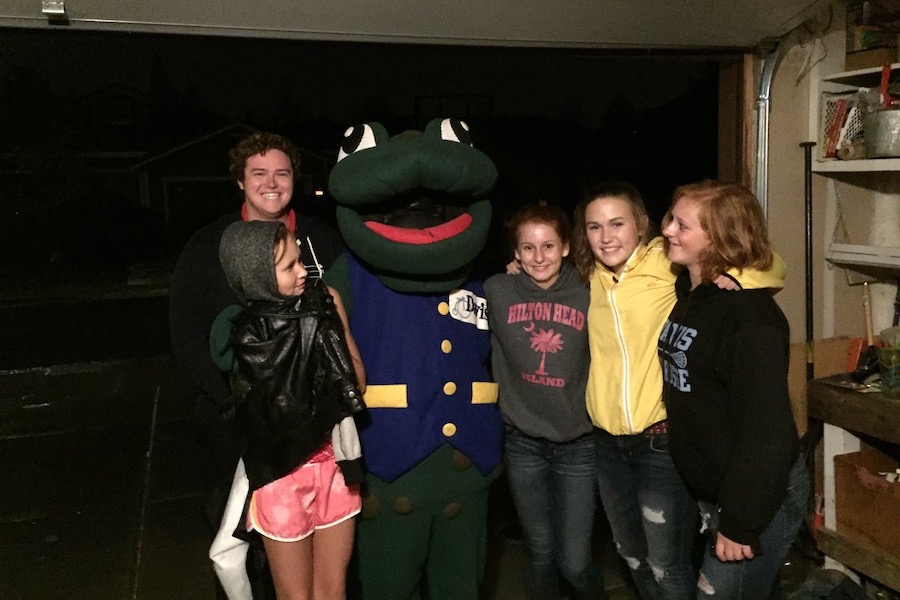
Davis hosts 11th annual Neighbors’ Night Out

CITY OF DAVIS / COURTESY

Gunrock, double decker bus join Davis residents in festivities

The City of Davis participated in its annual Neighbors’ Night Out on Oct. 16. The event, which first started in 2006, aims to help community members get to know each other better by encouraging residents to host parties for their neighbors.

Stacey Winton, media and communications officer at the city manager’s office, who created the event, emphasized that one of the main goals of the event is that long-term Davis residents and UC Davis students get to know each other.

“It’s funny, a lot of it had to do with [concerns over students not] bringing out their garbage cans,” Winton said. “It just kind of came out of conversations of [how] it [would] be nice if [students and long-term residents] just met each other at the beginning of the school year and felt comfortable with each other to talk about little things in the neighborhoods. It grew out of this grassroots idea of bettering communication in neighbors.”

Carrie Dyer, who is in charge of community engagement and cultural services at the city manager’s office, also helped plan the event. She highlighted that the city plays an important role in getting residents to host parties in their neighborhoods by helping send out invitations and providing balloons and glow sticks.

People who signed up to a host an early party were entered in a raffle to get Gunrock, the Fire Department, the Police Department or a Davis-famous double-decker bus to show up at their event.

All of this work on the part of the city manager’s office has been successful in past years in getting more people to participate. According to Dyer, this year was no exception, with record numbers of participants at each party.

“This year we had 130 parties, which is more than last year, but less than the year before; however, our projected number of participants went up to about 6,000 this year,” Dyer said.

While the event was not heavily advertised on the UC Davis campus, the city manager’s office encourages more students to participate in future Davis Neighbors’ Night Out events.

Although Munir Sayani, a third-year computer science major, hasn’t participated in an official Neighbors Night Out event, he said that he participated in community get-togethers at the beginning of the quarter.

“I think a Neighbor’s Night Out is a good idea for people to meet each other and make new friends. I went to a similar event in [my apartment complex] to meet the some of my neighbors,” said Sayani. “It was great making new friends and meeting new contacts that I know from the Davis area and even my own classes.”

Written By: Juno Bhardwaj-Shah – city@theaggie.org

WRRC hosts community forum to discuss new location

ALEXA FONTANILLA / AGGIE

Community asks for transparency during moving process

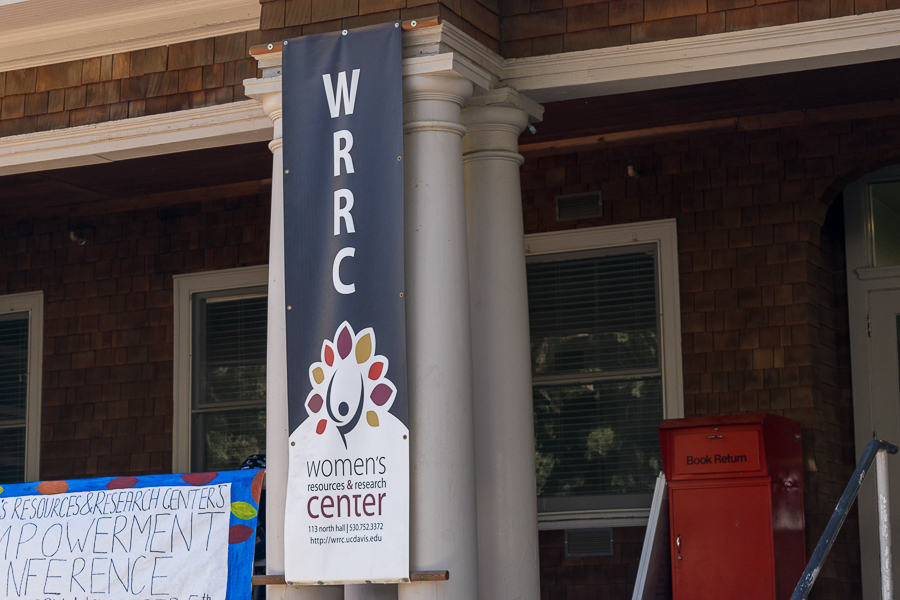
Staff members from the Women’s Resources and Research Center (WRRC) hosted a community forum on Oct. 12 at the LGBTQIA Resource Center for the community to discuss the WRRC’s upcoming move from North Hall to a new, undecided location.

The WRRC, which has been located in North Hall for 40 years, first publicly announced that it would be moving in a Facebook post at the start of the academic year. According to the post, the WRRC is moving to accommodate the expansion of Counseling Services (CS), which is hiring more counselors to meet student demand for mental health services on campus.

However, some members of the WRRC and the UC Davis community feel that Student Affairs has not been transparent enough throughout the WRRC’s moving process. Many questioned why the WRRC was not informed earlier that it would need to move, as well as why Student Affairs did not have a new WRRC location already confirmed.

WRRC employees informed attendees that several locations are currently being considered for the WRRC’s new home, including the Student Community Center (SCC). While the WRRC staff believes that moving to the SCC would increase the visibility of the center, they also acknowledged that moving to the SCC would mean a decrease in square footage.

When asked about the timeline for the move, WRRC employees had few details available, but said they had requested that Student Affairs not move the WRRC until the summer.

Community members in attendance had the opportunity to share their thoughts about the WRRC’s move. Many questioned if the WRRC’s location change would be sustainable; as UC Davis continues to expand, centers like the WRRC and CS will need to continue expanding as well. Other students felt concerned that, by forcing the WRRC to leave North Hall, the UC Davis administration had pitted the WRRC against CS.

The second part of the forum consisted of a panel discussion, in which students could ask questions regarding the move to Vice Chancellor of Student Affairs Dr. Adela de la Torre, executive director of the Community Resource and Retention Centers Dr. Sheri Atkinson, Assistant Vice Chancellor and chief of staff to the Vice Chancellor of Student Affairs Dr. Emily Prieto-Tseregounis and CS director Dr. Sarah Hahn.

Many students expressed the need for more transparency from Student Affairs during this process.

“We will do better,” Hahn said.”We have heard that communication has been a problem […] we’re working on it, and we’ll do better.”

Students also questioned why Student Affairs did not inform the WRRC sooner that it would need to move.

“There’s a number of things looking back at this that we could have done differently,” Hahn said. “We didn’t think it would come to this.”

De la Torre added that Student Affairs wanted to find another option, but ultimately, there was none.

“Student Affairs has limited control [over space],” de la Torre said. “When I asked about options […] it was clear that there are no other options.”

Those on the panel stressed that open communication would be important going forward.

“I will be in constant communication with you and others throughout the process,” Atkinson said. “You all will be driving that process and I’ll be doing whatever I can to help ease the organizing of that off of you […] I’ll share as much information as soon as I have it in a timely manner and will continue to do that going forward.”

Written by: Alyssa Vandenberg  — campus@theaggie.org

Davis: the incredible green machine

AMY HOANG / AGGIE
AMY HOANG / AGGIE

The City of Davis receives Silver Beacon Award in sustainability

This year, Davis has proven once again it is a leader in sustainability. The City of Davis received a Silver Beacon Award for energy efficiency and sustainability by the California Institute for Local Government, an accomplishment that was years in the making.

“This award highlights the comprehensive approach to addressing climate change, and it consists of five different categories, ranging from energy efficiency, to greenhouse gas reductions, as well as supporting policies and programs that promote sustainability,” said Karalee Browne, Beacon program manager.

Throughout the last year, The City of Davis has adopted over 60 programs and policies in 10 different areas of sustainability in order to become a more energy efficient area.

“I think Davis has had a long history of creating a community where its residents treasure natural resources, try to promote economic stability, and really create a place where its residents want to work, play, and feel that they are environmentally responsible,” Browne said.

Mitch Sears, sustainability manager for The City of Davis, attributes this success to the community as a whole.

“The award is a culmination of decades of work on sustainability related issues,” Sears said. “It’s a recognition for what Davis has been pursuing for a number of years. And it is essentially the compilation of all the work that the city and the community have done over time that has created a leader in the sustainability community’s movement.”

Davis has seen many successes in terms of energy efficiency. As the first city to designate bike lanes for bicyclers back in the 1950s, Davis has emerged as an innovator at the forefront of alternative transportation. With investments in the Greenbelt, parks and America’s first, protected, bike-only traffic signal, Davis has proved it is committed to making bicycling a viable alternative transportation.

Besides innovations geared towards biking, Davis is also preparing for emerging trends in transportation.

“We’re looking at ways to improve transportation systems additionally by looking at what’s called ‘transportation demand modeling,’ and working on emerging issues like autonomous vehicles,” Sears said.

Davis also received a platinum award for reducing agency greenhouse gas emissions by 28 percent. This, in particular, is a huge accomplishment for Davis.

“Back in the 1970s the city was one of the first, if not the first, communities to adopt a climate specific energy code,” Sears said. “So essentially, what we were saying at the time, was that houses and other buildings that were built needed to have insulation and things that made them more efficient based on the Central Valley climate.”

This energy code eventually put Davis on the map for energy efficiency. The climate specific energy code was adopted by the state of California (Title 24), and has since become the gold standard of energy efficiency for the entire U.S.

“There’s an estimate that was done a few years ago, where if the state of California had not adopted its energy code, again which had its roots here in Davis, energy consumers here in state would be paying billions of dollars more every year for electricity and natural gas,” Sears said.

So what can The City of Davis do to bring every aspect of community sustainability up to the gold level?

“To get a gold award for the Beacon, we need to continue to pursue these kinds of best practices, and offer these types of greenhouse gas emissions and energy savings to the community,” Sears said.


Written By: Samantha Solomon – city@theaggie.org

Find this year’s Halloween costume at Enchanted Cellar

CHELBERT DAI / AGGIE

On-campus shop offers variety of rental costumes to UC Davis community

Still looking for a cool costume to show off on Halloween? Look no further than the Enchanted Cellar costume shop.

The Enchanted Cellar is run by the UC Davis Theater and Dance Department and aims to provide service to the Davis community at large. The price of kits usually ranges from $45 to about $150, but the shop offers a year-round 30 percent discount to all UC Davis affiliates, including students, staff and alumni.

The costume shop started its rental service after a costume sale in 2004, and now the shop sells costumes every ten years in what they call “the decade sale.” The shop primarily provides rental services, but occasionally it has auctions on a selection of costumes. This service not only benefits student and staff who are looking for elaborate costumes at an affordable price, but it also helps to keep the stock clean and crisp.  

“We have all periods of history back to Greek and Roman costumes, and Renaissance and all the way up to modern stuff, 20s and 30s and great 60s, disco looks,” said  Roxanne Femling, the shop director. “We have a lot of variety for people to go through and pick what they would like.”

The store also offers a rich selection of kits, an all-inclusive bundle that includes a costume and any necessary wigs, shoes and accessories that ensure customers look as authentic as their chosen characters.

“For those kits, we try to do a little bit out of every period. We do characters from Harry Potter, […] costumes similar to Dumbledore and Professor Snape, and we find wigs that go with that,” Femling said.

Around October, the shop also sets up Halloween sets for customers to browse.

“We have separate sections for video game characters and superheroes. We have a whole section for Harry Potter and Star Wars, too,” said Caitlin Sales, fourth-year theatre and dance major and stock assistant at Enchanted Cellar.

The Halloween sets are convenient for customers. Since the kits and costumes are set on racks, customers can look through them and pick whatever kits or costumes best suit them. They can also try the costumes on in a dressing room. Moreover, there are costume consultants to help customers through this process.

The Enchanted Cellar is a charming and friendly store, and the “Davis discount” makes it an excellent stop for anyone who needs a costume for any occasion.  

“Even though I’m new here, I love working here with my co-workers,” said Emily Keating, third-year design and international relations double major.

Come visit the shop in the basement of Wright Hall, room 17 anytime Monday to Friday from 9 a.m. to 5 p.m. Appointments for fitting can be arranged by phone at (530) 752-0740 or by e-mail at rcfleming@ucdavis.edu.


Written by: Betty Wu – arts@theaggie.org

Dope decisions: The Editorial Board endorses legalizing recreational marijuana

HANNAH LEE / AGGIE
HANNAH LEE / AGGIE

Vote ‘yes’ on Prop. 64 to end modern-day prohibition

In between studying for finals and binge-watching Netflix this Nov. 8, don’t forget to vote on what is arguably one of the most consequential decisions of our generation, one which will change the face of politics far into the future — the legalization of recreational marijuana.

Let’s be blunt. The Editorial Board endorses Proposition 64. California, although the first state to establish a medical marijuana program, has been slow on the uptake to legalize marijuana for recreational use. California voters have been presented numerous times (most recently in 2010) with similar ballot measures, but have failed to pass a meaningful drug law.

But this year looks promising. With 58 percent of adults in the United States favoring legalization, a slew of young voters itching to roll up and more people flocking to medicinal marijuana dispensaries to alleviate a number of ailments, it’s time to weed out antiquated laws prohibiting the use of cannabis.  

Legalization would mean an increase in tax revenue for the state of California. Oregon alone collected $25.5 million in pot taxes just six months after imposing a tax on recreational marijuana and Washington expects to receive a staggering $1 billion in tax revenue from pot sales over the next four years. This tax revenue would go to drug research, treatment, grants relating to marijuana health and safety, youth programs and more.

Legalizing the use of recreational marijuana would also go a long way in helping to solve some deep-seated inequities, particularly toward people of color in the criminal justice system. Some of the worst casualties of America’s drug war have been those found in possession of marijuana, with bizarre prison sentences being doled out seemingly at the presiding judge’s discretion.

The Adult Use of Marijuana Act, or Prop. 64, could solve some of these issues for the foreseeable future. California cannabis growers fear big business encroaching on the weed industry, or at the very least that legalization would increase bureaucratic red tape.

There’s also the issue that many edibles are currently packaged to look way too much like normal candy bars. It would be easy for a child to mistake your regular, run-of-the-mill chocolate bar with one that is loaded with enough THC to take down a horse.

While the Editorial Board is more than ready to support the masses of toke smokers, we also acknowledge the need for regulations to better label THC edibles and to protect small weed growers in California.

That being said, we have high hopes for marijuana, in terms of the tax revenue California will gain, decriminalization and increased access to a relatively cheap alternative medicine. Although cannabis research has been somewhat stunted by issues of legality, studies suggest that cannabis has tremendous medicinal benefits when used correctly. In the immortal words of Nick Offerman, champion of the people, “marijuana is quite possibly the finest of intoxicants. It has been scientifically proven, for decades, to be much less harmful to the body than alcohol when used on a regular basis.”

Also, if we think about it specifically as an agricultural commodity, can we expect UC Davis, as a leader in agricultural research, to help perfect the science behind marijuana? Cannabis 101, anybody?

Voter registration ends Oct. 24. A ‘Yes’ vote for Prop. 64 would put California on track to meet the successes of other cities and states that have managed to properly regulate the drug. Make sure to register by the deadline and let your voice be heard. As always, stay high Aggies.

New AggieCard sweeps campus

ANH-TRAM BUI / AGGIE

Card now available for freshmen, transfer students

Last fall, UC Davis students voted on four different designs to determine the look of the newly-designed AggieCard. ASUCD President Alex Lee’s student staff members, third-year design major Melanie Zelaya and third-year communication major Juliana Luna, created these four designs, which were voted on by 3387 students. The winning design won with 1911 votes, a 60.1 percent majority.

First-year and transfer students have since received the newly designed ID cards. Continuing students will keep using the old cards, unless they lose their current AggieCard, in which case they have to pay a $15 replacement fee and will receive the newly designed card. If replaced, an updated photo will also need to be taken due to new photo requirements.

Undergraduate students can still use their ID cards as a library card, membership card to the Activities and Recreation Center and free Unitrans bus pass, regardless of whether they have the new or old AggieCard.

The process to make the designs took eight months. It required the use of Marketing Toolbox, an all-accessible free resource that outlines UC Davis standards, to find which designs would work best. After meeting with Vice Chancellor Adela de la Torre, the team was put in contact with members from Strategic Communications, who introduced senior designers to give feedback and help integrate UC Davis’ upcoming “One of a Kind” marketing campaign.

Besides the aesthetic change to the front of the card, the back of the card’s design is now more streamlined, color-coordinated and includes the UC Davis Counseling and Psychological Services (CAPS) phone number.

“You can see how everything [in the old card] is mono-color and all the contact information is scrunched together,” Lee said. “The new one is more differentiated. The new one has a CAPS counseling phone number added. So the back is now more user friendly […] [Zelaya] and [Luna] redesigned it so if you needed it in an emergency you could see it more at a glance.”

Zelaya realized during her first year at Davis that she wanted to improve the Aggie ID card.

“As design students, we’re trained to be on the lookout for problems that we see need to be fixed or finding things that could be improved upon,” Zelaya said. “Right off the bat, as a freshman, the AggieCard was something I wanted to change. I saw that it could be improved upon […] using my knowledge as a designer.”

Zelaya was inspired to incorporate notable UC Davis landmarks and mascots. Additionally, Lee said that the new AggieCard design was influenced by bank cards to make a more transactional, modern and sleek look.

My roommate told me she thought her co-worker’s new AggieCard was a credit card when he tried to use a swipe, so I guess that means we were successful,” Zelaya said. “It’s a design that has the sleekness and professional aspect we were looking for and yet, it is able to communicate a lot of important information on the back as well.”

Lee said that despite the “generational gap” of new AggieCard design holders versus old design holders, there is an overall positive student body reaction to the new card.

“It’s certainly a little difficult because of the generation gap,” Lee said. “When the holders of the new card look at the old cards they think ‘we lucked out,’ [but] then there are those of us who have the old one’s thinking ‘when am I getting mine?’ I definitely think there’s a great shift towards it […] I think people are really excited to have this new mark of Aggie pride.”

Meghan Garfink, a first-year undeclared major, likes the new design.

“It looks good,” Garfink said. “I think these numbers are useful and it is definitely more aesthetically pleasing.”

Sarah Morrow, a first-year animal biology major, especially enjoys that the card fits with the UC colors.

“I do think it’s more aesthetically pleasing,” Morrow said. “I really like the school color gradient in the front.”

Zelaya is proud that her AggieCard design has been implemented.

“To anyone who is wondering how we were able to create something that 35,000 plus students would use, I think it’s more of a question of how bad you want it,” Zelaya said. “Nothing is impossible […] Ideas can be crazy, but they’re never impossible.”


Written by: Yvonne Leong – campus@theaggie.org

Greatly Misunderstood Organisms

ANH-TRAM BUI / AGGIE FILE

GMO benefits greatly outweigh the fictitious costs  

Have you ever walked through the grocery store, picked up a piece of food, ranging from milk and fresh vegetables to dried pasta and rice, and seen that bright green label with the nice butterfly in the corner that reads “Non GMO Verified?”

Upon seeing this label, you might ask what a GMO is and what exactly it entails. GMO versus non-GMO has become one of the biggest fights in the field of sustainable agriculture as producers struggle for the right to use GMO grains and organisms on their farms –– all while consumers are rejecting the unfamiliar three-letter acronym.

GMO stands for “genetically modified organism,” and that’s where the trouble starts.

Genetically modified seems dangerous, but it’s not. A lot of people assume genetically modified means the organism was either manufactured in a lab or synthesized from different chunks of DNA, but this is not true.

Yes, a lot of these GMOs have actually undergone genetic changes carried out by foreign vectors such as viruses and bacteria, but the grand majority have not. If one enters a grocery store today and goes to the produce area, the fruits and vegetables in front of them will be very different from those grown a hundred years ago. Broccoli, corn, watermelon, bananas and even dogs are just a few of the organisms today that have been genetically modified, not in a lab setting, but due to selective breeding over time.

Selective breeding is when two individuals, whether they be plants or animals, are chosen and bred together because each organism carries a trait producers want. Watermelons, for example, have been bred to be practically seedless with more of the sweet red fruit center that we know and love.

Without selective breeding, watermelons would be tiny, oblong and have fruitless centers with massive seeds. That doesn’t sound appetizing, does it? It’s the same with dogs and cats.

They were selectively bred from their ancestors to be the domestic animal kept in homes all over the world today. Cattle can also be considered genetically modified. Dairy cattle have been selectively bred to excel at milk production, making them bigger and leaner than beef cattle, which are bred to grow muscle.

All across the livestock industry, if one looks hard enough, they will find drastic changes in the appearance of animals from hundreds of years prior –– and not because they were made in a petri dish. These animals have been bred carefully in order to create and support the food production system we have today.

However, many are still hesitant to eat GMOs because they have been genetically modified and have been falsely linked to cancer and various other diseases. This is not true.

Earlier this year, the National Academy of Sciences, Engineering and Medicine released a report claiming that there was no human health risk linked to the consumption of GMO products. Those GMOs that were generated in a lab setting were done out of human need. Rice crops, for instance, have become more resistant to drought. Because of these GMOs, crop yields have increased, pesticides are used less and food is more affordable.

Due to rising crop yield and great food affordability, GMOs must meet the needs of planet and social viability in order to be considered sustainable. Reduced use of pesticides helps prevent pests from becoming pesticide-resistant and helps eliminate the need for these chemicals altogether, making these GMOs environmentally friendly.

Lowering food costs helps ensure that more people have access to staple foods like corn and rice without spending too much money. GMOs are sustainable and they are going to play a very large role in solving the increasing need for food in the future. It’s time we stopped ostracizing them and started realizing how truly essential they are to our survival.


Written by: Alice Rocha – asrocha@ucdavis.edu

Photo of the Week: 10/26/2016

(MEENA RUGH)
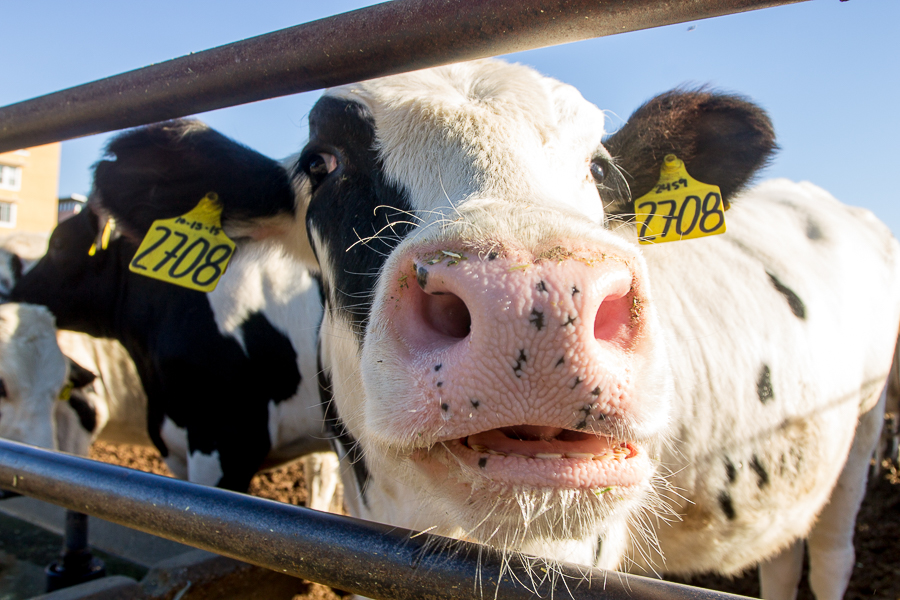
Cows at Tercero. (MEENA RUGH)

How Davis reuses

0
VENOOS MOSHAYEDI / AGGIE

Davis community participates in various reuse practices to help environment

In 2012, UC Davis was named the “No. 1 Coolest School” in the nation by Sierra Magazine due to practices in environmental sustainability. Various events, programs and organizations in Davis uphold these ideals and encourage people to reuse or donate items instead of disposing them as trash, benefitting both the community and the environment.

According to the Environmental Protection Agency (EPA) website, the benefits of reducing and reusing include “prevent[ing] pollution,” “reduc[ing] greenhouse gas emissions that contribute to global climate change” and “sav[ing] energy [and] money.” The site also suggests donating unwanted items to “prevent usable goods from going into landfills” and “help your community and those in need.”

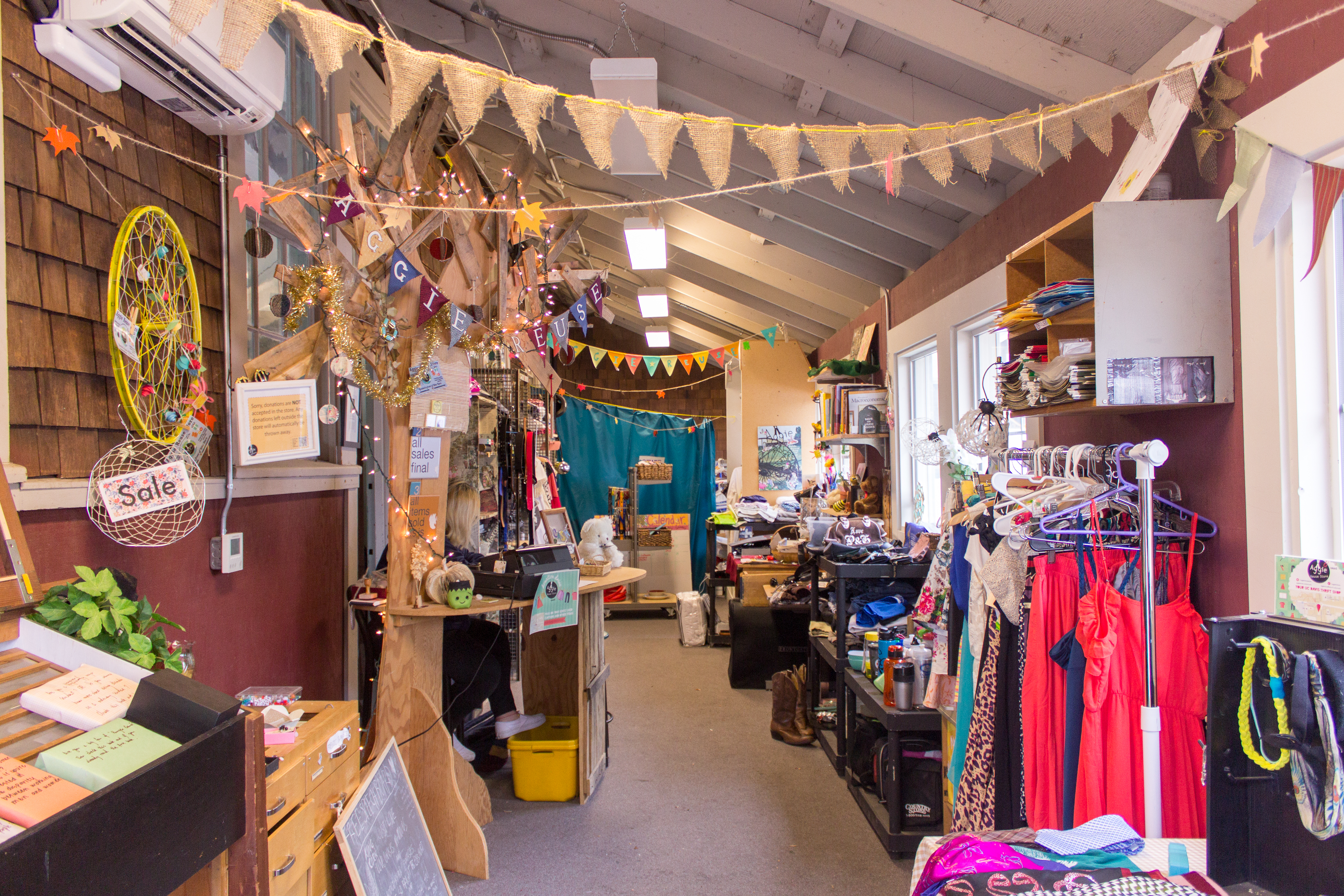
One of the most prominent examples of reusing at UC Davis is the Aggie Reuse Store, an on-campus thrift store located near the Silo by the EcoHub and ASUCD Bike Barn.

Open from 10 a.m. to 4 p.m. Monday through Friday, the store sells a wide variety of items — including clothing, books and school supplies — and all at affordable prices. All items sold at the store are donations from the UC Davis community.

“With our store itself, our goal is to redistribute materials back to the community at a low cost and to facilitate that cycle of reuse and recycling,” said Nicole Garcia, third-year communication major and director of the Aggie Reuse Store. “But ultimately our goal is that we want to serve the community by showing them the value of reuse and open people’s minds. [We want to show] how good [reuse] can be for you and your community and for the Earth.”

The Aggie Reuse Store was first conceived by design professor Ann Savageau, and was proposed to ASUCD in 2011. The program was then established as an ASUCD unit, and the store officially opened for business in Jan. 2012.

Aside from selling donated items, the Aggie Reuse Store also organizes art workshops where visitors can create crafts from used materials, as well as educational workshops to teach the public about environmental issues.

“Ultimately, the workshops are […] more personal,” Garcia said. “They’re a chance for the public to come in and get a different [reuse experience] than [in] the actual store. [They’re] an opportunity for you to come and learn how to use a material you might see every single day [as] something else.”

The Aggie Reuse Store also accepts donations given to the service desks of the three campus dormitory areas — Segundo, Tercero and Cuarto. The store can receive items from the lost-and-found of the Student Community Center, the Memorial Union and the Activities and Recreation Center as well.

“If things are still useful, why not just pass them down?” said Yudith Roman, second-year psychology major and Aggie Reuse Store sales intern. “There’s already so much trash everywhere. [In my hometown] there are always clothes everywhere on the [ground]. It’s kind of nice to see the difference [between] back home, and what they do to their trash [and] here.”

UC Davis’ sustainability efforts can be seen all over campus. Waste bins specific to compost, recyclables and landfill can be found in dining areas and along campus sidewalks.

Reusing is even implemented in school events such as the annual Whole Earth Festival which provides art, food and entertainment to the community while promoting zero waste. The festival’s food vendors use reusable dishes to serve food, and volunteers sort through waste bins to separate recyclables and compost from landfill.

The UC Davis campus is not the only area that reuse efforts are taking place.

Located downtown on 3rd Street is Boheme, a thrift store that sells various used clothes and accessories, as well as crafts and clothing pieces made and decorated by the store owner, Yelena Ivashchenko. Boheme has been at its current location for three and a half years. Only a few blocks away from campus, the store is popular among students in search of inexpensive and vintage items.

“The vibrant energy in the store and colors and fun atmosphere [make it special],” Ivashchenko said. “[For] the ‘Fill the Bag for $1’ event […] there are items that we’re trying to give back to the community, [and] we stick all of the items outside. It’s crazy. [300] or 400 people show up and they fill a whole bag for $1.”

Boheme is not a typical thrift store. Instead of having been donated, the clothes sold at the store are actually bought secondhand from local students and residents.

Those who are interested in selling to Boheme bring in their used clothes on one of the store’s trade-in days or during a scheduled appointment. Ivashchenko then handpicks the items she wants to add to her store’s collection.

“[In the store] I try to accommodate […] everybody’s tastes — different crowds, different age[s] — so you would see huge variety,” Ivashchenko said. “[I] always just have to look at what [I] have, fix stuff and make it happen: patching holes, putting new zippers, putting new items [on clothes] and just giving [them] new life.”

The store accepts the most trade-ins during the month of August, when many graduated students are preparing to move out of town. The sellers are paid right on the spot with either cash or store credit.

Boheme, the Aggie Reuse Store and the Whole Earth Festival are only a few of the many ways the people of Davis encourage reusing to contribute to a happier, healthier environment.

“I absolutely love what I’m doing,” Ivashchenko said. “I think all my life I just believed in the purpose of recycling and making things out of nothing. Why produce and buy something new when it’s already here?”

Written by: Jennie Chang — features@theaggie.org

University of California system announces partnership with the Boys & Girls Clubs of America

BECCA RIDGE / AGGIE
BECCA RIDGE / AGGIE

Pilot program currently present at UCLA, UCSF, UC Merced

In a statement released on Sept. 28, the University of California (UC) announced the launch of a pilot partnership program with the Boys & Girls Clubs of America that aims to better prepare young students for long-term success in college.

According to the statement, 6,000 students will be reached through this effort. The initial UC campuses participating in the program are UCLA, UCSF and UC Merced. Each school is partnering with a specific Boys & Girls Club: the clubs of Pasadena, San Francisco and Merced, respectively. This partnership began because of UC President Janet Napolitano’s commitment to preparing students for higher education.

“California will continue to make investments to ensure all children, regardless of their zip code, have access to college — the future of our economy depends on it,” said Kevin de León, California senate president pro tempore, in a statement. “I applaud the University of California and the Boys & Girls Clubs for partnering to help in this effort.”

With increased enrollment at UC schools planned and already in progress, a goal of this program is to ensure that qualified students enter UC schools.

“This is our largest entering class of Californians, the most diverse ever and one of our most accomplished academically,” said Monica Lozano, UC Board of Regents chair, in a statement. “We’re encouraged by the outcomes of our efforts this year, but there’s much more work to be done. Our collaboration with the Boys & Girls Clubs of America will make it possible for more youngsters to get the information and guidance that will prepare them for a UC education.”

The planned program focuses on interacting with both the students in the Boys & Girls Clubs and the staffs of these clubs.

UC will provide club members and their families with college and career readiness information, support and resources,” said Claire Doan, a media relations officer for the UC Office of the President (UCOP), via e-mail. “Boys & Girls Clubs will provide current students in UC’s Early Academic Outreach Programs (EAOP) with leadership opportunities and access to Club facilities, including Club Teen Centers.”

According to Doan, the Boys & Girls Club partnership builds on existing EAOP goals to help underprivileged students.

“EAOP is one of UC’s signature academic preparation programs for middle school and high school students,” Doan said via e-mail. “EAOP designs and provides academic development services delivered in partnership with schools to provide educationally disadvantaged California students the skills and knowledge needed to succeed at UC and elsewhere.”

If it is successful, the program will expand to more than just the three trial campuses.

“The University and the Boys & Girls Club will complete an annual report on partnership activities and outcomes,” Doan said via e-mail. “The plan is to expand the partnership to additional campuses and Clubs, with the potential to reach tens of thousands of Club members over time.”

Written by: Kenton Goldsby – campus@theaggie.org