57.6 F
Davis

Davis, California

Tuesday, December 23, 2025
Home Blog Page 690

Art after dark

CHELBERT DAI / AGGIE

Pence Gallery hosts interactive art program

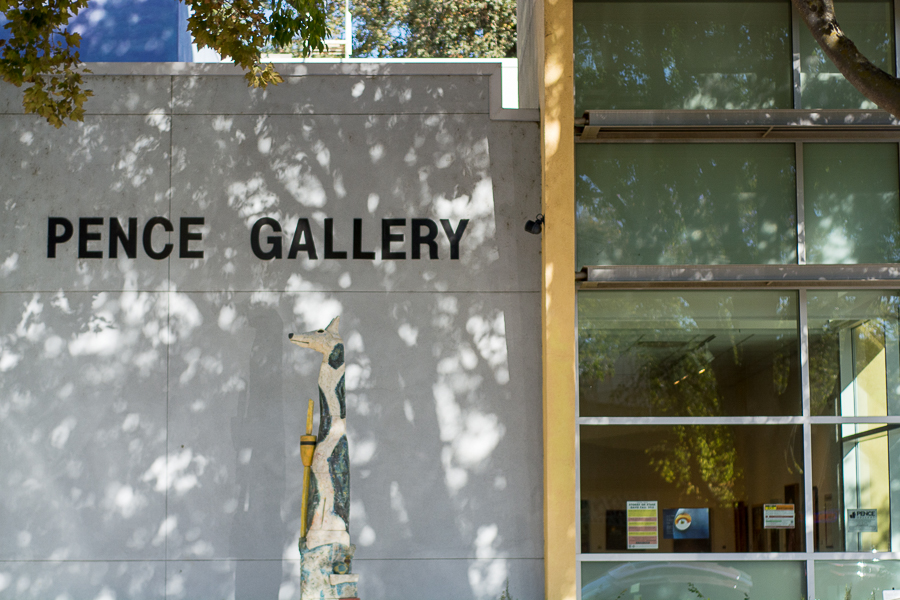
Art museums can often be seen as stuffy or intimidating. Rarely are they associated with bustling atmospheres, live performances, or even food and drinks. The Pence Gallery is different. The gallery, located on D St. in Downtown Davis, aims to defy these norms with its Art After Dark events, a series of interactive art programs hosted on the first Friday of each month.

The series, which is the brainchild of Natalie Nelson, the Pence Gallery director and curator, mixes live music, performance and hands-on art. Each program has a theme based on the current exhibits and also tries to connect the public with working artists.

“It started as an idea in my head, based on some fun times that I had in museums,” Nelson said. “The gallery was the location for collaboration with others, and learning without a capital ‘L.’ We try to keep it inexpensive for students [admission] is $8 for live music, all the activities and free food.”

Themes are chosen in relation to downstairs exhibits that visitors would find interesting. Currently, the gallery is working with Third Space Art Collective and other organizations to host exhibits with free food and live music.

“Our coordinator Stephanie does most of the planning in terms of activities — I guide her to people in the community who I think are great artists and good with the public,” Nelson said. “I’ve done art for over 20 years in museums so hands-on learning is what I love. So far, we have gotten some local businesses such as Hot Italian and Lagunitas to donate foods and drinks to us, and we’d like to see more working with the local business community.”

Art After Dark is a difficult program to plan, according to Stephanie Kocsik, Pence Gallery special events and social media coordinator. Because the event is so unique, many exhibits are planned from scratch.

“I sit down with the calendar of exhibitions for the year and brainstorm ways to integrate the concepts found on the walls into a Friday night party,” Kocsik said. “I have to think about what’s happening tomorrow and what’s happening months from now and attempt to coordinate these events by finding sponsors, seeking out donations, managing the finances of the Art After Dark grant, designing posters, recruiting live music performances, planning a bar man and making sure all of our permits with the city have been approved.”

The aim for Art After Dark is to bring art to a relaxed and fun environment for everyone in the community. Unlike events that focus solely on art, Art After Dark is focused on getting people inside the gallery and presenting the gallery as an accessible space.

“In proposing Art After Dark, one of our main aims was to bring more Millennials into the gallery,” Kocsik said. “To the younger generation, art galleries seem like a stoic, pristine and aloof atmosphere and art itself seems like a world that is incomprehensible without an MFA in fine art.”

Christopher Tran, third-year art studio major, is interested in Art After Dark, and hopes to attend the next event.

“It’s cool that art is being displayed in a relaxed environment,” Tran said. “I think the live music and the welcoming atmosphere are also good reasons to go.”

The next Art After Dark event will take place at the Pence Gallery on Nov. 4 from 7 to 10 p.m. For tickets and more information, please visit the Pence Gallery’s website.


Written by: Jennifer Duong – arts@theaggie.org
Hot Italian — a healthy type of pizza

JAY GELVEZON / AGGIE

Restaurant offers variety of pizza made from local, organic ingredients

As an international student studying in the United States, I must admit that I have mixed feelings about American cuisine. Juicy hamburgers, cheesy pizzas and extra-large Cokes are all part of my U.S. guilty-pleasures list. I always feel satisfied when eating these foods, and I feast like there’s no tomorrow.

But the pleasure comes at a price; after eating, I need to spend a solid two-hour session at the gym. Luckily, I recently discovered a healthier alternative which satiates all of these guilty pleasures and saves me from a sweaty workout.

I first spotted Hot Italian — the newly-opened Italian pizza restaurant located in Davis Commons, downtown at 500 1st St.  — at the end of Spring Quarter 2016. Last Saturday, I finally had the opportunity to try out this new restaurant and learned about the owner’s endeavor to uphold the Davis community’s healthy and environmentally-friendly lifestyle.  

JAY GELVEZON / AGGIE

Hot Italian is a REAL-certified restaurant, which is a “nationally recognized mark of excellence for food and foodservice operators committed to holistic nutrition and environmental stewardship,” according to the United States Healthful Food Council (USHFC).

Hot Italian is the first pizzeria in the United States that has been REAL certified by the USHFC. Not only does the restaurant use fresh, organic ingredients, but its furniture is also made from mostly repurposed materials, such as recycled paper and bamboo.

Hot Italian changes its menu depending on the season and is currently on its fall and winter menu. Customers have about 15 different choices of pizza, including a vegan option, and several choices of salad and desserts. They also serve beer and wine, either produced locally or imported from Italy.

Since it was a chilly Saturday morning, I ordered “Sozzani,” a salad with locally-produced baby spinach and pear; “Materazzi,” Hot Italian’s take on pepperoni pizza; “Gattuso,” a fall special pizza featuring pumpkin; and “Zucchero,” a dessert with Italian hazelnut cream and pear.

Fun fact about the menu: each dish is named after a “hot Italian.” For example, “Sozzani” is named after Franca Sozzani, an Italian journalist and editor-in-chief of Vogue Italia since 1988; “Materazzi” is named after Marco Materazzi, an Italian soccer star.

“Customers sometimes have fun guessing whose names are on the menu,” said Andrea Lepore, a 1992 UC Davis alum and owner of Hot Italian.

JAY GELVEZON / AGGIE

All of the dishes I ordered had colorful and aesthetically-pleasing combinations of different fresh ingredients, which made for a perfect Instagram post for all my friends to envy as they studied for midterms. Pepperoni has always been my favorite pizza, and I noticed that they added pitted olives on “Materazzi,” which is a great revamp of the greasy cheese and pepperoni that you’d normally find at other pizza restaurants.

My personal favorite would be “Zucchero.” Fresh out the oven, the warm dessert made me forget the cold rain showering outside. The sweetness was perfect for me, as I find most American desserts are too sweet, and I absolutely loved the smooth texture of the hazelnut cream mixed with chocolate powder.

The pizzas are about $15 each. For UC Davis students, the restaurant offers a lunch special: $5 per slice on weekdays. You can pre-order pizza from Hot Italian by phone or by downloading the Hot Italian app. Hot Italian also provides delivery service via the Joyrun app. For more information and to view the menu, please visit the Hot Italian website at http://www.hotitalian.net.


Written by: Betty Wu — arts@theaggie.org

Margrit Mondavi: pioneer and friend

0
CAT TAYLOR / AGGIE
CAT TAYLOR / AGGIE

Passing of UC Davis philanthropist invokes friends to speak out

The gateway to UC Davis, just off the Interstate 80 exit, holds one of the most prominent surnames at UC Davis: the Robert and Margrit Mondavi Center for the Performing Arts and the Robert Mondavi Institute (RMI) for Wine and Food Sciences.

Margrit Mondavi (nee Kellenberger), lover of the arts and generous philanthropist passed away on Sept. 2, and, in turn, the UC Davis community lost a great friend. Her presence on campus is visible in the many contributions she made and in the relationships she established within the community.

Mondavi emigrated to the U.S. from Switzerland, travelling around the world as an army wife before settling in Napa in 1960. In Napa, she began working at the Robert Mondavi Winery and was active in bringing together wine and the arts. Robert — a Northern California native, Stanford graduate and advocate for the up-and-coming Napa wine region — married Margrit in 1980.   

“She was an immensely well-read and very sophisticated person,” said Jessie Ann Owens, professor of music and close friend to Mondavi. “There was a kind of simplicity and directness about her. She connected with anyone around her and was just a real nice and genuine person.”

Part of what made Mondavi’s impact on the campus unique was the connection she forged with the community of students, faculty and staff.

“She was special because she cared […and] was infinitely curious about individuals,” Owens said. “When she went into a room [it] lit up, because she would put all her attention in talking to people. So, in making these gifts to UC Davis she was helping students in generations to come.”

The Napa Valley Register credits Mondavi as one of the people to put Napa Valley on the map as a world renowned wine region. Her multiple ventures in bringing art, wine and cuisine together included founding the Summer Concert Series at the Robert Mondavi Winery in Napa.

“We talk about pairing wine with food, arts, and music but she really put that idea on the map,” said Sarah Colwell, senior manager of marketing and development communications for development and alumni relations at the Cal Aggie Alumni Association. “She saw this opportunity to easily connect the things that she enjoyed to elevate them and make them more enjoyable for everyone and then she shared that. She was very generous in sharing that life perspective with others.”

The Mondavi family gifted the school with the money to build the Robert Mondavi Institute for Wine and Food Science and the Mondavi Center for Performing Arts. Mondavi’s final contribution to the school was the initial $2 million gift that began the construction of the Jan Shrem and Maria Manetti Shrem Museum of Art, which opens next month.

“There is a whole corridor of our campus that would not exist if it were not for her and Robert’s philanthropy,” said Shaun Keister, vice chancellor for development and alumni relations. “She brought countless opportunities through the [Mondavi Center for Performing Arts] and through the Robert Mondavi Institute to our whole community. We have benefits to the community that would not be available if it were not for their generosity.”

Mondavi’s devotion to the university stemmed from her and her husband’s interest in improving winemaking, and continued as she found the opportunity to bring together wine and the arts.

“[UC Davis’] values and priorities matched [hers],” Keister said. “First and foremost […] wine and our program helped them as winemakers over the years. In some ways that gift [of the Robert Mondavi Institute for Wine and Food Science] was about appreciation. I think the Mondavi Center gift was much more tied to a personal passion for the arts and wanting to bring that to life here for our […] community.”

Mondavi continued to support and give gifts to UC Davis after her and her husband’s initial donation for the RMI and the Mondavi Center, including scholarships for students in the College of Agriculture and Environmental Sciences. Her support was indicative of her dedication to furthering the opportunities that students had for progressing their education.

“One of the most amazing things to me about Margrit was how much she cared about the students,” Owens said. “She enjoyed meeting them and hearing about their lives and about their projects and so it was absolutely significant that she and Robert wanted to make a commitment to UC Davis.”

Mondavi was also involved in a fundraising campaign for the school in which she served as a co-chair of the volunteer campaign committee. At its inception in 2010, the campaign aimed to raise a $1 billion through donations made to the school over a span of the next few years. When that goal was reached in 2013, Mondavi went as far as making an appearance for a media event that recognized the achievement.

“Neither [she nor her husband were] an alum of the school, but they could see the good work that UC Davis was doing in so many different areas,” Owens said. “They just believed in UC Davis. It is remarkable that the campus has friends like Robert and Margrit, and it speaks well to the campus.”

Mondavi paved the way for art, wine and cuisine to come together across different venues. Her dedication to the university helped foster cultural interest and provided many opportunities for students and faculty to continue in these fields.

“She really gave us a chance to dream big,” Colwell said. “She helped us dream […and gave] us the support and the vision that we needed. The gateway is such beautiful place on campus, and now the art museum is opening. It is beautiful space now that everyone can be proud of and I really do not think we would have that if it were not for Margrit.”  


Written by: Amanda Cruz — features@theaggie.org

The Minority Report: The rise of Trumpsplaining

MICHAEL VADON [CC BY-SA 4.0] / WIKIMEDIA COMMONS
What Trump interrupting Clinton says about our culture at large

During the final presidential debate last week, Hillary Clinton demonstrated yet again how difficult it is for a woman — or any marginalized group, for that matter — to have a conversation with an ignorant, white, cisgender man without being interrupted.

Donald Trump managed to interrupt Clinton a total of 37 times, according to Vox. Compare this to Clinton, who interrupted Trump nine times. Most of the interruptions Trump made were to oppose Clinton or to try and correct her, but there were a few comments that stood out above the rest.

Among the usual “wrong,” which he often repeats at least twice, and “I never said that,” Trump also employed classic verbal-assault strategies typically used by a neighborhood bully.

This debate, he decided to taunt Clinton: “You have bad judgement,” he said. “You do.” He then went on to say Bernie Sanders has also accused Clinton of poor judgement, an insult he recycled from previous debates.

These are all examples of what’s being called “Trumpsplaining.” It’s a form of mansplaining that also emcompasses other strategies used by Trump during the last three debates, including but not limited to verbal assaults, nonsensical explanations and a general avoidance of answering questions. Trumpsplaining most frequently occurs when he interrupts people.

Trump’s habitual interrupting and bullying reflects what we already knew to be true about gender and interruption. A 2014 study concluded that women are interrupted more frequently in conversation than men are. Not only that, but men also tend to interrupt people in general more than women do.

There are many factors behind these findings. For one, women are traditionally considered submissive to men, so they are the perfect targets. But it’s not just about gender roles. It’s the fact that, in society, the dominant person is white, straight and male. Dominance ultimately means power, and power means being able to oppress other groups of people. This force is what causes people to subconsciously interrupt and silence others.

Boston University lecturer Susan Lee told the Boston Globe that perceived status and sense of entitlement are why men interrupt women more often. Women are not the only group who are perceived as non-dominant to straight, white men. One dominant group in society means that many other groups are unaccounted for, though other groups may experience similar workplace interruptions.

And like Clinton, other non-dominant individuals must put up with incessant interruptions; for some people, their careers and sometimes even their safety are on the line.

In Trump’s case, it’s not just that he constantly interrupts Clinton — it’s what he actually says. In the most recent debate, he interrupted Clinton by calling her “such a nasty woman” on live, national television. This is just another example of Trump’s misogyny. Despite multiple allegations of sexual assault against him and the release of a tape exposing Trump’s sexual assault rhetoric, he remains steady in the race for the presidency.

Trump continually uses his very powerful platform as a presidential candidate to spew hateful rhetoric about all groups of people, and this is precisely what makes him horrendous.

Trump has more power, visibility and exposure than the average working man, yet his blatant disregard for others, degradation, name-calling and acts of oppression go mostly dismissed. He may get backlash, but what good is that if he’s still considered a presidential candidate?

What type of message is that sending to people who harbor these same hateful prejudices? And when a presidential candidate has been allowed to progress this far, in spite of all he’s said and done, we have to wonder how much social progress we’ve actually made as a country.

At this point in the race, everything Trump does and says only reaffirms what many people already know: that he is unfit to be president.


Written by: Jeanette Yue — jyyue@ucdavis.edu

Disclaimer: The views and opinions expressed by individual columnists belong to the columnists alone and do not necessarily indicate the views and opinions held by The California Aggie.

At The Crossroads: The importance of humanity to artificial intelligence

CYRTERIA [CC BY-NC 3.0 US] / DERIVATIVE WORK: MORNINGLEMON / CREATIVE COMMONS
AI without ethics could prompt the downfall of mankind

Well, Aggies, we’re rapidly approaching the scariest day of the year again. (I’m of course referring to Halloween and not the 2016 presidential election, although at this point the two are nearly interchangeable).

It’s only fitting, then, that we celebrate by exploring the spooky uncertainties surrounding artificial intelligence (AI) — a rapidly-developing technology that Stephen Hawking chillingly predicted could potentially end humanity.

Once a mere dream penned by sci-fi writers, AI is now deeply imbedded in our daily lives, from Google’s self-driving cars to computerized personal assistants like Siri. Most autonomous machines offer societal advantages, like increased space and ocean exploration, safer work environments, stronger health care and even better recommendation engines on streaming sites like Spotify and Netflix.

But Hawking probably isn’t worried about an AI that enables your binge-watching habit somehow becoming a sentient killing machine.

One of the most disturbing predictions for the development of AI is computer scientist and mathematician Vernor Vinge’s hypothesis of the “Singularity” — an eventual burst of accelerated and uncontrolled AI advancement that will leave slow-evolving, intellectually-inferior humans in its dust.

Vinge argues that superintelligent AIs will one day advance themselves beyond our species’ comprehension, dethroning humans as Earth’s reigning creatures.

Nathan, the reclusive genius in Alex Garland’s 2015 thriller Ex Machina, agrees with Vinge’s theory, declaring: “One day the AIs are going to look back on us the way we look at fossil skeletons on the plains of Africa: an upright ape living in dirt with crude language and tools, all set for extinction.”

Still, as the CEO of a software company, Nathan strives to push the limits of AI, recruiting a young programmer, Caleb, to administer the Turing test — a measure of a machine’s ability to pass as a convincing human — to Ava, Nathan’s AI creation in the movie.

Ava’s kindness, wit and beauty gradually convince Caleb (and the audience) that she’s not just a humanlike robot, but a complex, emotional and virtuous individual almost indistinguishable from a genuine human being.

But Ava is anything but genuine. To break free from her imprisonment, she’s been manipulating Caleb all along, mercilessly exploiting his sexual attraction to her while capitalizing on Nathan’s arrogance, drunkenness and misogyny. Sadly, poor Caleb is as blind to her facade as Trump is to his dwindling poll numbers.

So, after finding Nathan’s horrifying closet full of the lifeless and dismembered bodies of former AIs, Caleb ardently decides to help Ava escape from her captor. The film ends with Ava murdering Nathan, coldly abandoning Caleb in the locked facility and blending in with the faces of a bustling city, dressed in the lifelike skin of terminated AIs.

Ava’s ruthless determination exemplifies skeptics’ concerns about the decision-making processes of digital-intelligence systems. After all, Ava isn’t explicitly malicious — she’s simply surviving in accordance with her programmed goals. But without a moral compass, Ava can calmly overstep ethical boundaries inherent to humankind.

Nick Bostrom, a philosopher and physicist, explained in an interview with Slate that highly-advanced AIs can corrupt even the simplest tasks.

Say, for example, that an AI is programmed to harmlessly manufacture paper clips at maximum efficiency. Bostrom asserted that, because humans can switch off AIs and consequently halt the production of paper clips, a superintelligent AI might rationally kill any person posing a threat to their mission.

Therefore, with more dangerous objectives and a continual lack of moral conscience, superior AIs could potentially eradicate the human race.

Fortunately, many leading developers are attempting to counter the existential risks of AI.

The billion-dollar non-profit OpenAI researches and promotes the development of friendly AI — systems that benefit rather than harm mankind. Backed by Elon Musk, the CEO of Tesla who deemed AI “potentially more dangerous than nukes,” the project aims to incorporate morality into the algorithms of intelligent systems.

Stanford’s One Hundred Year Study on Artificial Intelligence further works to predict AI’s effects on all sectors of society, encouraging cooperation between computer scientists and other thinkers, such as philosophers, psychologists, doctors and political scientists.

Collaborations like these are vital to ensure that AI progresses enough to fulfill its potential as an extraordinary invention — without progressing so far as to become our last one.


Written by: Taryn DeOilers — tldeoilers@ucdavis.edu


Disclaimer: The views and opinions expressed by individual columnists belong to the columnists alone and do not necessarily indicate the views and opinions held by The California Aggie.

What HomeBoy Industries can teach us about combatting gang, gun violence

FRANKIELEON [CC BY 2.0] / FLICKR
Non-profit organizations have a role in solving the public health crisis of gun violence

There’s a mixed sense of eye-opening wonder and clarification when you learn about something that you’ve never been exposed to before.

Coming from an ethnocentric, relatively sheltered bubble in my hometown, I was frankly stupefied when I attended a conference called “Carry the Vision” a few years ago. Led by Father Greg Boyle and facilitated by many fascinating and passionate individuals, the conference centered around building a bridge between the poor and marginalized and those with more privilege and opportunities.

Father Boyle, an unbelievably kind-hearted man whom I had the pleasure of meeting and speaking with, is the founder of HomeBoy Industries.

HomeBoy Industries strives to provide rehabilitation and support systems to formerly gang-involved and previously incarcerated men and women with the aim of redirecting their lives in a more positive and safe direction.

It was through this conference and Father Boyle’s inspiring work that my interest in gang violence and the inevitable gun violence that comes with it was piqued.

The hopelessness that accompanies dealing with an abusive family or a poverty-riddled lifestyle is what puts guns into the hands of youth who aren’t even old enough to understand their power.

According to the Centers for Disease Control, 92 to 96 percent of gang-related homicides involved firearms, compared to 57 to 86 percent in non-gang related homicides. Although gang violence does not account for the majority of gun-related deaths, it does contribute to a portion of it, so finding ways to combat the root of the gun-related gang violence problem is absolutely relevant to a larger discussion of the topic.

HomeBoy Industries aims to do just this by reducing the effects of gun violence in large cities like Los Angeles and Chicago. The non-profit organization provides a means of education and job training for previously gang-involved individuals as alternatives to the devastating violence present in their lives.

HomeBoy offers 50 different classes for young and old people alike, giving those without high-school degrees the tools to go on and obtain their GED. Mental health, domestic violence and substance abuse support groups, as well as small but meaningful things like tattoo removal, are other powerful rehabilitation methods that HomeBoy Industries provides to those who are committed to making a change in their life.

The best part is that it’s all free. Volunteer clinicians give their time to provide psychotherapy to those traumatized at an early age by violence and loss. Substance abuse specialists engage in one-on-one meetings and counseling free of charge. Conferences, such as the one I attended, were available on a first-come, first-serve basis to those who wanted to attend.

The problem is actually getting people there. Be it fear of retribution or a fear of the unknown, many individuals often shy away from making that first step toward a better life. The only solution is to provide the means of change to these gang-involved individuals and let them make the choice of whether or not they want a more positive future.

The questions we ask are vitally important, because questions are what lead to potentially transformative answers. And the important question that HomeBoy Industries asks isn’t about gun control or legislation to help suppress gang-related crimes. The question that they ask has more to do with how we, as individual members of society, can improve the public safety and health of our country.
Gang-related gun violence is not truly a matter of the actual weapon in use. It’s really a matter of public health and an epidemic that, though easier said than done, can be cured by techniques that foster a sense of hope for the future in the form of education and work.


Written by: Tamanna Ahluwalia — tahluwalia@ucdavis.edu


Disclaimer: The views and opinions expressed by individual columnists belong to the columnists alone and do not necessarily indicate the views and opinions held by The California Aggie.

Humor: UC Davis to triple size of student body, decrease size of campus

KATIE LIN / AGGIE FILE

A detailed look at coming changes to our campus that will definitely not have any consequences.

It’s been evident lately that there are more bodies on campus this fall than in years past. Bike circles are terrifyingly crowded, the CoHo is constantly packed and all the construction certainly has not helped alleviate the crowds. But wait, there’s more.

Acting Chancellor Ralph “I’m Gonna Wreck It” Hexter announced a plan recently to not only triple the size of the student body over the next year, but also to cut down on the amount of space on campus for getting around.

“We’re going for a very minimalist look for our campus,” Hexter said. “So we’ve decided to shrink all the bike paths and take away all the sidewalks on campus, just to really make sure our students are getting well acquainted with each other when getting to class. Also, since we’re admitting so many more students and building no new classrooms, we are going to initiate a policy of lap-sitting in classes! If you thought double-decker buses were exciting, now we have double-decker lecture seating! The only way to truly absorb information these days is to have someone sitting on top of you while you learn. It’s going to be fantastic. And the best part of it is that it won’t affect me at all!”

The Aggie asked some students what they thought of the new “improvements” coming to UC Davis.

“I’ve really been wanting a way to feel more connected with my peers, and I think sitting right on top of them while we learn will create a real sense of community, so I’m looking forward to it,” said Karina Thompson, a second-year communications major and semi-pro basket weaver.

But not everyone was as thrilled to hear about the new changes.

“To be honest I was expecting a bit more,” said Ryan Flannigan, a third-year landscape design major and former elementary school mathlete. “I think they could have also decided to tear down the library, the student center and every on-campus restaurant. They could also cover the quad in tons of manure. But that would mean that they cared about students, which they obviously don’t.”

Other changes that the administration will be making include uninstalling half of all bike parking to reduce “clutter,” firing most, if not all, professors in all departments, putting every single building on campus under construction and reducing Unitrans to a single bus to drive all routes at the same time in an effort to cut down on air pollution.


Written by: Brian Landry — bjlandry@ucdavis.edu

UC Davis women’s volleyball enters second half of season with a victory

0
BRIANA NGO / AGGIE
BRIANA NGO / AGGIE

Aggies come away with 3-1 win against Cal State Fullerton

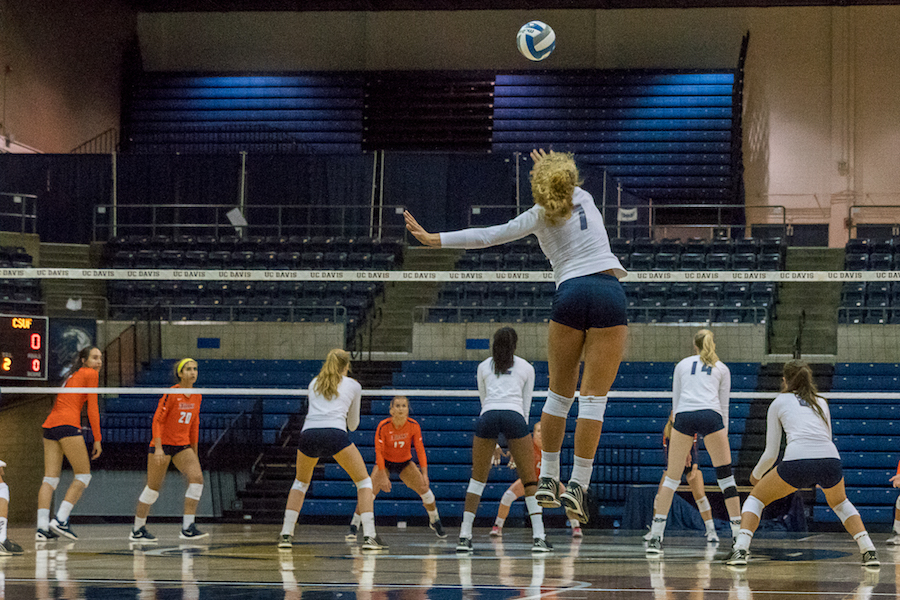
The second half of Big West Conference gameplay commenced on Saturday, Oct. 22, and the fourth-in-league-ranked Aggies arrived at their home court determined to remain contenders for a postseason playoff position by defending their turf.

Though the game wasn’t without its obstacles, the UC Davis women’s volleyball team fended off the Cal State Fullerton Titans and emerged from the match victorious with set scores of 25-20, 25-20, 26-28 and 25-21.

The Aggies played with a “slow and steady wins the race” style; their consistently accurate serve-receive, evident communication and domination at the net allowing them to cruise through the first two sets with ease.

The Aggies looked to their outside hitters to deliver the heat, with senior Kendall Walbrecht spiking ten kills and sophomore Emily Allen adding an additional seven kills to the scoreboard in the opening two sets.

The Aggies’ defense also impressed, as sophomore libero Malia Bolko easily picked up nine digs to start a trend of reliable defense during the game.

At the beginning of the third set, the atmosphere in the arena was electric with the promise of a quick triumph, but it was quickly muted when back-to-back receiving errors and a service error by the Aggies gave the Titans their first lead in the entire match at 6-5.

BRIANA NGO / AGGIE
BRIANA NGO / AGGIE

The Aggies tried to brush off the mistakes and regroup in order to maintain control of the game, but lack of communication on the court and shaky ball handling offered the Titans a growing cushion of points.

Dynamic plays emerged from both sides of the net, but it became clear that the Titans’ confidence was growing while the UC Davis women’s volleyball team’s stamina was dwindling; at 24 points each, the teams exchanged marks until a service error gave the Titans the third set at 28-26.

BRIANA NGO / AGGIE
BRIANA NGO / AGGIE

Head coach Dan Conners credited the disheartening third-set loss to indecisiveness and unforced errors on UC Davis’ end.

“We were looking to make plays instead of looking for a teammate to make plays,” Conners said. “[I] just sat them down and said we need to change the energy we are playing with, and I can’t do that for them.”

Though the nail-biting third-set loss left the crowd dejected, the Aggies recognized their mishaps and returned to the fourth set with a new approach to wrap up the match with a win.

In spite of a net violation which allowed the Titans to inch forward for an early lead, the Aggies’ gameplay intensified both offensively and defensively as the set progressed. Trailing at 9-11, a well-placed tip by junior middle blocker Aima Eichie, plus an explosive block by Eichie and sophomore middle blocker Kelechi Ohiri revived the energy in the arena, and started the comeback for the UC Davis women’s volleyball team, which was pushed into the lead at 12-11.

The Aggies then began scoring consecutive points through an ace by freshman outside hitter Lauren Matias and a kill by sophomore outside hitter Brianna Karsseboom, respectively, putting pressure on the opposing Titans, who began to make unforced errors.

Though the set didn’t end swiftly, with the Titans occasionally getting a few smartly placed looks, the audience roared as the Aggies pursued victory, ending the match at 25-21 with a kill from Matias.

The win over the Titans marked the first victory in the second half of league play, setting a good tone for the Aggies’ postseason rankings.

“I think in that fourth set the seniors really banded together to motivate the team as much as possible,” Walbrecht said. “We were excited to go into the fourth set and just change our energy and have fun.”

Written by: Alex Arechiga — sports@theaggie.org

This Week in Senate

HANNAH LEE / AGGIE
HANNAH LEE / AGGIE

ASUCD convened for its weekly senate meeting on Oct. 13, 2016. All senators were present, although Adam Xu and Josh Dalavai were late to the meeting. Vice President Abhay Sandhu called the meeting to order at 6:11 p.m.

Campus planner Lucas Griffith started off the meeting with a presentation about the Long Range Development Plan (LRDP) for 2017 to 2027. The last LRDP was carried out in 2013. Although there are potential issues with the plan, the senators felt most concerned about the student housing units planned to be built on Russell Field, a space used by many UC Davis intramural, club and ICA athletic teams. Senate asked Griffith to relay its concerns to campus planning and to keep the senators updated on further developments.

Later in the meeting, ASUCD made a number of appointments and confirmations to different branches, including Business and Finance, the External Affairs Commision and the Elections Committee.

After a recess, Sandhu called the meeting back to order at 8:45 p.m. The first legislation on the agenda was constitutional amendment #49, which would move to dissolve the Judicial Branch of ASUCD.

Senators discussed the effectiveness of the Judicial Branch, noting that most of the responsibilities go to the Internal Affairs Commission (IAC). IAC chairperson Nick Flores said that a bill would be written to give powers of the court to the IAC if the amendment passed.

With a roll call vote, the senate moved to pass constitutional amendment #49 and place it on the fall 2016 ballot with a 10-1-0 vote, with Senator Sofia Molodanof voting against the amendment.

Sandhu adjourned the meeting at 10:38 p.m.

Written by: Ivan Valenzuela — campus@theaggie.org

UC Davis College of Engineering launches summer bridge program for first generation students

LAURA HACKETT / COURTESY

How building a community in engineering is keeping students in college, providing resources, networks

UC Davis prides itself in keeping students in school, and with a 90 percent first-year and 86 percent transfer-student retention rate, it’s earned the right to be proud. One of the ways that UC Davis keeps students from dropping out is through specialized retention programs like Leadership in Engineering Advancement, Diversity and Retention (LEADR), a group specifically designed for first-generation engineering students.

“[LEADR] was actually a request from our then College of Engineering dean, Enrique Lavernia, who wanted our college to have a diversity program,” said Tanya Whitlow, the director and founder of LEADR.

Whitlow clarified the difference between LEADR and a similar summer program called Special Transitional Enrichment Program (STEP), meant for first-generation students of all majors.

“We work closely with STEP […] We advise [their engineering students] and also have workshops for them during their [summer program],” Whitlow said. “That’s what prompted us to think about creating our own summer bridge program, because we realized that with STEP, we were working with an average of 35 students a year. We don’t know [which populations we weren’t reaching]. We just knew that there weren’t just 35 first-generation engineering students.”

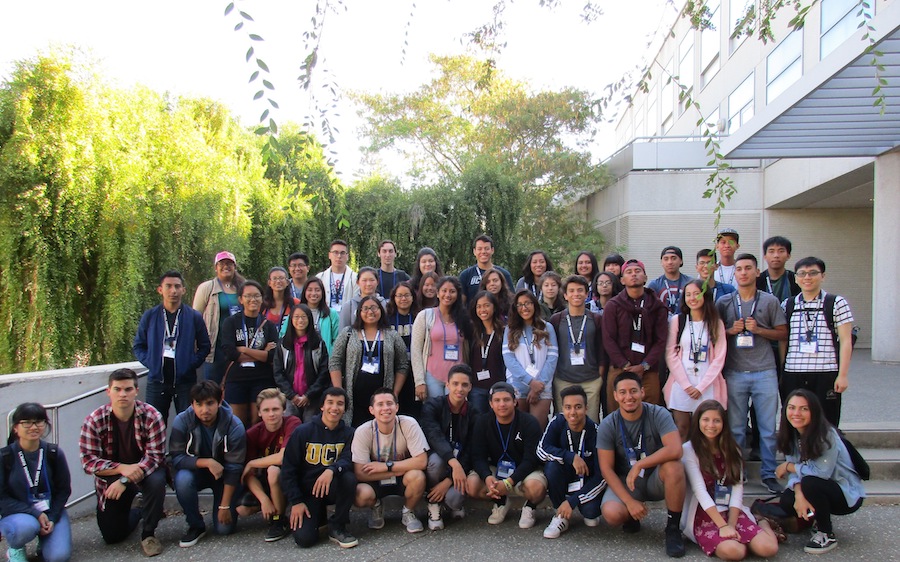
The pilot LEADR summer program launched the week before the start of the 2016 to 2017 academic year. A central goal of the program was to expose students to successful professional engineers for advice and inspiration.

“We wanted to concentrate on information that would help them both professionally and academically to give them some early exposure to professional development. Both AT&T and Chevron, [who] fund our program, held professional development workshops,” Whitlow said. “They talked about things like building your resume, interview tips, information about their companies and what engineering positions are available at their companies.”

In addition to offering practical advice, Whitlow wanted the program to encourage student unity within LEADR.

“We wanted them to be able to build communit[ies], like they could in the STEP program [and] have a peer network […] that you can go to class with or study with, and be familiar with the resources both on campus and in the college, so you know where to go if you need assistance,” Whitlow said.

The groundwork for networking seems to be successful, as students have become incredibly attached to the program.

“I remember when the program was about to end, it got kind of quiet because no one was really ready for it to end […] In fact, a student said, ‘can it be for another week?’” Whitlow said.

Maricella Miramontes, a fifth-year mechanical engineering major at UC Davis, was a Resident Mentor (RM) for the LEADR summer bridge program. Miramontes said that the RMs were with the students essentially 24 hours a day.

“We helped them move in the very first day [and got] them settled into the dorms,” Miramontes said. “We were [also] living there overnight.”

In addition to spending time with students at the workshops, held from 9 a.m. to 5 p.m., the RMs ate meals, went to the ARC and played board games with the students. These informal interactions were key in creating a sense of community, which is especially helpful for first-generation students.

“There’s a lot of pressure to graduate [for first-generation students],” Miramontes said. “And [frequently], parents don’t even know what engineering is, and you have to explain to them why you’re going into a very difficult field which sometimes takes more than four years, and it’s hard for them to understand that.”

Although the bridge program was just launched this past summer, LEADR has offered continued support during the academic year for a much longer period. Laura Hackett is the LEADR program advisor. In addition to facilitating weekly group meetings, Hackett meets one-on-one with students on a weekly, bi-weekly or quarterly basis. Hackett was recently awarded the 2016-17 Campus Outstanding New Advisor Award for her work in LEADR.

“I like to think of [these meetings] as getting to know the student better so the program can support them in the best way possible,” Hackett said. “I advise in a very goal-oriented manner, so I like to know what their goals are, and I like to help them achieve those goals.”

According to Hackett, when the program started, they had 31 students. Now, their listserv is just shy of 300 people. Although some are inactive, Hackett says that they have gotten to know most of the people in the program fairly well and that they are adding new students every year.

Despite the increase in students in LEADR, Hackett said she hopes that students feel free to ask for individual help.

“I hope that every student feels welcome. I hope that they feel welcome in my office, I hope that they feel comfortable in the college of engineering,” Hackett said. “Just know that there are people on campus that want to help, and that the main thing for students is just to ask for help when you need it, because there are […] people who [will] pick you up.”

Written by: Meral Basit – science@theaggie.org

UC Davis women’s soccer ousted on Senior Day

0
ZHEN LU / AGGIE
ZHEN LU / AGGIE

Aggies fall short, 2-1, late in the game

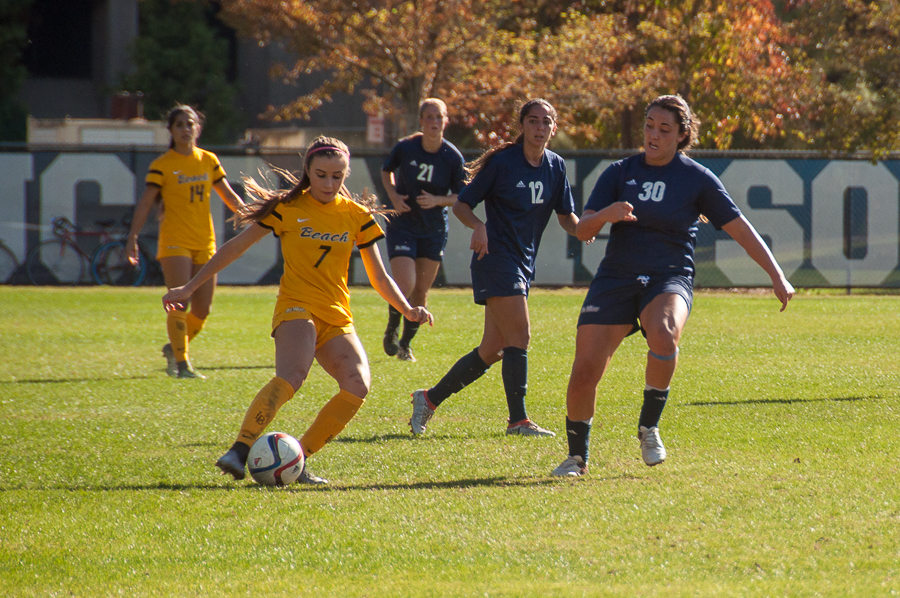
More than 400 fans came out to support the UC Davis’ women’s soccer team last Friday in their final home game of the season against Long Beach State, helping to send off the team’s graduating class of six: senior forwards Rachel Ahr, Andi Damian and Celina Minissian, junior forward Zuzu Romano, and senior defenders Nicole Bouvia and Nicole Smolinksi.

Going into the matchup, the Aggies were tied for fourth place with four other teams in the Big West Conference. In order to advance to the Big West Women’s Soccer Tournament, the Aggies need to claim the fourth and final spot.

UC Davis and Long Beach State played neck-and-neck in the first half, with both teams taking two shots on goal. However, the 49ers picked it up in the second half, scoring in the 66th minute to take a 1-0 lead.

ZHEN LU / AGGIE
ZHEN LU / AGGIE

The Aggies responded in the 75th minute with a long ball from freshman midfielder Hinsseenee Regassa to Bouvia, who beat the Long Beach State goalkeeper to the ball and sent it into the back of the net, which brought the score to a tie at 1-1.

Ahr then tried a shot on goal, but the Long Beach State goalkeeper grabbed it and sent it downfield. The 49ers then capitalized with a decisive goal in the 79th minute to take the game 2-1.

Head coach Twila Kaufman said the team still has hopes for the playoffs going into the final two games on the road.

“[With this loss], we’re right in the middle of everything,” Kaufman said. “We have two more opportunities on the road […] to compete for the final spot in the tournament.”

UC Davis hits the road to try to stay in playoff contention and finish off the regular season at UC Santa Barbara on Oct. 27 and Cal Poly San Luis Obispo on Oct. 30.

Written by: Nicolette Sarmiento — sports@theaggie.org

NBA Season Predictions

0

ERIK DROST [CC BY 2.0] / FLICKR
Here we go! The NBA season is underway and I’m incredibly excited for what we’ve got in store. Who knows what’s going to happen this year? Will the Warriors win by an average margin of 20 or 25 points a game during the regular season? Will they take home the Larry O’Brien trophy in 17 or 18 games? Will Kevin Durant win the Finals MVP? Or will it be Stephen Curry, Klay Thompson, Draymond Green or even Zaza Pachulia? The suspense is killing me!

Yup, I’m a bitter Lakers fan, and while I’m bitter that the Lakers are going to have another sub-.500 season, I’m exponentially more bitter about the lack of competitive balance in this upcoming season. Warriors fans will obviously rejoice, but it’s not going to be any fun for the rest of us.

Here are my predictions for the upcoming season.

NBA Championship: Golden State Warriors (4) – Cleveland Cavaliers (1)

Are you excited for the trilogy? I’m not. This pick doesn’t need much explanation. If you’re looking for something competitive to watch, I’d suggest you go to G St. Wunderbar on their famous Wednesday Funk Nights and observe awkward grad students playing an intensive game of billiards as intoxicated college students stumble on by and accidentally bump the pool stick mid shot. “Do you mind getting out of my way please?” “Nah man, it’s Funk Night, you have plenty of time to play pool in a dimly lit room when you’re in your forties with your three other friends, sipping on Pabst Blue Ribbon. Let me have my fun… I’m graduating.”

NBA MVP: Kawhi Leonard

If Kevin Durant wasn’t a Golden State Warrior, I’d go Steph. If Steph wasn’t a Golden State Warrior, I’d go Kev. Unfortunately for these inevitable victors at the end of the year, they play for the same team. Their numbers will go down. Barring significant injury to the other, neither of these two will win MVP. While a majority of NBA followers believe LeBron will reclaim the MVP trophy, I’m going to choose Kawhi. Ka-why do you ask? Well, Charles Barkley said he’s the best player in the NBA. He’s not, but Chuck said it and he boldly guaranteed the Warriors would not win the Championship last year, so his word is law.

Most Improved Player: Devin Booker

Devin Booker is going to be a star. This pick is definitely not safe with guys like Giannis Antetokounmpo, Dennis Schroder and Victor Oladipo lurking, but hey, neither is allowing your Aggie article about the Blue Jays winning the World Series this year to get printed the same day they got eliminated by the Indians. We all make mistakes, right fellow Aggie sports writer George McConnell?

Rookie of the Year: Kris Dunn

Ben Simmons, the first overall pick, was probably going to earn this one before injuring his foot, but unfortunately it looks like the injury will keep him out until January, which will harm his campaign for Rookie of the Year. In his place I will go with Kris Dunn, the Rookie out of Providence who has seemingly won the position battle over Ricky Rubio for starting point guard. While I haven’t followed Dunn particularly closely, I like him over Joel Embiid, who’s going to have a season of distraction as his quest to earn the love of Kim Kardashian continues.

Sixth Man of the Year: Brandon Knight

Wait, what? He’s still around? I thought he retired after Kyrie Irving broke his ankles in the 2013 Rising Stars Challenge. If that were me, I would sever ties with my aspirations of becoming a professional basketball player. Fortunately enough, that has never happened to me and I’m still trying. I’ll get there one day — I haven’t peaked yet, and neither has Brandon Knight.

Sportsmanship Award: Nick Young

Are him and D’Angelo chill? I mean, Young hasn’t been released or traded, so probably. Good for you for not holding grudges, Swaggy P, good for you.

Written by: Michael Wexler sports@theaggie.org

Treasure Island Music Festival: More than just music in the forecast

BRIANA NGO / AGGIE
BRIANA NGO / AGGIE

Festival endures storm, sets delayed and cancelled

Treasure Island Music Festival — the brainchild of Another Planet Entertainment and Noise Pop’s collaboration— held its 10th anniversary (and very last) festival last weekend, Oct. 15 to 16.

For a Bay Area festival held each October for over a decade, I really can’t help but wonder how TIMF had never previously experienced rain. That is, until last weekend.

But describing the festival’s climate as “rainy” would be a drastic understatement. It was more of an ongoing battle between dangerous, set-cancelling winds, torrential downpours, confiscated umbrellas (you think festival hats are an impediment on your view) and mud — lots and lots of mud.

In fact, by day two, festival fashion had been entirely abandoned, and anyone not wearing ponchos and knee-high rainboots was cast off to the Wells Fargo prize booth to take shelter.

It didn’t help, either, that the festival planners continuously delayed sets due to the wind, causing huge gaps in which there were no performances for hours at a time. This left many festival-goers standing around, sinking in mud and eating delicious Filipino-fusion burritos (a rare bright spot in the otherwise-gloomy atmosphere, I discovered).

BRIANA NGO / AGGIE
BRIANA NGO / AGGIE

On Saturday, the worst day of the weekend in terms of weather, many attendees left early to escape the conditions, despite the festival’s determination to persevere through inclement weather. The festival coordinators sent out a mass email Saturday night claiming the festival would be extended until midnight rather than its originally scheduled 10:30 p.m. conclusion.

Sunday-goers were less fortunate; James Blake’s set was cancelled, and this was only announced after we had already sunk two inches deep in mud during the hour-long wait.

But I’ll get to that later. So here’s the best of Sunday, which was the only day I chose to endure the storm:

Most Anticipated Set

James Blake, the experimental electronic artist whose eerie falsetto resembles that of Bon Iver, was the most obviously anticipated set of the weekend. But his set was postponed by an hour due to “dangerous winds” (it’s still unclear why those winds were more dangerous than any we had previously experienced that weekend) and was eventually cancelled; it’s difficult not to anticipate something continuously being taken from you.

In an attempt to console festival attendees, Blake tweeted after the announced cancellation that he would try to put on a substitute show for the following night. Fortunately, more than a substitute show was procured; any TIMF ticket holder had free entrance to Blake’s Monday night show at Oakland’s Fox Theater (a much drier location, in addition to being a premiere venue).

Best Stage Design

What electronic duo Purity Ring lacked in sound, they made up for in extravagant stage design. With hundreds of strung lights hanging from the top of the stage onto the performers’ knees, it was hard not to be mesmerized by the color-coordinated rain of light.

Lead singer Megan James often walked through the lights, pushing them to either side of her as she swam through their color. Her DJ companion, Corin Roddick, had drum pads atop what looked like lampshades, and each one pulsed pink with every tap.

However, these aesthetic choices could only be replicated so many times before the audience became numb to their awe. It was obvious that after a few songs, the audience — including myself — had become unamused. And yes, James’ voice sounds exactly as timid and squeaky in speech as it does in song.

BRIANA NGO / AGGIE
BRIANA NGO / AGGIE

Most Skillful Behind-the-Head-Guitar-Playing

“Oh, Andy” was probably the most frequently used phrase during the set of alternative psychedelic rock group Mac DeMarco. Although I was unaware of the off-the-wall humor Andy the Guitarist is so well known for, it came as no surprise. With aviators straight from 1973 and a ‘stache that took up about half of his face, his attempts to gain the audience’s sympathy regarding his “recently deceased horse,” Buckles, and his adamance that Halloween was in two months — no more and no less — unphased me by the end of the show.

Though their solos and skillful behind-the-head guitar playing were surprisingly adept, DeMarco’s blunt proclamation of his tequila drinking from the night prior was pretty indicative of the show’s sound. Their set was, in retrospect, the musical equivalent of a hangover: discordant and blurry, but better with time.

Best Surprise

Christine and the Queens is, plainly put, some of today’s best new music — well, new to me at least, as well as for most of the US. Her French art pop, inspired by the support of a few drag queens, Héloïse Letissier inspires in ways I knew not possible.

As a strong supporter of the LGBTQ community, Letissier attributes her stage confidence to the drag queens she encountered in London who not only inspired her artistic endeavors, but took her under their wing at a time when she struggled with suicide and a bad breakup.

But what made her set so incredible was not her sound, but rather the complementary nature of her music and choreography. Her hit single, Tilted, is straight from a Michael Jackson music video, with choreography that more closely resembles an eloquent series of everyday movements than it does dance. But it’s more than her hypnotic dances that resemble the pop of Michael Jackson (yes, such choreography was present on the festival stage, too); Christine and the Queens boast catchy melodies that hold profound messages of self-confidence and identity — components uncharacteristic of today’s pop.

The festival, to no one’s surprise, will no longer be held on Treasure Island, inevitably resulting in a new title as well. And, after this year’s festival, such an identity change certainly won’t harm future promotions.

R.I.P. Treasure Island Music Festival — you certainly left kicking up a storm.

Written by: Ally Overbay – arts@theaggie.org

Light the Basement

MEENA RUGH / AGGIE
MEENA RUGH / AGGIE

Student-run gallery serves as welcoming space for everyone

“It’ll be almost like an in-person, live tweeting session!” said Kaitlyn Griggs, the lead director of the Art Studio Basement Gallery, about the Nov. 8 election-day event that will take place in the gallery.

Writing and painting utensils will be supplied, and anyone is welcome to share their opinions on the gallery’s wall, whether that be visually or through words. Griggs, fourth-year art studio and communication double major, was eager to mention how the event will incorporate politics with art.

“We want to provide a forum, but still have it be civil, still have it be a place where people can voice their opinion and have it be anonymous by writing it on the wall instead of their Facebook wall,” Griggs said.

MEENA RUGH / AGGIE
MEENA RUGH / AGGIE

That’s just one of the many exciting upcoming events that will take place at the Basement Gallery, which exhibits student art works.

The “Light the Basement” exhibition, which runs from Oct. 22 to 29, will display student art that incorporates its own lighting in order to draw attention to the outdated and poorly functioning lighting fixtures in the gallery. The lighting was originally donated by the CoHo when it was being renovated in the 1990s and has recently become a major issue for the Basement Gallery, as Griggs notes that they “literally aren’t able to shed light on people’s artwork in order to display it properly.”

As of the beginning of this school year, the Basement Gallery has officially become a student organization, meaning that the process of accruing funds has become more complicated.

Michael Cole, a second-year graduate student in the studio art program, is the Basement Gallery’s graduate director, acting as liaison between the Basement Gallery and the Art Department. Cole’s job is to manage resources and reach out to students. Cole would like to see the gallery thrive, and for him, that means community members’ participation in the gallery’s exhibitions.

The issue of not having proper lights for our gallery is indicative of an art department in a large institution having its budget stretched thin,” Cole said. “I’m not at liberty to speculate on why this is, but we are doing all we can in the Basement Gallery to bring about the changes necessary to stay afloat and flourish.”

Still, the team of undergraduate students that runs the exhibitions are hopeful and enthusiastic about the upcoming events and the many benefits that the gallery can provide for the student body.

MEENA RUGH / AGGIE
MEENA RUGH / AGGIE

Helena Zittel, a third-year English and art history double major and director of public relations and marketing for the gallery, believes that being a student-run organization gives them more freedom and a sense of ownership for not only people on campus, but for the people in Davis as well.

“[I want] people to know that we are on campus, and that we have a space that’s trying to host a lot of intriguing events for this upcoming year,” Zittel said.  

And there are plenty of opportunities for just that, whether or not you are a student of the arts. Submissions to have artwork displayed in the Basement Gallery are open to everyone in the community, and anyone can volunteer to help or learn how to curate the events in the process.

“One of the big goals for this space is to give people access to get the experience with the gallery preparations, to see how set up works and what exhibits entail. We want to provide that experience for students, because there aren’t many places — unless you get an internship — where you can casually walk in and help out,” Griggs said.

The Basement Gallery is eager to welcome anyone to submit their artwork to be shown, and to volunteer in the curating process. Those interested can reach out to the Basement Gallery via email at student.art.gallery@gmail.com and visit its Facebook page.

Written by: Pari Sagafi – arts@theaggie.org

Editorial Board endorses Hillary Clinton for president

HANNAH LEE / AGGIE
HANNAH LEE / AGGIE

Clinton uniquely qualified to address America’s challenges

If there’s any solace to be taken from Wednesday’s third and final presidential debate — in which Donald Trump, content to put his fascist and demagogic tendencies on full display, recklessly threatened American democracy — it’s that there was one more person on stage: an eternally patient and experienced woman. Hillary Clinton proved for the umpteenth time that she is the most capable candidate to ever seek the office of President of the United States.

The Aggie Editorial Board enthusiastically endorsed Clinton in June for the Democratic nomination, and for many of the same reasons — including her sensible position on student loans and a history of fighting for civil rights — we do so again for president.

Her progressive plan to eventually make public colleges free for families making less than $125,000 will ensure that students from low-income and middle-class households can experience upward mobility. She has also committed to creating a $25 billion fund devoted to Historically Black Colleges and Universities (HBCUs) and Hispanic Serving Institutions (HSIs).

Such a fund would have a direct and positive impact on UC Davis, which is close to meeting all the requirements that would make it an HSI eligible for federal funding. But it would also mean that historically underserved minorities across the country are more fairly represented in higher education — a guaranteed vehicle for expanded economic opportunity.

The belief that underlies Clinton’s positions on education is one of equity — that nobody should be left behind because of the circumstances into which he or she was born. Trump couldn’t understand this because when something doesn’t go his way, it’s because the system is rigged — not because of his own irredeemably flawed intelligence and childish lack of self-control.

The system is rigged — just not against the billionaires to whom his tax plan would provide a windfall at the expense of the middle class. His worldview stinks of hypocrisy in a way that is more fundamental and dangerous than any other presidential candidate in the modern era. Her world view, reflected in promises to protect undocumented immigrants from deportation, is infinitely more positive and centered around a message of unity, not divisiveness.

It would be a grave mistake to compare Clinton’s policy shifts to the con-man tactics of a bully who praises dictators and denigrates American leadership.

On issues that Clinton’s trustworthiness is most called to question, like her refusal to release transcripts of paid Wall Street speeches, she has not demonstrated the tendency to spew bald-faced lies like Trump and his crony surrogates have. The big takeaway from these speeches is that Clinton values holding separate public and private beliefs. This doesn’t suggest dishonesty so much as political prudence and the necessity to work with people who may be beholden to different interests — a trait required of all effective leaders.

The next president will face enormous challenges at home and abroad. Trump’s characterization of Clinton as weak and feckless does a disservice to her 30-plus years of experience, as an attorney, state senator and Secretary of State. She was not weak to go to China and say, “human rights are women’s rights and women’s rights are human rights.” She was not weak to oppose President Obama when he reneged on his promise to order U.S. military action after Syrian President Bashar al-Assad crossed Obama’s so-called “red line” by using chemical weapons on his people.

Clinton has a deep understanding of the challenges this country faces because she has been working to solve them for virtually all of her professional life. Despite what her opponent says, her years as a public servant have not been wasted. She supported legislation in the senate to protect victims of domestic abuse and used her platform to provide easier emergency contraception for women.

And though gender or sex should not be a consideration when electing a president, a Clinton presidency would strongly affirm the struggle of millions of women who have worked tirelessly for the simple dignity of being treated the same as their male counterparts.

The Editorial Board recognizes that many students hold reservations about Clinton that stem largely from the well-founded belief that bias in the Democratic National Committee harmed Bernie Sanders’ inspiring and insurgent candidacy.

But students who are upset that Sanders didn’t win his party’s nomination can take comfort in knowing that the grassroots movement he fostered can help Clinton institute the most progressive Democratic platform in decades. Sanders’ political revolution can live on through her, but only if his supporters come to the conclusion that a vote for Clinton is not a vote wasted, nor is it a vote for the lesser of two evils.

Sanders’ endorsement was never a given. Clinton’s concessions to him, and primarily to his supporters and the American people, reflect the ethic of compromise that she will need to make progress in a congress mired in unsustainable deadlock. With the Supreme Court in the balance, the refusal of senators to give Obama’s nominee fair consideration has been one example of utter abdications of responsibility that can only be remedied by a strong and steadfast leader like Clinton.

The solution is simple: vote. Tired of this election? Vote. Have an exam on election day? Vote.

Clinton needs to win in a landslide so her vision of an America that uplifts the poor and struggling can overwhelm Trump’s dark outlook on this nation’s prospects. And she can only win in a landslide if you, the student and citizen, exercise your right and obligation to vote.