55.9 F
Davis

Davis, California

Tuesday, December 23, 2025
Home Blog Page 726

Superhero Now: Captain America and unintended moral lessons

NEW YORK WORLD-TELEGRAM & SUN

Red, white and blue. Add a shield, a star, a “mask” that doesn’t really hide the wearer’s identity, mention Chris Evans, and who do you think of? I’m going to assume your answer is Captain America. Now, I really like Captain America, and I enjoy his few movies that have been released in theaters, albeit sometimes I’m not a fan of the acting. Captain America is one of the few superheroes whose backstory and historical era figures somewhat prominently into the plot of his films.

If you look at Captain America’s debut publication date, March 1941, the ties to World War II appear evident through time, date and enemies. Pearl Harbor occurred on Dec. 27, 1941, meaning that Captain America made his public debut only a little over a month after the attack. This connection to WWII is also visible in his opponents like Hitler and other Axis forces.

Much like many other wartime sentiments, Captain America was intended to encourage a sense of community and patriotism.

But as the war came to a close, so did Captain America’s original publication and popularity. He was tossed aside, only to regain immense popularity in the late ’60s and ’70s. He has only grown more popular since.

But why is Captain America and his history still relevant today? His history, as of this year, will be three-quarters of a century old. He can’t possibly have any sort of contemporary importance with such a time disparity. And even if he did, why do we find him interesting today?

Superheroes with historical connections, like Captain America, remain very important in ensuring we don’t repeat old mistakes. The idea of justice prevailing over crime, as it pretty much always does in superhero universes, is a nice and refreshing change from our chaotic world. Unfortunately, crime is a common occurrence, as any UC Davis student who receives emailed police reports will tell you. The idea of history repeating itself and the prevalence of crime in today’s modern era have an interesting relationship that provides clues as to why historic superheroes remain so popular…

As a boy growing up in America, a few of my teachers in elementary school and my parents would use superheroes to simplify certain arguments and conflicts by asking me questions like, “What would (insert first superhero you can think of here) do?” Because of their cultural prevalence, superheroes are used to instruct children about morals and how to be good citizens. Adults and parents often welcome superheroes as role models because they are easy to understand. But why are superheroes who violently fight street crimes also held up as moral arbiters to elementary school children for issues like stealing and manners? They could potentially encourage children to always do the right thing and to follow justice, but there also exists a type of disconnect for the severity of the crimes that children just cannot simply understand. This includes why Captain America would be working with the Allies during WWII.

Superheroes and crime are inseparable aspects of the superhero realm. That is undeniable. Parents and adults want their children and the other people in the world to do right as well. That is also unquestionable. The inability of well-meaning adults to explain to children how superheroes can be both violent and just only complicates the fact that these heroes were used on a national scale to invoke pride. They were not created, and should not be used, to teach children basic morals.

You can reach MICHAEL CLOGSTON at mlclogston@ucdavis.edu.

Correction: An earlier version of this column stated that Pearl Harbor occurred on Jan. 27, 1941. This has been changed to the correct date of Dec. 27, 1941.

A cautionary tale against the risky mega-deal in major league baseball

ASHLEY PAE / AGGIE
ASHLEY PAE / AGGIE

As you all are well aware, professional athletes make a ridiculous amount of money. It’s hard to feel bad for the underpaid stars — the guys who clamored at the first opportunity to be a multimillionaire and took what was so clearly laid out for them — but surprisingly, I actually do sometimes. The perfect example of why? Jose Bautista. After a monster season in 2010, in which he hit 54 home runs with 124 RBIs and a slashline of .260/.378/.617, Bautista cashed in by signing a five-year contract worth $65 million in guaranteed money with a club option that the Blue Jays exercised in a no-brainer decision. That amount of money is obviously nothing to scoff at, but position players of Bautista’s caliber are now making millions more in today’s market. Bautista’s “bargain contract” has resulted in his rigidity in his demands this time around. He is asking for a five-year, $150 million extension and he has publicly stated that he will not be negotiating. Either the Blue Jays meet those demands, or he is gone.

This is an immensely hefty price tag for a player turning 36 this season because these deals are incredibly perilous at this point in one’s MLB career. Barring a transcendent season from Bautista in 2016, I don’t see this extension happening, and with the recent track record of risky mega-deals throughout the MLB, I can’t blame the critics. Let’s take a look at some of the riskier contracts throughout the league in recent memory and see how they have paid off.


Pablo Sandoval, Boston Red Sox 5 years/ $95 million

Giants fans, take a deep sigh of relief. This former San Francisco postseason hero has had an atrocious start to his Red Sox career. In 126 games last year, Sandoval hit 10 homeruns with 47 RBIs and a .245/.292/.366 slashline. Sandoval finally lost his starting job this season, so it’s hard for the Red Sox front office to look at the remaining four years of his contract in a positive light. In addition to his horrid production, Sandoval is going to continue to cost the Red Sox additional money in the form of belt repairs; I have no doubt that those things will continue to snap like a bat over Bo Jackson’s knee every time he hacks at a pitch in the dirt.


Ryan Howard, Philadelphia Phillies 5 years/ $125 million

This one did not take long to hurt the Phillies. Howard signed this extension in 2010 after a sudden dip in production after four years of consistent dominance. While he does a great job endorsing Subway, Howard’s inability to stay on the field and get on base has made this one of the worst contracts in baseball history. Additionally, the Phillies made the mistake of extending him two whole years before his Free Agency, which was an incredibly poor decision in hindsight. Had they waited out his contract before renegotiating, there’s no chance Howard would have earned this one.


Hanley Ramirez, Boston Red Sox 4 years/ $88 million

The jury is still out on Hanley as he transitions to a new position at first base, but Hanley’s first season in a Red Sox uniform was so disastrous that his name has to be mentioned on this list. Hanley Ramirez was a horrible shortstop, but Hanley the shortstop is exponentially better than Hanley the left fielder. His defense was appalling there is no way to sugarcoat it. Ramirez’s redeeming quality is his bat. The guy has an incredible amount of pop when he’s healthy, but that’s the issue: he rarely is. Injuries have taken a huge toll on Han-Ram over his lengthy career, so it wasn’t difficult to anticipate how this one was going to play out. Good luck at first base.


Melvin (B.J.?) Upton Jr., Atlanta Braves  5 years/ $72.5 million

This one was bad. Any time you decide to spend $72.5 million on a man who can’t even reach base 30 percent of the time, it’s not going to be pretty. After two seasons of failure in Atlanta, Melvin took his talents to the San Diego coast, and he can’t even find a starting job at this point. It’s only a matter of time before he gets traded to the Tigers so he can hang out with his superstar brother in the locker room and talk about the good old days. By the way, that superstar brother, Justin Upton, has hilariously made less money to date than Melvin, and I know that’s eating him away on the inside.


These contracts may not necessarily be the biggest in baseball, but they are definitely some of the riskiest. Whether it’s related to health, age or overpaying for postseason play, these contracts, when first signed, raised eyebrows throughout the baseball world. Risky deals rarely work out, so I anticipate that Bautista and other risky investments will at least be a little bit disappointed when Signing Day arrives. The lack of overly-paid players in the most recent World Series between the Royals and Mets shows that this is not the recipe for winning; these risky signings should be avoided wherever and whenever possible, and the savings should instead be devoted to more reliable investments.

Written by: Michael Wexler – sports@theaggie.org

Seniors stand out against Fresno State during final home game

MONICA CHAN / AGGIE
MONICA CHAN / AGGIE

Delich leads team in game and to graduation with 16-6 win

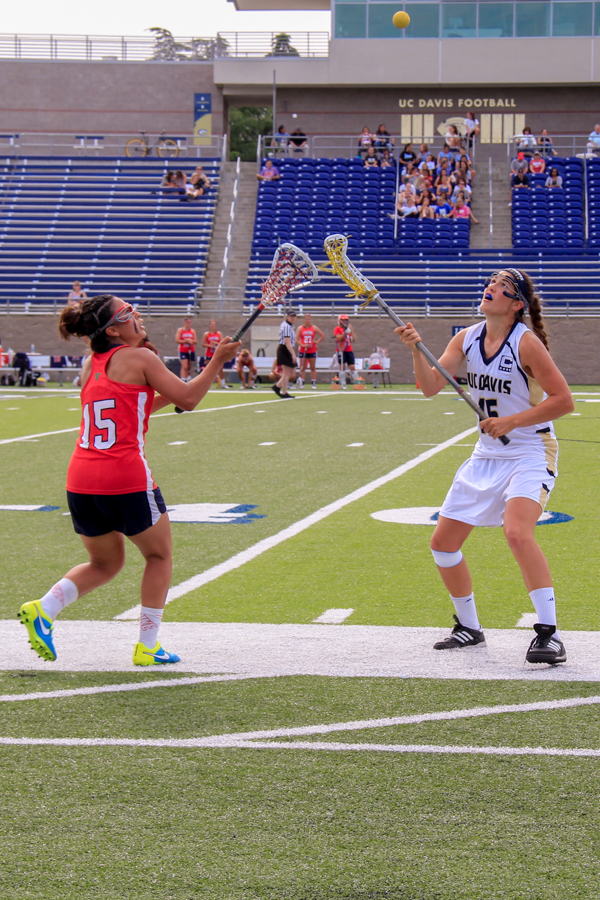
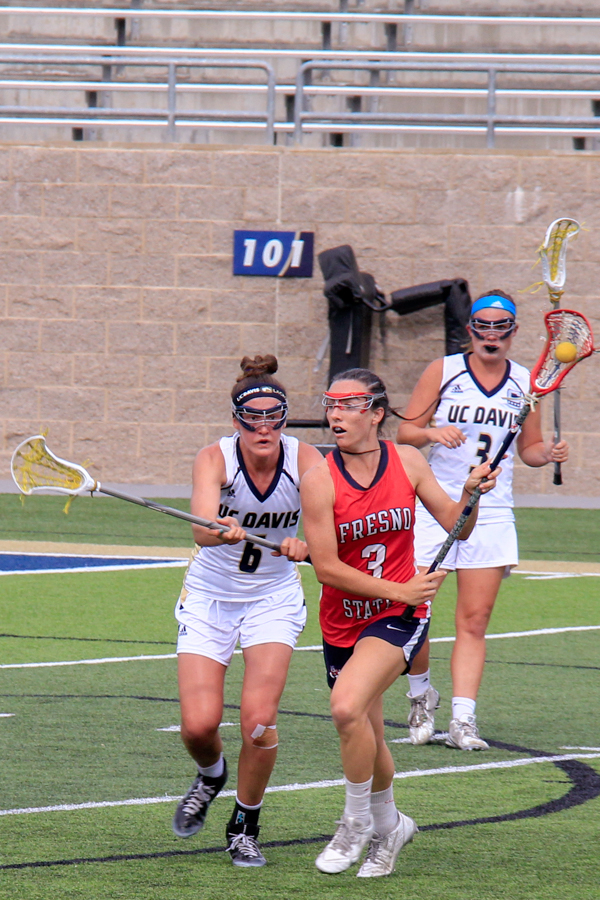
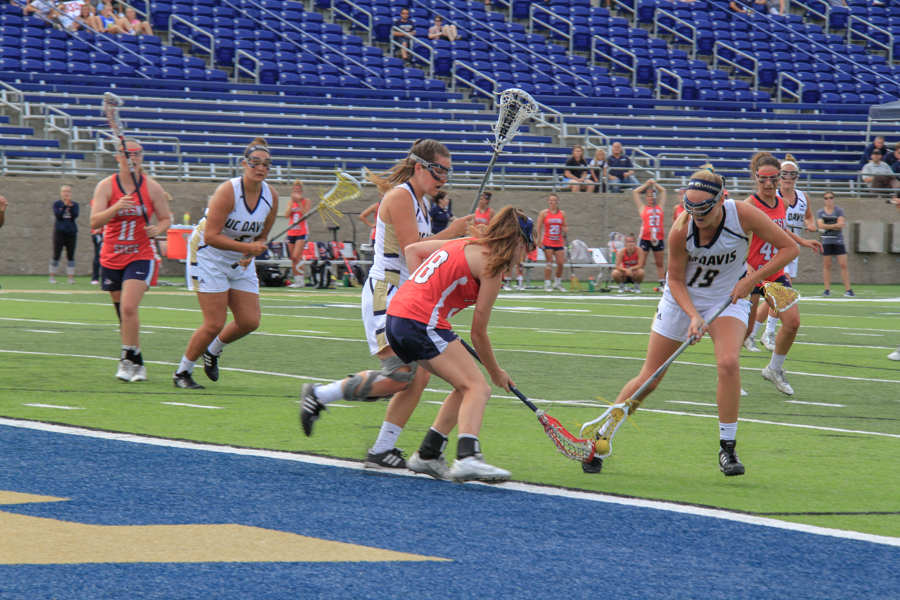
Six is a recurring number in the women’s lacrosse world as the Aggies’ six seniors controlled the final home game of the season, overworking Fresno State for a 16-6 win and advancing to a 6-6 overall record.

Four of the six players of the night put up a point or more against the Bulldogs. Senior attacker Ellie Delich, a Canadian native and star of the night, led the team in both points and assists, putting up three and 11, respectively. However, the bright light casted by the sky of Aggies was not just from Delich, but from seniors midfielder Courtney Neff and attacker Sam Axenroth, who each put up two points from hat tricks. Axenroth proved to be shooting star in the game and picked up a career high four goals, three of which were scored in a short four minute span in the second half.

MONICA CHAN / AGGIE
MONICA CHAN / AGGIE


Senior midfielders Mary Doyle, Savannah Hadley and Morgan Sissler were also honored on the senior night. Doyle, who put up a point to contribute to the Aggie win while Hadley and Sissler caused a nearly impenetrable black hole on the defensive end, posting a ground ball and causing a turnover, respectively, and holding the Bulldogs to a low score of six.

MONICA CHAN / AGGIE
MONICA CHAN / AGGIE

Bidding adieu to the six seniors, freshman midfielder Shannon Cross and junior attacker Melissa Kellan added two points each to the win and junior attacker Kelly Chuck added one.

While the hot and bright day featured a sky of stars on the field, the Aggies wrap up their home season in the shadow of six silver balloons, each casting the number of a senior, with a 4-3 Mountain Pacific Sports Federation record. The team will conclude their regular season on the road against San Diego State and USC this Friday and Sunday with hopes of securing one of six spots at the Stanford hosted MPSF tournament.


Written by: Veronica Vargo – sports@theaggie.org

Vision Dance Troupe Raises the Barre

JAIME CASTELLANOS / COURTESY

Troupe hosts 5th annual dance showcase

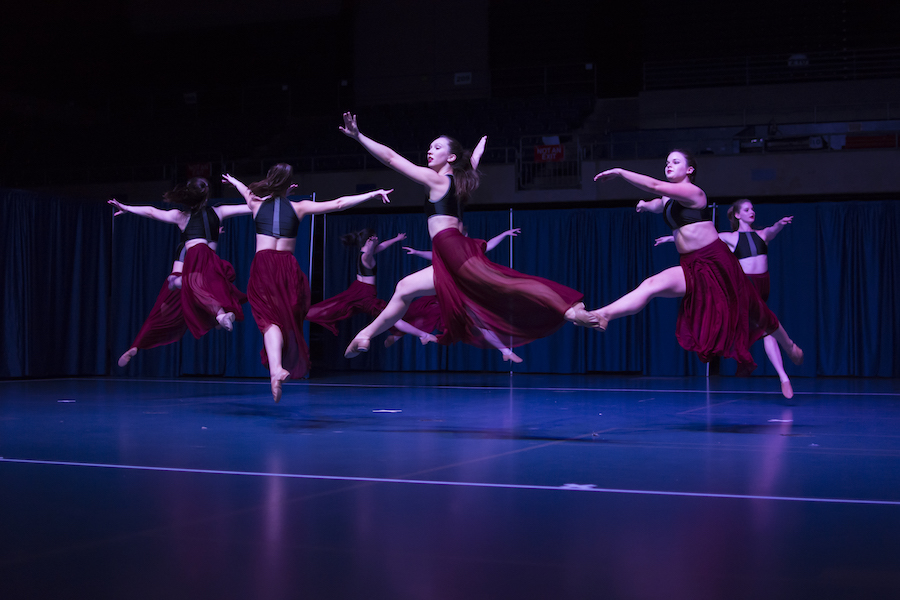
Vision Dance Troupe (VDT) will be hosting their 5th annual Raising the Barre Dance Showcase on Sunday, April 24 at 6 p.m. The show will take place at Davis Veteran’s Memorial Theatre and will include around 15 different dance pieces highlighting a variety of dance styles.

The showcase is the culmination of months of hard work, choreography and practice. All of the members of the troupe have the opportunity to choreograph their own pieces, and the other dancers choose which pieces they personally want to perform. Ashley Andrews, a recent UC Davis graduate with degrees in economics and psychology and co-director of VDT, explained that the troupe begins working on their dances early in the year.

“We have been working on choreography for [the showcase] since September. Each fall, the team welcomes new members and auditions small sections of each dance that will be performed for the spring showcase,” Andrews said. “During winter, each member attends and learns the entire choreography for each piece that they will be performing for the showcase. Spring is dedicated to cleaning…spring cleaning!”

The showcase boasts 15 different pieces, including a jazz/funk piece set to The Weeknd’s “Can’t Feel My Face” and a hip-hop piece set to “Operate” by ASTR. The troupe employs jazz, hip-hop, salsa, tap and ballet, among other forms of dance. Emily Clay, a first-year animal science major, feels that this variety is one of the things that sets VDT apart from other dance groups on campus.

“One of the things that makes [VDT] different is that we incorporate all different styles of dance. A lot of groups focus on just one kind, but we have the opportunity to try a little bit of everything,” Clay said. “We even have a member who’s a trained salsa dancer, and she choreographed a salsa dance for our show.”

Katie Galsterer, a second-year neurobiology, physiology and behavior major and co-social chair of Vision Dance Troupe, explained that the troupe’s main goals for the showcase are to celebrate dance in its many forms and to bring the group together. Though VDT performs at events throughout the year, many of their performance pieces are only performed by a portion of the group. The showcase allows the group to come together as a unit.

“One of our main goals is to show a variety of different styles because being able to show a lot of different aspects of dance is important to us. There haven’t been a lot of ways for students to get involved in choreographing on campus so that’s a part of it, too, giving people the opportunity to see their work on stage,” Galsterer said. “This is a club is volunteer-based, and we all have to really love it to want to put in this much work. The showcase gives us something to work toward.”

The Lounge Lizards acapella group and the Breakdancing Club will also be performing at the event. Student tickets for Raising the Barre can be purchased in front of the Silo for $6 from Monday to Thursday or at the Memorial Union on Friday. Tickets will also be available at the door for $8. For more information please visit the Facebook event.

Written by: Sara Williams – arts@theaggie.org

The case for houseboats

BRENT ROSENWALD / COURTESY

Houseboats. Date: Memorial Day Weekend. Location: Lake Shasta. You: There.

I don’t think I’ve ever posted something on the Internet that would completely sink my chances of getting elected to public office. Well, this might be it. 20-Years-From-Now Yinon, I’m so sorry. To any potential employers who may have found their way here: there’s a keyboard shortcut that lets you instantly email the hiring manager about this post: just press COMMAND + W and it’ll do it for you. Trust me.

That being said, I need to talk about this. No career is important enough for me to stop me from standing up for what I believe in. So give me that beer bong and hand me my keys so I can shotgun some knowledge onto y’all.

Houseboats is the most important event related to this school.

Life begins when your comfort zone ends. When your parents drop you off at your dorm and drive away, your life as an independent adult begins. When you show up to your first day of your internship, your life as a member of the work force begins. When you sign your first lease, your life as a renter (and one day a homeowner) begins.

When your boat cuts loose from the dock to set sail for Slaughterhouse Island as you crack open the first beer of the weekend… your life as someone fun begins.

You may say that you’re a fun person and don’t need four full days of debauchery to prove that.

I don’t know. I’m sure you’re a delightful dinner conversationalist, and I’m sure you’re not the worst person to be stuck in traffic with. I’m sure your movie references are on point and I’m sure you can hold your own in Cards Against Humanity.

But can I trust you to randomly do a backflip into the water after putting down a beer bong? Can I trust you to wake up on a boat full of your old friends but go to sleep on a boat full of new friends? Can I trust you to start every day with no plan and be totally okay with that? Can you really go with the flow? If so, start looking for a open spot on someone’s boat now — they are filling up fast.

Whether it’s some special ingredient in the Shasta Lake water (probably alcohol) or just some weird magic that pervades the island (definitely alcohol), people truly let their guards down on Slaughterhouse Island. And I don’t mean they let their guards down in the “risky teen behavior” sense. I mean that they genuinely open up to one another. You know that one guy you always see at the gym? That one girl who’s in your class and always is around the CoHo the same time you are? Those faces that you see around campus stop becoming randos you cross paths with and start becoming real people you finally meet.

When I learn that someone can spend four days in a whirlwind of boat parties, island parties and party parties, I learn right away that they’re the sort of person who can really live in the moment. I learn that they can focus on the people they’re with, right now, and not what’s going on in their phones, on their social media, or around the world. It doesn’t mean that they’re always as spontaneous and thrill-seeking as they are on their boats — it just means that they can be.

Houseboats is far from a sustainable, day-to-day MO. Besides the liver damage, many people aren’t extroverts. I get that. Rather, it’s a once-in-a-while reminder to get away from your phone, get away from negativity, and step into your community. It might be the first time that you stop seeing college as your own personal mission to get your degree and move on to the next stage of your own life and start noticing the beautiful community you belong to.

There is no other opportunity that allows you to spend a whole weekend with zero responsibilities, focusing only on having as much fun as possible. Go on Houseboats. Drink plenty of water and nap strategically. You can thank me later.

And shout-out to Safeboats for keeping natural selection at bay during Memorial Day Weekend.


Yinon Raviv is a second-year communication major who had a great time on Houseboats last year. Email him at yraviv@ucdavis.edu, follow him on twitter @YR195, and check out his highlight reel on Instagram @yinonout.


The Aggie endorses UC print newspapers

HANNAH LEE / AGGIE
HANNAH LEE / AGGIE

Invest in student journalism

The California Aggie successfully ran the Print The Aggie initiative during Winter Quarter to get the campus newspaper, which was last in print in 2014, back into the hands of UC Davis students. If you voted yes on this initiative, the Editorial Board would like to extend our warmest thanks.

Print journalism is vital on college campuses because it creates an easy and accessible way for college students to read about topics that directly affect them. This past year alone, The Aggie has broken news about spray-painted Eggheads, the #BlackUnderAttack movement and #FireKatehi protests.

Student journalism also helps to keep universities accountable. The Daily Californian, UC Berkeley’s student newspaper, has reported on important topics such as sexual harassment accusations against an astronomy professor and proposed plans to close the College of Chemistry.

Again, these are issues that are relevant to students, and the Editorial Board believes that print journalism allows more students to be informed about issues that matter. The UC Berkeley student body also recently passed the Ink Initiative, a measure much like Print The Aggie.

In the coming weeks, students at UCLA and UC Santa Barbara will vote on similar fee measures that would allow their newspapers to continue printing and growing their online presence. Money raised from the UCLA referendum would also go toward funding the UCLA radio station, seven other community newsmagazines and BruinWalk.com, a professor review website.

The Editorial Board wholeheartedly endorses these initiatives. Having spent countless hours in Lower Freeborn editing and writing ourselves, we recognize the hard work that student journalists put into their newspapers and we believe that students deserve fair compensation. If passed, these initiatives would help to fund student writers as well as allow for more staff development and training, programs that are especially vital for young journalists.

Sadly, print journalism is struggling around the country. Newspapers everywhere are consolidating, cutting staff and increasingly moving content online. College papers have adapted to changing journalism trends by slashing their budgets. The Daily Bruin states that since the 2008 recession, it has made extreme sacrifices to keep Student Media afloat. This includes aggressively renegotiating printing costs, cutting non-student support staff positions and reducing pay for student employees.     

But there comes a point when you simply can’t cut funds anymore while maintaining the same quality of reporting. All across the University of California, our student newspapers have reached this point and the Editorial Board believes that it’s time to invest in print journalism, not just for the benefit of student journalists, but for the benefit of students across the UC system.

Yolo County District Attorney Office conducts implicit bias training

BECCA RIDGE / AGGIE
BECCA RIDGE / AGGIE

Training reduces effects of implicit bias in prosecution

On March 31, the Yolo County District Attorney’s Office, in conjunction with the Museum of Tolerance, trained prosecutors about the role of implicit bias in prosecution.

District attorney Jeff Reisig was inspired to bring the training to Yolo County after attending the 10th annual National Prosecution Summit at the White House in November 2015. Speakers at the White House event discussed methods for reducing implicit bias in prosecution nationwide.

“The very first step in addressing implicit bias is just to be aware of it, and that’s what this training was designed to do,” Reisig said.

The museum has a Tools for Tolerance professional development program used for training law enforcement professionals in the areas of racial bias, cultural diversity, racial profiling and other social justice issues.The Museum of Tolerance sent representatives from its location in Los Angeles to present a course on implicit bias and its unique role in prosecution to the Yolo County District Attorney’s Office.

Reisig also said that the information in the presentation was new to most of the attendants and the response from staff after the training was very positive.

“Implicit bias recognizes that bias can happen at an automatic level. We are sometimes aware that we prefer chocolate over apples, but other times we are not aware of our biases. We pick them up and internalize them, but we can be unaware that we have them and not actually endorse them,” said Dr. Alison Ledgerwood, an associate professor in the UC Davis Department of Psychology.

Dr. Cynthia Pickett, who is also an associate professor in the UC Davis Department of Psychology and the director of the department’s Self and Social Identity Lab, explained that implicit bias can be prevalent in criminal justice decisions.

“There was a study that was done where [researchers] showed all the facts as the same, but used two different names, John Garner and Juan Garcia. When the person was given the Hispanic name, the subjects were more likely to be judged as guilty,” Dr. Pickett said.

Dr. Pickett explains that such experiments can control other information in a way that proves systemic implicit bias, but proving that implicit bias has been a factor in any individual case is very challenging. However, the training tried to remedy this by informing prosecutors of biases they may hold.

“Prosecutors expressed to us that they appreciated the importance of the topic and how it relates to what prosecutors do, ranging from whether to even charge a case or make a plea bargain,” Reisig said.


Written By: CAROLINE STAUDENRAUS – city@theaggie.org   

Davis Senior Center organizes monthly healthy living workshops

AMY HOANG / AGGIE
AMY HOANG / AGGIE

Senior residents of Davis learn about healthy living as part of monthly series

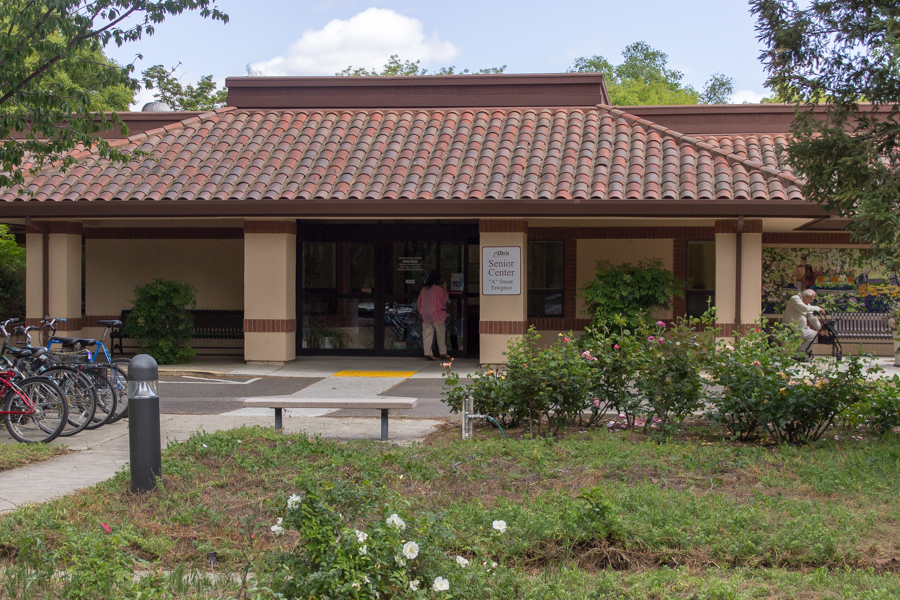
The Davis Senior Center, in collaboration with Yolo County’s Adult and Aging Branch, held a workshop on diabetes on April 14 as a part of their monthly healthy living series. The workshops increase seniors’ awareness of ways to stay healthy. The program began in January 2016 and will continue until June, giving seniors and Davis residents the chance to be informed about healthier living options.

Among those who attended the diabetes workshop was Wanda Wanton, a senior resident of Davis, who found it particularly interesting because of her family’s history of both type 1 and type 2 diabetes. She emphasizes her appreciation for the workshops.

“I think it’s wonderful that the staff of the senior center are truly interested in the health and welfare of the senior citizens of Davis. I think it is very innovative and progressive on their part and I don’t know of any other senior center that works so diligently to help seniors with their health and welfare,” Wanton said.

Lisa DeAmicis, program coordinator at the Davis Senior Center, explains that although the Senior Center has held other health-related workshops, this series is unique.

“This is the first time that we have scheduled an ongoing series that tackles a different topic every month with the same speaker. It is conceived as a series of workshops so it’s a way for people to build a body of knowledge about their own health,” DeAmicis said.

According to Wanton, the workshops were informative and well-presented. She adds that the speaker, Lisa Musser, ensures that everyone fully understands the information. Wanton looks forward to similar workshops in the future.

Musser, who is a senior public health nurse for Yolo County,  explains that the turnout in Davis is always impressive, attracting about 20 people per workshop with an average age of 73.

“I did a lot of research setting up the program and health promotion is pretty hard to study, to actually know whether there’s outcomes. I based a lot of the ideas for it on Stanford’s Chronic Disease Self-Management Program. Stanford developed it a long time ago in the ‘90s, and they’ve been giving it around the country and around the world now. It is based on self-management of chronic disease, promoting self-efficacy, taking charge of your health and your life, so I kind of based it on that,” Musser said.

Musser has 10 workshops and presents them at 14 different senior centers and smaller groups at senior housing complexes. The workshops start with the heart, as she informs people about blood pressure and how to perform CPR. She then goes onto sessions on the brain, healthy eating habits for people over 50 and maintaining healthy bones.

“As people age, different things start to happen; bodies change and it’s a way to stay educated and help make informed choices about eating or health care or exercise,” DeAmicis said. “It’s a way to help people stay healthy as long as possible.”


Written By: HADYA AMIN- city@theaggie.org

UC Davis to offer nationwide K-12 computer science curriculum

NICKI PADAR / AGGIE
NICKI PADAR / AGGIE

New program to prepare young students for college education and career in STEM fields

UC Davis recently launched a new national program for school districts across the country that will make it easier for students to have computer science educations starting in first grade.

This new curriculum provides students with a full first-grade-to-high-school curriculum that includes mathematics from the Center for Integrated Computing and STEM Education at UC Davis. The program will work to meet President Obama’s “Computer Science For All” campaign, a national initiative to begin computer science and other STEM education fields at a younger age.

The center’s programs are funded in part by the California Department of Education and the National Science Foundation.

According to Harry Cheng, director of UC Davis’ C-STEM Center, the C-STEM Information and Communication Technologies Pathway will help schools across the country meet President Obama’s goals for STEM education for all ages by providing students with a chance to learn computer science and mathematics with a kinesthetic approach.

“We integrate computing into math, and use it as a tool for hands-on integrated learning in math and computer science,” Cheng said.

This will allow students to learn common programming languages like C/C++ for 12 years in their school years as opposed to learning it all in college.

“You don’t learn English once in one year of school, so why should we teach the language of computers that way?” Cheng said.

One of the concerns of this new program, as with many new educational programs, is the task of training. However, according to Andy Fell, associate director of news and media, there are already training programs available for teachers that are ready to go.

“The C-STEM Center can provide two-day training academies and weeklong institutes in using the curriculum in the classroom for teachers who have no prior computer programming and robotics experience,” Fell said.

C-STEM curricula is already being used in over 200 primary and secondary schools and has provided training for over 500 teachers in California.

According to Fell, this new program will also help close the achievement gap for certain students who tend to underperform in math and science.

“For example, when Hillcrest High School in Riverside, California adopted C-STEM Integrated Math II in 2014, 94 percent of students earned a passing grade, compared to 61 percent of students in the conventional Integrated Math II,” Fell said.

Because all of the courses are UC-approved, the C-STEM program will give students a 12-year integrated course in programming and mathematics and will also provide students with the tools and the abilities to use that knowledge in their post-secondary education to prepare them for their careers in STEM.

Raja Vyshnavi Sriramoju, a first-year computer science major, believes that this new curriculum is a great idea that will not only prepare students for college computer science courses, but will also help students to find out whether they are cut out for careers in computer science. Sriramoju went on to say that at her high school, she benefited from a similar program that helped her realize that she was a good fit for computer science.

“[The curricula is] going to help because it’s going to encourage more students to join the STEM fields,” Sriramoju said. “Some students come to university not knowing what they are interested in, so if you start from an earlier age, you’ll know what direction you should be headed in […] I did have this kind of experience, and it was very helpful.”

Written by: Sangeetha Ramamurthy – campus@theaggie.org

Dr. Jones, poetry and the arts

Professor Andy Jones (NICHOLAS YOON / AGGIE)

How UC Davis’ own poet laureate has impacted the Davis poetry scene.

Every first and third Thursday of the month, poetry comes alive at the iconic John Natsoulas Gallery in Downtown Davis. Students, teachers and professionals alike come together for the intricacies and complexities of poetry — and for the past ten years, the open mic night has been a staple of the town’s poetry scene.

At the forefront of this scene is UC Davis’ english and university writing program professor Dr. Andy Jones, who hosts the open mics at Natsoulas Gallery. Since his teaching career began at the university in 1990, Jones’ impact and role in the poetry community has grown.

“I’d say that as I grew older and went to school at Boston University, I had the advantage of learning from some great professors and poets,” Jones said. “[They] inflamed my support and appreciation of poetry as an undergraduate and it compelled me to learn more.”

Dr. Jones teaches an extensive array of classes including: advanced composition, writing in fine arts, writing in education and journalism. For the English department, he teaches classes on T. S. Eliot, short fiction and the advanced poetry writing workshop for undergraduates.

“He is, as you might expect, deeply interested in poetry as an academic subject,” said Evan White, design and communications manager for the Mondavi Center for Wine and Food Science and former student of Jones. “This translates to his professorship most visibly in the form of the encouragement he gives his students to try new and unexplored ideas. There is, so far that I can tell, nothing he won’t do to help a student realize their academic and creative potential.”

But when he’s not busy teaching or hosting his KDVS radio show “Dr. Andy’s Poetry and Technology Hour,” Dr. Jones serves as UC Davis’ poet laureate, a position appointed to him in 2014 by the university in which he composes poems for special events in the community. As poet laureate, Jones has not only extended his advocacy for the arts, but he has also extended a universal admiration for poetry in communities like Davis, Sacramento and Yolo County.

“[As poet laureate, I] encourage love and appreciation of poetry in the city of Davis,” Jones said. “To give poetry readings to the thousands of people that gather for the Fourth of July celebration, and to read, write and present poems on a variety of topics for the city.”

Through mediums like his radio show, Dr. Jones has been able to speak with poets, writers, actors and members of the art community.

“The poet laureate position has helped me expand that work but I’d be doing it anyways,” Jones said. “For instance, the radio show has given me a chance to interview a great number of poets, talk about poetry and expand to larger audiences my civic interests about education, literacy and the creative arts.”

For those like John Natsoulas, curator at the John Natsoulas Gallery, the poetry culture surrounding Davis thrives off of the work and efforts of people like Dr. Jones. According to Natsoulas, events like the Poetry Night Reading Series and the Jazz and Beat Festival keep the poetry scene alive.

“The poetry scene in Davis comes out of the idea that it evolved and became more formal,” Natsoulas said. “It comes out of the beat generation into the 60s and 70s and the teachers in Davis. Places like Café Roma and the gallery were the only places you could read poetry.”

Natsoulas said that both Jones and the Natsoulas gallery have “changed the philosophy of the town.”

“I started this 31 years ago, but it’s clear that Dr. Andy Jones is critical to this and getting him to have a poetry and tech hour on Wednesdays was too because he brought in all the poets,” Natsoulas said. “He brings a headliner in at eight o’clock and at nine we have something pretty amazing: open mic. And my jazz beat poetry spoken word night the first friday is great and we end up having something wonderful.”

It is clear that Dr. Jones — as a teacher, author or poet laureate — is making his mark on the poetry and art worlds in Davis. With his most recent work In the Almond Orchard: Coming Home From War being released this month, Jones has much to look forward to. For Jones, the arts are a major driving force in his life, career and aspirations.

“I’d say that the arts in general provide a force that has the potential of bringing people together and deepening their humanity and empathy,” Jones said. “Showing us all different ways that we can better understand the human condition and connect with one another. The arts give us the opportunity to become more centered more thoughtful, more generous and more empathic.”

Written by: Alan Castillo — features@theaggie.org

Recipes for nutritional success

KATE SNOWDON / AGGIE

UC Davis provides students with healthy lifestyle programs.

With such a high number of bicyclists, UC Davis has a reputation as an active, athletic campus, but between dining hall food and instant ramen noodles, college students’ diets often aren’t as health-conscious as their transportation habits.

To address this, UC Davis has pioneered several programs to champion healthier habits among the student body. In summer 2015, the UC Davis Student Health and Wellness Center (SHWC) launched “Fruit and Veggie Up!,” a partnership with Nugget Markets to provide students with free fresh produce every Tuesday and Wednesday. Students can pick up produce from 11 a.m. to 1 p.m. on the third floor of the SHWC office.

“The Fruit and Veggie Up! program […] aims to increase access to fruits and vegetables at an affordable price – free,” said Aria Wexler, a food access and nutrition student assistant for SHWC and fourth-year clinical nutrition major. “I think […] one of the huge takeaways [is students being] able to get some food to supplement what they’re buying for themselves.”

According to Wexler, approximately 6 percent of undergraduate students and 11 percent of graduate students consume the minimum number of recommended fruit and vegetable servings per day. Many students may also be considered “food insecure,” meaning that they lack the financial means to buy enough foods that hold proper nutritional value.

“There’s a lot more awareness [of healthy eating] that we’re trying to promote,” said Ryann Miller, a registered dietician nutritionist for SHWC. “Fruit and Veggie Up! helps with that.”

Another option for students who do not meet the daily recommended servings of healthy foods is the CalFresh program, which provides those who qualify for the program with a monthly benefit put toward food purchases.

“Many don’t know about the program,” Wexler said. “If you qualify for work study, you almost automatically qualify [for CalFresh].”

Students who work over 20 hours a week under a certain income can receive a small stipend from CalFresh that can be spent at the Farmer’s Market, grocery store or other sources with fresh produce.

“All of us eat, hopefully several times during the day,” said Allison Tallyn, a registered dietician nutritionist and certified diabetes educator for the SHWC. “We want to try to have those [nutritious] opportunities when we’re eating to really serve our bodies.”

SHWC also runs a series of nutrition classes called “Eat Well Live Healthy.” The program offers students a free set of classes, covering topics in nutrition practices including grocery shopping, cooking lessons and the available exercise facilities at the Activities and Recreation Center.

“The nice thing about the cooking classes is they’re really targeted to students,” Tallyn said. “Because they’re designed for students on the go, they use ingredients that are common and not too expensive, and [the food is] delicious.”

The series emphasizes various concepts within the nutrition process, such as metabolism and healthy choices. Each cooking class goes through the purchase of raw ingredients to preparing the meal in detail, and follows the process through to tasting the final product.

“I think it’s a great opportunity […] to develop those healthy habits […] while you’re here on campus,” Tallyn said. “You can then use [them] in adult life.”

For students who prefer to practice healthy cooking in their own kitchens, SHWC’s online cookbook, One Balanced Kitchen, provides recipes made from nutritious ingredients.

UC Davis Dining Services also promotes a healthy lifestyle through the Healthy Aggies program. Healthy Aggies was officially established this year in an attempt to cultivate nutritional diets on campus, and although it started out as a blog, it has now expanded to a campus-wide program.

“[We want to] create a group that students want to join,” said Linda Adams, director of UC Davis Dining Services Nutrition and Sustainability department. “[Joining] means that they care about being healthy.”

Run by seven students who work with Adams, the Healthy Aggies program provides students with opportunities including cooking demos in the Dining Commons.

“We’re trying to engage students in the fact that they’re going to have to cook for themselves next year,” Adams said. “We’re trying to help them think about doing it in a healthy way.”

UC Davis Dining Services also provides various other health-promoting events, such as a cook-off on May 5. The cook-off will consist of a student judge panel to select the winning dish, made from fresh produce, that will then be featured on the Dining Commons menu.

On top of this, UC Davis Dining Services also employs a service called Nutrition Talk, where tables set up in the dining commons educate students on topics ranging from heart health to the perfect snacks for finals week.

“Part of being successful in cooking for yourself is making sure you have the food in the house, [having] your recipes, and [knowing] what you’re going to make,” Adams said.
Written by: Allyson Tsuji – features@theaggie.org

Photo of the Week: 4/20/2016

Taking the leap. (DIANA LI / AGGIE)


Humor: Super bowl of job fairs?

BRIANA NGO / AGGIE
BRIANA NGO / AGGIE

You’re ganja have a good time!

This quarter’s Internship and Career Fair falls on April 20 — a day students show up to class more glassy-eyed than usual, and perhaps smelling a little skunky. However, in a joint decision made by the Internship and Career Center and Chancellor Linda P.B. Katehi, it was decided the date shouldn’t be changed.

The move is a strategic attempt to weed out the weak in the hopes that only the best and brightest show up to the quarterly fair.

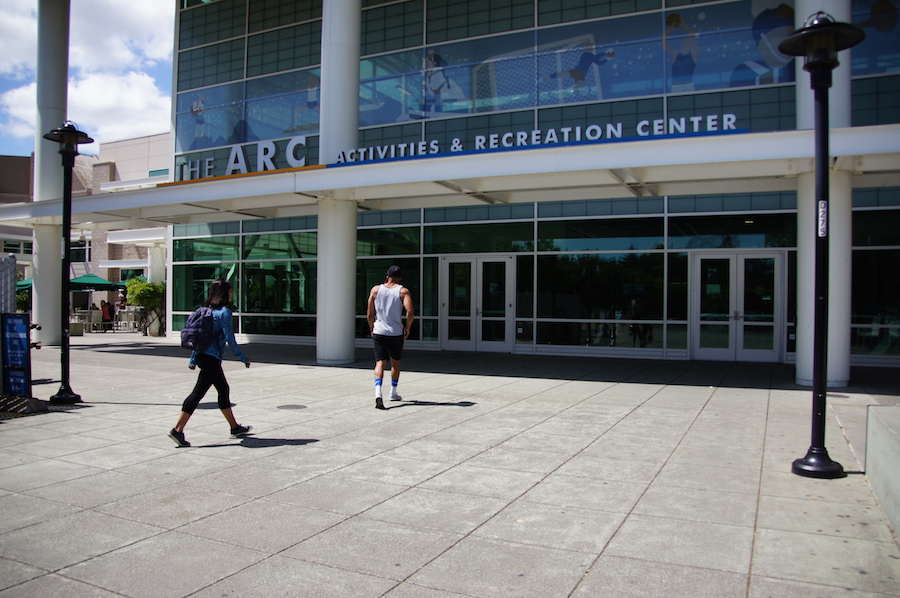
The event will be held in the ARC Pavilion from 10 a.m. to 2 p.m. There should be a banner outside that reads: “You can achieve your highest expectations!” Warning: this sign is expected to be a hotspot for Instagram and Snapchat activity and may get stolen. If you see students posing in front of the sign and squatting down with their hands pressed together as if in prayer, just keep walking.

On making a good impression:

Pipe up! The companies want to hear you speak! But make sure it’s relevant: they don’t want to hear about your obsession with Tokémon — I mean Pokémon. For example, when a 20-something CEO in a Brooks Brothers suit leans in close to you and says, “How high are you?” with a smirk, look back at him with a cold glare, take it from 0 to 420 real quick and say “No. It’s hi, how are you?” This will show him that you mean business and convey to him that you are NOT a fan of the hippie lettuce.

So hit up Starbuds — I mean Starbucks — before you head over to the Pavilion dressed in your dankest business casual, and look dope! Have your resumé at the ready because the steaks have never been higher. Literally. Cows love grass — who would have thought! Blaze it and graze it, am I right?

THC you there!

You can reach ALEX GUZMÁN at almguzman@ucdavis.edu and on Twitter @cactasss.

Higher education athletes

ASHLEY PAE / AGGIE
ASHLEY PAE / AGGIE

A glimpse into marijuana’s benefits, side effects and usage in professional and collegiate athletics

Sports – whether at the high school, collegiate or professional level – take a serious toll on the human body. It’s no surprise that knee, shoulder and ankle ailments make up approximately 80 percent of all sports-related injuries.

In order to decrease pain, athletes use various methods such as NSAIDs (Ibuprofen), cryotherapy, RICE (resting, ice, compression, elevation) and prescription drugs. However, professional athletes, like former Chicago Bulls point guard Jay Williams, have recently stepped out to voice their opinions on legalizing marijuana for medical purposes in the NBA and other sports associations.

Unlike Williams, former Denver Broncos quarterback Jake Plummer is not encouraging a change of rules for marijuana use, but rather urging the NFL to increase medical marijuana research. Plummer wants CBD oil, a non-psychoactive component of marijuana plants, and its effects on current and former NFL players to be studied more intensely as he claims CBD has helped his body to recover.

Marijuana might be the key in alleviating pain from athletic injuries. However, the reason why associations ban marijuana and other medicinal hemp plants is because most contain THC. THC (Tetrahydrocannabinol) is the chemical component responsible for the psychoactive effects in marijuana. THC acts like an agonist by attaching to cannabinoid receptors in the brain, decreasing intercellular communication. Eventually, THC overwhelms the brain and causes the user to experience euphoric bliss.

California is one of 24 states that have legalized marijuana for medicinal purposes. In October 2015, Gov. Jerry Brown signed medical marijuana regulations into law, allowing civilians to obtain any one of 17 licenses by 2018. Yet, the collegiate and professional sports associations are still prohibiting the use of the substance and drug testing their athletes.

So, why is this?

Studies show that THC acts as a bronchodilator in asthmatic patients. If THC increases airflow to the lungs, the athletic associations might see it as a direct unfair advantage. The athletes using marijuana would be able to utilize oxygen better and more effectively than non-users.

The calming effects of cannabis could also be an advantage. Suppose a new recruit faced their very first professional level game. Anxiety immediately overwhelms their body.  If professional associations legalized the usage of marijuana, the new professional athlete would be able to use it to ease their state of mind, allowing them to perform at their highest level (no pun intended) – or there’s always the chance marijuana can induce paranoia and decrease hand-eye coordination in the individual.

People have also thought that marijuana causes aggression in some and potentially can lead to better sports performance in the United States. However, Stanford School of Medicine professor Dr. Keith Humphreys elaborated on the tale.

We haven’t had much evidence of cannabis causing aggression in the United States,” Humphreys said in an email interview. “In Britain, where high-potency cannabis is more prevalent, there have been more reports of violence.”

Marijuana use will also reduce dependence upon narcotics. Opioids are highly addictive and subject to misuse. In 2014, the Centers for Disease Control and Prevention (CDC) reported almost 2 million Americans were dependent upon prescription drugs. The CDC also noted that approximately half of the 14,000 overdose opioid deaths were caused by prescription opioids.

In 1996, former Green Bay Packers quarterback Brett Favre went into rehabilitation for 46 days. He developed an addiction to Vicodin after being treated for injuries sustained by his athletic career. Athletes like Favre need high doses of opioids to alleviate the level of pain they experience. According to a telephonic survey, approximately 52 percent of 644 retired NFL players used narcotics and 71 percent said they misused them.

But, the long-term side effects of marijuana use might still outweigh the benefits. UC Davis Department of Emergency Medicine associate professor Dr. Magdalena Cerda found that people who smoked cannabis four or more days over the course of many years face financial, relationship and work-related difficulties compared to non-users. Long term side effects also include motivational issues such as apathy, motivation loss and following through with both long and short term plans.

How often does UC Davis drug tests their athletes? According to UC Davis’ official athletic website, they follow year-round NCAA standards:

“The NCAA has approved year-round drug testing in every sport,” the UC Davis website states. “This includes summer. You may be selected for drug testing even if you are in another state (or another country) during the summer; the NCAA has made arrangements for testing sites around the world and will require you to report to a site in a city near you. Drug testing happens very quickly. You will be contacted by phone by a staff member in UC Davis Athletics and given instructions. Typically you will report for drug testing 24 hours later.”

Students who test positive or fail to complete their drug test, will be ineligible for one year, forfeiting a year of eligibility. But, is UC Davis actually abiding by the NCAA rules? An anonymous student athlete weighed in on drug policies for their team.

“[My team] hasn’t gotten drug tested since I’ve been here,” an anonymous UC Davis student-athlete said. “The team was drug tested the year before I came in. I have not experienced the testing; however, I have heard you have to go to the bathroom in a cup while they watch you.”

A second UC Davis student athlete from a different team also voiced their opinion on their team’s drug policies – or lack thereof.

“I’m pretty sure no one on our team has been drug tested,” the second anonymous member said. “I’ve never been tested [during my time on the team]. We just get warned about it a lot.”

The anonymous sources also stated that they knew current student-athletes who were smoking marijuana recreationally during off-seasons. However, if the student were to be using it medicinally, the medical records are confidential between the athlete, trainer and their doctor.

The NCAA considers marijuana a street drug, completely forbidding the substance. Therefore, the Davis athletic department needs to be held accountable for their actions of failing to perform drug tests on some of their teams, especially if they are not using it for medicinal reasons.

In addition, UC Davis has the option to lead medical marijuana research for the sake of both collegiate and professional athletes in order to reduce their reliance on opioids. However, they have only studied the social and economic outcomes of using marijuana. After all, Davis ranked within the top universities for the fourth consecutive year for agriculture and forestry so they should use their expertise to fill in unanswered questions in the study of marijuana.

This whole situation draws into question other Division I athletic teams – especially football teams – who have millions of dollars are poured into them by the universities. According to Forbes, the expenses for the UCLA football team exceeded $19 million for the 2011-12 academic year, but the team raked in approximately 6 million dollars, pulling a total Kim Kardashian. Schools are making the extra dough from donors, endorsements and ticket sales. Top university competitors use the profit to build bigger and better stadiums. Are these athletic profit earning schools routinely drug testing their athletes up to NCAA standards, or are they like UC Davis – where drug testing rarely happens according to their athletes.

Unfortunately, Tina Tubbs, UC Davis director of Sports Medicine, was out of the office and unable to comment.

So what’s your take on athletes using marijuana for medicinal purposes?


Written by: Katie DeVore – sports@theaggie.org

Aggie Style Watch: Fashion show edition

BRIANA NGO / AGGIE
BRIANA NGO / AGGIE

Zenith Fashion Show features student designs

The annual Picnic Day fashion show, this year named Zenith, was presented by The Fashion and Design Society and showcased work from students in Design 179: Fashion Design: Signature Collections. The class was given 10 weeks to create a collection that expresses each student’s design perspective and skills. Coming into this show, I didn’t know what to expect. But when I walked in, I immediately felt like I was at a real fashion show with all the chairs running along the sides of the runway. Media was in the back and the photographers were running around trying to get the best photos. The show started with the signature pieces, where designers each showcased one outfit, this year themed Red Dress. There were five dresses and all were very formal.

This was followed by the presentation of each designer’s individual collection. The first designer was Letty Uy with her moonbeams collection. She had four outfits that were all futuristic-looking with hints of purple and silver. I liked her pieces because they reminded me of all the futuristic movies that I loved from the late 90s, like Zenon: Girl of the 21st Century. Aggie Style Watch caught up with Uy, a fourth-year design major, to ask her some questions about her collection.


ASW: Can you describe your collection to me?

BRIANA NGO / AGGIE
BRIANA NGO / AGGIE

Uy: My collection is called moonbeams and it is inspired by space travel and opal gemstones, with how they shift light. They change from pink to green to blue which inspired me. It’s a line of clothes that are silver, iridescent, they have accessories and I’m planning on making them light up with LEDs. It’s been a whole process of figuring out what theme I wanted to do. Halfway through the class I changed my theme and had to redo everything.


ASW: What was your inspiration?

Uy: Basically everything about a futuristic way of life. Like when you are growing up you see the Jetsons or Zenon, all these pop culture references about a future way of living. I wanted to embody that in my collection, it’s something I wish life was.


ASW: How long have you been working on this?

BRIANA NGO / AGGIE
BRIANA NGO / AGGIE

Uy: I have been thinking about this since summer but I physically started working on this during Winter Quarter. We have a design class called Signature Collection where we spend 10 weeks just making our collection.


ASW: How many fashion shows have you been in?

Uy: This will be my second one. My first one was just one outfit but this time I have a full collection.


ASW: Do you have any advice for people who want to start designing?

Uy: I think that if you have an idea, go for it. If you’re worried you don’t have the skills to sew or make things, it’s totally fine. Going into this class, I didn’t know as much as I do now. Just go for it.


ASW: Do you have anything else to add?

Uy: Everyone has been working extremely hard on this; there have been a lot of sleepless nights.


I also liked // Miami, designed by Rachel Chambers, because it was bright and fun. Her inspiration for this collection was beach clubbing, specifically outfits that work for going to the beach and then the club right after. She managed to make these simple designs so vibrant and colorful that you forget that it’s merely a bathing suit. Chambers was also one of the only designers to use male models. One of the other collections that I thought was creative was Unveil by Dee Dee Yang. Each of the outfits began with the model walking down the runway with a jacket buttoned up, but by the end of the runway the jacket would be removed, revealing an unexpected top underneath.

The atmosphere of the fashion show was cheerful and full of energy, partially because we were all in an air-conditioned room on a sweltering Picnic Day, but mostly because you couldn’t help but be excited for the designers who had put so much hard work into these collections.


WRITTEN BY: CaraJoy Kleinrock – arts@theaggie.org