


Orchard Park still planning redevelopment after closure in 2014

All affordable family housing at UC Davis to be closed down in July 2016
The Solano Park and Orchard Park Apartments are both in the process of beginning renovations due to the wear and tear of the apartments after nearly 50 years of use.
Orchard Park, which is located in the northwest corner of UC Davis, closed in July of 2014 and remains closed today. However, Solano Park, which is located on UC Davis’ southeast corner, is scheduled to close in July of 2016 to begin renovation.
Both apartment complexes were created to provide affordable housing and a sense of community for students and their children in the 1960s.
According to Student Housing at UC Davis, Orchard Park was supposed to have new family and graduate student apartments built at its location, scheduled to open in fall of 2016.
But according to Vice Provost and Dean Jeff Gibeling, redevelopment is yet to begin due to concerns about the cost effectiveness of the change as well as the possibility of rent increases post-development. Thus, in June 2014, all redevelopment plans were halted in order to find a new planning approach to the apartments that would focus on the students’ concerns. Even though planning stopped, Orchard Park still closed on July 31, 2014.
“It wasn’t actually renovations. What we were initially talking about was the replacement of Orchard Park. It was based on an analysis that said it was much more cost effective to simply tear them down,” Gibeling said. “We wanted to get a long lifetime out of the buildings, which meant starting from scratch.”
According to Gibeling, the residents of Orchard Park and Solano Park Apartments didn’t respond well to the idea of demolition.
“The plan wasn’t very well-received by the community. After many discussions with students and administrators, the Chancellor said we were going to pause the planning process,” Gibeling said. “So we paused the planning process and created a different committee with much higher student representation to go through a different planning process. We had hoped it would take about six months and be done by the calendar year of 2014, but it wasn’t finished until May or June of 2015.”
No renovations have yet been decided. The committee of students Gibeling mentioned decided on the principles of what would be achieved in student-family housing, the level of amenities, the size and the affordability of the apartments and the features of the apartments. All of these issues are considered very important to students who have lived in the Orchard Park and Solano Park Apartments.
“If you listen to students who live there now or have lived there in the past, they very clearly describe the sense of community, a very strong sense of community. Everybody’s there together from all over the world,” Gibeling said. “People share food, they share taking care of each other’s children, the children play together. It’s like one enormous family. It has a special quality, and we wanted to understand what gave Orchard Park that quality. It’s more than just a building or a set of buildings. It’s much more special than that.”
While the initial goal for Orchard Park was to open two years after closing, no construction has actually begun yet. According to Gibeling, it will take at least two years after construction begins before the apartments will be reopened to the students. There is no concrete plan from architects or engineers that show exactly what will be renovated yet.
Currently, the students who would be living at the Orchard Park Apartments are living in either Solano Park or off-campus housing, which is more expensive, on average. While Orchard Park and Solano Park charged a little over $900 a month in rent, the costs of Russell Park, an off-campus alternative to Solano Park and Orchard Park, are significantly higher.
“We want to honor your request to transfer you to Solano Park due to the closure of Orchard Park, therefore, we will send you offers for any apartment size, location and floor,” said April Berryman, contract supervisor in UC Davis, in a letter to Orchard Park residents seven months before the closure.
The plan now is to reopen the Orchard Park Apartments in fall of 2018, and there are plans to discuss the renovations and redevelopment of Orchard Park.
“In the next few weeks, Graduate Studies will update on where the process is for redeveloping Orchard Park, including updated information on Solano Park and its closure schedule,” said Erica Vonasek-Eco, graduate student in biological systems engineering and the chair of the Chancellor’s Graduate and Professional Student Advisory Board.
Written by: Sangeetha Ramamurthy – campus@theaggie.org
UC Davis preps for massive enrollment influx

New lecture halls, more triple dorms, expanded Tercero Dining Commons will also accommodate for student increase
In the 2016-2017 academic year, UC Davis is expected to enroll 9,500 new undergraduate students – about 1,100 more new students than were enrolled this past fall. This increase in new students is due to UC Davis’ 2020 Initiative, a dynamic plan to increase undergraduate growth at UC Davis, paired with UC President Janet Napolitano’s call for the UC schools to enroll 10,000 new California undergraduates within the next three years.
“UC Davis happens to enroll more California residents than any other University of California at the undergraduate level,” said Walter Robinson, associate vice chancellor for enrollment management in Student Affairs. “We’ve always been committed to serving California residents. This is just an expansion on the commitment that we’ve had all along.”
Ken Burtis, faculty assistant to the chancellor and provost, said that most of the increase in incoming California students will be transfers, as the dining commons and dorms are close to full capacity. He adds that to account for this student increase, representatives from various offices, including admissions, student housing, dining services and counseling, are collaborating to accommodate the influx of new students.
“There’s somebody there from every area of handling students on campus,” Burtis said. “We all try to talk to each other, to coordinate.”
According to Emily Galindo, executive director of Student Housing and associate vice chancellor for Student Affairs, the Tercero Dining Commons first floor lounge will be converted into more seating for the dining hall. She also noted that dorms in some residence halls in both Segundo and Tercero will change from doubles to triples to adjust for the influx in students.
“As we have done in the past, we will strategically add these triples in rooms that have the appropriate square footage to allow for the furniture and personal belongings of another resident,” Galindo said. “In addition, we will be adding first-year student beds to the Primero Grove complex, which will reduce the amount of triples that we need to configure.”
UC Davis is also renovating and creating buildings in order to accommodate for these new students. New buildings will include the Ann E. Pitzer Center (expected to open in Fall 2016) and a lecture hall on California Avenue (expected to open in December 2017).
“There’s buildings that we have on the books that we need to build and there’s buildings that are being renovated right now,” Robinson said. “We’re looking at a variety of spaces that can be utilized as classroom space to meet and accommodate the expansion.”
Campus programs will also be expanded to account for the increase in students. Associate Vice Chancellor for Student Affairs Milton Lang hopes that 70 percent of incoming freshman and transfer students next year will be part of First Year Aggie Connections, a program, currently in its first year of existence, that helps new students learn how to navigate the university.
“We have learned that the more we have students engaged in how to navigate UC Davis, the more they learn about resources, the more they learn about services and activities on campus and leadership opportunities, […] the more successful that they’re going to be,” Lang said. “It’s an opportunity to create the foundation of the understanding of the culture of UC Davis. We believe that when students feel good about being here, that that enhances student success.”
Other student resources, including the financial aid office and the Educational Opportunity Program, are expected to expand as well.
Written by: ALYSSA VANDENBERG – campus@theaggie.org
This week in sports

UC Davis athletics from Jan. 19 to Jan. 24
Men’s Basketball
UC Davis vs UC Riverside (W, 58-55)
UC Davis at Hawai’i (L, 78-62)
Coming off the previous week’s thrilling last second win over California State University, Northridge, the Ags secured another victory in the final moments of the game Thursday evening against UC Riverside. Junior guard Darius Graham sunk a three pointer with 50 seconds remaining, stealing the game for UC Davis. Graham finished the game with a career best of 21 points. Senior forward Josh Fox added an additional 20 points and junior center Neal Monson collected nine boards. The Aggies remain strong at home, extending their home conference winning streak to 10 games, reaching back to last year’s Big West regular season championship run.
UC Davis embarked on their furthest trip of the year last Saturday night, traveling to the Aloha State to face the undefeated Big West powerhouse, the Hawai’i Rainbow Warriors. Fox followed his big game Thursday night with a career-best 25 points on 10 of 15 shots, helping the Aggies tie the score three separate times in the second half. But, two second half scoring runs by the first place Rainbow Warriors secured the victory for the home team. Junior guard Brynton Lemar added 12 points, 10 coming into the second half, putting the Ags within striking distance before Hawai’i closed it out.
UC Davis returns to the continental U.S. to face Cal State Fullerton at home on Jan. 27 at 7 p.m.
Women’s Basketball
UC Davis at UC Santa Barbara (L, 66-59)
UC Davis at Cal Poly (W, 75-57)
The Aggies snapped their four game winning streak on Thursday night, dropping their first conference game to UC rival, Santa Barbara. After trailing behind by two at the break, the Ags fell victim to an onslaught of Gaucho shooting, as Santa Barbara connected on 59 percent of its shots from the field in the second half. Sophomore forward Pele Gianotti finished with 19 points and 10 rebounds, collecting her first career double-double. Senior forwards Celia Marfone and Alyson Doherty each scored nine and grabbed eight boards. Despite these strong individual performances, UC Davis fell 66-59 in The Thunderdome.
The Ags bounced back on Saturday afternoon, resuming their Big West dominance with a 75-57 beatdown of conference rival Cal Poly. Doherty led the Aggies to victory with 12 points and 10 rebounds, securing her fifth double-double of the season. Freshman guard Kourtney Eaton collected 10 points and three assists in only 12 minutes of action.
UC Davis returns home to face Long Beach State on Jan. 28 at 7 p.m., and then looks for revenge against UC Santa Barbara on Jan 30. at 3 p.m.
Women’s Gymnastics
UC Davis at BYU (3rd, 194.750)
UC Davis finished with a season-best team score of 194.750 but were edged out by Boise State and host BYU at the collegiate women’s triangular meet at Smith Fieldhouse Friday night. Senior Stephanie Stamates led the beam rotation with a score of 9.850. Meanwhile junior Katy Nogaki propelled the Ags to a second place finish in the balance beam event. UC Davis finished in a six-way tie for third place in the floor exercise but failed to break the top three finishers for the vault and uneven bars.
The Ags head up the causeway this week when they return to action against Sacramento State on Jan. 29.
Men’s Tennis
UC Davis at Stanford (L, 4-0)
UC Davis at USC (L, 7-0)
UC Davis at Pepperdine (W, 4-3)
The Aggies opened the 2016 season with a loss to Stanford on Wednesday afternoon in Palo Alto. The Cardinal took an early lead with a doubles victory before winning three straight-set singles matches to secure the victory.
After falling to the Cardinal, the Ags headed south for a matchup with top ranked USC. USC claimed the doubles point followed by victories in five of six singles contests, delivering a 7-0 sweep Friday afternoon at the David X. Marks Tennis Center in Los Angeles.
The men’s tennis team closed out the weekend with a thrilling upset victory over Pepperdine, claiming their first victory of the season and improving to 1-2 overall. A straight-set win at the hands of junior Bryce McKelvie tied the match, setting up sophomore Tommy Lam to finish off the dramatic upset win. After giving up the set opener, Lam avoided elimination with a 7-6 win before winning the final set 6-2 to secure the win for UC Davis in its first-ever meeting with Pepperdine.
Women’s Tennis
UC Davis at University of Pacific (W, 4-3)
The city with the eighth highest crime rate in the United States is also home to poor weather, causing the spring opener scheduled for Saturday to be pushed to Sunday Jan. 24. UOP claimed the doubles point but wins from Lani-Rae Green, Jesse Lee, Frederique Sleiffer and Kamila Kecki in the singles competition helped UC Davis edge out the narrow victory. The Aggies return home for matches against Portland State and Santa Clara on Friday and Saturday of next week.
Swimming and Diving
UC Davis vs UC Santa Barbara (W, 154-140)
Junior Hilvy Cheung collected 27 points, including victories in the 100- and 200-yard Butterfly and 200-yard individual medley, en route to a UC Davis victory over visiting UC Santa Barbara. The Ags rallied back from a 23 point deficit with crucial wins from senior distance freestyler Lexy Troup and Kristen Brand in the 500-yard haul. The Gauchos failed to field divers in several diving events, allowing the Ags to take a 32-point swing.
UC Davis is now 4-2 in dual meets with the final meet of the season scheduled to take place at University of Pacific on Jan. 30.
Written by: George McConnell – sports@theaggie.org
Campus book project author, Matt Taibbi, to speak at the Mondavi

Matt Taibbi discusses his best-selling book, The Divide: American Injustice In the Age of the Wealth Gap
The issue of income and racial inequality is an increasingly relevant issue in society today. This year’s UC Davis campus book, The Divide, was published in 2014 and deals with U.S. injustices with regard to income and treatment of the poor.
Author Matt Taibbi, a former contributor to Rolling Stone, will be speaking about wealth inequities when he comes to the Mondavi Center on Feb. 3 as a part of the Campus Community Book Project (CCBP).
The book project was initiated to promote dialogue and build community by encouraging diverse members of the campus to read the same book and attend related events. Past year’s books have included Thinking in Pictures by Temple Grandin and Half the Sky by Nicholas Kristof.
In his book, Taibbi, who has been featured on shows like Real Time with Bill Maher and The Rachel Maddow Show, states that there is a “divide” between impoverished and wealthy people. Those who find themselves in lower income brackets are subjected to unfair treatment and more likely to be incarcerated for minor crimes. On the other hand, white-collar criminals are more likely to avoid punishment for their crimes due to their wealth, which allows for their wealth to grow without any repercussions.
“[Taibbi] really wants to explore how income inequality impacts how we act as different systems, [from] the criminal justice system to how policing impacts you depending on [your] wealth,” said Mikael Villalobos, the Administrator of Diversity Education for the Office of Campus Community Relationships (OCCR), the office that sponsors the CCBP.
According to the OCCR website, “the book project advances the OCCR’s mission of improving campus climate and relations, to foster diversity and to promote equity and inclusiveness.”
Villalobos stresses the importance of author’s talks because they force us to engage with issues, such as wealth inequity, that affect us all.
“Having a deeper understanding and opportunity to critically think about these issues will impact us as individuals and as groups. [This discussion] should make us more aware of how information is presented to us,” Villalobos said.
Sandy Holman, founder of the Culture CO-OP, will be hosting a workshop that is part of the CCBP brochure of events. Her workshop will be about the history of public policy, and workshop participants will discuss ways to develop a more inclusive and equitable society. Holman believes that topics like these are crucial for younger people to learn about because awareness leads to the ability to make a change.
“I hope people will get more educated and get an understanding of what’s happening systematically so that the solutions for addressing inequality are based on the real problems,” Holman said.
Since the subject matter Taibbi highlights in his book affects many different groups of people, the CCBP will be collaborating with other organizations on-campus. For example, Taibbi’s talk will also feature a discussion panel with Black Lives Matter activists sharing their input on the subject of inequality.
Fourth-year managerial economics major Jane Gao has been to a few events hosted by the CCBP and expresses how beneficial they are.
“I think people should definitely come to these workshops and events because they can give you an opportunity to discover what really interests you […] once you learn about it you can go and make a big impact in that particular subject,” Gao said.
Matt Taibbi’s talk will be held on Feb. 3 from 8 p.m. to 9:30 p.m. at the Mondavi Center. There will be a book signing following his discussion. To purchase tickets, learn more about Matt Taibbi’s visit and see a complete list of events hosted by the CCBP, please follow these links: Matt Taibbi & Campus Book Project.
WRITTEN BY: Krishan Mithal – arts@theaggie.org
Most essential classes for graduation
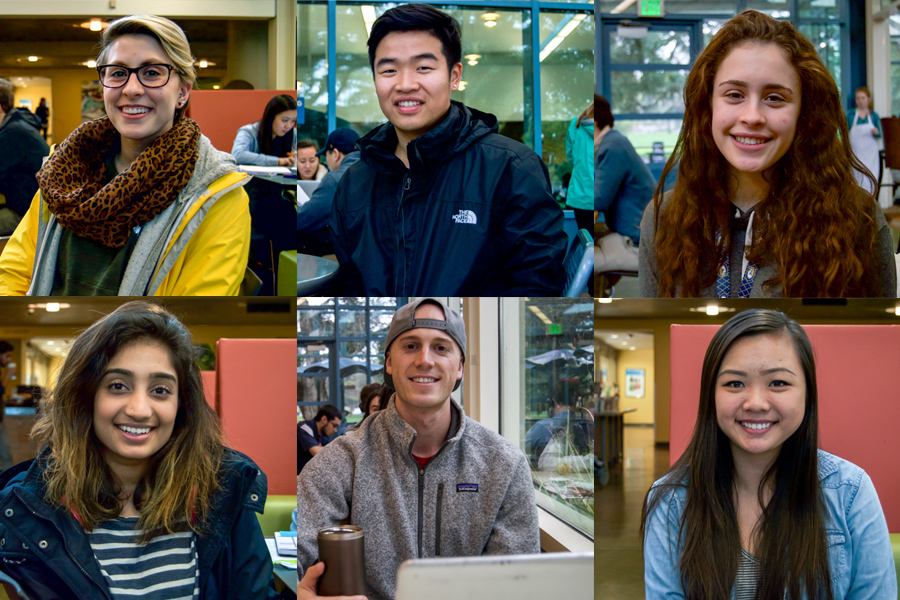
Students propose classes that should be required before graduation.
If you invented a class that would go on the mandatory list needed to graduate from college, what would the class be?
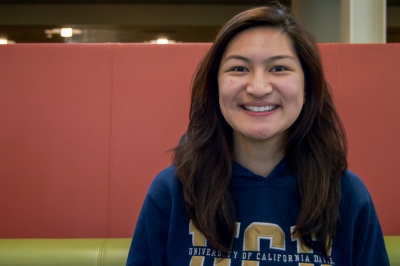 Theresa Pasion, third-year neurobiology, physiology and behavior major
“What is humanity class, what humanity means to people. There’s a blurred line between good and bad so it would be more of an ethics class.”
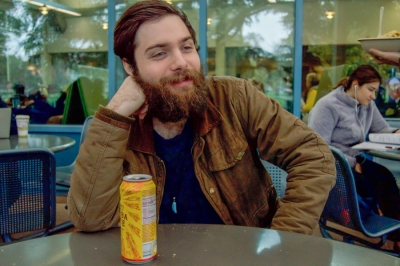
Devin Turner, fourth-year chemistry major
“Something to do with finances, like how to invest your money or balance a checkbook. It’s a big deal to students because so many of us are worried about paying off student loans or how to live independently.”
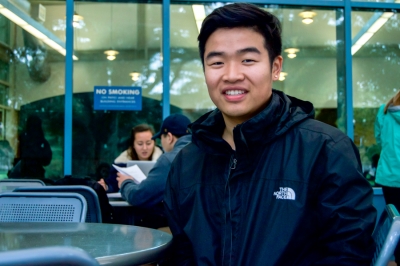 Jeffrey Ge, second-year managerial economics major
“A class about the stock market that bases the whole grade on different competitions between students.”
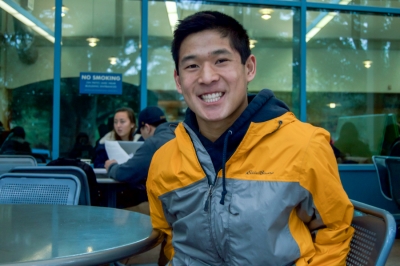 Jordan Lim, second-year biomedical engineering major
“A cooking class that teaches you how to budget meals and how long to cook your chicken to avoid salmonella.”
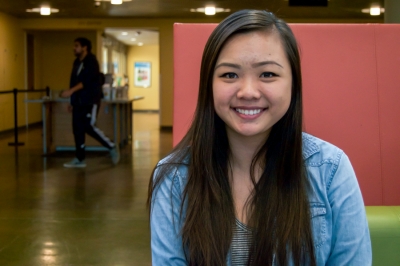
Amy Doen, third-year neurobiology, physiology and behavior major
“A class about finances because a lot of us don’t even know how to manage bank accounts.”
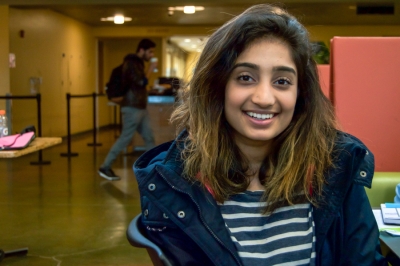 Paddy Krishnan, third-year neurobiology, physiology and behavior major
“I would create a common sense class or street smart class because we learn so much from textbooks, but we never really learn how to live our lives.”
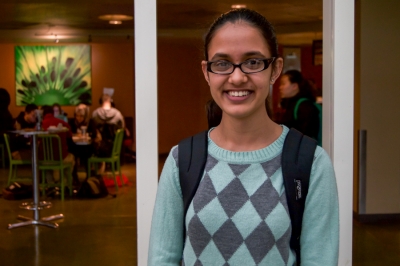
Urvi Patel, first-year psychology major
“My class would be about the college transition to help students that are struggling with that adjustment. It would be required for first years and inform them about on-campus resources.”
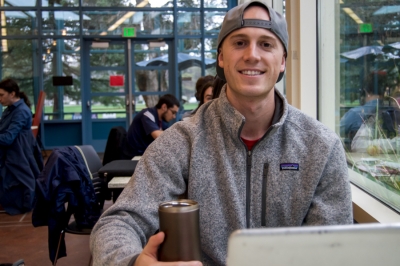 Josh Meuser, third-year chemical engineering major
“Probably a class just on general stuff like what is credit, how to do taxes and how to buy a house.”
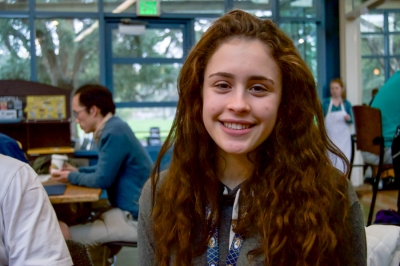
Amit Rachman, first-year nutrition major
“How to deal with finances.”
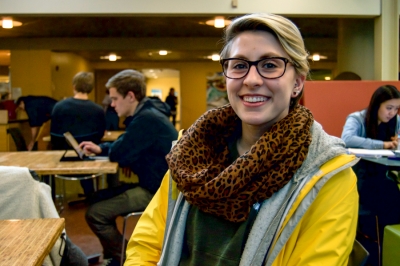 Megan Meany, third-year evolution, ecology and biodiversity major
“‘How to Adult.’ Things that you don’t really think about until you don’t live with your parents anymore, like rent, paperwork and filling out any type of forms.”
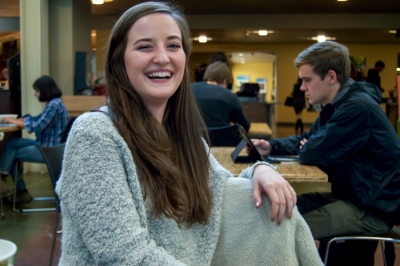 Charlotte Swaney, second-year chemical engineering major
“A class on understanding people that teaches you how to hold a good conversation with others and how to assert yourself in social situations.”
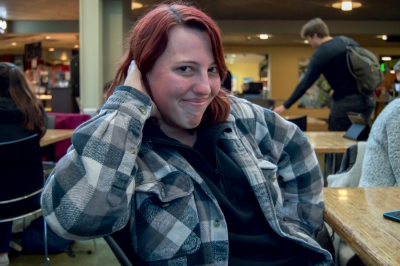 Blair MacDonald, second-year neurobiology, physiology and behavior major
“Common sense class based on how to treat strangers and just how to act like a decent human being in public.”
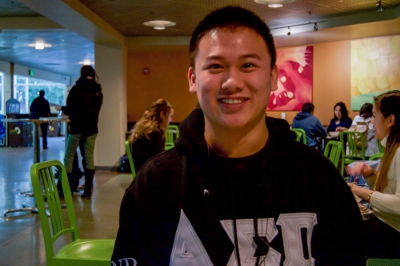
Vincent Yang, second-year computer science major
“How to plan a vacation because a lot of people get caught up in school and other stuff that they forget to do anything else.”
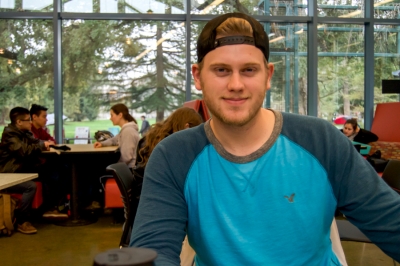 Austin Bons, second-year chemical engineering major
“A survival class, like how to live off the land and start a fire if you’re out in the wild.”
Written by Lisa Wong — features@theaggie.org
UC Davis Medical Center receives the 2016 Women’s Choice Award

UC Davis Medical Center honored for treatment of female patients
Earlier this year, the UC Davis Medical Center won the 2016 Women’s Choice Award as one of America’s best hospitals for bariatric surgery, cancer and heart care.
The award is based upon the perspective of female patients in the areas of satisfaction, clinical excellence and preference of hospital. In a press release from the UC Davis Medical Center, the UC Davis Medical Center’s CEO Ann Madden Rice said that this award is reflective of the top quality services that the medical center is known for.
“In addition to providing leading-edge, compassionate care to all of our patients, UC Davis is deeply committed to addressing the unique health care needs of women in our community and throughout the nation,” Rice said.
The American College of Surgeons and the American Society for Metabolic and Bariatric Surgery also recognized UC Davis as meeting their standards as a part of this award.
“This recognition acknowledges our research and clinical teams who are leaders in actively addressing gender-based distinctions in disease prevention and treatment,” Rice said.
Leilani Kupo, director of the UC Davis Women’s Resources and Research Center, said that this award will positively affect women in the university’s community.
“Commitment to women’s health and providing access and education to women identified patients is so powerful and important,” Kupo said. “This type of work both empowers women identified individuals to make informed decisions as well as take more control of their lives.”
In a UC Davis Medical Center press release, CEO of the Women’s Choice Award Delia Passi said that the award is an important way to display which institutions are providing the highest quality service.
“Women tend to be very selective when choosing hospitals,” Passi said. “We take pride in helping them choose with confidence by verifying the hospitals that are the very best at providing patient care.”
All Women’s Choice Award recipients rank above the national average in patient recommendations as indicated by the data reported by the Centers for Medicare and Medicaid Services.
Written by: Nick Griffen – campus@theaggie.org

Internship season

Internship and Career Center discuss paid work on campus as good alternative to unpaid internships
Science students in rain-soaked business attire crowded the Activities and Recreation Center on Jan. 13. Instead of drawing an umbrella, Fay Pao, a fifth-year biological sciences major, clutched tightly onto her plastic covered résumé and looked over her work history one final time.
Pao was getting ready to attend the Engineering and Physical Sciences career fair, one of five fairs held every academic year by the Internship and Career Center (ICC). Despite the breadth of resources offered by the center on a weekly basis, South Hall, where the ICC is located, does not usually have an abundance of visitors.
“I don’t hear of many students taking advantage of these resources,” Pao said. “I do think students tend to utilize résumé help whenever they urgently need it, but I don’t think students are using the center to the full capacity. I don’t think many students even know about all of the workshops and info they can get until they make their way into the center their last year.”
This is not to say that students couldn’t use the help. At the “Finding a Job Workshop,” ICC advising counselor Lisa Sanders asked a room predominately of seniors if they knew what type of jobs they’d apply for come spring; no one raised his or her hand.
Sanders reassured the crowd that — although it may be uncomfortable — this response is normal. According to the U.S. Bureau of Labor statistics, generations following the baby boomers hold about 12 jobs between ages 18 to 48, with half of these jobs held between ages 18 and 24.
Still, the prospect that a career path is likely to face constant turnover during one’s twenties is not a comforting thought for most young adults. ICC stresses that in order to narrow in on career options, students need experience. As summer approaches, the search for summer positions will become increasingly dire for college students, and though the hope is that these are paid positions, many won’t be.
This can prove difficult for some students who would like to take the unpaid internships, but are unable to due to financial reasons. Despite doing unpaid work in the past, Pao hopes for paid work this coming summer.
“It’s hard to say right now what will happen,” Pao said. “I don’t want to do unpaid work. I’d rather not have to stack up costs. But if students can manage, they should go for the unpaid experience because it can be valuable.”
ICC director Marcie Kirk-Holland said the center recognizes this is as an issue and is in the process of adding scholarships that will help offset the opportunity-cost that taking these unpaid positions create.
“We always want to have more paid than unpaid internships, but the reality is not all organizations can offer payment,” Kirk-Holland said. “However, we want students to know that these positions offer really important skills building.”
The March Family Internship Fund, open to economics majors aspiring to work in a business setting, is an example of the type of scholarship the center hopes to emulate. According to Kirk-Holland, the ICC has recently started advising students to “become intentional” with the type of jobs they take on campus. The first step the ICC took to promote this new strategy was moving student employment from the Financial Aid Department to the Career Center last year.
Edin Golomb, ICC peer advisor and third-year sociology and communications double major, recently accepted a managerial internship with Target. Though she worked some unpaid internships in the past, Edin credits a lot of her success to the career building she has done with on-campus jobs. She has gone from event planning, to business development, to peer-advising through paid campus work.
“ICC reached out to me over break to tell me that they are going to change my job function,” Golomb said. “Yes, I am still a peer advisor but I’m also going to be a sponsor for Union Pacific and I, in turn, do small projects for them. So now I’m getting to test outreach and marketing which I never had the opportunity of trying before.”
Kirk-Holland suggests students try to do small jobs, like washing lab equipment, before finding paid jobs for science-related work. Though a seemingly small step, Kirk-Holland is quick to remind students that 80 percent of jobs are found through networking.
Echoing this sentiment, Golomb suggests students look at their work history with a less critical eye.
“People need more confidence,” Golomb said. “Sometimes people say, ‘Oh I just worked as a barista,’ but I tell students not to use words like ‘just’ and ‘only,’ you have to own whatever you did. There are skills you learn as a barista that can be transferable.”
Kirk-Holland experienced this concept of transferrable skills at the internship she held in college. Though not her position’s main focus, she helped coordinate the internship program at an aerospace company. Kirk-Holland helped with recruiting the next cohort of students by coordinating the presentations of student work at the final banquet. Now, Kirk-Holland said that her position as internship director bears a striking resemblance to her college internship.
“It took me a long time to get back to [internship counseling],” said Kirk-Holland. “My story is not unique, I see it happen every day. It all made a huge difference for me.”
The ICC has drop-in advising from 10 a.m. to 4 p.m. Monday through Friday. Advising services are located on the second floor of South Hall.
Written by Anna Nestel—features@theaggie.org
City of Davis strives to protect open space

City staff to host workshop, creates survey to collect feedback from residents
The City of Davis and the Open Space and Habitat Commission (OSHC) are engaging in an outreach effort to collect ideas and recommendations from Davis residents about the city’s Open Space Program.
As part of the project, the city will host a public forum from 6:30 to 9:30 p.m. on March 9 in the Davis Senior Center’s multipurpose room, located at 646 A St. The city has also developed an online survey to gather feedback from the public about the Open Space Program.
The survey is designed to collect feedback about Davis’ open space areas and how they should be improved in the future. City staff will use the results from the workshop to make recommendations to the Davis City Council for updating the city’s Open Space Acquisition and Management Plan.
During the three-hour workshop, city staff and members of the OSHC plan to educate Davis residents about Measure O and what has been done with the funds of the voter approved parcel tax during the 15 years it has been in place.
“Open space is natural land that is preserved or protected and won’t be developed,” said Tracie Reynolds, property management coordinator for the City of Davis.
In this case, open space does not refer to parks throughout the city, but is more focused on farmlands and wildlife habitats.
At the meeting, citizens will be given the opportunity to discuss how they would like tax revenue reserved for open space to be spent for the next 15 years.
Reynolds explains that a lot of the open space areas that Davis residents have access to are maintained using city funds. The city has responded by offering financial support to acquire, protect, and maintain the lands.
The city created it’s official Open Space Program in 1990 in an effort to protect agricultural lands and other open spaces around the Davis community.
The city passed Measure O in 2000 to fund acquisition and maintenance of open space. According to the City of Davis, thanks to the funds, the city has protected more than 2,800 acres of farmland and habitat areas within the Davis Planning Area. Additionally, the city purchased about $22 million worth of conservation easements which allow the city to keep the land in its natural form and prevent development.
“Before the passage of Measure O, the Open Space Protection Tax Fund, the city relied on sporadic and unreliable funding sources to acquire and preserve open space,” according to the staff report presented to the City Council last month.
The voter approved parcel tax received more than 70 percent of the vote and has served as a stable source of long-term funding for the acquisition and conservation of open space lands.
“Having open space is extremely important, not only is it associated with better general health, but green spaces with trees also help the environment,” Davis resident Mason Jones said.
Research by Deakin University suggests that parks and nature contribute to increased physical, mental and spiritual health, in addition to enhancing social relationships and improving the environment.
Davis residents have the ability to vote on taxes that will fund the expansion of open space lands. Additionally, they can approve new projects that build agricultural land. These rights are given to Davis residents through Measure O and Measure R.
Reynolds adds that residents greatly contribute to the support for protecting open space in Davis. Michael Rios, associate professor of Landscape Architecture and Environmental Design at UC Davis, explains that the benefits of open space are vast and vary in each case.
“Creating open space preservation can be used as a tool to basically preclude any type of growth,” Rios said. “There are multiple benefits; it just truly depends on their type, scale and what purposes they’re being used for.”
Written By: CARLA ARANGO – city@theaggie.org
Humor: UCD institutes tuition hike to put all students on scholarship

UC Davis announced today that it will enforce a mandatory payment from each of its students on a quarterly basis. Students, however, will get money in return for this.
“[If] clubs, athletics and ASUCD get these benefits, [then] everyone should,” said Morris Reece, the main activist for the cause.
Reece felt that it was time for everyone to be on scholarship, suggesting that a simple $3 tuition hike per quarter would allow for students to receive $9 at the end of the year.
The plan is simple: pay, and if you wish to wait in line, get your money back after classes end in June. Students will have the option of a take-it-or-leave-it method of receiving the money. If one decides not to pick up the $9 check, the university keeps the payment for its own profit.
“We got the idea from the health insurance companies that get you to pay more, daring you to call them and wait to be put on hold,” Chancellor Linda Katehi said. “If a student wants his or her money back, it can be picked up at the bookstore. The lines are shortest there. We like to think of it as a scholarship for all of our students.”
While the plan seems ambitious, it’s expected to bring in at least $60,000 a year. The profit is projected to go toward campus beautification.
You can reach ETHAN VICTOR at ejvictor@ucdavis.edu.
Ai Weiwei exhibit at the Crocker Art Museum

Renowned artist’s ‘Circle of Animals/Zodiac Heads: Bronze’ will be on display at Sacramento museum.
For those unfamiliar with Ai Weiwei and his provocative art, the next five months may be the perfect time to acquaint yourself to the brilliance of this Chinese artist. From Jan. 24 to May 1, the Crocker Art Museum in Sacramento will be displaying Ai’s sculpture collection, Circle of Animals/Zodiac Heads: Bronze.
Much of Ai’s work is political in nature and his latest installment is no exception. During the Qing Dynasty, European Jesuits designed sculptures of 12 animal zodiac heads that functioned as a water clock-fountain. Ai’s Circle of Animals/Zodiac Heads: Bronze is a recreation of these sculptures.
The 12 sculptures, each about 10 feet high and weighing 1,600 pounds each, will be displayed near the museum’s exterior courtyard. The courtyard is between the historic and new buildings of the museum, which is fitting since this exhibit will present a rejuvenated version of these ancient sculptures. The deep history behind these sculptures is definitely reason enough to visit the collection.
Associate Director and Chief Curator at the Crocker Art Museum, Scott Shields, has been working closely with Ai’s team in New York for the past 18 months.
“I hope visitors really like and engage with these sculptures,” Shields said. “[The sculptures] are large and incredible to look at, but they also have an important story behind them that I hope people will take the time to learn.”
Ai is well-known for his elaborate and daring designs. He was the mastermind behind the striking Beijing National Stadium, also known as the Bird’s Nest, where the 2008 Beijing Olympics took place.
His influence can even be felt on campus in some classes. Emily Gomez, a second-year managerial economics major, remembers taking Art History 1D: Arts of Asia and studying Ai’s work.
“I remember learning a little about his art and watching a documentary he made about what he thought was wrong with the Chinese government and how that influenced [his] art,” Gomez said.
Ai is as renowned for his political activism as he is for his art. There have been times when Ai’s outspoken opinions landed him in trouble with authorities, such as when he was held at Beijing Capital International Airport on allegations of “economic crimes.”
Students who are not as familiar with Ai Weiwei, like fourth-year chemistry major Dustin Williams, are still positive the exhibit will be a success.
“I don’t know anything about his [art], but anybody who gets into trouble that much probably has a lot to show through art,” Williams said.
Shields hopes this exhibition will allow guests to gain a better grasp of Ai’s work and activism.
“[I hope people will get] a sense of the artist and especially his art, which is compelling, beautiful and thought-provoking,” Shields said.
Circle of Animals/Zodiac Heads: Bronze will be held at the Crocker Art Museum on 216 O St., Sacramento from Jan. 24 to May 1. For more information, visit the Crocker Art Museum website.
Political Ambiguity: We are more than just liberal or conservative

 The political spectrum is quite difficult to understand. As far as we know, its origins are in the French Revolution. At the time, legislators who sat on the left side of the National Assembly were in favor of the Republic and those who wanted to preserve the monarchy sat on the right. Despite the strict political divide this practice implies, people on each side hold a wide variety of beliefs and opinions. But how do these classifications define politics in the modern age?
With the United States’ two-party system, it seems quite easy to label the Democratic Party as left-wing and the Republican Party right-wing. But it’s not as simple as that. A great amount of ideological deviation exists between a party’s platform and its legislators. The terms ‘liberal’ and ‘conservative’ used to describe the two parties’ supporters remain vague and open-ended. People often hold complex beliefs that cannot be exclusively classified as either right-wing or left-wing. This political divide is little more than a system of classification. For example, a person may be supportive of a free market, which puts them at the economic right. But at the same time they might be socially liberal, supporting gay marriage rights. Similarly, just because a party is labelled as left-wing does not mean it’s unable to hold socially conservative opinions on marriage or religion. Having just two terms, left- or right-wing, liberal or conservative, does not suffice to describe the diverse range of beliefs in our society.
Any issue that people clash on, whether it be the minimum wage or our immigration system, is not merely two-sided. Topics like these will surely have many sides trying to pinpoint a cause to the problem. An issue like radical extremism, or the Oregon standoff, requires a much deeper understanding than the usual two-sided partisan scapegoating. If you just scroll through a few online articles, it’s fairly easy to find comments like, “KKK and the Christian Right wing strikes again!” or “Smells like a radical left-wing agenda cooking.” Rather than talking about the root causes of the recent Burkina Faso hotel attacks or the Oregon refuge standoff, many people choose to play the ideological blame game. Ignoring other confounding factors, many blame the party or side they demonize as the true cause of a problem they feel strongly about.
Similar to George Carlin’s assertion that “politicians don’t just fall from the sky,” it’s also true that political parties don’t come out of thin air. They were created for and by the people to advance policy initiatives and better the workings of government. In recent years, we have seen the two parties and their supporters blame each other for the inefficiencies of lawmaking. The inevitable effect of polarization between the two parties, who often stand quite close on many issues, is a belief in imaginary ideological differences. One party will label its rival as “the other”— ignorant, incapable of grasping the issues and purposively seeking out holes or hypocrisies in the other side’s argument. Political parties do benefit the lawmaking process, but now they’ve become a barrier to analyzing and solving contentious topics.
Using the language of the political spectrum to unite us rather than to classify and divide us will advance our academic discourse on important issues. If we can free ourselves from the labelling and the criticism, we can start a new chapter in politics, and use the spectrum to help, not hurt, our understanding of the world.
You can reach JUSTIN CHAU at jtchau@ucdavis.edu.
Inside the game with Alec Adamson


This week, The California Aggie sat down with junior Alec Adamson, a quiet and humble team player who recently made history for the UC Davis tennis program. In his third year as an Aggie, Adamson ranks in at 38th in the nation in singles competition and looks to lead his team to a successful season.
When did you first start playing tennis and why?
I started playing tennis when I was about eight years old. I played a lot of different sports growing up: basketball, baseball, soccer, but I really liked tennis. My mom had played it so I guess that’s how I got into it. But [I] have just always enjoyed the game.
What’s an average week look like for you?
I go to class in the mornings and then have practice every day from 1 [p.m.] to 4:30 p.m. And then I have class at nights and [the team has] study hall two nights a week and weights two times a week at [2 p.m.].
You made the finals at Battle in the Bay, how did the tournament prep you for the upcoming season?
I think the fall tournaments are good preparation for the season, just getting matches and getting experience against some good players. I think it was great for our team, that tournament, and I think it’s also going to prepare me personally [for] playing a lot of challenging ranked opponents.
How did it feel to upset a couple top opponents?
It felt great. I thought I had a good preparation this summer. [I] played a lot before the fall and I think it should give me good momentum going to the season, confidence-wise and just good preparation.
You’re the first Aggie singles player to be nationally ranked in Division I, how’s that feel?
Yeah, it’s definitely an honor. There have been some good tennis players here at UC Davis, so to be the first one is great. But I also think it’s a good milestone for the team. Last year we got ranked for the first time as a team and now we have the first singles player to be ranked. So I think it’s just another good milestone that shows the hard work the team put in.
What are your goals as the season starts back up?
For this season, our team’s main goal is to win the Big West Championship. We’ve never done that before. Last year, we were the co-champions for the regular season, so I think [the goal is] to do well in Big West play. We have a tough schedule against Stanford, USC and some good, ranked teams. I think just maybe to knock off some of those teams.
In your opinion, what’s the best part of your game?
I would probably say my serve and my backhand are the strengths of my game.
What do you need to work on?
Right now I’ve been working a lot on my forehand and my approach. Kind of working to get up to the net more. I use my height and reach more and just am being more aggressive. Working on that kind of game.
How fast do you serve?
Fastest I think I ever got clocked is 115 [mph].
What do you do as a student-athlete advisory committee (SAAC) officer?
For SAAC officer, we meet three times a quarter as a group. Kind of with all the different SAAC reps as a team. And we want to get a better kind of camaraderie between all the different athletes. We put on different social events every quarter — we have the Big West coin drive starting up the beginning of February. Any issues athletes have, they bring them to the SAAC officers and we relay them to administration. I think we’re kind of just the middle man between the student-athletes and the administration.
What’s the most rewarding experience you’ve had serving the community?
I’d say the Thanksgiving dinner for the homeless is one of the best events I’ve been a part of. It’s been really great. This last year we had over 40 homeless people come to the event and we were able to serve them and give them food to take home. SAAC also put on a drive with socks and gloves [and] hand sanitizer. Just all these personal items. It was really rewarding to see how thankful they were for what we were doing for them.
If you had won the $1.3 billion Powerball, what would you have done with the money?
I think I would have given some money to my family and friends. And then also would have donated some because I don’t need that much money.
Michael Martinez can be reached at sports@theaggie.org
Ask Katehi: A college newspaper is for students, by students
 Aggies, I wanted to start off by welcoming you back to campus and wishing you a Happy New Year! In today’s Ask Katehi column, I will answer a question posed to me by the Aggie Managing Staff:
What do you see as the role of a printed newspaper in a college setting?
A student newspaper, whether published in a print or digital format, is a vital part of student expression and The California Aggie has been part of campus life at UC Davis since 1915. On a college campus like UC Davis, a student newspaper offers students a forum to write and think about events and issues of interest and importance to them. A campus paper like The Aggie can also serve as a valuable learning laboratory for students interested in journalism and public affairs.
As its readers are aware, The Aggie is not the only newspaper to make the shift from print to an online format. Newspapers throughout America are increasingly moving away from print and toward an online presentation. There are many reasons for this, including economics and the fact that we live in a world of instant communication where digital dissemination of news is far more efficient and timely than doing so via print.
But in the end, because The Aggie is a student publication managed by students and serving students primarily, I believe decisions about how the paper is published are best left to our students through ASUCD.
As always, you can email me your thoughts and questions to askkatehi@ucdavis.edu and I will try my best to answer you in my Ask Katehi column.
Connect with me on social media; visit my Facebook, Twitter, Instagram ,Google+, YouTube, LinkedIn profiles or my Huffington Post Blog