55.5 F
Davis

Davis, California

Wednesday, December 24, 2025
Home Blog Page 780

This week in sports

0
TIFFANY CHOI / AGGIE

Recap of athletics action from Oct. 12 to Oct. 18

UC Davis athletics from Oct. 12 to Oct. 18

Men’s golf

Alister MacKenzie Invitational

At the 2015 Alister MacKenzie Invitational, senior Patrick Soli of the UC Davis men’s golf team finished with a tie for eighth place in the first day of competition. The following day, Soli made a great finish and tied for 10th place overall. The next top finisher for the Aggies was senior Luke Vivolo, who tied for 47th place in the tournament.

Overall, the Aggies placed 14th as a team, just trailing behind Oregon State. This was the last event of the fall season for men’s golf team. Their spring season will start up again in early February 2016.

Men’s soccer (7-6-2)

UC Davis vs. Cal Poly (W, 3-2 OT)

UC Davis vs. Sacramento State (T,1-1 OT)

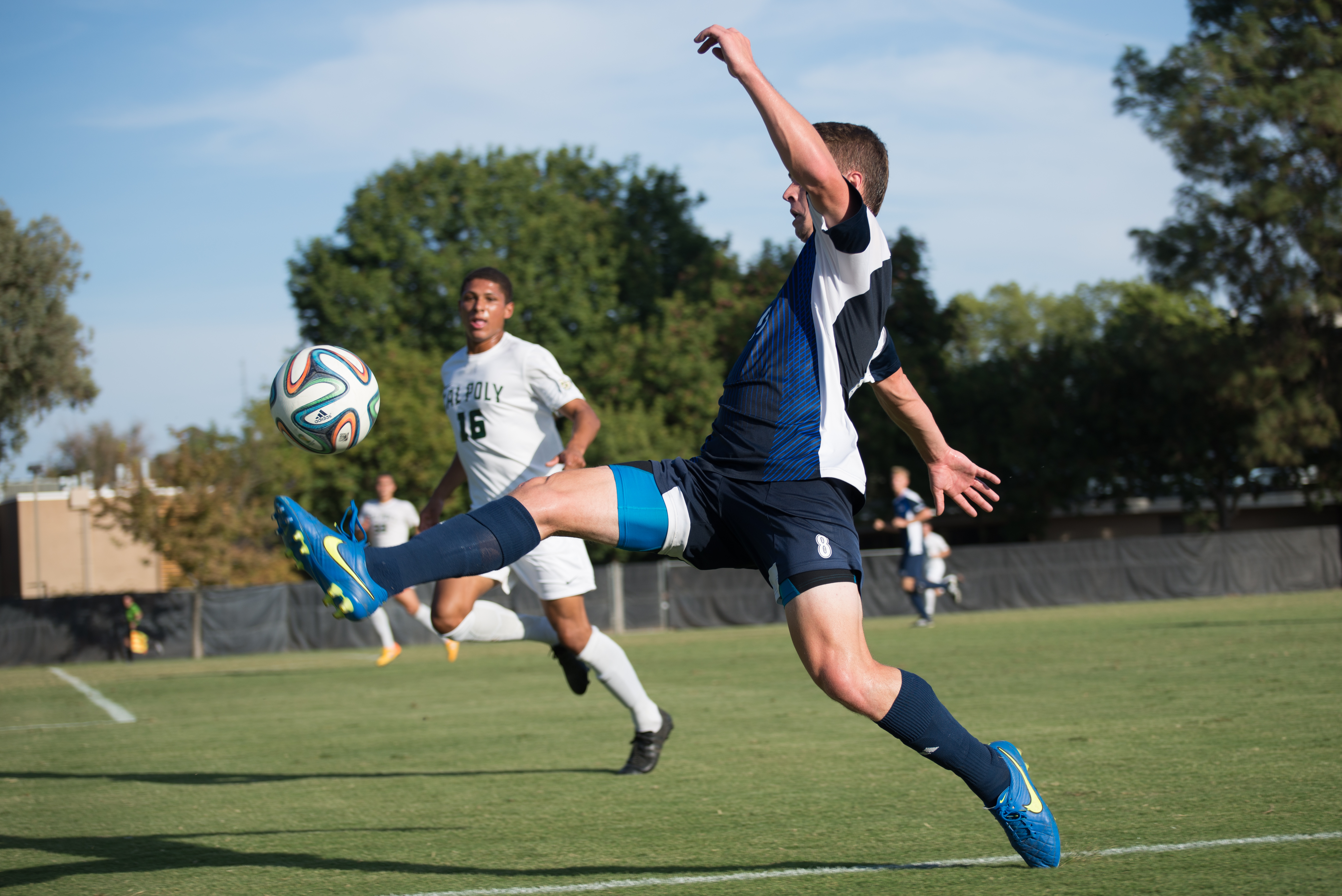
A thrilling match that pitted the Aggies against the Cal Poly Mustangs played out on the Aggie Soccer Field. The Mustangs were coming in with six straight wins and a ranking of No. 24 in the nation. Freshman defender Roy Boateng gave the Aggies an early lead, scoring two goals a mere eight minutes apart in the first half of the game, but Cal Poly rallied back in the second half with two equalizers. Just five minutes into overtime, senior midfielder Lucas Mohageg broke through and headed in a shot from sophomore midfielder Evan Barrett to make the score 3-2, a win for the Aggies.

The much-anticipated game between rival schools came to a head on Saturday afternoon. With an audience of almost a thousand people, the Aggies found themselves with an early lead when sophomore midfielder Miguel Acevedo scored his first career goal in the opening half. A quick response from the Hornets just eight minutes into the second half tied the game, and after two overtimes the game ended in a draw.

Women’s volleyball (9-12)

Women’s Volleyball Davis at Hawaii (L, 3-0)

The Aggies were up against the University of Hawai’i Wahine on Oct. 16 at the Stan Sheriff Center in Honolulu. Although they made great strides offensively, with junior outside hitter Kendall Walbrecht posting 11 kills and freshman opposite hitter Nicola Moore with six, the Aggies still fell in three sets, 25-14, 25-12 and 25-17.

Upcoming games will be at UC Riverside and Cal State Fullerton on Oct. 23 and 24.

Men’s water polo (12-6)

UC Davis vs. Santa Clara (W, 15-10)

UC Davis vs. Concordia (W, 20-7)

Playing against Santa Clara, the Aggies overcame a 7-4 deficit early on for a 15-10 win at the Schaal Aquatics Center. Freshman utility Sasa Antunovic made five goals: three in the second frame, one in the third and one in the fourth. Hat tricks from senior utility Sean Grab and redshirt freshman Riley Venne solidified the Aggies’ win.

The men’s water polo team once again secured a victory at the Schaal Aquatic Center in a non-conference match on Oct. 18. The Aggies outscored Concordia of Irvine 20-7, indicating a great offensive game as well as strong defense, especially from sophomore goalkeeper Spencer Creed, who made five saves in the first quarter.

The men’s water polo team will next play on Oct. 24 in a tournament hosted by Santa Clara.

Football (1-6)

UC Davis at N. Colorado (L, 56-27)

A historic day for senior Brady Stuart as he tied former Aggie kicker Eddie Loretto’s (1985-1988) record of 47 kicked field goals. Despite this, Northern Colorado was able to post a 56-27 victory that afternoon.

UC Davis returns to the Aggie Stadium on Oct. 24 as they face off against Southern Utah.

Cross Country

Santa Clara Bronco Invitational

Cross Country NCAA Pre-nationals

At the Baylands Regional Park in Sunnyvale, Calif., 8k and 6k races commenced on a rain-dampened course. Top finishers for the Aggies included sophomore Luke Dorman in the 8k and freshman Natalie Cooper in the 6k.

There was a strong showing at the Cross Country NCAA pre-nationals in Louisville, Ky. this weekend, with seniors Erika Barr and Trevor Halsted finishing fourth and second place, respectively. A total of seven runners placed in the top 50: seniors Nick Ratto, Amar Dholakia and Jordon Rushing for the men;seniors Katie Fry and Christine Hoffman and juniors Nicole Lane and Rianna Goins for the women.

Women’s soccer (8-6-2)

UC Davis vs. UCSB (L, 2-1)

Despite an early 1-0 lead for the Aggies, goals from UC Santa Barbara in the 35th and 87th minutes meant a tough loss. Junior forward Andi Damian was able to intercept a ball from a counter-attack and launch it into the goal just 18 minutes into the game. The second half remained goalless until the last minutes of the game, when the deciding goal from UCSB made the score 2-1.

The Aggies will play at home for their Senior Game against Hawaii on Thursday.

Field hockey (7-10)

UC Davis at Pacific (L, 4-2)

UC Davis fell 4-2 to the Pacific Tigers on Sunday. With Pacific starting out strong with two goals in the first ten minutes, junior forward Danielle Koehne scored the first Aggie point to make the game 2-1. Senior midfielder Jamie Garcia scored the second point at the 56th minute, but the Aggies were ultimately unable to convert their subsequent shots into goals. Pacific ended the game by making a goal with just one minute left in the game.

The field hockey team will travel to Stanford on Friday  before returning home a week later.

Women’s golf

Stanford Intercollegiate

The Aggies tied for seventh place at the Stanford Intercollegiate women’s golf tournament, with standout senior Andrea Wong claiming three birdies in the first 18 holes. The tournament features six top ten teams and four top five in the nation. The tournament will continue on to Tuesday, to conclude the women’s fall schedule.

Former UC Davis Chancellor dies at age 74

DEBBIE ALDRIGE / UC DAVIS

Chancellor Larry Vanderhoef passes away from successive strokes

On Oct. 15, former UC Davis chancellor Larry Vanderhoef passed away at the age of 74. Vanderhoef, who was the chancellor of the university from 1994 to 2009, died due to complications from successive ischemic strokes.

Chancellor Linda P.B. Katehi, who succeeded Vanderhoef in 2009 after he stepped down, remembers Vanderhoef for his contributions to the university.

“Our university has lost a beloved leader, one who gave a quarter-century of his life and more to UC Davis,” Katehi said. “He built a strong foundation for our university’s service to the state, nation and world.”

Vanderhoef previously served as provost and executive vice chancellor at the university for 10 years before stepping up as UC Davis’ sixth chancellor in 1994.

His legacy at UC Davis includes launching the university’s first comprehensive campaign, raising money to build the university’s now Robert and Margrit Mondavi Center for the Performing Arts and transforming the Old Sacramento County Hospital into the UC Davis Medical Center and School of Medicine after UC Davis bought the facility for $1.

Prior to joining UC Davis, the late chancellor has held faculty positions at the University of Illinois and the University of Maryland. Vanderhoef held bachelor’s and master’s degrees in biology from the University of Wisconsin and a doctorate in plant biochemistry from Purdue University.

Currently, the campus’ second quad is named the Vanderhoef Quad in remembrance of his tenure.

“The entire UC Davis family will miss Larry and his gracious presence tremendously,” said UC Davis Provost and Executive Vice Chancellor Ralph Hexter. “We will honor him and his memory best by rededicating ourselves to our mission of teaching, research and public service.”

Ensuring alcohol safety for UC Davis

KATIE LIN / AGGIE
KATIE LIN / AGGIE

Police, counselors and students work together to promote safe drinking habits in Davis

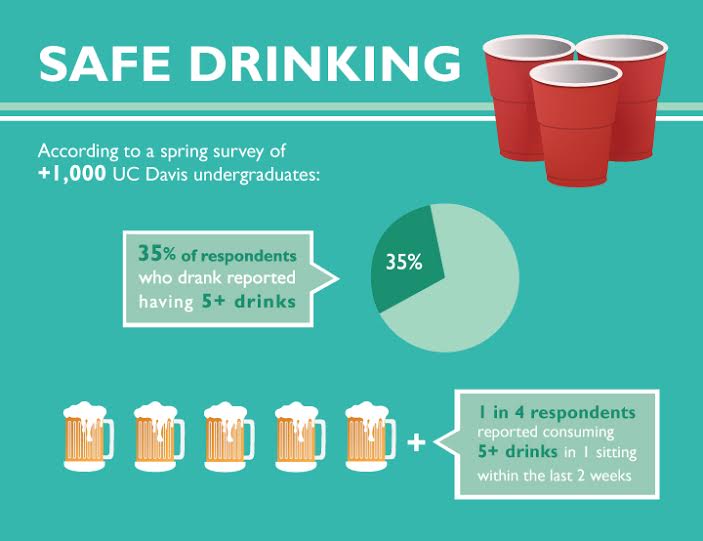
According to the National Institute of Alcohol Abuse and Alcoholism, four out of five college students drink alcohol and about half of the students who do are binge-drinkers.

Alcohol-related problems can lead to injury, sexual assault and abuse, academic struggles, mental illness, suicide attempts and even death. More than 1,800 college students die from alcohol-induced injuries annually.

At UC Davis, cops are not the only ones attempting to reduce these numbers and enforce safe drinking. The City of Davis police department, Student Health and Counseling Services (SHCS) as well as student volunteers are collaborating on an Party Ambassadors initiative to promote alcohol safety off campus.

“Student interns will go on ride-alongs with police and tweet out safety messages,” said Reann Davis, a health educator at SHCS. “[They will include] things like how to drink responsibly, get home safely or help a friend that’s been drinking.”

One of these Health Education and Promotion (HEP) interns is fourth-year biochemistry major Justin Hong. During the spring of 2014, Hong offered to be a designated driver for a house party. Upon returning to the party after dropping other students home safely, Hong learned that a party attendant had fallen off the roof, resulting in several serious injuries. Hong accompanied the student to the emergency room and since then, he is actively working to educate himself and his peers about the prevention of alcohol-related injuries.

“Last fall, I went on a patrol and rode with an officer for four hours while listening to the police radio,” Hong said. “One of our calls was about a house party. I saw how the officers and students interacted with each other, and in my opinion it was an awesome interaction because the officer presented their concerns and the students were responsive.”

HEE-AH YOO and HANNAH  LEE / AGGIE
HEE-AH YOO and HANNAH LEE / AGGIE

According to Lieutenant Paul Doroshov of the Davis Police Department, student volunteers like Hong would be allowed to accompany police officers on “low-level” police calls through the Party Ambassadors program, which is being launched for the first time this year. Doroshov estimates that among all calls that the police department receives, roughly 80 percent are low-level noise complaints from neighbors.

Students with strong communication skills who are interested in the volunteer program can fill out an application on at the department’s website. Accepted students would undergo a 20-hour training and volunteer once a month on Friday or Saturday nights — the police department’s busiest hours.

“I believe that we’d see effects on many different levels,” Doroshov said. “It would help the police department because people will volunteer to help out with these party calls. It helps the community because it gets students involved in managing a problem that exists between their community and the surrounding ones. It’s a great development opportunity. We’re not this “other” organization, and we can make students part of our process.”

Students would not be allowed to accompany officers when they receive information on a call regarding an extremely large party or one with alcohol involved. However, if a call involves a situation that has escalated seriously, these students would be trained to identify red flags and notify officers immediately.

Aside from the Party Ambassadors’ Program, Hong’s own research led him to Red Watch Band, a comprehensive bystander intervention program for students who encounter a party or situation with an alcohol emergency. The program is already in place at other college campuses nationwide and is now undergoing implementation at UC Davis.

“After talking to different schools and programs about what programs work, I discovered that the strength of Red Watch Band really stood out to me,” Hong said. “There are no huge logistical issues. Sometimes, colleges hire different professionals to come to their campus. That costs a lot of money, and these external professionals can only be there for a period of time, so it isn’t sustainable. Red Watchband is, and it doesn’t take a lot of money, effort or time.”

Red Watch Band is largely a student-centric program, meaning that it operates on student involvement and participation. In fact, the program calls for “student facilitators” that are trained to recognize alcohol-related emergencies, alert professionals immediately and respond to these medical emergencies effectively. Students in training may also choose — and according to Hong, are strongly encouraged — to be CPR certified.

Following thorough research about Red Watch Band in college campuses like Chico State University and Stonybrook University in New York, Hong and Davis drafted a proposal to request funding, citing the merits of the program, its efficiency and its chances of success at Davis. This proposal was presented to their supervisor and was approved earlier this year.

“What is nice about Red Watch is that it’s abstinence-free,” Hong said. “That’s something I really like. There are no assumptions being made or messages being sent about not partying or not drinking. It’s judgment-free.”

However, Hong adds that as a national program, Red Watch Band is not campus-specific. It will require an evaluation after the first year and improvements to tailor the program to the needs of UC Davis students in particular.  However, there are existing resources on campus that students can use if they find themselves or their peers struggling.

“We have an intervention specialist,” Davis said. “It’s a free resource for all UC Davis students struggling with alcohol, tobacco or drug abuse. You can come with a friend or alone, and you may even be someone who is just concerned or is unsure if you have a problem. It’s all confidential.”

Davis and her colleagues in HEP also manage the Safe Party website, which suggests safe transportation options, blood alcohol concentration (BAC) charts, an interactive resource to track an approximate BAC and a page that informs and encourages party-goers to be upstanders.

According to Davis, HEP coined the term “upstander” to mean an individual who is willing to step up and take action to help others or who stands up for their beliefs. She believes that it only takes one proactive and empowered upstander to make a difference in saving lives.

“Ultimately, as upstanders, we take a harm reduction role,” Davis said. “We don’t want to tell them what to do or what not to do. If they do choose to drink or party, that is their choice. Our department and the police department are just working the community’s best interest by keeping safety in mind. We just want students to know that these resources are available without we’re not trying to condemning or condoning their behavior.”

Aggie soccer reins in the Mustangs

0
ANH-TRAM BUI / AGGIE

Cal Poly falls to UC Davis in 3-2 overtime win

Coming off an overtime conference win against UC Irvine, the UC Davis men’s soccer team was eager to add to their conference totals as they faced Cal Poly on Wednesday.      

Going into this game against the Mustangs, the Aggies were tied for second place in the Big West North conference and hoped to take a more substantial lead and catch up to conference leader UC Santa Barbara. The pressure was on, with both teams looking confident at the start of the game.  

Two expertly executed headers by freshman defender Roy Boateng gave UC Davis a very early two-point lead in the first half. This was Boateng’s first career multi-goal game, and it gave the Aggies significant breathing room against the Mustangs. Cal Poly battled back in the second half with a major push and scored a couple of goals to tie up the game. The late game-equalizer for Cal Poly was an exceptional cracker to the upper right corner of the goal.

Cal Poly’s second-half performance sent the game into overtime where, after five minutes, senior midfielder Lucas Mohageg scored a goal off of a rebound, his second game-winning shot in the past two matches.       

This exciting win puts UC Davis at a 7-6-1 season record and a 3-1-1 Big West Conference record. The Aggies will face rivals Sacramento State in another important conference matchup on Saturday.

The Internet Explorer: Political correctness in the comments section

0
CAMILLA DAYRIT / AGGIE

garcia_opThe concept of political correctness is certainly a loaded one. It is as protected as much as it is held in disdain, and in this sense the idea carries a twofold connotation. For one, political correctness constitutes a culture favoring inclusivity and unprejudiced respect for people of all backgrounds and identities. On the other hand, the pressure of adhering to a code that strives to be as inoffensive as possible evokes a form of social censorship. The term ‘political correctness’ carries a bitter undertone. This attitude is best depicted by a sneer reacting to the laborious task of being zero percent offensive or neglectful. To some, there are costs, particularly regarding freedom of speech. Then there are people who concern themselves with the duty of correcting these sort of offenses. They wouldn’t defend their stances in the name of ‘political correctness,’ but rather, human decency. Often it seems that in these people’s eyes, only a brute would interchange morality for ‘political correctness.’

I’ve sat in lectures where professors had to lay disclaimers on scientific facts before discussing psychological and biological sex differences. It’s as if they’re pleading, “Don’t kill me for implying that men and women are not equal — this is just science!” It’s interesting to me how these professors anticipate contempt given their audience is, well, comprised of college students. The threat of breaking this morally-binding social code sequesters speech and often makes me question whether our strive for inclusivity and equality reinforces the idea of fragility, instead of actually promoting ideals.

This brings me to the comments section. Whether on YouTube, Facebook, Tumblr or any other online forum, the nature of the Internet provides a vocal platform for contentious debates, in which one is awarded a degree of anonymity or is presented with an invitation to be admired by others.

In my mind, one particular exchange stands out.

Last month in a Sacramento Bee article, two commenters illustrated the double-edged nature of political correctness. The article talks about the gradual disappearance of Native American figures as school and sports teams’ emblems in an effort to be more sensitive to the civilization’s history and people.

“Nowadays, everything is offensive,” wrote one sharer, expressing her frustration and lamenting an imposed politically correct culture.

She followed up with the fact that she is proud of her own Native American heritage and that she doesn’t mind “Indian” as a label. A second person offered a more ‘upright’ response, commenting on the insensitivity of appropriating Native American culture. She gave special consideration to the historical context, saying that abolishing the symbol should be unproblematic and is, at the very least, respectful. Opinions vouching for both sides flooded the comments thread, and arguments turned into personal attacks, which I found funny, given that these commenters were initially concerned with potential or implied insult.

I am not saying that defending minority groups in the comments section is unproductive. And I absolutely do not endorse attacking people for their choices, identities or circumstances. The intent behind a politically correct attack comes from an honorable place and is progressive considering America’s social consciousness 60 years ago. But it is not my intent to dictate how we should feel about the bigotry we see online or in the media. In my view, we can direct our anger in more productive ways. And while I identify as a feminist and a left-wing thinker, I also believe that expressing wrath over conservative opinions is what makes Donald Trump so popular.

There is something about this politically correct culture that isn’t entirely defensible, and I think it has a lot to do with intolerance of differing opinions. We censor terms that we think aren’t PC. I remember during a high school oral reading of John Steinbeck’s Of Mice and Men, the teacher had us say “African-American” instead of the harsher racial epithet. I believe that this sort of censorship rids us of the opportunity to talk about contentious issues. More often than not, preemptive measures to eradicate uncomfortable truths from conversation do more harm than good. We could euphemize the slurs, cut out the jokes and disregard the disturbing historical context, but whenever possible, we should still talk about what makes them so taboo in the first place. I’m not exactly calling for a ceasefire against racist, sexist or other prejudiced ways of thinking. I just want to have a conversation about our politically correct culture.

You can reach Jazmin Garcia at msjgarcia@ucdavis.edu.

UC Davis terminates position of $260,000-salaried publicist

KATE SNOWDON / AGGIE

Publicist Luanne Lawrence leaves university following family issues, disagreement over new position

On June 30, UC Davis terminated the position of Associate Chancellor of Strategic Communications Luanne Lawrence. The position, which paid Lawrence a yearly salary of $260,000, according to records obtained from The Sacramento Bee, was eliminated completely.

According to a settlement agreement obtained from The Bee, Lawrence was notified of her position’s termination on June 30. Though the agreement does not state why Lawrence’s position was relinquished, the document reveals that Lawrence turned down an alternative role of director of marketing and branding at the university.

Andy Fell, associate director of news and media relations at UC Davis, said that Lawrence was hired in 2013 in order to increase the university’s national and international recognition. In regards to the reason behind Lawrence’s termination and her former salary, the university declined to comment.

According to Lawrence, she reached a mutual decision with the university to leave her position due to series of family obligations that limited her time to work. Specifically, Lawrence had to split her time with the university to aid an ill family member as well as her parents, who were involved in a car crash in Pennsylvania. After her father passed away in the crash and her mother suffered significant injuries, Lawrence found her time scarce while flying to and from the East Coast to tend to her parents and the university.

“I left the university a few months ago to start my own business after I realized that I could no longer manage the long hours and demands of the associate chancellor job,” Lawrence said in an email interview.

In response to critics who disapproved of her salary, Lawrence defended that her pay was in line with California’s standard of living.

“When I came to UC Davis, I was offered a salary that was in line with my prior salary and reflected the cost of living change from moving from South Carolina to California,” Lawrence said.

Some students do not agree with the university paying its employees such high salaries. First-year Kathleen Humphries is concerned that the university may not always look at the direct connotation between high-paid management positions and student tuition.

“There should be standards set as to how high faculty is being paid here,” Humphries said. “A lot of students at UC Davis are paying their way through college, [how much administrators get paid ] should be considered.”

UC Davis horticultural researcher Richard Evans echoed similar criticism to Humphries regarding Lawrence’s pay.

“I find it hard to believe that we need another administrator that is worth three faculty positions,” Evans said, in response to Lawrence’s salary.

While Evans stated that he had nothing against Lawrence personally, he further emphasized the contrast between university administrators’ pay and students’ income.

“It would help a lot if there wasn’t such a disparity between management salaries and the incomes of students and their families,” Evans said.

Evans, who remains an opponent of high salaries, sees money as only a limited motivation for career performance.

“Once you reach enough money to wonder how you’re going to spend it all, then that stops being a motivating factor of how well you do your job,” Evans said.

In response to the increasingly uneven ratio between management positions and faculty positions at the university, Evans suggested decreasing the number of management positions to make room for more faculty.

“The focus is always on the salaries, but the bigger issue is how many [management positions] there are,” Evans said.

After leaving the university, Lawrence began her own public relations firm in Sacramento with a specialty in client consulting. Though her position is terminated, she affirms that she is still working with UC Davis on a freelance contract.

“I am still employed by UC Davis on a flexible contract and working on four projects as a consultant, so I haven’t left. I just now have the ability to telecommute and work from the East Coast as needed,” Lawrence said. “I am very happy with the variety of work I am doing, the flexibility and that I am still able to help UC Davis, an amazing university.”

Ask Katehi: Outlining a path forward

0
JENNIFER WU / AGGIE
JENNIFER WU / AGGIE

katehi_opWith the school year upon us, I wanted to say hello and welcome you back to campus. In continuing this blog, I plan to keep you updated on what my administration is working on and also respond to questions you would like answered.

In my first column, I will answer a question posed to me by the California Aggie Editorial Board:

“Given the recent racially charged incident at UCLA and other past events at UC Davis, what specific steps will you take this year to prevent racial discrimination on this campus?”

I am convinced that the overwhelming majority of our students, faculty and staff find acts of discrimination abhorrent and would never behave in such a manner. Still, on a campus with as many people on it every day as UC Davis, we will never be immune to some of the same unfortunate divisions that occur in society at-large.  Nevertheless, we must do everything we can to be a community that embraces diversity in all its complexities and honors our Principles of Community. Our university can and should be a model for others to follow in treating people from all walks of life with dignity and respect. To make this a reality requires persistent efforts by all of us working collectively throughout our campus.

We have initiated several steps to create a more supportive and inclusive environment for students, faculty and staff, including work that is underway to draft and implement a Strategic Plan for Diversity and Inclusion that coalesces all our work in this effort. We have also created a restorative justice program and developed training courses for staff supervisors and managers on microaggression. And just last week, I established a task force led by Provost Hexter and Vice Chancellor Adela de la Torre regarding workplace climate issues, requesting recommendations on any necessary changes within three months.

Our efforts on these issues must be ongoing and persistent, something we work on always as we strive to create a campus environment where all individuals feel they belong to the Aggie community. If you are aware of behavior that violates these values, I hope you will reach out to me or other campus officials. We want to know about your concerns so we can address the issue head-on and talk about it freely, openly and safely.

As always, you can email me your thoughts and questions to askkatehi@ucdavis.edu and I will try my best to answer you in my next Ask Katehi column.

Follow me on social media; visit my FacebookTwitterInstagraGoogle+YouTubeLinkedIn profiles or my Huffington Post Blog.

Tags: Linda Katehi, Chancellor Katehi, University of California Davis, campus climate

A senate table divided

0
JENNIFER WU/ AGGIE
JENNIFER WU/ AGGIE

Student government: not the place for petty infighting.

ASUCD made history last week, however, the association may go down in history for other reasons.

At the senate meeting on Oct. 8, the senate pro-tempore was removed and replaced mid-quarter for the first time in recent years. This happened when Senator Casey Nguyen nabbed the position from former pro-tempore Alex Lee after an argument ensued over Lee’s decisions when helping to replace the seat of former senator Sarah Priano.

In a nutshell, Lee was removed and replaced by a vote from a majority of his colleagues. This vote took place after Senator Sevan Nahabedian accused Lee of abusing his power as pro-tempore. Nahabedian argued that by not choosing Senator Reem Fatayerji to sit on the interview panel to help choose the seat, despite Fatayerji saying that she was available for all interviews, Lee overstepped his role.

Without taking a side on this issue, the Editorial Board believes that last week’s senate meeting was neither the time nor place for that discussion to happen.

The debacle between Lee, Nahabedian and Fatayerji was clearly an isolated issue that should have been discussed privately. But for many members of the table, last week’s meeting was the first time that they heard the story behind the conflict. It is unfair to expect that the nine-or-so senators who were not directly involved in the situation to develop an opinion, let alone vote on the issue, in the approximate hour-and-a-half spent in public discussion.

This meeting, nearly half of which was spent tackling the conflict, was an inappropriate occasion to discuss the issue. Senate meetings are meant to hear out public voices from the community and discuss policy in order to find ways to better the campus. Rather than wasting not only the senators’ time, but also the public’s time, on an isolated incident involving only a select few, the meeting should’ve been spent discussing the issues that hundreds of students actually elected these public officials to handle.

With last week’s incident and senators dropping in and out of ASUCD, the power switch seems like an issue beyond just a seat on an interview committee. ASUCD can switch seats around and re-elect as many public officials as it would like, but none of those things will fix a divided association in desperate need of repair. Communication is key for a group to run smoothly, and when accusations of power abuse are only brought forth to everyone’s attention at a public meeting, it is not indicative of a well-communicated organization.

If we can’t expect our elected public officials to get along, how can we hope for campus unity? “One UC Davis” is a movement that’s been promoted by the school for several years. It’s about time ASUCD took the hint.

Update: 10/15/16 11:38 a.m.: Headline was changed from “An association divided” to “A senate table divided.”


The Millennial Age: Priorities of Millennials

0
HEE-AH YOO/ THE AGGIE


prokos_opWith every generation, societal priorities and values are bound to evolve; we are molded by world events, experiences and advancing technology. Baby Boomers were profoundly affected by the Civil Rights Movement and the assassination of President John F. Kennedy, while Generation Xers were most significantly impacted by the rise of AIDS and the innovation of personal computers.

Millennials have largely been influenced by social media and the growing prominence of Silicon Valley, and our priorities, often emphasizing compassion, have been shaped accordingly.

Priorities of Millennials can seem paradoxical. For example, we want to be self-starters pursuing goals unique to the individual, but we are also committed to helping or accommodating others at the same time. In essence, we value a true work-life balance — and we expect our employers, young or old, to understand this.

I only came to realize the weight of these values, and how they had long been ingrained in me, during my internship this summer at  Wunderkid, a social good startup.

I originally committed to a PR internship for the company because I knew I would learn much more in an intimate work environment. I valued their mission to allow student artists to sell their work in an online gallery and put the earnings toward college tuition. Still, I hadn’t realized how inherently drawn I was to the company’s promotion of “passion meeting profession” until much later. I had no idea that Wunderkid would also shape how I balance my values both at work and more generally in life.  Despite my short hours, the company’s environment fed my ambitious nature and sparked my intense curiosity about the inner-workings of Millennial culture.

As a Millennial herself, founder and CEO of Wunderkid Denise Troy appeals to our generation in every aspect of her business. In founding Wunderkid, she set out to both contribute to the world of art education and redefine the workplace.

Denise reflected on her professional tenets, which included her basis for a harmonious and highly productive work environment.

“In my experience, Millennials thrive when given freedom and a looser framework for their workday […] I trust who I hire and because of this, I see my employees’ work output doubling that of what I’ve seen in other professional environments,” Troy said.

Research suggests that Troy’s philosophy is on point; increasing amounts of young workers would take a pay cut or pass on a promotion in order to better achieve a work-life balance. Roughly 40 percent of Millennials are so unsatisfied with uncompensated parental-leave policies that they would be willing to relocate to a new country.

The takeaway: While many older bosses may be convinced that people who don’t come into the office on a daily basis don’t work as hard, the opposite is actually true. Advancement in technology allows and encourages professional flexibility. Accepting this reality can ultimately allow for a slew of necessary changes in traditional corporate environments. A mutual respect and understanding in the workplace is critical to Millennials, and the productivity and true success of companies depend on this.

Davis Dutch intersection first open to public in the U.S.

KATE SNOWDON / AGGIE

Intersection to provide safety for bicyclists, pedestrians.

Davis has yet again given its devoted bike community a reason to celebrate by becoming the first city in the United States to put a Dutch intersection into operation this past August.

After about two years in the making, the project was proposed after city planners sought an innovative design for the entryway to The Cannery, a new suburban development in North Davis off of East Covell Boulevard.

According to UC Davis Bicycle Program Coordinator David Takemoto-Weerts, developers discussed many alternatives to a traditional intersection after worries arose about the area’s volume of traffic .

“There was concern given the number of residences that were to be there, the number of people who [are] living there and the number of families with children. Covell is a pretty busy arterial roadway for Davis and there was concern about how [the kids] would get safely across,” Takemoto-Weerts said.

The intersection, located at Covell Boulevard and J Street, was designed by Dutch consulting firm Mobycon and is modeled after unique junctions commonly found in many European countries. This style of intersection designates separate lanes for bicyclists and pedestrians while simultaneously providing additional separation from motorists by cement islands.

Davis City Councilmember Brett Lee was an early proponent of the plan.

“We had Mobycon come over from Holland to take a look at Covell Corridor and with their kind of fresh look at it, they gave us a sense of how they would prioritize the plans and how they would do it. One of the ideas was the idea of a Dutch junction for the entry point into The Cannery,” Lee said.

According to Lee, the intersection allows for an easier, safer bicycling experience. Pedestrians and motorists will also benefit.

“In the U.S., Davis is sort of the forefront for safe streets [with] this idea that all pedestrians matter. Let’s make something that makes sense for all users of the roadway,” Lee said.

Earlier this year, Davis launched into a four-way race with Austin, Texas, Salt Lake City, Utah and Boston, Mass. to be the first city to present a Dutch intersection to its residents.

However, according to Davis Bicycle and Pedestrian Coordinator Jennifer Donofrio, being number one was never the main goal.

“It’s great that all these cities […] are trying out these more bicycle-friendly intersections and I’m excited for us and all those other cities to be trying out this idea, and making and improving our infrastructure for bikes. So, it’s not that Davis is first or second […]; it’s just that we’re all trying to make it a better place for [bikers] and pedestrians,” Donofrio said.

Implementation of the intersection has yielded a positive response from the community. According to Donofrio, the city will continue to examine the intersection’s functionality in coming years.

“We’re going to be studying this intersection for a while to find out how it operates and how we can make improvements to it, especially if we’re going to be building another,” Donofrio said.

UC Davis collaborates with Mars, Inc. for new food research center in China

ANGELICA DAYANDANTE / AGGIE

Mars, Inc. launches Global Food Safety Center in Beijing.

At the end of September, international candy manufacturer Mars, Inc. opened its first Global Food Safety Center in Beijing, China. The center, which is slated to work with UC Davis’ Innovation Institute for Food and Health (IIFH), consists primarily of laboratorial research to help educate the world on food safety.

IIFH, a partnership between UC Davis and Mars that began earlier this year, will collaborate with the Beijing center on future research projects. The institute’s research focuses on present-day food sustainability issues, such as sustainable agriculture supply chains, affordable nutrition and food safety.

According to Mars Chief Science Officer Harold Schmitz, the Global Food Safety Center in Beijing will comprise of laboratory work and provide education about important food issues. The center also plans to focus heavily on collaborations with other universities, government organizations and businesses.

“We want to create an innovation ecosystem here that includes everybody,” Schmitz said.

Schmitz added that having a Mars food center in Beijing will allow IIFH the perfect opportunity to fulfill its original focus of collaborating with other research organizations.

“It’s fantastic for Mars and it’s going to be fantastic for Davis in our partnership,” Schmitz said. “Now Davis will have a partner with this physical location in Asia where we can do collaborative research and [extend] teaching and education efforts.”

Although the UC Davis World Food Center is in the process of developing research locations in China, these will differ from the collaboration between Beijing’s Global Food Safety Center and UC Davis’ Innovation Institute for Food and Health.

“The food safety initiative that Mars has announced in China is independent of the World Food Center,” said Roger Beachy, executive director of the World Food Center. “However, we anticipate that the work of the World Food Center and the Mars Center will be sufficiently synergistic in certain types of training and that collaboration will occur somewhat naturally.”

Schmitz said that the recent changes in the global food industry are what initially inspired Mars to create the Global Food Safety Center in Beijing.

“From a Mars perspective, as we saw, there’s been a big change in the global food industry,” Schmitz said. “Twenty or 30 years ago, food manufacturing and marketing was more of a regional sort of business model. Now in the last ten years, there’s been a supply change. The raw materials are definitely global.”

UC Davis students recognize that this center could play a key role in solving current problems in the food science field.

“As our population grows, we are constantly looking for ways to increase our food supply,” said third-year food science major Jenna Huynh. “That being said, we also want to make sure that the quality of our food supply is safe for consumption. This center will be helpful in promoting food safety and protecting consumers.”

According to Schmitz, UC Davis and the Beijing food center are already collaborating. For example, UC Davis faculty members helped recommend science and technology assets to the Beijing center, and Schmitz expects that some of UC Davis’ active food safety projects will be performed in Beijing’s laboratory space.

“I think the interaction between UC Davis and [the Beijing] center will ramp up pretty quickly over the year,” Schmitz said.

UC Davis food science students also think that the Beijing food center will be beneficial to the food science field as well as UC Davis food science research.

“I really appreciate that Mars is very involved and continues investing into research for food science,” said third-year food science major Alyssa Steger. “I think it’s important that the issue of food safety and availability for the growing world population is addressed by industries as well as academia, and that they communicate closely.”

Dian Halim, a fourth-year food science in microbiology major, believes that collaborations between the new Beijing food center and UC Davis will yield positive results.

“UC Davis has been known for its research in food safety, and has been helping various industries in developing the quality of product formulations,” Halim said. “I think it’s amazing that we were given the opportunity to be involved with [an] international project with this new food safety center [in Beijing].”

Students participate in International Campus Day for Palestine

JAY GELVEZON / AGGIE

Members of Students for Justice in Palestine (SJP), in collaboration with Davis Stands with Ferguson and Jewish Students for Peace, put on a demonstration at the UC Davis Quad today, Oct. 14, in recognition of International Campus Day for Palestine.

According to the event’s Facebook page, student groups on university campuses across the nation are participating to “bring awareness about Palestine.”


Racist offenses embarrass UC system

0
JENNIFER WU/ AGGIE
JENNIFER WU/ AGGIE

A culture is not a party

Imagine that you’re at a party. Music is playing, alcohol is flowing and suddenly, some people arrive in blackface. The other members of the party continue about their business, seemingly unfazed. No one speaks up; no one asks for the blackface to be removed. Some people might even laugh.

This might sound like a scene straight out of the 1920s, but it happened just last week, when the UCLA chapters of the Sigma Phi Epsilon (SigEp) fraternity and the Alpha Phi sorority made headlines after photos emerged of members wearing blackface, dressed up in chains and oversized clothing at a “Kanye-Western” themed party.

Racist incidents like these are nothing new. This spring, the UC Davis chapters of the Sigma Chi fraternity and Alpha Phi were asked to apologize after holding a culturally insensitive “Phiesta” party. The women’s lacrosse team also found itself embroiled in controversy this spring, after senior lacrosse players dressed up in checkered shirts, baggy pants and mustaches along with a sign that read “Los Señ(i)ors.” Last spring, some employees of the CoHo organized “Cinco de Drinko,” complete with a Facebook event page that included a picture of four male students trying to hop a chain-link fence while two females in Border Patrol uniforms watched on.

These are not isolated events. These are occurrences of cultural appropriation stemming from institutionalized racism, and the Editorial Board demands that the University of California (UC) come up with a better solution to combatting the intolerance and ignorance that plagues our campus. Enough with the canned formal apologies that the offending party issues after every racist decision. If people were truly sorry, if they truly had learned their lesson, why do these incidents continue?

It’s because women who dress up as Mexicans for senior pictures do not have to worry about being pulled over and having their citizenship questioned. It’s because men who dress in blackface can take the blackface off after the party and walk home without fear of being shot by the police for wearing a hoodie. It’s because the UC system does not do enough to hold these students accountable for their actions; it’s because the UC system doesn’t put enough energy into educating its students about why cultural appropriation damages and hurts our community. For all the talk about how diverse the UC is, the fact that incidences like these continue to occur show us that there is not enough education on cross-cultural communication being done.

Students also need to hold each other accountable. The UCLA SigEp chapter states on its Facebook page that the organization promotes “leadership, service, and academic excellence through brotherhood.” Where was this leadership when people arrived in blackface? Where was this leadership when the party was being planned? If you go to a party and choose not to call out the racist themes you see, you are perpetuating the casual racism that makes students of color feel unsafe on campus. With Halloween coming up soon, the Editorial Board expects to see a slew of other culturally insensitive costumes, from the sexy geisha to the Cherokee princess to the Arab sheik. We encourage students to be culturally conscious when picking out a Halloween costume and to keep in mind the effects their decisions may have.

The Editorial Board believes that we, as a university, can do more to make all students feel safer on campus. We believe that the UC system must do better. Not soon, not in the future, but now.

The Ethical Wallet: What did your dinner have for lunch?

0
TIFFANY CHOI / AGGIE

greenburg_opIf you were to ask your great-aunt Sue if golden brown was her real hair color, she might respond, “This is all-natural!” Hopefully you would know better than to ask, and especially know better than to call her bluff. And later, when she serves you a chicken dinner and announces that the meat is all-natural, you can be sure that the chicken is about as natural as her hair color.
Six years ago, the documentary Food, Inc. revealed to the world the meat industry’s foul production practices. Many people have also read Fast Food Nation, Eric Schlosser’s book that reveals many disturbing secrets about the fast food industry. Animals are raised in dirty settings, fed hormones to speed up growth at unnatural rates and treated inhumanely at many farms and slaughterhouses.

Tyson Foods is just one example of a company that has been found to mistreat their animals and use unsanitary practices in their factories. In 2007, investigators witnessed workers urinating on birds as they prepared them for the slaughterhouse. Smithfield Foods is another example of a farm where animals are tortured and abused. Pigs at Smithfield are fed many antibiotics in order to help them survive the filthy factory conditions while they are forced into unnatural cycles of pregnancy. The animals’ ears, tails and teeth are cut off without the use of painkillers. But while all these practices are horrible, knowing what to look for when purchasing your meat products has the ability to improve your health and the industry.

If possible, try to buy meat products from a farmers market. This is the most realistic way for you to be confident about how your food is made and where it comes from. Ask about what the animal was fed and its living conditions, as if you were on the set of Portlandia.

If you cannot access or afford food from a farmers market, head to a grocery store and carefully at the food labels. If a product is certified “USDA Organic”, such as Organic Prairie’s, this indicates that a third party, the United States Department of Agriculture, regulates the feed production, animal husbandry, processing materials and methods for that company. It also means that the product is made with at least 95 percent organic ingredients and does not contain any genetic modifiers.

Another important quality to look for is a company that can guarantee antibiotic-free meat. Many animals are given antibiotics to speed up their growth rate in order to mass produce and save money on the animal’s feed. This abusive animal treatment also contributes to antibiotic resistance in humans. Recently, Governor Brown signed SB 27, a state law prohibiting the use of repeated antibiotics for animals that are not sick. It also requires the California Department of Food and Agriculture to follow a monitoring program to keep tabs on livestock antibiotic usage.

Thankfully, Davis offers a plethora of options to those trying to eat sustainably and ethically. The farmers market in the square every Saturday and some Wednesdays are a great opportunity to buy local and organic products, as well as to speak directly with the people involved in the production of your food. You can also consider Whole Foods, which strives to improve its Animal Welfare Standards. These standards prohibit hormones, growth promotants and antibiotic use in all their animal products. Among other fresh and local foods, the Davis Food Co-op offers meats from various local farmers ranging from grass fed beef to free-range organic chicken raised using environmentally sustainable farming practices.

While ethical eating can get expensive, educating yourself on where your meat is coming from is completely free. Read the ingredients on the back of the package and if you see something you don’t recognize, look it up. Find out what the animal you are going to consume for dinner had for lunch. Keep in mind that each dollar you put toward organic and antibiotic free meat is a vote for stricter regulations and better animal treatment.

Yolo County farmers receive Hunger Action Hero Award

ANH-TRAM BUI / AGGIE

Local couple recognized for providing food bank with fresh produce

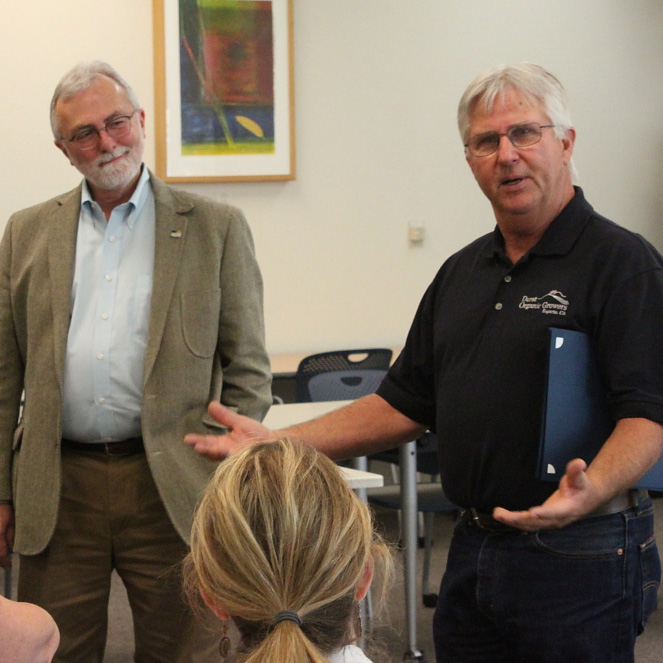
Local farmers Jim and Deborah Durst were the recent recipients of the Yolo County Hunger Action Hero Award, which recognizes hunger relief work in the county.

The Dursts, honored for their efforts fighting food insecurity from their farm in Esparto, CA, were presented with the award by District Supervisor Don Saylor. Their work includes leading the Shared Harvest Initiative, a project that seeks to increase the amount of fresh produce on food bank shelves by encouraging Yolo County farmers to allocate a portion of their harvests for donation.

“We’re very fortunate to be in this area — it’s a great agricultural area,” said Jim Durst, who also serves on the board of directors for the Yolo County Food Bank. “We produce a multitude of different kinds of crops in this ecosphere between Sacramento and Yolo County and Solano. We’re trying to get more farmers involved in donating fresh foods or dry foods too […] so the food bank doesn’t have to rely upon government commodities or leftovers from supermarkets.”

The Yolo County Food Bank (YCFB) currently has fresh produce distribution sites in Woodland, Davis and West Sacramento. YCFB distributes four million pounds of food to over 40,000 individuals annually. The Dursts recognize the need for healthy food options in local food banks and decided to act.

DANIELLE WOGULIS / COURTESY

“[YCFB] can actually give away great food, nutritious food […] we don’t want this image of the food bank to be Cheerios and Fruit Loops. We want it to be potatoes and carrots and melons and tomatoes and fresh vegetables,” Jim Durst said.

Erika Maria Hapa, a fourth-year human development major and UC Davis Food Pantry unit director, also spoke about the need for food bank programs in the community.

“It’s just really important that we have these places that really try to eradicate hunger. We’re just trying to make sure [people] aren’t skipping out on meals,” Hapa said.

Kevin Sanchez, executive director of YCFB, actively works with the Dursts and discussed food insecurity in Yolo County, where one in four children lives in poverty.

“The need is tremendous,” Sanchez said. “There are so many people who are hungry in this county and our food bank has moved toward healthier food offerings and fresh produce. When you think of the statistics […] [they’re] astounding. It’s what drives us to create these types of programs that benefit children directly.”

In the future, the Dursts and YCFB will continue to supply quality food to those in need.

“[The Dursts] have big hearts and a tremendous spirit. They’re just a joy to be with and to have affiliated with us,” Sanchez said. “It’s truly an honor to have them as part of our organization.”

For more information about the Yolo County Food Bank and how to get involved, visit www.yolofoodbank.org.