56 F
Davis

Davis, California

Wednesday, December 24, 2025
Home Blog Page 781

Katehi acknowledged as first woman to receive esteemed engineering award

LINDA KATEHI / COURTESY

National Academy of Engineering awards UC Davis chancellor for leadership in education, diversity

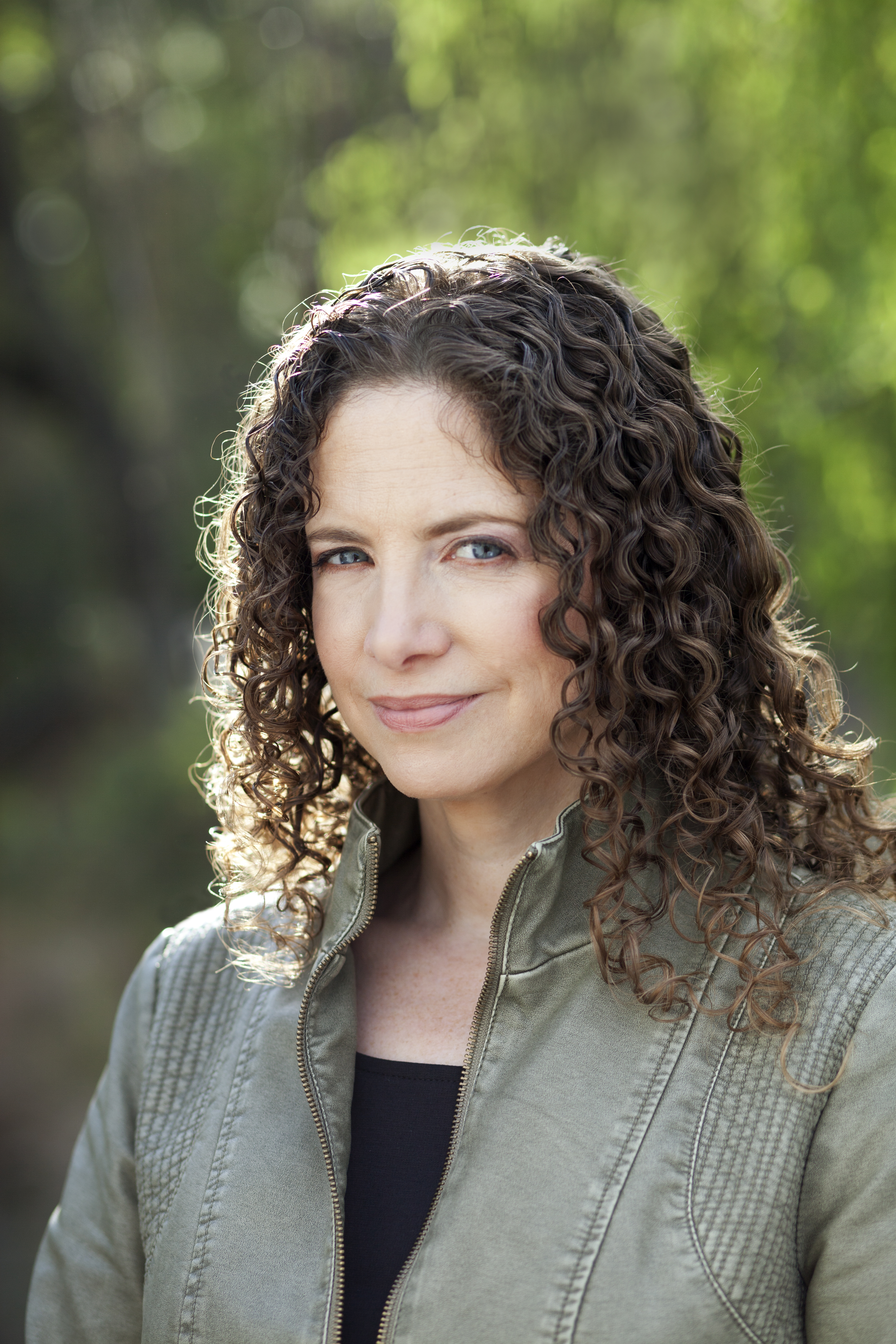
On Oct. 4, the National Academy of Engineering (NAE) honored Chancellor Linda P.B. Katehi with the Simon Ramo Founders Award for her leadership in engineering research, entrepreneurship and education, as well as her advocacy for higher education as a solution to improve the U.S. economy. Katehi is the first woman to receive the award since its creation in 1965.

“It was a major honor for me to receive this award,” Katehi said. “What is unique about this specific [award] is it was named after the founder Simon Ramo, the only surviving founder of the academy […] The other thing is he’s one of the biggest names in my own area, which is electromagnetics and electronics […] It was very meaningful to me personally.”

While biomedical engineering professor Angelique Louie sees Katehi’s award as a celebratory achievement for women in STEM fields, she also suggests that the win demonstrates the conservative nature of the engineering profession.

“It is astounding that this is the first time the NAE Simon Ramo Award has been given to a woman,” Louie said. “It highlights both how far we have come and how much further we need to go to support diversity in science and engineering.”

When Katehi began her career, she did not see as many women in STEM fields. She hopes her success will encourage more women to enter these professions.

“Engineering has always been a field where not too many women go,” Katehi said. “We have seen progress obviously, but when I was an undergrad, there were only two women in a [graduating] class of 189 in electrical and mechanical engineering. Only two. Now of course it has changed, but it started there. We definitely need more women in engineering and the STEM areas.”

According to the academy’s website, the NAE’s mission is “to advance the well-being of the nation by promoting a vibrant engineering profession and by marshalling the expertise and insights of eminent engineers to provide independent advice to the federal government on matters involving engineering and technology.”

“I was very excited and she was [too],” said Katehi’s husband, chemical engineering professor Spyros Tseregounis. “This is a major award, and they recognized her efforts in education, science and engineering. We do understand how important [Katehi’s efforts] are to the engineering field, both for education, educating the new engineers, and for economic development.”  

The award is given to members of the NAE. With only approximately 70 members joining the academy per year and a maximum membership of 2,500 members, acceptance into NAE is competitive. New members are elected by current NAE members based on leadership in making significant contributions to the field of engineering. Katehi was awarded membership to the NAE in 2006.

In 2014, 134 of the approximately 2,300 members were women. For Katehi, the low number of women in the academy is indicative of how few women there are in the STEM fields. Katehi suggests that the low number is due to a lack of recognition for females in the industry, which discourages women from pursuing the profession.

“Not too many women were recognized in the past,” Katehi said. “And there were definitely many more than five percent of women engineers [in NAE] that have really done amazing things in their careers to be recognized.”

Karen McDonald, associate dean of engineering and faculty director for UC Davis ADVANCE (a program which promotes the inclusion of gender and cultural diversity in STEM fields), predicts that diversity in STEM fields will have a positive impact on increasing creativity and innovation within the profession.

“Engineering is a very creative, interactive and team-based profession that uses math, science and engineering to solve real-world problems,” McDonald said. “Increasing diversity will bring more diverse experiences, perspectives and novel approaches to these problems, influencing the types of problems that are addressed and the questions that are asked, which will enhance innovation and societal impact.”

According to Tseregounis, Katehi’s goal to promote higher education and diversity, especially in STEM fields, has beneficial impacts on the economy.

“The research and advancement that engineers do helps with economic development because it creates ways of building things more efficiently, or building new things,” Tseregounis said. “This of course results in new companies coming out to make new products. That spurs job creation and economic development.”

ADVANCE program coordinator Denneal Jamison-McClung is hopeful of the future for diverse groups in STEM fields as well as other professions following Katehi’s achievement.

“It is refreshing to work with a leader who has a vision of excellence that includes diverse viewpoints,” Jamison-McClung said. “The work we are doing on campus to improve diversity in both STEM and non-STEM departments […] will have a positive impact on our entire community. It’s an exciting time!”

UC Davis beats the clock

0
BRIAN LANDRY / AGGIE

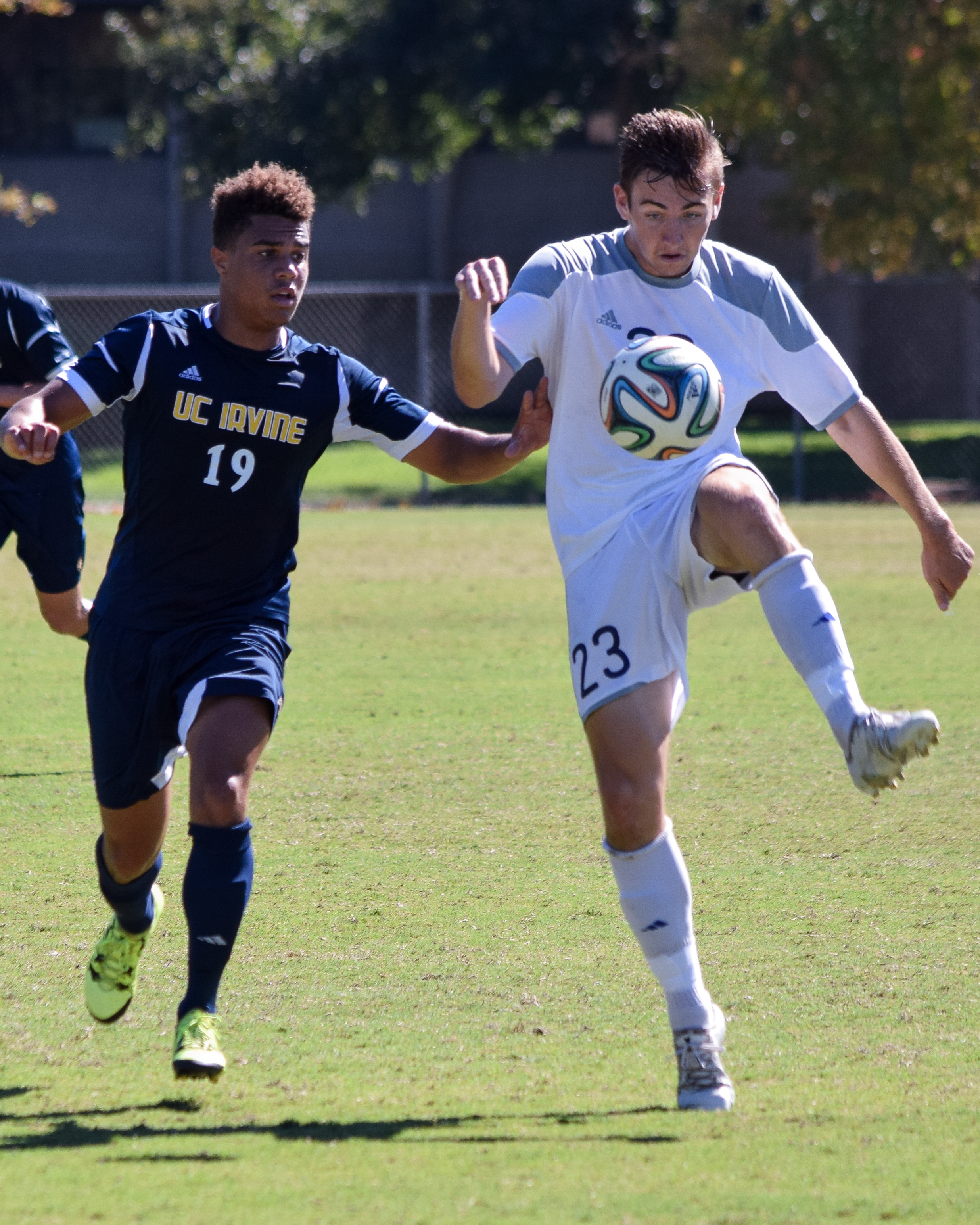
Goal in final moments of OT gives Aggies hard-fought win.

Balls flew across the field and gave way to an electrifying 2-1 win in overtime to close the Aggies fourth conference game of the season. The strong showing by the UC Davis men’s soccer team ensured that they would avoid a repeat of their previous match’s 1-1 tie.

Redshirt senior forward Matt Weisenfarth put the first point on the board at the 15:51 mark by juking the UC Irvine goalkeeper and drilling the ball into the right side of the net. The quick lead in the first half gave the Aggies control for the majority of the game as they constantly pressured their opponents. Close attempts at the Anteater goal throughout the first period gave them the edge, and by the conclusion of the match UC Davis had outshot its opponents 18-13.

The Aggie offense was relentless and opened up a handful of good opportunities at the net that largely remained unconverted. Though UC Davis outshot UC Irvine, the Anteaters still peppered the Aggies’ goal with shots where it largely fell to the keeper to fend off unwanted balls.

“My gut was telling me to go with [redshirt junior goalkeeper] Armando [Quezada] today,” said Head Coach Dwayne Shaffer. “He played really well and he’s vocal, he’s energetic and he commands his defense around.”

BRIAN LANDRY / AGGIE

Shaffer’s decision to play Quezada instead of redshirt senior Kris Schultz proved to be a worthwhile decision when, following a foul by UC Davis, an Anteater lined up for a penalty shot and a resigned crowd watched on. It was one versus one with the odds on the side of UC Irvine, but with a quick read and swift execution, Quezada was able to stop the ball in the 55th minute of the game, preventing a tie and sustaining the Aggies’ lead.

It didn’t look like the game was headed into overtime until late in the second half. The Anteaters powered the ball past Quezada with less than seven minutes remaining in regulation to tie the game at 1-1. Now with their feet held to the fire, UC Davis fought to break the tie before overtime. Only UC Irvine was able to get a credible shot off but it was halted by Quezada, where his seventh save of the night gave him a career-high. A handful of substitutions entered the match as the final minutes passed uneventfully, forcing a showdown in extra time.

As the clock ticked down in overtime, the game took on a frenetic pace as both sides scrambled to guide the ball into the net for the score that would end the game. By denying UC Irvine from getting any shots off and constantly pushing the offensive, UC Davis took control and was able to make two attempts at the goal. When senior midfielder Lucas Mohageg found the ball in front of him after a combined assist from sophomore midfielder Evan Barrett and freshman midfielder Justin Wright, he responded instinctively and directed it towards the net with only 2:42 left in OT, instantly giving the Aggies a 2-1 win.

“[The ball] kind of got messed around in the box and it just came right to me,” said Mohageg. “Didn’t even look, really, I just kind of tapped it into the far post. It was definitely right place at right time.”

The win against the UC Irvine Anteaters brings the Aggies’ Big West Conference record to 2-1-1 and 6-6-1 overall. UC Davis will play the third in a four-match homestand on Wednesday when they step onto the Aggie Soccer Field with Cal Poly.

This week in sports

0
TIFFANY CHOI / AGGIE

UC Davis athletics action Oct. 5 to Oct. 11

UC Davis men’s soccer (6-6-1)

UC Davis vs. CSUN  (T, 1-1, 2OT)

UC Davis vs. UC Irvine (W, 2-1, OT)

It has been an exciting start to Big West play for the Aggies; they currently hold a positive 2-1-1 conference record. It was overtime madness this past week, as both games were forced to go over regulation. Against California State University, Northridge, the Aggies battled hard but were unable to break the tie. Strong defense from UC Davis helped the Aggies avoid adding a conference loss to their totals.

It was a different story against UC Irvine. A clutch goal by UC Davis in overtime sent the Anteaters on a very long return trip home.

A big conference match at home against Cal Poly awaits the Aggies on Wednesday.

UC Davis women’s volleyball (9-11)

UC Davis vs. UC Santa Barbara (W, 3-0)

UC Davis vs. Cal State Fullerton (W, 3-0)

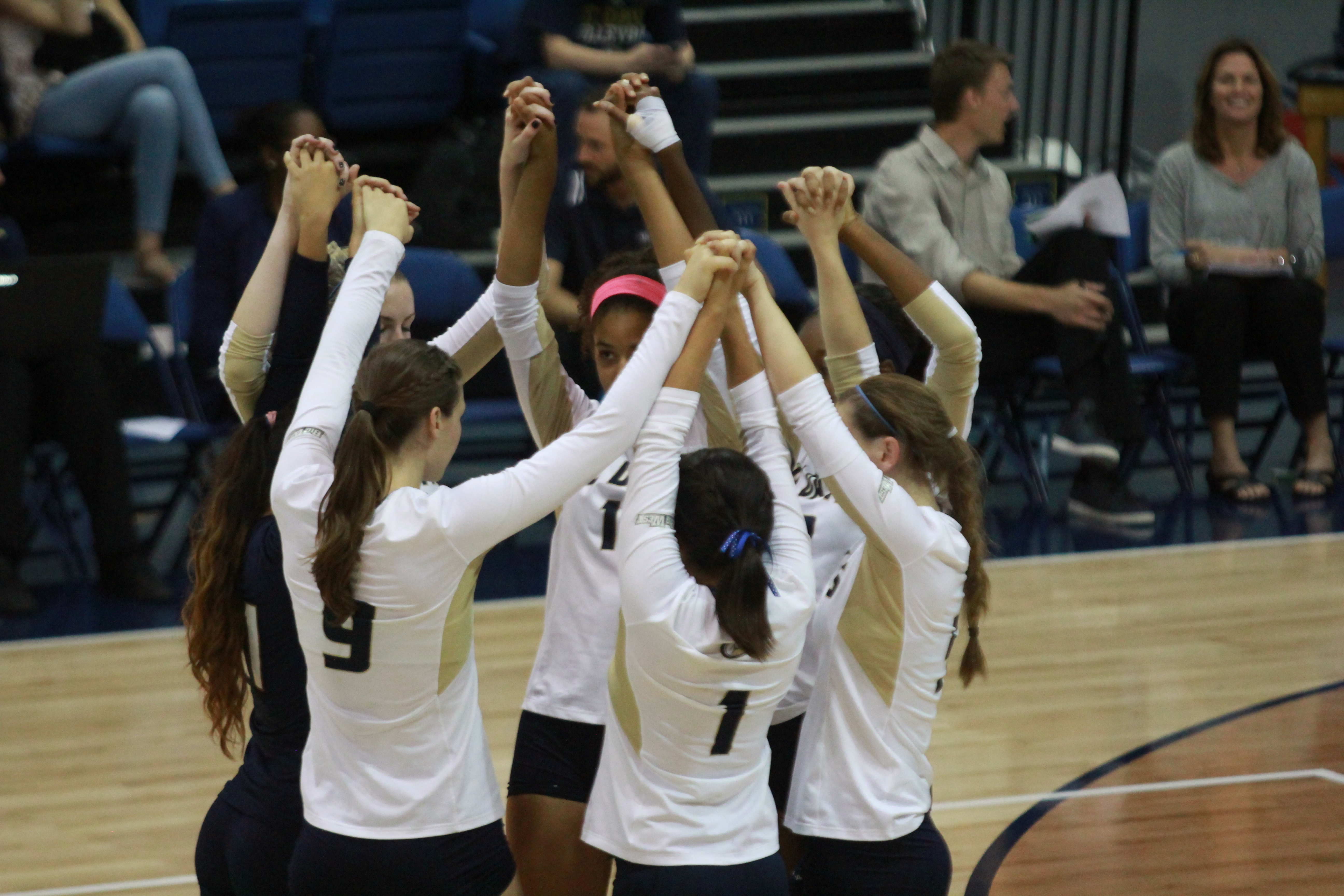
A week of wins was earned by the UC Davis women’s volleyball team. After struggling throughout the season, the Aggies came out with a renewed confidence for conference play and have shown complete dominance in recent games.

Despite facing a top-tier team in UC Santa Barbara, UC Davis showed no fear, played with confidence and busted out an incredible sweep.

This no-fear attitude persisted as they continued their sweep-streak with an impressive win against Cal State Fullerton. The Aggies were able to confidently send Fullerton packing in three straight sets.

UC Davis will hit the road and continue their conference matchups with a game against Hawai’i on Friday.

UC Davis men’s tennis

UCSB Classic

It was a great weekend for UC Davis men’s tennis as they took a road trip south to compete in the UCSB Classic.

Juniors James Wade and Alec Adamson were stars of the weekend, each obtaining a flight A singles victory. Adamson currently leads the team with six wins in eight matches played.

Starting Oct. 22, the Aggies will head to Seattle, Wash. for the much-awaited Intercollegiate Tennis Association (ITA) Northwest Regionals.

UC Davis field hockey (7-9)

UC Davis vs. UMass-Lowell (W, 3-2)

It has been a tough season for UC Davis field hockey, and their struggles have continued into conference play. Currently standing at 0-3 in the conference, the Aggies are desperately trying to turn things around. After coming off a two-game losing streak, UC Davis returned home to face UMass-Lowell in a non-conference game.

It was a close match that concluded with a strong 3-2 win for the Aggies. They have three more conference matchups remaining in their season, starting with Pacific on Sunday.

UC Davis women’s soccer (8-5-2)

UC Davis vs. Cal State Fullerton (L, 1-0)

UC Davis vs. UC Riverside (L, 3-1)

A successful series for the UC Davis women’s soccer team has led to a rather disappointing start to conference play. Two consecutive losses against Cal State Fullerton and UC Riverside leaves the Aggies with an early 1-2-1 conference record.  Fortunately, it is not the end of the world and the team did show promise in their last two games.

Despite showing promise in their last two games, their finishing ability was challenged in a close game against Fullerton. The Aggies could not strengthen their defense and allowed three goals through against UC Riverside.

UC Davis will return home for another conference matchup against UC Santa Barbara on Sunday.

UC Davis women’s tennis

Saint Mary’s Invitational

The Aggies started a three-day tournament on Oct. 9 in Moraga, Calif. for the Saint Mary’s Fall Invitational. Many seeded opponents were present at this invitational but the Aggies declined to show any fear.

Freshman Isabella Von Ebbe was the story of the weekend after she survived semifinal and finals matches to take home the Singles C Main Draw Championship.

Women’s tennis will begin the USTA/ITA Northwest Regional Championship on Oct. 23.

KDVS and Armadillo Music bring vinyl back to Davis

0
KATE SNOWDON / AGGIE

Vendors from all over California gather for Davis Vinyl & Music Fair

The weekend of Oct. 18 is the only weekend of football season when the Raiders don’t play, according to Paul Wilbur, Armadillo Music staff member and Raiders season ticket holder. That’s why Wilbur chose this particular weekend to hold the Davis Vinyl and Music Fair at the Davis Senior Center.

Wilbur has worked here for over 18 years and has been helping to run the fair since its renewal in 2009.

“The first one we ever did was 14 tables, the one we’re doing now is 55 tables,” Wilbur said.

Since then, the fair has come a long way. Last year, over a thousand people attended the fair.

This year, Armadillo Music has secured a number of new vendors, and they hope to encourage even more vinyl enthusiasts to come.

“We now have Woodstock’s Pizza inside the venue so you can buy food, which is huge,” Wilbur said. Doing so allows them to keep people inside the venue all day, a great advantage according to Wilbur.

“The number-one complaint I hear from people is that they didn’t set aside enough time. Like they’ll come in and say ‘oh I’ve got a half-hour’ and they’ll look around and say ‘I can’t do anything here with half an hour, I need three hours!’” Wilbur said.

With vendors coming from all over California to sell records ranging  from the Beatles to heavy metal, Led Zeppelin to jazz, it makes sense why people can spend hours getting lost at the fair.

“I think the reason [why vinyl has come back in such a big way] is that in the modern age where your whole life is literally run through your phone, young people miss having a connection to music,” Wilbur said.

“They don’t have a connection to music like I had when I was their age. To them, the idea of sitting down and listening to a record player is absolute heaven because they have to stop doing everything else and listen.”

Dynn Javier, a secondyear English major and the KDVS general manager, agrees that vinyl is a very emotionally-charged medium. KDVS will be present at the fair to kickstart their first annual fall fundraiser.

“A live free-form radio station is almost an allegory for vinyl; it’s not the most popular or state of the art thing, but it definitely has a place in a lot of people’s hearts,” Javier said, which is one of the reasons KDVS is keen to be involved with the Vinyl Fair. “If we can solicit a good number of people who are very interested in us after the event, that’s all we ask from it.”

Armadillo Music and KDVS work together on sorting and exchanging vinyl and Javier praises Wilbur’s help immensely.

“He’s very much invested in us and we’re very much invested in him, so any chance we get to collaborate and make something happen together is worthwhile,” Javier said.. And we don’t have to worry about money, it’s just friends helping friends.”

It is this attitude which has helped make the Davis Vinyl Fair such a success over time, with everyone in the community having an interest in improving the Davis music scene as a whole.

When asked for any final words of advice, Wilbur had a few.

“If you’re going, bring a bag, and bring lots of ones and fives — it’s okay to haggle. You can say ‘I don’t want to pay $15, can I pay $12?’ People are there to sell things, so absolutely, come and treat it like a vinyl fair fleamarket, have fun and give yourself lots of time. If you don’t give yourself lots of time, you’re going to be mad at yourself.”

The Davis Vinyl and Music Fair will be held Oct. 18 from 8:30 a.m. to 4 p.m at the Davis Senior Center. Admission is free except for early bird entry from 8:30 to 9 a.m, which is $5. For more information, please visit the Armadillo Music Facebook page.

10/19/15 6:30 p.m.: The article was updated to include more information on the background of the sources interviewed.

UC Davis School of Law professor appointed as UN Special Rapporteur

0
KARIMA BENNOUNE / COURTESY

UC Davis law professor discusses plans for three-year term.

This October, UC Davis School of Law Professor Karima Bennoune was chosen out of 38 candidates to be appointed as special rapporteur of cultural rights to the United Nations (UN) Human Rights Council.

As special rapporteur, Bennoune will report to the UN Human Rights Council (the highest political body focusing on human rights in the UN) on issues including artistic freedom, cultural heritage, scientific freedom and issues in education.

“I will, every year, deliver a written, thematic report on cultural rights to the [UN] Human Rights Council and I will also deliver one to the UN General Assembly,” Bennoune said. “I will raise specific cases in the field with governments and will also carry out visits to countries that have invited me.”

Special rapporteurs are appointed for a three-year term with the possibility of renewal for one more term. Though she officially starts her position on Nov. 1, Bennoune has already begun preparations for the next three years with a group of her research assistants.

“I am incredibly lucky to have a core group of research assistants who have great expertise in international law, and, in some cases, cultural rights particularly,” Bennoune said.

Bennoune plans to involve her research assistants not only to use their input as academics, but also to give them the opportunity to gain experience.

“At the end of the day, I really want this to be an experience that is also beneficial for my students, something that they can learn from,” Bennoune said. “And I want them to contribute to the work that I’m doing — so there’s kind of a holistic relationship there.”

Bennoune’s assistants said they have enjoyed doing research with her and are looking forward to working with her during her term as UN Special Rapporteur.

“I think [Professor Bennoune] is an amazing scholar,” said third-year law major and research assistant Anita Barooni. “I’m really looking forward to having somebody who has the views that she has on human rights […] work on these issues — she can bring these issues to light.”

Another one of Bennoune’s research assistants, Level 3 law student Courtney Lafranchi, agreed that Bennoune will have a lot to bring to the table during her term, including issues revolving around women’s rights.

“[Professor Bennoune] is a universalist. I think that’s really important, especially when you’re talking about cultural rights,” Lafranchi said. “So I look forward to just seeing what she does with that position and I also look forward to her helping women have an increased role in the issue of cultural rights, because women’s rights are a big part of what she does.”

Lafranchi is also interested to see how Bennoune’s position will function logistically during the next few years.

“[I’m interested in] exactly what she does: what can she do, what’s she expected to do, what she can’t do — it’ll be interesting to see how that works,” Lafranchi said. “It’ll be interesting to see sort of the diplomacy aspect of it, because there’s a big difference between being an independent activist, [an] independent academic or [an] independent researcher and becoming somebody who’s got a position with the United Nations — it’s a totally different world.”

In her new role, Bennoune is looking forward to giving support to human rights defenders who are working to protect cultural heritage.

“I think about the amazing Syrian archaeologist Khaled al-Asaad, who was killed at the age of 82 by Islamic State [on Aug. 18] because he was protecting the artifacts of Palmyra,” Bennoune said. “I think about amazing people doing work like that all [around] the world and what an honor it will be to try to find ways to support their work at the international level.”

Bennoune said that she thinks one of the biggest challenges is figuring out how to communicate across generations and promote awareness over the importance of cultural heritage.

“One of the important challenges is [figuring out a way] to communicate with people in your generation and younger, whose responsibility is going to be to protect all of this in the future,” Bennoune said. “You know, I was thinking about the 2000-year-old temple that Islamic State destroyed. How do you convince 20 year-olds that a 2000-year-old temple matters?”

Furthermore, Bennoune stresses the importance of learning to speak in ways that are relevant to younger people in a heavily technologically-based age.

Though the new workload that comes with being UN Special Rapporteur seems daunting, Bennoune said she is ready to take on any challenges she may encounter.

“Given how important the rights are in this area, I am just excited to take on every one of these challenges,” Bennoune said. “All I see right now are the positive aspects — the potential of what could be done through the UN system on these issues.”

Previously, Bennoune was a legal advisor for Amnesty International, a consultant for UN Educational, Scientific and Cultural Organization and a former member of the Executive Council of the American Society of International Law. Working in these many different capacities over the years has furthered Bennoune’s knowledge and experience over relevant matters of importance, helping her to build up to the position she is in now.

“I think without that level of experience I wouldn’t have even thought of applying,” Bennoune said. “But it’s the area that I always knew — basically — that I wanted to work in.”

In 2007, she was awarded the Derrick Bell Award from the Association of American Law Schools and her book, Your Fatwa Does Not Apply Here, was the winner of the 2014 Dayton Literary Peace Prize for nonfiction. She has also participated in human rights field research all around the world, including in conflict zones.

“I have learned so much from the human rights defenders around the world that I have had the great honor of working with,” Bennoune said.  “I never want to forget that at the end of the day, this is about the people on the ground. This is about ordinary people’s cultural rights and [about] seeking ways to advance them.”

Though Bennoune hopes to achieve many goals, her biggest goal is also one of the most important ones.

“I really want to contribute to advancing the universality of human rights, which I think is a critical idea in this day and age,” Bennoune said. “The idea that truly everyone — regardless of his or her gender, race, sexuality, where he or she lives — that everyone has equal human rights by virtue of simply being human. It’s an idea that is all too often eroded and it’s an idea that I think really needs defense.”

Stebbins Cold Canyon Reserve restored after Wragg fire

CAL FIRE / COURTESY
CAL FIRE / COURTESY

Efforts continue to restore the reserve, open it to public as soon as possible. 

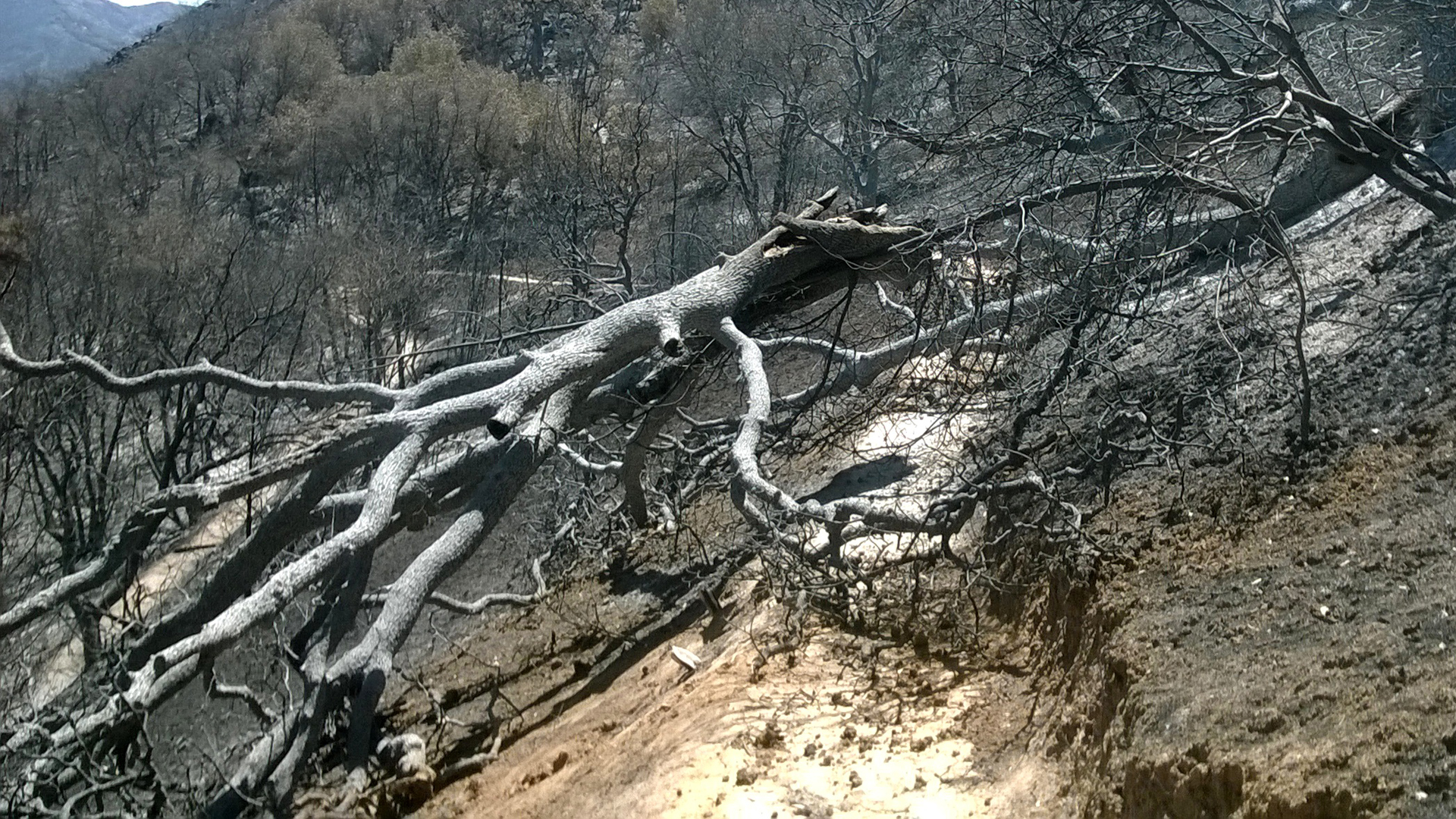
The UC Davis Stebbins Cold Canyon Reserve, a popular destination for recreation and research, was incinerated by the Wragg fire which broke out in late July. The fire quickly swept up the Blue Ridge Trail and down into the canyon, which was hastily closed off to its 5,000 annual visitors as a safety precaution. Reserve Manager Jeffrey Clary states that the reserve will remain closed until safety can be ensured.

“Everyone who knows [Stebbins Cold Canyon Reserve] loves to go hiking and they want to know what’s going on and when it’s going to open,” Clary said. “The answer is as soon as we can, when it will be safe.”

Although the reserve was a popular hiking destination, it was primarily used for university-level teaching and research. It gave students the opportunity to see what they read in textbooks and participate in hands-on research on the insects and rodents there.

The reserve was used by many researchers, including John Dapinadictus, who originally came to UC Davis to study grape phylloxera, an insect that threatens grapevines. Dapinadictus goes out to the reserve twice a month to study moths. He is now concerned about the species’ survival due to the Wragg fire’s effects on their native habitat.

“The question is will these moths flying this year be able to find food plants to feed the next generation,” Dapinadictus said.

After his recent venture to the reserve last week, Dapinadictus is wary about the safety of other people going to the reserve.

“There are lots of bushes that were scorched but not completely burned; they died and dropped a lot of dry leaves. The non-completely burned plants are now like charcoal, so there is a tremendous fire hazard,” Dapinadictus said.

He is also worried about the steps embedded into the trail that were burned during the fire. They are now charred and could give way when stepped on. Additionally, Dapinadictus is concerned about landslides that could wipe out existing trails.

Captain Joe Fletcher of the Napa County Fire Department says restoring the reserve is an ongoing project. One aspect of restoration will include the Putah watershed, which is primarily responsible for draining water from farm fields. However, it was destroyed in the Wragg fire.

“I am leading a tour this Friday for the county water people so they can study the burned parts of the watershed in Putah Creek,” Fletcher said.

For weeks now, the canyon has been strictly closed to the public, but tours are now being offered to showcase the restoration process.

“It’s a huge opportunity for researching and teaching,” Clary said.

This year is the Natural Reserve System’s 50th anniversary, and to celebrate, a free event will be held at the UC Davis Conference Center on Oct. 23.

“We are dedicating an afternoon to the sciences, arts, teaching and public services embodied by the natural reserves,” said Clary, as clarified in an email. “We’ll also be unveiling our restoration plans for Stebbins Cold Canyon Reserve, the popular hiking destination […] that burned in one of this summer’s many fires.”

Homecoming: mission accomplished

CIERA PASTUREL / AGGIE

The Aggies reach 500 all-time games won in big homecoming victory

A team plagued by harsh injuries, tough calls and closer games finally posted their first win in a historic homecoming game this past Saturday.

“We always have a saying, we call it Charlie Mike; [it means] Continue Mission,” senior defensive tackle Kyle DeVaughn said of his team’s fighting spirit. “Something might happen, but we’re like, ‘Oh well’ and we keep going.”

In their first homecoming win since 2011, the UC Davis football team fought hard and was able to pull ahead of Northern Arizona University to win 38-24.

NAU won the coin toss to start the game, and chose to receive. The Lumberjacks sought to come out of the gates strong, but a stifling Aggie defense held the offensive line to an overall gain of only 15 yards.

The Aggies took up their first possession and began their work. After a series of plays and two first downs, they reached their first fourth down. Senior kicker Brady Stuart took to the field for a 46-yard field goal attempt that went wide right, missing the target and marring his stellar record for the season.

The Lumberjack’s next offensive saw real results. After a handful of yards gained, NAU quarterback Case Cookus threw a 31-yard pass that put his team deep into Aggie territory on the four-yard line.

Three downs after this gain, the Lumberjacks finally put the ball into the end zone. Upon review, officials reversed the touchdown and NAU drove again from the one-yard line. They were able to score on the subsequent play, becoming the first team to put points on the board.

They did not keep this lead for long. Similar to their first possession, the Aggies made a handful of plays for only 19-yards. However, junior quarterback Ben Scott was

CIERA PASTUREL / AGGIE

able to find senior wide receiver Alex Cannon for a 30-yard pass that brought UC Davis down to NAU’s final yard line. Junior running back Manusamoa Luuga was able to rush the ball the final yard in two plays, giving the Aggies their first touchdown.

The Lumberjack’s next offensive would spell disaster for them. After nine plays and a total of 45 yards gained, Cookus rushed out of the pocket. He made it all the way to UC Davis’ 25-yard line before sophomore defensive back Darryl Graham forced a fumble that was recovered by DeVaughn, who continued running for a 19-yard gain for the Aggies.

Two unsportsmanlike conduct penalties, one for each team, offset each other, and the play went into review. The ruling on the field held, and it was the Aggies’ ball.

Scott made the absolute most of his next play, throwing a 51-yard pass to junior wide receiver Ramon Vargas for a touchdown. The kick attempt was good and the Aggies took the lead.

The first quarter ended with a short drive by the Lumberjacks, and the Aggies led 14-7.

Moving into the second quarter, the Lumberjacks advanced the ball all the way down to UC Davis’ 17-yard line. Their 35-yard field goal attempt was good, and the Lumberjacks cut into the Aggie lead.

The following Aggie offensive nearly spelled disaster for them. A fumble by freshman running back Joshua Kelley led to an NAU recovery and touchdown, but the hit that caused the fumble was deemed a personal foul and the Aggies once again took possession. This drive ended after 48 yards.

The next drive by the Aggies got them real results. A key 20-yard rush by Luuga brought the Aggies down into Lumberjack territory. This time, Stuart’s 38-yard field goal was good, putting the Aggies a full seven points ahead.

With 45 seconds left in the first half, the Lumberjacks made the most out of their final possession. Three quick plays brought them to UC Davis’ 18-yard line. Here, DeVaughn made a huge sack for a loss of five yards. A timeout was what NAU needed, and they were able to pass for 23 yards after the sack, scoring their second touchdown.

The half ended with a tie at 17-17.

The third quarter started with an Aggie offense. Ten plays and 75 yards brought Scott and the Aggies all the way down to the goal line, where a short pass to junior Chris Martin gave UC Davis another touchdown.

The next Lumberjack offensive did not go anywhere, as the Aggie defense held them to only 26 yards.

Another Aggie offensive turned into another touchdown after Scott found junior tight end Nehemiah Winston for a 25-yard pass. A successful PAT by Stuart, and the rest of the quarter passed without major gains by either side as the score turned to 31-17.

The fourth quarter started without much fanfare. On the Aggie’s second offensive, Luuga was able to rush for a combined total of 51 yards, including the final yard for a touchdown. The kick was good and UC Davis further solidified its lead, bringing the score to 38-17.

The Lumberjack’s following offensive saw two major plays, for 39 yards and 28 yards respectively. This put them in scoring distance, where they were able to get the final touchdown of the game.

The game ended with an Aggie victory, 38-24.

The Aggies will take this victory to heart and will Charlie Mike at Northern Colorado on Oct. 17.


Adult man masturbates in front of two female students in arboretum

0
JAY GELVEZON / AGGIE

Another male exposes genitals to students in front of Tercero dorm window.

This past September, two incidents of indecent exposure occurred on campus. Both incidents involved males exposing themselves in front of female UC Davis students while on university property.

The first incident took place on Sept. 23 at approximately 1:40 p.m. The incident, which occurred on the east side of the arboretum, involved two female students who reported that a middle-aged man exposed himself and began masturbating in front of them while he was talking on a cell phone.

The man was described as a white male in his forties, wearing a blue baseball cap, light blue shirt, brown jacket, jeans and white shoes. According to UC Davis Police Chief Matthew Carmichael, an investigation following the report is still ongoing.

For third-year NPB major Deepa Patel, who enjoys walking through the arboretum, the campus park is no longer a safe haven for her to decompress from her studies.

“You would think a place like this would be safe. Somewhere you could go and just relax and view pretty stuff. Not something like male exposure,” Patel said. “If that happened to me, I would feel so attacked and robbed of my experience at the arboretum.”

The occurrence was followed by a second incident of indecent exposure which occurred only four days later on Sept. 27 at approximately 10 p.m. According to the police report, a man indecently exposed himself through a glass window in front of a female first-year who was studying at a residential lounge in Tercero’s Pine Hall.

As a current resident of Tercero, first-year undeclared student Jessica, who requested her last name not be used, expressed her discomfort with living on campus following the incident.

“I felt really uncomfortable knowing about it,” she said. “I can’t believe he would do something like that.”

The offender was described as a male with a dark complexion, between 18 to 21 years old, dark hair and possibly wearing red boxer shorts. According to Carmichael, this incident is also pending an ongoing investigation.

“It is difficult with these types [of] crimes because we need people to call us right at the time, right where they’re at, that’s what makes it helpful,” Carmichael said.

Second-year civil engineering major Angelica de Jesus criticized the university’s police department for allowing these situations to happen so frequently.

“I think that, although the nudity exposures are physically harmless, it creates a distracting and potentially unsafe environment for students,” de Jesus said. “The only way to prevent it from happening again is to catch the crime in action, and if this situation has happened twice in one week, they’re not doing a very good job at keeping watch.”

Although neither of the suspects have been identified, Carmichael recommends that students use different programs to stay safe, including Aggie Guardian, an app that allows instant access to police resources, and TapRide, the UC Davis Safe Ride app which helps provides protection on and off campus after university hours.

Third-year NPB major Harshdeep Kaur believes that these occurrences are a reminder of how unsafe the campus can actually be.

“I feel like the campus is not a very safe environment with these incidents having occurred,” Kaur said. “I have been carrying around pepper spray since freshman year, and now I know it’s for a good reason.”  

Following the incidents, Carmichael said that the police department has invested in, and is working on, installing emergency call boxes at the arboretum in the case of danger and emergencies. He added that the department is planning on increasing its patrol around the arboretum with bicycled-officers and increasing student patrols.

“Be good to one another. When you’re out in groups, it’s good to have someone paying close attention, having a friend looking out for us,” Carmichael said. “We want this to be a good, safe year.”

ASUCD President appoints new senator

JAY GELVEZON / AGGIE

Kamaal Thomas takes seat of former Senator Sarah Priano

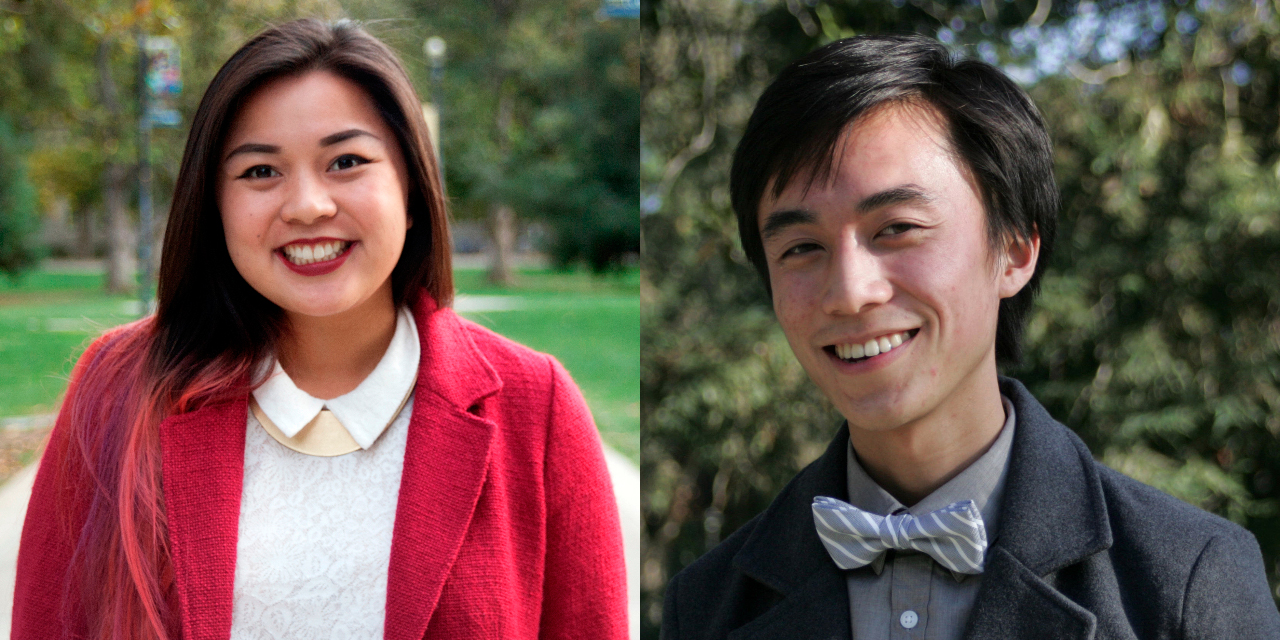
Fourth-year international relations and economics double major Kamaal Thomas was sworn in as the 12th ASUCD senator at the senate meeting on Oct. 8. Thomas, who was confirmed by an 11-0-0 vote from his fellow senators, replaced the seat of former senator Sarah Priano following Priano’s transfer to UC Berkeley earlier this fall.

Thomas was appointed by ASUCD President Mariah Watson after a series of candidate interviews with Watson as well as by several senators selected by former senate pro-tempore Alex Lee. Thomas’ platforms include improving sexual assault prevention plans to decrease the number of sexual offences that occur on campus and finding ways to reduce the dropout rates of minority students at UC Davis.

After leaving UC Davis to intern in Washington D.C. in the winter of his sophomore year and spending another year studying abroad in Hong Kong, Thomas expressed his excitement to return to UC Davis and begin working with ASUCD.

“This is a once-in-a-lifetime opportunity to come back to UC Davis after being away for a year and being able to really work with the community just to build it up and make sure that I leave it better than which I found it,” Thomas said.

Thomas has previously been a part of campus organizations such as the National Society of Leadership and Success and the Center for African Diaspora. This is his first position in student government and his first role within ASUCD.

Volleyball makes short work of Cal State Fullerton

0
JAY GELVEZON / AGGIE

Last game of homestand brings cheers

Pacing throughout the game, UC Davis Head Coach Dan Conners watched as his team played “in the moment.” The three-set game put up some exceptional numbers from the whole team, with final scores of 25-13, 25-23 and 25-18.

Moving junior outside hitter Kendall Walbrecht to the left side set up great plays from both sides. Walbrecht, who scored 14.5 points against California State University, Fullerton, put up two kills after seven attempts in the first and finished with seven kills from 13 attempts in the final set.

Senior outside hitter Kaylin Squyres normally sets the tone, but tonight it was freshman outside hitter Nicola Moore who stole the show. Following Walbrecht, Moore scored an astounding 13 points against the Titans. Along with her 12 kills, Moore completed two successful blocks and three digs, performing not only offensively but defensively as well. Combined, the three created a balanced offense, with Squyres taking on a supportive role that allowed more strategic attacks.  

“She [Moore] hasn’t had a night like this,” Conners said. “She had 12 kills on 16 swings… we know she’s capable of putting up big numbers.”

“We’re trying to be more consistent with our first contact, passing and defense,” Conners said. “We’re trying to be a little more controlled there so we can use our quick attackers like Aima [Eichie].”

“It’s nice to see it click, get the win and be able to have it all in a nice package,” Moore said. “We should be able to continue our streak against Hawai’i.”

Last week’s Big West Conference Defensive Player of the Week freshman libero Malia Bolko followed nearly every block attempt by sophomore middle blocker Aima Eichie and others resulting in 13 digs, eliminating kill attempts by the Titans and contributing greatly to the Aggies win.

With their fourth win, the Aggies doubled their Big West Conference record, bringing it to 4-2 as UC Davis recovers from a few losses early on.

“It’s really exciting,” Bolko said. “It felt nice to see it finally coming together as a team. The home stretch is finally clicking.

Balanced play in the third set elevated the intensity of the court as the fans came to their feet. The majority of the team got a dig or two, with 18 total as the Titans desperately attempted to shower UC Davis with kills. Junior setter Sophia Mar set the court up for the win with 14 assists and the Aggies improved their record to 9-11.

The team will defend their winning streak as they face off against Hawai’i on Friday.

Aggie Style Watch

Your weekly dose of campus fashion

It is often said that the eyes are a window to the soul, but sometimes it seems as if the eyeliner surrounding a pair of eyes can tell just as much about a person. Fashion can be an expression of personality, culture and comfort and carries different connotations for each individual wearer.

For a second-year political science and Chicana/Chicano studies double major, who wishes to remain anonymous, style is a balancing act between effort and effortless. Their personal style falls somewhere between pop and grunge, and their wardrobe oftentimes includes culturally and politically significant pieces.

ASW: Can you tell us about your outfit today?

Student: So the kimono I got on AliExpress. It was cute and super cheap — two of my favorite things. The Free Iran shirt is from American Apparel. I’m a pretty political person so instead of talking all the time, I’d rather wear [my statements]. I’m also wearing Vans that don’t match [my outfit] because that takes too much time.

ASW: Do you choose style over comfort?

Student: Nine out of ten times I put style over comfort, but if I’m just hanging out, I want to be comfy. I don’t need to look this good to study.

ASW: Are you a fan of makeup, and if so, what are some of your favorite products?

Student: I really like Sephora’s liquid eyeliner. The only downside is it runs out pretty quickly as I wing my eyeliner every day of my life. Also, doing my brows is essential since society has made it a thing now. And you can’t forget foundation for those sleepless nights.

ASW: Who are some of your fashion inspirations?

Student: Definitely Rihanna. She’s a tomboy one day and a girly-girl the next. I try to incorporate that into my fashion choices.

ASW: What’s your go-to outfit when you’re not sure what to wear?

Student: A T-shirt, shorts and Docs. I’m also usually wearing a Keffiyeh — a Palestinian scarf that represents resistance.

ASW: What do you think your style says about you?

Student: I want it to show that I don’t really care, when I actually do. To show that I don’t put in a lot of effort [in my outfits] when really I do.

ASW: What era of fashion attracts you the most and do you try to incorporate into your outfits?

Student: Definitely the late ’90s to early ’00s. I really liked the grunge look, but also the Britney Spears, jean-on-jean, too many accessories look. Whatever lies in the middle of grunge and pop, I would say I incorporate that in my outfits.

ASW: Would you say that you reflect your culture and region in your daily fashion choices?

Student: I also incorporate my father’s culture by throwing on the Palestinian traditional scarf on almost every outfit. I feel like it adds so much to each outfit. Occasionally I have henna/mehndi tattoos on my hands.

Editor’s Note: This story has been edited post-publication to remove a source’s name and personal information for their safety. The Aggie is committed to transparency while minimizing harm as detailed in the Society of Professional Journalists’ and The Aggie’s Code of Ethics. 


UC Davis researchers find a source of water in winery wastewater

KATIE LIN / AGGIE
KATIE LIN / AGGIE

University researchers, winery partner discuss safe reuse of vineyard wastewater  

In the face of California’s severe drought, UC Davis researchers have found a viable water source in winery wastewater.

Although vineyards have used winery wastewater previously, most of the data is found in the wine regions of Australia or Spain, and the usage of winery wastewater in California has been unprecedented — until now.

UC Davis researchers compiled data for the two-part study in the California wine regions of Napa and Lodi, hoping to educate California growers on how to reuse wastewater for irrigation in order to avoid harming the soil.

“It’s definitely possible to reuse wastewater,” said Maya Buelow, lead author of the study and UC Davis researcher at the Department of Land, Air and Water Resources. “You need some more tools to do it and these are the things you should probably be thinking about.”

The first part of the study consisted of a survey that included 18 wineries in California. Researchers looked at the chemical and physical properties of wastewater samples before and after treatment in order to characterize different waste streams. They also noted how much wastewater was produced during different seasons. This data was used as a baseline for growers to look back on when deciding whether to reuse wastewater.

“The winery wastewater [that is reused] is just water that’s generated inside of the winery,” Buelow said. “So this isn’t agricultural run-off water [or] water that is used to flush toilets. It’s just water that’s inside of the wineries usually used for cleaning and for chilling.”

The researchers characterized the winery waste stream that would be reused for irrigation as “water used for cleaning,” water that only contained chemicals used for cleaning. Buelow said that this particular kind of wastewater is already fairly clean, making it a viable alternative water source.

“We received monthly samples of the winery wastewater prior to treatment and then after treatment,” said Kerri Steenwerth, co-author and assistant adjunct professor at UC Davis. “We looked at the composition of the water to see what kinds of salts and other constituents, [and] what other kinds of materials were in there that might cause problems for reusing it for irrigation.”

The second part of the survey examined how the chemicals in the wastewater interacted with the minerals in the soil. The researchers focused on the sodium levels, since sodium has the most negative effect on soil.

“Having a high sodium content can cause problems with soil structure and that can affect the ability of the soil to receive water,” Steenwerth said.

To combat the high sodium content that ruins soil, wineries have been switching to potassium-based cleaners.

Researchers focused on three soil types from three different vineyards in Napa. They compared the change that sodium and potassium caused in the different soils, and the results showed that only one soil type could benefit from the potassium-based cleaner.

“The different potassium absorption ratios and the sodium absorption ratios show that the minerality of the soil must be considered when applying winery wastewater,” Steenwerth said.

With this information, vineyards are able to better manage how they reuse wastewater. They can take into account the type of soil they have and whether or not switching cleaners will have any benefits. There are also management practices to combat the negative effects of sodium and potassium on soil.

“When you put gypsum on the soil you’re bumping off the sodium or the potassium and replacing it with calcium,” Buelow said. “That allows the sodium and potassium salt to sort of get washed down.”

Despite the issue of sodium content, wineries are effectively reusing wastewater to combat the drought. By using hot water to sanitize barrels, the Putah Creek Winery, located approximately ten miles from Davis, avoids the problem that is caused by cleaning agents. Their water comes from a well on their 60-acre property in South Davis, and they use a water heater to boil the water used for sanitation.

“We reuse the rinsing water which is the wastewater, hot water that is used to wash barrels, tanks and whatnot. That water flows into a pond that is pumped out and irrigates the vineyard,” said Jessica Chin Foo, managing partner at Putah Creek Winery. “It’s not water that has any agents.”

The findings of the study allow wineries that want to reuse wastewater to make more informed decisions. This resourceful method could prove important in California’s dry terrain.

“The composition of the wastewater after treatment was satisfactory for use in irrigation in most cases,” Steenwerth said. “They were effective at cleaning up the water and they could be reused for irrigation.”

City aims for 28 percent reduction in water consumption

ARIEL ROBBINS / AGGIE

Davis encourages community members to reduce individual water use by 90 gallons a day

On April 1, 2015, Governor Jerry Brown issued an executive order that will require the state of California to reduce water usage by 25 percent by February 2016. Taking part in this mandate, the City of Davis asks that each household eliminates 90 or more gallons from their daily water usage.

According to Donna Gentile, administrative coordinator at the Water Resources Association of Yolo County, each California city is expected to take water conservation into their own hands. Getting the word out about reducing in urban water use, lies in the hands of individual districts.

“The state of California has been put on notice to try to get everybody to be aware of their water use. It is up to each of the cities or counties to decide how they’re going to enforce that or how they’re going to put that information out to their constituents,” Gentile said.

Based on a list of mandatory water restrictions produced by the City of Davis, water saving methods include fixing leaks, adjusting sprinkler systems, watering plants late at night or early in the morning and placing mulch around trees and other plants. The city’s goal is an overall reduction of 28 percent, exceeding the state’s mandate.

“[The City of Davis] has been regulating water use in different ways,” said Sam Sandoval, a hydrologist and UC Davis faculty member in the Department of Land, Air and Water Resources. “Instead of letting every person water their lawn everyday, now it is restricted to every other day. [Another] thing is communication through letters and emails. Now, [people] can register with the City of Davis and every two months they will send you how much water you are [using when] compared to your neighbors.”

According to Sandoval, community members are quite compliant when it comes to saving water. Most often, it is apartment complexes that violate water mandates, over people who water lawns or use irrigation systems during the day.

Max Stevenson, assistant general manager at the Yolo County Flood Control and Water Conservation District, said that farmers in Yolo County are also changing their methods of irrigation when it comes to water shortages.

“The main difference [for farmers during the drought] is pumping groundwater [from wells] instead of relying on surface water,” Stevenson said.

Whether urban or agricultural, few parties are exempt from adjustments in water use. Davis’ efforts to reduce water usage are in line with the state’s goals, while online campaigns, pamphlets and fliers are highlighting the need for the 28 percent reduction target.


This week in senate

0
HANNAH LEE / AGGIE
HANNAH LEE / AGGIE

Casey Nguyen replaces Alex Lee as senate pro-tempore

On Oct. 8, ASUCD Vice President Gareth Smythe called this week’s senate meeting to order at 6:16 p.m. in the Memorial Union’s Mee Room.

After quorum roll call for which all senators were present, the meeting began with appointments and confirmations, starting with swearing in new ASUCD Senator Kamaal Thomas.

Parteek Singh, Casey Chiu, Alex Mirou, Rani Bindra and Stephanie Rodriguez were then confirmed as Business and Finance Commission members.

A new unit director and the specialized transportation services program were confirmed for Tipsy Taxi, and Jacob Engel, Daniel Polak, Lauren Kong and Alex Keyser were sworn in as new Internal Affairs Commission members.

Additionally, Marufa Khaadahil was appointed to the Academic Affairs Commission Unit, and Larysa Fomina and Yousef Buzayan were confirmed as this year’s Whole Earth Festival co-directors.

Victoria Turney was confirmed as Experimental College Unit Director, and Alec Laube, Ariana Nagainis, Elyssa Calderan, Kia Aliakbar and Raya Aliakbar were sworn in as the new External Affairs Commission members.

The meeting then moved on to presentations, starting with the representatives from the Student Health and Counseling Services’ Intervention Services division, who promoted a Halloween party on Oct. 30. The individuals requested it to be hosted in the Chem 194 building.

The presentation was followed by a presentation from a representative from Joy Run, a new student-run food service.

At 8:15 p.m., the senate moved on to introducing new legislation. The senators spoke on a constitutional amendment to change Article 8 of the constitution to allow student fees to be given to external organizations and a constitutional amendment to define role of abstentions during voting process.

The table discussed a bill to make elections committee hiring more efficient and a bill to allow members of ASUCD to electronically sign petitions.

After a series of public announcements, the meeting moved into a closed session, in which Senator Sevan Nahabidian motioned to remove Alex Lee as senate pro-tempore and to re-elect the seat.

After five attempts at removing Lee as pro-tempore, Lee was finally removed by an 8-4-0 vote. Lee was eventually replaced by Senator Casey Nguyen as the new pro-tempore when Nguyen won the seat after a 5-7-0 vote in an election against Lee.

The meeting adjourned at 10:37 p.m.


Casey Nguyen replaces Alex Lee as senate pro-tempore

CIERA PASTUREL / AGGIE

ASUCD Senate demotes Lee over disagreement regarding new senate election

At the ASUCD Senate meeting on Oct. 8, Senator Casey Nguyen replaced Senator Alex Lee as the new senate president pro-tempore.

Lee, who held the role last spring quarter and was re-elected at the previous meeting by a 6-3-3 vote, was replaced by his fellow senator after a debacle ensued regarding Lee’s choices while helping to select former senator Sarah Priano’s replacement seat.

The conflict began during public discussion when Senator Sevan Nahabedian accused Lee of abusing his power as pro-tempore by not choosing Senator Reem Fatayerji to sit on the interview committee to help select the replacement senator. Since Fatayerji said that she was available for all interviews, Nahabedian saw Lee’s choice to not select her as a power move for his own personal gain.

“What Alex did with the interview committee was wrong. It was a clear power move by the pro-tem,” Nahabedian said. “The way I want my pro-tem to act is to act like a parliamentarian and not for their own agenda.”

Despite constant reassurance from Nahabedian and Fatayerji that the push to remove Lee was not out of aggression, Lee saw the discussion as a personal attack against his character.

“There is talk about considering our feelings. I feel this is a personal attack against me,” Lee said. “Trying to say that removing me from my office is not a personal attack is not working.”

After several failed attempts to divide the house, Lee was officially removed as pro-tempore by a vote of 8-4-0. Similarly, after several failed attempts to elect a new pro-tempore, Nguyen was elected as Lee’s replacement after the two were nominated for the seat. Nguyen won by a 5-7-0 vote.

In the aftermath of the incident, Senator Brendan Chang took to Facebook to criticize the behavior of his fellow senators.

“I have been through four other student governments and never in my time in the last four years have I witnessed such childish antics,” Chang wrote in a Facebook post. “I am very disappointed in many of you. And frankly, I am also disappointed in myself.”

This is the first time a senate pro-tempore has been replaced and removed mid-quarter in ASUCD history.