57 F
Davis

Davis, California

Monday, December 22, 2025
Home Blog Page 837

AB 540 and Undocumented Student Center opens

102214_AB540CENTER_Nguyen

In December 2013, a small group of UC Davis students drafted a proposal to build an on-campus resource center for the university’s Assembly Bill 540 (AB 540) and undocumented student population, which has tripled to over 200 students in the last three years.

The movement was brought about in 2002, after former California governor Gray Davis passed AB 540, adding a new section to the California Education Code. The section specified “the exemption from non-resident tuition payment for some non-resident students who have received a California high school diploma or the equivalent.”

The number of AB 540 and undocumented students has been steadily increasing in the University of California (UC) system since the bill’s inception.

Today, 2,000 of the 240,000 UC students are undocumented, and UC President Janet Napolitano expects this number to grow after allocating 5 million dollars last October to fund additional resources.

After just ten months of planning, the university celebrated the power of student voice at the grand opening of the AB 540 and Undocumented Student Center in the Student Community Center on Oct. 21.

Given the stagnant system of university bureaucracy, the rapid process of student-led ideas manifesting into the physical creation of the center is highly commendable and shows how urgent the need was for this campus to have resources available to these students.

We believe that the greater student population is relatively unaware of the implications of AB 540; therefore, it is imperative for the center to prioritize outreach and awareness to the campus community.

In order to garner interest amongst the campus population, the center must reach out to other student resource departments, specifically ASUCD, to form connections with smaller student organizations.

Although ASUCD officials have said that their advocacy unit will collaborate with the center’s staff for further campus outreach and awareness, we hope that this plan is actually put into action and look forward to future outcomes.

Photo by Courtesy

This week in men’s sports

0

Soccer (6-1-9):

UC Davis @ Cal Poly (W, 1-0)

UC Davis @ Sacramento State (T, 0-0)

With some momentum after a win against rival UC Santa Barbara, the UC Davis men’s soccer team travelled down to San Luis Obispo to face the Cal Poly Mustangs. The Aggies finished the game ahead 1-0 thanks to a stingy defense and a strike from senior Matt Sheldon in the 64th minute. The goal was Sheldon’s third of the season while sophomore goalkeeper Armando Quezada posted his second consecutive shutout.

With a two-game winning streak in tow, the Aggies crossed the causeway to play Sacramento State in the home of the USL Pro Sac. Republic FC. Sheldon, who scored against UCSB, took five shots but was unable to find the back of the net. Once again, the UC Davis defense proved to be stout and kept the Aggies from suffering a loss in the Causeway Classic.


Tennis:

USTA/ITA Northwest Regionals

After a grueling three-day period at the ITA Northwest Regionals, UC Davis was represented on the last day by a lone doubles team. Sophomore Alec Adamson and junior Adam Levie fought their way to the semifinal round of the main draw, won the first set and plowed ahead 4-1 in the second set.

From there, the match took a turn for the worse as their opponents won the next five games to take the second set. The third and final set went to a tie-break situation that saw the Aggie duo hold match point at 9-8 before eventually falling 9-11.

The Aggies now have the Saint Mary’s Fall Invitational to look forward to on Halloween, before taking a break until the middle of January.


Water Polo (12-14):

UC Davis vs. No. 13 Air Force (W, 12-11)

The Rodeo Tournament:

UC Davis vs. No. 19 Cal Baptist (W, 13-9), vs. No. 14 Brown (L, 12-11), vs. Bucknell (L, 11-10), @ No. 15 Santa Clara (W, 7-6)

In a close-fought game against No. 13 Air Force, the second quarter that saw the Aggies outscore the Falcons 5-3 proved to be the deciding factor. Junior Sean Grab scored a game-high of four goals while senior Michael Wright provided a hat trick for the Aggies, who have bested Air Force for the second time this season.

With a win against Air Force in the books, the Aggies headed to The Rodeo in Santa Clara, Calif. The first day saw a dominant win against No. 19 Cal Baptist and a close loss to No. 14 Brown, but the real story of the day belonged to senior Chris Richardson. The senior captured the UC Davis record for goals in a career as he saw his 203rd career goal splash through the net against Brown.

In what has become a common trend, UC Davis played two more close games on the last day of the tournament. First, the Aggies fell to unranked Bucknell, who were carried by five goals from Grant Curry. UC Davis got four goals from Grab, but was unable to recover from the 7-6 halftime deficit. The game against Santa Clara University proved to be a low-scoring affair, as the Aggies snuck by thanks to two overtime goals by Grab.

The UC Davis men’s water polo team will return home for a three-game homestand from Oct. 31 to Nov. 9.

This week in women’s sports

0

Field Hockey (4-12):

UC Davis @ No. 7 Louisville (L, 3-0)

UC Davis @ Miami University (L, 6-1)

Despite a strong defensive effort from the Aggies, the field hockey team simply lacked the firepower to contend with No. 7 Louisville. The Aggies, who have averaged one goal per game over their last six games, failed to register a point and fell to Louisville despite holding them to three goals. This game marked the third time UC Davis faced a top-10 opponent this season, losing the games by an average of three points.

In their second-to-last game of the regular season, the Aggies scored just one goal as their opponents unleashed 21 shots and found the back of the net six times. Sophomore Kristin Rodgers scored the lone goal, her fifth of the season for the Aggies. UC Davis will face Stanford on Halloween for its last match of the season.


Soccer (5-10-3):

UC Davis @ Hawai’i (W, 2-1)

In what seems like two victories in one, the UC Davis women’s soccer team travelled to Hawai’i and defeated the Rainbow Wahine by a score of 2-1. The Aggies jumped to a lead in the 17th minute on a strike from junior defender Lindsey O’Tousa, but Hawai’i quickly answered with a goal nine minutes later. Before halftime, junior defender Ana Marija Sola added the game-winning score.

The Aggies were able to win despite facing a 5-13 shot deficit, including just one Aggie shot after halftime. Senior goalie Taylor Jern finished with five saves in the game. The Aggies have a week off to rest before facing UC Irvine at home for their last regular season game on Nov. 2.


Tennis:

Saint Mary’s Invitational:

The UC Davis women’s tennis team travelled to the Saint Mary’s Invitational from Oct. 24 to 26, with several players advancing far into their draws. Two Aggies, sophomore Frederique Sleiffer and freshman Lani-Rae Green, fell in the Round of 16 for the ITA White Single draw, while junior Tiffany Pham lost in the semifinals of the consolation draw. In the ITA Blue Single draw, freshman Leilani Tice made it to the quarterfinals.

In doubles play, four Aggies teams made it to the quarterfinals of their respective draws.  The team of freshman Kristy Jorgensen and senior Layla Sanders, as well as Green and Pham, lost in the quarterfinals of their draws, as did sophomore Samantha Martino, who paired with a UC Berkeley player.

Sleiffer and sophomore Kamila Kecki made it all the way to the championship round of the White Doubles draw before falling 8-5 to a pair from San Jose State University.


Volleyball (10-11):

UC Davis @ CSU Northridge (W, 3-2)

UC Davis @ No. 23 Long Beach State (L, 3-1)

Travelling to face the third-ranked team in the Big West on ESPN3, the Aggies dug deep and scored a 3-2 victory over the CSU Northridge Matadors. The two teams traded off sets, with UC Davis coming up big in the final frame for a 15-12 win. Junior Kaylin Squyres, who was recently named the Conference Player of the Week, once again proved her worth by posting a game-high of 22 kills.

The Aggies rode the momentum from the win on ESPN3 into Long Beach State, but were stopped short by a team undefeated in Big West play. UC Davis was able to win the second set of the match 25-17, but couldn’t close out two other close sets.

With the loss, UC Davis is now tied for third place in the Big West and entering a stretch that will see them play six out of their next seven games at home.

Photo by Courtesy

Halloween week in Davis

0

halloweenweek_tiffany1

With Oct. 31 approaching soon, MUSE has compiled a list of Davis’ most popular Halloween attractions to help you celebrate a week of tricks and treats.


FOR THE KIDS


Davis Downtown Treat Trail

Oct. 31, 2 p.m., free

Downtown Davis

Experience downtown’s spook-tacular aura at this annual family-friendly event hosted by Downtown Davis. This Davis tradition offers families a chance to trick-or-treat at local businesses and enjoy a performance of Michael Jackson’s “Thriller” presented by Pamela Trokanski’s Dance Workshop.


It’s a Great Pumpkin Charlie Brown

Oct. 31, 2 p.m., 2:35 p.m., 3:10 p.m., 3:45 p.m., free

Varsity Theatre, 616 2nd St.

Take a break from all of that trick-or-treating and celebrate Halloween with the Peanuts gang by enjoying a free showing of this holiday classic courtesy of Varsity Theatre.


Impossible Acres Pumpkin Patch

Oct. 30 to 31, 9 a.m., free

Grandpa’s Barn, Corner of County Rd. 31 and 98

Enjoy the last days of October with free tractor rides, corn and haybale mazes, a farm animal petting zoo and a range of speciality pumpkins at Davis’ local pumpkin patch.


FESTIVALS


Zombie Johns

Oct. 30 to Nov. 2, 10:30 a.m. to 7 p.m., free; $5 after 7 p.m. Zombie Paintball starts at 7pm base price is $23

46500 County Rd. 32B

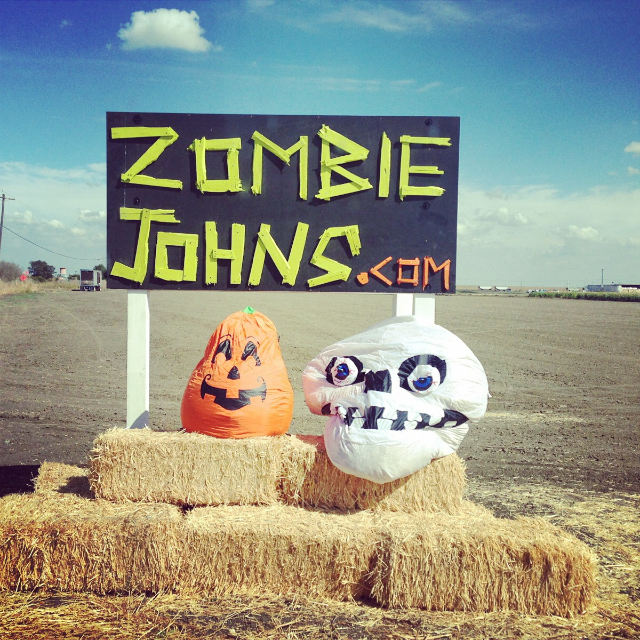
By day, this interactive fall festival offers a variety of family-friendly attractions such as a corn maze, pony rides, a petting zoo and a shooting “gallery”. By night, however, this unique pumpkin patch transforms into a field for a zombie apocalypse where guests are able to save the city of Davis from the undead in a zombie shoot thrill ride, or face the city’s scariest monsters in a haunted corn maze.


El Dia de Los Muertos Festival

Oct. 31, 2 p.m., free

E Street Plaza, 207 F St.

Immerse yourself in Mexican culture at this Day of the Dead celebration honoring those who have passed away. The event will feature traditional Latin entertainment such as live mariachi bands and Aztec dancing as well as a performance from local talent, Voice of the Wood.


Dia de Los Muertos Celebration

Nov. 2, 11:30 a.m., free

Gallery 1865, 820 Pole Line Rd.

Join others at Davis’ Cemetery District in honoring ancestors and loved ones at the city’s second Day of the Dead celebration.This local take on the Mexican holiday will feature art, poetry, Danza Mexica and plenty of pan dulce with chocolate.


SHOWS/PARTIES


RockBand University’s Sixth Annual Halloween Concert

Oct. 31, 5 p.m., free

The Davis Graduate, 805 Russell Blvd.

You’ll hear bloodcurdling screams when eight RockBand University bands take the stage at this annual Halloween concert. The show will highlight talent from the city’s local music school.


Halloween Extravaganza

Oct. 31, 8 p.m., $5

The Morgue, 1919 Wahl Way

Join fellow rock ‘n’ roll lovers at a concert across from the Davis Cemetery and enjoy live hair-raising music from local bands at a show that will be far from morbid.


Sudwerk Halloween Party

Oct. 31, 4 p.m., entrance to event is free

Sudwerk Dock Store, 2001 2nd St.

Dress up and drink up at this Halloween party hosted by one of Davis’ most popular breweries. Devilish prizes are available for guests dressed in the scariest costumes.


Halloween Spooktacular Show!

Oct. 31, 8 p.m., free

Kleiber Hall, Room 3

Cackle in laughter at this Halloween-themed improv show starring UC Davis’ premier improv comedy troupe, Birdstrike Theater. Guests are encouraged to come in costume.


Davis celebrates Day of the Dead

0

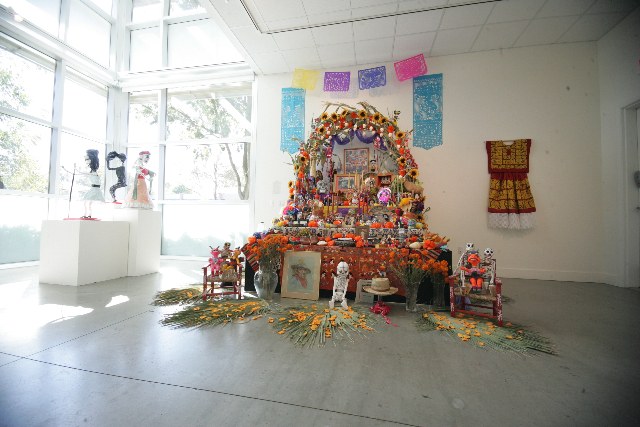
Dia de los Muertos (Day of the Dead) is a Mexican holiday that celebrates the lives of loved ones who have passed. The celebration begins on Friday and lasts until Nov. 2. In honor of the holiday, several festivities will take place within the Davis campus and community.

Festive activities often include creating altars, preparing dishes that symbolize life and displaying belongings of the deceased. Davis Day of the Dead celebrations will allow the community to partake in such traditions while also incorporating art as a medium for remembrance. Thus, many Davis events for this holiday also feature poetry readings, live music and other creative works.

Francisco X. Alarcón, a UC Davis Spanish lecturer and Spanish for Native Speakers Program supervisor, explained to MUSE how art ties into the holiday.

“Art, poetry and music are essential components of the syncretic celebration of Day of the Dead,” Alarcón said.

There will be two celebrations on campus. The first is a dedication to the community altar and takes place in Sproul Hall on Wednesday, from 7 p.m. to 9:30 p.m. The night will also include poetry readings, live music by Mariachi Cielito Lindo and refreshments.

The second event takes place in Hart Hall on Thursday, from 5:30 to 9 p.m. There will be dance performances, poetry readings and hands-on activities, such as altar making. The evening also features a panel of speakers discussing present-day issues in Central America.

Alarcón will be participating in poetry readings at both campus and community events. He said that his interpretation of the holiday’s moral – which is to celebrate life – features in his poems.

“I will be reading from a new book of bilingual poems Borderless Butterflies (Mariposas sin fronteras) that focuses on the awesome journey of the monarch butterflies and on the migrant experience,” Alarcón said. “I am planning to read my poem titled ‘My Dead,’ which exemplifies [the] notion of bringing life to our dead in our memories.”

The Davis Cemetery will also be hosting a Dia de Los Muertos celebration on Nov. 2. Like the other nights, the event will feature altar displays, dance performances, speakers, poets and live music.

David Campos of Davis band Zapato Viejo will be providing live music for the cemetery’s celebration. Campos said that he hopes his music will provide a way for people to connect emotionally with their ancestors.

“Music touches upon deep and rich sentiments that were shared by those [who] have passed,” Campos said. “Music is also a powerful vehicle to keep our culture vibrant and alive.”

The Davis Cemetery coordinated with Woodland Community College’s (WCC) Ethnic Studies faculty to put the celebration together. Melissa Moreno, WCC ethnic studies professor, is a main representative of the event. Like Campos, Moreno said that she hopes the celebration can expand Davis culture.

“These kinds of celebrations – honoring life and death together –  can teach us about concepts of humanity, community and encourage us to create intergenerational supportive webs of relationships in our everyday lives,” Moreno said.

This year’s celebration will be the Davis Cemetery’s fourth time hosting a Dia de los Muertos ceremony.

“In the U.S., it was uncommon to celebrate it in cemeteries until recently, [circa] the 1990s,” Moreno said.

However, Dia de los Muertos continues to grow in Davis and beyond. The spread of the holiday not only unites communities of all kinds but also transforms a time of mourning into one of optimism and appreciation. The celebrations allow people from all over to honor loved ones together, in hopes of creating a supportive, comforting environment.

“The Day of the Dead celebrates everyone,” Moreno said. “For those honoring a loved one during Dia de los Muertos, they might experience a sense of community that is different from holding a more private or secluded ceremony of life.”

Photo by Shazib Haq

Science is serendipitous: Profit or pleasure?

0

“When I grow up, I want to discover a cure for cancer.” As a child, I’ve always dreamed about what I would want to accomplish as an adult. Many of you science majors also grew up with the same dream to “cure” or help someone or something. We’ve all thought about it, and mostly our goals are still the same — although now in a more specialized field. As UC students, we have ambitions to apply what we learn here into a real field and pay off our ridiculous student loans with income from a good job. The real struggle is finding an industry to start our post-college lives with. You have some choices: working for the for-profit private sector, or for non-profit public institutions. I believe any scientist should have the freedom to pursue his or her interests without the pressure to make money, like many for-profit corporations want.

My interest in science arose from my own personal experience with disease. Once getting the diagnosis, I never thought to myself “this is the end” but I saw it as a beginning to a whole new adventure. I saw so much detail and learning about that one disease that I encountered, and I wanted to continue studying it and developing solutions for it throughout my career. I wanted to work in a place that allowed me to take my passion in this area and convert it into useful solutions. As the time to graduate creeps ever closer, it is time for me to choose my future place of work and I see a potential problem with private industry.

What we should question before we accept a job offer is what does this place stand for in the world of science? You’ve got your private (for-profit) industry (Roche, Pfizer, Bio-Rad, etc.), and you also have places like our very own UC Davis (public or non-profit institutions). The vision that these different industries have is the same: to produce new and innovative material relating to public health and technology. My concern is not what is produced, but ultimately why.

It’s not a complex motive — private industry works for profit. It will pursue an opportunity that provides a greater return on the investment put in by the company. A problem arises when your interest does not match with the company’s profit interest. Working in this industry can divert your attention to developing materials or research that produce revenue for the company, but may not be something that necessarily helps the situation it tries to solve. You can look at anti-biotics as a fitting example. Industry makes tons of profits from these, yet is very slow to develop the technology to fight infections effectively. If you head over to my previous “Bacteria talk” entry, you’ll see exactly why.

When deciding where to work in your future as a scientist, I would suggest you look at the non-profit companies and institutions as a possible choice. You are not working towards revenue increase at these places; your goal is making a case for your interest — and how it can be a benefit to society. You have breathing room to develop your idea and not be rushed to produce a result that maximizes on money. Best of all, you work with people who share your passion for research and can help make your idea a solution that will contribute to the world.

Students choosing non-profits can send a strong signal that we conduct research for the betterment of society, and not solely for profits. Freshmen or super senior, you can find your specific passion in research (science or not) right here on campus. Visit the Undergraduate Research Center (urc.ucdavis.edu) to learn how to get your own research started.

Burn the tip of your tongue with some hot chocolate while speaking passionately about this with UMAYR SUFI at the CoHo. Or just email (uwsufi@ucdavis.edu) and tweet (@umayrsufi)

Guest Opinion: Can freedom of speech and inclusivity get along?

0

Earlier this year in May, an associate professor of feminist studies at UC Santa Barbara removed anti-abortion signs from protesters, took them to her office and destroyed them. According to an article in the Santa Barbara Independent, she said she was “triggered” and offended by the imagery on the posters and felt that the protestors had no right to be there. Earlier this month, in Montclair State University in New Jersey, a pro-Palestinian student organization passed out pamphlets but was fined because of a complaint and told they were not allowed to take political stances. This decision was reversed later. In June, a student at University of Oregon was charged with conduct violations, including harassment, when she shouted, “I hit it first!” out of a window in her dorm. In April, students tried putting up a Free Speech wall at Loyola University Chicago, but were told it had to be censored due to offensive material or material that went against the university’s principles. This month, UC Berkeley will celebrate its 50th anniversary of the Free Speech Movement, but some critics, such as the organization Foundation for Individual Rights in Education (FIRE), say that UC Berkeley, like many other universities across the United States, only protect freedom of speech for certain ideologies, while labeling other ideologies as offensive.

Many universities, including UC Davis, have for the past several years focused on trying to be more inclusive, to foster a more diverse student body and to engineer a more accepting tomorrow for various groups of people that have previously excluded or ignored groups of people in higher education. Early on, it was noted that certain attitudes and language use were shown to be hostile toward this more inclusive environment, so efforts were made to make it more welcoming. Yet ironically, being diverse means having many people of various groups come together, and sometimes these groups, such as those divided along ideological, religious or political lines, have trouble getting along or are inherently antagonistic.

On Aug. 30, UC Davis adopted a new campus climate policy on freedom of expression in Chapter 400 of the UC Davis Policy and Procedure Manual. It recognized the right for students to express opinionated dissent and the importance of freedom of expression on campus. UC Davis also has many policies promoting campus safety in terms of inclusivity on campus. Will these two policies clash? Well, as the examples I provided above suggest, they eventually will.  Perhaps it is a sadly unavoidable consequence when trying to balance freedom of speech and freedom of social safety. Something that complicates this more is that there is a lot of room for subjectivity; a crude joke that humors a specific person of a specific minority group may offend another person of that same group or even a majority group member. There will be many people who will try to speak for everyone in their identity group by saying why a certain thing offends them, but they will neglect the ones who are not offended. And there will be people in these groups who are not offended initially until it is explained to them why they should be offended. There are people who view offense on a spectrum, and those who view it in black and white.

I am slightly older than most people on campus. I was in middle and high school in the early 2000s, during the first four years George W. Bush administration, and I paid attention to politics and current events at that age. A common concern during the early Bush years and even later into his administration was censorship, especially in relation to the Patriot Act. Many progressives, like me, were very concerned about what a conservative dominance may mean for freedom of speech. We were concerned about a conservative reign of terror that would persecute certain people in the name of counter-terrorism and label certain groups as “anti-American” in the same vein as the Red Scare.

Now I am looking at the newer folks in progressive activism, and what I see is beginning to concern me. Have we lost our commitment to frowning upon censorship? Where the line is drawn between the two competing needs is one that is extremely subjective and contestable, making the suggestion by one person alone not very valuable.

KATHERINE LIU can be reached at katliu@ucdavis.edu.

Crafting Gemeinschaft: The Hunt for the perfect mating market (and more)

0

I did not choose to live in Davis. I chose to go to the University of California, Davis. There is a difference. I was making my choice solely based off of an institution and I did not take into consideration other factors such as number of farmers markets or proximity to the beach. I did not even visit Davis before accepting my admittance, which I guess reflects some level of apathy considering that I would be here for the next four years. But after being here for two years, I can say that I fully appreciate the beauty of Davis — for its bike culture, its support of freeform radio and small college-town charm. In two years, when I graduate, I plan on putting a little bit more thought into where I move since I do not want to rely on luck and things just working out again. The idea of staying in Davis seems unattractive to me just because I do not think I will be able to find a job that fills my pockets as deep as I want them. In two years I cannot solely base my decision off the fact that there’s a highly renowned public university here (or I could, but that would be weird), I have to go shopping for things such as “mating markets” and “job markets.”

We tend to think that there are two important decisions we make in life: there is what you do and who you marry, but many people do not take into consideration that where you live plays a big role in your general satisfaction. There is this idea that as the economy becomes more globalized, where we live matters less because we can telecommute to anything; in actuality, place matters more because people are concentrating in clusters. Clusters are geographic spaces where the intellectuals of the nation that innovate tend to congregate. The effect of clustering is positive in the sense that it brings innovative minds together and they can benefit from synergistic effects, such as having multiple job options in the same field because they are all concentrated in one area. One drawback is that it limits the amount of choice people have in terms of where they move. Instead of being able to move anywhere you want after graduating, you are probably going to take into consideration where you will be able to find a job in your field. This concern was not present thirty years ago, when there was no such thing as, for example, a concentration of computer engineers (also known as the Silicon Valley).

Richard Florida wrote about the phenomenon of clusters in his book Who’s Your City? where he traces where the best place for everything is: the best place for singles, the best place for gays and lesbians, etc. If there’s a community you are trying to find, chances are Florida has pinpointed where you should go. An extension of his book is an online forum called “Who’s Your City” where people post testimonials about where they live or ask for community feedback about particular cities they are considering moving to. After a few minutes of reading testimonials I learned that Birmingham, Alabama is getting its groove back (shoutout to Birmingham, keep up the good work) and that TJ Miller’s song “Denver” is probably accurate in terms of city pride.

I want to start a conversation about what it is going to take for people to start answering “Sacramento” when they are asked “Who’s your city?” One issue city planners are trying to address is that graduates of UC Davis are not staying in the region. They are taking their human capital elsewhere, most likely because there is a lack of easy public transportation and because people living here have been unable to establish professional ties in the region. Perhaps Sacramento needs to establish a cluster of its own, potentially using the fact that it is the capital of our state and there is a lot of political power in the area. All I know is that in two years when I weigh the pros and cons of each city, it is going to take more than a few good coffee shops to hold my interest. Can Sacramento rise to the challenge?

If you want to make a song in the style of TJ Miller, but instead as an ode to Davis, you can contact NICOLE NELSON at nsnelson@ucdavis.edu to start brainstorming song lyrics (and costume choice).


Zombie John’s takes off in Davis

0

Halloween is rapidly approaching, and along with the promise of candy, pumpkin carving and politically incorrect costumes comes the opportunity to check out some local seasonal attractions.

Among these attractions is the brand new business, Zombie John’s, located straight off the Chiles road exit on Interstate 80 in Davis. The Zombie John’s experience includes a pumpkin patch and corn maze by day, and a zombie paintball thrill ride by night. In the ride, visitors are given ammunition and can shoot at zombie actors from halloween-themed trailers.

Zombie John’s only made it’s start this year, opening on Oct. 1 to the public. However, planning has been in the works since September of last year, when the operation’s Acting Manager Lana Maeder began to look into the idea of creating a Halloween attraction in Davis.

“I found out that there were no paintball zombie shoots in the area,” said Maeder. “My brother’s a farmer, and I said, ‘How come you haven’t made a pumpkin patch here?’ We put our heads together and we crazily embarked on this mission to bring fun, Halloween-themed entertainment to this area.”

While Maeder’s brother provided the land, he was one of many family members to contribute to the creation of Zombie John’s.

“The haunted maze is two acres, it takes a lot. From planting the corn, to irrigating it, to figuring out the maze patterns you’re going to do and hiring employees, it’s a huge undertaking,” Maeder said. “It’s really fun to get the family back together to work on a common goal.”

The whole process of planning, planting and organizing the attraction took about a year in total. Current assistant manager Karli Foster was present throughout the planning process.

“There was a lot of planning involved—a lot of close work with insurance agency, making blue prints for the maze, planting the corn and the pumpkin patch,” Foster said. “Our zombie trailers were actually handmade by John Anderson himself —who is Zombie John.”

According to zombie shoot tour guide Joe Schairer, who has worked with the attraction since its inception, Zombie John’s first month has been a success.

“[Our] first month’s been going great. I had no idea the community would be so far behind in an operation like this, especially right outside of Davis,” Schairer said. “It’s awesome to be able to provide a really fun, entertaining evening for the entire family.”

Since the attraction is so new, the participation and enthusiasm of the staff has been integral to the business, but Schairer said there has been no shortage of enthusiastic employees thus far.

“The staff here is amazing. Everybody is putting in the extra two miles,” Schairer said. “All of our zombies have been putting in the extra time and off the clock effort with their attire and their personas.”

And in turn, the staff agreed that the customers at Zombie John’s also bring enthusiasm to the table.

“They’re coming from all over to shoot zombies,” Maeder said. “People will come wearing their zombie shirts, or their anti-zombie shirts, or their Walking Dead paraphernalia or they’ll come in full camouflage. It’s funny; it really does grab everybody.”

Photo by Courtesy


Professors, lecturers face different rights to tenure

According to the American Federation of Teachers, lecturers teach 40 percent of classes at UC Davis. Unlike lecturers, professors are able to ascend to the level of tenure-protected faculty, and have a permanent place in the university after a period of review and evaluation.

“Tenure is achieved after a faculty member has been deemed qualified and having achieved the necessary level of a scholarly body of work,” said Binnie Singh, assistant vice provost of Academic Affairs, in an email interview.

While a lecturer’s primary function is to teach, a tenure-track professor also has to do research. It is not required for lecturers to pursue research, but many do.

The UC Davis Academic Personnel Manual UCD-220 Section IV states that in order to receive tenure, professors must show that they are working towards being published or have just completed a publication.

APM UCD–133 states that assistant professors must ascend to the title of associate professor within eight years to receive tenure. If assistant professors are not promoted within this time frame, they are let go from the university.

The American Federation of Teachers (AFT) is a union designed to represent and support lecturer and librarian rights. Jeffrey Dunbar Narten, Field Representative University Council for AFT, said the screening process for lecturers to become continuing lecturers takes up to 18 quarters, usually amounting to six years.

“The [AFT’s contract for lecturers], based on excellence of education, is the best opportunity for people without tenure,” Dunbar Narten said. “It has been copied by many other unions. It was completely novel when brought to campuses.”

Pre-sixes, a term used to describe lecturers before they go through the screening, are on a yearly contract. After this 18-quarter period, the options are either to become a continuing lecturer, with greater job security and rights, or be dismissed.

This year, neurobiology, physiology and behavior lecturer Lauren Liets was given a “pink slip,” meaning her job can be revoked at any time over the year.

Liets’ case became known among the campus community after Justin Van Hoorebeke, a current NPB graduate student and one of her former students, started a petition on Change.org to gather student signatures for the cause. Hoorebeke said the aim of the petition wasn’t to aggravate the administration, but to show that students care about their education and want qualified lecturers to remain on campus.

“I knew her as an undergrad [because] I took a few of her classes,” Hoorebeke said. “I took Neurobiology of Addictive Drugs and she has also written letters of recommendation for me.”

One of the main reasons why Hoorebeke started the online petition was because of his belief that quality professors and lecturers are a vital component for education at the university. While he does think that research is an important part of the university experience, he also values education equally.

“I’ve had professors who are great researchers, but I didn’t really learn much from them,” Hoorebeke said. “I feel like having students say, and show the administration, ‘This person is more than just a name on a paper, this is someone who makes or breaks the program,’ [is powerful].”

Liets has taught at UC Davis full time for fourteen years and received her first pink slip after 2008, when AFT rewrote lecturer’s contracts. When the AFT contracts were rewritten, the definition of seniority changed from being based on the lecturer’s time spent working to the number of quarters the lecturer has taught.

“While they were rewriting our contract, I became lowest in seniority,” Liets said. “I am constantly working under the threat of being fired.”

Liets said she prefers working as a lecturer because of her ability to focus on teaching students, and believes there may be budgetary reasons behind her pink slip, as opposed to the staff purposefully trying to oust her from her position.

Hoorebeke agreed with Liets, believing that the administration may not be against her position, but should still make an effort to retain her as a faculty member.

“They could create another position for Dr. Liets,” Hoorebeke said. “They can restructure the program so we don’t miss out on a very special lecturer.”

Liets said she was aware of the petition made by Hoorebeke and was touched, though still wary of the attention the petition has brought to her. However, Liets is glad that students are speaking up.

“What sparked the petition is that the student’s voices are never heard,” Liets said. “They don’t have a good way of being heard. So this is how they are trying to be.”

Liets, who was not involved in the petition in anyway, found a link after receiving an email from a former student.

“On the days where I feel like crap, I’m going to open this up and read it,” Liets said. “That’s what it’s all about. Anyone should be lucky enough to have passion for their job like I have for mine.”


News In Brief: Beehive Design Collective to hold art show in Davis

0

On Friday, the Beehive Design Collective, a volunteer activist group dedicated to “cross-pollinating the grassroots,” will be showing their design pieces at Delta of Venus Cafe.

The California-wide tour titled “Sucked Dry: Examining Drought and Privatization from Mesoamérica to California” aims to bring awareness to the current drought. According to the collective’s website, they hope their graphics will start a dialogue on the various issues the drought has created.

The collective itself is based out of a town in rural Maine. As a volunteer organization the collective focuses on addressing local and global issues through a graphic medium.

The event is free of charge and begins at 1:00 p.m. at Delta of Venus Cafe, 122 B St.

— Gabriella Hamlett

This Week in Senate: Oct. 23

At the start of the meeting Nicholas Park was sworn in by Maxwell Kappes as a voting member of the ASUCD Senate. Following his initiation, the senate addressed Tara Storm, the Unit Director of the Pantry.

This year, the Pantry has seen an encouraging increase in the number of students who are using its services; however, it has become unable to accommodate this influx and is starting to run out of food. Storm is currently in the process of reaching out to other partners and corporate donors but is coming to the senate for ideas on how to restock shelves in the meantime.

“We need food. Money is not the issue-we have the money, we just have to find the best possible place to use it. We could take $30 and go into Costco and get us enough cans to last us two weeks, but that’s not an efficient way to use our money…if we were to take that same $30 to a food bank we could get enough cans to last us two months.” Storm said.

A list of items that the Pantry is currently in need of include mixed fruits and vegetables, canned meat, pasta, rice and shampoo.

Various proposals were suggested, some of which included reaching out to the various fraternities and sororities on campus, as well as to the elementary and high schools in the Davis school district. Senator Gareth Smythe also suggested coordinating with the ASUCD elections committee to come up with a way to incorporate a food drive into the elections process.

Next, Senator Mariah Watson motioned the senate into the appointments and confirmations section, in which Lillianna Valdovinos was appointed as the new chair of the Gender and Sexuality Commission. The meeting then moved into the public announcements section. Josh Herskovitz, president of the Davis chapter of the Challah for Hunger organization, announced that the chapter will be baking and selling challah every Thursday at Hillel. The proceeds of the work will go to the Food Bank of Yolo County.

Harley Litzelman, director of the ASUCD Office of Advocacy and Student Representation, announced the “Carry That Weight” event, inspired by Columbia University student Emma Sulkowicz. Students will be gathering in front of North Hall on Oct. 29 for the march and are encouraged to bring mattresses, pillows or sleeping bags.

The Senate entered into the presentations section. Present were Milton Lang, the associate vice chancellor for student affairs; Michael Sweeney, associate campus counsel; John Campbell, executive director of Campus Recreation; Jacob Applesmith, chief campus counsel; and Anissa Nachman, the administrative budget and budget operations director. Nachman began by passing out a handout with an overview of how the intercollegiate athletics budget is allocated. The handout showed that in 2013-14, student fees made up about 70 percent of the Intercollegiate Athletics budget; 43 percent of those fees are used for compensation, 23 percent for scholarships and 34 percent for debt service and operating expenses.

“We have an annual budget process, and on campus we generally do incremental budgets, which means units have a set budget and, unless something changes, they basically have that set budget,” Nachman said.

ASUCD Controller Rylan Schaeffer asked campus counsel various questions concerning compulsory student fees, such as how they’re enacted and whether they constitute contracts between the school and the students. He also asked for clarification on certain legislations such as Policy 80 and the Campus Expansion Initiative and if it is still the campus counsel’s position that “CEI principles were violated when the four teams were cut,” referring to the cutting of men’s swimming, women’s crew, men’s wrestling and men’s indoor track and field in 2010.

Applesmith said that the issue was investigated by the office of the president and that the office investigated forty different issues that were raised in respect to the budget cuts and the elimination of the sports.

Applesmith then restated his offer to help people through the nuances of any policies that they had questions about.

The meeting ended with a statement from Lang: “From my perspective, transparency, … creating a partnership and creating a line of consistent communication is critical, so… if I could help facilitate this process, I stand ready to do that.” The Senate then moved into considerations of old legislation. Senate Resolution No. 1, authored by senator Artem Senchev, called for the recognition of Unitrans Maintenance Manager Andrew Wyly for his contributions to ASUCD. A motion to table the resolution was approved.

Senate Bill No. 7 was tabled at the previous meeting and involved a comprehensive change to the operations of the Champagne Committee. The bill passed.


RETRACTION:

The California Aggie would like to formally apologize for a factual error made in the “This Week in the Senate-Oct. 23” article. The article incorrectly stated that the Yolo Food Bank was involved in a lawsuit; however, the Yolo Food Bank is not and never has been involved in one.

News in Brief–UC Davis engineering team develops breath-test for dolphins

A group of engineers at UC Davis recently developed a breath-test for dolphins which can help analyze dolphin health.

The device was created by a group of engineers from the Department of Mechanical and Aerospace Engineering and was led by Professor Cristina Davis. The team hoped to create a device that could diagnose dolphin health through a breath sample.

“We hope that [the breath-test device] could be used to monitor health non-invasively in many animals, to give us health assessment information on wild populations,” Davis said.

Davis said that the team began work on the project four years ago.

“We initially started this project in 2010, and we built our first devices by designing them to capture the exhaled breath from the dolphins,” Davis said.

She said that her research team members were inspired to create this breath-test from their research on human and plant metabolites.

“My research group here at UC Davis focuses on chemical sensing and metabolite identification in biological systems,” Davis said. “Our work so far has primarily focused on human metabolites and plant metabolites — both for non-invasive health monitoring. When I began interacting with scientists at the U.S. Navy’s Marine Mammal Program, we quickly realized our approaches could be adapted to monitor marine mammal health.”

The team worked with the National Marine Mammal Foundation in San Diego as well as the Chicago Zoological Society’s Mote Marine Laboratory in Sarasota, Fla., to test out the breath-test on dolphins.

“I heard about this from NOAA personnel, and they asked if the device could be tested during one of my bottlenose dolphin health assessment projects,” said Randall Wells of the Chicago Zoological Society. “We provided opportunities for testing this device with wild dolphins.”

Davis said the breath-test device collects the breath in a way that scientists can turn the breath into a liquid sample that they take back to the lab and biochemically measure.

“The breath collection device is a tube that condenses the warm exhaled breath onto a chilled service,” Davis said. “We are excited about using this approach to non-invasively monitor animal health.”

Moving forward, Wells also believes that the invention of this breath-test for dolphins will change the way scientists analyze dolphin health.

“This could become a very important tool in our toolbox for evaluating the health of wild dolphins,” Wells said. “The more diagnostic capabilities we have, the better.”


Safety never sleeps at UC Davis

It’s sure nice to see the UC Davis Police Department actually trying to improve the health and safety of students. Not exactly known as a paradigm of integrity on campus in recent years (i.e. pepper spray), the department, under current Chief Matthew Carmichael, is taking substantial strides toward reclaiming the trust and respect of the UC Davis community.

The UCDPD is currently in the process of revamping its safety and security services, in addition to introducing new programs to make these services more convenient for students.

For instance, the UCDPD is overhauling its escort service, Safe Rides, to provide a more comprehensive, convenient mechanism for students to get home safely. As of Oct. 20, Safe Rides now operates 10 p.m. to 6 a.m., taking students from campus to anywhere in Davis during these hours that Unitrans is closed.

Additionally, Safe Rides now has a wheelchair-accessible van and a new app, called Tapride, which allows students to summon rides via their smartphones. The service also now offers 24/7 VIP wheelchair transportation around campus, in addition to one 12-passenger and one eight-passenger van, making campus security more inclusive to all students.

Safe Rides and Aggie Host Security Officers, the students who operate the vehicles, expect to give upward of 25,000 rides this year, up from the 7,000 students who utilized the service last year.

These services greatly contribute to reducing the instances in which students are placed in compromising positions, stranded without a ride home. Additionally, the department will frequently conduct building checks throughout the night, hoping to patrol the 24-hour study room in the library twice an hour.

Fewer people stranded in the middle of the night leads us to believe that there will be less violence and fewer frightened or anxious students. This allows for students to have more flexibility with their schedules and also for them to feel comfortable and safe on campus at all times. We continue to applaud Chief Carmichael for his efforts to mend the strained relationship between the police and the students by utilizing these student-run safety services, and we hope that these safety measures are just the beginning of what the department can do to increase campus safety and security.

UC Davis club sports highlight

0

Cycling Team:

The UC Davis’ cycling club team has roughly 65 members on the team and the team is divided into two sections. The first is the club level for those who want to have people to ride with, attend group rides and other events, and get access to team sponsorship. The cycling team also has the “race team”. These riders race collegiately in the Western Collegiate Cycling Conference which includes all of California and Western Nevada. The UC Davis cycling club team placed 4th as a team for D1 school at the national championships in May.

Practices are hosted as casual rides everyday at 3:15pm leaving from the bike barn. These rides are open to anyone. It allows people to come and meet team members while learning how to ride in a group. “Race Rides” occur on Tuesdays at 3:15pm leaving the bike barn. This is a 35 mile high intensity group ride that is to simulate racing.
Weekly meetings are held on Tuesday evenings at 7:30pm in Roessler 66. For more information on the UC Davis cycling team, click here.


Judo Club:

UC Davis’ judo team averages about 30 people per quarter and always welcomes new members throughout the year. Their practices are on Monday, Wednesday, and Friday from 8 to 10pm, and Saturday from 8 to 10 am in the Martial Arts Room on the second floor of the ARC.  Practices consist of conditioning, groundwork (pins, chokes, arm bars), then standing fighting.

The morning practices are technique classes, a time to slow down and focus on precision execution of the techniques. To get involved, show up to a practice or send an email at judoucd@gmail.com. No previous experience in Judo or martial arts required to join. About 95 percent of their members started with zero prior experience, many of whom are now State and Collegiate National Champions.

The UC Davis judo team has produced six National Champions, 18 National Collegiate Medalists, and one All-American Athlete in three National Collegiate Championships and is one of the largest collegiate judo programs in the US.

Judo is one of the few sports where blind, visually impaired and sighted players can all compete on equal footing.


Womens’ Soccer Team:

The UC Davis women’s club soccer team competes against the West Coast Soccer League against the likes of Cal Poly, culminating in the NIRSA tournament each year.

The current UC Davis womens’ club soccer team is 2-0. They are counting down the 29 days until Nationals. The first two wins were against Cal and Cal Poly these past two weekends. It is a completely student funded club team, in which they make efforts to buy matching uniforms. Tryouts are usually at the beginning of the year over the course of several days.

For more information on the women’s club soccer club team, check out their website here.