56.9 F
Davis

Davis, California

Tuesday, January 13, 2026
Home Blog Page 923

Column: Fucking up

0

I’ve had my fair share of parent-teacher-esque conferences over the years, during which multiple adult authority figures have brought up my use of cuss words.

As far as character assassination goes, this column will probably stay on the permanent record a whole lot longer than their puritanical disapproval. But I’ll save you all your skepticism and tell you directly that I frequently cuss. Sometimes even in front of women and children.

Yet, such reprimands are hardly a surprise on a campus like ours.

The Foundation for Individual Rights in Education (FIRE) has ranked UC Davis as a red-light school three times since I started as a freshman in 2009. This means that the campus has at least one speech code that directly violates the freedom of speech, or that the speech codes are not available to the public. In 2012 and 2013, it was ranked as a yellow light.

Despite attending a public institution, it is not unusual for employees of The California Aggie to receive heavy pressure from the administration regarding our coverage. In my direct experience, this has ranged from phone calls insisting that university officials be quoted in articles, to Campus Media Board-hosted meetings in which student employees were assailed over offensive coverage or advertisements.

I will not deny that we’ve made bad decisions. After the misguided publication of “Jungle Fever,” the editorial board institutionalized diversity training. I personally have learned a great deal about race and gender inequality. The bar has been raised.

Unnecessarily, however, this came after a very long meeting in which ASUCD senators and other offended students asked the Media Board to fire someone over the racist column, and to require that an administrator approve all California Aggie content before publication.

It may not be a campus policy, but it sure as hell doesn’t encourage free speech.

Unserendipitously, the “Jungle Fever” meeting ended minutes before Occupy protesters were pepper sprayed. These two seemingly unrelated issues came together to teach one big lesson: a campus that doesn’t support the freedom to share bad ideas also doesn’t support the freedom to share good ones.

Alas, I’ve had the last four years to use The Aggie as my personal agenda-pusher, so for now I’ll shift on to a more positive element of my college experience. I have met a lot of wonderful people here who have fought the good fight, and for them I owe the next five inches of column space.

Thanks to Angela Ruggiero for responding to email complaints when I misquoted an entomology professor as a freshman reporter. Thanks to Mark Ling for standing up to sources who weren’t actually misquoted.

Hannah Strumwasser, congratulations on a public-crisis-free year. Claire Tan, you have a lot to live up to. Namely, the quality of selfies Hannah and I left in the Photo Booth folder on your new computer. No regrets there.

Brian Moen, thanks for often saying what I can’t and writing what I asked you not to. I gave you feminism, you gave me anarchy and together we gave Hannah an ulcer.

Thanks to my smart and wonderful roommate, 2012-13 editor in chief Janelle Bitker. You have always cared about this newspaper so much more than I have. Competition, inspiration — call it what you will — I wouldn’t be here if it weren’t for you.

And finally, thanks to one of our local heros, Chancellor Linda P.B. Katehi. You taught me that there is no mistake too big to not-resign over. And for that, I am really fucking grateful.

BECKY PETERSON was an Aggie features writer, city editor, managing editor and opinion editor. She is sad to graduate, but excited to be considered an outside agitator. She can be reached at rjpeterson@ucdavis.edu.

Earthquake near Lake Almanor causes tremors in the City of Davis

On May 23 at 8:47 p.m., a magnitude 5.7 earthquake struck to the south of Lake Almanor in Lassen Volcanic National Park. Tremors were felt 113 miles away by people in the City of Davis.

Some minor damages were reported in the area, including collapsed chimneys, fallen objects inside houses and two destroyed water tanks, which caused approximately 300 people to be affected by the damaged water supply. About 660 people on the southwestern edge of Lake Almanor also briefly lost power.

Mt. Lassen, part of Lassen Volcanic National Park, has not erupted since the early 1900s, but distinguished professor of physics and geology at UC Davis John Rundle said that the earthquake could be evidence of volcanic movement.

“[Thursday’s earthquake] may be associated with volcanic unrest,” Rundle said. “That doesn’t mean that the volcano will erupt, it just means that the ground could expand at maximum one meter.”

While earthquakes in this part of Northern California are not uncommon, it has been quite a while since one of this magnitude has been felt.

“[The] quake was the strongest in this part of California for nearly 63 years,” according to Earthquake-report.com.

Because of the relative flatness of the City of Davis, the city isn’t at as high a risk for earthquakes as other more mountainous areas.

“Where you have mountains, you have earthquakes,” said Donald Turcotte, UC Davis professor of geology.

However, because the City of Davis is surrounded by various fault lines, it is possible that from time to time tremors could be felt, as they were on May 23, but most of the time any damage that is incurred would be minimal.

Many residents of the City of Davis did not experience anything abnormal that evening. Jacqueline Santana, a first-year managerial economics major, said that she noticed the earthquake, while a friend sitting next to her didn’t.

“I felt my seat move slightly and at first thought it was nothing, but seconds later I felt it move again … I looked at my friend and asked her if she realized an earthquake had happened,” Santana said. “She said it was nothing, but I quickly pointed out to her that the lamps and plants had started moving unexpectedly.”

According to Turcotte, the risk for earthquakes in Davis to cause structural damage is quite low. However, major ground-shaking in areas surrounding the City of Davis can be expected on occasion.

“Every 30 years we could have an earthquake in the magnitude 7.0 range that we would feel well,” Turcotte said. “Every once in a while we will feel a magnitude 8.0 earthquake, which we had in [the San Francisco earthquake of] 1906.”

In the case of such an earthquake, the City of Davis has various disaster prevention plans in place to help affected areas.

“A catastrophic earthquake in the Bay Area creates a need for medical care and other emergency services, so we think about how we could respond to the people coming into Davis,” said Kelly Stachowicz,
the deputy city manager of the City of Davis.

The most recent major earthquake that shook the City of Davis was the San Francisco earthquake of 1989, which had a magnitude of 7.2 and was caused by a slip along the San Andreas Fault.

Two significant earthquakes that took place closer to the City of Davis occurred at the Lake Berryessa fault line near the City of Winters in 1872. The City of Winters is approximately 14 miles from the City of Davis, so any activity that occurs there is often felt by Davis residents. On April 20, 1872, there was a 6.5 earthquake, which was immediately followed by a 6.4 earthquake the next day.

A potential concern for Davis and Sacramento is levee failure, which could be caused by an earthquake on the Hayward Fault. The fault runs along the east side of the San Francisco Bay. An earthquake could cause extensive flooding.

“In the Sacramento Delta region, an earthquake would cause the levees to fail,” Rundle said.

This is one of the many concerns that are addressed in the disaster plan of the City of Davis.

“[In our disaster plan] we look at making sure we have an inventory of all the possibilities [of disasters] and what resources we have in order to address the emergency,” Stachowicz said. “It’s about knowing what is needed for a particular emergency.”

The geography of the City of Davis leads to increased earthquake sensitivity for residents. The soft soil that has made Davis such a well-known agricultural area in the past increases its vulnerability.

“Because of the soft ground that we have in Davis, shaking tends to be amplified and can be intense,” Rundle said.

Those who felt the earthquake on May 23 experienced an amount of trembling that is barely identifiable as an earthquake without the use of advanced technology.

“[They felt] the smallest amount of movement that you can identify as an earthquake,” Turcotte said.

TAYLOR CUNNINGHAM can be reached at city@theaggie.org.

Column: Time changes all things


This is supposed to be a farewell column, but it’s hard to shake the science-writing habit after it’s been nurtured for so long. So, forgive the ramblings of a science writer desperately trying to write a newspaper-safe personal letter. Time changes all things. It changes people, it changes memories, it changes the very nature of everything. Time even changes itself, or at least it changes how it is perceived. Each year seems to move a little bit faster, and we want each of those years to last just a little bit longer. It’s funny how often it happens that as soon as we are comfortably settled into something, it’s already time to move on again. Be it a particularly memorable year of your life, a great job, a fascinating class, your first car — even a college fling or a pair of jeans — they all have to be put away eventually.

As strange as it may sound, college might actually be the least complicated time of our lives. For four years, everything is laid out in front of us. It is one big long checklist that takes forever to complete, but at least we always usually know what the next step is. Take the BIS series, check. Some UWP classes, check. Get an internship, check. Make friends, check. Take a philosophy class and think you know everything, check. Take an ecology class and realize you know nothing, check. Go to a CALPIRG meeting because an attractive girl mind-controlled you into filling out the email form … check. Go to a frat party and do your first keg-stand … I guess that one is optional. But hey, even if you tried it and hated it, as least you can say you tried it.

That attitude doesn’t work for all things. Meth, for example. But it does work in cases of attempted self-improvement. And only time will tell if those attempts were worthwhile. Maybe the high school athlete wanted to try his hand at Magic the Gathering at weekly tournaments. Maybe the Dungeons and Dragons aficionado wanted to try martial arts. Well, this (points two thumbs at self) high school athlete wanted to try science writing, and three years later, only regretted it once. I worked with two editors before I became editor myself, and with each one, it was a struggle to get used to each one. But again, time changed that.

I’m sure everyone has had this feeling — the feeling where you are waiting for the moment that everyone realizes that you actually have no idea what you are doing and that you have been bluffing all along. At some point, time changes that as well. And just when you are getting settled into your new position of power and respect, it’s time to train the person who will be taking your job. Taking is the wrong word … inheriting. I think that the biggest fear of moving on might be that once you are gone, everyone who is still there will realize they don’t need you. For my ego’s sake, I hope that I’ve left big shoes to fill.

This is getting too emotional, so let’s drop some knowledge. We used to think the world was flat, and we were absolutely sure, without a shred of doubt, that we were right. Nope, wrong. We used to think the Earth was the center of the solar system, and we were absolutely sure, without a shred of doubt, that the sun revolved around us. Nope, wrong again. Vikings never wore horned helmets into battle. Cracking knuckles has never been clinically shown to cause arthritis. Napoleon wasn’t actually that short (he was 5-foot-2 in the French units used at the time, which is actually closer to 5’7” in our units). Stretching actually decreases athletic performance by an average of five percent.

And don’t worry, the heartbreak of leaving your comfort zone isn’t actually a bad thing — it’s just your hormones screaming at you for making changes. That crushing feeling in your heart caused by adrenaline and cortisol is actually beneficial in small amounts. It’s hard to find a way to say, “don’t get sad too often.”

This all ties back into the “time changes all things” pattern I have been trying to follow, along with the idea of continual self-betterment. I have met people who are constantly at dizzying highs, people who are always at crushing lows and people who never stray from the middle. I can say, without a doubt in my mind, that I would rather experience the entire range of feelings, even the bad ones, than just feel the good. Without the bad, the good becomes meaningless. There is a scienc-y explanation: you build up a tolerance to the release of hormones that happiness induces.

No matter how sad we might be about leaving something amazing and moving on to something new, be excited about it. The worst that will happen is that you will have learned something new about yourself.

HUDSON LOFCHIE is no longer the boss of the science desk. He can be reached at hudson@lofchie.com.

Administrators investigate reported incidents of anti-Semitism

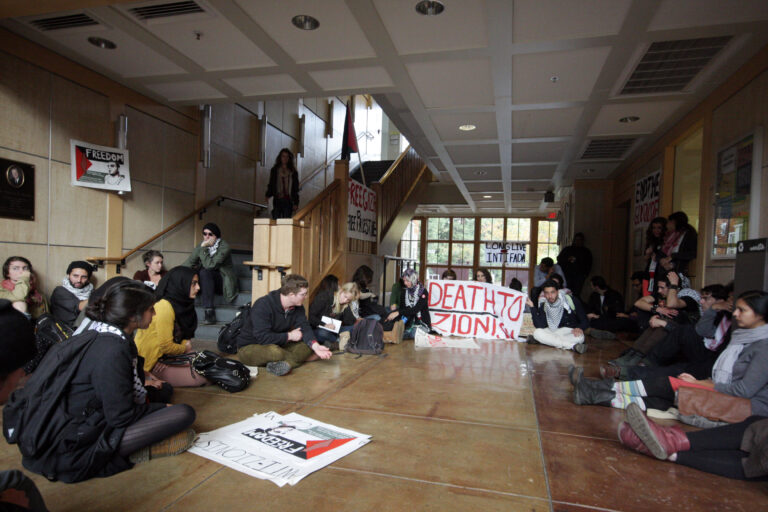
The now seven-month-old March in Solidarity with Gaza, which led to the occupation of Dutton Hall on Nov. 19, 2012, has been muddled with reported incidences of anti-Semitism.

According to a Feb. 5 letter to UC Davis Chancellor Linda P.B. Katehi from the AMCHA Initiative, a nonprofit organization which aims to combat anti-semitism at American colleges and universities, Jewish students were reportedly “intimidated, harassed and bullied.”

The event, originally organized as a rally, aimed to stand in solidarity with people affected by the Gaza bombings.

A Jan. 28 letter from the AMCHA Initiative to the Chancellor also stated that after a student expressed disagreement with one of the signs being displayed, “a protester grabbed his collar, raised a fist and forced the student to leave the building.” Other cases during the occupation included protesters chanting “leave our space” and “shame on you.”

David Marias, president of Aggies for Israel, said that three pro-Israel students inside the building were also called out and verbally attacked.

“All they were doing was standing in the back and quietly listening to other individuals voice their opinions. They were not contributing to the conversation nor were they trying to shut down the event; they were simply listening,” Marias said in an email interview.

UCLA professor emeritus Leila Beckwith and UC Santa Cruz lecturer Tammi Rossman-Benjamin, both of whom drafted the letter, could not be reached for comment.

The protesters dispersed shortly after 3 p.m.

Claudia Morain, director of the UC Davis News Service, said that no arrests were made, that no grievances were filed and that police initiated an investigation into the allegation of the student who was grabbed by his collar.

“Ensuring that individuals on this campus can express and hear a range of viewpoints requires ongoing effort on everyone’s part. We are committed to ensuring that this university remains a vibrant marketplace of ideas,” Morain said.

Provost and Executive Vice Chancellor Ralph J. Hexter responded Jan. 31 in a letter, stating that if true, the allegations are “very disturbing” and that he and the Chancellor are committed to ensuring that the events are “immediately addressed.”

According to letter from Michael Sweeney, senior campus counsel to President and General Counsel at The Louis D. Brandeis Center Kenneth L. Marcus, the event coincided with a separate event on the East Quad, commemorating the one-year anniversary of the November 18 pepper spray incident. Sweeney also stated that a number of administrators were on-site and spoke to members of Aggies for Israel; the members did not make a complaint.

Marias said University administration expressed to him that they investigated the events and he has met with them to address concerns of UC Davis’ Jewish and pro-Israel students.

“I feel confident that they have reviewed many accounts of what happened that day,” Marias said.

He also said that some of the recommendations that have been expressed to members of the administration have been put into effect.

“I think that the administration is constantly working to adapt to situations that require careful action, and that they have changed their policies with regards to occupation of buildings on campus. I also feel that the administration has been made more aware of the student actions taken and are working on amending policy to properly interact with students that is productive and does not infringe on anyone’s rights or inflame any situation,” Marias said.

The pro-Palestinian UC Davis student organization, Students for Justice in Palestine (SJP), did not sponsor nor was part of the Nov. 19 event. According to SJP president Diyala Shihadih, it was arranged by an autonomous group of activists on campus.

Members of this group denied previous interview requests by The Aggie.

“There was no anti-Semitism during the event. In fact there was a lot of talk about the difference between [anti-Semitism] and [anti-Zionism]. People kept saying that the Jewish people are our allies and that the event was in no way [anti-Semitic]. There were no acts of aggression directed at any Jewish students based on the fact that they were Jewish,” Shihadih said in an email interview. “The few Jewish students in Dutton were often referred to as ‘brother’ or ‘sister’ and were given opportunity to express their opinions even if their thoughts did not match with the opinions of others in the space.”

Most recently, the University of California Office of the President launched a systemwide campus climate survey that concluded in February, which called for UC staff, faculty and student opinion on how safe and comfortable they feel to express information, such as personal religion, disability, ethnicity and sexual orientation.

Marias said he believes that there is a percentage of students who feel reluctant to report incidents of hate.

“We are working to reduce this number of students so that no student ever feels reluctant to report situations or experiences like this to administration or anyone,” Marias said.

MUNA SADEK can be reached at campus@theaggie.org.

Re‘capping’ the UC Davis experience

With over 20,000 undergraduate students at UC Davis, being recognized as an individual student can be difficult. But for all students, regardless of major or background, graduation is a time for personal recognition and praise.

“These past few years, we have each been known by our ID number and then finally at commencement, we get to stand out as an individual,” said fourth-year entomology major Melissa Cruz.

Apart from having your name called in front of hundreds of your peers and family members, standing out from the crowd at commencement can be done in a more literal way.

Graduating students at universities across the globe sport the traditional cap and gown at their celebrations, and many UC Davis students decide to personalize their graduation attire every year — specifically by cap decoration.

“The cap and gown is all black and there’s not anything fun about it,” said fourth-year anthropology and international relations double major Grace Persico. “I think it’s a good idea to decorate your hat to stand out more in the crowd.”

Many opt to reflect their college experiences onto their caps, and others use plans after graduation as inspiration.

“It’s a fun opportunity to hang out with your friends that are graduating and reflect on your experiences to decide what to write on your hat,” said fourth-year history major Maya Makker. “Even if you don’t like the crafty part, it’s still a fun way to talk to your friends about what they see themselves doing in the future and how they want to represent that on their hat.”

From using a giant “hire me!” decal and attaching a resume to sticking on pictures from studying abroad, cap decoration ideas seem to be limitless. Many students, like Cruz, are putting much thought into which experiences deserve a coveted spot on their caps.

Four years ago, when Cruz visited the UC Davis campus for the first time, a trip to the Arboretum was all she needed to become an Aggie. During her time in Davis, Cruz spent three years as an Arboretum intern. Today, just a week before commencement, she said her experiences at the workplace have shaped the person she has become.

“I want [my cap] to be related to something I did in college. I think [cap decorating] is about putting something on it that has shaped who I am as an individual,” Cruz said. “Mine will definitely implement something from the Arboretum. It’s not only about loving the Arboretum, but also loving what I study.”

Along with putting an Arboretum symbol on her cap, Cruz plans to express how her work there has affected her social experience at Davis.

“My passion for the Arboretum has been shaped by the people I’ve been working with,” Cruz said. “It not only symbolizes the actual Arboretum but also the people that come with it.”

In other cases, students aren’t focusing their cap design entirely on their Davis experience, but rather on their future plans. From graduate school to working abroad, many have exciting paths paved for them after their cap is thrown up into the air.

For Makker, both graduate studies and an international experience are in store. Makker plans to move to London for a year after graduation to earn her master’s degree.

“I was really excited that I get to decorate this [cap] because in high school I didn’t get to,” Makker said. “My whole idea is to have something written on it because for me, that’s the best way to express myself.”

Although she hasn’t fully decided on what she plans to put on her cap, Makker said she has already purchased sticker decorations related to London.

“I think I am going to use London red bus stickers because that represents both Davis and London,” she said.

Fourth-year English major Corrie Jacobs also plans on incorporating London-based themes on her cap, but in relation to her study abroad experience.

“Obviously the last four years that I’ve spent at Davis have been my favorite years of my life so far,” Jacobs said. “I want to stand out in the crowd [at commencement] and have something very personal.”

Jacobs, like many other students, plans to honor her family and Davis’ culture on her cap. Unlike most, however, Jacobs will hand-knit rose decorations on her hat.

Cruz, Persico, Makker and Jacobs plan to get together and join creative forces for a cap decorating party.

“I have mixed feelings for sure about graduating. Mainly I’m excited just because it’s a new chapter of my life, but right now, I’m just kind of nervous,” Cruz said. “You go through so many years of schooling and it’s culminating to this moment. The thought of not having school in September is kind of freaking me out right now.”

RITIKA IYER can be reached at features@theaggie.org.

Spring graduates reflect on final college expenses

While renting the 38-dollar cap and gown is the only mandatory expense for walking in the Commencement Ceremony, add-ons such as tassels, diploma accessories, travel expenses for loved ones and last-minute Davis memorabilia purchases have many grads wondering about the actual cost of graduation.

Cap and gown provider Herff Jones suggested that students purchase one of two packaged options instead of simply renting their caps and gowns.

“If you spend $90 for a grad pack, you get the cap and gown, but also extra tassels, a diploma cover and a one-year Cal Aggie Alumni Association (CAAA) membership,” said Kevin Hadidjaja, a fourth-year exercise biology major. “The CAAA membership [played a part in why I bought the package]. It allows me to still be part of [the] Davis community and to support the association.”

The 90-dollar package provides a middle-of-the-road approach for graduation purchases. The pack contains more substance than the plain cap and gown but less fanfare than some of the more expensive options.

“The next package up from [the 90-dollar package] is the 263-dollar package. It’s got announcements, thank you cards, two tassels and an extra fancy frame. I didn’t choose to get it because I’m a poor college student,” said Ruben Almanza, a fourth-year environmental policy analysis and planning major.

Almanza’s parents offered to purchase the more expensive package for him, but he declined.

“I don’t have a need for it; I’m not one to send out greeting cards,” Almanza said. “And I already feel like paying to wear a gown that’s been used a hundred times is pointless, so I wouldn’t want to pay more.”

Some see the packages as a way for the University to make those last few dollars off of college students before they graduate.

“You’re paying to wear something for a couple hours. The picture frames and tassels are overpriced. Graduation is a business, not a celebration,” said Christine Higgins, a fourth-year political science and history double major.

Class rings are other add-on expenses for graduates, but those interviewed agreed that they were not intriguing options.

“I’m not a ring guy, so I didn’t look into it, but that being said, I haven’t heard about anyone in my class getting one, either,” Almanza said.

Other than paying for graduation attire and accessories, students have to factor in travel expenses for their relatives and are becoming creative to keep costs down.

“My family is driving in, and they are staying in my apartment. [It was easier than dealing with] jacked up prices for Davis hotels, which filled up a few months ago,” Hadidjaja said.

Others already knew to expect to pay the full price in order to have family present for the big moment.

“My parents are flying up from SoCal to see me graduate. I tried to tell them not to, that is wasn’t worth the cost, but they thought otherwise,” Almanza said.

Almanza went on to say that his parents also insisted that he get senior portraits through the company that Davis’ commencement homepage links to.

“It’s $25 to get one picture with a cap and gown and one picture with my own clothes on,” Almanza said. “I know as soon as I get in there that they are going to try and charge me for more pictures.”

While some feel that these last-minute purchases and accessories are worth the money, others feel that graduation expenses are impractical.

“All of the stuff for graduation is marked up. Getting the diploma framed is expensive. I’d much rather get a 20-dollar frame from Target and hang it on my wall,” said Michelle Rugg, a fourth-year civil and environmental engineering major.

Rugg’s ideal price point is much lower than available for purchase through the University. According to the Herff Jones and UC Davis Bookstore websites, official diploma frames cost anywhere from $100 to $200.

Those who want to display their degree at a lower price can make use of a diploma cover, which is sold at the Davis Bookstore. At the listed price of $12.95, the vinyl and satin cover is just right for Zac Dillow, a fourth-year mechanical engineering major.

“I’ll probably buy [the diploma cover],” Dillow said. “My diploma deserves a nice presentation. The last thing I want is my degree thumbtacked on my wall. I’m proud of my work here at Davis, and I want to display that.”

As graduation nears, students are keen to stay economically savvy and keep in mind that while graduation is a milestone event, it doesn’t necessarily mean it needs to be a milestone expense.

“Our graduation has a different vibe. Instead of this really hyped-up celebration, it’s more of a pat on the back and a ‘good job, you did it,’” Dillow said. “I feel like while there is a lot being offered as far as merchandise goes, [graduation] isn’t as big of a deal [to future graduates] as it could be.”

HANNAH KRAMER can be reached at features@theaggie.org.

City council approves Fifth Street redesign

On May 28, the Davis City Council approved the long-awaited project to redesign Fifth Street. The final project is anticipated to cost $1.9 million.

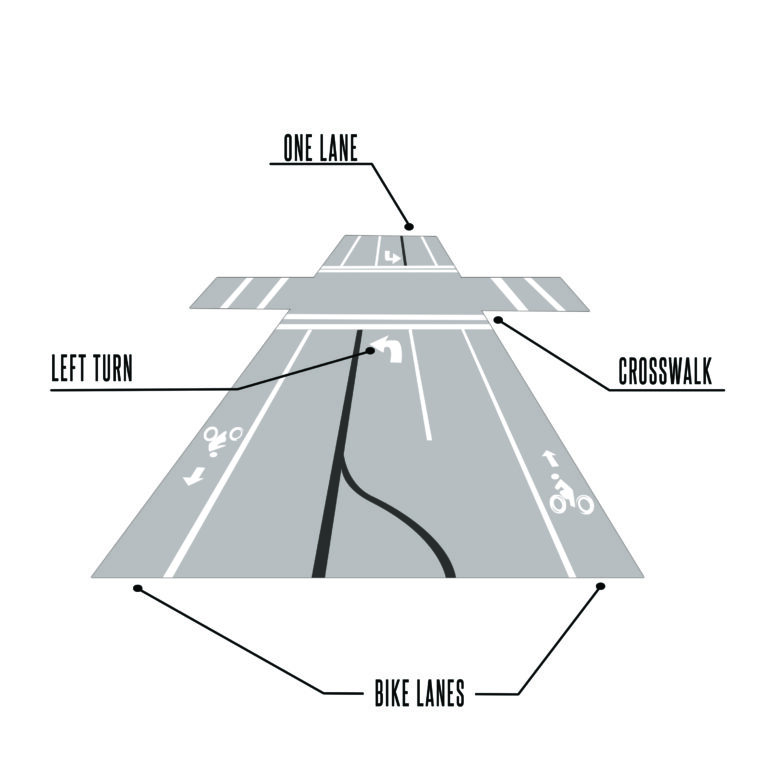
“The project is intended to make a safer street for pedestrians and cyclists between A and L streets,” said Kelly Stachowicz, deputy city manager for the City of Davis. “We want a safe path of travel going down the street.”

According to a report by the City of Davis, the redesign will change the street from four lanes to two lanes with designated bike lanes on either side. Turn pockets, a dual left-turn lane and striped pedestrian crosswalks will also be added. Additionally, new traffic signals will be added to the F and G Street intersections and the existing signals at A, B and L streets will be modified to accommodate the changes.

Pedestrian safety will be improved by adding pedestrian-activated crossing lights at the crosswalks of C and J streets.

Roxanne Namazi, senior civil engineer for the project, said the absence of bike lanes on Fifth Street, between A and L streets, creates a gap in the movement of cyclists along the Fifth Street/Russell Boulevard corridor.

“The east-west corridor provides a continuous bicycle route from Mace Boulevard at the east city limit, all the way to the west city limit near County Road 98,” Namazi said. “This entire corridor provides an off-street path, except between A Street and L Street, where cyclists must either share the road with motorists on Fifth Street.”

This project has a long history in the City of Davis and it has taken many years for it to be recognized, said Steve Tracy, a Davis resident and member of the Old North Davis Neighborhood Association (ONDNA).

In 1993, the City of Davis general plan was updated and it included a proposed redesign of Fifth Street to improve bicycle and pedestrian safety.

“The city staff was very hostile to the idea at the time and didn’t do anything for about 10 years,” Tracy said.

The ONDNA revisited the plan in 2003 and then presented the plan to city council and asked that the redesign be implemented. City council agreed to look into the matter and conducted several traffic studies.

The only change implemented from these studies was new traffic lights at the F and G Street intersections, Tracy said.

Emily Tracy, community outreach coordinator for Davis Bicycles!, said that in 2009 they were finally successful in convincing the city to move forward with the plan after a successful campaign from Davis Bicycles! and the ONDNA.

“Over 2,500 signatures were collected from residents all over the city asking the Council to address the safety and comfort concerns for all users of Fifth Street by implementing a road diet, improving pedestrian facilities and adding bike lanes,” Emily said in an email.

On Sept. 8, 2009, the petition was presented to City Council and they unanimously endorsed the project. However, the City of Davis Public Works survey of the Fifth Street corridor that started in 2008 was not yet completed, so the final project design was approved on April 27, 2010.

Most of the project cost will be covered by a 836,000-dollar Sacramento Area Council of Governments grant awarded to the city in 2010 for the project, Namazi said. The city was also awarded $200,000 in Highway Safety Improvement Program grant funds in 2012 to provide for pedestrian safety improvements.

“The street is a major connector from the northeast corner of Davis to the campus and those not in cars are very vulnerable to accidents on Fifth Street,” Tracy said. “We are trying to save lives.”

The City of Davis report states that Fifth Street between A and L streets sees average daily traffic of 12,000 to 17,000 vehicles.

The city will now put the project out for bidding and try and find a contractor within the $1.9 million budget. They hope to start construction in August and have most of the major work done by September so it is out of the way by the time Fall Quarter classes start at UC Davis, Stachowicz said.

Namazi said that city staff is trying to accommodate for traffic delays that will occur during construction by developing a public outreach strategy that includes the details of each project, including project locations, time-frame and detours.

“As the current best practices for street design continue evolving, it will be important to revisit all our streets from time to time to make sure we are supporting all modes of transportation to the limit of available funding and space,” Emily said. “Fifth Street is certainly the biggest priority for bicycle and pedestrian safety improvements right now, but there will always be room for improvement throughout the city.”

PAAYAL ZAVERI can be reached at city@theaggie.org.

Artists showcase work at ‘Past Reservations’

On May 23, UC Davis’ Master of Fine Arts (MFA) studio art candidates hosted the annual first-year studio art show reception which many arts faculty members, art studio majors and art enthusiasts such as myself attended.

The event, which took place in the old Nelson Gallery offices in the Art Building, launched the student-work exhibition that ran through June 4.

The event will showcase the works of first-year MFA candidates. The MFA is a small and interdisciplinary two-year art graduate program that is made up of artists working across mediums and topics.

Every year, the MFA puts on the exhibition in hopes that it will serve as a more official introduction to both the school and the surrounding community that takes pleasure in participating in the arts.

This year, however, the artists felt particularly attached to the exhibition because they literally built it themselves. The old Nelson Gallery offices have been out of use by UC Davis for the past few years and have been used as storage for the local gallery.

Students decided that they wanted to host their show in their own art building, so the group of seven students and a couple of professors single-handedly emptied out the offices, sifting and prodding through items that had not been touched for years, in order to create their own space where their artwork could be enjoyed by the public.

As a result, the exhibition is entirely a product of their own work, as they have created a space that convenes all of their very different artistic creations.

“You never see this in the reality shows, like ‘Work of Art.’ It is such a challenge for young artists to create their own exhibition, let alone the space in which it takes place,” said Brett Davis, one of the student artists. “It gives you such pride as an artist, knowing that you produced every inch of the entertainment.”

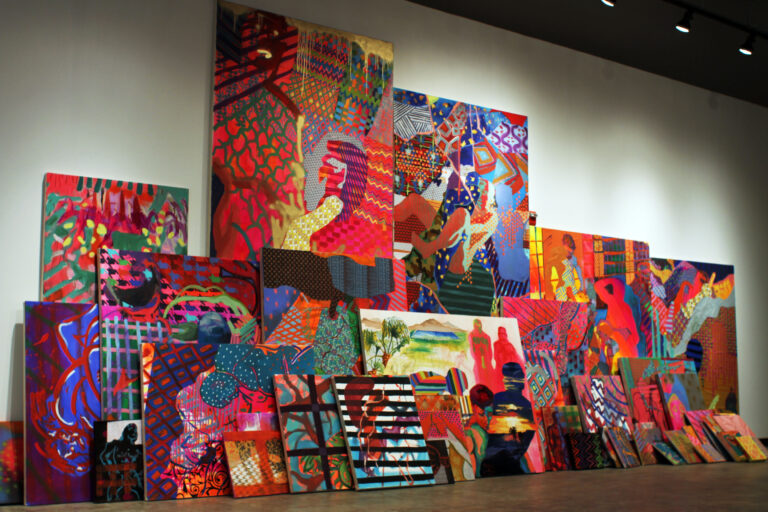
For many of these students, the exhibition serves as the first opportunity to showcase their work to the public eye. This year’s show, entitled ‘Past Reservations,’ incorporates works by prospective MFA candidates Brett Davis, Alyssa Lempesis and Daniel Harano, whose work I was particularly taken with.

Davis’ polychromatic creations contrast magnificently with the hospital-white walls of the gallery and immediately drew me in. Only from a closer point of view can people see that behind the carnivalesque colors lies a darker truth.

Two of Davis’ paintings, “Love is In and Out” and “There, there” drew inspiration from a pediatrician’s book. Behind the colorful surface, people can see the children’s serious expression, evoking their physical pain and suffering.

Using oil on either canvas or ceramic, Davis tries to identify what connects people to one another.

“I try and see what I can use as source materials, and how I can use it as a way to communicate. I try and get back to the messiness of connection,” Davis said.

Another artist’s work that caught my eye was that of Alyssa Lempesis. Having studied studio art at UC Berkeley, she came to Davis to find a closer community of artists, which she successfully found in the tight-knit group of seven students.

Lying on the ground, her sculptures attempt to invite a tactile reaction, as they are made from materials that relate to the body.

“I was drawn by the link between figuration and abstraction. I want people to feel seduced into touching my work. I specifically chose to present it on the ground, because people are more aware of space on the floor. I also specifically chose to use urethane as a material because of its seductive quality,” Lempesis said.

Equally as puzzling is the sculpture by Daniel Harano, a ceramics student from the University of Hawai’i. On the righthand corner of the gallery lies a mound of what could be perceived as thousands of squirming snakes — his artwork, “In Ignotus.” Upon approaching it, people realize that it is made of thousands of carefully formulated pieces of clay that climb up the wall and down to the floor.

“My work extends from my curiosity about the natural and mechanical world; how they’re alike, how they differ, how they can be combined into a singular form. As a result, I work nearly exclusively in clay. Similarly to the ideas that drive my work, clay as a material encompasses both the natural and mechanical world. It’s a tough material to work with, continually pushing me to the limits,” Harano said.

The students believed the show was a major success.

“I am extremely proud of the first-year show. I think it was a huge success and I couldn’t be more proud of what we did to overcome all the obstacles put before us. We’re a force not to be taken lightly and we proved it in this show,” Harano said.

LARISSA MURRAY can be reached at arts@theaggie.org.

Davis Dirt to put on Street Food Rodeo

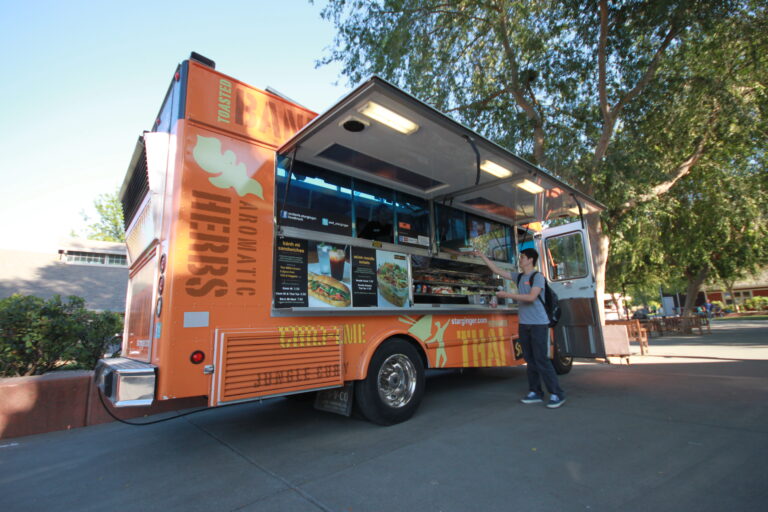
The Davis Dirt will be putting on a third Davis Street Food Rodeo on June 7. Sixteen food vendors will be serving food between 4 and 9 p.m. on Sixth and G Streets. Part of the proceeds from the event will be allocated to the Davis School Gardens.

Vendors at the event include Hawaiian food from Addison’s Originals, Addy’s Paella and vegan, gluten-free desserts from Bliss Creations.

“Food trucks are not seen much in Davis and we like to promote and start fun events for Davis,” said Davis Dirt editorial board member Melanie Gentles. “We thought it’d be a great opportunity to do a fun event and bring something we typically can’t have in town and benefit the community.”

The event has been welcomed by the community and attracted some well-known food trucks. Event organizers and The Davis Dirt’s editorial board members, Melanie Gentles and Annie Meckstroth, have taken steps to improve the event.

“We introduced street performers at the second event to reduce line waiting. There’ll be live music and … community folk dancing. At the last rodeo, people young and old were dancing together … It’s hard not to laugh, you just have a good time,” Meckstroth said.

They have increased the number of trucks and vendors. This time there will be 11 food trucks and six other vendors, Meckstroth said.

At the past two events, vendors were asked to donate 2.5 percent of the gross sales to benefit the Davis School Garden programs. So far they have raised over $1,000. This time, five percent of the gross sale proceeds will be allocated to Cesar Chavez, Fairfield, Patwin and Birch Lane Elementary Schools.

A challenge with the event has been the expense, especially due to the challenges that come with food truck culture.

Whether you’re a mobile food vendor, a self-propelled wagon or cart selling food, you have to have a public health permit and a business license,” said Bob Bowen, promotions manager for the City of Davis. “In most cases they have no connection to Davis and are not existing establishments. We don’t want someone out of town to take business away from the businesses of people in the community.”

The event has come with challenges for this reason.

“The Yolo Credit Union has sponsored the event because it’s so expensive. They’ve given a lump sum donation which allows us to donate money at the end of the day to cover the costs. The city and downtown are nice to work with we are grateful for their cooperation,” Gentles said. “Part of the reason you don’t see food trucks very much is because the permits are very expensive.”

Recipients of the ASUCD Entrepreneurship Fund, Larry Faygin, a second-year electrical engineering major, and Ben Bigelow, a second-year mathematics major, will be starting a food cart on campus next spring. Their food cart will serve Mexican cuisine.

“Food trucks are a great source of grassroots innovation in the food industry. They allow talented cooks to make really creative dishes with less risk than they would face at a traditional restaurant. They are relatively cheaper to operate than a traditional restaurant, given the lack of rent to be paid,” Faygin said.

Faygin said the Street Food Rodeo exposes the Davis community to new types of cuisine which are not as common for the City of Davis.

“It’s a small but significant step in appealing to Davis’ very diverse demographic,” Faygin said.

GABRIELLA HAMLETT can be reached at city@theaggie.org.

Column: Some shake

0

One easy way to take better care of your weed is by investing in a grinder. Grinders are cheap and simple, and they keep your dirty hands from ruining your weed.

The most basic type of grinder is called the two-part grinder. Its name comes from the fact that it’s made up of only two parts: two matching plates with inward facing teeth.

Because of their simple design, two-part grinders are the usually the cheapest, especially if they’re made of plastic. There are some that are made completely out of metal, and while these are a little more expensive, they are impressively sharp and will last you a lifetime.

To use a two-part grinder, place some of your buds in between the teeth of the plates and then turn the plates in opposite directions. Be careful not to grind too many times, though: It is very easy to over-grind your weed.

One annoying thing about working with two-part grinders is that you need some kind of container to dump your weed into after it is ground. While a tabletop will usually suffice, things get tricky when you find yourself in a vehicle with no papers or CD covers to use as a surface.

Three-part grinders are made up of two bladed plates like two-part grinders, but they have an additional piece that attaches to the bottom. This third part acts as a container that catches your weed after it is ground.

Unlike two-part grinders that continuously grind your weed, three-part grinders have little holes which allow weed to fall into the container section after it has been crushed to a certain size.

Three-part grinders are a little more convenient because they don’t require you to dump your weed out onto some separate container. They really come in handy when you’re on the go because they can be sealed shut to keep your weed from spilling or from smelling up the place.

Weed is a lot easier to work with when it is ground. It is perfect for rolling joints because it is smooth and doesn’t have any awkward lumps or sharp stems to poke holes in your papers.

It is also perfect for packing into bowls because it burns evenly without clogging up your pipe.

Three-part grinders require the least amount of physical contact with your weed. Breaking weed apart with your fingers is not only time consuming, it also usually causes a lot of the keif to rub off.

Keif is the pollen-like crystals on the outer coat of weed. It is sweet and sticky, and it is very high in THC.

Unfortunately, keif usually sticks to the grease and dirt on your fingers, which is why your hands end up really sticky after manually breaking weed apart. Using a grinder helps your weed stay clean and allows all the keif to remain intact, which is
important because more keif means a stronger high.

If you really love keif, then you should consider a four-part grinder. These have one more compartment at the bottom that catches and collects all the keif that falls off your weed. This extra section is often called a pollen catcher, and it is separated from the rest of the grinder by a special screen that only allows the tiny keif crystals to fall through.

Keif is delicious and you can sprinkle it over your bowls or across the inside of your joints for a sweet, but extremely potent high.

It does not take long for keif to accumulate in the bottom compartment. Depending on what kind of weed you use, it only takes a few days for a good amount to build up. If you wait a couple weeks though, you’ll be in for an even tastier surprise.

If you do end up buying a grinder with a pollen catcher, make sure it comes with a little plastic shovel. It stores nicely inside its compartment, and will make your life a lot easier when it’s time to scoop out some keif.

Even if your grinder doesn’t have a pollen catcher, you can still extract and smoke all the keif that inevitably sticks to the teeth. To do this, simply freeze your grinder. The cold temperature will cause all the keif to unstick and fall off after a few quick thuds against a hard surface.

LEO OCAMPO can be reached at gocampo@ucdavis.edu.

Livestrong Foundation Challenge ride to take place in Davis

On an average day, most bicycle-riding Davis residents are doing so with the purpose of transportation or exercise. However, on June 23, riders in the Team Livestrong Challenge bike ride will have the opportunity to bike with another purpose: benefiting those affected by cancer.

The 2013 Team Livestrong Challenge series consists of three rides, each in a different city, according to Matt Florio, fundraising and events coordinator for the Livestrong Foundation.

After the Davis ride, the second ride will take place in Philadelphia, Pa. from Aug. 17 to 18 and the third ride will take place in Austin, Texas on Oct. 20.

The event begins and ends in Central Park and riders will start at 7:30 a.m. The ride is multi-distance, said Florio, with Davis riders having the option of riding 25, 45, 65 or 100 miles. This is the third year the event has taken place in Davis.

“We’ve been doing this for a number of years. Before Davis the event was in San Jose for three years and was then moved up to Davis,” Florio said. “With Davis being very cycling-focused, we thought it would keep it fresh.”

In the last three years alone, over 15,000 riders have participated in the Challenge series, Florio said. According to a press release issued by the Livestrong Foundation, Team Livestrong has raised over $80 million dollars since 1997 to pursue the goal of the foundation, to “fight to improve the lives of people affected by cancer now.”

The Team Livestrong Challenge ride is only one of over 20 athletic events which raise funding and awareness for the foundation.

According to Florio, funding toward the foundation does not go to cancer research, but instead directly supports those with cancer.

“We provide programs and services for cancer patients. If someone is diagnosed, they’re going to have a lot of questions, and there are things we can do immediately — answering insurance questions, general care [and] emotional support,” Florio said. “People are going to have those questions and they’re going to want to talk to someone. We have trained staff, called navigators, to talk to people and refer them to other organizations who can help them as well.”

Riders in the Livestrong Challenge must fundraise at least $250 beforehand in order to ride or, if not, can pay the amount themselves. Those who cannot or do not wish to ride but still wish to be involved can also volunteer at the event.

This year’s event is more locally focused than years prior due to a partnership with the Sacramento Region Community Foundation.

Five percent of the funds raised from the Challenge will be distributed to local cancer-related organizations via the Sacramento-based foundation.

“This is a new thing for us,” said Linda Cutler, CEO of the Sacramento Region Community Foundation. “They want to increase their contribution to the community, and that money will stay local.”

According to the website of the Sacramento Region Community Foundation, their mission is “to serve as a leader and trusted partner in expanding philanthropic activity and enhancing its impact for the betterment of our community.”

According to Cutler, the foundation manages approximately 450 donor-advised funds worth about $110 million in assets. Donors set up a fund through the foundation, and the foundation distributes the money to a cause chosen by the donor. Funds without a specified use are known as unrestricted.

“We try to encourage local giving, and when we have unrestricted funds we’re committed to keeping it local,” Cutler said. “The next generation of donors, by large, are interested in this local impact and sustainability.”

Other new developments this year include a children’s bike rodeo to take place at Central Park during the challenge, according to the press release. The rodeo is free and is intended to “teach kids the proper bike safety and handling skills they need to ride around the city recently ranked as the fifth most bike-friendly city in the world by Active Times magazine.”

A post-event party will also be taking place at Central Park, Florio said.

“We have food, drinks and music,” Florio said. “We want to create a fun atmosphere.”

In addition to being a fundraising event, the ride serves the local community as well.

“We saw the Team Livestrong Challenge as a timely opportunity to make a lasting impact in the community,” said Nick Denby, Livestrong Foundation vice president of development in the press release. “Davis has always been a great host to our event, and we are proud to work with them to improve the lives of people affected by cancer today.”

Both riders and volunteers can still sign up at teamlivestrong.org. Rider check-in and bib pick up will be taking place at Central Park on June 22 from 10 a.m. to 4 p.m. and also on the morning of the event, during which riders can still register as well.

MEREDITH STURMER can be reached at city@theaggie.org.

Students, families participate in community-specific graduations

Eight seconds, for many, may not seem like a meaningful amount of time, or a long enough time for anything significant to occur. But for Alejandro Sandoval and other graduates who will be present at the 2013 Chicano and Latino Graduation Celebration on June 15, it will be a significant eight seconds indeed.

“Each person gets eight seconds to make a speech,” said Sandoval, a fourth-year sociology and Chicano studies double major and soon-to-be graduate. “It’s more memorable.”

The Chicano and Latino Graduation Celebration is one of many community-specific graduation celebrations celebrating the accomplishments and identities of UC Davis graduates, including the Black Graduation Celebration, Filipino Graduation Celebration, Southeast Asian Graduation Celebration, South Asian Middle Eastern Graduation Celebration, Muslim Student Association Graduation Celebration, Native American Graduation Celebration, Asian American Studies (ASA) Senior Awards Banquet and the Lavender Graduation Celebration.

“I think it adds a lot to the graduation experience,” Sandoval said. “It’s more personal; you’re with 200 other students for Chicano grad.”

According to Sheri Atkinson, director of the Lesbian, Gay, Bisexual and Transgender Resource Center (LGBTRC), this will be the 17th annual Lavender Graduation Celebration at UC Davis.

“Lavender Graduation provides a safe environment for students, faculty, staff and community to recognize the accomplishments of UC Davis lesbian, gay, bisexual, transgender, intersex, queer and ally (LGBTQIA) graduates,” Atkinson said in an email. “It encourages LGBTIQA students to celebrate their accomplishments and academic endeavors at [UC Davis] while providing inspiration to other undergraduates.”

Lavender graduations, also known as rainbow graduations, are common at other universities, especially those with LGBT resource centers, Atkinson said.

“Recognition is important for the many contributions these graduates have provided to the campus and the LGBTIQA community,” Atkinson said. “I think these graduations are important acknowledgements of the success of underrepresented and underserved communities.”

Although all the celebrations share this spirit of recognition and celebration, the format and details of each event vary.

“The event includes dinner, a few speakers including Provost Hexter and a student keynote speaker, recognition of the graduates and presentation of the Angelina Malfitano Award to one of the graduates,” Atkinson said.

According to Jinann Bitar, Native American student affairs officer for the Native American Studies (NAS) Department, some of the celebrations are connected to their respective departments, such as Native American Studies, while others are connected to student organizations.

Participants in the Native American Graduation Celebration include students who identify as Native American, as well as NAS majors and minors.

“Identity-specific student organizations want a way to have their families join them in celebrating their accomplishments,” Bitar said. “We want to provide a space for them to join their students.”

Bitar acknowledged that the vast amount of students in the college commencement ceremonies often limits the amount of tickets available to each undergraduate. These ceremonies aim to celebrate not only the students, but also the collective efforts and sacrifices of the students and their families.

In addition to accommodating family members and other supporters, these graduations provide opportunities for cultural celebration and increased student retention, Bitar said. Cultural customs can be incorporated into what is not just a graduation celebration but also a reaffirmation of identity that students may have been exploring and defining during their college years.

“Native grad also impacts student retention. They’re seeing other students within their major or who they identify with, and prospective students also see students graduating who they may identify with as well,” Bitar said. “Retention and cultural celebration — there aren’t a lot of other opportunities for that.”

While these graduation ceremonies share a common goal of celebration, they share something else that may not be as readily apparent.

“None of them have specific funding from the university,” Bitar said.

According to Bitar, organizers of graduation celebrations must seek out funding for these events at the beginning of each year from within the university as well as private donors. Most participants in graduation celebrations have to pay a fee to supplement the cost of the event. The Native American Graduation Celebration is the only such celebration in which students do not have to pay a fee due to private donors.

ASUCD currently provides $4,000 to fund community-specific graduations. A bill proposed on May 2, Senate Bill 94, would have increased funding by $1,300.

According to the preamble of the ASUCD Constitution, “The Association is also constituted to create and provide services and activities which its membership shall consider important to fulfilling the experience of being a student attending the University of California, Davis.”

Senate Bill 94 failed to pass at this year’s ASUCD budget hearings.

“Programs and services for these communities have limited funds, and we count on financial support from others to be able to provide these types of events,” Atkinson said.

MEREDITH STURMER can be reached at city@theaggie.org.

Editorial: News

0

This past week, students have stressed over their exams, finding plane tickets home or securing local storage for their possessions.

During the same week, in Turkey, a taxi car drove into a crowd of protesters, killing a 20-year-old who was demonstrating against his government. Over 3,000 others were injured in violent clashes between outraged citizens and police after a peaceful protest was met with tear gas and pepper spray.

This has global implications. Most of us haven’t noticed.

The developing story is eerily familiar to the events of November 18, when a UC Davis police lieutenant wrongfully pepper sprayed a group of students who were occupying the Quad.

The fallout can still be felt today, and many of us never even noticed the Davis Occupy Movement until it reached an extreme.

To the outgoing class of 2013, as you traverse out into the world of internships, graduate schools and career-building opportunities, take time to see what’s happening in your community, your country and your world. Recognize that news does affect you and it can help you make a difference.

Without the news, we lose an essential tool to reach out to the public. Newspapers are meant to inform people about important, pressing issues facing the community.

For the people in Turkey, as well as the world at large, it is essential that news is disseminated. When the public is armed with correct, easily accessible and current information, the possibility of positive change turns into a reality.

To those staying in Davis, make sure to equip yourself with the information you need, be it from The Aggie or any medium you prefer.

The Aggie, albeit a small, humble product of everyday students, is your resource to find out what is happening on campus and in your community.

Campus Judicial Report

Do Not Disturb
A student was referred to Student Judicial Affairs (SJA) for resisting police officer orders while under the influence. Two officers were called to the student’s apartment to address loud music after several neighbors complained. The officers approached the apartment and ordered the student to open the door. The student refused and cursed at the officer. She kept resisting the officer’s orders while other students in the apartment pleaded with her to open the door. Finally, after a few minutes, the student unlocked the door and confronted one of the police officers. She pushed the officer and told him to get out of her apartment. The officer handcuffed the student and took her into custody. When the student met with a Judicial Officer, she agreed to be placed on Deferred Separation status, which means that she waives her right to a formal hearing if she is again referred to SJA for any similar conduct. Since the student’s behavior involved serious misconduct (pushing a police officer), the student was not only arrested but also referred to SJA, which maintains off-campus jurisdiction in certain types of cases.

Great Minds Write Alike
A professor reported two students to SJA for suspected collaboration on a quiz. The students were taking the same class and decided to study together for the quiz. Their answers on the quiz, however, were identical and the professor concluded that the students must have collaborated on the quiz. When the two students met with a Judicial Officer, they stated that their similarities came from their identical study sheets, which they asserted that they both just memorized and regurgitated for the quiz. The instructor insisted that she expected their work on the quiz to be original, and the fact that the two students had the same exact answers indicated that their work was plagiarized, in this case from themselves and each other. After some discussion the students agreed to be placed on disciplinary probation until 2014, which means that if they are found in violation again they will most likely get suspended. On top of that, they agreed to complete 15 hours of community service for the academic misconduct. Also, the professor gave both students a zero on the quiz. It should be noted that although students frequently memorize answers on a study sheet and repeat those answers on a test, this “plagiarism” is rarely an issue. However, it may become an issue if other students give the exact same responses you do as a result of having identical study sheets.

The Hangover – Davis Edition
A student was referred to SJA after he was caught on campus under the influence. A police officer apprehended the student after receiving information about an intoxicated student walking from campus toward downtown Davis. When the officer confronted the student, he stated that he was celebrating his 21st birthday, but his friend had left him alone at the bar and he was simply trying to get home. The officer detained the student for public intoxication and told him that he would be referred to SJA. When the SJA officer met with the student, he accepted probation until graduation for his social misconduct.

UWP looks to launch professional writing major

Currently only available as a minor, students may be able to pursue a major in professional writing as early as fall 2014.

Formerly the expository writing minor, the three-year-old professional writing minor will garner nearly 180 graduates by the end of this summer.

Given the successful acceptance of the minor, the University Writing Program (UWP) faculty is looking into the possibility of offering a major in professional writing — this would be the first of its kind in the UC system, according to a June 4 press release.

Requiring about 64 units, the major would be designed to accommodate double majors and would offer three concentration tracks, including scientific and technical communication, journalism and digital communication and writing in communities and organizations.

Gary Sue Goodman, writing minor and internships faculty advisor, said that the proposal is in the process of being developed.

“As you might expect, many writing minors enjoy writing and feel confident about their communications skills. However, a large number have elected the minor for the opposite reason: they feel that strengthening their inadequate writing skills is crucial to achieving their academic and professional goals,” the press release stated.

According to Goodman, the program wants to make a more intensive study of writing possible on campus.

“We seek to extend undergraduate training in the theory, history and skills associated with writing studies, thus preparing students to enter graduate programs, professional schools and a wide range of professions. In short, we seek to prepare students not only to work as professional writers but also to excel as professionals who write,” Goodman said in an email interview.

Goodman added that a number of new courses have already been developed and approved, including Introduction to Professional Writing (UWP 10), Theory and Genre in

Professional Writing (UWP 100), Technical Writing (UWP 104T), Professional Editing (UWP 112A) and additional courses in advanced journalism courses.

“The proposal for a new major must demonstrate students’ interest. We can infer students’ interest from the popularity of the minor and from students’ pursuing independent majors in writing, but the petition and other signs of student support will be crucial,” Goodman said.

Emily Alameida, a first-year student currently developing an independent major in professional writing, said she imagines her major will not differ greatly from the proposed UWP major.

“If this major were currently available, I would most definitely pursue it. Before finding out about individual majors, I was already determined to minor in professional writing, so a major is just a step better,” Alameida said in an email interview.

According to Goodman, once the UWP faculty and program committee approve the proposal, it will be then sent to the Letters & Sciences College Executive Committee. Then it would sent to the Dean of Division of Humanities, Arts and Cultural Studies, the Undergraduate Council and finally to the Chancellor.

She said the notion that writing is merely skills-based and not an academic field is mistaken.

“Rhetoric has been a subject of study since classical times, and writing studies has developed as a distinct academic field over the last 50 years,” Goodman said. “Professional writing is a disciplined, theoretically grounded practice, rooted in an understanding of communication not only as a professional skill, but as a rhetorical act and a force for socio-cultural, environmental and political change.”

Because student interest should be reflected in the proposal, a petition is available on the UWP website for students to endorse the approval of the professional writing major.

MUNA SADEK can be reached at campus@theaggie.org.