36.1 F
Davis

Davis, California

Tuesday, January 13, 2026
Home Blog Page 928

UC President presents report on state of UC system

University of California (UC) President Mark Yudof presented the Board of Regents with a report outlining the current state of the UC system, in comparison to the previous six years, during a May 15 regents meeting.

“To the best of my ability, I’ve tried to outline the good, the bad and the ugly — and there’s some of each,” said Yudof in a UC Newsroom press release.

Yudof has been president for the past five years and will be retiring in August.

Yudof’s “white paper” report was drafted with the intent of providing a data-driven report about what has occurred in the past six years within the system in regard to trends and policies that might await his successor.

“With a transition in sight, he thought it his duty to document what had transpired in the past six years — framed not by opinion or memory, but as a set of neutral facts. It is an unusual report in this way, and it also is what makes it so effective,” said Peter King, UC Office of the President public affairs director.

The report outlines the financial aid trends that have occurred throughout the past six years.

From the 2007-08 fiscal year to the current one, there was a 27 percent decline in UC state general fund allocations from $3.257 billion to $2.377 billion. Despite the decline in general state funding, tuition has nearly doubled in the previous six years from $6,636 to $12,192.

Although the University has experienced a decrease in state funding, in 2011-12, 65 percent of UC undergraduates received financial aid, with the average being $15,784 per student.

Four out of 10 UC students with family incomes less than $50,000 are Pell Grant eligible, which according to the report, is almost double the average in comparison to other public universities admitted to Association of American Universities.

The report also outlines trends in enrollment, applicants and graduation rates.

There is a 23 percent increase since 1997 in four-year graduation rates with three out of every five UC students now earning a diploma.

“Graduation rates for undergraduates have risen dramatically over the past 20 years, and it is taking less time than ever for them to complete their degrees,” said UC Provost Aimee Dorr in a UC Newsroom press release.

Enrollment has also increased significantly, with 238,252 undergraduates enrolling for the next academic year, an increase from 213,646 students in 2006.

In addition, the applicant pool has also increased. Since fall of 2006, there has been a 32 percent increase in undergraduate applicants. UC Merced and UC Riverside have the greatest applicant growth, at 57 percent and 47 percent, respectively.

The applicant pool has also grown more diverse. For example, for the first time in UC history, Latinos were the largest ethnic group among applicants.

Moreover, for the Fall 2012 freshman class, 45 percent were first-generation college students and 26 percent came from homes where the primary language was not English.

“My reaction was that [President Yudof’s] instincts were correct — that his vision of a data-driven, neutral document was the right approach. It has been well-received by a broad range of interested Californians,” King said.

Yudof’s full report is available online at the UC website.

LILIANA NAVA OCHOA can be reached at campus@theaggie.org.

Men’s rights

0

In writing a column titled “Sex & Society,” it makes sense that many of my pieces would deal with women’s issues. After all, rape, body image and gender stereotyping are all exclusively female challenges, right?

Wrong. Though these matters are most commonly associated with women, they affect men, too.

Some issues, like female-on-male rape and negative body image, are almost completely ignored when it comes to men.

Many people even believe that a woman can’t rape a man. This belief is often based on the assumption that physical arousal automatically equals consent or desire. However, it’s entirely possible for a man to have an erection — a physiological response — while being sexually assaulted, in the same way that some women get wet or even orgasm in the same situation. This assumption can cause a lot of shame for victims, as well as perpetuate ignorant ideas about the nature of rape.

Men who are raped by other men also face an incredible social stigma. While men who are sexually assaulted by women are often told that they should “feel lucky,” men who are violated by men must face a culture that treats male-on-male rape as a joke (“don’t drop the soap”). These men also have to deal with the myth that male rape victims and perpetrators must be homosexual, a presumption that ignores the fact that most rapists and their victims are heterosexual (according to the NYC Gay and Lesbian Anti-Violence Project).

Negative body image, especially in relation to the media, is another discussion that seems entirely devoted to women. However, a recent study by the University of Toronto revealed that one in every six people diagnosed with anorexia is male. On the other side of the spectrum, many skinny guys feel social pressure to “bulk up.” In the same way that Barbie dolls leave their impression on young girls, so muscle-clad action figures and Herculean comic book heroes influence boys.

Kids’ toys can also reveal one of many societal gender imbalances that primarily affect men. While it is now widely acceptable for girls to play with toys traditionally targeted to boys, many parents are still hesitant to buy their little boy a pink plastic tea set.

Women are not the only ones who are confined to traditional gender roles. Men, especially straight men, are expected to be tall, strong, aggressive and powerful. They’re told that a real man is the breadwinner of the family. A real man pays for his date. A real man is sexually experienced. A real man doesn’t cry.

Straight men also face a unique struggle with their sexualities. On a recent episode of the “Savage LoveCast,” Dan Savage discussed the constant pressure straight men are under to “prove” their sexuality. When a man comes out as gay, people rarely question his authenticity; though he faces other struggles, his sexuality is not called into question (with the exception of those who deny the existence of homosexuality altogether). But if a straight man decides to try anal play, or crossdress, or even just watch Gossip Girl every once in awhile, his straightness falls under scrutiny.

While women must struggle with sexual objectification, men must also face societal challenges to their self-worth. Male disposability is so deeply ingrained in our culture that few even notice it. Men still need to sign up for the draft, and are often encouraged to choose more dangerous occupations. The sacrificial “women and children first” dynamic tells men that their lives are relatively worthless, just by virtue of their gender.

Feminists and MRAs (men’s rights advocates) are often at each other’s throats, engaged in a ridiculous battle over who “has it worse.” However, I don’t see how these two movements cannot be complementary. Just because each group focuses on the issues of a particular gender does not mean that they should automatically dismiss the issues of the other.

Despite male institutional power and privilege, men still face societal and cultural challenges, and these challenges should be acknowledged in modern gender discourse.

MARISA MASSARA can be reached at mvmassara@ucdavis.edu.

Cakewalk and dance tomorrow

The Davis Food Co-op and Davis Odd Fellows are hosting a cakewalk and dance tomorrow from 7 to 9 p.m. at the Oddfellows Lodge at 415 Second St. Doors open at 7 p.m. and dancing begins at 7:15 p.m.

Admission for adults is $12, seniors and students is $8 and kids 12 and under is $5. A family ticket — two adults and kids — is $25. Cakewalk tickets are $1.

The event will be benefiting Yolo Community Care Continuum, a nonprofit organization that aims to better the lives of people with mental illness.

— Claire Tan


ASUCD Senate Briefs

ASUCD Senate meetings are scheduled to begin Thursdays at 6:10 p.m. Times listed are according to the clock at the May 23 meeting location, the Memorial Union’s Mee Room. The ASUCD president is not required to attend senate meetings.


Meeting called to order at 6:23 p.m.


Carly Sandstrom, ASUCD president, present

Bradley Bottoms, ASUCD vice president, present

Liam Burke, ASUCD senator, present

Armando Figueroa, ASUCD senator, present

Maxwell Kappes, ASUCD senator, present

Pamela Nonga, ASUCD senator, present

Felicia Ong, ASUCD senator, present

Alyson Sagala, ASUCD senator, present

Amrit Sahota, ASUCD senator, present

Miles Thomas, ASUCD senator, present

Tal Topf, ASUCD senator, present

Reuben Torres, ASUCD senator, present

Ryan Wonders, ASUCD senator, present

Yee Xiong, ASUCD senator, present


Appointments and Confirmations:


Jacquelyn Kong was appointed as a Picnic Day director.


Ex Officio Reports:


Desirae Costello, chair of the Academic Affairs Commissioner reported on the Excellence in Education awards ceremony that was held on Monday, May 20. Attendance was said to have been low, but turnout was as expected. The overall excellent educator of the year was Shawn Davis, a computer science professor.

Consideration of old legislation:

Senate resolution 39, authored by Spencer McManus. which would add missing senate representatives to section 202 of the ASUCD bylaws, passed unanimously.

Senate resolution 40, authored by McManus, would allow for electronic copies of the ASUCD Budget, ASUCD Constitution  and ASUCD Bylaws to be used at Senate meetings. The bill passed unanimously.


Senate Resolution 105, authored by Cano, would establish the Aggie Public Arts Committee as a permanent committee of the ASUCD Senate. The bill passed unanimously.


Public Announcements:

Sandstrom talked about business manager hiring that is underway.


Gender and Sexuality Commission (GASC) chair Chucha Marquez says when the elected officials don’t go the events he takes it very personally.  He said he’s holding senators accountable for not going to commission meetings


Sergio Cano also voiced his concerns about senators not going to commission meetings.


Ong talked about tie-dye tank tops being sold on the quad.


Bottoms said the budget website is new and they are still working out the kinks.


Eric Evans said UC Davis’ budget website is way better than the other UCs.


Sandstrom suggested maybe doing a public forum about what people want to possibly see in the new pub. She talked about Lawntopia next Friday.


Figueroa said he wanted to stress the importance of going to commission meetings.


Marquez talked about the hate crime that happened on campus. He said he already feels unsafe as a queer person on this campus and since the situation was so public it required more attention.


Thomas personally apologized for not attending safe-zone training.

Meeting adjourned at 8:00 for budget hearings.


Open positions within ASUCD can be found at vacancy.ucdavis.edu. LAUREN MASCARENHAS compiles the senate briefs. She can be reached at campus@theaggie.org XXX

Public forums announced for vice chancellor for Student Affairs candidates

The recruitment advisory committee for the vice chancellor for Student Affairs has scheduled interviews as well as public forums for two candidates.

The first candidate’s public forum will be held Monday, June 3 from 2 to 3:30 p.m. in the Mondavi Center’s Vanderhoef Studio Theatre. The second candidate’s forum will be Tuesday, June 4 at the same time and location.

The candidates’ names and CVs will be posted 48 hours prior to the interviews on Chancellor Linda P.B. Katehi’s initiatives site, here.

Members of the campus community are encouraged to attend these meetings and send comments about the candidates to vcstudentaffairssearch@ucdavis.edu within 48 hours of the second forum.

Adela de la Torre is serving as interim vice chancellor through July 31, or until her replacement is appointed. She was formerly chair of the Chicana/o Studies Department, and in her interim role, receives an annual base salary of $235,998, according to Dateline. She replaced Fred Wood, who left UC Davis last June to become chancellor of the University of Minnesota, Crookston.

The vice chancellor for Student Affairs manages more than 750 employees and an annual operating budget of $657 million. Student Affairs oversees enrollment services, academic support, student housing, student health and psychological services, student life, campus community and campus climate, internships and career services, campus unions, the UC Davis stores and other capital projects.

5/30/12 UPDATE

A third candidate has been added to present on Wednesday, June 5, at the same time and location as the other two forums.

Each candidate will make a public presentation on their vision, which will be followed by a facilitated question and answer session. Refreshments will be provided.

— Janelle Bitker

Rick’s Dessert Diner

Do you have a sweet tooth and want a new, fun place to hang out with your friends?

 Rick’s Dessert Diner in midtown Sacramento is a retro, 50s-themed diner that serves homemade cakes, tortes, cheesecakes, pies, tarts and pastries. There are over 285 items total on the menu, so there’s no way you can ever get bored.

 Walking into Rick’s is like being transported back in time 60 years— the floor is black and white checkerboard tile, the walls and booths are light pink and teal, there are Warhol-esque paintings of Marilyn Monroe and James Dean and jukeboxes sit atop the tables throughout the diner. The most spectacular thing to view, however, is the cases of beautifully-crafted desserts — tall cakes, cream pies, éclairs and fruit tarts are just some of the items that adorn the shelves.

 It’s almost impossible to pick out which desserts stand out because they are all — at least the ones I’ve managed to sample in the past few years — so delicious.

 The Chocolate Ganache Mousse Tart ($6.25), which features chocolate ganache and Kahlua chocolate mousse, and the Mocha Torte ($6.25) — buttermilk cake filled with chocolate espresso and mocha buttercream — are two rich items for chocoholics or coffee-lovers. The White Chocolate Strawberry Lemon Cake ($5.95) is a moist white chocolate-flavored cake with layers of strawberry, lemon curd and white chocolate buttercream and is a somewhat lighter, but just as heavenly, option. For those who aren’t big cake enthusiasts, the cream puffs ($4.95) are tasty morsels that don’t go overboard on the sweetness. Everything but the pastries is ordered by the slice.

Katie Food Yum 2

 This diner delivers strongly both with a fun experience and delectable dessert choices, and the staff is incredibly friendly and gives customers as much time as needed to decide. The portions are generous and, if you go with a group of friends and everyone orders something different, you can all sample each other’s.

 Also, it hasn’t been proven, but I’m pretty sure that the desserts taste at least ten times better when you go with friends as a post-finals treat.

For your GPS:
Rick’s Dessert Diner
2322 K Street
Sacramento, CA 95816

Food stamps workshop held May 29

For students juggling classes and a job and are still finding themselves hungry all too often, food stamps could be a source of relief.

On Wednesday, May 29, from 4 to 7 p.m. in the Mee Room (third floor of the MU), UC Davis student Roxana Topete will lead a workshop aimed at educating students of available food assistance programs (read: free groceries). The event is in collaboration with Yolo County Supervisor Don Saylor, ASUCD President Carly Sandstrom, The Pantry and the Yolo County Department of Employment and Social Services.

College students between the ages of 18 and 49 who are enrolled at least half-time may be eligible for CalFresh, the California food stamps program, so long as they meet a second requirement. Additional requirements include working and getting paid at least 20 hours per week, receiving a work study grant and being responsible for a young child.

Students are encouraged to drop by at any time to ask questions. There will also be a food raffle.

— Janelle Bitker

Taste over 100 beers at Davis BeerFest June 1

Have a brat and a beer, or two or three or 100, at the Davis BeerFest on Saturday, June 1, at Sudwerk Brewery.

Over 40 breweries will be in attendance pouring over 100 craft beers. Entrance is $38 in advance or $45 at the door (designated drivers only have to pay $10), and includes tastings, beer brat sandwiches, a commemorative tasting glass, a tour of Sudwerk and a full afternoon of live music. BeerFest has been going on since 2007, and this year, proceeds will support Citizens Who Care.

The list of participating breweries is long, but it includes Sacramento regional favorites like Rubicon, Ruhstaller Brewery, Berryessa Brewing, and, of course, Sudwerk Brewing. The San Francisco Bay Area is also well-represented, with the likes of Russian River Brewing, 21st Amendment Brewery, Lagunitas Brewing and Anchor Steam. Then there are names from a bit further, like revered Dogfish Head Craft Brewed Ales.

For tickets and information, head here.


Three forums scheduled to meet next ASUCD Business Manager

The Recruitment Advisory Committee for the next ASUCD Business Manager has selected three top candidates: Janice Corbett, Emily Sanson-Smith and Christine Soldahl. Forums on May 28, June 3 and June 4 have been scheduled for students, faculty and staff to learn more about each candidate. All three candidates once attended UC Davis as students and two currently work at UC Davis, though none of the candidates currently work in the Association.

Corbett has been the associate executive director of the Cal Aggie Alumni Association since 2008. She received a BS in managerial economics and a BA in psychology from UC Davis and her MBA from Golden Gate University. As an undergrad, she was the assistant business manager of ASUCD for three years and held membership on the Program and Facilities Committee, Campus Unions and Recreation Board, Cal Aggie Student Alumni Association, Dean’s Student Advisory Committee, Student Activities Advisory Committee and the Picnic Day Planning Committee.

Soldahl is the director of finance at Stanford University’s IT Services. She has held director roles at Stanford since 2003. She received her BS in fermentation science as well as her MBA from UC Davis. At UC Davis, she was a research assistant and was on the Graduate School of Management’s Admission Committee, Alumni Board and Dean’s Advisory Council.

Sanson-Smith has been the associate director of administration at the CA Animal Health & Food Safety Lab (CAHFS) at UC Davis since 2005. Prior to that, she held other jobs, such as program manager, budget analyst and human resources analyst, at CAHFS. She received her BA in history from UC Davis and her MBA from CSU Sacramento.

Currently, Anne Myler is acting as interim-business manager but is expected to return to her post as associate director of the Center for Student Involvement in the fall. Brett Burns left ASUCD in February to be an assistant dean at the Law School.

The forum schedule is as follows:

Janice Corbett
Tuesday, May 28
1:15 – 2:30 p.m.
Garrison Room
Christine Soldahl
Monday, June 3
4 – 5:15 p.m.
Mee Room
Emily Sanson-Smith
Tuesday, June 4
1:15 – 2:30 p.m.
Garrison Room


Mayor Krovoza honors Teach for America members

On May 29, Mayor Joe Krovoza will recognize Teach for America (TFA) members in an exclusive reception. It is an RSVP only event at Odd Fellows Hall in Downtown Davis during the evening.

The event is a send off for UC Davis students who are joining TFA in the fall, said Kayla Ruben, a spokesperson for TFA.

“They will be welcomed by the mayor, who will address them in a short speech congratulating them on their achievement and wishing them luck in the corps,” Ruben said. “The mayor and corps members will also be joined by Teach For America staff from the Sacramento region and beyond, Sacramento and Bay Area corps members and UC Davis staff and faculty whose support played a huge role in Teach For America’s on-campus success this year.”

The mayor’s daughter will also be joining TFA in the fall and will be teaching in Nashville, said Kristen Casaretto from TFA.

According to a press release, UC Davis had the fourth highest application numbers in the UC system and the third highest application growth in the nation. This year, 37 UC Davis students are participating, which is an increase from 2012 when 27 students joined. Members will teach all over the country.

Ruben said the event brings together the mayor, TFA alumni, regional partners and the 2013 TFA corps members from UC Davis to celebrate a common force that unites these individuals — a desire to end educational inequity in this country.

— Paayal Zaveri


UC medical workers participate in two-day strike

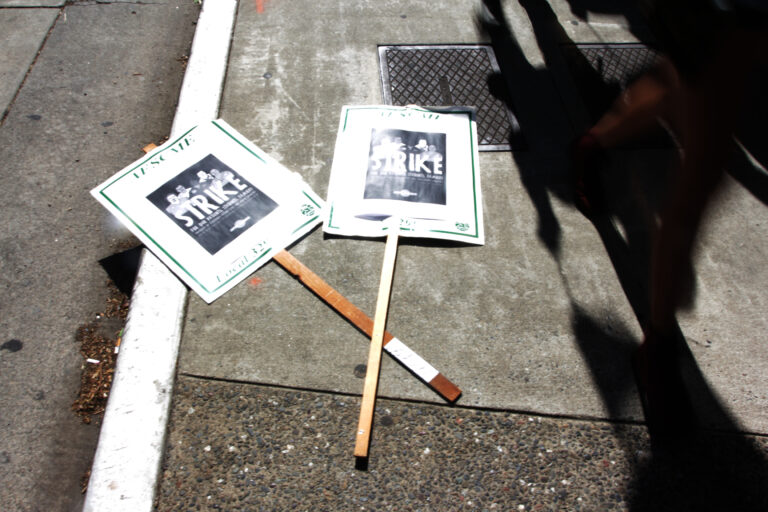
After many tumultuous months of stalled negotiations with the University of California, nearly 13,000 patient care technical workers went on strike at all five UC medical centers on May 20 and 21.

UC has been in negotiations with AFSCME 3299 (American Federation of State, County and Municipal Employees 3299) since last June. After failing to come to an agreement, the union members decided to strike for increased wages and retirement security. They were joined by sympathy strikers from the UC Hospital Service Unit represented by AFSCME as well as health care professionals under the University of Professional and Technical Employees union (UPTE).

“This has been a huge step for workers and it has been very successful. UC needs to get the picture that they need to treat their workers right,” said Jelger Kalmijn, UPTE president.

A recurring theme in the conversations surrounding the strike is patient safety.

“One of the things that can’t get lost in all of this is that these are devoted hospital workers who care about their patients,” said Todd Stenhouse of AFSCME 3299. “It speaks volumes about the commitment of these workers that as they have fought they have continued to serve their patients.”

Both AFSCME 3299 and the UC expressed their dedication to patient safety during the two-day strike.

“We’re doing everything we can to continue to provide patients with high-quality care during the strike, and that includes hiring temporary workers to fill in,” said Shelly Meron, media specialist at the UC Office of the President. “We’ve also been pleased to see so many of our dedicated staff putting patients first and coming to work despite the strike.”

AFSCME put together a Patient Protection Plan, which included keeping essential personnel at their posts to care for patients who urgently need care during the strike. Also created was a Patient Protection Task Force, a list of patient care workers, who in the case of an emergency would go to work, care for patients and then come back out to the picket line.

UC also sought a restraining order against AFSCME and filed an injunction against the strike that would require approximately 13,000 UC patient technical workers and 2,000 hospital service workers to abstain from the strike. On May 20, Sacramento Superior Court Judge David l. Brown ruled that about 100 patient care workers would be required to work during the strike.

“In terms of the financial impact we estimate from the strike, the cost to our medical centers will be about $20 million,” said Dr. John Stobo, senior vice president for Health Sciences and Services at the UC.

Both the UC and AFSCME 3299 have expressed the desire to come to an agreement through bargaining.

“This is certainly not the first time that we have engaged in this conversation and this struggle and of course we hope that it will be the last. We are prepared to continue in good-faith bargaining after the strike,” Stenhouse said.

Frontline care workers returned to work May 22.

LAUREN MASCARENHAS can be reached at campus@theaggie.org.

Tour de Cluck to celebrate chickens, bikes, local artists

Tour de Cluck
May 25 in Central Park
Art Auction and Exhibit
Free

Bicycle Chicken Coop Crawl
10 a.m. to 3 p.m.
Sold out

With over a month left until the start of the 2013 Tour de France, Davis residents looking to get their fix of a tour de something are in luck — the fourth annual Tour de Cluck will take place on May 25.

The two main components to Tour de Cluck include the Art Auction and Exhibit and the Bicycle Chicken Coop Crawl, although additional events are ongoing throughout the month of May, according to Neil Ruud, Tour de Cluck event coordinator. The proceeds from the art auction will go to the Davis Art Center, which offers support to local artists, sponsors art-related events and maintains a close relationship with the local arts community in Davis, Ruud said.

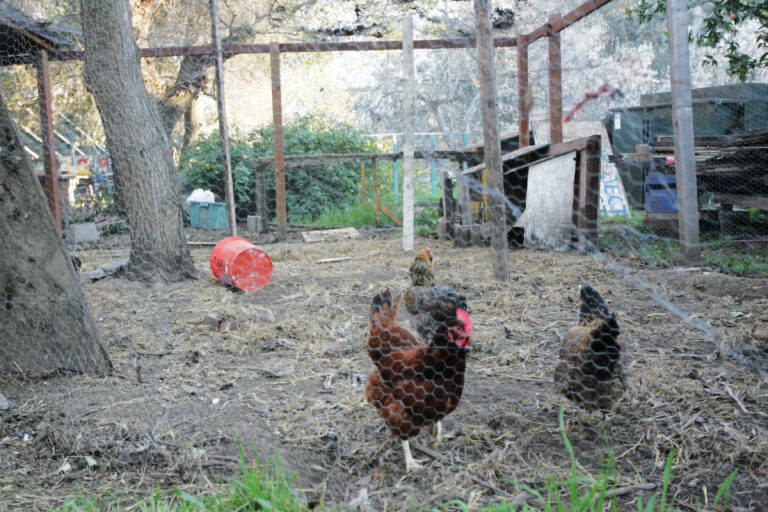
Tickets for the event are sold out. Seven hundred people are expected to attend the coop crawl, according to Gilbride, and 17 coops are being showcased.

“It’s a fundraiser for Yolo Farm to Fork’s Davis Farm to School, a farm-to-school organization,” Ruud said. “Their goal is to help children in schools be connected to the food they eat, making sure they’re connected to local farms and can draw the line between the food they eat and where it comes from.”

Yolo Farm to Fork, a 501(c) (3) nonprofit organization, began in 2000 as Davis Farm to School, which is now a program within Yolo Farm to Fork. According to the Yolo Farm to Fork’s website, they support “the use of seasonal, locally-sourced produce in school lunches, nutrition education, school gardens, farm visits and tours, agriculture-based art in the classroom and comprehensive solid waste reduction programs featuring recycling and composting.”

Davis Farm to School works directly with the Davis Joint Unified School District (DJUSD) to support these goals on a local level.

“Eggucation” and art
“I feel my job is to ‘artify’ the event,” said Shelly Gilbride, director of special projects at the Davis Art Center. “Davis is also an art town, and although that’s not always as evident in our town character as being a bike-town or an ag-town, more and more, it’s becoming a part of our identity.”

According to Gilbride, the expansion of the event, the theme of which is “growing, crowing and cycling things,” reflects this multifaceted community identity. This is the first year the Davis Art Center is involved in the event, in part because of event founder Jake Clemens, who felt that more local organizations could benefit from such a large event.

The event, according to Ruud, embodies the sustainable lifestyle that is possible in Davis.

“Chickens are a big aspect of it,” Ruud said. “But we [also] wanted the art auction and exhibit in order to represent the varied interests this community has in healthy, high-quality lifestyles.”

According to Gilbride, the art center will act as a “roost stop” during the coop crawl where people can stop and relax, but the center serves the community in other ways beyond this event.

“Our mission is to be dynamically engaged with the arts in Davis,” Gilbride said. “We offer classes taught by amazing teaching artists, although we’re expanding. Not everyone can attend a class for four weeks, so we’ve started to offer more drop-in and take-home projects. We’re about connecting the values of the town and exploring what it is to be a local arts center.”

Perks of the coops
Collecting eggs in one’s own backyard is about as local as one can get in regard to fowl-related food.

Ruud said not only do backyard chickens allow people to collect their own eggs, but between the time the chicken stops laying eggs and before it has died, many will opt to eat the chicken as well. Others may choose to give them away.

Chickens are inexpensive and easy to care for compared to most other pets, according to BackYardChickens.com, a website which promotes the “green, self-sufficient and grow local movements by educating people on how to raise chickens properly.”

According to the website, eggs from backyard chickens are more nutritious than those bought in stores, containing higher levels of vitamin A, vitamin E and beta-carotene. Chickens also provide a less synthetic method of controlling pests and providing fertilizer.

“Roosters, however, are illegal within city limits,” Ruud said.

According to section 5.01.020 of the Davis Municipal Code, it is also unlawful to keep more than six chickens. The structure the chickens are housed in must be sanitary, at least 40 feet away from any residence other than that of the chicken owner and “the keeping of such animals shall not create a health or nuisance problem.”

Sustainability and safety
According to Ruud, the bicycling element of the route incorporates another aspect of sustainability in Davis that the event emphasizes beyond sustainable food: sustainable transport.

The route, which is approximately 15 miles, is self-guided, although participants are provided with a map to explore the various coops at their leisure.

The event coordinators take great care to ensure there is no cross-contamination from coop-to-coop. Participants are not allowed to touch the chickens or enter the coops, but according to Ruud, cross-contamination can occur simply from walking through the backyard if there is particulate matter present.

Other measures taken during the event, according to a Tour de Cluck document titled “Chicken Health and Safety,” include spray bottles of disinfectant at each coop for visitors to clean the bottom of their shoes, as recommended by the American Poultry Association (APA).

Hand sanitizer will also be provided at each coop, and the document suggests that those with free-range chickens may want to isolate their birds in an enclosure for several days prior to the event and hose down the yard to reduce particulate matter.

More events
Other Tour de Cluck events include the Fowl Food Frolic, during which some local businesses such as the Davis Graduate and Dos Coyotes will be offering signature Tour de Cluck dishes benefiting Farm to Fork. The Frolic lasts through May 25.

Any customer who orders a Fowl Food Frolic dish will also receive a free raffle ticket for the Fowl Food Finale at Sutter Davis Hospital on June 1, during which various prizes will be raffled off, ranging from wine to pet supplies.

Ongoing Tour de Cluck events include Chicken Skool, free talks about various topics related to backyard chicken keeping, and Community Crowers on the Green, during which local nonprofits such as Cool Davis and the Center for Animal Welfare — based out of the UC Davis Animal Science Department — will be at Central Park during the event to answer questions.

“So many more organizations are working together and more people are involved than ever before,” Ruud said. “It’s really about promoting the way we live in this town: healthy, sustainable and connected to agriculture.”

MEREDITH STURMER can be reached at city@theaggie.org.

Museum brings science, art and SO-IL

In the face of economic duress, a rather infamous topic of discussion for past years has been, and continues to be, the status of extracurricular programs for pre-collegiate students. Artistic education comprises a plurality of such public programs that have been at the forefront of such controversy. It is in times such as these, when an absolutely essential branch of education finds itself on the precipice of extinction, that those who face the reality of these struggles will inevitably look for reasons to continue fighting.

And so, nestled comfortably between the Interstate 80 and the Robert Mondavi facilities on the face of the UC Davis campus, lies the freshly trodden ground of what will become the Jan Shrem and Maria Manetti Shrem Museum of Art — a beacon of hope and inspiration for artistic communities and architectural enthusiasts nationwide. The design for this 50,000-square-foot building, which will champion existing UC Davis L.E.E.D. sustainability efforts, is an aesthetic intermarriage of scientific and architectural ingenuity and artistic prowess.

L.E.E.D. (Leadership in Energy and Environmental Design) is an internationally-recognized green building construction standards agency that measures the sustainability of materials used and overall structural design of a building. The UC Davis campus, which is an international leader in sustainable architecture, is home to a growing number of these L.E.E.D. certified structures.

“The design for the new museum at UC Davis turns the traditional model of museum design inside out,” said UC Davis Chancellor Linda P.B. Katehi in a press release. “From its curved glass walls to its soaring canopy, it will draw people in, surprise them, and engage them. All who enter this museum will become students again.”

The designs for the Jan Shrem and Maria Manetti Shrem Museum of Art, which have been deliberated upon for several months, have only recently been finalized. The Richard R. Nelson Gallery (located on campus, slightly past the Horticultural Science Center on Old Davis Road), was the temporary home of the three-dimensional models depicting the three potential museum designs. Students, community members and eminent decision-makers, all of whose input was pivotal in determining the final design, decided upon the M.C. Escher-esque structure entitled SO-IL, designed by Ivy-League architects Jing Liu and Florian Idenburg.

“The Central Valley breathes a spirit of optimism,” the designers stated in a press release. “Whether one is influenced by the sweeping views over the flat plains beyond to the horizon, or the sense of empowerment one feels when being able to cultivate and grow freely, the spirit of this place is one of invention and imagination. It is precisely this spirit we capture in our architectural proposal for the Jan Shrem and Maria Manetti Shrem Museum of Art.”

The designers see the museum as more than just a well-designed building. It represents a paradigm shift in the way humans interact with the environment.

“We believe it will be the first platinum museum in the country, and we have various ambitious plans for the building,” said Gary Dahl, the UC Davis Department of Design and Construction Management project manager for SO-IL. “… We want the building to be a place for students to gather and spend time. Even though we are aware that the museum will be a little far from the core of campus, we want to ensure that it will become a part of the student experience.”

The SO-IL structure features sustainable design and materials worthy of L.E.E.D. Platinum certification, the highest sustainability label attainable. These materials, which are still under consideration, will contribute to the architectural form of the building that appears to almost defy gravity. The entryway to the museum will feature a swooping lattice canopy that rises over and encases the museum body, and the interior, an optical illusion that will utilize advanced horticultural and interior design techniques in order to create an intermingling of outdoor and indoor environments.

“It was very important to the architects to make it difficult for museum visitors to determine whether or not they are inside or outside — arboretum horticultural specialists have been consulted to make this possible,” mentioned museum director Rachel Teagle. “Determination of construction materials for SO-IL are nowhere near final, but the design is aspiring for the L.E.E.D. Platinum certification — a really important reason why this [SO-IL] design, in particular, rose to the top.”

Ultimately, the design of the structure and the diversity within are meant to be reminiscent of the patch-worked Central Valley landscape — symbolism that both literary fanatics and scientific research wizards will, for once, simultaneously be able to appreciate. Developers hope the space will not only become an excellent, multi-purpose destination for students (past, current and prospective), it will also serve as an exciting venue for campus visitors, architectural enthusiasts and artistic aficionados.

EMILY SEFEROVICH can be reached at science@theaggie.org.

California ranks low in small business friendliness, survey finds

Thumbtack.com, in partnership with the Kauffman Foundation, released results from their second annual Small Business Friendliness Survey, and California was rated with a D grade, an improvement from last year’s F grade.

Based in San Francisco, Thumbtack.com operates as an online marketplace for local service providers.

According to its 2013 study, the Bay Area was rated as the top region in California for small businesses, and San Francisco was the state’s highest-ranked city.

California is among the lowest-ranking states in the U.S. for its overall friendliness to small businesses, along with Maine and Illinois. Some of the highest-ranking states are Idaho, Utah and New Hampshire.

According to the U.S. Small Business Association website, a small business is defined as “a business that is organized for profit … makes a significant contribution to the U.S. economy through payment of taxes or use of American products, materials or labor; [and] is independently owned and operated.”

Approximately 8,000 out of 275,000 small business owners nationwide who use Thumbtack.com were surveyed over a course of two months to come up with this year’s ranking. About 7,766 owners completed the survey.

The D average grade was based on the separate grades given in specific categories, such as “ease of starting a business,” “health and safety” and “regulations,” among other things.

“In surveying thousands of small businesses across America, we found that clear and consistent regulations and relevant training programs are among the most important factors in determining how they view their region’s friendliness,” said Sander Daniels, co-founder of Thumbtack.com in a press release. “Given the enormous size and importance of California’s economy, it is particularly important that state and local officials listen to the concerns of the state’s small business owners and provide them with an environment conducive to growth and success.”

In Davis, it appears that many small business owners share similar concerns. At least two business owners in the City of Davis said the Americans with Disabilities Act (ADA) has caused problems for them in the past.

Alzada Knickerbocker, who has owned The Avid Reader in downtown Davis for the past 26 years, was sued for non-compliance with the ADA’s parking lot regulations when she had just barely moved into the space.

Knickerbocker’s main complaint was that she received no warning about the non-compliance before she was sued.
“[With this kind of approach] you’re going to close businesses down, or drive them out of state,” Knickerbocker said.

Another business owner in the area, Ken Bradford, owner of Ken’s Bike and Ski, was forced to weld a door closed in his shop years ago because it didn’t comply with the ADA’s standards of wheelchair accessibility. The welding made the door completely unusable to anyone.

“We work on wheelchairs in my shop — it’s not that we don’t want to be accommodating, but sometimes the way that laws are enforced is ridiculous,” Bradford said.

Effective Jan. 11, a California Senate bill was passed to keep lawyers from sending threatening letters before legal proceedings, and reduced the minimum fine for violations of ADA regulations.

“Davis is a little easier to do business in than it used to be,” Bradford said.

Others agree with Bradford’s sentiment, shown by the improvement of a D to an F grade in the past year.

Additionally, business owners are concerned about minimum wage raises.

Knickerbocker said she is worried about the effect proposed minimum wage raises in California could have on small businesses who are unable to absorb that sort of profit cut.

“[An increase in minimum wage] means less hiring and fewer jobs. Legislators are not aware or appreciative of business needs,” Knickerbocker said.

Another reason that small businesses struggle is because they sometimes have trouble competing with the prices that larger retailers can offer.

“Customers like the idea of small businesses, but still expect small businesses to compare to bigger businesses, which isn’t always possible,” said Maia Sturges, the owner of The Paint Chip in downtown Davis.

Parking can often be an issue in Davis, especially for stores that aren’t large enough to have their own parking lots.

“Downtown Davis does put effort into keeping small businesses healthy, but it’s hard to compete with the convenience that larger businesses offer,” Sturges said.

Knickerbocker believes that small businesses play a large role in Davis.

“[Small businesses] are the essence of freedom and democracy; they’re where we began, with personal relationships that are involved in the community,” Knickerbocker said.

TAYLOR CUNNINGHAM can be reached at city@theaggie.org.

Smart Materials

Editor’s note: This article is part two in a series on graphene. Part 1 was published April 18, 2013.

When we last spoke about emergent technologies and their human side effects, we explored how nuances in advancement could affect the individual. Applied electric fields could theoretically manipulate systems of the very small: cells. However, increased understanding of things on the molecular level can have potential side effects for humanity on a much grander scale.

Historically, there have been many human costs to emergent technologies. The widespread use of hydrocarbon combustion during the Industrial Revolution greatly increased the demand for coal. As a result, many found work in mines, and countless individuals suffered varying forms of cancer and lung damage from the inhaled substances. The synthesis of sulfurous dichlorides has led to the immeasurable poem-inspiring agony of soldiers during World War I. On the other side of the coin, we owe almost the entirety of modern medicine to the advances made during the Industrial Revolution and throughout mankind’s wars.

While some technologies like those described above have dramatic and sinister origins, some advances enter the world under more auspicious circumstances and change the planet for the better at conceivably little cost.

Graphene is one such technology. From humble origins as a single layer of carbon molecules examined from a piece of cellophane tape peeled from graphite, the applications of this super-material have positive implications in many aspects of the human existence.

The world is faced with a number of impending crises. The population is growing exponentially and sources of potable water and available energy are dwindling. Furthermore, the contamination of the surrounding environment creates a need for science to be taken out of the lab and into the field. However, the tools taken to the field must be designed to leave a minimal impact on the environment and be durable enough to survive harsh conditions.

Graphene represents a potential solution to many of these problems.

The ultra-thin nature of graphene naturally lends itself to tasks like water filtration. With graphene’s strength, sheets of it could theoretically produce more clean water from the same amount of energy as a conventional, thicker, fibrous filtration system.

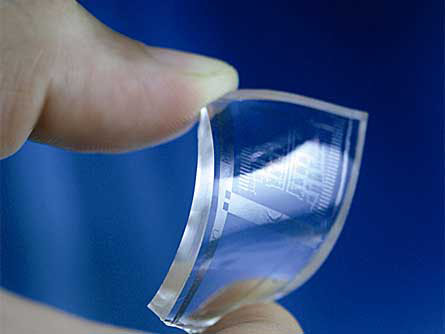
Graphene’s applications extend farther into the everyday than water treatment. The material’s properties have many game-changing implications for the consumer industry as well. The fact that graphene is both lightweight and flexible provides new avenues in terms of both power storage and circuitry for another generation. Prototypes of flexible screens and computer chips have been developed by Samsung and IBM. These devices could revolutionize mobile technologies by decreasing weight and increasing durability. Tablets and smartphones could be revolutionized by future iterations of these technologies.

If we’re talking about improving mobile technology, let’s talk about power. Any electronic device is essentially a completed circuit. In order for a circuit to function, there needs to be a difference in electrical potential at each end of the circuit. This has been traditionally accomplished with batteries and alternating current fixtures like wall sockets. Another mechanism capable of powering a circuit is a capacitor, two conductive surfaces separated by an insulator that can be used to maintain a charge gradient. While capacitors can be charged relatively quickly, they typically discharge too quickly to serve as the primary power source for consumer electronics.

Researchers at UCLA have utilized graphene to provide new innovations in powering devices. A graphene supercapacitor, otherwise known as a “supercap” by UCLA chemist Ric Kaner, functions very much like a capacitor in the sense that it can maintain an electrical gradient and charge very quickly. However, due to the behavior of electrons in the material, the charge dissipates more slowly than in traditional capacitors. The result is a capacitor that has a much greater potential to power consumer devices.

The technology is still in the developmental stages. As of now, the supercaps may be best used in conjunction with existing metal batteries. The quick-charging supercap could be used to slowly recharge the slower battery and keep a device like a phone or a car powered on with less time wasted on charging.

“As forms of carbon improve, we’re hoping to encroach on the territory of traditional batteries,” Kaner said when describing how the technology isn’t quite ready to replace batteries altogether.

Conventional batteries are utilized because there had been no prior alternative to compactly storing electric charge with a slow rate of discharge other than through the use of metals such as lithium. Since graphene technology is carbon-centric, the possibilities for metabolism of graphene products in nature are much more readily available.

Despite the numerous advantages of systems dependent on graphene, the progress of the technology has been limited due to issues stemming from production limitations.

The original approach to producing graphene was to treat graphite with acid and then purify the product. The process worked, but left a bit to be desired. The purification wasn’t cheap and kept graphene development costs prohibitively high.

Fortunately, several new strategies have emerged for efficiently producing graphene. Terry Brookshire and his colleagues at Graphene Technologies are working to improve the efficiency of the process by forgoing graphite entirely.

“Our process utilizes the combustion of carbon dioxide and metals like magnesium. The result is an almost exothermic reaction that leave[s] us with magnesium oxide and graphene sheets. Furthermore, different metals and techniques could be used to produce different forms of graphene with varied commercial applications,” Brookshire said.

The Kaner Lab at UCLA is researching the effects of exposing liquid graphite oxide to light photons. The result is a thin sheet of graphene ready for use in industry.

Ultimately, creative applications of graphene have the potential to dramatically change the way people interact with the world around them by making products more efficient, mobile and flexible. Despite all the research going into the medium, there are still many undiscovered possibilities.

In the words of Konstantin Novoselov, applied physicist from the University of Manchester, “We still haven’t explored our imagination completely yet because it really has a combination of unique properties.”

ALAN LIN can be reached at science@theaggie.org.