58.4 F
Davis

Davis, California

Tuesday, December 23, 2025
Home Blog Page 323

Commentary: Welcome to the post-ironic age

First as tragedy, then as farce

I wake up as I always do a bit groggy but nonetheless eager to see what the day has in store for me. I walk downstairs, cut up some fruit, pour a cup of tea and if weather permits, go for a short walk, perhaps even dipping my feet into the ocean. I try not to look at my phone other than to queue up tracks on Spotify or check on my grandparents. Every day, once I return home, I am bombarded with a wealth of information — some of it bad, some of it good, some of it true and some of it blatantly false. The world is buzzing. The era of information, defined by spectacled geniuses in laboratories, is over. This period of time has brought great upheaval, and we are now entering the ensuing stage in our shared culture. Welcome to the next phase of politics, economics, art and emotion. Welcome to the Post-Ironic Age. 

To try to define the Post-Ironic Age would be as hilariously absurd as it is to live in it, which many of us already do. To attempt and explain exactly the times we are living in is a great feat for even the most talented of artists, but perhaps laying the groundwork for how it is, and how it feels, would be a decent start. 

To live in the Post-Ironic Age is to utilize the relics of the era that came before it — the Information Age. It’s a time that’s defined by global hyperconnectivity, one that we as a planet have agreed to, for better or worse. A concept like trading privacy for goods or services, usually digital, is a cornerstone of the Post-Ironic Age. As is the general anxiety about the impact of all these things, which most deftly affects younger populations. The Post-Ironic Age is not one that those over 40 truly understand, but one they shape with legislation, economic action and general confusion. 

The atmosphere, or colloquially “the vibe,” of the Post-Ironic Age is characterized by the constant absurdity of the world around us. There is a larger, continued outcry for the death of Harambe, a gorilla at the Cincinnati Zoo, then for the burning of Notre Dame in Paris. Why? Because there is more power in irony and even more power in the continued existence after the event, which we can call post-irony. To focus on an innocent gorilla getting put down rather than the destruction of a globally recognized historic site is a strange thing indeed.

After a while, the constant absurdity leads to a malaise. Rapidly forming, one begins to detect despair. At its worst, it becomes hopelessness. Thanks to a logical conclusion in hyperconnectivity (how much more virtually connected could we get?), we now begin to notice the ugly stepsister that it came with: hypercompetitiveness

Everything from a Facebook post to an Instagram story has become an arena, a battleground or a stage. And it is exhausting, much like many things have in the Post-Ironic Age. Indeed, to live in this new era means one has to be “on” from the moment they wake up to the moment they fall asleep. It has led to finding beauty in the littlest of things, from weighted blankets to artisanal beverages. A joy to be found in soft goods, however fleeting, rather than grand investment and the support of traditional industries, is a central tenet of this new era, much to the chagrin of Baby Boomers everywhere. 

It is tough, and in some ways nearly impossible, to trace the advent of the Post-Ironic Age. Many, I believe, would point to the 2016 United States Presidential Election, when Donald J. Trump beat out Hillary Rodham Clinton to become the 45th President of the United States. It was, in many liberal circles, nothing short of a D Day scenario. There were protests across America. Early on, a common phrase one could hear in San Francisco, if not every major city was, “Not my president.” But therein lies the tragedy: He was our president, and at the time of writing, still is. The fact that we elected a sexist, senile gameshow host as the leader of the free world should’ve been enough to show us that these times were cursed, but it was in his policies and actions that we truly began to see this. 

The Trump administration has done an incredible job of breaking the American people down, exhausting us week after week with a myriad of plans that are seemingly birthed by Dr. Evil and company. To describe the policies of this administration would be to cite racism, xenophobia and a general desire to go backward both in domestic and international affairs. Many around the world have adopted a regime of modern barbarism, swinging their once temperate countries deep into the far-right, planting the seeds for a new brand of fascism, including Jair Bolsonaro in Brazil, Rodrigo Duterte in the Philippines and Recep Erdoğan in Turkey. 

Of course, the biggest player outside the United States in the Post-Ironic Age is China. Through the creation of concentration camps for its Uighur populations, along with the jailing and silencing of coronavirus whistleblowers, China has shown the world it will stop and reassess for no one. In addition,  given China’s mandatory social credit system along with a deep national firewall, not only do you have a state that is deeply rooted in post irony, but one that almost approaches the title of cyberpunk — the most financially disparate and emotionally bankrupt title we can give our hyper-connected future. 

As politics embrace absurdism and post-irony, so must our financial institutions. The concept of money since the abandoning of the gold standard has always been flimsy, but in the Post-Ironic age, it has reached new heights. Crypto-currency, long dormant, has been shocked back to life with the creation of the blockchain, a traceable log of transactions between users. The utility of it, along with its universal nature, has created a renaissance in the way society views currency and how it is earned. Instead of manual or white-collar labor, it is “‘mined” by computers that have to solve complex puzzles that exacerbate processing power. We have traded in physical currency, backed by the Federal Reserve, for electronic currency, backed by a virtual network of people around the world who have agreed it is worth something.

This is, in some ways, quite clever. As political tensions boil over in countries like those mentioned above, it could be smart to invest in alternative currencies. It could be safer, as well. Indeed, for someone like a Syrian refugee, it may prove more favorable to transfer their life savings into Bitcoin, and then redeem it for the currency of whatever country in which they settle. One can recognize that that would be safer, smarter and more lucrative than running around with a bag full of Euros or American dollars that can be seized by the state, or worse, militants. 

On the exact opposite end of the spectrum, the art world has perhaps been engrossed in post irony longer than any other realm. Has there always been something ironic about art? There is a notion that some people really get it, while the majority of us really do not. If there is, then we have reached a point where people can choose which one of those camps to stay in seemingly through a coin flip, deciding the moment they see a work of art. Take “Comedian” by Maurizio Cattelan, a piece unveiled in 2019. 

“Comedian” has been heavily reported on, deeply discussed and thoroughly dissected by a multitude of outlets. But the simple truth is that it is a banana, taped to a wall, with a torn piece of duct tape. The other simple truth? It sold for 120,000 dollars at Art Basel last year. “Comedian” is a piece of conceptual art that doesn’t have any meaning until you ascribe it some. In this sense, it is art in its purest form. Its meaning in the post-ironic age is, of course, one of metaphor, a symbol of farce: winking at our collective consciousness, is at the same time playful and devoid of any logical sense. 

Another piece one could hone in on is “Girl with Balloon,” by Banksy, sold in October of 2018. However, the focus here is not on the actual painting itself but what happened when it was auctioned off. As soon as the gavel hit the surface, the painting began to move downwards, shredding itself slowly. Another classic Banksy stunt for internet hits to be sure, but this one felt more poignant. The shredding of “Girl with Balloon,” after being sold for $1.4 million, was a reminder of the ephemeral nature of art itself and how one often forgets that, especially in an era that is defined by things existing always and forever on a server somewhere. Just as well, it was a middle finger to the ultra wealthy, a nice gesture from an anonymous artist who is probably quite well off themself. 

And being well off is a great fear for many of us who live in this new age. Scraping by is the ultimate fear, and if we are not doing something to contribute to the gross domestic product, we are trained to feel as if we somehow failed. Yet, this new era cannot be defined by that, nor by hopelessness. Indeed, there are rumblings of change coming about. What we must do is be resilient. 

Before I leave Land’s End and decide to come back home, I always watch the ocean for a few minutes. The future is scary and intimidating. But it is also exciting and alluring. I am thrilled to take it on, no matter how deeply steeped in post-irony and absurdity it may be. 

Written by: Ilya Shrayber — arts@theaggie.org
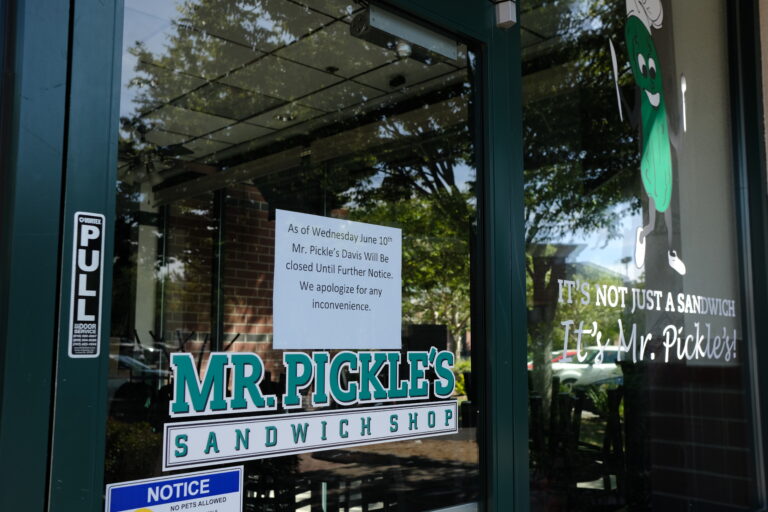
Davis Mr. Pickle’s Sandwich Shop closes after owner compares Black Lives Matter to the Ku Klux Klan

Local owner Mickey Mann made comments in email to employees, faced repercussions from corporate leaders

The corporate headquarters of Mr. Pickle’s Sandwich Shop permanently closed its Davis location Tuesday evening after the local owner sent an email to staff comparing the Black Lives Matter (BLM) movement to the Ku Klux Klan.

Mr. Pickle’s Sandwich Shop, a franchise network of locally owned shops, confirmed the closing of the location in a statement on Facebook.

“Corporate has been notified of the alarming and painful statements made by the owner of the Davis shop to his staff,” the statement reads. “We made the decision to terminate his franchise and [it] is now permanently closed for business. If that location ever re-opens, it will be under new ownership that upholds our corporate standards.”

In screenshots of the email posted to Facebook, franchisee Mickey Mann described the “bullying and attempted oppression” he and his wife, Bonnie Mann, faced over disagreements of employees wearing BLM pins in the store. 

“Every single allegedly egregious act, insensitive terminology, or supposed aggression that I have committed, that has insulted your sensitivities, has happened because of your aggression against me,” Mann wrote. “When all of this started, I did not come to you and push my opinions and beliefs on you. You came to me with the intention of forcing your beliefs and opinions on me.”

Mann argued that the employees were bringing political issues into what should be an apolitical workspace and said he would have the same reaction if it was “any far-right organization.” He continued on to compare the BLM movement to the KKK.

“The BLM is the flip side of the KKK,” Mann said. “Their tactics are out of the Mafia play book. They are no better than some of the worst oppressive regimes in the world. Equal rights, fairness under the law, and any other buzz phrases they use are not their agenda. Oppression, turmoil, and chaos is their agenda. Bonnie, I, and Mr. Pickle’s Davis are victims of this and proof of this.”

Mann also alluded to giving names of employees to the police if Mr. Pickle’s storefront experienced any damage. 

“I have no fear of any or all of you quitting,” Mann said. “We started the store with zero employees, so if necessary, we will rebuild from zero again. If Mr. Pickle’s Davis suffers window breakage, vandalism, or theft, I have names of the people that I will hold responsible.”

Mann added that his wife has contacted the Davis Police Department concerning the “libel, slander and threats” made toward the couple. According to police crime logs, the Davis Police Department received a call from a Cowell Boulevard business owner around 10 p.m. on Tuesday. The caller said they had been threatened by BLM activists and asked for a police presence as they installed a closing sign on their business.

Written by: Madeleine Payne — city@theaggie.org

Guest: Disband the UC Davis police force now

UC Davis faculty members call on the chancellor, administration to disband campus police, dissociate from other law enforcement agencies  

Dear Chancellor May and the administration of University of California Davis,

We, the undersigned faculty, call for the abolition of the UC Davis police force, the ending of all contracts between UC Davis and local, county and state police, and private security organizations and the replacement of policing with anti-carceral forms of accountability, including restorative and transformative justice and community-led public safety.

In the wake of further police murders of Black people — we name George Floyd, Breonna Taylor, Tony McDade and Ahmaud Arbery as the mere beginning of a list — we recognize that the increasingly mainstream calls in recent weeks to end racialized policing can only be met with an end to policing itself. The path of reform has been long and led nowhere. Indeed, despite reforms banning the use of violent techniques in New York, San Francisco, Los Angeles and many other cities, violence perpetrated against communities of color by police has continued unabated. Campus policing strikes us as the most effective place to begin this larger project of abolition. The presence of increasingly militarized police on campus represents an even more gratuitous commitment to violence than does policing in general. Their intrinsically violent and intransigently racist presence actively undermines the ideals and expectations of community and mutual support that should characterize college campuses. 

To those who cannot imagine a university without police: this is a true failure of imagination, and a provincial one. The U.S. is one of the only nations to employ and normalize armed police on college campuses while freedom from policing on campus is the global norm, one that a campus committed to a global role must emulate. To those who would conjure the sorts of threats that purportedly necessitate police presence, we note for example that “active shooter” events are more common on campuses with police forces than without and police themselves admit they cannot arrive in time to prevent harm; meanwhile, statistics show police are far more likely than civilians to be the source of sexual misconduct and domestic violence. Their very presence makes the campus unsafe for untold numbers. For far too many, they exist as a threat. Events on our own campus demonstrate the harm that police do. In 2017, plainclothes police officers assaulted five Black students during Picnic Day celebrations. In 2019, members of the ASUCD Ethnic and Cultural Affairs Commission were subjected to harassment and death threats after rightly pointing out that the “Thin Blue Line” flag is a racist symbol following the death of Officer Natalie Corona. The global community recalls the brutal pepper-spraying of seated students in 2011.

Incidents like these are not unfortunate aberrations; they are a result of the core functions of policing. And if police presence renders anyone unsafe or unfree on a college campus — which it demonstrably does — then no one is truly free or safe on a campus until the police are gone. Students, staff and faculty of color — particularly Black, Latinx and Native members of the UCD community you have pledged to serve — are terrorized by any police presence at UC Davis. As UC Davis leadership serving an increasingly diverse population, you are now presented with an opportunity to transform the role of higher education in California — to move beyond declarations of feeling toward action that may end the pandemic of anti-Blackness in this country. 

  We believe it important to clarify in our demands that we advocate not for reform, nor for a goal of reduction in either numbers or areas of responsibility, nor for defunding a force that would continue to exist in some capacity. We follow the lead of Black activist organizations who have long called for an end to an institution that was established to violently enforce white supremacist property rights and insure differential citizenship

We demand that UC Davis: 

  1. End its relationship with the City of Davis Police Department and other county, state and federal police departments and security agencies, including but not limited to the Yolo County Sheriff’s Department, the California Highway Patrol, the Department of Homeland Security, the FBI and the Immigration and Customs Enforcement Agency (ICE). As part of this demand, we want a public accounting of all existing contracts, memoranda of understanding and other agreements with such agencies.
  2. Dismantle and cease all funding of the UCPD and replace it with anti-carceral forms of accountability, including restorative and transformative justice and community-led public safety. We also want to have a comprehensive report on the staffing, funding and activities of the UCPD in terms of arrests, detentions and investigatory activities. Presently, UCPD’s operations and the impact of it on people of color, and particularly Black people in all UC communities, are often obscured or known only to those who have suffered its effects.
  3. Drop any strike and demonstration-related student conduct charges on this campus that resulted from Black Lives Matter or UC4Cola protests.
  4. Redirect the resources from policing toward racial and gender justice teaching, research and community initiatives as well as increased material support for Black faculty (this includes resources for increased hiring and retention), staff, students and workers on campus. The plan for the redirection of both immediate and ongoing resources should be developed by faculty experts in the field of Black and ethnic studies on campus as well as by students, staff, workers and organizations representing surrounding communities of color affected by the presence of UC Davis (as in the case of the Aggie Square development with its inevitable gentrifying effects and consequent intensification of policing). 

There is no reason why UC Davis cannot make these commitments immediately. The time for temporizing and task forces is past. The University of Minnesota cut ties and severed contracts with the Minneapolis Police Department (MPD) a day after the death of George Floyd. The Minneapolis public school system did the same less than a week after. And the Minneapolis City Council pledged to disband the MPD, stating that it was time to “end policing as we know it, and to re-create systems of public safety that actually keep us safe.” These decisions are informed by many decades of research and analysis by national experts and abolitionist organizations, including Critical Resistance, Incarcerated Workers Organizing Committee and many more. We urge UC Davis to uphold its stated commitments to the valuing of Black lives by doing the same and by doing so promptly. We ask that you respond to these demands before June 19, the Juneteenth celebration of the end of slavery in the U.S. — an occasion to which we have not yet been adequate. Now is the time.

Initial Signatories:

Moradewun Adejunmobi (African and African American Studies)

Lishan AZ (Cinema & Digital Media)

Stephanie Boluk (Cinema & Digital Media and English)

Travis Bradley (Spanish & Portuguese)

Seeta Chaganti (English)

Orly Clerge (Sociology)

Joshua Clover (English and Comparative Literature)

Ofelia Cuevas (Chicana/Chicano Studies)

Omnia El Shakry (History and MESA)

Erin Gray (English)

Kris Fallon (Cinema & Digital Media)

Jeff Fort (French & Italian)

Kathleen Frederickson (English)

Noah Guynn (French & Italian and Comparative Literature)

Milmon Harrison (African and African American Studies)

Mark Jerng (English)

Richard Kim (Asian American Studies)

Erica Kohl-Arenas (American Studies)

Patrick LeMieux (Cinema & Digital Media)

Tim Lenoir (Cinema & Digital Media and STS)

Justin Leroy (History)

Sunaina Maira (Asian American Studies and MESA)

Susette Min (Asian American Studies)

Fiamma Montezemolo (Cinema & Digital Media)

Bettina Ng’weno (African & African American Studies)

Robyn Rodiguez (Asian American Studies)

Carey Seal (Classics)

Grace Wang (American Studies)

Toby Warner (French & Italian)

Elisa Joy White (African and African American Studies)

Julie Wyman (Cinema and Digital Media)

All faculty of any rank, including lecturers and visitors, are welcome to sign; please contact jclover@ucdavis.edu or schaganti@ucdavis.edu for a link to the signature page. 

To submit a guest opinion or letter-to-the-editor, please email opinion@theaggie.org

Disclaimer: The views and opinions expressed by individual columnists belong to the columnists alone and do not necessarily indicate the views and opinions held by The California Aggie

Campus personified: Searching for a soul within wood, brick and concrete

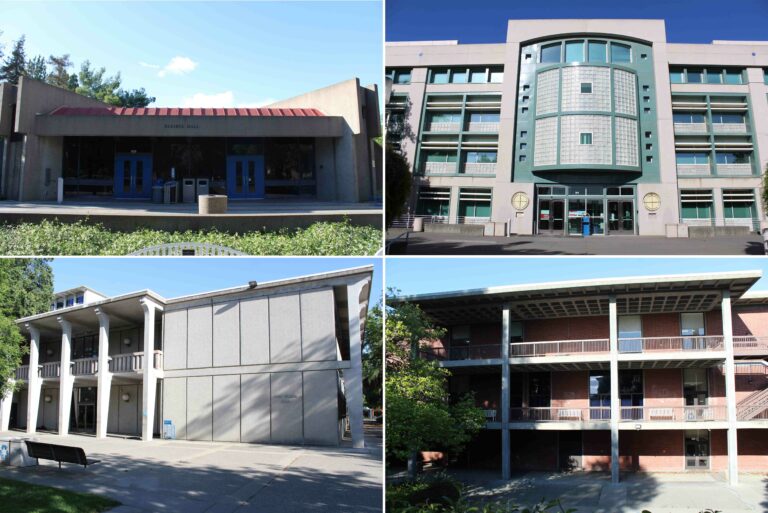
Wellman, Shields, Social Sciences, Olson have more to them than meets the eye

In the first article I published for The California Aggie, I wrote “among the stucco and concrete box-like structures that riddle the campus, students are hard-pressed to find a building that evokes anything but a shrug.” I would like to make this my sincere apology to those buildings, which I may have offended. 

Over the past four years — after countless hours spent in these “box-like structures” — they have become an inseparable part of my Davis experience. This past year, in brief moments of mania, I began to see beyond just what they were — their structure and their materials — and into who they were. Have I lost my marbles? Perhaps, but as I turn the last page on the last chapter of college life, I thought I’d share my collection of thoughts on these steadfast companions.

Wellman Hall

Wellman will forever be the eccentric uncle we all know and love. He smells distinctly of sawdust and is brimming with wacky stories about campus life in the ’60s. For postgrad he attended law school, but quickly dropped out because he refused to be “just another brick in the wall.” After a good deal of soul-searching, he eventually found his way. Pursuant to a passion for the American Civil War, he obtained a degree in history and a teaching credential. He shares his love for past events with future generations as a much-beloved APUSH teacher. Currently, Wellman lives alone on the periphery of a forest where he tends to his botanical garden and extensive collections of petrified wood and vintage Pink Floyd LPs. He truly is a simple man of simple pleasures.

Shields Library

Shields grew up an aspiring writer; sending in her stories to the late, great New Yorker. On her 76th attempt, the magazine finally validated her talents by publishing her short story “Egg Shells and Ice Cubes.” Shields rode this wave of success to three acclaimed works of fiction. Now a silver-haired information specialist, she spends her days organizing, reorganizing and burying her nose in the books of the place she calls home. Despite living through both World Wars and nearly 20 U.S. presidents, she hasn’t lost the pep in her step nor the twinkle in her eye. During her downtime, you can find her in a wooden rocker reading E.B. White’s “Charlotte’s Web” to a group of stray children and wistful adults.

Social Sciences and Humanities Building (Death Star)

An academic to his concrete laden core, SSH is usually clad in a sharp-cut tweed blazer. Peering down from his imposing stature and wire-framed Corbusier spectacles, he emanates an air of authority. Having no understanding of the term small talk, he churns on a single gear — “existentialism.” All you wanted were directions to the nearest Starbucks and the next thing you know your head is swirling about with the theories of Jean-Paul Sartre and Descartes. That being said, in less pressing times, you find yourself admiring the grandeur of such a formidable cranium.

Olson Hall

Olson’s a bonafide problem solver and not afraid to get her hands dirty. She’s usually on the late-night grind as a C.E.O. of a non-profit. But don’t let that unshakeable work-ethic deceive you — she’s full of compassion and well-established as the best hugger on campus. As of late, she’s been going through a mid-life crisis as newcomers attempt to upstage her — namely, that pretentious noob California Hall. As a consequence, she’s slightly insecure about her standing. Don’t you fret Ol’ Faithful, I love you all the same.

Written by: Andrew Williams — arts@theaggie.org

What’s your quarantine jam?

Tunes that sum up our current experience, bringing comfort back into our lives

There are multiple ways people are finding solace in this uncertain time, and one of those is through music. The California Aggie asked UC Davis students to pick a song that described their time in the era of the COVID-19 crisis, distilling their emotions and desires into one essential melody.

Maya Barak, a fourth-year international relations major, chose “Holy Shit” by Father John Misty. She said it embodies the current state of unrest, attempting to find a balance in a paradoxical world.

“It’s always been a cathartic listen, but in these times of uncertainty and misconception, the lyrics become even more impactful,” she said. “It basically lists off a bunch of paradoxes…[and in the end], he asks if maybe ‘love is just an economy based on resource scarcity, what I fail to see is what’s that got to do with you and me.’ He is questioning where love fits into the equation in all the [uncertainty], and thereby he also puts love at the top of the list of human priorities that tends to get disenfranchised.”

Love fits into how coronavirus has impacted our social spheres, shifting how separation has left us to value the connections we have with one another. 

“Coronavirus is giving us space to appreciate the love that we give for what it is,” Barak said. “Rather than overpowering it with the [fear] that comes with the outside world.”

Tomer Fidelman, a fourth-year economics major, chose “It’s a Jungle Out There” by Randy Newman, a song that was also famously used in the Monk TV series.

“There’s nothing substantially poetic about the song,” he said. “It blatantly lists out apprehensive feelings regarding things that are commonplace in our world. Maybe we should be cautious about what we constantly interact with. There’s scary and problematic issues around that don’t subside without deliberate action. Nowadays, it reminds me that if it’s a jungle out there, maybe it’s actually pretty nice inside.”

These two songs reflect peoples’ current environments: simultaneously looking for connection while also recognizing obstacles arising outside. This confusion of emotions manifests itself in music, a constant comfort during uncertain times. As the environment becomes more confusing, there remains a kernel of truth in these age-old songs, trying to find balance in an unbalanced world. 

Claire Ongaro, a fourth-year communications and design major, found that “Sometimes” by H.E.R. is a reflective representation of this era. 

“It’s saying how sometimes things just don’t go your way, so right now it’s super relatable as COVID-19 has taken away, canceled or postponed so many plans,” she said. “But also it’s relatable as a graduating senior and not having nearly anything figured out! It’s comforting to listen to. If this artist is expressing how she feels like she’s drifting with no direction, probably lots of other people feel like that too.” 

Written by: Athena Aghighi — features@theaggie.org

UC Davis Professor elected to Society of American Historians

Professor Ari Kelman honored for literary achievements 

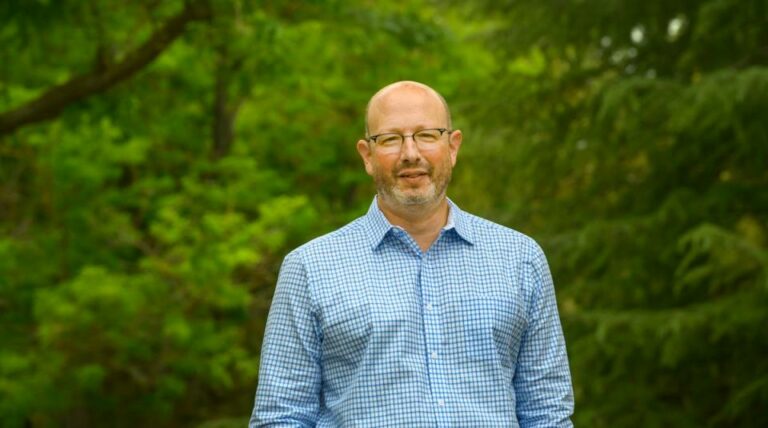
UC Davis History Professor and Interim Dean for the College of Letters and Science Ari Kelman was recently elected to the Society of American Historians for his published historical novels. 

The society’s executive secretary, Andie Tucker, explained that the Society of American Historians honors eloquent literary works in historian academia. 

“Unlike most other societies devoted to history, our society’s members include not just scholars but also independent writers, journalists, filmmakers, novelists, poets and others.” Tucker said. “We are the only society I know of that considers literary grace and narrative art as important components of historical writing that should be taken seriously.”

Kelman was elected as a fellow to the society in honor of his historical nonfiction novels: A Misplaced Massacre: Struggling Over the Memory of Sand Creek (2003), A River and Its City: The Nature of Landscape in New Orleans (2013) and Battle Lines: A Graphic History of the Civil War (2015).

Kelman reported that each book took nearly a decade to write, edit and publish.

His latest novel, Battle Lines: A Graphic History of the Civil War (2015), is a co-authored graphic comic novel. Kelman worked with graphic artist Jonathan Fetter-Vorm.

“It’s a graphic novel but it’s nonfiction, so a graphic history of the U.S. Civil War.” Kelman said. “It was a really fun project.” 

“It is an ambitious text, as in many ways a comic can only paint a broad picture of a complex theater,” said literary critic Cassandra Koslen. “To widen this scope, Battle Lines relies on a human narrative of America’s bloodiest divide.”

To be elected to the Society of American Historians, writers must be nominated and voted in by current members of the society. The election process and limited number of new fellows elected makes Kelman’s inclusion a prestigious title.

“Professor Kelman’s election means that a substantial number of our current members — among whom number some of the most celebrated historians working today — recognized his work as showing both historical rigor and stylistic grace,” Tucker said.

Tucker explained that an annual fellowship awards night and dinner is usually planned for May but has been postponed due to the pandemic.

Kelman joins three UC Davis professors in the Society of American Historians.

Written by: Hannah Blome — campus@theaggie.org

Blood drive held despite campus closures

Need for donations increases as COVID-19 pandemic continues 

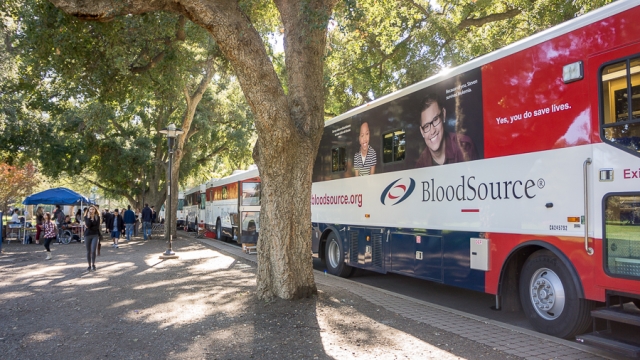
UC Davis partnered with Vitalant and the Red Cross to hold two blood drives on campus from May 21–22 and 28–29. Unlike past blood drives, students interested in donating made appointments in advance to increase safety precautions. 

In addition to regular partnership with Vitalant, the Red Cross had a donation bus on campus. The Red Cross has been holding regular blood drives at UC Davis’ Sacramento campus throughout the pandemic. 

Students participating were required to wear face coverings. Each testing station was at least six feet apart to minimize health and safety risks. 

“Blood donation continues to be essential, especially during this pandemic,” said Chancellor Gary May via email. “Giving blood is a wonderful way to help others while remaining physically distant and following county health guidelines. Every pint of blood can save up to three lives, and the need for blood is ever-present — one pint every two seconds.”

According to the Red Cross, the number of blood donations has decreased dramatically as a result of the COVID-19 pandemic. 

To help ensure the safety of donors and staff, the Red Cross implemented numerous precautions including taking staff and donors’ temperatures before donations, providing hand sanitizer, requiring appointments and increasing disinfection procedures.

Jerome Michael Adams, the U.S. surgeon general, released a statement encouraging the public to consider donating blood. 

“Social distancing does not have to mean social disengagement,” Adams said. “You can still go out and give blood.” 

In addition to increased safety and health precautions, the FDA is also relaxing its stance on men who have sex with men (MSM) donating blood.

Currently, MSM are unable to donate blood without abstaining from sex for at least 12 months. In the past, MSM were completely ineligible from donating.

“None of us able to donate blood should take for granted what a privilege it is and what a difference we can make,” May said in a statement. “I look forward to the day when all who want to give blood and can do so safely are allowed to give this generous gift.”

The FDA recently released a statement addressing its change on the 40-year restriction.

“At the FDA, we want to do everything we can to encourage more blood donations, which includes revisiting and updating some of our existing policies to help ensure we have an adequate blood supply, while still protecting the safety of our nation’s blood supply,” the statement said. 

MSM are now only required to abstain from sex for three months before donating blood, instead of 12.

Written by: Ally Russell — campus@theaggie.org

Commentary: A tribute to the graduates of 2020 — a graduation nobody will forget

The generation with the future in their hands and their sacrifices getting there 

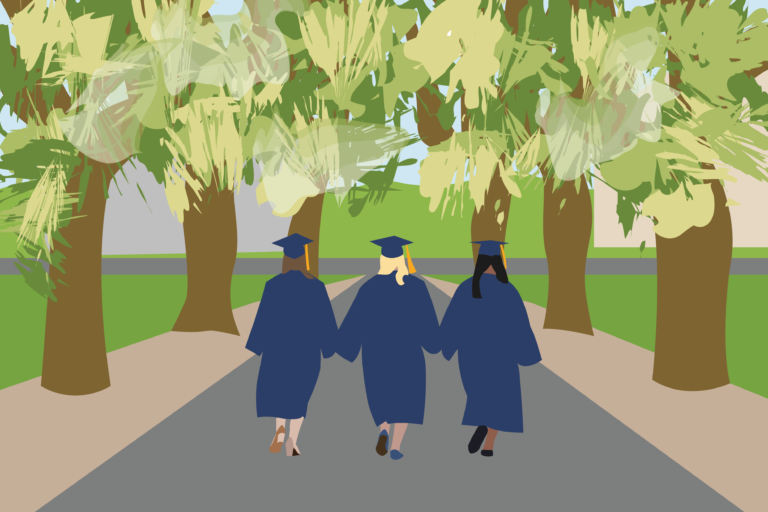
The year 2020 was intended to be one of new beginnings. But as we all know, fate decided otherwise. All of a sudden, the world did a 180 and changed its axis of normalcy without warning. Unequipped for such life-altering circumstances, we were left feeling useless and scattered.

A long-awaited Spring Quarter of daily sunbathes on the Quad and the crème de la crème of Davis social life — Picnic Day — vanished. The revival that Spring Quarter brings after a groggy period of sweatpants and rain was commandeered by social distancing orders. And in return, a Spring Quarter in quarantine. 

I am fortunate enough to speak from experience as a second-year, but the first-year students were robbed of their first Spring Quarter, of living in a school-sanctioned 24/7 slumber party and of their last quarter of all-you-can-eat late-night cookies from the Dining Commons — like a bottle taken from a baby. 

They will, however, get their taste of glory in the years ahead. As for the class of 2020, they were swindled out of their last big shebang of college and left with a postponed graduation ceremony and an uncertain future. 

On May 28, 2020, I sat in the dining room of my childhood home and watched my brother perched in front of a screen with a tie on top and boxers on the bottom for his fifth grade promotion over Zoom. Every year, the fifth grade class chooses a motto that describes their final year of elementary school. 

“We’re still together, even if far apart,” is what they chose. 

These fifth graders held their heads up high and made the most of this anticlimactic step into their unknown futures. I admire their strength at such a young age to adapt and gather together as a community in such an unpredictable time. 

Their perseverance reminded me of former President Barack Obama’s “Graduating Together” virtual commencement speech given on May 18, 2020. With guest stars The Jonas Brothers, Dua Lipa, “King James” and many more, this celebration commemorated the graduates of this unprecedented year. 

Although directed toward high school graduates, his commencement speech is applicable to all graduates, from grade school to graduate school. Obama’s efforts seemed to be directed towards the overall youth of America. 

“With so much uncertainty, […] this is your generation’s world to shape,” he said. 

Criticizing the current government for the state of the world and America’s “deep-rooted” problems, Obama urges this generation of graduates to do three things: 

One: Don’t be afraid. This is not the first time America has seen hardship. Learn from past mistakes and grow from them. 

Two: Do what you think is right. Harness values that will last, and don’t take the easy route; work for what you believe in. 

Three: Build a community. Nobody does big things all alone; we need support from others. It takes a village. 

Every graduation marks a step further into adulthood. At a time like this, adulting can be intimidating. Nothing is a given, and the future is unknown. However, what we do know is that we’re not alone. 

The latin prefix “com-” in words such as “combine” or “community,” is also found in “commencement” means “with” and “together.” It is in the roots of the word and in the roots of this generation to come together and combat an unexplored territory — the future. 

Written by: Sierra Jimenez — arts@theaggie.org

Police logs

Wear your face masks

May 20

“White male adult standing on trash can in front of gas station. Subject was initially clothed, but is standing on trash can taking them off. Now only wearing boxers.”

“Noise complaint. Loud karaoke.”

May 22

“Customer in the store refusing to wear face mask and has been asked to leave but refusing.”

“15 teens drinking cases of beer.”

May 24

“Complaint of loud chickens.”

“Subject hit vehicle with paintball causing damage.”

“Three males setting off smoke bombs.”

May 25

“Subject inside building refusing to leave after being asked to wear a mask — sneezing on products purposely.”

May 27

“White husky attached to tether from backyard, dug underneath fence and is now sitting on the sidewalk, still attached to tether.”

Senior Issue 2020

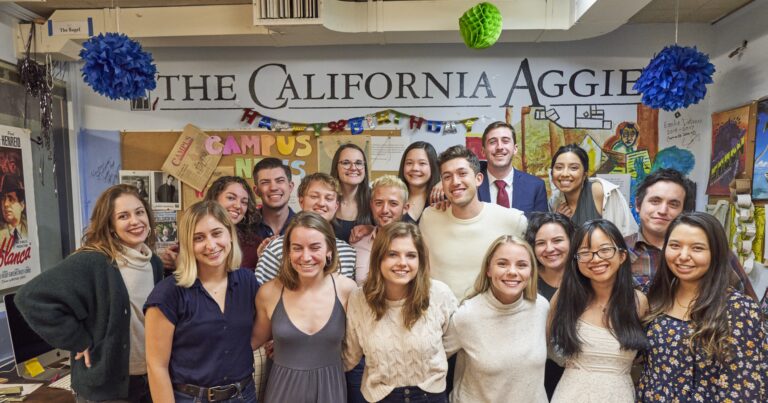
Over their years on staff, the seniors at The California Aggie have spent countless hours in 25 Lower Freeborn and all over campus, committed to making UC Davis and the city of Davis better places through their work. But they are not only devoted to their work at The Aggie — they are loyal friends, supportive mentors and distinguished students. Graduation for the Class of 2020 may not be the celebration they had anticipated, but despite the unexpected end to their time at UC Davis, this send off should mean no less.

Click below to read senior columns written by The Aggie’s graduating staff as they move on to the next chapter of their lives.

Honest dispatch from a worried 22-year-old

Still learning and unlearning, I hope you are too


I am leaving UC Davis just as lost as I was starting college in 2016. But I am ready. 

Like much else in my life, college felt like it couldn’t be more draining. Then, in a blink of an eye, I am here on the other side. Dazed. Except I think, for the first time, I have enough answers and a stronger sense of self to ground me and guide me through endless other questions. 

It also feels like such a strange time to be writing about myself, which is why I am keeping this short. Lately, my mind has been fixated on issues and struggles that are immensely greater than me. I just want to be of most use in the fight against that which oppresses us. 

I am beyond grateful for The California Aggie and the ways in which I was able to grow here — personally, professionally and academically — and the people I connected with throughout these four years. This newspaper will always hold such a special place in my heart. I feel incredibly honored to have served on the Editorial Board and alongside such well-spoken and talented people. 

Thank you and with love, Cecilia. 

Written by: Cecilia Morales

Cecilia Morales was the 2019–20 science and technology desk editor. She joined The California Aggie in fall of 2016 as a copy reader. For the 2017–18 school year, Cecilia was an arts and culture desk reporter and became one of the copy chiefs during the 2018–19 school year. She is a first-generation student graduating with a bachelor’s degree in international relations, but her professional writing and sociology minors mean so much more to her. 

This column is a part of our 2020 Senior Issue. The rest of the issue can be found here.

A string of happy coincidences

Consider what will really matter years from now and make your choices off of that. Say yes, call your mom and don’t sweat the small stuff

I was never supposed to be here. This statement could easily be applied to a number of circumstances I’ve experienced over the last four years — the first one that comes to mind, however, is that I wasn’t supposed to be a student at this distinguished and so, so beloved university in the first place. I was placed on the waitlist as a senior in high school, leaving me completely heartbroken, and I committed elsewhere. You know how badly you want something when you get a taste of what it feels like to not have it at all. Feeling so dismal over my impending rejection made me want to try anything and everything in an effort to convince the admissions team of my worthiness. I wrote letters and called the admissions office several times a week, hoping that my constant nagging would sway them positively in my direction. Six weeks later, I was offered a spot. In telling this story, I don’t think I’m trying to convey a deeper message or offer advice per se. But I do think it’s important to fight for the things you really want in life and recognize what those things are. UC Davis was and still is that “thing” for me and it has vastly exceeded my greatest expectations.

Similar to being a UC Davis student, I was never supposed to be in the world of journalism. While most of the graduating staff has been with the paper for four-plus years, I have only been on staff for two. I originally wanted to pursue a professional writing minor and knew I could obtain internship credit by writing for The California Aggie. Despite having no real knowledge of journalistic practices or AP style, the then-managing editor saw something in me and brought me on board as a campus news writer. Ironically, a few short weeks after I was hired, I lost interest in the minor and turned my focus toward making a name for myself at the paper instead. The quirky energy in Lower Freeborn and amusing dialogue between staff members fascinated me — and I wanted in. Two years later, I can confidently say that my only regret was not joining sooner. In so many ways, The Aggie has taught me more than any class ever could. I never thought I’d be able to boast my knowledge of student government or recall a dry joke made by the chancellor. In a few short days, I will walk away from college a better, more educated person than I would’ve been without this cherished publication.

There are a few pieces of advice and a few realizations I’ve come across during my four-year stint at Davis that I’ll share here. First, and perhaps most importantly, you aren’t a loser if you don’t ride a bike to class. It’s cool to be involved in extracurriculars and put actual effort into things. Buying books off campus will often be cheaper than buying on campus (and sometimes you don’t even need the book at all). Say yes to doing things with your friends as often as possible — you might want to “be lame” and sit in bed, but you’ll be sad about it five years down the road. Nobody cares what you look like in the gym, and they aren’t judging you for your form or pace. Just because there’s pizza 24/7 in the DC doesn’t mean you need a slice every time you go. The best way to study is usually doing practice exams over and over again. And FaceTime your parents or loved ones as often as you can.

Written by: Claire Dodd

Claire Dodd was the 2019–20 features editor. She joined The California Aggie in fall of 2018 as a campus news reporter and served as an associate campus news editor in spring of 2019. She is graduating with two bachelor’s degrees in economics and sociology. 

This column is a part of our 2020 Senior Issue. The rest of the issue can be foundhere.


The most wonderful, unexpected experience

It’s hard to say bye, so I’ll just say thank you

When I walked into The California Aggie to interview for a position as opinion editor, I was feeling pretty confident. That all went away once I walked into Kaelyn’s office for the interview. Heart pounding, I thought I couldn’t get through one question without the tremor in my voice becoming obvious. At the end, I felt utterly dejected, convinced that this opportunity was now long gone. 

When I walked into The California Aggie to interview for a position as opinion editor, I was feeling pretty confident. That all went away once I walked into Kaelyn’s office for the interview. Heart pounding, I thought I couldn’t get through one question without the tremor in my voice becoming obvious. At the end, I felt utterly dejected, convinced that this opportunity was now long gone. 

A couple days later, I got a voicemail from Kaelyn at around 8 a.m. offering me the job.  After screaming in celebration with my best friend for about half an hour, I called Kaelyn back and let her know that I would gladly accept. But even in that moment of utter excitement and anticipation, I couldn’t begin to fathom just how much The Aggie would end up meaning to me by the time I’d have to say goodbye to it. It may be because the pandemic has forced this goodbye to happen over Zoom, but this just doesn’t feel right or real. 

Early Monday mornings, seeing Ariana, Sabrina and Izzy already hard at work printing and reviewing the pages. Tabling with Hannan, but really just talking because we table at the slowest hour. Editing with my writers every Friday, seeing them grow and the excitement on their faces when they’re happy with the final product. Being stuffed in Kaelyn’s tight office four days a week to discuss, edit, debate, interview and laugh. Receiving weird emails at all times of the day and night. 

It’s difficult to sum up these experiences and how each moment has shaped me for the better. It’s odd, painful even, to say goodbye, let alone to move on. It was so much a part of my everyday life. In writing this, I’m hoping to feel some sense of closure. But honestly, I just feel sad. 

That said, I’m incredibly proud of what I’ve accomplished at The Aggie: from helping writers develop and grow to helping whistleblowers tell their story, from using my voice to fight for what I believe in to helping others use their voice to do the same. I’m proud of the people I’ve worked with and all the moments — monumental and seemingly trivial — that I’ve had the great honor and happiness of experiencing. I can’t explain what The Aggie means to me in a way that I will feel content with. So, I won’t try. I’ll just say thank you.

To my former editor, Taryn, thank you for giving me the opportunity and leadership I needed to be where I am today. And thank you for believing in me. 

To my fellow editors, thank you all for inspiring me and showing me by example how to be my best. To Hannah and Kaelyn, thank you for all of your support. You both have helped me become a better and more confident editor and writer. To our copy chiefs, Sabrina and Izzy, I’m so glad to have met you both, and thank you for always making me smile. Hannan, Zoe and Sydney, thank you for always taking care of those guest opinions, letters and ads. Sydnee, thank you for always putting up with me and those late graphic requests every first week of the quarter, but mostly thank you for being such an incredible designer and for leading your team flawlessly. Ariana, thank you for putting up with all of us and our late articles. You always manage to pull it off without fail. Justin, thank you for always coming through with those last minute photo requests. And Josh, thank you for getting our paper out there at the most ungodly hour every single week.

It’s hard to say goodbye to an experience that was so incredible and meaningful to me, but I’m just grateful that it happened. 

Written by: Hanadi Jordan  

Hanadi was the 2019–20 opinion editor. She joined The California Aggie in spring of 2018 and wrote as an opinion columnist before joining the Editorial Board. She is graduating with a bachelor’s degree in political science and a minor in history.

This column is a part of our 2020 Senior Issue. The rest of the issue can be found here.

Are we moving forward or backward

Like a pandemic event, we can only know what college is once it’s actually over

My graduation from UC Davis feels like one of the most anticlimactic events of my life; as I quarantine at home, I have the sense that rather than moving forward I’ve stepped back into my high school existence. And yet we often hear about journalists who got their start during historic moments, and I have to appreciate the fact that we are living in what everyone loves to tell us are unprecedented times. I’m not implying that this pandemic is a blessing in disguise, but rather one of those moments, like many I’ve experienced at UC Davis, in which we get the chance to discover more about ourselves, the world and a better way forward. 

When I got to UC Davis, I was undecided on what kind of career I wanted. By the time I joined The California Aggie, I still didn’t see myself becoming a journalist. I only seriously considered it as a career after enrolling in Writing in the Professions: Journalism, one of those required upper-division writing classes us College of Letters and Science students need to take in order to graduate. My final project, a feature article on a woman who mentors and rehabilitates adolescent female sex trafficking survivors, brought me face to face via Skype with several girls no older than 16 all the way in New Delhi, India. They looked much younger to me, and I found it difficult to come to terms with the fact that at that age they had been raped, stigmatized and rejected by their communities (and even families in some cases). This moment solidified my resolve to pursue a career in journalism. 

I think that’s the experience of most college students: either coming to a university thinking you know exactly what you want to do, but somewhere along the way losing that vision and finding a new one, or coming without a clue what you want to do and finding it almost accidentally. 

Media gets a bad rap these days. Most prominently, it’s attacked as “fake news,” but the media is also criticized as sensationalist, biased and manipulative. The press is influential as a cornerstone of democracy, voice for those who often go unheard, channel for open information and mechanism to hold powerful figures accountable. This is why journalists, like police officers, need to be held to a higher standard; we need to be ethical and aware of the diversity and depth of human experiences. Journalists need to seek the truth beyond all else. 

You know why journalism is great? It’s the people. You get to meet so many diverse, interesting people with their own compelling stories and lessons to impart on the rest of us. If there’s anything I’ve learned from journalism, it’s that everyone has something to share that’s worth hearing. And from my friends and colleagues at The California Aggie, I’ve heard and learned so much, and I am deeply humbled to have worked alongside this staff to produce a newspaper that instills pride.

Written by: Isabella Bloom 

Isabella Bloom was the 2019–20 copy chief. She joined The California Aggie in fall 2018 as a copy editor and continued the role even as she studied abroad in Japan in spring 2019. She is a third-year graduating senior with bachelor’s degrees in international relations and Japanese.

This column is a part of our 2020 Senior Issue. The rest of the issue can be found here.

A farewell to four years of Aggie sports

The California Aggie’s sports editor recounts his favorite memories, moments from his time at UC Davis

Photo Credits: Courtesy, Erin Love.

It’s hard not to feel nostalgic about sports, and I, for one, have been feeling especially nostalgic lately. In just about a week, I will be graduating (virtually) from UC Davis and leaving a job that I have loved more than any other I’ve had. As I live out the final few days of my undergraduate career — with my final quarter of college confined to what feels like one never-ending Zoom meeting — I find it comforting to remember just how special the last four years have been.

It has been a pleasure to serve on this paper’s sports desk since my freshman year. I have been lucky enough to interact with some incredibly talented people during my time covering UC Davis athletics, many of whom are the athletes, coaches and administrators who make this program what it is: one of the finest places for mid-major athletics in the country. I’ll miss my job dearly.

With most of the sports we love put on hold, we fans have had nothing but time to reminisce about some of our favorite memories from the past. So, while we are all enduring life without sports and anxiously waiting for their return, for my final piece for The California Aggie, I wanted to share some of my favorite memories from the past four years of covering UC Davis athletics. 

We’re Going Dancing!

Just six months into my college experience, the UC Davis men’s basketball team delivered perhaps its greatest season since becoming a Division I program. The 2016–17 season was dream-like for the Aggies, who accomplished two historic program firsts when they were crowned Big West Conference Tournament champions and made an appearance in the NCAA Division I Tournament. 

Behind the leadership of a core group of seniors — J.T. Adenrele in the frontcourt and Darius Graham, Lawrence White and Brynton Lemar in the backcourt — and eventual Big West Tournament MVP Chima Moneke, UC Davis ripped through the regular season with an 11-5 conference record that earned them the second-highest seed when tournament play opened in Anaheim. After downing Cal Poly by double digits in round one, the Aggies opened one of the most thrilling three-game stretches the program has ever seen.

While many may think of the Big West championship as the defining game of that season for the Aggies, I consider the game that took place just prior to that one — UC Davis’ epic duel with Cal State Fullerton in the semifinals — as the highlight of that run. 

With the Aggies facing a two-point deficit and elimination with 43 seconds remaining in that contest, Lemar proceeded to deliver a truly heroic five minutes and 43 seconds of basketball. He scored each of UC Davis’ next 11 points, beginning with a clutch, game-tying jumper to send the game to overtime. After Lemar kept the Aggies in it with nine points in the extra period, Moneke was able to tip in a missed three at the buzzer, sending UC Davis to its first Big West Tournament final appearance and also sending my friends and me into a joyous frenzy in our packed living room from where we were watching.

A similar scene played out in that same living room the following evening when the Aggies grinded out a thrilling 50-47 victory over top-seeded UC Irvine to capture the Big West title and their spot in the Big Dance. The team from a town that most people outside of California had never even heard of was going to make its debut on the biggest stage in college basketball. 

Entering the NCAA Tournament as a 16 seed in the Midwest region, the Aggies were able to win another nail biter by defeating North Carolina Central in their First Four play-in game. Although the overmatched Aggies were then blown out by national powerhouse Kansas in the following contest, the loss didn’t take anything away from the inspiring story that UC Davis basketball put together that season, just over three years ago.

A New Winning Culture

I, along with many others, have written on several occasions about just how special the 2018 season of UC Davis football was, but here I am again to tell you that fall 2018 was an exceptional time to be an Aggie.

After seven straight losing seasons, all UC Davis football did in 2018 was win. With generational talents on the offensive side in All-American wideout Keelan Doss and Big Sky Conference Player of the Year quarterback Jake Maier, along with an ascending defensive unit, the Aggies went 9-2 in the regular season and 7-1 in the Big Sky. 

With so many wins, there are a number of games worth looking back on. UC Davis grabbed the nation’s attention from the jump when it defeated FBS program San Jose State in its first game of the season. The Aggies later won one of the wildest football games I have ever witnessed when they topped Idaho State in a come-from-behind overtime thriller on homecoming. Two weeks after that, they erased a 21-3 halftime deficit at Montana by scoring 46 unanswered in the second half.

When UC Davis’ final regular season game was moved to Reno, Nevada due to air quality concerns caused by the Camp Fire, the Aggies were still able to trample their Causeway rivals Sacramento State to capture their first-ever share of the Big Sky conference title. Fortunately, I was able to make the trip up to Reno that day to witness the historic accomplishment. It was amazing to see that the game taking place some 150 miles from where it was originally supposed to be held in Davis didn’t stop most of the 2,400 in attendance from cheering the Aggies to one of their most important victories to date. 

The win helped UC Davis earn the nation’s sixth overall ranking and a first-round bye in the FCS Playoffs. This set the stage for the Aggies to host their first-ever postseason game as a Division I program, which became my favorite football game that I was able to witness at UC Davis. 

At any Aggie football home game over the past two seasons, you could find me pacing back and forth on the elevated walkway to the side of the press box. It allowed me to see the game clearly while getting a sense of the atmosphere at the stadium. That evening, when UC Davis took on Northern Iowa, I was on that walkway, taking in the crisp December air and marveling at the crowd of 8,306 that filled Aggie Stadium. It was a prime setting for postseason football.

Led by an outstanding defensive performance, UC Davis rose to the challenge to claim its first ever FCS playoff victory. I still remember the energy buzzing around Aggie Stadium as the Aggies took the final kneel to run out the clock and seal the win. I remember the pride I felt when the camera fell on Head Coach Dan Hawkins, who smiled and pointed to the UC Davis logo on his hat.

Even with the lingering memory of the heartbreak that the Aggies suffered the next week in Washington, I still look back on that season with immense admiration for what the UC Davis football team was able to accomplish. 

No Heartbreak Tonight

After several years of heartbreaking losses in the Big West conference tournament, the UC Davis women’s basketball team finally captured its elusive second Big West crown. The Aggies did so in dramatic fashion, overcoming a 32-18 halftime deficit to top Hawaii 58-50 and earn a spot in the NCAA tournament for the first time since 2011.

UC Davis won its third-straight Big West regular season title in 2019, largely behind the dominance of Big West Conference Player of the Year Morgan Bertsch and fellow standout seniors, Kourtney and Karley Eaton. The Aggies were machine-like in the regular season, going 23-6 and losing just one of their 16 conference games. 

But regular season success means next to nothing when the conference tournament tips off, and the Aggies knew that better than most. After dismantling UC Irvine in the semifinals, the pressure to take home the tournament title reached a fever-pitch in the finale. Being on the losing end of the championship game in 2016 and 2018, many on the 2019 squad — Bertsch and the Eaton twins especially — knew what a victory would mean for the program.

Streaming the title game from back home in Davis, I watched in quiet disbelief as the Rainbow Wahine pounced on the Aggies in the first half, getting flashbacks from UC Davis’ championship loss to CSUN the year before. I thought to myself: “Again?” How cruel it would have been for a team with so much talent to fall short after coming so close to glory for the third time in four seasons. At halftime, I was stunned.

The Aggies, though, shrugged off their slow start and mounted one of the most exciting comebacks I have ever seen. Fueled by a lock-down defensive effort and timely buckets, UC Davis slowly chipped away at the Hawaii lead until it was within striking distance. So when junior forward Sophia Song hit an enormous, go-ahead three with just over four minutes remaining in the game, I couldn’t help but leap for joy when the ball ripped through the net. And as they say, the rest was history.

You could feel the emotions that surrounded the Aggies’ celebration at the final buzzer, and you could see what hoisting that trophy meant for a team that had to endure so many disappointing endings. It was one of the sweetest and most satisfying sports moments I have witnessed here at UC Davis, and it deserves to be remembered for years to come. 

At Long Last, Big West Champs

Much like women’s basketball, the UC Davis men’s soccer team had been haunted by a past of heartbreaking defeats in title games. That’s why when the Aggies took down UC Santa Barbara in the 2019 Big West Tournament championship game, the celebration was revelrous.

Watching the Aggies battle the Gauchos alongside a sold-out crowd of over 1,300 at Aggie Soccer Field is one of the most thrilling memories I have from the past four years. It felt as if the entire UC Davis community was there to cheer the Aggies to their first-ever Big West title. The energy and emotions running through the stands that afternoon were unmatched by any other sporting event I have been to at Davis.

Entering that afternoon having surpassed their win totals from the two previous seasons, the 12-win Aggies were a confident and capable group, determined to avenge back-to-back championship game losses at the hands of the penalty shootout. Loaded with upperclassmen leadership and underclassmen talent, it certainly felt like 2019 was the year for UC Davis to climb the mountaintop. 

So when sophomore midfielder Andy Velasquez slotted home the game’s first goal in the 55th minute, the stands and the Aggie bench erupted. It was the crucial first strike UC Davis needed to propel itself to the win. 

After about a half hour of staving off UCSB’s last efforts at an equalizer, the Aggies countered with one last breakaway goal in the waning seconds of the match to seal the victory and clinch their Big West crown. Students and spectators joined the team as it stormed the field when the final whistle blew. It was a scene filled with unbridled joy and elation for all those involved — a fantastic moment from my fourth and final year at UC Davis.

Written by Dominic Faria — sports@theaggie.org

Dominic Faria is The California Aggie’s outgoing sports desk editor, a position he has held since fall 2018. Prior to his editorship, he was a sports desk reporter, beginning in winter 2017. He is a senior undergraduate majoring in political science-public service and economics.

This column is a part of our 2020 Senior Issue. The rest of the issue can be foundhere.