54.2 F
Davis

Davis, California

Friday, December 19, 2025
Home Blog Page 508

A voice in the criminal justice system

CAITLYN SAMPLEY / AGGIE

District Attorney’s Victim Services Division promotes services to migrant community

As a part of the Victim Services Divisions’ outreach efforts to migrant communities in Yolo County, the District Attorney’s office has been adamant about ensuring that the community is aware of available services in case migrants become victims of crime. Migrant camps open during the spring, offering places for seasonal field workers to live throughout Northern California. Most of these workers are Latino, and every year, the Yolo County DA sends its bilingual staff to these camps to provide information on how they can assist as well as to welcome the community.  

Laura Valdes, the Victim Services Program manager, elaborated on how the program started.

“Victim Services Program started back in the 80’s with the Southern California’s Constitution requesting every county to have a victim services program,” Valdes said. “It’s been around for quite a while.”

The program provides assistance to victims who were indicted.

“It entails helping victims through the criminal justice process — making sure that they understand what the criminal justice process is about and working as a liaison between them, the DA, law enforcement and any other agency that they come across,” Valdes said.
The DA’s office, in turn, sends out its bilingual staff members to reach out to the community.

“There’s a number of bilingual staff here in the victim services program, being that the population in Yolo County has a large percentage of Spanish-speaking people,” Valdes said. “We’ve been reaching out to the migrant community and the Spanish-speaking community for at least the last eight years. Ever since Jeff came on board as our DA, he started encouraging us to go out and provide services to the underserved population. A lot of us come from Spanish-speaking communities or even from migrant communities — it was natural way to go and to reach out to that community.”

Lisa Baker, the CEO of the Yolo County Public Housing Authority, collaborated with the DA’s office to bring awareness during the Spring Fling Egg Hunt.

“The event is really popular, especially because of children’s activities during the spring vacation break,” Baker said. “The event often reaches families who wouldn’t necessarily come to a meeting about victim’s services or health issues such as hypertension or diabetes screening, but who will bring their children for an event and attend the fair to learn about these issues.”

The event brings together a fun tradition for kids, in addition to serving as a place where social services and health partners can make an appearance.

“We host [the Spring Fling Egg Hunt] annually at our main campuses during spring break,” Baker said. “They involve a traditional egg hunt and bunny for the kids along with a health and services fair with our social service and health partners. It gives children a fun thing to do during spring break while school is out and lets families connect with services in an engaging way.”

Ricardo Lopez, the client services coordinator for Yolo County Housing, noted how the Spring Fling Egg Hunt started.

“Our agency has held this event annually for over 7 years at our large campuses in our portfolio,” Lopez said via email. “It is designed to provide families with health, education, and social service resources through our partners and give local children the opportunity to meet our Spring Fling Bunny, with the purpose of developing wellness among our families and neighbors while building community.”

The DA’s Victim Services Division attended this year’s egg hunt in Las Casitas in West Sacramento as well as Yolano Village and Donnelley Circle in Woodland.

“We set up a table and we were passing out some of our outreach products that we have with our information on it and encouraging people that if they were victims of a crime — or if their neighbors, relatives or friends were victims of a crime — that they can contact us,” Valdes said.

The program serves as a reference for those who are being prosecuted and will continue to raise awareness about such resources available to the migrant community.

“Every time that there is a case being prosecuted — when it’s a violent crime — it is referred to the Victim Services program,” Valdes said. “An advocate is appointed to that case, and we work in unison with the DA to be able to include the victim to have a voice in the criminal justice system.”


Written by: Stella Tran — city@theaggie.org

Closer look at gun fatalities

PUBLIC DOMAIN

UC Davis study demonstrates importance of within-state variation

In 2016, California had one of the lowest death rates from gun violence in the country. This statistic has shifted since then, but the reality is more complex than “up” or “down.”

A study from UC Davis collected data on firearm-related homicides and suicides in California over a 16-year period, from 2000 to 2015. This data came from counties across the state and was analyzed by age, sex, race and population density to determine variations between different regions and societal groups. What researchers found depended on where they looked.

“Homicide is often thought of as an urban problem — and rates were highest in the most urban counties at the beginning of our study period — but we found that rates declined substantially in these areas since the mid-2000s,” said Veronica Pear, a research data analyst at the Violence Prevention Research Program and lead author of the study, in an email interview. “In Los Angeles County alone, rates of firearm homicide declined 54 percent since 2002 (the county’s peak). As a result, rates in the less densely populated areas in the middle of the state exceeded rates in the more metropolitan counties by 2015.”

This steep decline in firearm homicides in urban areas drove down the state’s overall homicide rate, despite increasing homicides in Northern and Central California. The reasons behind these changes are unknown. Suicide rates followed a different pattern. Since the mid-2000s, suicides by gun have become slightly more common in California despite other methods of suicide increasing in frequency more quickly.

“In the United States, it seems that the majority of the deaths from firearm violence, or more than half of the deaths from firearm violence, are suicides rather than homicides,” said Magdalena Cerda, an associate professor in emergency medicine at UC Davis and associate director of the Violence Prevention Research Program. “But in California, we found that firearm homicide accounted for more than half the deaths from firearm violence. So I think one of the interesting things to look at is why is that happening — why we find different patterns in California relative to the United States.”

Nationally, black people are the most frequent victims of homicide, but in California, Hispanics were the most frequent victims of firearm homicide, at 45 percent, due in part to the high proportion of Hispanics living in the state. This is one of many statistics presented in the study that demonstrate a need for more research in regional patterns of firearm violence. Research attuned to within-state variations could determine key factors for suicide and homicide.

“Studying firearm mortality within a state basically enables us to identify the groups who are suffering the most firearm violence and who, therefore, should receive more attention in terms of prevention and resources,” Pear said. “As an example, our study found firearm suicide rates to be three times higher in rural than urban counties. County officials can use this information to inform how they allocate the county budget, perhaps putting more money into mental healthcare resources for rural residents. Public health practitioners can also use this information to target interventions to the groups at highest risk.”

Both future and current programs would benefit from more detailed information on firearm violence. As national firearm injury rates appear to spike and controversy over Second Amendment rights continue, knowing which projects have made a difference in minimizing firearm casualties becomes all the more important.

“California has led the efforts to decrease firearm morbidity and mortality in the U.S., including expansion of background checks for all firearm transactions, limits on magazine rounds and a recent program to recover firearms among people who bought firearms legally which became prohibited afterward, among other programs,” said Alvaro Castillo, a postdoctoral fellow with the Violence Prevention Research Program. “The effectiveness of these programs is not well known yet, and that is part of the goal of the California Firearm Center and the Violence Prevention Research Program at UC Davis: to evaluate those programs and to provide information for decision making.”


Written by: Kira Burnett — science@theaggie.org

The Halal Guys: A Review

JORDAN CHOW / AGGIE

New halal restaurant settles in at Davis Commons

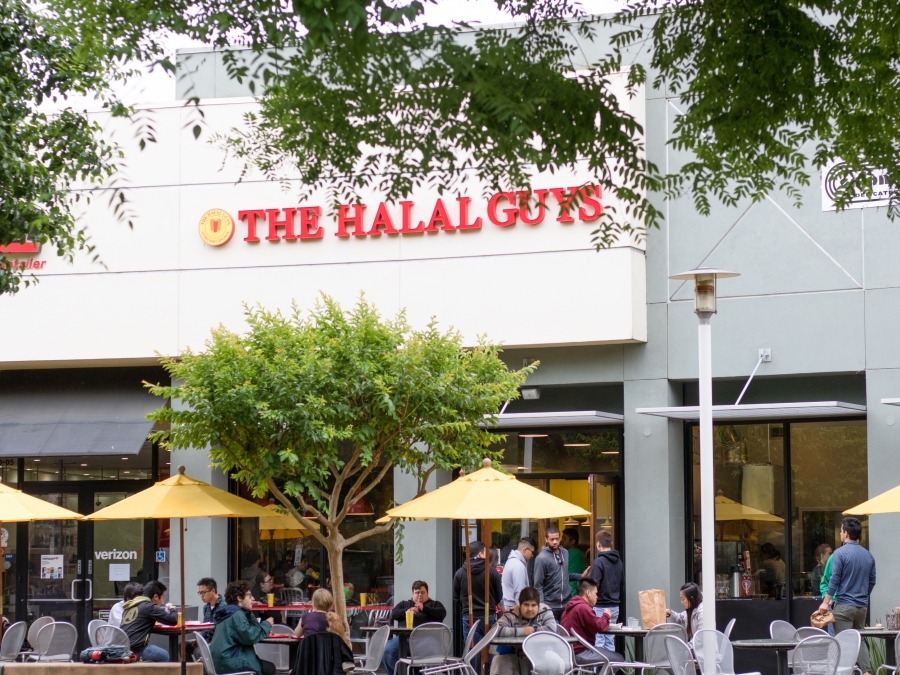
“We are different” — that’s the slogan of Davis’ newest Mediterranean joint, The Halal Guys. The eatery, described as a fast-casual food chain, is serving up classic Halal cuisine, including gyro and falafel. The restaurant is situated in assembly-line style, similar to that of Chipotle or Subway, and it’s known for its signature White Sauce.

Those who are unfamiliar may be wondering: what is halal food? According to The Halal Guys’ website, it’s a “complex melting pot of Middle Eastern and Mediterranean flavors” consisting of beef gyro, chicken, falafel, hummus, baklava and more. “Halal” refers to the Islamic dietary restrictions governing the butchering and preparation of meat.

On a late Thursday afternoon, the restaurant wasn’t busy, but it wasn’t empty either. I found the atmosphere behind the counter similar to that of a food truck, which makes sense considering that’s how Halal Guys started in the first place. It was 1990 in New York City when three founders opened their very first hot dog cart, named “The Halal Guys,” at West 53rd and 6th Ave. What started as a small street business soon turned into a renowned restaurant chain, with The Halal Guys expanding their brand all over the country and even internationally.

The menu is simple. Customers get a choice of either a sandwich or a platter, from there they can then decide whether they prefer chicken, gyro (or a combination of both) or falafel in their meal. Each platter comes equipped with rice, a small salad and pita, all topped with their famous White Sauce and Hot Sauce. From there, visitors can also choose from a small variety of other snacks like fries, hummus and baba ganouj.  

As a vegetarian, I elected to go for a falafel platter along with a side of warm pita and hummus. The service behind the counter was pleasant and moved swiftly. Near the end of the line the server squeezed a dash of hot sauce on top of my falafel. When I requested a bit more spice, the employee warned me.

“Are you sure? It’s really hot,” he said.

And he wasn’t joking. The hot sauce is seriously hot. However, if you’re into spiciness, just enough sauce provides the perfect amount of kick to spice up the flavors of the platter.

To put it simply, I enjoyed my dining experience. The White Sauce was indeed unique, with a tasty flavor similar to that of tzatziki sauce or tahini, but not quite. The falafel was flavorful, but not too crispy, and had a freshness to it that surprised me considering the assembly line style of service. The pita was served warm and soft with a well-sized side of hummus sprinkled in paprika and olive oil. Although the platter itself was nothing to be blown away by, it was these small aspects of the food at The Halal Guys that would make me return for another meal.

And although at first I wasn’t sure how “different” The Halal Guys could be from other halal-style foods I had tried, I could see now how this growing food chain has made a name for itself over the years. With its quick service, reasonably sized portions and convenient location, there’s certainly an appeal to Downtown Davis’ newest addition. So whether you’re a falafel fanatic or simply looking to try something new, The Halal Guys is worth checking out. It’s located at 500 1st St. and are open 7 days a week from 11 a.m. to 11 p.m.


Written by: Sydney Odman — arts@theaggie.org

Kilauea Volcano Eruption

CHRIS FAVERO [(CC BY-SA 2.0)] / FLICKR
Despite breaking news, the volcano has been erupting for over 30 years

Hawaii is an island paradise known for its jaw-dropping beauty, rich culture, and active volcanoes.

Located along the southeast coast of Hawaii, Kilauea is one of the five volcanoes that make up the big island of Hawaii. In the past month, the eruption of Kilauea has hit the front page of nearly every national news organization. Although a volcanic eruption may be perceived as an apocalyptic event of great concern and magnitude, this current activity is quite ordinary. Despite the breaking news coverage of Kilauea, this is just the most recent phase in an eruption cycle that has been in effect since the early 1980s.

The effects of this volcanic eruption are predominantly localized, including evacuations and the closure of Hawaii Volcanoes National Park. However, with tourism season approaching, they are expected to have a economic impact statewide.

“Kilauea has been erupting since 1983, and so what is happening now is entirely typical of what has happened over the last 30-odd years,” said Kari Cooper, a professor in the Department of Earth and Planetary Sciences. “It’s just that it has started in a new location recently and that’s why the press is interested in it.”

The activity is centered around the East Rift Zone, where 22 new fissures have emerged. Fissures are long cracks or openings in the ground that allow magma to surface.

“We call it magma below the surface and then lava once it gets to the surface,” Cooper said. “The fissures allow the magma to get to the surface and then you get some, what we call, spattering, meaning [volcanic rock] gets tossed out of the ground some 10 to 30 feet up in the air and then it also feeds a lava flow.”

Volcanic eruptions are often overdramatized in movies, with embellished scenes of lava encompassing entire villages, sending people running for their lives. But in reality lava is generally only harmful to immovable objects.

“[Lava] is less directly hazardous to people usually because it doesn’t move very fast in this particular area,” Cooper said. “People can typically walk fast enough to get out of the way. So unless you were caught by surprise or surrounded by a lava flow, it is very unlikely to be in danger for your life.”

Along with lava and spattering, the fissures are also emitting harmful gases into the atmosphere.

“They emit volcanic gases such as sulfur dioxide and chlorine bearing gases, which can form hydrochloric acid and steam,” Cooper said. “All magma has some amount of volcanic gases dissolved in them when they are formed deep below the surface. And then as they come up to the surface, those gases come out of solution.”

An analogy to this process, Professor Cooper explained, is like opening a bottle of soda.

“The amount of gas that is contained in the magma varies depending on the path that it has taken to the surface, and so you’ll get different amounts of gas with different phases of the eruption,” Cooper said. “Sometimes the plume is more acid rich or hazardous than other times because of the particular nature of the magma that is coming up at that time.”

Plume referred to the steam emitted from the fissures which contains ash and volcanic gases.

“There are both short-term, acute hazards which are mainly going to be affecting people who are susceptible to respiratory problems, and then there are the long-term, chronic hazards,” Cooper said. “Say if you live downwind of it for your entire life, you might start to notice some effects.”

Colin Ferguson, a graduate research fellow in geochemistry who got his undergraduate degree at UC Davis in 2015, further explained the effects of the volcanic gases.

“It doesn’t really affect local life normally very much because the trade winds carry the gases from the main crater off the island and out toward the ocean,” Ferguson said. “And it’s always being monitored.”

Cooper and Ferguson explained that most healthy individuals are not at any major risk of inhaling these gases for short periods of time. The main threat is posed to those with already weakened respiratory and immune systems.

“Basically with volcanoes, no matter the type [of volcano] they are, where they are, you get a lot of CO2 and steam coming out,” Ferguson said. “And you get some sulfur coming out either in the form of hydrogen sulfide or sulfur dioxide. So those two main components of sulfurous gases or carbon gases can create acid rain locally.”

Again, although this may sound alarming, volcanologists and geologists express the normalcy of this activity that has been ongoing since the start of the eruption in 1983.  

“You have a lot of moisture in a tropical environment, and then the volcanic gases are coming out, they mix with the water and then they make acid which rains out nearby,” Ferguson said. “So there has been this problem with Kona coffee for a while now where the acid rain has been attacking the coffee crop due to a change in prevailing winds.”

The effects on the agriculture near the summit is just one way that Kilauea’s eruption has impacted the island economically.

One major devastation to the locals who live near the volcano is the loss of homes and destruction of roads.

“In terms of local effect, there have been 30-some houses burned,” Robert Zierenberg said, a professor emeritus in the Department of Earth and Planetary Sciences. “There are only two major roads that connect [locals] to the rest of the island. One of those roads has already been covered by lava, so you can’t get out that way — the other road has cracks and hot gas is coming out, so it could turn into another fissure.”

According to Time magazine, as of May 25 at 1 a.m., Hawaii county has evacuated 2,000 residents in Leilani and surrounding neighborhoods.

“At this point, all the people who live on that side of the island have no way to get to their homes anymore or no way to escape from them,” Zierenberg said. “So the local effects are quite devastating to the people who live in that area.”

The more significant and widespread economic repercussions the eruption is having on Hawaii is the hit to the tourism industry.

“In Hawaii, tourism is a big part of their economy and people are canceling their trips to Hawaii because people are worried about the eruption,” Zierenberg said. “The Hawaii Volcanoes National Park [receives] a couple million visitors a year, and right now it’s closed, so that will have a big economic effect on the island in general. So the effects are not really too worldwide, but if you live in Hawaii there can be a lot of hardship for people who have lost their houses or are losing their income because of this.”

As for predictions for how long these events will continue, experts are unsure.

“That is the question that everyone wants the answer to, especially the geologists who are in charge of volcanic safety, and unfortunately we don’t know what the volcanoes going to do,” Zierenberg said.

Cooper conveyed a similar sentiment.

“I think in volcano science we are at a stage where we could, in theory, in the next 10 or 20 years, get to the point where we could make probabilistic predictions like we do with weather now,” Cooper said. “What we would need is a better understanding of what is going on below the surface in volcanos because eruptions are all started by things that happen below the surface. And so we need to have a better understanding of signals that we measure at the surface like changes in earthquake activity, changes in volcanic gas emissions and how to interpret that in terms of what is going on below the surface and then what that means in terms of whether something is going to erupt or not.”

Kilauea’s location and the fact that it has been active for the past three decades makes it a prime site to study and measure volcanic activity. The U.S. Geological Survey has an observatory located at the summit and has had instruments monitoring the volcano for the last hundred years.

Within the UC Davis Department of Geology, students have the opportunity to gain field experience by studying in Hawaii. Geology 138 is a unique summer session undergraduate volcanology course that travels to Kilauea to study at the summit.

“We wouldn’t be able to run it right now because the national park is closed and the students stay right at the summit of the volcano at what’s called the Kilauea military camp,” Zierenberg said. “The class is normally taught in summer session, so if the eruption stabilizes and the park reopens we will try to offer the class. But right now it’s uncertain.”

When Zierenberg taught this class in the past, one of his students was Colin Ferguson, who was an undergraduate geology major focusing on volcanology.

“It’s a dream class,” Ferguson said. “One of those incredible experiences you’ll never look back on and regret having spent time in Hawaii studying an active volcano.”

With the class scheduled for Summer Session II, it is unclear whether the state of the volcano will allow geology students to travel to Hawaii for the field program.

“This eruption could stop tomorrow, it could be going on 10 years from now in the same place, and we really have no way of knowing that,” Zierenberg said. “But with each eruption we learn a little bit more and hopefully with every eruption will get a little bit better at answering those kinds of questions, but mother nature is in charge — we are not.”


Written by: Grace Simmons — features@theaggie.org


Graduate students in Design Department work on projects addressing health concerns

JULI PEREZ / AGGIE

Addressing issues of health care, environment through fashion

Graduate students in the design department at UC Davis work on many diverse projects in pursuit of their interests and passions following the completion of their undergraduate degrees. Lanwei Su, a graduate student at UC Davis working toward her MFA in design, began a project designing smart clothing and wearable devices that address healthcare and environmental issues. Her focus is on designing fashionable hoodies that provide a filter from smog and pollution. Growing up in China, where wearing surgical masks is commonplace due to the bad air quality, she decided that there should be a better, more efficient and more fashionable way to address the issue.

“I grew up in Beijing and lived there until I was 21,” Su said. “For the past six to eight years the air pollution really intensified and has begun to affect people’s everyday lives, including mine and my family’s. It’s gotten to the point that you can smell a burnt, ashy smell every day. You have to wear those surgical looking air masks all day if you’re outside, which I think is really inconvenient, and a lot of those masks are defective so they’re not filtering smog or any toxic gas. They’re just surgical masks that only keep your own bacteria in, not working to filter the air.”

While the issue hits close to home for Su, she noted how her passion for fashion and freedom of expression also drove her towards her project.

“The air masks make people appear sick,” Su said. “They strip people of their individuality because they have to wear such bland masks all the time. That worried me a lot. One time I was with a group of my friends and we were all wearing the air masks, but one of our friends, who was very interested in fashion, was not. She told me that she would never wear the air masks because of their appearance, and I think that was part of what inspired me to start this project as well.”

Su’s program is the UC Davis MFA in design, a graduate degree that unites theory and practice in a two-year program that encourages human-centered and sustainable design practices. Students collaborate with faculty within the department to blend individual-focused research and practice with an understanding of key issues in history and theory. Su works with several UC Davis professors, including Tom Maiorana, an assistant professor in the Department of Design. Maiorana noted how enjoyable it is to be able to work with students on projects they’re so passionate about.

“Lanwei’s project is really exciting just because it has a really human component,” Maiorana said. “It’s there to help people address the need of protecting themselves from smog, but doing it in a way that allows them to still be fashionable and express themselves. I think that’s a really neat need that she’s found to be able to explore that sort of thing. It’s also really exciting because Lanwei’s so committed to doing that project that it’s been fun to see all the different avenues that she’s explored and the way that she’s thinking about it as a business, an engineering challenge, a fashion challenge and pulling it all together in a way that’s super exciting to see how far she’s come in a really short amount of time.”

He notes how, with the diversity of professors with ranging backgrounds and areas of focus, students may rely on the help of different professors in varying ways.

“A lot of times, for me personally, we help students figure out ways to work efficiently,” Maiorana said. “Since my expertise is around prototyping, a lot of what I’ve helped Lanwei do is think about what are really fast ways to learn about some of the challenges that she’s facing. There are certain technical things about filtration systems or masks or filtering that she knows way more about than I do. And because I’m working with so many different students, it would be impossible for me to be an expert in all of those different areas. What I can do is help them think about how to explore those things really efficiently and effectively. Some of the technological things she’s uncovering is way deeper than I could ever go because that’s not my domain area, but that’s quickly becoming her area of expertise.”

With the backing of her team and committee members, Su recently entered her project in UC Davis’ Big Bang! Business competition, which provides a forum for UC Davis and outside communities to collaborate, develop and test out business visions and plans. The competition offers resources for team building, education, mentorship and networking for aspiring and early stage entrepreneurs.

“I’m doing the Big Bang! competition and I’m one of the semifinalists right now,” Su said. “There were 63 teams in the beginning and I think we’re in the Top 6 teams now.”

She notes how the competition, while giving her a place to compete for prize money and recognition, also gives her an opportunity to further develop and expand on her project.

“In the competition, the judges give you feedback and sometimes give you a mentor to help guide you and help you think about a business model, the revenue stream and financial position,” Su said. “It helps give you more a business plan, which has helped me think of a different way that I can get into a design entrepreneurship.”

While Su is still working on developing and refining her smart clothing, she’s excited for what the future has in store for her and her passion project.

“I liked the idea to incorporate my project into a business,” Su said. “I really want to work on this and develop it into a start-up — that’s my vision.”

Bri James, the founder of Scrumpt, a lunch subscription service for kids, and winner of the 2015 Big Bang! Competition, began her business as a side gig in her apartment with her mom. She’s now expanded to deliver lunch for Bay Area families and delivered over 42,000 meals in 2015. She noted her entrepreneurial mindset and how important it is to share ideas that may initially seem out of grasp for an individual on such a small scale.

“Your idea is worthless if you keep it to yourself,” James said in an interview with the Davis Enterprise. “‘I had the idea for eBay before it was ebay, or Uber before it was uber,’” she says of her friends. “Kudos to all those who got their ideas out there.”


Written by: Alyssa Hada — features@theaggie.org

In memoriam: Susan Williams

JULIA ANN EASLEY / COURTESY

Professor Williams’ colleagues share her legacy as marine ecologist, distinguished professor

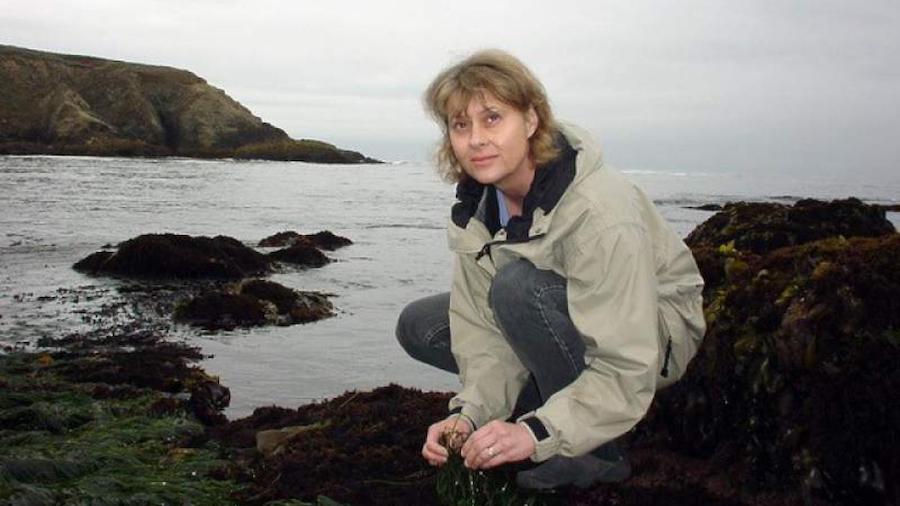
Susan Williams, a distinguished professor of evolution and ecology at UC Davis, passed away in late April in a car accident. According to her obituary, Williams “was recognized as one of the most renowned marine ecologists in the U.S. and globally,” and she consistently encouraged other women to pursue careers in marine science.

Professor Tessa Hill, who worked alongside Williams at the Bodega Marine Laboratory, spoke to Williams’ mentorship.

“Professor Williams was the director of Bodega Marine Lab when I was hired, so she was influential in the start of my career,” Hill said. “She also oversaw three other faculty hires the year before, so she was very influential in the growth and expanding reputation of the marine lab during that time. She was a wonderful colleague and she was a wonderful mentor to my students and other students.”

Hill also mentioned the impact Williams had on students because of her ability to give students who came to her office her undivided attention.

“She was really known for the generosity she had with her time,” Hill said. “When you sat down with her, she focused entirely on you and what your questions and needs were. That’s deeply meaningful to students who would sit in her office and ask questions and get her full attention. She was really, really generous with her attention, mentoring students, and supporting colleagues.”

Speaking to Williams’ extraordinary mentorship capability, Hill reflected on a time when she and some of Williams’ former students nominated Williams for an award on campus.

“It was the Consortium for Women in Research and she was honored as an outstanding mentor by that group,” Hill said. “Her students and I nominated her for the award and they had a banquet to celebrate her. We were all there to celebrate with her. It was really wonderful seeing her recognized for something that she just did without being very loud or boastful about.”

Hill said that Williams “paved a pathway for women in science” throughout her career as a marine ecologist.

“She did many things early in her career that paved a path for women to follow, including being an aquanaut — she lived underwater at a research station in the West Indies,” Hill said. “She was the first woman faculty member at Bodega Marine Lab and the first female director at Bodega Marine Lab. Women, students and other women faculty, like myself, looked to her for guidance and for examples of how we could manage this career and this life.”

According to Hill, Williams will be known around campus and in her field as a caring and hardworking individual.

“Her legacy is absolutely one of an incredibly hard-working, rigorous scientist who worked at the interface of some of the most interesting science, but also science that mattered to people and impacted people,” Hill said. “She cared very deeply about making sure that people had access to that science, that any person — senators, members of the media, students — had access to it.”

Another one of Williams’ colleagues at both UC Davis and the Bodega Marine Laboratory, professor Gary Cherr, gave multiple examples of Williams’ leadership and successes at the Bodega Marine Lab.

“She was instrumental in working out details to bring four new faculty residents to the Bodega Marine Lab, which was a big deal at the time,” Cherr said. “She was also instrumental in acquiring our research vessel; it’s a 42-foot unique vessel and it’s something that she worked at both with financing and the details for us to be able to have a research vessel for coastal oceanography.”

According to Cherr, Williams also wrote up a proposal that received funding for “top undergraduates all over the country to come to the Bodega Marine Lab to study for eight weeks.”

Another influential program Williams brought to the Bodega Marine Lab was one under the National Science Foundation. Cherr said that this program benefited numerous people across a spectrum.

“This was a program that would take graduate students’ research and have the graduate students incorporate it into K-12 schools locally in the school systems,” Cherr said. “It was a benefit for both graduate students and the K-12 students because the graduate students and Susan would work really closely with teachers that were in the classroom so they could meet the core curriculum they were required to meet in science with a hands-on approach.”

When asked what made Williams unique, Cherr said that she appreciated work even if she didn’t fully understand it.

“She understood and appreciated the interdisciplinary nature of what others did,” Cherr said. “She could look over somebody that was doing biochemistry or molecular biology and could appreciate the value of that, even though she might not completely understand it. I think she always had the big picture in mind.”

Hill described the ways in which she would remember Williams and the long-lasting impact Williams had on her.

“I will remember Susan as being an incredibly strong woman who also was deeply caring and fun and funny,” Hill said. “She supported people and saw people as whole people — we weren’t just scientists at work, she understood that we had other things going on in our life. She was like that too: she had a full, amazing life and an amazing husband and an amazing family and wonderful adventures around the world. I think that’s something we should all strive to do.”


Written by: Sabrina Habchi — campus@theaggie.org

Can Netflix-banning Cannes be damned?

JEREMY DANG / AGGIE

An industry in flux flunks, gets flack

The conflict between cinema purists and the emerging power of online streaming recently got a lot of media attention due to the decision by the Cannes Film Festival to ban Netflix films from competing for its prizes. Netflix responded by pulling all of its films from screening at the festival, canning Cannes altogether.

I take neither side in this debate because it’s stupid and shouldn’t be happening in the first place and only is happening because both sides fail to recognize what’s actually in their best interests.

This debate has been framed as a battle over the “future” of cinema and the “definition of cinema.” One side believes that the history of cinema must be honored and that the experience of seeing a movie on the big screen is an essential part of what makes a movie a movie. Earlier this year, Steven Spielberg even claimed that films produced by Netflix should not be eligible for Oscars. Meanwhile, the supporters of streaming services believe that a film is defined based on the form, not on the method of viewing and the business model of the distributors.

As with every dispute ever, simplifying this down to a polarized two-sided argument eliminates all nuance and does a great disservice to both sides, whose proponents become blinded to their common interests and values. The Hollywood Reporter points out the irony of film purists despising streaming services so much, even though it’s companies like Netflix, Amazon and Hulu that are actually doing more to finance the type of art-house and auteur cinema that film festivals like Cannes pride themselves on celebrating — the type of works that may not otherwise get produced.

Netflix (unlike Amazon, for example) has always stuck to the idea that its content should be made immediately available to its subscribers. By law in France, films can’t be streamed until three years after screening in theaters. Therefore, laws would need to change or Netflix would need to compromise its business model in order for a solution to be reached. The idea of promoting and honoring films that can’t be experienced in a theater is seen as blasphemous by traditionalists. All films made with craft, care and intent deserve to be seen, regardless of how they were produced, so it’s difficult to reconcile the strict positions of each party.

Despite this stubbornness, there are less obvious reasons that make streaming more problematic for the future of the idealized cinematic experience. Many movies made for streaming have a TV aesthetic that makes them incomparable to more cinematic works. More importantly, streaming services facilitate a type of passive movie-viewing experience that allows people to pay less attention, be less engaged and not be as strongly impacted or moved.

It’s true that some films simply have to be seen on the big screen because they are immersive spectacles. Respecting cinema, however, is not about the amount of surface area a screen has; it’s about the amount of attention and thought you give it. A film demands to be scrutinized with the eyes. To not give a film the attention that its creators expect is disrespectful to their effort and vision and prevents the full effect of it from coming across.

If skillful and sensitive, the filmmakers have carefully calculated this impact. In scientific fields, the varying levels of precision of measuring tools require the scientist to account for uncertainty, which increases as more different measurements are taken. Film works in the opposite manner. All filmic techniques, such as language, lighting, cinematography, music, pacing, editing, narrative structure and staging, can be manipulated individually to contribute an overall tone that becomes more precise as more variables are added. The convenience of streaming services like Netflix allows people to disengage and not to be in a mindset that allows them to absorb all of these elements.

The key is to offer your focus. The size of the screen is only sometimes relevant when considering whether we have fully enjoyed, experienced and appreciated a film. What is more important is having the consideration to experience any particular film in a way that will do it justice. For these reasons, Netflix as had a “net” positive impact because it has expanded access to films.

It’s ridiculous to be so pureist about film when nobody has the same attitude about books of Picasso works or recordings of Mahler symphonies. While nothing beats the big screen experience, streaming services and film festivals alike must realize that ensuring a healthy future for film should be less about preserving the house of worship and more about supporting everyone’s ability to have greater access to the content. This allows people to develop stronger appreciation for film, which is the common goal. Only when people have this degree of love and respect for film can they realize that “Lawrence of Arabia” and “Dunkirk” deserve more attention than anyone can give while watching on an iPhone on the toilet.


Written by: Benjamin Porter — bbporter@ucdavis.edu

Disclaimer: The views and opinions expressed by individual columnists belong to the columnists alone and do not necessarily indicate the views and opinions held by The California Aggie.

Humor: Man unsure if air raid sirens real or imagined after receiving text from ex

JEREMY DANG / AGGIE

This is not a drill

Sources reported Thursday that local 20-something Nate Finnegan started asking if anyone else was hearing loud sirens after receiving a text message from his long-time ex-girlfriend Brianne.

“He looks like he wants to throw up,” said friend Megan Jacobs, 26, who confirmed that her friend looked like he had just seen an equally horrifying and sexy ghost.

At the time, Finnegan was reportedly praying that his ex was just texting to tell him to get off her mom’s Netflix account.  

Friends became concerned for Finnegan’s sanity after he asked whether it might be possible that his ex was texting to return one of his cardigans.

Finnegan explained he couldn’t talk long, as he needed the next 24 hours to put off opening the message. He reported that he had a lot of work to do — mainly, finding a tv show with at least three seasons he could binge before calming down enough to respond to the text message like a normal human.

Finnegan’s best friend Jackson told The California Aggie that, last summer, when Brianne tagged Finnegan in an innocuous Spongebob meme, he drank all the fluids around him indiscriminately.

“Milk, chicken broth, Windex — he just chugged any container of liquid he could get his hands on,” Jackson said. “It was like all the water in his body had immediately been flushed through his sweaty palms.”

At this time, it’s unclear how Mr. Finnegan intends to respond. Suffice to say, he will try to stay as uninformed about his ex-lovers’ intentions as possible.  


Written by: Parker Nevin — phnevin@ucdavis.edu

(This article is humor and/or satire, and its content is purely fictional. The story and the names of “sources” are fictionalized.)

Coffee Culture Among Colleagues

MICHAEL LEAHY / AGGIE

UC Davis researchers find that coffee aids group discussion

From its origins in Ethiopia to its becoming an integral part of North American culture, coffee has been consumed since at least the 15th century. According to associate professor David Kyle of the Department of Sociology, coffee consumption being accompanied by the advent of specialized coffee salons, coffee shops and break rooms has made “coffee culture” more about the social interaction and less about the drink. UC Davis researchers decided to look more into the effects of coffee during social interactions by studying the effects of coffee on individuals’ performance in a group setting.

For centuries, coffee rituals were as much about the gathering of friends and not just the drink,” Kyle said. “For example, soon after arrival in London in the 1600s, there were already 2,000 coffee shops in 1700. They were known as penny universities because for a penny a cup you could engage people from all walks of life in sustained discussion about any topic. I’m happy to see that UC Davis researchers are turning to the social dimensions of coffee consumption and culture.”

Two separate experiments were conducted to observe the effects of caffeine on group discussions, studying both the quality of discourse itself and how participants felt about themselves and each other after the discussion.

“Undergraduate students who were moderate coffee drinkers were brought to a laboratory in small groups and given a group task among many other tasks,” said Vasu Unnava, an assistant professor in the UC Davis Graduate School of Management and author of the study. “In the first study, the target group consumed coffee while the control group did not consume coffee. In the second study, the target group consumed regular caffeinated coffee while the control group consumed decaffeinated coffee.”

In both studies, the researchers found that the group that ingested caffeine enjoyed their tasks more. The participants that ingested caffeine also found others in the group to be more receptive to their ideas. In the second study, researchers found that the caffeinated group was more focused on the task at hand. The results of the study show that a moderate amount of caffeine positively affects participation in a group discussion and makes participants feel better about themselves and their peers.

These results are preliminary and more research needs to be done, specifically addressing two gaps in the study. The participants in the study were coffee drinkers and participated in the study after avoiding coffee for a few hours. This makes it hard to tell if the coffee consumed in the study increased the alertness of the caffeinated participants or if the control group merely had decreased alertness. Another issue is that all of the group members had similar opinions about the topic of discussion, which was the Occupy Wall Street movement.

“One [way to resolve the gaps] is to give everyone a cup of regular coffee so there is no withdrawal effect,” said H. Rao Unnava, a professor at the Graduate School of Management and co-author of the study. “Following that, in a couple of hours, we can give one group caffeinated coffee and another group decaffeinated coffee and see if our results replicate […] It would be useful to see what happens when a topic is chosen that people disagree about. Would caffeine make people more agreeable?”

The current results can be applied to numerous other studies.

There are many possible extensions of this research,” said Vasu Unnava. “We can look into group tasks that are harder to see if the effects replicate. We can look into group tasks where there will be significant disagreement and see if coffee helps. We can look into other ways of increasing alertness in people and see if our results are reproduced.”


Written by: Kriti Varghese — science@theaggie.org


True crime podcasts

JEREMY DANG / AGGIE

Some noteworthy selections

True Crime podcasts have recently garnered more attention. There are lots to choose from — but don’t worry, I did the dirty work for you and created a short list of the highlights.


My Favorite Murder

For those of you wanting to hear about different murders that have a beginning, middle and end to them, this is your show. Hosted by Karen Kilgariff and Georgia Hardstark, these two comedians love a good murder story. They do not disappoint when it comes to their improvisation either.

For the first 20 to 30 minutes of the show, the hosts talk about their lives and current events. Then they each talk about a murder they either researched or saw on a crime show. What makes this podcast so great is that they are not just recounting facts, they are also having a discussion — making the terrible things you’re listening to not as eerie. There are currently 121 episodes and 70 “minisodes.” Like they always say, “Stay sexy and don’t get murdered.”


Dirty John

This six-part investigative journalism piece is about deception, love and of course, murder. The podcast follows the relationship between Debra Newell, a successful businesswoman in Newport Beach, and John Meehan, the man she fell in love with via an online dating website. The podcast uses an interview format, with the host, Christopher Goffard, talking to Debra and her extended family — all of whom were all affected by Debra’s boyfriend.

Up and Vanished

This is an investigative piece involving the disappearance of Tara Grinstead, who was a beauty queen and a school teacher. There are 24 main episodes, but there are also case evidence episodes, question and answer episodes and bonus episodes. What’s so interesting about this podcast is that the investigation by Payne Lindsey actually helped solve the case. While listening to this podcast, you get a front row seat to the actual investigation.


Serial

This is another investigative podcast that follows the case of the 1999 murder of Hae Min Lee and the following conviction of her ex-boyfriend, Adnan Masud Syed. Host Sarah Koenig investigates this case to find the truth: is Adnan, the accused, actually the murderer? The twists and turns of this investigation made Serial one of the most popular podcasts to date. This specific murder case is the basis of the first season and has 12 episodes.


Hollywood and Crime

This podcast is little different from the previous ones because it involves reenactments. The premise of this podcast is trying to understand and piece together the golden era murders of Hollywood. There is a heavy focus on the Black Dahlia murder case and the subsequent murders that might be tied to it.


Written by: CaraJoy Kleinrock — arts@theaggie.org

Solo doesn’t stand alone

CHRISTIE NEO / AGGIE

Action film’s reliance on spectacle bogs all characters

“Solo” is a Disney movie. It’s watched as a big label blockbuster and not much more — which isn’t necessarily a bad thing. The film’s $250 million budget doesn’t go to writing or actors, but to CGI and special effects. For a fan who watches Star Wars for the lasers and action, this movie is perfect. For a fan more interested in the characters and the galaxy, they’ll be asking for a little more.

The action and acting is not bad. While bogged down by questionable dialogue, the movie was fun to watch. The film begins in a speeder and keeps that speed throughout, rarely slowing for a breath. Yet much of the fun comes from the specific situation. Han Solo in the original trilogy is a lot of talk, often boasting about his past achievements, like the efficiency of the Millennium Falcon. Without giving them all away, it’s nice to see scenes paying homage to those achievements (mentioning some and playing out others), foreshadowing the smooth scoundrel Solo will become by showing his rise to smuggler fame.

Focusing the budget on spectacle, things like CGI and flashy design noticeably damage other parts of the film. Star Wars has never had incredible scripts, but “Solo’s” script really walks the line between bad and awful. Actors who have shown merit in other works — people like Woody Harrelson, Donald Glover and Emilia Clarke — struggle to overcome the stiff dialogue.

On a basic level, “Solo’s” script suffers from an overload of exposition. The plot isn’t implied or inherent in the characters’ actions, but often laid out too directly. Kira, played by Emilia Clarke, is plagued with one such line early in the film: congratulating Han on acquiring item X and how it allows them to accomplish goal Y. Having the plot handed to me as a rope to lead to me through the film, saying “hey come this way,” is unexciting. Plots are best unveiled as action ensues, not outlined before they begin, which makes for stale moments.

Unfortunately, the largest damage the script inflicts is on Han Solo. Han starts as an arrogant outlaw, and, when the credits role, he is an arrogant outlaw. The stiff nature of dialogue allows little room for character development, an opportunity established yet never capitalized upon.

Early in the film, a minor character bites the dust with one of the film’s strongest lines, warning Solo to not die alone. The success of this line isn’t in the actual structure, but in its function. It opens up an internal struggle for Solo; he is a smuggler constantly on the lam, a lonely life that leaves many of its runners dead before happy. The struggle between being solo (pun intended) and finding family is key to Han Solo, shown throughout the original trilogy with his and Leia’s awkward love dynamic. It’s disappointing to see that dichotomy opened and unresolved in “Solo.” Exploring that avenue has potential to show the complexity of Han Solo and his internal struggle between the lonely, law-skipping scoundrel he sees himself as and the stoic yet sympathetic hero other characters dub him.

Maybe someday later, Solo’s humanity rather than his wit will shine through. But for now, “Solo” isn’t the film for that. It maintains viewers’ attentions through the flash of blasters, shoveling its shallow characters under the rug. It’s entertaining, but with a reliance on spectacle and not script, “Solo” exists as another mediocre addition to Disney’s growing Star Wars behemity.


Written by: Nicolas Rago — arts@theaggie.org

Riding in silence to make the loudest sound

SHEREEN LEE / AGGIE

Davis bikers remember those lost, show how vulnerable they are to cars

On May 16, bicyclists rode for nine miles through Davis together without saying a word. Their journey was part of an international bicycling event called the Ride of Silence, which happens every year on the third Wednesday of May. The Ride of Silence originally began in 2003 after a man riding a bicycle in Texas was struck by a school bus. Now, the event has spread all across the world.

The Davis Ride of Silence started its journey at Ken’s Bike-Ski Board shop at 7 p.m. A crowd of around 50 gathered around the Davis Bike Club organizers, Ellen Winder and Andre Hamel. Many in attendance were part of the Davis Bike Club. Others came along to ride and remember their friends and family who died while biking.

Ellen Winder, one of those who organized the event, asked if anyone wanted to mention any of those people’s names. One by one, people called out names of those that have died or have been injured by cars.

Brandon Wiers, standing all the way in the back called out, “Cristobal Heitmann,” with several in the audience nodding as they recognized the name. Patricia and Brandon Wiers were not riding in the event themselves, but they had come to offer their support and remind people of how painful it can be to lose someone just so recently.

“We have a granddaughter whose fiance [Heitmann] was in a head-on collision,” Wiers said.

Heitmann had just attained his master’s degree from the Department of Plant Sciences at UC Davis. He was killed on April 17 while riding his bicycle in an accident involving a motorcycle in Redding.

As the police escort arrived, everyone got ready to go. Cyclists wore red and black bands to show that they were thinking about those that have been hurt.

“Please remember to ride in silence,” Winder said.

With signs marking their procession, they biked slowly at under 12 miles an hour, culminating their nine-mile journey at the Davis Bicycling Hall of Fame. Wil Uecker, treasurer of the Davis Bike Club, thought the ride through Davis went well. Uecker started attending the Ride of Silence three years ago.

“It was well attended,” Uecker said. “Everybody stayed together. The police escort was essential for people to stay together. The [Davis] Bike Club paid for the police escort.”

To Winder, the ride serves a two-fold purpose. It allowed for attendees to both pay their respects to friends and family as well as remind drivers how bicyclists are very vulnerable.

“I hope people who see our procession are more attentive when around bicycles,” Winder said.

Like Winder, Miller has found biking to have a significant impact on the community.

“It was really wonderful,” Miller said. “Usually I just listen to music. It’s really quiet in total silence. It’s nice exercise. It does bring awareness and attention to how vulnerable bikes are.”

Miller is no stranger to how dangerous drivers are toward bicycles. He attended to honor a friend of his parents’ who was struck by a car right before retirement. Miller wants a bigger sign for the procession in future years. For example, he suggested that they use a trailer or something big so that drivers in particular can actually see what their procession is for.


Written by: Justin Chau — city@theaggie.org


Fun Facts about the Davis Farmers Market

MACLEAN HARTFORD / AGGIE

Interesting tidbits about one of Davis’ classics


  1. It’s open… rain or shine!


The Davis Farmers Market, located at Central Park in Downtown Davis, operates every Saturday from 8 a.m. to 1 p.m. all year round. Right now through Oct. 24, the farmers market also operates from 4:30 p.m. to sunset on Wednesday evenings in what’s called “Picnic in the Park.” At this event, visitors can take a stroll past the vendors’ stands, buy dinner at the food faire or have a picnic on the grassy space in the warm, golden light while enjoying the music of local bands and laughter of frolicking children. The greatest thing about the Davis Farmers Market is that the public can always count on this steadfast market to pick up their produce — rain or shine, no matter what.


  1. It has been voted one of the Best Farmers Markets in America lots of times.


This spring, Departures magazine named Davis one of the best farmers markets in the nation. With its fresh foods, great community spirit and proximity to California’s agricultural center, the Davis Farmers Market makes Aggies proud that their college town hosts the only California farmers market on this list. This isn’t the first recognition the Davis Farmers Market has received, though. In 2009, it was voted “America’s Favorite Farmers Market” in American Farmland Trust’s first online contest, and in 2012 USA Today ranked Davis No. 2 on its list of “10 Best Places to Visit a Farmers Market.”


  1. There’s a Davis Farmers Market cookbook!


In 2012, one of the co-founders of the Davis Farmers Market, Davis alumni and former Davis mayors teamed up with cookbook writer Georgeanne Brennan to write and publish “The Davis Farmers Market Cookbook.” The cookbook is filled with seasonal recipes that utilize ingredients from local vendors and producers, with the new edition of the book featuring 75 recipes; it also includes a foreword from legendary chef Alice Waters. Since its publication, the cookbook has won three awards and is now considered a classic that helped catalyze the farm-to-fork movement.


  1. It’s more than 40 years old, having begun in 1976, making it one of the first in California.


The Davis Farmers Market was founded by a group of UC Davis students: Martin Barnes, Kathleen Barsotti, Jeff and Annie Main, Henry Esbenshade and Ann Evans. United under the mentorship of rural sociologist Isao Fujimoto, the students began a project combining community values, social justice and healthy food to community members in what is today called the Davis Food Co-op. Now, more than 40 years later, the Davis Farmers Market has transformed into a robust, award-winning event that continues to pave the way for environmental sustainability and promote shared community values.


  1. A LOT of people go — between 7,000 and 10,000 every week.


It’s safe to say that the Davis Farmers Market is one of the town’s most popular attractions. Every time, community members trickle into Davis’ Central Park until it is bursting with visitors. Sometimes it can even be tricky elbowing through the crowds of people under the pavilion or finding a spot to lay down a picnic blanket on the grass. In fact, every year the combined average attendance between the Wednesday and Saturday markets is more than 500,000 visitors, with between 7,000 and 10,000 every week.


  1. There is a YouTube documentary about the Davis Farmers Market.


In 2013 a short film was published all about the joys of farmers markets known as “Farmers’ Markets: Love at First Bite.” In particular, the film highlights what it considers “one of the most successful markets in the country — the Davis (CA) Farmers Market.” The documentary is almost 27 minutes long and features interviews from farmers and visitors alike. The main focus of the film is to show the benefits of a farmers market not only to bring community members and neighbors together, but to appreciate and support a culture of healthy and sustainable food and food growing.


  1. Picnic in the Park (the Wednesday shindig) is (practically) zero waste.


In 2011, the zero waste program was launched for Picnic in the Park, which aims to minimize the waste produced at such events. Avoiding the use of plastic bags is of particular emphasis for the Farmers Market, which is what its “Go Green, Feel Good” campaign is all about. The market works hard to promote sustainable shopping and the reduction of plastic waste, selling reusable bags for its customers. Many shoppers can be seen carrying tote bags and woven baskets around the market, and designated bins for recycling, compost and waste are closely monitored by UC Davis student volunteers.


  1. The current manager of the market has been there for more than 35 years.


There are many people who contribute to the Farmers Market, but Randii MacNear is the market’s only full-time employee, and she’s been doing it for quite some time. MacNear has been the market manager for more than 35 years. She has seen the growth of the market over the years and forged strong bonds with multiple generations of market-goers. Many families have stuck close to this cherished event for many years. One of the founding families, the Barsotti-Barnes, have been selling their Capay Organic produce at the Davis Farmers Market since its opening.


Written by: Marlys Jeane — features@theaggie.org

Stepping into the world of education

THOMAS MA / AGGIE

A closer look at one of UC Davis’ most influential minors

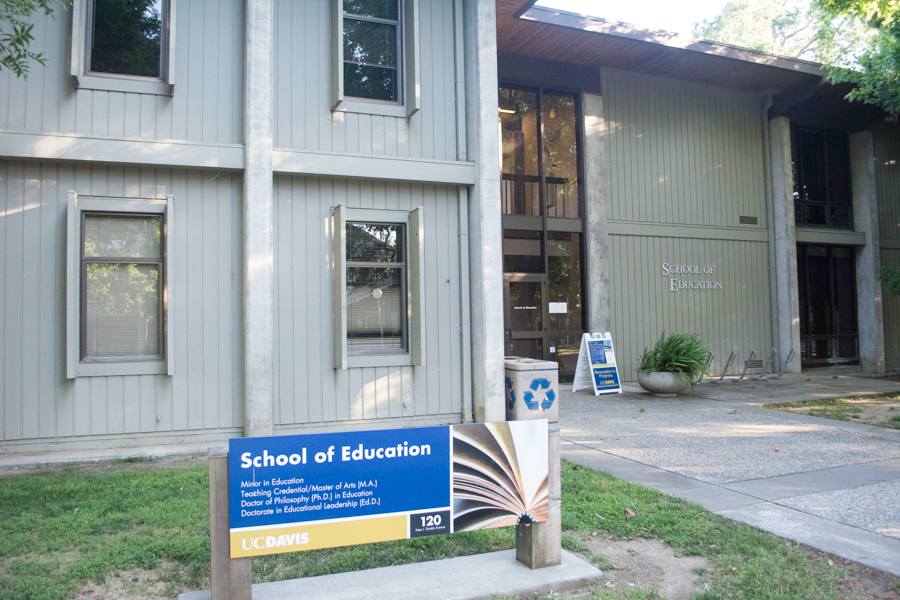
The UC Davis School of Education was founded in 2002 on the principles of leadership, community and commitment to education. The school offers a wide range of courses and programs for students to explore — among them, the education minor. Education encompasses a diverse and robust curriculum, making it one of UC Davis’ most sought-after minors.

“We are the largest minor on campus,” said Tracy Falk, the student services advisor for the UC Davis School of Education. “We have over 300 active students. We pull from human development, psychology, sociology, English, communications, so it’s really a neat mix of students.”

Falk explained the logistical aspects of the education minor: the curriculum is not limited to courses offered by the School of Education exclusively and can include a broad array of courses from multiple fields of study.

“We have courses offered in education for the electives, [but] we also have some specific courses outside of education that are offered by different majors [that] have an education theme or an educational context.,” Falk said. “We try to give people a variety of topics to choose from.”

Falk emphasized the quality of the staff and faculty members that work in the School of Education. According to Falk, the unyielding passion for education that each faculty member possesses is what really makes the program exceptional.

“One of the most excellent pieces of the school would be our faculty,” Falk said. “They are very committed to teaching. Being here at a UC school, they’re also very committed to research and they have active research and grants and projects, which they share with the Ph.D. students as well as their undergrad. But first and foremost, our faculty are teachers, and what students rave about is how they really enjoyed their classroom experiences and they really enjoyed working with our faculty.”

Jacqueline Rodriguez, a third-year human development major and prospective education minor, says that her hands-on research experience with one of her professors solidified her passion for pursuing education as a career.

“I want to get my teaching credential and further pursue special education,” Rodriguez said. “I took EDU 115 with Nicole Sparapani, [who] specializes in children with autism. I’m actually doing research with her right now. She’s amazing in her work and I really enjoy working with [her].”

Danny C. Martinez, an assistant professor of language, literacy and culture in the School of Education, says that the education minor aims to give students a holistic sense of the inner dynamics of education and how students can expect to apply that knowledge to their everyday lives.

“The education minor is a series of courses that allows students to get a taste of what they may be encountering in different fields within education and some of the issues that are really important for the field of education at the moment,” Martinez said. “We really want students to think about how schooling has many components to it, how complex schooling is and the attempts that people have made […] to make schooling a better experience for folks.”

According to Martinez, the curriculum allows students to analyze education within a sociopolitical lens, incorporating many relevant issues that have molded the education system into what it is today.

“We try to make very clear the inequities that have existed in the schooling system and how some of those inequities were purposeful,” Martinez said. “Schools were designed so that a certain demographic within the United States could maintain their social positions while others continued in positions that weren’t as fortunate.”

Martinez says that having that knowledge of education gives students a more comprehensive perspective of the world, which is why students from so many different fields are attracted to the minor.

“Many of the students in my classes who want to go into education want to become teachers,” Martinez said. “I’m seeing more students who want to do education research. I have many students who are interested in [education] policy. We have students who know that education isn’t where they’re going in their careers, and they simply want to know more about the education process.”

Whether they plan on pursuing a career in education or not, Martinez believes that students who decide to explore the education minor are exposed to invaluable lessons and experiences.

“I think what’s substantial about [the education minor] is that we’re giving students a range of experiences to think about,” Martinez said. “Students who know they want to become educators, students who don’t know, or students who are just taking a GE — they’re leaving with some experience around their education. They understand how education should be a productive, transformative experience.”


Written by: Emily Nguyen — features@theaggie.org

In memoriam: Janice Corbett

KARIN HIGGINS / COURTESY

UC Davis alumna, Cal Aggie Alumni Association, ASUCD leader described as example of Aggie Pride

Janice Corbett passed away from cancer in her home on Sunday, Apr. 29, at 47 years old. Corbett graduated from UC Davis in 1994 with a bachelor’s degree in managerial economics and psychology.

Corbett returned to UC Davis in 2003 to work as the membership manager for the Cal Aggie Alumni Association. She eventually became the associative executive director of CAAA.

In the workplace, Corbett was held in high regard among her peers for her enthusiasm in all aspects of her job.

“She is a very proud Aggie” said Richard Engel, the assistant vice chancellor for alumni relations and executive director of CAAA. “She was very strict in holding to our traditions and values […] and the principles of community that this campus has.”

In 2013, Corbett became the business manager for ASUCD, where she continued to serve Aggies by working with senators, unit directors and other ASUCD officials to ensure that the association remained financially stable and cost-effective.

Alex Lee, a former ASUCD president and UC Davis alumnus, spoke about Corbett’s dedication to serving ASUCD even if the work led to long hours at the office. Lee recounted times when Corbett would be particularly pressed for time and have to rush out of the office after hours of working with students.

“Janice was always prioritizing everyone else,” Lee said. “She’d spend her nights and weekends with us and somehow find time to make sure her kids are taken care of and go to their myriad of activities.”

Corbett’s legacy can be seen in the relationships she formed with her family, coworkers, students and friends — groups which tended to overlap.

“She looked at every ASUCD senator and elected officer as somebody she’s serving and charged to take care of, to help their budgets, to make sure they could fulfill everything they did,” Engel said.

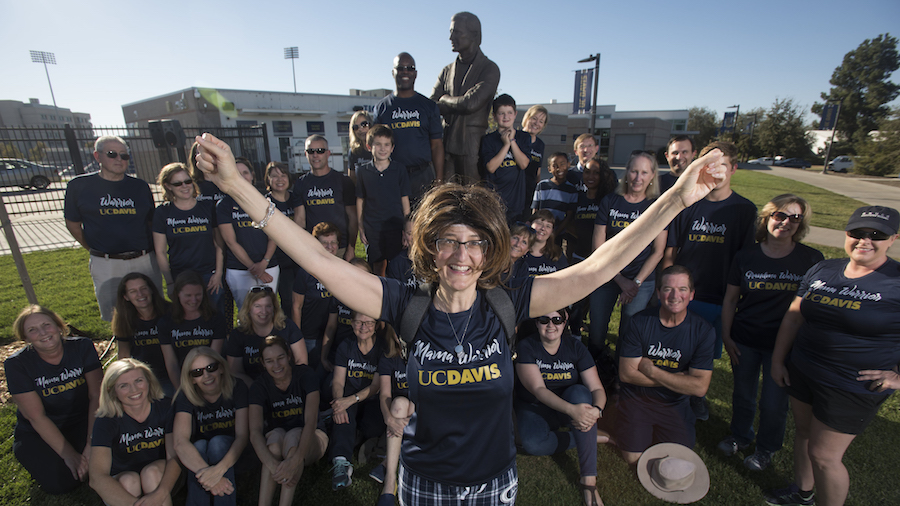
After her diagnosis, Corbett took on the label of a “Mama Warrior” and, with the help of her loved ones, she created a collective of Aggie Warriors. T-shirts created by Corbett, which the Campus Store temporarily incorporated into its inventory, displayed Corbett’s label of perseverance. These Warriors were an embodiment of Corbett’s definition of Aggie Pride and a display of its significance in her battle with cancer.

In her own words, “Aggie Warriors take what they are given and create amazing solutions to make a better world and UC Davis institution. [To] those who are helping me to look for the rainbows and remind me to ignore the rain, thank you for helping me to stand Aggie strong and Mama Warrior on.”

Corbett resided in her mother and father’s house in Davis during the later stages of her illness. Her father, Herb Wimmer, recounted Janice’s desire “not to make much of her illness” to others, but she received “boxes full” of cards daily. She would regularly remind her father to check the mail and the two of them would read through messages from former students and loved ones.

“It’s very heartwarming for a father to see, amazingly heartwarming to see what she meant to people,” Wimmer said.

Corbett made lasting relationships in every space she worked in.

“There were many students that Janice served as their mentor but there were also students who looked at Janice as more than a mentor,” said Milton Lang, the former associate vice chancellor for student life, campus community and retention. “They looked at her as a teacher, as a coach, and some of them even looked at her as a parent; they respected her that much.”

San Lee worked under Corbett in CAAA as a student volunteer in 2007 and remained close friends with her into her years at graduate school and well beyond. Their friendship extended so far as to see Corbett plan the wedding of Lee and her husband, Mu Chou, in 2016. The couple returned to Davis from their home in Hong Kong to provide company for Janice in her final days.

“She just loved life,” Lee said. “And life loved her.”

Corbett’s memorial service was held on Tue., May 8. Her sister, Nancy Veatch, delivered a eulogy to family and Janice’s friends, among whom were over 10 years of CAAA employees.

“Janice lived her life guided by the hallmarks of our upbringing. Our parents, Herb and Christine, always taught us to treat others with respect, to do the right thing when no one is looking, and most importantly to make the world a better place by working hard, living selflessly and exhibiting integrity and character in all you do. These lessons shaped Janice into the person she became. Even though she has now left us, I believe that she would want all of us to continue on in her mission to make the world a better place.”

Janice Corbett is survived by her husband, Larry, her sons Anthony and Dominic, her parents, Herb and Christine Wimmer and her sister and brother-in-law, Nancy and Steve Veatch.


Written by: Elizabeth Mercado — campus@theaggie.org