54.2 F
Davis

Davis, California

Friday, December 19, 2025
Home Blog Page 509

Guest: Time to play hardball with student fees

MACLEAN HARTFORD / AGGIE FILE

After passing a fee initiative, who keeps the university compliant and accountable?

The Aggie’s recent story “Administrators overrule student advisory council’s 2017 vote to reject increase in student fees” raised a number of important questions. When students pass a fee initiative and begin paying to support something or solve a problem, what exactly are they entitled to expect in return? Once the Regents approve it, what does the phrase “Advisory to the Chancellor” even mean? Is the designated oversight committee for real or just for show? What sorts of liberties can the Chancellor take with those initiative fees or, just as importantly, the terms and conditions embodied in that initiative? Is anyone tracking and reporting on the university’s compliance? Where are the checks and balances in this system? Where is the accountability?

Sadly, all these roll up into a single, very troubling question: Is this a case of “Shut up and pay”?

It wasn’t always this way. In fact, until relatively recently, such questions were not even imaginable. That’s why the Student Activities and Services Initiative, Facilities and Campus Enhancement initiative and Campus Expansion Initiative, which were based in trust, simply reflect the students’ intent. But then came Linda Katehi and all that changed.

You may remember Linda Katehi. While serving as chancellor from 2009-16, Katehi managed to rack up a stunning string of successes. Examples include the internationally-famous pepper spray episode; sidelining, crushing or running off any employee who did not readily subscribe to her definition of “excellence”; hiring an army of new deputies at top-tier salaries to replace them; engaging consultants to enhance her own image on the internet; moonlighting on outside for-profit boards both with and without the UC Office of the President’s permission; and convincing almost nobody she was telling the truth about any of it — including, ultimately, UC President Janet Napolitano and the Regents. In essence, she was our very own Betsy DeVos.

But before any of that, in her very first year (2009-10) she managed to breach the CEI (the passage of which in 2002-03 was a pre-condition to the university’s reclassification to NCAA Division I) when she cut four intercollegiate sports. Her decision, which would later be exposed to have been made on false grounds, no less, directly harmed nearly 150 amazing Aggie student-athletes. Blaming it on irrelevant state budget cuts, the maneuver was apparently part of an opaque but deliberate strategy to concentrate more resources on the high profile sports of football and men’s basketball (a further violation of the CEI) and at the same time shift more of the funding burden to the students (a violation of the SASI). Moreover, it involved the confirmed misuse of $3 million in student fees — which would still be going on today if not for complaints raised by outside parties. But I digress.

The point is, don’t think she didn’t listen to the students. She sure did. She listened to the unanimous objections of ASUCD elected leadership. She listened to those who demonstrated on campus. She listened to their speeches at rallies and town halls and even in the testimony they gave at a state senate select committee hearing in Sacramento. And then she did just exactly what she set out to do. Apart from the shambles she made of the trust and respect students deserve to enjoy in their university, from that moment on they would be paying 100 percent of the fees for only 85 percent of the intercollegiate athletics program they had a right to expect.

So it should have come as no surprise that Ralph Hexter, hired as he was by Katehi herself back in the day and acting in his capacity as Interim Chancellor, would see fit to overrule the COSAF in 2017 and impose a CPI increase on the students. It remains a big disappointment, however, that even Chancellor May seems to be willing to protect the unworthy and defend the indefensible. He even passed up a great opportunity last month to reinstate women’s rowing as part of trying to get the university back into Title IX compliance (yet another violation of the CEI, by the way). Presumably he and others just couldn’t bring themselves to take even that small step toward acknowledging the misdeeds and debts from the past. The doctrine of “Chancellor Infallibility” lives on.

There’s more, lots more. But what to do about it? If students want the university to play fair with their initiatives once again, then it’s time for some hard ball. Contact your state legislator, share your concerns and ask her or him to ask the State Auditor to investigate how student fees and fee initiatives have been administered on campus over the past 10 years.  Only when the abuses of the past have been exposed and lessons have been learned can trust and respect be restored to the entire picture of student fee initiatives at UC Davis.

Paul Medved graduated from UC Davis in 1978 with a B.S. in civil engineering. He has worked in transportation engineering in the Bay Area and Asia for nearly 40 years, now serving as the project manager of the BART Warm Springs Extension project.


Written by: Paul Medved

Disclaimer: The views and opinions expressed by individual columnists belong to the columnists alone and do not necessarily indicate the views and opinions held by The California Aggie.


Unjust separation of families at border

CAITLYN SAMPLEY / AGGIE

Children, parents torn apart with new immigration policy

Word spread like wildfire over the weekend that the Trump administration lost nearly 1,500 migrant children after separating them from their families at the border. The children were feared to have ended up in the hands of human traffickers. Hashtags like #WhereAreTheChildren and #MissingChildren that arose in response went viral on social media as people vied to expose this perceived injustice.

Further insight into this public outcry revealed that the Department of Health and Human Services actually called the sponsors of the children, which the government helped place during the end of last year. Some of the adult sponsors chose not to respond to the agency. The figure of 1,475 represents the number of children whose households didn’t answer the phone when the HHS called to check on them and is not an indication that the government “lost” these children. It was also found that the 1,475 children who were unaccounted for were not taken from their families but had come to the United States without their parents, been picked up by the Border Patrol and released to the custody of a parent or guardian.

So where did the national outburst come from? It was a combination of children left unaccounted for due to various reasons and the controversy over the Trump administration’s new immigration policy. This new “zero tolerance” approach was introduced last month by Attorney General Jeff Sessions and states that anyone who crosses into the United States illegally will face criminal prosecution and be sent immediately to federal court. As a result, children are confiscated from parents who illegally cross into the United States and are left in the custody of the Department of Health and Human Services.

Hundreds of immigrant children have already been separated from their parents at the border since last October, and Sessions’ new policy will result in a steep increase of separated children. Once separated, the protocol is that children will be sent to HHS shelters — which are already at 95 percent capacity — or potentially to military bases as a “last option.”

But it’s still unclear what will happen to every child separated from their families even if they make it to one of these shelters. Sessions has taken a less sympathetic approach to the controversy over his policy, saying, “If you don’t want your child separated, then don’t bring them across the border illegally.”

It’s not right to subject innocent children to a life of uncertainty at an overcrowded HHS shelter or with an unfamiliar sponsor. Children should not be held hostage to their parents’ decisions, regardless of their immigration statuses. They deserve the equal opportunity of a safe and secure future.

The Editorial Board encourages Americans to question such volatile policies and consider the lives of innocent children, just as they would children with United States citizenship.


Written by: The Editorial Board

Becky Hammon interviews with Milwaukee Bucks

CAITLYN SAMPLEY / AGGIE

Hammon makes history in process despite outcome

After breaking the glass ceiling in 2014 by becoming the NBA’s first female assistant coach, Becky Hammon has made NBA history yet again. Hammon, who first made her name playing 15 years in both the WNBA and overseas leagues before her coaching, became the first woman to be interviewed for a head coaching job in the NBA. Though the job eventually went to former Atlanta Hawks head coach Mike Budenholzer, the fact that Hammon was interviewed was an important step toward a league which can truly call itself inclusive.

Though male coaches such as NBA legend Bill Laimbeer have become commonplace in the WNBA, the NBA has been slow to adopt the same level of inclusivity. Aside from Hammon, the Sacramento Kings are the only other team to have hired female coaches, with former WNBA player and coach Jenny Boucek hired as a player development coach. Before Boucek, Basketball Hall of Farmer Nancy Lieberman worked on the Kings bench for one season in 2015. Prior to her short stop in the NBA, Lieberman served as head coach of NBA D-League’s (now the G-League) Texas Legends and is slated to become the first female head coach in Ice Cube’s Big3 basketball league, as she was hired by the team Power in March.

Although the act of interviewing a coach can often be an uneventful process in which many different people are considered, Hammon got far more attention than the average candidate because of its historic meaning. Some of this was positive, with current Spurs head coach Gregg Popovich voicing his support for Hammon’s future as a head coach in the league. Spurs Center Pau Gasol, who has spent the last two seasons playing under Popovich and Hammon, also voiced his support for Hammon in a piece he wrote for The Players’ Tribune. While many people across the league and sports world voiced support for Hammon’s future as a coach, others were quick to voice dissent over the opinion.

While interviews rarely garner this amount of attention, people across the internet and in the media began to claim that Hammon would be “skipping in line” over men who they viewed as more qualified candidates, sparking a debate on whether Hammon’s four years under an all-time great head coach and 15 years as a professional player were enough for her to warrant such an interview. Responding to the controversy, outspoken ESPN NBA analyst Amin Elhassan joined in the dissection, tweeting his own concerns over Hammon’s interview: “It’s not that hard. Name the last head coaching candidate with / – no prior NBA playing experience / – no prior meaningful head coaching experience / – less than 5 years assistant coaching experience, of which all has come from the second row.”

The path to becoming an NBA head coach is a tough one which most players and assistants will never conquer. Although Hammon has put more time on an NBA bench than recently fired coaches such as Jason Kidd and Earl Watson had put in when they first took head-coaching jobs, many still ignore her past accomplishments and experience in ways which male candidates most often do not face. As of now, no men’s team in any of America’s top four sports has ever hired a female head coach, and while Hammon may eventually break that glass ceiling, the road to doing so will always be met with opposition.


Written by: Bradley Geiser — sports@theaggie.org

Bodyspace: William Zeng

ZOË REINHARDT / AGGIE

Basement Gallery exhibits art from economics, art studio double major

The UC Davis Basement Gallery recently showcased art from a handful of graduating seniors. In case you missed the exhibit, you can catch up here with the work of one of the artists, fourth-year economics and art studio double major William Zeng.

Focused on themes that elevate the importance of the everyday, Zeng’s artwork represents a significant departure from the subject matter of many artists, both historically and contemporaneously.

Using loose and painterly brushstrokes, Zeng’s pieces convey the frenetic energy of everyday life. The swirling motion reminiscent of completing a day of errands is consistently present throughout many of his works.

As students, many of us can relate to such demands since we typically have very busy schedules. However, these pieces do not view such situations negatively. Instead, they seek to elevate the importance of such mundane moments as the foundations of life.

“I think I want people to have a feeling of gratitude toward their everyday life,” said Zeng. “The everyday, the quotidian is something valuable and worth being honored.”

Yet another piece in the exhibit focuses on the social connectedness of individuals, featuring eclectic groups of figures. Pieces like this invite viewers to examine the relationships between the figures and groups of figures. Through this invitation, viewers are stimulated and encouraged to consider the way in which our own lives are constructed around the social connections we experience moment to moment.

“A life is built around your family, your community, and the people around you — even the people you wouldn’t feel a direct connection to,” said Zeng. “Just by physical proximity, you become part of a temporal community.”

Artists like Zeng provide a source of invaluable expression to the everyday experience of students at UC Davis.

To keep up with upcoming Basement Gallery exhibits, check out the gallery’s Facebook page.


Written by: Isaac Flores — arts@theaggie.org


2018 Arts and Humanities Graduate Exhibition

DIANA LI / AGGIE

Work, research of seven disciplines to be represented

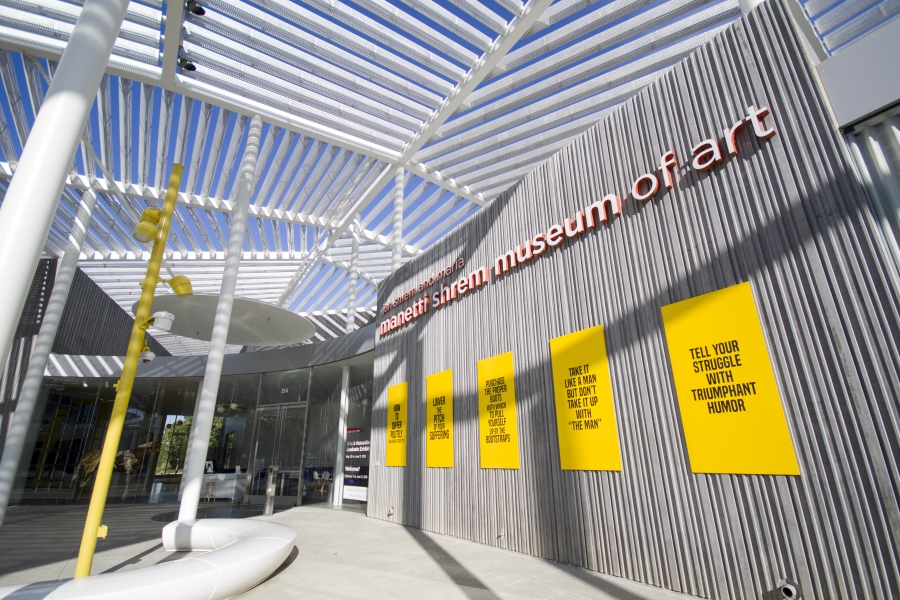
The Arts and Humanities Graduate Exhibition of 2018 will be on view starting May 31 through June 17 at the Manetti Shrem. The opening reception will be held from 6 to 8:30 p.m. on the opening day and will feature special performances according to Emily Clark-Kramer, a second-year graduate student in the art studio program.

“The opening will be a chance to interact with the artists as their thesis work is first shared with the public,” Clark-Kramer said. “It is an opportunity to ask us questions that you would otherwise not have a chance to with the piece alone. There will also be one time performances, so attending these will be worth witnessing, an opportunity to see performance art for the first time.”

For those in the art studio program, exhibiting is required to receive a master of fine arts degree. In an email interview, Tavarus Blackmonster — also a a second-year graduate student in the art studio program — said he views putting one’s work on display as “a requirement of a Fine Artist” as well.

“One thing used to determine an artist’s professional practice is their level of activity in the field,” Blackmonster said. “Exhibiting professionally with galleries, museums and art spaces is how an artist engages with not only culture but the community at large.”

Clark-Kramer discusses how this specific graduate exhibition is special to her and her peers.

“This exhibit is exciting for me as it is my first museum show, a prestigious honor for an artist,” Clark-Kramer said. “I am looking forward to seeing my cohort’s work all together. Our work is all quite different individually, but we have created an intimate community over the past almost two years so I will be interested to see the visual conversations that happen between our pieces within the space.”
According to Clark-Kramer, the installations of art studio students are based on their respective research. This is something Blackmonster notes as making the exhibition noteworthy, along with the space itself.

“The Manetti Shrem Museum is a beautiful space with connection to the regional community and the Bay Area,” Blackmonster said. “Further, the culminating MFA Thesis exhibition is an introduction of the Fine Artist to the community in a broad sense, where we articulate our investigations into a public forum.”

He goes on to say how the general public should be interested in seeing this exhibition because it involves many different perspectives and mediums along with takes on socially relevant issues.

“Artists from different disciplines and mediums will all be presenting work that is an encapsulation of the personal, social, psychological and formal elements of discourse,” Blackmonster said. “Also, with so much turmoil surrounding the election of Donald Trump, mass shootings, violence in the community, police shootings, the Me Too movement and school shootings, the exhibition provides an opportunity to see how various artists discuss these ideas in their work, and too see the artists contribution to a diverse culture.”

Blackmonster’s piece is titled “Work Hurt” and references incidences of self-harm and violence when he was a young adult.

“Since then I have had to continue like most people after a traumatic event, trying to find ways toward fulfilment,” Blackmonster said. “My Post-Traumatic experiences have been fraught with difficulty and successes, but my point is: in the aftermath of so much violence in the American Culture, who can not be affected in a personal and psychological way?”

“Work Hurt” also ties in discussion of important social issues.

“The motif of the Gingerbread Runner brings up ideas of disenfranchisement in the Black community, while also addressing gun violence and police shootings,” Blackmonster said. “My work is engaged with issues of violence in the community that is visited upon women, people of color and student populations.”

Clark-Kramer’s installation is one that has been years in the making, inspired by years of previous work.

“My piece is a collage of paintings made daily over the past four months under a set of rules I created for the activity,” Clark-Kramer said. “The daily paintings with rules came from a series of explorations I was doing in response to more formal paintings I had been making over the previous year. The more formal paintings were responding to paintings and installations I had been making before that. It is very personal, almost a self-portrait, or series of diary entries turned into a very large object.”

Second-year animal science major Stacy Garcia is intrigued about the range of artistic production that will be showcased. She also expects the pieces to speak to her a little more since they will be by graduate students who are typically younger and tied to her experiences in a way.

“I don’t really visit museums often because I don’t have the time and I get bored with seeing like a bunch of paintings in a row,” Garcia said. “With this exhibit I’m excited because it seems like there will be much more to see and experience so it will be a worthwhile break before finals. I think it’s cool that younger graduate students will be the artists featured too because the art might be more relatable.”

For more information, visit the UC Davis arts page, which features a brochure outlining events and performances across some of the exhibition days.


Written by: Cecilia Morales — arts@theaggie.org


California mandates solar power for all new homes

PUBLIC DOMAIN

Unanimous vote by California Energy Commission goes into effect 2020

The California Energy Commision voted 5-0 to require rooftop solar panels on all new single-family homes and small apartment buildings up to three stories tall. The vote took place on May 9 and the mandate will go into effect on Jan. 1, 2020.

Exemptions may be made in cases where solar panels are not feasible, such as in areas with excessive shade. Remodels of existing homes will not be affected.

California is the first state in the nation to require solar panels on all new homes. Currently, electricity production accounts for 20 percent of all statewide greenhouse gas emissions. The mandate is an effort to uphold AB 398, a bill passed in July 2017 to reduce California’s greenhouse gas emissions by 40 percent from 1990 levels.

So how will this affect owners of new California homes?

“The CEC states that while the new standard will increase the cost of building a new home by an average of $9,500, it will reduce energy-related costs by about $19,000 over the course of a 30-year mortgage,” said Shaina Nanavati, a UC Davis alumna and portfolio analyst at North Carolina Electric Cooperatives.

As a result of the increase in home prices, Energy Commission spokeswoman Amber Beck said that homebuyers can expect a $40 increase in monthly mortgage payments.

Homebuyers can also expect to save money on monthly energy expenditures since it costs more to draw electricity from the grid. Beck estimates a simultaneous $80 decrease in monthly utility bills.

“And these are just the conservative estimates,” Nanavati said.

Others believe that homeowners should be allowed to make the decision to install rooftop solar for themselves rather than having to purchase homes with mandated pre-installed panels.

“People come from different backgrounds, and buying a house is not something people manage to do very easily,” said Shailaja Chadha, a third-year student studying sustainable agriculture and food systems. “An additional $10,000 can mean another five years of saving, by the end of which the house you were trying to buy is even more expensive. I think a more effective approach is to have major perks for implementing solar as opposed to forcing people to do so.”

Ultimately, policymakers will have to consider the trade-offs between short-term individual costs and long-term environmental impact.

“California has always been one of the most expensive states to live in,” Nanavati said. “But the benefit of reducing greenhouse gas emissions today is that the state will hopefully save billions of dollars in costs related to mitigating the worsening impacts of climate change down the line.”


Written by: Nausheen Sujela — science@theaggie.org

An evening of songs and science with the Genius of hip-hop

ZOË REINHARDT / AGGIE

GZA of the Wu-Tang Clan visits UC Davis to speak about science, music

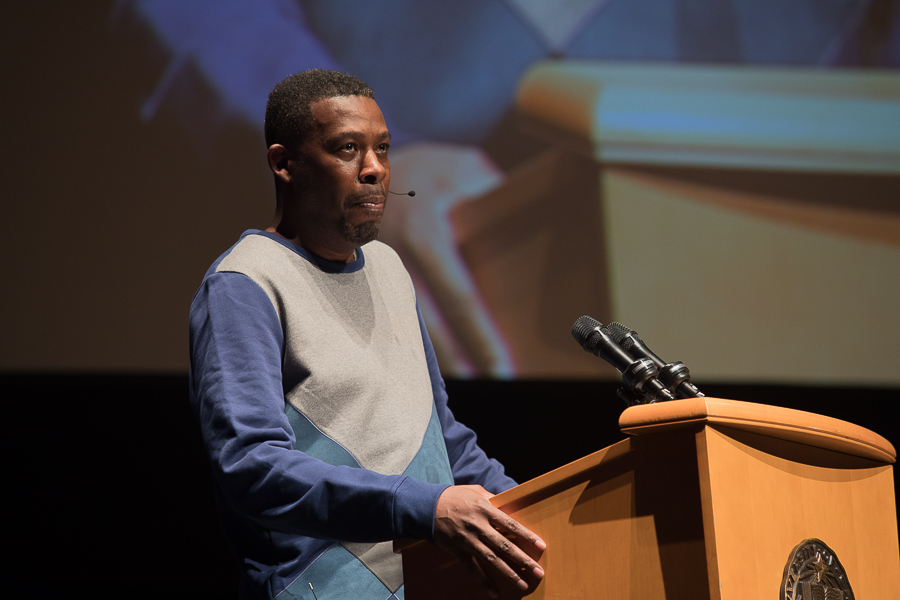
Hip-hop icon and lyricist GZA visited the Mondavi Center on May 21 for the final Chancellor’s Colloquium of the quarter. The speaking event, titled “Dark Matter: An Evening of Songs and Science,” was a collaboration between the Chancellor’s Office, the John Muir Institute of the Environment and One Climate.

“We wanted to bring a new, fresh perspective on science communication and engagement — reaching students who have been traditionally overlooked,” said Benjamin Houlton, the director of the JMIE, in an email interview. “GZA’s message of empowerment through scientific thinking, using hip-hop as a vehicle for teaching science, is a wonderful example of the kind of ‘uncommon’ solutions that are needed to drive innovation in the 21st century.”

Houlton introduced the One Climate initiative during his remarks. One Climate is an interdisciplinary project among many of the innovative departments at UC Davis. The goal is to win the battle against changing climate by harnessing all the knowledge available on campus.

“We saw GZA, specifically, as a great way to help us launch our One Climate initiative because he’s a great way to showcase hip-hop as a vehicle for science,” said Sara Nichols, the associate director of strategic initiatives at the JMIE.

GZA told the audience he has been working on an album called “Dark Matter” — “a cosmic journey through the universe.” The songs would be complex scientific topics told in the lyrics of hip-hop, helping to keep alive the natural curiosity in the hearts of youth. GZA is one of the partners of Chris Emdin’s Science Genius, an educational endeavor focused on “utilizing the power of hip-hop music and culture to introduce youth to the wonder and beauty of science.”

“GZA’s Science Genius and his talks on ‘Dark Matter’ focus on the art of rap and the culture of hip-hop as a key to engaging youth in STEM,” Nichols said. “It’s not just about the science — it’s about using interdisciplinary subjects to engage students.”

To begin the program, members of Sacramento Area Youth Speaks performed spoken word poems. Poems of poverty, community violence, police brutality and struggling with personal identities were contrasted with declarations of talent, acceptance and empowerment.

“As Audre Lorde proclaimed, ‘Poetry is not a luxury,’” said Vajra Watson, the director of the Office of Research and Policy for Equity and the founder of SAYS. “At SAYS, we view critical literacy practices and the literary arts as an action, a process of reclaiming oneself in relation to the world. An education that empowers [and] fosters opportunities for students to become the authors of their own lives and agents of change.”

SAYS works with students who feel disconnected or left out of the education curriculum. When students are bored in the classroom — or when the chemistry lesson in the classroom feels so trivial compared to the poverty and injustice at home or in the greater community — students can struggle or be left behind. Using music and poetry could reach these students.

“Science communication is really about listening, learning and using analogies and metaphors for greater insight and impact,” Houlton said. “It takes time and dedication. There are many different ways to communicate science, and not all of them are equally effective. I like to communicate through values and personal experience and tap into discovery and imagination, which are, to my mind, universal traits of humanity.”

GZA told the assembled crowd that he was “a scientist by nature, not by trade.” As a child, he was fascinated by electricity and was curious about its properties. He recalled static shock from carpets at home. A cousin who had plugged a kitchen utensil into an electrical socket was burned, but GZA’s family said it would have been worse if the cousin wasn’t wearing shoes with rubber soles. Another story was about being a youth in a Staten Island classroom and being asked to write something on the chalkboard. Every time he would grab a piece of chalk from the tray, he would receive a shock and was curious what caused the phenomenon.

“Teachers could leverage hip-hop, but first they have to attune themselves to the music and attune themselves to what their students love to listen to and why,” Watson said. “Moreover, many students fathom the science of life — as GZA discussed with his friend who survived an electrocution because he had rubber-soled shoes on — but we rarely engage urban youth as natural scientists. Instead, we try and convert them to the sciences and this mismatch often fails to genuinely excite them about their own genius.”

Educating students can take many forms. Using art and music to share the wonders and mysteries of science is one way to reach students and inspire them. As GZA said about the universal language of the world, “All living things have music within them.”


Written by: George Ugartemendia — science@theaggie.org

“Gentleman’s game” makes its way overseas to Davis

Following cricket club at UC Davis

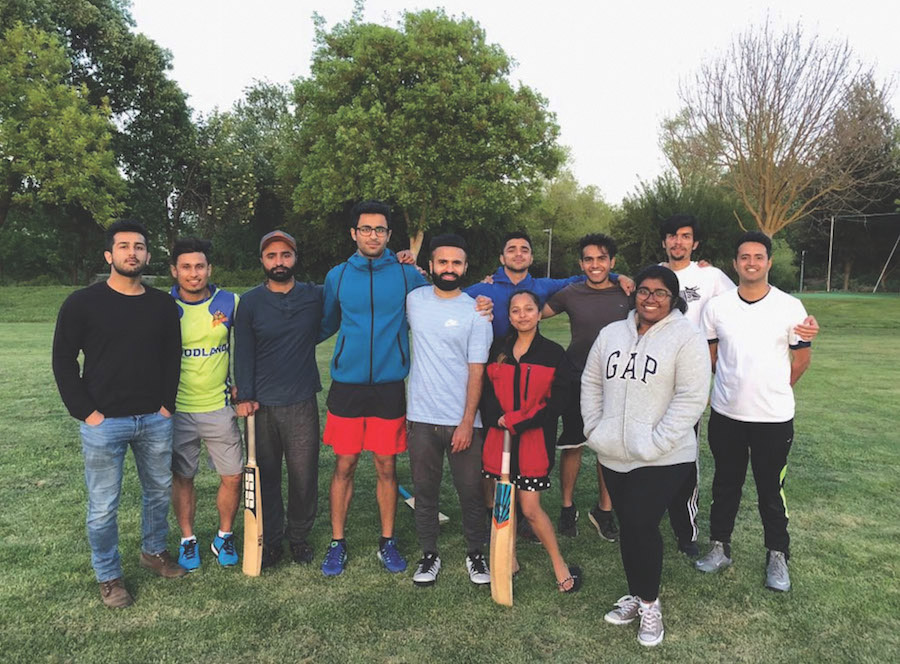
Seeing the oval-shaped stadium and watching players take the field may cause people who have never seen cricket to wonder, “Isn’t this just baseball?” While similar to baseball in many different aspects of play, cricket is a completely different game — it was deemed the second-most followed sport in the world to soccer. With the first documented game of cricket taking place in England in 1646, this incredibly versatile, world-renowned sport is making its 5,000-mile journey to UC Davis in the form of the cricket club.

“I think the versatility of the sport is what makes it so unique,” said Ajay Suresh, a third-year electrical engineering and psychology double major and the club’s co-vice president. “People watch other sports with simple stuff and they make complex games out of them, but cricket is already a complex game with multiple formats to play in. So many things can affect it [the match] like dew on the grass or even the player’s mood that day that can have a huge affect on the outcome.”

Started a little over two years ago, the cricket club at UC Davis was created to bring people together that admire and are curious about playing and watching the sport.

“The club was initially just friends getting together that love the sport,” said Akshay Murali, a third-year civil engineering major and president of the club. “We thought: why not take it one step to further to make it an official group and gather more people who are spread across campus to take it to another level.”

The cricket club plays at Arroyo Park in Davis, where it gives tips to newer players and teaches the sport to more people. The club is constantly gaining members, enough to play a full 22-player match. There are countless types of people showing up to the matches, from players to spectators and admirers of the sport.

“It is basically for everyone because I am not a player,” said Namrata Vimal Kumar, a third-year chemical engineering major and the club’s other co-vice president. “I am a watcher and I am still an integral part of the club. We have socials where people can just come and get together to learn about the sport and we are always welcome to talk to people who have questions about it.”

While getting together and playing matches is the main aspect of the club, there is no limitation to the boundaries that the club occupies themselves in.

“We try not to limit ourselves in term of just playing on field,” Suresh says. “Cricket is a very versatile sport and people can follow it from the outside without actually playing like fanclubs, and we are open to that.”

For the future, the hope is to make the club an official UC Davis Campus and Recreations club sport and expand the sport throughout the campus.

“One of the goals we have set for ourselves for the next school year is to host a tournament between UC schools,” Murali said. “We just had a successful small tournament with clubs in Davis and hope to make this an official UC Davis club for future tournaments.”

For people who are interested in cricket and what the club has to offer, the good news is that no prior experience is required to join. The club members are confident that once you join, you will fall in love with everything cricket has to offer.

“For people who are interested but don’t know anything about the sport, we are planning on hosting some information and practice sessions starting next [school] year,” Suresh says. “Cricket is that sort of sport where when you watch people play you automatically want to play, and I can give you my word that if you try out the sport at least a few times we will try our best to see how you can best fit in with the sport.”


Written by: Ryan Bugsch — sports@theaggie.org

Age is just a number

TANISHQ ABRAHAM / COURTESY

14-year-old Tanishq Abraham set to graduate from UC Davis with biomedical engineering degree this spring

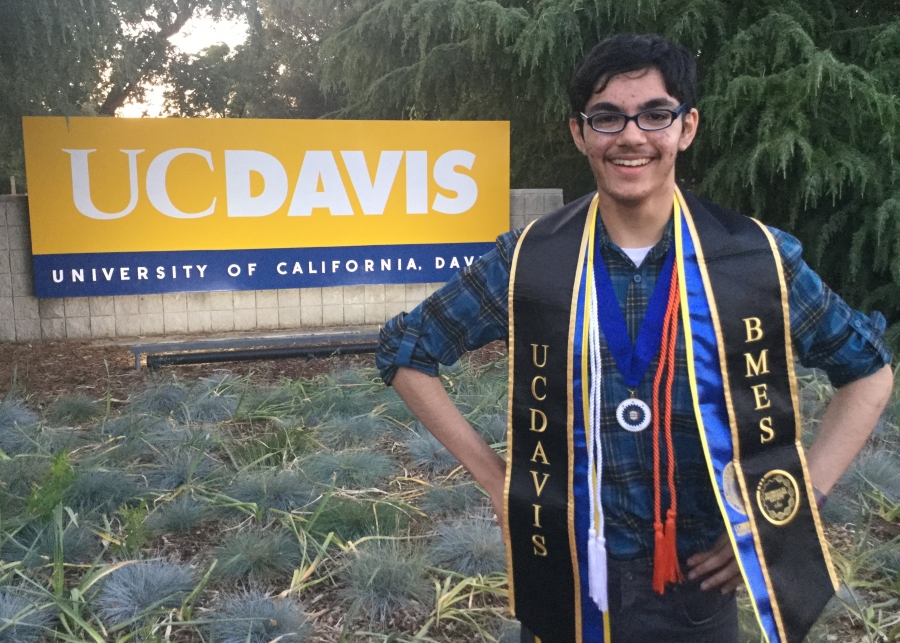
Most people at the age of 14 are concerned about entering their first year of high school, but 14-year-old Tanishq Abraham will be graduating from UC Davis with a bachelor’s degree in biomedical engineering.

At the age of 7, Abraham began taking part-time classes at American River community college and then graduated from high school at the age of 10. The following year, Abraham started taking full-time classes at American River and graduated from the community college at 11 years old. Then a little over two years ago Abraham transferred to UC Davis where he began to pursue a biomedical engineering degree. Abraham explained why he chose Davis and biomedical engineering as his field of study.

“Because I am younger I didn’t have many options,” Abraham said. “So I couldn’t choose somewhere far away, but I also think UC Davis is a really good school and my mom was an alumni there.”

Biomedical engineering is known to be one of the hardest majors an undergraduate student can pursue. The field is diverse in the sense that it includes knowledge from science, engineering and math, which is the primary reason Abraham chose it. Unlike most students, Abraham found balancing the course load more challenging than the actual material itself.  

“I think the material wasn’t too difficult,” Abraham said. “It was more all the different assignments, homework and tests which can be a lot of work, but material-wise it wasn’t too bad.”

One of Abraham’s favorite courses at Davis was the differential equations class taught by his favorite professor, Professor Tavernetti. Some of his other favorite courses at Davis were biomedical electives such as biofluid mechanics and biophysics.

Aside from school, Abraham has also participated in numerous clubs on campus, his personal favorite being the Biomedical Engineering Society.

“The biomedical engineering club hosts many different fun activities like the make-a-thon,” Abraham said. “The make-a-thon is kind of like a hackathon but for engineering students students. We solve medical problems by building a device that could help solve the problem within a weekend. I did this for the part two years and I was one of the top competitors and second place in a couple of awards there, which was a fun experience.”

When he’s not studying, Abraham enjoys playing ping-pong, watching movies and using Twitter, which he uses to check the news and stay up-to-date on things going on in the world, including science and technology advancements, politics and pop culture.

“My Twitter handle is @iScienceLuvr,” Abraham said. “Twitter is my major hobby […] I like to tweet about science and technology online, different events, my day-to-day life, and it allows me to interact with my friends, fans and followers.”

Abraham’s impressive intellectual capability has been broadcasted on numerous platforms. Before attending Davis he was interviewed by Conan O’Brien as well as other national television hosts. The child genius has also spoken at a NASA conference and two TEDx Talks.

Since he started attending Davis, Abraham has also worked as a researcher in a lab. For the past two years Abraham has been working with artificial cells in Dr. Tan’s biomedical engineering lab. In addition to his research work, Abraham has also written a literature paper, which he has presented in four different conferences.

“We works with artificial cells which are not really cells,” Abraham said. “They are more like vesicles that are able to produce proteins, kind of like actual cells which are able to produce proteins, and we focus on using these cells for biomedical application. I’ve been working on mathematical models of the body and I’ve also been working on a literature paper that will be published pretty soon.”

At the age of 14, Abraham has accomplished more than most people accomplish during their time as an undergraduate. But being a college student at the age of 14 doesn’t come without its disadvantages.

“Being a 14-year-old has certain limitations, such as staying up at night or being on campus during the weekends,” Abraham said. “I can’t always do that, but sometimes other students in my classes might expect me to be there, but I have different limitations than them which is sometimes hard to understand.”

Both of Abraham’s parents have been dedicated to his education and have been driving him to and from school daily.

“My parents usually have to chauffeur me around,” Abraham said. “One of my parents will usually drive me to class, and I have class pretty much every day and some quarters I have class from 9 a.m.to 9 p.m. so my parents chauffeur me around during that time.”

With regard to the college-level teaching style, Abraham explained patterns he has noticed over the past two years.

“There are a lot of professors who are really good at research, but they aren’t really good at teaching,” Abraham said. “That’s just one example of how community college has its advantages in teaching styles. I really enjoyed my time at community college, but some of the professors here aren’t the best at teaching but are really good at research […] which is something that needs to be solved, we need more professors who are good at both research and teaching.”

However, one thing that Abraham hasn’t found particularly challenging is the social aspect of being a 14-year-old college student.

“I’ve been taking college classes with people who are older than me for seven to eight years now,” Abraham said. “I’m pretty much used to it, so it’s not too different for me. Outside of class, I like to hang out with my friends and study together.”

Abraham is set to graduate with a B.S. in biomedical engineering this spring, which he says is his proudest accomplishment.

“I’m really excited to be graduating,” Abraham said. “I think the fact that I’m going to be graduating from UC Davis at 14 years old in what I believe is one of the hardest majors out there is my greatest achievement.”

Starting next year, Abraham will continue to pursue his education in the biomedical engineering Ph.D. program here at UC Davis. Following the Ph.D. program, Abraham hopes to attend medical school and become a doctor, medical researcher and even someday become the president of the United States.

“I want to be a doctor so I can help people,” Abraham said. “I want to bring biomedical innovation to the clinic like new diagnostic and therapy tool to people who really need them. [And] I want to become president because I want to change the education system in America and I want to allow people to pursue they want. I faced a lot of challenges getting to the place that I am today and I know that there are a lot of smart kids out there who also face a lot of challenges and want to pursue an education who can’t.”

Abraham would like to thank his parents and his sister who have continually supported his journey over the past eight years.


Written by: Sneha Ramachandran — features@theaggie.org

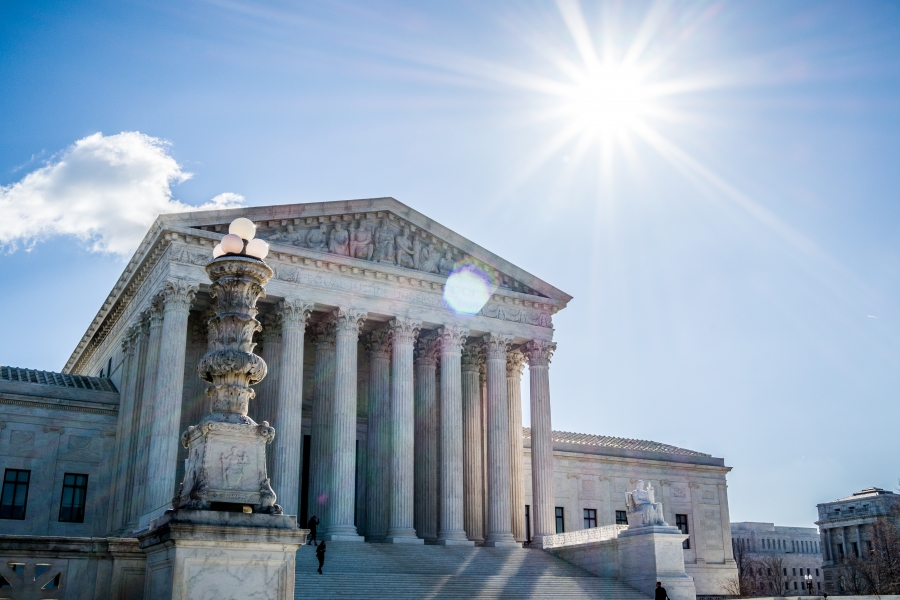
UC Davis School of Law professors weigh in on Supreme Court cases

PHIL RODER [CC BY 2.0] / FLICKR
Gerrymandering, human rights, sexual orientation, travel bans and corporations taken up

Gill v. Whitford

This case takes up partisan gerrymandering in the state of Wisconsin. The case was reviewed by a three-judge federal district court and was argued before the Supreme Court on Oct. 3, 2017. Christopher Elmendorf, a professor at the UC Davis School of Law, focuses on the connections between law theory and political science and empirical data. Concerning this case, Elmendorf wrote and submitted an amicus brief, or a friend of the court statement, on behalf of political scientist Eric McGee. The brief informed the court of the efficiency gap, developed by McGee.

“The efficiency gap is a measure of the relative number of wasted votes cast for each party, where wasted vote is defined as a vote that was not necessary to win any legislative seat,” Elmendorf said.

Elmendorf explained gerrymandering for the layman.

“Gerrymandering is the design or drawing of legislative districts for the purpose of achieving political advantage,” Elmendorf said. “In this case, the judge district court found that the Wisconsin legislative map was an unconstitutional partisan gerrymander. That was a very unusual and momentous decision by the three judges of the district court. So it was almost a foregone conclusion that the U.S. Supreme Court would not only simply hear the case […] but also that the court would schedule the case for oral argument and would end up writing a pretty careful opinion or set of opinion.”

Thus the court takes up the question of whether the Republican-drawn legislative map offered an unconstitutional partisan advantage in elections. The Supreme Court questions the decision-making of the lower court at the same time that it interrogates its methods to arrive at the decision and whether gerrymandering is “justiciable.”

According to Elmendorf, this case is important to the electoral process and the courts and also important to voters everywhere.

“All citizens have an interest in being fairly represented,” Elmendorf said.


Masterpiece Cakeshop, Ltd v. Colorado Civil Rights Commission

This case takes up the free exercise and free speech clauses of a baker from Colorado who refused to make a wedding cake for a same-sex couple. Although Colorado has a civil anti-discrimination law in place to protect customers such as the couple involved, this case was appealed to the Supreme Court in order to determine if constitutional law protects the baker’s choice to deny service. Professor Brian Soucek and professor emeritus Alan Brownstein both weighed in on the case. Soucek works on anti-discrimination law, specifically pertaining to issues of sexual orientation and refugee and asylum cases, while Brownstein focuses on church-state issues.

Both scholars agreed that, regardless of the ultimate decision made by the courts, the nature of their writing could have immense impacts on the precedent going forward. A broad-reaching decision could allow business owners to deny services to people belonging to many identity categories based on religious preference. A narrow decision, conversely, could simply allow specialty bakers to refuse to make wedding cakes for same-sex couples if doing so would conflict with their religious beliefs.

“On the side of the same sex couple that wanted a cake, there’s several decades of precedent that says that you don’t get […] an expressive or religious exemption from antidiscrimination law,” Soucek said.  “On the cake baker’s side […] probably his best case is one out of Massachusetts where in the annual St. Patrick’s Day parade […] did exclude a gay rights group […] and the Supreme Court said, ‘Yes, parades are a form of expression, parades are inherently expressive.’ He wants to say that his cakes are also inherently expressive and that he shouldn’t be compelled to say, as he thinks his cakes do, ‘I celebrate this marriage.’”

Brownstein, like Soucek, gives more credence to arguments that invoke the free speech protections of the Constitution. According to Brownstein, an argument that hinges on the free exercise clause may not hold up in court given the precedent set by Employment Division v. Smith.

“What’s a more serious argument is the baker’s claim that the anti-discrimination laws application to him in this context violates the free speech clause, because it compels him to communicate a message that he objects to,” Brownstein said. “The free speech clause not only prohibits the government from stopping people from speaking, it also prohibits the government from compelling people to speak.”

Regardless of the potential the free speech clause has to protect the baker, Brownstein ultimately finds that cake-baking may be closer to conduct than speech, which the government is able to control in this case. Soucek is aware of the impact this could have on the UC Davis community in the case that the court decides on the side of the baker, whether their decision is supported by the free exercise clause or the first amendment.

“California is like Colorado, it has laws that protect against sexual orientation discrimination so if you poke holes in those laws in Colorado you would being poking those same holes in California,” Soucek said.


Trump v. Hawaii

For the third time since he was sworn into office, President Trump has proposed a travel ban on certain countries. This time, it will be reviewed by the Supreme Court. Argued on April 25, the intent of the ban will play a big role in determining its constitutionality. Professor Soucek weighed in on Trump’s discourse surrounding immigration from several majority-Muslim countries.

“The question is whether all the things that he said about keeping Muslims out of the country — even though he said it during the campaign and said it at the time of the first ban, because he’s never really distanced himself from that language — the question is whether we should interpret the third ban in the same way as a Muslim ban, which then would be potentially constitutionally problematic because it seems to be based in religious animus,” Soucek said.

Should the immigration law be based in fear or hate, there will not be a constitutional protection for it. Unfortunately drawing parallels to Korematsu v. United States, in which false justification was given to support the internment of Japanese Americans, Trump’s lawyers must prove that immigration from these countries poses a threat to national security.

“What is the intent behind banning people from these set of countries, and if the intent is ‘We need to do this for national security,’ then […] the courts are definitely going to defer to the executive branch on that. If, however, they picked certain countries because they want Muslims out, then that makes it a much worse case for the president. Korematsu […] accepted the government’s claim that national security made the internment necessary. The government has since said that they gave misleading information to the court. Even though it’s never been explicitly overturned […] it’s widely assumed to be one of the Supreme Court’s worst cases.”

The outcome of the Supreme Court’s decision will have an immediate and certain impact on the UC Davis community not unlike the anxieties already felt about Trump’s attitude toward migration on the U.S.’s southern border. According to Soucek, students, faculty and friends alike will find Davis inaccessible.

“The list of affected countries of course includes countries that Davis students come from and that relatives or fiancés or others of Davis students come from, and so the travel bans have certainly had a tangible effect on […] who’s able to come here. If they’re denied student visas due to the travel ban obviously they won’t be able to come to or continue at Davis.”


Jesner v. Arab Bank, PLC

Although this case has already been decided officially by the court, Martin Luther King professor of law William S. Dodge explained how it case seems to establish a more nuanced decision in its language than its “head count.” The court here made a decision on the culpability of the Arab Bank under the alien tort statute for funding acts of terrorism.

“If you’re just counting heads, the right decision on customary international law won out, even though it doesn’t become the holding of the court,” Dodge said. “The court fractured in the case, but basically it held that foreign corporations couldn’t be sued under the Alien Tort Statute. Justice Kennedy wrote a broader opinion for three judges saying that probably corporations more generally couldn’t be sued. Justices Gorsuch and Alito wrote narrower opinions that were restricted to foreign corporations. Justice Sotomayor […] was joined by three of her colleagues […] that took the position that corporations were no different in this respect than individuals and both could be sued for human rights violations.”

This case took up the funding, by the Arab Bank through New York, of terrorist actions by Hamas in Israel, the West Bank and Gaza. Dodge filed an amicus brief given his expansive knowledge of the Alien Tort Statute of 1789, which allows the U.S. federal courts to try a case brought in the U.S. that violates the international customary law, or the law of nations.

“The question in that case was whether corporations can be sued for human rights violations in U.S. court under the Alien Tort Statute. I wrote an amicus brief […] to try to help the court understand how customary international law rules are determined and what their relationship is to the remedies that the domestic system may provide. The brief was joined by a bunch of international law scholars, some international judges and trying to provide just the basic primer for the court on customary international law.”

In addition to the Alien Tort Statute, the Sosa standard is also significant to discourse around violation of customary international law. This standard was developed in a previous case and establishes the human rights violations punishable under the Alien Tort Statute.

Dodge explained that, while it’s incredibly difficult to charge an organization like Hamas with human rights violations, some scholars are opposed to this case being brought in a U.S. court in the first place.

“You had foreigners suing a foreign bank in U.S. court, and that was one of the reasons that a majority of the court thought that the case shouldn’t be brought here in the United States,” Dodge said. “It’s being brought to get at the folks that are funding or facilitating the terrorism because it’s hard to sue the terrorists themselves.”

Dodge finds that, despite the conflict on this level of the case, its content and aims may be extremely relevant to UC Davis students concerned with human rights and international justice. He locates this case within the realm of “accountability” for international wrongs in the domestic sphere.

“One is just the basic question of international human rights and accountability for violations of international human rights,” Dodge said. “We’re lucky that in Davis there aren’t many violations of international human rights, but there are many places in the world and many people in the UC Davis community care about what happens in the rest of the world. This case is about accountability for that.”


Animal Science Products, Inc. v. Hebei Welcome Pharmaceutical Co. Ltd.

Argued on April 24, this case is an antitrust suit against a Chinese vitamin C seller to the United States. This case contends with international comity, accepting the law of another nation as represented by its own lawyers and the sometimes contradictory trade laws and consequences of two nations joined by commerce. Professor Dodge, with a focus on international law and in collaboration with another law professor, filed an amicus brief with the Supreme Court.

Dodge notes two primary questions guiding the case, the first being establishing the correct representation of the Chinese law that compulses sellers to fix prices and the second being the liability of sellers in the U.S. given the correct interpretation of Chinese antitrust law.

“The first question is, ‘How does U.S. court determine what foreign law is?’ That’s the question the U.S.Supreme Court decided to hear. There’s another question of what effect that should have then on their liability under U.S.antitrust law. The brief that I wrote basically just suggested that the court should not decide that second question because the decision that the second circuit made […] is in fact inconsistent with the way the Supreme Court has approached this question in two different lines of cases. I didn’t want the Supreme Court inadvertently, in deciding the first question, to prejudge the second question.”

This antitrust case, the decision for which has not yet been made by the Supreme Court, was heard by the Second Circuit Court of Appeals previously. That court decided that not only should U.S.courts accept Chinese law around price coordination as represented, it should dismiss the case based on international comity.

Dodge is fascinated by this case, especially in the context of the second question that the court could answer and the potential culpability of Chinese vitamin C producers profiting in a U.S.market. Furthermore, Dodge can identify the impacts that the outcome of this case could have on UC Davis.

“Consumers benefit when companies have to compete, whether that’s vitamin C sellers or people who sell the coffee that fuels UC Davis students.”


Written by: Stella Sappington — features@theaggie.org


Fatal stabbing at Sonoma State University

ALLEY PERRY / COURTESY

Sonoma State community shaken, supportive

Sonoma State University was the site of a fatal stabbing on Sunday, May 13. The incident occured at the Sauvignon Village student apartments, where a dispute broke out between two men. Tyler Bratton, a 19-year-old, has been accused of fatally stabbing a 26-year-old Sonoma County resident. Neither individuals involved were students.

The Petaluma Police Department has taken charge of the investigation, but was clear to assert that this incident presents no threat to Sonoma State students.

“It was an isolated event and it wasn’t random, so there is no real threat to the campus,” said Tim Lions, the Petaluma Police Department lieutenant. “It just happened to be an incident that occured at a Sonoma State apartment.”

Notifications were sent out to students who lived in the apartments or on campus, but most students who lived outside of the apartments did not receive any type of immediate notification.

The event — which occured during Sonoma State’s finals week — appeared to have been sufficiently contained, and resources were quickly offered to students. However, complaints and concerns from students rose to the surface.

“I had a lot of friends who were upperclassmen and lived off campus that weren’t informed,” said Alley Perry, a second-year English major at Sonoma State. “My friends that didn’t live on campus were upset that they didn’t get notified and didn’t hear about it until they looked at social media.”

The university did offer counseling, alternative housing options and notifications for the students living on campus.

“We reached out to students and let them know that counselors were available, and we wanted to make sure they had a place to go, so we offered hotel rooms,” said Paul Gullixson, the associate vice president of strategic communications at Sonoma State.

Sonoma State has also had to deal with the fires leading to campus evacuations in October 2017. Resources were also offered after this incident, with 50 hotel rooms being reserved for students after the campus fatality. No students, however, took the university up on this offer.

“People were able to find accommodations with their friends or relatives nearby,” Gullixson said. “I think it’s just another example — similar to what happened after the fires — that people really responded with a sense of community and people really took care of each other and supported one another, and that the resiliency of the campus emerged once again.”

Violent acts occurring on college campuses, such as school shootings, have increased dramatically in recent years. Although this was not a random act of violence, the fact still stands that any event like this can be traumatic.

“It’s a tragedy that a young life was lost and of course that it took place on a university campus,” Lion said. “School should be a safe place for students to go focus on learning and not have to worry about violence […] that is the tragedy of it.”

The Petaluma Police Department is still in the process of locating two persons of interest for this case.

“We have the suspect and don’t think anyone else was involved, but they are most likely just witnesses,” Lion said.

The Sonoma State administration believes that this event and the way it was handled speaks to the solidarity and support that makes up Sonoma State University.

“It’s been a difficult year for this region and the campus, but people have showed great strength and support and really have reached out to make sure everyone is cared for, and this showed through in the incident,” Gullixson said.


Written by: Cassidy Kays — city@theaggie.org

Changes coming to MU

JORDAN KNOWLES / AGGIE FILE

Housing, food, financial aid offered

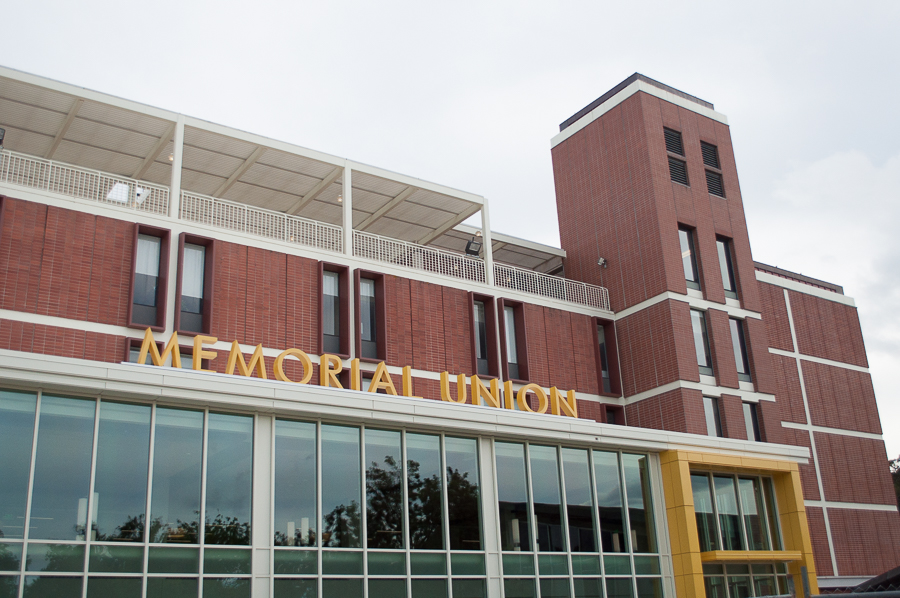
The Aggie Compass Basic Needs Center will take over one of the vacant spaces in the Memorial Union and provide resources including student housing, food security, financial aid and mental wellness. The center will be having its kickoff celebration on June 14 from 3 to 5 p.m. Aggie Compass is a program provided by Student Affairs and is an outgrowth of the UC-wide Global Food Initiative.

Alongside partnering with Fruit and Veggie Up and having CalFresh enrollment available at the center, students can also take advantage of different pop-ups that will be found around campus in the fall. Aggie Compass is working with Student Affairs and will have a website with a full range of resources available for students who prefer not to come to the center.

Leslie Kemp, the Aggie Compass director, is working with seven student staff members to make visions for the center a reality.

“Students can’t succeed if they go to class hungry, don’t know where they’re going to sleep at night or are making choices between paying tuition or paying the light bill,” Kemp said. “We have an opportunity with Aggie Compass to provide a map for students to navigate through campus and community resources, to help students find a path forward.”

The center will also include a space for students to hang out and spend time.

The Aggie Compass will take up one of the three vacant spaces in the Memorial Union, alongside the Student Disability Center. The remaining space is still under negotiations.

Jennifer Billeci, the director of the Student Disability Center, spoke about the importance of the center’s new location.

“We want to have a presence that’s more central to campus,” Billeci said.

Students will be able to explore the space by dropping in or creating appointments to help with their specific needs.

Eric Banks Jr., a third-year African-American and African studies and pre-physical therapy major, was the first student to join Kemp’s team.

“The one thing I want students to know about this center is that it was made to help you be more successful in school,” Banks said. “There is a negative stigma that sometimes stops students from reaching out for help when they’re struggling with finances, food or housing, but we want every student to feel comfortable whenever they walk in the center. We understand you can’t be fully successful without having your basic needs met.”


Written by: Ally Russell — campus@theaggie.org


Cartoon: Sticking

By: Ariel Hilomen — abhilomen@ucdavis.edu

Disclaimer: The views and opinions expressed by individual cartoonists belong to the cartoonists alone and do not necessarily indicate the views and opinions held by The California Aggie.

Don’t be fooled — Trump still doesn’t care about the environment

Matt Johnson [CC BY 2.0] / FLICKR
The president’s potential negotiations with California are fueled by money, not a conscience

As a child, I was prone to worrying. To me, that was a normal feeling — though I now know it as anxiety. But it brought with it a constant stream of verbalized observations about my surroundings. When I grew older, however, I turned these worries outward, beyond my small world, to a new, broader focus: the environment. And, even before my knowledge of climate change or melting ice caps grew to what it is now, I came to an understanding that any clear day in the mountains was going to be a good but rare one.

I brought this up once to my dad. I was around 13 years old, and I mentioned it offhandedly during a hike around Lake Tahoe, figuring that he wouldn’t respond since my parents had grown to do so after years of similar comments. To my surprise, he repeated to me a story that his own father had related to him once.

You see, my grandfather was born in the 1910s near the height of global industrialization. Back then, energy came largely from coal, and as he grew up in upstate New York, a majority of the households and factories relied heavily on burning it for warmth and fuel. As a result, the air was so smokey, so opaque, that it was a common occurrence for visibility to be limited to only a 100 yards or so. In New York City, you couldn’t see across rivers.

Then along came Richard Nixon.

All scandals aside, one lasting mark to come out of the Nixon Administration was an executive order signing into existence the Environmental Protection Agency at the tail end of 1970. Intended to clean up ravaged landscapes and prevent further damage to non-renewable resources, the EPA is really the reason that our world looks like it does today and not like my grandfather’s.

When Donald Trump entered office in early 2017, his mission was to undo all regulations imposed by his predecessor. His first order of deregulation of environmental protections came in the form of naming Scott Pruitt as head of the EPA.

The second was to attack California’s specific regulations on vehicular greenhouse emissions.

As early as April 2017, fewer than four months after his inauguration, President Trump was at odds with California’s particular implementation of the Clean Air Act. The point of contention lies in the “specialization” of California’s emission standards.

After the Clean Air Act first passed in 1963 — seven years prior to the establishment of the EPA — Congress gave California the right to decide its own emission laws separate from the rest of the country. This was on account of Los Angeles’ notoriously bad air pollution dating to the 1940s.

Scott Pruitt wants to revoke California’s standards. And now, California is suing the federal government.

The issue, however, lies in a recent turn of events: President Trump is now softening his stance and considering negotiations with the state which, at first glance, appears fine and dandy because this decision seems to be a step in the right direction.

But don’t be fooled — Trump’s move comes not from a randomly-magnanimous well deep inside his psyche. No, the President’s quick change of heart comes at the threat of a long court battle he prefers to avoid.  

If any doubts remain in the face of Trump’s current stance, take a moment to remember: President Trump doesn’t care about the state of the environment.

President Trump struggles to see beyond his lifetime. For him, as with many of those leading the political scene at the moment, he won’t be alive to reap the future consequences of his current actions. As a result, business takes precedence over the natural world because business is his world.  

He doesn’t want to help California’s air quality just as he doesn’t care about national parks and immigrants. In his mind, all of these hinder growth of business and thusly prevent a potential increase in corporate profit margins.

He elected Scott Pruitt, after all — a known climate change denier and recipient of campaign donations from big fossil fuel corporations.

Instead, consider a new rule of thumb: Don’t let yourself get hopeful when the current President acts logically… once.


Written by: Erin Hamilton — elhamilton@ucdavis.edu

Disclaimer: The views and opinions expressed by individual columnists belong to the columnists alone and do not necessarily indicate the views and opinions held by The California Aggie.

Nishi Project and air pollution

MICHELLE GORE / AGGIE

Effects of air pollution at Nishi project site hotly debated

On June 5, residents of Davis can vote for or against Measure J, which will approve or halt the Nishi project. The Nishi project is a set of proposed student housing apartments situated between the railroad tracks and I-80, behind the Manetti Shrem Museum. One of the biggest controversies surrounding the project is the air pollution that could affect future residents from the freeway and the railroad tracks.

“Preliminary and short-term air quality measurements were taken at a nearby site three years ago, and these measurements showed worse air quality than was measured on the same days by UC Davis and by the Yolo-Solano Air Quality Management District,” said Roberta Millstein, a UC Davis professor in the philosophy department.

John Whitcombe, the developer of the Nishi project, disagrees with this assessment. He says there were some issues found at the site, but “nothing of any real consequence.” The project will be including measures to mitigate the possible air pollutants.  

“The measured pollutants are associated with increased risk of lung damage, cancer, heart disease and developmental defects,” Millstein said. “After the preliminary tests were taken, air quality experts advised further testing to get a more accurate picture of the air quality at the site. However, both the City and the developer declined to have those tests performed.”

Millstein critiqued the project, saying that the developers have spent over $170,000 campaigning for Measure J, while the additional air quality tests would cost $30,000. In planning the project, Whitcombe says his company has already spent more than $1 million.

According to Whitcombe, this project has had more studies done for its Environmental Impact Report than any other development. Whitcombe also says he is focused on the big picture: places like the Nishi development will allow people to live more easily without a car.

Millstein and Thomas Cahill, a faculty member at UC Davis, believe that the Nishi site is a perfect storm of the worst freeway characteristics that make the air quality so harmful.

“The freeway has a high volume and has a high fraction of trucks, the freeway is elevated on an earth berm next to Nishi, the property is often downwind of the freeway and when it isn’t it’s downwind of the train. And due to the narrowing of the freeway adjacent to Nishi, there is both frequent braking and accelerating,” Millstein said. “No other site in Davis has all of these characteristics.”

To mitigate the effects of the pollutants, the developers are planning to put all of the apartments as far away from the freeway as possible, plant a forest buffer between the freeway and the apartments and place air filters in each unit. Whitcombe claims this project has more mitigation efforts than any other project before it.

“Basically, he [Cahill] says that the wind is blowing in this special direction, and it doesn’t blow in that direction,” said Tim Ruff, a partner in the Nishi project and property owner.  “It’s pretty simple. He builds this case of a ‘perfect storm,’ but none of it, all of these things are happening at once, but none of them are really accurate.”

Cahill has worked in various air quality projects and did the initial tests at the Nishi site. He supported the New Harmony development, even though it was closer to the freeway, because of wind patterns he believes take pollutants away from the site.  

Whitcombe and Ruff point out that there has not been controversy over other projects, even the ones closer to the freeway. This “selective activism” makes Ruff and Whitcombe think opponents of Measure J are not actually that worried about students’ health. Ruff characterizes the people who are behind the “No on Nishi” project as a “no growth, anti-student crowd”.

Cahill countered that the health of the students is what has made him so active in opposing the project and compelled him to use personal funds to publish a full page ad in the Davis Enterprise. One of Cahill’s biggest worries is the ultra-fine metals from brake pads, though there is no known threshold on the amount of particles humans can safely be exposed to. Chuck Salocks, who works in environmental toxicology, is more focused on the diesel particulates.

“They [the EIR] focused in on diesel particulates […] it’s regulated as a carcinogen,” Salock said. “And the measuring data from the 2015 study showed that the concentration of diesel particulates was equivalent to the statewide ambient concentration.”

In 2016, a similar project was proposed at the site, where student apartments, family housing and businesses would be built. The project was not approved, and Millstein claims the development could have more housing and increase the number of affordable housing units. However, by not significantly increasing the number of units as the proposed Nishi project in 2016, the developers did not have to do a new EIR.

If Measure J passes, Cahill plans on using his academic standing to call attention to the site.

“I would publish a paper, compare the Nishi site to the New Harmony site,” Cahill said. “Those ultra-fine diesel measurements are the highest I’d ever seen. Far higher than Detroit, six times higher than downtown Sacramento. I would publish a paper comparing Nishi to New Harmony and it would a black-eye on the University for decades.”

UC Davis does not take the same stance as Cahill. According to Ruff, the developers are working with the university in order to make the bike path that goes toward campus.

“Don’t believe me,” Cahill said. “Take your bike all the way down to the south end of the Shrem museum parking lot. Park your bike by the fence there and stay there for 30 minutes. And then decide you’d like to live there for a year.”


Written by: Rachel Paul — science@theaggie.org