56.1 F
Davis

Davis, California

Friday, December 19, 2025
Home Blog Page 512

Nationwide search for head coaches underway

JEREMY DANG / AGGIE

Search committees working to attract candidates

Solid collegiate sports programs are typically backed by a coaching staff with grit and experience, and after UC Davis Athletics officially announced the addition of equestrian and beach volleyball to UC Davis women’s Division I sports, two search committees were formed to begin a nationwide search for head coaches with these qualities for the projected 2018-19 season.

The two search committees are structured differently and require input from different stakeholders on campus.

Equestrian is essentially a year-round sport and requires experts who know how to train and care for horses. For this reason, the search for a head and assistant coaches has become a collaborative process with the Department of Animal Science, the Equestrian Center and, once it’s all sorted, the School of Veterinary Medicine.

First-year animal science major Charlize Zuraek has been riding since the age of six and knows firsthand the kind of collaboration necessary for proper horse care.

“We are asking them to do a lot more than your typical horse on any pasture,” Zuraek said. “You have to give them the proper nutrition, proper healthcare, proper maintenance procedures as needed.”

Anissa Nachman, the associate athletics director of budget and finance, oversees the committee and talked about the kind of candidates it hopes to attract

“I’ve been reaching out to the coaches at the other programs and looking for recommendations,” Nachman said.  “It’s going to likely be some people that we’ve been talking to. They’re leading smaller programs but are head coaches or they’re assistant coaches at large programs.”

Nachman believes that progress is being made, but because most Division I equestrian programs are on the East Coast, the transition would be costly for candidates who would have to move to another part of the country.

“A little bit of it is difficult because they would have to move cross-country, and they’re from less expensive cost-of-living states,” Nachmann said. “I’ve heard that a lot  — about the cost of living in California — and that is going to be a little bit of a challenge.”

UC Davis will compete in the National Collegiate Equestrian Association, which requires that the host team provides the horses for the competition. Nachmann says that a small subset of the equestrian community has this type of riding and coaching experience.

A lack of NCEA specific experience is not necessarily a deal-breaker for the committee. It is open to candidates with strong riding experience.

“That’s why we would look at really strong folks from the equestrian world,” Nachman said. “Who may not have the exact experience, but who we think can take their experience and translate that into what we’re doing.”

Fresno State’s equestrian head coach Eric Hubbard said that his background was mostly in horse training with western riding experience.

Despite the lack of NCEA experience, Hubbard was able to adapt.

“You’ll have a very diverse background of riders who come into a program,” Hubbard said.

As for the timeline, Nachman had hoped to pick out a candidate by June 1, but is now hoping for July.

Nachmann says she has met with students on UC Davis’ equestrian club teams.

“We’re excited that the students are excited,” Nachmann said.

Third-year political science major Hayley Fredericks has competed for UC Davis’ western equestrian club team for three years. She was offered a partial equestrian scholarship to Baylor University.

“My goal in high school was to go to a school that I could ride for, so I met coaches and I created a video and I did the whole thing,” Fredericks said. “And I had a couple different offers from a couple different schools.”

Fredericks turned those offers down and decided to attend UC Davis and is excited to try out for the new team.

Zuraek also plans to try out in the fall. Like Fredericks, Zuraek was searching for a college with a strong equestrian program.

“I flew out to the University of Georgia, and I flew out to Texas Christian University, met with the coaches, watched some lessons, talked to some of the girls,” Zuraek said. “And you get to know people, and I have friends who are competing right now that are competing at Texas A&M, [Southern Methodist University, Texas Christian University.]”

For beach volleyball, the hiring process is more straightforward.

Senior Associate Athletics Director Michal Lorenzen described ideal qualities for a beach volleyball head coach.

“They need to be really well connected, like in any other sport, to the club community,” Lorenzen said. “So they can go out to tournaments and have an instant street credibility, so people know that we are serious and kids that want to advance and get better will come.”

According to Lorenzen, Dan Conners, the women’s volleyball head coach and director of women’s volleyball (including beach), has researched potential candidates and narrowed the list down to candidates who the committee plans to invite to campus for interviews before the end of the month.

Lorenzen highlighted some of the search committee’s goals for the new head beach volleyball coach, which is partially driven by academics.

“So we’re trying to figure out how do we bring that caliber of student-athlete to Davis, ideally somebody that has beach volleyball coaching experience at a Division I institution and understands the challenges of balancing both high-level demands of both athletics and academics,” Lorenzen said.

Lorenzen noted the culture Conners has built since 2014 and its vitality to the position.

“They have to fit the culture, because Dan [Conners] is the director of volleyball,” Lorenzen said. “They have to want to fit in with his culture that he’s built with the indoor program.”

As for coaching experience, the candidate should have enough experience to lead the program into the 2018-19 season.

“They have to get beach volleyball at the college level enough that they can hit the ground in September and be ready compete in January,” Lorenzen said.


Written by: Bobby John — sports@theaggie.org
Davis community participates in free public fermenting workshop

VENOOS MOSHAYEDI / AGGIE

UC Davis graduate students host community ferment event

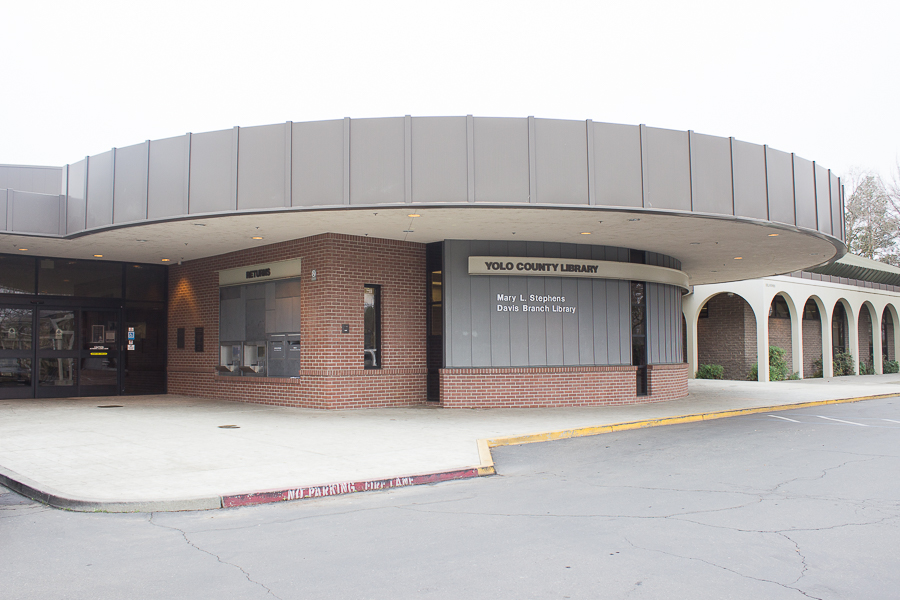
The Mary L. Stephens Branch Library hosted a free public fermenting workshop on Saturday, May 12. The event, titled Building Community Ferment, was facilitated by members of the Radical Mycology Working Group at UC Davis to educate the community on creating vegetable-fermented sauerkraut.

“This is our first experiment to see who would come out [and to hear] what kinds of stories people have about fermentation,” said Stephanie Maroney, a UC Davis graduate student who organized the workshop. “We hope we could learn as much from other folks as they might be able to learn from us.”

The workshop was sectioned off into multiple tables around the room for participants to have enough space to shred their vegetables. Adults and children were all encouraged to participate, with kid-friendly utensils to cut vegetables and assist in communal fermentation bowls.

The workshop also highlighted a special guest, visiting artist S.e. Nash, who was flown in from Kansas City to showcase their art projects at the event. Nash is an artist who incorporates food fermentation and demonstrations in their artwork.

“I’m usually working with other people [on food fermentation] sculptures and eat it at the end when it’s done,” Nash said. “[Stephanie and my] interests are in building community out of fermentation and meeting new people who have different fermentation experiences.”

One adult participant who had never fermented vegetables before called the workshop “educational and inspirational.” She appreciated the community engagement and the energy the children had in learning about fermentation.

An assortment of vegetables was provided by the UC Davis Student Farm for participants to use for their fermentations. A range of vegetables included spring onion, ginger, radish and carrot. Step-by-step instructions were projected onto the front of the room so participants could read and take pictures of the fermentation process for later use.

As a self-described experimentalist, Maroney added that it was important to host an event off campus to attract members of the Davis community outside of the university for a fun, mutually-educational workshop. Maroney and the other facilitators from the Radical Mycology Working Group at UC Davis floated around the room, assisting adults and children in making their fermentation jars.

“Everyone will leave with their own jar of a ‘kraut they collaboratively made with their group members/microorganisms and a recipe on how to do it again,” said the Facebook event page. The event was also described as “a free, all-ages, hands-on workshop.”

Funding for the workshop came from HATCH: Feminist Arts and Science Shop, the Feminist Research Institute at UC Davis and the UC Davis Graduate Student Association.

Part of Nash’s art was present at the Building Community Ferment workshop. A microbial mural made at a previous event was open for all participants to view and engage with. A small group of children huddled around the art and added to Nash’s art piece using crayons.

“Learning together and seeing what people want to put in their fermentation jars [is the best way to learn about fermenting],” Nash said.

Overall, Maroney had one important tip for folks interested in learning more about fermenting their own vegetables.

“Do fermentation with the spirit of experimentation and creativity,” Maroney said.

Information on HATCH’s upcoming events can be found on its website.


Written by: Dante Valenzuela — city@theaggie.org


Smugness, explained for idiots

ALLYSON KO / AGGIE

Liberals are right about many things, but the way they communicate isn’t one of them

Liberals are frequently accused of being smug — often deservingly.

But in the same way that too many liberals label all Trump supporters as irrational racist bigots, all liberals are often grouped together as self-righteous elites incapable of changing their attitudes when confronted with unfamiliar rhetoric. These are gross oversimplifications that only describe subsets, not the entire groups.

Emmett Rensin wrote in 2016 that this “smug style in American liberalism” is defined by thinking America is divided by “the failure of half the country to know what’s good for them,” making liberals think they have “a monopoly on reason.”

A recent New York Times article by Katherine Mangu-Ward traces the history of the divide between smug liberals and conservative trolls, noting that “political squabbling across much of America has become increasingly aesthetics-focused and content devoid.” In other words, it’s become more important to have charisma and flare than it is to practice good rhetoric and make progress on the issues. Mangu-Ward criticizes Jon Stewart and his ilk for advocating civil, productive debate while still casually savaging opponents, a doctrine of “do as I say, not as I do.”

By extension, many liberals now accept this type of disparaging evisceration of conservatives “who don’t know any better” and “don’t understand their own interests.” This can be effective in calling people out, but not as a way to persuade those who we think need it most. Today’s liberals are failing to reconcile the desire for healthy discourse and the urge to annoy those with different opinions.

In a recent argument with a conservative friend, I had an important realization after I claimed that “I’d rather be smug than ignorant.” It made me ask myself whether anyone should actually aspire to be smug or think they’ve earned it. But more importantly, the fact that I happened to use the word “smug” in my response alerted me to the fact that I’ve become less and less bothered by smugness over the last three years. I became desensitized to it as political polarization caused me to identify more strongly with people from whom I previously may have turned away due to their smug demeanor and style. But instead, I have laughed at every smug joke and sick burn they’ve dropped at the expense of Trump and his supporters. This is not good.

Some liberals justify extreme smugness by thinking that “they are correct and the others are wrong,” and anyone alienated for not realizing this isn’t worth convincing. Others may say that liberals need to drop the smugness altogether if they want to stop feeding the trolls. Somewhere in between these two views is probably best advised. It’s okay to be confident that you’re correct about something and to try to convince others of this, but you’ll get nowhere if your argument and tone are derived from the idea that your opponent is inferior.

In an interview with Slate, Mangu-Ward discussed the difficulties of communicating to someone the genuine belief that they are misguided or misinformed. She thinks that it’s okay to hold these beliefs, but that saying so explicitly is futile. Instead, someone convinced of their opponent’s ignorance must think, “‘It is not that they are confused about their own interests, but simply that I am not looking at the world the way they look at the world.’” Doing this establishes mutual trust, giving your criticism value and even opens the door for using humor and sarcasm as rhetorical tools.

The interviewer, however, warned that the risk of being condescending arises both from telling people you think they’re being conned and from censoring yourself to imply that you don’t think they can handle what you think is the truth. Surely there’s a place between these two that allows you to be respectful yet persuasive and relentless.

I trust you’ve realized that the idiots referenced in the title are actually my fellow liberals, not those unlettered MAGA-hat-wearing racist cretins you hoped I’d be lambasting. As someone who wants to see the liberal cause succeed and again earn the support of people it has alienated, I will now ignore my own advice and tell my smug liberal allies that I understand what’s in your best interests better than you do. Smugly talking down to others as if we have that “monopoly on reason” is not working. In order to actually convince reluctant Trumpers of anything, we first must listen and demonstrate that we respect their feelings and motivations. There’s a difference between actually showing why you think your ideas are superior and just showing that you think you have superior ideas.


Written by: Benjamin Porter — bbporter@ucdavis.edu

Disclaimer: The views and opinions expressed by individual columnists belong to the columnists alone and do not necessarily indicate the views and opinions held by The California Aggie.

Producing measurable change

CAITLYN SAMPLEY / AGGIE

On Davis ballot: Measures H, I, J

Three proposed Davis ballot measures are set to appear on the June 5 General municipal ballot. The outcome of these elections and the fate of these ballots will have direct impacts on the livelihoods of UC Davis students as well as long-term Davis residents. Here’s a briefing of ballot measures H, I and J:

Measure H renews the existing $49 annual Park Maintenance Tax for an additional 20 years, adding on an annual 2 percent inflator. Revenue generated from the tax would be used to help sustain and improve a variety of parks and recreational public works projects including street trees, greenbelts, bike paths, public recreational facilities and urban wildlife and habitat. Measure H needs a two-thirds majority of votes in order to pass.

“Measure H will not change how much residents are paying, but it will upkeep the quality of parks that we have,” said Aaron Latta, a first-year transfer political science — public service major and chair of the Davis Housing Brigade of the Davis College Democrats. “What students can expect from it is [that] their roads will be repaired. You’re going to find that you’re going to be paying less in car repairs. You’re going to be able to bike around town a lot easier.”

Many students are in favor of Measure H, especially since they believe that the tax serves an important purpose without creating a significant dent in their wallets.

“I think it’s a good idea,” said Rachel Wong, a first-year political science and economics double major and staff member for ASUCD Senator Alisha Hacker. “I don’t think $49 a year is too bad. I think maintenance is important.”

Measure I establishes a $99 Street and Bike Path Maintenance Tax on residential and non-residential units that would be used to fund the maintenance of streets, bike lanes and bike paths, sidewalks and other transportation-related infrastructure. The tax would be collected annually over a period of ten years. Like Measure H, Measure I would need to pass with a two-thirds majority.

Lauren DeCarlo, a fourth-year political science major, pointed out a possibility for adverse short-term effects arising from the implementation of the tax, namely due to the noisy and disruptive nature of the various street projects that the tax will fund.

“The construction of the roads would be detrimental,” DeCarlo said. “For example, they’re fixing the roads right in front of my house and we have to park three blocks from our house because we can’t get into our court. It’s loud, so it’s difficult to study at home. They start at like 7:45 in the morning and they usually stop around 4. If you’re trying to study at home during that day, that’s not possible.”

Despite these short-term negative repercussions, though, DeCarlo supports Measure I for the long-term improvements that it will bring to the city of Davis.

“I think safer roads outweigh the negative short-term effects of construction and the detriment of $99 per year,” DeCarlo said.

Measure J, arguably the most widely-known Davis ballot measure among the three, approves development for the Nishi Student Housing Project. If approved, the Nishi project would bring 2,200 single beds, housed in up to 700 rental apartment units, to the city of Davis. The Measure also specifies that a minimum of 330 beds are to be allocated for low-income students. Measure R, which was passed in 2000, requires that the rezoning of agricultural land must be decided on through a citywide ballot. Thus, the fate of the Nishi Student Housing Project falls into the hands of both UC Davis students and permanent Davis residents.

Unlike Measures H and I, passage of Measure J only requires a simple majority. ASUCD and the UC Davis Graduate Student Association (GSA) have recently approved resolutions in support of Measure J.

“Basically what I’ve heard about [Measure J] is that it’s going to be affordable housing mainly for students that go to Davis,” Wong said. “Right now, we have a really bad housing crisis, so it’s really important that we do get it passed. I believe we have a 0.2 percent vacancy rate, and it’s really hard for someone to apply for housing. UC Davis is accepting more [students] every year, but outside of the dorms there isn’t going to be enough housing for those students.”

Other students, however, reject the Nishi Student Housing Project for a variety of reasons. DeCarlo believes that approval of the project will inevitably lead to the commercialization and exploitation of Davis’ agricultural land.

“I’m against turning the Nishi land into housing,” DeCarlo said. “I think one of the staples of Davis is its agricultural land. You go to UCLA, and it’s so gentrified that you just have the school. Whereas in Davis, you have the school but then you [also] have this beautiful agricultural land. And it’s like a precedent — if you turn the land by Olive Drive into housing, it’ll  just open the doors to do that everywhere. I think for long-term Davis residents and for students who appreciate the beauty of Davis, it’s important not to turn that land into housing.”

Regardless of what positions students take on these issues, Latta believes that UC Davis students owe it to themselves, as well as to future students and communities who will be affected by the outcome of this election, to exercise their voting privileges.

“There have been students here in our positions since 1908 and there will be students here long after us,” Latta said. “We are a big part of this town, […] but the problem is that we don’t stick up for ourselves. The university doesn’t get a vote in city matters; they can’t watch our backs and they have no interest in watching our backs. The only people who can watch our backs is ourselves. By us voting in this election, we’re watching the backs of students five year down the road. That’s the kind of societal benefit that students should be thinking about when they’re voting. They’re not just voting for themselves. They’re voting for their children, for their children’s children, for their friends. It’s a civic duty.”


Written by: Emily Nguyen — features@theaggie.org

Keeping the magic alive

UC DAVIS MIND INSTITUTE / COURTESY

Davis students give children in need magical experience

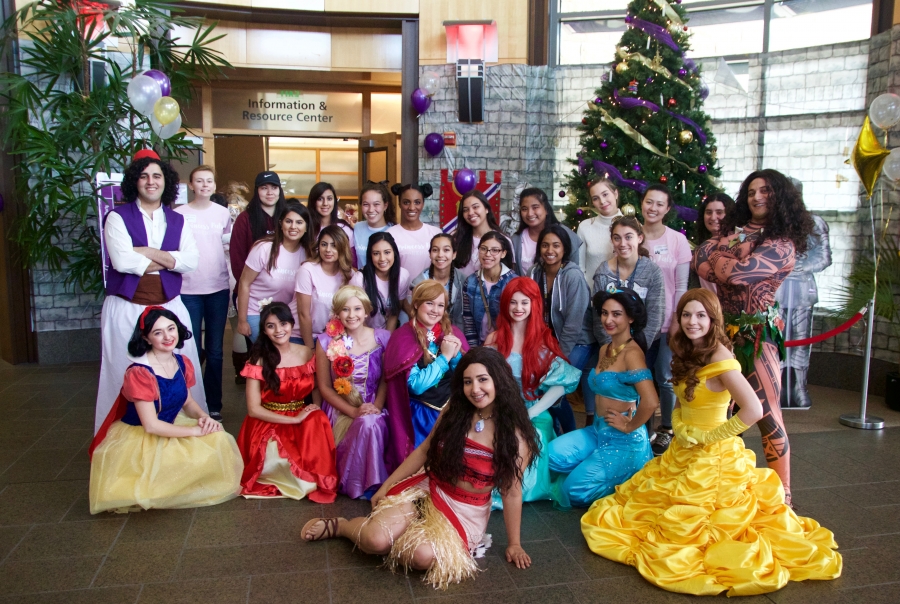
For decades, Disney’s cinematic genius has brought joy to people of all ages. To this day, Disney continues to give people the opportunity to use their imagination to keep the magic alive. Last spring, a group of Davis students decided to continue to keep the magic alive among children from all backgrounds.

A group of Davis students formed the Disney-themed club Princess Pals in an attempt to bring joy to children in need. The organization gives students the opportunity to dress up as famous Disney characters and visit at hospitals, foster homes and shelters. Together the princes and princesses aim to elevate children’s spirits through storytelling, crafts and other activities. This past month the club was recognized as Organization of the Month for its outstanding service to the community.

Third-year pharmaceutical chemistry major Ashley Beyer has been a member of Princess Pals since fall 2017. Beyer was elected to be one of the co-presidents for the coming school year and intends to continue to bring magic to people of all ages. Beyer explained what the club does during their visits to hospitals, local shelters and receiving homes.

“Often times these kids are stuck in hospitals or receiving homes so we want to give them something to look forward to and be happy about,” Beyer said. “We try to interact with them and brighten up their day as much as possible to distract them from the stuff going on around them.”

Like the majority of the members of Princess Pals, Beyer herself has been an avid Disney fan since she was a little girl. Beyer explains why she as well as many other members are passionate in the work they do for the community.

“It’s really exciting when you dress up and you see the smiles on the kids faces,” Beyer said. “And it’s not just kids, during one of our visits to Kaiser we walked through the ICU, and along with the kids we would see older patient’s faces light up and smile which was really nice.”

On average, the club tries to accomplish 12 to 15 visits per quarter. Throughout the year the organization also initiates various fundraising events to fund the upkeep of the costumes. In the first quarter that the club was active, there were only five members and three costumes; since then, the club has grown to about 50 members and now has a costume for almost every Disney princess.  

Zoe Feldman, a fifth-year pre-nursing psychology major, has been a board member of Princess Pals since the club was founded in spring 2017. As event coordinator this year, Feldman reached out to various hospitals and shelters, such as St. Johns, Kaiser, the Davis Medical Center and the MIND Institute. Feldman explained the process a member must go through to dress up as a princess on the visits.

“There’s certain requirements and processes a potential princess/prince must go through to dress up on a visit,” Feldman said. “We want [members] to have experience dressing up. We usually quiz potential princesses on their respective movie and character to make sure we get the full embodiment of the character.”

Feldman explained how during many of her visits children would ask the princesses obscure questions regarding other characters from the movie. Feldman primarily dresses up as Anna from Frozen and has been asked questions such as “Where is Olaf?” or “What is Elsa doing?”

“If you say one wrong thing you could ruin the whole magic of the moment for them,” Feldman said. “I’ve had children pull on my hair, and I had to act in the moment, so preparing for those instances is really important.”

Feldman explains Princess Pals mission and why the club has been such a rewarding experience during her time at Davis.

“The most important thing is letting kids have the opportunity to be kids,” Feldman said. “When you’re sitting in a hospital bed or going through the foster care system, you don’t have the opportunity to be a kids, and you’re forced to grow up fast, so just letting them play and use their imagination even if it’s for a couple of minutes is really amazing.”

Second-year animal science major Johanna Schulz has been a member of Princess Pals since the club was formed. Schulz explained the impact the club has made on her and the community as a whole.

“It’s really nice to see those smiles,” Schulz said. “A lot of the kids don’t have the opportunity to go to a theme parks to meet their favorite character so it’s amazing that we give these kids the opportunity to be kids.”

In addition to the smiles and laughs, Schulz explained some of the difficulties she as well as other princes and princesses face on visits.

“A lot of the places we go to not everybody has seen before or is comfortable with,” said Schulz. “Sometimes kids come up to you and tell you their life stories and a lot of these kids have had a lot of hardships which are almost heartbreaking to hear. We want to be able to bring joy to the kids as the character without breaking character or breaking down in front of the child.”

For Schulz, the club has also had a meaningful impact on her personal life which is why she believes that the clubs has made great strides toward bringing joy to children of all backgrounds.

“I have been in a lot of similar situations myself,” said Schultz. “I know what it feels like to not have that smile on my face and think that your entire world is crumbling down. And to give these kids a reason to smile and be kids for some time is amazing.”

Princess Pals will resume recruitment for new members next fall. Students who are looking to join a unique club that intertwines community service with the magic of Disney can visit the Facebook page or website for more information.


Written by: Sneha Ramachandran — features@theaggie.org


Humor: Taco Bell to release new food box called “Depression Dinner”

MIKE MOZART [CC BY 2.0] / FLICKR
The new meal will fill bellies but not the emptiness within

During a press conference this Thursday, Taco Bell announced the launch of a new late-night food box called the “Depression Dinner.” When asked about the inspiration behind this bold step for the brand, representatives cited the Jack in the Box “Munchie Meal,” wherein the company found wild financial success by dropping any nuance in targeting its demographic.


“Look, our most popular item is a Dorito Taco,” an advertising executive said. “There is no subtlety in our food — why should there be any in our advertising?”


The meal will be released as a secret menu item you can only get by pulling up to the window and saying nothing for three minutes.


Jerry Rodriguez, a member of the “Depression Dinner” focus group, told The Aggie that he was not put off by the contents of the box, which will be whatever they have lying around the restaurant, as he “would pretty much eat anything at this point.”


What is certain is that the meal will not include napkins — a cost-saving measure, as executives expect patrons will wipe their hands on the side of their sweatpants anyway.


The only stumbling block so far has been that an ad for the box was vetoed on grounds of false advertising by the Ad Council. A councilman explained that the food box cannot claim to “mend a broken heart” due to the detrimental effects the meal has on the pulmonary system.


The meal will come with punch-out holes for your mouth and nose in case customers wish to put the box over their heads after consuming the meal.


“Catering to the emotionally distressed is nothing new to Taco Bell,” said the visionary advertising executive in charge of the new box. “This is simply the first time we have said it with pride. With this campaign, we really wanted to say, ‘We know you are upset, we are here to help… you eat your feelings.’”


The food will also be available via DoorDash and other food delivery services for those who can’t bring themselves to leave the couch.


The company plans to release a “Bummer Breakfast” later this year for when you wake up at 4:43 a.m. and stare at the clock until it’s time to go to work.


Written by: Parker Nevin — phnevin@ucdavis.edu

(This article is humor and/or satire, and its content is purely fictional. The story and the names of “sources” are fictionalized.)

UC Davis pays $5,000 fine to resolve citation regarding rabbit that died

ZOË_REINHARDT / AGGIE

University faced other criticism regarding animal treatment

UC Davis recently agreed to pay a $5,000 fine to the U.S. Department of Agriculture to resolve a citation regarding a rabbit that died due to an oversight of medical staff.

The citation, issued in July of 2016, described a procedure on a “rabbit that was to be euthanized before recovering from anesthesia.”

According to a press release on the UC Davis website, the rabbit died under anesthesia when a valve was inadvertently left closed.

After investigating, the USDA notified UC Davis that it had determined a penalty of $5,000 for the citation, and the school agreed to pay the fine.

Despite the penalty, UC Davis maintains that incidents such as this are rare and the school tightly regulates animal use through multiple platforms to ensure ethical treatment of animals. These platforms include the campus’ Institutional Animal Care and Use Committee, which inspects facilities conducting animal research every six months.

“There is a wide range of research involving animals at UC Davis, from laboratory research with fish or mice to observations of wild animals, involving researchers at most schools and colleges,” said Andy Fell, the associate director of news and media at UC Davis. “Animal research is conducted humanely and in compliance with all applicable laws and regulations.”

However, Ili Zisman, a third-year animal science major and president of the UC Davis People for the Elimination of Animal Cruelty through Education club, still believes the system does not adequately protect animal rights.

“Whenever animals are used as objects, their wellbeing isn’t being prioritized at all and often the conclusions drawn from the animal experiments are not actually useful because animals are anatomically different from humans,” Zisman said. “There are so many better alternatives out there, such as cell cultures, micro-dosing and artificial human skin. It would make so much sense to reallocate the funds used for animal experimentations into programs or avenues that are truly helpful to humans.”

Additionally, members of University and Professional Technical Employees have raised concerns about understaffing and its repercussions.

“There is gross mismanagement of funding and resources at the VMTH (Veterinary Medical Teaching Center),” said Karen Galbreath, a member of UPTE’s bargaining team.

According to Galbreath, an animal may spend unnecessary time in the intensive care unit because of insufficient staffing to move the animal to a “step down” unit or ward, which results in the animal spending an extra time block in the ICU and the owner paying hundreds of dollars that could have been saved.

In addition, Galbreath mentioned that animals in the general wards are not checked on at least once per hour per hospital protocol which has resulted in “poor outcomes, including death.”

Despite these complaints, UC Davis is accredited by the International Association for Assessment and Accreditation of Laboratory Animal Care and the school has conducted a comprehensive internal review of animal care on campus in 2017 that found no systemic shortcomings in the animal care program. The report, however, made a number of recommendations for improvements.


Written by: Clara Zhao — campus@theaggie.org


Childish Gambino’s “This is America” packed with social commentary

ALLYSON KO / AGGIE

Adding to discussion about race, politics

48 seconds of light, feel-good music captivate listeners in the beginning of Childish Gambino’s new song “This is America.” However, around 47 seconds into its accompanying music video, we are introduced to the jarring image of a man sitting in a chair with a cloth bag over his head. He is shot in the head seconds later by Gambino, and a shift in the tone of the music occurs as the sound of his gunshot rings.

In the moments leading up to the killing and all throughout the rest of the music video, Gambino is shown dancing wide-eyed with his shirt off. But the dancing is strained and it is the first indication that something isn’t exactly right, even before he shoots the man. His facial expressions depict someone going through the motions and not really being comfortable with his body performing all these moves.

His demeanor changes to indicate he’s succumbing and, in turn, putting a lot of effort into the execution of these movements that are very reminiscent of popular dance moves blasted all over the internet. The exaggeration and forced quality show just how imposed the happy image of the Black experience in America is when, in actuality, it’s the complete opposite. This stark contrast between the “popular culture’s perception of black experience and its often brutal reality,” according to a contributor on Genius Lyrics, is shown in other ways, too, and is the main idea of the video. The same contributor argues that this is exemplified most clearly “by juxtaposing happy, carefree choruses and dark, aggressive verses.” This is matched in the video with chaotic, ominous scenes in the background while Gambino dances both alone and with a crew of people in the foreground.

And when Gambino isn’t dancing, he is engaging in the violence — namely, shooting people. The first instance was the one at the beginning of the video and, in retrospect, that shooting was the one most set up to happen. Compared to watching the second instance, in which Gambino reenacts the Charleston church shooting (with himself as the shooter and an ensemble of Black gospel singers as the victims), it is more shocking and unexpected every time. He follows up the silence of the gospel singers with a pronounced “This is America” with a stoic face. It is unsettling.

If you take a closer look at the cars that Gambino is surrounded by and dancing on top of, you notice none of them are expensive and are decades old. For me, it seemed to point at police brutality, given that many tragedies and/or displays of racism arise from a white cop pulling over someone of color in their car. Other than that, the persistence of income inequality (and disparities between people of color and white people in general) is also something the scene alluded to given that, again, the cars are old and inexpensive.

The final scene we are left with is Gambino sprinting towards the camera with a mob of people following him in the dark. This has been compared to the Sunken Place from Jordan Peele’s movie “Get Out.” According to a tweet Peele posted in March of 2017, “the Sunken Place means we’re marginalized. No matter how hard we scream, the system silences us.”

The Washington Post summed it up perfectly in an article on this very topic: “Whether this reference was intended, the video makes clear how black people have been trapped and/or harmed by American culture. Gambino seems to keeps the darkness at bay by acting within white-imposed boundaries for most of the video — hence the rich depth of field, with his giddy dancing layered in front of violence — but it eventually catches up with him.”

What I initially thought of as Childish Gambino’s attempt at new age trap rap was quickly transformed into a greater appreciation for his project. However, Donald Glover (the man behind the musical project Childish Gambino) isn’t really interested in the analyses taking place. At the Met Gala, in response to a Vogue representative asking him what he would like people to feel when they see “This is America,” he replied, “I honestly just wanted to make a good song. That was it. Honestly I just hope people, you know, get to just enjoy it.”

In a Jimmy Kimmel interview, Glover stated how sensitive he is and how he hasn’t been on the internet since the Thursday night before he first debuted “This is America” on Saturday Night Live for fear he will take criticism too personally.

What we have here is an artistic expression and statement by a talented musician, artist and actor. We are well within our rights to examine, discuss and praise the depth Gambino added to his productions and what they mean in a greater context. But at what point is it over-dissection?

Ultimately the story Childish Gambino weaves is extremely intimate to him, his roots and the people that can relate to it. Maybe in all the close inspections we break down this intimacy.


Written By: Cecilia Morales — arts@theaggie.org


Study highlights lack of diversity in sports media

JAMIE CHEN / AGGIE

While people of color are trending upward, a strong gender gap remains

A recent diversity report card put out by the Institute For Diversity and Ethics in Sport highlighted and confirmed a serious lack of diversity across the Associated Press sports editors. The study, which was spearheaded by Dr. Richard Lapchick, showed that 85 percent of people holding key sports reporting positions at newspapers and on major websites in both the United States and Canada were white men, and while the representation of people of color is on an upward trend, women are still underrepresented. Across the APSE, women make up just 17.9 percent of sports desks, getting Fs in every category except for assistant sports editors, where they got a C- with 30.1 percent of the jobs going to females. It was the only upward trend in the whole study.

Though the study doesn’t cover every field, the lack of women in sports media continues to be a problem for employers. Organizations such as the Association for Women in Sports Media have been formed to combat sexist hiring practices and, according to its mission statement, to “serve as a watchdog, [promote] fair portrayal of female professionals in sports media, [encourage] diversity, positive workplace environments and equal access to opportunities.”

For those women who are in the industry, the struggles do not end when they are hired on or allowed to join the other media covering events. For four years, TJ Macíashas been a beat reporter for the NBA’s Dallas Mavericks for Hardwood and Hollywood, and just this year she began to cover the Texas Rangers for D210 Sports TV. According to Macias, there is a culture of masculinity which can shift depending on the environment she’s working in, starting with professional basketball.

“In my case, [breaking in] wasn’t actually that difficult,” Macías said via phone interview. “At least not in the Dallas/Fort Worth area — but only when it came to breaking into the NBA […] I had to recap a few televised games before I was allowed to cover a couple practices and shoodstarounds with the Mavericks. From there, they allowed me to cover single games before eventually giving me season media passes.”

Upon getting regular access to the locker room, a new set of challenges arose. Early on, Macías began to sniff out who was okay with her presence in the locker room and who had been uncomfortable. Aside from the issues with diversity, she noticed a pattern of older writers giving a cold shoulder to the younger ones rather than helping them enter as they once did.

“When I first started out, I was put off by one or two of [the senior writers], and completely ignored altogether by others,” Macías said “I was noticed if I got in the way of them in the locker room, and was either pushed to the side — I almost fell into Devon Harris’ locker once when one older white writer moved to take my place, then glared at me as if I had been the one in the wrong. All of this would happen before the players would get into the locker room. Usually if they witness something like that, they’re the first to jump in and right the wrong.”

Though Macías eventually felt more comfortable inside the Mavericks, her recent transition into a major league locker room has proven a far more difficult. After her initial inquiries into getting press passes for the Rangers, it took Macias years of attempting to get a press pass from the Rangers before the team would finally relent, and while it was a step in the right direction, she noticed an immediate difference.

“I believe that the Rangers are attempting to become more open to bloggers and are playing catch up with the rest of the sports world in terms of diversity in the press box and the clubhouse, but baseball is still pretty behind,” Macías said. “When I first walked into the press box, I noticed that I was one of only two women in there, including [TV reporter] Emily Jones. It was a sea of white men. It’s like a millennial Twilight Zone episode where everyone is either hipsters wearing reading glasses and plaid or overweight old balding guys. They’re all friendly for the most part, but the scene isn’t diverse at all.”

While much of the problem lies on the hands of the employers, the masculine culture which often drives sports goes far beyond the media, or even the players. Macías learned this with the rest of the nation of Feb. 20, when Sports Illustrated put out a scathing exposé regarding a toxic work environment which had grown within the Dallas Mavericks. Though the scandal touched on many different facets of the team’s executive branch, it was one particular issue which caught Macias’ attention.

Earl K. Sneed, who had worked side-by-side with the media, and who Macías knew on a first-name basis, had been knowingly kept on by the team despite a violent past which included an assault on his then-girlfriend and getting arrested at the team’s facilities. Though the team admitted its past transgressions, Macías believes that there’s a long way to go before the past can be forgiven.

“Shortly after the scandal broke, the Mavericks rushed to rectify their already damaged name, but some things still went unnoticed,” Macías said. “There were still men in the locker room that had a history of harassing women covering the team who were only booted when the women came together and did something. This has got to change. Women in sports need a safe environment and while things are slowly changing thanks to the #TimesUp and #MeToo movements, they’re not changing fast enough.”

Despite her struggles to break in, and despite a locker room environment which can often lead to unpleasant interactions with men, Macías hopes that the findings of the TIDES report can change in the next few years and is hopeful that girls across the world will choose to enter the profession.

“Keep fighting,” Macías said. “Don’t let anyone push you around — mentally and physically — and never lose your passion for the industry, because a lot of people will try to come in and sever that passion with a hacksaw. Be stronger than them. Shut your mind off to the online trolls, not matter how hard that may seem, and outright defy the in-person trolls. Band together with other women in the field because they are the ones that truly know what you’re going through or what you will go through and always have each other’s backs.”

While the TIDES report offered a troubling perspective on the floundering diversity in sports media, women like TJ Macías are working to break the barriers open and pave the way for those who are interested to follow in her footsteps in the future.


Written by: Bradley Geiser — sports@theaggie.org

Yolo Food Bank second-highest grossing charity in Yolo County

JAMIE CHEN / AGGIE

Big Day of Giving has Yolo residents in the spirit of giving

Since 2013, the Yolo Food Bank, along with other organizations all over Yolo County, has participated in the Big Day of Giving, an annual charity event in May dedicated to challenging communities to help raise funds and grow local philanthropy. This year’s Big Day of Giving took place on May 3, and local organizations and nonprofits all over Yolo County managed to raise over $7.3 million to go toward their respective missions and charities. Through the Big Day of Giving, donors are able to learn about nonprofits and their goals and support their causes by giving and encouraging others to give.

“Our community once again demonstrated its generosity and commitment to supporting the organizations that make such a difference to us all,” said Linda Beech Cutler, the chief executive of the Sacramento Region Community Foundation, the charity that established the Big Day of Giving five years ago. “We are immensely grateful for the good work these nonprofits do every day and for the donors who gave during this year’s Big Day of Giving.”

The Yolo Food Bank’s mission is to end hunger and malnutrition in Yolo County. According to its website, 52,000 people in Yolo County regularly go hungry each month and nearly 17 percent of the county is affected by food insecurity. The Yolo Food Bank funds programs such as food drives, hubs, low-cost markets and distribution that combat hunger and help feed those in need in and around Yolo County. The Bank is located in Woodland but also reaches heavily into Davis, Sacramento and Elk Grove.

“Our overall total went over $64,000 for the day, which made us the second-highest grossing charity in Yolo County for the day,” said Joy Cohan, the director of philanthropic engagement at the Yolo Food Bank. “We outdid our goal for this year quite a bit, and we were really excited by the number of donors we got involved […] We really tried to focus on e-philanthropy this year, focusing on social media and email marketing with our donor database to try and further spread the word, particularly about these matching donations.”

Supported by several regular donors and philanthropists, this year the Yolo Food Bank was able to start an initiative that had donors matching and doubling each others’ donations. Davis mayor Robb Davis and several other donors pledged to double their gifts if their original contribution of $6,250 was matched by benefactors from all around Yolo County. Media coverage surrounding this pledge and social media sharing of the Yolo Food Bank’s goal made this the most successful Big Day of Giving yet for the nonprofit.

“The day went great. I mean, we almost doubled our number from last year, mostly because Yolo Food Bank is getting more exposure via social media and tabling at different events,” said Raymond Bautista, the volunteer and food drive coordinator at the Yolo Food Bank. “In the next couple months, we have several ways to get involved — our food distributions and food hubs, our kids’ farmers market at different elementary schools all over Yolo County. We have produce packing, rice and beans packing. Anything you can think of that would be in running a regular business, we could use volunteers for.”

Though the Big Day of Giving is over until May of next year, the Yolo Food Bank will continue its work feeding and serving the thousands of Yolo County residents in need of food and care. Those interested in learning more about the Yolo Food Bank can visit its website, and those looking to give to the organization can make donations online.


Written by: Ahash Francis — city@theaggie.org

Cartoon: Reality Vacation

By: Ariel Hilomen — abhilomen@ucdavis.edu

Disclaimer: The views and opinions expressed by individual cartoonists belong to the cartoonists alone and do not necessarily indicate the views and opinions held by The California Aggie.

Crisis Text Line not a substitute for counseling services

CAITLYN SAMPLEY / AGGIE

UC Davis has yet to address counselor deficit

UC Davis has recently promoted Crisis Text Line, a free and confidential mental health service for students. This service connects students with a trained volunteer within minutes. A student buckling under stress can simply pick up their phone and text the keyword “RELATE” to 741741.

Through Crisis Text Line, students are able to engage in a texting conversation with a crisis counselor and relieve some of their anxieties, worries and pain. These conversations are meant to calm students and lead them toward a more healthy and safe mindset — often so that they no longer present a threat to themselves or others.

The Editorial Board recognizes the potential of the Crisis Text Line and believes that it could function as a stepping stone for other forms of counseling. However, it is not a substitute for in-person counseling. While texting a counselor may get students over a hurdle or through a breakdown, its interactions are limited and aren’t necessarily enough to help students combat chronic stress or mental health disorders.

The Crisis Text Line, though undeniably a valuable resource, does not diminish the importance of having more counselors available through Student Health and Counseling Services. Currently, UC Davis has 28.5 counselors. As the student population continues to grow, this number falls further below standards for mental health. The shortage of counselors — as well as the underpayment of current counselors — are issues that have repercussions for both students and staff. Although the university made plans to hire 12 new counselors in 2016, the Davis community is still waiting for those plans to become direct action.

Students should be presented with several counseling options so that they can choose to manage stress according to what makes them feel most comfortable, visible and secure — and each of those counseling options should be in optimal condition. We hope that while promoting this resource the university also takes addresses the glaring issues in our current mental health services. The Crisis Text Line does not eliminate the need for better mental health services or give the university a pass on fulfilling its overdue duties.

It does, however, help those in dire need. It provides an immediate outlet for those struggling in silence. We encourage every Aggie to use the Crisis Text Line, as well as additional counseling services, if they ever need support. To our fellow Aggies, you are never alone. And to our university officials, let us not forget that texting for mental health services should serve as a beneficial addition to an already robust student health program, not lay the foundation for it.


Written by: The Editorial Board 

More rappers should tackle environmental racism

ELI WATSON [CC BY 2.0] / FLICKR
Music needs to showcase the effects of climate change on minority communities

In the United States, music is everything.

Nothing speaks more strongly to the psyche of young Americans time and time again than the melodies, lyrics and beats of sonic revolutions brought by each new generation. Our grandparents had their Elvis; our parents their Bob Dylan.

We have our rappers.

Now, for those of us in college, rap has already been a long-standing act of musical rebellion for the youth — it’s not solely ours, per say: classic rap groups like NWA (their hit song: “Fuck Tha Police”) and solo acts like Tupac, Biggie and Eminem had already mostly disappeared from the scene when we came of age.

So, when Childish Gambino released a music video for his new single “This is America” on May 5, the wave that hit audial fanatics polled massive numbers in no time flat, evoking memories of decades past and making a mark in music history.

But it didn’t start with him.

A year earlier, Kendrick Lamar released his third studio album, “DAMN.,” which won him a Pulitzer Prize this past month.

A year before that, in April 2016, Beyonce’s “Lemonade” left listeners speechless as she sang and rapped angrily from the roof of a sinking police car in “Formation,” reflecting the aftermath of Hurricane Katrina.

What do these three integral music moments have in common?

Politics — specifically, racial politics.

For Gambino, Lamar and Beyonce, rap provides them the platform — and audience — to give light and personal anecdotes to racial issues that are frequently ignored by mass media. In “This is America,” Gambino dances away as police brutality, mass shootings and mass incarceration harms unnamed black people in the background. Likewise, Lamar solemnly raps about the inability to escape institutional racism when you’re a person of color in the U.S.

Beyonce, on the other hand, highlights the destruction of New Orleans in the aftermath of Hurricane Katrina — and former president George W. Bush’s subsequent failure to provide proper aid to the majority-black population (this moment also spurred Kanye West’s famous quote: “George Bush doesn’t care about black people”).

This leaves me to beg the question: Why don’t more artists — especially within the genre of rap — tackle climate change, when it undoubtedly affects racial issues now and will continue to do so within the near future?

“Lemonade” was not music’s first dabble with the issue of the environment: Joni Mitchell’s 1970 hit “Big Yellow Taxi” and Marvin Gaye’s “Mercy, Mercy Me (The Ecology)” speak directly to humanity’s impact on the planet and, consequently, its impact on communities.

What Beyonce, however, brought to young listeners was a nuanced connection between race and environment that was previously untouched by major artists in recent decades.

Hurricane Katrina is the best example of how the attention of artists needs to shift to issues beyond governmental politics and race. When Hurricane Katrina hit in the summer of 2005, the Gulf of Mexico hadn’t experienced many Category 5 hurricanes before. When it made landfall, New Orleans’ dilapidated levee system failure was inevitable.

It’s been 12 years, and tropical storm systems are getting worse.

Take the 2017 Atlantic hurricane season. Not only was it the most destructive hurricane season ever for that area, but this year’s is also expected to be above average as a result of warmer oceans and smaller ice caps.

Beyonce’s decision to focus on — and sing about — the fate of the majority-black population in the areas surrounding the breached levees of New Orleans should have set the precedent on how the music industry desperately needs to address global climate change. Especially in the rapping community.

As rappers decide to create albums about structural racism, they should turn to the nuances of environmental racism. White, upper middle-class Americans won’t be the first threatened by erratic weather systems and rising oceans; it will be the impoverished, minority communities pushed to the outskirts of cities that will first reap the consequences of a volatile climate — exactly the communities rappers like Gambino speak to.

It’s time to have a platform of our own that addresses issues specific to our times. Racism is prevalent in all facets of politics, but as climate change is going to become the most important issue in our lives, shouldn’t our music reflect that, too?


Written by: Erin Hamilton — elhamilton@ucdavis.edu

Disclaimer: The views and opinions expressed by individual columnists belong to the columnists alone and do not necessarily indicate the views and opinions held by The California Aggie.

Women’s club water polo captures National Collegiate Club Championship

ALEXA FONTANILLA / AGGIE

Win over Cal Poly was 5-4 comeback victory for crown

For the second straight year, the UC Davis Aggies women’s water polo club team defeated the Cal Polytechnic State University Mustangs in the Sierra Pacific Division to be crowned National Collegiate Club Champions. With this year’s win, the Aggies earn their fourth championship in five attempts as well as the second most National Championships in the title’s history. The team is three championships back from Cal Poly to tie for most national championship victories.

Neither team disappointed in the championship game, with both teams sprinting back and forth through the water throughout each quarter. The Mustangs jumped on the scoreboard quickly, placing two goals in the back of the net midway (4:49), and near the end (2:40) of the first quarter to lead the game 2-0.

It took until the end of the second quarter for the Aggie offense to show up, when Player of the Game, sophomore driver Sydney Preston, converted a goal with a man up at 2:31. Cal Poly continued to push through the end of the second and scurried a shot past the goal line with 12 seconds left, bringing its lead to 3-1.

Near the end of the third quarter (2:05), it seemed that the Aggies’ chance for a national championship was over, with Cal Poly using a power play opportunity to increase the gap between teams to 4-1. Recognizing themselves as a comeback team, the Aggies were not worried with the deficit, and continued to play their game.

“I think one of our teammates said during a timeout that they weren’t nervous at all and that we got this,” said senior defender and president of the club Sofia Caryotakis. “It was nervous excitement, and we all knew that we were there to get the job done and we did.”

Preston added that the team is known to battle back often in games.

“The culture of our team is that we are definitely a comeback team,” Preston said. “Being down 4-1 didn’t scare us because we had been there before, and we knew we would be able to pull through and just play.”

The calmness presented by the team allowed it to take control of the game with 1:42 left in the third, propelled by Caryotakis launching a shot in the net, decreasing their deficit to two. In a deja vu-like scenario with 12 seconds left in the third, UC Davis used a six-on-five opportunity to get one past the Mustang’s goalie, and bring the score to 4-3.

Beginning the fourth quarter was a battle between teams, until Preston secured her second goal of the game at 4:37 to tie the game at four. For Preston, it was the feeling of confidence from her teammates that attributed to her solid game performance

“It was really my teammates because the day before, none of my shots landed,” Preston said. “While we were warming up, I was passing, and I said ‘today is the day.’ Just having the confidence and having my teammates telling me not to worry because it was a new day helped.”

One minute later, the Aggies pushed the battle-back mentality to unload one final goal between the posts to finish the game 5-4, and earn National Club Championship status.

After the championship game finished, the 2018 Women’s National Collegiate Club Championship All-Tournament Team was announced. For Caryotakis, earning Most Valuable Player of the tournament was a huge honor attributed to the team as a whole.

“It really is just a testament to the program itself developing me so that I can help develop the team,” Caryotakis said. “It was a huge honor because that was a sum of 10 plus years of the sport and I wouldn’t have been able to get there without my teammates.”

Both Caryotakis and Preston feel that this championship victory attests to the success of the club water polo program as a whole, and are excited for what the future holds.

“Davis has always had a very strong water polo program at all levels,” Caryotakis said. “The sophomores and the juniors can step up and shape the program where it needs to go and it is already on the right trajectory.”

Preston added onto Caryotakis’ comments with excitement for the future of the team and the program.

“I was not only excited for winning the tournament but for the future,” Preston added. “We have a very young team and I am just excited for the freshman potential our team has and I am excited to see what next year holds.”


Written by: Ryan Bugsch — sports@theaggie.org

Mellon Music Festival to be hosted in Davis

EUNGHEE CHO / COURTESY

Changing classical music, one friend at a time

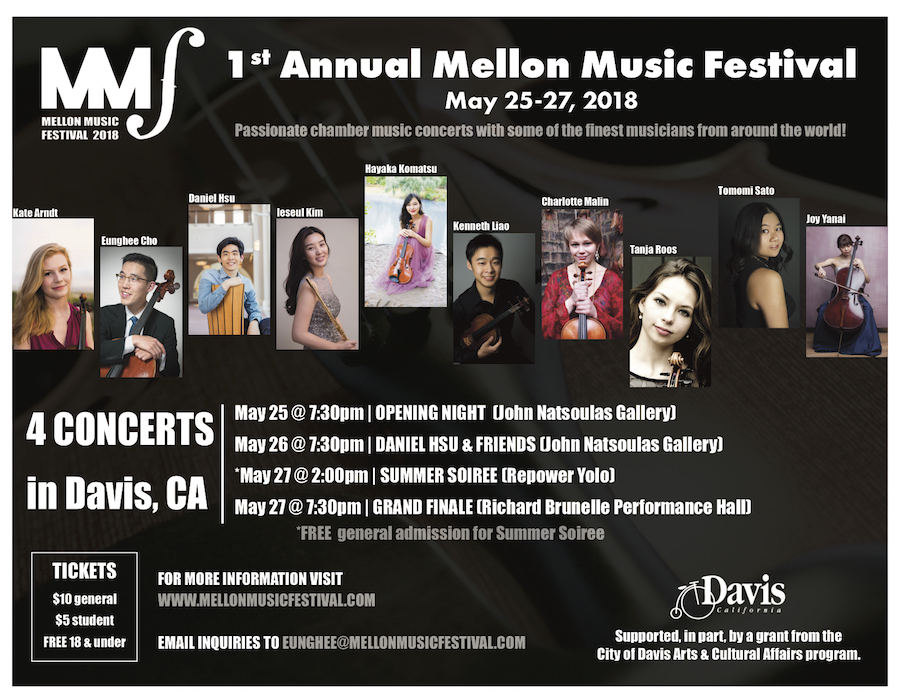
Having been a part of the Davis community his whole life, cellist Eungee Cho felt it was necessary to bring Mellon Music Festival to his hometown. Cho, who lives and breathes classical music, believes that it has the power to ignite the community through his festival. Shows will take place this weekend, May 25 to 27, with shows at the John Natsoulas Gallery, RepowerYolo and the Richard Brunelle Performance Hall.

“Classical music has this elitist stereotype that goes along with it,” Cho said. “We actually feel that there’s so much more to classical music, so we geared the programs to be accessible, but still very strongly classical. For example, on the first program, we have this composer who wrote a piano trio that’s Russian classic and jazz-inspired.”

Mellon Music Festival aims to bring classical music to a wide audience and change the negative stereotypes attached to it. Moreover, there is a social mission included as well. For example, by including a piece composed by a female composer in the program, the festival brings awareness to strong women in classical music, which is typically a male-dominated genre.

The goal is to be inclusive and create relationships with the audience. Cho thought it was best to have the festival in Davis because he remembers the city as being heavily community-oriented and saturated with culture. He felt it was the perfect place to bring high-quality and affordable classical music performances.

“Since moving to Boston, I’ve met a lot of musicians who have the same vision that I have, so I really wanted to gather these musicians in one place — my hometown — and expose Davis to how amazing classical music can be,” Cho said. “There are no geographical limits to what classical music can achieve.”

According to Cho, his musical journey was not something he originally planned on. It was as if music chose him.

“I started piano just like any other Asian child who gets thrown into it at a very young age regardless of interest,” Cho said. “Then I discovered the cello a few years later. Like many people, I wanted to go to university, but in my senior year, I started to realize how much classical music has changed my life and how much power I feel like I have when I immerse myself in it. I really felt like I was making a difference in the world more so than, personally, doing other things.”

Cho entered USC with medical school in mind. However, his devotion to music altered his life in a way that he did not expect.

“I’ve been doing all the rotations, shadowing and internships during my four years of college, but at the same time, I would do a lot of performance on the side and kind of fell in love with it,” Cho said. “I put any thoughts about medical school in the backburner and really just dedicated everything to music.”

Through generous sponsors, friendships and connections, Mellon Music Festival was able to gather a group of talented musicians and host this event with affordable prices. Flutist Ieseul Kim met Cho at USC as friends, but they never got the opportunity to play music together. Now, they are able to showcase their passion and talents in Mellon Music.

“Eunghee and I met at USC and studied together,” Kim said. “For some reason we never played at the same time together, but we’re very good friends and colleagues. Whenever we grabbed coffee, we’d talk about music things. He told me he was having a festival and asked me to play. Whenever he asks me to do something, I always say yes because he’s such a good musician as well. It’s my honor to be a part of Mellon Music Festival.”

Classical music is powerful, according to Cho, but also deeply ingrained in each musician’s personal life. Like Cho, violinist Tanja Roos has had a deep bond with music since childhood. Growing up in London with a family of musicians, it felt natural for her to dive into the art as well.

My grandmother was a famous violinist and played numerous concerts,” Roos said. “I remember distinctly going to her concert when I was about 3 and being absolutely blown away. Ever since then, I pretty much only wanted to be a musician. At 15, I wanted to expand my musical journey and auditioned for a violin teacher in Vienna named Boris Kuschnir. I moved to Vienna without my parents to study with him, which was daunting but incredibly exciting. I remember at the time thinking that this was the first step to truly building character, and that it did.”

Ultimately, the Mellon Music Festival is about building friendships with musicians and audience members. Inspired by “The Lord of the Rings,” Cho named the music festival after the Elvish word for friend, “mellon.”

“‘Lord of the Rings’ was my life basically growing up, and I thought this friendship theme was so appropriate,” Cho said. “We wanted people to come, mingle and build friendships. We don’t want there to be a barrier between the performers and the audience.”

Purchase your tickets for Mellon Music Festival via its website.


Written by: Becky Lee arts@theaggie.org